Companies certified under the Authorised Economic Operator Program (AEO) typically receive priority in customs control and access to additional trade facilitation when crossing borders. However, the cost-effectiveness of obtaining certification, such as AEO, remains unclear. Many companies do not participate because the benefits are neither clearly measured nor well defined. This research aims to examine the primary motivations driving companies to join the programme and evaluates operators’ perceptions of its effects. The research instrument was developed based on literature concerning ISO standards.
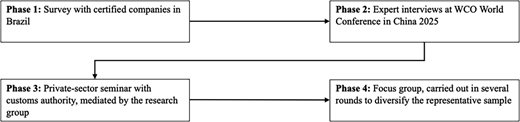
The methodology combined quantitative and qualitative methods, structured in four stages: (i) a survey of certified companies to identify internal and external motivations; (ii) interviews with experts during the AEO World Customs Organisation Conference; (iii) a seminar with representatives from the private sector, consultants and the Brazilian Customs administration; and (iv) a focus group involving the customs authority, consultants and representatives of certified companies.
The results indicate that motivations are linked to recognition as a secure operator, image enhancement, risk reduction and strengthening the culture of compliance. However, the perceptions reveal that not all expectations are met, especially regarding competitiveness, cost reduction and market share.
For companies, this study enhances understanding of the factors influencing AEO membership and may assist in evaluating the attractiveness of potential new members. For governments, the findings offer a strong justification for strengthening the programme. This research may affect society by providing a rationale for participation in the AEO programme.
The analysis, grounded in organisational isomorphism, shows that coercive, mimetic and normative institutional pressures shape motivations and perceptions. However, this study offers a new perspective on the interconnected concepts of the iron cage and institutional theory by providing a positive reinterpretation of the theoretical framework. AEO certification promotes organisational similarity, enhances supply chain predictability and demonstrates improvements in process efficiency.
1. Introduction
Crossing borders in the global supply chain can be challenging because of unexpected regulatory changes, bureaucratic practices, strikes and high logistics costs common in many developing countries. Customs controls and trade facilitation often present a trade-off in global trade. To address these challenges and improve resilience, the Authorised Economic Operator (AEO) programme was developed to streamline cross-border trade and create a safer working environment.
The AEO programme establishes cooperation between customs authorities and companies operating within the global supply chain. Its primary purpose is to optimise and safeguard trade flows while enhancing oversight of high-risk cargo. This initiative is supported by the World Customs Organisation (WCO) guidelines.
According to Jażdżewska-Gutta et al. (2020), most existing research on the AEO programme addresses legal issues or theoretical assessments of similar schemes, such as AEO and the USA programme Customs and Trade Partnership against Terrorism (Sheu et al., 2006; Tong et al., 2022), as well as analyses of their effectiveness (Chang-Bong et al., 2016).
However, the benefits of adhering to the programme remain unclear or poorly defined. Companies question the value for money of certification, whether for ISO or AEO. Anecdotal evidence indicates that many companies struggle to quantify the benefits or persuade top management to participate in such a programme. In other words, the benefits are not guaranteed. No studies to date have specifically examined the key motivations and perspectives of businesses regarding AEO certification from an institutional perspective, making this investigation novel. Given this gap in the literature, this study addresses the following research questions (RQ):
What are the perceptions and motivations that lead companies to participate in the AEO certification program in Brazil?
What is the rationale behind the institutional factors considered when seeking such a certification?
This research examines the reasons companies seek AEO certification from an institutional perspective. By analysing both the factors influencing adoption and the outcomes perceived after implementation, the study offers a comprehensive assessment of the AEO programme’s role in transforming certified companies. Using DiMaggio and Powell (1983) institutional theory, the analysis focused on mimetic, normative and coercive institutional pressures. We evaluated the likelihood of programme changes by investigating users’ motivations and perceptions. This applied study has social relevance, as its findings may inform future programme modifications. The research considered the AEO programme in Brazil, which marked its tenth anniversary in December 2024, making this an appropriate time to discuss its future direction.
This research offers both theoretical and practical contributions. By examining the motivations driving companies to join the AEO programme, the study provides relevant information to the private sector and customs authorities worldwide, supporting informed strategic decisions and policy implementation that enhance and facilitate international trade while maintaining operational security. The study argues for transitioning from a voluntary to a necessary programme, redefines Max Weber’s iron cage as a privileged club of benefits and reinterprets institutional theory by demonstrating that isomorphism can have a positive effect, thereby contributing to theory.
The remainder of the article is organised as follows. Section 2 addresses certifications (ISO and AEO); Section 3 examines the AEO Program in Brazil. This is followed by a discussion of the institutional perspective provided by DiMaggio and Powell (1983). Section 5 outlines the methodology, divided into four phases. Section 6 presents the results and discussion. The seventh section discusses the theoretical implications of institutional factors and the AEO program. The eighth section presents the research’s practical social impact. The conclusions include limitations and suggestions for future research.
2. The AEO certification and ISO certification
Analysis of the literature shows that primary studies have focused on the effects of AEO certification on company efficiency or performance. For example, a recent study assessed how AEO certification affects export stability, finding that certification reduces the likelihood of export failure, enabling certified companies to achieve greater efficiency and maintain competitive advantages (Zheng et al., 2024). Another study used a case study of a freight forwarder to examine whether AEO certification can enhance company resources and capabilities, potentially creating a competitive advantage (Houé and Murphy, 2018).
Some studies focus on analysing the effects of specific certification benefits rather than certification itself, such as research examining the impact of the mutual recognition agreement for AEOs on the performance of Korean exporters and importers (Chang-Bong et al., 2016). Other studies, while not explicitly centred on AEO certification, indirectly provide relevant certification information. Al-Shbail (2020) emphasises the importance of using the AEO programme within customs administrations as both a compliance assessment tool and a mechanism for continuous improvement. Similarly, Campos et al. (2018) used multiple regression within a structural equation modelling framework to assess the performance of public–private partnerships (PPPs). Their model identifies key factors affecting trade facilitation in PPPs, using the AEO programme as a reference.
Companies pursue certification for various reasons, such as meeting client requirements, strengthening internal security standards and improving market positioning (Chang-Bong et al., 2016). Some companies view the supply chain as a competitive asset and periodically revise security measures, including collaboration with government. The AEO programme supports these efforts (Fletcher, 2007; Njagi, 2019). Den Butter et al. (2012) reported benefits such as lower transaction costs, enhanced reputation and emphasised the role of institutionalisation in building trust in G2B relationships for AEO-certified firms.
The literature on AEO reports convergence levels among AEO programmes in 17 APEC countries. The study did not identify motivations for joining AEO programmes. It highlighted the need to increase the attractiveness of AEO programmes for small and medium enterprises, as well as to expand the involvement of multiple government agencies (Calvin and Holler, 2016). Rosanelli (2016) stated that AEO is recognised as a quality certification in the EU, serving as evidence of strong internal compliance. She emphasised the importance of acquiring and maintaining the programme, noting that the benefits outweigh the costs because the programme reduces inspections, streamlines goods release and enables better export controls.
Njagi (2019) analysed survey data from Kenya, including 23 certified companies. The results indicated a positive effect on adherence to the AEO programme, primarily associated with communication between the public and private sectors, mutual recognition and preferential treatment. In Korea, Son et al. (2014) examined the AEO programme and SME internationalisation, using data from 95 Korean companies (both AEO and non-AEO). The study found that AEO companies demonstrated higher R&D performance and technological capacity, viewing AEO status as a reliability seal that enabled prompt customs clearance. The authors also highlighted a shift in control processes by government agencies, moving from an enforcement approach to a compliance-based perspective.
Surono and Purba (2022) examined the AEO programme in Indonesia, noting that it forms part of the WCO SAFE framework and that compliance requires significant organisational effort. They concluded that the Indonesian government should establish mentoring groups and take further action to guide the private sector towards higher conversion rates. Pratama and Everett (2017) also studied the AEO programme in Indonesia. Their findings indicated improvements in corporate image and the AEO’s prestigious status, which strengthened customs–business relationships. They found that the primary motivation for joining the programme is the desire to participate in strategic initiatives supported by customs administration.
Raffaele (2017) examined 1,143 Dutch companies and the AEO program, concluding that companies primarily participate not for security reasons, but for operational and customs benefits, as well as the value of the certification. Certified companies reported that the program streamlined the customs process.
Chou et al. (2024) conducted an empirical study in Taiwan to examine the relationship between AEO-certified companies and export performance, as well as financial performance, in the literature. They concluded that AEO is more effective as a tool for trade facilitation than as a driver of financial performance.
Houé and Murphy (2018) analysed AEO certification for freight forwarders, considering other supply chain participants. They found that AEO certification supports the development of new capabilities and essential skills, enhances the company’s strategic capabilities and contributes to reducing errors and improving the security of goods flow. The certification also improved reputation and trust. The authors used resource-based view theory to explain how AEO certification generates unique capabilities.
Regarding ISO certification, the existing literature provides detailed insights into why companies pursue excellence in quality, strong management systems, international compliance and institutional legitimacy (Delmas and Montes-Sancho, 2011; Heras‐Saizarbitoria and Boiral, 2013). Liu et al. (2020) extended this analysis to ISO 14001 motivations at the macro level (countries, not organisations), stating that trade openness and environmental pressures positively affect certification adoption. They found that countries more open to international trade are more likely to seek certifications.
Research indicates that companies pursue certification for various reasons, such as meeting customer demands, improving internal safety procedures and strengthening their market position (Chang-Bong et al., 2016; Santos et al., 1970). However, because few studies specifically examine motivations for joining the AEO programme (Jażdżewska-Gutta et al., 2020), this research group investigated the primary motivations for other types of certifications in this article, focusing on ISO certification, which is widely recognised as an international standard.
The literature on ISO certification has extensively examined the fundamental reasons companies pursue high levels of excellence, quality management and global compliance across sectors. Comparison of AEO and ISO certifications enabled the identification of common motivations for obtaining these certifications, contributing to a comprehensive understanding. This study did not consider the subtypes of AEO certification (compliance or security).
2.1 The importance of certifications for companies
In global trade, organisations across various sectors increasingly seek internationally recognised certifications, such as ISO standards, to strengthen sustainable performance, mitigate socio-environmental risks and meet growing customer demands for social and environmental responsibility (Delmas and Montes-Sancho, 2011; Heras‐Saizarbitoria and Boiral, 2013).
Environmental certification, particularly ISO 14001, plays a significant role in advancing corporate social responsibility and sustainability commitments. Certified companies typically show a commitment to ethical practices, respect for human rights and responsible environmental management – attributes increasingly valued by consumers and investors (Delmas and Montes-Sancho, 2011).
Furthermore, environmental and quality management certifications can enhance competitiveness, improve reputation and facilitate access to international markets (Delmas and Montes-Sancho, 2011; Heras‐Saizarbitoria and Boiral, 2013).
In the case of quality management system certification, such as ISO 9001, studies have shown that motivations include improving internal processes, increasing customer satisfaction and pursuing sustainable competitive advantages (Fonseca et al., 2022; Fonseca and Domingues, 2018). The investigation of factors leading to ISO 9001 adoption is now a well-established research area within quality management.
In this context, Hussain et al. (2020) used a bibliometric analysis of research on the ISO 9000 series from 1987 to 2015. They concluded that examining motivations for ISO 9001 certification is a leading research theme. Although Hussain et al. (2020) addressed only ISO 9000, their findings on the importance of certification motivations are applicable to other ISO standards. Notably, there are many ISO certifications:
Certification under the AEO programme, although narrower in scope than other certifications such as ISO 9001 (quality management) and ISO 14001 (environmental management), aims to enhance companies’ competitiveness in the global market and improve risk management and compliance in international supply chain operations.
In this context, ISO 28000, like other ISO standards, is voluntary for companies. It sets requirements for supply chain security management and offers practical guidelines for developing and implementing security processes. This standard is multimodal and international, aligning with and complementing the WCO’s standards framework to protect and facilitate global trade.
Although ISO 28000 certification and certification under the AEO Program have different objectives and apply in distinct contexts, they share notable similarities, including the pursuit of safe practices and operational efficiency in supply chain management, as well as companies’ commitment to meeting recognised standards. Some articles examine the effect of quality management system certification on company performance (Echour and Nbigui, 2020), organisational performance and employee development (Poksinska, 2010) or on companies’ financial performance (Sampaio et al., 2011). Other studies have investigated the motivations, benefits and main challenges associated with implementing ISO 9001 (Aamer et al., 2020; Maekawa et al., 2013). Further research has analysed the effect of ISO certifications on supply chains, including safety improvements (Huei Ing et al., 2019) and on small and medium-sized enterprises (Kakouris and Sfakianaki, 2019).
Existing knowledge of ISO certifications, particularly ISO 28000, provides a solid foundation for research on the Brazilian AEO Program, enabling a clearer understanding of the factors motivating companies to adopt it. However, ISO certification aims to comply with the relevant ISO standard, while AEO certification focuses on legal compliance. Therefore, using ISO certifications to assess compliance with AEO standards requires a detailed comparison of their respective requirements.
2.2 Investigating motivations for certification
Investigating companies’ primary motivations for adhering to an international certification provides practical insights from the companies’ perspective, enabling more informed strategic decision-making. This understanding allows companies to allocate resources and efforts more effectively to areas identified as organisational priorities.
Echour and Nbigui (2020) emphasised that motivation is a critically important factor in studies on ISO certification. According to the literature, two types of motivation are associated with ISO 9001 certification: internal motivation, also referred to as passive motivation, which arises voluntarily within the company and external or active motivation, which is driven by the company’s economic and legal environment. Zaramdini (2007) indicated that the primary motivation for pursuing ISO 9000 certification is internal, focusing on process and product quality improvement. Gavronski et al. (2008) reported that ISO 14001 certification offers both internal and external benefits, depending on whether companies are proactive or reactive. This research considered both internal and external motivations when designing the questionnaire for the AEO programme, as detailed in the Methodology section.
3. The Authorised Economic Operator programme in Brazil
Karlsson (2017) noted that Sweden, together with other countries, led the adoption of risk management models for customs procedures in the late 1990s. This approach challenged the traditional view that control and facilitation were conflicting objectives, showing that a streamlined process is easier to protect and, therefore, can be more easily facilitated. In this context, the “Stairway” concept emerged, based on a gradual increase in trust: the higher a company’s demonstrated compliance, quality and security, the greater the facilitation granted by customs.
These programmes, together with the COMPACT compliance model developed jointly by the customs authorities of Sweden and The Netherlands, formed the basis for the European Union’s AEO programme, launched in 2008. Karlsson (2017) stated that these systems were strongly influenced by quality management practices such as ISO 9001, which are based on continuous improvement, self-assessment and process validation.
In 2005, the WCO published the first version of the SAFE Normative Framework to promote the global adoption of security and facilitation measures, establishing the basis for implementing AEO programmes, which are considered key mechanisms for deterring international terrorism and facilitating world trade (WCO, 2021). The SAFE framework set guidelines to improve supply chain security at all stages and introduced risk management concepts to encourage the adoption of physical security measures throughout global supply chains. It also highlighted the importance of collaboration among customs administrations, companies and other government agencies. It recognised the role of businesses’ internal compliance measures in risk management for cross-border trade flows.
In this context, AEO programmes have emerged as a global, coordinated and strategic response to strengthen international supply chain security. Park and Park (2018) noted that supply chain security has become a priority in cross-border trade, involving governments, international organisations such as the United Nations and the private sector through certifications such as ISO 28000 and programmes such as C-TPAT and Smart and Secure Trade Lanes. Although these programmes have specific characteristics, they share fundamental principles, including voluntary participation, risk management and the strengthening of public–private partnerships (PPPs), which aim to balance security objectives with the fluidity and competitiveness of global supply chains.
De Andrade et al. (2018) analysed the effects of the AEO implementation programme in Brazil, emphasising that the AEO programme may contribute to competitive advantage by distinguishing certified companies from competitors, enhancing international recognition and providing additional traditional benefits. In an exploratory study of port terminals in the Port of Santos, Brazil, Souza et al. (2017) stressed that the AEO programme reduces warehousing costs, accelerates logistics processes, and enhances competition among logistics terminals, thereby contributing to competitive gains.
The principles provide the fundamental guidelines that define the purpose and scope of this certification. Similar to the US Customs Trade Partnership Against Terrorism (CTPAT) and other AEO programmes globally, the Brazilian AEO Programme adopts a risk-based approach to supply chain security. These principles establish an organisational culture focused on safety and operational excellence. Bagchi and Paul (2017) examined the CTPAT and developed a game-theoretic model involving the government, an importer and a terrorist group. They argued that compliance with a security programme such as C-TPAT may place pressure on competing firms throughout the supply chain. Burgemeestre et al. (2009) compared the AEO and CTPAT, noting that the AEO is a universal programme requiring significant contextual interpretation and discretionary power when assessing new participants. They also state that the AEO is flexible because it is context-based and primarily focused on risk management, whereas the CTPAT is more specific, procedural and rigid.
While the CTPAT programme uses a centralised, mandatory approach, such as 100% container scanning, the EU implements its security programme through AEO certification as a PPP and encourages voluntary certification to promote best practices in this context (Papa, 2013).
Furthermore, Heijmann et al. (2022) argued that a risk-based approach to AEO is overly focused on detecting errors, whereas compliance-based controls would be more effective. Unlike a risk-based approach, which considers the likelihood and effect of risks, a compliance-based approach acknowledges the internal control measures established by economic operators and monitors their practical application.
Membership in the programme is available to various stakeholders in the global supply chain, such as importers, exporters, carriers, freight forwarders and warehouses, who may access several benefits established in the regulation regarding the facilitation of customs procedures, both domestically and internationally. The programme’s benefits include a reduced percentage of import declaration selections, priority processing of these declarations by relevant units, priority access for certified carriers to customs premises and the assignment of a server as a point of contact, along with other benefits specified in Normative Instruction of Brazilian Customs Administration No. 2154 of 26 July 2023 (Brazilian Customs Administration, 2023).
4. The institutional theory
Koster et al. (2019) stated that Institutional Theory makes significant contributions to organisational studies by examining the factors that shape organisational structures, schemes, rules, institutional norms and behaviour patterns.
During the 1950s, organisations began to be analysed as open systems, subject to external influences, pressures and context. Within this context, Institutional Theory emerged as a key framework for understanding how external elements affect and guide organisational behaviour. Brito et al. (2021) noted that this theoretical approach emphasises internal structures and processes, considering norms, regulations and environmental pressures as essential in the organisational pursuit of legitimacy.
Parente-Laverde et al. (2023) stated that, according to Institutional Theory, organisations interact with and adapt to the social and cultural contexts in which they are embedded, rather than operating in isolation. The environment’s rules, norms and beliefs directly influence organisational structures and behaviours. The authors identify three dimensions of institutional legitimacy: regulatory, normative and cognitive. Regulatory legitimacy concerns compliance with rules and policies established by governmental authorities; normative legitimacy concerns adherence to socially accepted values; and cognitive legitimacy concerns the sharing of knowledge and capabilities recognised as valid within the organisational field.
These three dimensions of organisational legitimacy must function together to ensure that organisations meet formal requirements and are perceived as legitimate and trustworthy by stakeholders. In this context, organisations often adopt behavioural patterns in response to external pressures, which guide and shape their institutional practices. Consequently, this process leads to structural homogenisation among organisations; that is, organisations tend to display structural similarities, referred to as isomorphism, because of these influences.
DiMaggio and Powell (1983) examined factors that lead to organisational similarity or homogeneity, stating that organisational isomorphism results from efforts to adapt to three main institutional pressures: coercive, normative and mimetic. The following section outlines the research design and data collection.
5. Methodology
This research uses both qualitative and quantitative analysis methodologies to provide a comprehensive examination of the subject. The literature review was guided by targeted keywords, including AEO, authorised (and authorized) economic operator, customs, partnership, performance, supply chain, international supply chain and global supply chain, with a specific focus on international and global supply chains. These keywords were thoroughly examined within the Web of Science and Scopus databases to ensure a robust foundation for the study.
In the initial phase of the research, data were collected via an online survey conducted from July to August 2024. The survey, developed using the Google Forms platform to ensure accessibility and ease of participation, was distributed to approximately 600 companies certified under the Brazilian AEO Program.
The research instrument was based on a questionnaire developed by Fonseca and Domingues (2018) for studies on ISO certification and motivations for adoption, which was adapted to assess organisational motivations in voluntary certification processes. This reference was used because it is a validated questionnaire. Some questions were derived directly from customs legislation, while others were developed by the authors or based on specific sources. The questionnaire is available upon request. Respondents’ data were anonymised and aggregated.
The final questionnaire structure includes an introductory section with general company information; Section 1 assesses motivations for AEO certification prior to joining, using a five-point Likert scale (“Not at all important” to “Very important”); Section 2 evaluates expected benefits before certification, using the same scale; Section 3 measures perceived results after certification, also using the same scale; and Section 4 consists of open questions (see Table 1).
Sections 1 and 3 of the questionnaire were adapted from Fonseca and Lima, with modifications to align with the context of foreign trade and AEO certification. Items such as “Improve company image,” “Reduce operating costs,” “Increase competitiveness” and “Improve internal communication” remained unchanged. Section 2 evaluated the relevance of official AEO Program benefits for membership, based exclusively on Brazilian Customs legislation and without reference to Fonseca and Lima. Section 4 examined companies’ perceptions of certification outcomes through open-ended questions, allowing qualitative analysis of improvements, avoided costs, challenges and suggestions.
While Likert-scale questions were used to assess the relevance of various levels of perception and motivation, these items were not designed as a single reflective latent construct. Instead, they represent distinct and complementary dimensions of the phenomenon under analysis. As a result, descriptive and comparative statistics were provided for each item rather than being aggregated into a single scale.
Before its final application, the questionnaire was pre-tested with 14 companies recommended by the Brazilian Association of AEO Companies. Of these, 12 participated in the validation stage, assessing question clarity and providing suggestions for improvement.
Phase 2 of the research involved data collection through semi-structured interviews at a WCO conference on AEO, held in China in May 2024. This conference is the leading global event on the subject. Participants included customs administrations and the private sector. The interview questions aimed to understand perceptions and motivations for joining the AEO programme in different countries, supporting the analysis of the results discussed here. The interviews did not use the saturation point technique because the objective was to collect data from participants who were AEO experts at the world conference, to support or challenge the data collected in Brazil. Phase 3 involved a national seminar organised by the research group and the Brazilian Association of AEO Companies. The event featured a world-class AEO expert and a lecture on the “future vision of AEO” delivered by the Brazilian Undersecretary for Customs Affairs, each followed by debates. The survey data were presented to the qualified audience and discussed to share both the data and the research group’s analysis, thereby creating a feedback loop with survey respondents and consultants who had not participated in the initial survey.
Phase 4, the final stage of the research, involved a focus group on AEO with experts from across Brazil, held at the same event. The focus group comprised two stages (see Table 2), using content based on the results of Phases 1 and 2. The event, held in June 2025, was attended by 90 participants, received national coverage and included certified companies. Table 2 and Figure 1 summarise the research stages.
By integrating large-scale national survey, expert interviews from around the world, a national seminar with key stakeholders and a focus group with certified companies, the study captures perspectives from both the private and customs administrations. This multi-phase design enhances the validity of the findings and enables the research to bridge the gap between regulatory intent and operational reality.
In addition, validation was performed in multiple stages to ensure the internal and external validity of the research. The multi-stage validation process reduces measurement errors and enhances confidence in findings. The combination of different analytical methods reduces bias. Considering the breadth and diversity of data sources, this study also exhibits external validity. The questionnaire’s core structure is based on previous studies. The interviews consider the differentiation between the private and public sectors. The national seminar with practitioners and policymakers ensures that the insights generated are not only contextually grounded but also transferable to broader discussions on AEO programs worldwide.
6. Results and discussion
A total of 278 certified operators participated, representing approximately 42.7% of all certified companies at the time of data collection. The questionnaire used in this survey listed likely motivations companies consider when joining the AEO programme. This list was based on a reference previously validated in the literature through studies on various certifications, particularly ISO certification (Fonseca and Domingues, 2018). The questionnaire was adapted to the AEO context and included a broad range of motivations and actual perceptions, considering both strategic and operational factors.
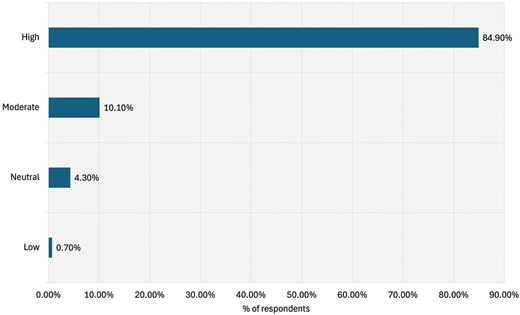
Among the strategic factors, the objective of “being recognised as a safe and reliable operator in the supply chain” was most prominent, with 86% of respondents rating it as “very important”. “Improving the company’s image in terms of security and compliance in foreign trade” was also considered highly important by 84.9% of respondents. Figure 2 presents these findings.
Similarly, “Reducing risks associated with their foreign trade operations” (84.9%) is among the primary motivations for companies. These tables indicate that many companies regard AEO certification not only as a means to benefit from the standard’s requirements, but also as a differentiator in national and international markets.
In addition, “Facilitating the flow of their foreign trade operations” (80.2%) and “Improving compliance risk management for voluntary compliance with tax and customs legislation in their foreign trade operations” (78.8%) were also identified as reasons, consistent with the companies’ medium- and long-term programme objectives. The following excerpt from interview comments confirms this aspect in line with the AEO programme’s intent:
Being an AEO company helps us build trust with customs authorities in our import/export operations.
Organisations place significant emphasis on motivations such as “Improving the company’s internal processes and procedures” (74.8%) and “Improving the company’s productivity and/or efficiency in terms of logistics” (73%), indicating that the benefits sought through certification extend beyond collaboration with customs to include internal management and operational performance. The following excerpt from interview comments confirms this aspect of the AEO programme itself:
AEO improves good governance in business.
Similarly, motivations such as “Fostering a stronger corporate culture related to compliance within the company” (68.7%) and “Fostering a stronger corporate culture related to safety within the company” (68.3%) indicate that the decision to pursue AEO certification extends beyond the programme’s direct benefits. These responses reflect companies’ genuine desire to further integrate the values expressed in the programme’s principles into daily operations, such as adherence to procedures and legislation, international safety standards and risk management.
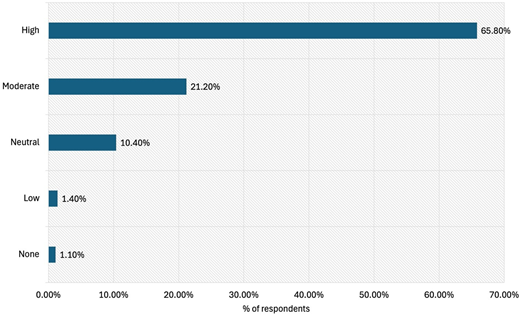
The analysis of the responses indicates that adherence to the AEO program is associated with the competitive environment in which companies operate. Motivations such as “Meeting the expectations of their business partners” (65.8%) and “Equaling the competition already certified in the program” (53.6%) suggest that the program is perceived as a significant differentiator among participants in the global supply chain (Figure 3).
Although there is no formal requirement for certification, it has functioned in practice as a reference for selecting business partners. Thus, AEO certification serves as a seal of quality, indicating a company’s reputation in foreign trade. These motivations demonstrate that many companies pursue certification not only to obtain benefits but also to achieve a competitive advantage.
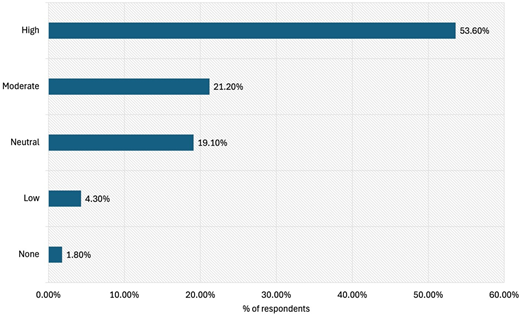
The motivation “To match the already certified competition” warrants particular attention, as over half of respondents (53.6%) considered it “very important” when choosing certification. In the context of increasing globalisation, it is reasonable to expect that companies with international operations are more closely aligned with their headquarters’ strategic directives, especially regarding participation in programmes such as AEO, which require adherence to internationally recognised security standards (Figure 4). The following excerpt from interview comments confirms this aspect of the AEO programme:
Being an AEO helps my company establish a global reputation and facilitates networking with multinational enterprises.
However, the data reveal an unexpected finding. The motivation for AEO certification, anticipated to be a global directive, exhibited considerable variation across the questionnaires. Only 28.4% of respondents considered it “very important”, while 33.5% were neutral, and 20.1% stated it had “no importance”. This variation indicates that the decision to pursue AEO certification is primarily a local initiative rather than a directive from the foreign parent company. Failure to meet certification requirements may place the company at a strategic disadvantage, particularly in markets where compliance and security are increasingly necessary.
The survey form included questions assessing respondents’ perceptions of various aspects following AEO certification. Analysis of these data revealed a significant contrast between the motivations companies initially considered for joining the programme and the results perceived after certification. Although initial expectations focused primarily on strategic and operational gains, such as improving company image or reducing operational risks, the reported effects after certification indicated a more diverse or less pronounced reality than anticipated.
This comparison between companies’ motivations at the time of joining and their actual perceptions after certification reveals notable contrasts, especially in sensitive areas such as institutional image, cost reduction, competitiveness and logistics efficiency. Although companies widely recognise the AEO programme as valuable, the data indicate that some expectations were not fully realised in practice, according to the perceptions of economic operators – companies involved in international trade.
One clear example of this difference is the motivation to improve the company’s image regarding security and compliance in foreign trade, which 84.9% of participants considered of “very great importance”. However, only 47.8% reported perceiving this effect with the same intensity, while 36.3% assigned “medium importance” to the perceived improvement and 12.2% were neutral. This difference suggests that, although the improvement in the company’s image was a significant consideration when joining the programme, it was not perceived as effective after certification.
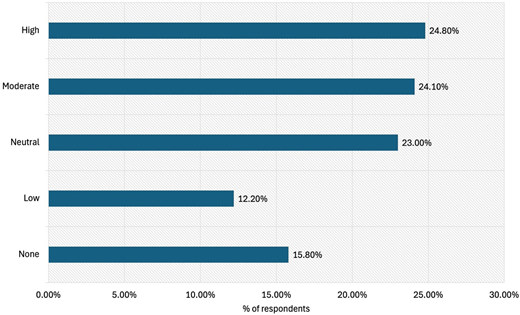
Regarding cost reduction – a motivation highly valued by approximately 65.1% of companies – the gap between motivation and perception was even greater. Only 24.8% of respondents perceived an effective improvement in cost reduction after certification. Another 24.1% reported that the improvement was not particularly intense, while 23% expressed neutrality, indicating no significant effect. In addition, 12.2% stated that cost reduction was barely noticeable and 15.8% reported no improvement (Figure 5). Table 3 provides a ranking of the primary motivational factors influencing organisations to pursue certification in the AEO programme ( Appendix 1), based on the weighted averages of responses, as detailed in Appendix 2.
The findings in Table 3 show that the primary motivators for seeking certification are the desire to enhance the company’s safety and compliance reputation (mean = 4.79) and to meet the expectations of international business partners (mean = 4.49). Aligning with competitors who are already certified (mean = 4.20) is also a significant motivator. Reducing operating costs (mean = 3.30) is considered moderately relevant.
The issue of cost reduction clearly divides respondents. Some companies reported experiencing cost reductions, while others stated that such reductions were either not perceptible or did not occur. Similarly, responses varied regarding the motivation of “increasing the company’s competitiveness in its foreign trade operations”. Initially, 73% of companies rated this motivation as “very great importance” when joining the programme. After certification, only 37.1% reported perceiving this benefit with the same intensity. Another 33.1% assigned medium importance to the improvement and 17.6% remained neutral, indicating a limited perception of the programme’s effect on competitiveness. This divergence indicates that, although the pursuit of greater competitiveness is a primary incentive for certification, many companies did not realise this expectation according to their assessments.
A significant difference was observed in the data concerning the motivation of “improving the company’s productivity and/or efficiency in terms of logistics”. At the time of joining the programme, 71.6% rated this motivation as “very important”. However, after certification, only 46.4% reported experiencing improvement with the same level of conviction. In addition, 30.2% considered the improvement moderately relevant, and 15.8% were neutral, indicating a low assessment of the programme’s effect on company efficiency. As with competitiveness, the data show that although logistics efficiency was a primary objective for seeking certification, respondents did not recognise this benefit after certification.
Overall, the data analysed indicate that, although companies widely recognise the AEO Program as an essential tool for improving compliance and strengthening supply chain security, these expectations are not always clearly realised after certification.
According to professionals at these companies, a specific gap exists between initial expectations and actual outcomes. This discrepancy appears across areas such as company image, competitiveness, cost reduction and logistical efficiency, indicating that the anticipated positive effects of the programme do not always materialise to the same extent in daily operations after certification. The following excerpt from interview comments confirms this aspect of the AEO programme:
Customs authorities may be more flexible in considering the various business models of certified companies.
7. Theoretical implications considering the institutional lens
Coercive isomorphism occurs when organisations adapt in response to social pressure from other organisations or the State. In Brazil, participation in the AEO Program exemplifies this mechanism, as companies may feel obliged to align their practices with standards imposed or promoted by state agencies to ensure compliance and safety. This finding is confirmed in other studies (Fletcher, 2007; Njagi, 2019; Son et al., 2014; Surono and Purba, 2022).
Participation in the AEO programme is voluntary. However, companies often experience pressures in their operating environment, so certification frequently shifts from being optional to becoming a competitive requirement.
Coercive isomorphism occurs when companies modify their behaviour in response to external pressures, especially from government authorities. Companies may comply with specific standards not solely because of legal obligations, but also to strengthen relationships with public authorities. Thus, aligning with AEO programme guidelines represents a strategic choice, even in the absence of regulatory requirements.
Mimetic isomorphism occurs when organisations encounter uncertainty. For instance, when companies observe that competitors are AEO-certified and seem to benefit, they often imitate this behaviour to reduce risks and signal credibility. This imitation is frequently motivated not by the programme’s direct advantages, but by the need to remain competitive and avoid the risks associated with non-participation. The potential consequences of not joining supply chain security programmes can be so significant that companies may feel compelled to participate (Gutierrez and Hintsa, 2006), which we describe as a “voluntory” or “compulsary” phenomenon (voluntary + compulsory), shaped by external pressures and the pursuit of legitimacy, credibility and operational efficiency.
Normative isomorphism reflects the influence of established professional standards and sector-specific best practices. Many globally operating companies aim to comply with the requirements and principles of the AEO programme to align with recognised standards of risk management, customs and tax compliance. In this context, participation demonstrates both legitimacy and corporate responsibility and provides tangible operational benefits.
From this perspective, the decision to pursue AEO certification typically results from the interaction of coercive, mimetic and normative institutional pressures, which do not function independently. The theory of organisational isomorphism proposed by DiMaggio and Powell (1983) offers a suitable theoretical framework for understanding how companies adopt and internalise specific practices.
Given these institutional pressures, the AEO programme is viewed not only as a tool for customs facilitation but also as a means of ongoing improvement in meeting market-recognised standards, particularly in risk management, compliance and security. Thus, AEO certification extends beyond operational requirements, serving as both a competitive differentiator and evidence of a company’s commitment to excellence in business practices. This function surpasses value-for-money considerations and contributes to reputation and image, which are not always quantifiable.
Adherence may be driven by legal requirements (coercive), compliance with professional standards (normative) and the intention to replicate market-recognised models (mimetic). This convergence demonstrates that the institutional environment directly shapes organisational practices, promoting standardisation and reducing uncertainty across sectors.
The survey data indicate that the reasons for joining the programme and perceptions of the effects of certification, although involving different dynamics, are closely connected. Motivation relates to companies’ expectations – what they hope to achieve through certification – whereas perceptions concern what companies verify or experience in practice. Both, however, originate from external environmental pressures and the pursuit of legitimacy.
Coercive isomorphism, linked to legal or regulatory pressures, appears in motivations such as “improving compliance risk management for voluntary compliance with tax and customs legislation in foreign trade operations” or “imposing the company’s international headquarters”, although the latter is less common. After certification, this isomorphism is reflected in perceptions of enhanced compliance risk management in foreign trade operations, improved security management and greater standardisation of internal procedures. These findings indicate that certification in the AEO programme has been perceived not only as an option for companies but also as a means of adapting to their primary operating environment.
Mimetic isomorphism is reflected in motivations such as “equaling the competition already certified in the program”, indicating that behaviours adopted by some companies serve as references for others’ strategic decisions. Additional motivations, such as “reduce risks associated with their foreign trade operations” or “facilitate the flow of their foreign trade operations”, also demonstrate this imitation, as joining the program aligns companies with practices regarded as practical or advantageous by certified competitors. In this context, the decision to join the AEO is strongly influenced by the experiences of other successful companies. Fonseca et al. (2022) confirmed this finding, analysing ISO certification through the lens of Institutional Theory.
This mimetic logic is also evident in post-certification perceptions, as many companies reported increased agility, improved logistics efficiency and greater operational predictability, indicating that programme adoption is often associated with efforts to replicate outcomes already legitimised by other actors.
Normative isomorphism is evident in motivations such as “To be recognised as a safe and reliable operator in the supply chain” and “To improve the company’s image in terms of security and compliance in foreign trade”, as these reflect an intention to conform to professional models widely promoted in global trade through established normative and technical standards, such as the SAFE Framework guidelines on security and facilitation of the WCO, the requirements of the AEO programme and good practices discussed at specialised foreign trade events.
From this perspective, AEO certification is increasingly regarded as a standard of good practice, providing credibility and technical differentiation. This normative aspect is also evident after certification, through perceptions of enhanced company image regarding security and compliance in foreign trade, improved internal communication and a stronger organisational culture focused on compliance and security. These perceptions reflect normative isomorphism, indicating that companies seek to adopt widely recognised standards and values.
From this perspective, the AEO program is regarded not only as a mechanism for customs facilitation but also as a tool for continuous improvement to meet market-recognised standards, particularly in risk management, compliance and security. By incorporating these practices, the program serves as a seal of excellence valued by authorities, business partners and the market.
In this context, the motivations driving companies to pursue AEO certification represent coercive, mimetic and normative isomorphisms. Similarly, the outcomes observed following certification – specifically, each company’s interpretation of the programme’s effects based on its own experience – also reflect these institutional dynamics.
Both the decision to join the programme and the effects of certification, as perceived by companies, reflect responses to various external pressures, whether strategic or operational. These factors illustrate how the AEO programme fits within a broader process of organisational adaptation to the institutional environment, indicating that motivations are not solely rational or economic, but are also shaped by institutional factors.
Although DiMaggio and Powell (1983) cite Max Weber’s concept of the “iron cage”, which may adversely affect organisations by trapping them in rigid structures through increased rationalisation and bureaucratisation, the present research offers a new interpretation of the iron cage.
The iron cage concept, introduced by Max Weber and later appropriated by DiMaggio and Powell (1983), is used in a negative sense. Weber (2001 [1930]) used this metaphor to highlight excessive rationalisation and the confinement of individuals within rigid, impersonal systems, representing the loss of individual freedom in various forms. DiMaggio and Powell (1983) adopted this interpretation to describe the homogenisation of organisations resulting from institutional pressures. In both perspectives, rationalisation leads to standardisation and a loss of diversity, with the phenomenon interpreted negatively.
This study offers a new theoretical perspective by reversing the interpretation, suggesting that the “iron cage” of certification can also have a positive effect as an elite club. In this context, certification may provide efficiency, predictability, safety, security, stability and reliability for certified companies. Credibility and organisational symbolic capital – such as reputation, trust, image improvement and competitiveness – are not easily quantified. Participation in the AEO programme represents a deliberate choice to join the iron cage of a select group of certified companies.
8. Practical implications considering the social impact
Before the seminar with the customs authority (Phase 3 of the research method), the Brazilian Association of AEO companies submitted a list of demands to the customs authority to improve the programme. These demands were discussed in detail during the seminar. Subsequently, a focus group was held to address new assumptions that arose from open-ended responses collected in the online survey, which were examined under the guidance of a moderator. Insights and opinions emerged during this phase.
The focus group considered several constraints on the scope:
only demands directed to the Customs authorities, owing to their presence at the seminar;
only demands under the Customs administration’s oversight, excluding areas such as infrastructure investment; and
only demands that could be amended, with international agreements or regulations considered beyond reach.
Considering the constraints, the suggestions that emerged from the focus group can be grouped into five categories:
Fiscal and financial:
The need to defer payment of taxes on imports was strongly mentioned. Some participants highlight that Bill No. 15/2024 already provides for this measure and that Complementary Law No. 214/25 already ensures it. There was consensus that some benefits require legislative and/or regulatory changes, such as pressing the National Congress to act. A Complementary Law No. 225/2026 has just been released, confirming the right of certified companies to defer taxes.
The prioritisation in the compensation of tax credits resulting from the correction or cancellation of declarations.
An open channel to the consensus of situations with a high probability of fines and penalties. The customs administration mentioned that they are indeed working on a channel like this.
Operational agility:
The need for priority in the service and release of cargo in customs areas (ports, airports, terminals). Although it always happens, for example, during a strike, there is no priority for certified companies, as the excerpts show.
Clearance of goods on weekends is considered a real benefit.
In challenging times, we advocate for special treatment for certified companies, primarily because the AEO envisions a PPP:
Desire for facilitation or waiver of customs transit stages, such as automatic waiver of stages for AEO carriers or facilitation in customs transit removals.
Agility in correction/rectification processes and cargo manifests.
Suggestions for document simplification, such as eliminating manual signatures on invoices and transitioning to 100% digital storage. The customs administration is working on a solution like this. Simplification is also mentioned in India′s food losses avoidance study with AEO companies (Singh and Pandey, 2025).
3.Integration of public agencies:
Operators consider efforts to integrate with other agencies, such as the Ministry of Agriculture and the Health Surveillance Agency, essential and describe such integration as a “dream come true”. Integration with the Revenue Service of each province is also regarded as important. Evidence indicates that the Customs administration has advanced further in change management than other regulatory agencies, such as the National Agency for Waterway Transportation and the Ministry of Agriculture.
4.Relationship with the Customs Authority:
There is a need for a more responsive point of contact for questions and support. The customs administration has introduced a new channel called “AEO agile” (“OEA agiliza” in Portuguese).
There is a desire for greater publicity and appreciation of certified companies.
The suggestion is to require or encourage certified shippers to use certified partners.
5.Program and certification improvements:
The need to simplify the self-assessment questionnaire. The evidence suggests that the self-assessment questionnaire contains repetitive questions and should be tailored to different company profiles.
To stress the need to consider the context and the size of the company in the analysis processes.
The need to make the certification process more agile. AI agents should be used to expedite the certification process and accommodate all applications; however, a robust monitoring process should be developed in advance, as Glouftsios (2025) confirmed in the European context, considering advanced security controls for trusted economic operators.
There is a perception that certain benefits, once exclusive to AEO companies, are now being extended to non-AEO companies, reducing the certification differential. One example is the “customs declaration on water” (“despacho sobre águas”, DSA, in Portuguese), which refers to submitting a customs declaration before arrival.
Other evidence indicates that Brazil is a large country with considerable regional disparities. Infrastructure bottlenecks sometimes prevent prioritisation of AEO-certified trucks, for example. Cargo terminal capacity has been exceeded, causing overcrowding at congested port berths. Many ships experience excessive waiting times and depart without loading or unloading. These infrastructure issues place Brazil at a competitive disadvantage. Although such problems are beyond the scope of this research, they demonstrate that full implementation of AEO benefits is not feasible.
Additional comments highlighted that certain benefits, previously limited to certified companies, have now been extended to all companies, which has demotivated current participants and reduced the programme’s attractiveness to potential new ones. When the AEO programme was launched in December 2014, the business and government environment was highly bureaucratic. Over the past ten years, this environment has changed significantly, including Brazil’s accession to the Revised Kyoto Convention and the Trade Facilitation Agreement, as well as the implementation of the Trade Single Window (Portal Único de Comércio Exterior). The single window introduced a new system and revised all processes through collaboration between the public and private sectors. Consequently, the gap between certified and non-certified companies has narrowed, supporting the need for ongoing improvement to increase the appeal of the AEO programme and the social relevance of this study.
The customs administration also notes concern regarding what it considers an anecdote: “the AEO program is expensive to the certified company”. The customs official stated that they aim to challenge this perception to increase the number of certified companies, including those in agribusiness. Customs representatives further indicated that the current period is favourable for change, given that tax reform is underway in Brazil and will continue until 2033.
Following the seminar and focus group (phases 3 and 4), a report was compiled that incorporated contributions from both activities. This report was then delivered to the Brazilian Customs Administration. The contributions addressed regulatory changes, improvements to the practical mechanisms of existing regulations and the monitoring of specific provisions that had previously been overlooked. Therefore, this research may influence society through social impact, defined here as contributing to the resolution of real-world problems by shaping government decisions or influencing regulatory changes. This research has driven tangible improvements in the programme, thereby strengthening the role of science in society. Evidence-based strategies support the exchange of innovative practices and may identify requirements for change.
9. Final remarks
The results of this research contribute to understanding the motivations driving Brazilian companies’ participation in the AEO Program and operators’ perceptions of the certification process. This study clarifies the rationale for joining the programme, which remained unclear for many potential new participants.
The AEO programme acts as a catalyst for change in cross-border trade, particularly in highly bureaucratic business environments characterised by uncertainty. In such contexts, coercive isomorphism is closely linked to adherence to customs, tax and security regulations. Mimetic processes are used to reduce the unpredictability of customs and border operations. Normative pressures suggest that participants will receive benefits similar to those granted to certified companies. The AEO may therefore function as an agent of change management, especially in more bureaucratic settings. Globally, most countries use AEO primarily as a security programme; however, in Brazil and possibly other developing countries, the emphasis is on compliance rather than security. This approach resembles a hierarchy of needs, where compliance is prioritised before security.
A limitation of this research is that the sample included only companies already certified in the AEO programme. Future research could address this by including both a control group and a treatment group. In addition, the study relied on responses from company staff, which may reflect the perceptions of these experts. The data may also primarily represent the views of companies more actively engaged in the AEO programme, as such companies are typically more motivated to participate in surveys and share their experiences. Companies with less motivation or fewer positive experiences may choose not to respond, which can affect the results. This limitation applies to all types of survey data collection.
This research did not address the low participation of small and medium-sized companies in the AEO programme. Future studies could examine the barriers to entry for these companies, as well as the differing motivations of export and import companies.
For the programme’s future, legislative developments in international trade should be considered. While current legal obligations and internal compliance measures mainly address regulations for goods crossing borders, an increasing number of countries are introducing regulations targeting upstream and downstream requirements. Goods must now comply with specific sourcing criteria, including regulations on deforestation and forced labour. Requirements for material reuse, recycling and extended producer liability are also being adopted. These developments may increase the importance of AEO, as they demonstrate operators’ control over the entire supply chain. The European Union has introduced legislation (European Commission, 2023) to expand AEO to an AEO-plus, referred to as Trust&Check (European Commission, 2023), for economic operators that provide full supply chain visibility from source to customs authorities. In return, these businesses receive benefits such as self-release of goods and post-clearance options, resulting in a more predictable supply chain.
Erratum: It has come to the attention of the publisher that the article: David GV, Morini C, Heijmann F, Dionisio EA (2026), “Motivations and institutional perspectives on Authorised Economic Operator certification”. Supply Chain Management: An International Journal, Vol. 31 No. 7 pp. 21–37, doi: Link to Motivations and institutional perspectives on Authorised Economic Operator certificationLink to the cited article incorrectly published Cristiano Morini’s ORCid as https://orcid.org/0009-0001-2786-770X this has now been corrected to https://orcid.org/0000-0003-2868-3280.
This error was introduced during the publication process, for which the publisher apologises.
References
Appendix 1
Appendix 2
Step 1: Assigning weights to categories
Table A1 shows the values assigned to each level of perceived relevance (presented in Tables A2–A5).
After assigning values to each response category, we calculated the weighted average by multiplying the number of respondents in each category by its corresponding numerical value, then dividing the sum by the total number of responses:
where:
= number of respondents in each category.
= numerical value assigned to the category.
= total of observations.
Perceived relevance of improving corporate image in terms of security and compliance in foreign trade:
Perceived relevance of meeting the expectations of foreign trade partners:
Perceived relevance of matching competitors already certified in the program:
Perceived decrease in costs associated with foreign trade operations:
Step 3: Classification of weighted averages
After calculating the averages for each question, we ranked them by their relevance. Table A2 presents the rankings of the weighted averages.