

What is the ideal state?
Across the spectrum of high-performing companies with highly engaged employees, there is a clear alignment between human resources (HR) and executives. An HR organization is equipped to partner with business leaders, and leaders are eager to hear their keen insights and advice. When HR and leadership act in unison, the harmony drives an increase in crowdsourcing ideas and accelerates decision-making to propel the business forward.
With executive support and sponsorship, smart HR organizations will spearhead modern approaches to help the organization’s managers become better leaders and develop, align and inspire employees.
Modernized HR programs bring new capabilities to help organizations attract and grow talent and give employees a greater sense of purpose. Importantly, these HR programs create clarity for employees – to know where they are, where they are going and what actions they could/should take to advance their own professional development.
In the ideal state, HR is a trusted advisor and resource when managers seek clarity, guidance and perspective. In turn, management is well equipped to handle a variety of challenges when delivering results.
What is the common status quo?
Many companies hear about the “ideal state” and wonder how it could even be possible. It is no wonder that the challenge seems daunting. Most traditional HR systems are outdated, built for administrators and do not offer real benefits to employees. They also lack useful people data, leaving executives in the dark about the true health of their organizations. In the end, HR and management rarely have a super-charged relationship.
The most critical gap in status quo organizations, however, is the simple fact that the majority of data captured in traditional HR systems is literally dead. It captures the past and will likely not be resourced again – either by a manager or the employee, or maybe it is for annual goal planning and will not surface again until it is time to dust it off a year later for the annual performance review.
HR teams spend so much time tracking and following up on dead data, leaving little time to better understand the business or the needs of managers. The result is common: a breakdown between the promise of HR to deliver value and the leaders who would value a different perspective or insight.
How can you create a best-in-class workplace?
Now is the time to reinvent your HR strategy to better align with the changing expectations of your managers and employees across the employee lifecycle.
Traditional administrative-focused HR applications will not help you change your culture or drive new performance behaviors. The current modern employees expect their workplace to give them the same level of convenience and instant access to information that they get from consumer technology. Currently, there are new engagement systems to enable and support the vital relationships between HR, management and employees (Figure 1).
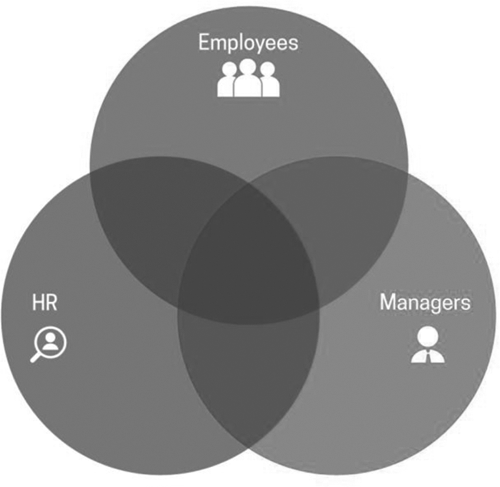
Powerful “people” systems can facilitate HR’s journey to better engage and develop managers and employees
Powerful “people” systems can facilitate HR’s journey to better engage and develop managers and employees
In setting the overall program structure, you will need to first understand the profile of an engaged employee. The engaged employee knows his or her place in the organization and has a sense of purpose and loyalty. Beyond this, his or her individual aspirations are aligned to the organization’s objectives.
These new engagement systems are very mobile and social to empower employees at all levels of the organization.
Managers get tools to make coaching and feedback easy.
Employees are empowered to create their own goals, recognize one another’s accomplishments and share their opinions and sentiments.
The simplicity and accessibility of the data is now real-time. It has been brought back from the dead! HR and executive leadership gain a clear line of sight into what teams (or individuals) are thriving and those that need some attention.
They also gain unprecedented insights into their workforce and the opportunity to have a real dialog with a highly valuable (almost priceless) repository about what your people are doing, their history and experiences at work and how they progress in their careers. This can be used to address specific business problems (e.g. how to improve sales productivity, improve the leadership pipeline, reduce fraud or accidents, improve retention, etc.).
Current technologies and progressive modern-day workplaces offer HR leaders many opportunities to become more strategic and help their managers and employees become more empowered, aligned and productive.

