This study explores the integration of digital technologies, vehicle routing optimization and continuous improvement principles (Lean and Six Sigma) to collectively enhance transportation efficiency and reduce negative environmental impacts. It aims to clarify how these complementary approaches contribute to reducing greenhouse gas (GHG) emissions, fuel and energy consumption and routing inefficiencies.
A systematic literature review (SLR) was performed, examining 87 resource materials from SCOPUS. The review synthesizes research on digital technologies, green vehicle routing and continuous improvement and identifies key performance indicators (KPIs) and critical factors associated with environmental sustainability and operational efficiency in transportation systems.
The study develops an integrative conceptual framework that positions digital technologies as enablers of data availability, real-time visibility and predictive decision-making, vehicle routing optimization as the operational execution mechanism translating data into emission-reducing routing decisions, and continuous improvement, operationalized through Lean Six Sigma, as a sustaining mechanism that supports process stability and long-term environmental performance. Environmental KPIs such as fuel and energy consumption, emissions and route efficiency, link these elements and enable systematic performance monitoring. The findings suggest that integrating these components can reduce unnecessary trips, idle time and resource waste while improving operational efficiency and environmental outcomes.
The framework is conceptual and requires empirical validation across different transportation contexts.
The framework supports practitioners and decision-makers in implementing targeted strategies to achieve both operational improvements and environmental sustainability goals.
This research integrates digital transformation, continuous improvement (Lean and Six Sigma) and vehicle routing optimization into a unified framework for sustainable and green transportation, addressing a fragmented gap in previous research.
1. Introduction
1.1 Background
Transportation and logistics are crucial to global economies (Juan et al., 2016; Ren et al., 2023). However, air pollution has become the greatest threat to human health, with transportation being one of its major sources (Li et al., 2023; Song et al., 2024). The transportation sector is a major contributor to greenhouse gas (GHG) emissions, leading to global warming and climate change (Kaabachi et al., 2017; Reyes-Rubiano et al., 2019). More recent studies continue to highlight this impact (Vishkaei and De Giovanni, 2024; Yildizbasi et al., 2025). Rapid urbanization further intensifies these challenges through increased traffic congestion, environmental degradation, transportation bottlenecks and waste management issues (Bouleft and Elhilali Alaoui, 2023; Ramírez-Villamil et al., 2023). Additionally, truck idling leads to constant exhaust emissions, noise and visual pollution, and increased traffic congestion (Salehi-Amiri et al., 2022). This combined with increasing freight traffic in urban areas are severely compromising city sustainability and livability via increased congestion, emissions and reduced road safety (Giuffrida et al., 2022).
Furthermore, transportation and logistics are not only characterized by significant carbon emissions but also high energy consumption. Transportation accounts for substantial amount of oil consumption, significantly impacting the environmental by burning petroleum and releasing substantial amount of GHG emissions (Garmsiri et al., 2013; Jabir et al., 2017). GHG emissions are also affected by driving style, vehicle load and routing decisions (Dutta et al., 2021; Luo et al., 2021). In particular, waste collection vehicles normally follow fixed routes without real-time bin status, leading to wasted resources and time due to empty or overfilled bins, negatively effecting the environment (Hrabec et al., 2019; Dobrilovic et al., 2024). As a result, waste transportation significantly impacts the environment, accounting for approximately 30% of emissions, worldwide (Idrissi et al., 2024).
To address these environmental concerns, green and smart logistics approaches have gained increasing interest, aiming to lower the environmental and energy impact of transportation activities using modern technologies (Su and Fan, 2020; Jammeli and Verny, 2022) and advanced transportation planning (Jabir et al., 2017). For instance, minimizing carbon emissions is crucial in logistics and transportation (Kirci, 2016; Jammeli and Verny, 2022), and electric vehicles (EVs) offer a new solution to this problem (Wang et al., 2023). Additionally, the European Union (EU) has aimed to reduce least 60% GHG emissions by 2050 via transitioning to EVs and hybrids (Jelen et al., 2022).
Digital technologies like the Internet of things (IoT), artificial intelligence (AI), machine learning (ML), blockchain and cloud computing play a crucial role in facilitating the sustainable transition by improving resource flow optimization, enabling predictive maintenance and real-time decision-making (Gomes et al., 2021; Yildizbasi et al., 2025). These digital tools are crucial for addressing city logistics externalities, such as traffic congestion, GHG emissions and air pollution (Sicilia-Montalvo et al., 2013; Calvet et al., 2021).
Despite technology advancements, optimizing logistics and transportation remain crucial for mitigating the negative environmental impact (Li et al., 2023). Green distribution network planning has given rise to green vehicle routing problem (GVRP) and related variants, which optimizes routes to minimize travel distance and number of required vehicles, while reducing travel time, loading and unloading stops, air and noise pollution and traffic congestion (Jabir et al., 2017; Salehi-Amiri et al., 2022). Green logistics optimize logistics operations to minimize environmental impact and maximize resource utilization, aligning with principles of sustainable development (Su and Fan, 2020). Thus, vehicle route optimization represents a key operational mechanism for translating technological capabilities into measurable environmental sustainability outcomes in transportation and logistics.
1.2 Study objectives
Urban growth and the significance of mobility within cities have spurred research on minimizing traffic congestion, its environmental impact and enhancing travel efficiency (Calvet et al., 2021; Gomes et al., 2021). Minimizing travel distance, cost and environmental impact are key aspects in urban freight transportation (Gayialis et al., 2018). Implementing a holistic view of transportation infrastructure and emerging technologies will yield more enduring and comprehensive outcomes in mitigating the negative environmental impact of the transport sector (Yildizbasi et al., 2025). Achieving these goals requires not only advanced routing models and digital tools but also organizational and process-oriented approaches that support sustained performance improvements.
Continuous improvement methodologies, including Lean, Six Sigma, Lean Six Sigma and the broader Kaizen philosophy, have been widely applied to eliminate waste, improve process stability and enhance operational efficiency across sectors such as manufacturing (Edirisuriya et al., 2018) and healthcare (Mohammad Sultan Ahmad, 2022; De Koeijer et al., 2024). However, according to various studies, their application within transportation and logistics, particularly in environmentally oriented contexts, remains limited and underexplored (Villarreal et al., 2016; Kuvvetli and Firuzan, 2019; Hajji et al., 2025). Few studies, such as Briones-Chávez et al. (2025), have linked continuous improvement techniques in transportation sector but they have focused on enhancing operational efficiency and timely order fulfillment. Likewise, some studies have indicated general synergies between industry 4.0 and total quality management (TQM) principles, research directly exploring industry 4.0's connections with continuous improvement tools and principles remains limited (Chiarini, 2020).
Hence, the aim of this study is to explore the integration of digital technologies, vehicle routing optimization and continuous improvement techniques, with the goal of optimizing transportation and logistics operations with reduced environmental impact. The study focuses exclusively on environmental sustainability in transportation and logistics, particularly GHG emissions, fuel and energy consumption and route efficiency. Social and economic sustainability dimensions are out of the scope of this study and are reserved for future research.
1.3 Research gap and contribution
Despite the growing body of literature on digital transformation and sustainability in transportation and logistics, existing studies remain fragmented across several largely disconnected research streams. For instance, one body of research focuses on digital technologies such as IoT, big data analytics and AI for improving logistics efficiency and reducing environmental impacts. While another substantial body of work emphasizes vehicle route optimization models, including VRP and its green variants, as technical solutions for minimizing fuel consumption, travel distance and GHG emissions. However, these two streams are rarely integrated within an organizational or process-oriented framework.
Similarly, continuous improvement approaches, such as Lean, Six Sigma, Lean Six Sigma and the broader Kaizen philosophy, have been widely applied to enhance operational efficiency and waste reduction; however, their role in digitally enabled, environmentally sustainable transportation systems remain underexplored. In particular, the literature lacks a structured understanding of how continuous improvement methodologies can enable, stabilize and continuously enhance the environmental benefits generated by digital technologies and vehicle routing optimization solutions. Existing studies tend to either emphasize technical optimization models or focus on digitalization at a high level, without sufficiently accounting for the organizational capabilities required to sustain environmental performance improvements over time.
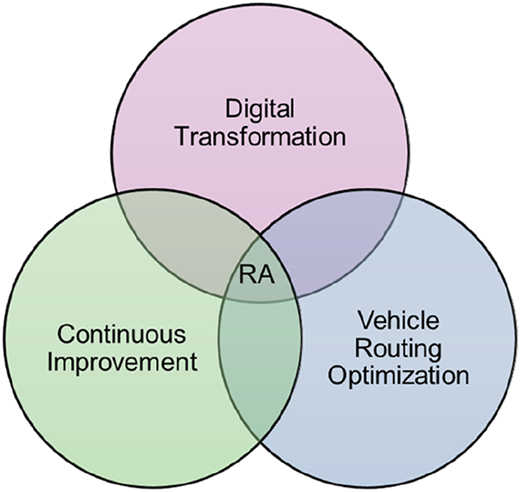
To address these gaps, this state-of-the-art study conducts a systematic literature review (SLR) integrating three domains: (1) digital transformation in transportation and logistics, (2) vehicle routing optimization as an operational mechanism for environmental impact reduction and (3) continuous improvement methodologies as enabling organizational capabilities. Unlike prior studies that treat these domains independently, this study synthesizes these streams to explain how digital technologies support vehicle routing optimization, and how continuous improvement approaches facilitate the effective and sustained deployment of these digital routing solutions to achieve environmental sustainability outcomes, as illustrated in Figure 1. The study makes three contributions. First, it consolidates fragmented research by explicitly linking digital technologies, vehicle routing optimization and environmental performance indicators. Secondly, it clarifies the role of continuous improvement, conceptualized as operational excellence and kaizen-based practices as a critical enabler strengthening the digitalization–environmental performance relationship. Thirdly, it proposes a conceptual framework that captures the interaction among digital transformation, vehicle routing optimization and continuous improvement, thereby providing a theoretically grounded foundation for future empirical research and practical implementation in sustainable transportation and logistics.
Hence, we pose the following research questions (RQs):
How does digital transformation play a positive role in reducing the negative environmental impacts of transportation and logistics systems?
What key environmental performance indicators (KPIs) and factors are most frequently used to assess the environmental sustainability of transportation and vehicle routing operations?
How do digital transformation, continuous improvement principles and vehicle routing optimization interact with one another?
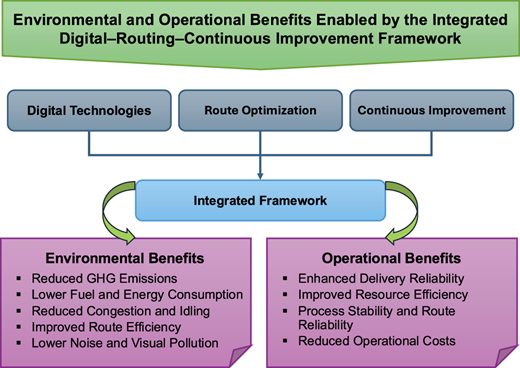
Figure 1 illustrates the conceptual research framework underpinning this study, highlighting the integration of digital technologies, vehicle routing optimization and continuous improvement practices in enabling sustainable transportation outcomes. Digital technologies, such as IoT, AI, ML, big data analytics and cloud computing, act as key technological drivers by enhancing real-time visibility, data availability and decision-making capabilities within transportation systems. Vehicle routing optimization functions as the operational execution mechanism, translating digital insights into efficient routing, scheduling and fleet utilization decisions that directly influence fuel consumption, energy use and greenhouse gas emissions. Continuous improvement practices, operationalized through Lean Six Sigma methodologies and tools, serve as enabling mechanisms that support process stability, waste elimination, standardization and the sustained refinement of digital and routing solutions. Through this synergistic interaction, transportation organizations can achieve measurable environmental and operational improvements, including reduced emissions, minimized resource waste, and optimized last-mile delivery performance in urban contexts.
2. Relevant literature
2.1 Digital technologies for environmentally sustainable transportation
Advancements in digital technologies have propelled the development of smart logistics, revolutionizing decision-making processes in transportation and distribution systems. Digital technologies such as AI, big data, the Internet, IoT, sensors, cloud computing and web-based platforms are increasingly used to optimize logistics and distribution operations and enhance service quality (Su and Fan, 2020; Zahid et al., 2025). These technologies significantly improve logistics efficiency, conserving energy and resources and reducing costs (Giuffrida et al., 2022; Ren et al., 2023), thereby supporting environmental sustainability (Bouleft and Elhilali Alaoui, 2023; Giovannelli and Vicente, 2023). Modern cloud-based platforms, in particular, offer superior speed and efficiency over traditional methods (Zhou et al., 2024), evolving as a future standard for data storage, processing and management (Edirisuriya et al., 2018).
IoT technologies play a significant role in smart logistics and sustainable transportation by enabling real-time data collection, tracking and monitoring of goods, vehicles and fleets (Farahpoor et al., 2023; Zahid et al., 2025). IoT-based systems support efficient logistics planning (Cao et al., 2022) and implementing sustainable smart cities initiatives including smart waste management (Akbarpour et al., 2021). In waste collection, IoT enabled smart bins monitor waste fill levels and generate alerts when bins are full, reducing uncertainty regarding waste levels and preventing unnecessary trips (Sarvari et al., 2020; Idrissi et al., 2024). This results in improved resource utilization, profitability and environmental performance for waste management companies (Bouleft and Elhilali Alaoui, 2023). New technologies like unmanned aerial vehicles (UAVs) and autonomous fleet of robots with optimized routes further enhance waste collection efficiency and sustainability by reducing energy consumption, emissions, labor needs and enhancing resource utilization (Justo et al., 2023; Dobrilovic et al., 2024).
Recent advances in sensors and IoT, along with the large amount of resulting data, are driving the increased use of big data analytics including ML and AI, in addition to traditional optimization techniques (Chiarini, 2020; Giuffrida et al., 2022), offering new opportunities to further enhance logistics efficiency and better decision-making (Shao et al., 2019; Ramírez-Villamil et al., 2023). Big data analytics enable real-time traffic information sharing (Sbai et al., 2024), improved traffic forecasting and travel time predictions between delivery points (Gayialis et al., 2018). It further uncovers hidden patterns and important correlations that support more accurate and responsive decision-making (Edirisuriya et al., 2018; Clancy et al., 2023). Compared to traditional information systems, these data-driven approaches are crucial for addressing dynamic and time-sensitive VRP variants and providing more dependable solutions (Gayialis et al., 2018). Additionally, big data analytics and IoT also aid in enhancing driver safety (Chocholáč et al., 2023). Asymmetric and insufficient information has complicated vehicle control traditionally, but smart logistics can solve this through intelligent data acquisition, analysis and processing (Su and Fan, 2020).
AI and ML are increasingly integrated into decision support systems across various sectors, such as waste management, energy, transportation and logistics. For instance, by leveraging AI and big data in transportation, these approaches can forecast energy consumption prediction for EVs, traffic and weather conditions to generate optimized, demand aware routing plans that are more efficient and sustainable (Gayialis et al., 2018; Jelen et al., 2022). In waste management and smart cities, AI is used for predictive analytics, such as forecasting waste generation and determining optimal bin allocation (Boresta et al., 2024; Rahman et al., 2024).
Furthermore, AI-driven optimization models and ML algorithms can be applied to vehicle routing, adaptable to various VRP variants (Fitzpatrick et al., 2024; Khankhour et al., 2024), intelligently balancing distance, time and resource constraints (Hanaa and Benhra, 2024). Moreover, AI and ML methods are increasingly integrating with traditional vehicle routing optimization models, providing precise predictions for supply chain challenges like demand forecasting, routing, tracking, anomaly detection and real-time adaptation to disruptions such as congestion, delays and accidents, improving operational efficiency, safety and environmental performance (Giuffrida et al., 2022; Chocholáč et al., 2023). Reinforcement learning and neural network-based approaches are particularly effective in addressing the exponential complexity of traditional pathfinding by enabling real-time, adaptive decision-making in dynamic environments (Basso et al., 2022; Qv et al., 2024). These capabilities facilitate the creation of integrated and learning oriented supply chains with continuous feedback loops (Vishkaei and De Giovanni, 2024). In short, AI and ML can optimize real-time car routing, leading to increased efficiency, cost reduction and improved customer satisfaction (Ara et al., 2023).
Lastly, AI, GPS and automation technologies are driving logistics automation through robots, autonomous vehicles including unmanned aerial vehicles (UAVs) and unmanned ground vehicles (UGVs), further improving routing efficiency, loading and unloading operations and last-mile delivery (Hanaa and Benhra, 2024; Wei et al., 2025). For instance, automation via robots can enhance loading and unloading activities while minimizing errors (Deesrisak et al., 2019). The study by Gupta et al. (2022) involves fleets of robots assisting with smart municipal waste management in a city. Urban AI, particularly self-driving cars, is vital for smart city transportation, with more cities permitting fully autonomous vehicles without human intervention (Giovannelli and Vicente, 2023).
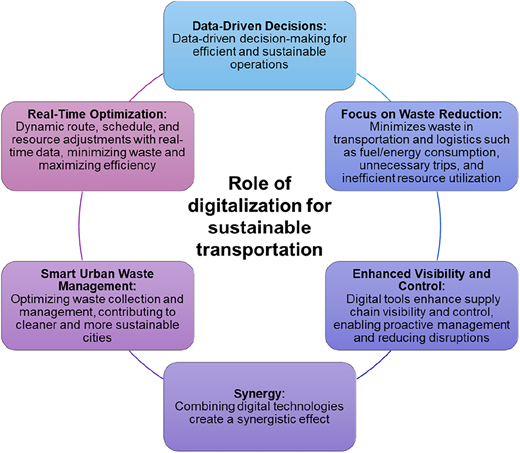
Overall, the combined use of AI, ML, big data, IoT and automation enables smart logistics systems that enhance operational efficiency, support real-time and predictive decision-making, reduce energy consumption and emissions, and facilitate the transition toward environmentally sustainable transportation and logistics. Technological advancements and environmental considerations are the main forces driving the adoption of smart technologies in fleet management (Zahid et al., 2025). Figure 2 illustrates the role of digitalization toward sustainable transportation and logistics, addressing environmental concerns and GHG emissions. Despite their potential, the literature indicates that digital technologies alone do not guarantee sustained environmental performance improvements; their effectiveness depends on how digital capabilities are operationalized through routing decisions and embedded within organizational improvement practices.
2.2 Vehicle routing optimization for environmental sustainability in transportation
Vehicle routing optimization has become a grown challenge in transportation and logistics, as it is directly associated with reducing costs, operational efficiency and environmental sustainability (Gomes et al., 2021; Vishkaei and De Giovanni, 2024). It reduces fuel consumption, travel distance, carbon emissions and operating costs (Sicilia-Montalvo et al., 2013; Cerrone and Sciomachen, 2022), while enhancing service reliability and customer relations by timely deliveries and environmental sustainability (Gomes et al., 2021; Luo et al., 2021). Consequently, VRP is a key topic in transportation, aiming to optimize delivery routes, minimizing distance and capacity constraints (Tsang et al., 2018; Frias et al., 2023), aiding in urban fleet planning and distribution of goods (Akbarpour et al., 2021).
Numerous VRP variants have been studied and developed to address operational and environmental objectives (Sarvari et al., 2020; Giuffrida et al., 2022). VRP models that address environmental issues, particularly GHG emissions minimization, are known as GVRP (Erdoĝan and Miller-Hooks, 2012; Sabet and Farooq, 2022). GVRP prioritizes energy conservation, emission reduction, waste valorization and sustainable fleet utilization, including the use of alternative fuel vehicles and mixed fleets (Juan et al., 2016; Li et al., 2023). Integrating IoT and GVRP revolutionizes fleet management by tackling both operational inefficiencies and environmental challenges (Zahid et al., 2025). In similar manner, the increase in EVs has led to the development of electric vehicle routing problems (EVRP), a GVRP variant, focusing on energy efficiency in their objective functions, often incorporating battery constraints, charging infrastructure, time windows and stochastic energy consumption, to minimize costs, emissions and carbon footprint (Basso et al., 2021; Jelen et al., 2022). Extensions such as VRP with backhauls, time windows and reverse logistics further lowers GHG emissions (Kirci, 2016; Boresta et al., 2024).
VRP-based optimization has been implemented across various industries, including municipal solid waste management (MSWM), where capacitated VRP (CVRP) models, focusing on vehicle capacity constraints, are used to minimize vehicle numbers, travel time and fuel consumption while maximizing service efficiency and profitability (Akbarpour et al., 2021; Rahman et al., 2024). Optimized routing in waste collection and urban logistics reduces idling, congestion and pollution, which are major contributors to urban emissions (Hrabec et al., 2019; Salehi-Amiri et al., 2022).
Vehicle route emissions and fuel consumption are affected by multiple factors, including vehicle speed, distance traveled, load, vehicle type, operational elements, traffic conditions, road characteristics (Guo et al., 2018; Cao et al., 2022) as well as the driver's behavior (Gayialis et al., 2018; Lacomme et al., 2021). Speed and load variations significantly affect fuel use and pollutant emissions, particularly in GVRP and EVRP contexts (Su and Fan, 2020; Basso et al., 2021). While higher vehicle load improves transportation cost-effectiveness but increases fuel consumption (Ren et al., 2023; Idrissi et al., 2024), especially on steep or congested routes (Gomes et al., 2021; Vishkaei and De Giovanni, 2024). Energy consumption is a critical factor in EV routing and is influenced by factors like weather, traffic and driver behavior (Jelen et al., 2022; de Gauna et al., 2023). Hence, optimized route planning enhances operational efficiency by minimizing travel distance, transportation time, fuel and energy consumption, which significantly reduces costs, vehicle requirements and environmental impact.
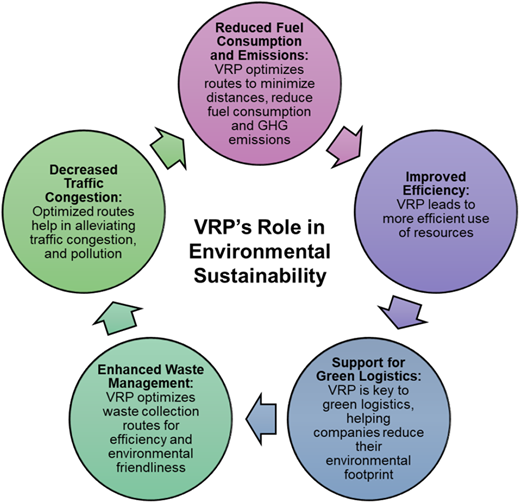
Overall, VRP and its environmentally oriented variants reduce travel distance, vehicle operating hours, fuel consumption and fossil fuel dependence by eliminating unnecessary trips and improving route efficiency. Dynamic and data-driven routing optimization methods are therefore essential for achieving green logistics, lowering costs and mitigating environmental impacts. Figure 3 outlines a simplified illustration of the role of vehicle routing optimization in enhancing environmental sustainability in transportation systems. While these VRP models demonstrate substantial potential for reducing emissions and energy consumption, many studies remain technically oriented, with limited attention to organizational implementation, long-term use and performance sustainability.
2.3 Continuous improvement as an enabler of environmentally sustainable transportation
In this study, continuous improvement is conceptualized as an overarching philosophy aimed at the systematic and ongoing enhancement of processes, performance and value creation. By consolidating the underlying concepts, Lean and Six Sigma are positioned as operational excellence methodologies that operationalize this philosophy through structured improvement approaches. These methodologies are positioned not as independent management systems but as enablers through which continuous improvement can be implemented and sustained in transportation and logistics operations.
Lean thinking emerged from the study of the Toyota Production System and was later conceptualized as “Lean production” by Krafcik (1988) and popularized by Womack et al. (1990). Lean methodology systematically identifies and eliminates waste to maximize value for its customers by optimizing processes and removing activities that do not add value (Zhang et al., 2016; Briones-Chávez et al., 2025). Waste (muda), in lean thinking, is considered as a resource use without value creation, and it encompasses categories, namely, overproduction, waiting-time, unnecessary transportation, rework, excess inventory, unnecessary motion and defects (Villarreal et al., 2016; Sianesi, 2021) and also underutilized skills (Sreedharan et al., 2018). By applying lean principles, industries can achieve sustainability through waste reduction, decreased material, energy and water consumption, while producing capital gains (Sanchez Rodrigues and Kumar, 2019; Sumantri, 2019). The main aim of lean management is continuous improvement (CI), also known as kaizen in Japanese culture, to enhance productivity, customer satisfaction, cost reduction and long-term competitiveness (Paul Brunet and New, 2003; Suárez-Barraza et al., 2011). Thus, by reducing transportation waste, idling, unnecessary movement and excess inventory, lean principles can directly support reductions in energy use and emissions in logistics and transportation systems.
Kaizen is a concept focusing on continuous workplace improvement for technological advancement, employee development and process optimization (Edirisuriya et al., 2018; Sianesi, 2021). It fosters a mindset where continuous improvement (incremental in nature) makes radical change and new technologies easier to accept while operating as a seamlessly integrated component of a broader operations planning system (Paul Brunet and New, 2003). Kaizen has been viewed as a management philosophy, a core element of TQM among other quality management traditions and a guiding principle of improvement methodologies. Since its introduction by Imai (1986), kaizen has become the definitive term for the Japanese management practices driving the country's operational success (Suárez-Barraza et al., 2011). It is characterized by waste reduction, discipline, order and standardization (Paul Brunet and New, 2003). According to Imai (1997), as referred by Lizarelli et al. (2025), kaizen philosophy drives competitive advantage through continuous, incremental improvement.
Kaizen philosophy also prioritizes human engagement and collective effort over purely technical enhancements to drive organizational change. Building on Imai's (Imai, 1986, 1997) foundational link between kaizen and core operational metrics (Quality, Cost, Delivery and Volume), Lizarelli et al. (2025) extends kaizen to broader strategic dimensions like environmental, social and governance (ESG) integration. Kaizen advances ESG goals by integrating lean principles with Industry 4.0 real-time monitoring and data analytics to transform waste reduction and employee empowerment into measurable social and environmental impact (Lizarelli et al., 2025).
Lean tools such as 5S, Just-in-Time (JIT), Kanban, value stream mapping (VSM), Jidoka and Poka-Yoke are treated as process-level enablers and tools of continuous improvement by identifying waste, improving flow, standardizing operations and enabling rapid problem detection and resolution. The 5S methodology supports this philosophy by providing a structured approach to effectively eliminate waste through Sort (Seiri), Set in Order (Seiton), Shine (Seiso), Standardize (Seiketsu) and Sustain (Shitsuke) (Edirisuriya et al., 2018; Briones-Chávez et al., 2025). For instance, sorting and setting in order effectively optimize processes (Edirisuriya et al., 2018), and standardized work reduces movement and enhances efficiency (Briones-Chávez et al., 2025).
JIT is a principle that aims to minimize waiting times, primarily in manufacturing, for optimal resource utilization by eliminating both human and machine idleness (Edirisuriya et al., 2018). Similarly, kanban enhances efficiency and performance by visualizing work and limiting work in progress (Hajji et al., 2025). Likewise, VSM efficiently identifies waste in specific areas using quantitative data analysis (Deesrisak et al., 2019; Briones-Chávez et al., 2025) and can map processes within transportation routes to highlight critical points in logistics functions (Edirisuriya et al., 2018). VSM visually reveals wastes and pinpoints improvement opportunities, demonstrating lean system benefits (Mohammad Sultan Ahmad, 2022). Jidoka is a Lean tool that stops production instantly upon error detection at any stage, and error must be resolved before resuming production. While the poka-yoke method, which means error proofing, provides notifications before a system generates an error; preventing errors and offering a more meaningful application of the jidoka concept (Edirisuriya et al., 2018; Sianesi, 2021). Poka-yoke and standard work procedures ensure operational consistency by orderly preventing and eliminating recurring errors (Hajji et al., 2025).
Six Sigma, another continuous improvement methodology, that originated at Motorola and popularized by General Electric, is a powerful process improvement methodology. Six Sigma focuses on eliminating variations and defects in processes using statistical tools to identify deviations, root causes and enhance overall process capability (Zhang et al., 2016; Sreedharan et al., 2018). It aims to reduce process variation to 3.4 defects per million opportunities (Mohammad Sultan Ahmad, 2022) and focuses on enhancing the process capability rather than the product characteristics (Kuvvetli and Firuzan, 2019). Six Sigma tools usually include management system analysis (MSA), quality function deployment (QFD), design of experiments (DOE), analysis of variance (ANOVA), non-parametric methods, regression analysis, gauge repeatability and reproducibility, failure mode and effect analysis (FMEA), suppliers-inputs-process-outputs-customers (SIPOC) diagrams and statistical process control (SPC) (Zhang et al., 2016). SPC is a fundamental component of Six Sigma, quality control and TQM (Chiarini, 2020; Clancy et al., 2023). These statistical tools are crucial for process monitoring, analyzing factors, predicting responses and identifying root causes (Garmsiri et al., 2013; Sianesi, 2021). By merging Lean's practical simplicity with statistical precision, these tools create a powerful framework for sustained continuous improvement (Hajji et al., 2025).
The define-measure-analyze-improve-control (DMAIC) approach is used for managing Six-Sigma projects (Clancy et al., 2023) while the plan-do-check-act (PDCA) cycle is typically used for managing lean projects (Zhang et al., 2016). DMAIC methodology systematically eliminate defects by guiding teams from defining the problem, measuring current process capabilities, analyzing root causes, to controlling improved processes through documenting procedures, training employees and establishing monitoring plans (Sreedharan et al., 2018; Kuvvetli and Firuzan, 2019).
In short, Lean is framed as optimizing flow and waste elimination, while Six Sigma improves process stability and variation reduction. Despite their differences, both aim to improve processes by minimizing waste, improving product quality and reducing costs (Clancy et al., 2023). Integrated Lean Six Sigma combines Lean's waste elimination focus with Six Sigma's statistical rigor to reduce inefficiencies and process variation and drives sustained organizational improvement (Mohammadi et al., 2023; Hajji et al., 2025). When powered by IoT, simulation and big-data analytics, Lean Six Sigma enables real-time optimization and defect-free operations across supply chains (Mohammad Sultan Ahmad, 2022). Lean Six Sigma has matured into a primary framework for continuous improvement across both industrial and service industries (Hajji et al., 2025).
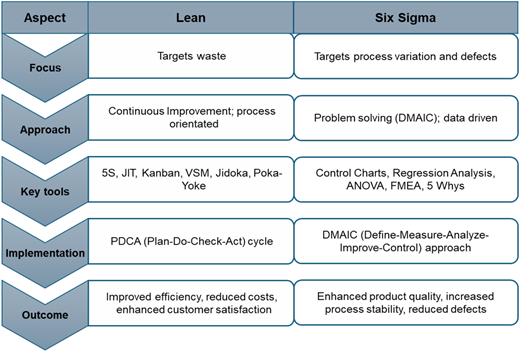
In the context of environmentally sustainable transportation, continuous improvement does not directly generate environmental outcomes in isolation but rather, it enables the consistent implementation, monitoring and refinement of digitally enabled routing solutions. By embedding environmental indicators into standard operating procedures and improvement cycles, continuous improvement practices support long-term reductions in emissions, energy consumption and resource waste. Figure 4 shows a brief overview of the comparison between these two improvement principles.
3. Methodology
3.1 Research strategy
The research strategy employed in this paper involved a SLR methodology exploring the role of digitalization and vehicle routing optimization in reducing the negative externalities caused by transportation and logistics. SLR employs a thorough, precise and clear process to evaluate relevant literature (Green et al., 2006), employing a replicable, scientific and transparent technique (Tranfield et al., 2003). Moreover, in this study, the Preferred Reporting Items for Systematic Reviews and Meta-Analyses (PRISMA) protocol was followed, providing a step-by-step process for searching, screening and analyzing research items.
3.2 Data collection
The research literature was collected using SCOPUS database which is one of the largest abstract and citation databases of peer-reviewed literature, ensuring the quality and reliability of the source material. Scopus was selected as the primary database because it offers broad and well-established coverage of journals in engineering, transportation, logistics, operations management and sustainability, which closely aligns with the interdisciplinary scope of this study. According to Mongeon and Paul-Hus (2016), it offers more extensive coverage than other major indexes, containing over 20,346 active journals compared to 13,605 in Web of Science, with particular strength in Business and Management. Its comprehensive indexing, rigorous journal selection criteria and advanced citation tracking capabilities enabled the systematic identification of relevant studies addressing digital transformation, vehicle routing optimization and continuous improvement in transportation systems. For instance, its rigorous selection criteria and support for 18 distinct field codes and complex Boolean logic ensure the necessary conditions for a reproducible systematic search (Gusenbauer and Haddaway, 2020). While multi-database approaches are common, the documented 84% overlap between Scopus and other principal indexes (Mongeon and Paul-Hus, 2016) justifies the use of a single, high-quality database which also enhances the transparency and replicability of the review process, as well as minimizing duplication and inconsistencies that may arise from overlapping database coverage, thereby supporting a focused and methodologically robust SLR.
Initially, the search string was performed using the option (Title, Abstract and Keyword) and keywords related to subject areas of digitalization, vehicle routing problems, continuous improvement principles and sustainable transportation and logistics, separated by Boolean Operators (AND) and (OR). However, this search string returns zero papers. The possible reason behind this outcome is the lack of research that incorporates principles, such as Lean and Six Sigma, into the digitalization of transportation and logistics systems. Because these continuous improvement principles have been traditionally employed to enhance processes and eliminate inefficiencies within the production and manufacturing contexts. This is also supported by the call of the special issue paper in the TQM journal that also highlights the need to integrate continuous improvement principles in transportation and logistics.
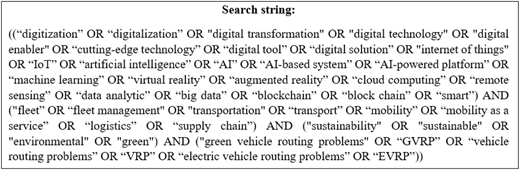
Hence, the initial search string was modified to remove the keywords related to continuous improvement principles and focused on keywords related to digitalization, vehicle routing problems and sustainable transportation, as shown in Figure 5. The aim was to find the KPIs and factors that can help in reducing the GHG emissions, which can then be separately integrated in the continuous improvement framework, to streamline transportation and logistics processes, eliminating inefficiencies, reducing resource waste and fostering sustainable transportation solutions. As demonstrated in Sreedharan et al. (2018) and Chiarini (2020), the search boundary was defined by the primary phenomena such as Industry 4.0, while continuous improvement served as the interpretive lens used during the content analysis phase. This allowed for a broader, integrative synthesis of how various mechanisms (digital or operational) contribute to the overarching goal of performance enhancement without prematurely narrowing the search results through overly restrictive continuous improvement specific keywords.
3.3 Screening process
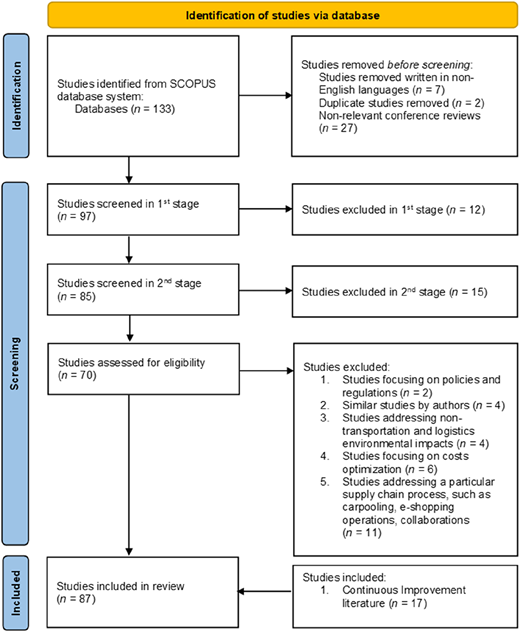
The modified search string was designed to identify the research on the application of digital technologies to enhance the sustainability of transport and logistics, with a specific focus on vehicle routing problems in reducing the negative environmental impacts. In the first step (identification), the search string generated 133 research documents, published between 2013 and 2025. The literature which were in language other than English were removed, as well as the duplicated documents, and non-relevant conference review proceedings. This step removed 29 documents, and the remaining research items (97) identified were then screened for subsequent stages.
In the second step (screening), first, the studies were filtered by reviewing the title, abstract and conclusion, to identify their relevance for this paper. The aim of this screening phase was to collect research items that fell within the context of digitalization and green vehicle routing problems in the transportation and logistics sector. As a result, 12 sources were excluded from further review. In the second step (screening), the remaining 85 research items were then assessed to find their eligibility in relation to the scope of this study. In this stage, researched literature was fully read and evaluated, resulting in 70 articles being selected for inclusion in the study. For example, studies that were focusing on the KPIs that can aid in removing the negative environmental externalities were included, and those that were solely focused on government policies and regulations, collaborations, costs optimization or on the emissions released from the farming activities were excluded. KPIs were inductively extracted from the literature during the SLR and selected based on relevance to environmental performance and applicability to vehicle routing and fleet operations. Additionally, a separate search string was also performed to obtain basic insights into continuous improvement principles using simplified keywords such as Lean, Six Sigma and Lean Six Sigma. As a result, 17 articles related to Lean and Six-Sigma principles were also added, making the total number of included literature to be 87. Figure 6 shows the overall SLR process incorporating the PRISMA protocol.
3.4 Inclusion and exclusion criteria
To ensure that the findings of this remained directly aligned with the research objectives, clearly defined inclusion and exclusion criteria were established prior to the screening process. The inclusion and exclusion criteria were designed to ensure that only studies explicitly addressing sustainable transportation and logistics, digital transformation, vehicle routing optimization and continuous improvement methodologies were retained. Studies that focused on broader environmental, economic or policy-level discussions without a clear connection to transportation operations, logistics optimization or process improvement were systematically excluded. Similarly, publications concentrating on highly technical, chemical or engineering design aspects without relevance to operational decision-making or sustainability outcomes were removed. A summary of the eligibility criteria applied during the SLR process is presented in Table 1. The results of the synthesis are presented in Section 4.
4. Results and synthesis of the literature review
This section presents the synthesized results of the SLR, focusing on how digital transformation, vehicle routing optimization and continuous improvement practices jointly contribute to environmentally sustainable transportation and logistics. The findings are organized thematically to reflect the mechanisms through which environmental performance improvements, such as reduced GHG emissions, lower fuel and energy consumption and improved route efficiency, are enabled, operationalized and sustained.
4.1 Digital transformation as an enabler of environmental sustainability
The reviewed literature demonstrates that digital transformation is a foundational enabler of environmentally sustainable transportation and logistics systems. Across the studies, digital technologies enhance real-time visibility, data availability, transparency and analytical decision-making, contributing to GHG emissions, lower fuel and energy consumption, and improved resource utilization (Su and Fan, 2020; Gomes et al., 2021; Giuffrida et al., 2022). Technologies such as IoT, sensors, AI, ML, big data analytics, cloud computing and GPS systems enable continuous monitoring of vehicles, traffic conditions, energy use and emissions. This real-time intelligence aids in predictive analytics, demand forecasting and adaptive decision-making, and thus enabling proactive responses to congestion, operational disruptions and fluctuating demand.
IoT-enabled applications are particularly prominent in urban logistics and municipal services such as waste collection. IoT-enabled monitoring of vehicles, traffic conditions, fuel and energy consumption and emissions allows organizations to detect inefficiencies, reduce unnecessary trips and idling and respond dynamically to operational disruptions. For instance, smart bins equipped with IoT sensors provide real-time fill-level data, reducing uncertainty and enabling optimized collection schedules that minimize unnecessary trips, idling and fuel consumption (Gayialis et al., 2018; Cao et al., 2022). Furthermore, cloud-based infrastructures further support scalable data integration across fleets, enabling coordinated and faster optimization compared with traditional planning methods. As mentioned by Zahid et al. (2025), cloud-based systems enable modern fleet management by providing centralized, scalable control that integrates real-time vehicle data to optimize decision-making.
AI- and ML-powered analytics enhance environmental performance by supporting traffic prediction, travel-time estimation, energy-consumption modeling (EVs) and dynamic routing under variable conditions. Likewise, reinforcement learning and neural network–based approaches help address the complexity of real-time routing and traffic variability, facilitating continuous optimization in dense urban environments. Automation technologies, including autonomous vehicles, robots and drones, contribute by improving routing precision, reducing operational errors and enhancing energy efficiency in last-mile delivery (Deesrisak et al., 2019; Gupta et al., 2022).
The synthesis further indicates that while digital technologies do not directly reduce emissions on their own, they create the technological foundation necessary for environmentally sustainable transportation when combined with optimization practices and structured operational improvements. The environmental role of these technologies is summarized in Table 2, which maps key digital tools to their applications and associated benefits, such as emission reduction, energy savings, improved routing and enhanced resource utilization. These transformative impact aid in transitioning toward sustainable transportation and logistics, answering RQ1.
Overall, Table 2 highlights how digital technologies collaborate to develop an integrated digital ecosystem that drives smart logistics, adaptive urban transportation planning and other intelligent solutions. By focusing on data-driven decision-making, automation, real-time responsiveness and optimization, it enhances efficiency, sustainability and service quality; driving sustainable operational performance.
4.2 Environmental implications of vehicle routing optimization
Vehicle routing optimization emerges as a central operational mechanism for achieving environmental sustainability in transportation systems. Optimized routing directly affects travel distance, fuel and energy consumption, vehicle utilization, congestion and GHG emissions (Kaabachi et al., 2017; Ren et al., 2023). The literature highlights a broad range of routing models designed to incorporate environmental objectives, including GVRP, EVRP, CVRP and time-window constrained VRP and dynamic and stochastic routing models. These models integrate environmental considerations such as emissions minimization, energy efficiency, battery constraints and charging infrastructure into their objective functions.
Empirical and applied studies consistently show that optimized routing aids in reducing unnecessary travel, vehicle idling and congestion which are key contributors to urban emissions and energy waste, particularly in municipal waste collection and last-mile logistics (Hrabec et al., 2019; Salehi-Amiri et al., 2022). When combined with real-time digital data, routing optimization becomes adaptive and responsive, allowing continuous adjustment to traffic conditions, demand variability and energy constraints. Based on the reviewed literature, vehicle routing optimization translates digital intelligence into measurable environmental outcomes, acting as the execution layer between data-driven insights and sustainability performance.
4.3 Role of continuous improvement in sustaining environmental performance
The literature emphasizes the specific role of continuous improvement in maintaining and scaling environmental performance over time. Lean principles support the elimination of environmental waste, such as unnecessary transportation, excess energy use and inefficient routing operations, particularly within logistics and service systems (Villarreal et al., 2016; Sanchez Rodrigues and Kumar, 2019). Kaizen promotes incremental, continuous enhancements that facilitate the adoption and institutionalization of digital and routing innovations in operational contexts (Edirisuriya et al., 2018; Sianesi, 2021).
Six Sigma complements Lean by reducing process variability through data-driven analysis, improving the reliability and repeatability of environmentally optimized routing and logistics processes. Prior studies such as Sreedharan et al. (2018) and Zhang et al. (2016) highlight that statistical control, performance monitoring and defect reduction can be particularly relevant in digitally enabled transportation environments, where deviations in routing efficiency, fuel consumption and emissions can be systematically detected and corrected. When integrated as Lean Six Sigma, these approaches provide a structured framework for monitoring, controlling and continuously improving environmental performance indicators, particularly in data-rich, digitally enabled transportation systems.
The findings confirm that continuous improvement is not a competing management paradigm, but a necessary organizational capability for sustaining environmental gains that can be achieved through digital transformation and routing optimization.
4.4 Environmental sustainability indicators in transportation and logistics
The RQ2 asked earlier was about the environmental KPIs that can aid in minimizing the environmental impact of transportation. To answer RQ2, Table 3 provides a clear and concise overview of the KPIs and factors for sustainable transportation, highlighting their measurement approaches, enabling digital technologies and associated routing optimization mechanisms. KPIs were identified inductively from the SLR, and only indicators and factors linked to environmental performance were retained.
Across the reviewed studies, such as Juan et al. (2016), Dutta et al. (2021) and Li et al. (2023), environmental sustainability is primarily evaluated using quantifiable indicators related to emissions, energy use, and operational efficiency, such as GHG emissions, fuel and energy consumption, travel distance, vehicle idle time and route efficiency, making these the most commonly reported environmental measures. For instance, vehicle idle time is included as a critical environmental indicator, as prolonged idling increases fuel consumption and GHG emissions without generating productive transport output, particularly in congested urban contexts (Hrabec et al., 2019; Salehi-Amiri et al., 2022). Similarly, fleet utilization is considered an important sustainability indicator, since improved vehicle utilization reduces the total number of vehicles required, thereby lowering aggregate fuel use, emissions and traffic congestion (Villarreal et al., 2016; Ren et al., 2023).
Table 3 is highly valuable for understanding the multifaceted approaches to reducing GHG emissions through routing and logistics optimization. It emphasizes the interconnectedness of various optimization efforts, from minimizing fuel usage through route planning and driving style adjustments to exploring alternative fuels and maximizing vehicle capacity, incorporating the transformative role of digital technologies as shown in Table 3. These indicators serve a dual purpose. They provide measurable evidence of improvement in environmental performance and act as control variables within continuous improvement and routing optimization frameworks. When integrated into digital monitoring systems, these indicators enable real-time performance tracking and support data-driven decision-making. These indicators collectively capture both direct and indirect environmental impacts of transportation activities and provide a structured basis for assessing the effectiveness of digital technologies and vehicle routing optimization strategies.
Ultimately, this highlights the diverse factors available to mitigate the environmental impact of transportation and promotes a holistic approach to achieving green logistics. In alignment with the defined scope of this study, only environmental sustainability indicators are included while social and economic indicators are excluded. The environmental KPIs identified from the literature and their corresponding applications are summarized in Table 3.
4.5 Integrated synthesis of digital technologies, vehicle routing optimization and continuous improvement
This subsection presents the core synthesis outcome of the study, integrating insights from the SLR to explain how digital technologies, vehicle routing optimization and continuous improvement practices jointly contribute to environmentally sustainable transportation and logistics. Rather than treating these domains as independent drivers, the synthesis demonstrates that their environmental value emerges primarily through their interaction.
Digital transformation functions as the technological enabler, providing real-time data acquisition, connectivity and analytical capabilities through technologies such as IoT, AI, ML, big data analytics, cloud platforms, and automation. These technologies enhance visibility across transportation systems, enabling continuous monitoring of vehicle location, traffic conditions, energy consumption and GHG emissions (Gayialis et al., 2018; Giuffrida et al., 2022). These capabilities also reduce information asymmetry and support predictive and adaptive decision-making across logistics and transportation operations. However, the literature such as Chiarini (2020) and Vishkaei and De Giovanni (2024), consistently indicates that digitalization alone does not guarantee environmental improvement; its sustainability impact depends on how digital insights are operationalized within logistics decision-making and integrated within structured performance management systems that enable ongoing monitoring and control.
On the other hand, vehicle routing optimization represents the operational execution mechanism through which digital capabilities are translated into measurable environmental outcomes. Advanced routing models, including GVRP, EVRP and dynamic and stochastic VRP variants, leverage digital data to optimize route selection, fleet utilization, travel distance and energy consumption. In practice, routing optimization minimizes unnecessary trips, reduces idle time, optimizes load distribution and incorporates dynamic traffic data to lower fuel and electricity consumption while improving service reliability and cost efficiency (Jabir et al., 2017; Vishkaei and De Giovanni, 2024). Through this mechanism, environmental performance improvements, such as reduced GHG emissions, lower fuel and electricity consumption, minimized idling and improved route efficiency, become achievable and quantifiable. The synthesis reveals that routing optimization acts as a critical bridge between digital intelligence and environmental sustainability outcomes. Nevertheless, without systematic monitoring and process control, routing improvements risk being short-lived or inconsistent.
Continuous improvement, operationalized through Lean, Six Sigma and Kaizen practices, serves as organizational enablers, ensuring that routing and digital solutions are systematically refined, standardized and sustained over time. Lean targets non-value-adding activities that drive fuel waste and emissions, while Six Sigma reduces process variation and maintains statistical control over indicators such as fuel efficiency, emissions and route deviations (Sreedharan et al., 2018; Sanchez Rodrigues and Kumar, 2019). Continuous improvement practices support the systematic standardization, monitoring and refinement of digital and routing processes by reducing operational waste, minimizing variability, embedding performance measurement routines and fostering a culture of incremental improvement. In this sense, continuous improvement does not function as a competing management paradigm, but rather as an organizational mechanism that institutionalizes environmental performance improvements over time. Together, Lean Six Sigma embeds a culture of structured problem-solving, standardization and ongoing refinement that sustains the environmental gains achieved through digital and routing innovations.
Importantly, the synthesis positions continuous improvement as a mediating and enabling mechanism between digital transformation and sustainability outcomes. Digital technologies provide data and analytical power while routing optimization converts this capability into operational decisions, and continuous improvement ensures that these decisions are consistently implemented, evaluated and refined. Through institutionalized monitoring and corrective actions, organizations convert technological capability into measurable environmental performance outcomes. This interaction allows organizations to move beyond one-off optimization initiatives toward learning-oriented and adaptive transportation systems capable of responding to dynamic environmental and operational conditions.
The integrated relationships identified through this synthesis are summarized in Table 4, which presents a consolidated framework linking digital technologies, vehicle routing optimization mechanisms and continuous improvement practices to key environmental sustainability outcomes in transportation and logistics. And maps them to the environmental indicators presented earlier in Table 3. As shown in Table 4, digital technologies primarily contribute through data generation, connectivity and predictive analytics; routing optimization translates these capabilities into reduced distance, energy use and emissions; and continuous improvement practices reinforce performance stability, waste elimination and long-term environmental gains including reductions in idle time and improvements in fleet utilization. This synergy clarifies the managerial discipline required to stabilize and sustain gains over time, and it constitutes the principal theoretical contribution of this study by directly addressing RQ3 and clarifying how the three domains interact.
Overall, the synthesis demonstrates that environmentally sustainable transportation is not driven by isolated technological or managerial interventions, but by the coordinated alignment of digital transformation, routing optimization and continuous improvement practices. This coordinated alignment explicitly integrates technological enablement, operational optimization and managerial discipline. This alignment enables transportation and logistics organizations to systematically reduce GHG emissions, optimize resource utilization and enhance environmental performance in a sustained and scalable manner including concurrent reductions in unnecessary travel distance and idle time alongside improved fleet utilization and operational efficiency.
Figure 7 provides an overview of the environmental and operational benefits enabled by the proposed integrated framework, illustrating how the combined application of digital technologies, vehicle routing optimization and continuous improvement practices contributes to improved environmental performance and operational efficiency.
5. Discussion
This study advances understanding of environmentally sustainable transportation by demonstrating that digital transformation, vehicle routing optimization and continuous improvement must be jointly implemented to generate and sustain environmental performance improvements. Previous studies have independently examined the environmental benefits of digital technologies and routing optimization in logistics and transportation systems; however, their interaction and long-term sustainability effects have received less structured attention (Su and Fan, 2020; Giuffrida et al., 2022; Li et al., 2023). Rather than treating these elements as independent solutions, the findings synthesized in Section 4 reveal a layered and reinforcing relationship that enables both environmental and operational gains.
Digital technologies provide the informational and analytical foundation for sustainability-oriented decision-making by enabling real-time data collection, predictive analytics and system-wide visibility. However, their environmental value materializes only when digital insights are embedded into operational decision mechanisms. Vehicle routing optimization serves this role by converting digital intelligence into actionable routing, scheduling and fleet utilization decisions that directly influence emissions, fuel and energy consumption and congestion. Continuous improvement practices, in turn, institutionalize these solutions by embedding standardization, monitoring and iterative learning into daily transportation operations.
Importantly, the discussion clarifies that environmental sustainability in transportation is not a purely technical optimization challenge. Instead, it represents a socio-technical system problem in which technological capability, operational design and organizational learning must evolve together. This perspective addresses a persistent gap in literature, where routing and digital solutions are often proposed without sufficient attention to their long-term organizational sustainability.
5.1 Integrated mechanisms for environmental sustainability in transportation
The findings indicate that the three core components examined in this study play distinct but complementary roles within an integrated sustainability mechanism. Digital transformation acts as an enabler by enhancing data availability, accuracy and responsiveness. Vehicle routing optimization functions as the operational execution layer, directly shaping travel distance, idling behavior, energy use and emissions. Continuous improvement methodologies, operationalized through Lean Six Sigma, serve as sustaining mechanisms that prevent performance deterioration and enable incremental optimization over time.
This integrated mechanism highlights the mediating role of continuous improvement between digital capabilities and environmental outcomes. This intermediating role aligns with studies in logistics and operations management that emphasize the importance of structured process improvement practices for sustaining performance gains derived from digital and optimization initiatives (Sanchez Rodrigues and Kumar, 2019; Chiarini, 2020). Lean and Six Sigma tools provide the structure through which routing algorithms, digital dashboards and sustainability indicators are translated into standardized processes, performance targets and corrective actions. By embedding environmental indicators within improvement cycles such as DMAIC and PDCA, organizations can systematically align routing efficiency with environmental objectives. From a theoretical standpoint, this mechanism-oriented perspective extends existing research by moving beyond static models of green logistics and proposing a dynamic and adaptive framework for environmental sustainability in transportation systems.
5.2 Environmental and operational benefits of the integrated framework
The findings of this study highlight that environmentally sustainable transportation is achieved not through isolated interventions, but through the integrated alignment of digital transformation, vehicle routing optimization and continuous improvement practices. The synthesis demonstrates how environmental performance improvements, such as reduced GHG emissions, fuel and energy consumption and inefficient routing, are generated, operationalized and sustained within transportation and logistics systems. Implementing the integrated framework can further support reductions in emissions, fuel use and waste by targeting KPIs and enabling more sustainable logistics operations.
A central insight is that digital transformation alone does not directly deliver environmental benefits. This observation aligns with prior findings that highlight the limitations of technology-centric sustainability initiatives when not supported by operational and managerial integration mechanisms (Chiarini, 2020; Giuffrida et al., 2022). Digital technologies enhance visibility, data availability and analytical capability; however, their environmental value emerges only when these capabilities are embedded within operational mechanisms. Vehicle routing optimization plays a critical role by translating digital intelligence into concrete decisions related to route selection, fleet utilization and scheduling, thereby enabling measurable environmental improvements, particularly in urban logistics and last-mile delivery contexts. For instance, the literature shows that route optimization reduces travel distance, fuel consumption and emissions, while green vehicle routing and load balancing further enhance energy efficiency and reduce carbon output (Tan and Huang, 2021; Vishkaei and De Giovanni, 2024). Additionally, according to the literature, vehicle sharing can also effectively alleviate urban traffic congestion and reduce empty vehicle runs, improving overall routing efficiency (Giovannelli and Vicente, 2023; Ren et al., 2023).
Vehicle routing optimization remains the primary operational pathway through which environmental objectives are realized. By minimizing travel distance, idling, congestion and inefficient vehicle utilization, routing optimization directly affects key environmental sustainability indicators commonly used in transportation research. Supported by real-time data and adaptive decision-making, green and electric vehicle routing models serve as practical tools for reducing environmental impacts. As mentioned in literature, transitioning to electric, hybrid, hydrogen-powered and alternative-fuel vehicles strengthens these effects, lowering both emissions and operating costs, especially when integrated with routing models and demand-management systems (Sanchez Rodrigues and Kumar, 2019; Wang et al., 2024).
A key theoretical contribution of this study lies in clarifying the role of continuous improvement. Lean, Six Sigma and Kaizen are positioned as enabling and sustaining mechanisms that institutionalize environmentally optimized processes. Continuous improvement mediates between digital and routing initiatives and long-term environmental performance by embedding standardization, performance monitoring and incremental learning into daily operations. Moreover, combining Lean and Six Sigma as Lean Six Sigma allows organizations to leverage their distinct strengths, to achieve the best synergy of both concepts leading to achieving greater performance than what either methodology can achieve alone (Zhang et al., 2016; Sianesi, 2021). Their integration can optimize logistics and fleet management, leading to environmental sustainability.
While the proposed framework is conceptually applicable across transportation systems where routing decisions significantly influence environmental outcomes, its practical implementation may require contextual adaptation depending on the transport mode. Road, rail, maritime and air transportation systems differ in infrastructure constraints, energy configurations and regulatory environments. Therefore, mode-specific validation and refinement represent important directions for future research.
The environmental indicators emphasized in this study, particularly GHG emissions reduction, energy efficiency and resource optimization, conceptually align with broader global sustainability frameworks such as the United Nations Sustainable Development Goals (SDGs), particularly those addressing climate action and sustainable cities, as well as environmental management standards such as ISO 14001. However, the present study does not aim to conduct a formal compliance or certification mapping. It rather focuses on the operational mechanisms through which environmental performance improvements can be achieved in transportation systems.
Overall, this study advances sustainability and operations management literature by offering an integrated, mechanism-oriented perspective on how digital technologies, routing optimization and continuous improvement jointly enable sustained environmental performance in transportation and logistics. This integrative perspective responds to recent calls in the literature for more process-oriented and system-level approaches to sustainable transportation that go beyond isolated technological or optimization interventions (Su and Fan, 2020; Vishkaei and De Giovanni, 2024). Hence, this integrated view provides a clearer foundation for both future research and practical implementation. By combining VRP models, digital tools and Lean Six Sigma, the framework provides a coherent foundation for reducing GHG emissions, lowering operational costs and improving fleet efficiency, thereby addressing the research questions of the study.
6. Conclusion
The transportation sector continues to contribute significantly to pollution, energy consumption and GHG emissions, driving global warming and climate change. This detrimental environmental impact underscores the urgency of reducing GHG emissions and advancing toward sustainable, resource-efficient systems. Addressing these challenges requires not only technological innovation but also integrated route planning and structured organizational mechanisms capable of sustaining environmental performance improvements. In this context, this study aimed to explore the integration of digital technologies, vehicle routing optimization and continuous improvement principles to enhance transportation operations while reducing environmental impact.
By synthesizing the fragmented literature, this original study advances knowledge by explicitly integrating digital technologies, vehicle routing optimization and continuous improvement within a unified environmental sustainability framework. Digital technologies such as IoT, AI, ML and cloud computing enhance data availability, real-time visibility, predictive capabilities and data-driven decision-making. Vehicle routing optimization translates these digital insights into operational actions that directly influence travel distance, fuel and energy consumption, and GHG emissions. Continuous improvement, operationalized through Lean Six Sigma methodologies, acts as a sustaining mechanism by embedding standardization, monitoring and iterative learning into transportation operations, thereby preventing performance deterioration over time.
The findings highlight the role of environmental KPIs, such as fuel consumption, energy efficiency, emissions and route efficiency, as measurable links between digitalization, routing decisions and continuous improvement practices. By integrating these elements, the proposed framework supports transportation organizations in reducing unnecessary trips, minimizing idle time, optimizing fleet utilization and lowering GHG emissions, while simultaneously improving operational efficiency and process stability. Hence, it functions not merely as a conceptual model but as a strategic tool, and a structured approach to reducing costs (fuel, energy, maintenance), increasing operational efficiency (optimized routes, reduced idle time), lowering environmental impact (carbon emissions), and leveraging digital tools to automate and enhance decision-making. Importantly, the study clarifies that Lean and Six Sigma are not alternative quality management systems competing with sustainability initiatives, but rather enabling methodologies that operationalize continuous improvement within digitally enabled and routing-intensive transportation environments.
Overall, this study contributes a structured and integrative perspective that connects technological capability with operational execution and organizational learning in the pursuit of environmentally sustainable transportation. While the framework offers a robust conceptual foundation, further empirical validation is required to assess its effectiveness across different transportation contexts and operational settings.
7. Implications
This study offers several important implications for both research and practice in environmentally sustainable transportation and logistics. From a research perspective, the proposed integrative framework provides a clear conceptual structure that distinguishes the complementary roles of digital transformation, vehicle routing optimization and continuous improvement. By positioning digital technologies as enablers, routing optimization as the operational execution mechanism and continuous improvement as a sustaining mechanism, the study supports future empirical research aimed at testing causal relationships, including mediation and moderation effects between digital enablement, routing performance and environmental outcomes. The identified environmental KPIs, such as fuel consumption, energy efficiency, emissions and route efficiency, as systematized in Table 3, also provide a structured basis for measurement and comparative analysis in future quantitative studies.
From a practical standpoint, the findings highlight that achieving environmental sustainability in transportation requires more than isolated technological investments or standalone routing solutions. Transportation and logistics managers can use the proposed framework to systematically integrate digital tools with routing optimization and continuous improvement practices, ensuring that environmental performance gains are embedded into daily operations and sustained over time. Lean Six Sigma methodologies offer structured mechanisms for monitoring environmental KPIs, standardizing routing processes, reducing waste (e.g. idle time, unnecessary trips) and preventing performance deterioration. By adopting this integrated approach, organizations can simultaneously reduce GHG emissions, optimize fuel and energy utilization, improve fleet utilization and enhance operational stability and efficiency in a measurable and repeatable manner.
8. Limitations and future work
This study is subject to several limitations that also highlight opportunities for future research. First, as a SLR, the proposed framework is conceptual in nature and does not involve empirical validation, statistical estimation or causal testing. Future studies may apply the framework using case studies, surveys or longitudinal operational data to assess its effectiveness in real-world transportation and logistics settings. Second, the study deliberately focuses on environmental sustainability to maintain analytical clarity, excluding social sustainability dimensions that could be incorporated in future research to develop a more comprehensive sustainability perspective. Third, the synthesis relies on published literature and is therefore influenced by database coverage and the rapidly evolving nature of digital technologies. Finally, transportation modes are examined collectively, and future research may explore mode-specific applications such as EV routing, urban freight distribution or municipal waste collection, to further refine and validate the framework.
The authors employed Microsoft Copilot in the writing process to refine language and improve readability in certain sections of the manuscript. All content was subsequently reviewed and edited by the authors, who accept full responsibility for the final published work.