This study explores the relationship between digital citizenship and religious moderation in shaping students’ character at Sekolah Menengah Atas Negeri 2 (SMAN 2/Public Senior High School 2) Bandung Indonesia (BI), a school employing blended and online learning.
Using a descriptive qualitative method, data were collected via literature review, educator interviews and participatory observation of students’ digital activities on online learning platforms and social media.
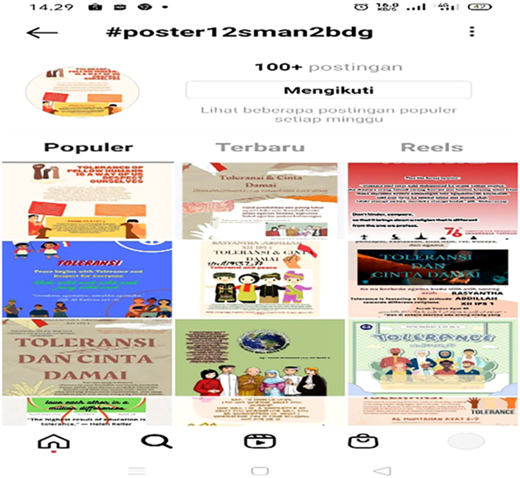
Findings reveal that integrating digital citizenship with religious moderation in open and distance education environments reduces digital radicalization risk, enhances intercultural understanding and strengthens moral resilience. Learning practices included curriculum integration with flipped classroom strategies using video materials, project-based learning (PjBL) through Instagram poster campaigns promoting tolerance and PjBL discussing religious hoaxes on social media. Key materials were delivered via asynchronous videos and interaine forums, reflecting distance education practices.
The research emphasizes how digital citizenship principles–ethics, literacy and security–integrate with religious moderation values to develop tolerant, critical and responsible traits.
Schools can promote inclusive digital behavior and religious moderation by running campaigns, creating ethical guidelines, using interactive learning and supporting student-led programs to build a school culture that values diversity and responsibility.
Combining digital citizenship and religious moderation in education helps teachers build students’ moral values, tolerance and empathy, shaping them into responsible individuals in the digital age.
The originality emphasizes the need for teacher training in digital pedagogy, curriculum support for digital literacy and religious moderation and community engagement to foster a positive digital learning environment.
Introduction
Digital technology has transformed how people, especially young people, communicate, learn and shape their identities. Over 70% of the global population uses the Internet, with Generation Z as the most active users, valuing online democracy (Hootsuite, 2023; Nyabola, 2024; Uçar et al., 2024). While the digital age offers benefits like easy information access and global collaboration, it also brings issues such as hoaxes, cyberbullying and online radicalization (J Soci Work Welf Policy, 2025). These challenges highlight the need for education that combines digital skills with spiritual values to build good character (Karim et al., 2023b, 2025). Digital citizenship practices also depend on organizational contexts (Ferraz et al., 2025), which is crucial in Open and Distance Education (ODE), where students learn with less supervision and need ethical, value-based learning.
Education serves as a bridge between rapid technological change and character building in youth (Casta et al., 2021; Rinto et al., 2020; Sahrodi and Karim, 2024). Philosophically, education develops the whole person–thinking, feeling and acting (Dewey, 1938). In the digital era, this means teaching both technical skills and human values through concepts like digital citizenship, which promotes responsible tech use and religious moderation, which fosters tolerance and balanced religious views (Alfiana et al., 2024; Muhajir et al., 2025; UAE Government, 2019). Tolerance and moderation are widely emphasized as essential, especially in ODE, where they help shape students’ character in online and blended learning environments (Ebniya, 2024; Lim et al., 2024).
Digital citizenship refers to a person’s ability to act responsibly in the digital world, including understanding digital ethics, safety and how to find and use information well (Ribble, 2015). At the same time, religious moderation encourages inclusive, tolerant and anti-extremist attitudes (Azra, 2019a, b). Combining these two ideas creates a strong foundation for building student character that can face problems like online radicalization and the spread of bad behavior in digital spaces (Kickbusch, 2025; Babu, 2023). This combination is especially useful in distance education, as mentioned in Table 1, where students often learn through online platforms without direct supervision, so personal values become more important than outside control.
This research builds on expert views linking technology, ethics and spirituality in education. Scholar such as Duan (2024) highlight the need for mindful, critical digital media use. Westheimer and Kahne (2004) emphasize that good digital citizenship requires moral responsibility and critical thinking. Campbell and Tsuria (2023) show that digital religion still influences young people’s morals, proving spiritual values matter online. In Indonesia, Hidayatullah (2021) and Awan (2020) stress combining religious moderation with media literacy to combat online radicalism (The Asia Foundation, 2021a). Nasrullah (2023) warns that without ethical and spiritual guidance, students may become confused about right and wrong (Campbell and Tsuria, 2021). These studies support merging digital citizenship and religious moderation to address ethical and spiritual challenges in today’s digital generation (Hidayatullah and Awan, 2024; Nasrullah, 2023; Ooi and Othman, 2023). Unlike most theoretical work, this research applies these ideas to online and blended learning focused on character in ODE.
Previous research also highlights character education’s importance in the digital era. Livingstone and Helsper (2007) found that digital media use shapes youth identity, requiring deeper digital literacy. Bawden (2008) views digital literacy as both a technical and cultural skill. Mukhibat (2020), Mukhibat and Erik (2024) and Erik et al. (2024) showed that including religious moderation in school helps students become more tolerant and resist radicalism. Subkhi (2022) found that combining digital citizenship with religious values improves critical thinking and ethical behavior online. These studies strongly support integrating digital citizenship and religious moderation to develop student character in the digital age (Alfiana et al., 2024).
This research fills an important but rarely studied gap: how digital citizenship and religious moderation work together to shape students’ character. While many studies have discussed these two topics separately, their integration is still limited. For example, Ribble (2015) focused on the technical and ethical sides of digital use but did not include religious or moral values. Likewise, Azra (2019a, b) and Utami et al. (2023) explained the value of religious moderation but gave little attention to its role in digital education. Dewey’s (1938) idea that education should fully develop a person also needs to be rethought in today’s digital world, especially with growing risks like online radicalization among students (Wahid Foundation, 2021a, b). In response, this study suggests a combined approach that brings together digital literacy, religious moderation and character education to help students become strong and ethical in the digital era. What makes this study new is how it applies this combined model directly in ODE, using flipped classrooms and project-based learning (PjBL) on digital platforms–methods that match current trends in online learning.
The urgency of this research is supported by legal foundations for character education in Indonesia. Law Number 20 of 2003 on the National Education System, especially Article 3, says that education should shape students to be faithful, pious and have good character. This goal is put into practice through the Ministry of Education and Culture Regulation Number 20 of 2018 on Strengthening Character Education, which focuses on Pancasila values–aligned with the ideas of religious moderation and digital citizenship. So, these legal and policy frameworks give strong support for combining both concepts into national education programs.
In the context of ODE, combining digital citizenship and religious moderation supports national efforts to keep education quality and build character in distance learning, especially after the pandemic. Besides the legal aspect, the link between character education and religious moderation is also supported by religious teachings. In Islam, religious moderation is based on the idea of ummatan wasathan–a balanced and fair community–mentioned in Surah Al-Baqarah verse 143 (Kultsum et al., 2022; Kampa, 2023). This value encourages harmony in religion, which is important when facing today’s digital challenges. Also, digital literacy is seen as a moral duty in Islam, as stated in Surah Al-Mujadila:11, which encourages learning and ethical behavior, including in digital environments (Royan and Masri’ah, 2023).
Therefore, it is very important to include these religious principles in digital education, especially in ODE, where religious values can be lost without proper guidance. Worldwide, following religious teachings closely is linked to positive behavior (Shah, 2025). Religious moderation is becoming more important to fight intolerance and radicalization, problems often made worse by digital technology (Nurhayati, 2025). The Pew Research Center (2022) reports that conflicts caused by religion still cause many social problems globally. Extremist groups use social media to spread hate and propaganda. For example, the Christchurch attack in 2019 was live-streamed on social media (Nasrullah, 2017), which led to global actions like the Christchurch Call to stop extremist content online (Macdonald, 2021; Karim et al., 2020b). This shows the urgent need to promote religious moderation values in digital spaces (Ulfa, 2024; Kholis, 2021). Open and online learning plays a key role in preventing radicalization by creating character-focused digital learning programs.
In response, many countries and international groups started education programs that combine digital literacy with understanding between different religions. For example, the United Arab Emirates named 2019 the Year of Tolerance and ran digital campaigns to promote peaceful living together. The European Commission (2021) also created plans to fight online hate speech by encouraging digital skills and interfaith talks among young people. These efforts show a growing global agreement on the importance of practicing religious moderation both in real life and online, with help from governments, communities and tech companies (Buchan et al., 2024).
Based on the Indonesian context, preliminary research conducted at Public Senior High School/Sekolah Menengah Atas Negeri 2 Bandung Indonesia (SMAN 2 BI) reported several advantages associated with integrating religious moderation and digital literacy in schools. Interviews with teachers and students showed (1) an understanding of religious moderation among students (2) minimal spread of religious-based hoaxes in social media groups and (3) adherence to digital citizenship principles such as ethical communication and responsible information sharing. These findings highlighted a notable gap between the values promoted through the curriculum and actual student behavior in digital spaces, indicating areas for further development.
However, to align this study explicitly with the field of ODE, it is important to emphasize how these findings impact the design and delivery of digital learning environments in ODE settings. The understanding and application of religious moderation and digital citizenship among students directly influence their engagement, behavior and learning outcomes in online and blended educational platforms. This underscores the necessity for ODE programs to integrate these values into their pedagogical frameworks to ensure holistic character development in virtual learning spaces.
Although Sahlan et al. (2022) found that students often stayed passive when seeing controversial religious content on social media, this shows the need for better digital education that teaches critical thinking and respect for different religions. At the same time, religious diversity brings both chances and challenges for promoting moderation (The Asia Foundation, 2021b). Students sometimes face religious stereotypes online, which means digital education must be inclusive (Anwar, 2025; Subairi, 2024).
In the context of ODE, this passive behavior highlights the challenge of fostering active, critical engagement in virtual classrooms where face-to-face interaction is limited. Therefore, educators must incorporate strategies such as flipped classroom models and PjBL that encourage students to critically analyze digital content and engage in meaningful interfaith dialogs, enhancing both digital citizenship and religious moderation within ODE platforms.
To address these challenges, this research suggests an education model that combines digital citizenship and religious moderation to build character. The strategies include (1) creating learning modules that cover both digital skills and religious moderation (2) training teachers to teach this combined curriculum well and (3) involving parents and the community to support a positive and ethical digital environment for students (Zahraini et al., 2025; Purnomo et al., 2022). These steps aim to improve teaching and build a wider support system for ethical and balanced use of digital technology (Leeuw and Joseph, 2024). These strategies are very important for ODE because teachers need good digital skills and community support helps students stay motivated and behave well online. The model focuses on what is taught, how it is taught and involves everyone in the learning process, so digital citizenship and religious moderation are part of the whole experience.
The current research seeks to answer (1) how digital citizenship can be effectively integrated with religious moderation within ODE settings to shape students’ character (2) what challenges and opportunities arise in implementing this integrated approach in blended and fully online learning environments and (3) how the integration impacts student character development, particularly in terms of ethical digital engagement and moral resilience in ODE contexts. Accordingly, this study aims to explain the integration of digital citizenship and religious moderation within digital learning frameworks tailored for ODE, identify implementation challenges and opportunities such as teacher readiness and curriculum adaptation, and explore the impact of this synergy on students’ ethical behaviors and critical thinking skills in virtual learning environments.
This research is new because it combines two ideas–digital citizenship and religious moderation–that are usually studied separately, especially in building students’ character. While past studies talked about digital literacy (Ribble, 2015) and religious moderation (Azra, 2019a, b), few looked at how these work together in Indonesian education. This study also goes beyond theory by suggesting practical teaching modules that include both digital skills and religious values. With this approach, the research helps character education face local and global challenges in the digital age and offers useful advice for teachers, policymakers and curriculum developers (Mahfud et al., 2023; Purnomo et al., 2022).
This research is important for ODE, where building students’ character is harder because learning happens remotely using digital tools. By connecting digital citizenship and religious moderation with ODE teaching, this study offers a way to support students’ full character development in online learning, fitting well with the journal’s focus on new ideas in ODE.
Research methodology
This research used a qualitative approach to deeply understand how digital citizenship and religious moderation shape students’ character. This method was chosen because it allows exploring social, Pancasila values and technology influences on Indonesian students (Creswell, 2014; Kertamukti, 2023). A multiple case study was done at SMAN 2 BI to study how digital citizenship and religious moderation are applied. This helped get detailed insights about these concepts (Yin, 2018; Zahrah and Dwiputra, 2023). SMAN 2 BI was chosen because it has good facilities and a varied curriculum that includes digital citizenship learning. Digital literacy is important in Indonesia today, and this school already teaches it well. The school’s focus on combining character education with digital literacy, based on digital citizenship, made it a good place for this research.
This research used two data sources: (1) Primary data from in-depth interviews with principals, teachers and students at SMAN 2 BI. (2) Secondary data from official documents like the school curriculum, education policies, student reports and related studies (Yulianto, 2023). Data was collected mainly at SMAN 2 BI, focusing on how Pancasila and religious moderation values are applied in the national curriculum.
The number of respondents was chosen based on the research goals, data type, time and resources. Respondents included the principal and deputy principal, five teachers (religion and other subjects related to character education) and students from different backgrounds and classes. Details: (1) The principal and deputy handle policies on character education, religious moderation and technology use. (2) Teachers had at least three years of teaching experience in religion, citizenship, or Information Technology (IT) related to character and digital literacy. (3) Students were mostly 16 years old, familiar with social media and digital tools and interested in character education or religious moderation.
Building on the description above, a descriptive-exploratory approach was adopted. The descriptive approach was used to describe how digital citizenship and religious moderation were implemented at SMAN 2 BI while an exploratory approach investigated the relationship between these two concepts in shaping students’ character (Babbie, 2021).
Data was collected using three methods: (1) Semi-structured interviews with religion teachers, principals and students about religious moderation and digital citizenship. (2) Participatory observation by watching students during formal and informal activities. (3) Document analysis of curriculum, school policies and learning modules to find values of digital citizenship and religious moderation (Creswell, 2014; Sugiyono, 2020; Karim et al., 2020a).
The research tools included: (1) Interview guide to understand views on digital citizenship, religious moderation and student character. (2) Observation sheet to note student activities showing these values. (3) Document analysis checklist to review education and school policy documents.
Data analysis was done in three steps: (1) Data reduction – summarizing interviews, observations and documents to find main themes. (2) Data presentation – showing information as stories, tables and diagrams for easy understanding. (3) Drawing conclusions – connecting findings from three locations to see patterns and differences (Miles and Huberman, 1994).
To make sure data was valid and reliable, these strategies were used: (1) Source triangulation – comparing interviews, observations and documents for consistency. (2) Peer debriefing – discussing findings with peers to reduce bias. (3) Member checking – confirming interview results with participants for accuracy (Lincoln and Guba, 1985). (4) Audit trail – recording the research process clearly for tracing.
This research is strong because it used a case study design, which allows a deep study of social and educational settings. Yin (2018) said case studies help get strong results by allowing detailed analysis of complex topics like character building through digital and religious education. Using interviews, observations and document analysis together made the research more reliable (Creswell and Poth, 2018). Qualitative methods like source triangulation, member checking, peer debriefing and audit trails improved trustworthiness. Peer debriefing helped by giving outside feedback, questioning ideas and offering new views (Lincoln and Guba, 1985; Spall, 1998). These methods follow accepted rules for qualitative research, making the findings credible and meaningful.
Results and discussion
Integration of Digital Citizenship with Religious Moderation within ODE settings to shape students' character
This research aimed to explore the integration of digital citizenship principles with the concept of religious moderation in shaping students’ character. The investigation was conducted at SMAN 2 BI. A qualitative approach was conducted through observation, interviews and document analyses.
The following are Selected Transcriptions from Interviews with principals, teachers and students at SMAN 2 BI:
The integration of religious moderation values into learning through an approach that is contextual and relevant to students’ lives, was completely supported. This was realized by motivating the positive use of technology, such as a student-created digital campaign about tolerance. Moreover, it is believed that learning can occur in the classroom, and through certain activities capable of shaping students’ character and digital responsibility. (Principal, SMAN 2 BI)
Several benefits were obtained from the integrated learning design of digital citizenship and religious moderation, using digital media. This also included the adopted learning strategy in the form of project-based learning (PjBL), namely the creation of digital campaigns on religious tolerance themes by students, problem-based learning (PBL) discussions of real cases as well as the spread of religious hoaxes on social media, the provision of materials through videos on digital citizenship and religious moderation (https://youtu.be/3haQnVnpqVI?si=-Rc59vNc4M2fcmbR, https://youtu.be/zydR6aCkunc?si=oQhnhn0wcwcrU92O, https://youtu.be/RMV-gyyV5sQ?si=Au1TG-dwQvkBvSVf). The school also organized extracurricular groups based on religion, namely Keluarga Remaja Masjid/Islamic Spirituality Extracurricular Club (KRM) and ANTS.COM (Christian), which held interfaith discussions about universal values, and the role of social media in maintaining tolerance (Nurhayati et al., 2022). This enabled all students to become more careful and polite in using social media, particularly when discussing religion (Religious Teacher, SMAN 2 BI).
The tolerance campaign project helped students to understand more about how to deal with differences in beliefs. This led to the construction of messages that are polite, non-offensive, and acceptable to all groups. The videos displayed by the teacher also provided information on the importance of being a digital citizen, in terms of filtering information, to avoid spreading hoaxes (Student, SMAN 2 BI).
The following are excerpts from observations made at SMAN 2 BI:
Interfaith students’ forum discussed The Role of social media in Maintaining Tolerance, see Figure 1.
Note: The discussion was active, with students using quotes from the Qur’an and Pancasila to strengthen arguments, without any interruptions or derogatory comments.
The following are excerpts from document analyses at SMAN 2 BI.
The findings were reinforced by direct evidence gathered through semi-structured interviews, participatory observations and document analysis conducted at that school. These triangulated data sources provided a comprehensive illustration of the implemented digital citizenship and religious moderation experienced by educators and students. For example, a religious education teacher at SMAN 2 BI stated that, “After on the integrated curriculum of digital citizenship and religious moderation, PjBL and PBL learning strategies themed on digital citizenship and religious moderation, use of digital media, and interfaith group discussions, students became more careful and respectful in using social media, especially when discussing religion.” Observations during interfaith forums further showed active students’ engagement, characterized by respectful turn-taking and genuine curiosity about other faith-related traditions.
These qualitative findings were supported by school documents, like the digital literacy curriculum and student behavior reports, which showed a clear drop in online intolerance and a rise in interreligious cooperation. For example, SMAN 2 BI reported an 85% increase in students’ understanding of religious moderation and a 40% decrease in cyberbullying cases. Combining these stories with data helped explain why these behavior changes happened (Karim et al., 2022, 2023a). According to Creswell and Poth (2018), using direct quotes and observations made the findings more trustworthy by connecting them to real experiences.
At SMAN 2 BI, digital citizenship was taught by combining digital learning with religious moderation. Students learned about digital ethics, privacy and responsible social media use, including spreading messages of tolerance and respect. The main method was PjBL, where students created digital campaigns about religious tolerance. They also had problem-based learning (PBL) discussions about real issues, like religious hoaxes on social media. Videos about digital citizenship and religious moderation helped deepen students’ understanding and character. Extracurricular groups like KRM and ANTS.COM supported these efforts as pioneers of religious moderation and digital citizenship.
These programs made a big difference. Surveys and interviews showed that 85% of students better understood religious moderation after joining the digital literacy program. Also, 70% said they changed their online behavior positively by avoiding hate speech and having respectful conversations.
Discussion
The integration of digital citizenship and religious moderation into character education has consistently led to positive behavioral outcomes among students–both online and offline at SMAN 2 BI. Despite the diverse religions showed how the incorporation of these values into daily education practices fostered tolerance and ethical engagement, reducing harmful digital behaviors.
These findings confirmed that enriching the concept of digital citizenship with the values of religious moderation played a crucial role in shaping students who were technologically competent and morally grounded.
Challenges and Opportunities in Implementing this integrated approach in blended and fully online learning environments in School
The current research was conducted in education contexts, namely SMAN 2 BI. This was aimed to identify challenges and opportunities encountered during the implementation of a general approach to digital citizenship and religious moderation to shape students’ character. The research methods included interviews with teachers, students and school principals, observation and document analysis. The following are selected transcriptions from Interviews with principal, teachers and students at SMAN 2 BI:
It was realized that instilling values of tolerance was not only realized in the classroom. The real challenge arose in the digital space, where students could easily be exposed to information that was not necessarily true. Lack of strong digital literacy guidance, led to misunderstand, and actually strengthened prejudice. Therefore, teachers were motivated to equip students with critical thinking skills, including filtering information on social media. (School Principal)
We often teach tolerance theoretically, but without digital literacy, students may still fall into online echo chambers filled with religious bias. It’s hard to monitor what happens in respective digital world. (Religious Teacher)
Tolerance and mutual respect was occasionally taught in schools, although the content on social media differed. There are several posts and comments that denigrate other religions, leading to confusion difficulty in making the right selection. Occasionally classmates taunt each other because of differing views, leading to the need to teach students how to deal with related issues, asides from the theory of tolerance. (Student). The following are excerpts from observation and document analyses SMAN 2 BI, as mentioned at Table 2
below:Table 2Observation and document analyzes at SMAN 2 BI
Location Activity observed Key observations SMAN 2 BI Digital citizenship and religious moderation discussion Students were active during discussions, with some hesitating to speak about online experiences. The teachers have typical examples in terms of connecting moderation to social media SMAN 2 BI 2023 curriculum planning document Digital literacy and religious moderation were listed in separate modules, while integration was not explicitly incorporated in lesson design Source(s): Table edited by the authors’ in 2025
The challenges and opportunities encountered in implementing a general approach to digital citizenship and religious moderation at SMAN 2 BI were based on descriptive data, including valuable field evidence. According to a religious teacher at SMAN 2 BI, “We often taught tolerance theoretically, because without digital literacy, students may still fall into online echo chambers filled with religious bias.”
These qualitative findings were also supported by documents. At SMAN 2 BI, school policies showed that digital literacy and religious moderation were usually taught separately, which made integrated teaching harder. Creswell and Poth (2018) said that using interviews, observations, and documents together makes research more reliable by linking findings to real-life experiences. This approach showed that countries such as Indonesia, faced different problems–like low digital skills, complex digital rules and strong religious influence–but still made progress through policy changes, community help and value-based education.
At SMAN 2 BI, the findings showed: (1) Challenges: (a) Teachers and students often did not fully understand how to combine digital citizenship with religious moderation. Teaching focused more on religious values like Pancasila than on the digital world. (b) Most students had good digital skills, especially in spotting false information and avoiding social media hoaxes. (c) Social media caused some religious disagreements among students but did not create exclusive groups against moderation values. (d) Technology access was easier for students in cities since they mostly had their own devices. (2) Opportunities: (a) The Independent Curriculum let teachers add digital citizenship and religious moderation into PjBL. (b) Local community groups helped with training students and teachers on digital literacy and moderation. (c) Most students and parents had strong religious backgrounds, so religious moderation was widely accepted. To make this integration work, teacher and student training was needed to improve digital skills and understanding of moderation. Working with local communities and using available technology helped solve many challenges.
The implementation of digital citizenship and religious moderation at SMAN 2 BI faced different challenges based on the local context. At SMAN 2 BI, challenges included limited digital literacy and religious polarization on social media. In other places, the issues were cultural complexity and lack of infrastructure. SMAN 2 BI also struggled with religious inclusivity and not enough focus on digital skills. However, the Merdeka Curriculum, national policies and character education provided a strong foundation to support this approach. Support from local communities, the government and relevant agencies helped speed up the process.
The recommendations from this research are: (1) Teacher Training: Provide training to help teachers better understand digital citizenship and religious moderation. (2) Curriculum Development: Integrate these concepts into the national curriculum. (3) Community Partnerships: Collaborate with local and international organizations to improve technology access and student training. (4) Use of Technology: Utilize existing technology to boost students’ digital literacy. (5) Exchange Programs: Expand student exchange programs to promote cross-cultural understanding. (6) Using the right strategies, this approach can help develop students with moderate religious values who are digitally skilled and ready to compete globally.
The integration impacts student character development, particularly in terms of ethical digital engagement and moral resilience in ODE contexts
This research aimed to analyze religious moderation practices at SMAN 2 BI. Mixed methods, including the collection of quantitative data, surveys, as well as in-depth interviews with school principals, religious teachers and students, were adopted. The following are Selected Transcriptions from Interviews with principals, teachers and students at SMAN 2 BI:
The objective was to ensure every student participated in the entire process. For Moslem students, religious harmony was part of daily activities. However, for Christian students, special programs that led to expression of faith digitally and confidently, were designed. (School Principal)
Moral values were included in teachings, but when hate speech were encountered online, students were not always equipped to respond. That’s why we started using case research from real digital incidents to aid in critical thinking. (Religious Teacher)
Initially, I didn’t know how to tell if a post was fake or extreme. After digital literacy program, I am able to report hate speech and usually remind my friends to be respectful online. (Student)
The following are excerpts from observation and document at SMAN 2 BI, as can be seen in Table 3 below:
The quantitative data were supported by rich qualitative evidence from interviews, observations and documents, providing deeper insight into how students practiced digital citizenship and religious moderation. At SMAN 2 BI, teachers and the principal highlighted positive changes, such as students seeing religious differences as learning opportunities and growing efforts to integrate digital literacy with religious moderation. These views reflect a shift toward more inclusive and responsible digital and religious behavior among students and educators.
A similar transformation was observed at SMAN 2 BI, where one of the students shared the personal growth experienced: “I used to be afraid to talk about my beliefs online, but digital ethics course helped me understand how to express myself respectfully” (Personal communication, February 28, 2024). This proved that structured curriculum interventions, such as digital ethics education, played a critical role in fostering polite online communication and religious sensitivity among students.
The qualitative findings were supported by document analysis, such as the SMAN 2 BI Annual Report (2024), which showed a significant drop in online hate speech incidents from 12 cases in 2023 to 3 in 2024. The Digital Ethics Curriculum Module included real-life scenarios blending religious moderation principles with proper digital behavior, reflecting a curriculum commitment to integrated character education. According to Creswell and Poth (2018), triangulating diverse data sources improves the validity and credibility of qualitative research and connects abstract ideas to practical education (Lincoln and Guba, 1985; Yin, 2018).
The understanding and practice of religious moderation were measured by five main indicators: (1) Religious Tolerance – accepting different beliefs and respecting others’ religious rights; (2) Anti-radicalism – rejecting religious extremism; (3) Balanced Understanding – aligning religious knowledge with national values; (4) Openness to Interreligious Dialog – willingness to engage with other faiths; and (5) Integration of Digital Citizenship in Religious Moderation – using technology to promote moderation values.
In Indonesia, the curriculum emphasizes religious education as part of character development. SMAN 2 BI regularly holds interfaith forums featuring religious leaders from different faiths (Karim et al., 2025). Although Islamic religious education dominates government schools, efforts are made to integrate moderate values through moral lessons for Muslim students. Religious moderation is explicitly taught through specific programs.
At SMAN 2 BI, Table 4 shows that religious tolerance rates were high at 85%, reflecting the success of interfaith programs. Anti-radicalism and inter-religious dialog also scored well, with 88% for anti-radicalism, showing strong campaign impacts, but interfaith dialog scored lower at 72%, indicating a need for more practical interaction. The integration of digital citizenship with religious moderation faced challenges, scoring 65%, showing the need to improve students’ digital literacy in this context. Key findings include: (1) success in anti-radicalism, religious tolerance and interfaith dialog through active programs; (2) ongoing difficulties in using technology to promote moderate values; and (3) Indonesia’s integrated character education policy focusing on religious and universal moral values.
The findings of this research showed that religious moderation at SMAN 2 BI had unique characteristics influenced by Pancasila value contexts and education policies. In general, students had proper understanding of the values of religious moderation. SMAN 2 BI excelled in teaching religious tolerance and anti-radicalism, but needed to increase students’ openness to interreligious dialog and the use of technology. SMAN 2 BI showed a more structured approach through moral lessons, the dominance of the Islamic religious curriculum reduced students’ exposure to other religions. SMAN 2 BI recorded success in producing inclusive interfaith dialog through a practical, activity-based approach.
This research focused on the importance of a general approach in religious moderation education by combining religious values, digital literacy and practical interfaith activities. The integration helped produce students who had a moderate character and were also able to become responsible digital citizens.
Implications
Pedagogical Implications: Integrating digital citizenship and religious moderation in character education created a new teaching approach focusing on knowledge, feelings and ethics. Teachers were encouraged to: (1) Combine religious education with digital skills. (2) Use PjBL to involve students in tolerance and responsible digital behavior. (3) Include interfaith talks and online behavior case studies to build critical thinking and empathy. This helped students grow both smart and morally strong in the digital age.
Practical Implications: Schools and education leaders took practical steps based on the research: (1) Organizing school events like digital citizenship weeks and tolerance campaigns with teachers, students and parents. (2) Creating rules for ethical online behavior based on religious moderation and the school’s culture. (3) Using technology to make interactive learning materials about digital and moral skills. (4) Encouraging student activities like peer mentoring and media clubs for inclusive digital use. These efforts helped make schools more welcoming and responsible.
Research implications. The study suggested future research in several areas: (1) Long-term studies to see how combining digital citizenship and religious moderation affects students over time. (2) Comparing public and private schools or different religious groups to understand cultural impacts. (3) Checking how ready teachers are to teach combined digital and moral education and finding the best training methods. (4) Studying how families and communities support these values outside school. These topics will help improve character education for the future.
Conclusion
In conclusion, combining digital citizenship and religious moderation in character education is essential to prepare students for today’s complex and digital world. The research showed that even with different cultural and religious backgrounds, this combination helps students become ethical, tolerant and responsible online. Digital learning included activities such as curriculum integration, project-based tasks such as making posters for religious tolerance shared on Instagram and talks about religious hoaxes on social media. Some lessons were also given through videos about digital citizenship and religious moderation. For ODE, this integration works best with three main parts: (1) Digital literacy, helping students use technology wisely in online learning, (2) Religious moderation, encouraging empathy and respect despite distance and (3) Character education, linking digital behavior with moral values through regular practice online. Schools adapted these ideas to fit their own cultural and religious settings, changing classroom methods for virtual learning. Challenges like resistance to religious moderation and limited teacher skills in digital literacy showed the need for better teacher training, curriculum updates and involvement of parents and online communities. The key contribution of this research is a character education model that mixes moral and digital skills, made for open and distance learning. This model can help schools, policymakers and researchers create better and future-ready ODE programs. This research didn’t just confirm the importance of combining digital and moral education–it showed it is necessary to raise students who are both tech-savvy and socially caring in online learning. Future work should improve this model with strong policies, cross-subject curriculum designs and inclusive teaching that balances global digital issues with local culture, especially in ODE.