This study investigates how integrating advanced digital technologies through organizational restructuring enhances customer-centricity and decision-making processes. The research also explores the resulting improvements in operational efficiency and organizational performance within the competitive manufacturing sector.
Adopting a qualitative approach, this study employs a single case study methodology to provide an in-depth analysis of a leading manufacturing company that has effectively integrated advanced digital technologies. This approach allows for a detailed, context-specific examination of the company’s strategic restructuring and its impact on enhancing dynamic capabilities.
The study reveals that organizational restructuring, when combined with the integration of advanced digital technologies, significantly enhances a firm’s ability to sense and respond to market changes, seize emerging opportunities and reconfigure resources effectively. This results in improved decision-making processes, customer-centric solutions and strengthened competitiveness. Key technologies such as digital twins, have played a pivotal role in driving these improvements.
This study is limited by its focus on a single case study within the manufacturing industry, which may constrain the generalizability of the findings to other sectors or regions. Additionally, the integration of advanced digital technologies may encounter varying degrees of employee resistance and cultural challenges, which were not fully explored in this study. Future research should consider comparative studies across multiple industries to validate the findings and address ethical considerations associated with digital transformation and organizational restructuring.
The case study of Company ABC illustrates the significant benefits of integrating advanced digital technologies with organizational restructuring, resulting in enhanced operational efficiency, customer-centricity and decision-making processes. The findings provide valuable insights for similar organizations in the manufacturing sector, offering a practical roadmap for implementing digital transformation initiatives. Companies considering such transformations can leverage these best practices to achieve competitive advantages, optimize resource allocation and improve overall performance.
Bridging the digital divide and promoting equal access to digital advancements in manufacturing are imperative for a digitally advanced and sustainable future, emphasizing the importance of fair distribution of digital benefits.
In an era of rapid technological advancement, the intersection of digital transformation and organizational restructuring is crucial for maintaining competitiveness. This study provides valuable insights into how these strategic initiatives can be effectively implemented in the manufacturing industry, offering a roadmap for other firms navigating similar transitions in the digital age. Its originality derived from being based on data from a globally recognized leader in the manufacturing sector.
1. Introduction
Over the past two decades, the manufacturing sector has undergone significant transformation due to advancements in digital technologies, innovation and shifts in production methodologies (Kolbjørnsrud et al., 2016; Stonehouse and Konina, 2020). This transformation has been driven by a desire to enhance customer centricity and satisfaction along with the efficient reallocation of resources (Cichosz et al., 2020). As anticipated by Goldman (1994) and Goldman and Nagel (1993), in work inspired by a report from the Iacocca Institute (1991), the introduction of technological, organizational and management changes led to the emergence of “agile enterprises”. Today, due to these advancements, the concept of agile enterprises has become even more relevant, especially in the highly competitive market.
Central to this transformation is the role of digital technologies, which include tools, systems and devices that can generate, create, store or process data. The data processing and logic capabilities of digital technologies are enabled through microprocesses that are programmed to perform various functions. Current types of technologies that can be considered advanced include artificial intelligence (AI), virtual reality (VR) and real-time collaboration (Berman, 2012). Integrating digital technologies during organizational restructuring is crucial as they streamline operations and processes, improve communication and enhanced overall efficiency (Westerman et al., 2014).
As the adoption of advanced digital technologies (ADTs) has become crucial for enhancing operational efficiency in the manufacturing industry (Qinxia et al., 2021; Oduro and De Nisco, 2023), it has also affected the structure of organizations. In recent years, manufacturing organizations have focused on introducing digital transformation initiatives through organizational restructuring (Butt, 2020) and the creation of new specialized roles across different parts of the organization (Schlegel and Kraus, 2023).
The organizational structure of a corporation can be defined based on the information available to the different parts of the organization, as well as the decision-making capabilities of these parts, which depend on the information available to each (Brickley et al., 2004). Since the adoptions of ADTs alters the amount and flow of information available within an organization, restructuring becomes necessary. A considerable part of the new information available to organizations adopting ADTs is related to their customers.
In this context, scholars emphasize that restructuring to align organizational roles and processes with evolving customer needs enhances customer-centricity (Shah et al., 2006). In many instances, corporate transformation through the adoption of ADTs and resource allocation has been driven by a desire to enhance customer centricity and satisfaction (Cichosz et al., 2020). This alignment with ADTs integration, enables customer-centric organizations to comprehend and anticipate customer demands, facilitating the development of products and services tailored to these needs (Zott and Amit, 2010).
The integration of customer insights, data analytics and feedback through different technologies into decision-making processes is crucial for achieving customer-centricity (Payne and Frow, 2005). Moreover, this integration becomes even more significant during organizational restructuring, which entails redefining roles, responsibilities and decision-making authority across the company (Cameron and Green, 2015). These changes in decision-making structures empower employees, facilitating prompt and customer-centric choices (Lee et al., 2015).
Recently, decision-making has gained prominence in organizational studies (Shrestha et al., 2021; Ireland and Webb, 2007). Gartner (2022) forecasted that by 2023, over one-third of major enterprises will incorporate decision intelligence analysts and decision modeling technologies into their strategic approaches. However, this area remains relatively unexplored, particularly in the context of digital business transformation, necessitating further research (Latilla et al., 2021). Moreover, the lack of diversity in sector-specific case studies limits the generalizability of the findings and overlooks potentially unique challenges and opportunities in different sectors (Hassoun et al., 2023). Considering these limitations, this study seeks to address the following question:
How does the integration of advanced digital technologies through organizational restructuring enhance a customer-centric approach and expedite decision-making processes, thereby establishing a competitive advantage?
Through a detailed case study, this research illustrates the impact of organizational restructuring and integration of ADTs on decision making and customer-centricity. Adopting the Dynamic Capabilities Framework (DCF) defined by Teece et al. (1997) as a firm’s ability to integrate, build and reconfigure competences to address rapidly changing environments, this study examines how ADTs and restructuring influences resource allocation and performance.
Furthermore, it demonstrates the benefits derived from the deploying technologies including AI, VR and digital twin (DT) within customers’ manufacturing facilities, particularly in the pharmaceutical, automotive, food and beverage industries. These technologies lead to accelerated decision-making, process efficiency improvements, customer satisfaction and regular communication in synergy with corporate restructuring.
The findings are particularly valuable for similar enterprises in related industries and those considering transformative initiatives, aiding in the identification and contribution of best practices for successful digital integration and a deeper understanding of these transformations’ implications on customer interactions.
2. Literature review
2.1 Dynamic capabilities framework
The industrial manufacturing sector is undergoing a complex transformation marked by organizational restructuring and the integration of ADTs. The DCF offers a valuable theoretical lens for understanding these organizational restructuring efforts, particularly within the context of digital transformation.
This framework is crucial for organizations undergoing such transformations. Teece (2014) argues that dynamic capabilities help firms sense opportunities and threats, seize opportunities and maintain competitiveness through strategic reconfiguration and Warner and Wäger (2019) further show that digital transformation requires dynamic capabilities to align technology with strategic objectives. Moreover, the DCF supports the notion of agility in organizational restructuring. According to Eisenhardt and Martin (2000), dynamic capabilities enable firms to swiftly adapt to market changes and technological advancements.
This agility is critical in the integration of ADTs, as it allows firms to respond to evolving customer demands and technological disruptions. Helfat and Peteraf (2009) emphasize the role of dynamic capabilities in organizational learning and innovation, aligning with the need for continuous talent development and change management in restructuring efforts.
Building on Chirumalla’s (2021) work, which primarily focused on the application of dynamic capabilities within process industries, this study addresses key gaps by exploring the integration of ADTs like DT and AI across various industries. It extends the analysis beyond process industries, offering cross-sectorial insights into best practices. By considering both internal and ecosystem perspectives, this research contributes to a deeper understanding of how dynamic capabilities and digitally-enabled process innovation can be developed and applied across diverse industrial contexts.
2.2 Interrelation between organizational restructuring and ADTs in leveraging dynamic capabilities
In the manufacturing sector, organizational restructuring frequently involves substantial modifications to structures, processes and resource allocation mechanisms. These changes are vital for the development and deployment of dynamic capabilities, which, as Teece (2007) suggests, are essential for firms to adapt to technological advancements and shifting market conditions. By reconfiguring internal and external resources, companies can better respond to the challenges posed by rapid technological change (Winter, 2003).
Over the past decade, restructuring efforts have increasingly focused on strengthen market positions and integrating digital innovations, with the DCF providing a lens to understand these efforts (Ismail et al., 2017; Tajudeen et al., 2022). The advent of ADTs such as AI, VR and DT has further accelerated the need for comprehensive organizational restructuring. Bustinza et al. (2018) highlight that successful integration of ADTs requires a global restructuring approach that prioritizes agility, streamlined processes, talent development, change management and global standardization, as emphasized by Teece (2014). Similarly, Cascio and Montealegre (2016) underscore the influence of technology on organizational behavior, noting changes in work processes, communication and employee interactions, all of which are critical for sustaining dynamic capabilities.
However, the process of restructuring is not always successful, with some literature suggesting a 60–70% failure rate, though this figure is debated (Hughes, 2011). Girod and Karim (2017) emphasize the need for strategic precision in restructuring, noting that its outcomes are not universally applicable and must be tailored to the firm’s dynamic capabilities (Eisenhardt and Martin, 2000). Piccinini et al. (2015) argue that restructuring is particularly necessary when integrating new technologies into the business model, as it involves flattening hierarchies, implementing virtual collaboration tools, optimizing processes through data-driven decision-making, aligning leadership and establishing global standards. These steps align closely with the principles of dynamic capabilities, fostering an organizational system that is flexible, innovative and capable of effectively implementing ADTs, thereby positioning the firm for future growth and scalability (Sjödin et al., 2021; Helfat and Peteraf, 2009).
Furthermore, Shaughnessy and Goulding (2021) emphasize the importance of a time-limited, agile approach to digital transformation, stressing the value of flexibility and adaptability in organizational change, concepts central to dynamic capabilities, as initially explored by Goldman (1994). Within this framework, organizational restructuring profoundly impacts on decision-making dynamics, as highlighted by Moghrabi et al. (2023), Kohli and Johnson (2011) and Huber (1990), who advocate for a unified, agile structure capable of adapting to market fluctuations.
Zahoor et al. (2022) and Tanković (2013) further argue that incorporating ADTs enhances a firm’s ability to navigate unstable markets and crises, necessitating rapid decision-making. Urbinati et al. (2019) reinforce this by highlighting the role of technologies and big data in areas such as product and service design, customer needs identification and data-driven decision-making.
However, integrating ADTs presents challenges, particularly in terms of workforce adaptability. Korfiati et al. (2022) underscore the critical role of education, advocating for tailored educational frameworks and the development of digital skills to align the workforce with the technological tools driving modern manufacturing. Similarly, Nayyar et al. (2023) highlight the necessity of employee retraining, while Zizic et al. (2022) emphasize the holistic integration of human ingenuity with technological advancements in manufacturing, which is crucial for maintaining and enhancing dynamic capabilities.
Despite the progress made in understanding the intersection of organizational restructuring and digital transformation, considerable research gaps remain. While studies by Fitzgerald et al. (2013) and Moghrabi et al. (2023) highlight the importance of these processes, there is a pressing need for deeper exploration of the real-world challenges encountered during the implementation and post-implementation phases. Scholars have called for broader research across different sectors, with a focus on the multifaceted implications of digital transition, particularly concerning organizational restructuring and market competitiveness (Brunetti et al., 2020; Marion and Fixson, 2021).
2.3 Integrating ADTs for enhanced decision making, customer orientation and operational efficiency
Recent research by Rubio-Rico et al. (2023) and Abdoune et al. (2023) highlights the evolving landscape of modern manufacturing, focusing on how the integration of ADTs has played a pivotal role in manufacturing practices. Their findings reveal how DT technology ensures performance improvements, process and energy efficiency. Through advanced simulation of manufacturing processes, DT offers avenues for process optimization and enhanced decision quality, key elements of dynamic capabilities that support a firm’s ability to adapt to and capitalize on technological advancements (Teece, 2007; Helfat and Peteraf, 2009). This technological shift is evident across various sectors, such as dairy production, where Hassoun et al. (2023) highlight the benefits of integrating Industry 4.0 technologies in achieving greater operational efficiency.
In the mining sector, Zhironkin and Taran (2023) illustrate how the application of AI and other ADTs fosters process improvement and enhances a firm’s competitive edge, reflecting the strategic importance of dynamic capabilities in leveraging new technologies to maintain market relevance (Winter, 2003; Eisenhardt and Martin, 2000).
These cases demonstrate that integrating ADTs during organizational restructuring is crucial for streamlining operations, enhancing communication and improving overall efficiency (Fitzgerald et al., 2013). Gadekar et al. (2022) confirm that strategic resource allocation to digital initiatives enables seamless integration, resulting in increased productivity and the development of innovative solutions.
McKinsey (2020)’s report focuses on maximizing compatibility and efficiency in the automotive industry by integrating machinery through apps, while in the food and beverage and pharmaceutical sectors, the emphasis is on industry-specific digital platforms that optimize resource usage and enhance production flexibility. Furthermore, ADTs facilitate data-driven decision-making (Bharadiya and Bharadiya, 2023), allowing organizations to allocate resources based on real-time insights, further optimizing their performance leading to increased customer satisfaction.
In the realm of customer engagement, the digital age has significantly transformed strategies. Fitzgerald et al. (2013) argue that integration of these technologies can confer competitive advantages in a vision towards customer centricity. More recently, Ibarra et al. (2018) and Berman (2012) advocate for a recalibrated approach facilitated by digital platforms and tools. By leveraging data analytics, user behavior prediction models and feedback loops, companies can redefine customer propositions.
3. Research design
This study focuses on the complex relationship between organizational restructuring and the integration of ADTs within the manufacturing industry. Given the novel nature of our investigation, we have chosen an exploratory approach, making the inductive method a fitting choice. This approach is supported by previous research on digital innovation in firms, which emphasizes the importance of qualitative data exploration in understanding new phenomena (Lin, 2023).
The research is centered on a single case study, which provides an in-depth examination of a real-world example, aligning with the guidelines set forth by Yin (1981, 2014) and Eisenhardt (1989). As Siggelkow (2007) highlights, case studies offer a unique advantage in approaching theoretical constructs, allowing for a more nuanced argument about causal factors than broader empirical investigations typically provide. This qualitative approach allows us to capture the nuances of how these changes affect dynamic capabilities, resource allocation and overall performance. The study’s findings aim to contribute to existing theory and serve as a foundation for further research (Eisenhardt, 1989).
3.1 Data collection and analysis
The data collection process for this study was comprehensive, incorporating both primary and secondary sources to ensure a well-rounded understanding of the phenomena under investigation.
3.1.1 Primary data collection
The primary data were gathered through semi-structured interviews and informal discussions, which are effective methods for exploring complex topics in depth (Marshall and Rossman, 2014; Oltmann, 2016). The participants were divided into two groups.
Internal participants: The first group consisted of 13 employees from Company ABC, including key decision-makers and staff across various organizational levels, such as Senior Managers, Services Managers, Digital Transformation Leaders, Product Managers, Project Managers and Field Technicians. The interviews, conducted between February and July 2022, each lasted 30–45 min. Each interview involved two interviewers, and detailed notes were taken to document the questions asked and the participants’ responses, suggestions and experiences, all while ensuring anonymity.
External participants: The second group included eight employees from three different firms served by Company ABC, three from the pharmaceutical industry, three from the food and beverage industry and two from the automotive industry. These participants, who held positions such as Managers, Project Leads and Technical Specialists, provided insights into how the integration of ADTs by Company ABC impacted their operations. The interviews were supplemented by observations of production processes and worker-machine interactions, –as recommended by Bogdan and Biklen (1998), to provide context and enhance the validity of the findings.
3.1.2 Secondary data collection
To complement the primary data, secondary sources such as published reports, websites and industry-specific published documents related to the use of ADTs were analyzed as recommended by Johnston (2014), Mohajan (2018). This secondary data provided additional context and helped triangulate the findings from the interviews and observations.
While the interviews were structured as interactive discussions, our initial set of questions were as follows.
Company ABC:
In what ways has the restructuring and the integration of ADTs transformed the value proposition of Company ABC for its employees, and how does it compare to the pre-restructuring period?
To what extent has ABC fostered a culture of innovation and continuous learning among its employees in the context of digital transformation, specifically after the restructuring?
Can you provide insights into how Company ABC has utilized data analytics and AI to enhance decision-making processes and improve employee outcomes, particularly after the restructuring?
Customers’ firms:
How has the adoption of ADTs by Company ABC simplified the process of engaging with your team?
Can you provide examples of how Company ABC has leveraged ADTs to improve the efficiency and effectiveness of its operations in serving your firm?
Can you provide insights into how Company ABC has utilized data analytics and artificial intelligence to optimize decision-making processes and improve outcomes?
3.2 Data analysis
The data gathered from the interviews was subjected to matching analysis. This analytical approach aimed to identify recurring patterns in the participants’ responses as advocated by Bernard et al. (2016). This method was particularly well-suited to the study’s qualitative nature. The identified themes were then connected to the DCF to understand how Company ABC’s restructuring and technological integration contributed to enhanced agility and performance. This approach allowed for a focused examination of the most relevant findings, highlighting their importance within the overall framework of the study.
3.3 The case company
Company ABC (the real name of the company is not revealed for confidentiality reasons), a globally recognized leader in the manufacturing industry, was established in 1943 in Europe. It has a rich history of innovation, operating in over 71 countries with more than 18,000 employees. Founded by visionary engineers and entrepreneurs, the company quickly gained a reputation for quality and technological advancement. Initially focused on developing machinery for residential and industrial applications, Company ABC expanded globally during the 1960s and 1970s, establishing subsidiaries and manufacturing facilities worldwide. Throughout the 1980s and 1990s, Company ABC diversified into new markets, including HVAC (Heating, Ventilation and Air conditioning), and renewable energy solutions, solidifying its global position.
In recent years, Company ABC embraced digital transformation and Industry 4.0, leveraging Internet of Things (IoT), AI and data analytics to optimize energy use, reduce maintenance costs and enhance system efficiency. The company has consistently prioritized customer satisfaction, establishing a global network of sales and service centers to support their products across various regions. Company ABC was chosen for this case study due to its leadership in the industry and its recent comprehensive restructuring, which involved significant technological integration.
4. Findings
4.1 Organizational restructuring
Company ABC has undergone a transformative shift from a previously geographically-based organizational structure, spanning across 71 distinct geographical markets, to a more streamlined global organizational framework. This paradigm shift has centralized the company’s pivotal decision-making and strategic implementation processes. Moreover, it has been a strategic move to enhance the company’s dynamic capabilities, particularly its ability to sense emerging market opportunities, seize these opportunities by integrating new technologies and reconfigure resources to rapidly adapt to market changes and maintain a competitive edge.
Notably, in 2020, the company recognized the challenges posed by duplicated efforts and lack of uniformity across locations, hindering their transformation efforts. This transformation yielded several key outcomes: the integration of ADTs led to improved operational efficiency and customer centricity. Additionally, this change has enabled faster global decision-making and enhanced the company’s adaptability to market fluctuations.
The company now operates in four market segments: Building Technologies, Residential Buildings Technologies, Industry Sector and Water Supply and Services. Regional operations in the Americas, Europe, APAC (Asia–Pacific), China and IMEA (India, Middle East and Africa), all of which report to the corporate headquarters. This restructuring was implemented to address new challenges and opportunities in the manufacturing industry, ensuring the company can meet evolving market needs with innovative and sustainable solutions.
As the CEO of the company stated, “We are facing new challenges and opportunities in the manufacturing industry. By restructuring our organization and adopting advanced digital technologies, we can better respond to the evolving needs of markets and deliver innovative and sustainable solutions”.
Table 1 illustrates how the restructuring at Company ABC has reconfigured its organizational structure, mechanisms and processes, significantly strengthening its dynamic capabilities. Centralizing decision-making has accelerated the company’s ability to seize new opportunities, while improved cross-regional collaboration mechanisms have enhanced innovation and resource-sharing, thereby effectively reconfiguring the company’s resources. The unification of customer interaction processes has led to consistent service delivery and increased customer satisfaction globally.
Additionally, the streamlining of resource allocation has improved operational efficiency, and a proactive approach to market changes has enhanced the company’s ability to sense and adapt quickly to shifting conditions. These changes collectively enhance Company ABC’s ability to maintain competitiveness in a rapidly evolving market.
However, the restructuring process brought challenges in local markets, particularly in regions such as Spain, Singapore and the United States. These challenges stemmed factors like legal constraints, cultural differences, local market insights and language barriers. To overcome these obstacles, the company integrated its global structure with local teams and processes, ensuring effective operations tailored to each market’s specific needs.
This transformation led to some layoffs, primarily affecting managerial and administrative roles, as part of a broader effort to streamline operations. The primary objective was to simplify decision-making, accelerate processes and establish clear responsibilities across the entire value chain.
In articulating the organization’s strategic vision, the Head of Service and Solutions stated: “We are determined to make the company easier to do business with, through simpler and faster decision-making and with clear responsibilities that go across our whole value chain”.
4.1.1 Organizational structures
The restructuring of Company ABC’s organizational structures has resulted in several key advantages. Primarily, it enabled cost optimization by eliminating redundant positions, as previously mentioned. Furthermore, the restructuring enhanced communication and coordination among employees across different countries, as they now report to unified managerial authorities within specialized departments and sub-departments. This structure has streamlined the implementation of ADTs, as well as the integration of global initiatives and corporate strategies across the organization. These changes have strengthened Company ABC’s ability to rapidly reconfigure resources, seize new opportunities and sense market conditions.
4.1.1.1 Former organizational structure
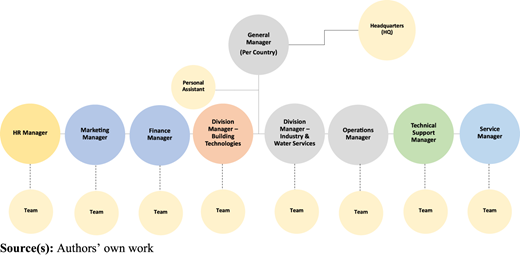
The former organizational structure consisted of a duplicated structure in each country, with operations managed locally in separate service teams and transversal functions (see Figure 1).
This structure, as illustrated in Figure 1, was effective in managing localized operations, allowing each country to address its specific market needs with a tailored approach. However, while it enabled flexibility at the local level, it limited the company’s ability to respond swiftly to global market dynamics and integrate ADTs across the organization. The lack of standardized processes and communication across regions reduced the company’s overall agility and capacity to leverage technological advancements on a global scale. As a result, the company found it increasingly difficult to maintain a competitive edge in the rapidly evolving global market, thereby limiting its dynamic capabilities, particularly in sensing and seizing global opportunities and reconfiguring its resources efficiently on a worldwide scale.
4.1.1.2 Current organizational structure
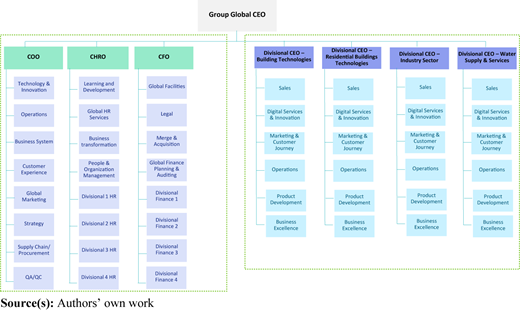
The new flattened structure at Company ABC represents a significant shift towards a more agile and customer-focused organization. Each business unit now operates as an autonomous entity with its own divisional CEO, managers and sub-managers, as represented in Figure 2 (right side). This reconfiguration has allowed for greater specialization and accountability within each division, leading to improved responsiveness to customer needs and market demands.
In this streamlined structure, key global functions such as the Chief Operating Officer (COO), Chief Human Resources Officer (CHRO) and Chief Financial Officer (CFO) provide centralized support across all divisions (See Figure 2, left side). For example, the Building Technologies division is now managed by a Global Section Head based in Norway, which ensures a balance between local operational autonomy and global strategic alignment. This integrated approach not only enhances the company’s ability to swiftly implement corporate strategies but also strengthens its capacity to leverage ADTs and innovate in response to dynamic market conditions.
4.2 ADTs in the manufacturing industry sector
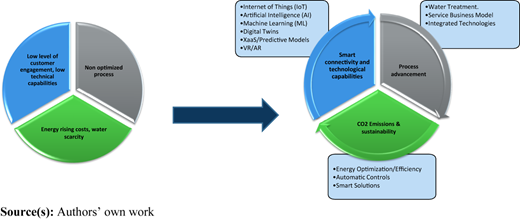
The digitalization process at Company ABC has fundamentally transformed traditional systems, frameworks and operational methods by reorganizing information flows within the organization. This transformation has leveraged the capabilities of connectivity, data analytics and automation to enhance the company’s dynamic capabilities. These digital advancements have led to significant improvements and efficiency gains across various operational dimensions.
This endeavor has required the reconfiguration of organizational structures, business systems and models, with the aim of adopting faster and more adaptable operational approaches, as represented in Figure 3. Moreover, collaboration and synergies among departments were essential prerequisites for this transformative journey, they facilitated closer cooperation among personnel, creating an environment conducive to innovation and flexibility.
Through the strategic implementation of cutting-edge ADTs including IoT and AI, Company ABC has experienced a transformative shift in its operational efficiency. This evolution has enabled proactive anticipation of market demands, precise delivery scheduling and optimized inventory management with increased efficiency and agility. This transformation is a direct result of improved sensing capabilities, which allow the company to gather and analyze data in real-time, thus enabling better-informed decision-making and rapid response to market changes. Furthermore, Company ABC has strengthened its connections with clients and industrial partners through the adoption of real-time data acquisition, process automation and data-driven decision-making processes. Table 2 outlines the specific ADTs implemented by the company and offered to its clients.
The integration of these technologies allowed the company to gain a deep understanding of the operational dynamics of its industrial partners enabling the design and provision of tailored products and services. This capability reflects the company’s enhanced ability to seize opportunities and reconfigure resources effectively, ensuring sustained competitiveness in the dynamic manufacturing sector.
4.2.1 Customers’ firms
4.2.1.1 Firm A
In late 2021, Firm A, a leading pharmaceutical company, adopted predictive maintenance solution, by leveraging IoT, AI and ML capabilities, in collaboration with Company ABC. This innovative approach was implemented on critical compressors in the utility area that serves the production zone. The technology proactively identifies and addresses potential malfunctions, leading to a significant transformation in operational methods. A key benefit of this approach has been a substantial reduction in downtime, which has played a pivotal role in enhancing manufacturing efficiency and significantly reducing costs.
The maintenance team, with real-time data and current compressor conditions combined, can efficiently minimize resource and time wastage. This strategic resource allocation allows Firm A to concentrate on other critical maintenance tasks, thereby optimizing operations and boosting productivity, as outlined in Table 3.
As illustrated above the integration of IoT, supported by AI and ML, has enabled data-driven decision-making, a critical aspect of predictive maintenance that relies heavily on data analysis for both parties Firm A and Company ABC. This data-centric approach has empowered the plant manager to make informed decisions based on historical and real-time data, leading to optimized operations.
The Director of Operations and Maintenance highlighted the impact of this technology, stating: “The wealth of data provided by this technology has enabled us to make well-informed decisions based on real-time insights. This precision in decision-making has streamlined our strategies and resource allocation, making our responsibilities much more manageable”.
Furthermore, for Company ABC, this collaboration not only strengthened its relationship with Firm A but also provided valuable data that enhanced customer-centric innovation and decision-making processes. The real-time insights from IoT sensors enabled the company to refine its services, improve product development and make informed strategic decisions. This process of continuously adapting and refining its capabilities has significantly enhanced Company ABC’s ability to respond to changing market conditions and client requirements.
Additionally, this integration significantly enhanced collaboration and problem-solving, transforming interactions between the parties. As a result, Firm A experienced increased manufacturing efficiency, reduced operational expenses and extended equipment lifespan, further solidifying a robust partnership with Company ABC.
4.2.1.2 Firm B
A multinational food and beverage manufacturing corporation, based in Spain, has strategically adopted VR and AR technologies to optimize their training, maintenance and monitoring processes, in collaboration with Company ABC.
The firm has integrated VR glasses along with immersive VR/AR training simulations and detailed 3D models of their machinery. These simulations have been instrumental in educating and empowering the workforce, equipping them with the necessary skills to safely operate and maintain utility machines such as oil pumps. This strategic intervention underscores the company’s commitment to mitigating operational risks and enhancing operational efficiency.
Company ABC has provided Firm B with a set of tailored VR/AR training simulations. These simulations aim to refine the skills required for the optimal operation and maintenance of oil pumps used in their manufacturing processes. This dynamic toolset not only imparts knowledge but also instills a safety-conscious mindset among the workforce. Consequently, it has enhanced protection against accidents while simultaneously improving operational efficiency.
To further enhance the skills of the maintenance staff, the company introduced a set of VR/AR maintenance tools. These digital tools, presented as virtual manuals and instructions, create a lifelike representation of oil pumps. This virtual environment facilitates efficient troubleshooting and problem-solving. The enhanced visualization expedites problem identification and accelerates the resolution process, demonstrating a higher level of operational flexibility and accuracy.
Moreover, the company has implemented a remote monitoring and maintenance system. This system, powered by the dynamic features of VR/AR technology, has enabled shift-managers to remotely monitor and supervise the operational conditions of oil pumps in hard-to-reach places.
Table 4 provides a concise summary of these key operational enhancements, highlighting the improvements brought by the integration of VR/AR technologies.
For Company ABC, this collaboration not only strengthened its relationship with Firm B but also offered significant internal benefits. By developing and deploying these advanced VR/AR solutions, Company ABC gained critical insights into the practical applications of these technologies, enhancing its own product development and service offerings. The data collected from Firm B’s use of these technologies provided Company ABC with valuable feedback, enabling continuous improvement of their tools and a deeper understanding of client needs.
Furthermore, through virtual interaction with the machinery, many professionals can quickly diagnose issues and make remote adjustments, significantly reducing the need for resource-intensive on-site visits, thereby cutting down on response times and operational costs. As shown in Table 4, this transformative change in operational processes serves as evidence of the impacts offered by this integration. This remote capability allowed Company ABC to deliver immediate, data-driven support, further enhancing its service quality and customer satisfaction.
The Lead Technical Engineer expressed their team’s satisfaction for this technology stated: “Embracing VR/AR has been a game-changer for our team. Their traction for this technology is great, as it significantly simplifies their day-to-day tasks, making the job smoother”. This sentiment highlights the transformative impact of VR/AR technologies on the workforce, simplifying complex tasks and enhancing job satisfaction.
The plant manager added: “I confirm the peace of mind we have experienced since integrating VR/AR into our operations. It is not just about efficiency; it is about confidence in our processes. We’ve truly elevated our plant’s performance, and our team couldn’t be more satisfied with the results.”
4.2.1.3 Firm C
In a collaborative initiative, Company ABC has partnered with an automotive industry firm, Firm C, to integrate DT technologies into their car manufacturing plant, focusing primarily on the utility machinery area. The primary objective was to enhance operational efficiency while simultaneously reducing errors and failures. This initiative has involved the application of DT technology to various utility equipment, including fans and pumps. Particularly, the DT paradigm was used to simulate and optimize the intricate functionalities of hydraulic pumps, which are essential for critical machine actions such as arm articulation and subterranean excavation.
Company ABC has developed a customized DT software suite in collaboration with a specialized technological provider, tailored to the specific needs of Firm C’s plant. This software has served as a tool, allowing Firm C to simulate and optimize the mechanics of their hydraulic pumps within an immersive virtual environment. By using this innovative software, workers have subjected their hydraulic pumps to rigorous testing, leading to improved operational efficiency, structural longevity and overall reliability. Importantly, this technological advancement has enabled the prediction and prevention of potential malfunctions.
The deployment of DT technology aims to reduce the financial expenses associated with empirical trials and enhance the comprehensive functionality of hydraulic pumps. The same approach was applied for the fans, and the software also has allowed Company ABC to replicate diverse operational contexts, enabling timely detection and proactive addressing of latent issues. This proactive approach has reduced downtimes, minimized maintenance costs and enhanced machine efficiency, especially in the demanding automotive production environment. Traditionally, pumps were subjected to a labor-intensive process of physical testing process under various operational conditions. This approach is time-consuming, resource-intensive and prone to inadvertent inaccuracies and gaps in evaluation.
The integration of DT technology has resulted in significant benefits, including cost reductions, improved operational capabilities and the ability to predict and prevent potential issues, as indicated in Table 5.
While the DT technology offers significant advantages, it is important to note that the adoption of DT technology comes with limitations such as high initial development costs and the need of specialized software and expertise for implementation and maintenance, which necessitate careful consideration.
However, the benefits derived from DT outweigh the challenges, making it a valuable solution for enhancing efficiency and reducing errors and failures in utility machinery within the automotive manufacturing sector. In this context, the Innovation Manager added: “Thanks to Digital Twin technology, our engineering manager and the team now can monitor some of our utility machines. They are delighted with the outcomes and looking forward to applying to additional machines”.
For Company ABC, the collaboration with Firm C provided many benefits, including the development of more accurate predictive models through real-time insights and detailed simulations. The ability to offer remote diagnostics and real-time troubleshooting not only reduced operational costs but also expanded Company ABC’s capacity to serve a larger client base more efficiently.
5. Discussion
Upon examining the literature and comparing it with the transformation undertaken by Company ABC, several key points of convergence emerge. Firstly, in alignment with Ismail et al. (2017) and Fitzgerald et al. (2013), the literature emphasizes the need for strategic precision in organizational restructuring and the beneficial integration of ADTs for informed decision-making. Furthermore, the findings illustrate how these strategic initiatives align with the DCF, as articulated by Teece et al. (1997), emphasizing the importance of sensing, seizing and reconfiguring resources to maintain competitiveness in rapidly changing environments.
5.1 Sensing opportunities and strategic reconfiguration
Company ABC’s shift from a decentralized to a centralized structure exemplifies strategic resource reconfiguration. This restructuring improved the company’s ability to sense and respond to market shifts and technological advances, consistent with Teece (2014). The integration of ADTs enhanced Company ABC’s capacity to monitor real-time data and market changes, aligning with the insights of Ismail et al. (2017) and Fitzgerald et al. (2013). Firm A’s use of predictive maintenance demonstrates how these technologies optimize efficiency and minimize downtime, effectively enhancing opportunity sensing.
5.2 Seizing opportunities through ADTs integration
The “seizing” aspect of the DCF involves mobilizing resources to capitalize on sensed opportunities (Teece, 2007). Company ABC’s restructuring and adoption of ADTs have optimized decision-making and operational efficiency. The use of DT technology in Firm C demonstrates how ADTs enhance efficiency and reduce errors. Additionally, Company ABC’s integration of customer-centric data analytics has tailored offerings to better meet customer needs and enhancing relationships, as noted by Payne and Frow (2005) and Zott and Amit (2010).
Firm B’s use of VR and AR technologies for training and remote monitoring reflects a departure from traditional methods, highlighting the practical benefits of these technologies in real-world settings. This aligns with literature recognizing their potential to improve training and reduce maintenance costs (Berman, 2012; Rubio-Rico et al., 2023), while also recalibrating customer engagement strategies in the digital age (Ibarra et al., 2018; Berman, 2012). These examples illustrate how strategic ADTs integration enables firms to seize opportunities, improving both customer interactions and operational processes, thereby reinforcing competitive positioning.
5.3 Reconfiguring resources to enhance agility
The ability to reconfigure resources in response to environmental changes is a critical component of dynamic capabilities (Eisenhardt and Martin, 2000). Company ABC’s restructuring has enabled the company to reallocate resources towards digital initiatives that enhance operational efficiency and agility. This reconfiguration has allowed the company to maintain its competitive edge in a rapidly evolving market, consistent with the findings of Warner and Wäger (2019), who emphasize the importance of aligning technology with strategic objectives in digital transformation.
The company’s endeavors to streamline operations and standardize processes across diverse markets harmonize with the literature’s emphasis on effective decision-making among organizational transformations. Table 6 summarizes the key findings, outlining affected elements and best practices.
This study enriches the theoretical understanding of dynamic capabilities by showing how organizational restructuring and ADTs integration enhance these capabilities in a real-world context. Building on Chirumalla (2021) work, the research extends dynamic capabilities analysis beyond process industries, offering cross-sectoral insights into best practices for digitally-enabled process innovation as shown in Table 6. The practical implications provide a roadmap for firms undergoing similar transformations, aligning with Bustinza et al. (2018) and Cascio and Montealegre (2016), emphasizing agility and streamlined processes.
6. Conclusion
In an era marked by swift technological progress and fluctuating market landscapes, this study emphasizes the critical role of organizational restructuring and the integration of ADTs in enhancing dynamic capabilities within the manufacturing sector, as illustrated by the case of Company ABC. The strategic shift from a decentralized to a centralized global framework has improved the company’s ability to sense opportunities, seize them effectively and reconfigure resources, thereby improving resource allocation efficiency, operational performance and adaptability in rapidly changing environments.
The integration of ADTs has been crucial in driving these improvements, particularly through predictive maintenance, VR/AR applications and DT technology, which collectively enhanced manufacturing efficiency, decision-making processes and customer satisfaction.
For scholars the research extends the understanding of dynamic capabilities by demonstrating the practical application of the DCF in a modern, technology-driven context. It highlights how strategic restructuring, coupled with ADTs integration, strengthens a firm’s ability to sense, seize and reconfigure resources, thereby maintaining competitiveness in volatile markets.
For practitioners, this study offers actionable insights into effectively implementing organizational restructuring and ADTs integration. Key strategies include centralizing decision-making processes, leveraging data analytics for customer-centric solutions and adopting advanced technologies such as AI and DT, to drive innovation and operational efficiency. These practices are vital for firms aiming to enhance their dynamic capabilities and sustain a competitive edge.
While this study provides valuable insights, it is limited to a single case study, which may affect the generalizability of the findings. Future research should explore the application of dynamic capabilities across different industries undergoing technological transformation. Additionally, addressing challenges like employee resistance, cultural factors and ethical considerations in ADTs adoption is crucial for successful implementation. Comparative studies across various sectors and longitudinal research are also recommended to evaluate the long-term impact of ADTs on organizational performance.
These areas of inquiry will further advance the understanding of digital transformation and organizational restructuring, promoting innovation and sustainable business practices in an increasingly competitive global market.
This paper forms part of a special section “Digital Transformation: challenges and opportunities to manage innovation”, guest edited by Dr Antonio Crupi, Dr Alessandra Costa, Dr Asha Thomas and Dr Puja Khatri.
The authors appreciate the financial support provided by the Catalan Government Research Grant (2021SGR01589).