This paper explores how firms configure open innovation (OI) strategies when integrating artificial intelligence (AI) into their innovation models. Through the case of Baidu, it examines how OI contributes to business model innovation, highlighting how firms navigate the tension between openness and ownership in AI development.
Adopting an exploratory case study approach, the research employs big data analysis methods, including thematic network and collaboration cluster analyses. These methods are applied to a comprehensive dataset of granted patents and scientific publications spanning 2000 to 2023, sourced from Orbis intellectual property and Web of Science databases.
The analysis reveals a dual OI configuration: Baidu engages openly in scientific collaborations to foster value creation, while relying on centralized patenting strategies to secure value capture. This modular approach reflects a dynamic governance of knowledge across research and patenting domains. Baidu structures its AI innovation through selective openness, enabling agile adaptation in a rapidly evolving technological landscape.
This study contributes to research on AI, OI, business model innovation and dynamic capabilities by illustrating how hybrid openness strategies function as organizational mechanisms for sensing, seizing and transforming. It offers interpretive insights into the design tensions of OI and provides a grounded perspective on how firms strategically navigate collaboration, protection and innovation in data-intensive contexts.
1. Introduction
In the era of rapid technological advancement and shifting market dynamics, businesses are increasingly turning to open innovation (OI) as a strategic tool to navigate the complexities of adopting new technologies, such as artificial intelligence (AI). OI, a concept popularized by Chesbrough (2003), emphasizes leveraging both external and internal ideas and knowledge flows to accelerate innovation. At the same time, firms must continuously reconfigure their strategies and structures in response to these shifts, a process explained by the dynamic capabilities theory (Teece et al., 1997). This paper explores how OI configurations relate to business model innovation in the context of AI development. Specifically, through an exploratory case study of Baidu, this study investigates how firms balance openness and ownership when adopting AI technologies and transforming their business models.
The intersection of AI and OI offers fertile ground for rethinking how businesses innovate. AI, characterized by its capacity to process data, learn and adapt, creates new possibilities but also generates uncertainty for firms seeking to capture value. These dynamics have heightened interest in how firms configure knowledge flows and adapt their innovation strategies accordingly (Mariani et al., 2023). Recent studies suggest that AI enhances exploratory search, supports creativity and enables data-driven innovation (Duan et al., 2019; Haefner et al., 2021), while simultaneously challenging firms to restructure their knowledge management processes (Bahoo et al., 2023; Cockburn et al., 2019). In this context, dynamic capabilities, defined as the ability to sense opportunities, seize them and transform organizational assets, are critical enablers of successful new technology adoption and strategic renewal (Teece, 2018; Warner and Wäger, 2019).
Moreover, the adoption of AI within OI frameworks can also address the challenges associated with information overload and the management of complex data sets (Ferrigno et al., 2024). Techniques like machine learning and data analytics play a crucial role in improving decision-making and innovation processes, thus enhancing the overall productivity and innovativeness of firms (Suominen et al., 2018; Xiao et al., 2023). The literature also highlights the unresolved tension between openness and ownership – the so-called “OI paradox” (Chesbrough et al., 2018; Laursen and Salter, 2014). While openness can promote rapid learning and network engagement, it also increases the risk of knowledge leakage and coordination challenges (Dahlander et al., 2021; Stefan et al., 2022). At the same time, appropriating value from AI remains challenging due to its broad applicability, immaturity and complexity (Yang et al., 2022). While strategic OI approaches can yield significant benefits, barriers to data sharing and collaboration among firms persist, often undermining the broader potential of AI (Cappa, 2022).
Consequently, questions remain about how firms practically manage openness across different innovation activities and whether AI intensifies or reshapes these dynamics (Mariani et al., 2023; Ferrigno et al., 2024). To address this gap in the literature, this paper addresses the following research question: How do firms configure OI strategies when developing AI technologies?
To answer this question, the paper employs an exploratory case study approach, focusing on Baidu, one of the most globally relevant AI actors. Baidu ranks among the top 30 companies worldwide in AI patent applications and second in the development of deep learning technologies (Dernis et al., 2019; World Intellectual Property Organization, 2019, 2024). Initially a search engine company, Baidu began strategizing its AI development in 2010, significantly increasing R&D efforts. It created the world’s first in-house institute focusing on deep learning in 2013, launched its AI-based autonomous driving system in 2017 and released its generative AI system in 2023 (Baidu, 2024; World Intellectual Property Organization, 2019).
This paper employs an empirical methodology using big data analysis techniques, including thematic network and collaboration cluster analyses, to explore Baidu’s most relevant research fields and innovation networks. These analyses draw on Baidu’s granted patents and scientific publications from 2000 to 2023. The results show that Baidu’s scientific collaborations expanded significantly over time, particularly through co-publications with domestic and international institutions. In contrast, its patenting strategy remains highly centralized, with limited co-applicants, suggesting differentiated knowledge governance mechanisms across research and patenting activities.
By interpreting these results through a dynamic capabilities lens, these findings contribute to ongoing discussions about how AI development reshapes business model innovation through modular and hybrid OI strategies (Jobstreibizer et al., 2025; Kraus et al., 2022). Rather than assuming linear integration, the study interprets Baidu’s trajectory as one of selective openness, where firms structure knowledge production and capture through tailored configurations. In doing so, the paper offers interpretive insight into how firms navigate the complexities of AI innovation while managing the risks and trade-offs of openness.
2. Literature background
Guided by the literature on dynamic capabilities, OI and business model innovation, this paper investigates how Baidu addresses the dual challenge of value creation and capture in AI development. As AI adoption often requires a paradigmatic shift in organizational routines and business model logic, Section 2.1 introduces the broader context of digital transformation and business model reconfiguration. Section 2.2 explains how dynamic capabilities enable firms to sense, seize and transform in response to fast-paced technological change. Section 2.3 then explores how OI strategies interact with business model design to address tensions between openness and appropriability, especially in the AI domain.
2.1 Digital transformation and business model reconfiguration
The integration of digital technologies into firms’ strategies and routines has highlighted the need for continuous adaptation in fast-evolving environments (Crupi et al., 2022). As a general-purpose technology, AI not only reshapes how firms operate internally but also disrupts their value logic, requiring new forms of value creation and capture (Åström et al., 2022). Its adoption has far-reaching consequences, from algorithmic decision-making to autonomous systems, leading organizations to redesign their customer offerings, cost structures and ecosystem roles (Jobstreibizer et al., 2025; Kraus et al., 2022).
Digital technologies significantly impact ordinary organizational routines (Usai et al., 2021) and offer advantages for innovation (Del Vecchio et al., 2018), competitive advantage (D’Ippolito et al., 2019) and value creation (Magistretti et al., 2019). Digital adoption results from firms’ responsiveness and alertness to competitive environments, and often involves external collaborations to access complementary resources and technologies (Crupi et al., 2020; Granstrand and Holgersson, 2020). These partnerships serve not only as a source of external inputs but as catalysts for the internal development of innovation capabilities.
More specifically, recent research highlights the distinct role of AI in compressing innovation cycles, accelerating experimentation and intensifying competition (Jobstreibizer et al., 2025). AI also amplifies the need for business model innovation by increasing reliance on external data and modular architectures, which demand strategic agility and dynamic adaptation (Cockburn et al., 2019).
2.2 Dynamic capabilities and business model innovation
As firms engage in digital transformation, they not only adopt new technologies but also reconfigure internal processes, develop new capabilities and reshape their business models. In this context, dynamic capabilities, defined as the firm’s ability to integrate, build and reconfigure internal and external competencies to address changing environments (Teece et al., 1997), have emerged as a critical framework for understanding how organizations navigate uncertainty and complexity. While ordinary capabilities support efficient operations, dynamic capabilities are future-oriented and allow firms to sense opportunities, seize them through effective resource mobilization and transform existing structures to sustain competitiveness (Helfat and Winter, 2011; Teece, 2018).
Dynamic capabilities are particularly salient in digital contexts, where innovation cycles are compressed and firms must adapt their business models frequently to keep pace with technological and market changes (Warner and Wäger, 2019). They also encompass the development of internal digital culture and digital capabilities (Guy, 2019), enabling firms to compete in high-velocity environments.
Teece (2018) emphasizes that dynamic capabilities, business models and strategy are interdependent. Dynamic capabilities underpin the design, implementation and refinement of business models, while business models shape the organizational context in which capabilities are deployed. The crafting and transformation of business models are therefore seen as both outcomes and mechanisms of dynamic capabilities. Firms with robust dynamic capabilities are better positioned to explore novel value propositions, reconfigure revenue and cost structures and align strategic goals with operational models. These processes rely on the orchestration of microfoundations, including leadership, learning and asset reconfiguration, and are essential to maintaining a competitive advantage in dynamic environments (Teece, 2010, 2018).
Recent literature further explores how dynamic capabilities underpin business model innovation, especially in sectors where AI and digital technologies act as general-purpose technologies. For instance, AI-driven firms often require simultaneous experimentation with multiple business models to align evolving value creation and value capture mechanisms (Åström et al., 2022; Jobstreibizer et al., 2025). This calls for an adaptive, dynamic approaches that enable firms to fine-tune their strategic responses while managing technological uncertainty (Liao et al., 2019; Lu and Tucci, 2024).
2.3 Open innovation and the value creation–capture tension
OI is defined as the purposive management of knowledge flows – both inbound and outbound – across organizational boundaries to enhance innovation outcomes (Chesbrough, 2003). This approach emphasizes leveraging external collaborations and networks to accelerate both the development and commercialization of innovations. By facilitating the exchange of ideas and resources, OI provides a dynamic framework that helps firms adapt to technological disruptions and rapidly evolving market demands (Radziwon and Chesbrough, 2024).
These processes are not static but evolve across the innovation lifecycle, involving dynamic shifts between openness and closure depending on contextual risk and opportunity (Chesbrough, 2020; Dabić et al., 2023; Stefan et al., 2022). In fact, a central tension in the OI literature lies in balancing openness for value creation with control mechanisms for value capture, commonly referred to as the openness–appropriability paradox (Chesbrough et al., 2018; Laursen and Salter, 2014). While openness facilitates the recombination of diverse knowledge assets and can accelerate innovation, it complicates the appropriation of returns. This paradox is especially pronounced in high-tech sectors, such as AI, where rapid knowledge diffusion and complex value chains make exclusivity difficult to sustain (Belderbos et al., 2014; Dahlander et al., 2021). These challenges are amplified in OI collaborations involving multiple actors, where intellectual property (IP) ownership and legal frameworks often constrain open knowledge flows (Barbic et al., 2021).
Addressing the openness–appropriability paradox requires not only IP protection but the design of robust business models that align external engagement mechanisms with internal value capture logic (Teece, 2010; Zott and Amit, 2013). A firm’s business model functions as a system of interdependent modules encompassing value creation, delivery and capture mechanisms (Massa et al., 2017; Zott and Amit, 2013). Following a widely accepted definition (Osterwalder et al., 2005), a business model explains how a firm creates value for customers and captures value for itself. Essentially, what the business does, for whom and why it earns revenue in the process (Chesbrough, 2007). While researchers differ on which components are mandatory, they generally agree that a business model answers how value is created, delivered and captured (Spieth and Schneider, 2016).
The degree of interconnection between the firm’s value chain and its innovation environment, especially through inbound and outbound knowledge flows, emerges as a critical factor for orchestrating openness and sustaining innovation performance (Abdulkader et al., 2020). This has brought renewed focus on business model innovation, which is increasingly viewed as a viable mechanism for firms to navigate technological uncertainty and shifting sources of value. Business model innovation involves intentional modifications to a firm’s existing business model to better respond to external change. It is not limited to structural shifts but also includes changes in timing, scope and sequence of innovation activities (Foss and Saebi, 2017; Schneider and Spieth, 2013).
Clauss (2017) distinguishes between three types of business model innovation: value creation innovation (e.g. new capabilities, partnerships or technologies), new value proposition innovation (e.g. new markets, offerings or channels) and value capture innovation (e.g. new pricing models or cost structures). Success in business model innovation thus depends not only on what is changed but also on when and how, with several authors emphasizing iterative experimentation, trial-and-error and learning as central to the process (Demil and Lecocq, 2010; McGrath, 2010).
Business model innovation has therefore been identified as a key managerial response to the tensions inherent in OI. It provides a structural framework through which firms can selectively absorb and externalize knowledge while adapting to evolving technological contexts (Chesbrough, 2007; Lee et al., 2019). Outside-in OI strategies enable firms to enrich their value proposition by integrating external knowledge streams, while inside-out strategies allow for the outward transfer of internal knowledge through licensing or partnerships (Chesbrough, 2010; Lu and Tucci, 2024). The modularity of business model components also facilitates both incremental and radical innovation (Kraus et al., 2022).
The emergence of digital technologies has further amplified the relevance of OI and business model innovation (Dahlander et al., 2021). Technologies such as AI, which rely heavily on big data and collaborative innovation networks (Cockburn et al., 2019), exemplify the transformative potential of OI, which helps firms integrate the big data required for AI development by leveraging external expertise and networks, fostering innovation across industries (Cappa, 2022). As a general-purpose technology, AI benefits significantly from modular architectures and interoperable knowledge systems that enable collaborative innovation and strategic alignment (Jobstreibizer et al., 2025). However, while on the one hand companies increasingly adopt OI strategies to address the opportunities and challenges of digital transformation, achieving sustainable growth through shared value creation (Lazzarotti et al., 2017), AI also introduces distinctive value creation and value capture concerns – such as data leakage, unreciprocated learning and rapid diffusion – which emerge from its dependence on externally sourced data and modular system design (Åström et al., 2022).
3. Methodology
The paper employs an exploratory single-case study approach. This method is robust and well-suited for exploring complex phenomena or understanding newly emerging or poorly understood processes by testing the fit of proposed theoretical and conceptual frameworks (Eisenhardt and Graebner, 2007). Specifically, a single case study is valuable for addressing “how” and “why” questions about contemporary events (Yin, 2003).
3.1 Research setting
China provides a compelling context for examining the interplay between OI and AI. Over the past 2 decades, China has emerged as a global leader in digital transformation, leveraging OI to boost its innovation strategies (Chen et al., 2021; Cricchio and Di Minin, 2025). This progress is evident in sectors such as telecommunications, smartphones, integrated circuits and cloud computing (Yu and Zhang, 2021). The OI approach has seen widespread adoption across Chinese firms, demonstrated through successful implementations both domestically and internationally (Brem and Nylund, 2021; Xie et al., 2017). Unlike straightforward adoption, OI in China is actively shaped by state-driven policies and cultural norms, such as trust-based long-term relationships and informal networks (Chesbrough et al., 2021; Cricchio and Di Minin, 2025; Fu et al., 2016). Among technologies crucial for global innovation leadership, AI stands out, with China having formulated an ambitious roadmap aimed at establishing the nation as a global AI innovator by 2030 (Wu et al., 2020). This strategy emphasizes strengthening collaboration between universities, firms and governmental entities at both regional and national levels, an approach that has been pivotal to China’s overall innovation strategy (Cricchio and Di Minin, 2025; Fu and Xiong, 2011; Jacobides et al., 2021).
A key initiative reflecting this strategic orientation is the “National New Generation Artificial Intelligence Open Innovation Platforms” policy, introduced by the Ministry of Science and Technology in 2019 (Wu et al., 2020). This initiative created fifteen sector-specific AI platforms led by national champions. Baidu, selected for its advancements in autonomous driving, exemplifies how AI firms in China align state-supported mandates with OI principles. This nationally coordinated model aims to foster knowledge-sharing while advancing technological sovereignty, requiring close collaboration among firms, universities and policymakers (Cricchio et al., 2025).
3.2 Data and method
To investigate Baidu’s OI and activities and its technology directions, this study builds upon previous research (Franco et al., 2023; Rikap, 2022) and analyzes both its granted patent portfolio and scientific publications from its foundation until the present, covering the years 2000–2023. The granted patent documents for Baidu, including invention, utility models and design patents, were retrieved from the Orbis Intellectual Property Database. A total of 26,383 granted patent documents were collected, of which 671 were utility models, 2,722 were design patents and 22,990 were invention patents. Baidu’s scientific publications, including those from any subsidiaries, were obtained from the Web of Science Database, which is commonly acknowledged by the literature as a database encompassing a wide variety of high-level publications and excellent peer-reviewed articles relevant for conducting this kind of research (Duan, 2024). A total of 2,066 scientific publications were collected, of which 1,274 were conference proceedings, and 792 were published research articles.
The study employs big data techniques, including network and cluster analyses and text mining, to map Baidu’s innovation networks and identify significant research and development areas. Network and lexical analyses were conducted on the collected data using the CorText platform [1]. Co-occurrence maps, generated using proximity algorithms, depict interconnected clusters of nodes based on their co-occurrence frequency, including terms from semantic analyses of Baidu’s patents and publications (Barbier et al., 2012; Tancoigne et al., 2014).
The methodology for data cleaning and map construction adheres to the frameworks outlined by Rikap (2022) and Tancoigne et al. (2014). Specifically, for the granted patents, a lexical analysis was performed on the titles, abstracts and claims to approximate Baidu’s technological domains and their evolution. Employing a text mining strategy, the 500 most frequently occurring phrases, consisting of up to four terms each, were extracted. Monograms were excluded to eliminate commonly used but non-informative words, such as “and” and “or.” The list was further refined to remove phrases typically found in the grammatical structures of patent texts, such as “the application,” “the present application,” “the disclosure” and “the proposed method.”
From this refined list, the 416 most frequently occurring multi-terms were selected to create a network map highlighting the top 100 phrases based on their frequency of co-occurrence within the corpus. To effectively illustrate Baidu’s technological progression, a historical evolution map complements the analysis of the entire corpus. This approach not only helps in mapping the current technological landscape but also provides a historical evolution of the terms used within Baidu’s technological domain.
Following the established methodology, a lexical analysis of the abstracts, keywords, and titles from Baidu’s scientific publications was also conducted to discern its research and development priorities. In this analysis, the 500 most frequent phrases, consisting of up to four terms each, were extracted. To ensure clarity and relevance, monograms and phrases common to the grammatical structure of scientific texts, such as “state of the art,” “proposed method,” “show the effectiveness” and “special case,” were excluded.
From this process, a total of 439 multi-terms were identified and used to create a network map of the top 100 phrases based on their frequency of co-occurrence within the corpus. To visualize the evolving networks more clearly, the analysis was divided into three equal periods, enabling a detailed examination of changes and continuities in Baidu’s research focus over time.
The utilization of publications serves a twofold purpose in this study. First, as not every invention is patented, including publications, broadens the scope of analysis and further validates it. Second, analyzing publications provides insight into the contributions of organizations that may be involved in the preliminary stages of research, which might be overlooked if only patent co-ownership, a measure reflecting the final stages of innovation processes, were considered.
To capture the diversity of stakeholders and their positions within Baidu’s scientific network, the study constructs a network of top research organizations that have co-authored with Baidu both in terms of scientific publications and in terms of granted patents. The names of these organizations, which often appear in varied forms such as “Baidu Inc.” and “Baidu Research Inc.,” or “Tsinghua University” and “Qinghua University,” were harmonized using CorText’s similarity threshold. This list was then manually revised to ensure accuracy and avoid duplication. Utilizing this refined list, a scientific network map illustrating Baidu’s collaborations over the three previously established periods was created.
By applying network analysis and clustering techniques, the study maps Baidu’s innovation networks, delineating the intricate social connections within different innovation systems. It also emphasizes the roles and frequencies of co-authorship by both local and international organizations within these networks (Xiao et al., 2023).
To corroborate the findings, the study incorporates secondary data from Baidu’s websites, social media, press releases and news reports. Following Tellis (1997), data triangulation ensures accuracy and consistency in interpreting the gathered data. This process included manual coding and qualitative analysis to distill primary concepts indicative of Baidu’s activities (Corbin and Strauss, 2014).
Overall, this methodology highlights the comprehensive nature of the research approach, aimed at providing a nuanced understanding of Baidu’s strategic positioning in AI science and technology.
4. Results
4.1 Introduction and relevance of the case study
Founded in the early 2000s in Beijing by Li Yanhong (Robin Li) and Xu Yong (Eric Xu), Baidu capitalized on the burgeoning Internet landscape and foreign investment in China, amassing initial support with a $1.2m investment from Silicon Valley venture capital firms (Barboza, 2006). Over the past 2 decades, Chinese entrepreneurial efforts, particularly in information and communication technology (ICT), have made significant strides in technological innovation and economic development (Gao and Mu, 2021). Baidu, alongside Alibaba and Tencent – collectively known as the BAT – has spearheaded this technological revolution. These giants have evolved into a formidable business ecosystem with a combined market capitalization exceeding $500bn (Greeven and Wei, 2017).
Baidu’s initial business focus was on providing search services for other companies, gradually becoming an independent search engine. Initially, Baidu offered music search services, which led to copyright disputes with Western music publishers. Despite these challenges, Baidu effectively adapted by understanding local user needs and employing direct marketing strategies, including door-to-door sales, to attract advertisers. These efforts, coupled with strategic partnerships, helped Baidu dominate the Chinese search engine market with a 64% share by 2010, significantly impacting Google’s presence in China (Chao, 2010; Dong and Jayakar, 2013; Yeo, 2022).
In response to competitive market dynamics, Baidu diversified its core operations into AI around 2013, establishing the Institute of Deep Learning and four other AI labs. This expansion into AI spurred the development of Baidu Cloud and Baidu Brain, attracting over 370,000 developers and partners (Jia et al., 2018).
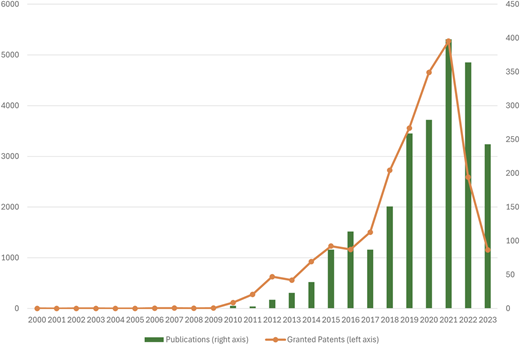
Figure 1 reports the annual production of Baidu’s granted patents and scientific publications. The company’s first patent was granted in 2000, while the first scientific publication was in 2007. Starting from 2010, there has been a gradual increase in both publications and granted patents, peaking sharply in 2021. Since thematic analysis requires a substantial number of documents to yield meaningful results, the analyses in Section 4.2 on scientific publications and Section 4.3 on granted patents begin only once sufficient data are available, thereby excluding the early years, which sometimes lack any documents at all.
4.2 Scientific publication analysis
This section analyzes Baidu’s scientific publications through lexical analysis and the evolution of its co-authorship network.
4.2.1 Early phase (2007–2012): laying the foundations
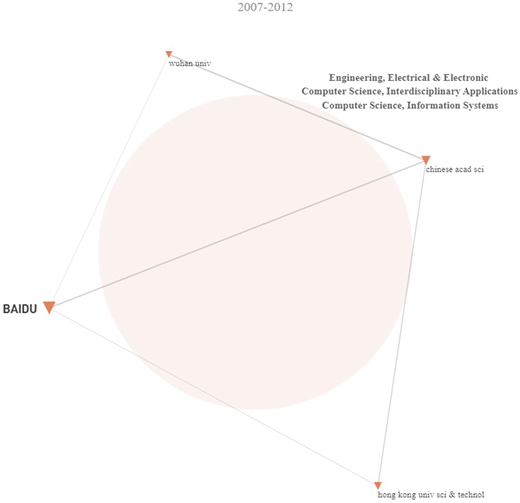
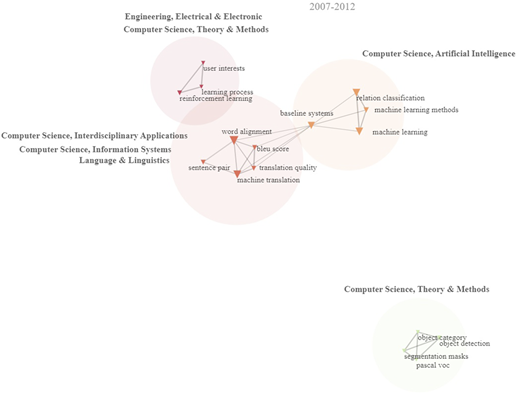
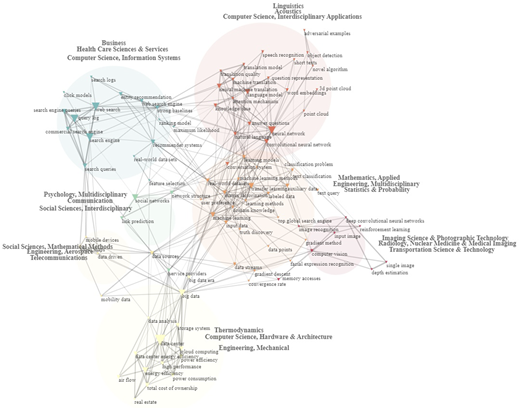
The initial phase of Baidu’s scientific efforts reveals a small network of collaborations (Figure 2) with prominent institutions such as Wuhan University, the Chinese Academy of Sciences, and the Hong Kong University of Science and Technology. During this period, Baidu’s research themes (Figure 3) focused on key products like search engines and translation tools (red and purple clusters), while simultaneously venturing into AI (orange cluster).
4.2.2 Expansion phase (2013–2018): broadening the network
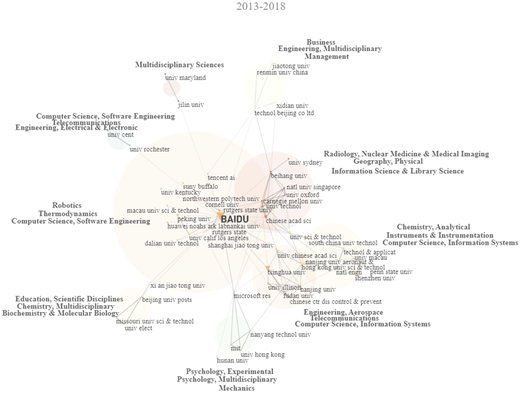
The second period, from 2013 to 2018, marks a significant expansion of Baidu’s co-publication network (Figure 4). The network expanded to include 54 nodes, 35% (19 nodes) of which were international institutions. This period also saw Baidu forming collaborations with major companies, including Tencent, Huawei and the international giant Microsoft. These partnerships underscored Baidu’s growing ambition to bridge domestic and global scientific communities.
In terms of research focus (Figure 5), this phase emphasized foundational AI tools, including neural networks and natural language processing, as reflected in the clusters of the network map. These themes were consistent with Baidu’s strategic patenting activities during this time, further reinforcing the importance of basic research in driving technological applications.
4.2.3 Recent phase (2019–2023): strengthening global ties
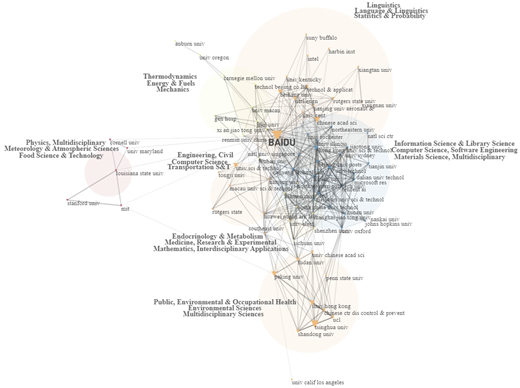
Between 2019 and 2023, Baidu’s co-publication network expanded further, reaching 75 connected nodes, including 25 foreign universities and 5 companies (Figure 6). Key collaborators during this phase included new entrants such as Intel, alongside existing partners like Tencent, Huawei and Microsoft. Microsoft, serving as a connecting node, has played a key role in linking Baidu to major global institutions such as MIT and the University of Oxford, shifting focus from the Hong Kong University of Science and Technology.
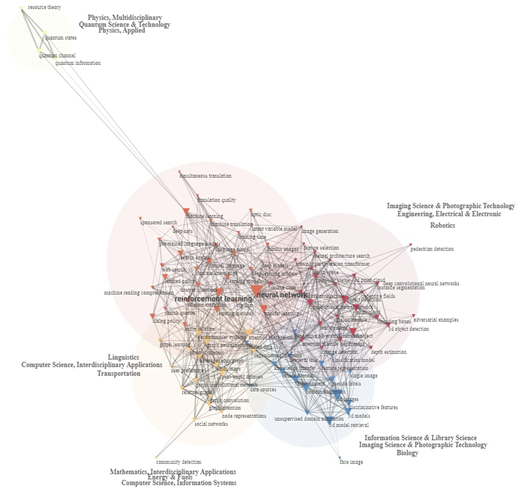
The thematic map (Figure 7) highlights Baidu’s continued focus on foundational AI technologies, particularly neural networks and reinforcement learning (red and orange clusters), which underpin generative AI tools. This period also showcases Baidu’s active research in diverse fields, including autonomous driving (frequent references to “3D object detection,” “depth estimation” and “pedestrian detection”), quantum science, robotics, medicine and energy. These efforts underscore Baidu’s ambition to lead innovation across multiple domains.
4.3 Granted patents analysis
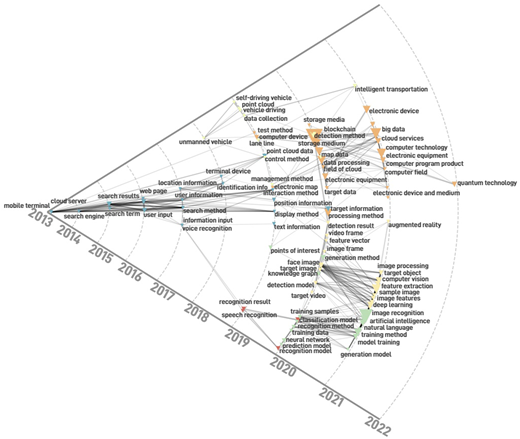
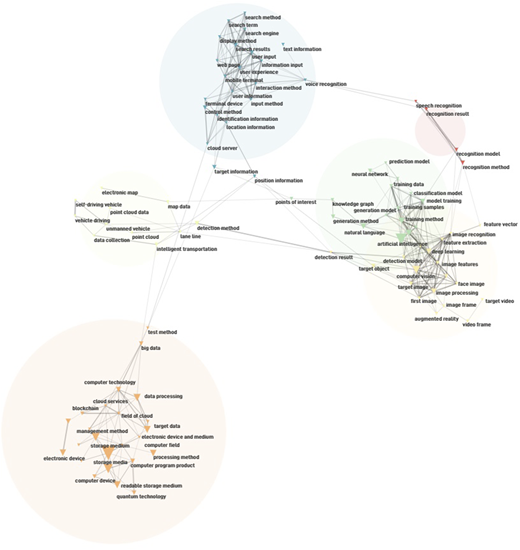
The analysis of Baidu’s granted patents from 2013 to 2023 reveals a clear evolution in its technological focus, as shown in Figure 8. Three overarching topics dominate Baidu’s innovation strategy: search and user interaction technologies, AI and automation, and data infrastructure and processing. On the other hand, the data from the granted patents reveal a lack of established official co-authorship in the patent documents. After extracting and cleaning all information related to the applicants, the data show that, besides Baidu, only five other organizations are listed: Baidu USA, Kunlunxin Technology, Suzhou Sciscape Bio-Pharmaceutical Technology, Pinghu Sciscape Bio-Pharmaceutical Technology and Beijing Bailening Technology. By retaining exclusive patent ownership, Baidu appears to centralize value capture, ensuring that the economic and strategic benefits derived from the IP remain solely under its control, rather than being shared with collaborative partners.
4.3.1 Search and user interaction (2013–2023)
Early patents emphasized enhancing search engine capabilities and user experience. Topics such as “search methods,” “user input,” “voice interaction” and “recommendation systems” (blue nodes in Figure 8) were dominant during this period. These technologies laid the foundation for Baidu’s core products, including its search engine and other user-facing digital services.
As Baidu’s search engine capabilities matured, its focus expanded to include “information input” and “knowledge graph” technologies, which began bridging user interactions with advanced AI applications.
4.3.2 AI and automation (2018–2023)
Starting in 2018, Baidu started to focus on AI, with key themes including “deep learning,” “neural networks,” “image recognition” and “autonomous vehicles” (yellow, green and lime nodes in Figure 8). Regarding autonomous vehicles, in particular, Baidu’s Apollo platform exemplifies this shift.
By the end of 2023, Apollo had delivered nearly 840,000 rides, representing a 49% year-over-year increase, with operations in major cities such as Beijing, Shanghai and Chongqing (Apollo, 2024; Baidu, 2024). Apollo adheres to open-source principles, offering universal access to its software, which includes over 700,000 lines of code and involves more than 80,000 developers globally (Yeo, 2022). Additionally, the Apollo partnership program includes over 100 global members, such as automotive giants BMW, Daimler, Ford, Honda, Toyota and Volkswagen, and 74 hardware collaborators like Pioneer, Nvidia and Texas Instruments. Noteworthy software collaborators include major corporations such as Microsoft and LG. These partnerships underscore Baidu’s extensive collaborative efforts and its influential role in driving forward the technology of autonomous vehicles (Zhang and Wu, 2021).
This topic also includes themes primarily related to generative AI approaches, such as “model training,” “natural language” and “generation model.” Baidu has, in fact, launched Earnie Bot, its gen-AI tool, introduced by Baidu’s CEO, Robin Li, in March 2023. Launched as an answer to OpenAI’s ChatGPT and GPT-4, Ernie Bot, short for “Enhanced Representation from kNowledge IntEgration,” displayed capabilities such as solving mathematical problems, crafting marketing copy, addressing queries on Chinese literature and producing multimedia content. The release of Ernie Bot was restricted to a select group of creators, and it remains unclear if or when Baidu plans to make this technology accessible to the general public or integrate it into its existing products like search engines or autonomous vehicles (Yang, 2023).
4.3.3 Data infrastructure and processing (2019–2023)
In parallel with its advancements in AI, Baidu prioritized the development of scalable, efficient data systems. Patents related to “data storage,” “cloud services” and “blockchain” (orange nodes in Figure 8) highlight the company’s focus on infrastructure essential for AI applications. These technologies not only support Baidu’s existing AI and autonomous driving solutions but also seem to position the company to explore emerging areas, such as “quantum technology.” With this theme starting to emerge in 2023, Baidu demonstrates an interest in converging its data infrastructure expertise with quantum technologies, signaling a potential new frontier for innovation.
This focus on foundational technologies underpins Baidu’s broader AI strategy, encompassing the development of generative AI models and autonomous driving systems. While Figure 8 depicts the historical evolution of Baidu’s most frequent patent topics over time, Figure 9 provides a different perspective by analyzing the entire corpus of patents at once. Figure 9 underscores the interconnectedness of these themes, with the orange cluster representing data infrastructure, the green and yellow clusters reflecting AI technologies, and the lime cluster focusing on applied solutions like autonomous vehicles.
5. Discussion and conclusion
5.1 Theoretical contributions: a dynamic capabilities perspective
This study contributes to the literature on OI and business model innovation by analyzing how Baidu navigates the challenges of technological transformation through knowledge-intensive strategies. Baidu’s evolution from a search engine to a leader in AI-intensive domains like autonomous driving and generative AI exemplifies how firms can strategically deploy OI mechanisms to balance innovation with value appropriation. The firm’s ongoing adaptation and strategic alignment with technological advancements underscore its capacity to not only survive but thrive in a dynamic global business environment (Chen et al., 2023).
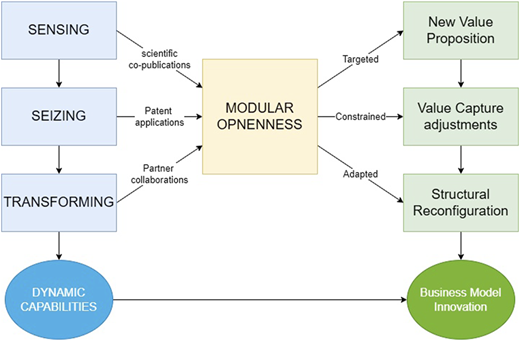
To further articulate these strategic mechanisms, we propose a conceptual model (Figure 10) that links dynamic capabilities to business model innovation through modular openness. Building on Teece’s (2018) dynamic capabilities framework, the model identifies how sensing, seizing and transforming capabilities feed into modular openness strategies – such as scientific co-publication, patenting and partnerships – which in turn enable new value propositions, adjustments to value capture logic and structural business model reconfigurations. This framework captures the recursive and configurational nature of AI innovation under conditions of uncertainty and strategic complexity.
Baidu’s strategic use of OI has not only facilitated its technological advancements but also significantly influenced its business model transformation. The adoption of AI in conjunction with OI principles addresses challenges such as information overload and the complexity of AI applications, which are often barriers to effective technology integration (Cappa, 2022; Yang et al., 2022). Previous studies indicate that enhancing a firm’s internal knowledge management capabilities through OI environments that leverage both internal and external data can significantly strengthen a firm’s capacity for radical innovation (Mariani et al., 2023; Santoro et al., 2018). This trajectory is consistent with studies suggesting that AI acts as a catalyst for innovation, driving significant technological and organizational changes across industries (Jobstreibizer et al., 2025; Kakatkar et al., 2020; Kraus et al., 2022; Rikap, 2022). The decentralized innovation systems facilitated by AI and OI enable firms to leverage diverse knowledge sources and technological capabilities, enhancing overall productivity and innovation (Marozzo et al., 2023).
The expedited launch of Baidu’s generative AI tool, Ernie Bot, despite its limited availability, underscores Baidu’s proactive response to intense competition from domestic and international rivals (Yang, 2023). This urgency contrasts with Baidu’s long-standing approach to innovation, characterized by an open environment that fosters extensive collaboration. Despite the global AI race for technological supremacy (Castro and McLaughlin, 2021), Baidu’s case illustrates that on the ground, collaboration remains a critical mechanism, and OI is more widely utilized than often assumed. The findings from this paper contribute to the broader understanding of how integrating AI technologies within OI frameworks can foster significant economic growth and innovation, responding to the call for further empirical studies exploring the intersection between OI frameworks and AI and big data adoptions (Bahoo et al., 2023; Cappa, 2022; Ferrigno et al., 2024).
The findings reveal a nuanced duality in Baidu’s OI strategy, emphasizing the interplay between value creation and value appropriation. Baidu’s research trajectory highlights its focus on AI and autonomous driving, aligning closely with its patenting strategy. This strategic emphasis on foundational AI tools is essential for developing innovative products and services, aligning with broader industry trends toward integrated and intelligent systems (Mariani et al., 2023). The co-authorship networks reflected in Baidu’s scientific publications showcase its commitment to advancing knowledge collaboratively, both nationally and internationally. However, this collaborative approach is less evident in Baidu’s patenting activities, where a more centralized strategy dominates. This dual approach – combining proprietary innovation with collaborative research – highlights the dual strategy of Baidu’s business model: fostering value creation through collaboration while securing value capture through selective closure.
AI development requires firms to restructure not only their technological assets but also the way they generate, access and protect knowledge. The findings highlight how organizations strategically navigate publication and patenting as complementary tools. Scientific output increases visibility, fosters partnerships and contributes to legitimacy. At the same time, firms selectively patent core capabilities to retain control and avoid knowledge leakage. Rather than representing a contradiction, these behaviors reflect a calculated strategy to adapt the business model in a domain characterized by rapid innovation cycles and uncertainty.
Business model adaptation in AI is not linear; it unfolds through modular strategies that separate knowledge creation from value capture.
This paper advances understanding of the openness–appropriability paradox by framing it not as a binary trade-off but as a dynamic configuration challenge within business model innovation. The results relate to the firm’s ability or inability to appropriate the value generated from openness, commonly referred to as the “OI paradox” (Chesbrough et al., 2018; Laursen and Salter, 2014).
Over-centralization and exclusionary practices, however, may lead to missed opportunities for innovation and collaboration (Puliga et al., 2023). This may be due to the transformational change that Baidu has undergone, which typically suggests significant challenges in aligning internal processes with external collaboration needs. Organizational readiness, cultural shifts and collaborative complexity are particularly critical when transitioning from closed to OI paradigms (Shahzad et al., 2024).
Baidu exhibits a balancing act between open collaboration and proprietary control. Publications and shared research output are used to attract talent, signal technological leadership and support exploratory innovation. In parallel, firms use IP rights to protect revenue streams, secure market positions and manage competitive risks. Rather than choosing openness or ownership, firms in AI development domains design hybrid models where both are dynamically combined.
The tension between openness and ownership is not a trade-off but a dynamic configuration that shapes business model innovation in AI.
This reframes the OI paradox as not a dilemma to be solved but a design problem to be managed as part of ongoing business model evolution. The paper shows how Baidu actively manages the push-and-pull of publishing (open, exploratory and reputational) versus patenting (closed, appropriative and protective), oscillating across this continuum, sometimes even simultaneously. This contributes to OI literature by shifting from a trade-off framing (open versus closed) to a dynamic capabilities framing (Teece et al., 1997): firms continually reconfigure their openness level to respond to technological maturity, competition and legitimacy needs.
This paper also contributes to the emerging literature on the “dark side” of OI, emphasizing the risks and costs of OI activities, including knowledge leakage, misaligned objectives and escalating coordination expenses, which require careful management (Chesbrough, 2020; Dabić et al., 2023; Dahlander et al., 2021; Stefan et al., 2022).
The findings suggest Baidu’s strategic navigation through the complex terrain of AI innovation, effectively leveraging its collaboration network. The analysis of Baidu’s patent and publication trajectories reveals a significant shift towards AI, with substantial investments in big data and cloud services. This strategic pivot is not merely a response to evolving market conditions but also a proactive effort to shape the technological ecosystem within which Baidu operates.
Scientific publishing and patenting are often seen as outputs of R&D, but in AI-intensive settings, they become part of the firm’s value logic. The results suggest that these knowledge practices contribute not only to technological advancement but also to business model viability. For instance, publishing on model performance or datasets can invite reuse and feedback while shaping informal standards. Patents can act as signaling tools to investors or partners. In this way, knowledge production itself becomes a source of both value creation and value capture – a key characteristic of AI business models.
As shown in the model, these practices are not by-products but integral mechanisms through which sensing, seizing and transforming unfold.
In AI-intensive firms, knowledge production (scientific and IP) is embedded in the business model as a mechanism for value creation and capture.
In Baidu’s case, scientific publications are not just academic outputs – they’re used to attract partners, shape standards, and build external trust. Patents, likewise, are tools for strategic signaling and IP positioning. These are not outputs of innovation; they are the innovation logic that supports the firm’s business model.
This advances business model innovation literature by integrating OI and IP management as integral components of the firm’s value logic, especially in sectors like AI, where data, algorithms and standards are core assets.
Together, the observations demonstrate that (1) firms can strategically reconfigure openness and closure in modular ways to adapt their business models, (2) the balance between openness and ownership is not a binary trade-off but a dynamic and ongoing design challenge and (3) scientific and patenting activities are not merely outputs of innovation processes but active mechanisms for value creation and capture.
5.2 Managerial and policy implications
Baidu’s case illustrates how OI strategies can be configured in distinct ways across different innovation activities. By integrating external knowledge through scientific collaborations and simultaneously retaining control through centralized patenting, Baidu exemplifies a dual strategic configuration. This configuration allows the firm to remain agile in an environment characterized by fast-moving technological developments and uncertain value capture dynamics.
Managers operating in AI-intensive sectors can draw interpretive insights from this configuration. Rather than applying a uniform approach to openness, Baidu’s case suggests the value of modular OI strategies, where openness varies across the innovation lifecycle. Publishing, for instance, serves reputational, exploratory and partnership-building functions, while patenting supports protective, appropriative goals. Such differentiated openness aligns with findings that firms continually reconfigure knowledge flows in response to technological maturity, competition and legitimacy needs.
At the same time, Baidu’s emphasis on patenting without co-applicants highlights potential tensions. While this approach secures IP and reinforces competitive advantage, it may limit broader knowledge diffusion and alienate potential collaborators. Overly centralized strategies can stifle innovation by discouraging participation from diverse stakeholders. To mitigate this, managers could explore alternative models such as shared patents or open licensing, which enable inclusive ecosystems while safeguarding core innovations.
From a policy standpoint, Baidu’s evolution points to the relevance of national innovation systems in shaping OI strategies. In China, government-led initiatives have actively facilitated collaborative AI development, particularly through platforms that align firms, universities and public agencies. Baidu’s alignment with these initiatives underscores the importance of policy environments in orchestrating innovation.
Government policies that encourage collaboration, safeguard IP and invest in shared infrastructure can serve as catalysts for AI-related innovation. However, policy design must also acknowledge the risks of exclusionary practices within strategic collaborations. Baidu’s scientific partnerships indicate the value of openness, but its centralized patenting practices raise questions about inclusivity. Policymakers should consider instruments that incentivize transparency and equitable value distribution within OI frameworks.
In sum, Baidu’s case does not prescribe a universal model for managing OI in AI development. Rather, it offers interpretive insight into how firms can balance competing demands for openness and ownership through tailored configurations. This reinforces the view that OI is not a fixed model but a strategic design process – one shaped by organizational capabilities, policy contexts and evolving technological landscapes.
5.3 Limitations and future research
This study has identified several limitations that suggest directions for future research. First, the research employs an explanatory qualitative analysis based on a single case study, which allows for analytic generalization of theory but not statistical generalization, limiting its broader applicability and causal inferences (Tellis, 1997; Yin, 2003). Given the exploratory nature of this study, causal relationships between openness and innovation outcomes have not been established. Future studies could enlarge the sample and structure quantitative analysis with appropriate econometric modeling to test correlations or causation between collaborations and the diversification of firms’ value propositions. Such approaches would complement the interpretive insights offered here by testing associations across broader datasets.
Future research could also employ a comparative case design across multiple firms or national contexts to explore how different configurations of openness and value capture are shaped by industry-specific or institutional factors.
Moreover, while the analysis highlights Baidu’s dual strategy of scientific collaboration and centralized patenting, it does not directly examine the internal decision-making processes that underpin these strategic choices. Future studies could delve deeper into organizational routines, managerial perceptions or incentive structures that inform how openness and ownership are balanced in practice.
Additionally, while the study finds no evidence of co-applicants in Baidu’s patents, it does not analyze patent licensing practices. As a result, potential knowledge flows via licensing arrangements remain outside the scope of this research. Future work could investigate whether licensing serves as an alternative mechanism for value diffusion and collaboration beyond co-patenting.
This study also focuses on a large, established firm with substantial institutional support and technological capacity. Small and medium-sized enterprises (SMEs), which often face more resource constraints and uncertainty in digital transformation, may adopt different OI strategies. Investigating how SMEs engage with AI under various institutional and resource conditions could broaden our understanding of OI configurations.
Finally, as data-sharing norms, regulatory frameworks and geopolitical dynamics evolve, the long-term viability of OI strategies in AI development remains an open question. Future research could examine how firms renegotiate their openness configurations in response to shifting policy landscapes, platform governance models and global competition. Such work would further contribute to theorizing OI as a dynamic and adaptive process.
This paper forms part of a special section “Unveiling the Future of Creativity and Innovation Management in the Era of Generative Artificial Intelligence”, guest edited by Dr Antonio Crupi, Dr Alessandra Costa, Dr Asha Thomas and Dr Puja Khatri.