


This research investigates the impact of opinion leadership and consumer feedback on consumer trust in vendors. The primary goal is to determine whether opinion leaders can affect consumer trust toward their recommended vendors through their professional and personal attributes. Additionally, it explores if consumer feedback, influencers campaign, and sponsored advertisements impact consumer trust in vendors.
A quantitative research approach is employed to study consumer perceptions regarding the main research constructs: opinion leadership, consumer trust, and consumer feedback. A seven-point Likert scale questionnaire is used to gather responses from participants. Data analysis is performed using SmartPLS software. The proposed hypotheses, which include the personal and professional traits of opinion leaders and their effects on consumer trust in vendors, are tested using Partial Least Squares–Structural Equation Modeling (PLS-SEM). Additionally, the impact of consumer feedback, including referrals, positive ratings, and positive comments, as well as influencers campaign and sponsored advertisements on consumer trust, are examined using PLS-SEM.
The results indicate that opinion leaders exert the most significant influence on consumer trust in vendors, surpassing the effects of influencers campaign and consumer feedback. Opinion leaders enhance consumer trust through various personal and professional attributes, with innovativeness identified as the most influential factor. This is followed by their communication skills, expertise, charisma, and reputation. Additionally, consumer feedback, including referrals, positive ratings, and positive comments, positively impacts consumer trust in vendors. Also, influencers campaigns impact consumer trust. However, sponsored advertisements by opinion leaders were not found to impact consumer trust in vendors significantly.
While previous research has extensively examined the various characteristics that constitute opinion leadership, as well as the influence of opinion leadership and consumer feedback on behavioral changes such as purchase, loyalty, word-of-mouth intentions, and consumer engagement with social media channels, their specific effects on consumer trust have not been thoroughly explored. Additionally, most previous studies have focused on consumer trust towards opinion leaders and the content of their social media channels. Therefore, we are motivated to address consumer trust towards vendors and how opinion leaders can influence that trust. This paper is unique in its comprehensive analysis of the personal and professional traits of opinion leaders and their direct influence on consumer trust. Additionally, it investigates the nuanced impact of various forms of consumer feedback, including referrals, positive ratings, and positive comments, on trust-building processes.
Introduction
Trust is a cornerstone of successful buyer-seller relationships, reducing transactional uncertainties and fostering long-term engagement (Zou, 2023). It enhances economic efficiency by lowering costs and mitigating risks (Duhan, 1997), while also driving consumer loyalty and revenue growth for vendors (Gefen, 2003; Chaudhuri, 2001). Traditionally, trust formation relied heavily on direct consumer experience (Smith, 2023; Febrianty, 2023), but the proliferation of social media has shifted this dynamic. Online opinion leaders now serve as critical intermediaries, offering expert evaluations that substitute for firsthand interactions (Chen, 2024; Yatish Joshi, 2023). Their influence is particularly pronounced in high-involvement purchases (e.g. automobiles, real estate), where detailed assessments reduce cognitive effort for consumers (Davis, 2021; Lee, 2020). However, the growing phenomenon of social media influencer information overload (SMIIO) complicates this relationship. Agnihotri et al. (2024) demonstrate that SMIIO can trigger purchase avoidance by inducing consumer confusion, moderated by prior product knowledge. This underscores the need for opinion leaders to employ clear, structured communication strategies to mitigate confusion and facilitate informed decision-making (Agnihotri et al., 2024).
Extant research has extensively examined the influence of opinion leadership and consumer feedback on purchase intentions and engagement. Studies confirm that both factors significantly shape consumer behavior—including purchases, word-of-mouth, and loyalty—through key characteristics such as credibility, attractiveness, innovativeness, and humor (williams, 2018; Tran, 2023; Chen, 2024; Casaló et al., 2020; Fakhreddin, 2025). Similarly, opinion leaders’ originality and uniqueness have been identified as determinants of their perceived authority, further influencing consumer intentions and recommendations (Casaló et al., 2020; He, 2024). Additional work highlights how opinion leadership and feedback drive sales and decision-making (Yang, 2020; Smith, 2019), with recent studies emphasizing their role in streaming commerce (He, 2024) and livestream shopping (Yang, 2024).
Despite these advances, critical gaps persist. First, while prior research predominantly explores behavioral outcomes (e.g. purchases, engagement), the attitudinal mechanisms linking opinion leadership to vendor trust remain underexamined. This omission is significant, as trust is a foundational precursor to sustained loyalty (Pavlou, 2004). Second, existing studies disproportionately focus on Instagram (Doe, 2021; Brown, 2022), despite YouTube’s dominance as the second-largest social platform (2.85 billion monthly users; (Larson, 2025)) and its unique suitability for in-depth, long-form reviews (e.g. automotive walkthroughs, property tours). Unlike Instagram’s visually driven, short-form content, YouTube’s extended format enables nuanced evaluations, making it ideal for high-stakes consumer decisions (Gonsalves, 2023).
This study addresses these gaps by investigating how opinion leaders and consumer feedback foster trust on YouTube, with three key distinctions from prior work:
Shift from Behavior to Trust: While earlier research emphasizes behavioral outcomes (e.g. (He, 2024; Yang, 2024)), we interrogate the attitudinal mechanisms linking opinion leadership to vendor trust—a critical yet overlooked dimension.
Platform Specificity: We move beyond Instagram-centric studies to analyze YouTube’s distinct affordances (e.g. detailed reviews, searchability) and their implications for trust formation in the automotive sector.
Integrated Framework: We concurrently assess the impact of opinion leader traits (e.g. expertise, communication quality) and consumer feedback (e.g. ratings, referrals), offering a holistic model of digital trust.
Therefore, the following questions will be explored:
Can the personal and professional characteristics of opinion leaders (such as reputation, innovativeness, expertise, communication skills, frequency of communication, information quality, and charisma) impact consumer trust in vendors?
Can previous consumers’ feedback, including referrals, positive ratings, and positive comments, impact consumer trust in vendors?
Can influencers campaign by a group of opinion leaders impact consumer trust in vendors?
Can sponsored advertisements by opinion leaders impact consumer trust in vendors?
By addressing these questions, we contribute to theory and practice in three ways. First, we extend trust literature to YouTube’s influencer ecosystem, clarifying how platform-specific features shape consumer perceptions. Second, we identify actionable strategies for vendors to leverage opinion leadership and feedback in trust-building campaigns. Third, we reconcile disparities between behavioral (e.g. purchases) and attitudinal (e.g. trust) outcomes, advancing more nuanced models of digital consumer behavior.
To address these questions, we first synthesize literature on opinion leader traits—such as credibility and expertise (Chen, 2024)—and their role in shaping trust. We then examine how consumer feedback (e.g. (Trusov et al., 2009; Chevalier and Mayzlin, 2006)) functions as social proof, reinforcing vendor trustworthiness. Crucially, our study shifts focus to YouTube, a platform uniquely suited for high-involvement industries (e.g. automotive, real estate) due to its long-form content and searchability. With 500 h of video uploaded every minute and 70 billion daily views for Shorts alone (Larson, 2025), YouTube’s influence demands deeper scrutiny, particularly compared to Instagram’s visually oriented, short-form dominance (Mishnick, 2024). This research holds significant implications. By elucidating how opinion leaders and feedback shape trust, we empower vendors to refine marketing strategies, enhance consumer confidence, and foster long-term loyalty. Moreover, we bridge a critical gap in the literature by examining trust toward vendors (rather than influencers or content), offering a more comprehensive understanding of digital relationship-building.
The remainder of the paper is organized as follows: The literature review and hypothesis development provide a comprehensive review of the existing literature on opinion leadership, their personality traits, consumer feedback, and the role of opinion leadership on YouTube and trust. It explores key findings from previous studies, highlighting the significance of these constructs in the context of consumer behavior and trust-building. We also develop the hypotheses by critically reviewing past literature. The methodology details the research design, including data collection methods and data analysis techniques. We describe the survey instrument used to gather data from consumers, the sampling strategy, and the procedures for administering the survey. Additionally, we outline the statistical methods employed, specifically PLS-SEM, to test the proposed hypotheses. We also explain why PLS-SEM suits our study. In results and discussion, the statistical outcomes of the PLS-SEM analysis, including the significance of the relationships between the research constructs are reported. Additionally, the results are discussed in the context of the hypotheses and the broader literature. Also, we explore how the results contribute to the existing body of knowledge on consumer behavior. The practical implications highlight the actionable insights derived from the study. We provide practical recommendations for vendors on how to effectively utilize opinion leaders and consumer feedback to enhance consumer trust. Finally, we cover the limitations of the study and suggest directions for future research to advance the understanding of trust-building in the digital marketplace.
Literature review and hypothesis development
Opinion leadership
The concept of opinion leadership revolves around how much a person is considered a trustworthy model for others to follow their recommendations. Lazarsfeld (1944) were the first scholars to address the role of opinion leadership in decision-making. They stated that communication and integration with social community members mediate the response to media-generated messages (Lazarsfeld, 1944). Opinion leaders are communicative, well-informed, and well-connected individuals who spread information about a subject (Jungnickel, 2018; Akdevelioglu and Kara, 2020). They influence people’s perceptions, attitudes, and intentions through their personal and professional traits (Nunes, 2018; Song et al., 2017). They actively gather, process, and share information within their communities, often through word-of-mouth communication (Fakhreddin, 2025; Duhan, 1997). Recent research has further explored the dynamics of opinion leadership in the context of digital and social media. For instance, Jungnickel (2018) discusses the evolving methods of measuring opinion leadership, emphasizing the role of algorithmic assessments in identifying opinion leaders based on their online activity, feedback, and influence (Jungnickel, 2018). Similarly, Akdevelioglu and Kara (2020) examine how innovativeness and extraversion influence perceived and social media opinion leadership across different cultural contexts, highlighting the importance of these traits in new product adoption (Akdevelioglu and Kara, 2020). Given the increasing number of online shoppers and the absence of physical retail interactions, opinion leaders have become crucial in facilitating online transactions (Olfat, 2024; Casaló et al., 2020; Fakhreddin, 2025). Haron (2016) highlights that these individuals serve as the primary source of advice and significantly drive consumers’ behavioral intentions (Haron, 2016). With the proliferation of social networks, opinion leaders play a pivotal role in the adoption of new products. Research has shown that opinion leaders significantly influence the diffusion of innovations within social networks, leveraging their central positions and extensive connections to facilitate the spread of new products (Iyengar, 2011). They exert their influence primarily through social media platforms, internet newsgroups, and blogs, thereby shaping consumers’ decisions and disseminating opinions through word-of-mouth communication (Chevalier and Mayzlin, 2006). Opinion leaders leverage these digital platforms to effectively reach and persuade their audience, significantly impacting consumer behavior and decision-making processes (Weeks, 2017; Chen, 2024). Opinion leaders should possess characteristics such as active participation in online communities, public recognition as experts, the ability to make extensive contributions, and support from other users for having good taste in product selection. In the context of e-business networks, opinion leaders primarily influence two areas: (1) consumers’ decision-making strategies and (2) propagation of opinions through word-of-mouth. The decision-making process of average consumers in online shopping is often impacted by the opinions of these leaders. Research has shown that opinion leaders significantly influence consumer behavior through their active engagement and recognized expertise in online communities (Liu, 2019; Yingda Lu, 2013). Additionally, to be recognized as opinion leaders, individuals must exhibit specific personal and professional traits. Previous studies have identified general characteristics such as education, income, and occupational status. Regarding personal traits, opinion leaders are explorative, open to new ideas, curious, innovative, and experimental (Song et al., 2017). Another line of research categorizes opinion leaders’ traits into four groups: professionalism, visibility, product involvement, and homogeneity. Professionalism refers to skills and experience in a particular group of products and services (Chen, 2024). Visibility pertains to how well-known opinion leaders are to consumers, which on social media can be measured by the number of followers and viewers (Wu, 2023). Product involvement indicates the degree to which an opinion leader is engaged with a specific group of products, their features, and the alignment between consumer needs and product attributes or prices. Homogeneity refers to the extent to which opinion leaders share similar values, views, and behaviors acceptable within a specific community. This consistency helps opinion leaders present a unified message to the community, enhancing their influence and persuasiveness (Roch, 2005; Smith, 2022). However, there is no universal agreement on the key traits that define opinion leaders due to the diversity of social media platforms, cultural differences, and variety of markets, products, and services. Our comprehensive review of past literature on opinion leadership has identified several commonly acknowledged traits. These include reputation, innovativeness, expertise, communication skills, frequency of communication, information quality, and charisma. In this article, we aim to examine how these traits influence consumer trust in vendors recommended by opinion leaders on the YouTube platform within the car industry. The following section lays out the theoretical reasoning behind these traits.
Personality Traits
To understand the impact of opinion leaders on consumer behavior, it is essential to comprehend both basic theories on human traits and how opinion leaders influence consumers through their traits. There are four levels of traits: elemental, compound, situational, and surface (Mowen, 2000). These traits range from the most general level, elemental, to the most specific level, surface. Elemental traits are rooted in genetics and include characteristics such as openness to experience, need for material resources, agreeableness, and conscientiousness (Saucier, 1994; Mowen, 2000). Compound traits result from combinations of multiple elemental traits and are influenced by cultural and subcultural factors, such as the need for information, activity, and competitiveness. Compound traits mostly form during socialization from the complex interaction of elemental traits, culture, and individual learning experiences (Gnambs, 2012). Situational traits, such as susceptibility to influence, and shopping enjoyment, occupy the third level of the personal traits hierarchy and pertain to behavior in specific contexts, such as purchase enjoyment in a particular culture. The final level, surface traits, includes specific behaviors like the tendency for sending and receiving market information, which occur in narrower contexts than more general situational traits. Collectively, these traits impact human behavior, with more specific traits exerting a stronger influence. As we move down the hierarchy, the general level impacts each subsequent level, as well as environmental factors. For example, a situational trait such as purchase enjoyment results from elemental and compound traits, as well as environmental factors such as culture (Mowen, 2007). Based on these basic traits of human personality, Gnambs (2012) classifies opinion leaders into domain-specific and general opinion leaders. Domain-specific opinion leaders exert their influence in a limited domain, such as the car industry (Gnambs, 2012). However, general opinion leaders influence others in a broad range of domains. Therefore, opinion leaders need a combination of domain-specific and general traits that distinguish them from non-leaders. In this article, we explore the influence of Scotty Kilmer as a domain-specific opinion leader in the automotive industry. Objective knowledge of the subject matter as a compound trait is a precondition for domain-specific opinion leadership. Additionally, being open to experiencing new and unusual ideas or innovativeness is a necessary elemental trait for domain-specific opinion leadership. Opinion leaders are often extroverted individuals who are energetic and communicative, engaging with their circle of friends and followers more frequently and accurately (Gnambs, 2012; Weimann, 1991). Extroversion, an elemental trait, can influence their tendency for sending and receiving market information at the surface level. In summary, influential individuals, such as opinion leaders, are identified by a combination of personal strengths (e.g. charisma, communication skills, and innovativeness) (Julia Lührmann, 2024; Mowen, 2000), domain-specific strengths (e.g. expertise, quality of information) (Gnambs, 2012), and social strengths (e.g. reputation, frequency of communication) (Winter and Neubaum, 2016; Mowen, 2007). Expertise and reputation contribute to the perception of credibility and reliability, which are crucial for building trust. Communication skills and charisma enhance the ability of opinion leaders to engage and persuade their audience, fostering deeper trust. Innovativeness ensures that opinion leaders provide relevant and up-to-date information, which is valued by consumers and builds trust (Julia Lührmann, 2024; Gnambs, 2012; Mowen, 2000, 2007). Therefore, we intend to examine the impact of these traits on consumer trust.
Consumer Feedback
Another crucial factor that influences shoppers to choose and trust a particular vendor is consumer feedback. Online feedback, a digitized version of word-of-mouth known as a reputation system, spreads information about a vendor’s reputation on online platforms. It differs from traditional word-of-mouth in scale, the ability of designers to control feedback content, and the users who leave feedback (Resnick, 2000). Online feedback can be used for consumer attraction and retention, product development, and quality assurance (Helversen, 2018). It complements professional advice and advertisements, enhancing their effectiveness in attracting consumers and influencing their purchase intentions (Helversen, 2018). Consumers constantly seek to reduce social complexities and risks (Gefen, 2003); therefore, feedback from other shoppers about their experiences with vendors can significantly impact purchase decisions (Helversen, 2018). On e-commerce platforms, key indicators of feedback include referrals, ratings, and comments. This feedback serves as a form of social proof, reducing uncertainties and enhancing the perceived reliability of the vendor (Ullal, 2021). Additionally, reviews and comments are generally perceived as unbiased from the shoppers’ perspectives, making them more reliable to consumers compared to other factors (Trusov et al., 2009). Referral is a powerful form of consumer feedback that can significantly enhance trust in a vendor. When existing customers recommend a vendor to their friends, family, or colleagues, it serves as a strong endorsement of the vendor’’s reliability and quality. According to a study by Trusov et al. (2009), referrals have a substantial impact on customer acquisition and retention, as they are perceived as more credible and trustworthy than traditional advertising (Trusov et al., 2009). This word-of-mouth marketing leverages the trust that consumers have in their personal networks, thereby transferring that trust to the vendor. Positive ratings are another critical component of consumer feedback that influences trust. High ratings on review platforms and e-commerce websites signal to potential customers that a vendor consistently delivers quality products or services. Research by Chevalier and Mayzlin (2006) indicates that positive ratings can significantly boost sales and enhance a vendor’’s reputation (Chevalier and Mayzlin, 2006). These ratings act as a form of social proof, reducing perceived risks and uncertainties for new customers. When consumers see that others have had positive experiences, they are more likely to trust the vendor and make a purchase. Positive comments, whether in the form of detailed reviews or brief testimonials, provide valuable insights into the consumer experience. These comments often highlight specific aspects of the product or service, such as quality, customer service, and delivery times. A study by Floyd et al. (2014) found that positive online reviews positively affect consumer attitudes and increase the likelihood of purchase (Floyd et al., 2014). Positive comments help build a narrative of trustworthiness and reliability, reinforcing the vendor’s credibility. They also offer potential customers a glimpse of the experiences of others, making them feel more confident in their decision to engage with the vendor. Additionally, consumer feedback contributes to the reputation of vendors. Reputation functions like game settings, where uncertainties about some characteristics of one user exist in the minds of others. If uninformed users or consumers have access to the history of that user, they are more likely to trust them. Reputation allows businesses to improve their long-term payoffs by appearing to best satisfy consumers’ interests (Purnawirawan, 2012). Also, a single positive or negative feedback from a consumer can radically change a product’s market position (Helversen, 2018). As online shopping involves more uncertainty and vulnerability to fraud than traditional marketplaces, consumer feedback is considered a trustworthy and minimally biased source of information. Consumer feedback reflects previous consumers’ fair judgment of a product or service rather than aligning with the company’s interests and potentially influencing new consumers’ decisions. Additionally, feedback impacts consumers’ purchase intentions. It is an IT-enabled mechanism to build trust and reduce risk for potential consumers (Purnawirawan, 2012). In conclusion, consumer feedback in the form of referrals, positive ratings, and positive comments plays a vital role in building trust between consumers and vendors. These forms of feedback serve as social proof, reducing uncertainties and enhancing the perceived reliability of the vendor. By actively encouraging and leveraging consumer feedback, vendors can foster stronger relationships with their customers, leading to increased loyalty and sustained business growth.
The Role of Opinion Leadership on YouTube
Research on opinion leadership has traditionally centered on Instagram as the dominant platform for social media marketing, with numerous studies examining its visual-centric approach to influencer engagement (Doe, 2021; Brown, 2022; Lee, 2020). However, this focus has left a significant gap in understanding YouTube’s potential, particularly in industries where consumers face complex, high-stakes decisions—such as automotive purchases and housing investments. Unlike Instagram, which thrives on brief, visually appealing content, YouTube’s long-form format offers a unique space for in-depth reviews, tutorials, and expert analyses, making it an invaluable yet understudied platform for opinion leadership in high-involvement contexts. Instagram’s strengths are well-documented: with 2 billion monthly active users and an engagement rate of 6.01%, it excels at promoting products like cosmetics and fashion through short videos and reels (Mishnick, 2024; Casaló et al., 2020). Yet, YouTube—boasting 2.85 billion monthly users and over 70 billion daily views on Shorts alone (Larson, 2025)—provides a fundamentally different environment. Its capacity for detailed, searchable content positions it as a critical platform for industries requiring substantial consumer research. For example, while Instagram may capture attention with sleek car images, YouTube enables comprehensive vehicle reviews, performance tests, and comparisons that are indispensable for potential buyers. Similarly, in real estate, YouTube’s long-form videos allow for virtual property tours, renovation guides, and market analyses—content that demands more cognitive effort but ultimately supports better-informed decisions. The distinction between these platforms becomes even clearer when examining user behavior. Instagram’s younger, highly engaged audience makes it ideal for brands targeting impulse-driven purchases (Zhong, 2023). In contrast, YouTube’s viewers often seek thorough information before committing to major expenditures. This is reinforced by YouTube’s role as the second-largest search engine after Google, where optimized videos can attract consumers actively researching specific models, features, or neighborhoods (Gonsalves, 2023). Furthermore, YouTube’s interactive features—comments, likes, subscriptions—enable brands to build lasting relationships with audiences, fostering trust through consistent, high-quality content. Understanding how opinion leaders operate on YouTube is not merely an academic exercise; it has real-world implications for consumer trust and vendor success. Trust is a linchpin in high-involvement industries, where purchases involve significant financial and emotional investment. While past research has explored how opinion leaders shape purchase intentions and word-of-mouth (Fakhreddin, 2025; He, 2024), fewer studies have examined their role in cultivating trust toward vendors—a critical factor in long-term loyalty. Without insights into how influencers build vendor trust, marketing strategies may fail to convert engagement into sustained customer relationships (Pavlou, 2004). Another limitation of existing literature is its disproportionate focus on Instagram, despite YouTube’s clear advantages for high-involvement decisions. Instagram’s short, visually driven content is ill-suited for the nuanced evaluations required in automotive or housing markets. YouTube, by contrast, allows opinion leaders to delve into technical specifications, demonstrate product use over time, and address consumer concerns in detail—features that align with the needs of cautious, research-driven buyers (Gonsalves, 2023). Ignoring this platform leaves a glaring gap in our understanding of digital opinion leadership. This study seeks to address these gaps by investigating how opinion leaders on YouTube shape consumer trust in vendors, rather than merely evaluating their content or immediate influence. By doing so, it aims to provide a more holistic view of opinion leadership’s role in complex purchasing journeys. The findings will not only enrich academic discourse but also offer actionable insights for brands seeking to leverage YouTube’s unique capabilities—helping them build trust, foster loyalty, and ultimately drive sales in high-involvement markets.
Trust
Trust can be viewed from various perspectives such as psychological, sociological, and economic points of view. Some scholars regard it as a behavioral intention (McKnight, 2002), while others view it as a personal characteristic that develops in childhood and remains stable during adulthood (Kramer and Isen, 1994). From an economic perspective, trust is often defined as a willingness to take a risk by the trustor based on the expectation that the trustee will take a particular action (Colquitt, 2007). Past literature defines four elements of trust: the reputation of the trustee that makes them a reliable partner, shared values between the trustor and trustee that make the trustee trustworthy, vulnerabilities that are minimized through trusting the trustee with the hope of a higher gain, and the sacrifices both trustor and trustee make to establish a trustworthy bond (Ho, 2021; Towhidi, 2022). Other literature defines credibility and benevolence as the main elements of trust. Credibility is the buyer’s belief that a seller will fulfill its transaction’s contractual requirements, while benevolence is the buyer’s belief that the seller has goodwill and cares about the buyer regardless of contractual obligations (Pavlou, 2006). Therefore, credibility refers to trust based on legal assurance, but benevolence is about goodwill intentions. Additionally, the buyer’s trust in the seller’s benevolence and credibility is considered a direct predictor of price premium (Pavlou, 2006). Trust forms a significant pillar of the economy and is an important precondition for consumers to engage in transactions with vendors. In e-commerce, since there is no face-to-face interaction between consumers and e-vendors, trust plays a significant role when issues such as inaccurate pricing and unauthorized use of credit card information arise (Gefen, 2002). During the purchase process, consumers decide whether to spend money on an item given existing restrictions such as scarcity of items, money, time, as well as the price and features of items. Consumers make a trade-off when making a purchase decision, taking the risk of entering an uncertain process because they trust sellers. They assess the pros and cons of their decision and decide to take the risk of trusting someone or something to benefit from the purchase (Ho, 2021). E-trust has become a vital element for e-commerce transactions, built through four elements: belief that the e-vendor has nothing to gain through cheating, belief that there are safety mechanisms on the website, availability of a typical interface, and ease of use (Gefen, 2003). When making a purchase decision or sharing personal information on a web-based platform, consumers face “trust-related behaviors” by experiencing risk and uncertainty. Hence, a user’s initial trust in an e-vendor’’s website may be a critical form of trust in e-commerce (McKnight, 2002). In terms of interpersonal communication, trust is defined as a perception in the trustor that the trustee will reciprocate their actions. This definition points to the expectation that another party performs a particular action driven by trustworthiness (Colquitt, 2007). Trustworthiness is a multifaceted concept encompassing three dimensions: ability, benevolence, and integrity, which collectively drive trust (Mayer, 2005; Chiu, 2009). Ability refers to the knowledge and skills needed to perform a particular task. Benevolence is the extent to which a trustee is believed to want to do good for the trustor, regardless of profit motives (Mayer, 2005). Integrity is defined as the extent to which a trustee is believed to follow moral and ethical principles (Colquitt, 2007). In the context of e-commerce, integrity is the reliability and honesty of vendors, benevolence concerns the best interest of consumers, and competence is the ability of vendors to satisfy consumers’ demands and expectations (McKnight, 2002).
Hypothesis Development
Based on the reviewed literature on opinion leadership, consumer feedback, and consumer trust, the following hypotheses with their related reasonings are proposed. The terms opinion leaders, experts, and influencers are often used interchangeably, but they have distinct differences. Experts are highly knowledgeable in a specific field but usually do not have a large organic audience. They rely mainly on word-of-mouth marketing, but their limited visibility can hinder their reach. Influencers, in contrast, boast a large following on social media but may not have in-depth knowledge of the subject matter. They maintain constant engagement with their followers and are instrumental in raising awareness about products or services. Opinion leaders possess both expertise in a particular area and an audience that values their advice. This article uses the terms online influencers and opinion leaders interchangeably. Influential individuals, such as opinion leaders, are identified by a combination of personal strengths (e.g. charisma, communication skills, and innovativeness), domain-specific strengths (e.g. expertise, quality of information), and social strengths (e.g. reputation, frequency of communication) (Winter and Neubaum, 2016). This article investigates the strength of opinion leaders in these three categories and their impact on consumer trust. First, we examine the characteristics of opinion leaders that can influence consumers’ trust in vendors through hypotheses H1-H7. Hypothesis H8 explores the impact of influencers campaign recommending vendors, while H9 examines the effect of sponsored advertisements on consumer perception. Subsequently, hypotheses H10 address the impact of other consumer feedback in persuading current consumers to trust vendors.
Trust is a critical factor in consumer behavior, representing the confidence consumers have in an entity, especially when uncertainty and risks are involved. Opinion leaders play a pivotal role in mitigating consumer uncertainty and risk through their distinct characteristics, thereby facilitating decision-making and engagement with vendors (Hansen, 2002; Tobon, 2021). These leaders possess the ability to provide both objective product details and subjective experiential feedback, which strengthens consumer perceptions and purchase intentions (Farivar et al., 2021). The image and content shared by opinion leaders significantly impact consumer trust towards vendors (Zhang, 2023). The characteristics of opinion leaders influence consumers’ behavioral intentions towards the leaders and their willingness to follow the leaders’ advice regarding vendors (Lăzăroiu, 2020; Casaló et al., 2020). The reputation of an opinion leader is crucial in influencing potential consumers and building their trust (Chen, 2024). A well-established reputation facilitates consumers’ recognition of information credibility, leading them to follow the opinion leader’s advice and trust the recommended vendors (Algi, 2018). Moreover, being an active member of an online community and having public recognition are key characteristics that enable an opinion leader to persuade consumers to follow their advice (Leal, 2014). A leader’s reputation signifies being a role model to followers, whose behavior should reflect the leader’s desired conduct (Kamp and Graf-Vlachy, 2024). When followers seek to emulate opinion leaders, follow their recommendations, and show interest in their personality and lifestyle, the leaders effectively become role models. This trust in opinion leaders often extends to trust in the vendors they endorse (Stern, 2021; Casaló et al., 2020). In an economic context, both parties in a transaction agree to take some risk to benefit from the deal. Followers (trustors) trust opinion leaders (trustees) and their recommended vendors to achieve a mutually beneficial outcome. Trustors’ decisions heavily rely on the trustee’s reputation. In uncertain situations, particularly in monetary transactions, consumers place trust in opinion leaders and their recommended vendors to mitigate transaction risks (Ho, 2021). Reducing uncertainties in monetary transactions requires following well-reputed opinion leaders with a clear track record in their areas of expertise. The opinion leader’s reputation, based on past accomplishments, can persuade consumers to engage in a risky purchase process. Thus, the following hypothesis is proposed:
The perceived reputation of opinion leaders has a positive impact on consumers’ trust in vendors.
Innovativeness involves promoting change and finding better ways to do things (Fagerberg, 2006). It is the extent to which an individual adopts new ideas more readily than others in the group (Rogers, 2003). Consumers often adopt innovative products and spread information about them throughout society (Divita, 2015). Innovativeness is a crucial characteristic of opinion leaders, significantly influencing consumer trust in vendors (Lee, 2017). It is a key antecedent of perceived opinion leadership, especially in social media contexts (Akdevelioglu and Kara, 2020). Opinion leaders must continuously adapt, acquire new skills, anticipate future trends, and inspire a constant flow of information to meet consumer demands (Kirkpatrick, 1991). Opinion leaders are often seen as innovative, seeking unconventional and new insights about vendors, their products, or services (Thakur, 2016). They Also tend to be more innovative than non-leaders, learning about and adopting new products within specific categories. Original new products are more interesting and surprising to consumers, and opinion leaders’ posts about these products are more persuasive (Tsang and Zhou, 2005). Innovativeness positively impacts online opinion leadership, which in turn accelerates the adoption of new products (Lee, 2017). This relationship is vital as innovative opinion leaders can effectively shape consumer perceptions and trust in vendors. Innovative opinion leaders are more likely to be trusted by consumers, thereby enhancing their influence on consumer behavior. Additionally, company reputation, perceived security, and website quality are critical factors that build consumer trust (Quintus, 2024). These findings suggest that vendors who collaborate with innovative opinion leaders can leverage their influence to enhance consumer trust, ultimately leading to higher purchase intentions and reduced perceived risk. Additionally, people tend to follow contemporary, creative, and innovative trends (Thakur, 2016). Therefore, innovativeness is a crucial characteristic of opinion leaders in influencing consumers’ trust in vendors. Opinion leaders’ innovativeness can be communicated to other groups, creating new opinion leaders who can convince late adopters to try new products or services (Chan, 1990). Consumers who consult media such as newspapers or the Internet learn earlier about the pros and cons of new products, which stimulates purchase and reduces barriers in the purchase process. These consumers pay more attention to innovation via new product awareness and have stronger trust in the vendor (Goldsmith, 1992). Based on the above discussion, the following hypothesis is proposed:
The perceived innovativeness of opinion leaders positively impacts consumers’ trust in vendors.
The primary characteristic that distinguishes opinion leaders from non-leaders is their expertise and professional acumen, which leads to consumer trust in brands, subsequently trust in vendors, and ultimately purchase intentions (Zhou, 2023; Chen, 2024). Opinion leaders often refer consumers to vendors, products, or services through their communities (Katz, 1955), necessitating substantial knowledge in their respective fields (Brown, 2022). People trust these referrers when they observe their dedication and expertise. Their technical knowledge lends credibility to their endorsements, ensuring audiences receive genuine information (Hovland, 1953). Consumers rely on experts to collect, analyze, and produce recommendations about vendors, products, or services, as they prefer to avoid the burden of these tasks (Cheung, 2012). In addition, when purchasing an item, consumers need to search for information, evaluate alternatives, and make a decision (Bettman, 1998). To mitigate risks in the purchase process, consumers seek information from opinion leaders, who are considered credible sources (Ding et al., 2019; Flynn et al., 1996). Expertise enhances the efficiency of searching and information gathering (Alba, 1987). As consumers struggle to assess the specifics and overall value of products and services, opinion leaders significantly facilitate this process by providing the necessary information (Song et al., 2017). Therefore, opinion leaders’ expertise plays a significant role in consumers’ trust in vendors. Expertise is essential for opinion leaders’ credibility. To maximize their influence, enhancing the opinion leader’s credibility is crucial (Zhao, 2018). Consumers turn to opinion leaders for advice to minimize risks and facilitate decision-making. Thus, opinion leaders must have domain-specific expertise to influence consumers. Leaders are distinguished from non-leaders by their high effort, desire to lead, integrity, self-confidence, cognitive ability, and business knowledge. Their expertise, acquired through education or experience, satisfies consumers’ needs for expert knowledge (Kirkpatrick, 1991). Without expert knowledge, opinions might be perceived as attractive but not effective in decision-making. Therefore, opinion leaders’ expertise can impact consumer trust in vendors. Hence, the following hypothesis is proposed:
The perceived expertise of opinion leaders positively impacts consumers’ trust in vendors.
Opinion leaders are knowledgeable in their fields, but if they cannot convey their message persuasively, their influence diminishes significantly (Gallo, 2022). Many business leaders believe that without effective communication, the masses will not follow leaders (Crawford, 2022). Therefore, communication skills are essential for opinion leaders to persuade consumers. Past literature highlights a strong relationship between the volume of communication and trust. Communication involves sharing information and reducing the knowledge gap among followers. According to Tsang and Zhou (2005), opinion leaders communicate frequently with their peers and disseminate a significant amount of information through posts, comments, and messages. Active participation by opinion leaders minimizes the communication gap and builds strong, trustworthy relationships with both the opinion leader and their recommended vendor. Opinion leaders are generally more willing to voice their opinion than non-leaders (Tsang and Zhou, 2005). The frequency of response demonstrates the active and passionate status of an opinion leader. Frequent responses to consumer queries enhance psychological attachment and motivate followers to adopt their views. In addition, the frequent appearance on social media platforms such as YouTube keeps followers engaged. Increased emotional engagement makes opinion leaders more trustworthy to consumers (Lyons, 2005). They are more inclined to post on social networking sites such as Instagram, YouTube, Twitter, and Facebook to share their views and opinions. The influence of a leader largely depends on the frequency of communications, including posts, comments, and reviews (Huffaker, 2010). The higher the opinion-leading level, the more messages are posted, establishing their authoritative and influential opinion. (Kotler, 2000). The same applies to opinion seekers; the more they post about a product, the more willing they are to seek advice on it. As opinion leaders communicate more about vendors, their products, or services, consumers develop greater interest and trust in that vendor, product, or service.
The perceived communication skills of opinion leaders positively impact consumers’ trust in vendors.
The frequency of communication by opinion leaders positively impacts consumers’ trust in vendors.
Information quality is a multifaceted concept encompassing four dimensions: intrinsic, contextual, representational, and accessibility. Each dimension includes several subdimensions as defined by Wang et al. For this research, accuracy, completeness, and timeliness have been considered. Accuracy refers to the extent to which data are correct, reliable, and free of error. Completeness measures the breadth, depth, and scope of data for the task at hand. Timeliness assesses whether the age of the data is appropriate for the task (Wang, 1996). The quality of information provided about vendors or products can significantly facilitate the decision-making process. Given the expertise of opinion leaders and the quality of information they provide, there is likely a correlation between consumers’ trust in vendors and the quality of information provided by opinion leaders (Ren, 2019). High-quality information builds the reputation and credibility of an opinion leader within a community (Jason Turcotte, 2015; Ralph Williams, 2023). When consumers receive desired information through posts, comments, and reviews, they are more likely to follow that person or account, fostering a trusted relationship (Alves, 2014). Characteristics of posted content, such as quality, attractiveness, and image composition, are vital for users to trust web content and follow specific accounts or individuals (Djafarova and Rushworth, 2017). Moreover, perceptions of quality, including linguistic diversity, talkativeness, assertiveness, and affect (Huffaker, 2010), as well as the comprehensiveness of the content, drive opinion. In short, content quality strongly influences trust-building because it allows consumers to find the desired information without concern. Thus, the following hypothesis is proposed:
The perceived quality of the information in terms of accuracy, completeness, and timeliness provided by opinion leaders regarding vendors positively impacts trust in vendors.
Charismatic leaders are extroverts with high levels of emotional intelligence and energy, capable of inspiring followers to take action (Miller, 2022). They inspire others through their persuasiveness and charm, conveying their messages in a likable manner (Mohammed, 2017). Weber (1947) defines charisma as a gift that distinguishes a leader from others, with personal abilities that impact followers and inspire loyalty and commitment to the leader’s cause (Weber, 1947; Shonk, 2023). Opinion leaders are knowledgeable in specific markets, and their followers trust them as credible sources of information (Ralph Williams, 2023). To effectively guide consumers through the decision-making process, opinion leaders need additional traits like charisma, alongside their core traits, to stand out from non-leaders. Charisma influences followers’ attitudes toward a leader, enabling them to act as role models that followers wish to emulate (Michelle Tuveson, 2020). Historically, charisma was not considered a core trait for leaders. However, with the rise of social networks and the large number of active users, charisma can distinguish opinion leaders from ordinary users and influence followers’ purchase decisions. These qualities include both verbal and non-verbal attributes, such as appearance and speaking ability. Not everyone possesses these qualities, making only a select few individuals true leaders (Weber, 1947). Thus, the following is proposed:
The perceived charisma of opinion leaders positively impacts consumers’ trust in vendors
An influencers campaign involves collaborating with authoritative influencers who collectively promote vendors or product through their social media platforms (Hayes, 2015; Casaló et al., 2020). This strategy aims to enhance brand awareness by leveraging the influencers’ reach and credibility (Leung, 2022). Influencers campaign can endorse vendors or products across various channels. Consumers often perceive social media campaign as more authentic than traditional marketing efforts (Masuda, 2022). More importantly, influencers campaigns shape audience attitudes and drive purchase intentions through short-form content such as video clips or promotional audio (Syed et al., 2023). Additionally, people tend to follow the behavior of others and imitate group actions rather than making independent, logical decisions. They conform to the crowd to alleviate their uncertainties and because they believe others might have better information about a product (Baddeley, 2010). Due to this herding behavior, repeated endorsements by influencers campaign on different platforms can be highly persuasive for consumers (Ali, 2023). Therefore, if vendors are recommended through an influencers campaign, it can boost consumer trust in that vendor. Thus, the following hypothesis is proposed:
The influencers campaign recommending vendors positively impacts consumers’ trust in vendors.
From the perspective of opinion seekers, opinion leaders who do not represent commercial interests are considered more credible and influential than commercial sources (Rogers, 2003). Sometimes, marketers recruit opinion leaders to promote products (Tsang and Zhou, 2005). Sponsored videos primarily influence the affective rather than the cognitive part of the opinion seekers’ brain (Reijmersdal, 2020), and therefore may not be as effective as expected. Consumers expect opinion leaders to provide unbiased recommendations about vendors or products based on their expertise (Chen, 2024). However, if opinion leaders are funded to promote a product, consumers might try it once out of trust in the opinion leader, but this does not necessarily translate to trust in the product or vendor (Chen Lou, 2018). Moreover, if the recommended products do not meet consumers’ expectations, it can damage their trust not only in the vendor or product but also in the opinion leader (Venus Jin, 2019). Therefore, a sponsored advertisement by an opinion leader does not necessarily create trust in vendors. More importantly, it could be detrimental to consumers’ trust in their favorite opinion leaders. Therefore, the following hypothesis is proposed:
Sponsored advertisements by an opinion leader negatively impact trust in vendors.
Consumer trust in vendors originates from various sources, including past experiences, IT platform features, and feedback (Ba, 2002). The primary factor is the quality of past experiences or satisfaction with the vendor (Kim and Benbasat, 2009). Additionally, the reliability and ease of use of the IT platform, which protects consumers’ interests, contribute to building trust in vendors (Wang, 2018). Another significant source is third-party impact, including feedback from peers or experts like opinion leaders. Consumers rely on feedback mechanisms to predict vendors’ trustworthiness (Wang, 2018; Floyd et al., 2014). These mechanisms significantly impact trust, purchase, and repurchase intentions (Zhang, 2014; Jiménez, 2013), and can even substitute for prior satisfaction. Moreover, implementing appropriate feedback mechanisms is far less expensive than other forms of trust-building (Wang, 2018). If consumers trust third-party mechanisms such as feedback, this trust will be transferred to the vendor (Stewart, 2003). When making purchase decisions, the key source for repurchase is electronic word-of-mouth, which includes consumer comments, ratings, and referrals (Cheong, 2008). It has been confirmed that over 95% of consumers read product reviews before making a purchase (Zhou, 2024). Recommendations and opinions shared on social media influence purchase decisions and consumer attitudes (Dukhaykh, 2021; Litvin, 2008). This feedback mechanism is especially helpful for those with no prior experience with the vendor. Numerical feedback and qualitative comments act as a reputation system for sellers, a key antecedent of trust (Gefen, 2002). In e-commerce, the reverse is also true: consumers who trust vendors are likely to refer it to others, rate it, and leave positive comments (Anderson, 1998). Trust motivates consumers to encourage others to repurchase. Trustworthy vendors inspire consumers to share their experiences through feedback systems, aiding potential consumers’ decision-making (Schivinski, 2016). Consumers’ feedback, along with professional reviews from opinion leaders, spreads the word about vendors and their products faster than usual (Hennig-Thurau, 2004). Therefore, the following is hypothesized:
Other consumers’ referrals, positive ratings, and positive comments positively impact consumers’ trust in vendors.
The proposed research model is provided in Figure 1.
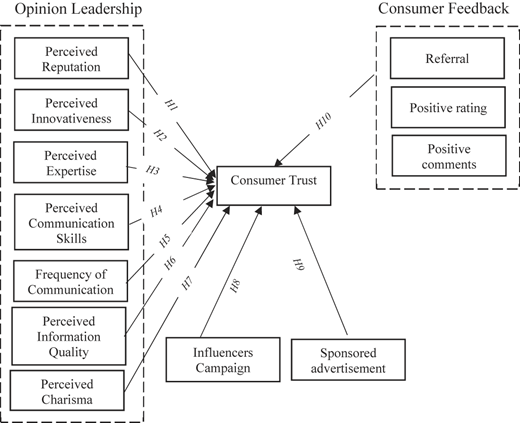
Research model- “Figure by authors”
Research model- “Figure by authors”
Methodology
Data Collection
The proposed research model was tested through an online survey conducted on Qualtrics. Participation was voluntary, and all participants were encouraged to take part. The survey instruments were adapted from previous literature (Ohanian, 1990; Rogers, 2003; Gilly, 1998; Flynn et al., 1996; Weimann, 1994; Sussman, 2003; Conger, 1994; Djafarova and Rushworth, 2017; Cannon, 1997; Hunt, 1994) (Appendix A). The survey received approval from the Institutional Review Board (IRB) under contract 1,956,222–1. Data collection occurred in two phases to minimize bias, focusing on influencers in the car and housing industries.
In the first phase, respondents were asked to watch three selected videos by Scotty Kilmer, a renowned mechanic and opinion leader in the car market with over 6 million YouTube subscribers (https://www.youtube.com/@scottykilmer). Scotty Kilmer has over 50 years of experience as a professional mechanic and initially gained fame through his show on a Texas cable channel before transitioning to YouTube. His expertise, eloquence, clarity, and communication skills distinguish him from other mechanic YouTubers. He is known for his innovative content, keeping up with recent trends in the automotive industry and advising consumers on cost-effective solutions. For example, he discusses the transition to electric cars, their environmental impact, and compares their advantages and disadvantages with fossil fuel cars. In the selected videos, he recommends certain dealerships for buying and fixing cars, compares the reliability and longevity of Toyota models with other makes, and advises middle-class Americans to consider Toyota sedans to avoid common fixing problems associated with other brands.
After watching the videos, respondents were asked to express their feelings toward Scotty Kilmer and the extent to which he influences their trust in his recommended vendors. The research subjects included:
Online participants invited via LinkedIn.
Students, staff, and faculty at an American University, invited through the Communication Center website.
Students at an American College of Business, who participated via the research pool and received one credit hour.
Students enrolled in three business courses at an American University.
Respondents who participated via Amazon MTurk.
A total of 485 samples were collected in the first phase, with 79 incomplete responses removed, leaving 406 samples for data analysis. Among the 406 respondents, 206 were male, 184 were female, and 16 preferred not to disclose their gender. The age distribution was as follows: 167 respondents were in the 18–24 age group, 202 in the 25–34 age group, 22 in the 35–44 age group, 6 in the 45–54 age group, 8 in the 55–64 age group, and 1 in the 65+ age group. Regarding employment, 261 were students, 15 were faculty members, 48 were staff, 2 were retired, 49 were self-employed, and 31 were unemployed.
In the second phase, respondents were asked to watch two videos by Josh Dorkin, the owner of the BiggerPockets YouTube channel (https://www.youtube.com/@biggerpockets). Josh Dorkin’’s channel publishes videos frequently on various housing options, considering budget and economic conditions to make successful investments. He has over one million followers. In the selected videos, Josh recommends first residence options for middle-class Americans in major cities such as New York, Los Angeles, and Chicago.
The second phase of data collection was conducted through Amazon MTurk, targeting respondents in the United States. A total of 371 samples were collected in this phase, with 60 incomplete responses removed, leaving 311 samples for data analysis. Among the 311 respondents, 189 were male, 108 were female, and 14 preferred not to disclose their gender. The age distribution was as follows: 137 respondents were in the 18–24 age group, 110 in the 25–34 age group, 11 in the 35–44 age group, 39 in the 45–54 age group, 12 in the 55–64 age group, and 2 in the 65+ age group.
Data Analysis
The data analysis was conducted using SmartPLS (Ringle, 2024). The proposed hypotheses were tested using PLS-SEM. Structural Equation Modeling (SEM) is a statistical technique that allows for the simultaneous analysis of multiple relationships through visualization and model validation. SEM extends multiple regression and factor analysis to identify relationships between multiple constructs, each indicated by various measures (Dash, 2021; Sarstedt, 2017). SEM has two primary variations: Covariance-Based SEM (CB-SEM) and Partial Least Squares SEM (PLS-SEM). PLS-SEM, which is based on variance models, is particularly effective for theory development (Joe Hair, 2017). Therefore, this research employs PLS-SEM to explore the relationships between research constructs.
SmartPLS first conducts Confirmatory Factor Analysis (CFA) for the variables, followed by testing the relationships between research constructs. The main goal of PLS-SEM is to maximize the explained variance (R2) of the endogenous latent variables in the PLS path model. Key metrics for evaluating the measurement model include reliability, convergent validity, and discriminant validity. For the structural model, important metrics include R2 (explained variance), f2 (effect size), Q2 (predictive relevance), and the size and statistical significance of the structural path coefficients (Joe Hair, 2017).
The initial step in assessing the structural model involves evaluating the significance and relevance of the relationships within the model. As illustrated in Figure 2, the loadings for the seven traits of Opinion Leadership, which form the opinion leadership constructs, are all above 0.2 except for frequency of communication, which is 0.039. For consumer feedback and consumer trust, all loadings exceed 0.8. These loading variances indicate strong convergent validity of the construct factors (Shi, 2019).
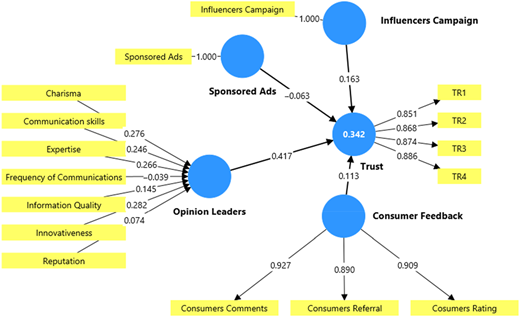
PLS-SEM results- “Figure by authors”
PLS-SEM results- “Figure by authors”
To assess the reliability of the measures, indicator reliability, composite reliability (CR), Cronbach’s Alpha, rho_A, and rho_C were used. All outer loadings for constructs are above 0.7, confirming the reliability of all indicators. All reported values for CR and Cronbach’s Alpha are above 0.89, establishing the reliability of the reflective constructs. Additionally, all Average Variance Extracted (AVE) values are higher than 0.75, indicating good convergent validity for the reflective constructs. For discriminant validity, all square roots of AVEs are above 0.7 and greater than the loadings on other constructs, confirming discriminant validity. The Heterotrait-Monotrait Ratio of Correlations (HTMT) using 5,000 bootstrapping subsamples was also employed to assess discriminant validity. All HTMT values are below 0.90, indicating discriminant validity among all reflective constructs.
The content validity assessment of the formatively measured construct (opinion leadership characteristics) was performed by evaluating convergent validity, potential collinearity issues, and the significance and relevance of the formative indicators. To evaluate convergence validity, we tested whether the formatively measured construct is highly correlated with a reflective measure of it. The strength of the path coefficient linking the two constructs was above the desired magnitude (0.80), indicating reliability for the formative constructs.
Furthermore, to check for common method bias, Common Method Factor analysis was conducted. Four separate Ordinary Least Squares (OLS) regressions were run for all four predictor constructs (opinion leadership, consumer feedback, sponsored opinion leader, and multiple opinion leaders). Examining the Variance Inflation Factor (VIF) of predictor constructs showed tolerance values clearly above the threshold of 0.2 (VIF below 5.0). This indicates that collinearity among the predictor constructs in the structural model is not an issue, allowing us to rely on the obtained results. Additionally, since all VIF values are lower than 3.3, common method bias is unlikely to be a serious concern for this study (Kock, 2015). The result of the collinearity test is provided in Table 1.
Results and discussion
The relevance and significance of the relationships between the predictors (opinion leadership, influencers campaign, sponsored advertisements, and consumer feedback) and the dependent variable (consumer trust) were analyzed using PLS-SEM. We utilized the PLS complete bootstrapping procedure with 5,000 subsamples to determine the statistical significance of the structural paths (hypotheses). The results of the hypothesis testing are presented in Table 2. The overall model accounts for 40% (R2 = 0.342) of the variance in consumer trust toward vendors, which is considered substantial for social science research. According to Cohen (1988), an R-squared value above 0.26 indicates a significant amount of variance explained by the model (Cohen, 1988). The reported standardized root mean square residual (SRMR) is 0.038, and the chi-square value is 597.5, confirming the model’’s good fit. Hypotheses H1-8 and H10 were statistically significant, while hypothesis H9 was not statistically significant. Path coefficient results indicate that opinion leadership is the most important predictor ; ), followed by influencers campaign , ) and consumer feedbacks , ). These results indicate that hypotheses H1 through H8, and H10 are supported. Sponsored advertisement by opinion leaders ) was not found to impact consumer trust, indicating that H9 is not supported.
Hypothesis testing results
| Hypothesis | Path coef. | STDEV | F-square | p-value | Significance |
|---|---|---|---|---|---|
| H1-7: opinion leaders → consumer trust in vendors | 0.417 | 0.061 | 0.167 | 0.000 | YES |
| H8: influencers campaign → consumer trust in vendors | 0.163 | 0.060 | 0.031 | 0.005 | YES |
| H9: sponsored advertisements → consumer trust in vendors | −0.063 | 0.040 | 0.003 | 0.215 | NO |
| H10: consumers feedback → consumer trust in vendors | 0.113 | 0.060 | 0.028 | 0.01 | YES |
Source(s): Table by authors
Additionally, we performed an Importance-Performance Map Analysis (IPMA) as an extension of the PLS-SEM (see Figure 3 and Table 3). The findings offer insights into the performance of each construct, providing valuable information for managerial implications and highlighting key areas for targeted actions.
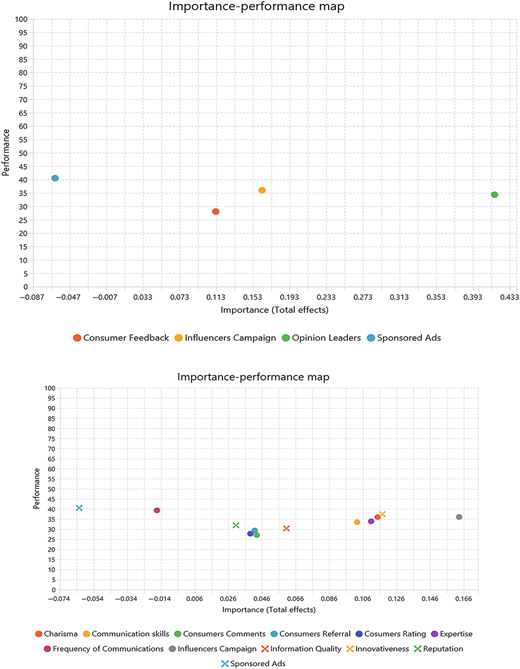
IPMA results for consumer trust- “Figure by authors”
IPMA results for consumer trust- “Figure by authors”
IPMA results for opinion leadership characteristics-
| Importance | Performance | |
|---|---|---|
| Charisma | 0.115 | 36.007 |
| Communication skills | 0.103 | 33.473 |
| Expertise | 0.111 | 33.891 |
| Frequency of communications | −0.016 | 39.307 |
| Information quality | 0.061 | 30.358 |
| Innovativeness | 0.118 | 37.494 |
| Reputation | 0.031 | 31.892 |
Source(s): Table by authors
This study reveals that opinion leaders significantly influence consumers’ trust in vendors. Both professional characteristics (such as perceived reputation, innovativeness, expertise, and quality of information) and personal characteristics (including charisma, communication skills, and frequency of communications) of opinion leaders affect consumer trust in vendors. Expertise was found to be the second most important professional characteristic of opinion leaders, as credible recommendations require a high level of knowledge in their respective fields. Opinion leader expertise facilitates the decision-making process for consumers. They search for and gather information, analyze and evaluate the specifics of a product or service, and provide credible recommendations that minimize risk by offering reliable information (Chen, 2024). The reputation of an opinion leader significantly impacts consumer trust toward an online vendor. Reputation entails public recognition within the online community and being a role model to followers (Chen, 2024). Information quality is essential for becoming an opinion leader. Accuracy, completeness, comprehensiveness, and timeliness of the information provided to followers are key to giving credible recommendations and facilitating the decision-making process (Ping, 2022). It is important to note that interpersonal characteristics are found to be more important than some professional characteristics. We found that communication skills and charisma are high priorities in convincing consumers to trust vendors. Effective communication including frequency and quality of communication was found to be an important interpersonal characteristic for opinion leaders. Communication through various methods, including posts, reviews, comments, messages, replies, and live sessions, minimizes the communication gap and ensures the message reaches all followers (Gallo, 2022). This responsiveness and responsibility enhance consumer trust. Charisma was found to be the second most important interpersonal characteristic, as it enables opinion leaders to inspire their followers toward desired actions. Charisma can amplify the effects of other core opinion leadership characteristics. The more charismatic an opinion leader is, the easier it becomes for followers to trust their expertise and convey information (Brown et al., 2017). Additionally, influencer campaigns and consumer feedback also impact consumer trust in vendors, though to a lesser extent. When an opinion leader endorses a vendor, their audience is more likely to try the vendor’s products or services. If the positive experience is repeated over time, the audience is likely to become loyal to that vendor (Gefen, 2002). Moreover, when multiple influencers convey the same message, it enhances followers’ trust by reducing the perceived risk associated with a new vendor or product (Mishnick, 2024; Syed et al., 2023). The findings indicate that while sponsored advertisements negatively impact consumer trust in vendors, the effect is not significant. Consumers generally distrust sponsored advertisements, viewing them as motivated by monetary gain rather than genuine opinion. However, some mixed reports suggest that certain consumers might be influenced by paid advertisements (Goh, 2013; Haider, 2022; Soti, 2022; Kim et al., 2019). This finding aligns with consumer skepticism theory, which indicates that profit-driven advertising is deemed insincere and can lead to reduced trust, lower purchase intention, and negative word-of-mouth (Pan, 2025; Jabeen, 2024). Additionally, skepticism toward a vendor’s social responsibility can be heightened if consumers believe it is more about social management than genuine social impact (Nguyen, 2023; Thomas, 2020; Dalal, 2020). We can also justify this result through the lens of cognitive dissonance (Festinger, 1957). Consumers experience dissonance when they perceive a conflict between the authenticity of the opinion leader and the commercial nature of the sponsored content (James, 1983; Beverland, 2010). Cognitive dissonance occurs when consumers perceive a discrepancy between the opinion leader’’s authentic persona and the commercial intent behind the sponsored advertisement. This dissonance can lead to skepticism and reduced trust (Telci, 2011). For instance, if an opinion leader who is known for genuine, unbiased opinions suddenly promotes a product for monetary gain, consumers may question the authenticity of the endorsement, leading to cognitive dissonance and a subsequent decline in trust (Rajput, 2024; Beverland, 2010). Consumers often expect opinion leaders to provide honest and unbiased opinions. When these expectations are violated by sponsored content, cognitive dissonance arises. This dissonance can cause consumers to either change their perception of the opinion leader (viewing them as less trustworthy) or dismiss the sponsored content altogether (Zak, 2021; Weinlich, 2022). To reduce cognitive dissonance, consumers might rationalize that the opinion leader is simply fulfilling a commercial obligation, which can further diminish the perceived authenticity and trustworthiness of the opinion leader. This rationalization process can explain why sponsored advertisements fail to enhance consumer trust. Research has shown that the disclosure of sponsorship can lead to increased consumer skepticism and reduced trust in the opinion leader (Jhawar, 2023).
This study makes several contributions to the current body of knowledge. We examined professional and personal characteristics of opinion leaders, consumer feedback, influencer campaigns, and sponsored advertisements together in a single model. Furthermore, despite the lack of consensus on the main characteristics of opinion leaders, we shortlisted the characteristics most cited in past literature from various perspectives, including marketing, economics, e-commerce, and psychology. We utilized the PLS-SEM model to examine the importance and performance of these constructs, identifying the ranking of each construct’s effect on consumer trust and their current performance to suggest practical actions. The results confirmed that opinion leaders are the most important factors shaping consumers’ trust in vendors, followed by influencer campaigns and consumer feedback. The controversial role of paid sponsorship was also examined and found to have a negative impact on consumer trust, but it was not significant. Thus, this marketing method can still be considered in promoting an online vendor. According to IPMA results, the most important characteristics of opinion leaders affecting consumers’ trust decisions are innovativeness, followed by communication skills, expertise, charisma, reputation, and information quality, respectively (Table 3). Opinion leaders are early adopters of innovations, experimenting with and learning about new ideas, products, and services. They then disseminate information about these innovations throughout their community, whether positive or negative, and persuade their followers to try them (Barton, 1985).
This study demonstrates that opinion leaders significantly influence consumers’ trust in vendors, corroborating previous research that underscores the critical impact of opinion leaders on consumer behavior. For instance, Chen et al. (2024) identified that the expertise and renown of opinion leaders substantially affect consumer purchase intentions (Chen, 2024). The current results indicate that both professional attributes (such as perceived reputation, innovativeness, expertise, and quality of information) and personal attributes (including charisma, communication skills, and frequency of communications) of opinion leaders are essential in fostering consumer trust. This also aligns with existing literature that highlights the importance of credibility, charisma, and effective communication in opinion leadership (Gallo, 2022). Furthermore, this study supports Mishnick’s (2024) observation that multiple influencers delivering the same message can enhance followers’ trust by mitigating the perceived risk associated with a new vendor or product (Mishnick, 2024). This phenomenon is explained by social proof theory, which posits that individuals tend to follow the actions of others when making decisions, particularly in uncertain situations (Cialdini, 2008). Additionally, the obtained results are consistent with congruity theory, which suggests that consumers respond positively to elements that are cognitively consistent, adjusting their attitudes and intentions to increase congruency (Osgood, 1955). Belanche et al. (2021) further indicate that congruencies between influencers, consumers, and products lead to behavioral changes in consumers’ purchase intentions and recommendations (Belanche et al., 2021). By integrating these findings, this study adds value to the existing body of research by providing empirical evidence on the multifaceted role of opinion leaders in shaping consumer trust. Unlike previous studies that primarily focused on either professional or personal characteristics of opinion leaders, this research highlights the combined effect of both sets of attributes. This comprehensive approach offers a more nuanced understanding of how opinion leaders influence consumer behavior. This study also addresses the gap identified by Kim et al. (2019), who highlighted the mixed effects of sponsored advertisements on consumer trust (Kim et al., 2019). By examining the controversial role of paid sponsorship, we provide a nuanced understanding of its impact, suggesting that while consumers generally distrust sponsored advertisements, this marketing method can still be considered in promoting an online vendor.
Moreover, this study contributes to the literature by demonstrating the practical implications of leveraging multiple influencers to convey consistent messages, thereby enhancing consumer trust and reducing perceived risks. The findings offer practical insights for marketers aiming to navigate consumer skepticism and cognitive dissonance in their advertising strategies. We suggest that marketers prioritize transparency and authenticity in their sponsored content to mitigate skepticism and reduce cognitive dissonance. This can be achieved by clearly disclosing sponsorships, providing honest and balanced information, and fostering genuine interactions with consumers. Additionally, marketers can leverage opinion leaders who possess high credibility and trustworthiness to endorse their products, as these influencers are more likely to be perceived as authentic and less driven by monetary incentives. Additionally, we offer specific recommendations for practitioners based on the findings, providing more comprehensive practical insights. For instance, marketers can leverage the identified key characteristics of opinion leaders—such as innovativeness, communication skills, and expertise—when selecting influencers for their campaigns. Practical guidelines include strategies for identifying and engaging opinion leaders who possess these traits, as well as best practices for designing effective influencer campaigns. Additionally, the results on the limited impact of sponsored advertisements suggest that marketers should prioritize authentic and transparent communication over paid endorsements to build consumer trust. By focusing on genuine interactions and fostering long-term relationships with opinion leaders, marketers can enhance the credibility and effectiveness of their campaigns. These insights are particularly valuable for marketers and businesses seeking to build trust and credibility in new markets or with new products. Therefore, the findings extend the understanding of opinion leadership by emphasizing the importance of both professional and personal characteristics in building consumer trust. This holistic perspective provides a more robust framework for future research and practical applications in marketing and consumer behavior.
Practical implications
To determine management action priorities, an Importance-Performance Map Analysis (IPMA) was conducted (Ringle, 2024). The IPMA enhances the results of PLS-SEM by also evaluating the performance of each construct. This dual consideration of importance and performance allows for practical and managerial actions, aiding managers in setting resource allocation priorities. As depicted in Table 4, IPMA is widely utilized in marketing research as a powerful tool for identifying investments to enhance consumer experience. The IPMA results categorize attributes into four quadrants: highest priority/take action, important/maintain performance, low priority/possible resource waste, and not impactful (Sever, 2015). The focus is on the highest-importance and lowest-performing areas to improve the performance of constructs that are crucial to the target construct but currently underperforming (Hair et al., 2023). These insights can help identify more efficient and effective marketing strategies for recommending potential new vendors to consumers.
IPMA plot areas
| Performance | Low priority/possible waste of resources | Important/keep up the good work |
| Not impactful | highest priority/take action | |
| Importance | ||
Source(s): Ringle (2024)
According to the IPMA analysis results, opinion leaders have the highest importance and the second highest performance, placing them in the “important/keep up the good work” quadrant. This suggests that opinion leaders possess significant strengths and potential competitive advantages in promoting new vendors to consumers. Given their strong performance, managerial actions should focus on continued investments in opinion leaders. Influencers campaign and consumer feedback are the next most important factors influencing consumers’ trust, with similar importance and performance. They also fall into the “important/keep up the good work' category. However, managerial actions can be taken to enhance the performance of consumer feedback. Additional resources can be allocated to better promote consumer feedback, making it more accessible to consumers. Sponsored ads are situated in the “low priority/possible waste of resources” quadrant, with the lowest importance but highest performance. This indicates that sponsored ads are relatively unimportant to consumers in their trust decisions, despite performing exceptionally well. This suggests that sponsored ads are overly emphasized by management and do not significantly contribute to promoting trust. Therefore, the focus should shift toward non-paid methods. Resources should be concentrated on opinion leaders and consumer feedback. We recommend allocating resources first to support opinion leaders, then to influencers campaign and consumer feedback. Lastly, if any additional resources are available, they can be allocated to sponsored ads. We also examined the importance and performance of opinion leadership characteristics. According to the IPMA results, opinion leaders should be innovative, experts in their field, and possess high communication skills and charisma. These findings can be used to identify and recommend potential trusted opinion leaders to consumers. Innovativeness falls in the “important/keep up the good work” quadrant, indicating that it is crucial for consumers in trusting vendors recommended by opinion leaders. Therefore, opinion leaders should continue keeping up with new innovations and be the first to try them. However, communication skills fall into the “highest priority/take action” quadrant, meaning they are very important for consumers but are not performing well. This is the most critical area in the plot, showing that opinion leaders’ communication skills are underperforming and can be a potential weakness. Thus, opinion leaders should focus more on developing better communication skills. Conversely, the frequency of communications is in the “low priority/possible waste of resources” quadrant. This indicates that resources are focused on different ways and frequencies of communication, which are not as effective for impacting consumers’ trust in vendors. This is a waste of limited resources that could be reallocated elsewhere. Opinion leaders should also focus on developing their expertise in the field and reputation. Finally, the findings of this study can be used to identify trustworthy reviews and aggregate crowd wisdom easily available to consumers. This can be achieved by giving more weight to opinion leaders’ reviews than to other consumers’ reviews of the vendors.
Limitations and future research directions
While this study provides valuable insights into how opinion leaders like Scotty Kilmer (automotive) and Josh Dorkin (real estate) shape consumer trust toward vendors on YouTube, several limitations must be acknowledged to contextualize the findings and guide future research. This study focused exclusively on YouTube due to its dominance in long-form, high-involvement content (e.g. in-depth car reviews by Kilmer or property investment analyses by Dorkin). However, social media platforms differ significantly in how they facilitate trust-building. Instagram, for instance, prioritizes visual branding through short-form content, while Facebook often blends social proof with community discussions. Although YouTube’s detailed format is ideal for complex purchases like cars or homes, our findings may not extend to platforms where decisions rely more on aesthetics or peer endorsements rather than technical evaluations (Davis, 2018). Future studies should compare opinion leadership dynamics across platforms to identify how content format (short-vs. long-form) moderates trust formation.
The study’s focus on high-involvement industries—automotive (Kilmer) and housing (Dorkin)—means its conclusions may not apply to low-involvement products (e.g. trimmers, small appliances). High-cost, infrequent purchases require extensive cognitive effort, where opinion leaders act as surrogate decision-makers by evaluating technical specifications (e.g. Kilmer’s car reliability analyses) or market trends (e.g. Dorkin’s real estate advice). In contrast, low-involvement purchases often rely on habitual or affective triggers (Mothersbaugh, 2024). Future work should examine whether opinion leadership’s trust-building mechanisms vary across the involvement spectrum, particularly for products where AI or algorithms may replace human influencers. The study did not account for AI’s growing influence in high-stakes consumer decisions. Tools like ChatGPT or AI-powered comparison platforms (Hironde, 2023) can now aggregate reviews, analyze vendor histories, and even generate personalized recommendations—potentially bypassing human opinion leaders altogether. For example, while Kilmer’s decades of mechanic expertise traditionally guide car buyers, AI could synthesize broader datasets to challenge or corroborate his advice. Future research should explore how AI-aided decisions interact with (or displace) human opinion leadership, especially in domains like real estate where predictive analytics are increasingly prevalent. Respondents in this study were not required to be subscribers of Kilmer’s or Dorkin’s channels, which may limit the observed trust effects. Subscribed followers often exhibit stronger parasocial relationships with influencers, leading to higher credibility assessments. For instance, Kilmer’s long-term subscribers may trust his dealership recommendations more than casual viewers due to repeated exposure to his “no-nonsense” persona. Subsequent studies should stratify samples by engagement level (e.g. subscribers vs. non-subscribers) to isolate how familiarity amplifies trust.
Building on these limitations, we propose the following directions:
Loyalty dynamics: Investigate how sustained exposure to opinion leaders like Kilmer or Dorkin translates into long-term vendor loyalty, beyond initial trust.
AI-human interplay: Examine whether AI-generated content (e.g. AI car reviewers) competes with or complements human opinion leaders in high-involvement contexts.
Cross-platform comparisons: Test whether trust formation differs when the same influencer (e.g. Dorkin) operates across YouTube (long-form) and Instagram (short-form).
Cultural moderators: Explore how cultural factors (e.g. individualism vs. collectivism) shape reliance on opinion leaders for major purchases.
By addressing these gaps, researchers can develop a more nuanced understanding of digital opinion leadership—one that accounts for technological disruption, platform diversity, and the evolving nature of consumer trust.
References
Further reading
The supplementary material for this article can be found online.

