This study aims to investigate how stereotyped expectations about appropriate male and female behavior influence investment decisions in the context of a death in family firms. When a family member dies, uncertainty about intrafamily fighting increases. The authors analyze whether investors’ valuation of how the death would affect the firm depends on descendant gender.
The authors use an event study method to analyze investor reactions to 143 deaths in 118 publicly traded family firms operating in 25 countries. The authors then test for differences in investor reaction across descendant gender.
Investors evaluate the potential for conflict higher and react more negatively to deaths in families with relations complicated by multiple marriages and children. The significance of male offspring in driving the negative investor reaction indicates that investors expect sons, and not daughters, to fight for positions of power.
The sample is representative of the largest family firms and limits the generalizability of results to smaller and private firms. This study highlights the importance of gender biases implicit in investor decision-making. The cross-country differences underscore the significance of cultural differences regarding gender-appropriate behavior.
This study highlights the importance of gender biases implicit in investor decision-making. The results also present a map of the consequences of gender biases in investor decision-making in 25 countries that vary according to economic development and perceptions about gender equality.
Societal expectations of gender-appropriate behavior predicting sons to fight for power and daughters to keep the peace manifest themselves in investor reaction to deaths in family firms. This study contributes to the literature on how gender stereotypes affect investment decisions and the financing of growth.
1. Introduction
Social role theory posits that societal expectations of women fitting into homemaker roles and men into breadwinner roles stem from the sexual division of labor. Identity economics focuses on how the expectations regarding gender-appropriate behavior would manifest in economic decisions. Stereotypes about how female stakeholders should behave may color investor decisions. Gender stereotypes may thus affect funding cost and availability, which influences firm growth. We use family firms as the context and explore investor evaluations of how a death in the family will affect the firm. Gender-stereotyped perceptions associate women with communal traits focusing on the well-being of others and men with agentic traits emphasizing self-assertion and independence. Evidence confirms that individuals affiliate leadership with agentic traits typically ascribed to men, such as dominance and competitiveness (Eagly et al., 2012; Koenig et al., 2011). In our context, a death in the family can potentially incite strife and disputes. We explore whether investors interpret uncertainty associated with death differently depending on the gender of heirs.
Wakabayashi and Kim (2023) highlight gendered expectations about succession and the fight for power in the opening line of the New York Times article “When Koo Bon-moo, chairman of South Korean conglomerate LG, died in 2018, there wasn’t much question, at least publicly, of who would next preside over the company.” The public, including investors, expected a smooth transition of power because the chairman and his wife had adopted the oldest son of his younger brother when their own son passed away. The adoption confirmed gendered perceptions of sons and, in the absence of sons, the next closest male kin as the natural successor. Investors and the general public did not envision the two daughters and the widow of Koon Boon-moo defying societal norms of the nurturing and understanding female and contesting the succession plan. This study focuses on how gendered expectations about dutiful daughters and ambitious sons affect investors’ valuation of family firms.
We collect data on 143 deaths of founders and family members in 118 publicly traded family firms operating in 25 countries to test our hypothesis on whether gender stereotypes influence how investors evaluate the likelihood and severity of intra-family fighting for decision-making power. Investors react negatively to the potential for inheritance disputes. When we control for descendant gender, investors perceive males, but not females, as potential instigators of fighting for decision-making power. Furthermore, when we split the sample according to gender inequality, the difference between daughters and sons in their potential to fight for power is only significant in countries and periods with greater gender inequality.
First, this study contributes to the literature that explores how gender stereotypes influence investors’ decision-making. Gender stereotypes affect investors’ portfolio choices (Friedman, 2020), allocation of venture capital funds (Balachandra, 2020), and trading based on investment advice (Luo and Salterio, 2022). However, the literature overlooks how investors perceive potential decision-makers and the likelihood of intra-family fighting to secure positions of power. Second, we contribute to the literature on how gendered perceptions might lead to discounting women’s capabilities that hinder their promotion to decision-making roles. Extensive literature investigates how gender stereotypes affect the hiring process (Ryan and Haslam, 2005), appointments to positions of power (Lee and James, 2007; Pastore et al., 2017), payoffs (Steinberg, 1990), compensation (Adams et al., 2007; Kanter, 1977), succession decisions (Wang, 2010), valuation (Abdullah et al., 2016) and accounting choices (Ho et al., 2015). We contribute to this literature by showing how investors may ignore women’s potential to seek power positions. Finally, we explore how a family’s complex web of relations amplifies investor concerns about intra-family fighting. Lansberg (1999), Ibrahim et al. (2001) and Ibrahim et al. (2001) discuss how the type of relationships between family members affects firm performance. We contribute to the literature and analyze whether relationship complexity factors into investor expectations about the probability for fighting even before a fight for succession takes place.
2. Theoretical framework and hypothesis development
2.1 Investor perceptions about how a death in the family will affect the firm
When a family member dies, investors evaluate how the change in family relationships and the power structure will affect decision-making in the firm. Death has the potential to unveil latent unresolved resentments and conflicts in the family. The family members may reassess their roles, leading to potential discord, particularly in complex family structures characterized by diverse perspectives. Gimeno Sandig et al. (2006) define family complexity as “the number of family members and the kind of relationships established among them, the number of generations alive at a given point in time.” İbrahim et al. (2001) provide anecdotal evidence about intra-family fighting following the death of Quebecor’s founder, Pierre Peladeau, who married three times and had seven children. Children from his different marriages filed lawsuits in a bitter feud. Another example of a family dispute is the “El Periodico de hoy,” a family-owned newspaper firm. Following the founder’s death, his brother exploited the complicated ownership structure to become CEO (de Holan and Sanz, 2006). The CEO then tunneled firm resources for his own benefit through a lavish compensation package while decreasing dividends. Inheritance disputes and intra-family fighting enabled the CEO to expropriate outside shareholders’ wealth.
Relationship conflicts following death may demotivate employees and decrease the performance of all conflict parties (Eddleston and Kellermanns, 2007; Levinson, 1971). The fighting might allow some family members (such as the El Periodico de hoy) to exploit firm resources at the expense of outside shareholders and inside family members. Complex family relations may amplify resentments and drive future intra-family conflict that affects firm performance (İbrahim et al., 2001; Avloniti et al., 2014). When a family member passes away, investors form expectations on how the power structure will change and affect decision-making in the firm. These expectations will drive investors’ trading decisions. Aggregate trading will then incorporate the consensus investor view about how the death will affect the firm.
2.2 How gender stereotypes affect investor perceptions and investment decisions
Financial models assume investors rationally value the firm using all available information. The no-arbitrage principle ensures that the market will correct short-run divergences from fundamental value (Black and Scholes, 1973; Merton, 1973). Behavioral financial models relax the rationality assumption (Odean, 1998; Tversky and Kahneman, 1974). Emotional and cognitive biases may cause people to make irrational investment decisions (Tversky and Kahneman, 1974). Chen et al. (2004) shows that biased decisions when aggregated create mispricing that violates the no-arbitrage rule. Stango and Zinman’s (2019) survey show that 98% of the US population have biases that may affect investment decisions. Social role theory and identity economics discuss how stereotypical expectations regarding male and female behavior may implicitly bias the investment decision.
Social role theory argues that the historical (and to a lesser extent current) labor division into paid, breadwinner male jobs and unpaid, nurturing female jobs stemming from physical differences across sexes leads to expectations about “ideal” and “appropriate” male and female behavior (Eagly et al., 2012). Bem (1974) and Spence et al. (1975) develop measures of traits reflecting the differences in expectations. An abbreviated list of masculine traits measuring ideal and desirable associations of agentic behavior includes aggressiveness, independence, competitiveness, ambition, confidence, leadership, assertiveness, dominance and individualism. A short list of feminine traits measuring ideal and desirable associations with communal behavior includes compassion, gentleness, loyalty, kindness, empathy, consciousness, helpfulness, devotion to others and ability to express emotion.
The stereotypical nurturing and communal roles attributed to women and the ambitious and agentic roles to men would breed differing expectations about the likelihood to fight for power. A death that generates uncertainty about who will assume positions of power would then be colored by these gendered expectations. Death might lead to severe intra-family strife, triggering an increase in agency costs and hurting firm value (Eddleston and Kellermanns, 2007). Furthermore, death can potentially change the relationships and the distribution of power among family members. Chua, Chrisman, and Sharma (2003) highlight managing how the family is involved in the firm as the primary concern. Hence, family firms are likely to promote family members to succeed in leadership (Ballinger and Marcel, 2010). Succession that may change the delicate balance between the firm and the family is of utmost importance (Avloniti et al., 2014; Chua et al., 2003; Ibrahim et al., 2001; Chua et al., 2003). Chua et al. (2003) point out a secondary concern as maintaining healthy relationships between family members. However, choosing a successor from within might harm familial relationships (Friedman, 1991). Sibling relationships may amplify existing rivalries (Avloniti et al., 2014), and the arising conflicts might hurt performance (Levinson, 1971). The choice of death as a context to investigate whether gender stereotypes affect how investors perceive male and female stakeholders allows us to identify increasing conflict and power struggles.
Gendered preconceptions would assume women to possess harmonious and communal characteristics with care for the well-being of others. Because these traits contradict the executive archetype that values independence and aggressiveness, investor perceptions may discount the likelihood of women bidding for power roles and succeeding in leadership positions. In contrast, investors would expect men to demonstrate agentic traits emphasizing self-assertion and independence that would increase the likelihood of fighting for power. We hypothesize that gendered perceptions of investors would predict daughters to be more concerned with keeping harmony and sons more likely to make a bid for power:
Gender-stereotyped perceptions about agentic and communal traits of male and female stakeholders, respectively, would predict sons to fight for power and daughters to refrain from making a bid for positions of power in the family firm.
The expectation that men will fight for power whereas women will keep the peace relates to investor association of executive roles with masculine traits, characterizing them as traditionally “manly” positions (Oakley, 2000). Men are preferred over females for executive positions, and the rarity of women in leadership positions perpetuates this perception (Powell and Butterfield, 2002). This perspective shapes investor beliefs about the perceived incompetence and unsuitability of women for leadership roles (Lee and James, 2007). Hence, investors may downplay female executives’ managerial skills (Balachandra, 2020; Lee and James, 2007; Haslam et al., 2010). The devaluation of managerial skills shows up in the pricing of firms with female executives. Investor reaction (measured using abnormal returns) to female CEO appointments is more negative than to male appointments in the US (Lee and James, 2007) and Italy (Pastore et al., 2017). Furthermore, investors price the firms with female CEOs at a discount, even when performance is no different from firms with male CEOs (Adams et al., 2009; Haslam et al., 2010), if not better (Catalyst, 2004; Khan and Vieito, 2013).
Female executives are more prevalent in family firms compared to non-family firms (Giraldez-Puig and Berenguer, 2018). However, intra-family succession is more likely when the predecessor has a son (Dahl and Moretti, 2008; Wang, 2010), even when daughters are better educated and have superior work experience (Ahrens et al., 2015). Consequently, when confronted with a death, investors may exclude daughters as candidates for executive positions. Stavrou (1999) found that founders may prefer to sell the firm rather than promote their daughters to leadership positions.
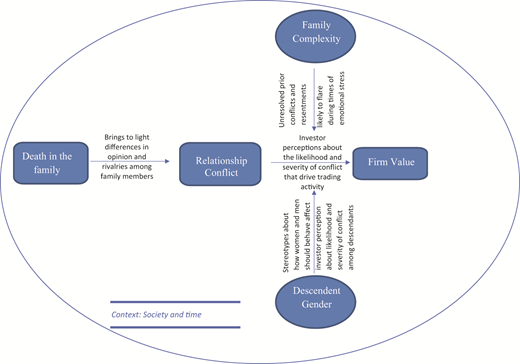
Figure 1 depicts our model on how gender-stereotyped investor expectations about the capabilities and behavior of male and female stakeholders affect investor decisions. The model builds on a developing literature in management that explores the consequences of investor expectations about gender-appropriate behavior (Anglin et al., 2022). Investor decisions to provide equity or debt financing determine firm growth. Consequently, how investors perceive founder competence in young firms determines whether they receive growth funding. Kanze et al. (2018) and Balachandra et al. (2019) investigate how investor expectations about gendered traits manifest themselves in real-world examples of venture capital financing. Kanze et al. (2018) identify a gendered difference in the type of question venture capitalists ask in TechCrunch Disrupt Startup Battlefield, a well-known venture capital financing competition. Investors ask male entrepreneurs about how they would exploit growth opportunities and female entrepreneurs about how they would address risk factors. Male entrepreneurs, who are primed by the question itself, respond more with a promotion focus and end up securing more funds. Balachandra et al. (2019) rely on outsiders to classify the female and masculine traits of entrepreneurs using data from a university’s annual elevator-pitch competition. The coding indicates that entrepreneurs perceived to demonstrate feminine and communal traits received less financing than entrepreneurs perceived as more masculine and agentic in real-world pitches.
Social and cultural norms shape investors’ perceptions of gender-appropriate behavior. We posit that variations in biased gender norms resulting from variation in culture and time are essential for understanding investor behavior. In cultures and periods marked by heightened gender bias, investors are more likely to anticipate female stakeholders to keep the peace and refrain from power bids. This expectation contrasts with cultures and eras characterized by reduced gender bias, where a more equitable view of female stakeholders may prevail. Building upon this premise, we hypothesize that in cultures and times with more gender-biased norms, investors would predict female stakeholders to keep the peace relative to cultures and times with less gender-biased norms:
Gendered expectations about how female and male stakeholders will behave will be greater in societies and times with more rather than less gender inequality.
3. Research framework and sampling strategy
3.1 Sampling strategy for identifying family firms and compiling deaths in the family
We sample events from three databases: “The World’s 250 Largest Family Business” (The World’s 250 Largest Family Businesses, 2004), “The 2015 EY and University of St Gallen Global Family Business Index” (The 2015 EY and University of St Gallen Global Family Business Index, 2015) and “The 2019 EY and University of St Gallen Global Family Business Index” (The 2019 EY and University of St Gallen Global Family Business Index, 2019). “The World’s 250 Largest Family Business” classifies a firm as a family firm if the family holds at least 32% of voting rights. “The 2015 EY and University of St Gallen Global Family Business Index” and “The 2019 EY and University of St Gallen Global Family Business Index” define a publicly listed firm as a family firm if the family controls at least 50% of the shares (and voting rights) and is involved in management.
We perform a Lexis-Nexis search for the obituaries of founders and family members in firms listed in the aforementioned indices. We exclude privately held family firms because we need stock market data. We read obituaries, newspaper articles and press releases to collect information about the children and marriages of the deceased and exclude the events with no information on partners and descendants. We check the last annual report before the obituary to understand if the deceased held an executive position in the firm or was retired. The resulting sample covers the deaths of 143 founders and family members from 1981 to 2020 in 118 family firms operating in eight industries across 25 countries.
3.2 Event study method to measure investor reactions to deaths in the family
We conduct an event study to measure investor reaction to a death. The event study assumes that investors rationally evaluate new information and trade based on their perception of how the information will affect the firm. Prices (and returns) incorporate the consensus investor opinion.
We obtain daily adjusted stock and market returns from Bloomberg. Following Brown and Warner (1985), we compute abnormal returns by taking the difference between observed daily returns and expected returns, the latter being estimated using a return-generating model. Expected returns represent the anticipated returns shareholders would have experienced if the event had not occurred. We use the market model to estimate expected returns in the one-year window spanning from 272 days before to 20 days prior to the death, as outlined in equation (1):
where represents the realized stock return i on day t, and denotes the market index return on day t. We calculate abnormal returns () in the 20-day event window (that extends from 5 days before and ends 15 days after the death) by differencing realized daily returns from expected returns, as shown in equation (2):
We aggregate abnormal returns on the event date and the subsequent two days to calculate three-day cumulative abnormal returns (CAR).
3.3 Proxies for measuring the severity and likelihood of disputes
A death in the family brings to light differences in opinion and rivalries among family members. The model in Figure 1 highlights how a family structure complicated by divorce and remarriage may amplify the unresolved prior conflicts following death (Ibrahim et al., 2001). Bennedsen et al. (2006) and Karaevli and Yurtoglu (2018) underscore the significance of the number of relations of the deceased, including the number of children and partners, as pivotal variables influencing succession and firm performance. Tanyeri-Günsür and Alp (2023) use the number of children and partners the deceased had and an interaction variable, family complexity, that multiplies the number of children and partners. We use these three variables, children, partners and family complexity, to evaluate the nature and complexity of family relationships.
H1 predicts that descendant gender affects investor perceptions about the likelihood and severity of inheritance disputes. Investors trade based on their gendered expectations about how disputes would affect firm value. The variables, sons and daughters, count the number of sons and daughters of the deceased, respectively. Two variables measure gendered family complexity. First, family complexity (son) is the interaction of the number of sons and partners of the deceased family member. Similarly, the second measure, family complexity (daughter), is the interaction of the number of daughters and partners. To ascertain the descendant’s gender, we conduct a search for the individual’s name in Google Images and categorize the gender. In instances where the descendant cannot be found in Google Images, we proceed to investigate the name in documents associated with the family or the firm. We use the gender in line with the pronouns used to identify the descendant in the documents. The assumption that the documents’ gendered pronouns and authors’ visual perceptions are in line with the gender perceptions of investors is mandated by data availability. The study focuses on investor perceptions; as such, the use of authors’ perceptions rather than investor perceptions is a limitation of the study.
Table 1 reports the mean, standard deviation and correlations between abnormal returns, proxies for family relations and control variables. On average, the abnormal return on announcement day is 0.54, and the three-day cumulative abnormal return is 0.64. The deceased was married on average 1.3 times with 3.7 children, 1.9 sons and 1.8 daughters. Two percent of the sample did not have partners or children. A total of 78% married once, and 20% were married more than once. The most significant correlations are between the number of children (sons and daughters) and family complexity (family complexity (son) and family complexity (daughter)).
3.4 Proxies for other factors that may affect investor reactions to a death in the family
Agency and stewardship theories present contrasting perspectives on the ramifications of family involvement in the firm. Agency theory, on the one hand, posits that family members may make decisions driven by self-interest, potentially detrimental to minority shareholders who are external to the family (Gomez-Mejia et al., 2001). The private benefits of control might include nepotism in the hiring process that might demotivate non-family employees or directing cash flows to investments aligned with family interests (Kaye, 1991; Westhead and Cowling, 1997; Schulze et al., 2001). Family members in executive roles might exhibit greater caution toward undertaking risky projects, as their substantial investments lack diversification (Agrawal and Nagarajan, 1990). Furthermore, family members may also avoid risks because their jobs and prestige may be tied to survival (Liebowitz, 1986). As further evidence of risk avoidance, Morck et al. (2005) and Munari et al. (2010) find that family firms resist adopting new products, management styles and technologies. Agency theory would then suggest that losing a family member may decrease family entrenchment in the firm and improve managerial performance, which would result in a positive investor reaction.
Stewardship theory presents a counterposition to agency theory, rejecting the notion of self-serving behavior and positing pro-organizational motivation (Davis et al., 1997). Family members may invest in and develop firm-specific skills and capabilities. The resulting ability of family members to generate value (Bennedsen et al., 2006; Madden et al., 2012) may lead investors to perceive death as the loss of irreplaceable human capital. The founder and his/her descendants, being key decision-makers, wield significant influence over the future profitability, growth and survival of the firm (Chua et al., 2003; Chirico, 2008; Bertrand and Schoar, 2003; Jenter and Lewellen, 2015). James et al. (2017) demonstrate that family-member executives tend to align their behavior more closely with shareholders than non-family executives. The resource-based view underscores that family firms’ competencies, including harmony and loyalty, are rooted in familial relations. Stewardship theory that stresses “familiness” as a comparative advantage suggests that losing a family member may detrimentally impact firm value, resulting in a negative investor reaction. Tanyeri-Günsür and Alp (2023) theorize that investors, upon the death in the family, weigh the expected benefits from a decrease in family entrenchment in the firm against the cost of losing valuable human capital. Returns around the death of a family member would then reflect the consensus perceptions of investors on whether the expected decrease in agency costs resulting from a loss of family power outweighs the loss in human capital.
We assess whether the deceased was an executive and identified more strongly with the firm or the family. The variable, deceased executive, is assigned a value of one if the deceased was an executive such as a CEO, president, CFO, COO, vice president or a member of executive committees, and zero otherwise. Founders exhibit a profound emotional connection to the firms they established (Le Breton-Miller et al., 2011). To approximate the deceased’s commitment to the firm’s interests, which transcend familial considerations, we investigate whether the deceased was the founder. Furthermore, the departure of the founder, the captain at the helm, may disrupt the unity of purpose within the family. Moreover, it may escalate incentive conflicts between external shareholders and the family, as the founder’s absence may lead to a shift in the power dynamics and strategic direction of the firm (Chua et al., 2003; Chirico, 2008; Bertrand and Schoar, 2003; Jenter and Lewellen, 2015). The deceased founder indicator is assigned a value of one if the deceased is the founder and zero otherwise. The deceased founder executive variable identifies the deceased who were founders holding executive positions at the time of their death. We are unable to control for board diversity that may influence investor perceptions and firm value (Aggarwal et al., 2019) because of data availability.
Intra-family succession is a potential consequence of the death of a family member. A succession plan is the most critical factor in ensuring a successful succession process (Kesner and Sebora, 1994). We control conscious organizational planning for an expected or unexpected change in the leadership with an indicator variable, succession plan, that takes on the value one if the family had a succession plan and zero otherwise.
Tanyeri-Günsür and Alp (2023) find that law, as an external corporate governance mechanism, affects investor reaction to a death in the family. We use the shareholder challenge to control for the legal environment. The shareholder challenge is an indicator variable taking the value one when shareholders may legally challenge managerial decisions or may exit the company by demanding the company to purchase its shares (La Porta et al., 1998).
We include variables to control for the characteristics of sample firms. We compile annual financial statement data using Bloomberg and the lag variables. Leverage is the ratio of liabilities to assets. Firm Size is the log of assets. ROE is the ratio of net income divided by equity. We also include industry-fixed effects. Literature points out that leverage (Fikasari and Bernawati, 2021), size (Bennedsen et al., 2006) and ROE (Johnson et al., 1985) may affect returns. Sample firms operate in eight industries, with a concentration in manufacturing (41%). The sample also covers a wide geography, with firms located across North America, Europe and Asia.
4. Results
Table 2 reports the regression results of the three-day cumulative abnormal returns on measures of family complexity and control variables. The adjusted R-squares of the regressions range from 12.8% to 19.8%. The family complexity variable that does not control for descendant gender proves negative and significant in all specifications. Cumulative abnormal returns are decreasing in family complexity.
H1 argues that gender-stereotyped investor perceptions predict sons to fight for power and daughters to keep the peace. Because intra-family fighting would hurt firm value, the coefficient of family complexity (sons) should prove negative, and family complexity (daughters) should be insignificant. The coefficient for family complexity sons proves to be negative and significant in all specifications. The coefficient for family complexity daughters, in line with H1, proves to be insignificant in all specifications.
The positive and significant coefficients of children suggest that investors perceive the presence of potential successors as good news. When we gender the children as sons and daughters, the positive and significant coefficients for sons suggest that investors appreciate an abundance of male successor candidates. Coefficients for daughter variables prove insignificant.
Table 2 reports negative coefficients for the shareholder protection variable. Regression results also show a positive (negative) coefficient for the deceased’s identity as a founder (founder holding executive positions) in line with the results of Tanyeri-Günsür and Alp (2023). The last two specifications of Table 2 introduce the succession plan variable to differentiate between the level of uncertainty that an executive death might generate for firms that planned and those that did not plan for succession. The coefficient of the succession plan proves insignificant. The sample decreases to 117 events when we manually check for the existence of a plan for succession. The restriction in sample size might explain statistical insignificance. We also control for firm-level variables such as firm size, ROE and leverage that the literature suggests might affect investor reaction (Haslam et al., 2010; Saidu, 2019). The coefficients of firm-level control variables prove insignificant. The sign of Family Complexity and Family Complexity (son) coefficient is negative and proves robust to the inclusion of all controls.
H2 assumes that the effect of gendered expectations on firm value will be more pronounced in cultures and periods marked by larger gender inequality. Table 3 reports the regression results of the three-day cumulative abnormal returns on measures of family complexity and control variables in the full sample and subsamples of events classified according to the level of gender inequality. We use the United Nations Human Development Programme Gender Inequality Index (GII) (UNDP, 2022) to measure variation in gender equality across time and cultures. UNDP (2022) explains the GII index as a composite measure of gender inequality in reproductive health, empowerment and labor market dimensions. A low (high) GII value indicates low (high) inequality between women and men. When we require events to have GII values, the sample events decrease from 143 to 128 [1]. We identify the 64 events with GII values higher than the sample median as events taking place in a less gender-equal context and the 64 events with GII values lower than the median as events taking place in a more gender-equal context.
The family complexity variable that does not differentiate between the gender of the descendant proves negative and significant in all specifications. Cumulative abnormal returns are decreasing in family complexity. In line with H2, the coefficient of Family Complexity (Boys) proves negative and significant in times and cultures with greater gender inequality.
Untabulated robustness results (available upon request) are qualitatively similar when we use the mean-adjusted model and the market-adjusted model to estimate expected returns. We also conduct a moderation analysis to examine the role of the Gender Inequality Index (GII). Results are consistent with our theoretical expectations, suggesting stronger effects in contexts with higher gender inequality.
5. Discussion of results
We explore if gendered preconceptions about how stakeholders in the family firm should behave affect investors’ decisions to invest. A death in the family brings emotional upheaval and may cause infighting over decision-making power in the firm. Investors may anticipate the agency costs arising from potential family disputes and price the firm accordingly. Tanyeri-Günsür and Alp (2023) show that family complexity (measured by an interaction of the number of children and partners of the deceased) has an adverse effect on investors’ reaction to a death in the family. We hypothesize that the gender of descendants may affect investors’ perception regarding the probability and severity of conflict. The findings support the hypothesis that when the deceased had multiple partners and sons, investors perceive the potential for conflict and react more negatively to the death. Furthermore, in the subsample of countries with greater gender inequality, the negative investor reaction to deaths complicated by multiple marriages and sons is more pronounced.
The insignificance of the coefficients for the number of daughters interacted with the number of spouses implies that investors do not perceive daughters as troublemakers. Two reasons might drive these results. First, investors might assume daughters keep the peace and are less likely to fight for positions of power in family firms. Second, investors might believe that the transition of leadership from father to daughter is possible and smoother compared to the transition from father to son. The literature finds a smoother leadership transition when the successor is female. As a result, father–daughter succession generally results in less conflict, better communication and a higher level of collaboration than father–son succession (Smythe and Sardeshmukh, 2013).
Tanyeri-Günsür and Alp (2023) discuss the possibility that power dilution upon the death of a powerful family member increases with the number of children the deceased had. It is also possible that minority shareholders might appreciate the abundance of successors and react positively. In our context, if investors perceive both sons and daughters as likely successors but the male progeny as the instigators of conflict, we expect to observe the positive effect of the abundance of daughters on investor reaction. The statistically insignificant effect implies that investors do not perceive the possibility of leadership transition from father to daughter as a factor affecting firm value.
Results also indicate that investor reaction increases with the number of sons the deceased had and is not statistically related to the number of daughters. The positive reaction to the presence of sons may indicate investor expectations that sons and not daughters are more competent candidates for executive positions. This difference in expectation may be driven by gender stereotypes or by observed differences in characteristics (such as experience or networks). In the absence of controls for descendant characteristics, we cannot test whether this is a gender-based perception or a rational evaluation of difference in characteristics. A preliminary data collection about descendant characteristics proved unsatisfactory. This is why we are unable to introduce controls about descendant characteristics. However, even if there exists a difference in descendant experience according to gender, the question is then why male (and not female) descendants choose to invest in increasing their viability as executives in family firms. The results lead us to question how gender influences investment in human capital. New research may shed light on if and why there are observable gender differences in human capital investment.
The negative investor reaction to deaths in complex family structures might also reflect concerns about succession, rather than gender bias. The literature underscores the complexity and uncertain nature of succession (İbrahim et al., 2001). Investor reactions to family relations complicated by multiple marriages with sons remain significant and negative when we include a control for succession planning. Furthermore, when we test whether succession planning is more prevalent when there are sons to succeed, we find no difference in the likelihood of planning, suggesting that the negative investor reaction is not simply driven by a lack of formal succession mechanisms in families with sons.
Social role theory argues that the gendered division of labor necessitated by differences in physical strength underlies the difference in self- and society-expectations about how men and women should behave. The premise is that differences are context dependent. The economy, social structure, ecology and cultural beliefs affect the gendered expectations (Eagly et al., 2012; Hyde, 2014). The sample that covers 143 deaths from 1981 to 2020 across 25 countries provides the opportunity to test the context dependency of social role theory. When we split the sample according to the level of gender inequality, differentiation of daughters and sons in their potential to fight for power is only significant in countries and time periods with greater gender inequality.
This study demonstrates that investment decision-making is shaped by the prevalent bias in the specific period and society. We find that in cultures and time periods marked by heightened gender bias, investors are more inclined to expect female stakeholders to prioritize harmony and refrain from seeking positions of power. This expectation differs from cultures and eras characterized by reduced gender bias, where a more equitable view of female stakeholders may predominate. We find that evolving expectations about gender-appropriate behavior across cultures and time affect investment decisions. Hsu et al. (2021) also evaluate whether the gender gap between communal and agentic traits changes with the passage of time- and country-level gender parity. Hsu et al.’s (2021) findings that the gender gap for agentic traits is smaller in newer studies are in line with our findings that the gender differentiation in the potential for fighting is more pronounced in time periods with greater gender inequality.
Our results explore the consequences of gender biases in investor decision-making in 25 countries and across four decades that vary according to economic development and perceptions about gender equality. Our findings that investor reaction changes across times and cultures indicate that gender perceptions may evolve with changes in demographics and the gendered division of labor. In countries with no formal or informal arrangements that promote gender diversity, firms may need to take a more proactive stance to break ‘glass ceilings’ and overcome gender role stereotyping. The proportional rarity of female managers, relative to the number of their male counterparts, sets female executives as tokens and nurtures gender stereotypes that downplay the managerial skills of female executives (Kanter, 1977; Powell and Butterfield, 2002; Lee and James, 2007). In particular, investors might assume that it is unlikely for the daughters to become successors and may not consider the managerial skills of female progeny when pricing family firms. The literature suggests that gender diversity in executive and non-executive positions will reap financial rewards for the firm (Catalyst, 2004; Khan and Vieito, 2013) and support a more equitable society.
Traditional gender biases affect decisions from hiring to investment (Abdullah et al., 2016; Adams et al., 2007; Balachandra, 2020; Kanter, 1977; Lee and James, 2007; Pastore et al., 2017; Ryan and Haslam, 2005; Steinberg, 1990). When the investors’ joint gender stereotypes shape investment decisions and trading activities, stock market reactions may reflect gender biases rather than investment quality. The first and most critical part of the action plan to overcome gender bias is to raise awareness about gender role expectations. This study contributes to a better understanding of the impact of gender bias on investment decisions. We hope to draw attention to how gender stereotyping may bias investors’ investment decisions and the availability of financing. Policymakers are introducing reforms to increase female participation in the labor force and the proportion of females in positions of decision-making. Cambell and Minguez-Vera (2008) examine how investors react to one such legal reform, the introduction of legal ‘gender quotas’ in Spain. The authors find that investors appreciate the increase in gender diversity in managerial positions following the reform.
We conclude by discussing the limitations of the study and offering directions for new research. The sampling framework imposes limitations on the generalizability of the results. Our sample is representative of the most prominent family firms. The sample suffers from survivorship bias because more than two-thirds of family firms fail after the founder’s death (Beckhard and Dyer, 1983). The survivorship bias stems from the data needed to sample surviving firms. We explain investors’ indifference to female progeny with Kanter’s token status. However, documenting the effect of a growing number of women in firms’ top-level management would provide further support for our explanation. A longitudinal study on the impact of the increasing number of female executives on the pricing of firms would be valuable for future research. Finally, while our interpretation emphasizes gendered expectations in succession outcomes, we acknowledge that investor reactions may also reflect concerns about successors’ personal qualifications, including perceived industry experience, business networks and leadership visibility.
Future work that explores whether there exists a difference in descendant experience or networks according to gender may also consider the reasons underlying the difference. Investigating if and why there are observable gender differences in human capital investment would help policymakers take steps to alleviate consequences of gender inequality. Finally, future work that studies how and whether gendered expectations are confirmed would also be important to address the consequences of gender inequality. As a case in point, contrary to expectations, the two daughters and the widow of Koon Boon-moo did defy societal norms and contested the succession and the distribution of assets.
The authors are grateful to Seyit Mümin Cilasun, Itır Göğüş and Aslıhan Salih-Altay for valuable comments and suggestions. The authors would also like to thank Micha Keijer and participants at RENT 2019 conference. This paper is based on the thesis of Ezgi Arslan and shares a common sampling strategy with Tanyeri-Günsür and Alp (2023).
Informed consent
This paper requires no informed consent because it includes only publicly available information about people collected from annual reports, obituaries, newspaper articles and press releases.
Submission declaration
This paper is based on the unpublished thesis of the author (Alp, 2022).
Ethics statement
This paper requires no ethical approval because it includes only publicly available information about people collected from annual reports, obituaries, newspaper articles and press releases.
Declaration of interests
The authors have nothing to declare.
Note
UNDP does not calculate GII values before 1990 and does not cover Hong Kong and Taiwan.