In the modern healthcare environment, delivering a positive customer experience (CX) is crucial for patient satisfaction and the overall efficiency of hospital operations. Digital signage (DS) has emerged as a powerful tool in this context, offering a dynamic and versatile platform for communication, education and engagement within hospitals. By seamlessly integrating digital displays throughout a facility, hospitals can significantly enhance the customer journey from initial entry to interactions with various departments. Hence, this study aims to examine the dual impact of DS on CX, assessing its role in improving hospital service competence.
The study is grounded in the dual factor theory (DFT) and employs an inductive research methodology. The study employed a qualitative approach involving in-depth interviews with 38 hospital visitors.
The findings reveal that while DS enhances CX by creating awareness, fostering education and improving convenience, it also presents challenges such as information asymmetry and language intensity, which can undermine CX in hospitals.
The study highlights the importance of hospital management crafting simple, clear and informative messages that can alleviate customer anxiety and improve the overall healthcare experience. This research provides valuable insights into the strategic use of DS to optimize CX in hospital settings, contributing to both academic literature and practical applications in healthcare management.
This study notably applies the DFT to DS in healthcare, providing a novel perspective on its dual impact-both enhancing and challenging the CX-an area that is underexplored in hospital management research.
1. Introduction
In today's healthcare environment, providing a positive customer experience (CX) is essential not only for patient satisfaction but also for operational efficiency and improved healthcare outcomes (Golinelli et al., 2020; Sætra and Fosch-Villaronga, 2021). Patients increasingly demand timely, personalized, and engaging services, which has prompted hospitals to adopt innovative digital solutions to enhance the patient journey. The growing expectations and consumer-like behavior of patients have also led to a paradigm shift in healthcare, where patients are now often referred to as customers, reflecting their active role and demand for value-driven healthcare experiences. Customers increasingly demand timely, personalized and engaging services, which has prompted hospitals to adopt innovative digital solutions to enhance the customer journey. Among these innovations, digital signage (DS) has emerged as a significant technological advancement. DS transforms traditional communication methods by delivering dynamic, real-time information and engaging content across hospital facilities, supporting functions such as wayfinding, health education, appointment updates and critical notifications (Sitorus et al., 2017; Dennis et al., 2013)). By integrating digital displays at key locations, hospitals can streamline navigation, reduce patient anxiety and improve the clarity and effectiveness of communication, thereby enhancing overall engagement (Dennis et al., 2010; Intel, 2016).
DS provides implementable solutions that allow industries to provide real-time, high-quality information to their customers (Intel, 2016). With the increased innovation and adoption, it has emerged as a new technological development model in multiple industries (Intel, 2016). The widespread implementation of DS across different sectors could lead to the potential of reaching “USD 20.1 billion in 2024” and “USD 27.3 billion by 2029,” with a projected CAGR of 6.3% during the forecast period (Gupta, 2022).
Despite its growing adoption, the influence of DS on CX is multifaceted. While it provides substantial benefits such as increased convenience, awareness and engagement, it can also introduce challenges that negatively affect customer perceptions and behavior (Dennis et al., 2012). Existing research on DS has largely focused on non-healthcare sectors such as retail, hospitality, education and transportation, exploring its role in shaping atmospheres, influencing consumer behavior or delivering information (Kim et al., 2024; Roux et al., 2020). Within hospitals, digital communication tools like DS are viewed from several perspectives, including their cost-effectiveness (Kyaw et al., 2023), energy efficiency (Pedral Sampaio et al., 2023), flexibility (Khuntia et al., 2024) and better navigation (Wosny et al., 2024), leaving a gap in understanding how these technological aspects affect CX in hospital settings, especially considering both positive and negative influences.
This review of the literature revealed three significant gaps. First, while DS has been studied extensively in other industries such as retail, tourism, and banking (Wang et al., 2020), tourism (Gretzel and Mendonça, 2019), banking (Kwan et al., 2024), research on its application in hospitals remains limited, despite the critical role of DS in delivering timely and accurate patient information (Dennis et al., 2013). Second, there is a lack of in-depth understanding of DS from a technological aspect, CX perspective in healthcare, with most studies focusing on technical features rather than patient-centered outcomes. Finally, previous research has not explored the dual impact of DS, i.e., how it simultaneously enhances and undermines CX. Addressing these gaps is crucial to developing effective, customer-centered digital communication strategies in hospitals.
To investigate these issues, the present study employs a qualitative, interpretive approach using grounded theory (GT) (Glaser and Strauss, 2017), which allows for the inductive construction of a conceptual framework based on CX. DFT is applied to classify DS factors into positive motivators, which enhance and negative inhibitors, which undermine CX via technological aspects (Tandon et al., 2020). Through customer narratives, it became evident that these factors are not only opposing but also interrelated, collectively shaping customer perceptions and behavior.
The scope of this study focuses specifically on hospital-based technological aspects of CX, examining how customers interact with DS a digital communication tool. Anecdotal observations indicated that customers often felt reassured when DS facilitated navigation or provided clear instructions, whereas overly complex or technical messages generated frustration and disengagement. Based on these considerations, the study addresses the following research questions:
What DS-related factors enhance technological aspects of CX in hospitals?
What DS-related factors undermine technological aspects of CX in hospitals?
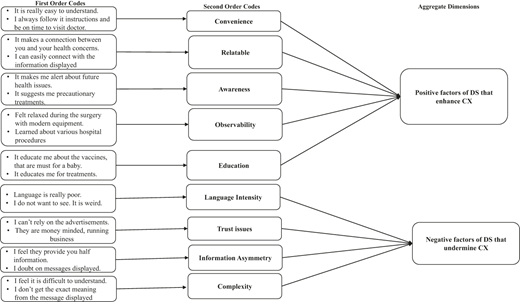
By addressing these research questions, we delve into the unexplored factors of DS that influence CX. Through a qualitative analysis, we observed customer responses to the use of DS. We employed GT to investigate responses through an interpretive inductive approach focused on constructing a framework for analyzed data (Glaser and Strauss, 2017). GT provides a thorough understanding of a social phenomenon by examining the interconnections between different aspects (Talwar et al., 2021). The study utilized DFT to develop a framework that explains various factors from the customer's perspective that influence CX. Furthermore, the study's findings revealed that both positive and negative factors are not only opposing but also interconnected and impact customer behavior (Tandon et al., 2020). In positive factors, we identified convenience, awareness, education, observability and relatability as elements that enhance CX. Conversely, in negative factors, we identified language intensity, complexity, information asymmetry and trust issues as elements that undermine CX.
The study is structured as follows: It begins with a comprehensive review of the relevant literature. Subsequently, the research methodology is detailed, followed by sections presenting the results and discussing their implications for hospital management. The final section provides insights into optimizing DS strategies to enhance CX and address potential challenges, offering actionable recommendations for improving healthcare communication practices.
2. Literature and theoretical underpinning
2.1 Overview of digital signage
Emerging technologies offer service organizations new opportunities to enhance CX (Sætra and Fosch-Villaronga, 2021). They are shifting towards targeted communications, utilizing digital tools like DS to share opinions, reduce costs, increase sales and provide information or wayfinding, thereby improving CX and boosting sales (Intel, 2016; Sitorus et al., 2017). DS is used by 70% of businesses, especially in the retail, hospitality and transportation sectors (Schaeffler, 2008). According to reports, North America dominates the market due to dedicated product suppliers and rising signage demand (Gupta, 2022). China holds the largest market share in the Asian Pacific region, while India is the fastest-growing (Gupta, 2022). The Asian Pacific market is projected to experience the fastest CAGR from 2024 to 2032 due to growing adoption in developing countries and rising housing, commercial and corporate trends (Market, 2023). DS enhances communication, customer engagement and sales, making it an essential element in the service sector (Schaeffler, 2008).
DS in hospitals provides an interactive educational experience for customers, enhancing public health information and reducing anxiety (Dennis et al., 2012). Communication technologies help customers learn about health issues and healthcare facilities, enhancing the CX (Dennis et al., 2012). This development allows healthcare providers to offer value to customers, indicating the need for continuous learning in organizations to provide unique CX (Rojas-Cruz and Husted, 2024).
CX is the outcome of a service process within a company, developed throughout the customer life cycle (Tronvoll and Edvardsson, 2022). It is an agnostic touchpoint at agnostic times (Shrivastava, 2017). CX management is increasingly relevant in today's workplace, especially in service-oriented sectors. Hospitals are increasingly using digital media and innovative approaches to drive CX and gain a competitive advantage, making driving CX through digital presence crucial for organizations (Edvardsson et al., 2013; Hunter-Jones et al., 2020).
Digital communication has significantly impacted the Indian economy, leading to increased competition and customer engagement (Bag et al., 2022). It has been studied in the literature in varied contexts (Refer to Annexure 1). Studies have explored DS as wayfinding with managerial perception (Morag and Pintelon, 2021), tourist attractions (Wan, 2024), crowd control (Chen et al., 2024), information-based communication Newman et al. (2006), emotion-eliciting communication (Lang and Ewoldsen, 2000) and appeal category and physical product characteristics (Burke, 2009). Morag and Pintelon (2021) have conducted a qualitative study with a managerial perspective of studying the implementation of indoor digital wayfinding systems in hospitals and focusing on operational challenges and efficiency. However, CX represents an equally critical yet underexplored dimension within the hospital context. From a managerial standpoint, CX holds strategic significance, as patients are not only service recipients but also key stakeholders who influence the overall profitability of hospitals. Despite the growing adoption of DS in hospital settings, empirical integration of DS with CX remains limited, particularly from an exploratory and qualitative perspective. While prior research has primarily relied on quantitative designs to measure the effects or outcomes of DS, such approaches often overlook the technological dimensions of CX (Chen et al., 2024; Kim et al., 2024). A qualitative approach, by contrast, enables the exploration of how customers perceive, interpret and make sense of DS during their service encounters (Morag and Pintelon, 2021). It captures the nuances of customer comprehension, contextual meanings and underlying motivations that cannot be easily quantified (Wosny et al., 2024). Thus, qualitative inquiry provides a more holistic and context-rich understanding of how DS shapes CX, offering valuable factors that add theoretical and practical insights that complement existing quantitative findings.
2.2 Dual factor theory
DFT suggests that individual satisfaction and dissatisfaction in an organization are influenced by two separate factors (Kushwah et al., 2023). Herzberg (1965) proposed this theory, which identifies positives and negatives as the specific factors affecting satisfaction and dissatisfaction. In this study, positives are those factors that encourage the individual to use services or products, while negatives are those factors that discourage individuals from doing so (Cenfetelli, 2004). DS plays a pivotal role in shaping CX in hospital settings by enhancing accessibility, communication and service efficiency (Morag and Pintelon, 2021). However, certain DS features may simultaneously encourage or discourage customer engagement, making it essential to examine both positive and negative influences on CX. To provide a theoretically grounded understanding of these dynamics, this study adopts DFT.
This theory is widely used in varied studies to gain in-depth knowledge of the factors impacting consumer behavior (Tandon et al., 2020). The theory also emphasizes that positive and negative factors should not be seen as opposites and that both types of effects can coexist, influencing a person's behavioral inclinations (Cenfetelli and Schwarz, 2011). The theory's adaptability makes it applicable across various disciplines, from psychology to marketing and it is a valuable tool for studying customer behavior in diverse fields (Ihensekhien and Arimie, 2023). The DFT has been applied in varied domains, including household waste separation (Kushwah et al., 2023), organic food (Tandon et al., 2020), health clouds (Hsieh, 2016) and information systems (Cenfetelli and Schwarz, 2011). Hence, DFT offers a comprehensive lens to examine both motivating and inhibiting factors. Motivators actively enhance CX, which facilitates customer engagement and satisfaction. Conversely, inhibitors diminish CX, which creates confusion, reduces confidence or discourages the use of digital tools. Unlike technology acceptance models such as TAM or UTAUT, which focus primarily on adoption, DFT captures both acceptance and resistance behaviors, making it uniquely suitable for hospital DS contexts where CX are shaped by a combination of encouraging and discouraging factors (Cenfetelli and Schwarz, 2011; Hsieh, 2016; Tandon et al., 2020).
By applying DFT, the study can systematically classify DS influences into positive factors that enhance CX and negative factors that undermine CX, providing a dual-lens perspective that explains why some digital interventions succeed while others fail. This approach allows for data-driven insights, linking CX directly to theoretical constructs and offering a nuanced understanding of how DS features shape CX in hospitals.
3. Research methodology
3.1 Research design
Previous literature offers a great deal of discussion on DS, although DS execution for CX is still at a promising stage. To address this gap, the present study employs a qualitative, inductive research approach aimed at achieving a deep, contextual and theory-informed understanding of CX through DS. The use of an inductive methodology, as proposed by Glaser and Strauss (2017), facilitates the generation of grounded insights directly from empirical data rather than relying on pre-established conceptual frameworks.
The study utilizes the GT approach (Glaser and Strauss, 2017), which supports theory construction through systematic data collection and iterative analysis. This approach allows participants' perspectives to shape conceptual categories, thereby capturing the multifaceted and dynamic nature of CX within the context of DS adoption. To collect primary data, in-depth, open-ended interviews were conducted with hospital visitors in Delhi. Respondents were encouraged to elaborate on their experiences and perceptions, and all interviews were audio-recorded to ensure accuracy and comprehensiveness.
Importantly, the study integrates DFT with GT to enhance theoretical depth and interpretive rigor. While GT provides an empirical foundation for identifying emergent themes, DFT offers a theoretical lens to classify and interpret these themes into dual dimensions-enablers as positive and barriers as negative factors influence CX. The integration of GT with DFT is particularly valuable because it enables a structured yet flexible interpretation of qualitative data, aligning emergent categories with a psychological GT of motivation and inhibition. This combined approach bridges theory generation (via GT) with theory validation (via DFT), offering both empirical richness and conceptual clarity.
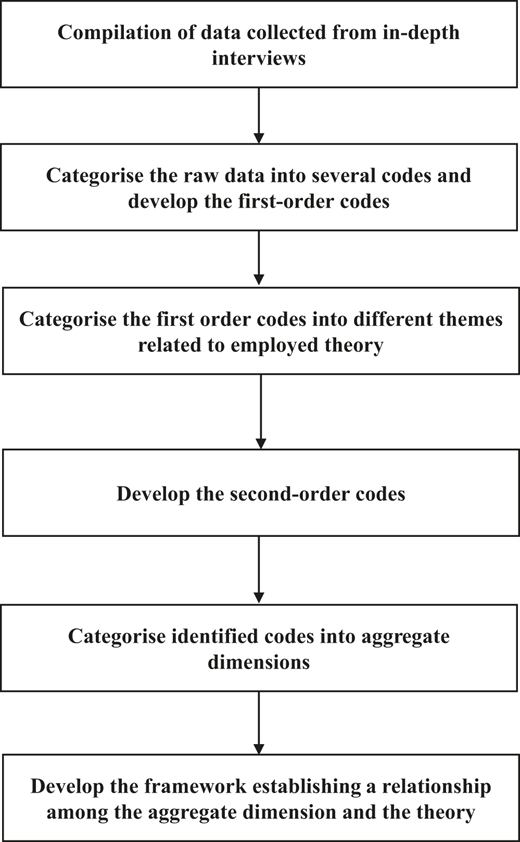
The author collected qualitative data from hospital visitors in Delhi. To collect responses, participants were asked open-ended questions and then asked to elaborate on their responses (Glaser and Strauss, 2017). All interviews are audio recorded. Open-ended inquiries are intended to extract comprehensive data from research participants, giving researchers first-hand information to explore the experiences of service providers (Glaser and Strauss, 2017). We devised our open-ended questions following a comprehensive review of professional viewpoints. Through this integrated analysis, the author identified nine factors that shape CX. Figure 1 presents the steps for the coding structure of the study. Those nine factors rooted in DFT are classified into positive and negative factors that influence CX. Positive aspects include awareness, relatability, education, observability and convenience to improve CX; negative aspects include language intensity, complexity, information asymmetry and trust issues that hinder CX in hospitals. By combining GT's inductive strength with DFT's explanatory duality, the study presents a novel methodological framework for understanding the simultaneous drivers and deterrents of CX in healthcare-based DS environments. This dual-lens perspective not only contributes to theory development but also offers actionable insights for enhancing digital design and implementation.
3.2 Data collection and sampling
The participants comprised hospital visitors from two private hospitals – Max and Fortis – in Delhi. These hospitals were selected due to their advanced technological infrastructure, extensive adoption of digital healthcare services and large customer base (Ganapathy and Reddy, 2021; Moro Visconti and Morea, 2020). Additionally, descriptive information on existing CX levels, including satisfaction ratings drawn from Google Reviews, has been considered to choose these hospitals. The selection criteria for participants included being over 22 years of age, completion of high school and prior observation of the use of DS in private hospitals. These criteria were based on literature indicating that young adults and educated individuals are generally more adaptable to technology and engage more actively with digital interfaces (Goodyear et al., 2019). We approached 60 customers in person at the hospital premises, mainly in waiting areas, lobbies and outpatient departments. Participants were provided a clear explanation of the study objectives, and informed consent was obtained. No monetary incentives were offered, but participants were assured that their input would contribute to improving hospital services, which appeared to be sufficient motivation. Of the 60 approached, 40 expressed interest, and 38 participants completed the interviews. Data collection continued from February 27 to May 6, 2024 and concluded upon reaching theoretical saturation, when no new insights were emerging from additional interviews. The participant's profile is provided in Annexure 1.
Participants exhibited varying levels of engagement with DS during their hospital visits. The highest engagement was observed for DS features that provided real-time information such as doctor availability, departmental directions and health awareness content. These functions were perceived as highly valuable for managing time and reducing confusion within hospital premises. Moderate engagement was noted for interactive applications of DS, including digital feedback forms and service updates. In contrast, lower engagement was reported for advanced or AI-driven DS functions, such as virtual health monitoring or diagnostic assistance, largely due to limited awareness or exposure. Overall, DS usage was most associated with enhancing convenience, accessibility and informational clarity-key factors contributing to a positive CX in hospital settings. The selection of technologically advanced private hospitals and participants with direct DS exposure further reinforced the contextual relevance and credibility of the findings.
In the context of grounded theory analysis (GTA), theoretical saturation refers to the stage where no new themes, concepts, or relationships emerge from additional data (Glaser and Strauss, 2017). During the open coding stage, initial concepts were identified from participants' narratives, such as perceptions of ease of use, trust in technology and perceived efficiency. In the subsequent axial coding stage, these open codes were grouped into higher-order categories reflecting broader dimensions of technological aspects and service interaction quality (Thapa and Gandhi, 2025). Finally, in the selective coding stage, the categories were integrated into a core theoretical construct that explains CX and the adoption of digital services in healthcare (Thapa and Gandhi, 2025). Saturation was achieved when new interviews produced no additional codes or categories, and the relationships among core categories became theoretically well-defined (Glaser and Strauss, 2017). This ensured that the resulting GT was conceptually rich, empirically grounded and representative of participants' shared experiences.
3.3 Data analysis
The study utilized the Gioia technique because it enabled the gain of an understanding and the development of theories based on data (Langley and Abdallah, 2011). The participant narratives were classified into three discrete phases. Numerous steps were implemented to ensure the objectivity of the coding technique and mitigate the possible influence of confirmation bias. This study divided the raw data into smaller pieces using a manual coding technique.
Although the GT and Gioia methodology originate from distinct qualitative traditions, their integration in this study is both philosophically and procedurally justified (Sordi, 2024). GT provided the foundational logic for inductive reasoning, systematic coding and theory development, while the Gioia methodology offered a structured and transparent framework for organizing and presenting emergent concepts (Sordi, 2024). Both approaches share a constructivist orientation, emphasizing theory generation from empirical data rather than hypothesis testing (Cassell et al., 2018). Therefore, the study adopted the principles of GT for data collection and coding rigor, and employed the Gioia approach to refine, structure and visualize the theoretical dimensions derived from the data. This methodological integration ensured both analytical depth and presentational clarity, enhancing the overall robustness and transparency of the qualitative inquiry.
Data were analyzed using the GT approach (Glaser and Strauss, 2017), which emphasizes iterative data collection and constant comparative analysis to develop theory grounded in participants' lived experiences. The analysis proceeded through open, axial, and selective coding phases. Initially, the first author conducted open coding to identify emergent concepts, followed by axial coding to establish relationships among categories. A finalized coding framework was then developed collaboratively to ensure conceptual clarity and consistency.
Further, the author developed zero-order codes using a sequential coding procedure. To find patterns, the researchers carefully examined the zero-order codes; this led to the introduction of first-order coding. At this point, a comparison of the initial codes was used to evaluate the inter-coder reliability. To ensure the reliability and rigor of the qualitative coding process, intercoder reliability was assessed using Cohen's kappa (κ). Two independent coders, the first author and another researcher, performed independent coding and aligned definitions and inclusion criteria (Campbell et al., 2013). Both coders independently coded a randomly selected subset comprising 20% (n = 8) of the total 38 interview transcripts using the finalized codebook. The resulting Cohen's kappa coefficient (κ = 0.81) indicated substantial agreement (O'Connor and Joffe, 2020). Coding discrepancies were reviewed collaboratively, and consensus was reached through discussion, leading to minor refinements in the codebook (Campbell et al., 2013). This process enhanced the transparency, dependability and confirmability of the findings, aligning with recent recommendations for maintaining rigor in qualitative research (Campbell et al., 2013; O'Connor and Joffe, 2020). The code definitions are summarized in Table 1.
To attain the study objectives, data were gathered from urban hospital visitors who had experienced DS. The study employed urban participants for two reasons: urban participants possess a greater rational understanding of technology management (Li et al., 2024). Secondly, urban hospitals possess superior technology capabilities compared to rural hospitals (Chen et al., 2021). Hence, the data collected exhibited transparency and accuracy. The authors identified a few discrepancies independently. During the second phase of coding, once again, the author carefully reviewed the first-level coding. Coding categories emerged as the outcome of this approach. In the following phase, the categories were combined to create the aggregate codes. The data analysis and emerging themes are presented in Figure 2.
4. Results
Drawing on DFT, the present study identified two sets of factors: positive factors and negative factors. A positive factor that enhances CX is convenience, education, relatable, awareness and observability. On the other hand, language intensity, information asymmetry, trust issues and complexity are all detrimental factors that undermine CX. These elements have a direct impact on an individual's intention to behave (Claudy et al., 2015; Westaby, 2005). Eventually, these elements enhance CX in the hospital. The details and analysis of themes and structure are mentioned in Figure 2.
4.1 Positive factors of DS that enhance CX in hospital
4.1.1 Convenience
Convenience enables customers to easily understand the information. In hospitals, it involves thoughtful and simple use of healthcare procedures. DS is favored for digital communication, as it delivers information more conveniently than traditional media (Pashaeypoor et al., 2016). Healthcare information via screen is one example of this innovation, along with smart TVs, billboards and video communications (Hung and Jen, 2012).
P25: It surely enhances the CX as I need not go and ask customer care for the doctor’s availability and his cabin or floor. I can easily check on screen and go without wasting my time.
As observed by customers, it expedites the process of visiting the doctors and provides information regarding many healthcare procedures in a convenient manner. Therefore, convenience is one of the factors that enhance CX in hospitals.
4.1.2 Education
DS offers customers thorough knowledge about prevalent diseases and general health information (Jasimuddin et al., 2017), aiding understanding of daily lifestyle health issues. Education enhances customer attitude and decision-making (Dou et al., 2019). In addition, DS aids working professionals by informing customers about their medical conditions (Lee et al., 2017).
P27: I feel it is educating. I and everyone sitting here get to know about various things. We as a layman, don’t know much, but yes, looking at it, improves our knowledge.
P37: I think it is beneficial in providing knowledge. I know everything about hospitals while sitting in one place. So, for me, it is educating.
As the customer cited, DS educates users about various aspects, such as available facilities, thus influencing the overall CX in hospitals. Therefore, education through DS is considered as one of the factors that enhances experiences.
4.1.3 Relatable
It denotes the extent to which consumers view innovative information as consistently linked to past health records (Karahanna et al., 2006). DS enables customers to connect and address their needs or problems (Claudy et al., 2015). Hence, the customers' perception of DS, aids in relating their health concerns. These communications help people to stay updated about their health, fitting their lifestyle.
P40: Last month I visited the hospital with my wife for her check-up. While her check-up was going on, I was watching the screen. I got to know some symptoms in my body are the same that were showing on the screen. I got the test done. I find my sugar levels are high and I started medication at an early stage. So, the use of DS is compatible.
P2: I feel this digital signage somewhere relates to every customer's life. They help you diagnose or observe yourself easily.
Findings indicate customers easily relate advertisements to health issues. DS assists in recognizing health symptoms, making relatable a factor that enhances CX in a hospital environment.
4.1.4 Observability
According to Claudy et al. (2015), stated observability as the ease with which innovation effects are visible. Customers watching screens can learn about hospital procedures and advanced surgical equipment, sparking interest in hospital services. Thus, hospitals using DS demonstrate testing and experimentation with specific ideas (Pashaeypoor et al., 2016).
P4: I saw the robotic surgery and treatments on screen. It is the latest in the market and very few hospitals have it. They have so much new equipment here in the hospital.
As per customer perception, observation also enhances CX in the hospital. As it improves their understanding and usage of the latest equipment in the treatment procedures in the hospital. Hence, observability is also one of the factors that enhance CX in hospitals.
4.1.5 Awareness
A common communication objective for all promotional strategies of the organization is raising awareness (Napitupulu et al., 2021). Customers become aware of the general health concerns that require attention when they are made aware of them. The customer cited many examples.
P11: I am really glad that this hospital has screens everywhere. It is really helpful because a layman gets to know every piece of health-related information so easily. It makes you alert.
As per observations, DS creates awareness and alerts individuals to future health situations. Hence, awareness is a positive factor of DS.
4.2 Negative factors of DS that undermine CX in hospital
4.2.1 Language intensity
DS uses language intensity that encompasses fear, anger, and anxiety in customers, which undermines their experience. DS communication uses assertive language that may convey a sense of urgency, resulting in negative experiences for customers (Vaerenbergh and Holmqvist, 2013). Participants mainly cited complicated language intensity as an issue that resulted in undermining their experiences.
P 34: I do not want to see the information flashing on the screens. I feel panic after reading those or looking at the pictures. I do not like it.
As per customers' observations, it somewhere triggers psychological pressure (Hamilton et al., 2021) that negatively impacts the consumer outlook toward health issues and undermines the CX in the hospital. Hence, it is one of the negative factors of DS in hospitals.
4.2.2 Information asymmetry
The term information asymmetry is a situation where the customer possesses only partial information about the circumstances. This situation is relevant to healthcare consumers who have merely a basic understanding or face information asymmetry (Kajtazi, 2010). Multiple pieces of information displayed on DS lead to information asymmetry in customers.
P23: I am confused. I do not comprehend this, so many advertisements are continuously flashing on the screen. And I find somewhere symptoms of many diseases are very similar to each other.
Consequently, this demonstrates customers' responses to services are impeded by cognitive disorientation. Further, many interviewees mentioned the peculiarities of showing information that create communication issues. Hence, information asymmetry leads to undermining CX in hospital settings and considered as the negative factor of DS in hospitals.
4.2.3 Complexity
According to Winarti et al. (2021), complexity is the extent to which consumers view innovation as being relatively difficult to comprehend or use. As per observation, customers perceive the information to be intricate (Pashaeypoor et al., 2016).
P 12: I do not understand it. It is complex for me. As a layman, it is difficult to understand, so I do not pay so much attention to it.
Thus, the complexity factor of information leads to a negative impact on customers. Because of this, customers behave negatively towards the services of the hospitals, resulting in negative CX. Hence, complexity is a negative factor in the usage of DS in hospitals.
4.2.4 Trust issue
Customers' decisions are not reasonable when there are misleading terms and conditions. Within hospitals, deceptive advertising, unclear benefits, confusing service features and contradicting information sources delay decision-making (Brengman et al., 2001). As a result, customers find it extremely challenging to make decisions when presented with incomplete and ambiguous information.
P17: No, I don’t trust it. During the pandemic, I realized, that hospitals have their own money-making strategies. They do not guide us. They just want to make money by showing fake things happening around us.
Hence, it is evident that consumers do not rely on DS as it negatively impacts decision-making. Based on the above discussion, we summarize the following factors: language intensity, information asymmetry, complexity and lack of trust, which undermine the CX in the hospital through the usage of DS in hospitals.
4.3 Discussion
The study aimed to investigate the DS-related factors that enhance or undermine CX in hospital settings, guided by the DFT. The findings revealed that CX with hospital DS platforms is shaped by an interplay of motivators (enhancers) and hygiene factors (inhibitors). Importantly, the results empirically confirm that even when positive DS features are present, unaddressed inhibitors can neutralize or reverse their effects on CX.
Positive DS Factors Enhancing CX
Five primary factors-convenience, awareness, education, relatability and observability were identified as motivators, i.e. the positive factors that enhance CX. Among these, convenience emerged as a significant theme in participant accounts. Respondents frequently highlighted that features like online appointment booking, real-time updates on doctor availability and instant access to reports saved time and reduced anxiety during hospital visits. These findings clearly suggest that digital convenience eases the stress of hospital procedures and improves perceived service quality. While previous studies (Bagdare, 2014; Srivastava and Kaul, 2014) recognized convenience as a behavioral driver, our findings provide empirical evidence of how convenience specifically manifests in healthcare DS contexts, as temporal efficiency, reduced procedural uncertainty and smoother navigation across service touchpoints.
Similarly, awareness and education were identified as complementary enhancers. Participants found well-organized notifications, visual signage, and interactive guides helpful in orienting them during their hospital experience. These insights are directly drawn from our interviews, where respondents explicitly mentioned that being informed and guided reduced confusion and increased trust in hospital services. Prior research (Napitupulu et al., 2021; Wu and Gao, 2019) supports this, but our study extends it by demonstrating that awareness in hospital DS not only informs but also emotionally reassures customers, turning information into confidence.
Relatability and observability further strengthened CX by building trust and social proof. Participants noted that seeing others effectively use DS kiosks or mobile apps encouraged them to engage with these platforms. Observability thus emerged as a confidence-boosting cue in digital settings, a nuance that aligns with but deepens the understanding from (Panigrahi et al., 2021). Similarly, relatability through empathetic design and culturally aligned messaging helped customers connect with the hospital's digital identity, supporting findings from (Foroudi et al., 2016; Shi et al., 2020).
Negative DS Factors Undermining CX
Conversely, four inhibitors – complexity, information asymmetry, trust issues and language intensity – functioned as hygiene factors that undermined CX. These emerged directly from participants' frustration, confusion, or disengagement while interacting with DS interfaces. Complexity, characterized by cluttered screens or unintuitive processes, reduced customers willingness to use DS tools, confirming that cognitive overload directly translates into dissatisfaction.
Information asymmetry was particularly salient in cases where patients lacked access to real-time updates about test results, billing, or treatment progress. Several respondents expressed feelings of uncertainty and diminished control, revealing how asymmetrical communication weakens perceived transparency and trust. This supports the DFT principle that hygiene factors prevent dissatisfaction rather than enhance satisfaction (East et al., 2008; Iyer and Griffin, 2021).
Trust issues were also evident when participants questioned the security or credibility of DS platforms. Many customers, especially older adults, hesitated to enter personal data or make online payments due to perceived risks. This pattern highlights how trust is not merely a cognitive evaluation but an emotional precondition for engagement, consistent with (Bilgihan, 2016; McKnight and Chervany, 2001).
Language intensity emerged as an overlooked yet crucial inhibitor. Participants reported that technical jargon, emotionless automated responses or English-only prompts made them feel alienated. This finding directly stems from field data and reveals that linguistic tone and clarity are core to humanizing DS interactions, an aspect that prior research (Van Vaerenbergh and Holmqvist, 2013) treated conceptually but not empirically in hospital settings.
While convenience was a dominant motivator, excessive automation occasionally diminished CX. For example, some older participants felt overwhelmed by self-check-in kiosks that lacked human support. This nuanced result indicates that convenience without empathy can transform into alienation, a paradox that adds a new dimension to DFT by suggesting that motivators may become inhibitors when not balanced with user readiness.
Similarly, while awareness and education generally enhanced CX, certain respondents experienced information overload due to excessive notifications or detailed tutorials. This indicates that digital education must be contextually timed and cognitively digestible to sustain CX benefits. These insights stem directly from our data and explain the variation observed across demographic subgroups, such as first-time visitors or non-native speakers. Moreover, the interaction between motivators and inhibitors was evident: convenience and observability improved CX only when trust and complexity barriers were minimal. This interdependence empirically supports DFT's dual-lens logic, showing that positive experiences require both the presence of motivators and the absence of inhibitors.
5. Implications
5.1 Theoretical implications
This study makes three key theoretical contributions to the literature on CX and DS, grounded in DFT. These contributions not only extend existing frameworks but also demonstrate the context-dependent operation of motivators (positives) and inhibitors (negatives) in hospital settings.
First, this study advances CX research by examining DS in hospital environments, a domain that has received limited scholarly attention in digital devices implementation (Cetin and Dincer, 2014; Dabaghi et al., 2021; Gentile et al., 2007). While prior studies have predominantly explored DS in retail, education or general service contexts, this research identifies specific DS factors that influence CX positively or negatively. Hence, this study extends CX literature to hospital services that help future researchers to study other CX dimensions in detail.
Second, the study contributes theoretically by examining both enhancers (positives) and inhibitors (negatives) of DS, addressing a gap in the literature on how a digital tool like DS predominantly emphasizes different customer perspectives in hospitals (Deng et al., 2023; Hoyer et al., 2020).
Third, using the dual-perspective approach extends DFT by demonstrating its applicability to modern digital healthcare technologies, offering a comprehensive framework for evaluating CX outcomes. By empirically identifying both motivating and hygiene factors, the study provides a better understanding of CX formation, showing that healthcare experiences depend not only on the presence of positive DS features but also on the mitigation of negative factors.
Furthermore, in DFT, context is meaningful as cultural, technological and institutional variations affect DS factor perception. Trust issues and information asymmetry impact CX more significantly in Indian hospitals than Western settings due to literacy levels and technological familiarity. Language intensity gains importance in multilingual environments, affecting customer engagement. These findings show that motivators and hygiene factors are context-dependent, with cultural conditions shaping CX drivers. This differs from Western hospitals, where inhibitors may less strongly influence CX, emphasizing the need for contextual calibration of digital CX theories. The study provides contextually grounded insights by examining DS in Indian hospitals, addressing the underrepresentation of Asian healthcare settings in DS research (Dolah et al., 2023).
5.2 Managerial implications
The findings of this study offer three key practical contributions for hospital managers and DS designers to enhance CX:
Our study reveals that hospital service providers can significantly improve CX by emphasizing key DS factors: education, observability, relatability, awareness and convenience. Each of these factors directly emerged from customer feedback during our data collection. For instance, education through tutorial videos, interactive guides or explanatory content empowers customers to understand hospital procedures and services, thereby increasing confidence and trust. Observability, such as visible demonstrations of digital check-ins or electronic record updates, reassured customers of the reliability and transparency of hospital operations. Hence, hospitals can develop digital content and interactive tools highlighting these factors, for example, video tutorials on how to schedule appointments, digital dashboards showing real-time service updates or multilingual FAQs. This ensures seamless, satisfying, and trust-building interactions with customers, ultimately elevating overall CX.
The study identifies complexity, information asymmetry, trust issues and language intensity as key inhibitors that undermine CX. These factors were highlighted directly in patient narratives, where difficulties in understanding medical information, ambiguous digital communication or perceived lack of reliability caused frustration and disengagement. Hospitals should simplify complex medical information into step-by-step guides, provide multilingual educational materials and use clear, empathetic messaging to reduce language intensity. Furthermore, integrating multiple digital channels, such as patient portals, mobile apps and social media platforms, can bridge information gaps and enhance accessibility. Transparent communication regarding data privacy and digital procedures can address trust concerns, demonstrating the hospital's commitment to patient well-being and improving CX.
The study emphasizes that managing CX effectively requires simultaneously enhancing motivators and mitigating inhibitors. DS offers a unique opportunity to design interventions that balance these dual influences. For example, hospitals can use digital campaigns to promote preventive healthcare (leveraging education and awareness) or real-time updates on appointments (enhancing convenience). By integrating educational, operational and interactive content, hospitals can create a holistic CX strategy that reduces confusion, increases trust and improves patient satisfaction. Hospital administrators and digital service managers can design dashboards, automated notifications and instructional content that combine these elements. This approach transforms customer interactions from transactional encounters into supportive, patient-centered experiences and enhances CX.
6. Conclusion
The study highlights the dual role of DS-related factors in shaping CX within hospital settings employing DFT (Herzberg, 1965). Positive factors, including convenience, awareness, education, relatability and observability, enhance CX by improving decision-making and engagement. Negative factors, including complexity, information asymmetry, trust issues and language intensity, hinder CX by creating barriers to understanding. These findings highlight the importance of effectively employing DS to create a unified and persuasive CX. Hospitals should focus on simplifying information, increasing transparency and building trust through clear and accessible communication to improve CX. Digital strategies should prioritize simplicity and visibility to build customer confidence, ensuring that technological innovations improve the overall experience (Isen, 2001). This study contributes significantly, but also has limitations that indicate potential avenues for future research. This study focuses on a particular aspect of DS in hospital environments, which may limit the generalizability of the results. Future research may examine the impact of DS in various healthcare environments, focusing on how demographic and cultural differences influence CX. Examining emerging technologies, including AI-driven consumer interactions and customized digital experiences, could provide valuable insights for enhancing CX in hospital settings. Secondly, this study utilizes the DFT to examine the determinants of DS affecting CX; nonetheless, alternative theoretical frameworks could offer additional insights. Future research should investigate the incorporation of additional frameworks, such as service-dominant logic (SDL), to improve the theoretical understanding of the effects of digital services on customer behavior and enhance satisfaction. Thirdly, the research predominantly examines digital communications usage in Indian urban hospitals, limiting its cross-cultural applicability. Given that the effectiveness of DS may vary across cultural and technological contexts, comparative studies in different regions could enhance understanding of how DS influences CX in various healthcare settings. The study utilizes a particular methodological approach, which may introduce certain biases. Future research could employ longitudinal designs, experimental methods or mixed-method approaches to investigate the dynamic characteristics of DS interactions and their lasting impacts on CX.
Ethics declarations
The study used human participants as the customers/patients of hospitals, who visited and used digital devices in the hospital. Therefore, a general questionnaire was prepared to know the rationality of the customer about the usage of digital communication tools such as DS.
The supplementary material for this article can be found online.