

Purpose
The purpose of this study is to identify the core responsible leadership (RL) practices that are most relevant to small- and medium-sized enterprises (SME) restaurants. Furthermore, the authors adapt scales to measure these practices and conduct a pilot study to evaluate their impact on business performance in such establishments.
Design/methodology/approach
Exploratory sequential mixed methods are used to fulfill the research aims. In the first phase, a set of definitions and practices associated with RL are derived from a systematic literature review. Second, a projective method of data collection is applied, involving a panel of 16 experts. Third, a fuzzy cognitive map is developed, which captures the responses of 40 owners or general managers of SME restaurants.
Findings
Twenty-five practices are identified from the systematic literature review. The results show the five leadership practices that match the order of importance assigned by the experts: societal orientation, ethics, stakeholder involvement, power-sharing and environmental orientation. The relevance of those five practices is validated to explain SME restaurants’ financial performance and innovation performance.
Practical implications
Innovation is the key to advancing business sustainability and resilience, and the results identify the specific RL practices that enable improvements to be made in innovation performance among SME restaurants.
Originality/value
This paper identifies the RL practices that are particularly relevant to the tourism field (specifically, the restaurant industry), offers measurement scales for those practices and provides empirical evidence of the relationship between these RL practices and business performance in SME restaurants.
1. Introduction
Responsible leadership (RL), a value-based approach to leadership (Haque et al., 2021), has been “conceptualized as practice aimed at fostering cogent values in consideration of personal interests and degrees of power held by people within an organization and in the group of people it serves” (Prilleltensky, 2000, p. 141). The study of RL originates in the field of corporate social responsibility (CSR) and ethics literature (Han et al., 2019). Hence, the responsible leader sees his or her purpose as to serve corporate stakeholders and maintain a steady focus on the social responsibility of the firm (Waldman et al., 2020).
Leaders are often at the core of business success stories and failures at the societal level. All firms are particularly in need of leaders who consolidate insights and applications of business ethics, CSR and sustainability into their internal cultures (Abuelhassan and AlGassim, 2022; Aboramadan et al., 2020; Elbaz and Haddoud, 2017; Frangieh and Yaacoub, 2017; Herhausen et al., 2017). Mattila and Hanks (2012) asserted that firms spend time and money to position themselves as socially responsible to satisfy their customers in a highly competitive marketplace. Good leadership implies an open mind, charisma, natural authority, dominance and vision (Rijnierse, 1992). Leadership has been found to be particularly important for innovation (Hassi, 2019; Schuckert et al., 2018; Zach, 2016), organizational improvement (Pamfilie et al., 2012) and project outcomes (Wahab et al., 2016).
In recent years, the hospitality business has encountered a terribly challenging operating environment, necessitating a thorough investigation of leadership styles (Elkhwesky et al., 2022b; Huertas-Valdivia et al., 2022; Rothfelder et al., 2012; Kužnin and Walker, 2017). Considering the impacts of additional challenges and extreme and unprecedented events – such as the COVID-19 pandemic – on hospitality businesses (Salem et al., 2021, 2022; Zhang et al., 2020), there is a need for researchers to pay more attention to producing evidence-based knowledge that can assist management in complex environments (Arici et al., 2021). More specifically, scholars have observed that progress toward better understanding RL is needed, to construct a fully used RL theory for upcoming academic research (Haque et al., 2021). To achieve this, it is vital to conduct further research to investigate how to achieve RL in organizations (Tsui, 2019) and, equally important, empirical research assessing the impact of RL on business outcomes (Haque et al., 2019).
According to a comparative study of over 45 countries by Beck et al. (2005), small- and medium-sized enterprises (SMEs) are essential for economic growth (GDP per capita) and can act as potential stabilizers in downturn periods (Varum and Rocha, 2013). In particular, in the restaurant sector, where SMEs predominate, the owner or general manager’s RL practice is critical for ensuring the firm is managed from the perspective of equal benefits for all stakeholders including those of a social nature, not only those delivering financial benefits. This is also a sector whose practices are customer-facing and therefore highly visible to society, and it is one that carries significant weight in all countries.
A systematic review (Elkhwesky et al., 2022b) conducted on leadership approaches in hospitality confirmed that RL has not been examined in hospitality research, to date. Yet, we contend, RL is critical to the ability of contemporary hospitality to deal with the ethical challenges that may arise. Further research on RL can also help to achieve sustainability, which refers to initiatives and actions that are environmentally, socio-culturally and economically appropriate (Albrecht et al., 2020; Elkhwesky, 2022a; Elkhwesky et al., 2022c).
What is more, fresh research insights into RL would support enterprises in their efforts to accomplish organizational resilience and sustainability in challenging circumstances or times of crisis (Fleming, 2022). Pless et al. (2021) find that there is demand for research on RL because of certain major challenges being faced by society – most recently, the global COVID-19 pandemic.
The scholarship has endeavored to measure the practices associated with the responsible leader (Agarwal and Bhal, 2020; Eriksen and Cooper, 2018; Koh et al., 2018; Waldman et al., 2020). However, the approaches, measurements and perspectives adopted in the literature on this topic vary considerably. One explanation for this marked variety of practices associated with RL is the sheer diversity of sectors that have been studied in the literature. For example, Cameron et al. (2004) analyzed the effect of the virtues of the leader on the objective financial performance of the business, finding a positive relationship between virtuousness, which characterizes responsible leaders (Cameron, 2011), and profit margin. They also found a lower value of this latter variable for service firms compared to manufacturing. However, with regard to this result, it remains unclear whether adapting RL practices to service firms might improve their business performance.
In the field of tourism services, the few studies dealing with RL are very recent, being limited to literature reviews on big-cruise companies (Pounder, 2021) or studies on the hotel industry where RL is taken as a moderating variable of other main effects in business performance (Bouichou et al., 2021; Luu, 2021) or where there is a specific focus on human resources management (Freire and Gonçalves, 2021; Tian and Suo, 2021) or environmental management (Zhao and Zhou, 2019). In the case of SMEs, the results of Mantikei et al. (2020) in the Thai tourism industry show the relevance of RL in explaining business performance, but they do not differentiate between RL practices – and it is reasonable to believe that not all practices will lead to the same business results.
Given the demonstrable relevance of RL, then, in explaining tourism and hospitality performance, the present study aims to identify the core RL practices that are most relevant to SME restaurants. To fulfill this aim, we undertake a systematic literature review of the past 12 years of RL research in the Web of Science (WoS) database, and we conduct two studies into the practices identified therein. The first study enables us to identify the practices most associated with the RL role in SME restaurants, using a qualitative projective technique based on a panel of 16 experts with extensive experience in restaurants, management, and human resources. The second study enables us to validate the results of the first, this time using a panel of 40 professionals from SME restaurants by testing the effect of RL practices on financial performance and business-innovation performance.
2. Literature review
2.1 The concept of responsible leadership
Before isolating the specific practices pertaining to RL, we need to conceptualize it and identify its distinguishing features. Although responsible relationships are at the hub of all leadership, the RL concept is a multi-dimensional and complex phenomenon (Scully, 2015). According to Voegtlin (2011), RL focuses on a leader's relationship with all stakeholders in an organization and their capacity to engage in a productive dialogue with them. Responsible leaders focus on dealing with stakeholders effectively, sharing responsibility, solving problems jointly and giving them the chance to participate in decision-making (Voegtlin, 2016).
This approach enables a mutually balanced relationship with all stakeholders to be created (Maak, 2007; Paraschiv et al., 2012; Stone-Johnson, 2014; Székely and Knirsch, 2005). Looking more closely at this definition, Waldman et al. (2020) argued that RL is the ability of executive-level positions to meet the needs, expectations, interests or wants of organizations' stakeholders, in addition to their competence to serve them in the best manner.
In this context, RL might be characterized as an interaction between internal and external stakeholders based on a shared vision, ethics, and values (Maak and Pless, 2006). This idea of RL as a vision that is shared with all the different stakeholders (Eriksen and Cooper, 2018; Szczepańska-Woszczyna et al., 2015) and is associated with ethical values (Mousa, 2017; Voegtlin et al., 2012) and social and environmental change (Voegtlin, 2016) is repeatedly underlined in the literature.
Meanwhile, Voegtlin et al. (2012) RL is distinct from other styles of leadership, such as ethical leadership. While RL draws on stakeholder engagement and is concerned with globalization challenges, conflict-resolution, democracy and the interaction between leader and stakeholders – and thus relies on ethical choices – it is broader than ethical leadership (Mousa, 2018). That said, both approaches focus on taking care of employees, listening to other perspectives and solving ethical problems (Voegtlin, 2011), but while RL should focus on the well-being of employees and on minimizing ethical conflicts in the organization, and also includes the social and environmental liability of leaders, ethical leadership is concerned with managing internal conflicts (Liu and Lin, 2018; Voegtlin, 2016).
In general, academics agree that RL should be distinguished from “traditional” leadership approaches because it is based on discourse ethics and deliberative democracy theory, transcends the traditional dyadic leader–subordinate relationship, and involves a long-lasting collaboration between the organization’s board and surrounding stakeholders (Mousa, 2018; Voegtlin et al., 2012).
In the restaurant industry, it has been found that important RL practices are related to employees and social improvements: empowerment of team members by delegating responsibilities wherever possible, conveying confidence in their ability to achieve certain predetermined goals, and giving them the support necessary to attain those goals, providing training and employment opportunities specifically designed for people with disabilities, implementing pro-environmental campaigns, offering food programs for the needy, providing medical insurance cover for employees and supporting charities (Balazs, 2002; Kozmal and El-Monem, 2018).
In the specific case of COVID-19, some restaurants have responded, on the one hand, by upping their social practices, such as donating funds to community initiatives, providing medical and daily necessities, providing free meals for medical workers, and hosting charity events to help ease the hardships associated with the pandemic. On the other hand, they have increased the health and safety measures they take in their service provision, turning to contactless deliveries for customers, with the assistance of technology, to guarantee food safety. They have also implemented measures to check customers’ and employees’ body temperature, and they have adopted environmental disinfection practices (Li et al., 2021).
2.2 Responsible leadership and business performance
Business performance is defined by Lebas (1995) as the ability of a firm to achieve its objectives or targets by implementing a number of actions. In light of the multiple external factors pressurizing businesses to perform well, sound leadership is critical (Avolio and Gardner, 2005). In this sense, Frangieh and Yaacoub (2017) and Friend et al. (2020) highlighted that responsible leaders play a vital role in enhancing business performance and reputational gains. Furthermore, due to growing stakeholder activism and scrutiny in the marketplace globally, RL has become a critical issue, and particularly so under crisis conditions (Välikangas and Li, 2020; Witt and Stahl, 2016).
Most previous research dealing with leadership has focused on the relationships between transformational leadership and business performance (García-Morales et al., 2012; Ng, 2017; Salem, 2015), servant leadership and business performance (Huang et al., 2016; Kaya and Karatepe, 2020; Saleem et al., 2020), and authentic leadership and business performance (Černe et al., 2013; Gatling et al., 2016). Although important efforts should be highlighted to analyze the relationship between RL and business performance (Javed et al., 2020b), its analysis is based on the manufacturing-sector context, with different characteristics in terms of company size and the relationship between the leader and stakeholders, employees and society.
RL has been found to be essential for employees, financial benefits and reputation, preventing the unethical treatment of personnel and sharing the leader's vision with all stakeholders (Cheng et al., 2019; Frangieh and Yaacoub, 2017; Voegtlin, 2011). As well as its role in satisfying external stakeholders (Jaén et al., 2020), RL is also important for employee retention, motivation, commitment, and lower absenteeism (Haque et al., 2021).
Kim et al. (2018) found that, when the organization faces a high degree of competition, its financial performance can be improved by socially responsible activities. In the context of tourism SMEs, responsible practices are critical for financial performance (Tamajón and Font, 2013). In the restaurant industry, such practices (particularly in decision-making) play a pivotal role in sustainability (Wellton and Lainpelto, 2021) and avoiding business failures, specifically in small independent restaurants (Putra and Cho, 2019). Nonetheless, the direct relationship between RL practices and business performance is unclear (Elkhwesky et al., 2022a; Lynham and Chermack, 2006). Thus, the combination of a high CSR and a strong responsible leader in the business could lead to an overemphasis on CSR that negatively affects financial performance (Javed et al., 2020b).
Waldman et al. (2020) affirmed the need for more research to understand the effect of RL on organizational performance, in addition to how to measure RL, as no clear measure has been developed in the literature, to date. Financial and institutional development are important for solving small-enterprise problems (Beck and Demirguc-Kunt, 2006).
Even though the practices associated with RL are said to be vital for innovation (Liao and Zhang, 2020; Voegtlin and Patzer, 2020), there are very few studies that have investigated this relationship, and even fewer in the context of SME restaurants. Innovativeness is essential for the recovery of economic activity in the wake of the COVID-19 pandemic’s initial impact (Ketchen and Craighead, 2020), particularly in the restaurant sector (Cha, 2020; Kim et al., 2021).
Business innovativeness can be improved by stakeholder collaborations (Jiang et al., 2019; Ozdemir et al., 2019), and sustainable innovation can be enhanced by engaging with internal and external stakeholders and improving collaboration with government policy (Ayuso et al., 2011; Li et al., 2018). Socially responsible practices, then, are important for building sound relationships with stakeholders and improving innovation performance (Luo and Du, 2015).
2.3 Responsible leadership in small and medium-sized enterprises restaurants
Although a significant body of literature is devoted to RL (Haque et al., 2019; Marques and Gomes, 2020; Pless and Maak, 2011), most studies on the topic have been conducted in such fields as nursing (Uzarski and Broome, 2019), education (Mousa and Ayoubi, 2019; Stone-Johnson, 2014; Thrash, 2009) and hospitals (Mousa, 2019a, 2019).
Despite the importance of RL in the restaurant sector (Elkhwesky et al., 2022a), there are very few studies that deal with this term per se. Most of the extant research has focused on individual RL practices, such as CSR, stakeholder involvement, ethics, sustainability and environmentally friendly actions (Alonso et al., 2016; Iaquinto, 2014; Kasim and Ismail, 2012; Kim and Brymer, 2011; Lee and Heo, 2009; Raab et al., 2018; Radwan et al., 2010; Swimberghe and Wooldridge, 2014).
Managers must implement long-term responsible practices (Swimberghe and Wooldridge, 2014) because customers prefer green and socially responsible restaurants that contribute to protecting the environment (Elkhwesky, 2022; Park and Lee, 2009; Schubert et al., 2010). Nonetheless, environmentally friendly, socially responsible and ethical practices are not so widely implemented by restaurant managers due to, among other factors, weak environmental laws and regulations (Kasim and Ismail, 2012).
Small restaurants, in particular, have struggled with achieving sustainability (Garcia, 2019). While some restaurant owners do implement certain practices to reduce waste – such as gifting edible leftovers to homeless shelters (Iaquinto, 2014) – truly responsible leadership calls for much wider and more varied actions, bearing in mind that green service-providers play a critical role in the transition to a more sustainable service economy (Chun and Giebelhausen, 2012).
In addition, ignoring the concerns and interests of stakeholders beyond owners and shareholders can cause SMEs considerable financial and reputational harm. Therefore, these activities should be part of a strategy that balances the perspectives of all stakeholders (including employees, suppliers or neighbors, for instance). In other words, when deciding which pro-environmental actions or investments to implement, it is important for owners and managers of SMEs to identify and understand the different environmental concerns different stakeholders may have – including customers, local community groups, environmental groups, suppliers and investors (Nejati and Amran, 2009).
During times of crisis, socially responsible activities are important to the survival and financial performance of SMEs (Magrizos et al., 2021). Some restaurants are considering incorporating or expanding initiatives to address social concerns and increase communal and individual well-being as a result of the COVID-19 epidemic. Socially responsible corporate practices to support foodservice actors (staff, suppliers and providers); initiatives focused on customers' food-related wellness; and philanthropic efforts aimed at community well-being are among these techniques (Batat, 2020).
Small restaurants have to implement responsible food and community practices to build and enhance their brand image (Elkhwesky et al., 2022a; Lin and Chung, 2019). Thus, this profile of establishment should concentrate on developing pro-community services, donating to local charitable organizations and sourcing locally grown food from local suppliers (Lin and Chung, 2019). Among the RL practices that SME restaurants can adopt is to reduce food waste to mitigate its adverse effects on the environment and the economy (Othman et al., 2021).
Other RL practices that the literature recommends for managers of small restaurants are: communicating effectively with employees, giving them a sense of responsibility within the business, giving recognition to employees, being sociable and willing to engage in activities with employees, controlling negative emotions, especially during busy hours, and being more respectful to employees (Putra and Cho, 2019). However, the scholarship recommends that more research be conducted on responsible practices in the context of tourism and hospitality SMEs because such firms lack knowledge about management systems and responsible practices (Putra and Cho, 2019; Tamajón and Font, 2013).
3. Study design
The exploratory sequential mixed methods (ESMM) approach is a research framework typically used to understand management practices (Berman, 2017). Mixed methods research (MMR) draws on the strengths of both qualitative and quantitative research, resulting in “multiple ways of seeing and hearing” data (Greene, 2007, p. 20).
According to Berman (2017), in an exploratory design, qualitative data are collected and analyzed, and the resulting themes are then used to develop a quantitative instrument to further explore the research problem. In the present study, we take this same ESMM approach but we also precede it with a systematic literature review and follow it up with a scale pilot study (Figure 1). This more extensive, three-stage approach has also been taken by other authors, such as Grech and Grech (2021), who combine a systematic literature review with qualitative data to construct a quantitative questionnaire. We also took into account the recommendation of Saunders et al. (2007) that, prior to using a questionnaire to collect data, it should be piloted.
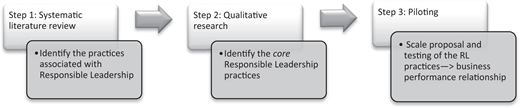
Exploratory sequential mixed-methods approach
Exploratory sequential mixed-methods approach
4. Systematic review of responsible leadership practices
4.1 Aim
Given that there are multiple proposals regarding RL practices in the literature, it is critical for further research to create a cohesive set of measurement tools to assess their implementation and effectiveness (Agarwal and Bhal, 2020; Frangieh and Yaacoub, 2017). RL’s characteristics also need to be better defined (Doh and Quigley, 2014). We systematically reviewed and synthesized the extant literature concerning RL, to map out the RL practices that different authors propose.
4.2 Methodology
The systematic review process undertaken in our research was adapted from Elkhwesky (2022), Elkhwesky et al. (2022b, 2022c), Elkhwesky et al. (2022a) and Pickering and Byrne (2014). First, we determined the most appropriate search terms and database for our analysis of published studies related to RL, opting for the keyword “responsible leadership” and the WoS database. WoS is considered a core database in the conducting of systematic literature reviews (Elkhwesky, 2022; Elkhwesky et al., 2022a; Gusenbauer and Haddaway, 2020), and is one of the most well-established sources for such analyses (Elkhwesky et al., 2022b, 2022c).
Second, we conducted the search, spanning the disciplines of “management”, “ethics” and “business”. This process identified 227 scholarly papers from the selected disciplines (Figure 2). Third, we reviewed each of the 227 papers individually and in detail, covering the abstract, research methodology, results and conclusions, to cross-check their selection. The most relevant papers were those concerning the direct practices of RL. Of these, 20 studies were deemed suitable for indicating RL practices.
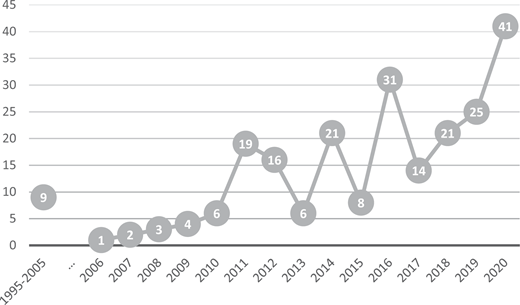
Number of RL papers published in the fields of management, ethics or business, 1995–2020
Number of RL papers published in the fields of management, ethics or business, 1995–2020
4.3 Results
Most of the 20 studies we reviewed were conducted in sectors such as manufacturing, technology, services and medicine. In contrast, there was a clear gap in the fields of tourism, restaurants and hospitality (Table 1). Although, between them, the papers suggest 25 different practices to characterize RL practices, some of these practices receive greater support in the literature. Given the great variety of RL practices, it is helpful to deepen the analysis of those that are considered core for the hospitality sector, on the basis that the scholarship broadly agrees on the primary features that help define RL. This general consensus enables us to draw on the extant knowledge surrounding RL and apply it to different sectors – in this case, hospitality.
RL Practices identified in the literature
| RL practices | Concept | Sector | Authors |
|---|---|---|---|
| Stakeholder culture | Responding to, and actively dealing with, stakeholders in an ethical manner | Technology (IT), manufacturing, and service companies | Tymon et al. (2010) Doh et al. (2011) Frangieh and Yaacoub (2017) Haque et al. (2019) |
| Human Resource practices | Dealing with employees as talent, and retaining the best of that talent | Technology (IT), manufacturing, and services companies | |
| Managerial support | Developing and supporting all employees effectively, achieving their well-being | Systematic review (medical, management, and leadership studies) | |
| Industry sectors | |||
| Actively avoids becoming isolated or out of touch | Interacting effectively with stakeholders, and dealing with social and environmental issues | Businesses and non-governmental organizations | Voegtlin (2016) |
| Forward-looking rather than backward-looking | Thinking about the social and environmental impact of running a firm and also the benefits for the firm | ||
| Shared responsibility and collective problem-solving | Encouraging participation of all parties, specifically in problem-solving | ||
| Critically evaluating prevailing societal norms, rules and conventions | Critically evaluating moral norms, making positive and ethical change, and setting values and ethical rules | ||
| Aggregate of virtues | Being modest and motivating others | Companies (manufacturing, drinks distribution, agricultural machinery, clothing and technical college) | Antunes and Franco (2016) Mousa (2018) Mousa and Puhakka (2019) Mousa (2019b) |
| Stakeholder involvement | Dealing actively with stakeholders and taking the interests of employees, state, suppliers, customers, future generations, etc. into account | Public hospitals | |
| Model of leader’s roles | Impacting positively on society, ensuring transparency, and following organizational vision and values | Public hospitals | |
| Principles and ethical values | Communicating effectively based on moral values | Public business schools | |
| Relationship-building | Interacting with both external and internal stakeholders | Different industries, such as banking, insurance, medicine, teaching and services | Han et al. (2019) Liao and Zhang (2020) Rui and Lu (2020) Javed et al. (2020a) Cheng et al. (2019) |
| A sharing orientation | Strengthening relationships with all stakeholders and sharing risks with them | ||
| Manufacturing firms | |||
| Relational governance | Coordinating and collaborating with stakeholders (e.g. clients, customers, suppliers, regulatory authorities) when making decisions and taking care of their interests and conflicts | Industries, including the chemical industry, machine manufacturing, electronics industry, food manufacture, pharmaceutical industry, and textiles industry | |
| Public listed companies | |||
| Insurance companies | |||
| Positivity | Creating a positive climate, positive inspiration, positive connections and positive communication | High-tech industry | Liu and Lin (2018) |
| Morality | Being a moral person, well-respected by others | Companies in 25 industries | Wang et al. (2015) |
| Job performance | Having charisma, the capacity to innovate, and skills associated with effective communication | ||
| Reputation | Developing the company through a good reputation | ||
| Social responsibility | Implementing community-facing CSR activities | ||
| Capability | Creating long-term competitive advantage and a comprehensive corporate governance structure | ||
| Leader’s behavior toward employees, owners, customers, natural environment, suppliers, neighbors, local community and society | Taking care of all stakeholders inside and outside a firm. Employees and customers are the most important stakeholders | Companies in the field of financial services, spatial planning and construction, manufacturing, trade and the hotel and restaurant industry | Frisch and Huppenbauer (2014) |
| Power-sharing | Allowing followers to participate in decision-making | Small and medium-sized organizations in different sectors such as services, manufacturing, construction, trade, transportation, information and repair and maintenance | De Hoogh and Den Hartog (2008) |
| Morality and fairness | Being honest, ethical and treating employees fairly | ||
| Role clarification | Communicating effectively, clarifying responsibilities and expectations, and demonstrating transparency | ||
| Sustainable growth focus | Implementing sustainability and social responsibility activities | Organizations in sectors such as automobiles, lighting solutions, and IT client services | Agarwal and Bhal (2020) |
| Multi-stakeholder consideration | Nurturing the relationship with stakeholders and achieving their well-being | ||
| Moral person | Demonstrating responsibility, justice, fairness, ethics and morals | ||
| Moral manager | Promoting ethics and avoiding harm in dealing with subordinates | ||
| People orientation | Taking care of people and empowering them, to achieve loyalty and trust | Diverse companies and organizations, such as a bank, an iconic theatre, a company operating holiday resorts and spas, a government agency, a chain of pubs and restaurants, a finance company, a real estate company, etc | Koh et al. (2018) |
| Visible ethical actions and traits | Being a role model, showing consistency in all actions, being transparent in communication, setting ethical standards, taking care of the community when making decisions, and developing sustainable relationships with stakeholders | ||
| Setting ethical standards and accountability | Managing by values, using punishments and rewards, setting rules and a code of ethics to be followed by all. Being responsible for his/her actions and also those of their followers | ||
| Broad ethical awareness | Decision-making that is based on ethics and values. All stakeholders receive benefits regularly. Maximizing profits, paying government taxes, ensuring people’s welfare and caring about the perspectives of all stakeholders |
According to the number of citations in WoS – an indicator of the academic influence of a proposal (Zhu et al., 2015) – the 14 proposed practices that enjoy the most coverage in the literature are (in decreasing order of number of citations): power-sharing, morality and fairness, role clarification, stakeholder involvement, leader behavior toward employees, leader behavior toward owners, leader behavior toward customers, an aggregate of virtues, style of leader’s roles, leader behavior toward the natural environment, leader behavior toward suppliers, leader’s decisions affecting neighboring residents, leader behavior toward society and principles and ethical values. Other practices are supported by a single paper only or have a very low number of citations (Table 2).
RL Practices reflected in WoS
Note:
aTotal citations in WoS received by the papers that include the practice as part of RL
To identify the core RL practices in SME restaurants, we conducted two complementary studies. In the first study, the practices most strongly associated with a responsible leader in the case of SME restaurants were identified by an international panel of 16 experts. The second study enabled the results of the first study to be validated by testing the effect of the RL practices on financial performance and innovation performance, based on the perspectives of 40 owners or general managers of SME restaurants.
5. Identifying core responsible leadership practices
5.1 Aim
The aim of the study is to identify the core RL practices from among the 14 practices of RL identified in the systematic review – that is, those with the greatest support in the literature. According to Endrissat and von Arx (2013), the context under which leadership practices are tested is important, so we selected the restaurant sector and what we can define as a normalized socio-economic context (that is, pre-COVID-19).
5.2 Methodology
We used a qualitative methodology, which is considered appropriate when seeking common meanings for the characteristics most appreciated by stakeholders around the term being researched (Denzin and Lincoln, 1994; Giorgi and Giorgi, 2017; Kvale, 2008). We obtained a broad set of definitions and practices associated with RL from our systematic literature review and reduced these to the 14 practices most frequently associated with this type of leadership. To reduce them even further to a core set of practices, and given their disparate nature, we opted to present them to an expert panel built for this specific study, for their specialist assessment.
For the data collection, we used a projective technique (Belk, 2007) that involved creating a professional profile for each RL practice, presented in the form of 14 curriculum vitae (CVs) in which the RL practice in question was emphasized by the candidate in the Presentation, Skills and Previous Experience sections. All 14 fictitious CVs were homogeneous in format, with only the personal information and the specific attributes for each practice changing.
The CVs were then sent to the panel of 16 international experts (9 academics and 7 professionals from four different countries), with an average of 15 years’ experience in either the restaurant sector, management or human resources. The fieldwork was carried out in June and July 2019. The experts’ task consisted of selecting and ranking five of these RL/candidate profiles based on their suitability for the responsible leadership of an SME restaurant, and noting the relevant aspects in each selected profile. Experts had to note both the strengths and the weaknesses of each of the five candidates they had “shortlisted”.
For the expert panel, we chose to mix specialist academics and expert practitioners. In the management context, Baldridge et al. (2004) show that academics’ and practitioners’ evaluations of a topic often complement each other. While academics seek to determine the characteristics of the professional profiles that are best suited to different jobs, including leadership roles, for instance, practitioners have direct experience of those factors that, in practice, could deliver a better result. Combining the two perspectives, academic and practitioner, therefore provides a 360° view of the phenomenon to be analyzed in a qualitative study (Lawless and Heymann, 1999). Creating samples of participants from different fields helps achieve greater richness and depth around the problem studied (Belk et al., 2013; Kvale, 2008), which was the rationale for the sample selection we made for this qualitative work (Denzin and Lincoln, 1994).
The data generated from this stage were analyzed via both semantic and content analysis, using CAQDAS software NVivo 12 Plus (Rettie et al., 2008). First, a coding structure according to the practices derived from the systematic literature review was applied to the comments and choices made by the experts. Second, a free coding derived from an auto-code search tool from the software was applied over those same comments (Saldaña, 2009).
A meaning reduction analysis was then implemented, to arrive at shared definitions of those practices considered relevant by all the panel members (Giorgi, 1989). Ethical requirements were fulfilled by providing all the panel members with detailed briefing information and seeking their permission to use their answers for further in-depth analysis.
Despite the difficulty of establishing unanimous criteria of reliability and validity in qualitative research, we can identify in the existing literature a series of criteria for academic quality and rigor that can be applied to the present work (Denzin and Lincoln, 1994). Thus, our study has adhered to the following principles: credibility (textual transcriptions and extracts from these), transferability (by using a theoretical sampling and a saturation point), confirmability (results cross-checked with the literature review), dependence (detailed description of the process followed) and relevance of the research carried out.
5.3 Findings
The panel was asked to evaluate all 14 profiles for a management position in a restaurant SME interested in aspects of RL. At the end of the assessment document, the experts were asked to highlight the strengths and weaknesses of each candidate. When the experts were asked to rank the relative importance of the different leadership practices, from most to least important, power-sharing and societal orientation were rated the most important by the greatest number of experts (n = 4 and n = 3, respectively). When asked to select and rank the ‘top 5’ practices out of the 14 (that is, those the experts deemed to be most associated with a responsible leader), societal orientation, stakeholder involvement and ethics attracted the greatest degree of consensus among the experts.
Free coding was then performed (without taking into account a priori the practices that appeared in the literature review), based on the comments made by the experts regarding the strengths and weaknesses detected for each profile. Next, the automatic thematic coding tool of the software was used to perform an initial coding; and, finally, a further (manual) coding was performed, based on the results of the first one, to reduce the topics down. This enabled the main topics highlighted by the panel to be identified, and we then linked those topics to the practices named in the literature.
With regard to the leadership practices identified in the 14 CVs, there were expert comments in favor of those candidates where stakeholder involvement (19 comments), ethics (16), societal orientation (12) and employee orientation (10) predominated. A distinct case was that of environmental orientation, based on the emerging themes of environment (10 comments) and sustainability-oriented thinking (5 comments), both of which, combined, were taken to refer to this practice (15 comments).
Turning to the candidate weaknesses noted by the experts, they emphasized those profiles where they perceived a lack of stakeholder involvement (18 comments), which were given much greater weight compared to other skills such as societal orientation or employee orientation (5 comments each). Environmental orientation was another of the practices that was noted for its absence or weakness among candidate profiles (9 comments).
Finally, other practices such as morality and fairness, role-clarification, owner orientation, the model of leader’s roles, or supplier orientation, were not flagged up by the expert panel as worthy of particular attention. Table 3 shows the most notable results. We can observe that three practices stand out in particular – societal orientation, ethics and stakeholder involvement – due to the high number of experts that selected them and the high number of citations in the free coding. The power-sharing practice is also significant, with the highest number of experts rating it #1. Finally, environmental orientation is shown to be relevant due to the number of comments it presented in the free coding.
Summary of coding
| Practice selected | Expert panel’s ranking of practices based on their relevance to RL | Free coding of the experts’ comments | ||||
|---|---|---|---|---|---|---|
| N° of experts ranking the practice as the most important of all | N° of experts ranking the practice among the ‘top 5 most important’ | Free coding A: comments on CV strengths | Free coding B: comments on weaknesses in other CVs | Free coding (A + B) | 2nd coding (if applicable) | |
| Societal orientation | 3 | 12 | 12 | 5 | 17 | Same |
| Principles and ethical values | 1 | 8 | 16 | 3 | 19 | Ethics |
| Values | ||||||
| Stakeholder involvement | 1 | 9 | 19 | 18 | 37 | Same |
| Power sharing | 4 | 6 | 6 | 3 | 9 | Sharing responsibilities |
| Neighborhood relations | 2 | 6 | 2 | 0 | 2 | Same |
| Natural environment | 1 | 5 | 15 | 9 | 24 | Environment and sustainability |
| Aggregate of virtues | 2 | 5 | 0 | 0 | 0 | None |
| Employees | 1 | 5 | 10 | 5 | 15 | Same |
| Morality and fairness | 1 | 4 | 6 | 0 | 6 | Fairness + honesty and integrity |
| Role clarification | 0 | 4 | 1 | 0 | 1 | Same |
| Owners | 0 | 1 | 0 | 1 | 1 | Same |
| Model of leader’s roles | 0 | 5 | 0 | 0 | 0 | None |
| Suppliers | 0 | 3 | 1 | 0 | 1 | Same |
| Customers | 3 | 6 | 6 | 4 | 10 | Same |
In the case of societal orientation, the high volume of comments made by the experts points to its importance. In general, they affirm that this practice represents global societal obligations that organizations need to fulfill by means of audit systems, commercial strategies, leader–stakeholder relationships or job-creation. Some members of the panel also observed that the societal practice – which aims to strengthen social bonds – constitutes a challenge for all sectors of society. There was one negative comment, to the effect that some candidates might have too great a focus on society, although no further explanations were given by the expert. In general, then, the comments on this practice were in a positive sense, either where the profiles presented the societal orientation or (in the negative) because they lacked it.
In terms of stakeholder involvement, this was one of the characteristics most commonly referred-to by the experts (again, both with respect to profiles where the practice was present and also where this characteristic was lacking). The ability to communicate effectively with stakeholders, both internal and external, was also valued. In the external context, another of the questions raised by the experts was the manager's capacity to hold a broad vision for the impact of the company's actions on external stakeholders.
Turning to the power-sharing practice, the experts highlighted those candidates whose leadership experience was based on the delegation of responsibilities, participative decision-making, shared problem-solving, or consensual solutions to the problems in the firms they had worked for. The relevance of this practice was expressed by the experts in both directions – that is, both when the CV profiles featured it and also when they lacked it.
Regarding practices relating to an environmental orientation, the experts discussed the importance of managers having had some “environment and sustainability” training and of ensuring that this learning tangibly translates into management practices and relationship strategies. Panel members’ comments also conveyed the importance of actively avoiding environmental degradation practices – that is, making this a positive social purpose – as well as implementing responsible practices to protect it. This practice attracted the greatest number of comments in the free coding of themes. Finally, according to the experts, RL should include ethical values as well as integrity and moral responsibility.
6. Key responsible leadership practices to enhance restaurant performance
6.1 Aim
The aim of the pilot test was to validate the contribution of each RL practice to business performance, taking as a starting point the five practices that had attracted the highest degree of support from the expert panel. The restaurant sector is highly competitive and needs to constantly evolve and innovate if firms are to survive (Naranjo‐Valencia et al., 2011). Furthermore, the current climate due to the COVID-19 pandemic is putting the sector’s adaptation and reinvention capacity to the test. Hence, it is important not only to test the contribution of each RL practice to financial performance but also to innovation performance (Broch et al., 2020; Liao and Zhang, 2020; Voegtlin and Patzer, 2020).
6.2 Methodology
A draft semi-structured questionnaire was constructed, using validated scales to measure RL practices and business performance ( Appendix). Qualitative fields were also included to record the restaurant owner or general manager's verbal opinion. This questionnaire was validated using a LinkedIn panel, with eight experts providing feedback to refine the questions. Their broad recommendations related to the need:
to perform an on-site interview (not by phone or email);
to re-word some parts of the questionnaire; and
to include some general information about the restaurant (year of business creation, number of employees, etc.).
We therefore re-worded some of the items and included some additional questions to enable us to characterize the participants. We also included the option of an on-site interview.
The final questionnaire was completed by 40 owners or general managers of SME restaurants located in Spain. Most of the participants were owners (60%), 44.74% of the restaurants had been in business for more than 10 years, and they employed an average of between 9 and 10 staff members. Fuzzy cognitive maps (FCMs) enable multi-attribute mental schemes (qualitative) and the strength of the relationship between variables (quantitative) to be calculated. FCMs present the advantage of allowing researchers to model new contexts where the degree of knowledge is low and the degree of performance is contingent. They start out from a definition of the problem and the identification of the set of variables that operate in that problem (RL practices and performance). Thus, in each phase that describes the problem, there will be a set of variables that are activated at different levels.
With regard to the relationship between the variables (practices —> performance), this may be established discreetly, based on a matrix of ones and zeros or the Pearson correlations, or using a fuzzy approach, with linguistic quantifiers (e.g. weak, moderate, strong) to which a reference value can be assigned (Cohen’s [1988] effect sizes). The matrix-vector product in the different phases of the problem will generate an output vector that tends to converge. If the type of practice is placed as an input, and the financial and innovation performance are placed as outputs, we can test the impact of each practice on performance variables.
6.3 Results
To analyze the relationship between RL practices and business performance variables, we needed to take into account the complexity identified by the literature, both in the configuration of RL practices and in their relationship to business performance. FCM is well suited to modeling and simulating complex systems (Salmeron et al., 2012), even in the case of small samples (Osoba and Kosko, 2019). Previous studies involving data analysis using FCMs have shown the need to evaluate the internal consistency of the measurement scales.
Appendix shows the Cronbach’s alpha values for RL practices and performance variables. All measures present acceptable internal consistency values (Churchill, 1979; Nunnally, 1994), with the exception of the practices related to stakeholders. However, values of 0.5 and 0.6 can suffice for exploratory studies (Nunnally, 1994).
Using the FCMapper package for R (https://CRAN.R-project.org/package=FCMapper), we introduce the Pearson correlation matrix between practices and performance variables. The selected correlations indicated the causal relationships among any pair of concepts. Using Kosko’s (1986) convergence criteria, the system reaches convergence in six iterations. Considered the combined strength of the effects of a practice on performance variables (outdegree index–OD), the convergence point shows that ethical values (ODeth = 1.1) and societal orientation (ODsoc = 0.8) are the core practices that define a responsible leader in an SME restaurant. The practices related to power-sharing (ODpow = 0.6), the environment (ODenv = 0.5) and stakeholder involvement (ODstk = 0.4) present a lower, but still relevant, link to performance variables.
However, considering the total amount of effects received by each performance variable (indegree index–ID), the impact of responsible practices on innovation performance (IDip = 2.2) is higher than on financial performance (IDfp = 1.1). Outdegree, indegree, and the sum of both (centrality) are shown in Table 4.
FCM concept indices
| Concept | Outdegree | Indegree | Centrality |
|---|---|---|---|
| Societal orientation | 0.8 | 0.0 | 0.8 |
| Ethics | 1.1 | 0.0 | 1.1 |
| Stakeholder involvement | 0.4 | 0.0 | 0.4 |
| Power-sharing | 0.6 | 0.0 | 0.6 |
| Environment orientation | 0.5 | 0.0 | 0.5 |
| Financial performance | 0.0 | 1.1 | 1.1 |
| Innovation performance | 0.0 | 2.2 | 2.2 |
Figure 3 shows the strength of the relationships between each RL practice and both the financial and innovation performance of the restaurant. We place the more influential practices (societal orientation and ethics) on the left, and the less influential ones (stakeholder involvement, power-sharing and environmental orientation) on the right. The thickness of the lines reflects the degree of impact each practice has on performance variables. The relevance of the practices that reflect a societal orientation is mainly due to their impact on the innovation performance of the restaurant, while the ethical practices present relevance in both performance variables. Concerning the practices with less outdegree, all of them show a greater impact on innovation performance than on financial performance.
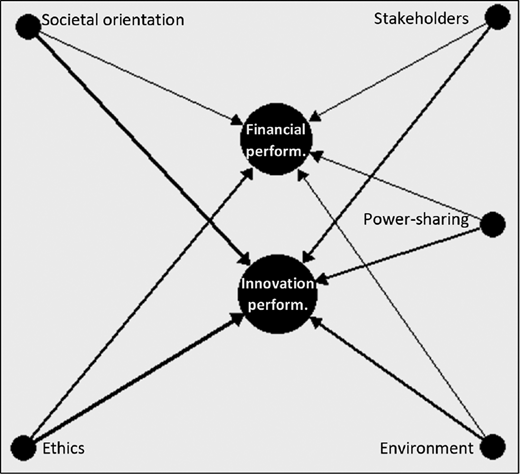
Fuzzy map of relationships between RL practices and business performance
Fuzzy map of relationships between RL practices and business performance
In summary, the owner/manager panel confirmed the high degree of relevance of RL practices for both financial and innovation performance. The results show that differences in the relevance of the RL practices (ethical and societal values being more important) can be identified, that those practices have a greater impact on innovation performance, and that, for financial performance, the most important practices are those related to the ethical behavior of the leader.
7. Discussion of the results
RL is a highly topical research subject – indeed, most research on this theme has been published in just the past 12 years. It has acquired growing relevance due to its important role in strengthening business resilience (Salem et al., 2021,,2022; Tsui, 2020). Via a systematic literature review, we identified 25 distinct RL practices, that have been analyzed in sectors other than tourism – primarily, manufacturing, technology, services and medical contexts (Antunes and Franco, 2016; Doh et al., 2011; Mousa, 2018). This has left a lacuna in terms of a lack of RL practices proposed specifically for a sector with a high SME presence (e.g. restaurants), where the owner/manager is responsible for almost the entire strategic orientation of the firm and is the key figure active in relationship-building with its stakeholders.
In this sense, the recent literature review conducted by Arici et al. (2021) on leadership styles in hospitality points to a paucity of research into RL in this field. There are five RL practices that can be considered essential in the SME restaurant setting: societal orientation, ethics, stakeholder involvement, power-sharing and environmental orientation. These practices are the ones that attracted the greatest consensus among the panel of experts and are shown to make an impact on both financial performance and innovation performance. They are practices that focus on the local “impact” of the business (society and environment) rather than on the sustainable “growth” that is sought in industries such as automobile, lighting solutions and information technology (Agarwal and Bhal, 2020).
Furthermore, rather than showing a specific interest in each particular stakeholder (owners, customers, suppliers, neighbors, etc.) – a phenomenon identified by studies focused on large companies with more than 2,000 employees on average (Frisch and Huppenbauer, 2014) – in the case of SMEs, concern for the interests of stakeholders is approached from a more general perspective, seeking areas of common ground and not targeting practices at each of the publics individually).
Regarding employees, power-sharing practices were found to be essential in SME restaurants – a finding similar to the results obtained by De Hoogh and Den Hartog (2008) for SMEs in services, trade, repairs and so on. Finally, ethical behavior on the part of the leader is also identified as an essential practice in SMEs restaurants, a finding that echoes most of the literature, regardless of the sector and the size of the companies analyzed (Antunes and Franco, 2016; Koh et al., 2018; Mousa, 2018, 2019b; Mousa and Puhakka, 2019; Voegtlin, 2016). In sum, the present results reflect the multidimensionality and complexity of RL (Scully, 2015), the need to adapt RL practices to the hospitality sector due to its particular characteristics (Freire and Gonçalves, 2021), and the positive impact on business performance of carrying out these practices (Salem et al., 2021).
8. Conclusions, implications and limitations
The present study aims to identify the core RL practices that are most relevant to SME restaurants. To fulfill this aim, we applied an ESMM approach structured around three stages. In the first stage, the systematic literature review showed that RL involves taking a wider perspective than the more traditional leadership approaches. It considers the relationship between the leader and all the stakeholders of the business and includes a wide variety of managerial practices. In the second stage, we selected an expert panel of academics and practitioners, who selected the five core RL practices that they considered particularly pertinent for SME restaurants. These were: societal orientation, ethics, stakeholder involvement, power-sharing and environmental orientation. In the final stage of the study, using items proposed by the literature, a scale to measure the core RL practices was proposed and its internal consistency and criterion-validity tested among a sample of restaurant owners/managers. All five RL practices were found to be positively related to the financial and innovation performance of the restaurant.
RL is more concerned with the “why” of adopting certain practices – to conserve society and the environment, to secure stakeholders’ involvement and, particularly, employees’ collaboration – to be ethically driven and so on – and less concerned with the “how” (the specific behaviors to cultivate). In this sense, RL can be considered a higher-level, more all-encompassing leadership that is more concerned with an outer perspective (that is, what people expect of the leader) than an inner or leader-centric perspective (what the leader sees fit to do).
In this study, we have focused on SMEs restaurants, where business size and the fact of being a service determine the particular RL practices that are most relevant, when compared to large manufacturing companies, for instance. What actions can a responsible leader in SME restaurants carry out under each of the five core practices we identified?
To be responsible leaders, the managers or owners of SME restaurants have to train employees on eco-friendly behavior and lifestyle, consider the consequences of environmental decisions for stakeholders and reduce the eco-impact of the service. Actions might include purchasing greener local produce; controlling pollution; implementing a recycling/reuse policy; saving water and energy; avoiding the use of hazardous materials; recycling fat, oil and grease; collecting and sorting waste; or donating leftovers to a charity, among others (Elkhwesky, 2022; Elkhwesky et al., 2022c; Frisch and Huppenbauer, 2014; Jang and Zheng, 2020; Jang et al., 2017).
Additionally, managers or owners of SME restaurants could demonstrate RL in their own practices, for example by actively supporting all employees who want to pursue further education, listening to employees’ suggestions for improving the business, supporting all employees with dignity and respect; paying all employees a fair wage that recognizes and rewards their efforts; recognizing and rewarding employee effort (Cerchione and Bansal, 2020; Elkhwesky et al., 2022c, 2018, 2019, 2021; Olya et al., 2021). Furthermore, sustaining clear, honest, and ethical communication with all stakeholders is another means of improving relations with them and enhancing their involvement with the business.
Furthermore, owners or managers of SME restaurants could use RL principles and practices to improve the local environment by participating in different types of community activities and societal events. Enhancing the excellence of life of people in the local society by providing financial assistance (e.g. going to donate money to good causes); financially supporting education for local residents; organizing campaigns to boost healthy-eating education in schools, colleges and other community settings; critically appraising the restaurant's social impact; and incorporating supply chain management with corporate responsibility are examples of such actions (Elkhwesky et al., 2022c; Jang and Zheng, 2020; Maynard et al., 2020; Modica et al., 2020; Shi and Tsai, 2020).
As noted by Elkhwesky et al. (2022b) and Muff et al. (2022), RL is a very young field of research with little sound data available. Pounder (2021) similarly recommended conducting further research on RL and its role during times of crisis. The present study therefore seeks to address this lacuna, and it holds important academic implications in three main respects:
it identifies the core RL practices for a key tourism service (SME restaurants);
it proposes and validates measurement scales for the most relevant RL practices in SME restaurants; and
it provides evidence of the impact of RL on business performance in SME restaurants.
The move toward formulating a shared understanding of what constitutes an RL practice is the cornerstone of constructing an RL theory (Haque et al., 2021).
Looking ahead, and considering the potential for building RL theory into postgraduate training programs, the results of the present research point to the most pressing areas to address that will enable managers to attain the core RL competencies required by the tourism industry in the coming years. Better knowledge of those practices jointly referred-to as RL will be of major importance in a world where these capacities are very much valued by citizens, civil society or even governments and, as a result, by tourism firms’ human resources departments.
Finally, the present study does have certain limitations that need to be considered. A typical drawback of qualitative research is a potential lack of generalizability, subjectivity and reliability. Nevertheless, the cross-validation we performed represents a good opportunity to acquire in-depth knowledge about the topic. Furthermore, future quantitative explanatory research could examine the impact of RL on product, financial, innovation and market performance among SMEs in general (Elkhwesky et al.,2022a).
Scales to measure RL practices and business performance
| Responsible leadership practices Please indicate your degree of agreement with the following statements in relation to your role in charge of the restauranta: | ||
|---|---|---|
| Reference | Cronbach’s alpha | |
| Societal orientation | ||
| Soc1.I engage in charitable work | Frisch and Huppenbauer (2014) | 0.72 |
| Soc2.I offer professional training for graduates | ||
| Soc3.I offer jobs to socially disadvantaged people | ||
| Soc4.I take an active role in my community | Doh et al. (2011) | |
| Soc5.I tend to care about public-related aspects like education, health and poverty | Mousa (2017; 2019a) | |
| Ethics | ||
| Ethic1. I am sincere when dealing with internal and external stakeholders | Antunes and Franco (2016) | 0.89 |
| Ethic2.I communicate fairly and honestly | Frisch and Huppenbauer (2014) | |
| Ethic3.I tend to take actions that are ethical | De Hoogh and Den Hartog (2008) | |
| Stakeholder involvement | ||
| Stak1.I involve in-and-out of organization’s viewpoints when making a decision | Mousa (2018) | 0.59 |
| Stak2.I have long-lasting relationships with various stakeholders | ||
| Stak3.I respond well to a diverse group of stakeholders | Doh et al. (2011) | |
| Stak4.I take corporate social responsibility seriously (e.g. have a clear policy that reflects a commitment to one or more social causes) | ||
| Power-sharing | ||
| Power1. I reconsider decisions on the basis of recommendations by those who report to me | De Hoogh and Den Hartog (2008) | 0.80 |
| Power2. I delegate challenging responsibilities to subordinates | ||
| Power3. I seek advice concerning organizational strategy from subordinates | ||
| Environmental orientation | ||
| Envir1. I train employees in eco-friendly behavior and lifestyle | Frisch and Huppenbauer (2014) | 0.94 |
| Envir2. I am aware of key stakeholder demands related to environmental problems | Jang et al. (2017) | |
| Envir3. I consider the consequences of environmental decisions for the key stakeholders | ||
| Business performance How do you rate the following performance indicators for your business?b | ||
| Financial performance | ||
| FinP1. Return on assets (profit/total assets) | Gunday et al. (2011) | 0.85 |
| FinP2.General profitability of the firm | ||
| FinP3.Return on sales (profit/total sales) | ||
| FinP4.Cash flow excluding investments | ||
| Innovation performance | ||
| InnP1.Renewing the administrative system and the mindset in line with firm’s environment | Gunday et al. (2011) | 0.70 |
| InnP2.Innovations introduced for work processes and methods | ||
| InnP3.Quality of new products and services introduced | ||
| InnP4. Percentage of new dishes in the restaurant's offer | ||
Note:
aFive-point Likert scale (1-strongly disagree; 5-strongly agree).
Five-point semantic differential scale (1- extremely unsuccessful; 5-extremely successful)
Zakaria Elkhwesky would like to thank the Erasmus Plus program, European Union for the financial support during his pre-doctoral stay at the Faculty of Economics and Business Administration, University of Granada, Spain in 2019 (fully funded scholarship; Erasmus+). The current project was launched from this period as a part of the scholarship purposes.
Funding: This project is sponsored by FEDER/Junta de Andalucía-Consejería de Transformación Económica, Industria, Conocimiento y Universidades/Project CV20-09357; PID2019-110941RB-I00/SRA (State Research Agency/10.13039/501100011033); and the Erasmus Plus program, European Union.
Declarations of interest: none.

