This research aims to examine how conflict-displaced households in Marawi in the Philippines navigated challenges in housing, water, sanitation and hygiene (WASH) and public health during the COVID-19 pandemic, and identifies implications for built environment resilience and inclusive recovery.
A mixed-methods cross-sectional survey was administered to 428 internally displaced households in Marawi. Quantitative data on housing damage, tenure, WASH access and self-reported ability to self-isolate were analysed, supported by thematic interpretation. Descriptive and inferential statistics explored associations between infrastructural variables and perceived pandemic resilience.
Findings reveal extensive post-conflict housing damage, tenure insecurity and overcrowding, with many households lacking sufficient space or facilities to implement basic health protocols. While hygiene practices were commonly reported, inadequate access to reliable water and sanitation infrastructure, as well as intermittent electricity, hindered effective disease prevention. Respondents identified these physical limitations, alongside governance challenges and limited consultation in recovery processes, as barriers to resilience. Despite this, many expressed trust in government and NGO efforts, although gaps in participation and service quality remained.
Cross-sectional design limits causality. Further research should include longitudinal and comparative studies in similar settings to assess long-term resilience.
Findings underline the need for integrated rebuilding programmes that prioritise tenure security, infrastructural upgrades (WASH, electricity) and inclusive planning to bolster resilience in displacement-affected built environments.
This study uniquely integrates public health, housing, WASH and governance analyses in a protracted displacement and pandemic context. It highlights how built environment deficits undermine health resilience and how participatory recovery could bridge this gap.
1. Introduction
Globally, overlapping crises – often described as polycrises – are increasingly prevalent, where conflicts intersect with disasters, pandemics and economic instability, creating compounded vulnerabilities among affected populations (Lawrence et al., 2024; Rakowski et al., 2025). Armed conflicts disrupt housing and essential infrastructure, leading to large-scale internal displacement and chronic instability. Displaced communities often experience overcrowding, insecure tenure and limited access to essential services such as water, sanitation and hygiene (WASH), exacerbating their vulnerability during subsequent health emergencies. Given the increasing frequency and intensity of such overlapping crises, there is an urgent need to understand how conflict-driven displacement interacts with public health crises to shape vulnerability and resilience.
Housing conditions directly contribute to health disparities, increasing susceptibility to both communicable and non-communicable diseases, psychological distress and injury (Tusting et al., 2019; World Health Organization, 2018). The World Health Organisation (WHO) defines healthy housing as one that promotes physical, social and mental well-being, offering protection from environmental hazards, sufficient space and access to sanitation (World Health Organization, 2018). Inadequate housing fosters communicable disease transmission and impedes hygiene practices (Charnley et al., 2021). For this study, we define adequate housing as that which mitigates health risk factors, whereas inadequate housing indicates elevated exposure to such risks.
Overcrowded housing is prevalent in refugee camps, informal settlements and urban areas (Freedman, 2019; IDMC, 2020). Numerous studies demonstrate a strong link between overcrowding and communicable disease transmission. For example, overcrowding has been associated with meningococcal outbreaks (Morello et al., 2024), tuberculosis (Lee et al., 2022) and respiratory and gastrointestinal infections (Lorentzen et al., 2022). Compounding these risks, inadequate WASH services further facilitate the spread of pathogens (Gwenzi, 2021). Deficient WASH infrastructure continues to affect billions (Okesanya et al., 2024), particularly in Sub-Saharan Africa and Asia, exposing communities to higher risks of diarrhoeal diseases, respiratory infections and leptospirosis. WASH interventions have shown substantial health benefits. For example, Waddington et al. (2023) estimate that one-in-five child deaths are averted by WASH interventions.
While advances in communicable disease prevention and treatment have reduced mortality in high-income countries, lower-income regions continue to face significant burdens from diseases such as pneumonia, diarrhoea, malaria, tuberculosis and HIV/AIDS (Coates et al., 2021). The COVID-19 pandemic compounded pre-existing health and socio-economic challenges for displaced communities globally (Egger et al., 2021; Hilhorst and Mena, 2021). Inadequate housing, which impeded effective self-isolation due to overcrowding and poor sanitation, was further exacerbated by poverty and income loss during lockdowns (Corburn et al., 2020). The pandemic underscored how inadequate housing undermined disease control, with the self-isolation recommendations, including physical distancing and hand hygiene, often impractical in informal settlements and among displaced communities lacking sufficient space and water access (Raju and Ayeb-Karlsson, 2020; Wasdani and Prasad, 2020; Wilkinson, 2020). Lockdown policies frequently overlooked the daily survival needs of vulnerable households, compounding poverty, food insecurity and health risks (Corburn et al., 2020), while insufficient financial or logistical government support left marginalised populations highly exposed during lockdowns.
Increasingly, communicable disease outbreaks and armed conflict intersect to burden global health systems (Garry and Checchi, 2020; Kavulikirwa, 2024; Saikat et al., 2023). Armed conflict amplifies housing-related health risks by displacing populations into overcrowded, poorly serviced settlements (Jabali et al., 2025). Conflict-affected regions often experience significant infrastructure destruction, further diminishing health resilience (Kirschner and Finaret, 2021). Outbreaks of zoonotic or antibiotic-resistant diseases remain a persistent threat, particularly in fragile, conflict-affected contexts where weak health systems, overcrowding and poor WASH services undermine resilience (Marou et al., 2024). Fragile nations are particularly vulnerable due to weak governance, food insecurity and systemic poverty. The interaction between fragility, conflict and disease risk requires urgent attention in global health and development agendas (Bogale et al., 2024).
Adequate housing and inclusive health policies are critical for enhancing resilience in post-conflict communities, particularly in contexts prone to secondary crises such as pandemics or disasters. Yet, understanding how vulnerabilities embedded by conflict impact communities’ abilities to recover from subsequent disasters remains limited. This research investigates these intersections, asking: How do housing and infrastructure vulnerabilities established during conflict influence post-conflict community resilience to subsequent disasters? Using household survey data collected from internally displaced persons (IDPs) in Marawi City, Philippines, during the COVID-19 pandemic, the study examines how overcrowding, insecure tenure and deficiencies in WASH infrastructure shaped households’ capacities to manage health risks. The findings aim to inform targeted policy interventions designed to strengthen infrastructure resilience, enhance public health measures, and preserve the dignity of communities recovering from conflict and navigating subsequent crises.
This study adopts a “polycrisis” framework to understand the layered challenges in Marawi, where the initial armed conflict intersects with the subsequent COVID-19 pandemic to create compounded vulnerabilities for displaced populations. We argue that these crises are not separate events but are synergistically linked, as the infrastructural deficits and displacement directly amplified public health risks and undermined the community’s capacity to respond to the pandemic. To analyse the human dimension of this polycrisis, we incorporate intersectionality theory (Jean et al., 2023), which explains how vulnerability is produced by the convergence of multiple structural positions; for the households in our study, this means their risk is shaped by the simultaneous experiences of being internally displaced, facing widespread poverty, and living in a post-conflict environment with severely damaged infrastructure. This dual theoretical lens allows for a more nuanced understanding of why certain households faced greater barriers to resilience, highlighting how pre-existing fragility shapes the impact of subsequent crises and revealing the shortcomings of recovery efforts that fail to address these overlapping dimensions of marginalisation (Corral et al., 2020).
2. Methods
This research employed a case study design incorporating a structured household survey to explore how housing conditions shaped the ability of IDPs in Marawi to self-isolate during the COVID-19 pandemic. Descriptive statistical analysis was used to summarise the state of housing recovery and to examine how these conditions intersected with public health demands introduced by the pandemic. This approach facilitated an understanding of self-isolation challenges through the lens of household crowding and access to WASH services.
2.1 Case context – Marawi siege in the Philippines
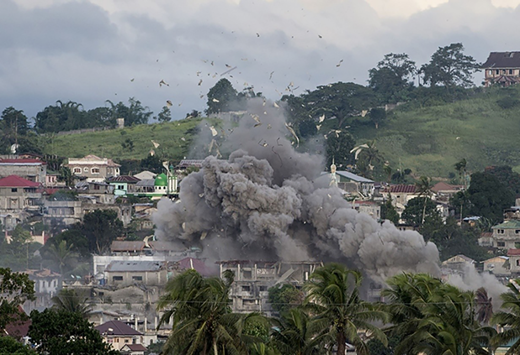
Our research focused on Marawi City, which is the capital of Lanao del Sur, the most populous province in the Philippines’ Bangsamoro Autonomous Region in Muslim Mindanao (BARMM). Beginning in May 2017, the city endured urban conflict between the ISIS-affiliated extremists, the Maute and the Armed Forces of the Philippines (AFP), shown in Figure 1. During the five-month-long ‘Siege of Marawi’, more than 98% of Marawi’s population was internally displaced, most of them seeking shelter in neighbouring municipalities with relatives or in evacuation centres in Iligan City and other cities (UNHCR, 2018). In June 2021, there were still around 17,446 families displaced, unable to resettle in Marawi, which faced stagnant rehabilitation and heavily damaged infrastructure (UNHCR, 2021).
COVID-19 emerged as a compounding crisis for the health and economic prosperity of Marawi’s IDPs (UNHCR, 2018). Marawi’s post-siege recovery was, and continues to be, a deeply interconnected set of challenges that go far beyond rebuilding structures. Fernandez et al. (2018) highlight how overlapping issues – unclear land ownership, destroyed infrastructure and weak institutional capacity – create a complex landscape where even well-intentioned, community-led rehabilitation efforts often stumble without addressing political, legal and social fragmentation. The difficulty of implementing effective self-isolation against a background of poverty and inadequate housing is rife not only in IDP, refugee and other post-conflict communities, but other fragile demographics such as low-income communities and those displaced by natural hazards (Charnley et al., 2021; Connolly et al., 2004).
2.2 Data collection
Primary data for this research was collected through a structured household survey of 428 IDP households in Marawi in November 2021. The survey was administered verbally using KoBoToolbox and conducted in the local Maranao language, with responses recorded digitally by enumerators. Prior to deployment, the tool was translated and pilot tested to ensure cultural appropriateness and clarity. The instrument captured detailed information on household demographics, tenure, housing conditions (e.g. structure, layout, ownership) and access to WASH services. It also explored residents’ perceived ability to self-isolate and prevent disease transmission, as well as their experiences with the recovery process following the Marawi Siege and the COVID-19 pandemic. The full survey can be found in the Supplementary Material.
Before data collection commenced, barangay captains, the local authorities of the smallest administrative division (barangays), were consulted on active COVID-19 cases. Any households in isolation or with a reported COVID-19 case were excluded from the sample, a necessary precaution for the safety of the research team. This research was reviewed and approved by the University of Sydney Human Research Ethics Committee (Protocol: 2021/HE000432).
2.3 Data analysis
Descriptive statistical analysis was undertaken using R, a free and open-source statistical software. Prior to analysis, the raw data was cleaned, relevant variables were recoded, and the final data set was used to generate the descriptive tables presented in this study. The analysis aimed to identify general trends in housing conditions, access to WASH facilities, and the perceived ability of IDPs to self-isolate during COVID-19 lockdowns. Frequencies and proportions were calculated for categorical variables, while means and standard deviations were used for continuous measures such as household size and number of rooms. Responses from Likert scale questions were summarised using distributions and visualised to explore patterns in self-isolation capacity and satisfaction with basic services. This descriptive approach enabled a comprehensive overview of how displaced households in Marawi navigated concurrent challenges of recovery and pandemic resilience.
In addition to descriptive analysis, we conducted inferential statistical tests to explore potential associations between household characteristics and their perceptions of recovery. Chi-square tests for independence were used to identify significant associations between key categorical variables, such as post-conflict tenure status and ordinal measures of satisfaction. For relationships found to be statistically significant, Pearson’s correlation tests were then used to further examine the strength and direction of the association, allowing for a more nuanced understanding of how specific socio-economic factors influenced the experiences of internally displaced households.
3. Results and Discussion
The results of this study are presented in five thematic sections, each reflecting key dimensions of how displacement, housing and public health intersected during the COVID-19 pandemic in Marawi. Section 1 describes the living conditions of internally displaced households, highlighting changes in tenure security and the prevalence of overcrowded and inadequate housing. Section 2 explores access to WASH services, and the extent to which households were able to maintain daily hygiene practices. Section 3 examines the constraints households faced in adhering to self-isolation and disease prevention measures during lockdowns. Section 4 presents perceptions of recovery efforts and governance, including views on service delivery and participation in rehabilitation processes. The final section considers the enduring impacts of the Marawi conflict and how these were compounded by the pandemic, offering insight into the layered vulnerabilities that persist in post-conflict settings. Details about the demographics of those surveyed are provided in Table 1.
3.1 Living conditions amid displacement
Respondents lived in conditions shaped by both the protracted displacement following the 2017 Marawi Siege and the broader recovery landscape. Most households were large, with an average of over six members, and faced limited employment opportunities and low daily incomes. Self-reported poverty was widespread, with nearly 70% identifying as poor or very poor.
The effects of conflict were reflected in the extensive damage to housing stock, with over 70% of participants’ homes reported as completely destroyed from the conflict. The level of damage was significantly associated with residents’ satisfaction with their livelihood [χ2(20) = 57.06, p < 0.001]. The relationship was found to be negative and linear, showing that as the severity of property damage increased, satisfaction with livelihood opportunities consistently decreased (r = −0.17, p < 0.001), highlighting the cascading effect of infrastructure destruction on the economic recovery of households. Similarly, the extent of housing damage was strongly associated with residents’ perceptions of community safety [χ2(20) = 60.5, p < 0.001]. The significant negative correlation confirms that residents who experienced more severe housing damage reported lower feelings of safety (r = −0.15, p = 0.001). Table 2 details these housing conditions, illustrating the widespread destruction and the subsequent move towards less secure forms of tenure.
Housing tenure shifted substantially in the aftermath of the siege. Using a hierarchy of tenure security from full ownership of house and lot to various informal or rent-free arrangements, we found that 135 out of 428 respondents (31.5%) experienced a downgrade in tenure status after the conflict. These shifts often involved moving from owned properties to rent-free occupancy without formal agreements or legal consent. The erosion of tenure security not only increased vulnerability to eviction and insecurity but also limited access to formal support channels for housing recovery. A Chi-square test revealed a statistically significant association between post-conflict tenure status and satisfaction with the quality of housing construction [χ2(24, n = 428) = 195.26, p < 0.001]. Households who fully owned their house and lot post-conflict reported significantly higher levels of satisfaction compared to those in informal or rent-free arrangements.
Post-conflict housing arrangements revealed a shift away from secure tenure towards temporary and informal accommodation. Many families resided in host arrangements, temporary shelters or in rent-free housing without consent. Living space was severely constrained: most households were confined to one or two bedrooms, with floor areas averaging just 28 square metres. On average, this translated to 5.5 square metres of living space per person. While this is above the Sphere minimum standard of 3.5–4.5 square metres per person for emergency shelter, it is noticeably below recommendations for long-term housing, underscoring the persistent overcrowding in post-Siege Marawi. Although electricity was widely available, concerns about its reliability further underscored the fragility of basic infrastructure. These conditions formed the baseline environment within which families had to navigate the compounding impacts of the COVID-19 pandemic.
3.2 Constraints on self-isolation and disease prevention
The capacity of internally displaced households in Marawi to implement recommended public health measures during the COVID-19 pandemic was significantly constrained by their living environments. Survey results revealed that physical space limitations, inadequate infrastructure and fragile service provision collectively undermined households’ ability to comply with isolation and hygiene guidelines. Household perceptions of the pandemic and recovery efforts are summarised in Table 3.
Overcrowding was a central barrier to self-isolation. A substantial proportion of respondents (40.2%) either agreed or strongly agreed that they were unable to isolate from other households in the community within their current dwelling. This suggests that shared housing arrangements –common among displaced families living with relatives or in temporary shelters – posed challenges in limiting inter-household transmission. Similarly, within-household isolation was deemed impractical, with 43.2% agreeing or strongly agreeing that they could not isolate an infected family member from others within their own home. Given that most households resided in one- or two-room dwellings, these responses reflect the tangible spatial constraints that impeded adherence to public health guidance. This was further supported by post-conflict housing tenure being strongly associated with households' perceived ability to self-isolate [χ2(24) = 94.0, p < 0.001]. A significant positive correlation further indicates that households with more secure tenure reported a greater capacity to isolate (r = 0.26, p < 0.001).
Hygiene and sanitation practices were also hindered by infrastructure limitations. Nearly half of the respondents (49.5%) agreed or strongly agreed that they could not adequately prevent transmission because of hygiene and sanitation-related factors. Although self-reported handwashing compliance was high, with over 80% of households indicating that they always washed hands before cooking, eating and after using the toilet, the quality of water sources and sanitation infrastructure compromised these practices. For example, 30.4% of respondents relied on purchased drinking water, and 23.8% accessed water through tanker trucks, sources which are often subject to supply inconsistencies. In addition, only 43.9% of respondents reported having flush toilets connected to septic tanks, while others used pit latrines or shared facilities. These limitations reduced the reliability and effectiveness of hygiene behaviours, especially during peak periods of lockdown when mobility was restricted and service access became further strained. Table 4 provides a detailed breakdown of these infrastructural deficits, outlining households’ primary water sources and sanitation systems.
Power reliability emerged as an additional challenge. More than half of the respondents (48.1% agreed; 4.4% strongly agreed) reported that frequent electricity outages made it difficult to remain indoors and adhere to isolation requirements. This concern was particularly salient in the context of lockdowns, during which households relied more heavily on indoor activities and electronic communication. Unstable electricity not only diminished comfort and safety but also interrupted critical functions such as water pumping, refrigeration and access to public health messaging, which was often disseminated digitally.
3.3 Perceptions of governance, recovery and inclusion
IDPs in Marawi held mixed perceptions regarding the governance of post-conflict recovery and the additional disruptions caused by the COVID-19 pandemic. These perceptions revealed underlying tensions between optimism for recovery efforts and dissatisfaction with the inclusiveness and responsiveness of institutions involved in rebuilding.
The majority of respondents (74.3%) agreed or strongly agreed that the COVID-19 pandemic negatively impacted Marawi’s post-Siege rehabilitation. This sentiment reflects both practical disruptions – such as delayed construction, constrained movement of materials and labour, and reallocation of government resources to pandemic response – as well as a broader perception that the recovery process had lost momentum. Similarly, 71.3% of respondents expressed concern that COVID-19 would further delay the city’s rehabilitation. These views suggest that the pandemic was experienced not just as a health crisis, but as a significant threat to the already fragile and protracted recovery process.
Despite these concerns, respondents generally recognised government and non-governmental efforts to support recovery. Over half of participants (57.9%) agreed or strongly agreed that the government was exerting its best efforts to facilitate the city’s rehabilitation. This acknowledgment indicates a degree of trust in institutional intentions, even if outcomes were perceived as insufficient. However, satisfaction with the actual performance of recovery programmes was more tempered. Only 46.0% of respondents were satisfied or very satisfied with the quality of recovery efforts, and an even smaller proportion (43.2%) expressed satisfaction with the speed of implementation. This gap between perceived effort and satisfaction with outcomes points to frustrations with delays, uneven delivery of assistance, and possible mismatches between aid provided and community needs. Table 5 presents satisfaction levels across a range of basic services and recovery programs.
A critical concern emerging from the survey was the limited participation of displaced populations in recovery planning and implementation. Fewer than half of the respondents (47.7%) felt they had been consulted by government agencies, NGOs or other institutions about recovery initiatives. Nearly one-quarter (23.3%) either disagreed or strongly disagreed that they had been meaningfully engaged. This finding suggests that while aid delivery and infrastructure development were visible, the decision-making processes behind them were often opaque or top-down. The absence of widespread participatory mechanisms may have contributed to feelings of disconnection or disempowerment among affected households, undermining the perceived legitimacy and responsiveness of recovery interventions.
These insights reveal the multidimensional nature of governance challenges in Marawi’s post-conflict context. On the one hand, there is a broad recognition of the constraints faced by government actors in delivering aid amidst overlapping crises. On the other, there is a clear demand for more inclusive and accountable recovery frameworks that elevate community voices, especially those of displaced households whose lived experiences are central to the effectiveness of rehabilitation efforts. The data underline that post-disaster and post-conflict recovery cannot rely solely on technical infrastructure delivery; social trust, participatory governance and transparent communication are equally vital components of resilient and just recovery processes.
3.4 Enduring impacts of conflict and compounding crises
The long-term effects of the Marawi siege, compounded by the COVID-19 pandemic, continue to shape the social, economic and physical well-being of displaced communities. While some households reported signs of recovery and resilience, many remain entrenched in precarious living conditions, with the dual crises deepening existing vulnerabilities and delaying pathways to durable solutions. These lingering effects, as perceived by the respondents, are shown in Table 6.
A significant number of respondents reported ongoing health impacts from the conflict, with nearly 35% indicating that their physical or mental health had been negatively or strongly negatively affected. While 59.3% stated there was no impact, this may reflect the normalisation of hardship or limited access to healthcare, rather than an absence of need. The intersecting stressors of displacement and pandemic-related restrictions likely contributed to heightened psychosocial distress, even if not explicitly recognised by respondents. A household’s poverty status was found to be a significant predictor of their satisfaction with available health services [χ2(12) = 42.3, p < 0.001]. The analysis revealed a significant negative correlation, suggesting that as poverty levels worsened, residents’ satisfaction with health services declined (r = −0.15, p = 0.001). This highlights potential inequities in service access or quality for the most vulnerable segments of the post-conflict population.
Despite the challenges of displacement, social cohesion remained relatively strong for many households. Around 60% of respondents reported that their relationships with family and friends were unaffected, and a small number (5.6%) even noted improvements. Nevertheless, about one-third experienced weakened social ties. The disruption of communal life, including religious gatherings and traditional practices central to Maranao identity, likely contributed to this deterioration. Nearly 28% reported reduced access to religious and social services, highlighting how physical dislocation from community institutions has affected broader well-being.
Economic instability also persists. More than 26% of households reported reduced ability to work due to the impacts of the conflict, and only 13.6% experienced improvements, possibly due to targeted livelihood programmes or informal work opportunities. Many IDPs remain reliant on precarious income sources, constrained by limited access to markets, capital and safe infrastructure. These economic vulnerabilities were compounded by COVID-19 lockdowns, which curtailed movement and disrupted informal economies, pushing some households into deeper poverty.
Access to basic needs showed some stabilisation over time, yet important gaps remain. While two-thirds of respondents reported no change in access to food and essentials, over one-quarter experienced negative effects. This may reflect continued dependency on aid, reduced purchasing power or breakdowns in supply chains. Education was similarly affected, with 25.7% of households indicating adverse impacts – likely driven by school closures, lack of access to remote learning and displacement from educational institutions. These educational disruptions pose long-term risks to children and youth, potentially limiting future livelihood opportunities.
Religious and cultural life was affected to a lesser degree but remained a concern. Although 62.1% of respondents did not perceive negative impacts, nearly 28% noted deterioration in their ability to engage in religious or social activities. This is particularly significant given the centrality of faith and community rituals in Maranao society. Restrictions on gatherings during the pandemic, coupled with physical displacement from mosques and social spaces, disrupted both spiritual practices and collective coping mechanisms.
Overall, the findings from this section illustrate the layered and uneven nature of recovery. While some displaced households have adapted and regained stability, others remain locked in cycles of marginalisation and chronic insecurity. The lasting consequences of conflict – exacerbated by the pandemic – demonstrate the importance of holistic, multi-sectoral approaches to recovery that go beyond rebuilding infrastructure to address social inclusion, economic opportunity and access to basic services. Recognising and responding to the differentiated trajectories of recovery across households is critical to supporting resilience and dignity in post-conflict settings.
4. Conclusions
This study examined how overlapping crises of armed conflict and the COVID-19 pandemic shaped housing, infrastructure and public health vulnerabilities for IDPs in Marawi City in the Philippines. Drawing on survey data from 428 displaced households, the findings reveal a complex web of structural and institutional challenges, including widespread housing destruction, tenure insecurity, overcrowding and limited access to WASH and electricity, that undermined the ability of displaced populations to adhere to public health protocols. These challenges were not experienced in isolation but interacted to produce layered and enduring forms of vulnerability that constrained both immediate pandemic responses and long-term recovery trajectories.
The study makes three core contributions to the field of disaster resilience in the built environment. Firstly, it provides empirical evidence on how the built environment mediates public health outcomes in protracted displacement contexts, highlighting the limitations of self-isolation and hygiene practices in overcrowded, poorly serviced housing. Secondly, it sheds light on how governance structures and recovery interventions, while often well-intentioned, may fall short in the absence of meaningful community participation and transparent decision-making. The mismatch between visible recovery efforts and perceived satisfaction among residents underscores the need for inclusive, consultative processes that centre displaced voices. Thirdly, the study introduces a framework for understanding resilience not simply as infrastructural robustness, but as a multidimensional process shaped by spatial, social and institutional factors in contexts of compounding crisis. This approach bridges the gap between theory and practice by using concepts like intersectional vulnerability to move beyond generic interventions and towards recovery efforts benchmarked against established metrics, such as the WHO’s housing and health guidelines.
In practical terms, these findings underscore the necessity of integrated recovery planning that aligns housing reconstruction with public health preparedness, infrastructure upgrades and community engagement. Post-conflict reconstruction efforts must prioritise durable housing solutions with adequate space, secure tenure and reliable WASH and energy services, particularly in contexts where future pandemics or disasters are likely. Policymakers and humanitarian actors should move beyond short-term, siloed responses and adopt more holistic, participatory strategies that enhance the capacity of displaced communities to recover with dignity.
Future research should consider the methodological challenges of conducting fieldwork in such contexts; our own experience was shaped by the need to navigate public health restrictions and build trust within a vulnerable, post-conflict community. This underscores the necessity of flexible research designs and deep collaboration with local leaders, which were critical for ensuring both the safety of the research team and the integrity of the data. These reflections are crucial for advancing research methodologies in fragile, crisis-prone urban settings. This study offers a foundation for such efforts and calls for future research that deepens longitudinal understanding of recovery in fragile, crisis-prone urban settings.
Ultimately, the Marawi case illustrates how crises rarely occur in isolation and how their convergence can amplify inequality and delay recovery if structural vulnerabilities remain unaddressed. Strengthening resilience in displacement-affected built environments demands not only technical solutions but also inclusive governance and long-term investment in human and physical capital (Bosher and Dainty, 2011). This study offers a foundation for such efforts and calls for future research that deepens longitudinal understanding of recovery in fragile, crisis-prone urban settings.
This research was funded with support from the Sydney Southeast Asia Centre (SSEAC). We would like to acknowledge the support of Vanathy Arudselvan, Isaac Besarra, and Dominica Crosby in developing the household survey instrument. We would also like to thank Hatta Macabalang, Razul Dimaampao, Junair Manunggal, Adawiya Macaindig, Alnor Macarambon, Anisarah L. Gandarosa, Sanny Hidaya Sani, Junair Manonggad, Jurivel Jaca, Mohsina Panda, Niyyah Hadji Mohammad, and Norhainie Maontol for assistance in collecting the household survey data.
References
Supplementary material
The supplementary material for this article can be found online.