This research systematically examines how AI technologies in higher education contribute to achieving Sustainable Development Goals (SDGs), focusing on SDG 4 (quality education) and SDG 10 (reduced inequalities).
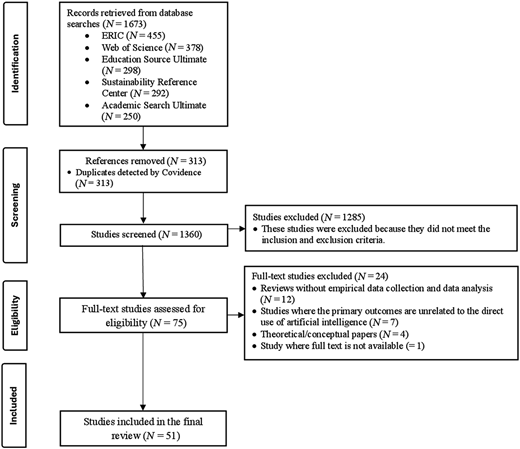
We included peer-reviewed articles published in English between 2015 and 2025, identified through ERIC, Web of Science, Education Source Ultimate, Sustainability Reference Center and Academic Search Ultimate databases. Out of the 1,673 records, 1,360 were screened after 313 duplicates were removed. We conducted full-text reviews on 75 eligible articles and 51 met the inclusion criteria.
The findings indicate that AI advances quality education through personalized learning, predictive analytics and adaptive systems, while promoting reduced inequalities via accessibility and inclusive support for underrepresented groups. Key challenges include ethical concerns, infrastructure gaps and cultural resistance.
This review is limited by its focus on English-language, peer-reviewed articles published between 2015 and 2025, potentially excluding relevant studies in other languages and publication types.
Our review highlights the need for equitable AI implementation in HEIs by promoting ethical frameworks, infrastructure investment and educator training to maximize its potential for advancing SDGs.
This study is the first to have a broad view of the application of AI in higher education institutions (HEIs) in the effort of achieving SDGs 4 and 10. It reveals the scope, patterns and implications of AI use and synthesizes barriers impacting its integration and their influence on fulfilling SDG 4 and SDG 10 objectives.
Introduction
Artificial intelligence (AI) is rapidly transforming higher education by redefining how institutions deliver instruction, manage operations, and support student outcomes (Walshe et al., 2021). AI encompasses technologies such as machine learning, intelligent tutoring systems, predictive analytics, and generative tools that simulate aspects of human cognition to enhance decision-making and personalization (Ally and Perris, 2022). These technologies have the potential to address long-standing challenges in higher education, such as access, quality, and equity, while also introducing novel tools to foster sustainability and institutional innovation.
Among the 17 Sustainable Development Goals (SDGs), SDG 4 (Quality Education) and SDG 10 (Reduced Inequalities) are particularly relevant to higher education. Adaptive learning platforms and intelligent tutoring systems have been utilized to tailor instruction to the diverse learning needs of underrepresented or disadvantaged student populations (Mhlanga, 2021). Similarly, AI-powered analytics tools enable institutions to identify students at risk of attrition, allowing for timely and targeted support strategies that improve student retention, success, and equity (Lainjo, 2023). These applications demonstrate how AI technologies can be strategically leveraged to promote institutional sustainability, student-centered learning, and equitable educational opportunities.
Despite this emerging promise, the effective use of AI to support the SDGs remains fragmented and unevenly distributed across global higher education institutions (HEIs). Concerns have also been raised about ethical governance, technological infrastructure, data privacy, cultural biases, and the potential for AI to exacerbate existing inequalities if not properly regulated (Komasawa and Yokohira, 2023). While a growing number of empirical studies have explored specific applications of AI in HEIs, few have systematically reviewed how these interventions contribute to advancing sustainability goals in a structured and evidence-informed manner (Siqueira et al., 2024).
This study addresses this gap by conducting a Systematic Literature Review (SLR) of empirical research on AI integration in HEIs in relation to the SDGs. The SLR methodology, guided by the PRISMA 2020 framework (Page et al., 2021), is well-suited for synthesizing evidence in rapidly evolving, interdisciplinary fields like educational technology (Siddaway et al., 2019). The review emphasizes peer-reviewed literature from credible academic sources to ensure methodological rigor and relevance. To provide a conceptual basis, this review draws on sustainability education theory, which highlights the role of education in promoting critical thinking, agency, and systems-level awareness for sustainable development. The updated search strategy also aligns closely with revised research questions focused on practical outcomes, barriers, and measurable contributions to sustainability.
To address the limited and inconsistent body of evidence surrounding AI’s role in advancing sustainability outcomes in HEIs, this review systematically synthesizes empirical studies related to SDG 4 and SDG 10. The structured review approach enables a clearer understanding of the scope, patterns, and implications of AI adoption across diverse HEI settings. It also examines how AI technologies are implemented, the barriers that affect their integration, and the extent to which they contribute to meaningful educational and institutional outcomes aligned with sustainability goals.
This review is guided by the following research questions:
How do specific AI technologies (e.g. adaptive learning systems, AI-powered analytics, intelligent tutoring systems) contribute to advancing SDGs, particularly SDG 4 (Quality Education) and SDG 10 (Reduced Inequalities), within higher education?
What are the primary challenges (ethical, infrastructural, cultural) and opportunities identified in the literature concerning the integration and governance of AI tools to effectively achieve sustainability objectives in higher education institutions?
To what extent do AI-driven interventions reported in existing research promote measurable improvements in sustainability literacy, awareness, critical thinking, and actionable sustainability outcomes among higher education stakeholders, and what practical implications emerge from these findings?
Theoretical framework
This review was grounded in sustainability education theory, which posits that education serves as a powerful vehicle for equipping learners with the knowledge, values, and competencies necessary to address global sustainability challenges (Sterling, 2010). The theory emphasizes transformative learning, systems thinking, and equity, making it well-suited for examining how technological innovations, such as AI, are implemented in HEI contexts in alignment with the SDGs. Sustainability education theory has been utilized in prior research to evaluate initiatives such as curriculum integration (Evans et al., 2017), educator preparation (Nolet, 2016), and the implementation of digital learning environments for developing sustainability competencies (Mochizuki and Yarime, 2015). Drawing from this foundation, the present review applies the theory to examine how AI tools support or hinder progress toward inclusive, equitable, and sustainable education. The framework informs the formulation of research questions and guides the analysis of studies, with particular attention to how AI contributes to outcomes like critical thinking, sustainability literacy, stakeholder engagement, and institutional change.
Methodology
The systematic review approach
This study followed a SLR approach, guided by the Preferred Reporting Items for Systematic Reviews and Meta-Analyses (PRISMA) 2020 framework (Page et al., 2021), to examine how AI tools are being integrated into HEIs to support the achievement of the SDGs, particularly SDG 4 and SDG 10. SLRs are particularly well-suited for synthesizing knowledge across emerging and interdisciplinary fields, such as AI in education, offering methodological transparency and replicability (Siddaway et al., 2019). The review included a qualitative analysis to obtain a complete understanding of the research findings.
Search strategies
We adopted a comprehensive search strategy to systematically identify relevant literature. The search string (see Table 1) was developed to align with our research questions, focusing on AI, SDGs, and HEIs. We conducted the final search on May 9, 2025, across five databases: ERIC, Web of Science, Education Source Ultimate, Sustainability Reference Center, and Academic Search Ultimate. The string was designed to cover a broad scope of AI-related terms and ensure close alignment with our research questions. We selected these databases for their comprehensive coverage of education and technology research. Articles were limited to empirical studies published between 2015 and 2025 to capture recent advances in AI and their relevance to SDG 4 and SDG 10.
Search string
Screening and selection
All retrieved records were imported into Covidence for duplicate removal and screening. After removing 313 duplicate records, 1,360 remained for title and abstract screening. Applying our predefined inclusion and exclusion criteria excluded 1,285 at this stage. We assessed 75 full-text articles for eligibility. Of these, 24 were excluded because they were reviews without empirical data (n = 12), lacked a direct AI focus (n = 7), were purely theoretical or conceptual (n = 4), or had no full text available (n = 1).
Inclusion and exclusion criteria
To ensure academic rigor and trustworthiness, we included only peer-reviewed journal articles and conference papers in the synthesis (Nicholas et al., 2015). Studies were eligible for inclusion if they were published between 2015 and 2025, peer-reviewed and empirical in nature, focused on the application of AI within HEIs contexts, and addressed SDG 4 and/or SDG 10. We excluded studies that (1) were theoretical or conceptual without empirical evidence, (2) did not directly involve AI technologies in HEIs, (3) were literature reviews without original data collection, (4) were not published in English, or (5) lacked full-text accessibility.
Interrater reliability
To ensure consistency at the full-text stage, two reviewers (Rater A and B) independently screened all 75 articles. The raters agreed on 63 articles, resulting in a percent agreement of 84%, which is acceptable in most research contexts (Lombard et al., 2002, p. 600). Discrepancies were resolved through discussion, leading to consensus on the final set of 51 included studies. These articles met all inclusion criteria and focused specifically on AI applications in HEIs relative to SDG 4 and/or SDG 10. The PRISMA flow diagram (Figure 1) provides a visual summary of this selection process.
The initial screening of 1,360 titles and abstracts was conducted by the first reviewer (Rater A) using a sensitivity approach to ensure that potentially relevant articles were retained for full-text review. This process yielded 75 articles for full-text screening. To ensure consistency at the full text stage, a second reviewer (Rater B) independently screened all 75 articles alongside Rater A. The reviewers reached agreement on 69 of the 75 articles, resulting in an observed agreement of 92%, which is “nearly always acceptable” (Lombard et al., 2002, p. 600). Cohen’s Kappa (κ) was also calculated at 0.82, indicating “almost perfect” agreement according to the interpretation framework by Landis and Koch (1977).
Data extraction
Data were extracted using a structured template developed in line with PRISMA 2020 guidelines (Page et al., 2021). The template was pilot-tested on a small subset of studies to ensure clarity and consistency. For each included study, two reviewers independently documented key information: citation details, study location, the AI tool or technology investigated (such as chatbots, predictive analytics, or tutoring systems), primary population group (such as students, faculty, or learners with disabilities), and the main findings related to learning outcomes, engagement, equity, or academic performance. Operational definitions for every construct (e.g. critical thinking, resource gaps, institutional sustainability) are provided in Supplementary File S2 (Codebook and Audit Note). The full study-level dataset, listing reference, country, AI tool, target group, function, outcome metric, and SDG focus for all 51 studies, is presented in Supplementary File S1 (Study Characteristics Table).
Thematic data synthesis
Four reviewers independently coded the full texts using an inductive approach. We noted four analytical features: (1) the AI function, (2) its instructional or administrative purpose, (3) explicit links to SDG 4 or SDG 10, and (4) reported outcomes. We then compared spreadsheets, reconciled disagreements through discussion, and merged synonymous labels into a shared codebook (Supplementary File S2). From this consolidated set of codes, we organized the findings into three broad themes that mirror our research questions and Sustainability Education Theory. Contribution themes demonstrate how AI enhances educational quality and advances equity; Governance themes address ethical, infrastructural, and cultural challenges and opportunities; Outcome themes summarize gains in sustainability literacy, critical thinking, and institutional resource efficiency within higher education institutions worldwide.
Findings
Overview of synthesized findings
We synthesized empirical evidence on AI integration in HEIs using sustainability education theory as our analytical lens, positioning education as a catalyst for the knowledge, values, and competencies needed to meet sustainability challenges. We retained 51 empirical studies. Supplementary File S1 presents the study-by-study dataset, and Supplementary File S2 contains all construct definitions and coding rules.
- (1)
How do specific AI technologies contribute to advancing SDGs, particularly SDG 4 and SDG 10 within HEIs?
Advancing SDG 4: AI is seen as a transformative force with the potential to address educational challenges and shift paradigms towards more student-centered, diverse, personalized, higher-quality, and equitable education (Kalnina et al., 2024). Remote learning technologies, often powered by AI, are also shown to advance SDG 4 by increasing educational access and flexibility (Chomiak-Orsa and Smolag, 2024).
- •
AI-Driven Prediction and Analytics: Machine learning (ML) models and AI-based analytics tools are increasingly being used to predict student performance, identify dropout risks, and analyze factors influencing academic success (Agostini and Picasso, 2023; Albahli, 2025; Buenaño-Fernández et al., 2019; Villegas-Ch et al., 2023; Soobramoney and Singh, 2019; Shilbayeh and Abonamah, 2021; Jokhan et al., 2022).
- •
Intelligent Tutoring Systems (ITS) and Adaptive Learning: ITS and adaptive instructional systems, which frequently leverage AI techniques, play a crucial role in personalizing instruction to meet individual student needs (Katsamakas et al., 2024; Savec and Jedrinović, 2025; Tarisayi and Manhibi, 2025).
- •
AI in Curriculum Management: AI tools present promising opportunities to enhance the effectiveness and efficiency of curriculum management in HEIs. These tools help institutions navigate complex challenges such as rapid technological advancement, evolving labor market demands, and increasing student diversity (Naldi et al., 2023; Airaj, 2022; Chiang, 2021; Lengyel et al., 2024).
- •
Support for Teachers: AI technologies offer teachers more efficient tools for focused and effective instruction (Niu et al., 2024). By automating aspects of traditional assessment practices, these tools reduce the manual workload and make large-scale evaluation more manageable. For example, AI can handle repetitive tasks such as grammar correction, freeing teachers to concentrate on higher-order instruction and creative pedagogical strategies (Agostini and Picasso, 2023; Iatrellis et al., 2024).
- •
Advancing SDG 10: AI also contributes to reducing inequalities and promoting inclusion within HEIs (Ibrahim and Ajlouni, 2024).
- •
Enhanced Accessibility: AI makes learning more inclusive; multimodal language models provide adaptive interfaces, speech-to-text, and multilingual support, aiding students with disabilities or diverse language backgrounds (Lin et al., 2024; Al-Dokhny et al., 2024).
- •
Support for Specific Groups: AI technologies are increasingly used to promote inclusive education, particularly for minority and underserved groups (Kalnina et al., 2024). In special education settings, tools like ChatGPT have proven valuable for supporting students’ individualized learning and developmental needs, thereby contributing to the goals of SDG 10 (Ibrahim and Ajlouni, 2024).
- •
Addressing Equity: AI presents both opportunities and risks for promoting equity in HEIs. Stakeholder perspectives are vital for closing gaps (Zipf et al., 2025). AI-based distance learning can expand access in underserved regions and promote digital equity by sharing educational data more broadly (Savec and Jedrinović, 2025).
- •
- (2)
What are the primary challenges and opportunities identified in the literature concerning the integration and governance of AI tools to effectively achieve sustainability objectives in HEIs?
The integration of AI tools in HEIs for sustainability presents significant challenges and opportunities across ethical, infrastructural, and cultural dimensions, necessitating careful governance.
Challenges:
- •
Ethical Concerns: Ethical challenges frequently arise in discussions about AI in HEIs. These include “bias in training data, which may focus disproportionately on certain demographics” (Lin et al., 2024, p. 15) and “data privacy concerns” (Tarisayi and Manhibi, 2025, p. 87). Academic integrity is a major concern, with increasing risks that students may plagiarize content or cheat on assignments and assessments using AI tools (Ballesteros et al., 2024; Espinoza Vidaurre et al., 2024; Perkins et al., 2024). These issues have sparked debates about restricting the use of generative AI in education.
- •
Infrastructural and Resource Constraints: Effective AI implementation demands “substantial investment in infrastructure and partnerships” (Tarisayi and Manhibi, 2025, p. 92). Key challenges include securing computational power, memory capacity, and access to advanced software, all of which remain scarce in many regions. The high cost of deploying these systems, especially in resource-constrained environments, is a persistent barrier (Tarisayi and Manhibi, 2025).
- •
Cultural and Organizational Barriers: There can be “limited awareness and interest in AI usage despite the activeness of the student community” among facilitators and lecturers (Sendawula et al., 2024, p. 176). There is also a “significant demand for support and training to help professors adapt sustainably to AI technologies” (Acosta-Enriquez et al., 2025, p. 4). A shift in perception among educational stakeholders towards AI is needed, calling for “de-stigmatization of its use” (Lin et al., 2024).
- •
Opportunities:
- •
Opportunities – Infrastructure Partnerships Four studies outline practical approaches to closing AI infrastructure gaps. A cloud grant enables Moroccan universities to utilize remote graphics processing without purchasing new hardware (Airaj, 2022). A pay-per-use AI-as-a-service license improved sustainability scores at thirty Middle Eastern institutions (Ronaghi and Ronaghi, 2025). In Uganda, a telecom company and the Ministry of Higher Education co-funded campus Wi-Fi upgrades that supported the use of natural language processing tools (Sendawula et al., 2024). A Fijian network operated an open-source early warning system on the national research backbone, eliminating license fees (Jokhan et al., 2022). These cases demonstrate that vendor partnerships, the AI as a service model, public-private grants, and shared open-source solutions can lower entry costs and advance SDG 4.
- •
Enhanced Learning and Teaching: AI can transform teaching by supporting instructors in designing courses, creating materials, delivering instruction, and assessing learning more creatively (Katsamakas et al., 2024; Conrad et al., 2024; Jiang, 2024). It also enables personalized learning, enhancing student engagement and motivation (Chadha, 2024; Man et al., 2023).
- •
Skill Development: AI education can promote students’ understanding of innovative technologies by helping them apply “computational thinking” to solve problems, foster creativity and innovative ideas, and engage with ethical considerations in AI use (Kalnina et al., 2024, p. 11).
- •
Innovation and New Approaches: AI integration is propelling HEIs toward digital transformation and smart education (Buenaño-Fernández et al., 2019; Okulich-Kazarin et al., 2024a, b). It facilitates data-driven strategies that enhance learning outcomes and optimize resource use (Albahli, 2025). Moreover, AI supports the development of innovative business models tailored to the needs of HEIs (Katsamakas et al., 2024).
- •
Preparation for the Future: Universities play a vital role in preparing students for an AI-driven workplace by equipping them with the skills to use AI responsibly, ethically, and effectively. This includes understanding AI’s role in professional settings, integrating it into workflows, and evaluating its effectiveness (Asad et al., 2025; Clark et al., 2024; Kalnina et al., 2024; Komatina et al., 2024).
- •
Governance
- •
Effective integration requires clear guidelines (Adžić et al., 2024; Lin et al., 2024; Santiago-Ruiz, 2023) and regulatory frameworks (Espinoza Vidaurre et al., 2024) defining appropriate student conduct and governing AI use.
- •
Universities should provide clear AI training to facilitators to bridge the knowledge gap (Sendawula et al., 2024).
- •
Policymakers should develop policies to regulate AI usage (Sendawula et al., 2024).
- •
Establishing ethical practices in AI ensures fairness (Mahade et al., 2025).
- •
Institutions need to develop educational policies that promote AI use and ensure its ethical implementation (Espinoza Vidaurre et al., 2024).
- •
- (3)
To what extent do AI-driven interventions reported in existing research promote measurable improvements in sustainability literacy, awareness, critical thinking, and actionable sustainability outcomes among HEIs stakeholders, and what practical implications emerge from these findings?
The literature strongly suggests that AI-driven interventions contribute to promoting sustainability literacy, awareness, critical thinking, and actionable sustainability outcomes indirectly by enhancing quality education and enabling actionable sustainable practices within HEIs.
- •
Sustainability Literacy and Awareness: Integrating AI into education aligns with the broader goals of sustainable development, fostering awareness and action among students (Albahli, 2025; Bakry et al., 2024; Black and Tomlinson, 2025; Daniela et al., 2018; Vázquez-Verdera et al., 2021). AI can reshape how learners interact with curriculum content, including topics related to the SDGs (Prior et al., 2024; Ronaghi and Ronaghi, 2025). Tools such as ChatGPT can personalize learning and enable students to “engage more deeply with sustainability concerns” (Boustani et al., 2024, p. 16).
- •
Critical Thinking: AI tools can promote critical thinking and problem-solving, which are “important for resolving sustainability concerns” (Boustani et al., 2024, p. 16). An effective learning environment supported by AI fosters “critical engagement that encourages students’ active, reflective, and informed participation in the learning process” (Lin et al., 2024, p. 14). On the other hand, some researchers caution that AI could potentially restrict students’ creative thinking (Sendawula et al., 2024).
- •
Actionable Sustainability Outcomes: AI contributes to institutional sustainability by enhancing efficiency and optimizing resource use, and it can also support broader outreach initiatives aligned with the SDGs (Borsatto et al., 2024). “Using smart tools and making effective decisions will lead to time and energy savings and productivity enhancement,” which are key factors in achieving sustainability goals in HEIs (Ronaghi and Ronaghi, 2025, p. 167). AI adoption has been linked to improved sustainability scores and better control of environmental performance (Ronaghi and Ronaghi, 2025).
- •
Practical implications
Several practical implications for HEIs emerge from these findings:
- •
Invest in AI Infrastructure and Training: Universities must ensure the availability of necessary software, infrastructure, and funding to support the deployment of AI (Ronaghi and Ronaghi, 2025). Equally important are comprehensive training programs that enhance faculty members’ understanding of AI applications and their integration into pedagogy (Tarisayi and Manhibi, 2025).
- •
Promote AI Literacy and Thoughtful Engagement: Students should be guided to examine AI tools carefully, assess their outputs, and understand their limitations along with associated ethical risks (Adžić et al., 2024; Black and Tomlinson, 2025). Integrating AI literacy into the curriculum is crucial for enabling learners to engage with technology in a responsible and informed manner (Adžić et al., 2024; Espinoza Vidaurre et al., 2024).
- •
Leverage AI for Operational Efficiency and Resource Management: AI integration can enhance HRM practices and decision-making processes by improving efficiency, productivity, and the effective use of resources (Mahade et al., 2025; Ronaghi and Ronaghi, 2025).
Discussion
This systematic literature review synthesizes findings from 51 empirical studies published between 2015 and 2025, focusing on how AI is utilized in higher education institutions (HEIs) to support two key Sustainable Development Goals (SDGs): SDG 4 and SDG 10. This discussion will delve into these findings, examining them in relation to the three guiding research questions of this review and interpreting them through the lens of sustainability education theory.
Educational quality and equity through AI integration
Our review indicates that AI tools enhance the quality of education within HEIs. AI-driven prediction and analytics, for instance, are increasingly used to identify students at risk of academic difficulty, enabling institutions to provide tailored support and interventions (Agostini and Picasso, 2023). This proactive approach aligns with broader trends in educational data mining, where machine learning techniques are used to optimize student success and resource allocation (Adelana et al., 2024). Additionally, ITS and adaptive learning platforms contribute to quality education by customizing learning pathways to fit individual student needs and paces, thereby creating more personalized learning experiences (Boustani et al., 2024). This level of personalization has been associated with enhanced student engagement, improved academic outcomes (Lin et al., 2024; Acosta-Enriquez et al., 2025; Chadha, 2024), and curriculum management (Naldi et al., 2023), a conclusion further supported by findings from Barrera Castro et al. (2024), who emphasize AI’s role in enabling real-time assessment, learner profiling, and adaptive content delivery to optimize individual learning outcomes.
In addition to enhancing the overall quality of education, AI also holds considerable promise in addressing challenges related to equity and inclusion. Specifically, the review highlights AI’s significant potential in advancing SDG 10 by promoting inclusivity and reducing educational disparities. A primary contribution in this area is improved accessibility, where AI tools, including advanced multimodal large language models (MLLMs), play a key role in breaking down barriers for students with disabilities and those from diverse linguistic backgrounds (Al-Dokhny et al., 2024). This is further supported by research demonstrating how AI-driven assistive technologies and adaptive systems can create individualized educational pathways, thereby enhancing accessibility for neurodiverse students (Fernández-López et al., 2013). The overarching aim of such technological enablement is to reduce disparities in access to educational resources (Xiao et al., 2025). Targeted support for minority and underserved populations further emphasizes AI’s role in fostering equitable learning environments. Examples include the use of ChatGPT in special education settings (Ibrahim and Ajlouni, 2024) and the development of AI-driven resources specifically designed for students with disabilities (Zipf et al., 2025).
Challenges, opportunities, and governance of AI for sustainability
The integration of AI in HEIs to achieve sustainability goals faces several challenges, including ethical, infrastructural, and cultural issues that require strong management strategies. Ethical concerns such as biased training data (Lin et al., 2024), data privacy (Tarisayi and Manhibi, 2025), academic integrity risks (Ballesteros et al., 2024), and reinforcement of inequalities (Bird et al., 2024) can hinder progress toward SDG 4 (Okulich-Kazarin et al., 2024a, b). Infrastructure limitations demand investment in technology and partnerships (Tarisayi and Manhibi, 2025).This aligns with the findings by Van Wyk (2024), who highlights that limited digital infrastructure can restrict access to AI-based learning tools and contribute to educational inequalities. Likewise, cultural and organizational barriers, such as lack of awareness or resistance from educators, further impede effective AI integration (Sendawula et al., 2024).
Despite these challenges, our review identifies numerous opportunities. AI can significantly enhance learning and teaching by enabling personalized educational experiences (Chadha, 2024; Okulich-Kazarin et al., 2024a, b). This is consistent with Gu (2024), who suggests that AI tools can optimize educational outcomes by effectively tailoring content and feedback. AI education is also crucial for skill development, equipping students with the ability to think computationally and to navigate the ethical considerations pertinent to an AI-driven world (Kalnina et al., 2024).
To fully realize these opportunities, however, effective governance becomes paramount. Successfully navigating AI’s challenges while harnessing its opportunities depends on effective governance. The reviewed literature consistently emphasizes the necessity for clear institutional guidelines (Adžić et al., 2024) and clear regulatory frameworks (Espinoza Vidaurre et al., 2024). This call is supported by experts who highlight the importance of proactive data and process management policies (Selvaratnam et al., 2024) and ethically grounded, pedagogically sound implementation strategies (Apata et al., 2025). Our review underscores the importance of targeted training for educators and policymakers as a crucial strategy to bridge the persistent knowledge gap surrounding AI adoption in education (Sendawula et al., 2024).
AI’s role in advancing sustainability literacy, critical thinking, and institutional outcomes
Our review indicates that AI-driven interventions can support the development of sustainability literacy by enriching students’ engagement with sustainability-related content. Tools such as ChatGPT, for example, facilitate deeper student interaction with environmental topics through personalized learning experiences (Boustani et al., 2024). This is corroborated by studies showing that digital platforms powered by AI can make sustainability education more accessible, interactive, and data-informed (Aggarwal et al., 2023). GenAI, in particular, enables the creation of tailored educational content for diverse student backgrounds (Ronaghi and Ronaghi, 2025).
AI is influencing students’ critical thinking in several ways. It can support deeper learning and reflection, and is especially important when viewed through the lens of systems thinking, which is central to sustainability education theory. On one hand, AI tools have been shown to foster active, reflective, and informed student engagement, encouraging deeper participation in learning processes (Lin et al., 2024). Several studies have highlighted AI’s positive contributions to the development of analytical skills, evaluation, and reflection (Yusuf et al., 2024; Salter and Bonfield, 2024; Zhang and Xu, 2024; Shahid et al., 2024). On the other hand, a growing body of literature presents a cautionary perspective, warning that excessive reliance on AI may suppress students’ creative thinking abilities (Sendawula et al., 2024; Chen et al., 2023), or lead to cognitive offloading, where individuals reduce their mental effort by depending on external tools, thereby weakening critical thinking over time (Gerlich, 2025). These contrasting viewpoints emphasize the importance of instructional strategies that integrate AI thoughtfully while prioritizing the development of higher-order thinking skills (Lyu and Ch’ng, 2024).
In terms of actionable sustainability outcomes, our review indicates that AI delivers tangible benefits for HEIs in terms of sustainability by enhancing operational efficiency and resource management. As Ronaghi and Ronaghi (2025) note, smart tools and data-driven decision-making can save time and energy while boosting productivity. From predictive waste analytics to dynamic material flow optimization, AI helps universities reduce their environmental impact (Faiz et al., 2024). AI tools are also increasingly used to streamline administrative tasks in HEIs, which can contribute to more effective resource management overall (Villegas-Ch et al., 2020).
Limitations of the study
This systematic review offers valuable insights into the integration of AI in HEIs in relation to SDGs 4 and 10. However, several limitations must be noted. First, the review included only English-language, peer-reviewed empirical studies from five academic databases. While ensuring quality, this introduces language and publication bias, potentially excluding relevant perspectives from non-English or grey literature, especially from the Global South.
Second, the review’s temporal scope (2015–2025) may have excluded foundational theories and the latest innovations, limiting the depth and currency of the analysis. Additionally, by focusing solely on empirical studies, it overlooked conceptual or theoretical works that address ethical, critical, or postdigital perspectives, essential for understanding the broader implications of AI in education.
The studies reviewed also varied widely in design, technology, institutional context, and geographic focus. This heterogeneity prevented quantitative synthesis or meta-analysis, limiting the generalizability of findings. Furthermore, while many studies reported improvements in engagement or access, few assessed outcomes directly related to sustainability education, such as critical thinking or transformative learning. Consequently, the relationship between AI adoption and the development of sustainability competencies remains unclear.
Recommendations for future research
In light of these limitations, several recommendations for future research emerge. First, there is a pressing need for longitudinal and mixed-methods research that investigates how AI influences students’ critical thinking, ethical reasoning, and sustainability literacy over time. Such studies would offer more comprehensive insights into AI’s developmental and pedagogical impact.
Moreover, researchers should aim to assess the direct outcomes of AI integration in relation to sustainability competencies rather than relying solely on indirect metrics such as academic performance or retention. Comparative studies across diverse institutional and cultural contexts would also be valuable in identifying the contextual factors that enable or hinder the equitable and effective deployment of AI tools. Additionally, there is scope for theoretical advancement through the incorporation of critical, feminist, postcolonial, and decolonial frameworks that interrogate the socio-technical systems in which AI operates. These perspectives could illuminate issues of power, bias, and epistemic justice that are often obscured in technical analyses of educational technologies.
Finally, greater attention should be directed toward the governance and policy dimensions of AI in education. As HEIs and governments continue to integrate AI into teaching, learning, and administration, future studies should critically evaluate the ethical frameworks, regulatory guidelines, and institutional readiness that shape AI adoption.
Conclusion
This review demonstrates that AI tools have significant potential to advance SDG 4 and SDG 10 in HEIs by supporting personalized learning, institutional efficiency, and inclusive access. However, ethical concerns, infrastructural challenges, and uneven implementation remain major limitations. While the review shows that AI-driven tools can contribute to sustainability literacy, evidence of long-term transformation is limited. Effective leadership, interdisciplinary collaborations, equitable access, and thoughtful integration are essential to maximize AI’s benefits. Future studies should explore ethical frameworks and the direct impacts of AI on sustainability literacy. As AI adoption grows, its implementation must be guided by principles of equity and sustainability to ensure a meaningful and inclusive educational transformation.
The supplementary material for this article can be found online.