Scholars have increasingly recognised the significant role emotions play in decision-making within small and medium-sized enterprises (SMEs). Nevertheless, the incorporation of emotion research into internationalisation of SMEs remains fragmented and theoretically underdeveloped. To advance the current debate, this study addresses three research questions: (1) What themes drive research on emotions in SMEs' internationalisation? (2) Which implicit assumptions structure this research? and (3) What theoretical blind spots emerge from these assumptions?
This study adopts a problematising review methodology and critically analyses and synthesises conceptual and empirical studies from the SME internationalisation and emotion literatures, published over the last two decades. Through an in-depth critical discussion and integration, the study examines how emotions have been theorised in SME internationalisation research and encourages closer scrutiny of the assumptions underpinning existing explanations.
The study discusses emotions across the pre-entry, entry and post-entry stages of SME internationalisation and identifies three core assumptions that remain largely unarticulated and insufficiently scrutinised. Building on these insights and integrating perspectives from the broader emotion literature, the study develops a theoretical framework and proposes exemplary research questions to support future research.
Rather than merely synthesising prior research, this study problematises the assumptions shaping how emotions have been theorised in SME internationalisation. By identifying implicit theoretical assumptions, it demonstrates that dominant explanations have remained primarily cognitively oriented while overlooking the emotional dynamics accompanying decision-making under uncertainty. The study offers an alternative conceptual framing that positions emotions as dynamic mechanisms shaping internationalisation decisions across time and context.
Introduction
This review aims to contribute to the ongoing discussion on the role of emotions in small and medium-sized enterprises (SMEs) internationalisation. Unlike large multinational organisations, internationalisation constitutes a challenge for many SMEs (Fernandes et al., 2023; Olejnik and Swoboda, 2012), since they internationalise under heightened resource constraints and concentrated decision-making (Mammadov and Wald, 2025a; Younis and Elbanna, 2022). In SMEs, resource constraints (limited resources and time pressure), concentrated decision-making and personal involvement (e.g. the founder's personal attachment to the firm) (Mammadov and Wald, 2025a; Younis and Elbanna, 2022) drive many managers to make internationalisation decisions intuitively (Vahlne and Johanson, 2020).
The intuitive process is highly emotional (Vahlne and Johanson, 2020) and a growing stream of international business and international marketing research acknowledges that SMEs' internationalisation decisions unfold under conditions of uncertainty that are both informational and interpretative in nature, accompanied by emotions (Hassett et al., 2018; Xu et al., 2019; Leonidou et al., 2019). Nevertheless, the role of emotions in shaping SMEs' internationalisation decisions remains limited, fragmented and lacks theoretical cohesion (Debellis et al., 2021; Vahlne and Johanson, 2020).
To illustrate, in the relevant international business and international marketing literature, there are conflicting findings regarding the role of emotions in SMEs' internationalisation, which can hinder the ability to impede the cumulative development of knowledge in the field. For example, on the one hand, studies highlight that negative emotions like fear can lead to avoidance of foreign market entry (Dong, 2022; Kars-Unluoglu and Kevill, 2021). On the other hand, other studies emphasise that fear may encourage more cautious decision-making, improving entry strategies (Younis and Elbanna, 2022). Moreover, existing SME internationalisation research has explained SMEs' internationalisation decisions (e.g. foreign market selection, partner commitment, standardisation versus adaptation and others), through well-established learning-based, network-oriented and opportunity-driven perspectives such as internationalisation process theory, network theory, and others (e.g. Barron and Boutary, 2021; González-Márquez et al., 2023; Kurt et al., 2020). Yet, these perspectives are grounded in rationality and cognitive evaluation, without considering emotional aspects that accompany cognition in internationalisation decisions (Debellis et al., 2021; Vahlne and Johanson, 2020). Hence, we lack a coherent account of how and why emotions indeed influence internationalisation decisions in SMEs (Debellis et al., 2021; Vahlne and Johanson, 2020).
Without an explicit theorisation of how and why emotions occur and affect internationalisation decisions, explanations of divergent internationalisation trajectories remain incomplete. This could hinder our full understanding of the internationalisation of SMEs. Hence, we risk missing the opportunity to build more robust international business and international marketing theories (Newbert et al., 2022; Welch et al., 2022). In light of these, and taking into account that the field still lacks a mapping of the SMEs' internationalisation literature from an emotional standpoint, this review addresses three research questions: (1) What are the themes driving international business and international marketing research on emotions in SMEs' internationalisation? (2) Which implicit assumptions have structured research on emotions in SMEs' internationalisation? and (3) What theoretical blind spots emerge from these assumptions in the SMEs' internationalisation field from an emotional standpoint? To address these questions, we (1) synthesise the knowledge base on what has been done related to emotions in the context of SMEs' internationalisation, (2) problematise how emotions have been theorised in SME internationalisation research and (3) unearth new future research pathways through the development of an integrated theoretical framework.
To do so, we employ a problematising review methodology (Alvesson and Sandberg, 2011, 2020). Based on an analysis and synthesis from conceptual and empirical studies published over the last two decades, we unravel how the topic of emotions in SMEs' internationalisation literature is framed and we trigger further scrutiny on the topic by urging SME internationalisation researchers to examine more closely the core assumptions embedded in the emotion literature. Moreover, building on the analysis, we integrate insights from the broader emotion literature to develop a theoretical framework that explicates the mechanisms through which emotions shape SMEs' internationalisation decisions.
This review makes three contributions. First, it provides a mapping of this particular field and problematises the implicit assumptions structuring existing research on emotions in SMEs' internationalisation. In doing so, we analyse the up-to-date SMEs' internationalisation from an emotional standpoint, literature unearthing emotional constructs used, contradictions and blind spots as well as stimulate deeper critical reflection (Alvesson and Sandberg, 2011, 2020). By shifting attention from explicit emotional constructs to underlying assumptions, we identify conceptual boundaries that constrain the theorisation of emotions in SMEs' internationalisation.
Second, we do not merely examine an existing body of research, but we also consolidate ideas taken from the emotion literature (Hoon, 2013). The integration of studies from the emotion literature may have several implications for future international business and international marketing researchers. First, by bringing together empirical insights from different but related streams, this work adopts a wide perspective, giving access to the spectrum of research interests and findings identified in the literature (Kampouri et al., 2017). Hence, it enhances understanding of the knowledge base pertaining to emotions in SMEs' internationalisation and develops a theoretical framework (Hoon, 2013) that can form the basis for formulating new, interesting and relevant research questions about emotions on internationalisation of SMEs that future studies will hopefully address.
Third, it advances international business and international marketing theory by explicating the emotional foundations of strategic decisions under cross-border uncertainty, clarifying how affective processes influence the appraisal of foreign market conditions, the intensity of commitment and the escalation or withdrawal of international engagement.
The article is organised as follows. In Section 2, we discuss the concepts of “emotion” and “internationalisation process”. In Section 3, we present the methodology of the review as follows. Section 4 presents and discusses the findings, whereas Section 5 presents the proposed integrated theoretical framework accompanied by suggested directions for future research. The article ends with a conclusion section.
Conceptual boundaries
Emotions
To ensure a common base for reviewing the existing literature, we sought suitable definitions of the term “emotion” (examples of which are presented in Table 1). Key articles emphasise the diversity of definitions of the term “emotion” and the overlapping terms and concepts (Bagozzi et al., 1999; Cabanac, 2002).
The term “emotion” is taken for granted in itself and, most often, is defined with reference to a list (e.g. anger, disgust, fear, joy, sadness and surprise) (Cabanac, 2002). Other concepts such as “mood”, “affect” and “feelings” are also used interchangeably by some authors (Ashkanasy, 2003), despite the fact that these terms differ in terms of intensity, duration and relation to a particular object and behavioural response (Hassett et al., 2018; Damasio, 1998) (Table 2). For example, it is recognised that the main distinguishing feature between the term “emotion” and “mood” is that emotions are directed at someone or something and are mostly considered as short-lived mental responses to stimuli (Cabanac, 2002), while “moods” lack a specific direction (Weiss and Cropanzano, 1996) and refer to a longer time (Hassett et al., 2018). For instance, on the one hand, the death of a loved one can trigger negative emotions (e.g. sadness) about the loss. On the other hand, being in a mood of melancholy (sadness) because of the loss can be enduring, continuous.
Many scholars suggest that emotions are discrete, innate, functional, biosocial action and expression systems (Fischer et al., 1990). Others acknowledge the role of cognitive processes such as judgement, appraisal and intentions in the elicitation and structuring of emotions (e.g. Lazarus, 1984; Roseman, 1984; Roseman, 2013).
Many scholars also prefer to define emotions by developing different taxonomies (Fischer et al., 1990; Ekman, 1992). For example, Ekman (1992) highlights that there is a small number of basic emotions (like happiness, sadness, fear, anger, surprise and disgust) that are universally recognised across cultures. The rest of the emotions are the secondary ones.
The diversity of definitions of the term “emotion” is logical in the sense that emotions operate at different levels of reality, namely biological, behavioural, cultural, structural, neurological or situational (Turner, 2009). Hence, depending on the focus of exploration of a study, a different definition of the term “emotion” will emerge.
In our study, we are in line with scholars who acknowledge the role of cognitive processes in the elicitation of emotions (e.g. Lazarus, 1984; Roseman, 1984) and define the term emotion as “a mental state of action readiness that arises from cognitive appraisal of events or thoughts” (Bagozzi et al., 1999, p. 184).
Internationalisation process
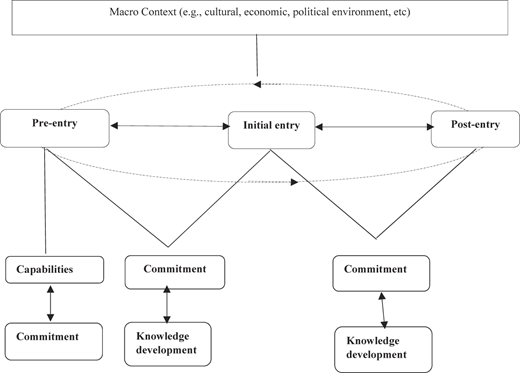
Within the international business and international marketing literatures, internationalisation is mostly viewed as a gradual and incremental process during which an organisation makes the transition from purely domestic operations to engagement in cross-border activities (Fernandes et al., 2023). This view is in line with the internationalisation process model (or else Uppsala model). The Uppsala model views internationalisation as an incremental, uncertainty-laden process through which a firm increases the scope and intensity of its involvement in foreign markets (Johanson and Vahlne, 1990, 2015 Vahlne and Johanson, 2020). Uncertainty is linked with emotions; emotions can be plausible drivers of action mechanisms (Vahlne and Johanson, 2020) that may occur at various stages such as, for example, prior to entry into a foreign market or when conducting only sporadic exports, during initial entry (e.g. when an SME conducts regular exporting via agents) or at later stages of internationalisation (e.g. when establishing a sales subsidiary and production abroad).
The Uppsala model's core constructs, i.e., experimental learning/knowledge and commitment, involve an interaction between the “state” and “change” aspects (Dong, 2022). “State” refers to what a firm has (e.g. capabilities, accumulated knowledge) and the “change” aspect concerns the firm's behaviour in the form of the firm's degree of commitment. Most SMEs are resource-constrained firms and for resource-constrained SMEs facing “risk and uncertainty” abroad, emotions could shift whether an opportunity is seen as viable and how risky the situation is, and hence whether the SME manager will decide to commit or scale back (Dong, 2022).
In our review, we adopt this view to conceptualise internationalisation decisions as unfolding across different internationalisation stages, i.e., pre-entry, initial entry and post-entry. Commitment decision-making and knowledge-development processes drive change during internationalisation (Vahlne and Schweizer, 2022). This structure (Figure 1) allows us to theorise how emotions can influence uncertainty, knowledge development, and commitment across each phase and in general the aptitude to progress in smaller internationalisation steps rather than in big ones (Vahlne and Johanson, 2020).
Research methodology
The aim of this study was not just to synthesise the knowledge base on what has been done related to emotions in the context of SMEs' internationalisation; the aim was mainly to unravel how the topic of emotions in SMEs' internationalisation literature is framed and to question the underlying theoretical assumptions SME internationalisation researchers use when exploring internationalisation phenomena from an emotional standpoint. To this end, we adopt the problematising review methodology (Alvesson and Sandberg, 2011, 2020). The problematising review can make implicit theoretical assumptions visible and enable the critical examination of them (Ramaul et al., 2025). In contrast to other types of reviews (e.g. integrative or systematic literature reviews, which primarily synthesise and consolidate existing knowledge), the problematising review stimulates deeper critical reflection and invites further scrutiny (Ramaul et al., 2025). Hence, it can generate new ways of understanding the phenomenon (Post et al., 2020).
The problematising review methodology (Alvesson and Sandberg, 2011) is based on four key principles: reflexivity, reading more broadly but selectively, problematising rather than accumulating and the notion “less is more” (Ramaul et al., 2025). Reflexivity, means that researchers consciously avoid simply extending dominant theories and instead question the assumptions that underpin them (Alvesson and Sandberg, 2011). Reading more broadly but selectively means that researchers draw not only on key texts within the field of investigation but also on other related literatures (e.g. immediate neighbourhood domains) that may offer alternative perspectives (Alvesson and Sandberg, 2020). The logic of problematising rather than accumulating means that instead of aiming to accumulate as many studies as possible, researchers prioritise careful and critical engagement with influential and foundational contributions (Alvesson and Sandberg, 2020). Finally, the principle of “less is more” suggests that quality does not stem from reviewing a large number of studies, but from engaging deeply with selected texts and critically examining the assumptions they rest upon (Alvesson and Sandberg, 2020). We follow these principles in our review accordingly.
Data collection
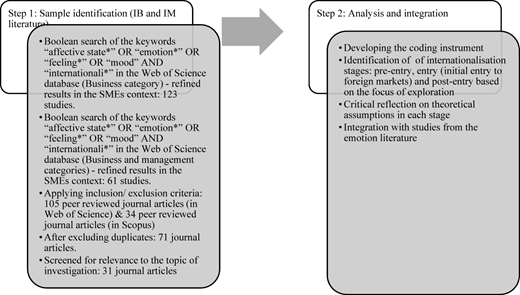
We began data collection by first searching to identify the relevant SME internationalisation literature from an emotional standpoint. To do this, and following other scholars adopting the problematising review methodology (e.g. Ramaul et al., 2025), we searched in key databases (Scopus and Web of Science) for journal articles containing the terms “emotion*” OR “feeling*” OR “mood” OR “affective state*” AND “internationali*” in the title, abstract or keywords. The keyword formula contained not only the term “emotion”, but also other terms such as affective state, feeling and mood, since we recognise that emotions, moods, feelings and affective states are often analysed together, and they comprise several underlying dimensions associated with different cognitive processes that influence decision-making (De Massis et al., 2023).
To capture all relevant literature, we did not limit our search to a specific period, instead leaving it open until December 2025, the cut-off date for our study. In each database, the search results were further refined by applying an SME-related filter. This process yielded 61 studies in the Scopus database and 123 studies in the Web of Science database. We also conducted a manual search of the keyword “emotion*” in studies published in key 4*, 4- and 3-star international business and international marketing journals to identify further potentially missing studies.
Following the problematisation principle, which encourages a broad but selective reading of the primary sample (Alvesson and Sandberg, 2011, 2020), we next used inclusion and exclusion criteria (Paul and Criado, 2020). To be included in the review, the studies had to be published in top peer-reviewed academic journals published in major international business and international marketing journals, written in the English language and be empirical or conceptual in nature (Paul and Criado, 2020, 2021; Short, 2009). We included the studies published in major peer-reviewed journals that were included in the Academic Journal Guide (AJG) by the Chartered Association of Business Schools, reasoning that this would allow us to concentrate on the relevance to internationalisation, as well as providing a high level of quality due to the rigorous peer-review process. We, therefore, excluded articles published in different unrelated disciplines (e.g. neuroscience, sociology), studies published in conference proceedings, book chapters and unpublished research studies and non-English studies. This process limited the number of studies to a total of 105 peer-reviewed journal articles (in Web of Science) and 34 peer-reviewed journal articles (in Scopus). After excluding duplicates, the data pool consisted of 71 studies.
Next, we screened for relevance to the topic of investigation, i.e. emotions in SMEs' internationalisation. That is, we eliminated articles that mentioned the search terms only in passing, failing to connect them meaningfully to the phenomenon studied. To do so, we examined the title, keywords, and abstract of each article using two inclusion criteria that had to be met for an article to be retained in our sample: (1) exploring emotions in organisations that operate beyond the boundaries of their country of origin, either through their focal business or developing new ventures abroad, (2) explicitly and specifically focusing on emotion in internationalisation from a business perspective, thus excluding articles where non-business aspects had been discussed (e.g. consumer animosity) and (3) exploring emotions in the context of SMEs, thus excluding studies focusing on large firms, yet including studies that may include mixed sizes, i.e. both small and large firms (e.g. Hassett et al., 2018; Sinkovics et al., 2011). This process led to identifying 31 articles that met all inclusion criteria. This number meets the standards of the problematisation protocol, where the focus is on a specific strand of literature to open up more reflexive ways of thinking (Alvesson and Sandberg, 2020), which differs from other types of literature reviews (Ramaul et al., 2025). Figure 2 summarises the process we adopted to identify the relevant articles and the analysis and integration followed and presented below.
Data analysis
We next conducted a qualitative content analysis, which goes beyond the enumeration of codes to classify and interpret the text, paying attention to the content of each study (Gaur and Kumar, 2018). Qualitative content analysis invites iteration and multiple cycles of coding and has been adopted in relevant SME internationalisation research reviews (Kampouri and Hajidimitriou, 2023; Leppäaho et al., 2016). We adopted an inductive, yet iterative coding approach, which is especially appropriate for dynamic and emerging fields (e.g. Elsbach and Stigliani, 2018). In particular, the coding scheme followed was inspired by previous reviews within the international business research (e.g. Kampouri et al., 2017; Vrontis and Christofi, 2021), our conceptual boundaries (i.e., the step-wise process of internationalisation), but also by the uniqueness of the data set.
Next, we re-examined each article to identify the explicit discussion of underlying key theories, methodologies and findings on emotions and we also introduced certain new codes (covering, e.g. emotional concepts or the unique characteristics of the firms explored) to capture the emerging themes and idiosyncrasies of the data set (Table 3). For example, through this process, we identified studies that discuss emotional aspects in the internationalised family SME context, such as the role of socio-emotional wealth (SEW) (e.g. Ngoma, 2016; Casillas et al., 2024). We also kept detailed notes and developed comprehensive memos, which captured our critical reflections on the article's content, and its relevance to the literature on emotion and internationalisation (Saldaña, 2021). This iterative approach enabled us to uncover theoretical assumptions, unexpected patterns and refine coding dimensions over time to align with the data.
We note that to address the risk of author bias, one researcher coded the key internationalisation topics and a second researcher coded emotional aspects identified in the data. These two researchers performed detailed checks on each other's coding and exchanged comments. The coding scheme was independently verified by an experienced researcher. Agreement between coders was verified and any potential disagreement resolved after the counselling of two experienced scholars in internationalisation research.
Data synthesis
To provide an overview of how the topic of emotions in SMEs' internationalisation literature is framed, we first conducted a qualitative meta-synthesis, i.e., an exploratory approach that synthesises and integrates themes generated by a qualitative content analysis of studies (Hoon, 2013). A meta-synthesis is not just a simple summary of findings of the explored studies and hence the outcome is different from other reviews (systematic, narrative) and meta-analysis. A meta-synthesis, first, involves a re-conceptualising of key findings and then an interpretation of them to generate new theories, develop conceptual models, identify gaps in research and add breadth of understanding to existing knowledge (Mohammed et al., 2016).
In our study, we first explored the links between different codes (key theories, methodology, key findings and internationalisation step). The code internationalisation step emerged from our data, providing us with a temporal framework for arriving at a process understanding of the exploration on emotions in internationalisation achieved thus far. Next, we recognised the associations and connections between the key themes highlighted in the different articles under particular internationalisation steps, i.e., pre-entry (before internationalisation), initial entry (at the first foreign market entry) or post-entry (during further internationalisation after the first entry) and grouped these together as we deemed appropriate. Because we found that most articles discussing pre-entry conditions also focus on initial entry, we decided to have these stages under the same category, i.e. pre or initial entry. For example, through this process, we identified studies that focus on emotions on pre- and post-export decisions (e.g. Quintillán and Peña-Legazkue, 2020; Kampouri and Hajidimitriou, 2025). Moreover, there were cases where the article did not explicitly highlight if the results referred to initial or post internationalisation. In those cases, we categorised those studies according to our interpretation. For example, in Barron and Boutary (2021) study, the context is small European firms that already have international business operations, and managers are deciding whether to stay vs redirect, so we considered the evidence as post-entry.
We note that some of the articles fell into two categories (i.e., initial and post-entry) given that their findings refer to both initial and post internationalisation (e.g. Kampouri and Hajidimitriou, 2025). Other studies emphasise the process (e.g. Schweizer and Vahlne, 2022; Meyer and Gelbuda, 2006) or general internationalisation outcomes (e.g. Mammadov and Wald, 2025b; Alayo et al., 2023), hence we placed them under the category “general”. Having done this, we linked together the findings presented in these articles and also the concepts that were most prominent.
To question the taken-for-granted theoretical assumptions of the topic of SMEs' internationalisation from an emotional standpoint and following the principle of “reading more broadly but selectively” as well as the “less is more” principle, we selectively read and integrated key concepts and findings from highly cited studies from the emotion literature. An integration of inter-related studies is also usual when conducting a meta-synthesis (Mohammed et al., 2016). Hence, we read in depth key highly cited studies from the emotion literature (e.g. Bagozzi et al., 1999; Barrett, 2017; Cabanac, 2002; Damasio, 1998) and relevant studies focusing on emotions, which we identify via the snowball search technique, i.e. by using the articles' references of our initial data pool to identify additional relevant research.
By doing this, and through the adoption of the Alternate Templates Strategy (Langley, 1999), we were also able to re-conceptualise and interpret our key findings and to explain why key findings with regard to emotions in SMEs' internationalisation occur. For example, by importing the multilevel perspective of emotions discussed in the findings section of this article, we were able to build a theoretical model which explains why internationalisation decisions of SMEs can be affected (prior and post-entry). In this way, new ideas emerged from the selection and synthesis across the studies.
Findings
Emotions in SMEs' internationalisation literature
To structure our mapping in the field, we discuss them within the internationalisation steps that we identified in the sample: emotions in pre-entry, emotions in post-entry. Having done this, we linked together the findings presented in these articles and also the concepts that were most prominent. Since we also found studies that discuss emotions in internationalisation without focusing on a specific step, rather in general international decisions (e.g. degree of internationalisation), we have also incorporated a relevant discussion below.
Emotions in SMEs' internationalisation (general)
The explored studies demonstrate that emotions influence SME internationalisation in several ways. A substantial stream of research highlights the role of emotional capabilities, particularly emotional intelligence. Higher emotional intelligence among owner-managers is associated with stronger global mindset development (Mammadov and Wald, 2025b), higher international relationship quality (Leonidou et al., 2019, 2021) and a greater degree of internationalisation (Mammadov and Wald, 2025b). Emotional intelligence also strengthens the relationship between leadership self-efficacy and the selection of higher-commitment entry modes (Mammadov and Wald, 2025a).
However, the evidence is not entirely consistent across the studies we reviewed. For example, some studies find that emotional intelligence may encourage networking behaviour and emotional intelligence can play a powerful role since it helps to improve trust, commitment, cooperation and satisfaction in international relationships and hence achieve a long-term orientation. Indeed, cultivating and demonstrating increased emotional investment is central in international relationship building (Ngoma, 2016). Nevertheless, this does not necessarily translate into higher internationalisation outcomes.
Another group of studies emphasises the importance of SEW and emotional attachment in family SMEs (Alayo et al., 2023; Mariotti et al., 2021; Basly and Saunier, 2020; Santulli et al., 2019; Stieg et al., 2018; Cesinger et al., 2016; Scholes et al., 2016). Emotional ties to the firm, family identity and the preservation of family control often shape internationalisation behaviour. In many cases, these emotional dimensions lead to more cautious international expansion, slower export growth and a preference for control-preserving entry modes. At the same time, emotional factors can also enable internationalisation when they support pride in international success (Santulli et al., 2019) or trusted relationships with partners (Cesinger et al., 2016). Consequently, different SEW dimensions can push internationalisation in opposite directions, simultaneously enabling and constraining international expansion.
Finally, several studies highlight the role of emotions in decision-making and relational dynamics. Emotions influence how managers interpret uncertainty and risk, shaping commitment decisions and the pace of international expansion. Internationalisation often unfolds through incremental commitment steps, although sudden changes may occur when shocks or leadership changes shift decision-making towards more intuitive or emotionally driven judgments. Emotions also play an important role in cross-border relationships: emotional intelligence, affect-based trust and relationship-oriented behaviours can strengthen cooperation, trust and knowledge exchange with foreign partners. However, these relational benefits may weaken under conditions such as opportunistic behaviour or partner incompatibility.
Pre- and initial entry
When researching pre- and/or initial-entry emotional concepts (e.g. emotional intelligence), they are discussed in the context of exports and are shown to influence the choice of early foreign market entry (e.g. Quintillán and Peña-Legazkue, 2020). The only study that explicitly highlights a particular emotion is a theoretical paper by Dong (2022), which emphasises that a negative emotion, i.e., the fear of failure, can significantly shape entrepreneurs' willingness to enter foreign markets (Dong, 2022). Nevertheless, fear can lead to overly cautious strategies, causing firms to miss valuable international opportunities.
Moreover, subjective/intuition-based motives can affect the geographical markets that are selected by firms to expand themselves internationally (González-Márquez et al., 2023). Top management teams physically or emotionally bridge geographical and emotional distances (e.g. between headquarters and foreign subsidiaries), and act as local foreign stewards (de Groote et al., 2023).
Post-entry
When researching post-entry internationalisation, specific emotions of key decision makers unravelled, especially in the context of cross-border mergers and acquisitions (e.g. Hassett et al., 2018; Sinkovics et al., 2011) or the context of born globals (e.g. Efrat and Asseraf, 2024, 2019). First, the findings indicate that the presence of positive emotions increases the chance of firms to engage in foreign direct investments (Van de Laar and De Neubourg, 2006) and in cross-border mergers and acquisitions (e.g. Hassett et al., 2018; Sinkovics et al., 2011).
During cross-border acquisitions, managers and employees experience shifting emotional dynamics, with negative emotions – especially anger - often intensifying during integration (Hassett et al., 2018). These emotional reactions are influenced by managerial communication and can affect employee attitudes and integration outcomes (Sinkovics et al., 2011). Similarly, international active immigrant entrepreneurs often experience negative emotions such as frustration, stress or loneliness during cross-cultural encounters, making emotion regulation an important capability for sustaining international activity (Xu et al., 2019).
Second, the findings indicate that emotions may introduce biases in managerial decision-making in family SMEs. In family-involved SMEs, SEW considerations (particularly feelings of belongingness and emotional attachment) can encourage them to maintain existing partnerships, potentially slowing internationalisation growth (Kampouri and Hajidimitriou, 2025). In contrast, firms with lower family involvement may demonstrate greater flexibility in switching partners (Kampouri and Hajidimitriou, 2025). These findings suggest that emotional considerations interact with bounded rationality in shaping strategic choices.
Overall, while the literature acknowledges the relevance of emotions in internationalisation (Barron and Boutary, 2021; Van de Laar and De Neubourg, 2006), emotions are often conceptualised either as individual attributes or as episodic responses to uncertainty, offering limited insight into how emotions evolve throughout the internationalisation process.
Underlying assumptions in research on emotions in SME internationalisation
Our analysis suggests that research on emotions in SMEs' internationalisation is guided by three underlying theoretical assumptions that remain largely unarticulated. We discuss these below.
Assumption#1: cognitive primacy despite emotional inclusion
The explanatory core of internationalisation decisions – such as selection of foreign market, commitment to a partnering relationship, and maintenance in foreign markets instead of withdrawal – continues to rely primarily on cognitive-evaluative and learning-based mechanisms. Indeed, when researching pre- and or initial entry, mostly used theories come from the international business literature. Specifically, our analysis unravelled the use of the Uppsala internationalisation model, international market selection and human capital theory. No theory of emotion in the articles was included when researching pre- and or initial entry decisions. This is logical in the sense that no emotion is empirically explored.
Moreover, our analysis highlighted that when researching post-entry internationalisation decisions, the main emotional theories applied were the affective events theory combined with the cognitive appraisal theory (e.g. Hassett et al., 2018; Sinkovics et al., 2011). The cognitive appraisal theory was used in an effort to unearth emotions in the process of cross-border interactions. A few studies focusing on internationalisation activities in the context of family SMEs use the SEW theory (e.g. Cirillo et al., 2022). Other theories used are the orientation-strategy-performance framework, the stage model of internationalisation, brand image theory, acculturation theory and microeconomic utility.
All in all, while emotions are increasingly acknowledged in discussions of uncertainty, risk and entrepreneurial agency, they remain embedded within broader cognitive and learning-oriented perspectives that continue to shape explanations of internationalisation decisions. This indicates an implicit assumption that emotions complement, rather than constitute, the internationalisation decision-making processes through which SMEs interpret uncertainty and commit to internationalisation. This can direct research towards the assumption that emotions alone are not decisive in shaping entry decisions, particularly in export contexts (e.g. Basly and Saunier, 2020), although this may not hold across all contexts, such as family SMEs. To develop a more comprehensive understanding, researchers could draw further on emotion theories to unravel how and why emotions emerge and influence internationalisation decisions.
Assumption#2: emotions are viewed as traits, capabilities and/or contextual modifiers rather than mechanisms
To date emotions are mostly positioned as individual traits (e.g. emotional intelligence) and contextual modifiers (e.g. the fear of failure). There are cases where emotional constructs (e.g. emotional intelligence) are also frequently operationalised as capabilities or competencies of the owner-manager/entrepreneur (e.g. emotional intelligence enabling better cross-cultural interaction), which is then used to predict internationalisation outcomes such as entry mode choice, degree of internationalisation or export relationship performance (e.g. Mammadov and Wald, 2025a; Quintillán and Peña-Legazkue, 2020).
The explored literature acknowledges that individual decision maker's emotions experienced during the entire process of internationalisation are critical, influencing risk assessment and strategic planning with regard to the SMEs' international investment and future commitments (Benevolo et al., 2021; González-Márquez et al., 2023; Meyer and Gelbuda, 2006; Schweizer and Vahlne, 2022). Consequently, positioning emotions as individual traits, contextual modifiers or outcomes of internationalisation challenges does not fully capture the non-rational mechanisms underlying SMEs' internationalisation decisions.
While a smaller stream of the literature does examine emotions as dynamic mechanisms in cross-border coordination and change contexts (e.g. Hassett et al., 2018), these insights do not fully illuminate how emotional mechanisms drive internationalisation outcomes. As a result, the literature remains limited in explaining how emotions unfold over time throughout the internationalisation process (e.g. entry, adaptation and exit), thereby underexplaining shifts in SMEs' strategic posture across the internationalisation trajectory.
Assumption#3: emotions are theorised as reactions to international uncertainty
In many studies, emotions are mainly treated as reactive responses to international uncertainty (e.g. Benevolo et al., 2021; Dong, 2022) and not as constitutive forces that continuously shape internationalisation sensemaking. This reactive framing of emotional responses limits understanding of why similar conditions of uncertainty may yield divergent internationalisation paths across SMEs, thereby suggesting the need to theorise emotions as part of ongoing sensemaking and international strategic action.
A theoretical model for future research
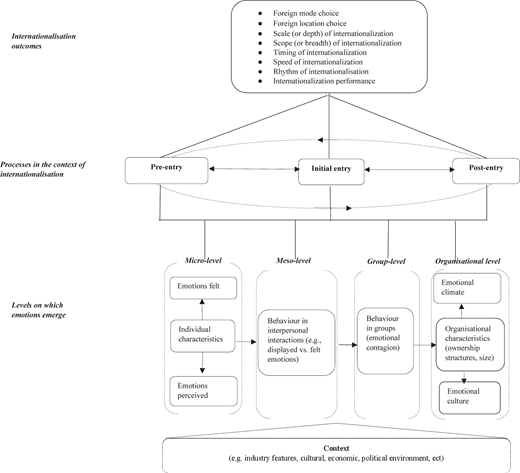
Our review on the emotions on SMEs' internationalisation enabled us to unearth how emotions have been explored to date, as well as to unearth emotional constructs used in the relevant literature. The problematisation approach enabled not only the identification of contradictions and blind spots in the literature but also stimulated deeper critical reflection on the underlying assumptions discussed previously. Based on the insights from our review, plus an integration of studies from the emotion literature, we developed an integrative theoretical framework (Figure 3) to map knowledge gaps that illuminate promising research directions, which we discuss in the following sections.
Insight #1: the need for more empirical studies on emotions in SMEs' internationalisation
The results from the analysis of the articles highlighted that research in the internationalisation of SMEs from an emotional standpoint has started to gain momentum in recent years (e.g. Wang et al., 2023; Leonidou et al., 2021; Hassett et al., 2018). Over the years, researchers have mainly focused on the role of emotions in decision-making, international business relationships and cultural interactions, highlighting the significant implications of emotions for individual and collective decision-making (Alayo et al., 2023; Dong, 2022; Gunkel et al., 2015), ultimately affecting firms' internationalisation processes and outcomes (Meyer and Gelbuda, 2006; Schweizer and Vahlne, 2022; Van de Laar and De Neubourg, 2006).
However, as highlighted in our review, current research on emotions in internationalisation has offered only limited insights into the role of emotions in core internationalisation dimensions, such as the scale (or depth) of internationalisation, the scope (or breadth) of internationalisation, the pace and rhythm of internationalisation and internationalisation performance across different stages of the internationalisation process. These aspects could be explored through a multilevel analysis to provide a deeper understanding of how emotions at the micro level (i.e., the individual level) give rise to organisational emotional states (e.g. emotional climate) and, in turn, influence internationalisation processes. Research on emotions in internationalisation, alongside the collection of primary data, is important not only for refining internationalisation theories and advancing understanding of the internationalisation process, but also for generating actionable insights for managers. Managers who recognise and effectively manage emotional dynamics may be better positioned to navigate the global marketplace successfully.
Insight #2: the need to incorporate key theories on emotions in SMEs' internationalisation research
The results from the analysis of the articles highlighted that research in the internationalisation of SMEs from an emotional standpoint has mostly used well-grounded theories in international business and international marketing (such as Uppsala model, the internalisation theory, relationship building perspective and others) without fully considering in depth the emotional dimensions vested in the firms aiming at internationalisation (Vahlne and Johanson, 2020). Instead of investigating SMEs' internationalisation phenomena by treating emotions as traits, capabilities and/or contextual modifiers, we argue that emotion theories can provide a deeper understanding of how strategic decisions are formed and how emotions shape SMEs' internationalisation processes.
The variety of definitions associated with the term “emotion” reflects the multifaceted nature of emotions and the diversity of theories, models, perspectives and concepts found in the relevant literature. Among the most widely used theories, models, perspectives and concepts of emotion are those presented in Table 4. Each offers valuable insights into how individuals understand, experience and respond to emotions.
Insight #3: the dire need for conceptual clarity and clear operationalisation
Emotions emerge within persons, between persons, among groups, within organisations (Ashkanasy, 2003). In particular, specific events in the workplace trigger emotional reactions, which subsequently affect behaviours. Ashkanasy (2003) discusses and presents a multilevel model of emotions in organisations that involves the micro, the meso, the group and the organisational levels (Ashkanasy, 2003, 2011).
The micro-level involves the affective reactions of individuals to events and/or the way individuals can manage them. The meso-level involves the perception and communication of emotion in dyadic interpersonal exchanges. The group-level involves group affective composition and organisational-level involves the emotional atmosphere within organisations (Figure 4). (e.g. differences in emotional intelligence can affect leadership and group processes).
According to the multilevel model of emotions in organisations, emotions exist in different levels: micro, meso, group and organisational level (Ashkanasy, 2003, 2011). Our interpretation of the explored studies highlights that most discussion with regard emotions in SMEs' internationalisation is devoted to the meso-level (e.g. Leonidou et al., 2021, 2019) and the group level (de Groote et al., 2023; Hinds et al., 2014), focusing, for example on the emotional intelligence between persons, the leader-member engagement in groups and the emotional climate of the organisational entities. Nevertheless, emotions are intensely personal (micro-level), and they are also influenced by social interactions that individuals engage in.
Emotions start at the individual level, are triggered by specific events or situations (De Massis et al., 2023), and result from an individual's personal evaluation and interpretation of events in which individuals find themselves (Hassett et al., 2018). Such events may be external to the workplace (e.g. a natural disaster) or internal (e.g. the breakdown of critical equipment) and determine emotional reactions (affective state) that, in turn, can influence behaviour and attitudes (Ashkanasy, 2003).
The expression of emotion is different from personally felt emotion, and this can explain, in part, why there has been more research on phenomena at other levels and not at the individual level.
Nevertheless, differences between individuals can lead to different attitudes. For example, individuals with high emotional intelligence demonstrate a greater capacity to interpret and respond effectively to affective events compared to those with lower levels of emotional intelligence (Jordan et al., 2002). Moreover, individuals can have differences in their expression and perception of emotions and, in turn, can affect actions at the group level. Hence, different individuals' characteristics (e.g. personality traits, personal values, memories from past experiences) can affect the emergence of emotions that, in turn, can lead to heuristics and biases that lead to different outcomes (Humphrey et al., 2021). In the context of internationalisation, managers' past international experience can influence future internationalisation decisions (e.g. internationalisation speed) (Casillas et al., 2024).
Nevertheless, the SMEs' internationalisation literature has yet to explore the role of individual characteristics in the emotions felt, or expressed by entrepreneurs, in major IB-centric research questions related to the “what, where and hows” of internationalisation. For example, we still lack understanding of how the emotions of individual entrepreneurs of different types of firms can further affect (if so) the rhythm and the speed of internationalisation and what does this mean for the firms' international performance.
Moreover, although there is existing literature that focuses on the meso, group and organisational levels, this research stream has largely overlooked how emotions are associated with the “what, where and hows” of internationalisation during the different processes of internationalisation. For example, although emotional intelligence influences international relationship building activities during the first steps of internationalisation (e.g. exports), it could not be the case in the later steps of internationalisation (e.g. in subsidiaries).
We argue that if we aim to better understand how emotions unfold and shape decision-making in risky contexts, such as the internationalisation context, a multilevel perspective should be taken into consideration. Further research could be devoted to the micro-level nature of emotions – how individuals experience, perceive, communicate and manage their own and others' emotions.
Moreover, although it is recognised that contextual factors can affect decisions in the context of SMEs internationalisation (Kastanakis et al., 2025; Kampouri and Hajidimitriou, 2023), limited attention has been given to how contextual factors – such as firm size, governance structures, prior international experience, industry characteristics or cultural environments – shape the intensity, interpretation and consequences of these emotions. Future research could therefore examine more explicitly how such contextual conditions moderate or mediate the relationship between emotional responses and SMEs' internationalisation decisions. Addressing this issue would contribute to a more nuanced understanding of how emotional processes unfold in the specific organisational and environmental contexts in which SMEs operate.
In Table 5 we propose examples of future research questions within these key international business and international marketing categories in mind.
In providing answers to these research questions, we see the adoption of emotional theories as having the potential to provide a better understanding of the internationalisation processes overall. For example, the theory of constructed emotion (Barrett, 2017) could provide an understanding of how SMEs' previous experiences in the context of exports can influence the emergence of emotions and in turn shape internationalisation activities (e.g. the selection of culturally distant markets to conduct exports). Likewise, the cognitive appraisal theory (Lazarus, 1991) could provide an understanding of the role of individual interpretation in emotional responses and hence internationalisation decisions. For example, research using this theory could provide answers to the questions of how the emotional experience of founders of firms with different ownership structures appraise and evaluate a situation in the context of internationalisation and what does this mean for the internationalisation scale.
Conclusion
The purpose of this study was not merely to synthesise existing research on SMEs' internationalisation, but to question the underlying assumptions that structure how emotions in SME internationalisation have been theorised. By mapping the SME internationalisation from an emotional standpoint, literature and identifying three unarticulated theoretical assumptions, we demonstrate how dominant explanations have been primarily cognitively oriented while marginalising the emotional dynamics accompanying decision-making under uncertainty. By integrating insights from the emotion literature, we offer an alternative conceptual framing that positions emotions as dynamic mechanisms shaping internationalisation decisions across time and context.
This reframing opens several avenues for future research.
Our proposed theoretical framework forms the basis for formulating new, interesting and relevant research questions about emotions on internationalisation of SMEs, which we suggest and which future studies will hopefully address. Addressing these research questions and considering implicit theoretical assumptions is crucial if we aim to provide a more holistic understanding of important internationalisation phenomena of SMEs, such as how firms manage uncertainty and prefer gradual steps over large ones, thereby enhancing our understanding of internationalisation theory (Vahlne and Johanson, 2020) and being able to provide a roadmap of practices to those SMEs aiming to start internationalisation and maintain themselves in the international arena. By doing this, we can refine internationalisation theories and also assist firms by providing them with managerial practices that will help them to succeed internationally.
One implication for future research is the need to more explicitly define and describe the sample when examining emotions in the context of firms' internationalisation. SMEs are heterogeneous, and depending on the organisational type, emotions may differ within different types of firms. For example, according to our review, the intensity of emotions is higher between family SMEs than in other organisations with other ownership structures. Hence, it is important to highlight the type of organisations the results refer to when exploring emotions in internationalisation phenomena, if misleading conclusions are to be avoided. Bearing this in mind, we could expect considerable differences between different types of organisations in relation to features such as size, ownership structures, generations involved (in case of family SMEs) and key decision-making actors (family members versus non-family SMEs managers) (De Massis et al., 2023).
Ethical statement
This work did not involve human participants and, therefore, no ethics approval was deemed necessary by the authors' institutions.