This article provides an overview of each of seven programs evaluated as part of the Social and Character Development Research Program (SACD), a federally-funded multiprogram evaluation project. It further examines the theoretical underpinnings, the teaching strategies employed, the content delivered, modifications made to the implementation or support strategy (where appropriate), and the evidence on which the programs are based. The programs reviewed include the Academic and Behavioral Competencies Model, the Competence Support Program, Love in a Big World, Positive Action, Promoting Alternative Thinking Strategies, Reading Writing Respect and Resolution, and Second Step.
This article provides an overview of each of the seven social and character development programs evaluated in the multiprogram Social and Character Development (SACD) Research Program, as well as their theoretical underpinnings, the teaching strategies employed, the content delivered, modifications made to the implementation or support strategy (where appropriate), and the prior evidence of program effectiveness where available. The SACD Research Program is a competitive federally funded research grant program designed to provide both an integrative evaluation across seven different programs and to provide program-specific evaluation information as well (for more information about the research program and program selection, see Haegerich & Metz, this volume). The programs reviewed include the Academic and Behavioral Competencies Model, the Competence Support Program, Love in a Big World, Positive Action, Promoting Alternative Thinking Strategies, Reading Writing Respect and Resolution, and Second Step. The programs are not representative of all school-based SACD interventions, but each program is designed to address each of the student and school outcomes prioritized by the Institute of Education Sciences (IES) and the Division of Violence Prevention at the Centers for Disease Control and Prevention CDC; that is, the promotion of youth social and emotional competencies, prosocial behaviors and attitudes, the reduction of student problem behaviors, and the promotion of a positive school climate. These outcomes are focused on by SACD programs broadly, are of great interest to school practitioners, and are targeted for change by federal and state legislation. After presentation of the seven programs, we will highlight the common theoretical and practical features of the programs, describe the similarities and differences among the theories of change underlying the intervention strategies, and discuss how the program theories tie into the social emotional learning, character education, and violence prevention literatures more broadly.
The Programs
Academic and Behavioral Competencies (ABC) Program
The ABC Program (Pelham, Fabiano, Gnagy, Greiner, Hoza, 2005; Smith, Molina, Massetti, Waschbusch, & Pelham, 2007; Waschbusch, Pelham, Massetti, & Northern Partners in Action for Children and Yout 2005) is a school-wide program for elementary classrooms designed to develop and maintain a positive learning environment that reduces misbehavior and promotes positive skills and competencies. It focuses on classroom behavior management and promoting social skills, and it includes both universal components and components targeted at children with disruptive behaviors. In the SACD evaluation, the program was implemented in two K–5 schools, one K–6/7 school, and nine K–8 schools. The program includes the following components and processes.
Introductory workshop. After schools agreed to implement the program and prior to the beginning of the school year, ABC staff conducted a summer workshop with a school committee of representative staff. The workshop described the program and presented the framework within which program components were to be implemented; the school program was developed, including adaptations within the designed framework, to meet the needs of each school.
Professional development. Immediately prior to the school year, teachers and school staff were trained in behavior management skills and strategies, and on delivery of the ABC Program. Teacher training covered general classroom behavioral management skills for reducing disruptive behavior in the classroom and promoting behavioral competencies and strategies specific to the ABC Program (e.g., labeled praise as social reinforcement, planned ignoring, appropriate limit-setting and discipline skills) (e.g., Alberto & Trautman, 2003).
Program components. ABC Program components included school-wide rules posted throughout the school with a teacher-implemented response/cost monitoring system for daily tracking of rule-following (e.g., behavior color charts and tally sheets). The tracking system assisted in identifying children who required more intensive programs (see below). Students who followed classroom rules earned daily positive notes to take home, classroom privileges, behavior honor roll status, and a weekly reinforcing activity (Fun Friday). In-class time out was used for some rule violations. Each day for 10 minutes, teachers implemented scripted class-wide social skills training. In these lessons, they illustrated the targeted social skill that was intended to enhance participation, communication, validation, problem solving, and cooperation, and have children engage in brief role plays (Pelham, Greiner, & Gnagy, 1998). In addition to daily social skills training, school-wide peer mediation was implemented (Cunningham, Bremner, & Secord-Gilbert, 1998). Group parenting workshops adapted from Cunningham, Cunningham et al. (1998) were held in the evenings. These workshops were aimed to improve parenting skills and parental involvement in the school.
Selected interventions. Beyond the universal components of the ABC program, selected interventions were employed with children exhibiting high rates of disruptive behavior. These included a program designed to improve peer relations in a recreational group context (Pelham, Burrows-MacLean et al., 2005). These groups occurred either during or after school and focused on building social competencies, enhancing rule-following behavior in group game contexts, and building positive relationships with peers. In addition to these groups, children with high rates of rule violations were targeted for additional intervention. Individualized programs, typically in the form of modifications of the class-wide program (e.g., more frequent feedback, changes in goal criteria or classroom rewards, group contingencies) and daily report cards (downloadable at http://ccf.buffalo.edu), were developed and implemented through consultation with teachers who identified students with high rates of disruptive behaviors.
Program oversight at each school was provided by a bachelor’s degree level behavioral consultant for 20 hours per week. The consultant’s role included teacher observation, feedback and discussion of general program implementation, facilitating program modifications for children who need targeted programs, coordinating the peer programs, delivering the parent workshops, and maintaining the tracking system.
Theoretic/Logic model of change. The theorized model of change for the ABC Program is consistent with standard behavior management and social learning theories for children with disruptive behavior (DuPaul & Stoner, 2003; Pelham & Fabiano, 2008; Sugai & Horner, 2002; Walker, Colvin, & Ramsey, 1995). The use of positive instructional strategies and classroom behavior management are significantly related to academic and behavioral success for school-aged children—particularly those with behaviors that include inattention, impulsivity, defiance and aggression (e.g., Fabiano et al., 2007). Behavior modification has long been the cornerstone of effective classroom management (O’Leary & O’Leary, 1972; Sugai, Horner, & Gresham, 2002; Stage & Quiroz, 1997; Walker & Eaton-Walker, 1991). Behavioral approaches in the classroom typically involve working with teachers to modify antecedents (e.g., commands, establish rules and behavioral expectations) and consequences (e.g., rewards for meeting behavioral expectations, punishments following proscribed behaviors) of targeted behaviors (Sugai, Horner, & Gresham, 2002). Approaches that would appear to be most effective are those that intervene at multiple levels—both universal (e.g., to teach social skills to children who may need only minimal instruction and practice) and selected (e.g., to intervene with a child with severe aggression). The ABC program thus includes components at both levels.
Which behaviors should be targeted? Behavioral difficulties that include inattention, impulsivity, and aggression are associated with later problems in academic achievement (Duncan et al., 2007; Spira & Fischel, 2005). Further, across a wide expanse of literature, problems in peer relationships, parenting skills, and classroom/academic functioning are the most common referral problems, predictors, and mediators of long-term outcomes of disruptive children (Angold, Costello, Farmer, Burns, & Erkanli, 1999;,Jimerson, Egeland, Sroufe, & Carlson, 2000; Patterson, & Fisher, 2002; Huesmann, Eron, Lefkowitz, & Walder, 1984). The ABC program targets these domains of functioning.
Promising evidence supporting further evaluation. As noted in the above citations, many of the components of the ABC program (particularly the classroom management components) have been studied and demonstrated to be effective in changing ADHD symptoms, social skills, and classroom behavior when implemented in a variety of regular classrooms and special educational settings (DuPaul & Eckert, 1997; Pelham & Fabiano, 2008; Stage & Quiroz, 1997; Walker et al., 1995). The specific classroom response/cost and time out programs utilized in ABC, as well as the social skills and peer recreational components, also have been demonstrated to be effective with disruptive children in classroom and recreational settings (Chronis et al., 2004; Fabiano et al., 2004, 2007; Pelham, Massettiet et al., 2005).
Two trials have evaluated whether the components as a package are effective at the school-wide level in regular school settings. Pelham, Fabiano et al. (2005) implemented the ABC program in a K–5 elementary school in a high-risk neighborhood. All teachers implemented the program for 2 years, and measures were gathered from teachers, parents and children each year. Teachers, parents and children overwhelmingly endorsed the system as effective in reducing disruptive behavior and, for teachers, allowing more time for instruction. Office referrals were reduced by 80% and homework completion improved dramatically. Waschbusch et al. (2005) evaluated an adaptation of the ABC program, Behavior Education Support and Treatment (BEST) in eight elementary schools randomly assigned to receive the intervention or not. Results provided evidence that the intervention schools produced significantly greater improvement in the behavior of disruptive children relative to control schools.
Expected outcomes. It was expected that the ABC program would produce improved functioning in the participating students, particularly in children who need and receive targeted interventions. Specifically, it was expected that teacher-rated prosocial behaviors, rule following, and disruptive/impulsive/aggressive behaviors would improve for children with problems in these domains. Program-associated reductions in observed rule violations and observed office referrals were also expected. It was expected that teachers would improve (on self reports and direct observation) their use of the prescribed classroom management strategies and their perceptions of the effectiveness of the strategies. Further, it was expected that teachers would rate the ABC program as more effective in helping them reach these outcomes than comparison teachers with no greater expenditure of effort than teachers in comparison schools. It was expected that teachers who had higher levels of fidelity of implementation would produce larger gains in their children’s functioning.
Competence Support Program (CSP)
The CSP is a multicomponent intervention that was developed to promote children’s behavioral adaptation and social adjustment in elementary school. The overarching goal of this intervention is to systematically impact correlated factors (i.e., social-cognitive choices, classroom management and behavioral context, classroom social dynamics) that have been shown to collectively contribute to the establishment and maintenance of social behavior patterns in childhood and adolescence. Accordingly, the CSP brought together three distinct interventions (Making Choices, Competence Enhancement Behavior Management, and Classroom Social Dynamics Training) to address these factors in a coordinated and structured fashion. In the SACD evaluation, CSP was implemented in nine K–5 schools and one K–8 school.
Professional development. Teachers received 4 hours of training before school began, or within the first 2 weeks of school. Professional development for teachers also included biweekly consultation on lesson content and program implementation issues and strategies for both the Making Choices Program and the Competence Enhancement and Social Dynamics Training components. When needed, one-on-one consultations with principals on the school-wide management policy were also conducted.
Program components. The Making Choices Program (Fraser, Nash, Galinsky, & Darwin, 2000) is a 32-lesson skill-building curriculum designed to help children build enduring friendships, work productively in groups, and respond positively to challenging social situations. An important goal of this curriculum is to teach children ways to interact collaboratively and to address social difficulties in a constructive manner to generate solutions that are satisfactory for all involved. The Making Choices classes are delivered by the classroom teacher in a whole-class instructional format. Teachers are provided with instructional scripts, complete lesson booklets for each student, and biweekly consultation from a Making Choices curriculum specialist.
The Competence Enhancement Behavior Management (CEBM) program (Farmer, Goforth, Hives, Aaron, Hunter, & Sgmatto, 2006) is an in-service training and directed-consultation classroom management and positive behavioral support model that focuses on strategies teachers can use to promote students’ prosocial behavior and productive academic engagement. This includes management techniques to teach and reinforce appropriate classroom behavior while providing constructive consequences that reduce the occurrence of problem behavior. This model addresses seven areas of behavior management in elementary classrooms: proactive behavior management aims and goals, establishing productive classroom routines and structures, teaching and reinforcing alternative behaviors, building supportive relationships, communicating with troubled students, using constructive discipline and natural consequences, and preventing and managing behavioral crises.
Social Dynamics Training (SDT) is an in-service training and consultation model (Farmer, 2000) that focuses on teachers’ awareness of classroom social dynamics and corresponding techniques to establish classroom social contexts and interactional patterns that promote and reinforce positive social behavior and that inhibit patterns of bullying, conflict, and aggression. Teachers learn to recognize distinct classroom peer groups and students’ social roles within the classroom social network. In addition, SDT focuses on the influence of peer social structures on students’ behavior and how teachers can manage classroom social dynamics to promote prosocial behavior and support new social skills that students learn in the Making Choices program. This training includes strategies to: (a) monitor and intervene with processes of social aggression, (b) prevent social hierarchies that promote jealousy and conflict, (c) prevent social roles (e.g., bullies, aggressive followers, aggressive violence) that promote aggression and violence, and (d) monitor and prevent the establishment of antisocial and “enemy” peer groups (see also Craig & Pepler, 2007; Rodkin & Hodges, 2003).
Theoretic/logic model of change. Longitudinal research on the development of aggressive and disruptive social behavior has shown that such patterns reflect the contributions of ineffective social cognitions and social skills, antisocial peer affiliations (deviant peer groups) and social roles (bullies, bully-victims), and ineffective classroom management (Cairns & Cairns, 1994; Coie & Dodge, 1998; Kellam, Rebok, Ialongo, & Mayer, 1994). Such factors tend to occur together and operate as a system of correlated risks. This means that problematic social cognitions, peer affiliations, social roles, and classroom management approaches support and sustain each other and maintain antisocial patterns. Therefore, to prevent and ameliorate problematic social behaviors and to promote prosocial skills, it is necessary to systematically intervene with these factors in a coordinated manner so that positive changes in one domain will help to promote and sustain positive changes in the other domains. Ultimately, the goal is to reorganize systems of correlated risks and realign trajectories of problematic social behavior patterns.
Promising evidence supporting further evaluation. Each of the components of CSP has been shown to enhance social behavior and reduce aggression. The Making Choices program has been successfully piloted in three distinct studies in both middle-class suburban and rural low-income elementary school samples. Taken together, these studies indicate that the program increases cognitive prosocial skills and social contact while decreasing antisocial behavior and peer rejection. Controlling for pretest scores, children who received the Making Choices intervention had significantly higher scores on social contact and cognitive concentration, and displayed significantly lower overt aggression than did children in the control condition (Fraser et al., 2005; Smokowski, Fraser, Day, Galinsky, & Bacallao, 2004).
The CEBM and SDT programs have been piloted together in rural and low-income schools. Outcomes included increased social contact and affiliations with prosocial peers for at-risk boys in intervention as compared to control conditions (Cadwallader, Farmer, Cairns, Leung, & Clemmer, 2002), teachers’ increased feelings of efficacy and consistency in managing classroom behavior and supporting socially and behaviorally at-risk students (Hamm, 2007), reduction of teacher-rated aggression, increased feelings of school-bonding, and decreased feelings of academic and social “riskiness” in at-risk students (Farmer & Hoffman, 2007), and improved academic achievement and feelings of peer support to protect against being bullied (Hamm, Robertson, Dadisman, & Farmer, 2008).
The evaluation of the Competence Support Program in the current study extends previous efforts by integrating all three critical components of CSP and developing a training model for teachers and school professionals to determine how they can together influence individual and contextual factors that impact children’s behavior. In addition, the study allows for the evaluation of program effects in the context of rural, low-income, multiethnic communities.
Expected outcomes. It was expected that individual intervention components would impact the corresponding domains they were designed to address and that the collective impact of the CSP would involve the positive reorganization of correlated systems of risk in high-risk youth. Therefore, it was expected that students in intervention schools would demonstrate increased social cognitive skills and more effective strategies for handling social difficulties, improved classroom engagement and a reduction in disruptive classroom behaviors, increased affiliations with productive and prosocial peers, and decreased involvement in problematic social roles (i.e., bully, bully-victim). Reflecting the concept of systems reorganization, it was expected that intervention youth who were characterized by multirisk profiles at the beginning of the program would be more likely than similar youth in control schools to move into nonrisk configurations of interpersonal competence. In contrast, youth in control schools would be more likely to move from nonrisk to risk configurations during the study.
Love in a Big World (LBW)
The LBW program aims to alter the culture and climate of schools to create an atmosphere of caring within the classroom, make positive character traits more tangible to children, model healthy behaviors, and provide opportunities for bonding. The curriculum is based on social development research conducted by the Social Development Research Group at the University of Washington and asset development research conducted by the Search Institute. In the SACD evaluation, the program was implemented in six K–5 schools and six K–6/7 schools.
Professional development. At in-service training, principals, teachers, and school staff participated in a 3-hour workshop that presented information on lesson planning and logistics of program implementation. Faculty Boosters provided short reminders and challenges, and were shared via e-mail and at weekly staff meetings
Program components. The program includes classroom lesson plans, staff and principal training, a peer recognition program, service projects, assembly programs, motivational morning announcements, and newsletters that aimed to teach children positive character traits and how to apply them in their lives. A CD of 30 prerecorded PA system announcements was provided for encouragement and focus for the week’s lessons. Newsletters were inserted each 6 weeks in students’ report cards. These gave the family an overview of LBW and suggested activities to reinforce good character development.
Classroom strategies included story reading, writing, discussion, song, and other classroom activities that occurred daily in 10 to 15-minute lessons for 30 weeks. Teachers utilized behavior management strategies to reward exhibition of character traits and were encouraged to model and reinforce social skills throughout the day.
The curriculum was designed to make positive character traits more tangible to children. LBW modeled healthy behaviors, provided opportunities for bonding, taught skills and practices and their use, and provided recognition for their use.
School-wide strategies included weekly announcements, assemblies, service projects, parent newsletters, and visual artifacts that illustrated character traits (e.g., posters and banners). Assembly Programs were 45-minute interactive performances.
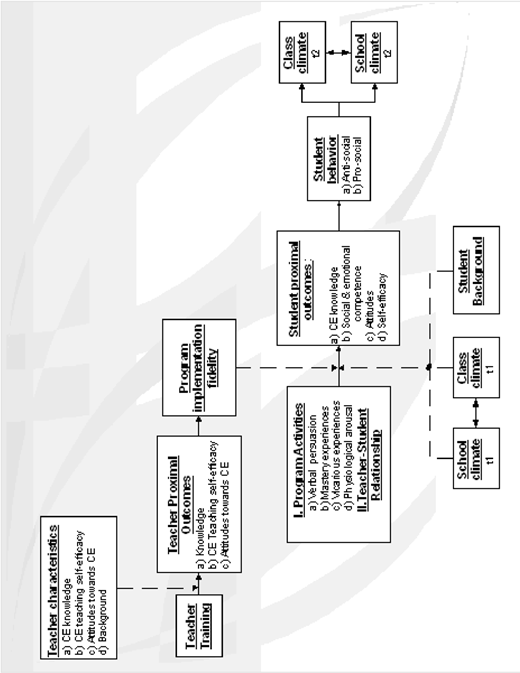
Logic-theoretic model of change. It was theorized that teacher training would affect teacher knowledge of character education (CE), self-efficacy to deliver CE, and attitudes toward CE. The outcome of training would be moderated by teacher characteristics. The teacher proximal outcomes would affect how well the teachers implemented the LBW program (see Figure 1). LBW activities were categorized according to Bandura’s (1994) four factors that affect self-efficacy; the activities and the teacher-student relationship would lead to the student proximal outcomes of increased CE knowledge, improved social and emotional competence, positive attitudes toward CE and positive self-efficacy to deliver CE. It was hypothesized that the effect of the program activities on the proximal outcomes would be moderated by the degree of program implementation, student background, and class and school climate. Based on the theory, students with more CE knowledge, stronger social and emotional competence, positive attitudes, and CE self-efficacy should show less anti-social and more prosocial behavior that leads to changes in class and school climate at the end of the school year.
Promising evidence supporting further evaluation. There have been no published previous evaluations of LBW. The evidence for LBW’s effectiveness is indirect and based on weaving together several strands of robust research findings. Research supports LBW’s approach of addressing the whole child including his/her strengths and resiliency (Catalano, Berglund, Ryan, Lonczak, & Hawkins, 2004; Flay, 2002). Also, research supports the effectiveness of programs that target the many risk factors children face in life rather than focusing on only one (Gutman, Sameroff, & Eccles, 2002; Rutter, 1979; Sameroff & Fiese, 1990), particularly as risks tend to cluster in the same individual (Masten & Coatsworth, 1998).
LBW was designed to improve children’s relationships with their teachers and peers, which can have profound effects on school success (Hawkins, Catalano, Kosterman, Abbott, & Hill, 1999). Additionally, positive student-teacher relationships appear to contribute to peer acceptance (Howes, Hamilton, & Matheson, 1994; Taylor, 1989; Taylor & Trickett, 1989). LBW addressed the classroom and school environment by targeting children’s relationships with their teachers and their peers by addressing cooperation, friendliness, and honesty to avoid social isolation or peer rejection. The positive relationships children have with a competent adult, such as their teacher, should increase their resiliency to adversity (Masten, Best, & Garmezy, 1990). The risk and resiliency literature suggested the “targets” of the LBW program. Social Cognitive Theory (Bandura, 1977, 1986) was used to explain how children are motivated to behave in positive ways or respond to these targets. Self-efficacy was believed to mediate the relationship between program activities and expected outcomes as “self-efficacy beliefs determine how people feel, think, motivate themselves and behave” (Bandura, 1994, p.71).
Expected outcomes. After 1 year and on each following measurement occasion, children in LBW schools were expected to, on average, demonstrate more prosocial and fewer antisocial behaviors than children in the control schools. Children in LBW schools were expected to improve their behaviors at a faster rate than children in the control schools.
Teachers with more knowledge about character education (CE), higher CE self-efficacy, and more positive attitudes towards CE were expected to implement the LBW program activities with higher fidelity and will have better relationships with their students. The LBW teacher training was predicted to increase knowledge about CE, CE self-efficacy, and positive attitudes towards CE. The program activities and positive teacher-student relationships were anticipated to increase students’ CE knowledge, their social and emotional competence, their pro-social attitudes, and their self-efficacy to behave according LBW standards.
The effects of the program activities on students behavior were expected to be stronger for classrooms with teachers who are adherent to the program manual and to be moderated by classroom climate, school climate, and student characteristics as measured at the beginning of each semester. Classrooms that on average have more students who show prosocial and less anti-social behaviors were expected to be rated to have better class climate.
Positive Action (PA)
The PA program is designed to teach students the positive actions in the physical, intellectual, emotional and social areas of their lives. The program specifically focuses on enhancing positive behavior, changing behavioral attributions directed at the self and social relationships, and the prevention of problem and health-compromising behaviors. In turn, these are hypothesized to lead to improved school-related performance. The program has multiple components, including school and home curricula for every grade level and a school climate program that aims to create a supportive learning environment at school and at home. In the SACD evaluation, the program was implemented in five K–8 schools and two K–5 schools.
Professional development. Teachers received a 2-hour training on the methods of instruction, role modeling, use of positive actions, and use of behavior management strategies. Principals received training on the program adoption process, and school counselors were provided a kit that included the curriculum and suggestions for activities with at-risk children and family groups. Principals, teachers, and other school staff attended an additional two sessions per year that allowed teachers to share concerns and successes about program implementation.
Program components. The PA curriculum (and all other program components) covers six units throughout the year, and each grade features the same concepts with age-appropriate materials and activities. This coordination provides a common language and vision of how a PA school looks, acts, and feels. The six units are: (1) The Philosophy and Thoughts-Actions-Feelings Circle (self-concept, how to feel good about yourself by choosing positive actions); (2) Positive Actions for a Healthy Body (physical positive actions such as nutrition, exercise, sleep, hygiene, avoiding harmful substances) and Mind (intellectual positive actions such as learning, creating, analyzing, decision making and problem solving); (3) Positive Actions for Self-Management (managing personal resources such as time, energy, money, possessions, and talents, along with thoughts actions and feelings); (4) Positive Actions for Getting Along with Others (treating others the way you want to be treated through love, empathy, kindness, fairness, respect, cooperation, positive communication and civility); (5) Positive Actions for Being Honest with Yourself and Others (taking responsibility for your actions, doing what you say you will, refusing to rationalize mistakes, admitting and acknowledging the truth about yourself, and not blaming others); and (6) Positive Actions for Improving Yourself Continually (setting and achieving goals, turning problems into opportunities, believing in your potential, having the courage to try new things, persistence). Please see Flay, Allred and Ordway (2001), Flay & Allred (2010), and the program website (www.positiveaction.net") for more detailed descriptions of program components.
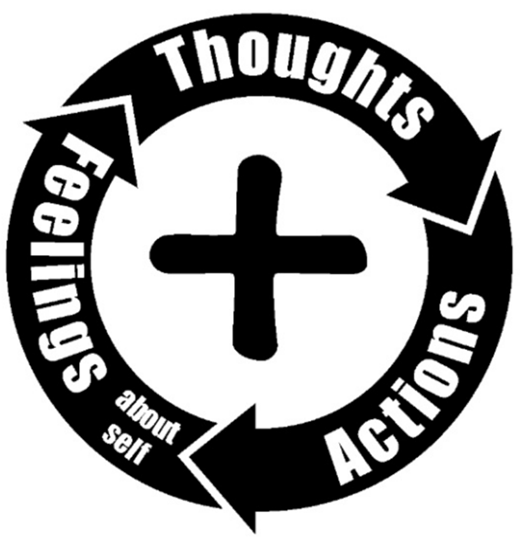
Theoretical/logic model of change. The PA program is grounded in a broad theory of self-concept (Combs, 1962; Purkey, 1970; Purkey & Novak, 1984). This theory posits that people determine their self-concepts by what they do; that actions, more than thoughts or feelings, determine self-concept; and that making positive and healthy behavioral choices results in feelings of self-worth. Thus, all curriculum lessons and supporting components are based on the intuitive philosophy that “you feel good about yourself when you do positive actions, and there is always a positive way to do everything.” Using the Thoughts-Action-Feelings circle (see Figure 2), teachers, students and parents are taught to be aware of how they feel about themselves when they engage in an action, how this leads to further thoughts, how those thoughts lead to further behavior, and how they can change negative thoughts into positive thoughts to lead to positive behaviors. Recent work in “Positive Psychology” (Seligman, 1998), particularly results and theoretical developments reported by Barbara Fredrickson (2000), fully support this notion. Fredrickson (2000) reports that when people feel positive, they subsequently have more positive thoughts and engage in more positive behavior.
Although self-concept is the major theoretical underpinning of PA, the program is also built around many theories of education and behavior change. For example, following social learning theory (Bandura, 1977) teachers and parents are encouraged to model positive behaviors and positively reinforce them when they occur (Sugai, Horner, & Gresham, 2002; O’Leary & O’Leary, 1972; Stage & Quiroz, 1997; Walker & Eaton-Walker, 1991). The focus on feelings about the self is consistent with theories of emotional intelligence and social-emotional learning (Greenberg & Kusché, 2002). PA is also consistent with educational theories of brain development (Caine & Caine, 1997), higher-level thinking skills (Bloom, 1981), and multiple intelligences (Goleman, 1995; Gardener, 1991).
Promising evidence supporting further evaluation. PA is listed on many lists of nationally recognized evidence-based programs. It is the only character education program to be rated with “positive effects” in both academics and behavior by the What Works Clearinghouse, a resource of the U.S. Department of Education. These listings and ratings were based on findings from prior quasi-experimental studies and preliminary results from the first randomized trial of PA in Hawaii elementary schools. High-quality matched-controlled studies using school-level archival data found that schools that had used PA for several years reported lower rates of disciplinary referrals and suspensions, better rates of school attendance and higher scores on standardized achievement tests (Flay & Allred, 2003; Flay, Allred, & Ordway, 2001). The Hawaii randomized trial found that Grade 5 students in PA schools reported lower rates of substance use, violence and sexual activity after 4 years of PA than students in control schools (Beets, et al., 2009).
The current study extends previous efforts by evaluating how Positive Action works—that is, by investigating what causal process are responsible for program effects. In addition, the study investigates how well the program can be delivered with integrity.
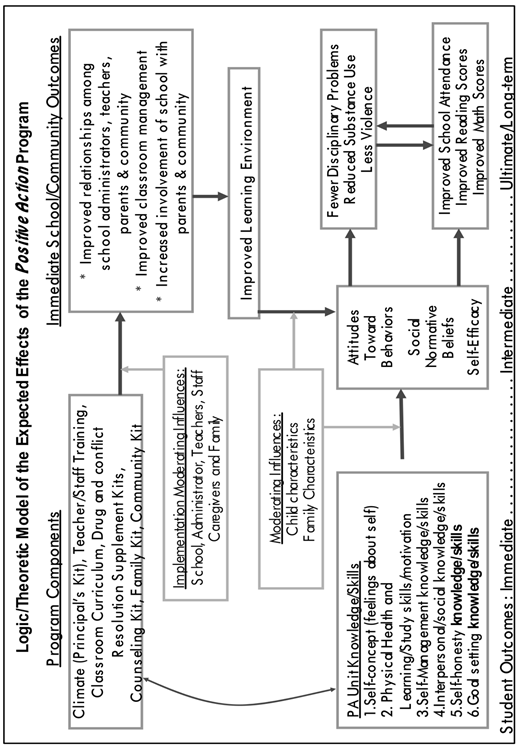
Expected outcomes. The more specific pathways of program effects tested in this project are summarized in a Logic/Theoretic Model (Figure 3). This model explicitly lays out the moderators, mediators and outcomes that were to be assessed in this study. Implementation of the program components, as moderated by school/administrator, teacher/staff and family characteristics, were expected to lead to immediate, measurable changes at the school and family/community levels, such as improved attitudes, enhanced classroom behaviors and environments, and improved school climate and family environments. The school climate component was expected to lead to measurable changes in the school-wide climate, such as administration-staff relations (including teacher-to-teacher, teacher-to-staff, teacher-to-student), reinforcement of positive behavior, and parent-school relations. The family component was expected to lead to measurable changes in family involvement with the school, as well as positive increases in school-parent relations and parent-child relations. The teacher/staff training was expected to contribute to improved teacher-student relations and lead to changes in classroom management and instructional strategies. The classroom curriculum was expected to contribute to improved teacher-student, student-student, and student-parent relations. Any or all of these immediate school/community outcomes may be moderated by characteristics of the school, its leadership or its teachers and staff. The specific content of the six units of PA were expected to lead to improved knowledge and skills taught in the lessons. All of these changes should lead to improved attitudes, social normative beliefs and self-efficacy of students (immediate student-level outcomes) which, in turn should logically lead to the ultimate or long-term outcomes, including improved school attendance, fewer disciplinary problems, reduced rates of substance use and violent behaviors, and improved school performance. These outcomes may be moderated by the uniqueness of each child or their family characteristics.
Promoting Alternative Thinking Strategies (PATHS)
PATHS (Kusché & Greenberg, 1994) is a multiyear universal prevention program for promoting emotional and social competencies and reducing aggression and behavior problems in young school-aged children, while simultaneously enhancing the educational process in the classroom. It seeks to do this by focusing on the development and strengthening of skills of school-aged children in emotional literacy, positive peer relations, and problem solving. Although primarily designed for school and classroom settings, supplemental information and activities are also included for parents and caregivers. In the SACD evaluation, the program was implemented in seven K–5 schools and three K–6/7 schools.
Professional development. Teachers participated in a standard initial 2-day training in the PATHS curriculum by national trainers. Consultants dedicated to working with teachers, mental health staff and school administrators were available throughout the year to (1) support teachers in the planning and implementation of PATHS, (2) serve as a resource to teachers regarding the integration of PATHS within existing curricula and structures, and (3) support ancillary staff in the implementation of the program and planning for long term sustainability.
Program components. Teachers are the primary deliverers of PATHS lessons and the developers recommend that the 20 to 30-minute lessons be taught two to three times per week throughout the school year. The program extends beyond classroom instruction to the incorporation and daily integration of concepts throughout the school environment. PATHS focuses on relationships and real-life situations.
The PATHS curriculum consists of lessons, pictures, photographs, feeling face cards, posters and other materials for feelings identification divided into three major units: (1) Readiness and self-control; (2) Feelings and relationships, and (3) Interpersonal problem-solving. Within these, there is a focus on building positive self-esteem and enhancing peer relationships and communication. These three units include five conceptual domains: (1) Self-control; (2) Emotional understanding; 3) Positive self-esteem; (4) Healthy relationships; and (5) Interpersonal problem-solving skills. Lessons include instruction in identifying and labeling feelings in self and others, expressing feelings, assessing the intensity of feelings, managing feelings, understanding the difference between feelings and behaviors, delaying gratification, controlling impulses, reducing stress, self-talk, reading and interpreting social cues, understanding the perspectives of others, using steps for problem-solving and decision-making, having a positive attitude toward life, self-awareness, nonverbal communication skills, and verbal communication skills.
The lessons, while scripted and sequential, may be introduced at varying times and reinforced over time based on presenting issues any given day. For teachers, PATHS provides a structured means to model and provide ongoing positive feedback to children, strategies for addressing classroom behavior problems, inclusion of parents in a way to reinforce skills being taught in school, methods for teaching problem solving using everyday examples with children and finally building on teachable moments throughout all instruction, including, but not limited to, mathematics, language arts and social studies.
Theoretic/logic model of change. The PATHS program was built on a theoretical framework incorporating five conceptual models (Greenberg & Kushe, 1993). The primary conceptual model is an Affective-Behavioral-Cognitive-Dynamic (ABCD) framework that focuses on conditions for ideal developmental trajectories for children. The ABCD model highlights the central role of “the developmental integration of affect (feelings and mood) and emotion language, behavior, and cognitive understanding to promote social and emotional competence” (Greenberg & Kushcé, 2002). The Affective domain addresses the child’s ability to understand and control emotions. The Behavioral domain addressed one’s ability to control behaviors and utilize appropriate behavioral skills. The third domain, cognitive, works to build and improve the child’s analytic and local reasoning as well as to improve their independent thinking (including decision making and problem solving). Finally the Dynamic component focuses on a child’s healthy self esteem and personality.
The second conceptual model integrates an eco-behavioral systems approach that highlights the context and extent to which the teachers implement the program in a manner that encourages generalization of skills to promote healthy classroom environments. This approach requires that the curriculum be integrated into the school system by having the classroom teacher providing the direct instruction of the lessons. In addition to the lessons being taught in the classroom efforts are made to infuse positive changes in the environment through school wide activities and training of all school staff.
The third and fourth models involve neurobiological theories of development and developmental psychodynamic theory. The PATHS lessons are intended to build on higher order neurological processing and “regulation” of emotions and actions of the frontal lobes over the limbic system and sensory-motor areas (Greenberg, Kusché, & Speltz, 1991).
The fifth model is based on the psychological concept of emotional intelligence (knowing and managing emotion, motivation, recognizing emotions in others and handling relations) and building the capacity to control one’s emotions (self regulation) (Goleman, 1995; Zimmerman, 1996).
Promising evidence supporting further evaluation. PATHS is designated as a Model Program by SAMHSA’s National Registry of Evidence-based Programs and Practices and by the Center for the Study and Prevention of Violence at the University of Colorado at Bolder. Research results have shown that PATHS has improved protective factors and reduced risk factors in a number of differing samples of young children, including: deaf/ hearing impaired students, regular education students, and special education students. Randomized controlled trials have been conducted spanning one year of PATHS training with relevant data collected at pre, post, and follow-up (Greenberg & Kusché, 1997, 1998, 2002; Greenberg, Kusché, Cook, & Quamma, 1995). PATHS was found to significantly increase children’s ability to recognize and understand emotions, understand social problems, develop effective alternative solutions, and decrease the percentage of aggressive/violent solutions. Moreover, teachers reported increases in program children’s self-control, emotional understanding, ability to tolerate frustration, and to use effective conflict resolution strategies. Increases in children’s cognitive skills (as measured by standardized testing) as well as significant reductions in behavioral problems were also associated with the implementation of the PATHS curriculum. One year after the intervention, decreases in both internalizing and externalizing symptoms (acting out behavior) were reported. At 1-year follow-up, children in both regular education and special needs classrooms reported reduced depressive symptoms and reduced conduct problems.
In a randomized controlled trial with 200 second and third-grade regular education students PATHS produced significant improvements in social problem solving and understanding of emotions at posttest. Compared to controls, general education intervention children showed 1 year follow-up improvements on social problem solving, emotional understanding, self-report of conduct problems, teacher ratings of adaptive behavior, and cognitive abilities related to social planning and impulsivity. These improvements were maintained at 1-year follow-up and, more importantly, additional significant reductions in teacher and student reports of conduct problems appeared at 2-year follow-up. For children with special needs, results indicated posttest improvement on teacher-rated social competence, child report of depressive symptoms, and emotional understanding and social-cognitive skills. At 1-year and 2-year follow-up, both teachers and children reported significant improvements in both internalizing (e.g., depression and somatic complaints) and externalizing behavior problems, as well as improved social planning and decreased cognitive impulsivity (Greenberg & Kusché, 1997; Greenberg, Kusché, Cook, & Quamma, 1995).
The evaluation of the PATHS program in the current study extends previous efforts by evaluating the impact of the program in the context of schools which have also implemented an indicated prevention program, the Primary Mental Health Project (PMHP), for children who are experiencing difficulties in adjusting to school. PMHP seeks to enhance learning and school adjustment and reduce social-emotional difficulties in preschool and primary grade children. The program utilizes screening to detect school adjustment difficulties, and service delivery to children by paraprofessionals (with guidance from mental health professionals). The SACD evaluation investigates for which students the PATHS program is most effective, and how fidelity of implementation relates to change in student outcomes.
Expected outcomes. It was expected that the results of this study would replicate prior results (see above). More specifically, it was expected that exposure to the PATHS intervention would increase the ability to recognize and understand emotions, to understand social problems and issues, and to develop solutions to social problems. Furthermore, students exposed to the program would engage in less aggressive/violent solutions to social problems. Additionally, students would be able to more effectively control their emotions, tolerate frustration, and use effective conflict resolution strategies. Students would also show improved cognitive skills and have fewer behavioral problems at school and fewer symptoms of depression.
Reading Writing Respect and Resolution (4Rs)
The 4Rs Program is a universal, school-based intervention in literacy development, conflict resolution, and intergroup understanding that integrates social and emotional development into the language arts curriculum for Grades K–5. The 4Rs uses high quality children’s literature as a springboard for helping students gain skills and understanding in the areas of handling anger, listening, assertiveness, cooperation, negotiation, mediation, building community, celebrating differences, and countering bias. By highlighting universal themes of conflict, feelings, relationships, and community, the 4Rs curriculum adds social and emotional meaning and depth to rigorous literacy instruction. The 4Rs Program provides a pedagogical link between the teaching of conflict resolution and the teaching of fundamental academic skills, thereby capitalizing on their mutual influence on successful youth development (Jones, Brown, & Aber, 2008). Importantly, the 4Rs targets several of the key features of settings identified by the National Research Council and Institute of Medicine as critical to the promotion of positive youth development (National Research Council and Institute of Medicine, 2001). In the SACD multiprogram evaluation, the program was implemented in four K–5 schools and three K6/K7 schools.
Professional development. Intensive professional development for teachers in the 4Rs curriculum consisted of a 25-hour introductory training course, and ongoing classroom coaching by a staff developer from Educators for Social Responsibility Metro, the 4Rs program developer. Teachers received Learning Kits with everything they need to implement the program, including the children’s books, the manualized teaching guide for the appropriate grade, and the parent guide. The introductory training was designed to (1) introduce the teachers to the curricular units and the books associated with each as well as the specific lessons and activities tied to each unit, (2) give them an opportunity to practice conflict resolution skills at the adult level through role play and experiential learning, and (3) inspire them to employ the ideas and skills embodied in the curriculum in their own lives, both professionally and personally. The classroom coaching included demonstration lessons by the staff developer, coplanning and teaching of lessons by the teacher and staff developer, and observations by the staff developer of classroom work by the teacher. Staff developers have regular conferences with teachers either in a one-on-one format or with a group of teachers from one grade.
Program components. The program has two primary components: (1) a comprehensive 7-unit, 21-lesson, literacy-based curriculum in conflict resolution and social-emotional learning and (2) 25 hours of training followed by ongoing coaching of teachers to support them in teaching the 4Rs curriculum with a minimum of 12 contacts in each school year. The curriculum consists of seven units with each unit organized around a specific grade-appropriate children’s book. Each unit begins with a comprehensive book reading and discussion, ensuring that students understand the primary themes of the story and allowing them to connect the themes to their own lives. This is followed by three conflict resolution skill lessons in which children are able to practice specific skills in the context of a larger discussion of the book. The curriculum (i.e., each unit and accompanying lessons) is detailed in a standardized grade-specific manual or teacher’s guide. The 4Rs program also includes a parent component consisting of interactive activities related to each unit that parents do with their children as homework assignments.
Theoretic/logic model of change. At its core, the program’s theory of change is that teachers who more deeply assimilate, find utility in, and become skilled at teaching and practicing the concepts of the 4Rs Program in their own lives and in the classroom will provide greater social-emotional learning opportunities and supports to their classroom and to the school community. The alignment of teachers’ own values, beliefs, and perceptions of ability with the underlying pedagogy of a particular intervention is thought to be critical to their ability to understand, accept, and implement the intervention, and to the effectiveness of the intervention itself (Conduct Problems Prevention Research Group, 1999; Fullan & Stiegelbauer, 1991; Hauer, 2003; Kmitta, Brown, Chappell, Spiegler, & Wiley, 2000). In other words, when teachers buy in to, believe, and practice the principles and implementation strategies of the program, they should establish a set of expectations and norms for behaviors in their classrooms, and children should begin to use those skills and behaviors. For example, a teacher who practices the basics of good listening skills (e.g., direct eye contact, paraphrasing, acknowledging comprehension) in her interactions with other adults and students, and who is able to teach these skills and provide real-life, real-time examples of how they are effective, should increase the chances that students will employ them in their own interactions. As such, the logic model underlying both the program’s theory of change and the design of the evaluation employed to examine its efficacy, focused fundamentally on teachers and classroom systems as mechanisms by which the program should influence a range of children’s social-emotional and academic outcomes (see Jones, Brown, & Aber, 2008).
Promising evidence supporting further evaluation. The most important social and character development component of the 4Rs — the Resolving Conflict Creatively Program (RCCP)—has been evaluated using a short-term, longitudinal, quasi-experimental design in order to reflect the typical evolution of the program within a school, and to maximize external validity for a test of the program as implemented on children’s development (Aber, Brown, & Jones, 2003; Aber, Jones, Brown, Chaudry, & Samples, 1998). Four schools were identified in each of four school districts in New York City and were recruited to participate in the evaluation. The unique and combined effects of (1) teacher training and ongoing coaching, and (2) classroom instruction in the curriculum on children’s trajectories of social-emotional skills and behaviors were examined. Results indicated that after controlling for the amount of teacher training and coaching, children whose teachers taught a high number of lessons in creative conflict resolution demonstrated significantly slower rates of growth in social-cognitive processes thought to underlie aggressive and violent behavior (e.g., hostile attribution biases), behavioral symptomatology (e.g., depressive symptoms), and teacher perceptions of child behavior (e.g., aggressive behavior). In contrast, children whose teachers taught a low number of lessons, demonstrated significantly faster rates of growth in the negative outcome domains listed above.
The current study extends previous efforts by investigating the impact of the new 4Rs curriculum that incorporates the best of the RCCP lessons but adds a substantial literacy component and focuses on building a caring classroom community. The study also examines the mediators of the effects of the 4Rs program on positive youth development.
Expected outcomes. It was expected that children in the intervention schools would exhibit either significantly slower growth or greater declines in those social cognitive skills, processes, and behaviors thought to underlie future aggressive and violent behavior than children in the control schools. Moreover, it was expected that participation in the intervention program would result in greater academic gains compared to the control group and would receive fewer and less severe disciplinary actions. It was also expected that participation in the 4Rs intervention would result in positive changes in teacher’s own development, including their affinity for and skill in teaching and modeling social-emotional skills and behaviors, positive changes in their management skills and style, and reductions in levels of stress and burn-out. Furthermore, it was expected that teachers would provide, as well as foster, more extended opportunities and supports for students to engage in social-emotional learning in their classrooms as a result of participation in the 4Rs. It was also expected that positive changes in children’s social emotional skills and behaviors as a result of exposure to the 4Rs curriculum would be partially mediated by concomitant positive changes in teacher’s affinity for and skill at teaching and modeling social-emotional skills and behaviors, in their classroom management styles and skills, in reduced levels of stress and burnout, and in their provision of more extended opportunities and supports for children to engage in social-emotional learning in the classroom.
Second Step
The Second Step program is one of several programs disseminated by the Committee for Children (CFC, n.d. a) to foster social and emotional development, safety, and child well-being. For the SACD project, the Second Step program for grades 1 through 5 was implemented in six K–5 schools and evaluated by University of Maryland researchers in collaboration with the Anne Arundel County (Maryland) public schools.
Professional development. A 2-day program implementation training was conducted with teachers before school began. Ongoing support was provided to teachers by school counselors. School-counselors were offered guidance from the research team through monthly project meetings. Implementation feedback was provided to school counselors, who then discussed implementation with teachers when needed.
Program components. Second Step (CFC, n.d. b) is intended for universal application, delivered by classroom teachers in the form of scripted lessons utilizing packaged materials organized at each grade level into instructional units involving empathy, problem solving, and impulse control and anger management. The number of lessons varies across grades, with 15 lessons across the units in Grade 3, 17 lessons in Grade 2, and 22 lessons for each of Grades 1, 4, and 5. Instruction typically occurs once per week in lessons of about 35- to 45-minutes each.
Teachers are provided with kits containing tabloid-sized photo-lesson cards, classroom posters, masters of materials to be photocopied and sent home with children, and audio-visual materials. Lessons are organized around the lesson cards. Typically, a picture on one side of the card is used to focus children’s attention on a vignette illustrating a social problem, and a scripted lesson on the other side of the card guides the teacher through the lesson. Teachers may instruct children in learning points, model behavior themselves, direct students in role plays, help students consolidate learning by making lists, or show videos. Children are involved in articulating feelings, describing problem situations, and summarizing learning points, as well as in enacting and critiquing enacted behavior. With the exception of reproducing occasional materials from masters or arranging to display videos, most teachers need little preparation for delivering the lessons.
Teachers were expected to supplement and extend the lessons by taking advantage of naturally occurring opportunities to reinforce instruction and generalize the learning by calling children’s attention to relevant learning points that were covered in lessons. Posters in the classroom and elsewhere in the school were designed to cue students to recall what they had been taught in lessons. Materials were sent to the home to allow reinforcement of learning there.
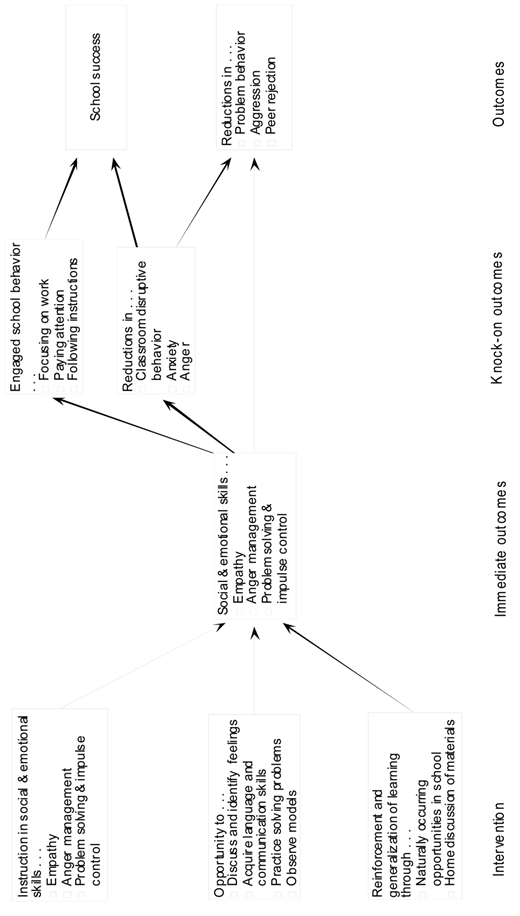
Theoretic/logic model of change. As described by the CFC (undated b, p. 2), social and emotional learning (SEL) should result in good behavior and school connectedness. Social and emotional skills should help children succeed in school because they will focus more on work, pay attention, and follow instructions. According to the CFC, the learning of problem-solving and emotional-management skills should reduce disruptive behavior, freeing up time for academics. The instruction in problem solving, impulse control, and emotion management should ameliorate strong emotions (anxiety, anger) which may interfere with the ability to remember and understand information, so the instruction was expected to help children “succeed in school and in life” (p. 2). The mechanisms through which the program would be expected to lead to reductions in problem behavior and improvements in school success is illustrated in Figure 4.
Promising evidence supporting further evaluation. The Second Step program has been the topic of a number of investigations. A review by Harak (2006) shows that most of these lack research designs suitable for providing any evidence of efficacy. One prior randomized trial and two studies that were published while the present investigation was underway provide some information about the program’s effects.
The prior randomized controlled trial involved six matched pairs of schools (Grossman et al., 1997). Schools were paired based on similarity in proportion of students receiving subsidized lunch and proportion minority enrollment, and a member of each pair was randomly assigned to experimental or control condition. The outcome measures included behavioral observation at school and self-administered teacher and parent ratings, and were collected before the intervention in the Fall, 2 weeks following the completion of curriculum delivery in the Spring, and six months post completion in the following Fall. Data at the first post intervention occasion were available for 81% of control and 83% of treatment pupils for whom parental consent had been obtained. At the second postintervention occasion, data were available for 78% of control and 81% of treatment pupils with parental consent. Only 66% of pupils in the two conditions had parental consent, however, and the proportion with consent by experimental condition was not reported. Treatment-control group differences in change from initial to first postintervention occasions were significantly different by a one-tailed test for observed physical aggression (greater decrease for treatment group) and neutral or prosocial behavior (greater increase for the treatment group). The initial to second postintervention differences for the same variables were almost statistically significant. No significant treatment-control group differences were observed for the teacher or parent rating data. No data on implementation were reported.
A more recent study (Frey, Nolen, Van Schoiack-Edstrom, & Hirschstein, 2005) involved a nonequivalent control group design involving 15 schools. In a complicated report, the investigators did not indicate finding hypothesized effects on social competency or antisocial behavior, and highlighted other findings that cannot necessarily be interpreted as efficacy evidence. Finally, an 18-month quasi-experimental investigation of a German translation of the curriculum by Schick and Cierpka (2005) found no effects on aggression or empathy according to student self-report; no effect on aggression or externalizing behavior according to parent CBCL reports; and no effect on any variable (including aggression and helping) in teacher reports. Effects on internalizing behavior were found. Schick and Cierpka presented evidence that the German intervention was reasonably well implemented.
Expected outcomes. Prior research involving designs that would be informative on program effects has not produced consistent, replicated outcomes and has sometimes found evidence of effects on outcomes that might perhaps not be expected (e.g., an effect on internalizing behavior in the German research). On the other hand, the otherwise best designed prior trial reported no implementation data and was an investigation of a limited (not school-wide) realization of the program. On the basis of the program theory and consideration of program content, it was expected that the intervention would increase the targeted social-emotional skills: empathy, problem solving and impulse control, and anger management. It should also increase student engagement in schoolwork, and reduce teacher ratings of disruptive behavior in school. Measures of aggression and problem behavior based on self-, teacher-, and parent-reports were expected to show decreases relative to measures for the control group. Indicators of school success (grades, test scores) were expected to improve according to the program logic-theoretic model.
Conceptual Frameworks
While there are distinct differences between the seven programs in the SACD Research Program, there is less variation among the conceptual frames undergirding them and their resulting implementation strategies. A general statement that can apply to all seven programs concerns the underlying theory about how children and adolescents develop character and socioemotional competencies. All seven programs either explicitly or implicitly focus on classroom and school-wide environmental contingencies and models along with didactic teaching. Students are expected to develop character through five largely interrelated mechanisms. First, from a social-ecology perspective, students are expected to develop character by reacting to norms in the school environment that are changed to emphasize more positive social behaviors. Second, from a behaviorist standpoint, they develop character and social-emotional competencies through environmental consequences of their actions, particularly being reinforced for positive behaviors. Third, from a social learning perspective, they develop competencies through observing others modeling the desired competencies and characteristics. Fourth, from a direct instruction perspective, they learn by reading about, being told about, or in other ways being exposed to the cognitive notions of these competencies. Fifth, through targeted inclusion of parents in the school in general and the SACD intervention in particular, the impact of the school-based program is expected to be magnified. The first of these perspectives on social and character development was related to a requirement for this set of projects; a requirement for the intervention to be school-wide and for school climate to be an outcome of interest. The other four are quite prevalent in the literature, making it appropriate for them to dominate the landscape in this research program. However, they do not exhaust the options for conceptually justifying and constructing the characteristics of an effective SACD program.
First, we will examine each of the four main perspectives. In doing so we will note where each perspective appears in each of the seven programs. Then, we will discuss other options that could have been represented in this project.
Before we do this however, it is helpful to point out that there are many other commonalities among the programs other than the conceptual frameworks. All were implemented in elementary schools, all have required strong research designs (including random assignment of schools to conditions), and all share a centralized battery of assessment instruments (along with program specific evaluations).
School-Wide Climate Change
To qualify for this project, investigators had to propose the implementation and evaluation of a SACD program that would be delivered school-wide (i.e., to all grades in the schools, typically K–5) that is appropriate for elementary school children and designed to promote positive character development thereby reducing negative behaviors (see Haegerich & Metz, this volume, for more details). School climate was identified as an outcome of interest. The reasoning behind this requirement was the recognition that changing the whole school environment is probably a necessary requirement for widespread and long-lasting change to occur.
All seven SACD programs delivered curriculum throughout elementary schools to the grades present in those schools. In addition, most of the programs included other components designed to change the whole school environment. The Academic and Behavioral Competencies (ABC) and the Positive Action (PA) programs included school-wide behavior modeling and management; Love in a Big World (LBW) and Second Step (SS) included modeling; most programs had program artifacts, such as posters or words of the week, around the school; four of the programs (ABC, LBW, PATHS, and PA) held planned events that celebrated and reinforced character development. PA’s focus on school leadership through their principal’s resources was also unique and aligned with best practices (Office of Safe and Drug-free Schools [OSDFS], 2008).
Behavioral and Environmental Contingencies
The program that most clearly focuses on behavioral and environmental contingencies was the ABC program. This program focused mostly on training educators in behavioral management techniques, including environmental engineering and use of consequences. Two other programs also explicitly focused on training educators in such behavior management skills: the Competence Support Program (CSP) and Second Step, although those methods were included among a variety of other methods. The other programs all rely on methods of direct reinforcement of desired behaviors and social recognition for such behaviors. Implicit in all these methods is the behaviorist assumption that character and social development ensue from positive consequences for desirable behavior and/or negative consequences for undesirable behavior. Hence, educators are taught to assess and adjust the environment so it naturally reinforces desirable behavior (and reduces undesirable behavior) and to directly administer such consequences mostly in the form of rewards and social affirmation.
Social Modeling
A second perspective that cuts across almost all the programs relies more on social learning theory (Bandura, 1977). The assumption is that character and social development will result, at least in part, from the observation of models who engage in desirable behavior. Four of the programs explicitly focus on teacher modeling of positive character and social skills. LBW, PA, PATHS, and the 4Rs programs all specifically encouraged and/or trained teachers to model the characteristics they were attempting to foster in their students. 4Rs, in particular, focused on the notion that teacher change is central to effective implementation and consequently resulting student development. This teacher change should go beyond mere modeling, but modeling is an important element of it. Social learning theory is essentially vicarious behaviorism, in that it posits that behavior change can occur not only through direct consequences of one’s own behavior but also through the observation of consequences to others for their behavior (Bandura, 1977).
Direct Instruction
Direct instruction was predominant in each of the seven programs. This is an ages-old element in all forms of education, including character, values, and moral education. The old McGuffey’s Readers are classic examples of a method that dates back to the study and memorization of sacred religious texts. The assumption is that learning about character will lead to character development. As Socrates said, “to know the good is to do the good.” All seven of the programs include some form of classroom lessons about character and social competencies. They tend to come in two forms. One form is teaching about character. SS, LBW, and PA all incorporate such lessons to varying degrees. The second form of classroom lessons is direct social skill training. All seven programs incorporated some form of direct skill training through classroom lessons, with many also incorporating role-playing as a technique for skill acquisition. These are often very different direct instruction approaches, with the former being closer to exhortation and didactic instruction and the latter more of a guidance curriculum or social-emotional education approach.
Parent and Community Involvement
Another notable strategy incorporated is parent and community involvement. All seven projects included some form of parent involvement, with all but LBW doing more than merely informing parents (Berkowitz & Bier, 2005a). Community involvement (beyond parents) was less common with only a minor emphasis except in PA. Opportunities for service to others, while a mainstay in character education (Beland, 2003), was underrepresented in this sample of programs; LBW and PA included some service opportunities. Peer interactive strategies, another important approach to character education (Berkowitz & Bier, 2005b), was glaringly underrepresented here. LBW encouraged some social bonding and PA incorporated peer tutoring. 4Rs focus on staff development, especially personal development of norms and behavior, was unique as was the CSP focus on teaching teachers to engage in student social engineering.
Conclusions
Although the seven social and character development-oriented programs described in this article vary in types of professional development, direct instruction, and specific theories of change, they all share one common theoretical assumption: that character and social development is largely (if not exclusively) a product of external influences on the child. Social and character development is influenced by a host of factors such as reward/punishment contingencies, the observation of role model behavior, and being directly taught both how to behave and about character and socially and emotionally competent behavior. Many different models of human development—ranging from bio-behavioral to ecological to dynamic interactionist models—posit that the phenotypic expression of character is predominantly a product of environmental inputs. Inputs such as incorporated in the seven SACD projects would theoretically shape the child toward moral character and social and emotional competency, whereas opposing inputs would shape the same child toward antisocial and asocial tendencies.
The interventions also share a common interest in improving student attitudes, competencies, and behaviors, and fostering a caring climate in the school. Thus, by combining these interventions in a multiprogram evaluation, as was done in the SACD Research Program, we are better able to understand more broadly whether school-based programs that focus on social and character development can effectively change student and school outcomes. By evaluating each intervention using the same evaluation protocol, we are able to address a major challenge faced in previous attempts to synthesize the results of school-based program evaluations—that is, the challenge of understanding the efficacy of alternative programs when the programs have been evaluated using different sets of student behaviors and school outcomes. In this way we can better understand whether differences in impact are due to actual differences in program efficacy, or if they are due to differences among the measured outcomes used to judge the different programs. At the same time, by conducting a multiprogram evaluation we are able to enhance statistical power to detect effects of social and character development programs as a broad intervention strategy. The evaluation will provide additional information to the field in understanding the question, Do universal, school-wide, social and character development-oriented programs work to improve student and school outcomes when evaluated rigorously as a cohesive strategy?
It is important to note, however, that some elements and theoretical perspectives found in universal, school-based programs are underrepresented in the programs evaluated within the SACD Research Program. These elements are included in other programs that have been included on best practice lists (Beland, 2003; Berkowitz & Bier, 2005; OSDFS, 2008). For example, organismic models that assume social and character development is more a result of the interaction of environmental inputs and internal presses, and view the child as partner, interpreter, and meaning-maker are not a major focus. School-based strategies reflecting this organismic view include student empowerment, peer leadership, active engagement in service, and “grappling” collaboratively with social and moral concepts (Sizer & Sizer, 1999). In particular, student empowerment approaches that create a democratic system within schools that encourage student voice in school policies, and commonly include some form of class meetings (Berkowitz, 1985; Developmental Studies Center, 1996; Kriete, 2002), such as in the case of Just Community Schools (JCS), the Responsive Classroom, the Child Development Project, and Open Circle, are not well-represented. In the case of JCS, this includes teacher-facilitated peer grappling with open-ended moral dilemmas. In the other cases, it includes teacher-facilitated peer problem solving, event planning, and decision making. Many character education programs that are assumed to be effective manifest this in student-led peer conflict resolution programs (e.g., Porro, 1996) and student-led homeroom and advisory programs (e.g., Owens & Asher, 2008). This focus on peer interactive methods and students governance not only manifests the student-empowerment element but also a strong discursive element that is common in such programs, in contrast to a more didactic focus in many of the SACD programs and other programs from a more behavioral orientation. Such a focus is theoretically central to the promotion of critical thinking competencies, such as moral reasoning (Berkowitz, 1985). Furthermore, it also represents a peer-interactive element found to be important in character education programs (Berkowitz & Bier, 2005b).
A second element common in more constructivist models is positive relationship building initiatives, again sometimes exemplified as peer interaction. For example, the Child Development Project has a strong cross-age buddy program that pairs different age classrooms (and individual children within those classrooms) for social and academic activities. The peer-tutoring element in Positive Action is the lone representative of this strand in the SACD programs. When examining national award-winning schools (cf. National Schools of Character: www.character.org), many examples of relationship-building strategies emerge (e.g., Francis Howell Middle School, St. Charles MO, pairs support staff with homerooms).
Even so, the programs evaluated within the SACD Research Program represent strategies that assume that external environmental inputs optimally shape student character and social and emotional development, and include reward and punishment contingencies, social recognition, role-modeling, and direct instruction. By evaluating these programs together in one multiprogram evaluation using the same outcomes of interest, we can come closer to understanding how universal school-based strategies that focus on social and character development improve student attitudes, competencies, and behavior, and foster a positive school climate.
Author Note
The information reported here is based on research conducted as part of the Social and Character Development (SACD) Research Program funded by the Institute of Education Sciences (IES), U.S. Department of Education, under contract ED-01-CO- 0039/0006 to Mathematica Policy Research (MPR), Princeton, NJ, in collaboration with the Centers for Disease Control and Prevention’s Division of Violence Prevention (DVP), and the recipients of SACD cooperative agreements. The SACD Consortium consists of representatives from IES, DVP, and the national evaluation contractor (MPR), and each cooperative agreement site participating in the evaluation. SACD corporate authors for this paper include: IES Amy Silverman, Edward Metz, Elizabeth Albro, Caroline Ebanks; DVP Tamara M. Haegerich (previously, IES), Corinne David-Ferdon, Le’Roy Reese (Moorehouse School of Medicine; previously DVP); Children’s Institute Deborah B. Johnson, Hugh F. Crean; New York University J. Lawrence Aber, Stephanie M. Jones (Harvard University), Joshua L. Brown (Fordham University); University at Buffalo, The State University of New York William Pelham, Greta M. Massetti (CDC), Daniel A. Waschbusch; Oregon State University Brian R. Flay, Carol G. Allred (Positive Action), David L. DuBois (University of Illinois at Chicago), Michael L. Berbaum (University of Illinois at Chicago), Peter Ji (University of Illinois at Chicago), Vanessa Brechling, (University of Illinois at Chicago); University of Maryland Gary D. Gottfredson, Elise T. Pas, Allison Nebbergall; University of North Carolina at Chapel Hill Mark W. Fraser, Thomas W. Farmer (Penn State University), Maeda J. Galinsky, Kimberly Dadisman; and Vanderbilt University Leonard Bickman, Catherine Smith.
The information originates from the complementary research activities conducted by each cooperative agreement recipient. We would like to acknowledge the role of the following investigators from Mathematica Policy Research in the multiprogram evaluation: Karen Needels, John A. Burghardt, Heather Koball, Laura M. Kalb, Peter Z. Schochet, and Victor Battistich (University of Missouri—St. Louis).
Notice of potential conflict of interest: The research described herein was done using the program and the training and technical support of Positive Action, Inc. Dr. Flay’s spouse holds a significant financial interest in Positive Action, Inc.
The authors wish to thank the Consortium reviewers who commented on earlier drafts of this article. The findings and conclusions in this report are those of the authors and do not represent the official position of the Institute of Education Sciences, Centers for Disease Control and Prevention, Mathematica Policy Research, Inc., or every Consortium member, nor does mention of trade names, commercial products, or organizations imply endorsement by the U.S. Government. Correspondence concerning this article should be addressed to brian.flay@oregonstate.edu