This study aims to investigate the impact of value co-creation (VCC) on assistive technology (AT) within the context of humanitarian aid (HA).
A systematic literature review is conducted with the aim of mapping the state of the art in VCC within HA for users of AT. The selected articles were systematically coded through content analysis to identify where VCC occurs, the mechanisms through which it takes place, as well as its inhibitors and facilitators.
This study revealed a notable absence of integrated approaches simultaneously encompassing VCC, AT and HA and a need for deeper exploration into the operationalisation of innovative ideas. Furthermore, eight facilitators and seven inhibitors of VCC for AT users in HA contexts were identified.
This study will support the development of more efficient HA models that are designed with end users in mind, as well as the analysis of factors that may contribute to such effectiveness.
The results of this research may contribute to improving the design of humanitarian interventions and strengthening the agency of AT users, thereby promoting social inclusion.
This study addresses a research gap concerning AT user inclusion and accessibility in HA settings. It also points to future research directions, including the use of emerging technologies, efficient crisis management and the establishment of management principle-based structures.
1. Introduction
The World Health Organisation (WHO) states that humanitarian crises significantly increase the need for assistive technology (AT) (WHO, 2022). In general, the most affected are children and the elderly with disabilities, individuals with chronic diseases and migrants (Shen and Naeim, 2017; WHO, 2022; Melo, 2025). AT comprises products and services that enhance functional capabilities and promote independence, including physical aids (e.g. wheelchairs and hearing aids) and digital tools (e.g. screen readers and communication apps) (WHO, 2022). Its goal is to support independence and improve the quality of life for those with activity limitations (White et al., 2023), fostering personal development and self-determination (Piekema et al., 2024).
Humanitarian aid (HA) refers to the set of activities aimed at alleviating human suffering (Cordner and Tidball-Binz, 2017), often providing material or logistical assistance during crises (Rejeb et al., 2021). According to WHO (2022), humanitarian crises can be defined as temporary or prolonged, sudden or slow-onset crises. Their causes may include natural disasters, public health emergencies and/or human-caused disasters.
Value co-creation (VCC) involves joint activities by specific actors for a common purpose, generating mutual value closely linked to value-in-use (Hendriks and Opdyke, 2020; Lusch and Vargo, 2014). Value-in-use refers to the value jointly created and determined by users through their contextual and ongoing interactions with the offering (Lusch and Vargo, 2006). Accordingly, VCC occurs when different parties integrate their resources, competences and knowledge in the joint design of solutions and in their application (Bonamigo et al., 2025). In HA and AT, this aligns with Service-Dominant Logic, redefining economic exchange by shifting focus from product delivery to co-producing services and solutions through stakeholder collaboration (Tang and Yang, 2025; Opazo-Basáez et al., 2025; Bonamigo et al., 2022).
Despite AT research advancements, access remains limited in disaster and HA settings (Asogwa et al., 2024; Fabri et al., 2016). Persistent issues include: scarce physical/financial resources (Elnaiem et al., 2023; Guerrero et al., 2023; WHO, 2022; Callaghan, 2016), inadequate logistical support (Rejeb et al., 2021; Apte et al., 2016) and shortage of specialised training and qualified professionals (Hughes, 2019; Uchiyama et al., 2021; Elnaiem et al., 2023). Further hindrances to AT creation involve power outages (Rejeb et al., 2021; Dourado and Pedrino, 2023), lack of infrastructure (Guerrero et al., 2023; Jason et al., 2010) and restricted information or communication access (Rejeb et al., 2021; Oh and Lee, 2020; WHO, 2022).
Given this context, this study aims to identify the impact of VCC on AT in HA. Based on its findings, the study will evaluate VCC’s impacts on HA services for AT. To achieve this, it seeks to answer:
How is value co-creation evidenced in humanitarian aid for assistive technology users?
How does value co-creation impact humanitarian aid for assistive technology users?
What are the facilitators and inhibitors of value co-creation in humanitarian aid contexts for assistive technology users?
To explore the relationship between AT co-creation in HA situations, its facilitators and inhibitors, a systematic literature review was conducted. This article is organised into four sections: this Introduction, Section 2: Methodological Approach, Section 3: Research Findings and Discussion and Section 4: Conclusions, highlighting contributions, limitations and future research directions.
2. Methodological approach
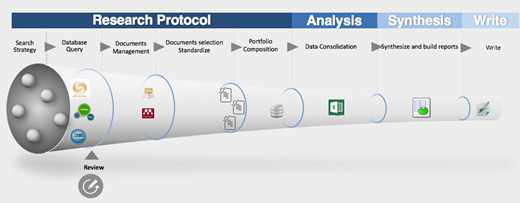
A systematic literature review was conducted to identify the state-of-the-art of VCC in HA within the scope of AT. The literature review specifically used the four-phase, eight-activity Systematic Search Flow (SSF) Method (Ferenhof and Fernandes, 2016), detailed in Figure 1. Subsequently, the selected studies were examined through content analysis, following Bardin’s (2011) three stages:
pre-analysis;
material exploration or coding; and
treatment of results, inference and interpretation.
For the coding process, we defined the units of analysis according to Bardin (2011) as follows: Registration Units (the discrete elements to be coded, such as sentences, paragraphs or statements reflecting VCC practices) and Context Units (the broader textual or conceptual context, such as the section of the article, the study’s focus or the organisational setting in which the practice occurs).
The SSF method comprises four phases. Phase 1, Research Protocol Definition, focuses on defining the study object. This includes Search Strategy (selecting search engines, defining inclusion/exclusion criteria and retrieving online information) and Database Query (formulating keyword expressions for databases). Document Management involves using software to manage retrieved abstracts and references, automating search, storage, quotation and referencing. Document Selection Standardisation requires authors to standardise item selection by creating thematic groups, reading titles, abstracts and keywords to select relevant documents and generate a knowledge matrix. Portfolio Composition involves reading all articles for final filtering. Phase 2, Analysis, combines and groups collected data, incorporating authors’ perception. Phase 3, Synthesis, consolidates relevant research topics and builds reports. Finally, Phase 4, “Write Up", consolidates results.
Our exact procedure followed the SSF Method (Ferenhof and Fernandes, 2016). Before performing the content analysis, all authors were calibrated and aligned regarding the theoretical and methodological knowledge required to ensure consistent and reliable coding. This calibration process enabled methodological triangulation through independent coding and subsequent comparison and discussion among authors. First, we established a research plan, encompassing the following research questions:
RQ1. How can value co-creation be evidenced in humanitarian aid contexts for assistive technology users?
RQ2. How does value co-creation impact humanitarian aid for assistive technology users?
RQ3. What are the facilitators and inhibitors of value co-creation in humanitarian aid contexts for assistive technology users?
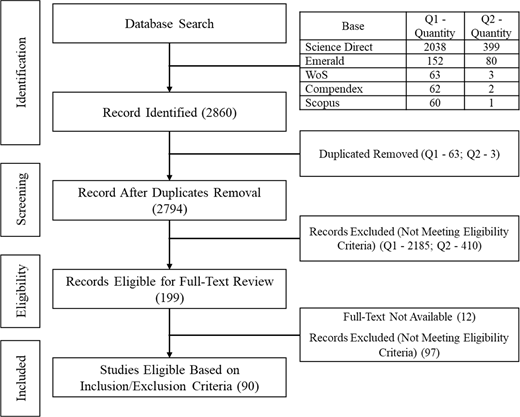
This plan also involved keywords and inclusion and exclusion criteria. Second, we used two research queries: Q1. ((Cocreation OR Co-creation) AND (“assistive devic*” OR “assistive technolog*” OR “Adaptive technolog*”)) Q2. ((Cocreation OR Co-creation) AND (“Humanitarian assistance” OR “Humanitarian aid” OR “Humanitarian Support” OR “Humanitarian services”)). Two separate queries were used because combining these terms into a single search substantially limited the number of retrieved studies. This approach allowed for a more comprehensive identification of relevant literature. Inclusion criteria were: empirical, peer-reviewed papers indexed in Science Direct, Emerald, Web of Science, Compendex and Scopus. The selection of languages (English, Spanish and Portuguese) was based on the linguistic proficiency of the research team (Durach et al., 2017). No time restriction was applied to allow the identification of the full temporal development of the research topic. Grey literature (reports, conference papers, non-academic research and other languages) was excluded. The search was not restricted to open-access articles, for items that were not freely available, full-text access was obtained through institutional subscriptions and via CAPES, Google®, Google Scholar®, Microsoft Academic Search®, ResearchGate® or direct correspondence with the authors.
Subsequently, on 15 July 2024, the authors conducted the databases searches using the specified keyword combinations applied to titles, keywords and abstracts, returning a total of 2,860 documents. Third, we managed documents by importing references to reference manager software and excluding duplicates, resulting in 2,794 documents. Fourth, we manually scanned document abstracts and, if pertinent, read parts of the full text for relevance. This reduced the selection to 199 documents met the established criteria. Fifth, we composed the bibliographic portfolio for analysis by exporting author (year), title and journal information to a spreadsheet. Each data entry was then edited and coded according to the criteria in Figure 2.
After the Synthesis phase, all individual author data were consolidated into a single spreadsheet to allow systematic thematic categorisation. The 199 initially selected documents were coded and analysed according to our content analysis criteria, with each author independently reviewing the unified spreadsheet to verify coding consistency. Divergences in interpretation were discussed collectively, and further exclusions were applied as necessary. Through these steps, 90 articles were retained for the final analysis portfolio, providing insights into the drivers, key factors, inhibitors, barriers, wastes and benefits of VCC for AT in HA contexts.
3. Results and discussions
Through analysis, the 90 articles presented in Table 1 were examined to address the three research questions.
The final stage of our review process involved writing up the findings. First, relevant analytical items were systematically identified within the reviewed articles as Context Units. Subsequently, these items were inductively grouped through content analysis, and the nomenclature of the resulting categories was defined a posteriori by the authors, constituting the Registration Units in accordance with Bardin’s framework.
3.1 Value co-creation in humanitarian aid for assistive technology users
In response to RQ1: How can VCC be evidenced in HA contexts for AT users?, which sought to understand how VCC in HA for AT users can be evidenced, four main groups were identified: Collaborative Co-Participation, Partnership Building, Resource Complementarity and User-Centred Solutions, as presented in Table 2. Based on Table 2, each of the Registration Units identified through the content analysis is described below.
The Co-participatory Collaboration group represents the union of individuals or organisations, primarily end-users, to achieve common objectives (Arifeen and Nyborg, 2021; Pillitteri et al., 2021); its aim is joint problem definition and genuine collaboration between researchers and practitioners (Altay et al., 2021). This collaboration is directly impacted by its context; social inequality necessitates innovative approaches to mitigate resulting problems, which can benefit emergency management research, especially when community participation is included (Cordner and Tidball-Binz, 2017; Oh and Lee, 2020). This group exemplifies a service ecosystem, where multiple actors interact to co-create value. Furthermore, alternative collaboration management enhances understanding of people’s needs and capacities, enabling appropriate support and protection at each stage (O'Leary et al., 2023).
Various methods can evidence Co-participatory Collaboration, such as: User-Centred Tools (e.g. QFD and TRIZ) (Avf et al., 2019); three-dimensional printers (Avf et al., 2019); decision support systems to ensure end-user experience and expert opinions (Elkady et al., 2024); and Participatory Design or Co-design, a process where designers and end-users collaborate to enhance final outcomes and foster understanding (Heylighen et al., 2017; Fabri et al., 2016).
The Partnership Co-creation group is evidenced by the ability to access complementary resources and capabilities through intersectoral partnerships (Arslan et al., 2021). VCC is observed where mutual gain occurs between parties (Pillitteri et al., 2021; Mahmoud Saleh and Karia, 2020; Adam, 2013; Asogwa et al., 2024). Partnerships demonstrate resource integration, as actors combine knowledge, skills and tangible resources for mutual benefit. Multi-stakeholder platforms, for example, serve as decision-making hubs for joint actions (Sartas et al., 2019).
In turn, the Resource Complementarity group involves how different actors, activities and artefacts interrelate and complement each other to create value also observable through a theoretical ecosystem model (Rush et al., 2021). This category reflects Service-Dominant Logic’s (SDL) concept of operant resources, where actors’ capabilities and knowledge are mobilised to generate value. Each institution or stakeholder possesses specific expertise, and leveraging complementarity can unify strengths (Apte et al., 2016).
For the User-Centred Solutions group, the objective is to involve end-user participation (Lai et al., 2020; Özdamar et al., 2022), sometimes encompassing an entire community (Ward et al., 2015). Generally, end-user participation promotes better satisfaction, adherence and improved solution development (Daly Lynn et al., 2016; Dyzel et al., 2020). This is crucial for managing resources and people, as increasing research inputs can reduce delivery times and enhance quality (Edvardsson and Tronvoll, 2022; Callaghan, 2016).
3.2 Impacts of value co-creation in the humanitarian aid context for assistive technology users
For RQ2: How does VCC impact HA for AT users?, regarding the impact of VCC in HA for AT users, five categories (Registration Units) were identified: Partnership Creation; Equity in Resource Application; Power Dynamic Shift; Customisation; and Technology, as shown in Table 3. These impacts illustrate how value emerges from actor interactions and coordinated resource integration, consistent with SDL’s value-in-use perspective.
The Partnership Creation category considers cross-sectoral and individual collaboration essential. Structured partnerships enhance resource orchestration through expertise and knowledge sharing (Elnaiem et al., 2023; Rua et al., 2024). Partnerships integrating resources and technical knowledge support various sectors, including global health, medication and vaccine development, infrastructure improvement (especially operational health), poverty reduction and technical assistance (Arslan et al., 2021; Asogwa et al., 2024; Elnaiem et al., 2023).
Partnership creation facilitates feedback cycles (Arslan et al., 2021; Asogwa et al., 2024), enhancing AT and HA operational functionality (Arslan et al., 2021; Asogwa et al., 2024; Elnaiem et al., 2023; Ngoasong, 2009; Avf et al., 2019; Daly Lynn et al., 2016). In this context, VCC promotes stakeholder integration (Kim et al., 2024), through diverse disciplines like engineering, medicine and therapy (Lamontagne et al., 2024); However, numerous stakeholders can impede VCC efficiency, underscoring the need for common understanding (Talwar et al., 2023).
The Equity in Resource Application category highlights unequal resource distribution. VCC mitigates this through beneficiary independence, and autonomy (Dourado and Pedrino, 2023; Billis et al., 2018; Rashid et al., 2017), in addition to considering the organisational and social context. Asogwa et al. (2024) note that early stakeholder involvement, particularly with non-governmental organisations, ensures real end-user, community or third-party needs are met. Furthermore, VCC can facilitate technological applications (Rashid et al., 2017).
The Power Dynamic Shift category indicates that active community engagement naturally fosters ownership and duty, diffusing power among stakeholders (Asogwa et al., 2024). This engagement also improves communication, leading to more collaborative, less hierarchical decisions (Lamberti-Castronuovo et al., 2022). Social inequality, however, maintains the status quo, threatening common well-being (Cordner and Tidball-Binz, 2017).
The Personalisation category highlights VCC’s contribution to AT by enabling its adaptation and including people with disabilities in decision-making; active user participation ensures AT effectiveness and safety (Ariza and Pearce, 2022). User needs and preferences can be incorporated, fostering technological innovation in domestic environments (Avf et al., 2019). User-Centred Design also serves as a VCC tool (Dourado and Pedrino, 2023), ensuring personal preferences (Mattheiss et al., 2017). An online toolkit offers a practical example of personalisation (Fabri et al., 2016; McLellan et al., 2022). The demand for multiple disciplines benefits VCC (Sajjad et al., 2024; Liu et al., 2024; McLellan et al., 2022). Positive impacts generated by VCC include workshops (Fabri et al., 2016; Moody et al., 2019) and digital platforms (Ro et al., 2024), in addition to facilitating research (McLellan et al., 2022).
The Technology category impacts VCC in HA and AT through technological innovations. These include IoT for real-time monitoring (Al Bassam et al., 2021; Beg et al., 2022; Gupta et al., 2023; Koumpouros and Kafazis, 2019; Kumar et al., 2023; Moraru et al., 2022) and drones for improved disaster response (Rejeb et al., 2021). Other technologies, like hybrid approaches, can also contribute to HA (Sathianarayanan et al., 2024). Community involvement in data collection and sharing can increase data quality and quantity (Sathianarayanan et al., 2024; Dourado and Pedrino, 2023), thus promoting technological development (Groom et al., 2021; Kumar et al., 2023). However, data confidentiality concerns can inhibit participation (Habbal et al., 2024). While smart device feedback promotes engagement (Koumpouros and Kafazis, 2019), overly complex or unfamiliar technology often deters end-users (Yang et al., 2024).
The use of AI can occur in different ways, such as measuring international aid effects and collecting indicators and data analysis (Guerrero et al., 2023; Kumar et al., 2023). AI can facilitate remote monitoring of people with disabilities (Gupta et al., 2023), increasing adherence and treatment quality, consequently improving quality of life (Gupta et al., 2023; Kumar et al., 2023; Jia et al., 2021).
3.3 Facilitators and inhibitors of value co-creation in the humanitarian aid context for assistive technology users
For RQ3: What are the facilitators and inhibitors of VCC in HA contexts for AT users?, addressing facilitators and inhibitors, results are divided into two parts: facilitators are presented in Table 4, followed by inhibitors in Table 5. Eight facilitators (Registration Units) of VCC for AT users in an HA context were identified: Technology, Collaboration, Organisation and Management, Public Policies, Creative Solutions, Access to Resources and Research and Innovation and Heterodox Practices, as shown in Table 4.
Technology facilitates VCC by increasing connectivity, collaboration and innovation. It enhances decision-making efficiency via real-time information, enabled by Artificial Intelligence (AI), Big Data, the Internet of Things (IoT) and cloud computing (Kumar et al., 2022; Gupta et al., 2023; Kumar et al., 2023; Al Bassam et al., 2021). Digital platforms broaden community engagement, fostering personalised and inclusive solutions (Oh and Lee, 2020; Sathianarayanan et al., 2024; Callaghan, 2016). Novel technologies contribute to the decentralisation and democratisation of AT innovation, bringing transparency and accessibility (Rejeb et al., 2021; Ariza and Pearce, 2022; Avf et al., 2019; Habbal et al., 2024; Rashid et al., 2017). Thus, technology empowers collaborative processes and responds to social/humanitarian challenges, also fostering positive community expectations through social network communication (Fischer-Preßler et al., 2023; Behl and Dutta, 2020; Edvardsson and Tronvoll, 2022).
The Collaboration facilitator involves leveraging each stakeholder’s complementary knowledge and resource sharing, leading to innovative AT solutions. Public–private partnerships effectively combine essential competencies and mobilise support for social/technological challenges (Bergman, 2008; Ngoasong, 2009; Patel and Gohil, 2022). This promotes complex product development through multi-professional collaboration, ensuring alignment with end-user expectations (Moody et al., 2019). Local experts and community organisations strengthen solution adaptation to specific needs, guaranteeing sustainability and social impact (Bucherie et al., 2022; Arslan et al., 2021; Elkady et al., 2024). Additionally, international cooperative networks and strategic alliances facilitate information exchange and joint development of AT technologies and services (Adam, 2013; Jason et al., 2010; Manyena et al., 2019; Gupta et al., 2023). Integrating end-users into decision-making is key, to promoting greater engagement and better acceptance of developed solutions (Knaul et al., 2018; Lamontagne et al., 2024; Fabri et al., 2016).
The Organisation and Management facilitator aims to ensure process structuring and efficiency for scenario comprehension (Sabri et al., 2019). Its premises include standardisation and structured models, promoting knowledge exchange, innovative solutions and better control of AT activities from creation to distribution (Zhong et al., 2014; Pohjosenperä et al., 2019). Benefits include institutional strengthening, a user-centred approach, logistical chain organisation and improved initiative credibility (Opršal and Harmáček, 2019; Vega and Roussat, 2019; Pérouse de Montclos, 2012; Avf et al., 2019).
The Public Policies facilitator influences necessary institutional support for projects. Regulation aimed at accessibility creates structures that stimulate AT user participation (Tøssebro, 2016). Governmental incentive measures contribute to inclusion advancements (Talwar et al., 2023) and international cooperation strategies with flexible funding reinforce strategic partnerships and better resource use (Opršal and Harmáček, 2019; Elnaiem et al., 2023). Furthermore, stakeholder involvement ensures HA projects align with societal interests (Asogwa et al., 2024).
Creative Solution is another facilitator, particularly evident in challenging scenarios. This facilitator assists in adapting to new realities by promoting learning in crisis scenarios (Aguilar and Retamal, 2009). Stimulating idea generation methods and gamification can increase affected individuals’ engagement (Cohavi and Levy-Tzedek, 2022; Mattheiss et al., 2017). Moreover, the customisation of adaptations can increase solution effectiveness (Koumpouros and Kafazis, 2019).
Resources, such as financial, technological and specialised elements, a facilitators, making innovative AT solutions viable (Liu et al., 2024). Continuous technical support and ongoing research improve AT effectiveness and reduce disaster response times (Groom et al., 2021; Callaghan, 2016). Donor funding, collaboration with private industry and collaborative spaces are essential strategies to aid in crises and ensure effective solutions (Ngoasong, 2009; Ostuzzi et al., 2015). Furthermore, Research is a facilitator because of its role in guiding the development of value co-created AT solutions (Apte et al., 2016). International research collaboration can accelerate advancements in technologies (Kumar et al., 2023; Bucherie et al., 2022). The use of historical data contributes to vulnerability analysis and an increasing number of institutions participate in the innovation and VCC process in research (Rua et al., 2024).
The Innovation or Heterodox Practices facilitator challenges traditional models, contributing new solutions in AT and HA. Co-development, digitalisation, Design Thinking and transformative approaches assist in challenging scenarios, improving understanding, helping local communities with disruptive solutions and facilitating new technology creation (Cordner and Tidball-Binz, 2017; Altay et al., 2021; Manyena et al., 2019; Fabri et al., 2016).
Regarding inhibitors, seven Registration Units were identified for VCC for AT users in an HA context: Organisational Inefficiency, Resource Limitations, Insufficient Research and Technical Knowledge, Infrastructure Challenges, Sociocultural Factors, Technological or Research Limitations and Limited End-User Participation in the Process, as shown in Table 5.
The inhibitor Organisational Inefficiencies are structural, procedural and communicative issues compromising coordination, resource allocation and strategy implementation (Iqbal and Ahmad, 2022; Arslan et al., 2021; Falagara Sigala et al., 2020). Detrimental effects include high staff turnover, bureaucratic barriers and unclear guidelines (Apte et al., 2016; Oh and Lee, 2020; Beg et al., 2022). These factors hinder VCC by limiting new technology adoption and local adaptation, leading to complex administration and decisions misaligned with local realities (Arslan et al., 2021; Ngoasong, 2009; Lamontagne et al., 2024; Liu et al., 2024).
Resource Limitations encompassing scarce materials, funding and infrastructure constrain project implementation and stakeholder collaboration (Avf et al., 2019; Lamontagne et al., 2024; Liu et al., 2024). These limitations compromise AT production and distribution, impact costs and infrastructure and restrict access to emerging technologies (Manyena et al., 2019; Heylighen et al., 2017; Koumpouros and Kafazis, 2019; Moraru et al., 2022; Gupta et al., 2023; Lamontagne et al., 2024; McLellan et al., 2022).
Insufficient Research and Technical Knowledge arise from restricted information access and knowledge cycle impasses among professionals (Dyzel et al., 2020; Altay et al., 2021; Cordner and Tidball-Binz, 2017). This manifests as inadequate practical studies on new technology implementation and a lack of specialised training (Lamberti-Castronuovo et al., 2022; Cohavi and Levy-Tzedek, 2022; Lamontagne et al., 2024), thereby impacting VCC because of collaboration limitations and reduced efficiency and effectiveness in complex scenarios (Hammel et al., 2008; Biswas et al., 2023; Elkady et al., 2024; Mickelsson et al., 2022).
Infrastructure Challenges stem from structural, technological and institutional limitations (Alomrani et al., 2021; Uchiyama et al., 2021; Kumar et al., 2023). These present as inadequate infrastructure, scarce qualified suppliers and unreliable communication networks (Altay et al., 2021; Bergman, 2008; Tozier de la Poterie et al., 2023; Al Bassam et al., 2021). Such challenges also restrict inter-organisational collaboration, impeding effective solution development and compromising their adequacy for vulnerable populations’ needs (Jason et al., 2010; Groom et al., 2021; Heylighen et al., 2017; Schiffling and Piecyk, 2014).
Sociocultural Factors include beliefs, norms and dynamics that impede new solution adoption. Common challenges involve technology resistance because of belief in manual care (Watanabe et al., 2024), communication difficulties (Abney et al., 2017) and distrust of rumours (Malhouni and Mabrouki, 2024). Moreover, social inequalities (Manyena et al., 2019) and cultural norms affect VCC (O'Leary et al., 2023), hindering collaboration and reducing solution effectiveness.
Technological Limitations and Lack of Research can impact VCC through opinion indicator divergences (Bucherie et al., 2022), weak development relationships (Guerrero et al., 2023) and a deficit in educational policies (Jason et al., 2010). Furthermore, technologies themselves can have impacts, such as distancing because of complexity (Jutel, 2022), absence of incentives (Knaul et al., 2018) and data privacy concerns (Rejeb et al., 2021; Beg et al., 2022; Sathianarayanan et al., 2024; Koumpouros and Kafazis, 2019; Yaghtin and Mero, 2024; Al Bassam et al., 2021; Kumar et al., 2023). Aggravating factors include the lack of end-user inclusion in validation (Ariza and Pearce, 2022) and resistance to the adoption of new solutions (McLellan et al., 2022).
Limited End-User Participation occurs when AT users are excluded from its development. Impasses include failing to consider end-user needs (Tao et al., 2020) and a lack of inclusion for economically less powerful stakeholders (Asogwa et al., 2024), particularly in humanitarian crises (O'Leary et al., 2023). Complex technologies and technical problems exacerbate their exclusion (Daly Lynn et al., 2016; Burova et al., 2023). Delayed user integration can increase technological adjustment needs (Gudowsky et al., 2017; Ostuzzi et al., 2015). Additionally, there’s a prioritisation of treatment technologies over rehabilitation technologies (Jia et al., 2021).
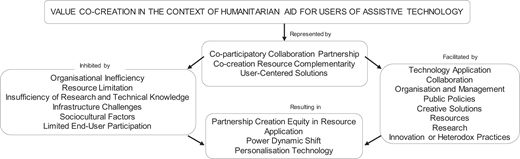
In summary, Figure 3 presents a synthesis of the main findings of this research. The figure contains ways of demonstrating VCC in the analysed context, the means to achieve VCC and the factors that may inhibit or facilitate this process.
4. Conclusion
This article aimed to identify the impact of VCC on AT within the HA context. In scenarios characterised by financial, logistical and managerial challenges, identifying the main facilitators and inhibitors is essential. Eight facilitators and seven inhibitors were identified, influencing co-creation processes, highlighting how resource integration across actors can enhance effectiveness, while limited end-user participation constrains VCC potential by underusing users as operant resources, consistent with SDL principles.
Taken together, the identified facilitators, inhibitors and impacts provide a structured and integrative mapping of VCC in AT within HA contexts. This organisation consolidates fragmented evidence from the literature and offers a coherent analytical foundation to support the discussion of measures aimed at reducing inhibitors and improving AT development and distribution processes.
4.1 Theoretical implications
The results revealed a lack of research simultaneously addressing VCC, HA and AT. Most articles focused on solution development rather than managing their operationalisation and dissemination. A literature gap exists regarding in-depth discussions on operationalising innovative ideas within relevant fields. Limited systematic exploration of effective dissemination strategies compromises applicability across contexts. Even though theoretical frameworks like SDL provide solid foundations, their practical application remains limited. No methodological framework currently provides concrete and replicable guidelines. Furthermore, approaches directly connecting this logic to operational and structural challenges in real-world contexts are absent. The recommended course of actions is not in promoting new models, but to systematically applying existing frameworks with context-specific refinements.
4.2 Practical implications
Understanding the identified facilitators and inhibitors allows stakeholders, including local communities, to improve process efficiency, resource use and decision-making in HA. Recognising actors as active participants and operant resources is essential to enhance co-creation outcomes and ensure continuous improvement of AT creation and distribution processes.
4.3 Limitations
The main limitations of this study include the scarcity of deeply relevant articles and the lack of indicators to measure VCC in HA for AT, which hinder assessments of efficiency, effectiveness and solution evaluation from different perspectives. Furthermore, key themes such as insufficient transparency in resource application, low governmental investment and the absence of action protocols impede HA efforts and undermine community trust. Although multiple strategies were used to access full texts, the requirement for full-text availability may have resulted in the exclusion of relevant studies, potentially introducing selection bias.
4.4 Suggestions for future research
The findings have implications for future research directions, including emerging technologies (e.g. drones for aid policies), efficient crisis management, development of support structures based on management principles, vulnerability index optimisation, topic-correlated management platforms, new management models, digitalisation of crisis management information, efficiency in system design for relief/humanitarian institutions, terminology foundations, sociological studies on actor accountability, financing mechanisms, analyses on financial investment efficiency in non-governmental organisations and solutions, financial and social vulnerability and post-disaster financial health of stakeholders.
Furthermore, future research could extend this foundational mapping by incorporating bibliometric and other quantitative analyses, such as publication distributions, temporal trends, citation networks and keyword co-occurrence, to provide additional statistical insights that strengthen and complement the qualitative findings of this systematic literature review. Research could also explore the operationalisation of SDL concepts in HA contexts, investigate systematic dissemination strategies and evaluate the role of emerging technologies, support structures and digital platforms in enhancing co-created AT solutions.