The aim of this study is to analyse the role of short-term rental platforms in tourists’ revisit intentions, focusing on the ability of these platforms to create memorable tourism experiences (MTEs). It examines guests’ perceived hospitality as a key variable in shaping MTEs and investigates whether these experiences influence the decision to revisit the destination. For this purpose, a theoretical model grounded in the stimulus-organism-response theory is proposed. The model is based on hypothesised relationships among four constructs, namely MTEs, hospitality, place attachment and revisit intention.
These relationships are explored using a sample of 369 international visitors staying in peer-to-peer accommodation in Barcelona, Spain. Data were collected in 2022 from a street survey of international visitors to Barcelona staying in peer-to-peer accommodation. A predictive model was employed to explain the relationship between MTEs created during stays, hospitality and visitors’ intention to return.
The study highlights that for tourists staying in peer-to-peer accommodation, perceived hospitality serves as a precursor to MTEs. All dimensions of MTEs investigated contribute positively to the formation of such experiences. MTEs, in turn, influence the intention to revisit the city in the future, with place attachment mediating this relationship. In this regard, the study shows that guests associate perceived hospitality with feelings of place attachment, which act as drivers in the creation of MTEs, thus motivating a return visit to the destination. The article puts forward several practical implications for local authorities, hosts and platform companies, aimed at harnessing the benefits of offered hospitality while mitigating the undesirable effects of host professionalisation.
This paper explores how hospitality shapes MTEs and encourages revisit intentions. It highlights that guests find non-professional hosts more hospitable, fostering authentic connections and place attachment. These insights are crucial as short-term rentals become more professionalised, potentially reducing unique, personalised experiences. The paper suggests strategies to preserve these authentic interactions and promote tourism satisfaction and sustainability, counteracting the increasing professionalisation of the industry.
1. Introduction
The formation of tourism experiences has been extensively studied in the tourism literature through the construct of memorable tourism experiences (MTEs) (Kim et al., 2024; Sthapit et al., 2023a). Recent contributions have focused on different areas of tourism, including hiking (Wang et al., 2024), dark tourism (Hosseini et al., 2024), and wellness (Sthapit et al., 2023b). However, there is a gap in the literature in exploring the creation of MTEs in short-term rental accommodations (STR), specifically how host hospitality can influence the guest experience. To fill this gap, this paper explores the relationship between two factors: guests’ perceptions of the hospitality offered by their accommodation on STR platforms (Bai et al., 2023) and the influence of this perceived hospitality on the guest experience.
The primary objective of the study is to measure whether hospitality influences the creation of guests’ MTEs and to analyse which dimensions of these experiences are affected. The second objective is to analyse the impact of hospitality on guests’ perceptions of place attachment. This research addresses three aspects in its attempt to fill the gap in the current academic literature. First, it includes hospitality as a predictive component in the formation of MTEs among guests in STR, a relatively unexplored area in the field of tourism experience (Ozanne and Prayag, 2022). Most studies on STR have focused on Airbnb, the leading company in terms of volume and business (Sakr et al., 2024). However, no study has compared Airbnb’s ability to create memorable experiences with that of other STR platforms.
Furthermore, to our knowledge, this is the first time that the distinction between professional and non-professional hosts has been introduced as a variable to explain the impact of hospitality on guests.
Second, the study provides evidence on how STR affects the destination as a whole and influences visitor loyalty (Kahraman and Cifci, 2023). It does this by introducing various elements that complement the existing literature on this topic, expressed in a conceptual framework. It examines which dimensions of MTEs are most influenced by hospitality, analyses which MTE dimensions derived from hospitality impact the intention to revisit the destination, and includes place attachment as a mediating factor to explain the likelihood of revisiting the city. This perspective is crucial for cities like Barcelona, where the public debate on tourist accommodation is highly contentious and the integration of such accommodation into the city model is under reconsideration (Carey, 2024). Third, the study provides empirical evidence on the effects of the professionalisation of rental property owners on guests’ perceptions of hospitality. The findings, combined with customer satisfaction data, have significant strategic value for digital platform companies in the STR market.
2. Literature review
2.1 Memorable tourism experiences and hospitality
Memorable tourism experiences are defined by positive memories recalled after the event (Kim et al., 2012). Emotions are central to these experiences (Tung and Ritchie, 2011), influencing the overall quality of tourism and shaping impressions of visited places (Kerstetter and Cho, 2004). The study of MTEs is a recurring theme in current tourism research. In particular, it has been studied from the perspective of cultural and niche tourism (Hosseini et al., 2024; Wang et al., 2024), but also from various other angles, such as gender differences (Seyfi et al., 2024), hotel innovations (Elshaer and Marzouk, 2022) and volunteer tourism (Tiwari et al., 2024). Similar to our approach, several recent studies have examined the ability of MTEs to induce changes in behaviour and revisit intention (Tiwari et al., 2024). Factors influencing MTEs include emotional feelings, cognitive evaluations and novelty, which are deeply stored in memory (Tsai, 2016). However, the mechanisms leading to MTEs are not well understood due to their multidimensional nature and people’s individual backgrounds (Coelho et al., 2018). Tourism research has identified various dimensions of MTEs, although there are inconsistencies in the scales used, such as the neglect of negative emotions and the unclear link between activities, emotions and memory (Sthapit, 2019; Sthapit et al., 2024). Peer-to-peer (P2P) accommodation contributes to MTEs through unique local experiences and social interactions (Mody et al., 2017). Sthapit et al. (2024) identified factors such as socialisation with family and friends, hospitality, feeling at home, accommodation amenities and negative experiences.
MTEs in STR settings also enhance guests’ well-being and hedonic behaviour, influenced by novelty, co-creation with hosts, hospitality and service quality (Sthapit et al., 2024). Memories arise from the emotional, cognitive and novel sensations associated with hospitality and the opportunity to socialise and engage with local culture during a stay in P2P accommodation. Hospitality in tourism has two dimensions, as it not only refers to the provision of an economically driven service (service encounter), but also encompasses social and psychological dimensions derived from human relationships and interactions (Zhou et al., 2023). Factors associated with hospitality include generosity, the desire to satisfy and personalisation. For tourists staying in STR, hospitality is a key factor in perceived service quality, allowing them to differentiate themselves from other conventional accommodation such as hotels. This social distinctiveness, combined with a sense of authenticity, allows them to stand out from other tourists (Canziani and Nemati, 2021) potentially creating memorable experiences. The relationship and interaction between hosts and guests can also be viewed through the lens of hospitality. The authenticity conveyed by the host during the stay has the potential to make the guest feel closer to the local community and participate in local life alongside the host (Ozanne and Prayag, 2022). The literature review highlights that hospitality is a fundamental element in shaping the experiences of tourists staying in STR, as it influences their satisfaction with the accommodation services received and the motivation that drives them to choose this option (Sthapit et al., 2023a). Da Cruz and Ricci’s (2024) recent study suggests that hospitality attributes such as “welcoming” positively foster memorable experiences. Therefore, the hospitality experienced during the host-guest interaction and the provision of accommodation services is likely to influence the memorability of the experience. This is summarised in the following hypothesis:
For tourists staying in STR, perceptions of hospitality play a pivotal role in shaping memorable accommodation experiences. These perceptions are influenced by key hospitality factors that enhance the overall experience, including human interactions, authenticity, emotional engagement, cognitive evaluations, and a sense of novelty.
2.2 Place attachment
People’s relationship with places involves the attribution of meaning based on experiences, symbols or associated ideas. The concept of place attachment expresses the connection associated with the emotional involvement that individuals have with places, which creates a sense of belonging (Tuan, 1977). Place attachment has two main dimensions: place identity and place dependence (Lin and Lockwood, 2015).
2.2.1 Place identity
Place identity (PI) involves an emotional connection to a place through memories, feelings, and relationships and influences how people perceive tourist attractions (Chen et al., 2014). PI encompasses emotional connections, a sense of belonging, and personal identification with a location, which are often cultivated through memories and social relationships (Vaske and Kobrin, 2001). Proshansky (1978) characterises PI as a symbolic relationship between an individual and a specific location. This concept holds particular significance in the field of tourism, where such connections contribute to the meaning and value attributed to destinations.
2.2.2 Place dependence
Place dependence (PD) is a functional bond in which a place is valued for its ability to meet specific needs better than alternatives (Williams and Vaske, 2003). This attachment is vital for emotional well-being and social relationships, providing a sense of “home”. PD, as described by Williams and Vaske (2003), is conceptualised as a functional attachment to a location that facilitates the achievement of personal goals, or tourism amenities and services (Jorgensen and Stedman, 2006). In tourism, place attachment affects consumer behaviour, destination attractiveness and support for tourism development. PD emerges from a favourable assessment of a location’s ability to satisfy individual needs and objectives. Residing in a location perceived as superior to alternatives enhances place dependence, fostering a desire to remain there.
Strong place attachment, enhanced by positive tourism experiences, leads to satisfaction, loyalty and willingness to revisit (Tsai, 2016). In the case of STR, hospitality can be seen as an element that fosters guests’ attachment to the city or destination, as direct contact with the host provides first-hand information about the city and helps visitors decode the “place”. Although the relationship between hospitality and place attachment has not been extensively explored in STR studies, it has been highlighted in other fields. For example, Peng et al. (2023) find that for tourists staying in luxury hotels, place attachment to the hotel and place attachment to the city have a mutually reinforcing effect. Therefore, to the extent that hosts provide tourists with an authentic and intimate perspective of their place, MTEs can presumably be created among them. Place attachment also acts as a mediator of tourists’ MTEs, as long as hosts manage to create an emotional and psychological connection with the destination. This can be achieved, for example, by familiarising guests with local places, generating comfort and security during the visit, creating cultural resonances, connecting with local historical elements, crafting narratives, providing authentic experiences, or exploring the cultural and socio-cultural ecosystem of the destination from a local perspective (Sthapit, 2019; Sthapit et al., 2023a, b).
Based on these arguments, we propose that experiences derived from contact and interaction with the host strengthen the attachment between the visitor and the destination. This leads us to the following hypothesis:
The interaction between host and guest is crucial for fostering connections with PI. For instance, when the host provides knowledge, advice or a guided tour, it helps tourists to feel that they “belong” to the local community. In STR stays, hosts are not just service providers; they contribute to the overall experience of their guests. This is due to the hosts’ dual role as intermediaries between guests and the local environment, and as co-creators of genuine experiences based on direct contact with local community members who bring knowledge and added value to the visit. Interaction with hosts due to their connection and representation of the local community and their involvement in terms of personalisation, knowledge and proximity to the local environment are factors that enhance guests’ sense of travelling like a local (Paulauskaite et al., 2016). Drawing on these arguments, we propose that the role of hosts as providers of authentic-based services, through their knowledge of the local culture and proximity to the destination, fosters PI among guests. Hence, the following hypothesis:
Place identity influences the formation of MTEs.
The characteristics and setting of the accommodation itself (such as the neighbourhood in which it is located or its proximity to local attractions) and personalised service also contribute to making the experience feel genuine and different from more standardised accommodation. There is a perception that stays with this type of hospitality are more authentic and socially distinctive, and consequently the accommodation service is perceived as necessary (PD) (Mody et al., 2017), and that it is better at building relationships than traditional accommodation (Tussyadiah and Zach, 2017). The potential of STR lies in providing authentic and local experiences that allow travellers to engage with the community and cultural aspects of a destination (Sakr et al., 2024). Accordingly, we propose the following hypothesis:
Place dependence influences the formation of MTEs.
2.3 Revisit intention
Behavioural intention is a process that involves inducing a behaviour and making a decision associated with that behaviour. It refers to the tendency of individuals to form behaviours before they actually perform them (Ajzen and Fishbein, 1975). It is a mechanism that produces behaviour according to cognitive, affective and conative aspects that influence the development of that behaviour. This means that behaviour can be predicted on the basis of intentions and the motivations that precede them (Baker and Crompton, 2000) .
Drawing on previous research we define behavioural intention as the subjective tendency of tourists to take certain actions after staying in a STR during their visit and evaluating the overall experience they have as a result. In tourism, behavioural intention indicates the likelihood of revisiting a destination, reflecting loyalty and satisfaction (Yolal et al., 2017). Positive intentions lead to repeat visits and recommendations. STR offers authentic local experiences through social interactions and advice about the place being visited, enhancing the tourism experience (Zhou et al., 2023). A favourable or positive behavioural intention reflects the cognitive aspects that promote tourists’ loyalty and retention in a destination, as they are more likely to make recommendations to friends, family and other potential consumers, and to revisit the destination themselves (Chen and Tsai, 2007). Key factors influencing satisfaction include familiarity, co-created experiences, novelty, service quality, environmental location and accommodation conditions.
The relationship between loyalty and hospitality is underexplored (Lalicic and Weismayer, 2018). Recent specific studies on the emotional response of visitors staying in STR have identified factors related to hospitality, such as familiarity (Lin et al., 2019), experience co-creation (Lalicic and Weismayer, 2018), and accommodation atmosphere and conditions (Sthapit et al., 2024), as key influencers of visitor behaviour. Since visitors experience a destination across the entire value chain satisfaction with accommodation can influence the overall experience and the decision to revisit in the future. We propose that as hospitality during a STR stay makes the guest’s experience more pleasant and in line with their expectations, the resulting experience has the potential to influence decisions about future visits. Based on the above, we propose the following hypothesis:
MTEs created through guest perceptions of hospitality influence the development of loyalty via the intention to revisit the destination.
2.4 Proposed research model
The model reproduces a framework recognised in the relevant literature, which states that the formation of MTEs is an individual’s response to an experience, based on antecedents and the mediation of a factor. It is common in MTE research to consider both internal and external antecedents to their formation, leading to an outcome (Hosany et al., 2022; Hosseini et al., 2024). The conceptual approach of Stimulus-Organism-Response (S-O-R) theory lends robustness to this analytical framework, which has been little explored in the tourism field (Scott et al., 2024). In our research, the framework serves as a valuable tool for analysing the role of hospitality in STR in shaping guests’ MTEs. By focusing on host-guest interactions during the stay, this framework addresses the existing gap and explains how these interactions can lead to behavioural changes that influence the intention to revisit the destination.
In S-O-R theory stimuli represent external environmental factors that cause an organism to develop a specific behaviour. The organism refers to the internal processes and structures that intervene between the external stimuli and the individual’s responses and actions. Responses are conceptualised as the organism’s reactions to the stimuli received and the consequences in terms of decision-making (Mehrabian and Russell, 1974). Applied to tourism, the theory suggests that the social interaction and service received by tourists are critical factors in their emotional response to experiences and their decision to revisit a place (Chen et al., 2022). We start with the idea that hospitality is an antecedent factor in the formation of MTEs in tourists (Zhou et al., 2023) and that it influences their behaviour through social interaction (Canziani and Nemati, 2021). When the motivation to travel “like a local” is a social distinction factor for tourists (Paulauskaite et al., 2016), all hospitality components that facilitate this distinctiveness contribute to making the experience more memorable. Therefore, hospitality is the stimulus factor expressed in the model as an antecedent of MTEs. The hospitality variables used in the model reflect the warmth and appropriateness of the host’s treatment of the guest (e.g. pleasant attitude, guarantee of privacy) (Ozanne and Prayag, 2022) and the host’s attitude and willingness to ensure a satisfying experience (e.g. giving personal advice, helping to meet local people, offering tips about the neighbourhood and shops, helping to discover new places) (Tasci and Semrad, 2016).
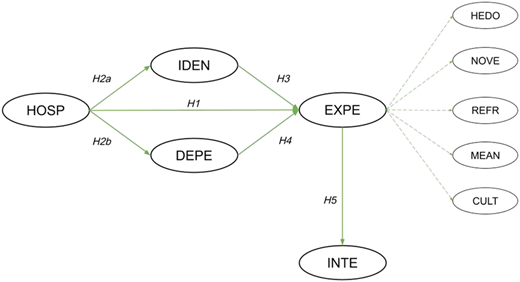
Place attachment is seen as an attribute that facilitates MTEs through hospitality. The host’s knowledge and familiarity with the place and daily life convey a sense of approachability and authenticity to guests. Similarly, staying in a vernacular house and in a setting close to the local community can also create immersive and genuine experiences. The link between hospitality and place is expressed in two different ways. First, the host’s personal involvement creates a sense of authenticity and strengthens the guest’s connection to the local community (PI). Second, by meeting the needs and expectations of tourists, hospitality becomes essential to the guest’s experience (PD). The model posits that place attachment acts as a mediator between MTEs and tourist behaviour, enhancing the memorability of the stay by fostering the tourist’s identification with the place and increasing their dependence on the accommodation for a meaningful experience. To the extent that hospitality enhances the memory of the experience for guests, they are likely to recommend the visit and make positive decisions about returning to the destination and/or accommodation. Therefore, the model proposes that MTEs generate destination loyalty processes. In summary, the model suggests that the stimuli provided by the hospitality offered in STR, along with other environmental and service factors, contribute to the creation of experiences that elicit behavioural responses from the individuals (organisms) receiving the service (Figure 1).
3. Method
3.1 Sampling and data collection
To collect the data, a survey was conducted among tourists visiting Barcelona in the summer of 2022 and staying in STR. The group of participants was selected using representative sampling to ensure that the sample reflected the characteristics and diversity of the population. The sample was obtained using a non-probability sampling method. This approach involves selecting samples at regular intervals from the population. Respondents were randomly chosen on the street, with one selected for every ten people passing by, specifically among tourists staying in STR from neighbourhoods with a significant tourist offer and close to the city’s main tourist attractions. Many tourists stay in Barcelona using STR, which is the target selection criterion. While Airbnb is the most prominent, there are many others (HomeAway, Wimbu, HomeExchange, Intervac, etc.) whose users were also included in the sample. Travel websites such as Booking, Trivago or Expedia are also used to book accommodation, but are not considered P2P platforms and were therefore excluded from our study.
The survey was conducted in person by a specialised fieldwork company on the street on the last day of their stay. Several steps were taken to reduce bias and ensure validity. Firstly, meetings were held with the company responsible for conducting the survey to clarify the research topic and give precise instructions on how to ask the questions. A pilot test was also conducted to eliminate or modify questions that were difficult to understand or had low response rates. Secondly, screening questions were created to ensure that the respondents belonged to the target population (tourists who had stayed in Barcelona for at least five days), to determine whether they booked their stay through a short-term rental platform (e.g. Airbnb), excluding booking and other OTAs, or were staying with friends or relatives, and to confirm that they were 18 years or older. Finally, responses were checked for validity and a follow-up was conducted by randomly selecting and contacting participants to ensure authenticity. The sample size is typical for social science studies and meets the recommended minimum for maximum likelihood estimation of at least 250 observations. It also meets the criteria suggested by some studies for a 3:1 ratio for latent variable indicators in structural equation modelling (Hair et al., 2008). Prior to starting the survey, participants were informed of the study’s aims/objectives and the right to refuse participation or withdraw from the study at any time. The authors confirm that this study adheres to the relevant ethical guidelines for human subjects, and that the anonymity and confidentiality of the participants were maintained throughout the study. This study’s procedures were reviewed and approved by the university’s Ethics Review Board.
A total of 369 valid responses were received. The survey consisted of 40 questions divided into four sections: (1) experience of staying in STR; (2) place attachment; (3) intention to revisit Barcelona; and (4) socio-demographic and visit characteristics. A Likert scale ranging from 1 (strongly disagree) to 5 (strongly agree) was used for most responses. MTEs were measured by asking participants about their experiences of staying in STR, using the MTE scale developed by Kim et al. (2012), with three items for each of the seven reflective dimensions considered. These authors propose that MTEs can be categorised into seven reflective dimensions: hedonism, refreshment, novelty, local culture, meaningfulness, involvement and knowledge, and interested reader is referred there for detail. As there is no general agreement on what constitutes MTEs (Zhang et al., 2018) and recent studies have highlighted “the need to identify other relevant context-specific dimensions that constitute memorable tourism experiences” (Hosany et al., 2022, p. 1473), we chose to adapt the variables in our model to the specific context of STR and reduce to five dimensions. The first adaptation concerns the dimension of involvement. This dimension was not included because of the difficulty in making it easily understandable to participants in relation to the effects of hospitality through the use of accommodation and the shared stay with the host. Involvement, as a multifaceted construct, creates ambiguity and there was a risk that questions on this dimension would be interpreted differently by respondents. This may be due to the fact that by the time the experience is evaluated, involvement may no longer be relevant to respondents compared to other memory-specific factors. This is in line with authors who argue that there is no general consensus within the academic community on what constitutes MTEs (Zhang et al., 2018) and consequently agree and acknowledge the adaptation of variables used to characterise dimensions when applied to specific areas of tourism (Hosany et al., 2022). Finally, knowledge has been integrated into the knowledge of the local culture dimension, as the two initial dimensions (local culture and knowledge) are very similar in terms of the impact of hospitality on guests’ knowledge and understanding of the local environment.
Place attachment was measured using the scale of two formative dimensions developed by Prayag and Ryan (2012), which asked participants about their perceptions of PI (four items) and PD (three items) in Barcelona. Revisit intention was measured using items from Kozak (2001) and Yoon and Uysal (2005): “The visit/experience was so good that I will come again” and “In the next few years, how likely is it that you will take another vacation to Barcelona”.
3.2 Data analysis
After a preliminary descriptive analysis (DA) of the data, which was necessary to identify possible anomalous behaviours, an exploratory factor analysis (EFA) was carried out. This involved analysing the suitability of the data, as well as its dimensionality and reliability. Confirmatory factor analysis (CFA) was then carried out, both to identify the measurement model and to analyse its goodness of fit, reliability, and convergent and discriminant validity. Finally, structural equation modelling (SEM) was performed, including an analysis of the goodness of fit of the structural model and its nomological validity. The data were also analysed using the ANOVA method, with the aim of comparing experiential differences resulting from different travel and consumer characteristics, such as number of visits to the destination, preferences towards STR platforms or staying with/without hosts.
4. Results
4.1 Demographics of the survey respondents
Of the 369 respondents, 52.0% were men and 48.0% women, 63.1% were aged between 21 and 35, 55.8% were university students or graduates and 71.5% were European. Additionally, 59.1% were visiting Barcelona for the first time and only 7.9% had visited the city more than five times. It is worth noting that 49.6% of respondents said they had a medium to advanced level of experience with shared accommodation. Finally, 61.5% of respondents were alone in their accommodation, while 13.6% were sharing with hosts (see Table 1).
4.2 Measurement model
The model was designed to measure the mediating effects between MTEs, place attachment to the destination and revisit intention among tourists staying in STR. Firstly, after checking for straightlining and normality, a descriptive analysis was conducted to examine the behaviour and trends of the sample, including measures such as maximum, minimum, mean, standard deviation, kurtosis and skewness. No anomalous aspects or patterns of variability were found in the data (Romero and Zúnica, 2005). Therefore, the data can be considered valid for further analysis without the need for data cleansing. This analysis, along with the exploratory factor analysis presented below, was performed using the SPSS version 21 statistical package.
Secondly, an exploratory factor analysis was conducted, starting with an examination of the suitability of the data. A total of 369 data points were collected, exceeding the minimum requirement of 100 and more than ten times the number of measurement indicators (Hair et al., 2008). For each of the nine measurement scales, the following criteria were verified (Hair et al., 2008): the determinant values of the correlation matrices were close to zero, the non-diagonal elements of the anti-image correlation matrices were below 0.3, the Kaiser-Meyer-Olkin (KMO) test values were above 0.5, and the Bartlett’s sphericity test values were statistically significant. The dimensionality of the scales was also assessed by principal component extraction with varimax rotation. Only one factor was extracted for each scale, the factor loadings of each indicator were above 0.5 (Hair et al., 2008), and the variance explained by each extracted factor was greater than 60% (Hair et al., 2008). Finally, a reliability analysis was conducted for each of the nine scales (Table 2): the Cronbach’s alpha statistic for each scale was greater than 0.7 (Cronbach, 1970), except for the variable NOVE, which had a value of 0.668, but is still considered acceptable as it exceeds 0.6 (Robinson et al., 1991). Additionally, the correlation values between each indicator and the sum of the other indicators within the scale were above 0.3 (Nurosis, 1993).
The first structural model replicates the assumptions regarding the second-order reflective-reflective structure of the variable EXPE, determined by the indicators of five variables: HEDO, NOVE, REFR, MEAN and CULT.
CFA was conducted using the maximum likelihood estimation method, which is efficient and unbiased (Hair et al., 2008). The analysis was performed using the AMOS module, version 22 of SPSS. First, the proper model identification was verified by ensuring that the number of degrees of freedom was greater than zero and that there were no conflicting estimates within the model structure. Once the model was identified, its goodness of fit was assessed and validated. The analysis of reliability and convergent validity was conducted by examining the standardised factor loadings, as well as the composite reliability (CR) and average variance extracted (AVE) parameters. As shown in Table 3, the factor loadings are above 0.5, while the CR values are above or very close to 0.7 (Hair et al., 2008) and the AVE values are above 0.5 (Fornell and Larcker, 1981). The extracted variance test was used to analyse discriminant validity.
The second structural model consists of four variables (EXPE, IDEN, DEPE and INTE), where EXPE represents the second-order structure justified in the previous model.
Firstly, CFA was conducted. After model identification, the goodness of fit was assessed and validated. Regarding reliability and convergent validity, as shown in Table 4, the factor loadings are above 0.5, while the composite reliability (CR) values are above 0.7 (Hair et al., 2008) and the AVE values are above 0.5 (Fornell and Larcker, 1981).
As shown in Table 5, the square root of the AVE of the scales is higher than the correlations of these scales with the other scales. As a result, the measurement model presents adequate discriminant validity.
As for discriminant validity, the square root of the AVE for each variable is higher than the correlations between that variable and the other ones, as shown in Table 6.
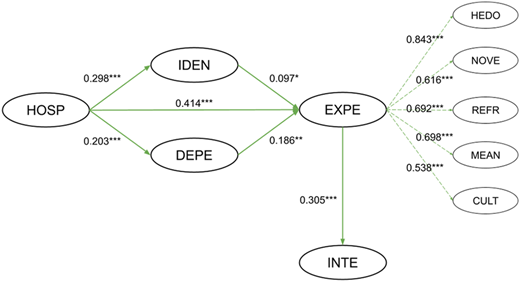
Secondly, a structural equation modelling (SEM) analysis was conducted. As with CFA, the AMOS module version 22 of SPSS was used for SEM analysis. Prior to the SEM, the model’s goodness of fit was assessed and validated. With the goodness of fit confirmed, the SEM analysis was conducted, and the nomological validity was supported, as shown in Table 7 and Figure 2.
4.3 Structural model
The results of the SEM analysis indicate that hospitality has a positive and significant influence on MTEs (β = 0.414 t = 5.823, p-value <0.001), place identity (β = 0.298, t = 5.248, p-value <0.001) and place dependence (β = 0.203 t = 3.256, p-value <0.001). Based on the coefficient results, it can also be observed that MTEs have a positive and significant impact on hedonism (β = 0.843 t = 6.539, p-value <0.001), novelty (β = 0.616 t = 7.223, p-value <0.001), refreshment (β = 0.692 t = 6.942, p-value <0.001), meaningfulness (β = 0.698 t = 8.281, p-value <0.001) and knowledge of local culture (β = 0.538 t = 7.008, p-value <0.001). Apart from these results, place dependence (β = 0.186 t = 2.863, p-value <0.05) and MTE (β = 0.305 t = 4.299, p-value <0.001) have positive influence on the intention to revisit the destination, meanwhile the hypothesis of the relation between place identity and MTE is not supported (see Table 7). The study shows direct and significant relationships between all components of the model. MTEs are directly related to all five dimensions of the construct considered, the two aspects of place attachment, and revisit intention. Place attachment, especially through place dependence, has a direct effect on tourists’ revisit intention. Therefore, the study confirms that place attachment acts as a mediator between MTEs and revisit intention. More specifically, MTEs influence place attachment through both place dependence and place identity, which ultimately influence revisit intention. The effect size has been analysed by calculating Cohen’s f2, obtaining values greater than 0.02 (small effect size) in the case of IDEN and greater than 0.15 (medium effect size) in the rest of the cases (Cohen, 1988).
In order to complete the analysis, several additional aspects with significant explanatory value were considered regarding the role of STR companies in the creation of MTEs (see Table 8). A guest’s first visit to the destination is positively related to the dimensions of novelty (x = 3.29, p-value <0.001), hedonic value (x = 3.91, p-value <0.05), and knowledge of local culture (x = 3.29, p-value <0.05). Conversely, guests staying with Airbnb tend to report lower levels of meaningfulness (x = 3.46, p-value <0.05) compared to those staying with other STR companies (x = 3.72, p-value <0.05). When guests share accommodation with hosts, the experience is more positively related to the dimensions of meaningfulness (x = 3.45, p-value <0.05), novelty (x = 3.30, p-value <0.001), and knowledge of local culture (x = 3.34, p-value <0.05). In contrast, when guests stay without interacting with the host, the experience is more positively associated with the refreshment dimension (x = 3.89, p-value <0.05). These results indicate that MTEs are linked to the organisation, structure and format of the tourist visit. Specifically, these results highlight significant differences among guests based on the number of stays at the destination, the platform chosen to book the accommodation, and the presence or absence of the host during their stay.
5. Discussion and conclusions
5.1 Conclusions
The purpose of this study was to examine the effects of MTE components on revisit intentions of tourists staying in STR through the mediating effects of place attachment. The results show a direct relationship between hospitality and the creation of MTEs among guests, and between MTEs and revisit intention. The study demonstrates that dimensions of MTEs are closely related to hospitality. Hosts’ attitudes and strategies for providing hospitality, mediated by the emotional connection to the place visited, foster the creation of memorable experiences for guests, which in turn encourage revisiting the destination. Hosts can transform stays into hedonic and enjoyable experiences by actively engaging and socialising with their guests during their stay, and by organising activities based on the preferences and tastes expressed by their guests. The sense of refreshment creates memorable experiences when hosts ensure a comfortable and safe stay, fostering a climate of trust while respecting guests’ privacy (Sthapit, 2019). Furthermore, hosts can make the experience memorable by promoting a spirit of shared culture and differentiating themselves from other accommodation formats (Guttentag et al., 2017). Finally, personalised treatment and the design of unique, non-standardised experiences help to reinforce the sense of novelty.
Concerning the first research hypothesis, when hospitality promotes social interaction, it leads tourists staying in STR to remember their accommodation more vividly. These findings are consistent with recent studies showing that the home-like feeling and the trust-based atmosphere created by host-guest interactions increase satisfaction with the experience (Long and Chau, 2024). All dimensions of hospitality examined in the study have a positive impact on MTEs by enhancing their authenticity. This finding is consistent with previous research showing that hospitality influences the creation of authentic experiences and the formation of favourable opinions among STR users (Chen et al., 2024), as well as influencing accommodation choices (Paulauskaite et al., 2016).
With respect to hypothesis 2, it is shown that hospitality influences guests’ perceptions of place attachment. This place attachment is built through the provision of knowledge and the relationship and interaction between host and guest. When the host is perceived by the guest as a member of the local community, providing advice and recommendations, it adds credibility, proximity and authenticity to the tourist experience. This finding is consistent with previous research showing that social exchanges derived from hospitality, such as chatting and sharing activities with hosts, are considered common processes that strengthen tourists’ attachment to the destination (Pizam et al., 2000). Hospitality acts as a decoder of the place for the guest, allowing them to contextualise or better interpret the places visited and making the overall experience more comprehensible. Similarly, some studies of tourism involving visits by friends and relatives argue that stories and information provided by the host about the place strengthen guests’ attachment to it (Rokni and Choi, 2024).
Regarding hypotheses 3 and 4, it is confirmed that place attachment (but only as place dependence) first influences MTEs and then acts as a mediating variable. In our study, this is confirmed for place dependence variables. Hospitality has both cognitive and emotional effects when hosts provide emotions and experiences that allow guests to connect with the place and community in the way they intend. This finding is supported by previous studies which argue that place attachment creates positive attitudes towards the place and the local community, thereby increasing the memorability of experiences (Long and Chau, 2024). It is also consistent with previous research showing that travelling “like a local” is a significant motivation among peer-to-peer users (Tussyadiah, 2016) and a factor of social distinction (Canziani and Nemati, 2021).
Hypothesis 5 confirms the existence of a direct relationship between MTEs and destination loyalty in terms of future revisit intentions, which is consistent with similar studies (Chen and Rahman, 2018). Host involvement allows visitors to experience the destination authentically, personalising the visit and deepening their knowledge of the local community, thereby creating memorable tourism experiences. Experiences that connect visitors to the community, where hosts contribute unique knowledge or co-create experiences, increase the likelihood of revisiting the destination. Acquiring a basic knowledge of the culture and community visited, coupled with the expectations created by hospitality to provide unique experiences, are factors that stimulate the desire to return to the destination. This is consistent with previous studies linking perceived authentic experiences to destination loyalty and revisit intentions (Chhabra et al., 2003).
5.2 Theoretical implications
Several theoretical contributions arise from this research. First, our study provides new insights into the role of hospitality in the experiences of guests staying in STR, a topic that is underexplored in the academic tourism literature (Sthapit et al., 2023a). Our study confirms the finding that different dimensions of hospitality resulting from host-guest interactions stimulate the creation of authentic experiences that become memorable. In this process, hospitality not only influences its physical dimension (the provision of accommodation services), but also fosters the authenticity of the experience, in line with the “like a local” travel styles of P2P visitors and their collective strategy for social distinction (Guttentag et al., 2017). Therefore, socialisation and host-guest interaction can be seen as key factors contributing to the appeal of a “cool” holiday. Finally, the role of the host becomes crucial as they address guests’ needs and act as a substitute in the provision of conventional services. This is a valuable contribution of our study, insofar as this role has not been explored in the existing literature. This substitute role is threefold: (1) as a local “friend” who has direct knowledge of the local environment and can provide advice or recommendations (host as substitute for tourist information office); (2) as a personal companion who participates in the co-creation of experiences and activities (host as substitute for tour guide); and (3) as an organiser of accommodation and catering services with the ability to personalise the stay and provide a sense of familiarity and comfort (host as substitute for hotels).
Second, the study allows us to identify the impact of hospitality on the various dimensions of MTEs, filling the gap in the literature on this research topic (Sthapit et al., 2023a). All of these dimensions are positively and directly stimulated by hospitality. It is particularly surprising that hedonism is the dimension most strongly related to MTEs. We interpret this to mean that the interactive nature and personalised offerings of hosts can make the experience more enjoyable by stimulating forms of discovery that are pleasing to guests. Meaningfulness arises when the experience meets the expectations of travelling “like a local”, providing a sense of coherence and fulfilment in line with the guest’s travel perspective. Refreshment is closely related to hospitality, particularly when service provision is adequate and does not interfere with the guest’s privacy, but it is also associated with the comfort and relaxation provided. Novelty is stimulated by hospitality through the host’s advice and recommendations, offering alternative and varied ways of exploring the city and encouraging closer engagement with local identity from within. Knowledge of local culture enhances MTEs through authenticity. Perceiving the host not only as a service provider but as a knowledgeable and approachable figure of the local reality allows the transmission of local identity to the visitor throughout their stay.
Third, the study presents a model that advances the Stimulus-Organism-Response theory applied to the current literature on STR. The article contributes to the S-O-R theoretical framework from a platform tourism perspective, focusing on understanding how individuals react to a given environment and how, beyond the stimuli provided by the attractions and places visited, emotions and internal cognitive processes influence their behaviour and purchase decisions (Hochreiter et al., 2023).
5.3 Practical implications
Several practical contributions can be drawn from our study. Platforms such as Airbnb are increasingly seen as exacerbating the housing crisis, fuelling protests among different urban groups. In this context of conflict and growing tension between activities that affect the city’s image (Financial Times, 2024), we propose three strategic lines of action. First, we recommend to enhance the experience of visitors to the city, with the aim of generating positive feedback and projecting a positive image of the city. Second, we propose to encourage businesses to reduce the professionalisation of hosts and return to accommodation models that are more in line with the values of exchange and socialisation of the early days. Finally, we put forward alternatives for local governments that go beyond regulation and promote cooperation with platforms, rather than focusing exclusively on confrontation and litigation.
In terms of experiences, hosts need to promote hospitality and a sense of home if they want their guests to have memorable experiences. Therefore, companies should develop hospitality indicators for hosts and make them visible in listings and neighbourhood catalogues. To increase visibility and awareness of the role of hospitality among hosts, platforms and STR owner associations could implement recognition initiatives through awards, seals or certifications for hosts who excel in hospitality. Hosts should avoid acting as “ghosts” or “hometels” and ensure that their service role is well aligned with the different dimensions of hospitality that drive guests’ MTEs and place attachment. In particular, it is important for hosts to facilitate the co-creation of experiences and evoke emotions by providing direct knowledge of the destination. This helps guests to decode the destination on their first visit, and introduces new incentives for those who have already visited. Both STR companies and property owner associations should regularly train hosts in the culture of hospitality, as well as produce brochures and organise seminars to promote it among their members and prevent bad practices. Operating within the parameters of hospitality, such as personalisation, presenting a friendly attitude, encouraging socialising and sharing, and offering service and assistance, can positively influence online guest reviews and encourage revisit intentions.
In the current scenario of increasing professionalisation, investor ownership and multi-property ownership, absentee hosts are gaining ground, undermining social interaction between hosts and guests. To reduce professionalisation and promote a community-centred accommodation model, companies could implement a series of measures to encourage authentic, local engagement. Limiting the number of properties per host would discourage large-scale commercial use, while offering incentives to hosts who rent out their primary residence would prioritise non-professional, residential hosting. A certification scheme could highlight occasional hosts, making it easier for guests to identify family-based, non-commercial options. Additionally, implementing occupancy caps (limiting the number of nights a property can be rented per year, especially in high-demand areas) would reduce the attractiveness of the platform to property investors.
In order to build trust with local administrations, platforms should first commit to supporting these administrations in reducing the professionalisation and multi-hosting mentioned above. At a later stage, cooperation could be used to advance joint strategies for promoting and enhancing the city’s image, including encouraging hosts to co-create experiences by visiting local attractions and consuming local products and avoiding the most congested areas. Working with hosts as direct ambassadors of the destination, leveraging positive guest reviews or running marketing campaigns that highlight the emotional component of tourists can be useful tools for promoting the city.
5.4 Limitations and future research
The study has several limitations and suggests improvements for future research. First, although the study determines whether the dimensions of MTEs are positively or negatively perceived by guests, future research should include other dimensions of hospitality, especially negative experiences that are not considered here (such as host territoriality, complaints or problems related to service attention, house condition, neglect and dirtiness, disappointing host behaviour, etc.). Second, the dimensions of hospitality included in the analysis are those that have the most direct logical relationship with the formation of experiences in STR. However, other aspects of hospitality, such as the personal charisma and friendliness of the hosts or the benefits of the home, also need to be examined in order to assess their role as antecedents of MTEs in a holistic way.
Third, the relationship between stimuli and responses mediated by factors such as hospitality has shown explanatory value through S-O-R theory. However, it will be necessary to test the robustness of the proposed model using other conceptual frameworks that have been used in similar studies, such as cognitive appraisal theory or memory dominant logic. While the study draws conclusions about the role of hospitality in the formation of MTEs, it is important to extend the analysis to other antecedent factors that may play a predictive role, such as intrinsic or extrinsic motivation to share. Finally, while the study has provided robust contributions on the role of hosts in shaping MTEs and place attachment among guests, it would also be important to examine how interactions with other guests may influence experiences during the stay.
Funding: This work has been funded by the Agencia Estatal de Investigación (Ministerio de Ciencia e Innovación. Gobierno de España) within the framework of the EPTUR project (PID2020-118757RB-I00/AEI/10.13039/501100011033).