This study explores how co-creation supports collaborative improvement and innovation within rural development ecosystems. It investigates the conditions that enable co-creation, focusing on the interplay between structure, process, engagement and motivation. By analyzing two contrasting village cases in Sweden, the study contributes to understanding how co-creation develops over time in complex, resource-constrained, multi-actor settings.
A multisite qualitative case study investigated the start-up of two local development planning processes facilitated by the municipality and financed through the EU's LEADER program. Data included semi-structured interviews, participant observations and document analysis. Thematic analysis identified key enabling factors.
Two interrelated categories proved central to enabling co-creation: (1) structure and process (e.g. facilitation, time, credibility, frameworks, resources) and (2) engagement and motivation (e.g. trust, leadership, commitment, external threats, sense of impact). While formal structures provided legitimacy and direction, sustained collaboration depended on voluntary engagement driven by intrinsic motivation and reinforced by trust and early successes. A key insight is the need to move beyond project-based models toward embedding co-creation as an ongoing practice within ecosystems.
Findings are context-specific but offer transferable insights. Future research should examine long-term co-creation mechanisms across diverse cultural and institutional settings.
This study contributes to service design, quality management and collaborative governance by showing how co-creation can be sustained in rural ecosystems. It highlights the relational nature of engagement and provides practical guidance for embedding co-creation as a continuous, adaptive practice.
1. Introduction
In an era characterized by complex global challenges such as climate change, demographic shifts, resource scarcity, and rising inequality, the need for collaborative approaches to improvement and innovation has never been greater (Anitha, 2024; Sharma et al., 2022). Such approaches increasingly adopt network and ecosystem models to integrate diverse stakeholders and create value across organizational and community contexts (e.g. Kim et al., 2020; Loureiro et al., 2020; Östberg and Eriksson, 2023). This enables organizations to accelerate learning, enhance performance, and improve products and services iteratively, and bring about sustainable improvements and innovations within a larger ecosystem. Furthermore, those with systematic processes for idea generation, refinement, and implementation are better positioned to leverage collective creativity and drive meaningful improvements (e.g. Paulus et al., 2018; Reinig et al., 2007; Robinson and Schroeder, 2004).
This shift from a siloed organizational model where top-down management is applied to a more collaborative, resource-integrating ecosystem approach has the possibility of both increasing the speed of improvement and innovation and better meeting the needs of complex, ecosystemic contexts (Heil and Bornemann, 2018). Ecosystem approaches, whether described in the literature as organizational ecosystems, service ecosystems, or rural development ecosystems, share essential characteristics by emphasizing multi-actor collaboration, resource integration, and joint value creation across boundaries (e.g. Edvardsson et al., 2012; Pera et al., 2016). Successful development initiatives, whether within single organizations of various sizes or entire communities, rely on the ability to collaborate and co-create effectively (Bryson et al., 2021; Castañer and Oliveira, 2020; Mariani et al., 2022).
In collaborative networks, combining resources, perspectives, and expertise is crucial for addressing complex challenges and co-create value (Carida et al., 2022). As Camisón and Villar López (2010) argued, the exchange of knowledge and resources among interconnected individuals and organizations enhances the entire system's capacity for problem solving. Regardless of context, the ability to collaborate and co-create to find new solutions to old problems and to improve together is central to success. The proverb “alone is rarely strong” applies well to the context of improvement and innovation in organizational ecosystems (Tukker and De Bruijn, 2002).
Traditionally, improvement and innovation efforts have been studied and carried out within the boundaries of single organizations where management has full control over priorities and resource allocation (Farris et al., 2008). The shift to ecosystem collaboration invites new questions about the role of co-creation in bringing about collaborative improvement and innovation across organizations. In the context of quality management, co-creation is recognized as a strategic capability that supports both continuous improvement and innovation. Traditional quality approaches emphasize internal processes and standardization but present challenges that call for more open, collaborative, and stakeholder-centered models of quality development (Bergman et al., 2022). Co-creation expands the scope of quality by involving multiple actors in jointly identifying needs, designing solutions, and delivering improvements, which is particularly relevant in complex, inter-organizational settings.
Presently, research remains limited on how improvement and innovation take place within such ecosystems (Chen et al., 2014; Zahoor and Al-Tabbaa, 2020) and the role of co-creation as a driving forces. Multi-actor ecosystems face significant coordination challenges (Chesbrough et al., 2006) and this gap is particularly noticeable in rural development ecosystems, where geographic isolation, demographic change, and limited access to public services present unique challenges (Bock, 2016; Manthorpe and Livsey, 2009). Policy initiatives such as the EU's LEADER program illustrate how rural development ecosystems are intentionally mobilized through local action groups that bring together municipalities, businesses, and community organizations (Bosworth et al., 2016; Dargan and Shucksmith, 2008). Studies have shown how the program is effective at enhancing local governance, increasing social capital, and promoting community-led development (e.g. Bosworth et al., 2016; Bosworth et al., 2020; Dargan and Shucksmith, 2008). While these initiatives have enabled innovation and strengthened local governance, sustaining collaboration beyond project cycles projects and overcoming bureaucratic difficulties that can hinder the implementation of ideas remains a challenge (Bosworth et al., 2020; Tshikovhi et al., 2023). Understanding rural development ecosystems therefore requires attention to how co-creative practices become embedded as ongoing, adaptive ways of working rather than temporary interventions.
Service design, with its focus on stakeholder-centered processes and systemic thinking, offers a useful lens for enabling co-creation in complex organizational contexts (Trischler and Westman Trischler, 2022). It emphasizes the interplay of processes and structures that span organizational boundaries and shows how co-creation across actors enables improvements too complex for any single organization to address alone (Jones, 2018; Trischler and Westman Trischler, 2022). Service design can support co-creation through structured participatory processes that engage local governments, civil society, businesses, and residents in co-creating locally tailored solutions (Abreu et al., 2022; Arnaud, 2023).
The purpose of this article is to investigate the key factors that stimulate co-creation in collaborative improvement initiatives within rural development ecosystems. It aims to contribute to the broader field of quality management by exploring how service design can support continuous improvement and innovation in complex, multi-actor contexts.
2. Theoretical background
The literature on innovation, continuous improvement, ecosystems, inter-organizational relationships, and rural development is extensive, with overlapping terminology, especially when describing forms of collaboration that span organizational boundaries. This section clarifies how key terms are used in this study. While concepts such as ecosystems, inter-organizational networks, and collaborative partnerships may differ slightly in emphasis, they share essential characteristics, namely, the involvement of multiple autonomous actors working together toward shared goals. In this paper, we particularly emphasize the notion of rural development ecosystems, which place ecosystem thinking within geographically bounded and resource-constrained rural contexts. This perspective highlights how contextual factors and local dynamics interact in shaping collaborative improvement and innovation. For the purposes of this study, these terms are used interchangeably to support analytical clarity while acknowledging the nuanced distinctions recognized in the broader literature.
The theoretical foundation of this paper integrates four interrelated parts of the literature: (1) rural development ecosystems as context-specific arenas for collaboration; (2) continuous improvement and innovation as core concerns of quality management; (3) inter-organizational systems and collaborative improvement as necessary in complex, multi-actor contexts; and (4) service design and co-creation as enabling frameworks for engaging diverse stakeholders in improvement efforts. Together, these parts provide a lens through which to examine how co-creation can support collaborative improvement in rural ecosystems.
2.1 Rural development ecosystems
Rural development ecosystems can be understood as place-based networks where public organizations, businesses, civil society, residents and other actors collaborate to address shared challenges and opportunities. While conceptually related to broader notions of service ecosystems (Edvardsson et al., 2012; Vargo and Lusch, 2016), rural development ecosystems are distinctive in their embeddedness in local contexts characterized by geographic isolation, demographic change, and resource constraints (Bock, 2016; Manthorpe and Livsey, 2009). Collaboration in such settings is often a necessity for sustaining community viability and supporting innovation.
Recent research on service ecosystems emphasizes how value emerges from the orchestration of diverse actors, the alignment of resources, and the negotiation of shared interests (Carida et al., 2022; Conduit and Chen, 2017). Studies further highlight the role of resource-constrained actors in driving co-creation when appropriate structures and facilitation are in place. These insights resonate strongly in rural contexts, where voluntary engagement, thin institutional capacity, and strong place-based identities shape collaborative improvement and innovation. Research on volunteer engagement further shows that self-determined motivations and the opportunity for self-expression are central to sustaining participation and generating meaningful co-creation outcomes (Fernandes and Matos, 2023).
2.2 Continuous improvement and innovation
In quality management, continuous improvement and innovation are recognized as essential for creating progress and adaptability (Bergman et al., 2022). Both improvement and innovation, although distinct in approach, contribute to a culture of adaptability and progress that allows an organization to refine processes, tools, or services continuously (Farida and Setiawan, 2022). In some definitions, continuous improvement is labeled incremental innovation, showing how this is a scale with no clear start or end to what an improvement is and what an innovation is (Bessant et al., 2001).
Historically, continuous improvement has been understood as an effort centered on frequent, incremental changes rather than large-scale transformation. This approach encourages adjustments in smaller parts of the organization with minimal capital investments and directly involves those closest to the work being improved (Bhuiyan and Baghel, 2005). Innovation, while often associated with breakthrough ideas, can equally involve gradual, smaller changes that are embedded within the organization's daily functioning. In practice, continuous improvement, when combined with incremental innovation, ensures that organizations remain responsive and evolve alongside technological and societal shifts (Robinson, 1991; Shingo, 1988; Singh and Singh, 2015).
However, research has also shown that improvement in ecosystems does not rely only on formal tools, but also on the ability of actors to exercise power strategically. By mobilizing resources, shaping institutional logics, and influencing collective priorities, actors can enable transformation across micro, meso, and macro levels of the ecosystem (Hogg, 2023). In rural development ecosystems, where formal authority and structured improvement systems may be weak, power dynamics rooted in local leadership, trust, and social capital can become critical enablers of collaborative improvement and innovation.
Continuous improvement and innovation also take on distinctive characteristics when embedded in rural development ecosystems. Unlike large organizations with dedicated improvement infrastructures, rural communities often operate with scarce financial resources, thin institutional capacity, and heavy reliance on voluntary contributions (Bock, 2016; Bosworth et al., 2020). As a result, improvement efforts are less about optimizing existing processes through formal systems and more about mobilizing limited resources, sustaining essential services, and adapting solutions to place-specific needs. Research on rural development shows that even relatively small initiatives, such as community-driven services or social entrepreneurial projects, can generate disproportionately large effects by strengthening local viability, building networks, and developing sense of community (Christmann, 2014).
This view of continuous improvement and innovation echoes Bessant et al., 2001 definition of continuous improvement as a “company-wide process of focused and continuous incremental innovation” (p. 18), but its application differs across contexts. In organizations, structured systems help embed incremental improvements into daily routines, while in rural ecosystems improvements happen across networks of diverse actors without centralized control. In both settings, sustained progress relies on trust, intrinsic motivation, and commitment. Research also shows that engagement is often sustained by self-determined motivations and opportunities for meaningful contribution, factors that are particularly visible in rural ecosystems where voluntary participation is common (Fernandes and Matos, 2023). Incremental changes may act as steppingstones toward more innovative initiatives, such as the development of tourism offerings or community enterprises, while radical innovations are less frequent but can emerge in response to crises or external pressures. Because outcomes are closely tied to local identity, even modest improvements can trigger ripple effects that reinforce motivation and lay the foundation for long-term development.
2.3 Inter-organizational systems and collaborative improvement
Continuous improvement and innovation have traditionally been studied within the confines of single organizations, focusing primarily on processes benefiting one single organization and its customers (eg. Buckler, 1996; Jurburg et al., 2016). As organizational environments become more complex and interconnected, these concepts have broadened to include inter-organizational systems (IOSs). The integration of multiple stakeholders into improvement work can be a critical enabler, particularly in contexts where individual entities lack the resources or capabilities to address challenges independently (Zacharia et al., 2019). This is particularly evident in rural development ecosystems, where collaboration across municipalities, businesses, and civil society is often necessary to compensate for resource scarcity and thin institutional capacity (Bosworth et al., 2020).
Collaboration in IOS settings can generate synergies that unlock opportunities not possible to attain in one organization alone. Aristotle's saying “holon para ta moria”, meaning that the whole is something beyond the parts (Husain, 2001), captures the ethos behind IOS, where participating organizations pool resources, share best practices, and enhance learning collectively, creating a result greater than the sum of individual efforts (Mervyn et al., 2019). This concept aligns closely with collaborative improvement, first introduced by Plsek (1997), who explored how stakeholders in the healthcare community combined their resources to develop their collective ability to work with improvement efforts. Over time, collaborative improvement has transcended healthcare and gained traction across diverse fields, such as education (Russell et al., 2017), health care (Ghandour et al., 2017), and business (Robinson and Schroeder, 2017).
Kuhl and Casta (2019) showed that organizations engaging in collaborative relationships with suppliers, customers and competitors have a greater probability of successful innovation. These partnerships often create shared value by leveraging diverse perspectives and aligning goals across organizational boundaries. Collaboration in IOS settings requires trust, shared values, and a commitment to collective goals. Trust facilitates reliability and openness, which are critical for effective communication and resource sharing (Kożuch and Sienkiewicz-Małyjurek, 2016). Collaborative innovation requires institutionalized processes that promote joint ownership, iterative learning, and inclusive participation (Torfing et al., 2019). Orchestration and facilitation are also crucial for aligning diverse interests and enabling value co-creation (Carida et al., 2022). In rural development ecosystems, where no single actor holds dominant authority, these governance mechanisms become especially important for building legitimacy and sustaining engagement across multi-actor networks.
2.4 Co-creation as a component of collaborative improvement
Building on the role of orchestration and governance in collaborative improvement, service design provides concrete approaches for enabling co-creation across diverse actors and aligns closely with principles aimed at enhancing user experience (Rytilahti et al., 2015). It involves intentional coordination of people, processes, and tools to enhance service delivery and user experiences (Stickdorn and Schneider, 2012). Service design reimagines and redesigns services to meet diverse stakeholder needs, making it particularly valuable in resource-constrained settings (Barile et al., 2020; Peng and Lin, 2016). While service design can catalyze innovation, its impact depends on the successful implementation of solutions within participating communities (Almqvist, 2019). By focusing on value co-creation with multiple stakeholders, solutions become contextually relevant and more likely to be sustainable over time (Helkkula et al., 2018).
Service design is characterized by activities, tools, and competencies that are interwoven in process architectures (Prestes Joly et al., 2019; Sangiorgi and Prendiville, 2017). It has been applied in public services to develop value co-creation activities that are multi-actor in nature and institutionally coordinated (Trischler and Westman Trischler, 2022, p. 1252). Service design has also evolved toward a broader service ecosystem perspective, emphasizing stakeholder interactions and institutional arrangements that support co-creation (Carida et al., 2022). In line with this, Vink et al. (2020) argued that service ecosystem design can create intentional change by aligning institutions and practices over time. Such ecosystem-oriented perspectives are particularly relevant in rural development ecosystems, where diverse stakeholders, limited resources, and voluntary engagement make alignment and facilitation central to sustaining improvement.
As part of collaborative improvement initiatives in rural communities, a service ecosystem perspective may contribute to understanding how co-creation can be fostered in multi-actor networks by considering not only the user perspective but also the institutional arrangements that support co-creative processes. By emphasizing the user-centered design principles of co-creation and including multiple actors, service design has the ability to aid in designing services that meet the actual needs of rural communities (Peng and Lin, 2016). While co-creation has been widely adopted in service design, it aligns with the core aims of quality management by emphasizing the importance of stakeholder value, contextual responsiveness, and iterative learning (Helkkula et al., 2018). In this sense, co-creation ensures that improvement initiatives are both innovative and contextually relevant. The question explored in this study is as follows: what are the key factors that drive and sustain co-creation in rural development ecosystems to support collaboration and improvement?
3. Methods
The study is based on a qualitative case study method (Creswell, 2014; Yin, 2014) with the purpose of exploring the key factors that drive co-created innovation and improvement processes within rural development ecosystems, understood here as a form of organizational ecosystem shaped by local context and resource conditions. The study is conducted in rural Sweden, in an area where challenges such as geographic isolation and limited resources have created a need for innovative and context-specific solutions. The insights from this case study aim to contribute to the growing body of research that views innovation as an ecosystemic process (Edvardsson et al., 2012; Vink et al., 2020), where diverse actors collaborate through structured and iterative practices to address complex challenges (Bryson et al., 2021; Carida et al., 2022). The study is part of a larger research project financed by the Kamprad Foundation, which focuses on new ways to improve and innovate among entrepreneurs in the Swedish countryside. The study was conducted by three researchers, two university-based professors and a doctoral student.
3.1 Case selection
Village A: Depopulation Challenge
Village A is a rural community struggling with the challenge of depopulation. Village A exemplifies the socioeconomic complexities associated with declining population trends, out-migration of youth and an aging demographic. The village's challenges include reduced economic activity, strain on or risk of discontinuation of local services, and threats to community cohesion due to depopulation (Abreu et al., 2022; Bock, 2016; Manthorpe and Livsey, 2009).
Village B: Tourism and In-Migration
In contrast, Village B, located just two hours away from Village A within the same municipality, is a growing tourism area experiencing significant in-migration. The arrival of new citizens has led to economic growth, the expansion of local businesses, an increase in tourism-related infrastructure, and a need for expanded community-related infrastructure. This is both a possibility and a threat to the community since it creates friction between community members with divergent visions of the community's future.
3.2 Data collection methods
Semi-structured Interviews: Twelve semi-structured interviews were conducted with key selected stakeholders involved in two local development planning projects. The interviewees were selected on the basis of their significant roles in development projects. The researchers received help with the selection process from a local municipality-employed facilitator, who assisted in identifying the initial participants. A snowball sampling method was subsequently employed, where the interviewees were asked to recommend additional participants for the study. This approach ensured a comprehensive representation of the perspectives. The interviews were conducted using the online platforms Teams and Zoom. All participants were contacted by email, which included detailed background information about the research project and the research team. Informed consent was obtained prior to the interviews. Each interview lasted up to one hour and was audio-recorded with the participants' permission for transcription and subsequent analysis. The two main researchers conducted 11 interviews together, ensuring consistency and reliability in the data collection, whereas one interview was conducted by the main author alone.
Participant Observations: One of the researchers actively participated in local development workshops, taking on dual roles as both an observer and a participant in the idea generation process. This method of participant observation provided a unique vantage point to gain first-hand insight into the collaborative dynamics, interactions, and decision-making processes that characterized the workshops. By being actively involved, the researcher could experience the flow of discussions and the evolution of ideas in real time, which offered deeper contextual understanding than would be possible through interviews alone. Notes were taken during these observations.
Document Analysis: A document analysis was conducted to supplement the interview data and participant observations to provide additional context to the findings. This analysis included the study of documents generated from meetings and workshops, such as agendas, workshop methods and reports. By cross-referencing the data from the interviews and participant observations with these documents, the researchers could verify information, identify consistencies and discrepancies, and obtain a more comprehensive view of the development planning projects. This method also provided a continuity perspective on the projects, capturing development over time and understanding any changes during the project.
Data collection occurred between October 2023 and December 2024.
3.3 Rationale for selection
The selection of these two villages was driven by the aim of exploring how different rural challenges influence the co-creative processes within local development planning projects. By comparing Village A's struggle with depopulation against Village B's experience of tourism-driven growth and in-migration, this study explores potential variations in approaches to stimulate continuous collaborative improvements and abilities to co-create. Both of these cases were in the initial phases of development to support improvement and innovation. As such, the focus of this article is on the key factors that are central to supporting co-creation within inter-organizational ecosystems.
3.4 Data analysis
The data analysis process followed a two-phase, iterative coding process informed by Creswell (2014) guidelines for qualitative thematic analysis. In the first phase, two researchers independently reviewed and manually coded the transcribed interviews using open coding, identifying initial themes, recurring patterns, and significant quotations. This phase emphasized close engagement with participants' narratives to surface expressions of collaborative improvement. To support both individual and collaborative analysis, the researchers used a digital whiteboard tool (Mural) to visually organize, cluster, and refine the codes.
In the second phase, the researchers collaboratively compared their individual codes, grouped them into broader thematic categories, and refined these categories through dialog and visual mapping. Themes were identified on the basis of their recurrence across interviews, relevance to the research questions, and alignment with the broader context of collaborative improvement and innovation.
This iterative approach (Creswell, 2014) enabled a nuanced understanding of what factors stimulate continuous collaborative initiatives. By systematically contrasting the data, the researchers were able to triangulate their findings, thus improving the reliability and validity of the study's conclusions and addressing researcher bias.
3.5 Ethical considerations
All the participants provided informed consent to participate in the study. Consent was first obtained via email during the interview scheduling process and then verbally reaffirmed at the start of each interview. The participants were informed of the study's purpose, their right to withdraw at any time, and their freedom to decline to answer any question without consequence. All the participants voluntarily agreed to proceed and completed the full interviews. Confidentiality and anonymity were ensured by removing identifiable information from transcripts and reporting findings at an aggregated level. Pseudonyms were used in all reporting, and care was taken to avoid descriptions that could indirectly reveal the identities of individuals or organizations. These steps were designed to protect participants' privacy while maintaining the integrity of the qualitative data.
To strengthen the validity of the findings and prevent researcher bias, the results and analysis from the study were presented to selected participants.
4. Results and analysis
This qualitative study examines the key factors that drive co-creation in collaborative improvement and innovation within rural development ecosystems in Sweden. Guided by a service design perspective, the analysis focused on how local development planning structured the conditions and processes of collaboration, and how these in turn facilitated both tangible outcomes and enabling conditions for further innovation.
Thematic analysis of interviews, observations, and documents revealed two primary categories that function as core enablers of co-creation in rural development ecosystems: (1) structure and process, and (2) engagement and motivation. These categories were refined into subcategories to capture the nuanced ways in which collaboration was initiated and sustained.
The category Structure and Process groups together formal arrangements (such as frameworks, resources, and roles) and the practical enactment of collaboration (such as facilitation and time management). These elements were grouped together because they are interdependent: structure enables process, while process gives structure practical relevance. The second category, Engagement and Motivation, includes both internal drivers (such as personal commitment or a sense of impact) and external conditions (such as recognition or organizational support) that promote involvement. These factors are grouped together because motivation often leads to engagement, whereas engagement reinforces motivation through meaningful participation. These factors appeared to be intertwined in shaping individuals' willingness to contribute.
Together, these categories describe both the conditions that enable co-creation and the dynamics that sustain it over time. Interpreted through a service design lens, they can be seen as key architectural elements of the co-creative process, illustrating how structures, roles, and motivations interact to shape collaborative improvement. Table 1 below outlines these categories and subcategories, providing a structured overview of the main findings that emerged from the analysis.
4.1 Structure and process
The local development planning process acted as a crucial enabler for improvement and innovation by establishing clear structures and processes that facilitated co-creative interactions among participants. Six key factors emerged as essential for supporting these efforts: facilitation, credibility, trust, time, organizational frameworks and resources.
The local development planning projects in the two communities, located in the same municipality, were made possible with funding from a LEADER program, a European Union initiative supporting local development in rural areas. This initial municipality-provided support gave the projects the necessary legitimacy and a sense of importance among participants. A key component was that the municipality supported the project with a facilitator that was employed by the municipality. This facilitator was an important factor driving the projects forward, consistently asking for progress and maintaining a set structure. As one participant explained, “I think this was very important [to have a facilitator]; it provided a foundation for and legitimized the development planning project and gave it a clear structure. There was a common goal and a clarity regarding what we should do.” Viewed through a service design lens, the facilitator acted as a process architect, shaping interactions and ensuring collaboration unfolded in a structured and inclusive way.
Earlier attempts at development work in one of the communities had failed due to the absence of credible leadership. In contrast, the facilitator's legitimacy, combined with the municipality's formal backing, created a foundation of trust that enabled engagement: “… previous attempts to develop the community did not reach real support in the village, but when the municipality came with the project, it was easier to achieve engagement.”.
Participants emphasized that the municipality's involvement and formal structures gave the projects direction. As one interviewee noted, “Without this structure, the project would have been more dependent on voluntariness. With a structure regarding leadership and organization, there is a direction and clarity of where we are heading.” Others stressed the need for a shared vision to guide priorities and resource use. While some expected the municipality to take the lead, others argued it should be the community's responsibility, reflecting different views on how vision-setting should be managed.
Time was another recurring challenge. Several participants felt that the process was rushed, which limited participation and reduced the potential for meaningful contributions. As one commented, “The process becomes limp when it is forced. [It] lacks participation and lacks the time to get familiar with different areas and ideas.” Another added that this created “a truncated process where the number of ideas quickly should be reduced and prioritized. This meant that many ideas fell away and that several areas were not given any space.” Together, these reflections show how time constraints weakened engagement and collaborative potential.
In contrast, others valued the structure provided by the facilitator, particularly the intentional mixing of groups to ensure diverse perspectives. Participants emphasized that diversity was crucial for generating relevant ideas that benefited the whole community. One interviewee noted, “Diversity contributed enormously to improvements and ideas. We had a very good age spread in the workshops. That was the most important aspect; then you get many different perspectives on different things.” Another added, “The generations can come together in conversation and make their voices heard.” These intergenerational interactions often produced ideas that would not have surfaced in more homogenous groups: “When there are many of us working together who have different backgrounds, something that you hadn't thought of always comes up, a new perspective.” A further reflection captured this sentiment: “Everything in a society is connected; what enters here can give something there. The more perspectives there are, the greater the likelihood that ideas can be developed.” These workshops functioned as co-creation activities, where stakeholder interactions across generations and groups created opportunities for new perspectives to surface and be integrated into the process.
The findings from the interviews were further confirmed through participant observations conducted by one of the researchers during the workshops. Key factors such as the critical role of a trusted facilitator, the need for sufficient time for idea development during and between the workshops, and the importance of structured agendas clearly emerged during these sessions. These observations were later validated through workshop materials provided by the facilitators. Triangulation with workshop materials confirmed that facilitation practices aligned with participant reflections, strengthening the findings' credibility.
4.2 Engagement and motivation
The structure and process provided the necessary framework and direction for the initiatives. However, participants' motivation and engagement proved even more important, as these drove willingness to contribute and were essential for progress. Without strong engagement, structured processes alone were insufficient to sustain continuous improvement. The synergy between a clear process and active participation was therefore crucial. Viewed through a service design lens, this synergy illustrates how structural arrangements and human motivations function together as interdependent elements of the process architecture that enables co-creation. Trust and credibility, identified earlier as essential structural factors, reemerged as key conditions reinforcing engagement. Motivation was also strengthened by the presence of driving forces and by the urgency created through external threats.
One recurring point from the interviews was the necessity for strong motivation when engaging in co-creation, given that no single person or organization is solely responsible for advancing the process. As one participant noted, “When there is no governing body, there is a need for a driving force.” Several participants described this drive in personal terms: “a fire in me,” “own interest drives,” or simply the passion to make things happen. These accounts show how committed individuals or groups acted as champions who sustained momentum and pushed initiatives forward.
Momentum itself played a central role in developing engagement. As early improvements became visible, participants grew more motivated to continue. This iterative cycle, where small successes generated further involvement, was identified as a key mechanism for maintaining participation and building a shared sense of accomplishment. From a service design perspective, these reinforcing cycles can be seen as feedback loops within the process architecture that help sustain co-creation over time. One participant described this dynamic clearly: “When people start working together and things start happening, then there is a spin-off effect, and it creates new engagement.”
Trust was also critical. Participants stressed that workshops needed to be facilitated in ways they perceived as trustworthy. As one participant explained, “… If it is someone from outside, there isn't the same trust in the development work as when the municipality comes in and says, ‘Now we are going to do this.’ Then, there is a different level of trust. If it is someone who lives in the village, most people will support it.” In both communities, there was a noted sense of distrust toward the municipality, resulting in mixed feelings about the development planning projects.
The importance of trust was further emphasized in the role of leadership within the communities. One participant stated, “It is important to have positive leaders who have good networks in the community. Leaders who are not authoritative but who instead are permissive and bring the people along.” These findings underscore the importance of having leaders who inspire confidence through inclusivity and strong local connections. The interviewees highlighted that trust was more easily built when leaders were embedded in the community and perceived as approachable and collaborative rather than.
Another strong motivator was the sense of making a difference. As one participant said, “I think it's exciting that when you get involved, you can bring about quite big changes in the village. I can make a difference for a fairly large percentage of the village's residents.” This feeling of empowerment encouraged continued commitment and reinforced the idea that co-creation had tangible value.
External threats acted as powerful triggers for engagement. In one case, the risk of a school closure created urgency and mobilized people around a common cause: “An engagement that maybe wouldn't have been quite as big from the start if the school closure didn't exist as a threat.” Another described the sports association being expected to take over responsibility for a facility from the municipality: “A closing down type of threat like the sports association having to take over the operations of the sports facility from the municipality.” Such threats created momentum, but participants also pointed out that they could introduce tension. Dialog with the municipality sometimes shifted from cooperation to “more like a power play instead of cooperation.” These accounts show that while crises can spark action, they do not guarantee lasting collaboration. Viewed through a service design lens, external pressures acted as contextual triggers in the process architecture: they could spark engagement, but facilitation and trust-building were required to turn urgency into sustained collaboration.
The findings from the interviews related to motivation and engagement were further confirmed through participant observations conducted by one of the researchers during the workshops. Behaviors adhering to key factors such as the reinforcing role of trust and credibility, the critical presence of driving forces, and the catalytic effect of external threats were all observed during these sessions. These observations were later validated through workshop materials provided by the facilitators. Triangulation with workshop materials confirmed that facilitation practices aligned with participant reflections, strengthening the findings' credibility.
5. Discussion
This study explored how co-creative processes contribute to collaborative improvement and innovation in rural development ecosystems, with a focus on identifying the key factors that drive and sustain such initiatives. The findings demonstrate the dynamic interplay between structure and process on the one hand and between engagement and motivation on the other hand. Together, these elements enable improvement and innovation through co-creation, contributing to the growing body of research that views innovation as an ecosystemic process (Edvardsson et al., 2012; Vink et al., 2020), where diverse actors collaborate through structured and iterative practices to address complex challenges (Bryson et al., 2021; Carida et al., 2022).
Much previous research has focused mostly on continuous improvement within the boundaries of single organizations (Bergman et al., 2022; Tavana et al., 2021). This study extends that work by showing how collaborative improvement functions across organizational boundaries. In such inter-organizational contexts, progress cannot rely on top-down mandates but instead depend on shared structures, mutual trust, and voluntary engagement (Kożuch and Sienkiewicz-Małyjurek, 2016; Plsek, 1997). This aligns with the service design perspective, which frames co-creation as a systemic, user-centered process requiring participatory structures (Jones, 2018; Trischler and Westman Trischler, 2022).
Although the study is situated in a rural context, its findings are applicable to broader settings where multiple actors must coordinate improvement and innovation efforts. Viewing rural development as a case of ecosystem collaboration (rather than the sole object of study) enables a more generalizable understanding of how co-creation develops in contexts marked by resource limitations, diverse stakeholders, and complex social needs (Chen et al., 2014; Zahoor and Al-Tabbaa, 2020).
Specifically, the findings emphasize the role of facilitation, legitimacy, and shared process design in creating the enabling conditions for co-creation. These are not merely administrative supports but act as boundary resources that shape participation, align visions, and maintain momentum (Vink et al., 2020). Motivation, leadership, and community-driven engagement also emerged as essential, particularly in the absence of formal incentives or hierarchies (Helkkula et al., 2018; Reinig et al., 2007; Robinson and Schroeder, 2004).
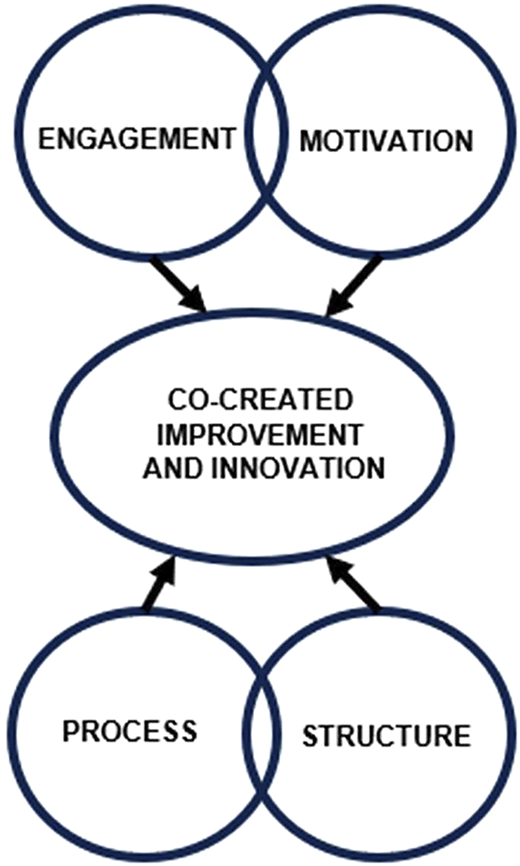
By comparing two contrasting village contexts, this study shows how co-creative practices are shaped by both internal drivers (e.g. sense of purpose, commitment, and trust) and external conditions (e.g. institutional support and external threats). The next section synthesizes these insights into a conceptual model (Figure 1), illustrating how structure and motivation interact to enable co-creation in ecosystemic settings.
5.1 Contrasting collaborative and continuous improvement
When the findings are compared with those of prior research on continuous improvement within single organizations, several new aspects emerge in the inter-organizational context explored in this study. Traditional continuous improvement models often operate within clearly defined organizational structures, where roles, processes, and goals are most often well established (eg. Buckler, 1996; Jurburg et al., 2016). In contrast, collaborative improvement initiatives across organizational boundaries require the negotiation of fundamental aspects such as decision-making, vision-setting, and trust-building (Kożuch and Sienkiewicz-Małyjurek, 2016; Mervyn et al., 2019). This study shows that structural clarity, often assumed in organizations, must be actively developed when multiple actors are involved.
Table 2 contrasts continuous improvement within a single organization and collaborative improvement across organizational ecosystems, showing how assumptions about structure, process, trust, and motivation differ.
These differences demonstrate that traditional models cannot simply be transferred to inter-organizational contexts. Instead, facilitation becomes central to alignment. A skilled facilitator acts as a boundary-spanning agent, bridging organizational cultures, coordinating interactions, and building trust—particularly in the absence of shared institutional frameworks (Kożuch and Sienkiewicz-Małyjurek, 2016; Vink et al., 2020). Rather than imposing rigid procedures, facilitators enable inclusive participation, support collective sensemaking, and ensure that co-creative momentum is sustained over time (Trischler and Westman Trischler, 2022). Building on this, service design also emphasizes the interplay between processes and structures that enable co-creation across diverse and complex stakeholder needs (Jones, 2018).
Vision setting and goal alignment also differ significantly. Within organizations, visions provide clear direction for priorities and resource allocation (Robinson, 1991). In collaborative initiatives, however, actors often have different motivations and expectations. The village cases illustrate this contrast: in one, the threat of school closure unified participants around a shared vision, while in the other, the lack of an urgent driver made it difficult to align priorities. Competing perspectives fragmented participation, slowing decision-making and weakening commitment—an outcome also observed by Dargan and Shucksmith (2008) in their analysis of LEADER program implementation.
These findings highlight the importance of establishing common ground early in co-creative efforts. External pressures can act as powerful engagement triggers, but without a structured process and inclusive facilitation, they may not translate into actual collaboration (Chen et al., 2014; Zahoor and Al-Tabbaa, 2020). Facilitation is therefore not only a process management tool but a central mechanism for creating alignment and enabling innovation in ecosystemic contexts.
5.2 The role of structure and process in co-creation
Structure and process are central to collaboration, but they cannot be taken for granted in inter-organizational settings. Structures such as governance arrangements or facilitation frameworks provide a platform for collective action, while processes guide how collaboration unfolds over time. Both must be designed and adapted to context. This aligns with service design, which stresses that improvement efforts must be carefully designed to fit the unique needs of each context (Vink et al., 2020).
Facilitation was critical in both cases. Facilitators bridged priorities, built shared goals, and created space for idea generation. Their contribution went beyond guiding discussions; they adapted the process to the specific needs of each community. In one village, a shared external threat sparked strong motivation for collective action, and facilitation helped to organize and sustain that energy. In the other, where interests were fragmented and goals less aligned, facilitation was critical for building trust and creating a foundation for collaboration. This contrast shows that facilitation is not just about supporting groups that are already motivated, but also about enabling collaboration in environments where alignment is still fragile. These findings are consistent with Torfing et al. (2019), who emphasize facilitation and institutional design as prerequisites for inclusive participation in contexts without dominant authority.
When facing the risk of school closure, facilitation provided the structure needed for a motivated community to turn shared concerns into action. The external threat stimulated the local actors around a common goal, but previous attempts at community development had faltered due to a lack of credible leadership and coordination. The facilitator, supported by the municipality, brought both legitimacy and structure to the process, enabling alignment across stakeholders and ensuring that the initiative was institutionally supported. This confirms findings from Bryson et al. (2021) and Kożuch and Sienkiewicz-Małyjurek (2016), who emphasize the importance of facilitation in contexts where governance structures are weak or fragmented.
By providing a clear workshop framework, the facilitator helped channel the community's energy into concrete actions, guiding dialog, setting priorities, and sustaining momentum. The facilitation also enhanced the co-creative nature of the idea process by ensuring that diverse perspectives were acknowledged and integrated. This is consistent with by Paulus et al. (2018), Reinig et al. (2007), and Robinson and Schroeder (2004), who show that systematic processes are needed to carry ideas from generation through refinement to implementation. A structured approach supports not only the development of new ideas but also their validation and execution, ensuring that creative efforts lead to tangible outcomes. This is even more critical in co-creative contexts, where multiple stakeholders contribute perspectives and resources, requiring a structured process to synthesize diverse inputs, manage competing priorities, and maintain momentum. As Christmann (2014) noted, rural improvement initiatives often struggle to move from ideas to implementation due to the absence of such structured mechanisms, which highlights the crucial role that facilitation can play in guiding collaboration.
In the second village, diversity of priorities made it hard to define common goals. Here, facilitation took a different form: rather than channeling existing motivation, it helped bridge divergent interests and kept dialog moving. Facilitation was therefore essential to maintain constructive discussions despite tensions. This reflects Torfing et al.’s (2019) view of facilitation and institutional design as key to co-creation where authority is distributed, and Kożuch and Sienkiewicz-Małyjurek (2016) emphasis on trust-building in fragmented collaborations. In this sense, facilitation worked as part of the institutional arrangements that support co-creation, shaping how stakeholder interactions were structured and maintained over time.
In this case, where collaboration was not always taken for granted, facilitation served as a mediating force that helped to advance engagement in the absence of a unifying vision. This reflects broader service design insights (Trischler and Westman Trischler, 2022; Vink et al., 2020) that emphasize the need for adaptable process architectures in co-creation settings. As Christmann (2014) also observed, such structured support is particularly important in rural contexts, where misalignment and institutional fragmentation often hinder innovation and improvement efforts.
These findings extend previous research by demonstrating that structured facilitation not only improves ideation but also serves as a mechanism for transforming stakeholder engagement into tangible actions. While prior studies have focused on structured processes within organizations (e.g. Robinson and Schroeder, 2004), this study highlights that in inter-organizational settings, facilitation plays a bridging role that can enable co-created action. This resonates with Torfing et al. (2019), who argued that in fragmented governance environments, facilitation is essential for supporting progress in the absence of centralized control.
Furthermore, while previous research has emphasized the role of structure in internal organizational improvement (e.g. Bergman et al., 2022), this study shows that in inter-organizational settings facilitation must be flexible and proactive to keep participants engaged and ensure ideas move from discussion to implementation. These findings align with those of Kożuch and Sienkiewicz-Małyjurek (2016), who emphasize the importance of facilitation in navigating uncertainty.
The results also highlight the importance of iterative and reflexive processes in sustaining co-creation. In certain phases of the project, the absence of feedback loops limited both the creative potential and the sense of ownership among participants. This finding supports Vink et al. (2020) argument that embedded feedback is vital for ongoing adaptation and learning. The participants' experiences of rushed decision-making and exclusion from key stages of the process further underscore the need for participatory design structures that allow for deeper engagement over time. This aligns with the view that intentional change in ecosystems is achieved by gradually aligning institutions and practices over time (Vink et al., 2020).
In both cases, the structured process provided by the facilitator played a crucial role, but in the second case, where stakeholders had competing visions for development, the absence of adequate feedback mechanisms made it more difficult to resolve differing priorities. Without a structured method to revisit and refine decisions, some participants felt that ideas were prematurely dismissed or not sufficiently explored, leading to a weaker sense of ownership in the outcomes. This shows that while facilitation ensures dialog, it must also sustain engagement and reflection, which in turn supports a more effective ideation process over time.
5.3 The role of Engagement and motivation in driving Co-creation
While structure provides a necessary framework for co-creation, this study shows that its momentum depends on the engagement and motivation of individual. In both cases, participants were motivated not by organizational mandates or strategic plans but by a personal sense of responsibility and commitment to their communities. This aligns with earlier research on collaborative innovation, which emphasized that motivated individuals often act as catalysts for successful improvement initiatives (Paulus et al., 2018; Reinig et al., 2007; Robinson and Schroeder, 2004).
However, this study extends prior research by emphasizing that co-creation is not automatic but relies on the repeated voluntary participation of individuals. Given that no single person or organization is solely responsible for advancing the process, maintaining motivation requires both individual commitment and collective reinforcement mechanisms to sustain engagement over time. This insight reinforces the importance of designing co-creation initiatives that support both individual initiative and strong relationships between participants. In this way, people can recognize their contributions as meaningful within a wider collaborative context.
A key finding of this study is that early successes in co-creation initiatives function as catalysts for continued engagement. These initial achievements help build momentum, as participants see that their efforts lead to visible and meaningful results. This reinforces motivation and encourages others to become involved, creating what can be described as an iterative motivation cycle where each improvement deepens commitment over time. Several participants noted that even small, tangible progress increased confidence and made the process feel worthwhile. These dynamics created a cycle where each improvement reinforced commitment, similar to what Fisk et al. (2019) and Luescher et al. (2020) describe as self-reinforcing engagement. Viewed through a service design lens, such cycles resemble feedback loops that sustain participation over time.
Trust also emerged as a critical enabler of engagement, particularly in inter-organizational settings where formal hierarchies are weak and participation is voluntary. Trust had to be established early, both in the facilitators and in the process itself, so that participants felt their contributions would matter. The participants emphasized that the process had to feel fair, inclusive, and credible from the start for them to commit. The presence of a facilitator seen as legitimate and neutral was instrumental in building this initial trust and setting the tone for collaborative work. This reflects the service design principle that participatory processes must feel credible, inclusive, and fair if they are to sustain involvement. These findings align with those of Kożuch and Sienkiewicz-Małyjurek (2016), who emphasized that trust-building mechanisms are essential for collaboration across organizations, particularly where authority is shared and engagement depends on mutual belief in the process.
Leadership within the community also emerged as a key enabler of motivation and engagement. Rather than applying authority, the most effective leaders were those who acted as connectors and facilitators, drawing on personal networks and a collaborative mindset to bring others into the process. Their influence came not from formal power but from credibility, openness, and the ability to build trust across groups. This confirms the findings of Bryson et al. (2021), who argued that in collaborative settings, leaders play a crucial role in shaping the conditions for engagement, especially when outcomes need to be co-created.
While motivation often stems from intrinsic commitment, this study highlights the role of external threats as mobilizing forces. In one case, the risk of school closure acted as a strong driver of engagement, uniting the community around a common goal. This finding aligns with Bosworth et al. (2016), who found that local development efforts are often most successful when they respond to actual needs and urge needs in the community. However, the study also shows that external pressure can introduce tensions, particularly when stakeholders differ in how they interpret the threat. In such cases, interactions may shift from collaborative problem solving to more strategic negotiation, as Dargan and Shucksmith (2008) observed. From a service design perspective, external threats can be seen as contextual triggers: they may spark action, but facilitation and inclusive processes are required to transform urgency into sustained collaboration.
This study contributes new insights into the dual role of external pressures in co-creation. While they can act as strong initial drivers of participation, they may also lead to short-term, reactive involvement rather than commitment over time. The findings suggest that for co-creation efforts to transition from urgency-driven mobilization to long-term collaboration, additional conditions must be in place. In the absence of an immediate external threat, engagement was created primarily through relationship building and facilitation, highlighting the importance of designing a collaborative process that is sustainable over time. This comparison shows that while crises can effectively spark engagement, lasting collaboration depends on trust, credible leadership, and mechanisms that continuously reinforce motivation and inclusion.
6. Conclusions and implications
Findings from this study indicate that co-creation in rural development ecosystems is shaped by the interplay between structure, process, motivation and engagement. While structure provides the necessary scaffolding for collaboration, people's willingness to engage creates the momentum that enables continuous improvement and innovation over time. By comparing two village contexts, this study shows how internal commitment and external urgency influence co-creative dynamics in different ways and how trust and facilitation act as key enablers of both engagement and coordination.
This study also provides insights into the dual role of external pressures. Crises or external threats can spark participation but may also result in short-term, reactive involvement rather than sustained commitment. For co-creation efforts to move from urgency-driven mobilization to long-term collaboration, further conditions are needed. In the absence of immediate threats, engagement was created mainly through relationship building and facilitation, highlighting the importance of designing collaborative processes that are sustainable over time.
These findings extend existing research on service design, quality management, and collaborative governance by emphasizing that collaborative improvement and innovation must be not only at the outset of an initiative but throughout its continuation. A key implication of this study is the need to move beyond viewing co-creation as a project-based activity. In many rural development ecosystems, improvement and innovation initiatives are initiated as time-bound projects, often externally funded or facilitated. To support lasting change, co-creation should be embedded as a continuous practice integrated into governance, community development, and institutional routines. Service design contributes here by providing tools for participatory processes and adaptive architectures that can carry collaboration forward over time.
Future research could build on this study by investigating how such long-term engagement factors can be designed and institutionalized. This includes exploring how co-creative structures survive beyond funding cycles, how leadership and facilitation evolve, and how feedback loops can be embedded into governance frameworks. From a service design perspective, these loops are essential for reflexive learning and iterative adjustment. Comparative studies across regions or sectors could also help clarify how co-creation adapts to different institutional, cultural, and resource contexts.
For practitioners, the findings suggest the importance of designing for continuity from the outset. Facilitators and policymakers should prioritize not only short-term engagement but also mechanisms that support ongoing participation, trust, and iterative learning. This means moving from a mindset of isolated projects toward cultivating ecosystem capabilities that can maintain collaboration over time. Finally, by viewing co-creation as an evolving capability rather than a bounded intervention, this study offers a basis for rethinking how collaborative improvement can be embedded in rural innovation strategies and policy frameworks aimed at long-term, community-driven development. In uncovering the key factors that drive co-creation in rural development ecosystems, the study contributes to theory by clarifying how collaboration unfolds in resource-constrained, multi-actor contexts, and to practice by showing how these factors can be supported in real-world settings.