


This study investigates the effects of social media as a social networking tool for donation-based crowdfunding by considering the factors affecting donation intention in the Philippines, such as social influences, motivations, strategic positioning and creative marketing efforts.
A mixed-method approach was used through a survey questionnaire and short focus group discussions (FGD). The researchers used partial least squares structural equation modeling (PLS-SEM) as a statistical tool and qualitative data was analyzed through thematic analysis.
The study found that social experience, perceived donor effectiveness, intrinsic motivation and leveraging creativity positively affected donation intention. In contrast, extrinsic motivation and strategic positioning were found to have no significant effect on donation intention. The qualitative findings support the conclusion by discovering the need to be authentic and transparent to achieve fundraising goals.
Existing research has mainly focused on crowdfunding websites. Also, research regarding the use of social media as a social networking tool for crowdfunding is scarce.
This study provides a deeper understanding of donation crowdfunding and offers insights into developing effective strategies for crowdfunding campaigns through social media.
The findings contribute to the literature on donation crowdfunding by identifying the determinants of a successful campaign through advertised crowdfunding.
1. Introduction
As the internet continues to revolutionize our lives, funding patterns are shifting to reflect the ever-evolving nature of technology, rendering traditional fundraising approaches nearly obsolete (Li, Hou, Guan, & Chong, 2022). Crowdfunding (CF) is a method of online fundraising that has evolved to support the completion of projects with clearly defined goals. As a result, charitable crowdfunding organizations use social networking to address the urgent need for financial aid (Liu, Suh, & Wagner, 2018). This study focuses on donation-based crowdfunding through social media platforms. The utilization of current technology, such as smartphones, laptops, and other electronic devices, enables instant and limitless access to a vast array of contribution and participation opportunities at any given time (Simon, Stanton, Townsend, & Kim, 2019). Due to the fast-paced nature of these technologies, research has shown that the marketing effort needs to be improved to achieve the financial objectives (Foà, 2019).
Simple to complex crowdfunding platforms exist in the Philippines. Indiegogo is the most popular crowdfunding website in the country. Compared to other platforms, this one is user-friendly and packed with features. Also, crowdfunding projects have numerous opportunities due to their large user base (Kesselman & Esquivel, 2019). However, research regarding donation-based crowdfunding, particularly in the Philippines, is often insufficient since it is a relatively new concept for-profit and non-profit entrepreneurial endeavors. In particular, there is a lack of research regarding advertised crowdfunding, specifically on social media’s effects on marketing crowdfunding to consumers.
To address gaps in extant studies, the researchers make use of existing models such as Self-determination theory (SDT) (Chen et al., 2021; Sherman & Axelrad, 2022; Yang, Lei, Zhang, Song, & Wang, 2023) to develop a framework that will determine the factors of success for charitable campaigns. The study focused on the determinants of a successful crowdfunding campaign through advertised crowdfunding platforms on social media (i.e. social influences on social media, donation motivation, strategic positioning of campaign descriptions, and leveraging creativity to induce donation intention).
The purpose of this study is to provide individuals with a fuller knowledge of crowdfunding as an alternate solution fundraising method by examining its basic characteristics as well as the demonstrated advantages and disadvantages that may encourage or discourage individuals from publishing an initiative on a crowdfunding platform (Li et al., 2022). Crowdfunding has taken on greater significance in raising money for community organizations and businesses, enticing financial institutions and charitable organizations to social innovation, and allowing them to participate as funders of societal alternatives (Gafni, Hudon, & Périlleux, 2021). This research explores opportunities for growth in charitable crowdfunding by investigating the factors affecting donation intention in the Philippines.
2. Review of related literature
2.1 Donation-based crowdfunding
Crowdfunding (CF) is a method of financing campaigns for profit or non-profit ventures from a large user base, typically through online platforms and the use of social media (Kuppuswamy & Bayus, 2018). Crowdfunding is classified by the primary phases of reward-based, equity-based, and peer-to-peer lending, where funders receive incentives in exchange for their contributions (Kirby & Worner, 2014) (see Figure 1).
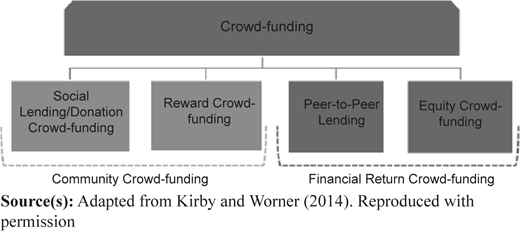
As opposed to these conventional financing methods, fundraisers are not obligated to give financial returns and participants in donation-based crowdfunding do not expect any material benefits in exchange for their financial contributions (Ba, Zhao, Zhou, & Song, 2020). Rather, they feel a sense of fulfillment knowing that their money is being used to support a social initiative, regardless of whether they receive anything in return (Wang, Li, Kang, & Zheng, 2019). This study delves into how fundraisers can induce donation intention, which is defined as the efficiency and motivation that favorably influence donors' intentions to donate to crowdfunding campaigns (Li et al., 2022).
To determine the factors of a successful donation campaign, the study leverages extant research and theoretical frameworks, such as self-determination theory (Chen et al., 2021; Sherman & Axelrad, 2022; Yang et al., 2023), social influences to induce donation intention (Li et al., 2022), strategic positioning of project description (Gafni, Hudon, & Périlleux, 2021; Zheng, Wang, & Mian, 2022), and creative marketing initiatives to induce donation intention (Mastrangelo, Cruz-Ros, & Miquel-Romero, 2020; Xu, Mehta, & Dahl, 2022).
2.2 The role of social influences in donation crowdfunding on social media platforms
According to Li et al. (2022), funding patterns have shifted towards using social platforms for charitable crowdfunding due to the rise of social media. Through the use of online platforms, people and organizations may now build commercial partnerships all over the world. Social media, in particular, has the potential to motivate and enable its users to contribute to social welfare and assist those in need (Mastrangelo et al., 2020).
Through social media, donation-based crowdfunding can be advertised to a large, interconnected audience, where they can persuade users to donate through their online peers and facilitate donation-inducing actions (Simon, 2019) (see Figure 2). Hence, this study explores the role of social media in donation-based crowdfunding and how these platforms match the donors' psychological goals with the fundraisers' needs.
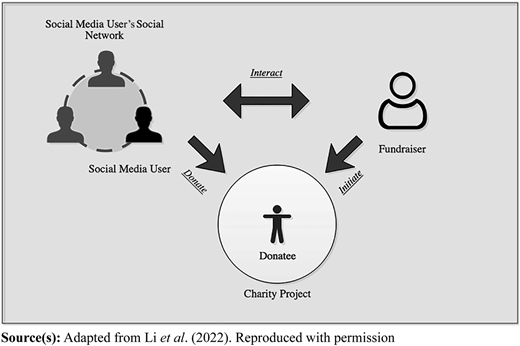
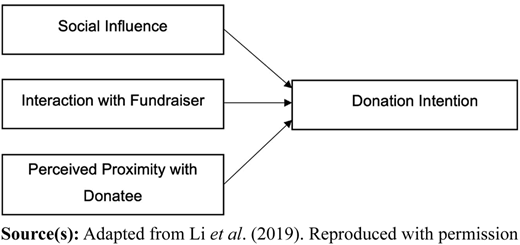
Social influence can alter a person’s views and behavior. It could impact how much someone thinks others are okay with their behavior (Simon et al., 2019). Suppose an individual believes that other users expect them to contribute to charity projects and that this behavior results in social recognition and positive feedback. In that case, they are more inclined to donate (Li et al., 2022). For instance, whenever a donor contributes to charitable crowdfunding projects, others would likely view them favorably and may even leave positive comments or “react” to their donation with a ‘like’ or ‘heart’ on social media. These positive reactions can give donors a pleasant feeling, motivating others to donate (see Figure 3). Hence, when individuals think other users expect them to donate on social media, they perceive that donating would bring them social rewards (Li et al., 2022).
2.3 Social influences on donation intention and social media
Based on Wade’s (2022) study, donation crowdfunding is independent of the traditional charity’s cycle of financial structure since it makes use of digital platforms such as GoFundMe to find donors. Moreover, Li et al. (2022) found that social influence can motivate social media users to establish and maintain beneficial connections with other platform members. With the added utilization of social media, crowdfunding has overcome time and location constraints to induce donation intention. Hence, the referential body of literature suggests the inclusion of two social influences: (1) social experience and (2) perceived donor effectiveness as influences on donation intention.
Social experience is defined as the personal satisfaction derived from donating, and the influence of social relationships such as peers and relatives to donate in crowdfunding campaigns (Li et al., 2022).
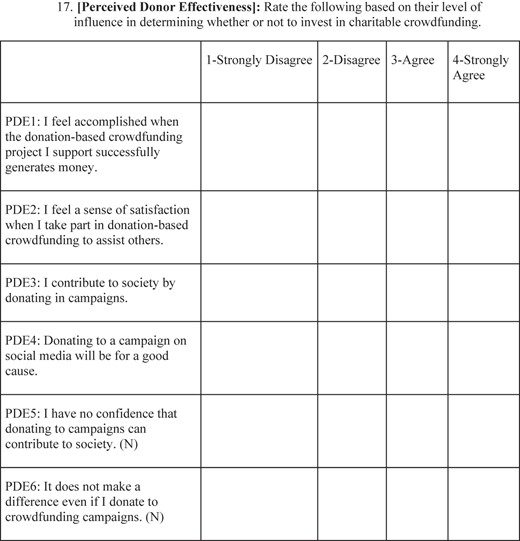
Perceived donor effectiveness is the individual’s belief in their ability to make a meaningful impact and help resolve social or other issues. For individuals to feel a sense of perceived effectiveness by donating, it is important that they believe their actions would lead to a tangible and noticeable result, ultimately contributing to the fundraiser’s goal (Wang et al., 2019).
Therefore, the research proposes the following hypothesis:
Improving social experience positively affects donation intention to donation-based crowdfunding projects.
Improving perceived donor effectiveness positively affects donation intention to donation-based crowdfunding projects.
2.4 Donation motivation
Yarin et al. (2022) define motivation as the driving force of action, intensity of the behavior, and persistence of the action. With that in mind, this can also mean that specific causes can spur a person to action or inaction. Thus, a person’s motivation might be extrinsic; the product of external influences, or intrinsic; generated from internal processes (Liu et al., 2019). As a result, examining the connection between the motivation to donate and funding intentions would help improve the performance of crowdfunding organizations (Allah Pitchay et al., 2022).
The researchers divide the motives of donors into two groups: (1) Extrinsic, motivated by external incentives like a gift, money, or acclaim one would receive for contributing, and (2) Intrinsic, motivated by internal benefits and the personal gratification the human connection for helping someone out (Gleasure & Feller, 2016; Chen et al., 2021).
Self-determination theory (SDT) — which is regarded as motivation theory, was first introduced by Deci and Ryan (2015) as the framework that describes how both intrinsic and extrinsic motivation dimensions affect behavioral intention. Previous research has shown that people’s motivation to participate in donation crowdfunding is driven by internal variables, demonstrating the need to evaluate people’s level of self-determination (Chen et al., 2021; Sherman & Axelrad, 2022; Yang et al., 2023). In this study, self-determination theory is regarded as a framework to determine the intrinsic and extrinsic motivations of donors to donate in charitable crowdfunding.
Based on the self-determination theory, the study presented three elements that motivate donation intention:
Social motivation refers to an individual’s support for crowdfunding with social impact; an extrinsic-social motivation.
Individual motivation refers to backers' incentive to participate in crowdfunding in the absence of a community; an intrinsic-individual motivation.
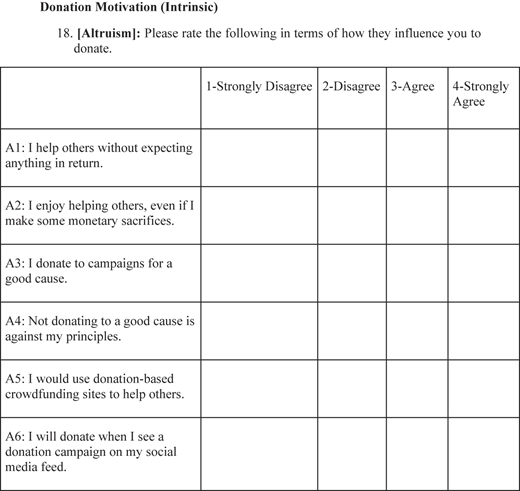
Altruism motivation is a personal connection with a crowdfunding campaign, wherein donors raise funds without expecting any returns; an intrinsic-personal motivation (Yang et al., 2023).
2.5 Intrinsic motivations
Intrinsic motivations, in the context of donation-based crowdfunding, refer to the motivation to donate based on personal beliefs and the inherent satisfaction derived from donating, which is tied to altruism (Gleasure & Feller, 2016; Chen et al., 2021). Various studies have used altruism as a frequent factor in their studies regarding donation motivations (Wang, 2019; Chen et al., 2021; Xu et al., 2022; Yacoub, Mitra, Ratinho, & Fatalot, 2022; Yang, 2023). In donation intention, altruism results from one’s moral obligation to help others, thereby participating in funding campaigns (Chen et al., 2021). Moral obligation refers to the level of responsibility an individual feels to behave morally when they encounter an ethical situation (Wang et al., 2019). In this case, it would be through the moral duty to donate on social media when users encounter posts or advertisements online.
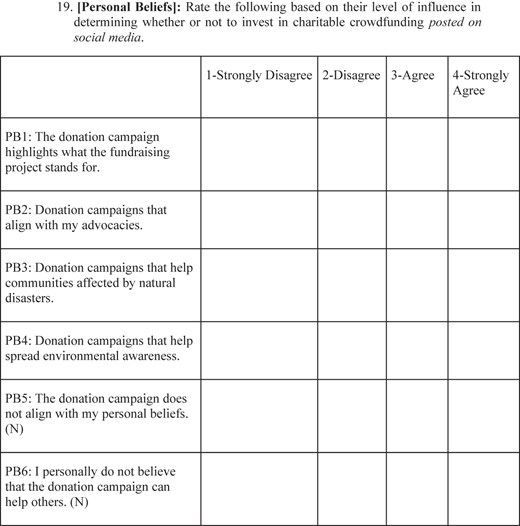
In addition, people are more likely to support a cause if it aligns with their personal beliefs and values (Camilleri & Bresciani, 2022). By highlighting what the fundraising project stands for and the community it represents, the fundraiser can make a connection with potential supporters and increase the chances of the campaign being successful (Fang, 2022; Xu et al., 2022; Yacoub et al., 2022). In connection with the research topic, altruism, and personal beliefs are used as the pro-social motivations to donate in charitable crowdfunding campaigns. Therefore, the research proposes the following hypothesis:
Intrinsic motivations contribute to the increase in donation intention.
2.6 Extrinsic motivations
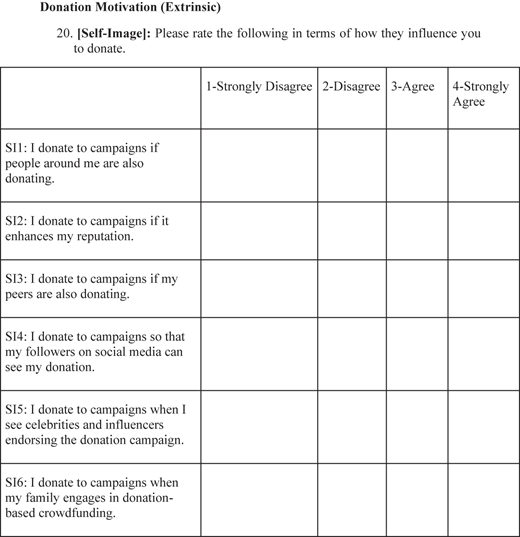
This type of motivation arises from external factors such as tangible awards, or in this case, the social value of contributing to donation campaigns (Gleasure & Feller, 2016; Chen et al., 2021). The actions of others often influence charitable behavior (Chen et al., 2021), especially in Philippine culture, where people are looked upon kindly when they do good deeds. The desire to maintain a positive image and enhance one’s reputation by donating to a worthy cause is common among people who prioritize their “face” (Yacoub et al., 2022). As such, to increase “face value,” social initiatives such as donation crowdfunding can be a great motivator for donors to engage in charitable campaigns as an extrinsic-social motivation (Chen et al., 2021). Hence, charitable giving can be a way for individuals to demonstrate good behavior and improve their self-image. Therefore, the research proposes the following hypothesis:
Extrinsic motivations contribute to the increase in donation intention.
2.7 Strategic positioning to induce donation intention
Prior studies found that (1) messaging, (2) articulation, and (3) project pitch tone is crucial for developing trust and forging social connections (Gafni et al., 2021; Zheng et al., 2022). A charity endeavor may be deemed “trustworthy” by investors if the fundraisers, through their judgment of pitch articulation style, demonstrate skill, integrity, and goodness (Ghobadi, 2023). Moreover, it is believed that many crowdfunding supporters experience information asymmetry when evaluating projects (Al-Qershi, 2022).
As a result, messaging, which involves creating a connection to readers, articulation which refers to the symmetry of the project description, and project pitch content—which are textual signals—becomes increasingly essential for donors' decision-making (Al-Qershi, 2022). The moment when all of this is done correctly, they would, therefore, be more inclined to fund charitable campaigns (Ghobadi, 2023). As a result, the research proposes the following hypothesis:
Strategic positioning of the project description positively affects donation intention to donation-based crowdfunding projects.
2.8 Leveraging creativity to induce donation intention
Earlier studies recommended and looked at numerous marketing strategies and techniques to boost donations (Efrat, Gilboa, & Sherman, 2020; Mastrangelo et al., 2020; Xu et al., 2022). For instance, analyzing how involving potential donors in donation events can enhance their inclination to financially donate to a nonprofit cause (Mastrangelo et al., 2020). In relation to strategic positioning, the added value of co-creation with donors regarding charity events helps induce donation intention. Showcasing the creative charity campaign on the respective online platform, such as a video presentation or advertisements that the fundraisers post on social media, may serve as a way for fundraisers to encourage potential donors to donate since there is a clear, tangible example of the good works of the donation (Mastrangelo et al., 2020).
Charity crowdfunding campaigns can promote physical activities as a prelude to charity campaigning, such as organizing clothes for refugees, drawings and decorations for victims, as well as volunteering for relief operations (Efrat et al., 2020). It was asserted that participating in creative activities, such as volunteers helping in relief operations, causes a pleasant affective state, which raises the possibility of donating to the charity organization and the amount given (Xu et al., 2022). Through these efforts, the fundraiser can create a visual narrative that aligns with the specific requirements of the crowdfunding platform’s features. Moreover, through creative marketing strategies, they can create donation-inducing actions from donors (Xu et al., 2022). Thus, the following is presented as the hypothesis:
Creative and innovative donation campaigns positively affect donation intention to donation-based crowdfunding projects.
3. Research methods
3.1 Research design and study site
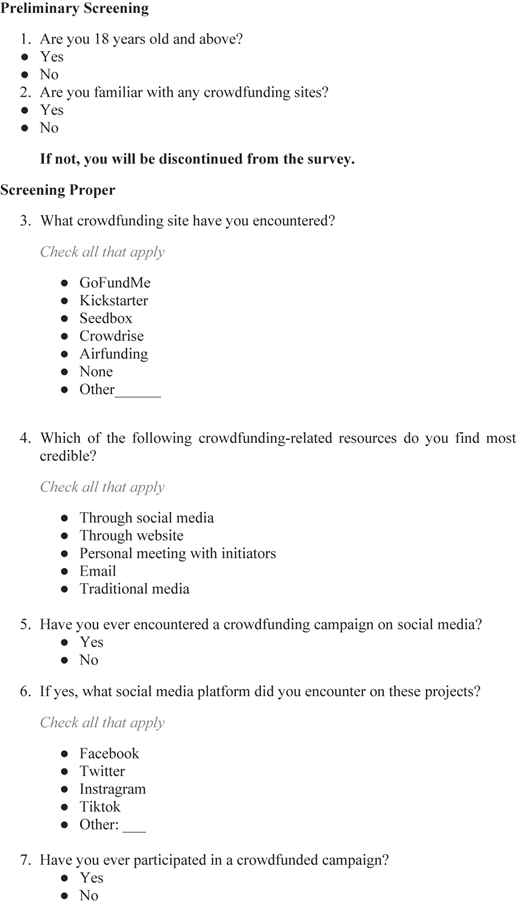
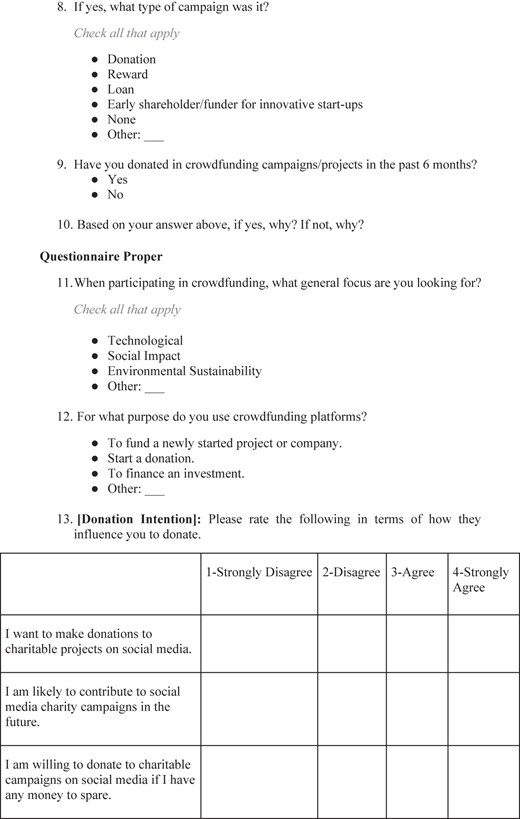
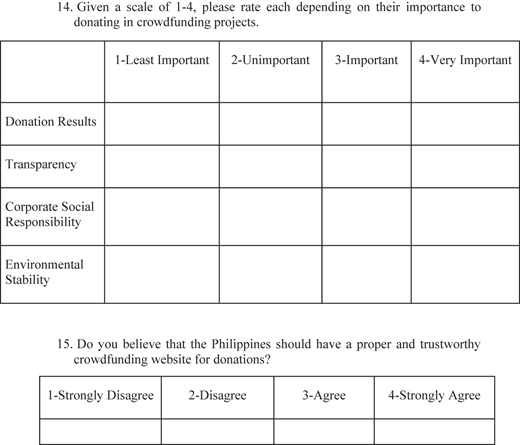
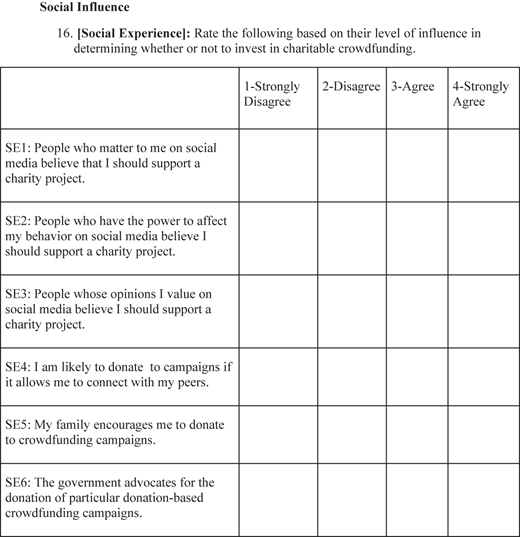
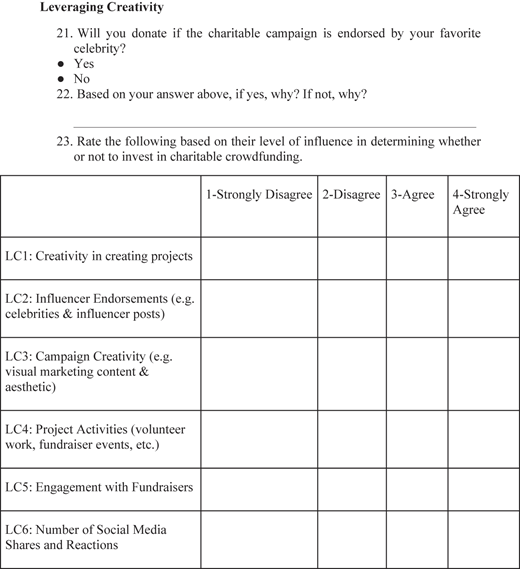
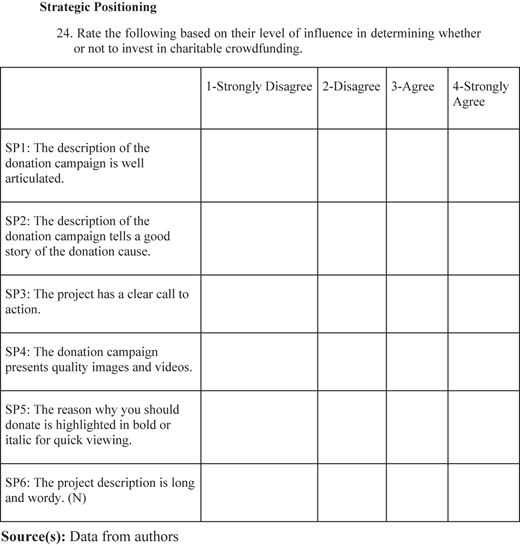
The researchers employed qualitative and quantitative data collection and analysis methodologies to address the research objectives. Furthermore, the study gathered data through quasi-experimental techniques such as survey questionnaires through Google Forms (see Appendix 1). The researchers also maximized the use of focus group discussions to gain relevant data from open-ended questions that would make up the qualitative aspect of the research (see Appendix 2). The questionnaire and focus group discussion were structured to include all the variables present within the research, which is then measured through Likert scale. This approach will help gather comprehensive and valuable insights into respondents’ perceptions on the determinants of success in crowdfunding initiatives.
The respondents were chosen depending on how easily the researchers could reach them through convenience sampling within the cluster. Furthermore, the number of individuals taking part was limited given the accessibility of resources and connections, along with the willingness of potential participants to engage during the time they have available (Mulder & de Bruijne, 2019).
Individuals living in the Top 5 urbanized cities in the National Capital Region (NCR), including Quezon City, Manila, Pasay, Muntinlupa, and Makati, are the primary focus of the study. A pilot test of thirty (30) respondents from outside these demographics was first completed to ensure a productive set of questions.
3.2 Data gathering procedure
The questionnaire was distributed to make up the three hundred eighty-five (385) participants based in Quezon City, Manila, Pasay, Muntinlupa, and Makati. A screening question about respondents' familiarity with donation-based crowdfunding was utilized in the survey. Only those respondents who selected “yes” were allowed to proceed with the survey. This study utilized a four-point Likert scale to measure all variables, with responses ranging from strongly disagree/very unimportant (1) to strongly agree/very important (4) with no neutral answers.
For the focus group discussions, a small group of respondents answered pertinent questions about donation-based crowdfunding in a controlled environment. The group was selected based on their willingness and convenience to participate. Moreover, the questions for the focus group are open-ended and adaptable while still encouraging discussion and are unbiased and neutral. During these discussions, non-numerical data was collected and evaluated to gain insights into the participants' ideas, opinions, or experiences through a Zoom meeting with willing participants.
3.3 Statistical treatment of data
Cronbach’s Alpha was used to evaluate the internal consistency, or reliability, of a group of scale or survey questionnaire items. This means that the reliability of a given measurement refers to how consistently it measures a specific concept, and Cronbach’s alpha is a method of determining the level of consistency in this regard (Goforth, 2015). This statistical treatment would assess the quality of the tool during the design phase before its complete deployment.
For this study, the measurements and structural models were tested using partial least squares structural equation modeling (PLS-SEM) after checking both the convergent validity and discriminant validity of the model. The structural model looked at the proposed relationships in the latent constructs (Chen et al., 2021). The researchers made use of the variance-based SEM strategy for three reasons.
First, PLS-SEM may be preferable to covariance-based SEM when developing theories. For studying donation intention for donation-based crowdfunding, there were few reliable hypotheses and corresponding theoretical models. Second, compared to covariance-based SEM, variance-based SEM uses less rigorous assumptions about the normal distribution of the data (Chen et al., 2021). Third, previous research related to this study has made use of PLS-SEM with successful results that provided relevant contributions to the body of literature, which validates the use of variance-based SEM as the statistical tool (Chen et al., 2021; Li et al., 2022; Allah Pitchay et al., 2022). As a result, the researchers used PLS-SEM to evaluate the data.
3.4 Data analysis for qualitative approach
Thematic Analysis was used to analyze and categorize large amounts of data. This is done by identifying patterns and themes within the data and assigning codes to individual observations or quotes to help organize them. Ultimately, this process helps researchers discover meaningful insights and trends within the data. Thematic analysis can be applied to various research designs and is suitable for both beginner and advanced researchers as the steps involved are straightforward to follow, while at the same time systematic enough to produce valuable insights from the data (Rosala, 2017). This research used thematic analysis to determine the relevant themes in the focus group discussion regarding donation-based crowdfunding.
4. Results and discussion
4.1 Descriptive statistics
A total of 385 participants were invited to participate in the online survey through Google Forms. The criteria for participant selection were previously outlined in the preceding chapter. Table 1 summarizes the behavioristic and psychographic profiles of the respondents regarding donation-based crowdfunding (see Table 1). The participants found that the most credible crowdfunding resource would be through websites and social media.
Behavioristic and psychographic profile
| Items | Frequency | % |
|---|---|---|
| Most credible crowdfunding source | ||
| 4 | 1.04 | |
| Personal meeting with initiators | 14 | 3.64 |
| Through social media | 168 | 43.64 |
| Through website | 195 | 50.65 |
| Traditional media | 4 | 1.04 |
| Encountered crowdfunding | ||
| No | 9 | 2.34 |
| Yes | 376 | 97.66 |
| Where do you encounter crowdfunding | ||
| 356 | 92.47 | |
| 222 | 57.66 | |
| Tiktok | 164 | 42.60 |
| 259 | 67.27 | |
| Imessage | 1 | 0.26 |
| Participated in crowdfunding | ||
| No | 42 | 10.91 |
| Yes | 343 | 89.09 |
| Type of crowdfunding | ||
| Donation | 324 | 84.16 |
| Early shareholder/funder for innovative start-ups | 24 | 6.23 |
| Loan | 33 | 8.57 |
| Reward | 146 | 37.92 |
| Funding for an animated series | 1 | 0.26 |
| None | 37 | 9.61 |
| Donated in the past 6 months | ||
| No | 156 | 40.52 |
| Yes | 229 | 59.48 |
Source(s): Table by authors
4.2 Assessment of measurement model
Table 2 displays the results of the reliability test. After computing the given values, the alpha value for all seven (7) variables is above 0.8, indicating that the set of questions is very reliable. Since the alpha value is large, the test survey contains highly correlated items, indicating high reliability (Kock, 2015; Amora, Ochoco, & Anicele, 2016). Table 2 also indicates that all seven (7) constructs were above the recommended 0.70 guideline for construct validity. Likewise, the convergent validity of the constructs in the structural model was deemed sufficient with item loadings and AVE values recorded above 0.50.
Item loadings, AVE, and reliability of constructs
| Variable | Loading | SE | Cronbach’s α | CR | AVE |
|---|---|---|---|---|---|
| Social experience | 0.908 | 0.929 | 0.687 | ||
| SE-1 | 0.794** | 0.046 | |||
| SE-2 | 0.840** | 0.045 | |||
| SE-3 | 0.881** | 0.045 | |||
| SE-4 | 0.846** | 0.045 | |||
| SE-5 | 0.773** | 0.046 | |||
| SE-6 | 0.835** | 0.045 | |||
| Percieved donor effectiveness | 0.860 | 0.905 | 0.706 | ||
| PDE-1 | 0.782** | 0.046 | |||
| PDE-2 | 0.811** | 0.046 | |||
| PDE-3 | 0.892** | 0.045 | |||
| PDE-4 | 0.871** | 0.045 | |||
| Intrinsic motivation | 0.795 | 0.907 | 0.830 | ||
| Altruism | |||||
| A-1 | 0.781** | 0.046 | |||
| A-2 | 0.707** | 0.046 | |||
| A-3 | 0.837** | 0.045 | |||
| A-5 | 0.817** | 0.046 | |||
| A-6 | 0.728** | 0.046 | |||
| Personal beliefs | |||||
| PB-1 | 0.801** | 0.046 | |||
| PB-2 | 0.845** | 0.045 | |||
| PB-3 | 0.881** | 0.045 | |||
| PB-4 | 0.858** | 0.045 | |||
| Extrinsic motivation | 0.823 | 0.878 | 0.594 | ||
| EM-1 | 0.539** | 0.047 | |||
| EM-2 | 0.826** | 0.045 | |||
| EM-3 | 0.815** | 0.046 | |||
| EM-4 | 0.851** | 0.045 | |||
| EM-5 | 0.780** | 0.046 | |||
| Strategic positioning | 0.830 | 0.881 | 0.600 | ||
| SP-1 | 0.636** | 0.047 | |||
| SP-2 | 0.734** | 0.046 | |||
| SP-3 | 0.851** | 0.045 | |||
| SP-4 | 0.865** | 0.045 | |||
| SP-5 | 0.766** | 0.046 | |||
| Leveraging creativity | 0.808 | 0.868 | 0.570 | ||
| LC-1 | 0.756** | 0.046 | |||
| LC-2 | 0.608** | 0.047 | |||
| LC-3 | 0.815** | 0.046 | |||
| LC-4 | 0.800** | 0.046 | |||
| LC-5 | 0.776** | 0.046 | |||
| Donation intention | 0.753 | 0.859 | 0.671 | ||
| DI-1 | 0.837** | 0.045 | |||
| DI-2 | 0.748** | 0.046 | |||
| DI-3 | 0.868** | 0.045 |
Note(s): ** Significant at p < 0.01
Source(s): Table by authors
Discriminant validity is present when participants are not confused with the different indicators of one variable with those of other variables (Kock, 2015). If the square of the average variance extracted (AVE) of a variable (i.e. any of the diagonal values) is greater than the correlation coefficients (i.e. off-diagonal values) when this variable is correlated with the other variables, then the items in that variable have strong correlations. In this case, all diagonal values in Table 3 (see Table 3) are higher than the related off-diagonal values which shows acceptable discriminant validity.
Correlations among latent variables with square roots of AVE
| SE | PDE | IM | EM | SP | LC | DI | |
|---|---|---|---|---|---|---|---|
| Social experience (SE) | (0.829) | ||||||
| Perceived donor effectiveness (PDE) | 0.239 | (0.840) | |||||
| Intrinsic motivation (IM) | 0.123 | 0.684 | (0.911) | ||||
| Extrinsic motivation (EM) | 0.314 | −0.011 | −0.025 | (0.771) | |||
| Strategic positioning (SP) | −0.205 | 0.39 | 0.467 | −0.138 | (0.775) | ||
| Leveraging creativity (SE) | 0.02 | 0.463 | 0.493 | 0.066 | 0.515 | (0.755) | |
| Donation intention (DI) | 0.287 | 0.54 | 0.575 | −0.063 | 0.276 | 0.393 | (0.819) |
Note(s): The diagonal values are the square roots of average variance extracted (AVE)
Source(s): Table by authors
4.3 Assessment of structural model
As seen on Table 4, the fit and quality indices of the structural model in the study fell within acceptable limits (Kock, 2015). The average path coefficient (APC = 0.149, p < 0.001), average R-squared (ARS = 0.424, p < 0.001), and average adjusted R-squared (AARS = 0.415, <0.001) are all significant (p < 0.05) indicating that on the average, all the parameters measuring the relationships between the latent variables are significant at 95% confidence level; average block VIF (AVIF = 1.565) and average full collinearity VIF (AFVIF = 1.741) have ideal values (≤3.3) indicating that there are no multicollinearity problems; Tenenhaus goodness of fit (GoF = 0.531) is considered as large (≥0.36) indicating medium explanatory power to the model; R-squared contribution ratio (RSCR = 1.00) has ideal value (=1) indicating that the model is free of negative contributions from R2; and Statistical suppression ratio (SSR = 1.00) is acceptable (≥0.7), indicating that at least 70% of the paths in the model is free of statistical suppression.
Model fit and quality indices
| Indices | Value | Decision criteria |
|---|---|---|
| Average path coefficient (APC) | 0.149 | p-value <0.05 |
| Average R-squared (ARS) | 0.424 | p-value <0.05 |
| Average adjusted R-squared (AARS) | 0.415 | p-value <0.05 |
| Average block VIF (AVIF) | 1.565 | Acceptable if <= 5, ideally <= 3.3 |
| Average full collinearity VIF (AFVIF) | 1.741 | Acceptable if <= 5, ideally <= 3.3 |
| Tenenhaus GoF (GoF) | 0.531 | Small >= 0.1, medium >= 0.25, large >= 0.36 |
| R-squared contribution ratio (RSCR) | 1.000 | Acceptable if >= 0.9, ideally = 1 |
| Statistical suppression ratio (SSR) | 1.000 | Acceptable if >= 0.7 |
Source(s): Table by authors
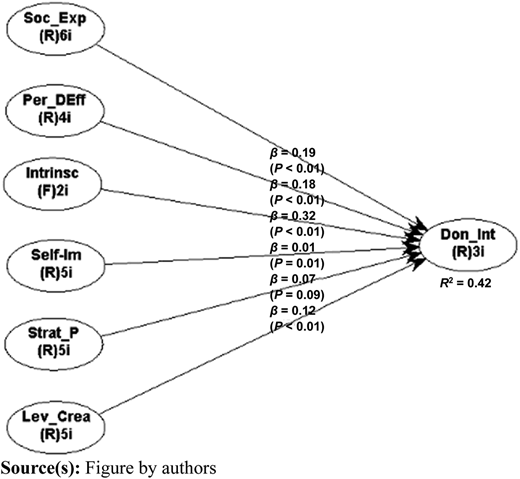
Table 5 presents the parameter estimates and outcomes for the proposed relationships in model. SEM results revealed which factors affect donation intention in advertised crowdfunding. Social experience (β = 0.191, p < 0.001) and perceived donor effectiveness (β = 0.182, p < 0.001) positively affects donation intention with small effect sizes (f2SE = 0.073, f2PDE = 0.099), respectively. Intrinsic motivation (β = 0.321, p < 0.001) significantly affects donation intention with moderate effect size (f2 = 0.186). Additionally, leveraging creativity (β = 0.118, p = 0.009) positively affects donation intention with small effect size (f2 = 0.048). On the other hand, extrinsic motivation and strategic positioning were found to have no significant effect to donation intention. Figure 4 depicts the resulting model of the hypothesis testing (see Figure 4).
Relationships of variables
| Independent → Dependent variables | Path coefficient | p-value | SE | Effect size | |
|---|---|---|---|---|---|
| H1 | SE → DI | 0.191 | <0.001 | 0.050 | 0.073 |
| H2 | PDE → DI | 0.182 | <0.001 | 0.050 | 0.099 |
| H3 | IM → DI | 0.321 | <0.001 | 0.049 | 0.186 |
| H4 | EM → DI | 0.014 | 0.389 | 0.051 | 0.003 |
| H5 | SP → DI | 0.067 | 0.092 | 0.050 | 0.021 |
| H6 | LC → DI | 0.118 | 0.009 | 0.050 | 0.048 |
Note(s): Cohen’s effect size (f2): 0.02 = small, 0.15 = moderate, 0.35 = large; β = path coefficient
Source(s): Table by authors
4.4 Qualitative data analysis
This research used thematic analysis to determine the relevant themes in the focus group discussion regarding donation-based crowdfunding. The qualitative research method examines and comprehends the complex and in-depth facets of an individual’s motives, experiences, and behaviors about crowdfunding campaigns.
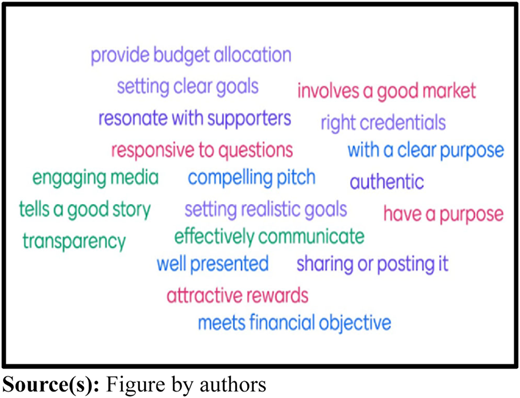
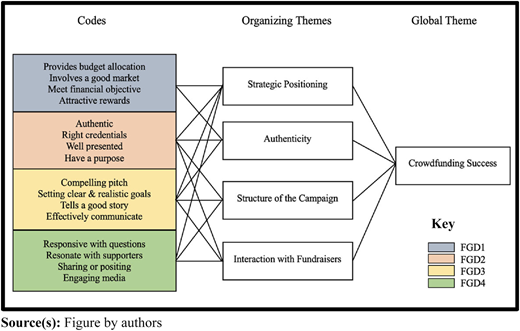
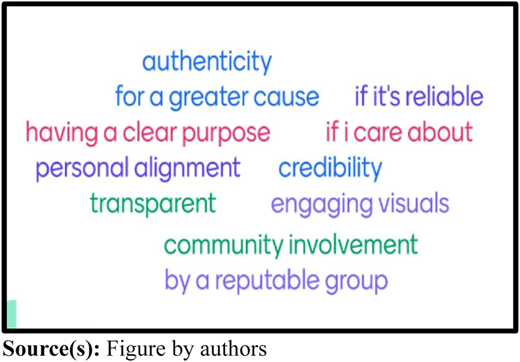
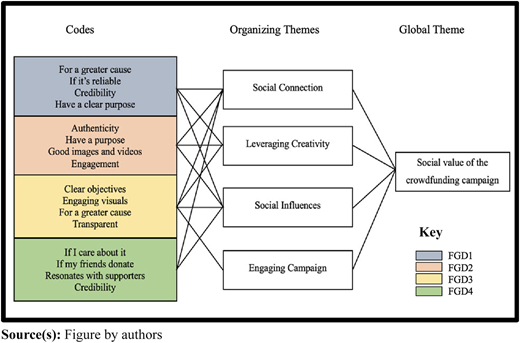
The success of crowdfunding campaigns hinges on how they are presented to the audience and the strategic initiatives that they employ (Al-Qershi, 2022; Ghobadi, 2023). The respondents defined that a successful crowdfunding campaign should have strong pitch, attainable objectives, good communication, well-articulated goals, a compelling story, all of which are outlined in Figure 5 (see Figures 5 and 6). The requirements cover both emotional and strategic components, such as audience resonance and authenticity, which is consistent with the variables employed in the report of Zheng et al. (2022).
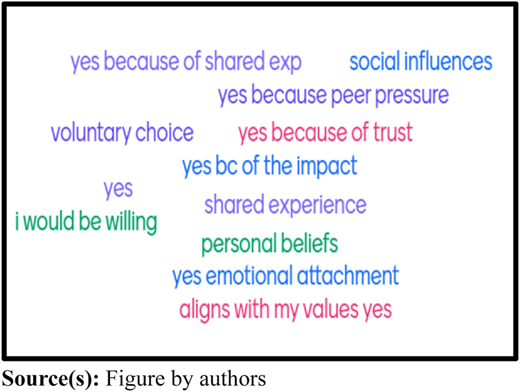
Intrinsic and extrinsic motivations are fundamental factors that drive individuals' intentions to engage in philanthropic initiatives, such as the role of personal values, emotional responses, social norms, and perceived benefits in shaping individuals' decisions to donate (Yang et al., 2023). At its root, donation intention became the central theme of the study after analyzing the answers provided by the respondents, which is in line with the framework of Chen et al. (2021) (see Figures 7 and 8).
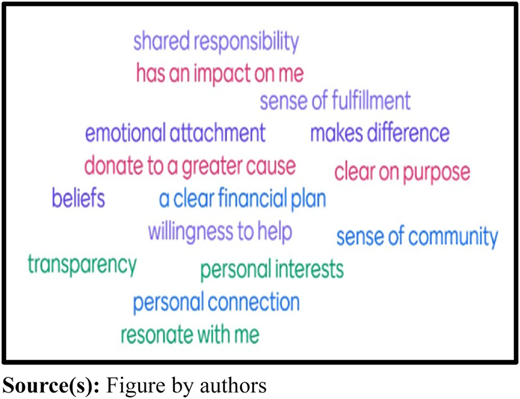
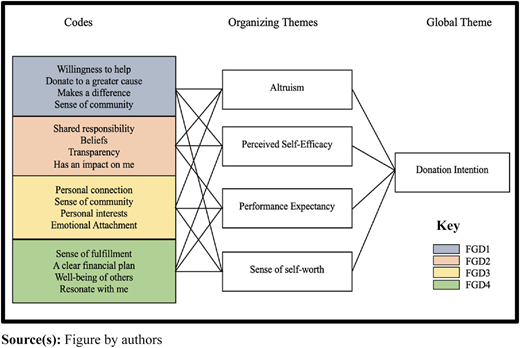
Some of the factors that drive donation intention include a clear financial plan, a willingness to assist, the desire to contribute to a greater cause, alignment with personal interests, and creating a personal connection with the cause (Yang et al., 2023). All of these factors work together to encourage the respondents to take part in philanthropic crowdfunding projects, particularly intrinsic and extrinsic motivations which are organizing themes (see Figures 7 and 8) (Chen et al., 2021; Sherman & Axelrad, 2022).
According to the respondents, several factors influence their propensity to contribute to a social media contribution campaign (see Figures 9 and 10). These comprise the campaign’s legitimacy, the availability of captivating images, and individual concern for the cause. They are more inclined to participate if these elements foster trust and align with their interests and values. In particular, fundraisers should be able to produce an engaging story that complies with the particular specifications offered on social media platforms. Through this, they can elicit donations from donors by using innovative marketing techniques (Xu et al., 2022).
Social influences were recognized as significant factors influencing the donation intention, especially those from peers. It has been acknowledged that social influences—such as seeing friends or acquaintances participate in donation activities—have a significant motivating effect on people’s propensity to give (Li et al., 2022). Trust was shown to be a crucial component, as participants stated that their level of trust in an organization is greatly impacted by the level of trust their friends have in it (see Figures 11 and 12). The relationship between organizational credibility and personal trust networks was a significant factor in determining how participants felt about their contribution (Bukhari, Usman, Usman, & Hussain, 2020; Liu et al., 2018). In conclusion, our findings provide light on the complex interactions of social factors, personal beliefs, and trust dynamics that affect people’s decisions to actively engage in and support charitable giving, which are present in the framework of Li et al. (2022).
Broad view of concept map on social influences that affect donation intention
Broad view of concept map on social influences that affect donation intention
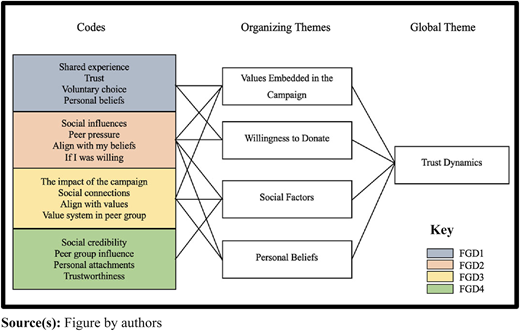
Figure 14 demonstrates the significance of having a personal connection to the cause, as emphasized by the participants as a deciding factor in their choice (see Figures 13 and 14). Participants stated that their readiness to participate depended on whether they had a sincere interest in or connection to the campaign’s underlying purpose, even in the face of powerful descriptions and images. The conversation also highlighted the necessity of being on the lookout for potential fraud and the significance of confirming the integrity of efforts, particularly when it comes to online platforms. Overall, the participants' observations highlight the complex interactions among presentation quality, a sense of personal connection to the cause, and trust that influence their choices to donate to crowdfunding projects.
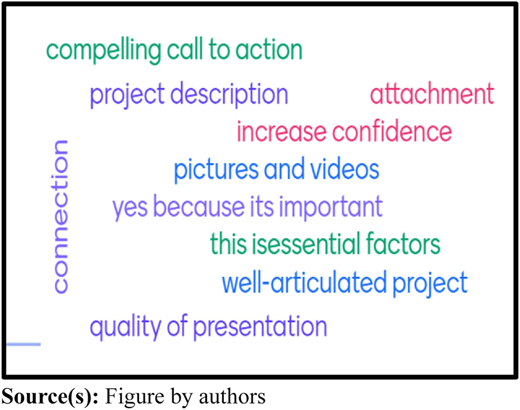
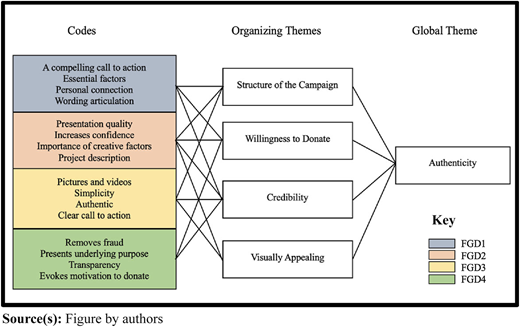
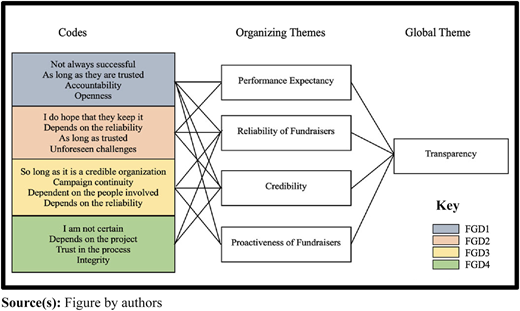
A recurring issue throughout the discussion was the critical relevance of affiliation with recognized organizations, with participants emphasizing that established ties foster credibility and trust. Participants underlined the importance of organizers displaying a true passion for the cause, as well as a proactive approach to overcoming any difficulties. The acknowledgment of the unexpected nature of campaigns and the significance of preparation relates to the participants' desire for a sense of comfort and assurance in their decision to give (Behl, Dutta, Sheorey, & Singh, 2023). In Figure 15, accountability and openness appeared as critical components in participants' evaluations of campaign dependability (see Figure 15).
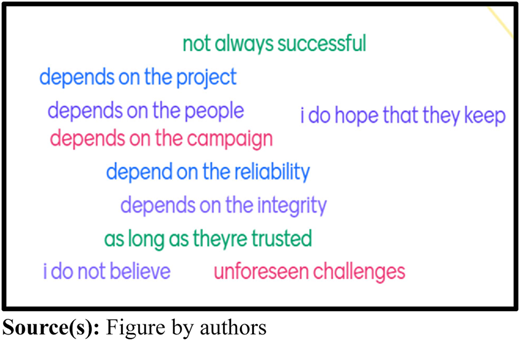
In Figure 16, participants also emphasized the importance of realistic goals, open communication, and experienced project creators in boosting trust in crowdfunding projects (see Figure 16). Realistic goal-setting was regarded as necessary for sustaining trust, and honest communication was emphasized as a means of keeping supporters informed and engaged throughout the campaign lifespan (Mastrangelo et al., 2020). Overall, the presence of experienced project creators was interpreted as a positive indicator of the campaign’s likelihood of success, providing reassurance to potential contributors.
5. Conclusions and study implications
After the entire research process, the quantitative findings of this study indicate that social influences on donation intention and social media (social experience & perceived donor effectiveness) positively affect donation intention, which is consistent with existing research (Liu et al., 2018; Chen et al., 2021). In particular, intrinsic motivation significantly affects donation intention with a moderate effect size, which is further supported by the recurring themes of altruism and personal beliefs in the thematic analysis. Moreover, leveraging creativity positively affects donation intention with a small effect size. On the other hand, extrinsic motivation and strategic positioning were found to have no significant effect on donation intention. The findings indicate that creative marketing strategies to induce donation intention on social media platforms should be focused on intrinsic values rather than external factors, in the context of the Philippines.
The qualitative findings of this study support the preceding statement by discovering the need to be authentic and transparent to achieve fundraising goals. This is in line with the idea that trust should be gained by showing the sincerity of the fundraisers in their campaigns. Donation-based crowdfunding campaigns should also present social value to increase donation intention. As a result, charitable campaigns require a sense of proactiveness to create rapport with users, thereby gaining donations from willing donors.
5.1 Theoretical contributions
Despite the research on donation-based crowdfunding, extant research regarding crowdfunding campaigns by leveraging social media has been scarce, especially in the Philippines which could be a potential hub for crowdfunding efforts. To our knowledge, we are among the first to have an exploratory study regarding the different factors that influence donation intention through social media, in the context of the Philippines. Previous studies on online donation behavior have mainly focused on information quality, project popularity, and website characteristics (Li et al., 2022). However, there is a growing trend of donation-based crowdfunding features being integrated into social media platforms, in addition to websites. As a result, this study provides key insights that identify the determinants of what makes successful crowdfunding campaigns.
5.2 Practical contributions
This study provides practical applications due to an increase in understanding with donation-based crowdfunding, which is a useful tool to fund campaigns for a good cause. This is especially true in the Philippines wherein crowdfunding campaigns are not as prevalent compared to developed countries; an untapped market that businesses can target for crowdfunding campaigns online. Moreover, this study further elucidates the potential implications for enhancing the organization of crowdfunding projects. Based on our research findings, it has been determined that the effective management of transparency, donation results, corporate social responsibility, and environmental stability is crucial to evoke empathy and enhance perceived credibility. These factors play a significant role in influencing individuals' intentions to donate money in the context of donation/charitable crowdfunding. With the use of social media as an avenue to gain donation crowdfunding, fundraisers can greatly increase their funds to achieve their desired goals.
6. Limitations and recommendations
The study has limitations on the type of crowdfunding platforms. For instance, reward-based, peer-to-peer lending, and equity-based crowdfunding platforms are not covered. The research focused solely on donation-based crowdfunding platforms. However, the unavailability of previous research on the topic, particularly in the Philippines, made the research challenging to find meaningful connections in the data set.
The scope of the study was limited to the top five urbanized cities in Metro Manila as the population is more aware of crowdfunding campaigns compared to other provincial cities due to differences in technological accessibility. Moreover, the research could not include other cities in the Philippines due to constraints in time, resources, and reach within the allotted time for the research completion. As a result, with the aforementioned constraints, the top 5 Urbanized Cities in the National Capital Region (NCR) are the focus of the research as they are relevant touch points of crowdfunding campaigns. It is recommended that future studies include other clusters in the Philippines, and even other countries to explore comparative differences between regions, nations, and cultures.
Moreover, since data was collected at a fixed time, the cross-sectional data did not establish changes in results over time. Data gathered was also limited due to the study’s reliance on self-reported measures, which may introduce bias or inaccuracies. For future research on donation-based crowdfunding, it is recommended that studies include longitudinal research that monitors donation behaviors over time to gain a better understanding of how motives change. It is also possible to identify cultural influences on donation intentions and the efficacy of social media marketing by conducting comparative research across various nations or cultures. Examining theoretical frameworks such as stakeholder theory or social identity theory might provide fresh perspectives on organizational tactics and donor behavior.
As highlighted in the results, the importance of transparency and donation results in the context of crowdfunding cannot be overstated, as it serves as a fundamental element of trust, enabling donors to observe the concrete outcomes resulting from their contributions. It is important to analyze the long-term impacts on public opinion of companies and their enduring relationships with communities by incorporating corporate social responsibility (CSR) into crowdfunding campaigns. Future studies in these fields may, all things considered, aid in the continuous advancement and enhancement of crowdfunding procedures by offering perceptions that can augment openness, social responsibility, inventiveness, and communication in the context of charitable crowdfunding.
References
Further reading
Appendix 1 Survey questionnaire
Appendix 2 FGD questionnaire
How do you define a good crowdfunding campaign (e.g. what makes a good crowdfunding campaign)?
What motivates you to donate in charitable crowdfunding campaigns?
If you saw a donation campaign on social media, would you be willing to donate or not? If yes, why? If not, why?
Do you believe that social influences like peers affect your intention to donate? If yes, why? If not, why?
Will you donate to a charitable campaign based on the articulation of the project description, the quality of the presentation (e.g. pictures and videos), and a clear call to action? If yes, why? If not, why?
Do you believe that crowdfunding campaigns will be able to keep their promises? If yes, why? If not, why?
Source(s): Data from authors

