This paper aims to situate civil-society organisations (COs) as crucial components of sustainability, given their work protecting and supporting vulnerable members of society and the environment. However, it highlights the lack of an integrated reporting framework tailored to COs. Accordingly, a draft framework is proposed.
Twenty-one semi-structured, open-ended interviews with key stakeholders were conducted to identify the challenges faced by COs and donors to inform the creation of a tailored reporting framework. Open, axial and selective coding were used to analyse the results.
Existing financial and sustainability frameworks are poorly aligned with CO needs. Current reporting is fragmented, compliance-driven and does not achieve intended outcomes. A Civil-Society Organisations Reporting Practice (CORP) framework is proposed, comprising a CEO/Trustee report, strategy, flash report, summarised financial statements, statement of credibility and a statement of activities that integrates financial and non-financial information.
The CORP framework offers the first integrated reporting framework for COs. It is proportionate, can be implemented without compromising compliance with local laws, and enhances audit efficiencies and improves decision-making.
The paper addresses the CO accountability movement’s design flaws to reduce legitimacy-seeking behaviour, include downward accountability and improve sector-level performance, inclusivity and sustainability.
1. Introduction
Civil-society organisations (COs) are nonprofit organisations (NPOs), non-governmental organisations (NGOs) and similar groups that undertake socially or environmentally oriented activities in pursuit of the public’s benefit. For example, disaster aid relief entities; organisations providing food and shelter for abandoned animals; community food programs (such as so-called soup kitchens) and initiatives that provide educational support to underprivileged communities. COs operate independently from governments and typically rely on donations to sustain their operations (Cordery et al., 2019a). For simplicity and to ensure this paper addresses a broad audience, COs are defined broadly, with no specific legal-status requirements. The only two defining features are that the organisation’s primary function is the provision of public benefit goods and services and that the CO cannot distribute gains to anyone other than its intended beneficiaries.
While many studies focus on for-profit companies and their important role in global sustainability, this paper asserts that COs are a critical yet underdeveloped component of the sustainability ecosystem. Due to many governments’ and private organisations’ failings, COs are pivotal to achieving the United Nations’ Sustainable Development Goals (UN SDGs) (Unerman and O'Dwyer, 2006; Gazzola et al., 2021). Coupled with society’s heightened awareness of social and environmental crises, the number of COs has increased globally. Despite the importance of NPOs, they continue to operate with increasing pressure from funding competition, tensions in the demand for accountability and transparency and to demonstrate their effectiveness to a diverse set of interested stakeholders (Carman, 2010; Cordery et al., 2019a; Cordery et al., 2019b; Gazzola et al., 2021).
At present, the prior research focuses on defining COs and analysing their stakeholders, accountability, transparency and sustainability reporting practices (see Henriques, 2001; Carman, 2010; Hyndman and McConville, 2016; Cazenave and Morales, 2021; Gazzola et al., 2021; Belal et al., 2023). Some studies have analysed COs’ reporting disclosures and what performance measures COs should adopt (see Sowa et al., 2004; Bagnoli and Megali, 2011; Dhanani and Connolly, 2012; Hyndman and McConville, 2016; Cyr et al., 2023). Carman (2010) explored the accountability movement in the non-profit sector and highlighted specific weaknesses and tensions. Collectively, the literature emphasises that CO performance is multidimensional and cannot be meaningfully portrayed through financial metrics alone. However, the CO reporting landscape remains highly fragmented with no baseline financial or holistic integrated reporting framework. For instance, existing financial reporting frameworks, such as International Financial Reporting Standards (IFRS), are not well-suited to satisfying the general financial information needs of CO stakeholders (Carman, 2010; Saxton and Guo, 2011; Hyndman and McConville, 2016).
Recently, the International Non-Profit Reporting Foundation (INPRF) released much-needed reporting guidance in the form of the International Non-Profit Accounting Standard (INPAS) (INPRF, 2025b). Apart from this standard, also focused primarily on financial reporting, there is no internationally accepted reporting framework specifically catering to the CO context, and none that substantially covers both financial and non-financial aspects of COs in an integrated manner (IFR4NPO, 2024).
While sustainability-related frameworks developed by, for example, the International Integrated Reporting Council (IIRC), the Global Reporting Initiative (GRI) and the International Sustainability Standards Board (ISSB) could be used by COs, this would require significant effort to tailor the guidance to COs’ unique needs. In addition, requiring each CO to separately tailor an existing for-profit orientated sustainability reporting framework is likely to lead to (i) the omission of key information specific to the CO context, (ii) a reduction in the comparability of COs, (iii) an increase in the effort and cost to prepare and assure CO integrated reports and (iv) a reduction in resources available to fulfil the CO’s mandate (see, for example, Hielscher et al., 2017; Cordery et al., 2019b; Gazzola et al., 2021). Attempting to adapt these frameworks also risks reinforcing symbolic reporting practices for compliance or legitimacy’s sake, rather than forming part of a conceptually sound and comprehensive framework that simultaneously assists external users and COs (see Carman, 2010).
To begin to address the lack of a standardised baseline CO integrated reporting framework [1], this normative paper conducted 21 semi-structured open-ended interviews with CO stakeholders from five different countries (South Africa, UK, USA, Sweden and Uganda). This laid the groundwork for the development of the Civil-Society Organisations Reporting Practice (CORP) framework that addresses reporting fragmentation, reduces symbolic disclosure practices and contributes to CO-accountability movement debates (see Carman, 2010). The results inform the development of key statements that integrate both financial and non-financial information relevant to the CO context, and that are useful for donors and CO internal development, mission drift assessments, and organisational improvement and optimisation. This paper’s important practical contribution starts to reduce the inefficiencies currently experienced by COs and donors (Cordery et al., 2019a). CO transparency and accountability can also be improved by requiring reporting on the social or environmental impact of the CO’s activities and its use of resources (see also Carman, 2010; Andreaus and Costa, 2014). With certain minimum information requirements, the risk of misrepresentation is reduced, as COs have less opportunity to disclose only positive news, a risk that exists in the absence of a dedicated reporting framework (Cabedo et al., 2018).
In addition, standardisation helps COs establish what systems are needed to collect the required information to prepare useful external reports and how to use these reports for internal assessment and improvement, without running parallel management and external reporting systems. Standardisation also reduces donor information-processing costs, making reports easier to compare and facilitating efficient resource-allocation decisions. Standardisation may facilitate and incentivise software companies to develop Enterprise Resource Planning solutions tailored to integrated reporting in the CO context at an affordable cost. Finally, the paper contributes to the literature on the persistent tensions between performance management, accountability, legitimacy and organisational learning.
The remainder of this paper is set out as follows. Section 2 provides a synopsis of existing CO-related research and elaborates on the need for further research that addresses current accountability weaknesses in the CO sector. Section 3 discusses the method while Section 4 presents the findings and analysis. The paper concludes with Section 5.
2. Literature review
The Industrial Revolution saw the rise of neoliberalism and the adoption by for-profit companies of production systems characterised by “take-make-use-dispose” strategies. This “unbridled generation of waste” (Tedesco et al., 2022, p. 397) and a general disregard for societal well-being have culminated in the current social and environmental crises (see van Zijl, 2024). Consequently, COs have increased in numbers and structure to help address the negative impacts (see Gray et al., 2006; Lehman, 2007; Cabedo et al., 2018) yet they have received inadequate support from the accounting profession.
COs are often described by what they are not. COs are not private companies pursuing profit. They operate independently of governments but often undertake activities which governments should, arguably, engage in (Gray et al., 2006; Cordery et al., 2019a). COs undertake public-interest work in social and environmental spheres aligned with specific causes. There is a large element of voluntarism and selflessness (Lehman, 2007). An important distinction between for-profit entities and COs is that COs do not select activities based on their ability to generate financial profit for shareholders. In many cases, the beneficiaries of CO’s services do not pay for those goods and services. However, their non-profit orientation does not mean all COs are necessarily small or inconsequential. There are many examples of multi-national COs with significant budgets and many organisational features in common with large for-profit companies. For instance, the World Wildlife Fund’s 2023 consolidated financials reflect total assets of US$755m and net operating revenue of over US$450m (WWF, 2023). Save the Children International “reached nearly 48.8 million children across 116 countries” and has a combined revenue of US$2bn (Save the Children, 2024). Donations to these long-established and impactful organisations largely stem from their long-term credibility and trusted reputations for doing good. But to become as renowned as these COs, organisations must first secure funding in competitive and constrained environments, implement impactful initiatives and communicate them effectively to relevant stakeholders.
2.1 Current reporting frameworks and their implications in civil-society organisations
The CO reporting landscape is fragmented with no globally accepted and recommended financial reporting framework (INPRF, 2025a). Many COs adopt IFRS, US Generally Accepted Accounting Principles or International Financial Reporting Standard for Small and Medium-sized Entities as their financial reporting framework as they are familiar to large corporate donors. Some countries, such as Canada, the UK and the USA, have financial reporting guidance specifically for COs (see Table 1). These are, however, still largely based on established financial reporting principles and practices from the for-profit sector that seek to help investors and creditors forecast future cash inflows; estimate entity values; assess management’s stewardship over company assets and determine what financial returns have been generated (see Whittington, 2008; IASB, 2018, paras 1.3 & 1.7). But generating a financial return is not the purpose of COs (Gray et al., 2006; Bagnoli and Megali, 2011; Hyndman and McConville, 2016) making them ill-suited for the task.
The recently released INPAS standards represent a significant achievement for standardising CO financial accounting and reporting (INPRF, 2025a). However, while INPAS standards require some narrative information, they still fail to provide and integrate the necessary non-financial and financial information. Assessing COs based primarily on financial statements can yield nonsensical outcomes (Bagnoli and Megali, 2011; Hyndman and McConville, 2016). To illustrate, suppose CO A and B are identical in all respects. Both COs receive a $1 million donation. CO A allocates 90% of its funds to its social work and 10% to operating costs. CO B allocates only 10% of its operating costs and undertakes no social or environmental work. CO A has no profit while CO B, technically, has $900,000 “profit”. Using typical metrics, CO B is the “best” CO as it generated the highest profit, regardless of its public interest achievements. Intuitively, CO A is the better COs because it used funds to achieve its social goals and objectives, but the financial statements do not reflect this.
This paper is not diminishing the importance of sound financial accounting and reporting. Auditable accounts are a vital component of modern organisations’ functioning and control systems (see Maroun and van Zijl, 2022). It is also critical for CO accountability and legitimacy. But the release of the financial accounting INPAS standards should not mislead interested stakeholders into relaxing efforts to address the non-financial aspects of CO reporting. Accordingly, as financial reporting alone cannot satisfy CO reporting needs, Table 2 presents common sustainability frameworks and guides used in the for-profit sector. These still focus on explaining how for-profit companies create value and impact the six capitals [2] in a non-financial sense. Some also have limited additional guidance useful for the non-profit sector.
The ISSB’s and IIRC’s approaches to sustainability reporting aim to provide useful information to providers of financial capital for making investment decisions (see IIRC, 2021, p. 11; ISSB, 2023). The GRI’s framework is more stakeholder-centric but still acknowledges that “investors, in particular, can use the reported information” (GRI, 2024, p. 8). While these frameworks offer several useful components that COs should draw on, even for-profit entities experience challenges adopting them (see McNally et al., 2017) and they continue to attract criticisms (see Flower, 2015; De Villiers et al., 2022). Requiring each CO to adapt them to their needs is inefficient and presents an even greater challenge with greater potential for sector-specific misalignment. For example, many of the existing frameworks’ mandatory requirements are not applicable to the non-profit sector, are very complex, or the cost and effort to collect, analyse and report on specific metrics exceed a reasonable cost-benefit assessment. Furthermore, many metrics require “rethinking and redesigning” in the CO context and their guidance is less relevant to help preparers think about and apply the requirements in the non-profit sector (see IISD, 2005, p. 5). Auditing diverse reports also becomes prohibitively costly in comparison to auditing standardised reports that are well-suited to the context in which they are applied (see Maroun and Atkins, 2015; Maroun, 2017; 2020).
While this paper argues that standardisation, at present, constitutes a proportionate and important development, it is not without its own limitations and trade-offs. Prior research highlights that standardisation can lead to isomorphic behaviour and a compliance-mindset (DiMaggio and Powell, 1983; Hielscher et al., 2017; Tooley and Hooks, 2020). However, Section 2.2 reveals that there is already a degree of legitimacy-seeking and compliance-driven behaviour within the non-profit sector, but without the benefits of standardisation. The key to standardisation is to ensure the design is cognizant of the current reporting and upward accountability environment and responds by balancing costs and the administrative burden with downward accountability, internal learning and development and the efficient allocation of resources to COs by donors (Carman, 2010; Kuruppu et al., 2022).
2.2 Accountability as a contested concept in the non-profit sector
The non-profit sector experienced a shift in accountability that Carman (2010) argues is conceptually flawed. COs face similar isomorphic pressures to those experienced by for-profit companies. Reporting templates, timelines and audits became important legitimacy signals that increased in necessity and intensity as competition for donations and support increased (DiMaggio and Powell, 1983; Tooley and Hooks, 2020). However, the extent to which these reports inform donor decision-making has been questioned (Carman, 2010).
There are various frameworks and perspectives dealing with CO accountability (Kuruppu et al., 2022). These include upward accountability to donors, horizontal accountability to CO partners, downward accountability to beneficiaries. Accountability can be analysed by purpose (functional compliance or strategic optimisation and learning) and by mechanism (disclosure, performance assessments, evaluation and monitoring, participatory decision-making and self-regulation). In practice, accountability has centred around upward accountability to donors, using quantification and short-term tools that create tensions with the CO mission (Najam, 1996; Ebrahim, 2005; O’Dwyer and Unerman, 2008; Carman, 2010; Hyndman and McConville, 2016; Kuruppu et al., 2022). However, many investors do not invest in the systems and processes necessary to effectively address these. Donor templates are largely performance-driven but omit, for example:
[…] the availability of the provider and its capacity; its reputation and associational networks; and the extent to which the provider has similar values (Carman, 2010, p. 258).
Donor-dominated upward accountability can and has entrenched undesirable power dynamics in which donors define what constitutes “good” and “bad” performance, often in narrow financial and economic terms. This disregards how COs’ beneficiaries view performance. Beneficiaries’ voices must be included (downward accountability) and considered by COs and the donors making donation-selection decisions (upward accountability) (Carman, 2010; Hyndman and McConville, 2016; Tooley and Hooks, 2020; Kuruppu et al., 2022).
An assessment of the extent to which a CO’s work supports only a subsegment or the entire intended population (coverage) is also important but often overlooked. Relatedly, whether programs are “strong or intense enough to produce the hoped-for outcomes” is weak in CO accountability (Carman, 2010, p. 269). The lack of financial support for evaluation systems and an interest from donors to actively ask COs to explain how they have used the information they have collected, analysed and reported to improve their service delivery (internal learning and development) has led to symbolic reporting (Carman, 2010). This embeds compliance and legitimacy-seeking behaviour and drains resources that otherwise could have been used to deliver charitable goods and services (see DiMaggio and Powell, 1983; Tooley and Hooks, 2020).
The omission of volunteer hours from accounts is another example that diminishes the value of social capital and the symbolic ethos underlying COs. This practice can also further distort CO performance (Tooley and Hooks, 2020) and obscure important indicators of health and legitimacy. Wanting volunteer hours and in-kind donations are crucial flags that something is wrong and requires attention for both CO’s management and related government and donor stakeholders.
Together, the lack of standardisation, confusion about what to measure and how, and coverage and intensity mean that accountability, as theorised and in practice, is in conflict. The trend to prioritise upward accountability appears to stem from legitimising and compliance-driven behaviour with functional short-term tools that focus on physical outputs at the expense of more meaningful horizontal and downward accountability that are responsive to society and the environment’s needs and best positioning the CO to achieve its social or environmental missions (Ebrahim, 2005; Carman, 2010; Kuruppu et al., 2022).
Traditional notions that corporate reporting should solely cater to those who cannot demand information (see, for example, IASB, 2019) must be retheorised. In the context of nonprofits and for efficiency’s sake, CO reporting should inform CO trustees’ and boards’ decision-making in addition to serving traditional external stakeholder needs. But this requires the careful crafting of a reconceptualised integrated reporting.
A CO-specific framework is needed that can begin to reduce the decoupling of reporting and substantive change currently seen in the contested non-profit accountability space. Designing a framework that specifically caters to internal learning and development; upward and downward accountability and educates both COs and donors to illustrate the value of investing in evaluation and reporting mechanisms is needed. This paper aims to begin to address this significant requirement.
3. Method
A qualitative approach was adopted to illuminate and explore the specific nuances of CO reporting (Brennan and Solomon, 2008; O’Dwyer et al., 2011; Maroun and van Zijl, 2016). As discussed in Section 1, the purpose was to provide normative recommendations about external reporting tailored to the needs of the COs and their users. Accordingly, the experiences, insights and recommendations of experts and key stakeholders were sought. This paper provides initial recommendations on the development of a CO-specific reporting framework. Additional testing and refinement of the framework are required before its global application is feasible (Falk, 1992; Chu and Luke, 2023). Purposive and convenience sampling were used to identify potential interviewees with different perspectives and experiences in the CO space. This ensured that interviews focused on the subject matter to create a rich data set. Table 3 provides details of the interviewees.
Data was collected between 2023 and 2025 after ethical clearance was obtained from the authors’ university. The objective of the interviews was not to obtain consensus but to identify and understand key reporting challenges, needs and recommendations. Respondents were provided with a basic interview agenda to prevent rehearsed responses and promote an honest discussion (see Alvesson, 2003; Pandya et al., 2021). Twenty-one interviews were conducted and data saturation was achieved (Qu and Dumay, 2011; Rowley, 2012; Leedy and Ormrod, 2019). Respondents from five countries were interviewed to gain insights from a developed and developing context. After conducting these interviews, no new insights were gained and data saturation was achieved (Rowley, 2012; Leedy and Ormrod, 2019). The interviews were conducted by the researchers either in person or via MS Teams. Each interview was recorded to allow the researchers to notice non-verbal cues, make notes and create accurate transcripts. Interviewees began by discussing their background, qualifications and experience to help establish a rapport. This is important to increase interviewees’ openness. Peer debriefing was used after each interview to discuss key issues, new themes and reflect on the interview in comparison to previous interviews. Verbatim transcripts were created after each interview from the audio recordings (Maroun and van Zijl, 2022).
Each transcript was read multiple times before line-by-line coding began. Atlas.ti was used to conduct manual open, axial and selective coding by the same researchers. No AI-coding was used. Examples of open codes include “makes me feel good”, “large donors”, “impact”, “output”, “outcome” and “waste of resources”. Examples of axial codes include “useful information”, “impact, outputs and outcomes”, “credibility”, “standardisation”, “efficiencies” and “benchmarks”. As more interviews were conducted and analysed, previously coded transcripts were revised based on new codes and ideas generated, following an iterative process (Durocher and Gendron, 2014).
4. Findings and discussion
All interviewees identified numerous challenges facing COs and donors regarding CO external reporting. All interviewees supported the goal of addressing report duplication and fragmentation via some form of standardisation but highlighted the need to be cautious of adding to the administrative load:
[…] no two donors want the same thing. So there is a heavy burden on nonprofits […] there’s a huge opportunity with having a single standard to harmonise that and part of our work has been trying to bring donors together S1.
The results indicate that while ad hoc and small donors consider CO reporting important, they do not review COs’ reports before making donations (all interviewees [3]). Some interviewees carry out limited basic checks for credibility and legitimacy, but all interviewees said small and ad hoc donations are primarily driven by personal desires, preferences or workplace suggestions. The latter being particularly important as those COs are assumed to be credible because the workplace would have done the necessary checks. Large and recurring donors, especially companies and institutions, require formal reports to ensure that their donations are well used and to meet their governance and accountability obligations owed to their shareholders and stakeholders (D2-4, P3-8, S1-3).
This finding refutes the traditional assumptions that general-purpose reporting primarily serves small or scattered donors who cannot demand information. Instead, the finding supports arguments that reporting serves donors with the existing power to demand information (Roberts, 1991; Carman, 2010). Like IFRS’ stance, while CO beneficiaries, staff, regulators and other stakeholders are interested in CO reporting, satisfying the information needs of large and recurring donors strikes a good balance between (a) providing useful information that is required by donors and desired by other stakeholders and (b) keeping cost-benefit constraints in mind. Accordingly, the CORP was developed and consists of the following:
letters from the CEO and the strategy (see Section 4.2.1);
flash report (see Section 4.2.2);
statement of credibility (see Section 4.2.3);
summarised financial information (see Section 4.2.4); and
statement of activities (see Section 4.2.5).
The results begin by briefly discussing the challenges faced by COs (see Section 4.1). Then, in keeping with this paper’s normative objective, the structure of a CORP report is used to present a broad summary of each CORP statement.
4.1 External reporting challenges faced by civil-society organisations
Results revealed five categories of challenges, being (1) reporting template constraints; (2) attracting and retaining highly skilled governance and finance staff; (3) differentiating between outputs, outcomes and impacts; (4) recognition and measurement of non-cash donations and (5) uncertainty regarding assurance services.
4.1.1 Reporting template constraints.
COs must prioritise their spending on respective causes. However, fundraising and being accountable to donors are crucial. All donors and preparers of CO reports highlighted the adverse consequences caused by the absence of a standardised CO reporting framework (D1-6; P1-8). From the CO’s perspective, there is a high degree of uncertainty about what information should be collected and how it should be reported. Preparers raised that often during fundraising activities, potential donors would ask for information that the CO had not been collecting. The CO either loses that donation or rushes to try to gather the information retrospectively, raising stress, anxiety, frustration and lowering morale (D1-4, D6, P1-8, C1). In addition, the cost of ad hoc information-gathering exercises and completing different donor templates depletes COs’ already limited financial and human capital (P1-8). P8 laboured how reporting often takes two weeks a month because different donors want, for instance, costs allocated and reported differently. The burden is so great that he has begun declining donations that come with specific reporting requirements unless they are substantial. D6, P8 and S3 all highlighted that only extremely large COs can afford sophisticated software capable of managing multiple donor template reporting more efficiently, but at a great financial cost. These software packages also require expensive consultants to tailor the systems to address the multidimensional donor reporting requirements reliably.
Donors experience similar issues. Donors are not necessarily knowledgeable about what information they need to meaningfully evaluate potential COs. For example, commercial banks seeking to support rhino conservation do not know what the key drivers of success are (D2). Consequently, they spend time and money creating templates only to encounter two issues. Firstly, these templates may require irrelevant or unnecessary information, wasting CO and donor resources. Secondly, the templates may omit key information that should have been collected to inform their decisions (D1-5, P1-8, C1, S1-3).
A key constraint raised by COs is the need to develop and implement systems to gather, process and report information. This requires skilled staff, who are expensive. Donors face similar limitations as CSR departments are not staffed with “sophisticated” users present in capital market environments (D4, D6, S1-3). Creating a standardised reporting framework would greatly assist both CO preparers and donors, and would assist to alleviate more concerns by, for instance:
Making it feasible for software development companies to create CO-tailored packages that all COs can use (D6, S3).
Off-the-shelf software packages mean less skilled staff are required to operationalise the systems for both COs and donors (D1-6, P1-8, A1-2).
Reducing anxiety about what information should be collected, analysed and reported (P1-8).
Eliminating the need for donors to create custom templates (all interviewees).
Assisting donors to efficiently compare COs easily and with lower resource requirements (D1-6, S1-3).
Guiding new COs regarding what to prepare to begin fundraising activities (P8).
Reducing criticisms that reports created by do not address CO accountability as intended (see Carman, 2010).
Linked to the lack of standardised templates is the difficulty in comparing COs. D3 spoke of her time at a large company where her job revolved around “reviewing hundreds of applications and deciding where to put CSI[4] money”. P2 suggested that:
Unfortunately, I don’t think you’re going to be able to compare [different categories of COs]. You can look at the efficiency of how you’re spending the same money. So, how much does it cost, and then kind of weigh it up to say, well, are two rhinos worth 200 people going hungry if it costs the same? (P2).
P2 went on to analogise CO reporting to integrated reporting, and the difficulty of comparing reports that, despite following similar principles, are so different that it is difficult to meaningfully compare them without resorting to financial performance. He suggested that a more uniform reporting framework may help users compare COs and that a useful starting point would be to “identify, regardless of whether you’re saving animals or a feeding scheme”, what is common among all COs. Taking this further, looking at key financial and non-financial activities and presenting them in a uniform format may assist user decision-making. This idea of increased comparability and creating homogeneity through reporting was generally supported by interviewees.
4.1.2 The staff skill and pay paradox.
There is a paradox where donors are reluctant to fund operational costs, including salaries and reporting systems, but want highly skilled and experienced finance and governance staff to ensure COs are effective and efficient (D1-4, P1-2, P4, P7, P8, C1):
You know, if you decide to work for an NGO, you should do it for the love of contributing to the NGO and not for your benefit. But this is employment. Permanent employment, you know, so she needs to pay bills and she needs to feed her family (A1).
Well, I'm if I'm a sponsor, I mean, I would prefer the [CO] where there’s a lot of volunteer hours in its name because I don’t want to pay salaries (P4).
and:
[…] you need sufficiently skilled people to run the organisation […] You know people can’t work for below market-related amounts (C1).
P4 and P8 elaborated that their CO’s donors place restrictions on how much can be spent on salaries, resulting in the CO needing to find other funds to top-up salaries to ensure they attract and maintain the right calibre of nursing staff [5]. This has become a significant issue, with preparers noting a decrease in general donations and an increase in project-specific donations, which preclude spending on general NPO operating costs (P8). D6 and C1 discussed the tension arising because there is a risk that donations are being used for self-enrichment as opposed to supporting charitable work:
[…] is this not better spent fulfilling the purpose of the NGO as opposed to, you know, being used as a vehicle of self-enrichment (C1)?
[…] some of the smaller ‘fly-by-night’ organisations are a little bit more difficult to trust because that’s where you’re hearing all of these horror stories – people donating money and then people are going on holidays and they’re doing all kinds of things that they should not be doing with the funds (D6).
The issue becomes how to attract and retain professionals:
There’s a lot of competition […] if we don’t pay market-related salaries, they will just go and work at [a corporate entity] (P4).
Because highly skilled staff can easily obtain jobs at profit-oriented entities, COs must either pay market-rate salaries or offer other benefits to attract them. Transparent reporting is important to highlight the need to pay competitive salaries to attract and retain appropriately skilled staff. Doing so can attract sustainable donor funding as it signals the CO’s credibility and commitment to its underlying cause (D6, S3 and see Gazzola et al., 2021).
While not independently raised by interviewees, ongoing research by the authors into small- and medium-sized companies identified that smaller organisations provide many intangible benefits that can attract and retain highly skilled staff (Brookes et al., 2025). These include working in a less bureaucratic environment; being involved in more aspects of the business; feeling that staff are part of a “family” rather than a cog in the system; and being involved in the organisation’s strategic direction. More research is required, but these are likely relevant in the CO context as well. In the CO context, feeling as though staff are making a difference to society or the environment is likely to offer a similar intangible benefit that may somewhat compensate for slightly reduced salaries.
Overall, the paradox reinforces the importance of reimagining accountability in the CO context where using reporting for internal learning and development (evaluation and optimisation) is part of what donors should be looking for when assessing potential COs to support (Carman, 2010; Hielscher et al., 2017).
4.1.3 Differentiating between outputs, outcomes and impacts.
Interviewees highlighted that donors and COs conflate outputs, outcomes and impacts, and do not distinguish between them when reporting (D6-6, P3-8, C2, S1-3). To illustrate, imagine an educational CO. Outputs are simply the CO’s activities. For instance, providing 20 maths lessons for matriculant students. Outputs do not imply that any goals have been achieved or that the organisation has made a difference to students’ lives, prospects or families. The outcome would be the number of students who passed mathematics relative to the school’s statistics. Outputs and outcomes are often short-term, whereas impact is medium- to long-term.
The medium-term impact would be the number of students who achieved sufficient grades for admission to university, again compared with their peers at that school. A long-term impact would be the number of students who qualified for various degrees. The latter addresses the CO’s theory of change and whether its activities are resulting in the long-term transformation through education and higher-earning jobs.
In our example, breaking down the degrees each student earned may be important. For students from socio-economically disadvantaged backgrounds, the CO would have a greater impact when the degrees pursued translate into good income-earning potential and generational wealth can start being created with a cascading effect on the community. The key message is that there are vast differences in how different CO sectors and even different COs make an impact. The framework articulates the differences between outcomes, outputs and impact and provides an illustration of how each CO can begin looking at their own strategy to identify and start monitoring these components distinctly.
The example arguments that accountability often fails not because of a lack of data but because of confusion about what to measure and how. This includes ensuring that there is an assessment of the coverage of programs and whether the intensity is sufficient to achieve its intended impact (Carman, 2010). Data may need to be gathered long after the CO beneficiaries cease receiving goods and services directly from the CO. Having standardised reporting frameworks helps COs to think and plan more strategically in a similar vein to how integrated reporting is argued to improve executives’ integrated thinking (see Ecim and Maroun, 2023; Maroun et al., 2023) and how Carman (2010) feels that reporting should also assist COs in continuously improving their operations.
4.1.4 Recognition, measurement and presentation of donations.
COs receive cash and non-cash donations. Cash donations are easy to recognise, measure and report. The larger issue is how to address non-cash donations (D1, D6, P1-8, A1-2, S1-3). This paper contributes by providing guidance on the presentation and measurement of non-cash donations (see Section 4.2.5).
D1, P1-2, P4 and A1-2 emphasised that COs often regard small cash donations, volunteer hours and small in-kind donations as immaterial or too difficult to track and report. While individually this may be true, in aggregate, they may be material and provide important signals about CO health and legitimacy. If these are not tracked and become material during the year, the lack of prior tracking poses a significant threat to the completeness of the CO’s monitoring and reporting and if these wane, important red flags go unnoticed (see Sections 2.1 and 4.2.3).
Many COs either use IFRS, IFRS for SMEs or a cash-basis of accounting (P1-8, P6, P8, A1-2, S1-3). The lack of guidance on the treatment of non-cash donations in financial statements was cited as a deterrent to recognising them (all interviewees). For example, should volunteer hours be recognised at (a) the charge-out rate [6] of each volunteer (fair value of time given) or (b) the cost of paying for someone to carry out the tasks the volunteer performed (fair value of service received)? On the one hand, using each individual’s charge-out rate may reflect the type of volunteers the CO attracts and may provide useful information about the CO’s credibility and legitimacy. For example, a CO that attracts CEOs, CFOs, doctors and lawyers as frequent volunteers may be viewed differently from one that attracts volunteers with no current employment. On the other hand, allocating each volunteer’s donation to their charge-out rate may overstate the benefit the CO receives. The benefit of a lawyer taking dogs for a walk at an animal shelter is no greater than that of anyone else performing that task.
P4 discussed how his CO deals with in-kind donations. His CO receives clothing donations that are integral to its work. Clothing sales serve both underprivileged communities and raise funds to support the palliative care provided by its linked hospice. The CO sorts clothing into piles of different quality. Each pile is weighed, and trends are monitored closely. The example illustrates that COs need not necessarily reduce donations to financial terms to provide useful information. Presenting trends in clothing categories by kilogram can be as useful as expressing this information in financial terms, without the costly and subjective process of valuing each non-cash donation and then having it audited. Auditing in-kind and cash donations were raised as an inherently high-risk area from an audit perspective (A1-2, D6, S3).
D5 raised another important issue. Sometimes the operational value of donations of specialised equipment far exceeds its financial value and questioned how these should be reflected by COs. His CO received a “super drone” to assist with anti-rhino poaching, for instance. Simply providing the drone’s financial value understates its importance to the CO and the natural capital protected within.
4.1.5 Determining an appropriate level of assurance to obtain.
P1-4, P6, P8 and S1-3 all raised the difficulty of determining when assurance services should be obtained. On the one hand, assurance improves credibility and legitimacy in the eyes of donors. However, on the other hand, it consumes financial and human resources that would otherwise have supported more beneficiaries. The audit landscape is complex and includes various types of assurance. This includes agreed-upon procedures, independent reviews and reasonable assurance engagements. S3 also raised that combined assurance is particularly relevant in the CO context (for more, see Maroun, 2020). Exacerbating the issue is that COs lack in-house experts to guide these decisions (P1-8, D1-4, A1-2).
Moreover, C1 emphasised that typical financial statements are not “fit for purpose”:
when you look at sort of the principles that underlie the creation of the IFRS’s scope […] why those [standards] were developed […] [these] standards were developed for your more conventional stakeholders […] investors C1.
Assuring the financial statements mainly provide a level of credibility that the finance staff have complied with an accounting framework. But the detail in those financial statements provides little assistance in understanding the charitable performance of the CO.
A2, P6 and P8 highlighted that often donor agreements require either the financial statements to be audited or that specific activities, both financial and non-financial, be assured. For example:
[…] the grant will have a budget and it will specify clearly what the income is and what expenses are allowed and there will be a budget for each line item. So, the financial procedures typically would be that you verify actual transactions. So, it’s sort of like an audit where we would verify the occurrence, inspect supporting documents, and see that it’s being paid (A2).
Important assurance exercises include verifying that donor-specific reports reconcile back to the CO’s records and that key underlying information is supported by appropriate evidence. For instance:
[if a donor] had to train a certain number of youths, they had to then also see that the youth got transitioned into an actual position. So, some of the key indicators were numbers obviously that they were saying OK, we trained X amount of people, X amount of people transitioned [and] X amount of people secured jobs.
So we [the auditors] had to verify the number that they would declare. So, it was two parts: one is you had to agree that number on the final report to the funder back to some system that they were using. And then we had to select a sample […] and then we verify like corroborating documents to say OK, so if they saying they trained X amount of people then there should be a training register or something to verify that (A2).
Accordingly, COs need to report a mixture of both financial and non-financial information. Without a standardised reporting framework, auditors struggle to provide a cost-effective audit because there are no set criteria against which to assess the CO’s report for compliance (A1-2, C1, S3). To this end, the remainder of the findings discuss what such a standardised CO reporting framework could entail.
4.2 The civil-society organisations reporting practice framework
The CORP is not designed to be a financial accounting framework that details how assets, liabilities, income and expenses should be accounted for. Instead, it is a reporting framework designed to help COs prepare high-quality reports that support decision-making. The CORP’s structure is informed by the interview findings and grounded by the literature on CO accountability (Section 2.2). Each component of the CORP framework responds to identified challenges or information needs. For instance, the flash report addresses timeliness concerns, while the statement of credibility responds to concerns about the misuse of CO for self-enrichment.
To enhance conciseness and understandability (IASB, 2018), the CORP is structured to minimise repetition as far as practicable. The design requires users to consider cross-referenced sections of the report together to gain a comprehensive view of the CO. For example, funds used for management versus mission expenses reported in the income statement must be analysed in conjunction with the statement of activities to assess the CO’s efficiency and effectiveness in using donated funds. Where financial figures are required, they should be obtained from the CO’s existing accounting system, regardless of what accounting framework is adopted [7]. This ensures the wide applicability of the CORP without compromising compliance with local laws or requiring duplicate accounting systems.
The CORP framework recognises that COs vary greatly in terms of size, resources and complexity. To ensure reporting is proportional, the framework incorporates a general exception: where the cost and complexity of complying with it exceed what is reasonable and proportionate in the context of the CO, the CO should disclose this and explain how the reporting has been amended (S3). This is in line with existing frameworks, such as IFRS for SMEs and the King IV Report on Corporate Governance for South Africa (IODSA, 2016; IASB, 2025).
4.2.1 Letters from the CEO and the strategy.
As is customary in organisational reports, users want to hear from the CEO, board or trustees. These reports should highlight key matters that readers should know. The second aspect is to provide users with the CO’s strategy (D1-6, P1-8, A1, C1-2, S1-3). The strategy is key for users to understand how the CO plans to make an impact in its sector (see Section 4.1.3). The strategy should reflect on how the CO evaluates its coverage of the relevant environment or the societal population it assists. The strategy should speak to the CO’s theory of change and reflect on whether it thinks its activities are leading to the “hoped-for” outcomes it desires (intensity, Section 2.2). D1 and D3-4 felt that the CO’s level of establishment should be specified (newly established, small but established, or looking to scale up). D3 elaborated that donors have differing strategies in terms of supporting established versus start-up COs:
[…] for us, because we are finding them [COs] at the beginning of their journey, we [are] not funding well-established organizations that have been doing things for a long time D3.
The strategy should describe the CO category and the primary social or environmental goods or services linked to the required inputs (donations of cash or goods, volunteers and skill sets), and how these inputs are used to achieve the strategic goals and their impacts. Where possible, strategic impacts should be linked to the UN SDGs. The strategy, UN SDGs and inputs assist potential beneficiaries in identifying COs who can provide them with the assistance they need. They help donors and partners to identify CO’s whose strategy aligns with the donor’s/partner’s corporate social responsibility (CSR) strategies (D1-6, P1-8). For instance, if a bank wants to invest in education, its CSR strategy includes finding education COs to partner with to maximise the impact of its investment. Providing strategy information upfront enables donors to filter COs and focus on those that align with their CSR strategies.
Finally, in keeping with the principles of downward accountability and inclusiveness (see Section 2.2), the CEO report should explain the CO’s engagement with beneficiaries and how their views on the CO’s performance was gathered and used to improve service delivery. Relatedly, how the CO uses collected data to identify areas for improvement and the progress of these interventions should also be discussed (Carman, 2010).
4.2.2 Flash statement.
Interviewees proposed a flash report to summarise and highlight key financial and non-financial information (all interviewees):
They just want a quick overview. At a previous business, we called it a flash report. It’s a one-page summary and maybe something like that could give a good enough indication of where you are D1.
The CO flash report is unique in that it should present two full years of information, as well as year-to-date information for relevant line items. This addresses interviewees’ calls for information that enables the identification of trends (P1-2, P4-8, C1-2, S2-3). Proportionate up-to-date information caters to the rapidly changing landscape COs often operate in. Consider the USA’s abrupt funding changes, as an example (D6):
I think [the flash report] will be more useful in terms of a monthly/bimonthly report or something like that to evaluate the state of NPOs (P1).
CO preparers must carefully consider what information is material to its users for inclusion in a maximum two-page report. Table 4 presents an extract of what a flash report could look like.
The “2025 YTD as a % of 2024” column reflects progress during the current year in comparison to 2024’s total figures. As the flash has been updated to 31 May 2025, users can see that, for example, total donations are slightly low, and this may flag a problem with the CO’s fundraising activities. Where it is inappropriate to calculate a YTD percentage, “N/A” is used to denote that its omission is not a mistake. Table 5 presents examples of information that could be included in the flash report.
P6, P8 and S3 suggested that language similar to IFRS for SMEs is used where the flash report should be updated at least semi-annually and more frequently if there is no undue cost or burden.
4.2.3 Statement of credibility.
All interviewees raised the risk of disingenuous COs. Accordingly, providing information about a CO’s credibility is vital. Table 6 presents a brief summary of factors that could be included.
Once users are satisfied with CO’s credibility, they can proceed to read the rest of the report. An important component of credibility is summarised financial information.
4.2.4 Summarised financial information.
Interviewees highlighted that providing a copy of the CO’s summarised financial statements, or at least a link to access them, should be included in the CORP report. This information reflects the CO’s financial sustainability, position and cash flow. Importantly, the CORP is not a financial accounting framework. Accordingly, CO would continue to use their mandated or selected financial accounting framework.
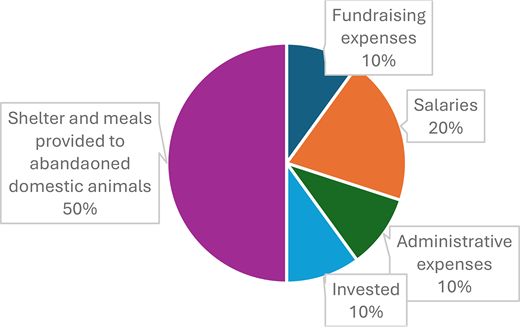
D1-6, P2, P4-8, A1 and C1-2, S1-3 discussed how explaining the CO’s use of funds is crucial to understanding their efficiency and sustainability (see also Sowa et al., 2004). Accordingly, additional information and explanatory notes should be provided where this is not already required by the CO’s accounting framework [8] or provided. To increase usability by the CO’s beneficiaries, appropriate infographics should be considered (see Figure 1).
4.2.5 Statement of activities.
The statement of activities provides more detailed information about the CO’s fundraising and charitable activities not already available elsewhere in the CORP report. This statement should begin to address some of the challenges raised in Section 4.1.1 about comparing COs. It does so by highlighting key activities that should be presented in specific formats to aid comparability. It also specifically presents a CO’s outputs, outcomes and impact (see Section 4.1.3), further aiding meaningful comparisons between COs. S1 noted the costs and competitive issues that may arise with the reporting of benchmarks. In line with the guidance in INPAS, sensitive information and information with the ability to cause harm should not be reported on. Judgement should be applied by the NPO in deciding what information to report on (INPRF, 2025b). Table 7 provides an illustration of a statement of activities. It begins by presenting different perspectives on key financial and non-financial information followed by clear and distinct outputs, outcomes and impact.
5. Conclusion and areas for future research
COs are already a critical component of sustainability and achieving the UN’s SDGs. From a theoretical perspective, the findings reaffirm criticisms of the non-profit accountability movement and its focus on upward accountability and a misalignment with its mission (see Carman, 2010). COs appear to have fallen into a compliance-mindset driven by funders’ demands for reporting that is weakly correlated with improving foundation allocations and internal learning and development. While donors demand extensive, frequent and burdensome reporting, they fail to adequately support reporting infrastructures and require COs to demonstrate how they have used data to enhance their efficiencies and impact. Finally, downward accountability is missing, entrenching power dynamics and excluding beneficiaries from sharing their views on COs’ performance and monitoring. While standardisation requires trade-offs, the current accountability concerns and state of fragmentation and duplication suggest a proportionate “baseline” framework is necessary.
The current paper responds to non-profit accountability challenges not by rejecting accountability outright, but by redesigning reporting fit for the CO context in that it facilitates internal learning and development, credibility and both upward and downward accountability. Conceptually, the CORP extends accountability and institutional theory by explaining how a proportionately designed standardised integrated reporting framework can help address power dynamics, reduce reporting decoupling and improve sector performance while being mindful of cost constraints (Carman, 2010; Bagnoli and Megali, 2011; Andreaus and Costa, 2014). The CORP framework proposes a shared reporting structure to reduce fragmentation and duplication while enhancing contextual judgement and mission-specific storytelling.
Importantly, the CORP framework also ensures “good” and “bad” performance is informed by both logical sustainability and efficiency metrics (upward accountability) and impact indicators informed by beneficiaries’ views and experiences (downward accountability). This has the potential to reduce symbolic reporting and replace it with a system of internal learning and development, strategic reflection, credibility enhancement and upward and downward accountability (Carman, 2010; Hyndman and McConville, 2016; Tooley and Hooks, 2020).
The CORP also addresses the specific need for COs to demonstrate their credibility through disclosures that address their legitimacy; governance structures and controls; performance; reputation; and associational network support. The flash report responds directly to concerns about outdated information. The statement of activities requires COs to think strategically about their outputs, outcomes and impacts and to present them in a meaningful, consistent and comparable manner. This design helps COs to distinguish themselves to beneficiaries and donors, enabling greater population access and the efficient allocation of financial and other support.
The paper’s proposed CORP framework is not without its limitations. While the CORP is informed by interviews and grounded in prior literature, empirical testing and validation has not yet been carried out. Despite including interviewees from five countries, the majority are from South Africa, which may limit the CORP’s transferability to other institutional, regulatory and cultural contexts. Also, the present study did not interview beneficiaries of COs in which the interviewees were involved. Consequently, future research should test the framework across COs of different sizes, operating in different sectors and in different socio-economic contexts. Attention should be paid to beneficiaries’ views on the resulting reports, their usefulness and inclusivity. In addition, case studies should evaluate the CORP framework’s usefulness, ease of adoption, challenges and unintended consequences.
The authors would like to acknowledge and thank the participants of the 1st European Sustainability Accounting and Reporting Conference for their helpful comments on an earlier draft of this paper.
Notes
Importantly, this paper focuses on how financial and non-financial information should be integrated in their reports. It does not deal with how COs should account for and prepare their financial accounts and statements.
Financial, intellectual, human, manufactured, social and relationship and natural capital.
While some interviewees were speaking in different capacities, all have made some small donations in their personal capacity.
Corporate Social Investment.
P4’s CO includes hospice care.
This refers to what that person would charge for an hour of their time in your respective profession.
With the publication of INPAS standards, adopting a globally accepted CO accounting framework should soon be possible.
For example, IFRS does not require management commentary whereas INPAS requires limited commentary.
P8 and S1-2 agree that benchmarking salaries is important but that CO trustees should deal with benchmarking and rather report that they have carried out benchmarking exercises and are happy with the results.
This should align with and speak to the CO’s strategy.