The study aims to examine the association between supplier debriefing quality (SDQ) and SMEs' tender success, with a focus on the mediating role of tendering capabilities (Procedural, innovational and procedural capabilities).
Cross-sectional survey data were collected from 352 Small and Medium Enterprises (SMEs) to validate the model. Data was analyzed using Smart Partial Least Squares (SMART-PLS) version 4.0.
The study found that SDQ has both direct and indirect effects on SMEs' tender success through innovative, relational and procedural capabilities.
The study highlights the need for SMEs to develop key tendering capabilities to gain competitive advantage in winning more contracts in public tendering.
This study extends the emerging literature by examining how SDQ influences SMEs' tender success through innovative, procedural, and relational capabilities in public procurement and supply chain. The study therefore addresses an important gap in the literature by examining the capability-building mechanisms through which SDQ may enhance SMEs' tender success.
1. Introduction
SMEs contribute significantly to national development by enhancing market competition, promoting innovation, creating employment opportunities, reducing poverty, and supporting socio-economic development (Organization for Economic Co-operation and Development (OECD), 2018, 2019). Within supply chains, SMEs are widely recognized as key drivers of economic and sustainable growth (Obiri-Yeboah et al., 2025) and constitute a strategic supplier base that enhances supply chain competitiveness through diversity, flexibility, innovation, and value creation (Opoku-Mensah et al., 2026). SMEs' participation in public tendering is particularly important because governments represent major buyers of goods and services, and an inclusive supplier ecosystem can improve efficiency, resilience, and sustainable economic growth. Despite these contributions, SMEs' success rate in competitive tendering remains disproportionately low relative to their contribution to national economies (OECD, 2018, 2019). For instance, although SMEs constitute 99% of firms in European Union (EU) countries, only about one-third of the value of public procurement contracts is secured by SMEs (de Bas et al., 2020). A similar challenge exists in Ghana, where SMEs account for approximately 92% of businesses, yet between 2019 and 2024 only 17% of public contracts were awarded to SMEs (Ghana National Electronic Procurement Systems, 2024).
Although several SME-friendly procurement policies have been introduced to improve supplier inclusion, their effectiveness remains constrained by implementation challenges and SMEs' limited ability to compete successfully in complex tendering environments (Flynn and Davis, 2016). From a supply chain perspective, this challenge reflects a broader issue of supplier capability development, where firms must continuously acquire, integrate, and transform knowledge to enhance their competitiveness within buyer-supplier ecosystems. One potentially valuable but underexplored mechanism for developing such capabilities is SDQ, which refers to the quality of formal feedback provided to unsuccessful bidders following tender evaluations (Carter and Choi, 2008; Hawkins et al., 2023). SDQ represents a knowledge exchange mechanism between buyers and suppliers that can facilitate organizational learning, supplier improvement, and stronger supply chain relationships. Through effective feedback, SMEs can identify weaknesses in their proposals, understand evaluation expectations, and develop capabilities required to improve future tender performance (Hawkins et al., 2023).
Existing research identifies supplier debriefing as a mechanism for transparency, procedural fairness, and organizational learning (Hawkins et al., 2023; Asikainen et al., 2023). However, prior studies have largely examined debriefing in healthcare, education, and other professional settings, with limited understanding of how it contributes to supplier capability development within procurement supply chains.
Furthermore, although procurement research highlights SMEs' challenges, including limited procedural knowledge and difficulties navigating complex tender requirements (Loader, 2013, 2015; Flynn and Davis, 2017), less attention has been given to how SMEs transform procurement feedback into capabilities that improve SMEs' tender success.
Finally, notwithstanding capability-based perspectives emphasizing knowledge transformation as a source of competitive advantage (Amit and Schoemaker, 1993), limited empirical evidence explains how supplier debriefing facilitates innovative, procedural, and relational capabilities. This study addresses these gaps by developing a capability-based explanation of how supplier debriefing quality enhances SMEs' tender success in public procurement supply chains.
Drawing on capability-based perspectives (Amit and Schoemaker, 1993), which deposited that firms achieve competitive advantage through their ability to effectively deploy and transform valuable resources into strategic capabilities. In this study, SDQ is conceptualized as a valuable knowledge resource that SMEs can utilize to develop tendering capabilities, specifically procedural, relational, and innovative capabilities, which enhance their ability to compete successfully for public contracts.
Addressing this gap is important because improving SMEs' participation in public procurement contributes directly to sustainable economic development and inclusive growth objectives (United Nations, 2015). SMEs' continued growth and survival depend partly on their ability to access public markets, where governments serve as significant purchasers of goods and services (Knoppen et al., 2015). From a supply chain management perspective, enhancing SMEs' tendering capabilities contributes not only to individual firm performance but also to the development of more competitive, innovative, and resilient supplier networks.
Therefore, this study draws on experiential learning and capability-based theory to examine how SMEs can leverage SDQ experiences to enhance tender success through the development of tendering capabilities. Specifically, the study addresses the following research questions:
What is the effect of SDQ on SMEs' tender success?
How do procedural, relational, and innovative capabilities mediate the relationship between SDQ and SMEs' tender success?
The study proceeds from the premise that SDQ is a valuable learning resource, but its benefits are realized only when SMEs possess the capabilities to transform knowledge into competitive performance. By examining the mediating role of tendering capabilities, this study contributes to supply chain research by explaining how supplier learning and knowledge exchange mechanisms enhance supplier competitiveness within public procurement and supply chain networks. The findings provide insights for policymakers, buying organizations, and SMEs seeking to strengthen supplier development practices and improve inclusive participation in public procurement markets. The paper is structured as follows: the next section presents the theoretical background and hypothesis development, followed by the research methodology, empirical results, discussion of findings, and conclusions, including limitations and future research directions.
2. Literature review
2.1 Conceptual review
2.1.1 Supplier debriefing quality
Debriefing, with origins in military and psychological settings, is a structured process designed to facilitate reflection, feedback, and learning following key events (Salas, 2008; MacDonald, 2003). The concept has been widely adopted in educational and medical fields as a tool for experiential learning and continuous improvement (Cheng et al., 2017; Minott, 2023; Sawyer et al., 2016). In public procurement, debriefing quality refers to formal feedback provided to both successful and unsuccessful bidders after a tender process. Its core objectives are to enhance transparency, fairness, supplier development and performance (Arrowsmith, 2010). Debriefing plays a critical role in helping suppliers, especially SMEs, understand evaluation criteria, improve bid quality, and increase competitiveness of winning tenders (World Bank, 2016; OECD, 2017). Research shows that SDQ is often vague and shallow (Flynn and Davis, 2017), representing a missed opportunity for learning and capacity building, especially for SMEs, who often face resource and capability constraints (Loader, 2013). SDQ is a catalyst for performance improvement, as it identifies strengths and weaknesses in proposals, aligns with buyer expectations, and builds stronger tendering capabilities over time. SDQ should not only be seen as a compliance exercise, but also as a strategic resource to empower SMEs build their tendering capability for performance outcomes in public procurement.
2.1.2 SMEs' tender success
SMEs' tender success refers to SME ability to win contracts through competitive bidding processes, particularly in public procurement. It is commonly measured by the ratio or rate of success in tendered contracts or the value of contracts won (Flynn and Davis, 2017). Prior studies indicate that SME's tender success is influenced by multiple factors, including bid price competitiveness, technical compliance, supplier reputation, and prior experience with public buyers (Loader, 2015; Thai, 2001). For SMEs, tender success is often constrained by limited resources, inadequate bidding capabilities, and high administrative burdens associated with public procurement procedures (Cabras, 2011). Other literature attributes SMEs' tender failure to onerous qualification criteria, overly prescriptive requirements, poorly written tender specifications (Loader, 2015) and unethical or unprofessional buyers (Loader, 2005; OECD, 2013). However, research also shows that learning from previous bidding experiences and feedback from procuring entities can improve future tender outcomes, provided they build the relevant capabilities to compete (Erridge and McIlroy, 2002; Flynn et al., 2013). This suggests that tender success is not solely an outcome of bid quality but also reflects SMEs' ability to develop and deploy tender-related capabilities over time.
2.1.3 Innovative capability
Scholars converge that innovation is the product of the capability to innovate (Rajapathirana and Hui, 2018; Laforet, 2013). Innovation capability therefore represents a critical strategic asset for firms to achieve and sustain competitive advantage and performance outcomes. It is embedded within a firm's core processes and practices (Lawson and Samson, 2001) and difficult to imitate but developed through accumulation of experiences and learning (Guan and Ma, 2003). Strong innovation capability allows firms to rapidly introduce new products and adopt new systems, which is essential for remaining competitive in dynamic environments. Accordingly, Adler and Shenbar (1990) define innovation capability as a firm's ability to develop market-oriented products, apply suitable process technologies, anticipate future technological needs, and respond effectively to unexpected technological changes and competitive opportunities. Innovative capabilities among SMEs in tendering may involve new strategies for bidding, offering new products or services and novel designs of proposal development and pricing.
2.1.4 Relational capability
Relational capability refers to a firm's ability to initiate, manage, and leverage relationships with external stakeholders to achieve strategic objectives (Dyer and Singh, 1998). In public procurement, this capability is reflected in how suppliers interact with procuring entities, seek clarifications, participate in market engagement activities, and maintain professional communication throughout the tendering process (Flynn and Davis, 2017). Literature suggests that strong relational capability enhances information exchange, trust, and mutual understanding between buyers and suppliers. The trust helps suppliers understand buyer requirements and evaluation expectations (Uzzi, 1997). For SMEs, relational capability is particularly important as it helps compensate for resource limitations by facilitating access to tacit knowledge and informal learning opportunities (Salisu and Bakar, 2019). However, in regulated public procurement environments, relational capability must operate within strict ethical and procedural boundaries to avoid perceptions of favoritism or non-compliance (Størkersen et al., 2024).
2.1.5 Procedural capability
Procedural capability refers to a firm's ability to understand, comply with, and effectively navigate formal rules, processes, and documentation requirements in tendering procedures. It includes competencies related to regulatory compliance, bid documentation, submission processes, and adherence to evaluation criteria (Loader, 2015). In competitive tendering, procedural capability is critical because non-compliance such as incomplete documentation or failure to meet technical specifications often leads to automatic disqualification regardless of bid quality (Flynn and Davis, 2017). The literature consistently highlights procedural capability as a major determinant of tender success, especially for SMEs that face complex and highly standardized procurement regulations (Flynn and Davis, 2017; Cabras, 2011). Firms with strong procedural capability are better positioned to reduce administrative errors, meet mandatory requirements, and align bids with stated evaluation frameworks. Over time, procedural capability also supports organizational learning, enabling firms to institutionalize best practices and improve tender performance across repeated bidding cycles (Erridge and McIlroy, 2002).
2.2 Theoretical background and hypothesis development
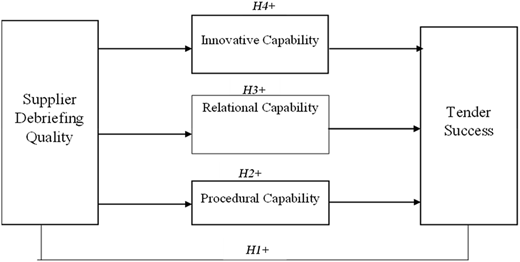
This study explores two key theories: Experiential Learning Theory (Kolb, 1984) and Capability-Based View (Amit and Schoemer, 1993). These frameworks provide different but complementary insights into how SMEs' success in tendering can be enhanced by SDQ through relational, innovative and procedural capabilities, as depicted in Figure 1 at the end of Section 2.
2.2.1 Experiential learning theory
Developed by Kolb (1984), experiential learning emphasizes concrete experiences in the learning process. The learning cycle includes concrete experience, where learners engage in a hands-on activity; reflective observation, where they reflect on the experience; abstract conceptualization, which involves developing theories or ideas based on reflections; and active experimentation, where these theories are applied to new situations. The study theorizes that SDQ transform tendering experiences into learning opportunities, enabling SMEs to refine their procedural, innovative and relational capabilities, which is likely to enhance their success in subsequent public procurement tendering competitions.
2.2.2 Capability-based view
The Capability-Based View (Amit and Schoemaker, 1993) explains the mediating role of procedural, relational, and innovative capabilities by proposing that firms derive competitive advantage not from access to valuable information alone, but from their ability to transform that information into firm-specific capabilities. In the context of public procurement, SDQ provides SMEs with valuable feedback on evaluation criteria, bid deficiencies, and buyer expectations. However, this knowledge is unlikely to improve tender success unless it is internalized and translated into procedural improvements, stronger buyer relationships, and innovative bidding practices. Accordingly, this study theorizes that procedural, relational, and innovative capabilities mediate the relationship between SDQ and SMEs' tender success because they represent the organizational mechanisms through which externally acquired procurement knowledge is converted into superior tendering performance.
2.3 Supplier debriefing quality influence on SMEs' tender success
In the realm of procurement, SDQ is an integral component. Debriefing is typically conducted post-award and informs suppliers of the strengths and weaknesses of their bids, aiming to promote understanding, trust, and future improvements (Hawkins et al., 2023). SDQ provides SMEs with timely, detailed, and actionable feedback on bid deficiencies, evaluation criteria, and buyer expectations, making it an important post-tender learning mechanism (Hawkins et al., 2023). Drawing on Experiential Learning Theory (Kolb, 1984), this study argues that debriefing transforms unsuccessful tendering experiences into learning opportunities by enabling SMEs to reflect on feedback, refine their tendering strategies, and apply these insights in subsequent bids. Through this iterative learning process, suppliers strengthen their understanding of procurement requirements and improve their ability to prepare more competitive and compliant tenders. High-quality debriefing also reinforces perceptions of transparency and procedural fairness, encouraging continued participation in public procurement. Consequently, SDQ is expected to be positively associated with SMEs' tender success by facilitating organizational learning and continuous capability improvement (Hawkins et al., 2023). Accordingly, the study hypothesizes that:
Strong SDQ positively influences SMEs' tender success
2.4 Mediating effect of innovative capability
Innovation is fundamental to gaining competitive advantage (e.g. Carnes et al., 2022; Singh et al., 2017; Jajja et al., 2017). It is the potential to create novel and valuable products, services, processes or knowledge (Zheng et al., 2010). Although SDQ provides SMEs with valuable feedback on bid deficiencies, evaluation criteria, and buyer expectations, such information does not automatically improve tender outcomes. Rather, its value depends on the firm's ability to interpret, assimilate, and transform the acquired knowledge into more effective bidding practices. Drawing on the Capability-Based View (Amit and Schoemaker, 1993), this study argues that innovative capability enables SMEs to convert externally acquired procurement knowledge into firm-specific competitive advantages. Firms with stronger innovative capabilities are better able to redesign tender strategies, refine technical and financial proposals, adopt more competitive pricing approaches, and introduce process improvements that align more closely with buyers' requirements. Consequently, innovative capability functions as the organizational mechanism through which debriefing information is transformed into superior tender performance. In this way, the study theorizes that SDQ is positively associated with SME tender success through innovative capability, as firms that effectively leverage debriefing feedback are more likely to submit quality, differentiated, and competitive tenders in subsequent procurement opportunities. This study therefore hypothesizes that,
Strong innovative capability mediates the relationship between SDQ and SMEs' tender success.
2.5 Mediating effect of relational capability
Relational capability refers to the ability to set and manage relationships with external partners to gain advantage for the firm (Flynn and Davis, 2017). It involves managing and leveraging relationships with various stakeholders within the tendering process. Relational capability plays an important role in tender success. Experiential learning underscores the importance of reflective building and strengthening of relationships through improved communication and understanding. Flynn and Davis (2016) highlighted that, debriefing information from tendering enables SMEs to understand procurement entities expectations and requirements, fostering stronger relationships. This information helps SMEs align future bids or proposals more closely with the procuring entity's needs, improving trust and reputation in business networks. SMEs that are considered reliable and competent have competitive advantage especially in non-price factors like past performance or proven record (Kannan and Tan, 2002). The study therefore argued that strong relational capabilities gained from debriefing information improve competitive edge for tender success. The study hypothesizes that:
strong relational capability positively and significantly affects SMEs' tender success.
2.6 Mediating effect of procedural capability
SDQ has a significant influence on the procedural capabilities of SMEs leading to tender success. Through debriefing, SMEs gain a clearer understanding of evaluation standards, submission requirements, and process shortcomings, allowing them to refine and standardize their bidding procedures. This debriefing information helps SMEs to identify and correct procedural errors, improve documentation practices, and strengthen coordination among departments involved in tender preparation. Over time, the accumulated insights from multiple debriefings become institutionalized into organizational routines and checklists, fostering greater consistency, compliance, and efficiency in tendering.
According to the capability-based view (CBV), a firm's unique abilities, such as procedural capabilities, are crucial for gaining a competitive advantage and achieving better performance (Teece et al., 1997). For example, possessing procedural capabilities enables SMEs to identify opportunities and prepare bids to meet requirements and deadlines. It also helps improve the efficiency and accuracy of bid preparation, thereby streamlining the tendering processes, such as reducing errors and omissions, which can disqualify bids or make them less competitive. Flynn and Davies (2017) found that SMEs with strong procedural capabilities were better at managing the complex requirements of tendering processes, leading to higher success rates in winning bids.
Empirically, López-Nicolás and Meroño-Cerdán (2011) demonstrated that SMEs with advanced procedural capabilities produced higher-quality bid documents, which significantly improved their chances of success in competitive tendering. Procedural capability therefore facilitates compliance with regulatory and legal requirements in tendering. The study hypothesizes based on this argument that:
Increase procedural capability positively and significantly mediates SDQ and SMEs tender success.
3. Methodology
3.1 Study design
The study tested the model using cross-sectional survey data from SMEs operating in Ghana, a developing sub-Saharan African economy. Ghana remains a major economic force in the sub-Saharan African market and recognized as one of the ten world's fastest-growing economies, owing partly to increases in production and consumption activities (Eberth and Wohlmuth, 2021). Again, like other developing economies, most firms in Ghana are SMEs, which struggle to withstand competitiveness in the business environment (Thompson Agyapong et al., 2018). By implication, tendering capabilities are critical for SMEs competing for public contracts in Ghana. Specifically. It is expected that tendering capabilities (innovative, procedural and relational capabilities) are heterogeneous among SMEs in Ghana. The study contends that taking into account variations in the type of supply, tendering experience and size of SMEs could offer a nuanced insight that could afford SMEs in similar contexts to benefit more from leveraging tendering capabilities from SDQ to enhance tender success in public procurement. This insight provides a typical emerging-market perspective on the debate on how SDQ influences SMEs' tender success through development of tendering capabilities. (Flynn and Davis, 2017).
The research studied SMEs operating in the Greater Accra and Ashanti regions, as these regions constitute the two primary commercial and industrial hubs in Ghana (Ghana Statistical Service, 2016). These SMEs were obtained from the Public Procurement Authority database in Ghana. The database contained 3638 SMEs (Ghana National Electronic Procurement Systems (GHANEPS), 2024). In line with prior research, 500 firms were purposively contacted (150 and 350 from Accra and Kumasi, respectively) that meet the following criteria: that the firm (1) operates in key commercialized cities in Ghana (i.e. Accra and Kumasi); (2) registered as a business entity both at the registrar general department and public procurement authority; (3) has been participating in public procurement tendering; (4) has a senior manager (e.g. owner-manager, CEO, marketing managers) who agreed to participate in the study (Essuman et al., 2020; Amankwah-Amoah et al., 2019). 500 questionnaires were hand-delivered to owner-managers/senior managers of SMEs that met the inclusion criteria.
Our study adopted a face-to-face data collection approach, specifically, delivery-and-collection, as this approach is not only suitable within the Ghanaian business context but also generates a high response rate (Anin et al., 2021). After rounds of reminders via telephone calls, a total of 358 complete responses were received. Examination of the questionnaires for data quality issues (e.g. missing values) resulted in retaining 352 questionnaires for analysis, representing a 70.43% response rate. The study also evaluated the non-response rate by comparing the mean scores of early and late respondents across the five constructs. All p-values exceeded 0.05, ranging from 0.522 to 0.602, indicating that the differences were not statistically significant. Therefore, non-response bias was not considered a substantial concern in the study (Table 7 in appendix).
3.2 Items generation
The study's latent constructs were measured using items from prior studies. The measurement of the constructs was done using a 7-point Likert scale, ranging between 1 = “strongly disagree” to 7 = “strongly agree” with the midpoint anchored at neutral. Items measuring SDQ were adapted from Hawkins et al. (2023) whiles items measuring procedural, relational capability and tender success were adapted from Flynn and Davis (2017). Innovation capability was adapted from Adler and Shenbar (1990). These measurement items were assessed by two academics and industry players to ensure the appropriateness and fit of the items for the context. In addition, the measurement instruments were pre-tested using 23 SME owners in one of the busiest regions (central) in Ghana. The details of the measurement items are provided in Table 2.
3.3 Control variables
To mitigate the impact of extraneous factors in the model, firm size, type of supply, type of industry and tendering experience were controlled.
4. Results
The results presented in Table 1 indicate that the sample was predominantly composed of small firms, accounting for 57.1% of respondents and employing between 6 and 29 employees. Medium-sized firms (30–99 employees) accounted for 25.3%, while micro firms (fewer than 6 employees) represented 17.6% of the sample. Regarding tendering experience, 42.9% of firms had 1–3 years, 31% had 4–5 years, 12.8% had less than 1 year, 9.4% had 6–9 years, and 4% had over 10 years of tendering experience. In terms of the nature of supply, 36.9% of respondents provided goods, 26.7% offered services, 24.4% were engaged in works contracts, and 11.9% provided consultancy services. Regarding industry representation, the service sector was the largest at 38.6%, followed closely by retail businesses (37.8%), manufacturing (19.3%), and construction (4.3%).
4.1 Measurement model result
A validity and reliability test was performed to examine the quality of the questionnaire using SMART PLS 4 software. Regarding the reliability test, the results in Table 2 show that the Cronbach alpha (CA) value is greater than 0.85, which reflects a good internal consistency between constructs and questionnaire items. Moreover, composite reliability (CR) is higher than 0.91, indicating a satisfactory condition of the items. The validity test was measured based on two criteria: discriminant validity (correlation) and convergent validity (Average Variance Extracted (AVE) and factor loadings) (Rezaei, 2015; Kim et al., 2016). The convergent validity test results in Table 2 showed that the factor loadings and AVE are all above 0.63. Again, discriminant validity, which assesses the extent to which constructs in the structural model were empirically distinct from each other, was evaluated using the Heterotrait-Monotrait (HTMT) ratio of correlations (Hair et al., 2019). The HTMT threshold requires that the greater diagonal values, in comparison with the off-diagonal values, should fall within the threshold of 0.85 (Henseler et al., 2015). This has been satisfied, as seen from Table 3, signifying that the model possesses adequate discriminant validity.
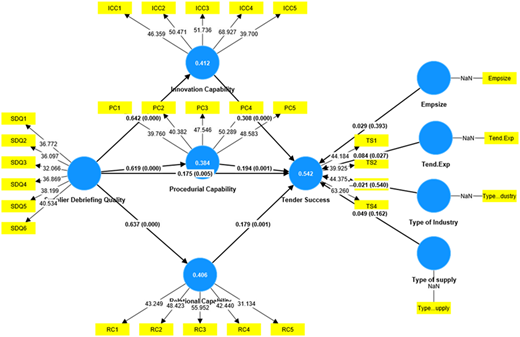
Subsequently, the model fit was examined after the establishment of the validity and reliability of constructs (see Table 4). The study revealed R2 of 0.412, 0.384, 0.406 and 0.542 for innovation capability, procedural capability, relational capability and SMEs' tender success, respectively. This signals that the model can explain 41%, 38%, 40% and 54% of the attributable variations in innovational capability, procedural capability, relational capability and SMEs' tender success, respectively. Further, the blindfolding analysis was used to assess predictive relevance, which is an additional means to test model fit. The Q2 values ranged between 0.384 and 0.54, which are greater than zero, thereby demonstrating that the model has predictive relevance (Hair et al., 2019).
4.1.1 Common method bias
The study minimized the potential for common method bias (CMB) by implementing both procedural and statistical remedies recommended by Podsakoff et al. (2003, 2012). Procedurally, respondents were assured of anonymity and confidentiality, the measurement of predictor, mediator, and outcome variables was psychologically separated, and the questionnaire was pretested for clarity. Statistically, Kock's (2015) full collinearity test showed that all variance inflation factor (VIF) values were below the recommended threshold of 3.3 (See Table 5), while Harman's single-factor test indicated that the first factor explained 41.8% of the total variance, below the 50% threshold. These findings suggest that common method bias is unlikely to have materially influenced the study's results.
4.2 Structural model results
From the structural analysis performed, all four hypotheses were supported. Results from the direct path in Table 6 reveal that SDQ has a positive and significant relationship with SMEs' tender success (β = 0.175, t = 2.780, p < 0.01), thereby providing support for hypothesis one (HI).
The mediation analysis was estimated using a parallel mediation model, in which innovative capability, procedural capability, and relational capability simultaneously transmitted the effect of SDQ on SMEs' tender success. The indirect effects were estimated using the bootstrapping procedure (5,000 subsamples) in SmartPLS. Mediation was considered significant when the bias-corrected 95% bootstrap confidence interval did not include zero (Hair and Alamer, 2022).
In connection with the mediated paths, innovative capability was found to positively and significantly mediate the relationship between SDQ and tender success (β = 0.198, t = 5.511, p < 0.01), lending support for hypothesis two (H2). Similarly, the result also reveals that both procedural and relational capabilities positively and significantly mediate the association between SDQ and SMEs' tender success. The statistical values are procedural capability (β = 0.120, t = 3.217, p < 0.01) and relational capability (β = 0.114, t = 3.184, p < 0.01). However, among the control variables, the study found that only tendering experience significantly and positively affected SMEs' tender success (β = 0.084, t = 2.213, p < 0.03). For a path to be statistically significant, the p-value must be 0.05 or below. The results of the hypothesized paths are presented in Table 6 and Figure 2, respectively.
5. Discussion
The study examined the intervening roles of innovative, procedural, and relational capabilities in the relationship between SDQ and SMEs' tender success in public procurement. Rather than serving merely as a procedural requirement to promote transparency, fairness and procedural justice (Hawkins et al., 2023), the findings suggest that SDQ may constitutes a strategic learning mechanism through which SMEs acquire actionable knowledge to strengthen future bidding performance. Consistent with experiential learning theory (Kolb, 1984), debriefing enables firms to reflect on unsuccessful bids, identify capability gaps, and translate evaluative feedback into improved tendering practices. More importantly, the findings extend the Capability-Based View (Amit and Schoemaker, 1993) by demonstrating that competitive advantage in public procurement is not derived solely from possessing valuable resources but from firms' ability to transform debriefing information into capabilities that improve future tender outcomes. This interpretation is consistent with recent procurement research highlighting SDQ as an important mechanism for organizational learning and reducing bid protests through greater transparency and feedback quality (Asikainen et al., 2023; Hawkins et al., 2023). Although debriefing has been widely examined in healthcare and other high-reliability settings as a tool for reflective learning, the present study demonstrates its strategic value within public procurement, where feedback enables SMEs to continuously improve their competitiveness rather than merely understand past evaluation decisions. Specifically, the mediated pathways suggest that:
First, innovative capability may represent an important mechanism through which SDQ improves SMEs' tender success. This suggests that SMEs do not simply receive feedback; rather, they convert debriefing information into innovative bidding practices, product improvements, pricing strategies, and value propositions that better align with procuring entities' expectations. From the Capability-Based View, SDQ provides valuable external knowledge, but competitive advantage arises only when firms possess the capability to integrate, reconfigure, and apply that knowledge in subsequent tender competitions. Consequently, SDQ becomes an important source of innovation that enables SMEs to differentiate their bids and enhance competitiveness in increasingly demanding public procurement markets. This finding contributes to procurement literature by demonstrating that debriefing may facilitates capability development rather than functioning solely as a post-award transparency exercise.
Secondly, procedural capability also emerged as an important pathway linking SDQ to tender success. The findings indicate that constructive debriefing enables SMEs to better understand procurement regulations, evaluation criteria, documentation requirements, and compliance expectations, thereby reducing procedural errors in subsequent tenders. Rather than merely informing suppliers why they were unsuccessful, quality debriefing reduces information asymmetry between procuring entities and SMEs by providing knowledge that improves bidding routines and procedural competence. This finding supports earlier public procurement studies that suggest that effective debriefing strengthens firms' procedural understanding and enhances future bidding performance (Flynn and Davis, 2014; Loader, 2015). Unlike previous studies that primarily identified procedural challenges faced by SMEs, the present study demonstrates the mechanism through which these challenges can be addressed, namely through SDQ that develops procedural capability. The findings therefore position debriefing as an important procurement practice that promotes supplier capability development while simultaneously improving competition and value for money in public procurement.
Thirdly, the findings suggest that relational capability mediates the relationship between SDQ and SME tender success by enabling firms to transform debriefing knowledge into effective buyer–supplier interactions. Drawing on the Capability-Based View (Amit and Schoemaker, 1993), competitive advantage emerges when firms convert valuable external knowledge into unique capabilities. Therefore, the value of SDQ depends on SMEs' ability to use feedback to understand buyer expectations, improve communication, and refine future tendering approaches. Strong relational capability enhances knowledge exchange, trust, and responsiveness between buyers and suppliers, allowing SMEs to better align subsequent bids with procurement requirements (Paulraj et al., 2008; Villena et al., 2011). Empirical evidence also suggests that relational capabilities strengthen supplier performance by improving collaboration and access to strategic knowledge (Schmidt et al., 2023; Selviaridis and Spring, 2024). Hence, relational capability provides the mechanism through which SDQ contributes to improved tender competitiveness and success.
5.1 Theoretical contribution
This study makes a unique theoretical contribution by developing a feedback-to-capability framework explaining how the quality of SDQ creates strategic value for SMEs in public procurement. Whereas previous studies have largely treated debriefing as a governance mechanism promoting transparency, fairness, accountability, and confidence in procurement decisions (Hawkins et al., 2023), this study reconceptualizes SDQ as an external learning resource that supports capability development.
The findings also show that SDQ provides SMEs with knowledge that can be transformed into procedural, relational, and innovative tendering capabilities. In this regard, the study extends the Capability-Based View of Amit and Schoemaker (1993) by demonstrating that firm-specific capabilities develop not only from internal resources and accumulated experience but also from evaluative knowledge provided by public buyers. The study therefore positions procurement institutions as capability-enabling actors and SDQ as an important external antecedent of SME capability development.
The study also extends supply chain and inter-organisational learning theory by introducing the concept of non-contractual post-competition learning. Prior studies have mainly associated supplier learning with formal supplier development programs, repeated exchanges, and long-term buyer–supplier relationships (Bai and Satir, 2022; Schmidt et al., 2023; Selviaridis and Spring, 2024). However, the findings demonstrate that SMEs can acquire valuable knowledge and develop competitive capabilities after an unsuccessful tender without a formal contractual relationship.
Furthermore, the mediating effects of procedural, relational, and innovative capabilities show that SDQ does not automatically translate into tender success; rather, its competitive value depends on SMEs' ability to internalize and apply the feedback received. The study therefore explains how procurement feedback enhances tender success through distinct capability pathways, integrating procurement governance, organisational learning, capability development, and SME competitiveness into a unified theoretical framework.
5.2 Managerial implications
The findings extend supply chain management research by demonstrating that supplier development does not occur only through formal training programs or long-term partnerships. Instead, transactional processes such as competitive tendering can also become platforms for supplier learning when complemented by meaningful feedback mechanisms. This suggests that supply chain managers and procurement professionals should view SDQ as a strategic supplier development practice capable of improving supplier readiness, innovation, and network participation. Second, procurement managers should institutionalize high-quality supplier debriefings by providing timely, clear, and actionable feedback to unsuccessful bidders. Rather than viewing debriefing as a procedural obligation, it should be used as a strategic supplier development mechanism that enhances supplier capability, broadens the competitive supplier base, and strengthens supply chain resilience, transparency, and value creation.
Finally, supply chain and SME managers should systematically leverage debriefing feedback to strengthen their tendering capabilities. Feedback should be analyzed and translated into improvements in innovation, relationship management, and internal procurement processes. This includes refining products and service offerings, strengthening buyer relationships, improving compliance with procurement requirements, and enhancing bid preparation and documentation quality. Embedding debriefing insights into continuous learning and capability development enables SMEs to improve tender competitiveness while contributing to more resilient and effective public procurement supply chains.
5.3 Conclusion
This study examined how SDQ enhances SMEs' tender success through innovative, procedural, and relational capabilities. Grounded in Experiential Learning Theory and the Capability-Based View, the findings demonstrate that SDQ serves as a strategic learning resource that enables SMEs to transform feedback into organizational capabilities, thereby improving competitiveness in the public procurement. The study highlights that the value of supplier debriefing lies not in feedback itself, but in SMEs' ability to convert it into capabilities that strengthen bidding strategies, procedural competence, and buyer–supplier relationships, ultimately increasing tender success.
5.4 Limitations and directions for further research
Some limitations acknowledged in the study include: First, the study relied on self-reported, cross-sectional survey data from SMEs participating in public procurement. Although procedural and statistical remedies were implemented to mitigate common method bias, self-reported data may still be susceptible to recall and social desirability bias. Moreover, the cross-sectional design limits causal inference. Future research should employ longitudinal, panel, or quasi-experimental designs and incorporate objective data sources, such as contract award records, e-procurement databases, or archival procurement data, to validate the findings and examine how SDQ influences capability development and tender success over time.
Second, the study was conducted within the context of public procurement in a single national setting. While the findings provide valuable insights into SME capability development, institutional and regulatory differences across countries may influence the effectiveness of supplier debriefing. Future studies should therefore replicate the proposed model across different procurement systems and geographical contexts to assess its generalizability.
Finally, although the model demonstrates satisfactory explanatory and predictive power, it does not fully explain variations in SMEs' tender success. Future research could extend the model by incorporating additional theoretical perspectives, such as organizational learning or knowledge-based theories, and examining other organizational or environmental factors that may further explain supplier capability development and tender performance.
The supplementary material for this article can be found online.