This study aims to examine the reciprocal relationship between employee and employer, focusing on the role of human resource management (HRM) practices in enhancing both employee career potential and organisational competitiveness. It aims to provide a comprehensive understanding of how these practices interact to foster mutual growth in dynamic organisational environments.
A multiple-case study design of 10 food industry firms in the Netherlands and Belgium was employed, combining semi-structured interviews with archival analysis to generate in-depth insights.
The study highlights how balanced HRM strategies – integrating employee-centric practices, such as training and well-being programmes, with employer-centric practices, such as performance management and strategic recruitment – drive mutual benefits. Our findings underscore the importance of aligning these practices to enhance workforce adaptability, reduce turnover and support innovation. Digital transformation is identified as a key enabler, facilitating flexible work arrangements, personalised training and efficient talent acquisition.
The study provides actionable insights for HR practitioners, emphasising the need for strategic HRM approaches that integrate employability and sustainability and employability. These strategies can foster a resilient workforce capable of adapting to evolving organisational and environmental challenges.
This research advances our theoretical understanding in this domain by applying social exchange theory, resource-based view and stakeholder theory to the study of sustainable HRM. It offers a multi-dimensional framework to explore the reciprocal dynamics between employer and employee, contributing to ongoing discussions on sustainable workforce development and organisational competitiveness.
Introduction
In today’s volatile labour market, organisations face increasing pressure to maintain competitiveness while simultaneously supporting the growth and adaptability of their workforce. Employability, defined as the capacity of individuals to gain, maintain, and advance in employment (Diaa et al., 2024; Rubery et al., 2002; Van der Heijde and Van der Heijden, 2006), has emerged as a cornerstone of sustainable Human Resource Management (HRM) (Ahmad et al., 2023). Despite its significance, organisations struggle to balance the reciprocal dynamics regarding employability investments (i.e. HRM practices), where both employees and employers contribute to, and benefit from, enhanced skills, knowledge, and career potential (Van der Heijde and Van der Heijden, 2006). This tension underscores the urgency of understanding how such investments can foster mutual gains (Lo Presti and De Rosa, 2024; Yildiz et al., 2024).
Recent challenges, such as shifts in global labour markets post-pandemic and the rise of hybrid work models, have amplified the complexity of implementing employability-focused HRM practices (Cvenkel, 2021). Employers often encounter conflicting priorities: meeting business objectives while addressing employees’ evolving expectations, such as flexibility, well-being, and continuous development opportunities (De Cuyper et al., 2011; Teodorovicz et al., 2024). Despite these pressing challenges, existing research on the interplay between employability investments and HRM practices remains fragmented, offering limited insights into how these practices can simultaneously address the needs of both parties, i.e. employees and employers, in a sustainable manner (De Vos et al., 2020; Guest, 2024; Lu et al., 2023; Van der Heijden, 2005).
Current literature predominantly examines the individual effects of HRM practices, such as training or leadership development, on employee satisfaction or organisational performance or employee satisfaction (e.g. Albrecht et al., 2015; Othman and Mahmood, 2019). However, there is a critical gap in understanding how these practices interact reciprocally, creating a synergistic effect that benefits both employers and employees (Kaufman et al., 2021; Tadesse Bogale and Ayenew Birbirsa, 2023). Moreover, while some studies have explored the outcomes of HRM practices, few have addressed the specific mechanisms through which employability investments foster mutual growth, benefiting both individuals—through enhanced career potential, adaptability, and well-being—and organisations—through improved workforce capabilities, innovation, and competitive advantage (Akkermans et al., 2024a; De Vos et al., 2020; Yildiz et al., 2024). Finally, also the question of how organisations can integrate employee-centric and employer-centric HRM practices into a cohesive strategy remains underexplored (Kristof-Brown et al., 2023) so far, particularly in the context of sustainable HRM (de la Rosa-Navarro et al., 2020).
This study addresses these critical gaps by investigating the reciprocal relationship between employees and their employers through the lens of Social Exchange Theory (SET) (Blau, 1964). SET provides a foundational framework for understanding how reciprocal relationships between both parties are built through resource exchanges, such as career development opportunities, well-being initiatives, and organisational support (Mitchell et al., 2012). To provide a comprehensive framework for this study, complementary perspectives such as the Resource-Based View (RBV) (Barney, 1991) and Stakeholder Theory (Freeman, 1984) have been adopted as well. These perspectives offer valuable insights into the strategic and societal implications of employability investments, framing the discussion and highlighting potential avenues for future research. RBV highlights the strategic value of human capital as a resource that fosters sustainable competitive advantage, while Stakeholder Theory broadens the focus to include the expectations and contributions of external stakeholders in the employability enhancement process. By integrating these perspectives, we explore not only the outcomes of employability investments but also the mechanisms that drive their mutual benefits for both employees and organisations. By focusing on 10 companies within the food industry, this study offers contextual insights into how organisations, in a sector heavily reliant on skilled labour, manage employability investments (Akyazi et al., 2020; Padhi, 2024). This sector provides a unique vantage point, given its dual emphasis on operational efficiency and workforce adaptability in response to fluctuating demands and regulatory pressures (e.g. Caroli et al., 2010; Coopmans et al., 2021). The qualitative data, derived from 22 semi-structured interviews and extensive archival documentation from the companies where the interviews were conducted, allow us to unpack the complexities of employability investments (i.e. HRM practices) and their reciprocal impacts on employees and organisations.
The novelty of this research lies in its dual focus on employee-centric and employer-centric HRM practices that have been examined simultaneously. While previous studies have addressed one dimension or the other, our approach integrates these perspectives to highlight their interdependence and collective contribution to sustainable organisational performance. Furthermore, by grounding our analysis in recent theoretical advancements and contemporary challenges, we offer actionable insights for HR practitioners navigating the post-pandemic labour market landscape.
Theoretical background
Employability (see the operationalisation by Diaa et al., 2024; Rubery et al., 2002; Van der Heijde and Van der Heijden, 2006), encompasses more than the ability to retain employment; it reflects an individual’s capacity to secure and thrive in diverse employment opportunities, whether within or outside their current organisation. Fugate et al. (2021) argued that employability investments, ranging from broad-based skills development to role-specific training, foster mutual benefits. On the one hand, employees gain career potential, adaptability, and resilience; on the other hand, organisations enhance their workforce’s capabilities and secure a competitive edge.
Sustainable HRM practices further contextualise these dynamics by emphasising the interplay and reciprocal nature of the exchange relationship between employees and their employers, prioritising long-term workforce development and organisational sustainability (Faisal, 2023; Lu et al., 2023; Piwowar-Sulej, 2021). These practices aim to balance organisational objectives with employee well-being, hereby fostering an environment where continuous learning, work-life balance, and health and wellness programmes are prioritised (De Vos and Van der Heijden, 2015; De Vos et al., 2020; Podgorodnichenko et al., 2020; Van der Heijden, 2005). By integrating employee-centric and employer-centric HRM practices, sustainable HRM ensures mutual growth and enhanced organisational competitiveness (Lopez-Cabrales and Valle-Cabrera, 2020). For example, employee-centric initiatives such as career development opportunities and diversity programmes complement employer-centric strategies like leadership development and targeted recruitment (Garg and Ahluwalia, 2019). This dual approach reflects the interplay between reciprocal exchanges between the two parties of employees and their employers, advancing both individual and organisational resilience (Fugate et al., 2021; Lu et al., 2023; Rodrigues et al., 2020).
The relationship between HRM practices, workers’ employability, and organisational competitiveness becomes increasingly evident with the integration of digital tools. Technology-driven HRM practices, such as AI-powered recruitment systems, virtual onboarding processes, and digital learning platforms, have revolutionised how organisations enhance their workers’ employability. These innovations enable firms to address the unique needs of individual employees while simultaneously fostering overall organisational agility (Roul et al., 2024). Specifically, by leveraging these advanced technologies, organisations not only improve employee skill development and adaptability but also strengthen their competitive positioning in dynamic markets. For instance, AI can optimise talent acquisition processes by matching candidates to roles based on advanced algorithms (Yanamala, 2024), while digital training programmes offer personalised learning opportunities that employees can access flexibly, improving their skill development and career potential (Ajayi and Udeh, 2024). Hybrid work models and the availability of digital collaboration tools have also reshaped the nature of employability (Hughes and Davis, 2024).
We argue that SET, as developed by Blau (1964), offers a robust framework for understanding the reciprocal nature of employment relationships. SET posits that exchanges between employers and employees are built on a principle of mutual benefit, where contributions by one party elicit reciprocal contributions by the other (Mitchell et al., 2012). In the context of this study, employability investments represent a form of organisational support that employees reciprocate with enhanced loyalty, commitment, and performance (Akkermans et al., 2024b; Hom et al., 2009; Kilroy et al., 2023) (Fugate et al., 2021).
While SET provides a foundational understanding of the phenomenon of reciprocity, integrating complementary theories offers a more nuanced and multi-dimensional perspective on employability investments. The RBV (Barney, 1991) enriches this discussion by framing employability investments as strategic resources. According to the RBV, human capital that is valuable, rare, and difficult to imitate can confer a sustained competitive advantage (Barney, 2001). Organisations that invest in their employees’ skills and career development build a workforce that not only meets immediate operational needs but also adapts to evolving market demands, thereby driving long-term success (Stahl et al., 2020). Employability, seen through the RBV lens, becomes a strategic asset for firms navigating uncertain and competitive environments (Lo Presti et al., 2024).
Analogously, Stakeholder Theory (Freeman, 1984) complements SET by broadening the scope of analysis of employability investments and their impact on the employer as it includes the examination of the interest of multiple stakeholders which helps firms to gain more legitimacy. Sustainable HRM practices, when aligned with stakeholder expectations, enhance organisational legitimacy and stakeholder value. For instance, initiatives promoting diversity, equity, and inclusion (Gonçalves et al., 2023) or ecological sustainability (Chams and García-Blandón, 2019) demonstrate an organisation’s commitment to broader societal goals, which, in turn, strengthen its relationships with employees, customers, and the wider community.
Employability investments also play a critical role in fostering organisational adaptability and innovation (Stoffers et al., 2019). Employees equipped with continuously updated skills are better positioned to contribute to organisational goals, to adapt to technological advancements, and to respond to market disruptions (Chang, 2014). Reciprocal investments in employability thus create a dynamic work environment that is characterised by continuous learning and resilience, hereby enabling organisations to thrive in volatile markets (Rodrigues et al., 2020). These dynamics highlight how employability serves as both a driver of employee satisfaction and a mechanism for organisational competitiveness (Venkat et al., 2023).
Despite the growing recognition of employability investments, significant gaps in the literature still remain. Existing research often focuses on individual HRM practices or employability outcomes in isolation, neglecting the interplay between employee- and employer-centric approaches (Decker-Lange et al., 2024; Fugate et al., 2021). Moreover, few studies explicitly analysed how these investments function as reciprocal exchanges that simultaneously benefit both parties (Akkermans et al., 2024b; Courchesne et al., 2024; Fugate et al., 2021). By integrating SET, RBV, and Stakeholder Theory, this study seeks to fill this gap, providing a comprehensive underlying framework to understand the mutual benefits of employability investments.
In doing so, this research contributes to the literature by examining how reciprocal employability investments create value for employees and employers alike. Through a multi-dimensional theoretical lens, it highlights the potential for sustainable HRM practices to advance organisational competitiveness while enhancing employee well-being. This integration of perspectives offers actionable insights into the mechanisms that underpin sustainable employability and competitive performance of organisations, bridging theoretical gaps and addressing critical challenges in contemporary HRM.
Method
Research design and setting
This study employs a multiple-case research design, an approach that enables the exploration of complex phenomena within their real-life contexts. According to Eisenhardt (2021) and Yin (1994), this design enhances the robustness of the findings through replication logic, hereby allowing insights from one case to be compared and contrasted with others. The method aligns with the objective of understanding the mutual benefits of employability investments for the employee and the employers with the context of HRM practices.
The research was conducted within the food industry, chosen for its critical economic role and reliance on a skilled workforce (Akyazi et al., 2020). Companies in this sector face unique challenges, such as fluctuating demand and strict safety requirements (Caroli et al., 2010), which were further exacerbated during and after the COVID-19 pandemic (Coopmans et al., 2021), highlighting the need for more adaptive and resilient HRM practices. The selected companies span various stages of the food supply chain (sourcing, processing, packaging, and distribution) and are located in the Netherlands and Belgium, offering a diverse set of contexts for analysis.
Sample Selection
A purposive sampling strategy was adopted to ensure the inclusion of companies meeting specific criteria, thereby enhancing the relevance and transferability of the findings. The criteria included:
Industry relevance: Companies operating within the food sector, where skilled labour is essential for competitiveness.
Operational history: Organisations with at least five years of operation, ensuring mature HRM systems and sufficient historical data for analysis.
Diversity in size and performance: Inclusion of medium and large firms with varying levels of organisational performance to capture a broad spectrum of HRM practices.
Sustainability focus: Firms actively investing in sustainability and HRM practices, aligning with the study’s objectives.
Willingness to participate: Companies providing access to key informants and archival data to ensure comprehensive data collection.
Our final sample comprised 10 companies (see Table 1). While not statistically representative, this sample offers analytical generalisability by reflecting key characteristics of the sector and enabling the exploration of rich, context-specific insights.
Data collection
We collected data through primary and secondary sources, employing triangulation to mitigate potential biases and enhance credibility and validity of our conclusions.
Semi-structured interviews: Conducted with key informants (e.g. HR managers, sustainability managers, and office managers), the interviews lasted approximately 40 min each and were audio-recorded and fully transcribed. A total of 22 interviews were conducted, yielding approximately 140 pages of data. Participants were selected based on their involvement in HRM practices and their ability to provide diverse perspectives on employability investments. Multiple participants per company were interviewed to ensure comprehensive and unbiased data collection.
Archival data: Documents such as company reports, organigrams, presentations, and management reports were analysed, providing 832 pages of supplementary data. These materials contextualised and validated the findings from interviews, reducing reliance on self-reported data.
To address potential biases associated with self-reported data, we employed data triangulation, integrating insights from semi-structured interviews with multiple sources of archival documents, such as company reports, organigrams, and annual presentations. This comparative approach allowed us to cross-validate findings and identify discrepancies, ensuring a more robust and balanced interpretation of the data. For example, claims made by participants during the interviews were corroborated or contrasted with documented organisational practices, hereby enhancing the credibility and validity of our conclusions. Additionally, reflexivity was practiced throughout the research process. This involved critically examining our assumptions, decision-making processes, and potential biases during data collection and analysis. Regular discussions among the research team helped to challenge interpretations, fostering a more objective and nuanced understanding of the phenomena under study.
We ensured data saturation by continuing interviews and data collection until no new themes or insights emerged, signalling that the data were sufficiently rich to address the research questions comprehensively. This process was guided by the principles of theoretical saturation (Corbin and Strauss, 2014), which emphasise the point at which additional data no longer contribute to the development of new categories or themes. Achieving saturation was particularly critical given the complexity of employability investments and HRM practices, as these constructs are influenced by diverse individual and organisational factors. To monitor saturation, we continuously reviewed the coding outcomes and emerging themes during the analysis process, ensuring that patterns were consistently observed across cases and validated by multiple data sources. This iterative approach helped to capture the full spectrum of perspectives and contextual nuances within the sample.
Data analysis
The data were analysed using a systematic and rigorous multi-step qualitative approach, ensuring depth, credibility, and a nuanced understanding of the findings. In the first step, each firm’s data were examined independently through a within-case analysis to identify unique themes and their connections to organisational performance. This allowed for a detailed exploration of case-specific dynamics and contextual insights. Following this, a cross-case analysis was conducted to compare findings across firms, enabling the identification of consistent patterns and relationships as well as distinctions between high- and low-performing organisations.
The coding process was guided by the approach described by Erdogan et al. (2020), progressing through multiple stages: first-order codes, which captured raw data and close-to-the-surface observations; second-order themes, which synthesised broader patterns, and aggregate dimensions, which provided a higher-level theoretical understanding. The iterative nature of this process allowed for continuous refinement of emerging themes, informed by ongoing engagement with relevant literature. This abductive reasoning approach facilitated the dynamic interplay between data and theory, ensuring alignment with theoretical constructs and enhancing the explanatory power of the findings.
To ensure robustness and validity of our conclusions, the study employed triangulation by integrating multiple data sources, including semi-structured interviews, archival documentation from the companies studied, and participant observations. This approach mirrors the guidelines by Erdogan et al. (2020), who emphasised the importance of leveraging diverse sources to capture the complexity of organisational phenomena. Additionally, follow-up communications with participants were used to validate the findings and ensure alignment with organisational realities.
Finally, the data were synthesised into a comprehensive framework that highlights the mutual benefits between employees and their employers within the context of HRM practices. This synthesis was informed by the integration of SET (Blau, 1964), the RBV (Barney, 1991), and Stakeholder Theory (Freeman, 1984), offering a multi-dimensional perspective on the reciprocal dynamics and sustainable growth enabled by employability investments.
Findings
The findings from our study reveal the significance of employability investments and HRM practices in shaping both employee career potential and organisational competitiveness. Through the analysis of 22 interviews and extensive archival data, we identified key themes and patterns that illustrate how organisations integrate employee-centric and employer-centric practices. These practices contribute to enhancing employee adaptability and skill development while enabling organisations to strengthen their talent pipelines and competitive positioning.
While the mutual benefits of these practices are theorised, the findings specifically highlight the mechanisms through which such investments foster individual and organisational outcomes. For example, initiatives such as tailored training programmes or flexible work arrangements not only support employee growth but also contribute to the organisation’s resilience and innovative capacity. These findings align with the principles of the RBV, emphasising how investments in employee skills and adaptability create valuable and inimitable resources that bolster organisational competitiveness. Additionally, practices promoting diversity, inclusion, and sustainability reflect the alignment with Stakeholder Theory, as they address societal expectations and strengthen relationships with external stakeholders, such as customers and local communities.
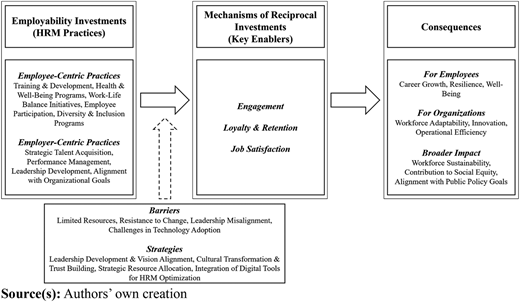
The results are structured into three main categories (see Figure 1): employee-centric HRM practices, which emphasise individual development and well-being; employer-centric HRM practices, which focus on aligning workforce capabilities with strategic goals, and the mechanisms of reciprocal investments, which provide insights into how these practices interact to generate mutual benefits. This categorisation directly responds to the study’s objective of offering a comprehensive framework to understand the interplay and reciprocal nature of employability investments.
Employee-centric HRM practices
Employee-centric HRM practices focus on fostering individual development, well-being, and empowerment. High-performing firms, such as Companies C, D, E, and H, demonstrate a commitment to these practices by offering comprehensive programmes that address both personal and professional growth.
Those firms appear to prioritise continuous learning and tailored training opportunities to enhance employee skills and career potential. For instance, Company C provided a dedicated budget for employee training, emphasising personal and professional vitality: “We also have a budget of €400 per person to do a training or a course, what they like themselves and it doesn’t have to match with their position. It only has to match their mental or social vitality” (Participant 5).
Well-being initiatives are a cornerstone of employee-centric practices. Company H offers health checks, fitness memberships, and mental health coaching, demonstrating a holistic approach to employee care: “We have health checks that people can do once every two years and coaches available for mental support, especially during times when people are facing troubles connected to the lack of social contact” (Participant 18).
Flexible working conditions are another key feature of employee-centric practices. Company E promotes work-life integration through supportive leadership and flexible schedules: “We try to help all the management team members develop effective leadership, motivated leadership, how to get employees involved, we make labour conditions more flexible for the office” (Participant 10).
Companies also foster a positive work environment through cultural programmes and team-building activities. For example, Company C organises themed events to enhance social cohesion: “We have power nap rooms, meditation rooms, libraries. (…) We also have inspiring meetings every Thursday. On Friday during lunchtime, we inspire people to discover who they are and to form an opinion related to spiritual and mental vitality” (Participant 6).
Altogether, these employee-centric practices create a supportive environment that enhances engagement, satisfaction, and career potential.
Employer-centric HRM practices
Employer-centric HRM practices aim to align employee capabilities with organisational goals. High-performing firms implement structured systems for talent acquisition, performance management, and sustainability.
Strategic hiring practices emphasise cultural fit and diversity, ensuring alignment with organisational values. As Company D’s HR manager explains: “I strongly believe in hiring somebody who fits in with our culture but does have a more diverse background that helps us really make impact” (Participant 7).
Regular performance appraisals ensure alignment between employee contributions and organisational objectives. Company B conducts structured biannual feedback sessions: “Every six months, we have a kind of conversation which is called ‘How are you doing’ talk, which looks into how I’m feeling about the progress on these goals, but also of course, whether I’m happy with my role and responsibilities” (Participant 2).
Many firms seem to integrate sustainability principles into their HRM practices. Company A exemplifies this approach through routine audits and ethical partnerships: “We conduct routine audits to assess working conditions, environmental preservation, and ethical business conduct” (Participant 1).
All in all, these employer-centric practices strengthen organisational effectiveness and competitiveness by ensuring a well-aligned and motivated workforce.
Mechanisms of reciprocal investments
Our findings reveal the mechanisms through which employee-centric and employer-centric HRM practices interact to generate mutual benefits for employees and organisations. These mechanisms operate by fostering engagement, loyalty, and job satisfaction, which are essential for creating a sustainable balance between individual development and organisational goals.
Engagement through well-being and skill development
Investments in employee well-being and skill development play a pivotal role in enhancing engagement. For example, Company C’s focus on vitality underscores this relationship, as Participant 5 noted: “We focus on mental, social, and performance vitality to ensure employees feel good and energised.” Such initiatives allow employees to feel valued and motivated, driving their commitment to organisational goals.
Loyalty through retention strategies
HRM practices aimed at retention, such as flexible work arrangements and supportive workplace cultures, emerged as critical mechanisms for fostering loyalty. Participant 2 from Company B highlights the tangible impact of these practices: “Happy employees tend to leave less, so we can retain them longer, which saves costs.” Similarly, Company F’s long-term employee retention reflects the effectiveness of creating an environment where employees feel supported: “Employees are happy because there are people who have been working for many years in our company” (Participant 13).
Job satisfaction through growth opportunities and stability
Opportunities for career advancement and skill growth contribute significantly to job satisfaction. As Participant 10 from Company E explains: “Last year, we had a very good year in terms of employee turnover and profitability,” illustrating how strategic employability investments benefit both employees and the organisation. Additionally, firms like Company J underscore the cost-saving benefits of retaining satisfied employees. The HR manager explains: “We focus on keeping employees in the company because hiring someone is very expensive. If we take into consideration the retention, well-being, and absenteeism, then probably it will be more profitable” (Participant 21).
Consequences of reciprocal investments
The reciprocal relationship between employees and their employers generates significant and measurable benefits for both parties. These consequences resonate with our objective to better understand the mechanisms underlying mutual gains and provide actionable insights into the value of aligning HRM strategies with employability goals.
Employees benefit through enhanced career potential, skill development, and well-being, which collectively contribute to their adaptability and resilience in a volatile labour market. For example, the vitality programmes implemented by Company C not only boost employee motivation but also instill a sense of purpose and energy. Such initiatives enable employees to thrive in their current roles while preparing them for future opportunities as well. Flexibility and growth opportunities further enhance job satisfaction and long-term commitment. Company F’s supportive environment fosters a sense of belonging, as Participant 13 explains: “People stay for a long time, and I think that is an indicator that apparently it is nice to work for the company.” These investments not only fulfil individual career aspirations but also create a culture of trust and mutual respect, where employees feel valued and supported.
From the organisational perspective, employability investments translate into tangible business outcomes, such as reduced turnover, cost savings, and enhanced performance. Company J exemplifies this with its strategic focus on retention, as Participant 21 highlights: “We focus on keeping employees in the company because hiring someone is very expensive. If we take into consideration the retention, well-being, and absenteeism, then probably it will be more profitable.” Moreover, organisations experience financial and operational gains through a more motivated and skilled workforce. As Company E reports, “Last year, we had a very good year in terms of employee turnover and profitability” (Participant 10). By prioritising both employee and organisational needs, firms can build a sustainable competitive advantage that drives innovation and operational excellence.
On the whole, our findings illustrate a virtuous cycle of mutual benefits. Organisations that invest in their workforce foster greater loyalty, engagement, and job satisfaction, which in turn reduce costs and enhance productivity. At the same time, employees gain the tools and opportunities to advance their careers, contributing to a culture of collaboration and innovation. As Participant 5 from Company C notes, “These practices energise employees, which translates into better performance and higher engagement.” This reciprocal dynamic underscores the value of HRM strategies that balance employee development with organisational goals, demonstrating that mutual benefits are not only achievable but, rather, essential for long-term success.
Discussion
This study aims to investigate the reciprocal relationship between employees and their employers, focusing on their potential to generate mutual benefits for both parties. By analysing qualitative data from ten companies in the food industry, we explored how organisations integrate employee-centric and employer-centric practices to enhance career potential and organisational competitiveness.
Our findings reveal that the integration of these practices fosters engagement, loyalty and retention, and job satisfaction among employees while contributing to organisational performance outcomes, such as reduced turnover intention, and enhanced workforce adaptability, innovation, and operational efficiency. As such, this study highlights the importance of aligning employee-centric and employer-centric HRM strategies to create sustainable benefits for both parties.
Theoretical implications
Our study advances the theoretical understanding in this scholarly domain by exploring the interplay between employee-centric and employer-centric HRM practices, emphasising their mutual benefits for employees and their organisations. The findings from our empirical work provide empirical support for our underlying argumentation using a SET perspective, highlighting how reciprocal exchanges between employers and employees foster engagement, loyalty, and satisfaction. Previous research (e.g. Fugate et al., 2021; Hom et al., 2009; Mitchell et al., 2012) emphasised the role of resource exchanges (Blau, 1964) in strengthening relationships in a workplace setting. This study extends these insights by demonstrating how integrated employability investments—such as training programmes, well-being initiatives, and performance management—serve as mechanisms that enhance both individual and organisational outcomes.
In addition, the RBV (Barney, 1991) perspective offers a valuable lens for understanding how employability investments at the individual level also function as strategic organisational resources. By investing in workforce development, organisations build capabilities that are valuable, rare, and inimitable—key attributes of competitive advantage. This study contributes to the RBV literature by framing employability as an intangible asset that enhances organisational resilience and adaptability, linking HRM practices to long-term strategic goals [Van der Heijde and Van der Heijden (2006) who adopted a competence-based view on employability building on the RBV as well].
Furthermore, this research adds to knowledge on the applicability of Stakeholder Theory (Freeman, 1984) in employability research by illustrating how HRM practices align with individual, organisational and societal expectations, such as sustainability and diversity. For example, organisations that implement inclusive recruitment policies or invest in employee development that are aligned with environmental goals as well demonstrate a commitment to both internal workforce growth and external stakeholder engagement. These practices enhance organisational legitimacy while fostering trust and collaboration across various stakeholder groups. This perspective resonates with recent studies on ethical and sustainable organisational practices (Chams and García-Blandón, 2019; Piwowar-Sulej, 2021), highlighting the interconnected benefits of aligning HRM strategies with broader societal goals.
Finally, this empirical work contributes to the growing discourse on the added value of sustainable HRM, where employability investments are framed as mechanisms for fostering long-term workforce development and organisational sustainability. By integrating employee-centric practices, such as career development and wellness programmes, with employer-centric strategies, organisations can create a balance that supports mutual growth and resilience (Lopez-Cabrales and Valle-Cabrera, 2020; Rodrigues et al., 2020). Additionally, the integration of digital tools and platforms offers opportunities for personalised training and efficient HRM processes, although challenges in adoption and implementation persist.
Practical implications and addressing barriers to integrated HRM practices
This study offers significant practical insights for HR practitioners, organisational leaders, and policymakers, particularly regarding the implementation and integration of employability investments (i.e. HRM practices). Its findings emphasise that high-performing firms effectively balance employee-centric and employer-centric HRM strategies to foster mutual growth, providing a sound basis for nowadays’ practices in working organisations. However, the study also highlights barriers faced by lower-performing firms, offering opportunities for actionable solutions.
Organisations aiming to enhance their competitiveness should prioritise integrating employability investments into their strategic HRM frameworks. Employee-centric initiatives, such as training and development programmes, health and wellness initiatives, and flexible work arrangements, are critical for fostering a resilient and motivated workforce. Simultaneously, employer-centric practices, including strategic recruitment, leadership development, and performance management, are also needed to ensure that organisational goals align with employee capabilities. For example, the findings from our study demonstrate that firms investing in well-being programmes and career development not only enhance employee satisfaction but also achieve measurable outcomes such as reduced turnover, improved innovation capacity, and greater market adaptability.
Despite these benefits, many organisations face significant barriers to fully integrating these practices. Resource constraints, misaligned leadership priorities, and organisational cultures that are resistant to change often hinder the adoption of holistic HRM strategies (Quatro et al., 2007). Besides, lower-performing firms in this study exhibited fragmented approaches, focusing narrowly on operational efficiency or basic employee well-being without embedding these efforts into a broader strategic vision. To address these challenges, organisations can implement several targeted strategies:
Leadership Development and Commitment: Leadership plays a pivotal role in championing integrated HRM practices. Organisations should prioritise leadership development programmes that equip managers with the skills and knowledge to implement balanced HRM strategies effectively. Leaders must actively promote the value of employability investments as a means of driving both employee engagement and organisational performance.
Resource Allocation: Integrating employability investments into strategic HRM frameworks requires sustained resource commitment. Organisations should treat these investments as strategic imperatives rather than discretionary expenditures. This includes allocating budgets for training programmes, digital tools, and wellness initiatives, recognising the long-term financial and operational benefits of a skilled and motivated workforce.
Cultural Transformation: Creating a culture that supports reciprocal relationships between employees and their employers is essential. Organisations should foster an environment of trust, collaboration, and continuous learning, where employees feel valued and empowered. Initiatives such as participatory decision-making, transparent communication, and recognition programmes can help cultivate this culture.
Leveraging Technology: Digital transformation provides an opportunity to enhance HRM practices. Firms can use AI-powered tools for recruitment, personalised digital learning platforms for skill development, and data analytics for performance management. The integration of technology not only improves efficiency but also enables tailored approaches to employee development, aligning with both employee needs and organisational objectives.
Beyond the organisational level, our findings also hold implications for policymakers and educators. Public policies that incentivise sustainable HRM practices—such as tax benefits or grants for firms investing in training and development—can encourage broader adoption of employability investments. Policymakers could also establish frameworks that support employee rights in the context of hybrid and digital work environments, ensuring equitable access to opportunities for skill development and career advancement.
In the realm of education and training, our study’s findings can inform the development of HRM curricula and training modules. Case studies based on this research can be integrated into courses on sustainable HRM, organisational behaviour, and digital transformation, providing practical frameworks for future HR professionals. Additionally, the insights on barriers and strategies that were gained in our scholarly work can guide workshops and leadership programmes, equipping practitioners with tools to navigate challenges in implementing integrated HRM practices.
Addressing barriers to integrated HRM practices is critical not only for organisational success but also for broader labour market sustainability. Firms that fail to align employee-centric and employer-centric strategies risk losing competitive advantage and missing opportunities to foster innovation and growth. By adopting the strategies outlined above, organisations can overcome these barriers, ensuring that employability investments drive both immediate and long-term benefits.
Ultimately, this study highlights the potential of integrated employee-centric and employer-centric HRM practices to transform workplaces, creating environments that support employee well-being, foster innovation, and enhance organisational resilience. By addressing practical barriers and leveraging actionable strategies, firms can position themselves as leaders in sustainable HRM, setting a benchmark for others to follow.
Limitations and future research
Despite its contributions, this study has several limitations that open avenues for future research. First, the study focuses exclusively on the food industry in the Netherlands and Belgium, which, while providing valuable insights into a critical economic sector, limits the generalisability of the findings to other industries or regions. Future research could expand the scope by examining how the reciprocal dynamics of the exchange relationship between employees and their employers manifest in sectors with different workforce characteristics, such as technology, healthcare, or manufacturing. Cross-industry comparisons could reveal whether similar patterns emerge or if industry-specific factors influence the integration and outcomes of HRM practices.
Second, the geographic focus of the study may not account for cultural or regulatory variations that impact HRM practices and employability investments. For example, labour market policies, cultural attitudes toward work-life balance, and organisational hierarchies differ significantly across regions. Comparative studies involving countries with varying labour regulations and cultural norms could provide a more nuanced understanding of how these factors shape employability investments and their reciprocal benefits.
Third, while this study provides a snapshot of current HRM practices, it does not account for the long-term impacts of employability investments. Longitudinal research could track the effects of integrated HRM strategies over time, examining how these practices influence employee career trajectories, organisational competitiveness, and adaptability in changing market conditions. Such studies could also explore whether firms that initially exhibit fragmented approaches eventually evolve toward more integrated strategies, and gain more insight into the factors that drive this progression.
Fourth, our study highlights challenges related to the integration of employee-centric and employer-centric HRM practices but does not fully explore the internal dynamics that contribute to these challenges. Future research could delve deeper into the individual and organisational factors—such as leadership styles, decision-making processes, or internal resistance—that hinder the adoption of holistic HRM strategies. For instance, qualitative studies involving interviews with employees and organisational leaders could uncover the specific obstacles and potential enablers of HRM integration.
Fifth, the role of digital transformation in shaping HRM practices and employability investments remains an emerging area of inquiry. While this study touches on technology-driven innovations, future research could investigate how specific digital tools—such as AI, data analytics, and digital learning platforms—may reshape HRM practices and be valuable for enhancing employability in diverse organisational contexts. Additionally, studies could explore the challenges firms face in adopting these technologies, such as digital skill gaps or resource constraints, and propose frameworks for successful implementation.
Sixth, the societal implications of employability investments, while discussed briefly, could benefit from further exploration as well. Future studies could examine how organisations contribute to broader societal goals, such as workforce sustainability, diversity, and inclusion, through their HRM practices. Researchers could also investigate the role of public policies in incentivising or mandating sustainable HRM practices and how these policies influence organisational behaviours and employee outcomes.
Lastly, this study primarily relies on qualitative data, which, while providing rich insights, may lack the generalisability of quantitative approaches. Future research could adopt mixed-method designs, combining qualitative interviews with large-scale surveys to validate and extend the findings. For instance, survey-based studies could quantify the impact of specific HRM practices on organisational performance metrics, such as turnover rates, productivity, and financial performance, across a broader sample of firms.
This research did not receive any specific grant from funding agencies in the public, commercial, or not-for-profit sectors.
References
Supplementary material
The supplementary material for this article can be found online