


This study explores the ethical and organizational challenges associated with non-standard work arrangements in public administration (PA), focusing on the implications of digital transformation and its alignment with public sector values.
A qualitative methodology with a deductive approach was employed, grounded in deontological ethics, utilitarian ethics and psychological contract theory. Data collection included 39 semi-structured interviews with public managers in the Italian PA, supplemented by focus groups and secondary data analysis.
The study identifies critical challenges in managing atypical workers, such as job insecurity, wage disparities, privacy concerns and unequal treatment. These challenges are exacerbated by the use of digital platforms, which intensify power imbalances, raise ethical concerns and undermine trust in public institutions.
The research offers actionable strategies, including enhancing job security through clear contract mechanisms, addressing wage disparities with equitable compensation structures, strengthening privacy protections and fostering inclusivity by integrating non-standard workers into organizational processes. Balancing operational efficiency with ethical responsibilities is essential to preserving public trust and institutional legitimacy.
This study contributes to the literature by addressing underexplored ethical challenges of non-standard work in PA, extending established ethical frameworks to a public sector context. It highlights the role of digital platforms in reshaping work arrangements and provides a comprehensive framework for ethical workforce management practices.
Introduction
The nature of work has undergone profound transformations in recent years, with traditional, long-term employment increasingly replaced by more flexible and diversified work arrangements (Cascio and Montealegre, 2016; Hesselbarth et al., 2024). These non-standard employment arrangements include gig work, freelance engagements, and fixed-term contracts, often occurring in hybrid, remote, or on-site settings (Jesuthasan and Boudreau, 2023; Shevchuk et al., 2024). Broadly defined as employment relationships that deviate from permanent, full-time jobs, these atypical work structures introduce unique challenges—such as job insecurity, algorithmic management, and privacy concerns (Schoukens and Barrio, 2017)—which this study aims to explore.
In the context of Public Administration (PA), non-standard workers include individuals engaged in project-based roles, temporary contracts, and time-bound assignments. While these arrangements offer benefits such as flexibility, autonomy, and diversified income streams, they often come at the expense of stability, equitable treatment, and job security (Eni et al., 2023; Jooss et al., 2021; Spreitzer et al., 2017; Waldkirch et al., 2021). Unlike the private sector, where such arrangements are often linked to entrepreneurial adaptability, the public sector has traditionally been a stronghold of long-term, secure employment (Bach and Kessler, 2021; Løkke, 2021). This shift towards non-standard work in PA raises unique ethical challenges, particularly as digital platforms increasingly mediate and monitor work arrangements (Hinck, 2016; Segkouli et al., 2023).
Despite the growing prevalence of non-standard work and atypical employment in PA, the academic literature has largely focused on operational efficiency and cost-effectiveness, often neglecting the intersection of these imperatives with ethical responsibilities (Dziedzic, 2024; Nyman et al., 2024; Tursunbayeva et al., 2021). While research on the gig economy in the private sector has explored issues like precariousness and algorithmic management (Jarrahi et al., 2020; Rahman et al., 2024), few studies have examined how these challenges manifest within the institutional and societal context of PA (Tursunbayeva, 2024). Moreover, there is little discussion of how operational priorities, such as efficiency, can align with public sector values like equity, respect, and accountability (Androniceanu, 2021; Obuobisa-Darko et al., 2022). Finally, recent studies emphasize the need for further research on non-standard employment in PA, focusing both on its impact on organizational performance (Min and Lee, 2024) and on how temporary and politicized work arrangements affect job insecurity, ethical accountability, and institutional trust (Quintero, 2025).
This study addresses these gaps by developing a tailored ethical framework for managing non-standard work arrangements in PA. By integrating Deontological Ethics (Micewski and Troy, 2007), Utilitarian Ethics (Quinton, 1973), and Psychological Contract Theory (Guest, 1998), the framework examines the ethical challenges posed by non-standard work and proposes actionable strategies to mitigate them. For instance, while previous research acknowledges that algorithmic management can erode trust and privacy, this study emphasizes how these issues are amplified in the public sector, where fairness and inclusivity are central to institutional legitimacy.
Through this approach, the study contributes to both theoretical and practical understanding of the ethical dimensions of non-standard work in PA. Theoretically, it extends ethical frameworks by reinterpreting fairness, equity, and trust within the unique dynamics of non-standard work. It highlights the need to address challenges such as job precariousness, algorithmic management, and systemic disparities to ensure ethical workforce management. Practically, it offers actionable recommendations for enhancing job security, addressing wage disparities, safeguarding privacy, and fostering inclusivity, demonstrating how public sector organizations can balance flexibility with ethical governance.
The study employs a qualitative methodology, drawing on 39 semi-structured interviews with public managers and focus groups with senior executives. These insights are contextualized within the broader dynamics of digital transformation in PA to explore how ethical principles can guide operational practices. By providing public managers with tools to navigate these challenges, this research aims to strengthen fairness, inclusivity, and accountability in the management of non-standard work arrangements, while reinforcing public trust in institutional practices.
Theoretical background
The increasing prevalence of non-standard workers in PA underscores the need for an ethical framework that addresses their unique challenges (Quintero, 2025). These workers include temporary employees, contract-based professionals, freelancers, and on-demand personnel, all of whom operate outside the traditional full-time, permanent employment model (Felstead and Gallie, 2004; Mastracci and Thompson, 2007; Min and Lee, 2024). Each category presents distinct issues, such as job insecurity, compensation disparities, and limited access to organizational resources (e.g. Stecy-Hildebrandt et al., 2019). Managing these challenges ethically requires a nuanced approach, particularly given PA’s dual commitment to flexibility and fairness in an evolving digital landscape.
This study integrates three theoretical perspectives—Deontological Ethics (Micewski and Troy, 2007), Utilitarian Ethics (Quinton, 1973), and Psychological Contract Theory (Guest, 1998)—to develop a comprehensive ethical framework for managing non-standard workers in PA. Each perspective provides distinct but complementary insights into the ethical and operational challenges posed by atypical work arrangements in the public sector.
Deontological ethics and utilitarian ethics
Deontological Ethics emphasizes intrinsic moral duties such as fairness, dignity, and respect, which are crucial in PA, where ethical standards are directly linked to public trust and institutional legitimacy (Bal and de Jong, 2016; Benlahcene et al., 2018). For non-standard workers in PA, this perspective highlights the importance of ensuring fair contracts, equitable treatment, and transparency, thus reinforcing procedural fairness and distributive justice in public sector practices. This is essential in the context of temporary or flexible roles, where workers must be treated with the same dignity and respect as their permanent counterparts.
Utilitarian Ethics, on the other hand, focuses on the consequences of actions, with the aim of maximizing collective well-being and operational efficiency (Castellanos-Redondo et al., 2020). In PA, this perspective calls for a balance between the need for operational efficiency and the protection of worker welfare. This includes policies that safeguard atypical workers, such as minimum wage guarantees, access to benefits, and protections against precarious working conditions (Behrendt et al., 2019; Min et al., 2019). Together, these perspectives create a framework that addresses both individual rights and collective welfare, ensuring that PA practices such as algorithmic task allocation and digital management systems are implemented without compromising the well-being of workers.
Psychological contracts, trust, and algorithmic management
Psychological Contract Theory provides a human-centered framework for understanding the implicit expectations and obligations between employers and workers, particularly in atypical work arrangements where traditional employment guarantees are absent (Guest, 2004; Risi and Pronzato, 2021). In the context of PA, non-standard workers often experience ambiguous psychological contracts, which heighten the risk of perceived unfairness and undermine their sense of belonging and value within the organization. Addressing these expectations is critical, as trust forms the foundation of public legitimacy in PA. Ethical management practices in PA must not only ensure fairness at the employer-employee level but also uphold broader institutional integrity and accountability, reinforcing the public sector’s role as a model employer (Burr et al., 2020; Shanahan and Smith, 2023).
The proliferation of digital platforms and algorithmic management systems has introduced new complexities in managing psychological contracts. These systems, which automate task allocation, performance monitoring, and compensation decisions, often exacerbate concerns regarding worker surveillance, lack of transparency, and erosion of accountability (Lee and Ahmed, 2021; Nyarko and Fong, 2023). By amplifying existing power imbalances, algorithmic management reduces workers’ autonomy and trust, particularly in short-term or precarious roles (Newlands, 2021; Weiskopf and Hansen, 2023). In PA, where ethical governance is expected to set benchmarks for fairness and inclusivity, mitigating these dynamics is essential to maintain institutional legitimacy and public trust. This calls for robust governance frameworks that balance technological efficiency with the ethical imperatives of equity and transparency.
Addressing diversity and contextual complexity in PA
PA entities differ significantly in size, resources, and operational mandates, creating unique challenges in implementing uniform ethical frameworks. Smaller or resource-constrained organizations often struggle to provide the same protections, benefits, and resources available in larger institutions, complicating efforts to ensure equitable treatment for non-standard workers (Ansell et al., 2023; Scognamiglio et al., 2023). Recognizing this diversity is essential for crafting ethical approaches that are adaptable and context-sensitive, enabling organizations to align their practices with both their operational capacity and their ethical obligations.
In the Italian PA, the increasing prevalence of atypical work underscores the urgency of addressing these challenges. Recent data indicate that approximately 20% of public sector roles now include non-standard work components, reflecting its growing significance across various administrative contexts (Scognamiglio et al., 2023). Moreover, even in relatively stable contractual situations, such as managerial roles with permanent contracts, employment conditions can become precarious due to organizational practices like the spoils system. This mechanism results in frequent job reassignments or instability following changes in political leadership, effectively undermining the security of these positions despite their formal contractual terms (see Buonocore et al., 2023). This trend highlights the need for ethical practices tailored to the specific characteristics of non-standard workers and those affected by indirect precarity, ensuring that public sector organizations continue to promote fairness, trust, and accountability in an evolving workforce landscape.
Conceptual framework
Figure 1 presents the conceptual framework underpinning this study, offering a structured approach to understanding the ethical challenges associated with managing non-standard work arrangements in PA. The framework synthesizes three foundational theories—Deontological Ethics, Utilitarian Ethics, and Psychological Contract Theory—providing a multifaceted lens for analyzing the complexities and ethical dimensions of these work arrangements.
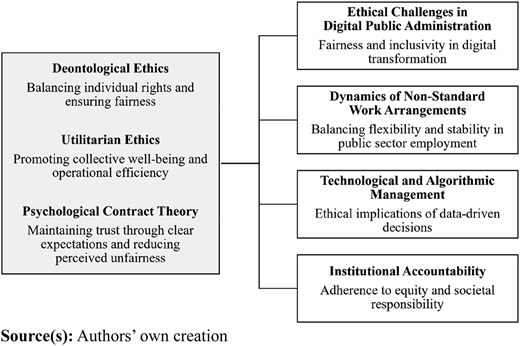
Conceptual framework: ethical foundations and key themes in managing non-standard workers in PA
Conceptual framework: ethical foundations and key themes in managing non-standard workers in PA
At its core, Deontological Ethics emphasizes intrinsic moral obligations such as fairness, dignity, and respect, which are particularly significant in the public sector. As a model employer, PA is uniquely responsible for ensuring equity and inclusivity across all employment practices, regardless of workers’ contractual status. This perspective highlights the need to treat all employees with dignity and to uphold their rights in every decision-making process, reinforcing procedural and distributive justice.
Utilitarian Ethics, in contrast, takes a pragmatic approach, focusing on the consequences of actions and the balance between individual and collective welfare. In PA, this translates into the dual goal of achieving operational efficiency while safeguarding worker well-being. This balance becomes particularly critical in the context of digital platforms and algorithmic management, where efficiency-driven practices risk undermining fairness and inclusivity if not carefully managed.
Finally, Psychological Contract Theory addresses the implicit expectations and obligations that workers bring to their roles. Atypical work arrangements, characterized by short-term contracts and the absence of long-term guarantees, often result in feelings of instability and mistrust among workers. This theory underscores the need for clear communication and transparency to foster trust, mitigate perceived inequities, and strengthen the psychological contract between non-standard workers and public sector employers.
Building on these theoretical foundations, the framework identifies four thematic areas central to the ethical management of non-standard workers:
Ethical Challenges in Digital PA: Addressing issues of fairness and inclusivity in the context of rapid technological advancements.
Dynamics of Atypical Work Arrangements: Balancing the benefits of flexibility with the risks of instability inherent in these roles.
Technological and Algorithmic Management: Navigating ethical dilemmas related to surveillance, data privacy, and decision-making in digitalized workflows.
Institutional Accountability: Ensuring that public sector organizations uphold equity, transparency, and trust as part of their societal responsibilities.
These elements converge to form a Comprehensive Ethical Framework, serving as a roadmap for PA to navigate the complexities of non-standard work arrangements. The framework emphasizes the importance of policies and practices that address operational challenges while aligning with the public sector’s ethical mandate to promote fairness, transparency, and inclusivity.
Method
To investigate the ethical and responsibility issues associated with managing non-standard workers, this study employs a qualitative methodology guided by a deductive approach. Rooted in a comprehensive theoretical framework, the study draws on established theories in ethical management, PA, and critical management studies, with a particular focus on Deontological Ethics, Utilitarian Ethics, and Psychological Contract Theory. This robust theoretical foundation shaped both the data collection and analysis, ensuring a systematic and context-sensitive examination of the complex dynamics of atypical work arrangements in the PA.
Sample and data collection
This study employs a dual-method approach, integrating primary data collected through semi-structured interviews and focus groups with secondary data from a variety of sources. The primary data were gathered from 39 public managers operating in diverse departments and administrations within the Italian PA, all located in the Lazio region, where many of Italy’s central administrations are based. These managers were selected as they are directly responsible for implementing and overseeing non-standard work arrangements, aligning with the research objective of exploring the ethical implications of these practices from a managerial perspective. Each interview lasted approximately 60 min and focused on managerial strategies, ethical dilemmas, and the impact of digital technologies on atypical work. The interview questions were structured around key themes derived from the deductive theoretical framework, ensuring consistency with the study’s objectives.
While the study focuses on the perspectives of managers and senior executives within the PA, we acknowledge that excluding non-standard workers—the individuals directly affected by these arrangements—represents a limitation. However, this choice was intentional to allow for a deeper exploration of the decision-making processes and managerial strategies within PA, which align with the study’s primary objectives. Future research could address this limitation by incorporating the voices of non-standard workers, providing a more comprehensive understanding of the ethical challenges and their lived experiences.
To complement the interviews, four focus groups were conducted with 8–12 senior executives from various PAs, separate from the interview participants. These sessions, lasting approximately two hours each, provided insights into senior executives’ perceptions and attitudes toward digital transformation and atypical work initiatives. The focus groups broadened the organizational perspective by capturing collective discussions on strategic challenges and ethical considerations, enriching the individual insights gathered through interviews. Both interview and focus group data were analyzed using the same deductive framework to identify converging and diverging patterns in managerial and organizational practices.
Secondary data sources were incorporated to supplement the primary data and provide a broader context for interpreting the findings. These sources included:
Scholarly Publications: Relevant academic literature was systematically reviewed to identify key insights on ethical management, digital transformation, and PA. These publications were considered secondary data because they provided theoretical perspectives that informed the development of the study’s conceptual framework and supported the interpretation of the primary data. Selection criteria for these publications included their recency, relevance to the themes under investigation, and their publication in high-impact journals.
Official PA Documents: Policy reports, strategic plans, and digital transformation strategies issued by Italian public sector organizations were analyzed. These documents offered valuable insights into the institutional priorities, goals, and challenges shaping the management of non-standard work arrangements.
Online Resources: Government websites, news articles, and digital archives were consulted to track recent developments and practical applications of digital work and AI within the public sector. These sources provided up-to-date examples and practical context to supplement the academic and institutional perspectives.
To ensure the relevance of these secondary data sources, a retrospective analysis of digital transformation efforts within the Italian PA since 2010 was conducted. This review encompassed digital archives, governmental reports, and academic literature, enabling the development of targeted interview and focus group questions. By grounding the study in the historical and strategic context of the Italian PA, the secondary data complemented the primary data, ensuring a comprehensive understanding of the ethical and operational dynamics in non-standard work arrangements.
Coding and analysis
The data analysis followed the Gioia methodology for qualitative research (Gioia et al., 2013), employing a combination of deductive and inductive approaches. The process began with initial coding, where two researchers independently analyzed the transcribed interviews using Dedoose, an online platform for qualitative data analysis. This phase was guided by a priori categories derived from the theoretical framework, including themes such as “job security,” “fair compensation,” “worker privacy,” and “ethical implications of digitalization.” These categories reflected the core areas of ethical management, digital transformation, and PA.
To ensure objectivity and consistency, both researchers worked independently and resolved any coding discrepancies through iterative discussions. Inter-coder reliability was assessed using Cohen’s κ coefficient, achieving a high level of agreement (Cohen’s κ = 0.80). Any disagreements were reconciled through discussion, ensuring alignment with the theoretical framework and the research objectives.
After the initial coding, the analysis progressed to the identification of broader themes. Recurring patterns and theoretically significant concepts were extracted, with particular attention to areas underexplored in the existing literature. For instance, emerging themes related to the interaction between digital platforms and ethical management practices were examined in depth. This phase maintained consistency with the deductive framework while allowing for inductive insights, highlighting unexpected patterns within the data.
In the final stage of analysis, first-order codes, such as “monitoring practices” and “privacy concerns,” were grouped into second-order themes, including “surveillance and trust in digital work environments.” These broader themes provided a structured representation of the ethical and responsibility issues in managing non-standard workers, particularly in the context of digital transformation in PA. The resulting data structure, summarized in the Table of Coding Categories and Theoretical Framework Links (Table 1), offers a comprehensive narrative linking the theoretical framework to the identified themes, providing a robust understanding of the complex ethical dynamics at play.
Themes, categories, and theoretical connections in managing non-standard work arrangements in public administration
| Main theme | Category | Code | Theoretical link | CMS link | Example citation |
|---|---|---|---|---|---|
| Job Security and Stability | Precarity | Contract instability, Short-term contracts | Deontological Ethics (fair treatment), Psychological Contract Theory (stability expectations) | Structural inequities reinforced by short-term digital arrangements | “Many of our contingent workers are constantly worried about their contracts not being renewed.” |
| Privatization-driven instability | Contract uncertainty due to outsourcing | Utilitarian Ethics (system stability), CMS (privatization impacts) | Power dynamics shaped by private sector priorities in public contracts | “Outsourcing increases uncertainty for contract workers, as private sector priorities often conflict with public sector values.” | |
| Fair Compensation | Wage disparities | Algorithmic pay determination | Utilitarian Ethics (welfare maximization), Psychological Contract Theory (equity) | Standardized algorithms neglect individual contributions, exacerbating inequalities | “Casual workers often feel underpaid for their work, especially when compared to permanent employees.” |
| Resource allocation | Unequal access to benefits and incentives | Deontological Ethics (equity), CMS (resource hierarchies) | Digital platforms prioritize efficiency over fairness, limiting worker access to support | “Project-based workers are excluded from several benefit programs available to permanent staff.” | |
| Privacy and Data Security | Data surveillance | Algorithmic monitoring | Deontological Ethics (privacy rights) | Digital platforms create asymmetric power relations between workers and employers | “Fixed-term employees are apprehensive about how their data is used and monitored by digital platforms.” |
| Privacy concerns | Extensive data collection and storage | Psychological Contract Theory (trust), CMS (surveillance systems) | Surveillance undermines worker trust and reinforces power asymmetries | “We must ensure strong data protections to alleviate concerns over privacy violations.” | |
| Equitable Treatment | Marginalization | Second-class status | Deontological Ethics (inclusion), Psychological Contract Theory (fair treatment) | Digital platforms reinforce hierarchies, excluding non-standard workers from organizational processes | “Temporary workers often feel like second-class citizens within the administration.” |
| Resource inequality | Limited access to organizational resources | Utilitarian Ethics (resource allocation), CMS (structural inequalities) | Barriers to access exacerbate existing power dynamics, marginalizing atypical workers | “Contract workers do not have the same access to training and development opportunities as permanent staff.” |
Note(s): CSM=Critical Management Studies
Source(s): Authors’ own creation
Addressing broader institutional contexts
This study integrates insights from Critical Management Studies (CMS) to analyze the power dynamics and institutional structures shaping ethical management practices in digitized work environments. CMS provides a critical lens for examining how organizational practices perpetuate inequalities and influence workers’ autonomy, particularly when digital platforms mediate work arrangements. By incorporating CMS, the research moves beyond individual-level analyses to address the broader structural and institutional factors that influence managerial decision-making in the public sector.
CMS informed multiple stages of the research process to ensure a nuanced understanding of how ethical challenges intersect with power relations and institutional dynamics in the public sector.
Development of the Interview Protocol: CMS guided the design of interview questions to explore how digital platforms reinforce or challenge existing power hierarchies within PA. For example, prompts such as “How do digital platforms shape decision-making processes in your organization?” and “To what extent do these technologies impact the autonomy and inclusion of non-standard workers?” were designed to capture CMS’s emphasis on power dynamics and institutional structures.
Coding and Analysis: During the coding phase, specific attention was given to identifying patterns of power asymmetry, such as the marginalization of atypical workers through algorithmic management or unequal access to organizational resources. First-order codes like “algorithmic control” and “institutional resistance to change” were grouped into broader themes, such as “power imbalances in digital work environments.” This process enabled an in-depth examination of how authority and control are mediated through digital platforms in non-standard work arrangements.
Interpretation of Findings: CMS enriched the interpretation of results by situating managerial practices within the broader institutional environment of the public sector. For instance, themes related to surveillance and data collection were analyzed not only as operational challenges but also as reflections of systemic power dynamics. This perspective highlighted the competing pressures public managers face, balancing operational efficiency, ethical responsibility, and adherence to institutional norms and societal expectations.
The integration of CMS provided a critical perspective on the implications of digitalization for ethical management practices, allowing the study to address systemic and institutional influences on managerial decisions. By situating digital platforms within broader power structures, this approach enriched the analysis, offering a comprehensive understanding of the ethical and operational dynamics of non-standard work in the public sector.
Findings
The findings from this study reveal four key themes related to the ethical and responsibility issues in managing non-standard workers within the public sector: job security and stability, fair compensation, privacy and data security, and equitable treatment. These themes are interlinked and provide a comprehensive understanding of the challenges arising as public sector organizations increasingly rely on digital technologies to manage atypical work arrangements. A visual representation of these themes and their connections is provided in Figure 2, offering an overview of the processes and ethical dilemmas involved.
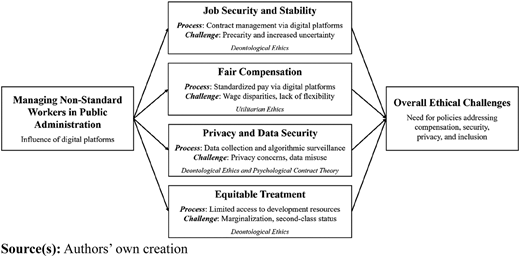
Unlike the private sector, where non-standard work is often associated with entrepreneurial autonomy, the public sector presents unique ethical challenges due to its traditional role as a guarantor of job security, fairness, and public trust. The findings illustrate how these themes challenge and enrich existing ethical theories, particularly Deontological and Utilitarian Ethics, by emphasizing the distinct responsibilities of public sector organizations.
Job security and stability
Job security emerged as a prominent concern among public sector managers regarding non-standard workers. While job security has traditionally been a cornerstone of PA, atypical work arrangements often lack the guarantees and protections associated with permanent positions, introducing new ethical tensions. These complexities are further amplified by the use of digital platforms, which prioritize flexibility over stability.
One manager remarked: “Many of our fixed-term employees are constantly worried about their contracts not being renewed. The uncertainty affects their ability to plan for the future, both personally and professionally.”
Another explained: “It’s challenging to offer the same level of job security to our contract workers as we do to our permanent staff. This disparity creates a sense of instability and can impact their overall job satisfaction.”
Moreover, the growing reliance on privatization within non-standard work arrangements was identified as a concern. As one participant noted: “We’re increasingly outsourcing tasks to private contractors for short-term projects. This introduces private-sector dynamics into the public sector, creating challenges in maintaining fairness and public accountability.”
These findings highlight how atypical work arrangements challenge Deontological Ethics by undermining procedural justice and the intrinsic dignity of workers. They underscore the need for ethical policies that balance flexibility and stability, aligning with the public sector’s role as a model employer and its commitment to public trust.
Fair compensation
Fair compensation emerged as another critical issue. Public managers expressed concerns over the disparities in pay and benefits between temporary workers and their permanent counterparts. Unlike in the private sector, where contract workers may negotiate higher pay, public sector compensation structures are bound by standardized pay scales, limiting flexibility to adjust for the contributions of non-standard workers.
One manager observed: “Project-based workers often feel they are underpaid for the amount of work they do, especially when compared to permanent employees. This disparity can lead to resentment and decreased motivation.”
Another highlighted: “One of the biggest challenges is aligning our compensation policies to ensure casual employees receive fair pay. It’s not just about the hourly rate; it’s also about providing benefits and incentives that reflect their contributions.”
These findings align with Utilitarian Ethics, emphasizing the need to balance operational efficiency with equitable compensation policies. Public sector organizations must innovate within bureaucratic constraints to ensure fairness, particularly as digital platforms exacerbate perceptions of inequity by standardizing rates without considering individual contributions.
Privacy and data security
The integration of digital platforms in managing non-standard workers raises significant concerns about privacy and data security. Managers noted that atypical workers are particularly apprehensive about how their personal data is collected, stored, and used by these platforms.
One manager emphasized: “Our contingent workers are very concerned about how their personal data is handled. They need assurances that their information is secure and not misused.”
Another added: “We have to be very careful with the data we collect from temporary workers. Implementing strong privacy policies and ensuring compliance with data protection regulations is crucial.”
These findings connect to both Deontological Ethics and Psychological Contract Theory, underscoring the responsibility of public sector organizations to safeguard worker privacy and build trust. Privacy concerns go beyond compliance with data protection laws; they reflect broader ethical obligations to ensure transparency and prevent misuse of personal data in digital management practices.
Equitable treatment
Equitable treatment emerged as a significant ethical challenge. Managers acknowledged that non-standard workers often feel marginalized compared to permanent staff, particularly when digital platforms exacerbate hierarchical divides by limiting access to professional development and organizational resources.
One manager shared: “Temporary workers often feel like second-class citizens within the administration. We need to do more to integrate them into the team and ensure they have the same opportunities for growth and development.”
Another noted: “It’s essential to foster a culture of inclusivity where all workers, regardless of their employment status, feel they are treated fairly and have access to the same resources and support.”
The findings reveal that digital platforms, while efficient, can unintentionally marginalize atypical workers by restricting access to growth opportunities. This highlights the need for policies that promote fairness, inclusivity, and equity, aligning with Deontological Ethics and the public sector’s ethical mandate to ensure all workers are treated with dignity and respect.
Discussion
The primary objective of this study was to explore the ethical and responsibility issues arising from the management of non-standard workers within PA. By analyzing interviews with public managers and integrating insights from secondary data, this research provides a nuanced understanding of these challenges and proposes actionable strategies to foster ethical work environments. The findings emphasize four key areas—job security and stability, fair compensation, privacy and data security, and equitable treatment—each reflecting the intersection of public sector responsibilities, atypical work dynamics, and the integration of digital technologies.
Theoretical implications
This study makes substantial contributions to the theoretical understanding of ethical management in non-standard work environments, particularly within the context of PA. While prior research has largely focused on the gig economy in the private sector (e.g. Behrendt et al., 2019; Graham et al., 2017), this study extends these discussions to the public sector, where ethical challenges are shaped by unique institutional responsibilities and societal expectations.
Deontological Ethics is enriched by demonstrating how fairness and respect for workers must be reinterpreted in the public sector. Unlike the private sector, PA faces a dual obligation to uphold individual fairness while maintaining systemic equity and public accountability. For instance, contingent work arrangements expose structural disparities, such as precarious contracts and unequal access to professional development. These findings suggest that Deontological Ethics in PA must address not only individual treatment but also broader systemic inequities, emphasizing policies that balance procedural fairness with distributive justice to ensure transparency and equity.
This study also refines Utilitarian Ethics by illustrating the tensions between operational efficiency and public trust. While Utilitarian principles emphasize maximizing collective welfare (Castellanos-Redondo et al., 2020; Shanahan and Smith, 2023), managerial decisions focused on efficiency—such as algorithmic task allocation—often create unintended consequences. For example, perceptions of surveillance and reduced autonomy undermine worker trust, which may conflict with the broader mission of fostering inclusive workplaces. Our analysis suggests that balancing efficiency with ethical responsibility is critical for maintaining public trust and institutional legitimacy.
Finally, this study extends Psychological Contract Theory to non-standard work in PA, where short-term contracts and algorithmic management exacerbate ambiguities in workers’ expectations. The findings reveal how practices such as automated performance evaluations erode trust and organizational commitment, highlighting the need for proactive communication and transparent policies. These insights emphasize the critical role of psychological contracts in sectors like PA, where worker trust directly contributes to public legitimacy.
This research also addresses a critical gap in the literature on digitalization in PA. While prior studies (e.g. Alvarez de la Vega et al., 2023; Lee and Ahmed, 2021) have explored digital platforms in the private sector, their implications for atypical workers in PA remain underexplored. The findings reveal that although digital platforms enhance efficiency, they introduce ethical dilemmas related to surveillance and privacy, highlighting the need for governance frameworks that integrate technological innovation with public sector values like equity, transparency, and inclusivity.
Finally, the study contributes to the discourse on privatization and its ethical risks in PA. The increasing reliance on private contractors for short-term tasks introduces private-sector practices that often conflict with public sector norms. These dynamics underscore the need for robust policy safeguards to align outsourced work with public values, such as fairness, accountability, and inclusivity.
Practical implications
The findings offer actionable recommendations for navigating the ethical complexities of non-standard work arrangements in PA.
One pressing implication is the need to enhance job security for contingent workers. While flexibility is central to contract work, PA organizations must implement policies that reduce precarity, such as clearer guidelines on contract renewals and opportunities for longer-term employment. These measures would alleviate worker stress and strengthen organizational commitment.
Addressing compensation disparities is another critical area. Public sector organizations should reconsider standardized pay structures to ensure non-standard workers are fairly compensated in line with their contributions. This could include extending benefits traditionally reserved for permanent employees, such as access to health insurance, retirement plans, and professional development opportunities. Such measures would promote inclusion and fairness, aligning with PA’s ethical mandate.
Privacy and data security are key concerns in digitalized work environments. Public managers must prioritize robust data protection measures and communicate transparently with atypical workers about how their data is collected, stored, and used. Clear policies that limit unnecessary surveillance and emphasize privacy are crucial for maintaining trust, particularly in PA, where ethical lapses in data management could undermine public confidence.
Fostering an inclusive work environment is also vital. PA organizations should actively integrate non-standard workers into their teams, ensuring access to the same resources, career advancement opportunities, and recognition as permanent staff. Initiatives that acknowledge temporary workers’ contributions and provide pathways for professional growth can fulfill ethical obligations while creating a more motivated and cohesive workforce.
At the same time, these initiatives must address the systemic power imbalances that often underlie the marginalization of atypical workers. Insights from CMS emphasize that digital platforms, while efficient, may inadvertently reinforce hierarchical divides by limiting worker autonomy or excluding non-standard workers from key organizational processes. To counteract these dynamics, public managers should adopt inclusive design principles for digital tools, ensuring they promote worker participation and transparency.
CMS also highlights that policies aimed at improving job security or compensation should challenge broader institutional practices that perpetuate inequities. For example, training programs for public managers could include components that raise awareness of structural biases and encourage more equitable decision-making. By embedding fairness and inclusivity into organizational culture, PA can ensure that non-standard workers are treated not as a peripheral workforce but as integral contributors to the public sector’s mission.
Finally, as PA increasingly relies on privatization and digital platforms, it must establish safeguards to protect public values. This includes developing clear contractual guidelines for private contractors and regularly evaluating their compliance with ethical standards. Addressing these challenges strategically can help align operational practices with societal missions, ensuring that non-standard work arrangements uphold fairness, inclusivity, and public trust.
Limitations and future research agenda
This study provides valuable insights into the ethical and responsibility issues associated with managing non-standard workers in the public sector, focusing on the Italian PA as a case study. However, several limitations and opportunities for future research should be acknowledged to refine and expand on these findings.
The focus on public managers offers a critical top-down perspective on decision-making processes and organizational strategies. However, excluding the voices of non-standard workers limits the ability to fully capture their lived experiences, particularly regarding fairness, inclusion, and job security. Future research should adopt a worker-centric approach, incorporating interviews, surveys, or ethnographic methods to provide a more comprehensive understanding of these dynamics. For example, exploring how temporary workers perceive breaches in psychological contracts or marginalization could yield valuable insights into their job satisfaction and well-being.
Additionally, while the Italian PA provides a rich context for examining the intersection of digital transformation and ethical management, the findings cannot be fully generalized to other national contexts or PA systems. Comparative studies across countries with diverse regulatory frameworks, cultural contexts, and digital governance models would help identify universal and context-specific best practices. For instance, examining countries with advanced digital platforms in PA could provide insights into balancing operational efficiency with ethical accountability.
The reliance on qualitative methods allowed for an in-depth exploration of the issues at hand but presents challenges for scalability and generalizability. The dataset of 39 semi-structured interviews and four focus groups could be complemented by quantitative methodologies in future studies. Large-scale surveys or longitudinal analyses could help quantify the prevalence of ethical concerns, such as job insecurity or privacy violations, across different sectors and regions.
Future research should also delve deeper into the ethical implications of emerging technologies, such as AI, machine learning, and blockchain, which are increasingly shaping work arrangements. These technologies introduce complex challenges, including algorithmic transparency, fairness, and trust. For instance, studies could examine how AI-driven decision-making affects workers’ autonomy or how blockchain might enhance transparency in contract management.
Another pressing area for inquiry is the development of innovative policy solutions tailored to the unique ethical challenges of non-standard work in PA. These could include adaptable compensation structures, robust data governance policies, and inclusive professional development programs. Case studies of successful implementations in the public sector could offer actionable insights for managers and policymakers.
Finally, the ethical implications of outsourcing and privatization require further investigation. As public sector organizations increasingly rely on private contractors, it is crucial to ensure that external actors adhere to the ethical standards expected of public institutions. Future research could explore how contractual guidelines and monitoring mechanisms can safeguard public values, such as fairness, accountability, and inclusivity, in outsourced work.
To enhance the practical impact of future studies, researchers should also focus on developing measurable indicators for ethical management in non-standard work environments. Metrics such as worker satisfaction, perceived fairness, and trust in organizational processes would provide a foundation for evaluating and improving ethical practices in PA.
Conclusion
This study examines the ethical and managerial challenges posed by non-standard work arrangements within PA, focusing on how traditional employment models are increasingly shaped by digital platforms. Grounded in a robust theoretical framework, the research integrates insights from public sector managers to explore the complexities of balancing operational efficiency with ethical responsibilities.
The findings emphasize four critical areas—job security, fair compensation, privacy, and equitable treatment—revealing how digital technologies both amplify these challenges and offer opportunities for innovative solutions. For instance, digital platforms can streamline operations but also introduce ethical dilemmas such as data privacy breaches or worker marginalization.
The study advances theoretical discourse by extending established ethical frameworks to the public sector. It reinterprets Deontological Ethics to emphasize systemic equity and procedural transparency, refines Utilitarian Ethics to highlight the need to balance efficiency with public trust, and extends Psychological Contract Theory to address the fragility of worker expectations in atypical or temporary work contexts. These theoretical contributions provide a nuanced understanding of the ethical complexities unique to PA.
On a practical level, the research offers actionable strategies to address these challenges. Enhancing job security through clearer contract mechanisms, addressing compensation disparities with adaptive pay structures, implementing robust privacy protections, and fostering inclusivity for non-standard workers are among the recommended approaches. These strategies not only improve worker well-being but also strengthen public trust in PA institutions, aligning operational practices with ethical principles.
Ultimately, this study underscores the broader societal role of PA as a model employer. By demonstrating how ethical leadership can address the challenges of atypical work in the digital age, the findings set a benchmark for other organizations navigating similar complexities. Public institutions have a unique opportunity to lead by example, demonstrating that operational efficiency and ethical governance can coexist. In doing so, they can uphold the principles of fairness, inclusivity, and accountability, ensuring public trust in the evolving world of work.
This research did not receive any specific grant from funding agencies in the public, commercial, or not-for-profit sectors.

