


This study aims to examine how night-time food delivery gig workers experience and manage occupational risks. It investigates how algorithmic management, inadequate infrastructure, fragmented learning pathways and risk externalisation shape rider vulnerability. The paper contributes to debates on digital labour, learning equity, inclusion and safety in platform-mediated work.
A visual ethnographic approach was used, combining systematic field observations, georeferenced photographs, ride-along video recordings and informal rider conversations. Hazard locations across Auckland were examined to explore how platform incentives interact with urban infrastructure and influence rider experiences and mobility practices.
Rider risk exposure appears to be influenced by the interaction between infrastructure conditions and platform incentive structures. Poor lighting, uneven surfaces and physical obstructions, combined with time-sensitive delivery expectations, affect navigation practices. Learning occurs largely through informal experience-based processes, potentially creating unequal skill development between novice and experienced riders. Algorithmically mediated time pressures may also influence rider behaviour under certain conditions.
Findings reflect one urban area and informal rider accounts.
This study recommends improved onboarding, platform-funded learning, clearer algorithmic transparency and hazard data sharing.
This study suggests how digital labour systems can reinforce urban inequality.
This study provides a visual ethnographic contribution examining how algorithmic management and urban design jointly shape night-time risk for micromobility gig workers. It advances digital labour debates by foregrounding learning equity and revealing how digitally mediated governance generates occupational vulnerability.
1. Introduction
Auckland is globally recognised for its comfort, safety, cleanliness and natural beauty. Yet, beneath this reputation lies a complex reality for those who work on its streets – especially gig economy riders who deliver food at night using scooters and e-bikes. As the city prepares for a future dominated by autonomous vehicles and smart infrastructure, it is crucial to examine the lived experiences of those navigating Auckland’s roads today. This article offers a ground-level perspective on night-time riding, identifying urgent areas for improvement in road design, lighting and urban planning.
1.1 Methodology: visual and field observation approach
Visual data were collected through direct site visits conducted between July and December 2025 within a 2 km radius of the Sky Tower and Ponsonby Road. Photographs were taken to document physical barriers, surface damage, lighting deficiencies and other urban design hazards affecting gig riders. All visual data were collected in public spaces without recording identifiable individuals, and images were used as analytical evidence to document infrastructural conditions rather than for illustration.
Field observations followed a structured observation protocol. At each site, the researcher documented lighting conditions, surface quality, visibility constraints, lane geometry and obstruction characteristics. Observation records were subsequently compared across locations to identify recurring hazard patterns rather than isolated incidents.
Participant recruitment followed an opportunistic and context-sensitive approach consistent with visual ethnographic fieldwork in public spaces. During evening field observations in central Auckland, the author engaged in several spontaneous, informal conversations with food-delivery riders who were waiting at natural waiting points such as restaurant collection areas, intersections and rest locations, and these did not involve audio recording, personal identifiers or structured questioning. Instead, riders shared their impressions of night-time mobility in the course of casual conversation.
Because the study prioritised low-intrusion observation, no formal sampling frame was applied. Instead, a purposive-opportunistic sampling logic was used, focusing on active night-time delivery riders operating within the defined study area. While this limits representativeness, it enables access to situated, real-time experiences closely aligned with observed infrastructural conditions.
Comparative insights are drawn from secondary literature to situate Auckland’s case within broader global micromobility challenges; no primary data were collected outside New Zealand. The analysis followed a structured coding and thematic grouping process to move beyond descriptive observation towards analytically grounded findings.
1.2 Visuals as data
Each image documents one or more specific hazards observed during systematic field visits, including lane interruptions, lighting deficiencies and construction-related obstructions. Selected images were contrast- and brightness-adjusted solely to reveal features indistinguishable under night-time lighting conditions; no physical characteristics were altered. Locations were verified using Google Maps, and distances from the Sky Tower were recorded and annotated for spatial context, enabling integration with policy frameworks such as Vision Zero and Auckland 2050. This approach positions visual evidence as a critical component of urban design research, bridging the gap between lived experience and infrastructural analysis.
Photographic evidence was treated as analytical data rather than illustrative material. Images were systematically reviewed and coded according to visibility conditions, surface characteristics, obstruction types and rider manoeuvrability. This process enabled consistent comparison across observation sites.
1.3 Ethical statement
This study used a visual-ethnographic approach to document night-time micro-mobility conditions in central Auckland. Informal conversations were conducted only when riders voluntarily initiated interaction during natural breaks in their work. Prior to each discussion, riders were informed of the study purpose and gave verbal agreement to share experiences anonymously. Because the study involved non-intrusive public observation, no personal data and no intervention, it fell within the category of low-risk research that does not require formal institutional ethics review under the author’s university guidelines for public-space observational work (Valera and Casakin, 2022; van Ameijde et al., 2025). No names, contact details, platform accounts, vehicle identifiers or biometric details were recorded.
Video and photographic material were restricted to environmental and infrastructural hazards and stored on an encrypted, password-protected drive for analysis only. All reported findings are aggregated to prevent the identification of individual riders or specific locations. Video files supporting the observations described in this study are provided as online supplementary material. These files can be accessed alongside the published article.
1.4 Digital labour and learning equity in the gig economy
The rapid expansion of platform-mediated gig work has fundamentally reshaped labour relations in urban economies. Platform work is characterised by on-demand task allocation, algorithmic coordination and digitally mediated performance evaluation, whereby workers are formally classified as independent contractors rather than employees (Srnicek, 2017; Wood et al., 2019; Dif-Pradalier et al., 2023). In this model, digital platforms act not merely as intermediaries but as governing infrastructures that structure access to work, remuneration patterns and behavioural expectations through opaque computational systems.
Algorithmic control operates through automated dispatch systems, dynamic pricing mechanisms, performance dashboards and customer rating systems. Unlike traditional managerial supervision, control is embedded within software architecture, often functioning without direct human oversight (Rosenblat and Stark, 2016; Williams and Rani, 2025). Workers respond to real-time prompts, delivery time estimates and acceptance-rate metrics, which together create behavioural nudges towards speed, availability and responsiveness. Although platforms frame such systems as efficiency-enhancing innovations, research indicates that algorithmic management frequently intensifies labour precarity by transferring uncertainty and operational risk onto workers (Zuboff, 2023; Cefaliello et al., 2023).
A critical yet underexamined dimension of platform work concerns learning equity. In conventional employment contexts, institutional learning mechanisms – such as structured training, occupational safety programs and mentoring – serve to standardise competence and reduce workplace hazards. In contrast, gig platforms typically provide minimal onboarding beyond app navigation tutorials and general conduct guidelines (Ravenelle, 2019; Taylor et al., 2023). The absence of formalised safety education or skill development frameworks produces uneven learning trajectories, where knowledge acquisition occurs informally through trial-and-error experiences or peer exchanges. Such decentralised learning environments risk amplifying inequalities between experienced and novice workers, particularly in high-risk contexts such as night-time micromobility delivery.
Risk externalisation constitutes another defining feature of digital labour platforms. Costs associated with equipment, insurance, maintenance and personal safety are typically borne by workers themselves (Srnicek, 2017; Sadovaya, 2022; Ivancheva and Courtois, 2024). In the context of e-bike and scooter delivery, riders absorb not only financial risk but also environmental and infrastructural risk, including poorly illuminated streets, uneven surfaces and hazardous construction zones. This structural arrangement aligns with broader critiques of platform capitalism, which argue that value extraction is enabled through the systematic displacement of liability and operational responsibility onto individual workers (Hsieh et al., 2024; Pardiansyah and Anggorodiputro, 2025).
Within this framework, night-time gig riding should be understood not solely as an urban design issue but as a manifestation of digitally structured labour conditions. The convergence of algorithmic time pressure, fragmented institutional learning and risk externalisation produces a distinct form of occupational vulnerability. Addressing these conditions requires analysing gig work through the dual lenses of digital governance and learning equity, rather than viewing infrastructural hazards in isolation.
From a learning perspective, the absence of structured training within gig platforms can be examined through the lens of informal and situated learning theories, where knowledge is acquired through experience, observation and social interaction rather than formal instruction (Lave and Wenger, 1991; Eraut, 2004). In such environments, learning is unevenly distributed and highly dependent on prior exposure and peer networks. This has important implications for learning equity, as workers entering platform labour without prior contextual knowledge face significant disadvantages. Integrating these perspectives allows the present study to situate gig work not only within labour and infrastructure debates but also within broader discussions of workplace learning and capability development.
1.5 Data analysis strategy
Visual and qualitative data were analysed using an iterative thematic analysis approach (Braun and Clarke, 2006). Initial open coding of photographs, field notes and rider interaction summaries identified recurring hazard patterns. Codes were then refined through cross-site comparison and frequency–severity assessment, resulting in three dominant analytical themes: visibility failures, surface and geometry risks and obstruction–design conflicts. These themes were retained based on their recurrence across locations and their consistent association with rider-reported difficulty and near-miss events. Rider narratives were used for triangulation, ensuring alignment between observed hazards and lived experiences. Themes were subsequently interpreted through the lens of algorithmic management and risk externalisation to connect micro-level observations with digital labour theory.
Codes were primarily descriptive and process-oriented (e.g. “low-light visibility loss”, “surface discontinuity”, “obstruction-induced deviation”) and were iteratively consolidated into higher-order categories through constant comparison. A summary of representative codes and their aggregation into themes is provided in Table 1, and a summary of observation sites in Table 2.
Example coding structure
| Raw observation | Initial code | Category | Theme |
|---|---|---|---|
| Poor lighting under trees | Low-light visibility loss | Visibility hazard | Visibility failures |
| Uneven pavement | Surface discontinuity | Surface risk | Surface and geometry risks |
| Scooter blocking the path | Obstruction conflict | Path interference | Obstruction–design conflicts |
Summary of observation sites
| Site | Distance from Sky Tower | Observation type | Main hazard |
|---|---|---|---|
| Cotesmore Way | 2.0 km | Visual observation + video | Poor lighting, barrier |
| Hepburn Street | 1.4 km | Visual observation + video | Low visibility |
| Albert Park corridor | 1.0 km | Visual observation | Surface damage, lighting deficiency |
| Victoria Street West | 0.35 km | Visual observation | Mid-lane obstruction |
| Wellesley Street West | 0.8 km | Visual observation | Construction conflict |
2. Riding after dark: a lived experience
Night-time delivery work in Auckland is characterised by recurring infrastructure-related hazards that can be systematically grouped into three categories: Theme 1 is about visibility failures (poor lighting, tree shadows and night contrast issues), Theme 2 includes surface and geometry risks (uneven roads, slopes, gradients and rough covers) and Theme 3 covers obstruction and design conflicts (mid-lane barriers, construction and narrow lanes).
2.1 Theme 1: visibility failures
Rather than presenting isolated defects, the following examples represent a recurring pattern of visibility failure observed across multiple night-time delivery routes. The selected cases illustrate how insufficient lighting and shadow effects consistently undermine rider safety under time-pressured conditions.
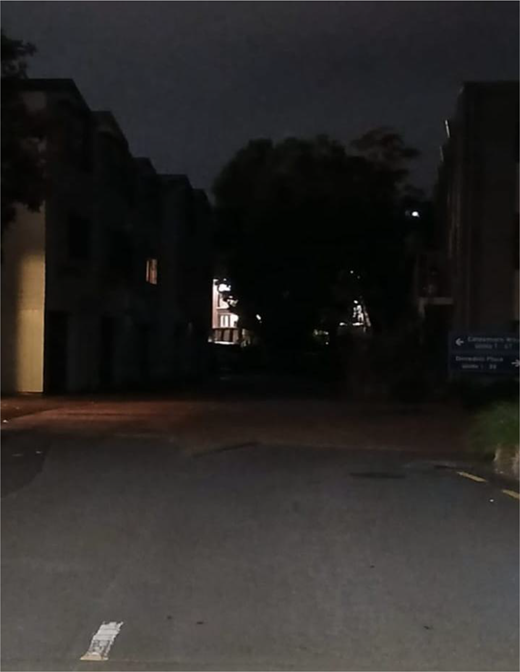
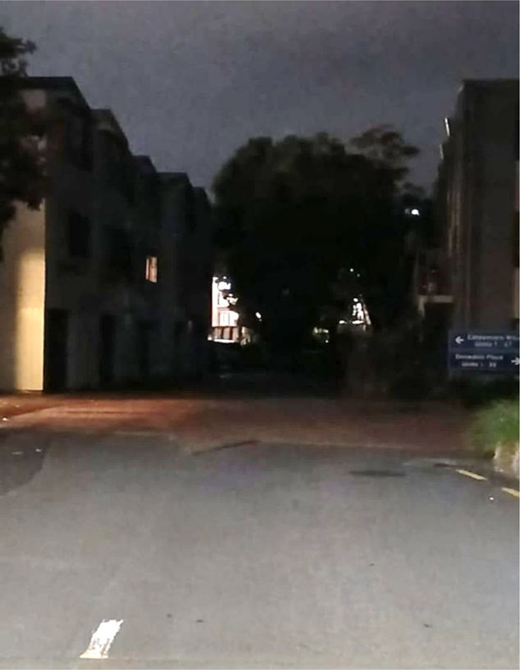
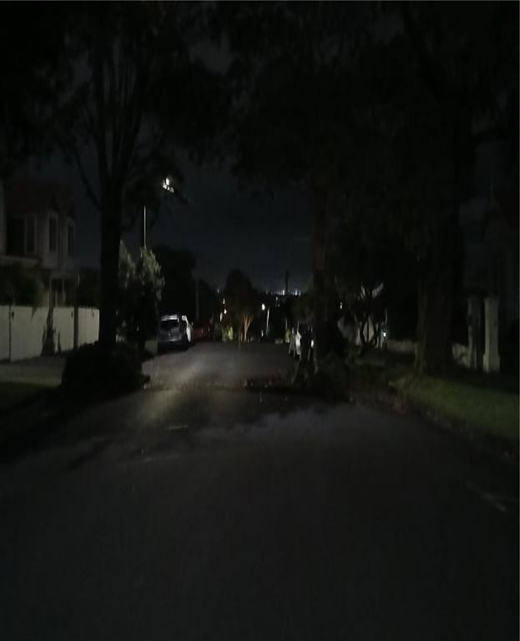
Plate 1 and Plate 2, taken from Video 1, illustrate a barrier inside the dark road in Cotesmore Way, which is about 2 km away from the Sky Tower. The design of the elevated star has a sharp structure in the centre of the circle, which makes it more dangerous for any cycle or scooter. Recorded on the long Hepburn Street, Video 2 indicated that the entire corridor exhibits extremely low visibility under night-time conditions. The location is 1.4 km from the Sky Tower. Plate 3 (a– d), taken from this video, collectively illustrated both sides of the road. In Ponsonby, a high-density residential area adjacent to Auckland CBD, there are many places where trees are kept in the middle of the road, as shown in Plate 4 and Plate 5. Sufficient illumination is not observed here to ensure that turning manoeuvres can be performed safely and with adequate visual clarity for riders. In some instances, speed-control devices are located beneath tree canopies (Plate 6), which can reduce visibility and increase crash risk when lighting levels are insufficient.
 The 4 panels are labelled a, b, c and d. Panel a depicts a dark road curving ahead, with faint lane markings, roadside trees, signs and distant lights. Panel b depicts the same road with clearer lane markings, trees, signs, a vehicle ahead and brighter distant lighting. Panel c is mostly dark, with a small illuminated road area and distant lights near the upper centre. Panel d is mostly dark, with vehicle lights and an illuminated junction visible on the right.
(a)–(d) collectively illustrate the same low-visibility condition along Hepburn Street from multiple perspectives. Rather than representing distinct hazards, these views confirm the persistence of poor lighting across the corridor, reinforcing the systemic nature of visibility failure in this location
The 4 panels are labelled a, b, c and d. Panel a depicts a dark road curving ahead, with faint lane markings, roadside trees, signs and distant lights. Panel b depicts the same road with clearer lane markings, trees, signs, a vehicle ahead and brighter distant lighting. Panel c is mostly dark, with a small illuminated road area and distant lights near the upper centre. Panel d is mostly dark, with vehicle lights and an illuminated junction visible on the right.(a)–(d) collectively illustrate the same low-visibility condition along Hepburn Street from multiple perspectives. Rather than representing distinct hazards, these views confirm the persistence of poor lighting across the corridor, reinforcing the systemic nature of visibility failure in this location
 The residential road curves around 2 planted traffic islands. Directional bollards stand at the island edges. Houses, fences and pavements line both sides. Several vehicles are parked along the rising street. Mature trees and smaller plants border the road.
Mid-road tree placement in Ponsonby is creating turning visibility challenges. While promoting sustainability, canopy shadows obscure lane edges
The residential road curves around 2 planted traffic islands. Directional bollards stand at the island edges. Houses, fences and pavements line both sides. Several vehicles are parked along the rising street. Mature trees and smaller plants border the road.Mid-road tree placement in Ponsonby is creating turning visibility challenges. While promoting sustainability, canopy shadows obscure lane edges
Concealed speed breaker under tree canopy. Lack of adaptive lighting and pavement cues increases night-time crash risk
Concealed speed breaker under tree canopy. Lack of adaptive lighting and pavement cues increases night-time crash risk
 The bus lane runs beside a pavement at night and is marked LANE BUS on the road surface. It continues towards an intersection controlled by traffic lights. A separate traffic lane lies to the right. Trees border the left side and extend above the street. Multi-storey buildings with illuminated windows stand beyond the junction. Road signs, streetlights, barriers and roadside structures are visible along the route.
Poorly illuminated under-tree zone near Albert Park, where riders report frequent near-misses. Deep surface ridges combined with canopy shadows create high-risk conditions
The bus lane runs beside a pavement at night and is marked LANE BUS on the road surface. It continues towards an intersection controlled by traffic lights. A separate traffic lane lies to the right. Trees border the left side and extend above the street. Multi-storey buildings with illuminated windows stand beyond the junction. Road signs, streetlights, barriers and roadside structures are visible along the route.Poorly illuminated under-tree zone near Albert Park, where riders report frequent near-misses. Deep surface ridges combined with canopy shadows create high-risk conditions
Across these sites, inadequate lighting systematically reduced riders’ reaction time, a risk that becomes amplified under algorithmically induced time pressure. These conditions are exacerbated by weather events, such as storms that scatter fruit and tree debris across roads, which remain uncleared for hours or even days (Auckland Transport, 2025).
2.2 Theme 2: surface and geometry risks
The sites presented below are representative cases of a broader set of surface and geometry risks repeatedly observed during fieldwork. Together, they illustrate a common mechanism through which gradients, uneven surfaces and poor illumination interact to destabilise micromobility at night.
Arterial roads bordering institutional precincts (e.g. Albert Park) exhibited severe surface damage and also the under-tree zone displays inadequate lighting (Plates 6, 7, 8, 9) as per Video 3. This corridor is a high-activity urban zone, bordered by the University of Auckland and Auckland University of Technology (AUT). Lighting deficiencies documented here contravene Auckland Transport’s luminance standards and Waka Kotahi’s recommendations for active transport safety (NZ Transport Agency Waka Kotahi, 2014). These micro-level failures highlight systemic oversight in urban lighting design.
 The bus lane runs beside the pavement and is marked LANE BUS on the road surface. Cracks and patched areas cross the lane. A separate traffic lane lies to the right. Traffic lights control the intersection ahead. Trees border the left side and extend above the street. Multi-storey buildings with illuminated windows stand beyond the junction. Construction fencing, barriers, signs and scaffolded structures line the right side.
Progressive views of surface damage and lighting gaps under mature trees. These micro-level hazards undermine Auckland Transport’s luminance standards and rider safety
The bus lane runs beside the pavement and is marked LANE BUS on the road surface. Cracks and patched areas cross the lane. A separate traffic lane lies to the right. Traffic lights control the intersection ahead. Trees border the left side and extend above the street. Multi-storey buildings with illuminated windows stand beyond the junction. Construction fencing, barriers, signs and scaffolded structures line the right side.Progressive views of surface damage and lighting gaps under mature trees. These micro-level hazards undermine Auckland Transport’s luminance standards and rider safety
 The cycle lane runs beside the carriageway at night. A bicycle symbol and the road marking LANE BIKE appear on the surface. Long cracks and patched sections cross the lane. A pavement, planted areas and large trees border the right side. Streetlights line the road. Traffic signals ahead display illuminated lights. Additional road markings and a sheltered roadside structure appear in the distance.
Progressive views of surface damage and low-lighting under mature trees. These micro-level hazards undermine Auckland Transport’s luminance standards and rider safety
The cycle lane runs beside the carriageway at night. A bicycle symbol and the road marking LANE BIKE appear on the surface. Long cracks and patched sections cross the lane. A pavement, planted areas and large trees border the right side. Streetlights line the road. Traffic signals ahead display illuminated lights. Additional road markings and a sheltered roadside structure appear in the distance.Progressive views of surface damage and low-lighting under mature trees. These micro-level hazards undermine Auckland Transport’s luminance standards and rider safety
 The cycle lane runs beside the adjoining carriageway. Extensive cracks spread across the lane surface near the road edge. A deeper broken section extends diagonally through the foreground. Worn lane markings remain partly visible on the left. The carriageway has white lane markings. Buildings, a pavement and a roadside pole appear beyond the road.
Progressive views of surface damage and low-lighting under mature trees. These micro-level hazards undermine Auckland Transport’s luminance standards and rider safety
The cycle lane runs beside the adjoining carriageway. Extensive cracks spread across the lane surface near the road edge. A deeper broken section extends diagonally through the foreground. Worn lane markings remain partly visible on the left. The carriageway has white lane markings. Buildings, a pavement and a roadside pole appear beyond the road.Progressive views of surface damage and low-lighting under mature trees. These micro-level hazards undermine Auckland Transport’s luminance standards and rider safety
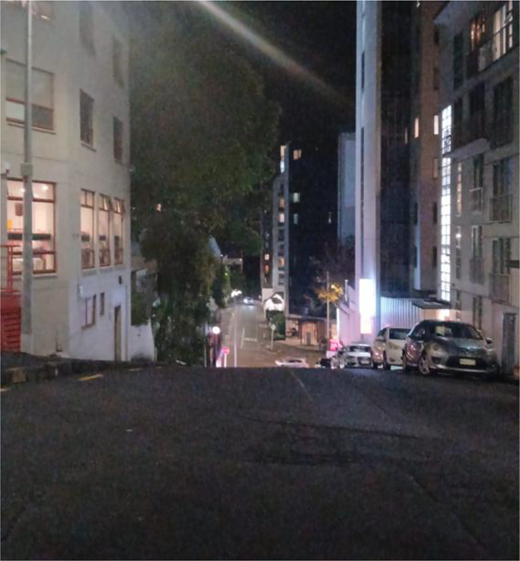
Chancery Street, City Road and Liverpool Street (Plates 10, 11 and Plate 12): these streets illustrated a recurring pattern of sharply inclined road with a high gradient.
 The steep road slopes down through a dense city centre. High-rise buildings line both sides, including a tall residential tower with a pointed roof near the centre. A slender observation tower rises behind the surrounding buildings. Cars travel or park along the descending street. Planted terraces with shrubs and a palm tree occupy the left foreground. Smaller buildings and additional towers fill the distance.
Chancery Street a sharply inclined road with a high gradient, which is just 700 m from the Sky Tower (the sky is cloudy)
The steep road slopes down through a dense city centre. High-rise buildings line both sides, including a tall residential tower with a pointed roof near the centre. A slender observation tower rises behind the surrounding buildings. Cars travel or park along the descending street. Planted terraces with shrubs and a palm tree occupy the left foreground. Smaller buildings and additional towers fill the distance.Chancery Street a sharply inclined road with a high gradient, which is just 700 m from the Sky Tower (the sky is cloudy)
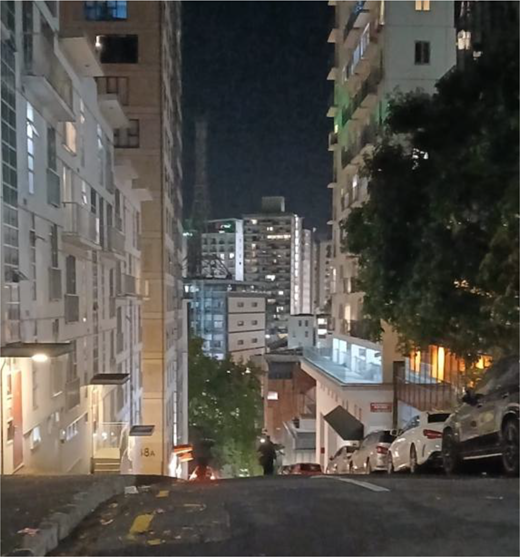
Further observations include road markings for turning lanes, cycling paths and dividers are often faded, misaligned or confusing. In some areas, trees are positioned too close to the road, obstructing visibility and dropping hazardous debris. Walking paths, especially in older suburbs, are rough and uneven, posing risks not only to pedestrians but also to riders who must occasionally use them to avoid traffic. Some rough covers are found in many places on different roads and streets, as shown in Plate 13, which remains dark at night because of the trees beside the spot. Video 4 has shown the difficulties for the night riders to pass over this type of obstacle.
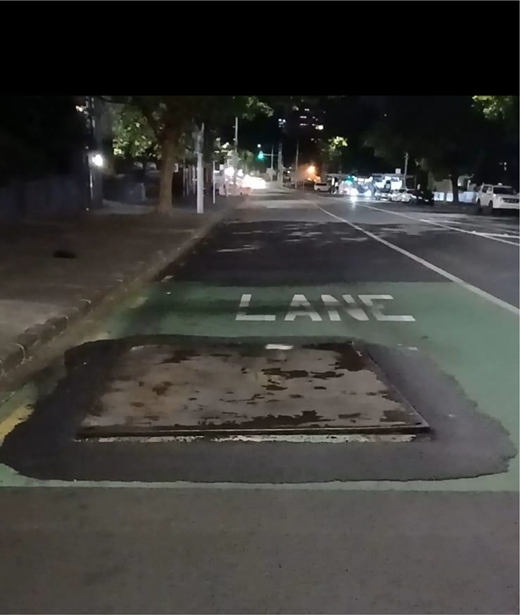
Some slopes in the narrow cycle lane remain dark as they are situated under the trees. Two examples are given in Plate 14. As those photos could not exhibit the slope due to darkness, only the brightness of the image is increased by 40% (Plate 14). Across all sites, surface irregularities – particularly when combined with gradients and low illumination – produced mechanical instability that is more consequential for scooters and e-bikes than for motor vehicles. These risks are infrastructural in origin but become occupational hazards under time-constrained delivery work.
 The 4 views depict cycle lanes running beside pavements and roads at night. The upper views focus on a narrow lane bordered by raised kerbs. A drainage grate crosses the lane near the foreground. Trees and poles line the pavement. Vehicles travel towards traffic lights at the junction ahead. The lower views depict a wider cycle lane with a diamond road marking. Trees, poles and buildings border the pavement. Road markings separate the cycle lane from the adjoining carriageway. Vehicles and traffic lights are visible in the distance.
Together illustrate similar slope-related visibility challenges within the same cycle lane environment. These repeated examples emphasise the recurring nature of concealed gradients under low-light conditions rather than distinct hazard types
The 4 views depict cycle lanes running beside pavements and roads at night. The upper views focus on a narrow lane bordered by raised kerbs. A drainage grate crosses the lane near the foreground. Trees and poles line the pavement. Vehicles travel towards traffic lights at the junction ahead. The lower views depict a wider cycle lane with a diamond road marking. Trees, poles and buildings border the pavement. Road markings separate the cycle lane from the adjoining carriageway. Vehicles and traffic lights are visible in the distance.Together illustrate similar slope-related visibility challenges within the same cycle lane environment. These repeated examples emphasise the recurring nature of concealed gradients under low-light conditions rather than distinct hazard types
2.3 Theme 3: obstruction and design conflicts
The following cases exemplify a recurring design conflict rather than discrete anomalies. These representative examples show how obstruction placement and lane geometry repeatedly force unsafe manoeuvres for gig riders.
Field observations around the Sky Tower and Victoria Park (Plate 15 taken from Video 5) illustrated the extent to which narrow lanes, uneven asphalt, damaged surface and insufficient illumination threaten safe night-time navigation. Even within 800 m of Auckland’s central landmark, riders face abrupt lane interruptions, unpredictable surface waves and misaligned markings that become especially hazardous in low-visibility conditions. These observations align with rider complaints about invisible lane edges and highlight the broader challenge of integrating micromobility safely into existing transport networks (Badia and Jenelius, 2023). These observations directly challenge Auckland Transport’s commitment to Vision Zero and Smart Mobility objectives (Auckland Transport, 2023).
 The cycle lane runs between the carriageway and pavement. Raised concrete dividers separate it from moving traffic. A bicycle symbol and lane marking appear on the surface. Drainage grates, worn patches and scattered debris occur beside the kerb. Vehicles travel along the adjoining road. A person with a bicycle or cycle equipment is farther ahead. Trees line the opposite side. A long brick building borders the pavement. Multi-storey buildings and a tall tower rise in the distance.
Narrow and interrupted lane near Sky Tower (CBD core), limiting safe scooter turning with an abrupt surface gradient and misaligned markings. Such conditions amplify risk during night-time deliveries
The cycle lane runs between the carriageway and pavement. Raised concrete dividers separate it from moving traffic. A bicycle symbol and lane marking appear on the surface. Drainage grates, worn patches and scattered debris occur beside the kerb. Vehicles travel along the adjoining road. A person with a bicycle or cycle equipment is farther ahead. Trees line the opposite side. A long brick building borders the pavement. Multi-storey buildings and a tall tower rise in the distance.Narrow and interrupted lane near Sky Tower (CBD core), limiting safe scooter turning with an abrupt surface gradient and misaligned markings. Such conditions amplify risk during night-time deliveries
Plate 16 presents mid-lane obstacles on a narrow cycle path, which increase collision risk for riders navigating in low-light conditions. It is located at 167 Victoria Street West, 350 m away from the Sky Tower. Poor visibility and obstruction placement force unsafe manoeuvres, contradicting Auckland’s Smart Mobility objectives. This observation is important because it indicates a recurring mismatch between infrastructure design and micromobility requirements. Although the obstacle may appear minor from a planning perspective, riders are exposed to abrupt directional changes within a constrained corridor. Under low-light conditions, such design features increase cognitive workload and reduce reaction time, creating disproportionate risk for scooter and e-bike users.
 The cycle lane runs between the carriageway and pavement at night. A bicycle symbol and forward arrow mark the lane. A circular utility cover occupies the foreground. Raised separators border the roadside of the lane. Tactile paving and a striped raised crossing interrupt the route. Street signs and lighting poles stand along the pavement. A person walks farther ahead beside the buildings. Traffic lights and road markings are visible at the junction in the distance.
Mid-lane obstacles on the narrow cycle path at Victoria St West. Poor visibility and obstruction placement force unsafe manoeuvres, contradicting Auckland’s Smart Mobility objectives
The cycle lane runs between the carriageway and pavement at night. A bicycle symbol and forward arrow mark the lane. A circular utility cover occupies the foreground. Raised separators border the roadside of the lane. Tactile paving and a striped raised crossing interrupt the route. Street signs and lighting poles stand along the pavement. A person walks farther ahead beside the buildings. Traffic lights and road markings are visible at the junction in the distance.Mid-lane obstacles on the narrow cycle path at Victoria St West. Poor visibility and obstruction placement force unsafe manoeuvres, contradicting Auckland’s Smart Mobility objectives
Field observations at Wellesley Street West indicated how double-entry traffic geometry, abrupt surface gradients, poorly illuminated curb transitions and construction-related obstructions create complex decision points for riders (Plates 17 and Plate 18). Obstruction placement within narrow corridors forces abrupt manoeuvres, increasing the likelihood of loss-of-control incidents.
 The city intersection lies between tall buildings. The Central Hotel occupies the left side, with pedestrians near its illuminated entrance. Traffic lights control the junction and the uphill street beyond. Cars, a bus and a cyclist use the road. Traffic cones mark roadworks near the centre. Street signs and lighting poles line the pavements. Trees and further buildings appear along the rising street in the distance.
Intersection at Wellesley St West at an early night with vehicle lights around it
The city intersection lies between tall buildings. The Central Hotel occupies the left side, with pedestrians near its illuminated entrance. Traffic lights control the junction and the uphill street beyond. Cars, a bus and a cyclist use the road. Traffic cones mark roadworks near the centre. Street signs and lighting poles line the pavements. Trees and further buildings appear along the rising street in the distance.Intersection at Wellesley St West at an early night with vehicle lights around it
 The foreground pavement includes tactile paving beside a curved kerb. A raised rectangular section extends towards the road. Traffic cones line both sides of the street and surround roadworks farther ahead. Multi-storey buildings border the road. An illuminated covered entrance occupies the right side. Streetlights and traffic signals extend along the route. The signals ahead include both illuminated green and red lights.
The double entry and sharp curb barriers (construction work in progress)
The foreground pavement includes tactile paving beside a curved kerb. A raised rectangular section extends towards the road. Traffic cones line both sides of the street and surround roadworks farther ahead. Multi-storey buildings border the road. An illuminated covered entrance occupies the right side. Streetlights and traffic signals extend along the route. The signals ahead include both illuminated green and red lights.The double entry and sharp curb barriers (construction work in progress)
Beyond descriptive observation, these patterns indicate a consistent interaction between environmental conditions and rider decision-making. Reduced visibility, uneven surfaces and obstruction-induced deviations do not operate as isolated hazards; rather, they systematically influence how riders adjust speed, route selection and manoeuvring strategies under time-sensitive conditions. This suggests that infrastructural deficiencies actively shape behavioural responses, highlighting the need to interpret these findings not only as physical risks but as behaviourally consequential environments.
The inclusion of multiple visual instances for similar hazard types is intended not as repetition but as analytical reinforcement, demonstrating that these conditions are spatially consistent rather than isolated occurrences.
3. Voices from the community: insights from informal rider interactions
Rider accounts consistently corroborated the visual data, particularly regarding steep gradients, shadowed corridors and the absence of platform-provided safety training. Riders’ perspectives provide an important complement to the visual and spatial evidence documented earlier.
3.1 Emergent themes from conversations
A total of 12 riders participated in informal conversations during the observation period. Participants appeared to be predominantly male, within an estimated age range of approximately 20–45 years and engaged in scooter or e-bike delivery work. Due to the non-intrusive design of the study, no personal identifiers such as nationality, employment duration or platform affiliation were formally recorded. These characteristics are therefore reported only at an observational level.
Across these informal interactions, riders consistently raised several concerns:
Many described feeling unsafe on poorly lit and steep roads, particularly in areas near Albert Park and Parnell Rise.
Several mentioned that during or after storms, fruit, leaves and organic debris often accumulate on certain streets, creating slippery conditions for scooter and e-bike tyres.
Riders commonly observed that road markings were faded or unclear, making lane boundaries difficult to interpret at night.
Some noted that tree canopies cast deep shadows, especially where the asphalt is uneven or patched.
None of the riders reported receiving formal safety training or protective equipment from delivery platforms.
Riders expressed a desire for better lighting, smoother surfaces and improved charging access for e-bikes and scooters.
Although conversations were not audio-recorded, several recurring statements illustrate riders’ perspectives. For example, one rider noted that “some roads are too dark, especially under trees – you don’t see bumps until the last second”. Another rider explained that “when orders are timed, you cannot slow down too much, even if the road is bad.” A third rider stated that “new riders don’t know which streets are dangerous – you only learn after a few close calls”. These indicative excerpts are paraphrased and reconstructed from field notes to preserve anonymity while conveying consistent experiential patterns.
3.2 Value of rider perspectives
These informal conversations reinforce the visual hazards documented through still images and georeferenced site visits. For example, concerns about steep or poorly illuminated streets align closely with the dark, uneven zones observed near Albert Park. This convergence between rider perspectives and field evidence provides methodological triangulation, strengthening the validity of the qualitative insights and highlighting the lived realities of gig-mobility workers navigating Auckland’s night-time infrastructure.
These rider accounts are analytically significant not only as descriptive reflections but as evidence of adaptive behaviour under constrained conditions. Rather than merely reporting unsafe environments, riders consistently described modifying their riding strategies – such as memorising hazardous routes, reducing speed in shadowed areas or selectively avoiding certain streets over time. These adaptations indicate that learning occurs through repeated exposure to risk rather than through formal instruction, reinforcing the study’s argument that safety competence is informally and unevenly acquired.
4. Algorithmic management, risk externalisation and learning gaps
4.1 Algorithmic governance and incentive structures
Gig delivery riders operate within algorithmically governed labour systems that structure incentives, evaluate performance and regulate access to future work opportunities (Heiland, 2025; Kambouri et al., 2023; Lynn et al., 2023). Incentive structures – such as surge pricing, peak-hour bonuses and acceptance-rate thresholds – encourage riders to prioritise rapid delivery completion and continuous availability (Alturkey, 2024; Schreyer, 2024). These mechanisms, while framed as flexible earning opportunities, may inadvertently incentivise risk-taking behaviour, particularly in low-visibility or high-traffic environments (Salleh et al., 2023; Laskaris et al., 2024).
Customer rating systems further intensify this dynamic. Platforms frequently integrate star-based or satisfaction-based feedback metrics into performance algorithms that determine order allocation priority or account stability (Tuomi et al., 2023; Xu et al., 2025). Research suggests that workers often perceive ratings as opaque and difficult to contest, creating anxiety around potential deactivation (Smit and Stopforth, 2023; Xu et al., 2025). In such systems, a single negative review – regardless of contextual factors such as traffic congestion or unsafe road conditions – may contribute to algorithmic penalties that remain largely invisible to workers. These hidden penalties, including reduced job offers or temporary account suspensions, reinforce behavioural compliance without transparent explanation (Au‐Yeung et al., 2025; Pidoux et al., 2024).
The opacity of algorithmic evaluation contributes to what scholars describe as “asymmetric information governance”, where platforms retain full visibility into worker data while workers lack insight into decision-making logic (Rahman, 2021; Schreyer, 2024; Xiao et al., 2025). In practice, this asymmetry shapes mobility choices. Riders may choose faster but riskier routes to avoid delays that could negatively affect ratings or delivery-time metrics. Night-time conditions, steep gradients and poorly lit intersections thereby intersect with algorithmically induced time pressure, compounding exposure to infrastructural hazards (Aguiléra et al., 2022; Liu and Wang, 2025).
Risk mitigation is therefore frequently self-funded and self-managed. Riders invest in personal protective equipment, enhanced lighting attachments and upgraded braking systems without reimbursement from platforms. These expenditures represent hidden labour costs that are not reflected in delivery compensation rates (Ķešāne and Spuriņa, 2024; Laskaris et al., 2024). The combined effect of incentive-driven time pressure, opaque rating systems and decentralised learning structures produces a labour environment in which safety becomes an individual responsibility rather than an organisational obligation (Gossart and Srnec, 2024; Hsu, 2025; Travers et al., 2026).
The findings suggest that algorithmic governance may influence rider behaviour by embedding time pressure, performance monitoring and incentive alignment directly into mobility decisions, thereby influencing how risk is navigated in practice (van Doorn, 2024; Rilinger, 2024; Xiao et al., 2025; Zhao and Syed, 2026; Williams and Rani, 2025).
4.2 Time pressure and night-time hazard exposure in Auckland CBD
The previously identified hazard categories – visibility failures, surface discontinuities and obstruction-related conflicts – become significantly more consequential when mediated by algorithmically structured time pressure. Field observations at Wellesley Street West suggest how double-entry traffic geometry, abrupt surface gradients, poorly illuminated curb transitions and construction-related obstructions create complex decision points for riders. These temporary conditions raise questions regarding compliance with Auckland Transport’s maintenance and lighting standards (Auckland Transport, 2025). While such infrastructural irregularities may be navigable under low-pressure conditions, riders operating under delivery countdown timers and rating-sensitive performance metrics face economic incentives to prioritise speed over caution (Aguiléra et al., 2022; Laskaris et al., 2024; Travers et al., 2026).
Similarly, mid-lane obstacles on Victoria Street West, rough metal utility covers positioned within dark under-tree zones on Symonds Street and concealed slopes in narrow cycle lanes in K-road illustrate how micro-level surface discontinuities accumulate across short urban corridors. These hazards are particularly problematic under low illumination, where gradient transitions and elevation changes become visually indistinct. Research on micromobility sustainability highlights that safety outcomes depend heavily on infrastructure continuity and maintenance quality (Saryazdi et al., 2023; Comi and Polimeni, 2024; Kumar et al., 2025). However, algorithmically optimised routeing systems do not incorporate real-time assessments of lighting adequacy, debris presence or surface irregularities. Riders therefore encounter unpredictable environmental risk while attempting to maintain delivery efficiency.
The steep gradients and low-visibility conditions documented along Hepburn Street and Cotesmore Way further suggest how environmental risk intensifies during night operations. Under algorithmically mediated performance regimes, riders may favour direct routes that traverse poorly lit or uneven terrain rather than detouring through longer but safer alternatives. This behavioural pattern aligns with broader evidence indicating that gig work structures influence exposure to road safety risk (Raja et al., 2023; Hsu, 2025; Laskaris et al., 2024), and that algorithmic performance management may indirectly incentivise risk-taking when delay penalties remain opaque (Li and Bernstein, 2024; Rao et al., 2025; Chen et al., 2025).
Importantly, a category of hazard often overlooked in macro-level planning frameworks: minor elevation shifts, recessed covers and slope transitions that are visually obscured by canopy shadows. These “micro-failures” rarely register in aggregate traffic injury statistics, yet under conditions of algorithmic time pressure, they become consequential for micromobility riders travelling at speed (Grigonis and Plačiakis, 2025; Travers et al., 2026; Oloyele et al., 2026). The Auckland case thus illustrates that night-time hazard exposure is co-produced by two systems operating simultaneously: physical urban design and platform incentive architecture. Infrastructure deficiencies alone do not fully explain risk. Rather, it is their interaction with algorithmic governance mechanisms that shapes rider behaviour and safety outcomes.
It is important to emphasise that these interpretations are based on observed patterns and rider-reported experiences rather than directly measured behavioural outcomes. While the evidence suggests that algorithmically structured time pressure may influence route choice and riding behaviour, the study does not establish a causal relationship. Instead, it highlights a plausible interaction between platform incentives and environmental conditions that warrants further empirical investigation.
4.3 Informal learning and self-funded risk mitigation
The rider conversations conducted during field observations further reveal significant learning inequities embedded within platform-mediated work. None of the 12 riders reported receiving structured safety training beyond basic instructions. This absence of institutionalised learning shifts responsibility for hazard awareness onto workers themselves, reinforcing patterns identified in broader gig economy research (Salleh et al., 2023; Taylor et al., 2023) and echoing findings within New Zealand’s gig economy road safety assessment (Christie and Ward, 2023; Raja et al., 2023; Hsu, 2025).
In practice, safety knowledge develops through informal mechanisms: peer advice exchanged at restaurant waiting points, experiential adaptation to high-risk intersections and repeated exposure to poorly illuminated corridors such as those documented near Albert Park and Wellesley Street West. New riders may initially lack awareness of debris-prone streets or concealed curb transitions. Over time, experienced riders accumulate tacit spatial knowledge that enables safer navigation. However, this knowledge remains individualised rather than institutionalised (Griesbauer et al., 2021; Guest et al., 2024).
Such decentralised learning environments generate inequality between novice and experienced workers. Because income stability depends on maintaining high acceptance rates and favourable ratings, inexperienced riders may feel compelled to accept deliveries in unfamiliar or hazardous areas without adequate situational awareness. The absence of structured safety education thus intersects with algorithmic incentive systems, disproportionately increasing risk exposure for new entrants.
Risk mitigation strategies are correspondingly self-funded. Riders reported investing in higher-lumen lighting systems, reflective jackets, reinforced braking components and weather-resistant tyres. These expenditures are not subsidised by platforms and represent hidden operational costs. From a labour governance perspective, this constitutes risk externalisation: the financial and physical burdens associated with infrastructural deficits are absorbed by workers rather than platform operators (Srnicek, 2017; Travers et al., 2026). This pattern complements broader sustainability debates, where micromobility’s environmental benefits may mask uneven distributions of operational risk (Comi and Polimeni, 2024; Useche et al., 2025).
Importantly, riders expressed a desire for improved lighting, smoother road surfaces and better maintenance responsiveness – areas formally under municipal responsibility (Auckland Transport, 2025). Yet, these concerns were articulated informally, without structured digital reporting or participatory governance channels. The absence of institutional feedback mechanisms reinforces the marginal status of gig riders within both platform governance and urban planning processes.
Taken together, the findings indicate that night-time gig mobility is shaped not only by physical infrastructure but also by uneven learning environments and self-managed safety adaptation. Without formal onboarding, shared hazard databases or platform-supported protective measures, riders must individually compensate for systemic design gaps. This model of decentralised learning and self-funded mitigation raises critical questions about digital labour inclusion and the equitable distribution of occupational risk within platform economies.
4.4 Learning mechanisms in platform work
Digitally mediated platform work exhibits pronounced learning gaps. In the absence of structured safety training or ongoing professional development, riders rely primarily on informal peer networks and experiential learning to manage occupational hazards (Popan, 2024; Casilli et al., 2023; Boniardi et al., 2024; Hsieh et al., 2024). These learning processes are uneven and highly context-dependent. New entrants often lack awareness of high-risk zones or effective routeing strategies, increasing exposure to risk during early working periods. With experience, riders gradually develop tacit knowledge of safer routes, debris-prone streets and poorly illuminated areas; however, such knowledge remains individualised rather than institutionally embedded (Krishna, 2020; Gallagher et al., 2025).
This study identifies three primary learning mechanisms shaping safety competence in gig mobility work:
experiential learning, whereby hazard awareness emerges through repeated exposure and near-miss encounters;
peer-based informal learning, facilitated through interactions at waiting locations and social exchanges among riders; and
algorithmically constrained learning, in which time pressure limits reflection and promotes reactive adaptation.
These fragmented learning pathways are unevenly distributed, disproportionately disadvantaging new entrants and reinforcing structural vulnerability. Unlike formal employment settings, learning within platform work is neither standardised nor organisationally supported, rendering safety competence contingent on individual experience rather than institutional provision.
Taken together, these findings suggest that learning in platform-mediated gig work is not merely an individual process of skill acquisition but a structurally conditioned phenomenon shaped by infrastructure, algorithmic governance and unequal access to experience-based knowledge. Learning equity, therefore, emerges as a critical analytical lens in this study, highlighting how disparities in exposure, guidance and support systematically advantage experienced riders while placing novice workers at heightened risk. This reinforces the argument that learning is not peripheral but central to understanding occupational vulnerability in the gig economy.
5. Vision 2050: a call for inclusive design
Sustainable streetscapes must integrate safety-aware lighting and inclusive micromobility design. In Ponsonby, trees positioned at mid-road contribute positively to environmental goals yet simultaneously obscure turning visibility – particularly where speed breakers are concealed beneath canopy shadows. Adaptive lighting systems and textured pavement cues could reconcile ecological priorities with rider safety, exemplifying the balance needed between green infrastructure and transport resilience (Vidal-Tortosa and Lovelace, 2024; Freudendal-Pedersen et al., 2024; Wang et al., 2025).
These observations reveal a gap in Auckland’s Vision Zero strategy: while macro-level safety goals are outlined, micro-level hazards such as obscured speed breakers and poorly lit mid-road trees remain under-addressed. Integrating adaptive lighting and textured pavement cues directly into Smart Mobility. Such interventions illustrate how human-centred evidence can inform policy strategies that balance environmental, technological and safety priorities (Subramaniam et al., 2023; Radzia et al., 2025).
While mid-road tree placement aligns with Auckland Council’s sustainability goals, Plate 4 indicate how ecological priorities can conflict with rider safety. Integrating adaptive lighting and textured pavement cues would reconcile these objectives (Auckland Transport, 2023). Specifically, the repeated observation of poorly illuminated corridors, obstruction-related manoeuvring challenges and rider-reported difficulties navigating such environments under time pressure provides empirical grounding for targeted safety and training interventions. Similarly, riders’ accounts of learning through trial-and-error and the absence of formal guidance support the need for improved onboarding and knowledge-sharing mechanisms. These observed patterns form the basis for the recommendations outlined below. As Auckland moves towards a future of autonomous vehicles, electrified transport and smart infrastructure, it must also prioritise:
Smart lighting systems: Adaptive lighting in high-risk zones to improve visibility and safety.
Clear and consistent road markings: Especially for cycling and scooter lanes, with digital overlays for autonomous navigation.
Storm debris management: Real-time monitoring and rapid response systems for clearing hazards.
Pedestrian pathway upgrades: Smooth, accessible paths that support multi-modal transport, including scooters and e-bikes.
Charging infrastructure: Strategically placed electric charging stations for gig riders and autonomous fleets.
Implementing these measures demands not only engineering intervention but also participatory planning. Gig riders – often international workers – should be recognised as legitimate stakeholders in transport decision-making. Their inclusion in policy forums and pilot testing can help ensure that technological upgrades reflect lived realities rather than abstract design ideals. Integrating these infrastructural and digital innovations aligns with emerging frameworks for sustainable micromobility ecosystems that emphasise inclusivity and multi-modal connectivity (Lampkin et al., 2023; McCarthy, 2024; Sharda et al., 2024; Comi and Polimeni, 2024; Aydın, 2025).
5.1 Discussion: from visual observation to policy insight
The combined use of visual field data and lived-experience narratives indicates a critical methodological bridge between design research and transport policy. This study uses a visual-ethnographic policy audit, combining georeferenced visual data with rider narratives, which extends digital labour research by empirically demonstrating how algorithmic governance translates into micro-level behavioural adaptations under real urban constraints. The visual-ethnographic approach enabled the identification of micro-level hazards that are often overlooked in conventional transport audits and accident databases.
Unlike traditional studies that rely solely on injury statistics or infrastructure inventories, this method uncovers subtle environmental risks and contextualises them within everyday rider practices, thereby providing new, policy-relevant information that can guide targeted interventions. The novelty of this hybrid method also fills a critical research gap: few studies systematically link geospatial visual evidence with human-centred narratives to inform urban transport safety, sustainability and inclusivity initiatives (Kim et al., 2025; Mushkani and Koseki, 2026).
These findings extend existing gig economy literature by demonstrating how algorithmic governance is operationalised through interaction with micro-level urban infrastructure, thereby linking digital labour control mechanisms with spatially embedded risk exposure (Rosenblat and Stark, 2016; Wood et al., 2019). By foregrounding night-time riders’ perspectives, this approach contributes to an emerging scholarship on human-centred smart cities. This aligns with recent scholarship highlighting the necessity of human-centred integration of micromobility into smart city frameworks (Aydın, 2025). Explicitly connecting these findings to Vision Zero and Smart Mobility frameworks highlights the practical relevance of rider-centred evidence. For example, poorly illuminated zones under tree canopies – identified through georeferenced visual observation and rider testimonies – represent micro-level risks not captured in current planning documents. Addressing these risks can enhance Auckland’s inclusive micromobility strategy, ensuring that sustainability goals, safety targets and technological innovations work in concert rather than in conflict (Milakis et al., 2020; Saryazdi et al., 2023).
To maintain analytical consistency, the study explicitly grounds its interpretations in the empirical evidence collected through visual observation and rider interactions. Rather than making generalised causal claims, the findings are presented as context-specific patterns observed within the Auckland CBD. Claims regarding algorithmic pressure, behavioural adaptation and learning inequality are therefore interpreted as empirically supported tendencies emerging from the interaction between observed infrastructure conditions and rider-reported experiences, rather than as universally generalisable conclusions.
While the analytical structure identifies clear relationships between infrastructure, algorithmic governance and rider behaviour, it is important to recognise that the empirical foundation of this study remains exploratory. The findings are derived from visual-ethnographic observation and informal rider interactions within a specific urban context and therefore should be interpreted as indicative rather than definitive evidence of broader systemic patterns.
Accordingly, the study does not claim universal generalisability but instead highlights empirically grounded tendencies that warrant further investigation through more extensive and systematically collected data. The analytical claims advanced in this paper are thus best understood as context-sensitive interpretations supported by converging visual and experiential evidence rather than causal assertions.
5.2 Discussion: from micro failures to macro policy gaps
The documented micro-level hazards indicate a misalignment between high-level policy objectives and on-ground infrastructural conditions affecting micromobility users. These micro-level failures emphasise safety, sustainability and digital integration. Without addressing these granular issues, investments in autonomous transport and smart infrastructure risk perpetuating inequities for gig workers and other vulnerable road users (MAN and ANDOR, 2024; Useche et al., 2025). Our findings suggest that augmenting policy with evidence from visual observation and rider narratives can improve road safety outcomes, inform adaptive infrastructure interventions and guide equitable planning decisions within Auckland’s 2050 sustainable transport agenda. Bridging this gap requires embedding rider-centric insights into policy frameworks, ensuring that technological progress aligns with lived realities rather than abstract design ideals (Belkouri et al., 2024; Martínez-Buelvas et al., 2024).
Similar challenges have been reported in other global cities seeking to integrate micromobility within complex urban environments. In Singapore, the adoption of powered micromobility devices generated significant governance and safety concerns – particularly regarding pedestrian conflict, liability and infrastructure readiness – which led to the introduction of strict regulatory interventions and restrictions (Pande and Taeihagh, 2021). In Europe, recent data suggest that while micromobility holds sustainability promise, its effectiveness is often limited by weak integration with public transport and under-investment in dedicated infrastructure (Comi and Polimeni, 2024). In the USA, national injury surveillance data indicate a steep increase in micromobility-related injuries from 2017 to 2022, underscoring the consequences of deploying such modes without commensurate safety systems (Tark, 2023). These international cases reflect a shared pattern: cities tend to prioritise digital mobility solutions while overlooking relatively low-cost safety improvements – such as enhanced lighting, protected bike/scooter lanes and improved curb-space management – that directly affect last-mile delivery and gig-mobility workers. The Auckland findings, therefore, contribute to this global discussion by illustrating how micro-level design failures can undermine broader smart-mobility and Vision Zero goals (Sarkies et al., 2022; Useche et al., 2025).
5.3 Discussion: integrating rider perspectives with spatial evidence
Combining rider experiences with georeferenced visual observation provides stronger evidence for understanding the safety challenges faced by gig-economy riders. For example, riders’ reported fear of steep, poorly lit streets corresponds with hazard clusters near Albert Park and Victoria Street West. This alignment between qualitative voices and spatial data underscores the urgency of embedding human-centred design principles into Auckland’s Vision Zero and Smart Mobility frameworks. In practical terms, this means improving lighting, removing obstacles, maintaining road surfaces and designing safer micromobility routes in areas frequently used by delivery riders. Such integration ensures that policy interventions address lived realities rather than abstract design ideals (Galland and Stead, 2022; Tse et al., 2023). By explicitly mapping rider experiences onto hazard clusters, this study provides actionable guidance for integrating human-centred design into Vision Zero and Smart Mobility strategies. The findings indicate that low-cost, targeted improvements – such as adaptive lighting, clear road markings and storm debris management – can significantly enhance safety while supporting Auckland’s sustainability and multi-modal transport objectives. This alignment exemplifies how empirical evidence can fill critical gaps in high-level planning frameworks.
The convergence between rider accounts and visual observations is theoretically significant because it indicates that risk is socially experienced as well as physically produced. While photographs reveal infrastructural deficiencies such as poor lighting, concealed gradients and obstruction-related conflicts, rider narratives explain how these conditions are interpreted and navigated in everyday work. The visual evidence therefore identifies where hazards exist, whereas rider perspectives reveal how such hazards influence behaviour, route choice and perceptions of safety.
The findings further illustrate how learning equity is shaped by differential exposure to local knowledge. Experienced riders reported developing hazard awareness through repeated encounters with poorly illuminated corridors, debris-prone streets and difficult intersections. New entrants lack access to this accumulated spatial knowledge and therefore face greater uncertainty when navigating the same environments. The combination of visual evidence and rider testimony suggests that safety competence is unevenly distributed and acquired through informal learning processes rather than structured training.
Importantly, rider perceptions cannot be separated from the algorithmic conditions under which mobility occurs. Several hazards documented during field observations may appear manageable under ordinary circumstances. However, riders described operating under delivery-time expectations and performance pressures that reduce opportunities for cautious decision-making. Visual observations therefore gain additional meaning when interpreted within the context of platform governance, where infrastructural deficiencies interact with economic incentives to shape risk-taking behaviour.
Methodologically, the integration of visual observation and rider narratives provides a form of triangulation that enhances interpretive validity. Neither source alone would provide a complete understanding of night-time gig mobility. Visual documentation identifies environmental conditions but cannot reveal worker perceptions, while rider narratives may describe hazards that require spatial verification. Their combination allows hazards to be understood as both material and lived phenomena, producing a richer account of occupational vulnerability in platform-mediated work.
5.4 Limitations
This study has several methodological limitations. Although the analytical process is more clearly articulated, key aspects such as participant recruitment procedures, sampling rationale and participant characteristics are described; greater detail would strengthen the assessment of the qualitative component. While rider perspectives are incorporated, the absence of direct participant quotations limits interpretive depth and reduces transparency in how the findings are grounded in lived experiences. In addition, the study relies on informal, non-recorded interactions. Although valuable for contextual insight, this limits evidentiary strength and constrains the ability to substantiate broader claims related to algorithmic pressure, behavioural adaptation and learning inequities. Future research would benefit from more systematic and documented qualitative data collection approaches.
5.5 Implications for digital labour inclusion and learning equity
The following implications are derived from patterns observed in the visual-ethnographic data and informal rider interactions. Given the exploratory nature of the study, these recommendations should be interpreted as context-specific suggestions grounded in observed conditions rather than universal policy prescriptions.
The findings of this study carry significant implications for digital labour inclusion and learning equity within platform-mediated economies. Firstly, the study identifies three recurring infrastructure failure types – visibility breakdowns, surface and geometry discontinuities and obstruction–lane conflicts – that systematically endanger micromobility riders at night. These patterns indicate that infrastructure interventions should prioritise hazard-type corrections rather than general safety upgrades, addressing the specific micro-failures documented across the study sites. In parallel, mandatory safety onboarding should be integrated into gig-platform entry processes. Beyond basic app tutorials, onboarding modules could include structured guidance on night-time visibility management, hazard recognition, defensive riding techniques and local infrastructure awareness. Embedding such training within platform architecture could help standardise safety knowledge across new and experienced riders (Abdullah et al., 2025; Hantanong et al., 2024).
The findings further indicate that safety competence develops through uneven and informal learning pathways, disproportionately disadvantaging novice riders. This study shows that effective learning depends on gradual exposure to context-specific night-time hazards – such as concealed gradients, debris-prone corridors, and under-lit intersections – knowledge that remains tacit and individualised rather than institutionally shared. Platform-funded training modules and periodic refresher programmes could therefore reduce disparities in learning access. Digital micro-credentials or in-app safety certifications may incentivise continuous skill development while promoting more equitable knowledge dissemination. By institutionalising safety education beyond entry-level onboarding, platforms would move towards recognising gig workers as legitimate occupational participants rather than purely transactional contractors (Uchiyama et al., 2022; Malek, 2024).
Because riders adapt behaviour to opaque delivery-time estimates and rating systems – often selecting faster but riskier routes through poorly lit streets – greater algorithmic transparency could directly reduce hazardous decision-making. Algorithm transparency therefore represents a central requirement for equitable governance within platform-mediated work. Platforms could provide clearer explanations of rating calculations, delivery-time metrics and deactivation thresholds so that riders can make informed mobility decisions without fear of hidden penalties. Such transparency would mitigate uncertainty-driven risk-taking while enhancing trust and reducing perceptions of arbitrariness in performance evaluation (Rosenblat and Stark, 2016; Li and Bernstein, 2024; Rao et al., 2025).
This study shows that micro-level hazards – such as concealed curb transitions, shadowed obstacles, and minor elevation changes – remain largely invisible in aggregated safety statistics and macro-level planning frameworks. Platform-held GPS and route data, when combined with rider-reported hazards, could institutionalise a visual-ethnographic audit at scale, extending the analytical approach indicated in this research. Data sharing for hazard mapping could thus create collaborative safety ecosystems. Platforms possess granular geospatial delivery data that can be anonymised and aggregated to identify high-risk zones, frequent near-miss clusters and lighting-deficient corridors. Sharing such insights with municipal authorities would facilitate evidence-based infrastructure improvements while embedding gig workers’ lived experiences into transport planning processes (Subramaniam et al., 2023; MAN and ANDOR, 2024).
Because riders possess tacit, experience-based knowledge of the micro-hazards documented in this study, their exclusion from planning processes perpetuates the same design blind spots observed in the field. Participatory governance models should therefore incorporate gig riders into consultative forums related to urban mobility design. Including digitally managed workers in stakeholder dialogues aligns with emerging calls for platform cooperativism and more democratic forms of digital governance (Dif-Pradalier et al., 2023; Zhang et al., 2025). Such participatory engagement would help reconcile technological innovation with social inclusion, ensuring that smart-mobility transitions do not reproduce existing structural inequities.
Collectively, these interventions move beyond infrastructural critique towards systemic reform. Digital labour inclusion requires recognising that safety, learning and algorithmic governance are interdependent dimensions of platform work. Addressing learning equity within gig economies is therefore not solely a question of worker adaptation but of institutional responsibility embedded within digital architectures.
The findings of this study are relevant to multiple stakeholder groups. For policymakers and transport planners, the results identify specific infrastructure deficiencies that can be addressed through targeted maintenance and safety improvements. For platform companies, the findings highlight the importance of rider safety training, transparent performance systems and collaborative hazard reporting mechanisms. For gig workers, the study provides evidence that many safety risks arise from broader infrastructural and organisational factors rather than solely from individual rider behaviour. By presenting these perspectives together, the study supports a more inclusive approach to urban mobility governance. While these recommendations extend beyond the immediate empirical data set, they are informed by consistent patterns observed across sites and rider interactions, and are intended to highlight directions for future policy and research rather than definitive interventions.
6. Conclusion
Auckland’s reputation as one of the world’s most liveable cities must extend to all who live and work within it – including gig economy riders. The visual observations and rider narratives presented in this study indicate that seemingly minor infrastructure deficiencies, such as inadequate lighting, obstructed pathways, interrupted micromobility lanes and poorly maintained road surfaces, can create significant safety risks for riders operating within platform-mediated delivery systems. These micro-level failures reveal important gaps between high-level smart mobility ambitions and the realities experienced on urban roads.
As Auckland advances towards Vision 2050, technological progress should not be confined to autonomous vehicles, digital platforms or isolated smart-city projects. Rather, it must be reflected across the entire transport network through safer, more inclusive and better-maintained roads, cycleways and pedestrian corridors. Ensuring that technological innovation is matched by equitable infrastructure improvements will help create a transport system that supports safety, sustainability, accessibility and social inclusion for all road users, including gig workers. In this way, smart mobility can become not only technologically advanced but also genuinely human-centred. Ultimately, safer roads, better lighting, clearer infrastructure design and more inclusive platform policies will benefit not only gig workers but also pedestrians, cyclists, scooter users and the wider community.
Importantly, the conclusions drawn in this study reflect the exploratory nature of the empirical approach. The visual and interaction-based evidence provides strong contextual insight into night-time gig mobility but does not constitute a comprehensive or statistically representative data set. As such, the study’s contribution lies in identifying critical patterns and relationships that extend existing theory, rather than in producing fully generalisable empirical claims.
References
Further reading
Supplementary material
The supplementary material for this article can be found online.

