The local food sector is embracing digital platforms as one of the supply chain (SC) configurations to hone SC efficiency. However, factors determining the successful development of digital platform-based local food supply chains (LFSCs) remain underexplored. This study aims to propose a framework of critical success factors (CSFs) for digital platform-based LFSCs.
The authors have adopted a multiple-case study approach where cases are both successful (active) and failure (inactive) initiatives and represent diverse business models.
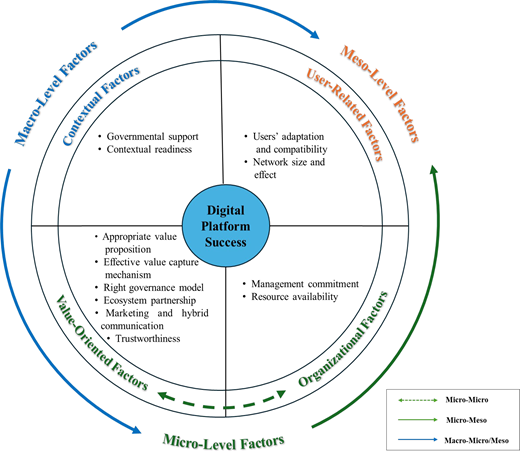
Drawing on a digital platform lens, the authors have explored 12 CSFs, grouped under 4 overarching factors (value-oriented, organizational, user-related and contextual). The former two are micro-level factors, whereas the latter two are meso- and macro-level factors, respectively. This research infers that these factors are interdependent.
By identifying micro-level factors as fundamental enablers, this research informs platform managers that they should give utmost attention in designing and securing these factors. Furthermore, recognition of meso-level CSFs as a functional enabler informs managers that they should strategically cultivate the network size and exert effort to encourage users’ behavioral change. Alongside, by establishing macro-level CSFs as a structural enabler, this study informs policymakers on the necesity of creating a supportive regulatory framework and enhancing budget provisions for financial grants directed towards digital local food platforms.
By leveraging the identified CSFs, practitioners can increasingly develop effective and viable digital platforms for local food, thereby broadening market reach for small- and medium-sized producers. Increased market access for these producers can, in turn promote rural development and SC equity. Simultaneously, the rise in viable platforms for local foods can enhance consumers’ (specifically urban consumers’) access to fresh local produce, thereby improving food security and their dietary quality. Moreover, the arrangement of hybrid communication by platform orchestrators can lessen information asymmetries and strengthen relationships between producers and consumers, hence fostering social capital within the SC. All these corroborate the societal contribution of this study.
This study extends SC literature by demonstrating that the digital platform-based LFSCs cannot be successfully developed by simply replicating CSFs pertinent to the traditional LFSCs; instead, platform-specific CSFs are required. Furthermore, this research shows that CSFs span multiple levels and are interdependent. This study also contributes to platform literature by adding a relational aspect to platform theory.
1. Introduction
The global food supply chains (GFSCs) are an intricate network connecting diverse supply chain (SC) actors worldwide (Sutar et al., 2025; Panigrahi et al., 2025; Su et al., 2025). The pronounced cross-border interdependence within GFSCs is regarded as susceptible to geopolitical disruptions, for instance, the Russian–Ukrainian war and the US-China trade war (Altuntas Vural et al., 2025; Sutar et al., 2025; Su et al., 2025). Geopolitical disruptions, particularly the wars, have triggered food insecurity (FAO, 2022) and upsurged food prices (Belhadi et al., 2024; FAO, 2022). Furthermore, GFSCs are challenged by environmental sustainability issues; for instance, greenhouse gas (GHG) emissions associated with GFSCs represent about 30% of the world’s GHG emissions (Li et al., 2022).
To mitigate the impact of geopolitical crises and sustainability challenges, as an alternative to GFSCs, local food supply chains (LFSCs) with a focus on proximity are emerging (Giacomella et al., 2025; Chicoine et al., 2022). It is claimed that LFSCs, because of their geographical and social proximity, can reduce food miles, improve food access and establish social relationships (Espinoza et al., 2026). However, despite the escalating demand for local food and the underlying sustainability potential of LFSCs, they function within a niche and struggle to upscale (Marksel et al., 2025; Oncini et al., 2020). Because businesses involved in the LFSCs are mostly small and medium enterprises (SMEs) (Rucabado-Palomar and Cuéllar-Padilla, 2020), they lack economies of scale and have organizational and coordinational difficulties (Paciarotti and Torregiani, 2021). Furthermore, logistics within LFSCs are often fragmented (Sciortino et al., 2025) because small local food firms themselves are responsible for managing logistics (Paciarotti and Torregiani, 2021). Alongside, LFSCs encounter greater challenges pertaining to food safety compliance management than GFSCs because of limited capacity (Espinoza et al., 2026).
Research posits that digitalization can overcome such limitations of LFSCs (e.g. Viciunaite, 2023; Marksel et al., 2025). Digitalization can increase yields, lower prices, foster SC orchestration and increase traceability through real-time data (Smidt and Jokonya, 2022). Thereby, it can improve overall SC efficiency (Culotta et al., 2024) and resilience (Suali et al., 2024). Digital platforms are one of many types of digital solutions that have disrupted the traditional SC landscape through improved interaction, resource management and value co-creation (Chen et al., 2024) and reduced food waste (Amaral and Orsato, 2023). Digital platforms enable SMEs in LFSCs to access a wider customer base (Oncini et al., 2020; Viciunaite, 2023), assist in circumventing mainstream costly intermediaries (Viciunaite, 2023) and replace manual processes (Burgess and Sunmola, 2022).
Given the potential benefits that digital platforms offer, an increasing number of digital platforms for local foods have emerged in recent years (e.g. Viciunaite, 2023). While digital platform-based LFSCs continue to grow, they raise concerns, as digital platforms across industries have historically exhibited low survival rates. For instance, Reeves et al. (2019), in their study, observed that only fewer than 15% out of 57 digital platforms across 11 sectors were sustainable in the long run. Furthermore, platforms that initially succeed often enjoy their reward only temporarily (Pidun et al., 2019). Although these studies do not explicitly address digital platforms for local food, they provide insights into the broader survival trends of digital platforms, which are also likely to be relevant in the local food context.
Digital platforms often encounter diverse challenges (Steffen et al., 2023; Özcan et al., 2022). These challenges are more pronounced in the context of local food, because it is perceived that digitalization can increase the gap between actors (e.g. producers and customers) and lead to conventionalization of production and distribution, thereby threatening the unique features of LFSCs (Lioutas and Charatsari, 2020). For instance, in traditional, non-digital LFSCs (e.g. farmers’ markets), producers and consumers interact face-to-face, exchange spontaneous information and experience benefits (e.g. socializing, community building and learning) of participation (Witzling et al., 2025; Warsaw et al., 2022), thus fostering trust and social relationships (Crawford et al., 2018), which are valued by both producers and customers (e.g. Warsaw et al., 2022; Crawford et al., 2018). However, in digital settings, such interpersonal communication and physical participation are interrupted (Masi et al., 2025) and replaced by virtual communication and participation. For instance, it limits the opportunity to exchange non-verbal cues (e.g. facial expressions and tone of voice) and information beyond transaction-specific issues, which are significant in building emotional bonds. This reduced communication quality weakens social relationships.
Furthermore, effective functioning of digital LFSCs presupposes digital literacy of SC actors; in contrast, actors (e.g. producers) involved in traditional LFSCs often lack digital skills (Charatsari et al., 2024; Fuentes et al., 2024), getting locked in the existing mode of food provision (Fuentes et al., 2024). Thereby, digitalization is perceived as unorthodox and incompatible with user groups (Viciunaite, 2023; Masi et al., 2025).
Considering that digital platforms have the potential to boost efficiency in LFSCs, but their evolution faces challenges, it is essential to investigate factors that are critical to the successful development of digital platform-based LFSCs from the perspectives of multi-sided platform orchestrators[1]. A few studies have explored critical success factors (CSFs) of traditional and non-digital LFSCs (e.g. Sellitto et al., 2018; Saleh et al., 2025). As per the author’s knowledge, to date, no research has examined the CSFs of digital platform-based LFSCs, the level at which CSFs occur (i.e. micro, meso, or macro) or the interaction among these multi-level factors shaping the platform’s performance.
It is noteworthy that digital platform businesses significantly differ from traditional ones (e.g. Amaral and Orsato, 2023). For instance, unlike traditional businesses, digital platform businesses often do not require physical infrastructure and direct control over the transaction content (e.g. product and service) (Rohn et al., 2021; Amaral and Orsato, 2023). Hence, the identified CSFs of traditional LFSCs might not entirely represent CSFs of digital platform-based LFSCs. Likewise, identified CSFs of digital platforms other than local food in the extant literature (e.g. Rohn et al., 2021) might not be sufficient, as the effectiveness of digital solutions is context-dependent; what works in one context might not work in another (Masi et al., 2025). Thus, a significant theoretical gap persists at the intersection of digital platforms and local food supply chain (LFSC) literature. Integration of the two streams of knowledge (i.e. digital platform and LFSC) would provide a comprehensive understanding of CSFs of digital platform-based LFSCs.
To address the aforementioned gaps, we have combined LFSC literature and digital platform literature to provide new insights into this nascent phenomenon. Drawing upon the digital platform lens, we have answered the following research questions (RQ):
What factors are critical to the success of digital platform-based local food supply chains, and at what levels do they occur (micro, meso, macro)?
How do multi-level factors interact and collectively shape the success of digital platform-based local food supply chains?
We have adopted a multiple case study approach to answer the research questions. Our research extends both SC and platform literature by combining digital platform logic with LFSC dynamics. The findings add value to the SC, specifically LFSC literature, by introducing platform-specific CSFs previously unaddressed in the literature. We enrich SC literature further by proposing a framework that illustrates how multilevel factors interact to influence the development of successful digital platforms for local food. We extend digital platform theory by demonstrating that in a local food context where spatial and relational proximity are fundamental, digital interaction is deemed inadequate, necessitating a hybrid (physical-digital) interaction, thus adding a relational dimension to the platform theory.
The rest of the paper is structured as follows. Section 2 represents the theoretical underpinning that informs our study; Section 3 describes the methods adopted; Section 4 presents the findings; Section 5 reports the discussion, and Section 6 offers the concluding remarks, implications, limitations and future research scopes.
2. Theoretical background
2.1 Local food supply chains
In LFSCs, foods are produced and consumed in proximity (Enthoven and Van den Broeck, 2021; Gruchmann et al., 2019). This proximity between producers and customers enhances the sustainability impact of LFSCs; for instance, reduced CO2 emissions, improved customer knowledge and a strengthened local economy (Espinoza et al., 2026), thereby garnering attention not only from producers and customers but also from policymakers (e.g. Saleh et al., 2025; Enthoven and Van den Broeck, 2021). LFSCs co-exist with and complement the industrial food system (Gómez and Lee, 2023). They can take either a direct or intermediate form (Enthoven and Van den Broeck, 2021). Direct-to-consumer types (e.g. farmers’ market and community-supported agriculture) of LFSCs are deemed less efficient because of their limited scalability and focus on sustainability indicators (Burgess and Sunmola, 2022; Renkema and Hilletofth, 2022). Therefore, highlighting the need for integrating intermediaries (Renkema and Hilletofth, 2022) that extend even beyond traditional or non-digital ones, subsequently creating a viable context for digital platforms (Saucède and Vidal, 2024).
2.2 Digital platform
Digital platforms can be conceptualized from two perspectives: product development or technical view and industrial economics or non-technical view (Nambisan et al., 2019; Asadullah et al., 2018a). From a product development or technical perspective, digital platforms are building blocks providing an essential function to technological systems upon which complementary products, technologies, or services can be developed (Spagnoletti et al., 2015; Gawer, 2009). On the other hand, from industrial economics or a non-technical perspective, digital platforms, widely referred to as two-sided or multi-sided platforms (Zutshi and Grilo, 2019; Nambisan et al., 2019), are digital spaces or infrastructures that leverage digital technologies to connect a diverse yet interdependent group of users and mediate transaction (Nambisan et al., 2019; Asadullah et al., 2018a; McIntyre and Srinivasan, 2017; Rohn et al., 2021; Chi et al., 2024). In this study, we have focused on the latter perspective of digital platforms.
2.3 Linking local food supply chains and digital platforms
While digital platforms are not a new concept in information literature, it is a relatively new phenomenon in LFSC literature (e.g. Viciunaite, 2023; Oncini et al., 2020). Scholars in the LFSC realm have only recently begun examining digital platforms for local food (e.g. Leipämaa-Leskinen et al., 2022; Viciunaite, 2023; Saucède and Vidal, 2024; Masi et al., 2025). Nonetheless, the research scope and underpinning theoretical lens of previous studies differ from the present study. Despite the acknowledgement of potential benefits that digital platforms can provide to LFSCs, previous studies have not examined what factors are critical to the successful development of digital platforms for local food. Moreover, extant research has not adopted digital platform logic to explore success factors.
One exception to this is the study by Leipämaa-Leskinen et al. (2022). They have explored factors influencing the emergence of digital platforms for local food; however, they adopted the institutional theoretical lens. While the study has underscored the influence of normative and institutional factors (e.g. norms, values and practices), it has ignored other factors; for instance, operational, technological, organizational, social and value-generating, shaping platforms’ performance (e.g. Rohn et al., 2021; Asadullah et al., 2018b). Hence, the study provides an important, yet partial, understanding of the phenomenon.
To avoid such a risk of partial understanding of the researched phenomenon, we have avoided certain theories, for instance, resource-based view, despite being widely used in SCM (Culotta et al., 2024) and digital transformation research (Cui et al., 2021). Resource-based view is firm-centric, with a concentration on the firm’s possession of unique, inimitable internal resources and capabilities (Cui et al., 2021), indicating that adoption of this lens only features internal factors (resources). Another widely used theoretical lens in operations research is stakeholder theory, which signifies that firms become successful by satisfying multiple stakeholders’ interests (De Gooyert et al., 2017) and engaging stakeholders (Kujala et al., 2022). This theory also centers only on one aspect (stakeholder) and disregards the influence of platform-specific dynamics. Thus, to derive all the relevant critical factors influencing the successful development of digital platform-based LFSCs, we decided to combine digital platform literature and LFSC literature.
One recent study by Viciunaite (2023) has considered digital platform logic; however, the researcher has centered the investigation on customer preference for digital platform attributes vs. traditional local food attributes. Likewise, Saucède and Vidal (2024) have adopted a digital platform lens; however, they studied the impact of a single factor (i.e. openness) on such platforms’ value co-creation, thus ignoring the effect of other factors. Furthermore, both studies (i.e. Viciunaite, 2023; Saucède and Vidal, 2024) mainly have focused on business-to-customer (B2C) digital platforms for local food and overlooked the business-to-business (B2B) ones. B2B digital platforms are more complex and must comply with more extensive requirements (e.g. standardization, legal compliance) compared to B2C platforms (Culotta et al., 2024), demanding more collaboration among the ecosystem actors and value co-creation (Madanaguli et al., 2023). As extant research lacks examples from B2B cases, B2B platforms often derive insights from B2C cases (Anderson et al., 2022), increasing their possibilities of failure. Therefore, to close the gap in existing literature, we have included B2B cases alongside B2C cases in this study.
Furthermore, digital platforms can take various forms (e.g. transaction, innovation, integration, information, investment and hybrid), each exhibiting different purposes and characteristics (e.g. Culotta et al., 2024; Madanaguli et al., 2023; Blaschke et al., 2019; Yablonsky, 2018). Research investigating the evolution mechanisms of these different types of platforms is scarce (Asadullah et al., 2018b). Factors that hold significance for one type might not be of equal importance for another type. Burgess and Sunmola (2022), for instance, in their study on digital information platforms for local food (platforms that enable information management throughout the chain), have explored real-time data exchange, document collaboration and a key performance indicator dashboard as significant. However, they might not be significant for another platform type, for instance, transaction platform. In our study, we opted to understand CSFs of digital transaction platforms for local food, thus holding a prospect to deliver novel insight into the LFSCs and platform literature.
2.4 Critical success factors of digital platforms
Digital platforms are advancing rapidly across various industries because of the benefits they provide and changing expectations of customers (Vakeel et al., 2021). Despite their escalating demand, most platforms fail to survive (Pidun et al., 2020; Madanaguli et al., 2023). It is noteworthy that failure became apparent only late in the life cycle of digital platforms; therefore, it can be very costly (Pidun et al., 2020). This echoes the significance of exploring factors affecting platform success. Existing platform literature has attempted to explore factors influencing platforms. Nonetheless, identified influencing factors in the extant literature remain fragmented and incomplete. Most literature has only identified the influence of internal factors, for instance, value-related factors (i.e. value creation, delivery and capture) (Madanaguli et al., 2023; Amaral and Orsato, 2023; Steffen et al., 2023) and platform organization-related factors (e.g. platform design, platform operation, platform ecosystem and governance) (Asadullah et al., 2018b), on different platform types.
This implies that most studies have omitted the influence of external contextual factors (e.g. governmental regulation, market conditions); however, Akter and Iqbal (2020) and Özcan et al. (2022) are two exceptions to this. Moreover, all the identified factors might not be critical to the success of digital platforms. CSFs are a limited number of factors that must be present and favorable for the business to flourish (Rockart, 1979). Thus, there is a dearth of research exploring the CSFs of such platforms (Rohn et al., 2021). Rohn et al. (2021) explored the CSFs of digital platforms; however, they focused their research on metal and steel industry. Likewise, Berens et al. (2019)explored the CSFs of B2B and B2C platforms across several industries other thanfood, suggesting that the food industry remains underexplored in this context. By reviewing the literature, we have compiled a list of CSFs of digital platforms, presented them by their frequency of occurrence (e.g. Zwikael and Globerson, 2006) in Table 1, and subsequently explained each factor in the following subsections.
2.4.1 Effective value capture mechanism
An effective value capture mechanism ensures return for all user groups and the platform (Pidun et al., 2020; Zutshi and Grilo, 2019); hence, it is crucial for platform success (Özcan et al., 2022; Madanaguli et al., 2023). As a value capture mechanism, platforms often charge for transactions, offer rebates for increased usage (Pidun et al., 2020) and subsidize the reluctant user groups to increase their participation (Amaral and Orsato, 2023; Özcan et al., 2022). Nonetheless, the decision on which group to subsidize and which to charge presents a complex challenge for the platforms, because the wrong decision might fail the entire platform (Yoffie et al., 2019). In a multi-sided platform, the platform must ensure that the adopted value capture mechanism benefits both user groups (Mancha et al., 2021). Differentiated value capture mechanisms such as commission, subscription, advertising, service sales and licensing can be implemented to ensure success (Rohn et al., 2021).
2.4.2 Appropriate value propositions
Value propositions offered by the digital platform are the key reasons that user groups join the platform (Rohn et al., 2021). Hence, the success of a multi-sided digital platform is largely contingent upon the platform’s ability to offer value propositions solving a critical problem experienced by both targeted user groups (Özcan et al., 2022; Berens et al., 2019; Mancha et al., 2021). The inability to address and solve the problems of the user groups demotivates them to join the platform (Pidun et al., 2020), resulting in platform failure (Özcan et al., 2022). Kaselow et al. (2020), in their study, suggested that to be successful, a platform should focus on one unique value proposition and build up expertise around that.
2.4.3 Ecosystem partnership
Building an ecosystem partnership is pivotal for the success of the platform (Blaschke et al., 2018). The ecosystem partnership is a network of organizations and actors having a common interest in the success of digital platforms and, hence, collaborate for value co-creation (Marrucci et al., 2024). For instance, platforms often collaborate with a third party, such as a payment system provider (e.g. PayPal), to facilitate the transactions between user groups (e.g. Zutshi and Grilo, 2019). Through the ecosystem partnership, the platform orchestrator creates a platform infrastructure that fosters the platform adoption of user groups (Özcan et al., 2022). Value co-creation is not limited to third-party ecosystem partners (e.g. logistic service providers and payment service providers) but rather extends to core ecosystem partners (e.g. customers and producers). The larger and stronger the partnership with multiple ecosystem partners, the higher the success of the platform (Berens et al., 2019; Mancha et al., 2021).
2.4.4 Right governance model
Digital platforms use governance mechanisms to manage heterogeneous groups. In the context of a platform, governance refers to the structure, process and rules to make decisions concerning activities within the platform (Mukhopadhyay and Bouwman, 2019). Platform governance regulates who can join the platform and under what conditions (Pidun et al., 2020). Governance models that have strict user evaluation criteria and allow limited access are labeled as closed governance models, while the ones that allow easy access are open governance models (Wang et al., 2020; Özcan et al., 2022). Most platforms fail for not choosing the right level of openness (Pidun et al., 2020). High openness can result in success (Rohn et al., 2021) because of a high variety of products; however, it allows less control (Pidun et al., 2020) and excessive competition among producer user groups (Wang et al., 2020). In contrast, a closed governance model allows more control over user groups and the quality of the products; thus, platform openness should be implemented gradually while initially remaining closed (Pidun et al., 2020). Furthermore, alongside the level of openness to access, the degree of openness to authority can affect the platform performance (Saucède and Vidal, 2024).
2.4.5 Management commitment
Good execution by management facilitates the success of digital platforms (Pidun et al., 2020). Management should have a strong belief and dedication to their platform, which they should further communicate within the platform to ensure platform success (Berens et al., 2019). Extant literature shows that management should conduct market research to better understand users’ needs and react accordingly (e.g. Akter and Iqbal, 2020). Furthermore, management should continuously monitor platform performance to strategically control any deviation from planning (Özcan et al., 2022).
2.4.6 Network size and effect
In a platform-based network, platforms need to build up a critical mass of users to create a network effect (Piscicelli et al., 2018; Steffen et al., 2023). A network effect arises because the value of one user is contingent upon the number of other users within the network (McIntyre and Srinivasan, 2017). A direct network effect arises when more users (e.g. customers) from the same group (e.g. customer group) participate, while an indirect effect arises when more users (e.g. producers) from a different group (producer group) join the platform (Steffen et al., 2023). However, platforms often struggle with the chicken-or-egg problem, a dilemma concerning which participant group should be secured first, for instance, producers or customers (Piscicelli et al., 2018; Pidun et al., 2020). In multi-sided digital platforms, onboarding enough users from both buyer and seller sides is essential to survive (Piscicelli et al., 2018; Pidun et al., 2020). Reluctance or a slow adoption by any of the groups can lead to failure (Marrucci et al., 2024).
2.4.7 Trustworthiness
Trust is the foundation of interaction across user groups within the platform (Zutshi and Grilo, 2019). Given that there are two or more groups, who may or may not be familiar with each other, cultivating trust among them becomes crucial (Yoffie et al., 2019). Even with an appropriate value proposition, the platform will not succeed if there is insufficient trust among the user groups (Steffen et al., 2023). Trust can be cultivated between user groups by user and data protection (Steffen et al., 2023); user verification; reviews and ratings (Kaselow et al., 2020; Özcan et al., 2022; Rohn et al., 2021); a reliable payment system; and refund policies (Özcan et al., 2022; Yoffie et al., 2019).
2.4.8 Marketing and communication
Marketing enhances the visibility of platforms (Kaselow et al., 2020) and showcases the benefits of the platform (Özcan et al., 2022). The representation of platform benefits encourages users to alter their traditional buying–selling behavior and adopt platforms (Rohn et al., 2021). Hence, marketing is deemed as a success factor in platform literature (e.g. Kaselow et al., 2020; Steffen et al., 2023; Akter and Iqbal, 2020). Alongside marketing, communication with user groups and among the user groups has been underscored as crucial in extant literature (Kaselow et al., 2020).
2.4.9 Resource availability
For a successful orchestration of digital platforms, diverse resources need to be integrated, aligned and mobilized (Blaschke et al., 2018). Among the multitude of resources, securing access to human and financial resources is critical for the survival of digital platforms (e.g. Rohn et al., 2021). According to Steffen et al. (2023), human resources can either enhance or undermine the platform; thus, they advocate for the recruitment of skilled human resources. Likewise, Özcan et al. (2022) have underscored that the expertise of employees is vital for platform success.
2.4.10 Governmental support
The regulatory framework of the country where the platform is operating can shape platform performance (Özcan et al., 2022). Favorable governmental regulation can make the platform operation easier (Akter and Iqbal, 2020); in contrast, unfavorable governmental policies (e.g. strict data protection law) can hinder the platform performance (Özcan et al., 2022; Akter and Iqbal, 2020). Thus, consideration of governmental regulatory context is crucial for the viability of a multi-sided platform (Piscicelli et al., 2018).
2.4.11 Contextual readiness
Even with a compelling value proposition that addresses market problems and an effective value capture mechanism beneficial for both user groups, a platform might disappear if the timing to the market is not right (Yoffie et al., 2019; Akter and Iqbal, 2020). For instance, if a platform commences its operation during a period when the market is not sufficiently ready and does not comprehend the value offered by the platform, it may lead to platform failure (Akter and Iqbal, 2020). Likewise, launching a platform where market expectation is heightened because of the availability of diverse value offered by rival platforms, can cause platform failure (Yoffie et al., 2019).
3. Research method
We have adopted multiple case studies as our research strategy because it enables the investigation of research phenomena in a real-world setting (e.g. Eisenhardt and Graebner, 2007; Voss et al., 2002) and yields a more robust, generalizable theory grounded on replication logic (Eisenhardt and Graebner, 2007).
3.1 Case selection
Digital platform-based LFSCs in Sweden served as our research context. Sweden is one of the leading countries in environmental sustainability (SGI, 2024) and digital innovation (OECD, 2018a); moreover, the population has high digital skills (European Commission, 2025). However, the adoption of digital innovation is lower in the agri-food sector (OECD, 2018b). Hence, Sweden offers a relevant empirical setting for our research. This research includes five cases of digital platform-based LFSCs. Our cases were selected for theoretical reasons, meaning they are suitable to illuminate the relationship among constructs, allow replication (i.e. literal and theoretical) and eliminate alternative explanations (Eisenhardt and Graebner, 2007; Voss et al., 2002). Furthermore, the sample size (five cases) of our study is in line with Yin (2014), which suggests three to four cases are adequate for multiple case study research designs.
Among our added cases, four are current and active (apparently successful cases), and one case is retrospective and inactive (failure case) (e.g. Voss et al., 2002). A negative case was included to better understand the causal mechanism (e.g. Pidun et al., 2020; Jarl et al., 2017; Tawfik and Jonassen, 2013) because the absence of antecedent conditions in the negative cases suggests the importance of these conditions (Emigh, 1997). Furthermore, the rationale for including the negative case was to prioritize theoretical replication (e.g. Voss et al., 2002), rather than achieving a balance in the number of successful and failed cases.
While selecting cases, we grounded our decisions on three homogeneous and three heterogeneous criteria. The homogeneous selection criteria, for instance, platform size, helped us to control their effects on the success of the digital platform-based LFSCs (e.g. Eisenhardt, 2021; Voss et al., 2002) and resulted in literal replication. The heterogeneous criteria have ensured maximum variation in the sample, resulting in the identification of common patterns and important differences across diverse cases (Patton, 2014). For instance, variation in the foundation year of the cases has allowed us to capture the impact of changing social and economic settings over time on platform performance. To safeguard anonymity, the cases are alphabetically named A, B, C, D and E. Cases A, B, C and D are active and apparently successful platforms, while Case E is an inactive and failed platform. Furthermore, Cases B, C and E are B2C digital platforms, whereas Cases A and D are mainly B2B digital platforms. However, Case A was a B2C platform during its initiation; later on, it shifted focus to the B2B market and is doing groundwork to expand as a B2G platform. Table 2 represents the criteria for case selection, which also reflects the firmographic data of selected cases.
3.2 Data collection
We used a semi-structured case research protocol for data collection, which enabled us to focus on factors affecting the development of digital platform-based LFSCs and simultaneously provided us with some flexibility to adjust the interview questions as needed (e.g. Yin, 2014). We conducted ten semi-structured interviews with the CEO, manager and project coordinator of five digital platform-based LFSCs. We first approached prime contacts, such as CEOs and managers, by sending emails because they can provide senior support for conducting research and know who else can best answer within the organization (e.g. Voss et al., 2002). Table 3 provides more information about the informants.
Our cases are small in size; usually, there are only one or two people responsible for all operations, and they have greater insight into the factors affecting the development of digital platform-based LFSCs. Given this, we affirm that ten interviews with these key informants are reasonable enough to understand our research phenomenon. The interviews were conducted between April and October 2024. The interview, length ranged between 36 and 90 min. An outline of the interview protocol was sent to the interviewees in advance so that they could be prepared (Voss et al., 2002). One interview was in-person, and the rest were via Zoom or Teams. Interviewees were given alternatives to choose the interview mode, and most preferred to be interviewed online. Interviews were audio- or video-recorded with informed consent and transcribed verbatim later. Alongside semi-structured interviews, we collected archival data and did on-site direct observations for two cases and physical artifact (e.g. apps) observations for three cases (e.g. Yin, 2014).
3.3 Data analysis
Though we have presented the data analysis in a subsection separate from data collection, we began a preliminary data analysis parallel to data collection (e.g. Eisenhardt, 1989; Voss et al., 2002). This overlap of two stages helped us to adjust data collection (e.g. Eisenhardt, 1989).
We have conducted our formal analysis using a six-step thematic analysis approach suggested by Braun and Clarke (2006). First, we familiarized ourselves with the data by line-by-line reading and re-reading all the interview transcripts. Second, the initial codes from the data extracts were identified by the first author. Third, the author then grouped the identified codes into relevant sub-themes, informed by prior literature (see Section 2.4). Codes that could not be placed under any predefined sub-themes were grouped under new sub-themes. At the fourth step, the first author, together with the second author, reviewed the sub-themes and resorted, if needed, to ensure the maximum relevance of the codes to the sub-themes. Fifth, the sub-themes (both literature-informed and emergent) were then grouped into overarching themes based on their conceptual similarity to provide higher level abstraction and clarity. Cross-case comparison was conducted by thoroughly examining the presence and variance of each sub-theme across the cases to identify patterns of convergence and divergence. Sixth, we synthesized the findings and reported them with evidence. We have used ATLAS.ti to generate the initial code, sub-themes and overarching themes. The sample coding scheme is presented in Appendix. The unit of analysis in this study is the success factors of focal entities (i.e. digital platforms for local food), and the unit of observation is individual informants (e.g. CEOs) whose insights were considered to identify the CSFs of the investigated digital platforms.
3.4 Research rigor
Given that ensuring research quality and rigor is a challenge in case study research, we have used several criteria to ensure research rigor (Table 4). The data triangulation, obtained through multiple sources of evidence, has ensured construct validity (e.g. Eisenhardt, 1989; Yin, 2014; Gibbert and Ruigrok, 2010). The emergent themes were shared and discussed within the research team to check the appropriateness of the findings. This confirmed investigator triangulation. Cross-case comparisons of successful cases have permitted literal replication, while comparisons of successful cases with one failed case have allowed theoretical replication (e.g. Voss et al., 2002). These replications gained through cross-case comparison resulted in analytical generalization, thus upholding external validity (e.g. Gibbert and Ruigrok, 2010; Yin, 2014). We constantly compared the emergent theory with previous literature, which ensured internal validity (e.g. Gibbert and Ruigrok, 2010).
4. Cross-case findings
This section presents the cross-case findings from the five cases. We have identified several CSFs and organized them around four overarching categories of CSFs (value-oriented, organizational, user-related and contextual) based on their similarity. These factors extend from micro- and meso- to macro- levels, collectively influencing the platforms’ performance. Table 5 presents the summary of the cross-case findings.
4.1 Value-oriented factors (micro-level)
4.1.1 Appropriate value proposition
Cross-case data from all five cases suggested that designing an appropriate value proposition was critical for success. Cases A, B, C and D, in our study, offered value propositions that were deemed valuable to both user groups. For instance, B2B Case A allowedgrocery retailers and local producers to find each other, place and receive orders through an automated ordering system, and solved the logistics problem. Furthermore, Case A enhanced its core value propositions by adding a preorder feature that allowed retailers to place order even before cultivation started. This feature benefited both producers and retailers by improving demand predictibility and ensuring product availability. As the value proposition of Case A was unique and substantially addressed the problem of both user groups, they became interested in using the platform. Likewise, another B2B Case D facilitated the procurement of local food for restaurants, coffee shops and retailers by connecting them to diverse local and organic food producers in one place. This platform made it convenient for small local producers and food service or retail business customers to find each other, which was not possible earlier for both user sides.
In a similar vein, B2C Cases B and C solved the problem of accessing local food for the end consumer. Consumers could preorder a variety of local food every other week directly from multiple producers via the platform, and the producers had confirmed sales, hence it sparked the interest of both user groups. On the contrary, in failure Case E, neither group saw compelling value; hence, they were not interested in platform participation.
4.1.2 Effective value capture mechanism
Across the case studied, the significance of having an effective value capture mechanism that caters to both user groups and the platform in achieving platform success was observed. All the active and apparently successful cases ensured the benefit for both user groups as well as the platform by charging and/or subsidizing the right user group (s). For instance, B2B Cases A and D realized that producers are more interested in participating, given the difficulties small-scale producers encounter in connecting with business customers. Hence, platforms charged the producer groups and subsidized a relatively less interested group (e.g. retailers). Through the implemented value capture mechanism, both user groups and platforms have derived benefits.
Our B2C Cases B and C subsidized both producer and customer groups to encourage their participation. Both user groups benefited, and the platforms gained a critical mass of both user groups. However, the other B2C Case E subsidized one group and charged another group. Because none of the groups found any compelling value in the platform service, the value capture mechanism of subsidizing only one group went wrong, and the platform failed.
Moreover, our B2B cases show that charging or subsidizing the right group is not enough to make a value capture mechanism effective. Value capture strategies need to be adjusted over time because one strategy that seems effective in the beginning might not remain effective throughout the platform’s lifecycle. For instance, Case A demonstrated a shift from a transaction-based to a service-based value capture model after realizing that the former one was no longer beneficial for the producer group. Furthermore, in B2B cases, to be effective, pricing should be justified, allowing user groups to perceive the benefits they achieve in relation to the costs. Case D, for instance, justified its pricing by outlining the benefits the producers receive in exchange for the membership fee.
4.1.3 Right governance model
Cross-case comparisons exhibited that platform governance was evident in all cases; however, they differed in terms of openness in access and authority. B2C Case B had a lower degree of openness in terms of access and a moderate degree of openness in terms of authority. For instance, Case B allowed local producers to be on the platform only if their farms were within a certain mile of the platform’s geographical focus. The platform managers stated that this closed or limited access was one of the reasons for the good number of sales. The platform gave producers the authority to set their own price but also controlled their authority by imposing certain platform rules (e.g. requirement for ingredient details).
Another B2C Case C had a moderate level of openness both in terms of the access and authority. To be on the platform, both user groups and the platform needed to share a common philosophy, but they did not need to follow a strictly specific geographic boundary, as in Case B. Case E, on the other hand, had an even higher level of openness in platform access. It welcomed all producers from Sweden (without any specific geographic boundary) with a desire to rapidly increase the user base yet failed. It is noteworthy that despite a lower degree of openness in terms of access, Case B had a higher user base than both Cases C and E.
B2B Cases A and D had a moderate level of openness in allowing access to the platform. Both required certificates from producers, but unlike B2C Case B, B2B cases did not set any specific miles. The level of openness in terms of authority of users was very high in Case D. On the contrary, the openness-authority level was balanced in Case A. Producers were given enough authority to be involved in co-designing the platform; however, they were controlled if needed. Likewise, Case B exhibited balanced openness to authority.
4.1.4 Ecosystem partnership
Partnerships with different partners within the ecosystem were identified as critical for success . B2B Cases A and D developed a strong ecosystem partnership with various actors and stated the importance of such a partnership for platform success. Collaboration with a support organization, for instance, provided Case A access to business customers, local producers, human resources and financial resources. Likewise, Case D highlighted that collaboration with regional support organizations could have assisted in upscaling their platform. Furthermore, Case A signified that collaboration with the right payment service provider was important for success, because their collaboration with a payment service provider, which charged a lot for its service, was obstructing their former B2C model. Furthermore, collaboration with a logistics company had also been considered a success factor for case A. In addition, Case A collaborated with producer user groups to coordinate the distributions and improve platform design, resulting in a more effective logistics service and platform design, respectively.
Ecosystem partnership was also evident in all the B2C cases; however, they kept their ecosystem partnership limited. Case E collaborated with a startup support network to get guidelines to run the platform. However, unlike B2B Cases A and D, it did not collaborate with any support organization. Likewise, Cases B and C did not collaborate with support organizations and logistic providers but relied on external payment service providers. Both cases partnered with the producer group to deliver value (e.g. feedback for improvement, solving complaints) to the other user group (customers).
4.1.5 Marketing and hybrid communication
All B2B and B2C cases stressed that marketing had a positive impact on platform success. B2C Cases B, despite being a digital platform, considered offline marketing alongside online marketing a success factor. Similarly, B2B Case D emphasized offline marketing. They advertised in newspapers and participated in trade fairs. Furthermore, the case highlighted the importance of enhancing marketing capabilities, as inadequate marketing made it difficult for the platform to scale up. Likewise, B2C Case E signified that if it had had enough marketing opportunities for three to four years, it would have increased brand awareness, consequently safeguarding the success of the platform.
Alongside marketing the platform, both B2B and B2C cases reflected that it was important to communicate with both user groups from the platform end. For instance, B2B Case A communicated with both user groups and demonstrated how to navigate within the platform to ensure their successful onboarding and continuous participation. In Cases A and B, users are able to interact with the platform to address any queries they may have. Moreover, apart from Case E, all cases underscored the need for arranging face-to-face communication between user groups to complement the digital attribute of the platform, because relational and geographical proximity are valued in LFSCs. This demonstrated the necessity of hybrid communication.
4.1.6 Trustworthiness
It was vigilant in our cross-case analysis that trustworthiness between the user groups could facilitate the success of the platform, while the absence of it could hamper the platform’s success. In our study, all the cases attempted to ensure trustworthiness through user verification. In Cases A, B and C, both user groups needed to register or become members to be on the platform. On the contrary, in Case D, only producer groups had to be registered members to participate in the platform. Likewise, in Case E, customer groups did not need to be confirmed or registered users to make the transaction.
To increase the trustworthiness further, B2B Cases A and D required producers to be certified. Our B2C Case B required certification only if the producers claimed their products were organic. If producers were not certified, the platform motivated producers to prove their claim through an explanation of their production process. B2C Cases B and C, in addition to this, ensured trustworthiness through verification questions. However, the failed B2C Case did not use any verification strategies to increase trustworthiness.
4.2 Organizational factors (micro-level)
4.2.1 Management commitment
Strong management commitment was evident in Cases A, B and C. Management of Case A voluntarily provided additional support and solved problems for the users. In Case A, management dedicated substantial time to modifying the platform whenever it encountered a problem. Platform managers in Cases B and C strictly monitored every sales post. Moreover, all three cases had a well-established code of conduct set by management. For instance, customers had to place orders before a certain day and time of the week, so that the producers had enough time to dispatch the order.
On the other hand, in Case D, there was no explicit code of conduct, and the platform orchestrator did not monitor the trade; however, they arranged fairs or participated in fairs to showcase the platform and its producers, thus indicating moderate management commitment. In the failed Case E, managers were less committed because one of the managers had limited time to dedicate to the platform because of being involved in another full-time job, and the other person in the management was not active in the managerial and operational tasks of the platform.
4.2.2 Resource availability
Availability of resources was proven to be critical to success in all cases. The need for both financial and human resources had been evident in our investigated cases. Our findings showed that B2B Case A had adequate financial resources ; however, was extremely dependent on external financial grants in developing the platform. The case expressed concerns regarding the operation of the platform if it did not receive a new financial grant at the end of the current project. Another B2B Case, D, had also received an external financial grant in the beginning; however, later its main source of finance was membership fee from the user group (producer). The membership fee allowed the platform to function at the present scale but did not permit any further expansion.
B2C Cases B and C underscored the importance of human resources (i.e. managers) over financial resources for platform success. B2B Case A mentioned that having an app developer in the platform management team was an advantage, because in-house competency saved a lot of money for them. Both respondents from Case E stated that the lack of human resources was a setback for the platform.
4.3 User-related factors (meso-level)
4.3.1 Users’ adaptation and compatibility
All the cases signified that an adequate level of adaptation in users’ buying–selling practices, along with their compatibility with platforms, was essential for these platforms to survive and thrive. Notably, this factor emerged from the data, representing a new insight, not highlighted in prior studies on platforms outside the local food context. Empirical evidence from B2B Case A indicated that business customers (i.e. retailers) who participated in the platform were required to undertake substantial adjustments, as they were not used to planning purchases well in advance; rather, they relied on just-in-time procurement practices.
Likewise, respondents of B2C platforms (Cases B, C and E) stated that adjustments in users’ buying–selling practices were crucial for such platforms’ success. Reluctance in adaptation in buying–selling practices of both user groups caused the failure of Case E, whereas adaptation by both user groups in Cases B and C led to their successful development.
Alongside users’ adaptation, their compatibility with the platform was evidently crucial. The lack of technical compatibility was reported as an obstacle to scalingup in B2B cases. B2C Cases B and C, however, mentioned that technological compatibility with the users facilitated their development. Both cases further reported that temporal compatibility between users and platforms was crucial. For instance, user groups of both Cases B and C had to deliver and receive the product at a predefined date and time for successful transactions. Hence, effective functioning of the platform depended on the users’ ability to adhere to the platform’s predefined schedule. This demonstrated the necessity of temporal compatibility from the users’ end. However, platforms could assist users in their ability to attain temporal compatibility. For instance, both cases facilitated temporal compatibility of users by remaining operational throughout the year, except during national holidays, which consequently contributed to the overall success of the platform.
4.3.2 Network size and effect
The network effect was strongly apparent in our study, especially the indirect network effect. All the cases, regardless of business model, highlighted the importance of having a sufficient number of producers to make the platform interesting to the customers and vice versa. However, all the cases, except for Case E, tried to secure both user groups simultaneously. Case E focused on securing producers first, and only when it had enough producers on the platform, did it start securing customer groups. As a result indirect network effects were absent, and subsequently the case failed.
4.4 Contextual factors (macro-level)
4.4.1 Governmental support
Cases in our study reflected that government support could facilitate the success of digital platforms for local food. B2B cases received monetary governmental support for the development of the platforms. However, B2C Case B was skeptical of receiving monetary support from the government because it could create dependence and require fulfilling certain conditions. The case rather highlighted the need for non-monetary governmental support. In contrast, Case C, despite having a business model similar to Case B, considered receiving financial support from the government as an essential factor for success.
Furthermore, as a form of non-monetary support, governmental regulatory support was reported as significant by the studied cases. For instance, Case A stressed that favorable governmental rules, such as requiring all retailers to stock certain percentage of local food in their stores, which were absent at the time, could increase the sale of local food even via digital platforms, subsequently increasing the platform’s success.
4.4.2 Contextual readiness
Cross- case findings showed that contextual readiness was critical for digital platform-based LFSCs’ success. If a platform entered the market at an inappropriate time, for instance, when the market was immature, overly mature, or experiencing an economic downturn, it could hinder growth or lead to failure. Our failure Case E reported that at the time the platform was launched, online food purchases and home delivery were not trends in the market. They entered the market so early that none of the market sides realized the value of the digital platform-based LFSCs; consequently, they could not survive.
On the other hand, Cases A, B and C were launched and operated when the digitalization of food SC had commenced and become a norm after the COVID pandemic. Hence, the market entry timing was a positive factor for these cases. Likewise, Case D was launched while contextual maturity was adequate. However, because of the worldwide economic strain during the launch time, consumers and retailers became more price sensitive, which created an obstacle to scaling up.
5. Discussion
Our findings reveal that CSFs are mostly similar across B2C and B2B cases, but their relative importance differs. B2B cases, for instance, required more financial resources, ecosystem partnership and openness in authority than the B2C cases. However, major differences appear between successful cases and failed cases. Cross-case findings indicate that the success of digital platform-based LFSCs (regardless of B2C and B2B) is contingent on the presence and interrelation of micro-, meso-, and macro-level factors. This section discusses the findings in relation to the extant digital platform literature and suggests both propositions and a framework of CSFs for digital platform-based LFSCs.
5.1 Critical success factors spanning the micro-,meso-, and macro- levels
Our findings highlight that “value-oriented factors” occurring at the micro level are critical to the success of digital-platform-based LFSCs. All the active Cases (A, B, C and D) had compelling value propositions for both user groups and had effective value capture mechanisms. Moreover, Case A adopted diverse value capture models. In contrast, Case E lacked a dual-sided value proposition and an effective value capture mechanism, and did not adopt an alternative value capture model, even when the transaction-based model proved ineffective; consequently, it failed. Likewise, Cases B, C and D did not adopt an alternative value capture model. Because Cases B and C subsidized both user groups, they could, in order to achieve scalability and long-term viability, charge user groups for additional services or alternatively sell advertising space to other relevant businesses (e.g. fertilizer manufacturers; farm equipment suppliers) targeting the same user groups (e.g. Rohn et al., 2021). Similarly, by adopting these alternative value capture models, Case D could scale up and remain viable. Our findings echo previous platform literature, suggesting that for a platform to be successful, it should offer a dual-sided value proposition (Steffen et al., 2023; Berens et al., 2019; Piscicelli et al., 2018), charge or subsidize the right group (Zutshi and Grilo, 2019; Yoffie et al., 2019), and adopt alternative value capture models, for instance, service sales and advertising (e.g. Rohn et al., 2021).
Extant platform literature posits that to be successful platforms should have a governance model characterized by the right degree of openness in access and authority (Özcan et al., 2022). Our findings corroborate extant literature. Limited openness to access in Case B allowed users to uphold a crucial aspect of LFSCs – geographical proximity, hence increasing users’ perceived value (e.g. Pidun et al., 2020). Conversely, Case E could not preserve such an important aspect of LFSCs because of a lack of the right degree of openness in access and authority; therefore, it failed. For B2B Cases A and D, a moderate level of openness in access was required to ensure the product quality or variety demanded by business customers. Furthermore, the openness authority was balanced in B2B Case A to encourage value co-creation, which is crucial in B2B platforms (e.g. Madanaguli et al., 2023; Berens et al., 2019).
Platform research signifies that an enormous ecosystem partnership is crucial for B2B platforms to survive (Berens et al., 2019). Both B2B cases had strong ecosystem collaboration with diverse partners, which helped both to overcome the inaccessibility of resources. Furthermore, collaboration with logistics companies enabled Case A to tackle inefficiency in logistics, a major obstacle faced by LFSCs, stemming from small and fragmented distributions (e.g. Sciortino et al., 2025) managed by each producer independently (e.g. Paciarotti and Torregiani, 2021). Likewise, collaboration with support organizations had allowed Case A to access and sell to business customers (i.e. grocery retail chains). The increased scale subsequently mitigated another obstacle that LFSCs experience, concerning the lack of economies of scale among local producers. Thus, our findings validate previous research by Steffen et al. (2023), demonstrating that collaboration with ecosystem partners can overcome inefficiencies and shortcomings. On the other hand, B2C Cases B and C had a limited partnership, which restricted their scalability (e.g. Berens et al., 2019). Case E did not leverage its existing ecosystem partnership to the fullest, for instance, to ensure resource availability or to increase network size and effect, which contributed to its failure (e.g. Akter and Iqbal, 2020).
Extant literature signifies that marketing and communication is another CSF (Steffen et al., 2023; Kaselow et al., 2020). Our findings corroborate the literature, as all the cases reported the importance of marketing in platforms’ success. However, while face-to-face offline communication has not been considered essential in platform literature, all the active four cases, apart from failure Case E, underscored the importance of offline communication alongside online communication. In LFSCs, producers and customers value social relationships cultivated through face-to-face communication; hence, it has become a fundamental aspect of such chains (e.g. Warsaw et al., 2022; Crawford et al., 2018). Our results confirm this assertion. Despite the cases investigated being digital LFSCs, the arrangement of face-to-face communication alongside digital communication favorably contributed to their outcome. Hence, we extend the existing platform literature by suggesting that hybrid communication is vital for the success of digital platform-based LFSCs.
Furthermore, in harmony with previous literature, our research signifies that trustworthiness encourages platform success (Özcan et al., 2022; Yoffie et al., 2019). All the successful cases ensured verification either by user registration or authentication questions. B2B cases further strengthened trustworthiness by certification verification. On the contrary, Case E lacked trust among user groups because of limited user verification and certification verification. As the buyer group consisted of private customers, whom the seller group did not know ; they lacked trust and needed to take a leap of faith to sell through the platform (e.g. Yoffie et al., 2019); therefore, they hesitated to use the platform (Case E). Likewise, customers could not fully rely on producers because of the platform's lack of certificate verification. Consequently, the insufficient level of trust from both user groups diluted platforms’ performance and resulted in failure.
In agreement with earlier research, our study demonstrates that organizational factors (management commitment and availability of resources) are critical to the success (e.g. Pidun et al., 2020; Rohn et al., 2021; Özcan et al., 2022). It is evident that sole dependency on external finance created fear of discontinuation of the operation, whereas lack of external finance hindered the growth in the long run in Cases A and D, respectively. Therefore, we contend that as the B2B platform expands, the main financial source ought to be internal, supplemented by external funding. Furthermore, lack of management commitment was evident in Case E, whereas sucessful cases exhibited strong to moderate management commitment; hence, we concur with the findings of the previous research that management commitment is critical to the success of platforms (e.g. Akter and Iqbal, 2020).
The preceding discussion suggests that micro-level factors embody internal capabilities and strategies that form the basis of the platform. Hence, we put forth the following proposition:
Micro-level critical success factors are fundamental enablers of digital platform-based LFSCs.
Alongside micro-level factors, meso-level factors (user-related factors) have been explored as affecting the success of local food digital platforms. Our findings reveal that platforms must secure enough users from both groups to be successful, acknowledging the validity of previous research (e.g. Pidun et al., 2020). Case E lacked the indirect network effect because it was intended to secure only producer group first and then customer group. In contrast, Cases A, B and C had indirect network effects because they secured enough users from both groups simultaneously. Case A approached the retail buyers to be on the platform, even though they knew they did not have enough producers and product variety. We suggest that to maximize the network effect, it is necessary to secure a sufficient number of users from both groups simultaneously and increase the size of both groups gradually.
Alongside this, our study exhibits that users influence platform performance not only by creating network effects but also by their adaptability and compatibility. While our study shows evidence that users’ adaptability and compatibility are crucial to platform success, interestingly, extant research investigating success factors of platforms other than local food has not considered this as a CSF. We justify this finding by explaining that in LFSCs, adaptation in buying–selling practice and compatibility are necessary conditions for the success of such chains; for instance, users (customers) often need to preorder, accept seasonal unavailability or adapt meal planning or catering menus to procure local food (e.g. Saleh et al., 2025). The necessity for such adaptation might not be present in industries other than local food. By exploring this CSF, our study shows that unlike other platform users, local food platform users are not just passive actors, creating network effects for other user groups by joining the platform. They are also active actors who adjust their buying–selling practices and ensure compatibility with the platform for effective functioning of the platform.
The earlier discussion highlights that meso-level CSFs are external to platforms and user group-driven, affecting the functionality of the platform. Hence, we propose the following proposition:
Meso-level critical success factors are functional enablers of digital platform-based LFSCs.
Besides these two levels of factors, it is evident in our research that contextual factors (governmental support and contextual readiness) operating at the macro level are influential in determining platform performance. Both B2C and B2B cases underscored that governmental support could extend beyond finnacial grants and substantially influence success. This finding aligns with both platform and LFSC literature (e.g. Özcan et al., 2022; Saleh et al., 2025). Furthermore, our research posits that a low market maturity level at the time of platform launch negatively affects success, as observed in Case E, whereas a moderate maturity level has a positive influence on success, as observed in Cases A, B, C and D. The findings support the assertion made in the previous research by Akter and Iqbal (2020). However, our findings diverge from the previous research by Yoffie et al. (2019), which portrays early entry as advantageous.In contrast, our findings demonstrate that early entry can be disadvantageous in immature markets. For instance, Case E failed because it entered the market so early that user groups did not realize the advantages of digitalization.
The above discussion implies that macro-level factors set the structure and context for digital platforms. Hence, we present the subsequent proposition:
Macro-level critical success factors are structural enablers of digital platform-based LFSCs.
5.2 Interplay among the micro-, meso- and macro-level critical success factors
5.2.1 Micro-to-micro level interaction
Our findings demonstrate that micro-level factors (i.e. value-oriented and organizational) are mutually influential. For instance, higher managerial commitment (an organizational factor) enabled Cases A, B and C to dedicate substantial time to verifying user groups and establishing a code of conduct. This has fostered trustworthiness and implementation of a governance model characterized by the right degree of openness and authority (value-oriented factors), consequently facilitating their success. In contrast, as mentioned earlier, limited managerial commitment (an organizational factor) constrained Case E from dedicating time and effort to verifying user groups or establishing a code of conduct. As a result, it was unable to cultivate trust between user groups (a value-oriented factor) and subsequently failed. Therefore, based on this evidence, we posit that the presence of certain organizational factors can favorably influence the execution of value-oriented factors, whereas their absence adversely affects the execution of the latter one.
Likewise, it is evident in our research that the presence of certain value-oriented factors can positively affect the accessibility of organizational factors. For instance, strong partnership with various ecosystem actors (a value-oriented factor) ensured the availability of resources (an organizational factor) in Case A, thus contributing to its success. In contrast, the unsuccessful Case E had limited partnership and did not fully leverage its existing ecosystem partnership, resulting in a shortage of resources. Hence, we put forth the following proposition:
Micro-level critical success factors interact with each other to influence the success of digital platform-based LFSCs.
5.2.2 Micro-to-meso level interaction
Our findings exhibit that micro-level factors (value-oriented factors and organizational factors) not only exert reciprocal influences among themselves but also influence meso-level factors (user-related factors). For example, Case A’s face-to-face communication (a value-oriented factor) with users, demonstrating the platform navigation process, has facilitated them in adopting the platform, in other words, adapting their selling-buying practices (user-related factors). Likewise, strong managerial commitment (organizational factor) enabled Cases B and C to continue operation throughout the year except the holidays, which enhanced users’ temporal compatibility (user-related factor) and, consequently, their adoption of the platforms. On the other hand, lack of resources (organizational factor) prevents Case A from providing the platform service beyond the mobile app, with which users (retailers) are less compatible (user-related factors). This less compatibility often has prevented their participation in the platform. Therefore, we put forth the following proposition:
Micro-level critical success factors influence meso-level critical success factors, which further shapes the success of digital platform-based LFSCs.
5.2.3 Macro-to-micro level interaction
Our findings demonstrate that macro-level factors (contextual factors) shape micro-level factors (value-related factors; organizational factors). To exemplify this, we refer to the B2B Cases A and D. Both cases received governmental support (contextual factors) during their initiation phase, which ensured their resource availability (organizational factor), whereas discontinuation of such support in the later phase limited their resource access, subsequently impeding their growth. Furthermore, market maturity level, another contextual factor, can shape the perceived value of the offered value proposition (value-related factor). For instance, as mentioned earlier, because of low market maturity, the user groups of Case E did not perceive the value of the platform service, leading to its failure. Conversely, the digital maturity of the market was relatively higher while other cases commenced their operation, fostering their development. Hence, we suggest the subsequent proposition:
Macro-level critical success factors influence micro-level critical success factors, which further shapes the success of digital platform-based LFSCs.
5.2.4 Macro-to meso level interaction
According to our research, macro-level factors (contextual factors) can additionally influence meso-level factors (user-related factors). As mentioned by respondents in our studied cases, a favorable procurement law, for example, a law making it compulsory for businesses and institutions to buy a certain percentage of local food, can foster users’ adaptation in their buying practices (user-related factors). Thus, we propose the following proposition:
Macro-level critical success factors influence meso-level critical success factors, which further shapes the success of digital platform-based LFSCs.
Based on the identified multi-level CSFs and their interconnections, we have developed a framework of CSFs for digital platform-based LFSCs (Figure 1), representing 12 CSFs grouped into 4 overarching CSFs, ranging from the macro, meso, and micro levels. Furthermore, the framework shows their interrelation, synergistically contributing to the success of digital platform-based LFSCs.
6. Concluding remarks and implications
To enhance SC efficiency, LFSCs have recently been organized through digital platforms. As it is a nascent phenomenon, the factors driving the successful development of digital platform-based LFSCs remain underexplored. We have shed light on this phenomenon through proposing a framework of CSFs for digital platform-based LFSCs and put forth seven propositions. Our findings depict four overarching factors: two of which are micro-level factors (value-oriented and organizational factors), one is a meso-level factor (user-related factor), and another one is a macro-level factor (contextual factor), all of which contribute to the success of digital platforms of local food. These factors are interdependent and influence one another to shape the platforms’ success.
Our study argues that micro-level CSFs are fundamental enablers of digital platform-based LFSCs. To be successful, it is critical to offer a dual-sided value proposition; adopt a closed or moderate governance model in the beginning and gradually open it up; collaborate with wider ecosystem partners; build trust; and select an effective value capture mechanism to attract both user groups. However, the proper planning and execution of these value-oriented factors (micro-level factors) depend on certain organizational factors (micro-level factors). Alongside, externalities such as contextual factors (macro-level factors) and user-related factors (meso-level factors) are crucial for platform success. Meso-level CSFs can foster platform functionality; hence, we consider them functional enablers of platform success. Macro-level CSFs shape the operational context of the platform; thus, we consider them as a structural enabler of such a platform. Our framework portrays that interactions across micro–micro, micro–meso, macro–meso, and macro–micro levels influence the successful configuration of digital platform-based LFSCs. Hence, we posit that the success of digital platform-based LFSCs is not solely contingent upon the platform but rather demands a combined effort of both platform and ecosystem actors.
6.1 Theoretical contributions
Our research contributes to both SC and platform literature by combining LFSC dynamics with digital platform logic. Our findings extend SC literature, especially LFSC literature, by signifying that digital platform-based LFSCs cannot be successfully developed through simply mirroring CSFs pertinent to the development of traditional LFSCs, as they differ in terms of operational and structural aspects. To be successful, they require platform-specific CSFs (e.g. right governance models; dual-sided value proposition; network size and effect; and contextual readiness), which remain unaddressed in the extant LFSC literature, specifically literature exploring CSFs for LFSCs (e.g. Sellitto et al., 2018; Saleh et al., 2025). Unlike non-digital LFSCs, digital platform-based LFSCs exhibit cross-side dependency; hence, both groups of users (e.g. producer and customer) must be simultaneously onboarded. Furthermore, in traditional LFSCs (e.g. farm shops, producers’ cooperatives), value is predominantly generated by producers for customers. By contrast, in digital platform-based LFSCs, a platform orchestrator mediates and creates value for both producers and customers by enabling interaction and exchange between them. Because both producers and customers are receivers of the value, the platform orchestrator must strategically balance value for both the producer and consumer sides to stimulate cross-side participation. These findings are exclusive to digital platform-based LFSCs, providing more comprehensive insights into their CSFs. These insights might have been overlooked if the platform perspective had not been used, hence advancing the extant LFSC literature. We further enrich LFSC literature by demonstrating that the identified CSFs span micro, meso and macro levels, and they interact within and across levels to jointly shape the success of digital platform-based LFSCs.
By demonstrating the interdependence among CSFs of the platform, we have responded to the future research direction put forth by Özcan et al. (2022), hence extended the platform research. Furthermore, we inform platform literature that in a local food context where spatial and relational proximity are fundamental, digital communication is inadequate and hybrid communication is required, thus adding a relational aspect to the platform theory. Moreover, we advance platform literature by showing that users of digital platform-based LFSCs need to move beyond their passive role of generating network effects. They need to actively adjust their buying–selling practice and ensure compatibility with the platform for its effective functioning. Alongside, while extant research lacks the identification of CSFs for B2B platforms (Culotta et al., 2024), our study explores CSFs of B2B platforms and compares the CSFs of both B2C and B2B platforms, thus contributing to the platform literature. We provide a greater precision in the understanding of platform success, by demonstrating that, although B2C and B2B platforms share many CSFs, the intensities of these CSFs vary across platform types. Hence, we contribute to both LFSC and platform literature.
6.2 Practical and societal contributions
This study provides several actionable insights to managers or platform orchestrators of digital platform-based LFSCs. By identifying micro-level factors as fundamental enablers, this research informs platform managers that utmost attention should be given to designing value-oriented factors and ensuring organizational factors. Furthermore, recognition of meso-level CSFs as functional enablers, this study informs managers that network and behavioral dynamics can shape the functionality of the platform, thus suggesting to them to strategically cultivate the network size and exert continuous effort on users’ behavioral change. Alongside, by establishing macro-level CSFs as structural enablers, our study informs policymakers to design a supportive regulatory framework and allocate more budget to financial grants for digital platforms for local foods.
In addition, our study informs B2B platform orchestrators that they must give more attention to certain aspects than that of B2C platform orchestrators. For instance, B2B platforms need more resources and strong ecosystem partnerships in comparison to B2C platforms. All these corroborate the practical contributions of our study. It is notable, at this point, even if our study focuses on digital platform-based LFSCs operating in Sweden, our findings are transferable to digital platform-based LFSCs operating in other Scandinavian and European countries with comparable contexts. Thus, our study offers broader practical implications.
By leveraging the identified CSFs, practitioners can increasingly develop effective and viable digital platforms for local food, thereby broadening market reach for small- and medium-sized producers. Increased market access for these producers can, in return, promote rural development and SC equity. Simultaneously, the rise in viable platforms for local foods can enhance consumers’ (specifically urban consumers’) access to fresh local produce, thereby improving food security and their dietary quality. Moreover, the arrangement of hybrid communication by platform orchestrators can lessen information asymmetries and strengthen relationships between producers and consumers, hence fostering social capital within the SC. All these corroborate the societal contribution of this study.
6.3 Research limitations and future research agenda
This research represents a spatial sampling limitation because it is based on a single developed European country. As previously mentioned, the effectiveness of digital solutions is context-dependent. Macro–meso–micro-level factors identified in this study might be different in countries, especially in emerging economic countries. Hence, our identified CSFs might not be generalizable to these contexts. Future research could consider both developed and emerging economic countries to get a comparative view of the CSFs identified in our research and test the generalizability of the findings of this research. Moreover, our research may have limited generalizability beyond the local food context. It would be interesting to compare digital platforms for local and global foods to understand the differences and similarities in CSFs. Furthermore, given that cases investigated are relatively small in scale, the identified CSFs may not be applicable to larger digital platforms for local food. Another limitation of this research includes that the CSFs are explored through qualitative case studies; hence, the interactions among different levels of CSFs identified in this study are not measurable. Subsequent research could quantitatively measure the strength of interaction among the multi-level CSFs identified in this research. Future scholarly work could extend beyond identifying CSFs of digital platform-based LFSCs and examine the roles of digital platforms in addressing challenges inherent in LFSCs. Furthermore, future research can explore the factors affecting the adoption of digital platforms for local food and the role of digital platforms in transforming LFSCs from the perspective of platform users.
Note
Platform orchestrators are entities that develop and manage multi-sided platform by deciding on, for instance, governance model, transaction rules, timing and/or fee structure (Bendig and Charlet, 2025).