The objective of the study is to explain how health orientation influences attitude towards paying attention to nutrition claims (NCs), intention to pay attention to NCs, and willingness to buy products containing NCs.
In the first study, conducted amongst 770 respondents using the CAWI (Computer-Assisted Web Interview) method, the authors investigated the role of health orientation in explaining intention to pay attention to NCs and willingness to buy products with NCs. The theory of planned behaviour was used as the main theoretical framework. In the second online experiment, carried out amongst 485 respondents, the impact of health orientation on attitude towards the label containing NC and on NC product purchase intention was studied.
The authors revealed that health orientation plays a significant (direct and indirect) role in explaining attitude towards paying attention to NCs, and intention to pay attention to NCs, as well as NC product purchase intention.
Health orientation appeared to be an important determinant of selecting products with NCs. Consumers' intent to choose products containing claims is mainly determined according to their attitudes driven by health orientation and outcome expectancy. Consequently, intention to pay attention to NCs is strongly related to intention to buy products containing claims.
1. Introduction
It has been claimed that poor diet is a major cause of illness and chronic diseases (Afshin et al., 2019). Awareness of this fact amongst consumers is constantly growing. This is reflected in their increased interest regarding the consumption of products containing better proportions of nutrients (Bloomberg, 2019). In addition, for most consumers, easily-available sources of information, such as nutrition claims (NCs), are the primary source of knowledge on the nutritional aspects of a product (Provencher and Jacob, 2016). Furthermore, food containing NCs is more likely to be selected in comparison to identical products without them (Kaur et al., 2017). In addition, the importance of claims may be even greater than expected, as many customers who access claims displayed on the front label do not pay attention to the nutritional information displayed elsewhere (Williams, 2005).
The authors have noticed a gap in the existing scientific literature on nutrition claims. In previous studies, two groups of determinants have been examined regarding willingness to buy claim-bearing products. The first one includes factors referring to both claim-bearing products and claim attributes, such as perceived product healthiness (Bialkova et al., 2016; Fenko et al., 2016; Gravel et al., 2012; Maubach et al., 2014; Stancu et al., 2017), claim familiarity (Carrillo et al., 2014; Lähteenmäki, 2013) and their simplicity (Bitzios et al., 2011; Lähteenmäki et al., 2010). The second one comprises consumer characteristics such as age and gender (Bimbo et al., 2017; Siegrist et al., 2015) as well as consumer knowledge (Bryla, 2020). The effect of NCs on the willingness to buy a claim-bearing product was also recognised as related to consumer health orientation. It was found that highly health-oriented consumers are more likely to refer to the extensive information reported on nutrition facts panels, whereas claims are of main interest for consumers with low orientation towards health (Cavaliere et al., 2016). However, to the best of the authors' knowledge, there were no studies in the past on how health orientation influences intention to pay attention to claim-bearing products and willingness to buy such products. Therefore, the authors have decided to conduct research regarding the whole attitude-intention-behaviour process concerning products with NCs in which several steps can be distinguished: first, the consumer has an attitude towards paying attention to NCs, then he/she may demonstrate intent to pay attention to claims and finally, he/she may be willing to choose products bearing NCs. Consequently, the authors' objective is to explain how health orientation influences attitude towards paying attention to NCs, intention to pay attention and the willingness to buy products containing NCs. In order to achieve this aim, the TPB has been chosen as the main theoretical framework explaining any type of people's volitional behaviour, in which intention is regarded as a key variable. In light of this, one's attitude towards a given behaviour has become one of the basic variables – next to subjective norm and perceived behavioural control – influencing behavioural intention (Ajzen, 1991). TPB also provides a good opportunity to include two other variables – manifesting beliefs, which may affect people's attitude towards paying attention to NCs: healthy eating orientation (accepted as health orientation – expression specifically concerning nutrition) and outcome expectancy (concerning expectations about the presence of NCs on labels). We have also decided to verify the influence of Health Orientation on the intention to buy products bearing claims, proved by TPB-based research (Study 1), carried out by conducting an experiment on the relation between health orientation and NC product purchase intention (consumer intention towards purchasing products bearing claims).
The main contributions of this paper are two-fold. Firstly, results concerning the aforementioned relationships are provided. The mechanism of health orientation impact was examined on the intention to pay attention to NC products using the theory of planned behaviour. Secondly, it is evaluated which components of Ajzen's theory play important roles in explaining intention to pay attention to NC products and willingness to buy them - we noted both direct and indirect relationships between health orientation and attitude towards paying attention to NCs. Ultimately, the results of our research comprise the creation of a modified TPB model, enabling a better understanding of the influence resulting from various predictors of purchase decision-making process with regard to claim-bearing products.
2. Review of literature
Nutrition claims (NCs) are used to help consumers make healthier food choices. In the USA, they “describe the level of a nutrient, using terms such as free, high, and low, or they compare the level of a nutrient in a food to that of another food” (U.S. Food and Drug Administration, 2020). In the European Union, they mean “any claim which states, suggests or implies that a food has particular beneficial nutritional properties” (Union, 2020). According to these definitions, the more people pay attention to NCs and buy products bearing them, the more beneficial the nutrition is for their health. As such, it is vital to understand what makes people become interested in and willing to buy products containing NCs. To measure the impact of health orientation on the intention to buy products bearing claims, Ajzen's TPB was used in the current study.
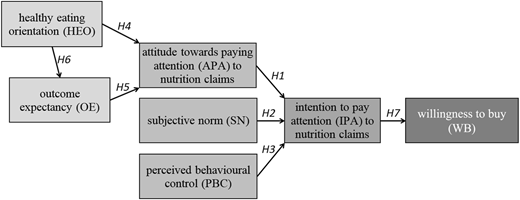
TPB is a model widely known in social sciences (Ajzen, 2015). Moreover, it is considered to be parsimonious due to its standardised and well-operationalised guidelines for measurements (Oluka et al., 2014). Recently, it was also used to study the intentions, attitudes and behaviours of consumers regarding food (Dionysis et al., 2022; Loera et al., 2022). Furthermore, TPB was applied in research focused on packaging, and more precisely, on labels (Grappe et al., 2022; Tian et al., 2021). Generally, this framework is focused on behavioural intentions as the main determinant of behaviour. Intentions express the motivational factors influencing a given behaviour. The stronger the intention, the greater the likelihood of a certain activity. This allows to indicate that intentions are strongly influenced by three variables, expressing several types of beliefs: behavioural (attitude), normative (subjective norm), and control-related (perceived behavioural control), which for the need of this study, are named: attitude towards paying attention (APA) to NCs, subjective norm (SN), and perceived behavioural control (PBC) – all affecting intention to pay attention (IPA) to NCs, which finally affect willingness to buy (WB) products bearing claims. In order to examine the role of health orientation in the whole process of building the WB, we included two predictors of attitude, expressing behavioural beliefs – healthy eating orientation (HEO) and outcome expectancy (OE) regarding expectations towards the presence of NCs on labels.
Attitude is described as an individual's like or dislike towards something (Eagly and Chaiken, 2007). This is an internally driven factor, based on an individual's assessment of certain behaviour. Its significance has been confirmed in previous studies (Salmani et al., 2020; Sultan et al., 2020). It was found, however, that the relationship between attitudes and intentions may significantly differ from a high (Al-Swidi et al., 2014) to low level of measures reflecting the strength of the relation (Guido et al., 2010). In the current study, the focus was, in particular, on attitude, thus on the respondents' opinions regarding how they assess paying attention to NCs. Therefore, the following hypothesis was formulated:
Attitude towards paying attention to nutrition claims is positively correlated with intention to pay attention to nutrition claims.
Subjective norm (SN) is another important factor influencing intentions. This may be defined as a belief concerning social pressure, empowering people to behave in a certain way (Sreen et al., 2018). According to Ajzen (1991), this measure can be expressed by the extent to which important others would approve or disapprove of an individual's behaviour. This means that SN is an externally driven factor. In the majority of studies, it has been shown that SNs play a significant role in determining intentions (Bhutto et al., 2019; Sultan et al., 2020); however, in some, they were considered insignificant predictors (Paul et al., 2016). Hence, the following hypothesis arose to test the relationship between SN and intention to pay attention (IPA) to NCs:
Subjective norm regarding nutrition claims is positively correlated with intention to pay attention to nutrition claims.
Perceived behavioural control (PBC) is known as perceived ease or difficulty in performing behaviour, and therefore, it reflects past experiences and anticipated obstacles (Paul et al., 2016). In other words, it reflects the belief on availability of resources necessary to perform a given behaviour, thus, it is also an externally driven factor (Grimmer and Miles, 2017). Earlier results from food-oriented research indicate a positive correlation between PBC and intentions (Shamsi et al., 2020; Sreen et al., 2018), but in this case, there are also studies in which insignificant correlations between PBC and intentions are additionally discussed (Yazdanpanah and Forouzani, 2015). The authors assume that PBC influences IPA, therefore, the following hypothesis was put forward:
Perceived behavioural control is positively correlated with intention to pay attention to nutrition claims.
According to Armitage and Conner (2001), the TPB is a concept still not fully evaluated, which is constantly being altered by various researchers. Thus, the authors decided to build a model (Figure 1) in which healthy eating orientation (HEO) and outcome expectancy (OE) were added as new factors influencing attitude towards paying attention (APA) to NCs These variables were taken from other studies using the TPB model (Contini et al., 2020; Shamsi et al., 2020).
Health orientation (HO) and HEO are very important factors influencing human behaviour. In their TPB-based research on healthy eating, Setiawati et al. (2018), demonstrated that there are positive relationships between health awareness and attitudes. As a result, many consumers perceive NC-marked foods to be better (Dean et al., 2012) – usually healthier. However, there are large discrepancies between studies on the effect of NCs, as already noted by several authors (Hieke et al., 2015; Lähteenmäki, 2013). In this study, the authors chose to use health issues as additional predictors of intention to pay attention to NCs. These issues assumed the form of "healthy eating orientation”. Therefore, considering the fact that the afore-described studies, conducted on various aspects of health, do not provide conclusive results, the authors decided to examine the correlations between HEO and attitude by formulating the following hypothesis:
Healthy eating orientation is positively correlated with attitude towards paying attention to nutrition claims.
Another variable that the authors wanted to focus on was outcome expectancy (OE). This is a factor derived from the expectancy-value model and it combines beliefs, attitudes, opinions and expectations. It is also considered a predictor of attitudes related to someone's estimates that certain behaviour will lead to certain outcomes. There are not many studies in which this factor would be measured, but some scientists have already been able to analyse the impact of OE on consumption-related attitudes (Shamsi et al., 2020; Waters et al., 2012). Following this line of thought, the authors decided to erect the following hypothesis:
Outcome expectancy towards products containing nutrition claims is positively correlated with attitude towards paying attention to nutrition claims.
The authors also assume that a positive correlation between HEO and OE may exist. This assumption is based on the fact that if consumers pay attention to something, it is very possible that they have certain expectations about it. Therefore, with regard to NCs, the sixth hypothesis was formulated:
Healthy eating orientation is positively correlated with outcome expectancy towards products containing nutrition claims.
The final correlation to be mentioned in this article concerns IPA and willingness to buy (WB). According to Wansink and Chandon (2006), nutrition content claims influence customer behaviour. Roberto et al. (2012) obtained similar results. Another study on nutrition claims and purchase behaviour was conducted by Benson et al. (2019). The authors showed that the perception of products containing NCs influences believability and thus, purchase behaviour. Claims were also tested by Barreiro-Hurlé et al. (2010), who have proved that NCs influence consumer choices. Within the context of behaviours related to healthy/unhealthy foods, Talati et al. (2018) conducted an experiment in which NCs influenced the likelihood of choosing unhealthy foods. In a review of 31 papers, Kaur et al. (2017) showed that positive correlations were found between NCs and purchasing/consumption. We believe that the above facts can also be translated into the basis for our analyses. Knowing that WB is a declarative version of customer behaviour, the following hypothesis has been formulated:
Intention to pay attention to nutrition claims is positively correlated with willingness to buy food containing such claims.
3. Method
3.1 Study 1
In order to evaluate the adopted theoretical model, a survey was conducted. The questionnaire consists of 2 parts: basic questions related to the analysed variables and questions on the metrics supplemented with general purchasing attitudes and behaviours. The main study was preceded by a pre-study on 4 students, which allowed us to eliminate minor errors. As a result, in order to obtain reliable declarative information, the part with questions was preceded by information about the nutrition claims. The study was carried out on the Amazon Mechanical Turk platform – an online application interface used to integrate human intelligence into remote procedure calls. A group of 839 respondents participated in the study. In order to eliminate random answers, 3 attention checking questions were asked and the response time was considered by eliminating the so-called speed runners. On this basis, the answers provided by 770 respondents were used for further analysis. The mean age of the participants was 38.479 (SD = 11.919, Min = 18, Max = 74, N = 770). The group differed in terms of gender, household size, level of education, current professional status and declared annual income (Table 1).
The main questions referred to the variables presented in the TPB-based model. All responses were evaluated on a 7-point scale. The research tool was constructed on the basis of previous research and validated scales. A complete list of questions with their sources is presented in “Table A1”. Due to the use of latent variables, data analysis was performed in 2 steps. In the first stage, the research tool was assessed, whilst a hypothetical structural model was adopted in the second one. At the stage of data analysis, the R studio program and the R compiler with the Lavaan and SemTool packages were used. In order to improve the reliability of the obtained results, bootstrapping was introduced. The number of re-samples was 5,000.
3.2 Study 2
The second study was based on the verification of selected findings from the first study, taking greater psychological realism into account. We wanted to verify the influence of health orientation on attitude towards labels containing NCs and on NC product purchase intention which were found in the first study (based on reported opinions). For this purpose, an experimental study was conducted in which respondents were shown a food product (yogurt) containing a NC (good source of calcium). Users were recruited in the same way as in the case of the first study. A number of 542 responses was collected. In order to increase the credibility of the obtained results, only people who correctly answered the questions verifying their attention and who displayed stimulus (image of yogurt) for more than 3 s were considered for further analysis. A shorter time may indicate mechanical transition between sections or lack of the minimum time needed to become familiarised with the essentials of a product. The complete list of statements is presented in “Table A1”. A total number of 485 respondents qualified for the analysis. The characteristics for the group are presented in “Table A2”. After displaying the photo, the participants responded to the statements on a 7-point scale, measuring attitude towards the label (ATL) and product purchase intentions (PPI). In the next step, health orientation was measured using a 5-item scale. Data collected in this way made it possible to divide the respondents into those more and less health-oriented, using the mean split procedure. At this stage, we used the Jamovi program to analyse mediation.
4. Data analysis and results
4.1 Study 1
The structural equation modelling technique was used for data analysis. The first step in the analysis, as recommended by Bagozzi and Yi (2012), was evaluation of convergent and discriminant validity regarding individual items, and additionally, the composite reliability of variables. Confirmatory factor analysis was also performed. The factor loadings of the individual items exceeded the recommended level of 0.6 (Chin et al., 1997). Moreover, to measure the reliability of the scale, Cronbach's α coefficient was applied. The values of Cronbach's α ranged from 0.82 to 0.89, representing good and very good consistency, as recommended by Hair et al. (2017). For the measurement of convergent and discriminant validity, in addition to standardised factor loading, 2 parameters were used, i.e. Composite Reliability (CR) and Average Variance Extracted (AVE). The AVE values ranged from 0.55 to 0.73, which is above the acceptable limit of 0.5, also recommended by Hair et al. (2017). The CR values further exceeded the acceptable limit of 0.6, with values ranging from 0.74 to 0.87, showing internal consistency of multiple indicators (Bagozzi and Yi, 2012). Detailed values for individual variables and items are presented in Table 2.
The Heterotrait-Monotrait ratio of correlations (HTMT) was used to assess the discriminant validity and to measure similarities between latent variables. The HTMT ratio of correlations for each construct was below 0.8. Additionally, in Table A5, we have presented the variable correlation matrix. This means that discriminant validity – used to verify that constructs that should have such a relationship really do not have one – has been established (Henseler et al., 2015). Moreover, we have implemented Harman's one-factor test, and the total variance extracted by one factor is 48% which is less than the recommended threshold of 50%. All the actions taken allow us to conclude that there is no common method bias. Various measures were used to evaluate the model, as proposed by Schumacker and Lomax (2017). Therefore, the model was tested with 3 types of fit indices: absolute, parsimonious and incremental fit measures. All of the obtained fit indices met the suggested ranges, i.e. RMSEA = 0.056, GFI = 0.943, AGFI = 0.915, CFI = 0.968 and NFI = 0.952, χ2 = 433.815 and df = 128 (Hair et al., 2017; Marsh and Hocevar, 1985).
After the stage of confirming reliability and validity of the measurement model, path analysis was performed. Assessment of the structural equation modelling (SEM) model, as in the case of confirmatory factor analysis (CFA), was also based on various measures: SRMS = 0.036, RMSEA = 0.59, NFI = 0.948, CFI = 0.962, TLI = 0.953, χ2 = 508.05 and df = 139. This was done to explain the relationships between the measured and latent variables, as well as the relationships between the latent ones, which may be additionally characterised by not being directly measurable. The results indicate that empirical data confirm validity of the proposed theoretical model, which allows for a more detailed analysis. The applied structural model explains the high variability of willingness to buy food containing NCs (R2 = 0.66) and the intention to pay attention to NCs (R2 = 0.74). In line with the adopted hypotheses, path analysis was performed. First, the impact of healthy eating orientation on outcome expectancy towards products containing NCs and on attitude towards paying attention to NCs was analysed. In both cases, this was statistically significant and amounted to β = 0.661, p < 0.001 and β = 0.262, p < 0.01, respectively. Hence, it can be assumed that hypotheses H4 and H6 have been confirmed. Additionally, the statistically significant influence of OE on APA was demonstrated (β = 0.654, p < 0.001), which confirms hypothesis H5. In the case of factors affecting IPA, all of them – APA, SN and PBC, also turned out to be statistically significant, the values of the influence exceeding 0.2, and respectively, APA: β = 0.537, p < 0.001, SN: β = 0.25, p < 0.001, PBS: β = 0.226, p < 0.001, which is in line with H1, H2 and H3. Pathway analysis of intention to pay attention to NCs on willingness to buy supports hypothesis H7 (β = 0.66, p < 0.001). All the analyses are presented in Table 3. Additionally, in Table A4, the results are presented of an alternative model analysis assuming a direct relationship between OE and HEO on IPA. On its basis, it cannot be indicated that there is such a direct relationship, which, at the same time, confirms that the proposed original theoretical model is added and consistent with the obtained empirical data.
4.2 Study 2
The second study was also preceded by CFA for the variables of attitude towards the label (ATL), product purchase intention (PPI) and health orientation (HO). As in the first study, all cut-off points were achieved for the loading values (all above 0.676), Cronbach's α (0.87–0.95), CR (0.87–0.95) and AVE (0.57–0.87) (Table A3). The heterotrait-monotrait (HTMT) ratio of correlations confirmed discriminant validity.
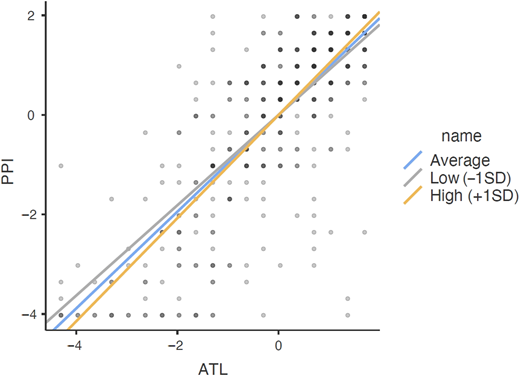
Analysis of variance revealed a statistically significant difference between people with varying levels of health orientation on perception of the product label: t (483) = 6.89, p < 0.001, d = 0.637 and purchase intention t (483) = 5.94, p < 0.001 and d = 0.549. At the same time, people with greater health orientation demonstrated better attitude towards the labels (mean ATLHO-HIGH = 5.64(1.33) vs. mean (ATLHO-LOW) = 4.80(1.29)), and a higher tendency towards buying the presented product (mean PIHO-HIGH = 5.39(1.72) vs. mean (PIHO-LOW) = 4.48(1.57)). Moreover, taking health consciousness into account, the relation of the influence regarding label perception on inclination towards a product was examined. The performed moderation analysis revealed that there was an interaction between ATL and HO on PPI. Estimation of the influence of perception concerning the label containing a NC on the propensity to buy this product, in 3 groups differing in health orientation, was performed: medium level, low (−1 SD) and high (+1 SD). A standard test was used to verify the hypotheses in linear regression, i.e. dividing the parameter by the standard deviation and the reference distribution for large samples that can be the standardised normal distribution. A high value may be due to small variance and that the differentiating variable causes a high level of separation. In our study, it was found that consumers with a higher level of consciousness make decisions more dependent on their attitude towards NC contained therein, compared to people with average or lower levels of consciousness (Table 4, Figure 2).
5. Discussion
The objective of the current study was to investigate how health orientation influences attitude towards paying attention (APA) to NCs, intention to pay attention (IPA) and the willingness to buy (WP) products containing NCs.
The first discovery resulting from this study concerns IPA dependence on APA. APA influence appeared to be twice as great as compared to other predictors. This result is similar to that found by Al-Swidi et al. (2014), who proved that the relationship between attitudes and intentions may be high. Moreover, according to Spence et al. (2018), attitude may be the primary determinant factor influencing intentions, which was also confirmed by Wong et al. (2018). Such a high dependence of intentions on attitudes may be explained in many ways.
Health is a very personal “asset” which cannot be bought or borrowed, and is, therefore, the most valued of all. This means that the motivation to eat healthy can largely be explained as an intrinsic factor. In TPB-based research on health-related behaviours (Godin and Kok, 1996), it has been shown that attitude towards a certain behaviour and perceived behavioural control were most often significant variables responsible for the explained variation of intention. With regard to the high prevalence of NCs on products in the USA (survey conducted in the USA), due to the fact that they appeared there a decade before doing so in the European Union, accessibility to NCs and knowledge about claims, which was found to be one of the top factors influencing the processing of NCs (Carrillo et al., 2014), could remove barriers to NCs, thus, lowering the influence of PBC on APA. Secondly, the USA is a prime example of an individualistic country, so people often focus more on their own perception and attitudes rather than on collective ones (Hofstede, 2001). Therefore, customer intention concerning NC products may be significantly more dependent on their own attitudes than on externally driven factors such as SN or PBC. The high level of the relationship between APA and IPA – more generally affecting attitudes towards food labelling, and consequently, consumer behaviour – was proved in previous studies (Abdul Latiff et al., 2016). This was confirmed by Tian et al. (2021), who claimed that apart from norms, attitudes and literacy about nutrition are the main predictors of intentions towards food labels, thus, in the case of the present study, also towards claims. An explanation for the small impact of SN concerning paying attention to NC can be connected with the type of behaviour it concerns. Paying attention to NCs is fairly, morally neutral, and also difficult to use in building one's identity and showing off, therefore, the little effect of feeling pressure from others to pay attention to NCs seems justified.
Another important observation concerns the relationship between HEO and APA, which was found to be both direct and indirect - moderated by OE. It turned out that although HEO has a visible effect on APA, the direct impact was not as strong as it is in the case of OE. It should be highlighted, however, that considering both the direct and indirect effects of HEO on APA, HEO influence was found to be larger than that of OE. Our second study also allowed to confirm the influence of health orientation (HO) on product labelling and NC product purchase intention. Therefore, in general, the influence of HEO on APA demonstrated in the current research may be considered consistent with that found in the work by Contini or Satiawati et al. (2018), who argued that there are positive relationships between health awareness and attitudes towards healthy food. In the case of OE (Shamsi et al., 2020), the results indicate that this parameter has a significant effect on APA, which is somewhat similar to the results obtained by Xia et al. (2015), who stated that outcome expectancy may have positive and significant influence on attitudes. Finally, the authors managed to prove that OE may have a mediating role between HEO and APA. Thus, although the need to eat healthy affects APA, this may be largely due to the desire that a healthy product be the one carrying claims, and that such a product be easily purchased. Therefore, the fact that people who want to eat healthier have special expectations for the product and expect it to contain nutrition claims, may be considered the main practical implication of this paper. Nevertheless, this issue requires further investigation.
The final part of the analysis was focused on experimental verification of willingness to buy (WB) dependence on IPA. The results show that IPA strongly affects WB, which is a somewhat similar to the results obtained by Benson et al. (2019), who claimed that NCs influence consumer choices, as well as Kaur et al. (2017), who proved that there is a positive correlation between nutrition claims and purchasing/consumption. Additionally, Loebnitz and Grunert (2018) and Franco-Arellano et al. (2020) indicated that claims may influence intentions – also expressed as willingness to purchase/buy. This may mean that if someone takes notice of a product, there is a good chance that the product will be purchased. From a consumer perspective, this decision may not be appropriate because claims should only be helpful when a consumer decides to buy a product, but the purchase decision should be made consciously. Therefore, it would be beneficial for the customer if he/she could distinguish individual claims from one another or from marketing texts, and if he/she could resign from purchasing a product when considered of poor quality or value. This may not be simple as many products contain a variety of marketing information. As a consequence, mistrust and confusion may arise, which can also significantly undermine the actual message conveyed by claims. This may further explain why exposure to claims does not always lead to the use of food labels (Kim et al., 2021; Moreira et al., 2019). In addition, the fact is that individuals may find it problematic to distinguish between different kinds of claims (Williams, 2005), and that generally, nutrition labels may be too difficult for them to understand (Grunert et al., 2010). Therefore, it is particularly important to educate consumers about claim weight and content, especially so that they have a better view of products bearing claims they know (Miklavec et al., 2015). It is also important to build awareness so that consumers can distinguish between nutrition and marketing claims, and to increase confidence in the message conveyed by them. This could also be achieved by modifying legislation to limit the use of nutrition claims on unhealthy products.
The final observation concerns the use of the TPB model in research concerning labelling. Although, according to Kiriakidis (2017), the model in its basic form may not be sufficient for every study, methods to improve its usability do exist. It has already been proved that the power of this framework may be enhanced when additional predictor variables are included (Donald et al., 2014; Wong et al., 2018). Therefore, as claimed by Abdul Latiff et al. (2016), the extended Ajzen model is well fit to studies on food labelling and purchasing behaviour. In addition, Tian et al. (2021) demonstrated its efficacy in understanding consumers' use of nutrition labels. Finally, the substantial (Cohen, 1988) level of the R2 coefficient suggests that the enhanced model presented in this study is well-suited to the sample and the results are highly reliable.
6. Conclusions
The main objective of this article was to investigate the role of health orientation in explaining attitudes towards paying attention to NCs, intention to pay attention, and the willingness to buy products containing NCs. The major contribution and main implications pertain to the establishment of the fact that healthy eating orientation impacts the willingness to buy NC products and that this influence is mediated by outcome expectancy, attitude towards paying attention to NCs and intention to pay attention to NCs. It has been proved that intention to pay attention to NCs is predicted also by two other TPB variables: subjective norms and perceived behavioural control concerning NCs. Attitude towards paying attention to NCs, determined directly and indirectly by healthy eating orientation, was found to be the most important factor predicting intentions, the influence of which has been more than twice as large as in the case of perceived behavioural control or subjective norms. The influence of healthy eating orientation on the willingness to buy NC products was confirmed in our second study, in which it has been shown that health orientation moderates the relationships between attitude towards the label containing a NC and NC product purchase intention.
The strength of this article lies in an in-depth analysis based on the TPB and in the addition of new parameters and modifications to existing ones. The article may also contribute to a better understanding of motivation concerning paying attention to NCs and willingness to buy products bearing claims. This could lead to future improvement of consumers' eating habits, which was the intention behind the introduction of claims into the legislature of countries around the world. Moreover, the article may be used by business practitioners eager to use NCs on their products. Our research may also be a guide for policymakers. Knowing that consumers often do not understand or mistrust claims, they might think of modifying the legislature to simplify claims, but also to limit their use on unhealthy foods. Finally, our work opens space for the continuation of a relevant research agenda on the TPB, consumer behaviours, labelling and nutrition claims.
Although we provide a variety of implications in this study, some limitations must be addressed. The sample was not representative. The model could have contained additional variables – for example, knowledge about NCs or focus on health claims. Therefore, future research could be useful in verifying this item. In addition, it could be focused on the marketing aspect of claims and verifying at what level customers rate claims as an additional marketing tool, and as such, whether they trust them or not. This is also very important in the context of consumers' lack of sufficient knowledge of on claims. Moreover, it would be worthwhile to conduct a comparative analysis in a collectivised society. Finally, future studies could be focused on verifying the extent to which attitude towards one's own health and healthy eating, type of diet, or body mass index (BMI), influence attitudes.