This paper critically examines the evolving financial technology (FinTech) landscape, with the aim of synthesising its conceptual foundations, technological drivers, and systemic implications, while advancing a capacity-building perspective for sustainable and secure financial innovation.
The study adopts a rigorous integrative literature review methodology, implementing a systematic four-stage search and screening protocol across major electronic databases (Scopus, Web of Science, and Google Scholar) for the period from 2015 to 2026. Applying explicit inclusion and exclusion criteria to a synthesised corpus of 87 core studies, the paper utilises a two-cycle thematic coding process, alongside comparative institutional analysis and expanded case-based insights to map regional variations in FinTech governance.
The review identifies FinTech as a multi-domain ecosystem encompassing digital payments, alternative lending, wealth management, insurance technology, and blockchain-based systems, underpinned by enabling technologies such as artificial intelligence, big data analytics, and cloud computing. The findings demonstrate that while FinTech enhances financial inclusion, operational efficiency, and innovation capacity, it simultaneously introduces systemic vulnerabilities, including cybersecurity threats, regulatory arbitrage, and ethical risks. Effective deployment is contingent upon the development of complementary institutional, regulatory, and technological capacities, which vary significantly across jurisdictions.
The paper provides actionable guidance for policymakers, regulators, and industry practitioners by outlining capacity-building priorities, including regulatory harmonisation, digital infrastructure investment, and risk governance frameworks. Importantly, it introduces a structured implementation framework that translates these priorities into a phased strategic roadmap for resilient FinTech ecosystems.
Unlike standard descriptive reviews that focus primarily on market actors or product classification, this paper introduces a novel, structurally grounded capacity-building framework. It conceptualises ecosystem readiness through three distinct, intersecting dimensions: institutional-regulatory capacity, technical infrastructure scalability, and human capital capabilities. By explicitly contrasting these pillars across diverse economic realities, the study provides a unique comparative synthesis of global and Sub-Saharan African regulatory models, delivering a precise, actionable roadmap for balancing systemic stability with frontier technology governance.
1. Introduction
Financial technology, or FinTech, has emerged as a transformative force at the intersection of finance and digital innovation, reshaping how individuals, businesses, and institutions access, manage, and deliver financial services (Arcot, Sayed, Parekh, Balasubramanian, & Sudheer, 2024; Gomber, Kauffman, Parker, & Weber, 2018). Its evolution has been rapid, progressing from early electronic banking and internet-based services to mobile banking, digital wallets, peer-to-peer lending, and the emerging decentralised finance (DeFi) ecosystem (George, 2024). Innovations in payments, lending, investment management, and insurance have not only improved efficiency and accessibility but have also challenged traditional financial intermediaries, creating new opportunities and risks (Pantielieieva, Khutorna, Lytvynenko, & Potapenko, 2020). The breadth of FinTech applications, from mobile money platforms and robo-advisory services to blockchain networks and AI-driven financial solutions, underscores the sector's growing complexity and global significance (Mathew, Govindan, Jayakumar, Unnikrishnan, & Jose, 2024).
The urgency of understanding the current state of FinTech has intensified in recent years. The COVID-19 pandemic accelerated the adoption of digital financial services, forcing individuals and institutions to rely on mobile payments, online banking, and remote financial solutions, thereby exposing both infrastructure gaps and areas of resilience (Das & Das, 2023). Concurrently, technological advances such as AI-powered credit scoring, algorithmic trading, and tokenised financial assets have introduced new operational, ethical, and regulatory challenges (Dagur, 2025; Mwangi & Njoroge, 2024). Global regulatory shifts – including open banking frameworks, regulatory sandboxes, and evolving cross-border compliance standards – further highlight the dynamic nature of the FinTech ecosystem and the need for continuous assessment (Belgacem, 2025; Deb, 2025). While significant progress has been made in the adoption and integration of FinTech solutions, systematic understanding of these developments remains fragmented across regions and domains (Christopher, 2025; Kandpal, Ozili, Jeyanthi, Ranjan, & Chandra, 2025a). This gap underlines the need for a comprehensive synthesis that can inform capacity building in digital financial systems, ensuring inclusivity, efficiency, and stability in the financial sector.
While the growing volume of FinTech literature has generated several notable review papers, existing scholarship predominantly follows specific thematic and regional constraints. For instance, seminal reviews such as Gomber, Koch, and Siering (2017) focus primarily on market actor taxonomies, product-level classifications, and the immediate mapping of digital finance channels. Meanwhile, high-impact regulatory reviews, such as Zetzsche et al. (2020a, b), provide exceptional depth regarding data-driven finance policy transitions and institutional evolution within advanced jurisdictions like the European Union. Similarly, reviews targeting emerging markets (e.g. Arner, Buckley, Zetzsche, & Veidt, 2020) often examine financial inclusion through a localised lens, detailing mobile money adoption rates without structurally evaluating the cross-cutting macro-capacities required to sustain them long-term. Consequently, prior literature remains fragmented, treating technical infrastructure, legal compliance, and human capital as isolated operational concerns rather than interdependent dimensions of a singular ecosystem.
This study explicitly transcends these descriptive boundaries by introducing a structurally integrated capacity-building framework. Unlike prior review studies that focus on what FinTech products exist or where specific data frameworks are being enacted, this framework critically evaluates how systemic absorption and long-term sustainability are achieved across asymmetrical economic landscape settings. By conceptualising the ecosystem through three intersecting pillars – institutional-regulatory capacity, technical infrastructure scalability, and human capital capabilities – this paper moves beyond simple classification. It provides a novel comparative synthesis that explicitly contrasts global regulatory benchmarks with Sub-Saharan African realities, transforming a standard literature mapping into an actionable, theoretically grounded governance roadmap.
This paper contributes to the literature by providing a comprehensive overview of the current FinTech landscape, integrating its conceptual foundations, core domains, enabling technologies, regulatory frameworks, and emerging trends into a single synthesis. In doing so, it not only traces the historical evolution of FinTech and examines domains such as digital payments, lending, wealth management, insurance, and blockchain-based solutions, but also critically assesses the opportunities and challenges that characterise the sector. Unlike existing fragmented analyses, the paper adopts a broad global perspective while drawing on regional contrasts and case studies to preserve analytical depth, thereby offering insights that can inform both scholarship and practice.
The structure of the remainder of this paper is organised as follows. Section 2 establishes the conceptual foundations of FinTech, outlining definitions, its historical evolution, and key theoretical perspectives. Section 3 details the integrative literature review methodology, database search protocol, and study selection parameters. Section 4 systematically maps the FinTech ecosystem across major operational domains and cross-cutting technical enablers, critically synthesising cross-domain tensions. Section 5 evaluates the regulatory and policy landscape, contrasting global frameworks with Sub-Saharan African contexts. Section 6 analyses the systemic opportunities and inherent risks of the sector, while Section 7 explores frontier technological trends and dynamic capacity-building requirements. Finally, Section 8 synthesises these overarching insights, presenting an actionable practitioner implementation roadmap alongside an advanced agenda for future research.
2. Conceptual foundations
A clear conceptualisation of FinTech is essential, given the diversity of definitions and perspectives found in both academic and industry discourse. From an academic standpoint, FinTech is often defined as the application of technological innovations to improve or transform financial services, with emphasis on its role in disrupting traditional financial intermediation models (Alt, Beck, & Smits, 2018; Arnaut & Bećirović, 2023; Gomber et al., 2018). More broadly, this aligns with established digital transformation paradigms where the structural agility of platforms redefines traditional market boundaries and ecosystem architecture (Nambisan, Wright, & Feldman, 2019; Vial, 2021). Industry perspectives, however, tend to adopt a broader and more practice-oriented view, describing FinTech as an ecosystem of start-ups, incumbents, and technology firms leveraging digital tools to deliver financial products more efficiently and inclusively (Berman, Cano-Kollmann, & Mudambi, 2022; Gozman, Liebenau, & Mangan, 2018). This divergence highlights the need for a unifying synthesis, as inconsistent definitions risk fragmenting research and policy debates.
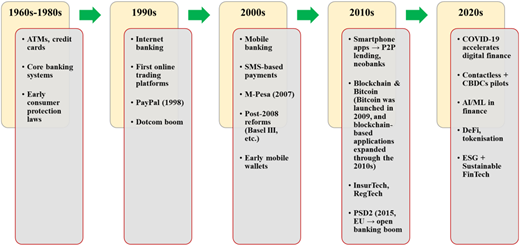
Historically, FinTech has evolved in distinct waves, reflecting shifts in both technological capability and consumer expectations. The earliest phase, often referred to as FinTech 1.0, was marked by the digitisation of traditional banking through electronic systems and automated teller machines (Arner, Barberis, & Buckley, 2015; Jalal, Al Mubarak, & Durani, 2023; Setiawan & Maulisa, 2020). The subsequent internet era, or FinTech 2.0, expanded financial services online, enabling internet banking and electronic trading platforms (Arner et al., 2015). The mobile and platform-driven era, commonly identified as FinTech 3.0, witnessed the proliferation of mobile banking, digital wallets, and peer-to-peer financial services, particularly in emerging markets where mobile money systems transformed financial access (Tohang, Ramadhan, & Djajadiningrat, 2021). The current wave, sometimes termed FinTech 4.0, integrates advanced technologies such as artificial intelligence, blockchain, and big data analytics, creating a dynamic ecosystem that extends beyond traditional finance into areas such as decentralised finance (DeFi), tokenisation, and embedded finance (Arner, Buckley, Charamba, Sergeev, & Zetzsche, 2022; Ferraro, Ramponi, & Scarlatti, 2024). This trajectory demonstrates not only the pace of technological adoption but also the expanding scope of FinTech applications across regions and sectors (Koesworo, Muljani, & Ellitan, 2019) (see Figure 1).
To interpret these developments, several theoretical lenses have been applied in the literature. The theory of disruptive innovation provides insight into how FinTech firms challenge incumbents by offering more accessible and cost-effective services, often targeting underserved market segments (Aly Hussien Aly Abdou, 2025; Solanki & Sujee, 2022). Platform economics highlights the role of digital platforms in creating network effects and reshaping competition in payments, lending, and investment services (Gomber et al., 2018; Langley & Leyshon, 2021). Financial intermediation theory, on the other hand, examines how technology alters the functions traditionally performed by banks and other intermediaries, raising questions about efficiency, risk distribution, and systemic stability (Broby, 2021; Crouhy, Galai, & Wiener, 2021). Crucially, this functional disruption shifts the underlying unit cost of financial intermediation, altering how regulatory frameworks monitor decentralised trust (Philippon, 2020). More recently, scholars have begun to draw on institutional theory and socio-technical systems perspectives to explain regulatory adaptations, consumer adoption behaviours, and the broader social impacts of digital finance (Fatorachian, Kazemi, & Pawar, 2025; Kemal & Shah, 2024). Together, these frameworks provide the conceptual foundation necessary for analysing FinTech not only as a technological phenomenon but also as a structural transformation of global finance.
3. Methodology
To provide a robust, transparent, and reproducible synthesis of the rapidly evolving financial technology landscape, this study adopts a comprehensive Integrative Literature Review (ILR) methodology. An integrative review is appropriate for this inquiry as it allows for the combination of diverse theoretical frameworks, empirical literature, and qualitative case studies to generate an advanced, multi-dimensional conceptual framework (Callahan, 2010; Torraco, 2016). Moving beyond standard descriptive reviews, this methodology follows a rigorous four-stage systematic protocol: search strategy, inclusion and exclusion screening, data extraction/coding, and critical analytical synthesis.
3.1 Literature search strategy and data sources
A systematic search for academic literature was conducted across three primary electronic databases: Scopus, Web of Science (WoS), and Google Scholar. These databases were selected to ensure multidisciplinary coverage spanning corporate finance, financial economics, information systems management, and regulatory law. The search timeframe was restricted to documents published between January 2015 and April 2026. This specific window captures the foundational transition into platform-led systems (FinTech 3.0) and the ongoing deployment of frontier technologies like decentralised finance (DeFi), advanced artificial intelligence, and tokenisation (FinTech 4.0). The search strings were constructed using Boolean operators (AND/OR) and applied to titles, abstracts, and keywords. The core search matrix utilised the following configurations:
(“FinTech” OR “digital finance” OR “digital banking” OR “neobank”) AND (“capacity-building” OR “institutional readiness” OR “regulatory framework” OR “infrastructure”) AND (“digital payments” OR “P2P lending” OR “WealthTech” OR “InsurTech” OR “blockchain” OR “crypto-assets”)
To minimise publication bias, the database searches were supplemented with grey literature manually harvested from prominent global financial institutions and regulatory bodies, including the International Monetary Fund (IMF), the World Bank, the Bank for International Settlements (BIS), and the Financial Stability Board (FSB).
3.2 Inclusion and exclusion criteria
To ensure the analytical depth and quality of the final synthesis, stringent inclusion and exclusion protocols were established prior to screening. Articles were evaluated against the distinct criteria outlined in Table 1.
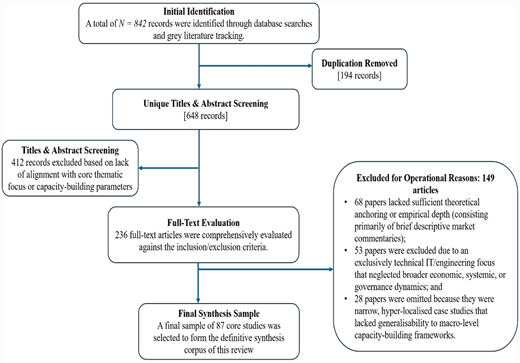
The execution of this selection protocol is visualised in the PRISMA-style selection flow detailed in Figure 2 below:
3.3 Data extraction, coding, and qualitative synthesis procedure
A standardised data extraction matrix was developed to synthesise the finalised literature corpus. For each selected study, key variables were logged: author(s), publication year, geographic focus, specific FinTech domain, underlying technological enablers, core findings, and identified capacity limitations.
The qualitative synthesis utilised a two-cycle thematic coding mechanism. In the first-cycle coding, descriptive codes were assigned to classify operational mechanisms across key FinTech verticals (e.g. automated credit scoring under alternative lending, smart contracts under blockchain). In the second-cycle pattern coding, these initial categories were cluster-analysed to abstract overarching meta-themes. This pattern analysis directly drove the formulation of the multi-dimensional capacity readiness framework presented in this paper, sorting findings into institutional, technical, and human capital dimensions.
3.4 Operational integration of theoretical lenses
The review systematically maps four foundational theories across the analytical blocks of the text to unpack structural dynamics:
Disruptive innovation theory: Utilised in Section 5 to evaluate how marginal entrants leverage lower cost structures to democratise credit access and digital payments, progressively challenging incumbent commercial banking networks.
Platform economics: Deployed in Sections 5 and 6 to scrutinise two-sided digital market interactions, evaluating how multi-sided network effects generate rapid ecosystem scalability while simultaneously driving market concentration risks and anti-competitive platform behaviour.
Financial intermediation theory: Applied throughout the cross-domain analyses to observe how decentralised ledger technologies and algorithmic scoring structurally unbundle traditional asset/liability transformations, examining the shifting nature of liquidity risk and transactional trust.
Institutional theory: Utilised in Section 6 to critically evaluate the comparative regulatory landscape, examining how varying regional institutional configurations (e.g. rules-based vs. sandbox-led) alter the operational boundaries and compliance pressures of FinTech ecosystems.
4. FinTech ecosystem and key domains
The FinTech ecosystem encompasses a range of domains that collectively redefine financial services. Understanding these domains is critical not only for mapping innovations but also for identifying the institutional, technological, and regulatory capacities required to support a resilient digital financial future (Alaassar, Mention, & Aas, 2022; Basole & Patel, 2018). While FinTech spans numerous applications, the most prominent domains include digital payments and banking, lending and credit innovation, wealth management and investment platforms, insurance technology (InsurTech), blockchain and crypto-assets, and cross-cutting enabling technologies. Table 2 provides a concise summary of these domains, highlighting representative innovations, notable players, and key capacity considerations.
4.1 Digital payments and banking
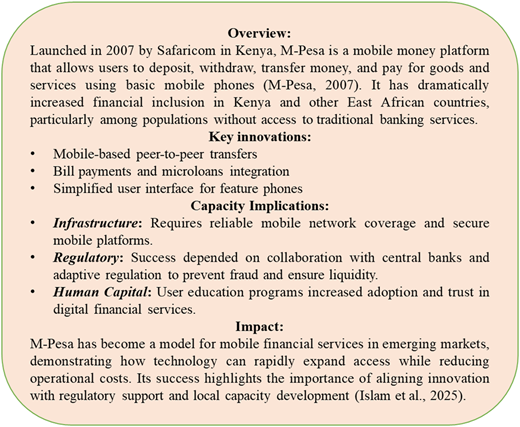
Digital payments and banking have emerged as foundational elements of the FinTech ecosystem. Mobile payments, contactless transactions, and neobanks enable faster, more convenient, and more inclusive financial access (Fatorachian et al., 2025; Kandpal, Ozili, Jeyanthi, Ranjan, & Chandra, 2025b). Open banking initiatives, such as the EU's PSD2, facilitate secure data sharing, fostering competition and innovation (Brodsky & Oakes, 2017; Gounari, Stergiopoulos, Pipyros, & Gritzalis, 2024). Regional contrasts are notable: mobile money platforms like M-Pesa in Africa have revolutionised financial inclusion (see Figure 3), whereas European markets emphasise regulatory compliance and platform interoperability (van Zanden, 2023; Webb, 2025).
4.2 Lending and credit innovation
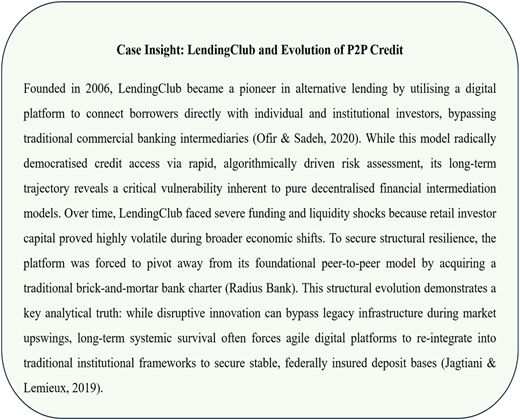
FinTech has reshaped lending through P2P platforms, crowdfunding, and balance sheet lending, particularly for SMEs and underserved individuals (Alao, 2025; Rijal, 2025). While these innovations expand access to credit, they also introduce challenges around credit risk, transparency, and regulatory oversight (Ofir & Tzang, 2022; Omowole, Urefe, Mokogwu, & Ewim, 2024). By utilising consumer digital footprints as alternative signs of creditworthiness, platforms bypass classic banking collateral but expose the lending ecosystem to new dimensions of algorithmic and privacy risk (Berg, Burg, Gombović, & Puri, 2020; Stulz, 2019). Effective adoption requires robust credit data systems, regulatory alignment, and borrower education (Stulz, 2019). The operational friction points and structural transformations resulting from this paradigm shift are starkly illustrated by the market trajectory of pioneering alternative lenders. Figure 4 presents a case study on LendingClub.
4.3 WealthTech and investment platforms
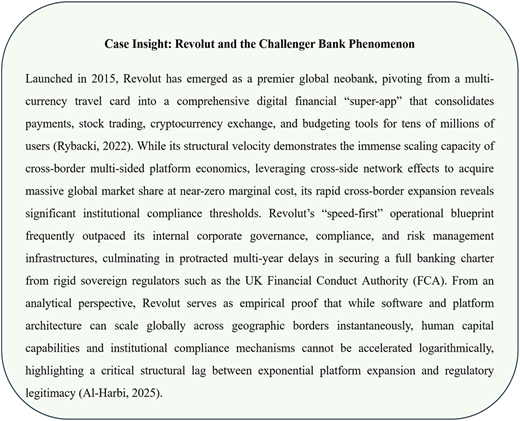
WealthTech platforms, including robo-advisors and algorithmic trading systems, democratise investment management (Wah, 2025). Decentralised finance (DeFi) extends these services by providing peer-to-peer asset management without traditional intermediaries (Schueffel, 2021). However, concerns about algorithmic bias, transparency, and market stability highlight the need for skilled personnel and robust regulatory frameworks (Bahangulu & Owusu-Berko, 2025). In response to these market demands, modern digital banking ecosystems have increasingly unbundled and re-aggregated these diverse WealthTech and payment functionalities into singular, unified ecosystems. This aggressive orchestration of consumer-facing super-apps highlights the immense market capture potential of multi-sided financial platforms, a phenomenon vividly illustrated by the growth trajectory and governance friction points of digital challenger banking ecosystems (see Figure 5).
4.4 Insurance technology (InsurTech)
InsurTech innovations harness artificial intelligence, telematics, and blockchain to enhance underwriting, automate claims processing, and enable personalised insurance policies (Cosma & Rimo, 2024). Usage-based insurance models and automated claims workflows improve operational efficiency and reduce costs, while expanding access to tailored insurance products for underserved populations (Susanto, 2022). Despite these benefits, challenges related to privacy, data security, and the ethical application of AI remain critical (Ahmad & Saxena, 2023; Liu, Ye, Zhang, & Zhang, 2023). Strengthening both regulatory and technical capacities – including robust data governance, secure IT infrastructure, and skilled personnel – is essential to ensure safe, reliable, and inclusive deployment of InsurTech solutions (Braun & Jia, 2025; Xu & Zweifel, 2020).
4.5 Blockchain, crypto-assets, and tokenisation
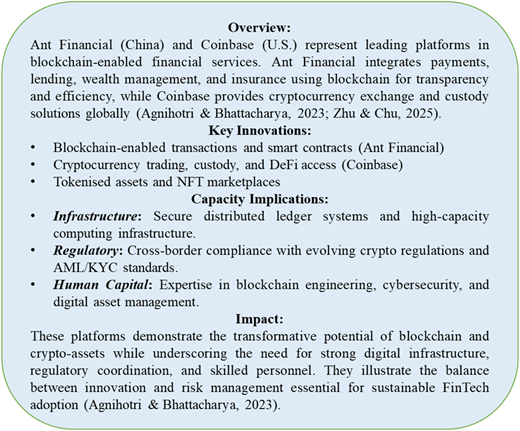
Blockchain technology underpins cryptocurrencies, stablecoins, tokenised assets, and NFTs, offering transparency, decentralisation, and programmability (Guiader, 2021). Despite these advantages, regulatory fragmentation, cybersecurity risks, and potential systemic impacts pose significant challenges (Eibinger, Brudna, & Weber, 2022; Hsieh & Brennan, 2022). Building resilient infrastructure and coherent cross-border regulation is essential for sustainable adoption (Ogunbiyi-Badaru, Alao, Dudu, & Alonge, 2024; Tanveer, Ishaq, & Hoang, 2025). Figure 6 presents a case on Ant Financial (China) and Coinbase (US).
4.6 Cross-cutting enablers
Artificial intelligence, big data analytics, cloud computing, and cybersecurity function as foundational enablers across all FinTech domains (Mızrak, 2025). Their integration accelerates innovation, enhances operational efficiency, and supports scalable financial services. However, effective adoption requires substantial investment in human capital, digital infrastructure, and governance frameworks. Ensuring ethical AI deployment, robust data privacy, and system reliability is critical to sustaining trust, protecting users, and maintaining the stability of digital financial ecosystems (Bran, Rughiniş, Ţurcanu, & Radovici, 2024). To critically evaluate how these individual domains intersect with core economic principles and give rise to systemic trade-offs, Table 3 synthesises the primary theoretical operations and inherent paradoxes across the ecosystem.
5. Regulatory and policy landscape
The expansion of FinTech innovations has significantly outpaced traditional regulatory frameworks, creating both opportunities and challenges for financial systems worldwide (Deb, 2025). Effective regulation is critical to ensure consumer protection, financial stability, and market integrity, while simultaneously enabling innovation and growth. FinTech developments, ranging from mobile payments and digital lending to blockchain platforms and AI-driven services, require regulators to carefully balance oversight with flexibility, avoiding undue restrictions while mitigating operational, systemic, and cyber risks (Iyelolu, Agu, Idemudia, & Ijomah, 2024). This regulatory tension demands a shift from backward-looking compliance frameworks to active regulatory technology (RegTech) solutions capable of matching the velocity of digital markets (Anagnostopoulos, 2018).
Globally, regulatory approaches vary considerably in philosophy and execution. In the United States, regulatory authorities emphasise consumer protection, market integrity, and compliance with existing banking and securities laws, often establishing dedicated FinTech offices to coordinate oversight (Deb, 2025). The European Union has implemented measures such as the Revised Payment Services Directive (PSD2) to promote open banking, alongside emerging frameworks for crypto-assets and digital finance (Herrera, 2025). China has adopted a more technology-driven, quasi-regulatory model, closely supervising major digital finance platforms while actively promoting financial inclusion and innovative payment solutions (Zekos, 2021). This highly centralised oversight addresses the core dynamics of platform economics; because two-sided digital financial markets lean heavily on cross-side network effects, they inherently breed rapid ecosystem scalability that quickly turns into market concentration and anti-competitive platform monopolies if left unchecked (Abdelkafi, Raasch, Roth, & Srinivasan, 2019; Rysman, 2009).
In sharp contrast to these advanced market models, emerging economies display deep structural and institutional variances. While Southeast Asian regulators frequently deploy a blend of state-directed open finance mandates and digital banking licences to transition informal sectors (Arner et al., 2020), Sub-Saharan Africa (SSA) has pioneered a unique, infrastructure-led “mobile-first” regulatory pathway (World Bank, 2022). Driven by a historic deficit in legacy branch banking infrastructure, SSA jurisdictions, most notably led by East African frameworks and West African monetary unions, traditionally utilised “test-and-learn” regulatory approaches that permitted non-bank telecommunications entities to issue electronic value (IMF, 2019). However, as the ecosystem matures, SSA faces an acute transition phase. Regulators across the region are aggressively moving away from ad-hoc forbearance toward formalised regulatory sandboxes, national financial inclusion strategies, and strict frameworks for agent banking and cross-border remittances (Tsanis, Aina, & Olubiyi, 2025). From the perspective of disruptive innovation theory, these localised SSA frameworks lower the cost structures and institutional barriers for marginal FinTech entrants, allowing them to scale simplified payment and mobile wallet solutions that democratise access among unbanked populations before progressively moving up-market to challenge legacy commercial banking networks (Chatterjee, 2025; Tsai, Lin, & Liu, 2020).
A comparison of these global approaches is summarised in Table 4.
Across all regions, common structural challenges persist. Regulatory fragmentation, cross-border inconsistencies, gaps in digital literacy, and limited institutional capacity can constrain FinTech's potential to enhance financial inclusion and efficiency (Bouriche, Hamli, & Bouriche, 2025). In addition, issues such as anti-money laundering (AML), know-your-customer (KYC) compliance, data privacy, cybersecurity, and systemic stability demand continual regulatory attention and technological investment (Arnone, 2024; Paterson, 2024). A comprehensive mapping of global oversight confirms that uniform market surveillance is often stymied by these regional imbalances, leaving the door open for regulatory arbitrage (Allen, Gu, & Jagtiani, 2021).
This comparative mapping highlights a critical institutional friction point unique to Sub-Saharan Africa. While advanced jurisdictions manage risks associated with complex capital market instruments, SSA regulatory authorities must build institutional capacity to govern highly asymmetrical partnerships between massive, capital-rich telecommunications providers and agile, cash-strapped local FinTech startups. Consequently, the capacity-building imperatives in the region are fundamentally structural, requiring a delicate balance between protecting telecommunications-driven systemic liquidity and fostering organic local software innovation.
Building capacity across these distinct regional dimensions is essential for sustaining trust, ensuring safe adoption, and supporting resilient digital financial ecosystems. Regulators must develop both technical and human capital capabilities to monitor complex digital platforms effectively, while financial institutions need the capacity to comply with evolving standards and integrate risk management practices (Tsanis et al., 2025). In this context, regulatory frameworks are not merely operational constraints but also structural enablers, shaping how FinTech can contribute to inclusive, efficient, and stable financial systems globally.
6. Opportunities and challenges
FinTech presents a unique set of opportunities that have the potential to transform financial systems globally. By leveraging digital platforms, AI, blockchain, and cloud technologies, financial services can become more inclusive, efficient, and accessible. Mobile banking and digital payment solutions expand access to previously unbanked populations, particularly in emerging markets, fostering financial inclusion and economic participation (Adelaja, Umeorah, Abikoye, & Nezianya, 2024; Umeaduma, 2023). Peer-to-peer lending, crowdfunding, and alternative investment platforms provide new channels for capital formation, reducing reliance on traditional intermediaries while offering diverse funding options for individuals and small businesses (Ajani & Elelu, 2025; Havrylchyk & Verdier, 2018). This shift fundamentally challenges standard financial intermediation theory (Allen & Santomero, 1997; Pyle, 1971); by substituting algorithmic scoring and decentralised ledger protocols for physical monitoring, these platforms structurally unbundle traditional asset/liability transformations, entirely redefining how liquidity risk and transactional trust are generated.
Beyond financial inclusion, FinTech enhances operational efficiency through automation, algorithmic decision-making, and real-time analytics, reducing costs for both providers and consumers (Nayak, 2025; Rahardja, Miftah, Rakhmansyah, & Zanubiya, 2025). It also enables the democratisation of investment and wealth management, with robo-advisory and DeFi platforms allowing broader participation in financial markets. In addition, FinTech can support environmental, social, and governance (ESG) initiatives by facilitating green finance, transparent reporting, and impact-oriented investments (Jordan, Röthlisberger, Meyer, & Affolter, 2023).
However, these opportunities are accompanied by significant challenges. Cybersecurity threats, data breaches, and privacy concerns pose systemic and reputational risks for both financial institutions and regulators (Oladinni & Odumuwagun, 2025). Digital exclusion remains a pressing issue, as populations without access to reliable internet, smartphones, or digital literacy are at risk of being left behind (Umeaduma, 2023). Shadow banking, regulatory arbitrage, and the rapid proliferation of unregulated digital assets can undermine financial stability and create new forms of systemic risk (Tsanis et al., 2025). This underscores the darker side of platform economics, where extreme network density concentrates massive volumes of systemic transaction flow within a few dominant tech architectures, exacerbating single-point-of-failure risks (Rysman, 2009). The ethical use of AI and algorithmic decision-making also demands careful oversight to prevent bias, discrimination, or unintended market distortions (Adelaja et al., 2024).
Addressing these challenges requires coordinated strategies to strengthen institutional, technical, and human capital capacities (Bouriche et al., 2025; Nayak, 2025). Anchored in institutional theory, this demonstrates that a FinTech ecosystem's survival is not just a function of tech code, but depends heavily on coercive and mimetic institutional configurations. Varying regional rules (rules-based vs. sandbox-led) completely alter the operational boundaries and compliance pressures that digital finance firms face (Svensson, Udesen, & Webb, 2019). Capacity-building efforts should also include consumer education to promote informed use of digital financial services and to foster trust in the evolving FinTech ecosystem (Deb, 2025). In all, the FinTech landscape is defined by a dynamic interplay of opportunities and challenges, and realising its transformative potential depends not only on technological innovation but also on the development of complementary capacities that ensure safe, inclusive, and resilient digital financial systems.
7. Emerging trends and future directions
The FinTech landscape continues to evolve rapidly, driven by technological innovation, shifting consumer expectations, and evolving regulatory frameworks. Among the most prominent emerging trends is the integration of artificial intelligence (AI) into financial services. AI-driven solutions, including predictive credit scoring, fraud detection, and automated advisory services, promise enhanced efficiency, accuracy, and personalisation, but also require advanced data analytics infrastructure, skilled personnel, and robust governance to ensure ethical and reliable deployment (Jamithireddy, 2023).
Embedded finance and super apps represent another transformative trend. By integrating financial services directly into non-financial platforms – such as e-commerce, ride-hailing, or social media apps – these models simplify user experience and expand access, particularly in emerging markets (Oko-Odion, 2025). However, they also introduce complexities related to regulatory compliance, data sharing, and systemic risk, highlighting the need for coordinated capacity-building across platforms, regulators, and service providers (Faheem, 2021).
Quantum computing and advances in cryptography are poised to reshape the security and computational landscape for financial services. While these technologies offer unprecedented processing power and potential for secure transactions, they simultaneously pose threats to existing cryptographic standards, necessitating proactive investment in quantum-resistant infrastructure and risk management strategies (Wheatley, 2024).
Sustainability and green FinTech represent a growing intersection of financial innovation and environmental objectives. Platforms facilitating ESG-compliant investments, green bonds, and carbon trading enable the mobilisation of capital toward environmentally responsible initiatives. Successfully leveraging these tools requires regulatory clarity, institutional capacity for monitoring, and public awareness to ensure meaningful impact (Magableh et al., 2025).
Finally, geopolitical developments and cross-border dynamics are increasingly influencing the FinTech ecosystem. Variations in regulation, market access, and technological standards across jurisdictions create both opportunities for expansion and risks of fragmentation. Firms and regulators must develop capabilities to navigate these complex environments, ensuring compliance, operational resilience, and the capacity to leverage global innovation networks (Wang, 2025).
In sum, the emerging trends indicate that the next phase of FinTech will be characterised by deeper technological integration, broader market participation, and heightened regulatory and operational complexity. Realising the benefits of these innovations will require strategic investments in institutional, technical, and human capital capacities, ensuring that digital financial systems remain inclusive, efficient, and resilient.
8. Conclusion and implications
This paper has provided a comprehensive overview of the current FinTech landscape, tracing its conceptual foundations, historical evolution, core domains, enabling technologies, regulatory frameworks, and emerging trends. Across payments, lending, wealth management, insurance, blockchain, and cross-cutting enablers, FinTech innovations offer significant opportunities to enhance financial inclusion, operational efficiency, and access to diversified financial services. At the same time, these innovations introduce new challenges, including cybersecurity risks, digital exclusion, regulatory gaps, and ethical considerations associated with AI and automated decision-making.
A capacity-building lens reveals that realising the transformative potential of FinTech requires coordinated investments in institutional, technical, and human capital capabilities. Regulators must develop adaptive frameworks, enhanced monitoring systems, and expertise to manage evolving risks, while financial institutions need robust governance, infrastructure, and skilled personnel to leverage technological innovations safely. Consumer education and digital literacy initiatives are also essential to fostering trust, ensuring informed adoption, and mitigating exclusion. To translate these macro-level capacity priorities into a strategic action plan for ecosystem participants, Table 5 outlines an operational implementation roadmap across varying development horizons.
8.1 A proposed research agenda
While the current landscape is rapidly maturing, significant gaps remain that require scholarly attention. Future research should prioritise the following four pillars:
Longitudinal impact assessments: Much of the current literature is cross-sectional. Future studies should employ longitudinal designs to assess the long-term impact of FinTech adoption on household welfare and SME resilience, particularly in Sub-Saharan Africa.
The governance of emerging tech: As AI and Quantum Computing move from theory to application, research is needed on “Algorithmic Accountability.” How can regulatory sandboxes evolve to audit autonomous financial agents without stifling innovation?
Green FinTech and sustainability: There is a critical need to explore the “FinTech-ESG Nexus.” Research should investigate how blockchain-enabled carbon credit markets or green digital bonds can mobilise private capital for climate transitions in emerging economies.
Inclusive digital design: Future inquiries should move beyond “access” to “usage and quality.” Scholars should investigate the psychological and behavioural barriers to FinTech adoption among marginalised groups, ensuring that the transition to digital finance does not inadvertently deepen the digital divide.
Overall, FinTech represents both an unprecedented opportunity and a complex challenge for global financial systems. Its continued evolution will depend not only on technological innovation but also on the development of complementary capacities that align innovation with regulatory oversight, institutional readiness, and societal needs. By addressing this research agenda, policymakers and practitioners can move toward building a more sustainable, inclusive, and resilient digital financial future.
Authors’ contributions
All authors contributed equally to conceptualisation, methodology, investigation, writing-original draft, and writing-review and editing.