


The purpose of this research is to examine fans' perceptions of pro-environmental sustainability initiatives promoted by a professional sport club and the ensuing effects on a triple bottom line (TBL) approach (i.e. fans' socially, environmentally and economically favourable behaviours).
Data were collected in two different steps using an online self-administered questionnaire (n1 = 1,043; n2 = 2,167) distributed to fees-paying members registered in the club's database. The analysis was carried out though structural equation modelling.
The results indicate good psychometric properties of the scale used to measure fans' perceptions of a club's pro-environmental sustainability initiatives (perceptions of pro-environmental sustainability initiatives in sports; p-PESIS). Additionally, there is a positive effect of p-PESIS on fans' social behaviours as well as on their daily environmental actions. Furthermore, p-PESIS also shows a positive effect at improving fans' economic activities towards the club.
Extending previous research, the authors tested a scale to measure fans' responses to pro-environmental sustainability initiatives in sport and examined their links to the TBL dimensions. Pro-environmental sustainability initiatives in sport benefit not only the club itself (by reinforcing fans' activities with the club) but also society as a whole, as it can promote fans' conscientiousness and likelihood to behave in environmentally and socially favourable ways.
Environmental sustainability has received growing interest due to the positive impact of pro-environmental behaviours on combating climate changes and preserving the planet (Trail and McCullough, 2018). Consistent with this view, sport organizations are increasingly engaging in sustainable actions (Casper et al., 2014). Sustainability has taken a salient place among many business strategies (Blankenbuehler and Kunz, 2014), and from a business perspective, demonstrating an organization's environmental stewardship can create value and enhance firm performance (Maditati et al., 2018). As noted by Trail and McCullough (2020, p. 109), “the sport industry has deepened its commitment to implementing and deploying environmental sustainability initiatives”, and recent studies suggest that engagement in sustainability initiatives may enhance both the economic and social goals of sports organizations (McCullough et al., 2020b).
Like other industries, sport relies on the natural environment and natural resources to produce goods, deliver services and hold events (Thibault, 2009). Thus, it is important for clubs—and for society in general—to acknowledge that their activity “has a measurable environment impact” (Casper et al., 2017, p. 109). Due to the strong emotional connection fans have towards their clubs, professional sport clubs are “highly influential in our society” (Walzel et al., 2018, p. 511) and “appealing platforms for promoting environmental sustainability” (Kellison and Cianfrone, 2020, p. 6). For example, they play a meaningful role in raising awareness among fans about the need to adopt environmentally friendly behaviours (Inoue and Kent, 2012b). Professional sport clubs may leverage the strong connections formed with fans to promote environmentally sustainable actions at both the stadium and in fans' homes (Casper et al., 2017, 2020).
With respect to sustainable initiatives, professional sport clubs must have clear objectives, explicit measures of success, or specific goals of what is intended to be achieved. However, as McCullough et al. (2020c) observed, organizations often fail to engage in this critical stage. Instead, they signal their care for the environment without identifying measurable outcomes to assess the effectiveness of their pro-environmental initiatives. One way a club can assess its pro-environmental sustainability strategy is through fans' perceptions of the club's pro-environmental initiatives and the influencing effect of these initiatives on fans' future behaviours from a triple bottom line (TBL) perspective, which encompasses the fans' socially, environmentally and economically favourable behaviours (Kellison and Kim, 2014). The TBL approach is useful in analysing an organization's sustainability-related practices, as it helps to highlight a club's exploitation (or lack thereof) of their pro-environmental behaviour for the achievement of three different types of potential benefits. Conceptually, the TBL is a well-established approach; however, to date, its three components—social, environmental and economic—have yet to be empirically tested in the context of fan-related outcomes resulting from the perceived sustainability strategies promoted by sport organizations.
In light of this paucity in the literature, the purpose of this study is to examine fans' perceptions of pro-environmental sustainability initiatives promoted by a professional sport club and the ensuing effects of these initiatives on its TBL (i.e. on fans' socially, environmentally and economically favourable behaviours). Specifically, we evaluate the influence of fans' approval and adherence to a club's pro-environmental sustainability initiatives on TBL dimensions. As noted by Trendafilova and McCullough (2018, p. 10), “more scholarly work is necessary if we are to keep up with the efforts of the sport sector when it comes to environmental sustainability”. Through this research, we endeavour to contribute to both scholarship and practice by examining how fans respond to a club's pro-environmental practices across all three dimensions of the TBL. Furthermore, by situating this study in a Western European country, we respond to the call by Wall-Tweedie and Nguyen (2018, p. 17) to “explore [environmental sustainability] engagement in professional sport beyond the narrow context of North American professional sport, in order to better understand barriers, identify opportunities, inform best practice and promote accountability”.
The remainder of this article is organized as follows. First, we present the theoretical background and associated hypotheses, followed by a description of the research methods. Next, we present the results, key findings and implications. We conclude with a discussion of the theoretical and practical implications, limitations and future research avenues.
Literature review
Sustainability, sport and fans
Sustainability may be defined in myriad ways, but from a business perspective, it is generally understood as any activity that “meets the needs of the present without compromising the ability of future generations to meet their own needs” (World Commission on Environment and Development, 1987, p. 7). In the sport industry, sustainable practices “have the potential to promote public commitment to environmental protection” (Trendafilova et al., 2014, p. 13). Several studies indicate that for sport organizations, their involvement in sustainability initiatives is motivated by both economic and social incentives (Blankenbuehler and Kunz, 2014) as well as other institutional pressures (Babiak and Trendafilova, 2011). Although it is not always possible to specify sports organizations' motives, both internal and external factors (e.g. cost cutting, stakeholder pressure, pressure from society in general) can influence organizations to adopt environmentally friendly practices (McCullough and Cunningham, 2010). The development of a sustainable sports industry provides society at large with a venue to understand and confront these issues, thereby contributing to a more sustainable future.
Given the public's growing attention on the global issue of climate change and the sport industry's increasing engagement in environmental sustainability, there has been a rise in research examining how stakeholders like fans react to sport organizations' pro-environmental actions (see Casper et al., 2020). For example, Casper et al. (2014) examined the relationship between spectators' environmental behaviour intentions and a college athletic department's environmental education efforts during a college basketball game. As a result of the “green game” event, fans desired that in future events, the athletic department incorporate environmentally sustainable actions. In addition, Casper et al. (2020) found that a season-long environmental campaign led fans to adopt more sustainable behaviours in their personal lives. They also noted a greater recognition of the team's environmental efforts from the pre-season to the end of the season, namely in recycling, water conservation, and composting, thus demonstrating the organization may also benefit from image enhancement.
The work of Casper and colleagues suggested that fans could be receptive to messages that promote climate action. Further, Kellison and Cianfrone (2020) showed the strength of a fan's connection to the team could supersede other personal characteristics like political affiliation or environmentalist (or non-environmentalist) identity. That is, through a superordinate social identity (i.e. a social identity that transcends the prototypical ingroup–outgroup membership), fans may be more likely to support pro-environmental actions.
This line of research indicates that sport organizations that adopt pro-environmental business behaviours may reach benefits that extend traditional social (e.g. increased pride among environmentally conscientious fans), environmental (e.g. lower carbon emissions and improved air quality) and economic (e.g. reduced utility costs) outcomes. For instance, as discussed by McCullough and Trail (2022), promoting sustainability initiatives and engaging with fans may activate social benefits like word-of-mouth promotion and increased support for social partners, which in turn may produce additional economic benefits (beyond the savings associated with reduced utility costs), ultimately maximizing the organization's bottom line (see also Lichtenstein et al., 2004). Additionally, this word-of-mouth promotion may prompt others in a peer group to adopt more sustainable behaviours. These benefits are discussed further in the following section.
Triple bottom line (TBL)
The TBL refers to the social, environmental, and economic outcomes generated by pro-environmental business behaviours (Isil and Hernke, 2017). First, the social dimension of the TBL “can refer to individuals, communities, regions or organizations as a whole” (Schulz and Flanigan, 2016, p. 455). It may include dimensions such as awareness of the importance of sustainability initiatives and environmentally favourable behaviours in other social events and at home (Kellison and Kim, 2014). A key distinction of the TBL's social component from the economic and environmental components is the presence of “others”—friends, family members, and fans with whom an individual may interact in their personal lives or at social events (Isil and Hernke, 2017). However, as argued by Svensson et al. (2018), the social component of the TBL has historically received less attention from scholars, as neither the resource-based nor natural resource-based views typically found in TBL research “clearly focuses on social capabilities” (p. 973). In light of this gap, Tate and Bals (2018) introduced a social resource-based view of organizations; in addition to bringing the TBL's social component into stronger focus, they offered a succinct definition of social capabilities:
The capability to leverage internal and/or external stakeholder relationships with the goal of reciprocal exchange. The exchange can not only concern information, products, labor force, and/or financial means, but also more intangible elements such as compassion, education, and care. The way to combine these capabilities requires solving tradeoffs, which may require additional altruistic rather than purely economic motives. (Tate and Bals, 2018, p. 808)
In other words, the social component of the TBL includes both tangible and intangible behaviours that centre on the interaction between the organization and its stakeholder (and among stakeholders). This component is particularly applicable in a sport fandom context, as sport has been shown to be a source of social support and meaning among those who identify with sport clubs (Delia et al., 2022).
Second, assuming a sport organization's behaviours are legitimate and intentional—and not simply attempts at “greenwashing” (Johnson and Ali, 2018)—they will produce positive outcomes for the natural environment. Likewise, pro-environmental behaviours learned and practiced by fans at the venue (e.g. recycling, use of public transportation) also yield environmental benefits. For instance, underscoring the potential influence sport organizations could have on their fans' environmental behaviours, Casper et al. (2020, p. 358) provided “empirical support to industry claims about the ability to leverage the social platform of sport to engage new populations to environmental messages to promote sustainable behavioural change that can combat climate change, and promote a more sustainable world”.
Third, because sustainability initiatives are voluntary and not yet considered standard practice, firms that adopt them may enjoy direct and indirect economic benefits like decreased utility costs associated with more efficient stadium systems and more positive perceptions from the general public (Kellison and McCullough, 2016). Following this rationale, in the current study, social benefits refer to fans' increased awareness of environmental issues and the expectations they will act more sustainably at other social events and with their peers. Second, environmental benefits represent the ecological improvements that result from fans' more sustainable daily activities and consumption behaviours. Third, economic benefits refer to the club potential revenue growth resulting from fans' positive response to the pro-environmental initiatives promoted by the club.
Twenty-five years after first conceptualizing “triple bottom line,” Elkington (1998, 2018) argued the term had become misused, as businesses were misrepresenting the TBL and using it solely as an accounting tool. On the contrary, the TBL was intended to “provoke deeper thinking about capitalism and its future, but many early adopters understood the concept as a balancing act, adopting a trade-off mentality” (p. 8). Despite these criticisms, the concept—when used appropriately—has generally been presented favourably in the academic literature (Isil and Hernke, 2017).
The TBL has been applied in various fields, including urban planning, finance, real estate and business (Hammer and Pivo, 2017). Within sport management, Babiak and Trendafilova's (2011, p. 17) exploratory study found elements of all three TBL components in sport organizations' rationale for engaging in pro-environmental activities, and that simply put, “being environmentally conscious may in fact be good for business”. Elsewhere, Cooper and Alderman (2020) used the TBL to frame their examination of the impact of the COVID-19 pandemic on the 2020 NCAA Men's Division I Basketball Tournament. The authors stated that the pandemic-induced pause in spectatorship should prompt sport and event managers to consider restructuring sport, events and tourism in a way that “takes seriously the triple-bottom line notion of balancing the beneficence of economic and environmental effects of travel; empowers and enhances local, bottom-up sustainable economies; and recognizes the important role sport and event tourism play in society writ large” (Cooper and Alderman, 2020, p. 532). Furthermore, Johnston et al. (2021) contended that the TBL could be a valuable mechanism for measuring the impact of major sporting events like the Commonwealth Games.
The social, environmental and economic outcomes of the TBL are separate but interrelated (Svensson et al., 2018). In practice, some components focus on (sport) organizational performance (e.g. economic), while others are more frequently applied to external stakeholders like fans (e.g. social), but conceptually, they form a “shared TBL value” (Tate and Bals, 2018). According to Porter and Kramer (2011), shared value “involves creating economic value in a way that also creates value for society by addressing its needs and challenges. Businesses must reconnect company success with social progress” (p. 64). That is, the three components of the TBL may reflect internal benefits to the organization and external benefits to society. For instance, a sport organization that engaged in pro-environmental behaviour may not only benefit from cost savings, but they may also contribute positively to the environmental problem of climate change, which is shared across society by both fans and ordinary citizens.
As Kellison and Kim (2014) argued, organizations that desire to maximize all three TBL dimensions must take a multifaceted approach. Analysing the marketing techniques of professional sports clubs competing in sustainably designed stadiums, the authors posited that organizations would benefit by engaging specifically in the TBL's social component. While building a pro-environmental facility has immediate positive environmental, social and economic benefits, marketing that facility would lead to additional social benefits, which in turn may produce increased economic benefits, ultimately resulting in TBL maximization. That is, through traditional commercial marketing techniques, the organization could attract a new group of consumers (thereby improving its economic bottom line); correspondingly, through a social marketing strategy, the organization could induce pro-environmental behaviour change among their existing fans (thereby improving the environmental bottom line). At the time of their study, Kellison and Kim (2014, p. 46) found that clubs had not made the marketing of their pro-environmental initiatives a strategic priority. As a result, the clubs were “missing out on both the potential to attract new consumers who are interested in sustainability and the opportunity to be a public voice in favor of ecological mindfulness”.
Hypotheses development
In the current research, we aimed to examine the relationship between fans' perceptions of pro-environmental sustainability initiatives in sports and the ensuing effects on fans' socially, environmentally and economically favourable behaviours. Figure 1 presents the hypothesized model and illustrates the link between fans' perceptions and the three dimensions proposed by TBL to measure the impact of sustainable activities. This model is grounded in stakeholder theory (Freeman et al., 2010), which argues that an organization's performance in affected at least in part by how they manage their relationships with stakeholders (Carroll and Shabana, 2010). That is, organizations are affected by how stakeholders (e.g. fans) perceive their efforts and whether they engage in institutionalized dialogue among each other (Babiak and Trendafilova, 2011). Numerous strategies may be deployed to manage the perceptions of influential stakeholders, many of which fall under corporate social responsibility (CSR), or in the context of the current study, “green CSR” (Babiak and Trendafilova, 2011; Carroll and Shabana, 2010). Investigating the link between corporate social performance and corporate financial performance, Orlitzky et al. (2003, p. 427) found that “corporate virtue in the form of social and, to a lesser extent, environmental responsibility is rewarding in more ways than one”, suggesting that an organization's successful CSR strategy can influence other aspects of the TBL (i.e. financial).
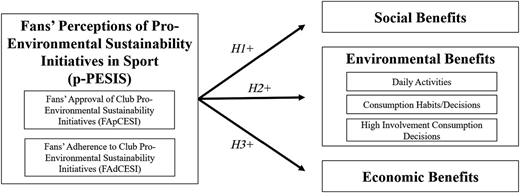
The first outcome relates to social benefits resulted from fans' perceptions of club pro-environmental sustainability initiatives. Based on standardized interviews conducted with professional sport organizations, Kellison and Kim (2014, p. 38) argued that sport organizations could produce social benefits from two different groups: (1) “green consumers” with relatively low levels of existing fan affinity that could become attracted to the team and (2) current consumers of the team, who could be moved to “personally engage in pro-environmental activities as a result of inspiration from the team's environmental initiatives”. These social benefits might include increasing awareness of environmental issues, inducing pro-environmental behaviours at other social events (like sporting events and concerts) and deepening sustainable activities among family and friends (Kellison and Kim, 2014). Based on the premise that sport environmental practices may generate social benefits, we endeavour to empirically examine how future fan behaviours may be influenced by a club's pro-environmental initiatives. That is, as fans are primary stakeholders who not only affect but are also affected by sport organizations (Senaux, 2008), one should examine how their perception of these initiatives produce positive future social behaviours. Therefore, we proposed that,
Fans' perceptions of club pro-environmental sustainability initiatives will positively influence favourable social behaviours.
Climate change is a growing interest subject in sport industry (McCullough and Kellison, 2017), and sport organizations may perform a key role in encouraging fans to engage in more environmentally responsible behaviours (Casper et al., 2014; Cunningham et al., 2020). For instance, Inoue and Kent (2012b) studied the process through which sport organizations can influence consumers to behave in an environmentally friendly manner. They found that through consumers' internalization of the club's values (i.e. perceived congruence between person–club), they supported club environmental initiatives and intended to engage in more environmentally friendly behaviours in their daily life. Meanwhile, Trail and McCullough (2018) noted that internal constraints (e.g. lack of knowledge and lack of worth) of participants in a running event preceded their external constraints (e.g. to properly discard trash), which will influence future sustainability intentions. Collectively, these studies demonstrate that sport fans and event participants may be driven (i.e. more likely) to adopt personal pro-environmental behaviours if they are exposed to pro-environmental messaging and practices from sport organizations (McCullough and Kellison, 2016). Based on this, and considering that fans often internalize the values of their sport clubs into their own values system (Inoue and Kent, 2012b), we proposed that,
Fans' perceptions of club pro-environmental sustainability initiatives will positively influence favourable environmental behaviours.
When it comes to communicating sustainability initiatives and assessing its integrated impact, most sport organizations do not emphasize the economic benefits (Ciletti et al., 2010). And this is still a paradox because sport, as a “powerful instrument for change”, can nevertheless serve as an “engine of economic growth” (Kellison et al., 2015, p. 64), and clubs' financial success is pivotal to the success of their entire operations (Dimitropoulos and Tsagkanos, 2012). McCullough et al. (2020b, p. 393) stated that “sport events can implement sustainability initiatives that are not only good for the environment but also for their financial bottom line”. Similarly to the economic benefits derived from CSR, fans of a club that champions environmental initiatives may develop closer connections with the club and, as a result, adopt more favourable consumption behaviours that will benefit their club (Walzel et al., 2018). As discussed previously, researchers have suggested that sport organizations could capture the attention of traditional non-consumers through social marketing strategies that promoted clubs' environmental stewardship (Kellison and Kim, 2014). As consumers pursue relationships with brands that share their values, and fans' internalization of club values often generates positive behavioural intentions towards these clubs (Biscaia et al., 2013; Inoue and Kent, 2012a), pro-environmental sport organizations can benefit not only from strengthening the link with its current fans, but also from “opportunities to connect to previously untapped markets in the community” (Kellison and Mondello, 2012, p. 510). Based on this, we propose that,
Fans' perceptions of club pro-environmental sustainability initiatives will positively influence favourable economic behaviours towards the club.
Methods
Participants and design
To investigate the relationship between a sport organization's environmental sustainability initiatives and the social, environmental and economic benefits associated with the TBL, we employed a quantitative research design. Through a partnership with FC Porto, data were collected using an online, self-administered questionnaire. FC Porto is a Portuguese professional football club and among the most successful in Europe. In 2020, FC Porto was ranked in the top 15 of the best football clubs in the world, according to the International Federation of Football History and Statistics (IFFHS, 2021). The club has 137,750 paying members (Jogo, 2020) and is very close to the top 10 in football clubs by number of fees-paying members (Finance Football, 2021). Additionally, among all Portuguese clubs, FC Porto has the largest number of followers on social networks, including Instagram, Twitter, Facebook, YouTube and TikTok, with more than 7 million followers (Football Industry, 2020). FC Porto has also been commonly recognized for its commitment to environmental issues. For example, in 2007, Estádio do Dragão, the club's stadium, was the first to be recognized worldwide under quality and environmental management standards ISO 9001 and 14,001 (FC Porto, 2021). FC Porto is also aligned with the United Nations' (UN) sustainable development goals (FC Porto, 2021), and has partnered with UEFA in projects aiming to reduce carbon footprint in the stadium (FC Porto, 2022).
The survey was distributed to paying members of the club, as registered in the club's database. To reduce response bias, such as social desirability bias or acquiescence, the researchers reinforced in the questionnaire's foreword that there were no right or wrong answers and that the information to be collected was anonymous and confidential (Podsakoff et al., 2003). The data collection process was carried out in two different steps. In the first step, we aimed to examine psychometric properties of the scales used, through 1,043 valid responses. In the second step, the structural model was tested, and a total of 2,167 valid responses were collected. The questionnaires were distributed to different sets of registered fans from the club's database in order to prevent participants from step 1 also being in step 2. Relatedly, participants' IP addresses were also compared to avoid duplicate responses. Appendix shows the demographic profile for each research step and no significant demographic differences were found among sample characteristics.
Measurement
The questionnaire had four main sections. The first described the general research objectives, reinforced the anonymity and confidentiality of the data, ensured that all respondents were above 18 and obtained the informed consent. The second section confirmed each respondent's attendance of at least one live game of FC Porto in the last season as well as their ownership of at least one season ticket; these items were used as control variables because existent behaviours often influence future related behaviours (Biscaia et al., 2017). The third section measured the constructs that constitute the proposed research model. The final section covered the demographic information of the respondents; this information also served as control variables due to the fact that individual characteristics can shape reactions to sport clubs (Yim and Byon, 2020). The scale items used to measure the proposed constructs were rated on a 7-point scale with the anchors “strongly disagree” and “strongly agree.” As this study was conducted with fees-paying members of a club and these individuals often have a strong identification with their clubs (Biscaia et al., 2016), common measures of club identification were not included to prevent potential low variance in responses.
The proposed construct of Fans' Perceptions of Pro-Environmental Sustainability Initiatives in Sport (p-PESIS) was composed by two dimensions: Fans' Approval of Club Pro-Environmental Sustainability Initiatives (FApCESI) and Fans' Adherence to Club Pro-Environmental Sustainability Initiatives (FAdCESI). FApCESI contained three items adapted from Casper et al. (2020) and Kellison and Cianfrone (2017), and Cronbach's alpha was 0.842 in step 1. FAdCESI included three items—fans' awareness, interest and intention to participate—based on the classic hierarchical AIDA model proposed by Strong (1925) and adapted from Escadas et al. (2020) and Yuksel et al. (2017). These items have been widely used and discussed in sports marketing (Hoek, 1999; McCullough et al., 2020a), ethical marketing (Escadas et al., 2019, 2020) and sustainable marketing literature (Panda et al., 2020; Suki, 2016); the Cronbach's alpha for the FAdCESI measure was 0.810 in step 1.
Based on the dimensions of the TBL, the model's three outcome variables were social benefits, environmental benefits and economic benefits towards the club. First, the social benefits of fans' perception about club pro-environmental sustainability initiatives were measured through three items adapted from Casper et al. (2020), and the Cronbach's alpha was 0.910 in step 1. The environmental benefits included three dimensions exploring different levels/settings of personal environmental commitment: regular pro-environmental daily activities, pro-environmental consumption decisions and pro-environmental high involvement consumption decisions. The items measuring “pro-environmental daily activities” were adapted from Kellison and McCullough (2020), the items assessing “pro-environmental consumption habits/decisions” were selected from Gallup (2021), and the items examining “pro-environmental high involvement consumption decisions” were adapted from Bahja et al. (2019), Li et al. (2021) and Foti and Devine (2019). The Cronbach's alpha for each subdimension of environmental benefits was 0.919, 0.844 and 0.909, respectively. Finally, the future economic benefits towards the club were measured through a three-item scale proposed by Biscaia et al. (2018), and the Cronbach's alpha was 0.862. All constructs and items are depicted in Table 2.
Psychometric properties of the variables used in Step 1
| Constructs | First-order | Second-order | |||
|---|---|---|---|---|---|
| Items | Loading | Z-value | Loading | Z-value | |
| p-PESIS (CR = 0.755; AVE = 0.612; Alpha = 0.847) | |||||
| Fans' Approval of Club Pro-Environmental Sustainability Initiatives (FApCESI) (CR = 0.852; AVE = 0.660; Alpha = 0.842) | IT1 - FC Porto pro-environmental sustainability initiatives positively influence my support as a fan | 0.857 | 33.01 | 0.889 | 25.73 |
| IT2 - I am prouder of a cub that promotes pro-environmental sustainability initiatives | 0.710 | 25.27 | |||
| IT3 - Because FC Porto carries out pro-environmental sustainability initiatives, I am more loyal to the club | 0.861 | 33.23 | |||
| Fans' Adherence to Club Pro-Environmental Sustainability Initiatives (FAdCESI) (CR = 0.841; AVE = 0.651; Alpha = 0.810) | IT1 - I am aware of pro-environmental sustainability initiatives carried out by FC Porto | 0.524 | 17.53 | 0.658 | 19.89 |
| IT2 - I have interest in pro-environmental sustainability initiatives promoted by FC Porto | 0.924 | 36.61 | |||
| IT3 - I will participate in pro-environmental sustainability initiatives promoted by FC Porto | 0.908 | 35.68 | |||
| Social Benefits (CR = 0.914; AVE = 0.780; Alpha = 0.910) | IT1 - FC Porto pro-environmental sustainability initiatives make me more aware about the importance of environmental sustainability | 0.841 | 32.86 | – | – |
| IT2 – Pro-environmental sustainability initiatives made by FC Porto influence my environmental behaviours at other social events (music, arts, culture or sports) | 0.904 | 36.86 | |||
| IT3 - FC Porto pro-environmental sustainability initiatives influence my environmental behaviours with my family and friends at-home | 0.903 | 36.85 | |||
| Environmental Benefits (CR = 0.919; AVE = 0.791; Alpha = 0.939) | |||||
| Daily Activities (CR = 0.927; AVE = 0.810; Alpha = 0.919) | As a result of FC Porto pro-environmental sustainability initiatives, in my personal daily life | 0.839 | 24.52 | ||
| IT1 - I monitor and reduce the water I use | 0.952 | 41.06 | |||
| IT2 - I monitor and reduce the energy I use | 0.965 | 42.11 | |||
| IT3 - I separate waste and recycling | 0.769 | 29.25 | |||
| Consumption Habits/Decisions (CR = 0.877; AVE = 0.705; Alpha = 0.844) | As a result of FC Porto pro-environmental sustainability initiatives, in my personal daily life | 0.953 | 27.37 | ||
| IT1 - I buy biodegradable products | 0.927 | 32.92 | |||
| IT2 - I eat more vegetables and less meat | 0.779 | 28.02 | |||
| IT3 - I made my home more energy efficient (e.g. better insulation, solar panels, etc.) | 0.805 | 29.21 | |||
| High Involvement Consumption Decisions (CR = 0.911; AVE = 0.774; Alpha = 0.909) | As a result of FC Porto pro-environmental sustainability initiatives, in my personal daily life | 0.872 | 29.22 | ||
| IT1 - When choosing my vacations, I take into account environmental concerns | 0.853 | 33.68 | |||
| IT2 - When buying a car, I take into account environmental concerns | 0.901 | 36.81 | |||
| IT3 - When buying a home, I take into account environmental concerns | 0.884 | 35.66 | |||
| Economic Benefits (CR = 0.870; AVE = 0.691; Alpha = 0.862) | As a result of FC Porto pro-environmental sustainability initiatives, as a supporter | – | – | ||
| IT1 - I intend to attend more games of FC Porto | 0.833 | 31.41 | |||
| IT2 - I intend to buy more products/services of FC Porto | 0.878 | 33.90 | |||
| IT3 - I recommend games of FC Porto to other people | 0.779 | 28.61 | |||
Note(s): CR = Composite reliability; AVE = Average Variance Extracted; Model fit (First-Order): χ2(166) = 737.854 (p < 0.001); χ2/df = 4.445; CFI = 0.967; TLI = 0.958; NFI = 0.958; RMSEA = 0.057 (CI = 0.053-0.062); SRMR = 0.0439. Model fit (Second-Order): χ2(176) = 835.878 (p < 0.001); χ2/df = 4.749; CFI = 0.962; TLI = 0.955; NFI = 0.952; RMSEA = 0.060 (CI = 0.056-0.064); SRMR = 0.0501
Common method variance
Common method variance is a potential source of measurement error when the data come from a single source, using self-reporting measures and cross-sectional research design (MacKenzie and Podsakoff, 2012; Podsakoff et al., 2003). Complementary to Podsakoff et al.'s (2012) preventative procedural remedies adopted when designing the questionnaire (e.g. short questionnaire; clear and accurate wording; anonymity and confidentiality; an explanation that there are no correct or incorrect answers; and scales measuring predictors and criterion constructs separated spatially), Harman's single-factor test was used to determine if most of the variance could be explained by a single factor. An exploratory factor analysis with all variables loaded on an unrotated single factor solution was conducted. The results showed that the variance explained by the single factor was below the cut-off criteria of 50% for both steps 1 and 2 (Podsakoff et al., 2003). Further, the common latent factor (CLF) method was also used to examine the common variance among all observed variables. The square of the unstandardized weight of each constrained path of the CLF indicated that the amount of variance explained by the new latent factor was below the recommended threshold of 50% (Podsakoff et al., 2003), which again suggests that common method bias was not a significant problem in our data.
Results
Step 1: assessment of the measures
In the first step of the research, the psychometric properties of the scales used were assessed, through a sample of 1,043 FC Porto paying fans. Confirmatory Factor Analysis (CFA) was employed using AMOS 27. Table 1 provides an overview of the descriptive statistics and correlations between the constructs. Individual item reliability was examined by evaluating the standardized regression weights of each measure on its corresponding construct (Silva et al., 2021). All factor loadings were equal or greater than 0.524 (Table 2), thus over the cut-off criteria of 0.50 (Hair et al., 2014). Internal consistency of the constructs was measured through composite reliability (CR; Anderson and Gerbing, 1988; Hair et al., 2014), and all scores were above the recommended threshold of 0.70, ensuring adequate internal consistency (Fornell and Larcker, 1981). Convergent validity was evaluated through average variance extracted (AVE). The results showed that all the constructs exceeded the minimum recommended criterion of 0.50 (Hair et al., 2014), suggesting that a large portion of the variance was explained by the constructs (Fornell and Larcker, 1981). Further, evidence of discriminant validity was tested through the square root of AVE, which should be greater than inter-construct correlations (Fornell and Larcker, 1981). The values of the square root of the AVE can be seen on the diagonal of Table 1 and indicate that the criterion of discriminant validity was met for all the constructs analysed.
Step 1 – Descriptive statistics and discriminant validity results of the first-order measurement model
| M | SD | 1 | 2 | 3 | 4 | 5 | 6 | 7 | |
|---|---|---|---|---|---|---|---|---|---|
| 1. FApCESI | 5.64 | 1.38 | 0.812 | ||||||
| 2. FAdCESI | 5.63 | 1.27 | 0.585*** | 0.807 | |||||
| 3. Social Benefits | 5.54 | 1.52 | 0.751*** | 0.531*** | 0.883 | ||||
| 4. Daily Activities | 5.74 | 1.46 | 0.493*** | 0.346*** | 0.482*** | 0.900 | |||
| 5. Consumption Habits/Decisions | 4.85 | 1.55 | 0.542*** | 0.405*** | 0.485*** | 0.803*** | 0.840 | ||
| 6. High Involvement Consumption Decisions | 4.96 | 1.61 | 0.589*** | 0.417*** | 0.525*** | 0.706*** | 0.836*** | 0.880 | |
| 7. Economic Benefits | 6.16 | 1.21 | 0.502*** | 0.472*** | 0.499*** | 0.526*** | 0.499*** | 0.434*** | 0.831 |
Note(s): FApCESI = Fans' Approval of Club Pro-Environmental Sustainability Initiatives; FAdCESI = Fans' Adherence to Club Pro-Environmental Sustainability Initiatives. Square root of the AVE on the diagonal to test Discriminant Validity (Fornell and Larcker, 1981); ***p < 0.001
The results of the first-order measurement model showed an acceptable fit to the data: χ2(166) = 737,854, p < 0.001; χ2/df = 4.445; Comparative Fit Index (CFI) = 0.967; Tucker–Lewis Index (TLI) = 0.958; Normed Fit Index (NFI) = 0.958; Root Mean Square Error of Approximation (RMSEA) = 0.057; Standardized Root Mean Square Residual (SRMR) = 0.0439. The chi-square value was significant due to its sensitivity to sample size (Bagozzi and Yi, 2012), but its ratio to the degrees of freedom was lower than the recommended criteria of 5.0 (Wheaton, 1987). CFI, TLI and NFI were above the recommended thresholds of 0.95 (Hu and Bentler, 1998, 1999), and RMSEA and SRMR were below the cut-off criteria of 0.07 (Bagozzi and Yi, 2012; Hair et al., 2014). In addition, the fit indices for the second-order measurement model (i.e. p-PESIS and Environmental Benefits) also indicated an acceptable fit to the data: χ2(176) = 835,878, p < 0.001; χ2/df = 4.749; CFI = 0.962; TLI = 0.955; NFI = 0.952; RMSEA = 0.060; SRMR = 0.0501. The correlations between the first-order factors (Table 1) and the path coefficients from the second-order variables to the first-order variables (Table 2) were high and significant (βp-PESIS-FApCSI = 0.889, p < 0.001; βp-PESIS-FAdCSI = 0.658, p < 0.001; βENVIR-DailyAct = 0.839, p < 0.001; βENVIR-ConsumpDec = 0.953, p < 0.001; βENVIR-HighInvolv = 0.872, p < 0.001; Cohen, 1988; Hair et al., 2014).
As noted by Claudy et al. (2013), second-order constructs ensure more parsimonious and interpretable models in structural tests. Furthermore, in line with measurement theory and consumer behaviour research indicating that second-order variables are appropriate when first-order factors correlate with each other (Table 1) and when there is a theoretically justifiable higher-order factor (Bagozzi and Yi, 2012), we adopted the second-order constructs of p-PESIS and environmental benefits for the structural model.
Step 2: hypothesis testing
In step 2, the influence of fans' approval and adherence to environmental sustainability initiatives of FC Porto (p-PESIS) on fans' behaviours involving environmental issues using the three dimensions of the TBL approach (i.e. social, environmental and economic benefits) was tested using a sample of 2,167 fees-paying members of the club. A two-step structural equation modelling was performed. Table 3 shows the correlation matrix, and the data indicated that the correlations between the constructs were all significant and lower than the cut-off criteria of 0.85 (Kline, 2005). Further, all items presented high standardized loadings on their corresponding constructs (Table 4), indicating adequate item reliability (Hair et al., 2014). The values of CR exceeded the recommended threshold of 0.70 (ranging from 0.851 to 0.930), suggesting internal consistency supportive of the measures (Anderson and Gerbing, 1988). The AVE values were higher than the cut-off point of 0.50 (from 0.665 to 0.817), indicating evidence of convergent validity of each construct and also the square root of the AVE was greater than the correlations with any other construct in the model (Table 5), which demonstrates evidence of discriminant validity (Fornell and Larcker, 1981).
Step 2 – Descriptive statistics and discriminant validity results of the first-order measurement model
| M | SD | 1 | 2 | 3 | 4 | 5 | 6 | 7 | |
|---|---|---|---|---|---|---|---|---|---|
| 1. FApCESI | 5.55 | 1.41 | 0.815 | ||||||
| 2. FAdCESI | 5.67 | 1.20 | 0.586*** | 0.817 | |||||
| 3. Social Benefits | 5.45 | 1.54 | 0.742*** | 0.526*** | 0.882 | ||||
| 4. Daily Activities | 5.65 | 1.54 | 0.481*** | 0.370*** | 0.506*** | 0.904 | |||
| 5. Consumption Habits/Decisions | 4.82 | 1.55 | 0.522*** | 0.405*** | 0.511*** | 0.832*** | 0.853 | ||
| 6. High Involvement Consumption Decisions | 4.95 | 1.58 | 0.566*** | 0.420*** | 0.550*** | 0.764*** | 0.833*** | 0.874 | |
| 7. Economic Benefits | 6.17 | 1.19 | 0.502*** | 0.481*** | 0.527*** | 0.500*** | 0.481*** | 0.484*** | 0.836 |
Note(s): FApCESI = Fans' Approval of Club Pro-Environmental Sustainability Initiatives; FAdCESI = Fans' Adherence to Club Pro-Environmental Sustainability Initiatives. Square root of the AVE on the diagonal to test discriminant validity (Fornell and Larcker, 1981); ***p < 0.001
Psychometric properties of the variables used in Step 2
| Constructs | First-order | Second-order | |||
|---|---|---|---|---|---|
| Items | Loading | Z-value | Loading | Z-value | |
| p-PESIS (CR = 0.803; AVE = 0.678; Alpha = 0.852) | |||||
| Fans' Approval of Club Pro-Environmental Sustainability Initiatives (FApCESI) (CR = 0.855; AVE = 0.665; Alpha = 0.844) | IT1 - FC Porto pro-environmental sustainability initiatives positively influence my support as a fan | 0.848 | 46.89 | 0.953 | 36.10 |
| IT2 - I am prouder of a cub that promotes pro-environmental sustainability initiatives | 0.700 | 35.77 | |||
| IT3 - Because FC Porto carries out pro-environmental sustainability initiatives, I am more loyal to the club | 0.886 | 50.15 | |||
| Fans' Adherence to Club Pro-Environmental Sustainability Initiatives (FAdCESI) (CR = 0.851; AVE = 0.667; Alpha = 0.802) | IT1 - I am aware of pro-environmental sustainability initiatives carried out by FC Porto | 0.525 | 24.03 | 0.669 | 29.66 |
| IT2 - I have interest in pro-environmental sustainability initiatives promoted by FC Porto | 0.953 | 54.20 | |||
| IT3 - I will participate in pro-environmental sustainability initiatives promoted by FC Porto | 0.905 | 50.35 | |||
| Social Benefits (CR = 0.913; AVE = 0.778; Alpha = 0.909) | IT1 - FC Porto pro-environmental sustainability initiatives make me more aware about the importance of environmental sustainability | 0.821 | 45.78 | – | – |
| IT2 – Pro-environmental sustainability initiatives made by FC Porto influence my environmental behaviours at other social events (music, arts, culture or sports) | 0.904 | 53.25 | |||
| IT3 - FC Porto pro-environmental sustainability initiatives influence my environmental behaviours with my family and friends at-home | 0.917 | 54.49 | |||
| Environmental Benefits (CR = 0.929; AVE = 0.814; Alpha = 0.945) | |||||
| Daily Activities (CR = 0.930; AVE = 0.817; Alpha = 0.923) | As a result of FC Porto pro-environmental sustainability initiatives, in my personal daily life | 0.880 | 37.66 | ||
| IT1 - I monitor and reduce the water I use | 0.950 | 59.03 | |||
| IT2 - I monitor and reduce the energy I use | 0.968 | 61.16 | |||
| IT3 - I separate waste and recycling | 0.781 | 43.15 | |||
| Consumption Habits/Decisions (CR = 0.888; AVE = 0.727; Alpha = 0.859) | As a result of FC Porto pro-environmental sustainability initiatives, in my personal daily life | 0.940 | 39.57 | ||
| IT1 - I buy biodegradable products | 0.939 | 49.22 | |||
| IT2 - I eat more vegetables and less meat | 0.806 | 42.53 | |||
| IT3 - I made my home more energy efficient (e.g. better insulation, solar panels, etc.) | 0.807 | 42.66 | |||
| High Involvement Consumption Decisions (CR = 0.906; AVE = 0.764; Alpha = 0.903) | As a result of FC Porto pro-environmental sustainability initiatives, in my personal daily life | 0.885 | 43.48 | ||
| IT1 - When choosing my vacations, I take into account environmental concerns | 0.840 | 47.37 | |||
| IT2 - When buying a car, I take into account environmental concerns | 0.889 | 51.89 | |||
| IT3 - When buying a home, I take into account environmental concerns | 0.891 | 52.05 | |||
| Economic Benefits (CR = 0.874; AVE = 0.700; Alpha = 0.866) | As a result of FC Porto pro-environmental sustainability initiatives, as a supporter | – | – | ||
| IT1 - I intend to attend more games of FC Porto | 0.869 | 48.39 | |||
| IT2 - I intend to buy more products/services of FC Porto | 0.883 | 49.55 | |||
| IT3 - I recommend games of FC Porto to other people | 0.751 | 39.38 | |||
Note(s): CR=Composite reliability; AVE = Average Variance Extracted; Model fit (First-Order): χ2(165) = 1445.707 (p < 0.001); χ2/df = 8.762; CFI = 0.966; TLI = 0.956; NFI = 0.961; RMSEA = 0.060 (CI = 0.053-0.063); SRMR = 0.0487. Model fit (Second-Order): χ2(175) = 1528.440 (p < 0.001); χ2/df = 8.734; CFI = 0.964; TLI = 0.956; NFI = 0.959; RMSEA = 0.060 (CI = 0.057-0.063); SRMR = 0.0551
Correlation matrix and construct validity of the second-order measurement model
| CR | AVE | 1 | 2 | 3 | 4 | |
|---|---|---|---|---|---|---|
| 1. p-PESIS | 0.803 | 0.677 | 0.823 | |||
| 2. Social Benefits | 0.913 | 0.777 | 0.818*** | 0.882 | ||
| 3. Environmental Benefits | 0.929 | 0.814 | 0.641*** | 0.570*** | 0.902 | |
| 4. Economic Benefits | 0.874 | 0.700 | 0.602*** | 0.526*** | 0.536*** | 0.837 |
Note(s): p-PESIS = Fans' Perceptions of Pro-Environmental Sustainability Initiatives in Sport | Square root of the AVE on the diagonal to test discriminant validity (Fornell and Larcker, 1981); Model fit: χ2(175) = 1,528,440, p < 0.001; χ2/df = 8.734; CFI = 0.964; TLI = 0.956; NFI = 0.959; RMSEA = 0.060; SRMR = 0.0551; ***p < 0.001
In addition, the first-order measurement model (χ2[165] = 1,445,707; p < 0.001; χ2/df = 8.762; CFI = 0.966; TLI = 0.956; NFI = 0.961; RMSEA = 0.060, with a 90% confidence interval of 0.057–0.063; SRMR = 0.0487) showed an acceptable fit to the data. Similarly, the second-order measurement model showed acceptable fit to the data and was deemed appropriate to test the causal relationships (χ2[175] = 1,528,440; p ≤ 0.001; χ2/df = 8.734; CFI = 0.964; TLI = 0.956; NFI = 0.959; RMSEA = 0.060, with a 90% confidence interval of 0.057–0.063; SRMR = 0.0551). Table 5 shows the correlation matrix and the construct validity for the second-order measurement model.
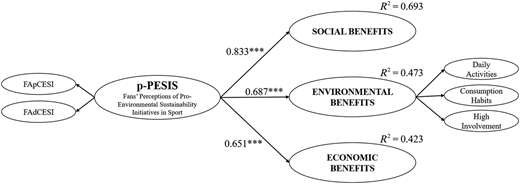
The proposed structural model and the path coefficients are depicted in Figure 2, and the standardized regression estimates are provided in Table 6. The results show that fans' p-PESIS have a positive and significant effect on their social behaviours involving environmental issues (β = 0.833, p < 0.001), supporting H1 (Table 6). In addition, fans' p-PESIS also positively influence their environmental behaviours in regular daily activities and consumption situations (β = 0.687, p < 0.001), as well as positively impact the economic and commercial relationship with the club (β = 0.651, p < 0.001). These findings support both H2 and H3. Moreover, all three relationships indicated a strong effect size—higher than 0.65 (Cohen, 1988). These results suggest that the more fans approve and adhere to the club's environmental sustainability initiatives, the more likely they are to carry out: (1) environmentally favourable decisions and behaviours in other social and environmental circumstances; and (2) commercially favourable future decisions regarding the club itself. Further, fans' p-PESIS account for 69% of the variance in fans' socially favourable behaviours involving environmental issues, 47% of the variance in daily and consumption environmentally favourable decisions, and 42% of the variance in future intended commercial and economic relationship with the club.
Hypotheses testing and controlling variables
| Paths | Model 1 | Model 2 | Hypothesis testing | |||||
|---|---|---|---|---|---|---|---|---|
| SRE | SE | t-value | SRE | SE | t-value | |||
| H1 | p-PESIS → Social Benefits | 0.833 | 0.033 | 31.821*** | 0.820 | 0.032 | 31.375*** | Supported |
| H2 | p-PESIS → Environmental Benefits | 0.687 | 0.025 | 24.102*** | 0.685 | 0.025 | 24.169*** | Supported |
| H3 | p-PESIS → Economic Benefits | 0.651 | 0.017 | 23.397*** | 0.637 | 0.017 | 23.098*** | Supported |
| Gender → Social Benefits | −0.038 | 0.074 | −2.309* | |||||
| Age → Social Benefits | 0.024 | 0.002 | 1.437 | |||||
| Education → Social Benefits | −0.102 | 0.029 | −6.065*** | |||||
| Income → Social Benefits | −0.046 | 0.023 | −2.402* | |||||
| Season ticket → Social Benefits | 0.008 | 0.054 | 0.503 | |||||
| Live attendance → Social Benefits | 0.017 | 0.067 | 1.064 | |||||
| Gender → Environmental Benefits | 0.018 | 0.059 | 0.976 | |||||
| Age → Environmental Benefits | 0.185 | 0.002 | 9.840*** | |||||
| Education → Environmental Benefits | −0.045 | 0.023 | −2.399* | |||||
| Income → Environmental Benefits | 0.009 | 0.018 | 0.449 | |||||
| Season ticket → Environmental Benefits | 0.023 | 0.043 | 1.254 | |||||
| Live attendance → Environmental Benefits | −0.058 | 0.053 | −3.159** | |||||
| Gender → Economic Benefits | −0.002 | 0.043 | −0.115 | |||||
| Age → Economic Benefits | −0.069 | 0.001 | −3.546*** | |||||
| Education → Economic Benefits | −0.119 | 0.017 | −6.042*** | |||||
| Income → Economic Benefits | 0.008 | 0.013 | 0.382 | |||||
| Season ticket → Economic Benefits | 0.045 | 0.031 | 2.349* | |||||
| Live attendance → Economic Benefits | 0.144 | 0.039 | 7.403*** | |||||
Note(s): p-PESIS= Fans' Perceptions of Pro-Environmental Sustainability Initiatives in Sport; Model fit (Model 1): χ2(178) = 1,587,984; p < 0.001; χ2/df = 8.921; CFI = 0.962; TLI = 0.955; NFI = 0.958; RMSEA = 0.060; (CI = 0.058-0.063); Model fit (Model 2): χ2(301) = 3,313,329, p < 0.001; χ2/df = 11.008; CFI = 0.923; TLI = 0.903; NFI = 0.916; RMSEA = 0.068; (CI = 0.066-0.070); ***p < 0.001, **p < 0.01, *p < 0.05
Additionally, gender, age, education, income, ownership of season ticket and attendance of at least one live game at Estádio do Dragão were included and tested as control variables (Table 6). The results show that the influence of fans' approval and adherence to club pro-environmental sustainability initiatives (p-PESIS) on social, environmental and economic benefits towards the club is stable across Model 1 (without control variables) and Model 2 (with control variables). Further, all statistically significant control variables have a very small influence on the TBL dimensions compared to the influence of fans' p-PESIS. Among the control variables, age (β = 0.185[0.002], p < 0.001) was positively associated with environmental benefits, while attending at least one live game (β = 0.144 [0.039], p < 0.001) and ownership of a season ticket (β = 0.045 [0.031], p < 0.05) were positively associated with expected economic benefits. Conversely, education (β = −0.102 [0.029], p < 0.001), income (β = −0.046 [0.023], p < 0.05) and gender (β = −0.038 [0.029], p < 0.05) negatively influenced social benefits; attending at least one live game in the last season (β = −0.058 [0.053], p < 0.01) and education (β = −0.045 [0.023], p < 0.05) have negative effects on environmental benefits; and education (β = −0.119 [0.017], p < 0.001) and age (β = −0.069 [0.001], p < 0.001) were negatively associated with expected economic benefits.
Discussion and research contributions
The purpose of this research was to examine fans' perceptions of pro-environmental sustainability initiatives promoted by a professional sport club and the ensuing effects on the triple bottom line. The results provide insight for managers by showing the importance of p-PESIS from the perspective of fans, as well as its impact on TBL dimensions, as discussed further below. Although previous research has proposed that the TBL's three components are interlinked (Kellison and Kim, 2014) and sustainable behaviours of sport fans can be impacted by professional sport clubs (Casper et al., 2017), this study provides empirical evidence of the positive relationships between sport organizations' environmental initiatives and TBL dimensions. Thus, the current study contributes to the sport management and sustainability literature in four significant ways.
This research tested a new tool to measure fans' perception of pro-environmental sustainability initiatives promoted by a professional sport club (p-PESIS). Indeed, recent contributions start highlighting the role of environmentally sustainable initiatives in sport (e.g. Cayolla et al., 2021), even proposing a new concept for sustainability in sport studies: sport ecology (McCullough et al., 2020a). However, further developments regarding its valid and reliable measurement were needed (McCullough et al., 2020b). Our findings indicated professional sport clubs' environmentally sustainable initiatives can be analysed through fans' perception of Pro-Environmental Sustainability Initiatives in Sport (i.e. p-PESIS), which includes: (1) approval of the club's sustainability initiatives (i.e. FApCSI); and (2) adherence to the club's sustainability initiatives (i.e. FAdCSI). The scales showed acceptable psychometric properties in two different and large samples. Therefore, the p-PESIS scale can be a relevant first step for clubs' assessment of fans' perceptions and adherence to environmental sustainability initiatives, as well as a significant tool to drive future sport and leisure research linked to sustainability.
Second, findings from the structural model indicated that fans' perceptions of the club environmental sustainability initiatives had a positive and meaningful effect on their social behaviours involving environmental issues, such as increasing awareness about the importance of environmental issues and influencing their pro-environmental behaviours among their family and friends and at other social events. These results reinforce the body of knowledge suggesting that sport organizations may not only increase fans' awareness of environmental issues but also inspire them to discuss it with peers. For instance, Casper et al. (2017) observed that fans were influenced in their behaviours, at both sporting events and at home, by the environmental activities executed by college athletic department. Additionally, Kellison and Kim (2014) showed that the increasing interest in pro-environmental strategies by sport organizations is mainly associated with the TBL social component.
The results of our investigation showed that p-PESIS has a significant influence on fans' ensuing socially favourable behaviours regarding environmental issues. In fact, through p-PESIS, FC Porto fans showed greater awareness about the importance of environmental sustainability, which is likely to influence their pro-environmental decisions in other areas of activity: in other public events and in their daily personal life. With these results, we also address the call from Casper et al. (2017, p. 107) “to accrue a baseline of information and data about fan-centred current views and practices”. Due to sport's “tremendous social influence” (Kellison and McCullough, 2020, p. 24) and through the measurement of fans' p-PESIS, this research adds to the sport management and sustainability literature by extending our current understanding of how to predict future socially favourable behaviours involving environmental issues and how they can be encouraged, which are expected to play a significant role towards a more environmentally sustainable society. These findings further provide empirical support to the idea that sport can act as a catalyst for social change (Parker et al., 2019) and shared value creation (Cook et al., 2021), namely social value or benefits.
Third, this study empirically examines the link between fans' p-PESIS and three types of environmental actions (i.e. daily activities, consumption habits/decisions and high involvement consumption decisions). The findings indicated that fans perceived FC Porto's pro-environmental initiatives positively influence pro-environmental behaviours of fans in their daily life activities (e.g. water and energy conservation; or recycling), in regular consumption situations (e.g. buying biodegradable products; or consuming more vegetables and less meat) and also in high involvement consumptions decisions (such as choosing vacations, car or home). These results extend Trail and McCullough's (2018) findings to the context of fans, which found that knowledge and worth of a messaging campaign predict intentions to act sustainably among running event participants (i.e. to dispose of waste correctly). Further, Inoue and Kent (2012a) suggested that fans' internalization of a club's values could be leveraged to increase their support of environmental initiatives and likelihood to behave in more environmentally friendly ways. Thus, our results not only further current understanding about the impact of clubs' sustainability initiatives on future environmental choices of one of the most significant stakeholder of sport industry—the fans—but also may encourage organizations to promote and/or reinforce additional pro-environmental sustainability initiatives due to its effective influence on behaviours that benefit the natural environment, both in regular daily life and highly involved decisions, immediately and in the long term.
Fourth, the results of this research empirically demonstrated that fans' perceptions of a professional sport club's environmental sustainability initiatives may also improve their economic and commercial relationship with the club. Through fans' p-PESIS, the findings displayed the economic benefits that can arise from the environmental initiatives carried out, in some of the key outcomes sought by clubs: fans' increased intentions to attend more matches, purchase more products/services and encourage others to do the same. By examining the economic benefits derived from a club's pro-environmental initiatives, this research provides a better understanding of pre-match and post-match fan behaviours (McCullough et al., 2020b), expands upon previous works suggesting that sport organizations can benefit from environmental sustainability initiatives far beyond the typical associated cost reduction (Greenhalgh and Drayer, 2020) and fulfils the recent calls for an integrated stewardship between the environmental and economic dimensions (Kellison et al., 2015). For managers and marketers, this research provides greater knowledge on the determinants (i.e. fans' p-PESIS) that may influence fans' economically favourable behaviours towards the club. Additionally, it empirically support the idea that the economic value of a sport organization can be enhanced while simultaneously generating environmental value for the society as a whole (Menghwar and Daood, 2021; Porter and Kramer, 2011). This may become a clear incentive not only to sport organizations engage in pro-environmental sustainability initiatives (McCullough et al., 2020b), but also to encourage other organizations—sport and non-sport—to follow the same practices.
Through this study, we empirically demonstrate that fans' p-PESIS had a positive and significant effect on their future behaviours across all TBL dimensions—social, environmental and economic benefits. The significant effect between fans' p-PESIS and TBL outcomes also illustrates how stakeholder theory may play out in practice through shared TBL value for its stakeholders: in this research, by strengthening the relationship between the fans, the sport club and society as a whole. Indeed, fans that approve and that intend to adhere to club pro-environmental initiatives 1) are more mindful about environmental issues and more likely to adopt environmentally favourable behaviours at both personal and social settings and 2) intend to develop a stronger economic relationship with the club. Collectively, these decisions and behaviours—actual and expected—illustrate the relationship and mutual benefits that fans' p-PESIS generated to the club and to the whole society on a TBL perspective.
Conclusion, limitations and suggestions for future research
This research connects two relevant and growing elements on the efforts against climate change: sport management and environmental sustainability. Through two research steps and an examination of more than 3,000 sport fans, this research extends current understanding on the relationship between fans' perceptions of pro-environmental sustainability initiatives promoted by a professional sport club and the ensuing effects on fans' future behaviours involving environmental issues using the three dimensions of the TBL approach (social, environmental and economic benefits). A new scale to measure fans' p-PESIS was successfully tested, and the main findings indicated that fans' p-PESIS predict fans' social, environmental and economic favourable behaviours involving environmental issues. This research is one of the first contributions exploring fan perceptions as an essential element assessing clubs' pro-environmental initiatives and delivers the recommended attention to a key sport stakeholder that can actually drive and encourage the environmental change: the fans.
However, there are limitations in the present study that should be acknowledged and considered in future studies. First, this research was limited to a sample of paying members, from only one professional sport club, in a specific country, which may limit the generalisability of the results to other contexts. Future research should also examine and compare different types of sport stakeholders (e.g. fees-paying members, general fans, employees, sponsors, etc.), different sport organizations (professional and non-professional), involving different sports and in a cross-cultural perspective. This would contribute to greater understanding of the cultural and sport-related nuances in the acceptance and adoption of fan environmental behaviours among different segment groups. Second, this research was carried out with paying members of a professional sport organization. Follow-up studies should explore club paying members as well as supporters without membership, for whom club identification and/or commitment with the club will be important dimensions of analysis. Furthermore, additional studies could measure the affinity towards general sustainability initiatives in order to control its effect on fans' approval and adherence of what is done by the sport club. Third, this study was cross-sectional, which did not allow for the capture of fans' behaviour changes. Further, the constructs were measured through a self-administered questionnaire examining fans' self-reported behaviour intentions. Despite the validity and reliability obtained, the use of self-reported scales is dependent of respondents' - conscious or unconscious – ability to respond, thus vulnerable to some degree of inaccuracy (Escadas et al., 2019). Also, it is also worth noting that the financial benefits for the club were measured based on members' intentions rather than actual behaviours, and past studies suggest caution when interpreting the intention–behaviour link. That is, individuals may provide inaccurate predictions about their future behaviours (Wirtz et al., 2014). Relatedly, fans may claim to adopt environmental behaviours because of societal pressures, but do not actually do it in their daily life practices (e.g. Samuelson and Zeckhauser, 1988), incurring the social desirability bias. Despite the efforts to avoid this type of bias by reinforcing, in the header of the questionnaire, the anonymity and confidentiality of the responses and stressing that there are no right or wrong answers, future studies should use experimental research designs (Paramita et al., 2022); and/or try to longitudinally examine fans' approval and adherence to environmental sustainability of the clubs and its role on TBL dimensions over time to provide a more in-depth understanding of the benefits that sustainable initiatives promoted by professional sport organizations can trigger.
Finally, this research was conducted during the COVID-19 pandemic, which prevented Portuguese fans from attending live games and created fewer contact points with the club, diminishing the awareness of the environmental sustainability initiatives of the club. Furthermore, among fans who expressed a high level of awareness of FC Porto's pro-environmental activities, it is unclear whether this awareness was the result of the club's successful communication strategy or the individual's active pursuit of information related to p-PESIS. To this end, collecting data post-pandemic and comparing findings with those of the current study are likely suitable lines of research to aid understanding of the importance of sustainable initiative for sport organizations, fans and society.
References
Further reading
Appendix
Samples profile
| Variable | Step 1 (n = 1,043) | Step 2 (n = 2,167) |
|---|---|---|
| Gender | ||
| Female (%) | 16.1 | 16.0 |
| Male (%) | 83.9 | 84.0 |
| Age | ||
| 18–24 (%) | 5.2 | 4.7 |
| 25–34 (%) | 16.0 | 15.3 |
| 35–44 (%) | 22.4 | 24.2 |
| 45–54 (%) | 23.5 | 24.3 |
| 55–64 (%) | 14.1 | 15.1 |
| 65 and over (%) | 18.8 | 16.4 |
| Education | ||
| Less than high school (%) | 41.7 | 42.3 |
| High school graduate (%) | 32.1 | 33.0 |
| Postgraduate level (%) | 23.1 | 22.3 |
| I prefer not to answer (%) | 3.1 | 2.4 |
| Occupation | ||
| Student (%) | 3.5 | 4.1 |
| Employee (%) | 58.6 | 60.8 |
| Independent worker/Self-employed (%) | 14.4 | 13.7 |
| Unemployed (%) | 3.7 | 3.1 |
| Retired (%) | 17.3 | 15.9 |
| I prefer not to answer (%) | 2.5 | 2.4 |
| Monthly net income | ||
| No income (%) | 6.1 | 5.0 |
| Up to 999€ (%) | 18.1 | 17.8 |
| €1000 - €1.999 (%) | 27.5 | 29.4 |
| €2000 - €2.999 (%) | 11.0 | 10.9 |
| €3000 - €4.499 (%) | 5.5 | 4.6 |
| €4.500+ (%) | 8.4 | 8.5 |
| I prefer not to answer (%) | 23.4 | 23.7 |
| Season ticket | ||
| No (%) | 49.0 | 45.1 |
| Yes (%) | 51.0 | 54.9 |
| At least 1 live game in the stadium | ||
| No (%) | 24.5 | 20.1 |
| Yes (%) | 75.5 | 79.9 |

