This study examines the challenges that multinational enterprises (MNEs) in the life sciences industry face during international product launches. It aims to understand the specific challenges MNEs confront in different national contexts and how market environments influence the product launch process and the strategies used to gain acceptance in various markets.
A case-study approach is used, with 20 interviews with key employees from multiple sites and countries within one MNE involved in launching new products. The interviews were recorded, transcribed and supplemented by internal documents.
The study develops a framework that summarizes key factors influencing the launch process, including pricing sensitivity, product capabilities, brand awareness and regulatory environment. It also advances a typology that categorizes markets into four distinct quadrants based on price sensitivity and brand awareness, while incorporating the regulatory environment as a key contextual characteristic shaping legitimation strategies.
This research contributes to the literature by integrating legitimation and institutional theories with marketing theory to address new product launch. It offers a framework for understanding the factors at play and proposes a typology that focuses on the complexities of launching products across different market contexts, in the heavily regulated life sciences sector.
1. Introduction
As globalization continues to expand, foreign markets now make up a significant portion of firms' international new product sales (Griffith and Yalcinkaya, 2018; Cho et al., 2023). This trend has led to growing attention to international new product launches (Giannetti and Rubera, 2020; Le Meunier-FitzHugh et al., 2021; Klingebiel et al., 2022). However, the path to a successful international product launch is fraught with complexities and diverse challenges. These challenges are intensified in the life sciences industry, as each new product not only represents an economic opportunity but also holds the potential to significantly affect human health. The emphasis on human health in the life sciences industry has led to heavy regulation, and the varying systems across countries make entering international markets difficult for foreign firms (Oliver, 2002; Ramos et al., 2024). Therefore, new product launches in this industry must deal with multiple considerations, including regulatory compliance (Torous et al., 2022), cultural landscapes (Wong et al., 2020), technological innovations (Easingwood and Harrington, 2002; Driscoll et al., 2017), market and context demands (Laurell et al., 2013) and even stakeholders who exert influence on how new products are diffused (Stremersch and Van Dyck, 2009; Wield et al., 2017).
While the topic is important to explore, the literature on new product launch largely focuses on performance (Liu et al., 2005; Morgan et al., 2018), marketing strategies (Zhou and Gupta, 2019; Sanjarbek, 2022), decision-making (Chiu et al., 2006) and networks (Najafi-Tavani et al., 2018). However, comparative studies examining product launches across multiple countries are lacking (Lee et al., 2011), limiting the understanding of how these processes vary or succeed in different international contexts (Yeniyurt et al., 2007; Cho et al., 2023). Moreover, despite the importance of the life sciences, surprisingly few studies have deeply investigated new product launches in this sector, especially in emerging markets (Lee et al., 2011; Talay et al., 2019). Most studies on new product launches have focused instead on developed markets, even though institutional differences affect new product launches in different markets and the growth potential in emerging markets is large (Qian and Soopramanien, 2015).
Developed markets are becoming increasingly saturated, leading many firms to turn to emerging markets to introduce new products. Prior research suggests that new product launches in emerging markets remain understudied (Ramani et al., 2017). Research gaps include a comparison of the challenges and opportunities between emerging and developed markets and examination of whether different product launch strategies help gain acceptance in these markets (Li and Tellis, 2016). Moreover, previous research on product launches has primarily explored how new products gain customer acceptance, with an emphasis on marketing strategies (Talke and Hultink, 2010). However, in the life sciences sector, securing the acceptance of multiple stakeholders and aligning with the institutional context are also crucial (Stremersch and Van Dyck, 2009). Early research acknowledged the influence of different market environments, thereby calling for more studies addressing product launches within different institutional and market contexts (Bstieler, 2012). In the life sciences industry, firms launching new products must deal with different institutional environments to succeed. For example, the COVID-19 vaccine faced institutional differences (Lazarus et al., 2023), affecting its global distribution and access in countries with different regulatory frameworks, financing and delivery systems, and geopolitical tensions. These institutional differences also influenced public perception of the vaccine, with some countries being more hesitant than others to adopt it (Sallam, 2021). However, not only the institutional environment is important for successful product launches. Different groups of customers may have different needs and may operate in different market contexts (Bunduchi and Candi, 2022). Although the distinction between developed and emerging markets remains common in international business and marketing research, recent literature suggests that this binary is too coarse to capture the diversity of market environments. There is no universally accepted definition of emerging markets, and scholars increasingly emphasize substantial heterogeneity across and within national contexts, including differences in institutions, customers and business environments (Pereira et al., 2019).
The effects of these varying market environments are noticeable in this industry, and thus multinational enterprises (MNEs) need to adopt different strategies to legitimize their new products in each market, taking into account the unique characteristics and different stakeholders in these environments.
This study aims to provide a deeper understanding of how new products are launched internationally in the life sciences industry and which factors influence the process. To enhance this understanding, we integrate product launch literature with institutional and legitimation theories, as well as marketing theory related to new product introduction. Using a case-study method, we examine each step of the product launch process and identify the specific challenges that can affect these steps. We also analyze how the diverse market environments in which MNEs operate influence the new product launch process. Our research focuses on the legitimation strategies that MNEs employ to overcome challenges and gain acceptance in these different market contexts (Uzunca et al., 2018). In particular, it delineates the challenges MNEs face in different national contexts and explores how market environments influence the product launch processes and the strategies used to gain acceptance in various markets.
Overall, our study intends to answer the following research questions: (1) What are the most important factors and key challenges in the product launch process for life sciences products across different international markets? (2) How do varying market contexts affect new product launch? and (3) What legitimation strategies do MNEs employ in different market contexts?
By answering these questions, this study makes several contributions to theory. First, it contributes to new product launch literature by integrating marketing theory, legitimation and institutional theory. Through this integration, a typology of new product launch categorizes markets into advanced, undiscovered, rising and challenging markets and links them to legitimacy strategies best suited to drive new product acceptance in these settings. Second, the study contributes to legitimacy theory by showing how multinational firms use legitimacy strategies to overcome challenges to new product launches in diverse market environments (Suchman, 1995; Kostova and Zaheer, 1999). It demonstrates that legitimacy is not a uniform or “one-stop” solution for driving acceptance but a context-dependent process shaped by varying market environments. Third, the study extends international marketing literature by demonstrating that market environments not only present unique challenges during product launch but also dictate which legitimation strategies are effective in driving new product acceptance (Peng et al., 2008; Meyer et al., 2009). This situation shifts the understanding of markets from a predominantly economic perspective to one that also recognizes the critical role of institutional contexts in shaping legitimacy requirements. Overall, the study shows how international firms navigate diverse international markets and why they adopt specific legitimacy strategies when launching new products in international markets.
The study thus proceeds as follows: in the next section, we review literature on new product launches, institutional theory and marketing theory. Then, we discuss how firms can use different legitimation strategies to gain acceptance of different stakeholders in different institutional contexts. Next, we present the study's methodology and findings, discussing the new product launch process and the factors influencing it in different markets. Thereafter, we develop a typology describing suitable legitimation strategies for new product launches in different markets. We conclude with a discussion of the contributions, managerial implications and future research avenues.
2. Theoretical background
2.1 Product launch and institutional contexts
In the launch of new products, customer legitimation is a crucial factor (Holak and Lehmann, 1990; Jeyaraj et al., 2006). Bunduchi and Candi (2022) describe this behavior as pragmatic legitimacy, referring to customers' assessments of how well a product aligns with their interests. The strategies firms use to gain legitimacy from customers when introducing new products align with traditional marketing theories, such as the 4 Ps (product, price, place and promotion). However, beyond customer legitimation, successful product launches also require approval from other stakeholders, including regulatory authorities. The success of a new product launch is not guaranteed if key groups and stakeholders do not accept it (Easingwood and Harrington, 2002). Institutional theory explores this perspective, suggesting that a product gains legitimacy when various stakeholders perceive it as fitting within the institutional framework of a specific country (DiMaggio and Powell, 1983; Meyer and Peng, 2005).
Product launch is a complex, high-risk endeavor often characterized as the least managed but most expensive part of the overall product development process (Calantone and Di Benedetto, 2012). It is a process that involves different elements, such as target markets, marketing strategies, forecasts of financial outcomes and project control. Launch strategies must also be adaptive and dynamic, addressing various potential shifts and challenges in different markets (Hultink et al., 1997).
In the life sciences industry, firms must deal with different international institutional environments and the various regulatory frameworks, financing and delivery systems (Andersson et al., 2013; Laurell et al., 2013; Spinelli and Benevolo, 2016). Institutional theory is the best-known framework for exploring a company's relationship with its environment (DiMaggio and Powell, 1983; Dieleman and Sachs, 2008). Institutions have an influence on corporate strategy (Scott, 1995; Peng, 2003), dictated by informal constraints and formal rules (North, 2010). Moreover, prior research indicates that some elements of an international product launch strategy can be standardized while others need to be customized. For example, Lee et al. (2011) found that different advertising and pricing strategies worked in developed and emerging countries. Price sensitivity is a critical determinant of adoption, particularly in emerging economies with budget constraints.
The life sciences sector is driven by technological advances, globalization and regulatory changes with challenges such as optimizing costs, structure and flexibility of portfolios (Haraszkiewicz-Birkemeier and Hołda, 2019). The health sector, for instance, is heavily influenced not only by formal institutions (e.g. rules, laws) but also by informal institutions (e.g. culture). For example, some countries regard health products and services primarily as commodities and treat them as commercial products, while other countries regard them as a state issue (Cockerham et al., 1988). These institutional differences are due to different laws, regulations, customs and government actions and can create entry barriers for MNEs in foreign countries (Li et al., 2016; Khan et al., 2021). To deal with these institutions, companies must apply different strategies to adapt and legitimize their operations.
Moreover, regulatory agencies are powerful institutional actors that determine the legitimacy of new products. Without approval from institutions such as the Food and Drug Administration in the United States or the European Medicines Agency in Europe, a new medical product cannot enter the market, regardless of its scientific merits. At the same time, firms must also secure normative and cognitive legitimacy by convincing healthcare professionals, insurers and patients of the product's safety, efficacy and value proposition. This process involves strategic actions such as clinical trials, compliance with safety protocols and marketing efforts that align with cultural perceptions of healthcare and innovation.
Thus, legitimacy is not an automatic outcome of institutional conformity but rather an ongoing process by which firms must continuously align with institutional expectations (Delmar and Shane, 2004; Drori and Honig, 2013) and customer acceptance (Bunduchi and Candi, 2022). This interplay between institutional pressures, customer acceptance and legitimacy strategies is complex in international product launches. Institutional theory provides the structural constraints within which legitimacy is constructed, while legitimacy theory and marketing theory explain how firms strategically work within these constraints to gain acceptance for their new products.
Fast launches, correct management and marketing strategies are particularly challenging in the life sciences, in which many other stakeholders are involved in the process and need to be convinced of its value (Stremersch and Van Dyck, 2009). Unlike traditional industries in which product launches primarily target consumers, the life sciences sector consists of a complex system of actors and institutions, including consumers, regulators, healthcare providers, insurers and investors, each with distinct concerns about safety, efficacy and cost-effectiveness. For example, hospitals operate in highly institutionalized environments, so legitimation strategies can vary in this context. According to Yang et al. (2017), legitimation efforts by healthcare officials at the institutional level can focus on either the technical level or the managerial level. The technical level emphasizes normative support for knowledge of staff credentials, training programs, quality assurance measures and work procedures; the managerial level includes understanding personnel management, financial processes and administrative standards of conduct and structure.
Talke and Hultink (2010) indicate that earlier research on product launches focused heavily on the traditional marketing-mix elements (4 Ps), placing customers at the center of launch strategies. However, in the life sciences industry, successful product launches depend not only on consumer demand but also on regulatory approvals, professional endorsements and institutional adoption. Regulations are crucial in this sector, as rules and regulations can complicate or simplify the launch process of a new product (Scott, 2014). Compliance with these rules ensures that the new product attains the legitimation thresholds set by the institutions involved (Turcan and Fraser, 2016).
The role of legitimacy within the institutional context is thus of great importance during product launches. Entities must strive to obtain this legitimacy through different strategies and actions that align with the socially constructed norms, values and beliefs of different stakeholders.
2.2 New products and legitimacy
International business research consistently shows that for an MNE to thrive and maintain its presence in different markets and among stakeholders, it must achieve legitimacy (Chan and Makino, 2007; Delmestri and Wezel, 2011). This critical role is especially relevant during product launches, which demand meticulous planning and execution. A significant part of this process involves obtaining legitimacy in the eyes of various stakeholders. In the context of international product launches, legitimacy is more complex given the need to consider multiple institutional and cultural contexts. MNEs must seek and maintain external legitimacy within multiple host country environments and internal legitimacy within their subsidiaries (Kostova and Zaheer, 1999; Chan and Makino, 2007). Legitimacy increases the chance of acceptance of new products worldwide and explains the different gains from new product launches (Rao et al., 2008). Despite a lack of empirical studies analyzing the effects of legitimacy on the launch and acceptance of new products in different contexts, some research contends that legitimacy construction can help MNEs face challenges successfully while launching products (Ramani et al., 2017).
Legitimacy is not only an external mandate but also a strategic asset applied to engage and modify the organizational environment (Zott and Huy, 2007). Organizational legitimacy can be actively crafted through deliberate strategies (Drori and Honig, 2013). To achieve this legitimacy, firms need to act in specific ways and be willing to adopt different practices in different institutional environments. This echoes the institutional tradition in legitimacy studies (DiMaggio and Powell, 1983), which suggests that organizations are deeply interwoven with external institutions. Legitimating strategies are activities that help explain and justify social practices and actions to gain broader community acceptance (Delmar and Shane, 2004). These strategies must also consider the cultural hybridity and impact of globalization on consumer identities and practices (Robertson, 1992; Tomlinson, 1999). Moreover, they can vary, for example, between online strategies (Hakala et al., 2017) and pricing strategies (Smith, 2002). Firms that engage in these actions and tailor them to different institutional environments can achieve legitimacy of new products faster. Moreover, firms need to develop differentiated legitimation strategies for various audiences (Überbacher, 2014). Legitimacy is the pursuit of external and/or internal credibility and recognition as a means for an entity to improve and sustain supplier, consumer, institutional and, more broadly, social support (Johnson et al., 2006; Deephouse and Suchman, 2008; Turcan et al., 2012). In this study, we view legitimacy as different stakeholders' assessments of certain actions or decisions as suitable or desirable within a particular context (Bitektine, 2011). Legitimacy is defined as a “generalized perception or assumption that the actions of an entity are desirable, proper, or appropriate within some socially constructed system of norms, values, beliefs, and definitions” (Suchman, 1995, p. 574). According to Suchman (1995), legitimacy can be understood through three main types based on the behavioral basis for granting legitimacy: pragmatic, moral and cognitive legitimacy. Suchman discusses legitimacy primarily at the organizational level. However, in this study, the focus is on new product launches, specifically on the acceptance of a new product (Bunduchi and Candi, 2022). Pragmatic legitimacy is based on stakeholders' calculations regarding the extent to which an entity aligns with their interests, such as the economic or functional value it provides. In the context of a new product launch, this relates to customers' acceptance of the product based on the value or capability it offers. Moral legitimacy involves stakeholders' evaluations of whether an entity aligns with broader societal values and norms. In the case of a new product, this may relate to how the product is perceived in society, for example whether it complies with regulations or meets ethical and social expectations. Cognitive legitimacy concerns stakeholders' perceptions of how well an entity fits with their existing mental models and focuses on comprehensibility and taken-for-grantedness. In this study, this relates to stakeholders' knowledge and understanding of the product.
Legitimacy becomes even more complex in a globalized world with a mix of cultural products blending local and global influences. To better understand international product launches, it is important to realize that factors that help achieve acceptance and legitimacy for new products can differ between different countries. The international product diffusion/acceptance literature argues that cultural and economic factors are crucial in these dynamics (Tellis et al., 2003; Stremersch and Tellis, 2004). The literature focuses on global market entry decisions, emphasizing the timing and scope of market entry (Tellis et al., 2003). Moreover, new product performance literature highlights the importance of marketing and technical activity proficiency, product characteristics, market intelligence, product–firm compatibility and launch effort (Calantone et al., 2004; Garrido-Rubio and Polo-Redondo, 2005).
2.3 Brand awareness
Brand awareness is an important element in product launches, particularly in international markets, in which firms must gain acceptance not only from consumers but also from institutional stakeholders, regulators and industry professionals (Aaker, 1996; Supiyandi et al., 2022). It involves consumers' ability to recall and recognize a product across various contexts, associating it with its brand name, logo and other related elements (Aaker, 1996; Altaf et al., 2017). This familiarity not only aligns customer expectations with the brand but also promotes a sense of reliability and commitment, which is crucial when introducing new products in diverse markets (Supiyandi et al., 2022). In this study, brand awareness refers to corporate brand recognition, as many product launches involve products introduced under an existing corporate umbrella.
In the context of MNEs, brand awareness is a critical factor that shapes consumer perception and facilitates market entry. Fostering brand awareness directly contributes to improved demand for a brand by increasing its acceptance among consumers (Seetharaman et al., 2001). Vazifehdoost and Negahdari (2018) emphasize that high brand awareness correlates positively with increased brand loyalty, which in turn enhances repurchase intentions among consumers. When consumers are familiar with a brand, they are more likely to choose it over competitors, making brand awareness a vital asset during product launch. In highly regulated industries, brand awareness is not just about consumer recognition but also about the perception of trust, reliability and ethical behavior of the brand (Panchal et al., 2012). For example, in the pharmaceutical industry, brand awareness is critical because it helps distinguish a product in a crowded market in which generic alternatives are prevalent.
In emerging markets, a lack of brand awareness can be a barrier to new product adoption. MNEs entering these markets must build recognition to gain trust from local regulators, healthcare professionals and end users. Without established credibility, even technically superior products may struggle to gain institutional approval or face consumer skepticism (Panchal et al., 2012).
This connection between brand awareness and legitimacy aligns with institutional theory, which highlights how firms must conform to societal norms, values and expectations to gain acceptance (DiMaggio and Powell, 1983; Suchman, 1995). High brand awareness contributes to cognitive legitimacy (e.g. the perception that a brand is a familiar and credible entity in its industry). This is particularly important in life sciences, in which regulatory bodies, hospitals and healthcare providers must trust a product before adoption (Yang et al., 2017).
Thus, while other marketing-mix elements contribute to product success, brand awareness acts as an enabler of legitimacy, particularly in regulated industries. Overall, the role of brand awareness in product launches entails building a presence for the consumer, promoting trust and brand loyalty, and supporting market differentiation. For MNEs in the life sciences industry, in which product launches are particularly challenging, focusing on brand awareness strategies is essential.
3. Methodology
We use a case-study approach to capture the exploratory nature of our research topic, as little is known about international new product launches and existing theory is not exhaustive or adequate (Miles and Huberman, 1994; Johnston et al., 1999; Eisenhardt and Graebner, 2007). By focusing on a single firm, we examine both standardized processes and the necessary adaptations made in response to institutional variations across markets. Studying a process in-depth makes identifying nuances and details of the process in a real-life context possible (Pettigrew, 1997; Langley, 1999). We untangle the similarities in the process but also the differences between countries (Dyer and Wilkins, 1991; Andriani and McKelvey, 2007).
To achieve our study's purpose, we conducted 20 interviews with key employees from different sites and countries of one MNE involved in launching new products. All interviews were recorded and transcribed. To complete the data set, we also accessed internal documents (e.g. the firm's “standard operating procedure life science product launches” guideline). In addition, we visited the company's production facilities and used public materials such as product brochures and websites to attain information about the different products launched.
Qualitative research lacks strict rules on the number of interviews required to achieve saturation. Rather, the necessary number of interviews depends on the study's purpose, the quality of data obtained and the complexity of the research problem (Mason, 2010; Malterud et al., 2016). It also varies with the level of detail sought in the findings. In our study, we aimed to identify broad themes influencing new product launches in both emerging and developed markets and thus did not set the exact number of interviews before the study began. However, we maintained close collaboration with management personnel at headquarters, who provided support and contacts. As data collection and analysis progressed, recurring patterns began to emerge across respondent groups, functions and geographies. In the later interviews, the material largely confirmed already identified themes rather than generating substantively new first-order concepts relevant to our research questions. We therefore judged that the dataset had reached sufficient thematic saturation for the scope and purpose of this study.
The number of interviews conducted in our study is also consistent with recommendations from other researchers. For example, Guest et al. (2006) systematically examined the concept of saturation and found that, in many cases, roughly 12 interviews are sufficient to reach saturation.
3.1 Case selection
We selected a medical equipment supplier as the focus for three reasons. First, it recently adopted a centralized new product launch strategy, which offers a unique opportunity to investigate the nuances and intricacies of a product launch process in real time. While the firm follows a standardized approach, variations still emerge in different markets, making it easier to compare how product launches differ across different markets. The structured nature of the launch process provides a clear framework within which to observe these variations, allowing for an in-depth analysis of how the MNE deals with different challenges and local adaptations across distinct institutional environments. Second, the firm is the world's leader in producing medical equipment for healthcare facilities. The scale of its operations presents a suitable setting to examine the complexities of product launches. This global leadership position, combined with its structured approach to product launches, enables us to examine how the MNE implements standardized product launch frameworks while also adapting to diverse institutional environments. The company's range of products finds utility in hospitals, laboratories and pharmaceutical production environments worldwide. Moreover, it employs a single corporate brand strategy (Jit Singh Mann and Kaur, 2013); that is, it uses one unified brand name for the corporation and its products, all of which are part of the medical equipment industry. The company employed approximately 10,500 individuals globally in 2025, reflecting its significant size and impact within the healthcare and life sciences industries.
While the firm adopted a centralized product launch strategy, the implementation of this strategy varied by regional and local contexts. Such variation is driven by distinct institutional environments (formal/informal institutions and regulatory settings), stakeholder expectations and market characteristics (developed vs emerging markets). Thus, the structured global approach served as a baseline, enabling clear identification and comparison of differences. This approach aligns with the institutional perspective, emphasizing that even formally standardized processes become differentiated in practice from institutional heterogeneity across markets.
3.2 Data collection
This study was conducted in collaboration with the headquarters of the MNE. To obtain an initial understanding of the new product launch process, the headquarters provided internal documentation and information describing their established new product launch procedures. However, it was recognized that a comprehensive understanding of the process required perspectives beyond the headquarters level. In particular, insights from local and regional marketing and sales departments were considered essential, as these actors are directly involved in the implementation of product launches across different markets. Consequently, the headquarters assisted in identifying and selecting relevant interview participants from these departments. The inclusion of informants from different organizational levels helps to mitigate elite bias by ensuring that perspectives are captured beyond those of senior management (Myers and Newman, 2007).
Respondents were selected according to the main functions related to launching new products, including a business development manager (one respondent), product line managers (PLMs) (five respondents), representatives from global (two respondents) and regional (six respondents) marketing communication (MARCOM) teams, and regional sales representatives (seven respondents). These functions play a central role in defining, implementing and adapting product launch strategies to different markets. In this firm, launch strategy is not directed solely by headquarters; rather, regional- and country-level units are also responsible for shaping the launch approach, interpreting global guidelines, aligning them with local regulatory and market-access conditions, and ensuring the product gains legitimacy with key external stakeholders. These functions therefore carry strategic responsibilities central to our research questions. At the same time, operational and frontline actors are essential to understanding strategic adaptation. They are the ones who translate decisions into practice, confront institutional challenges directly, interact with customers and regulators, and identify mismatches between corporate assumptions and local realities. As such, their perspectives provide insights into how the MNE enacts strategies across diverse institutional environments.
To ensure a balance between strategic and operational perspectives, our sample includes both global decision-makers and local implementers. The business development manager and PLMs (many of whom have been with the company since the late 1990s or early 2000s) are responsible for defining portfolio-level priorities and shaping overall launch strategies. For example, they explained how positioning decisions are made and how global priorities are adapted to regional contexts. Moreover, while internal titles such as PLM or business development manager do not follow a standardized hierarchy (e.g. VP/director), they are strategic functions reporting to senior executives and involved in global launch planning. The MARCOM teams offered perspectives on how strategic positioning translates into market-specific communication, addressing challenges such as localization and media planning. The inclusion of sales representatives was deliberate, as they interact directly with customers, providing insights into legitimacy perceptions and practical constraints. They offered concrete examples of how customers respond to new products, what kinds of concerns arise in practice, and how messaging and tactics are adjusted. Their input was particularly useful in highlighting mismatches between corporate-level assumptions and market realities. The diversity of respondent roles, combined with the firm's broad territorial coverage (e.g. China, Europe, Latin America, Southeast Asia and the United States), enabled us to triangulate perspectives on both strategic intent and execution.
The interviews took place in person (two interviews) and online meetings (18 interviews), were between 30 min and 3 h long, and consisted of open-ended questions. The interviews began with two questions: “What are the key challenges during the launch process?” and “Can you describe a particularly successful or unsuccessful product launch you have been a part of?” During the interviews, we adapted the questions to gain a deeper understanding of the specific factors that influence the launch process and the legitimation of the new products in different markets. Moreover, we aimed to better understand the role of the respondents during the process and their actions. Tables 1 and 2 provide additional details on the respondents and data. We ran a workshop with the chief technology officer, business development manager and a vice president for portfolio and services to gain further in-depth insights. This workshop not only allowed us to present preliminary findings but also provided a platform for discussions to corroborate the findings.
3.3 Data analysis
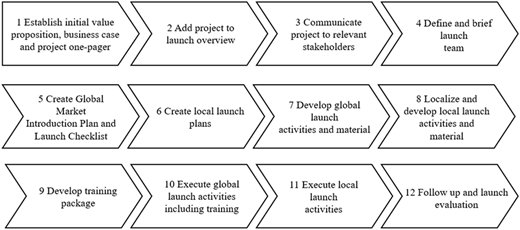
To analyze the data, we first adopted a processual approach (Langley, 1999), drawing from multiple sources, including interviews, internal reports and communication materials. We describe the new product launch process in sequential phases, identifying challenges specific to each stage (see Figure 1). This description is inductive, building on information from our empirical study.
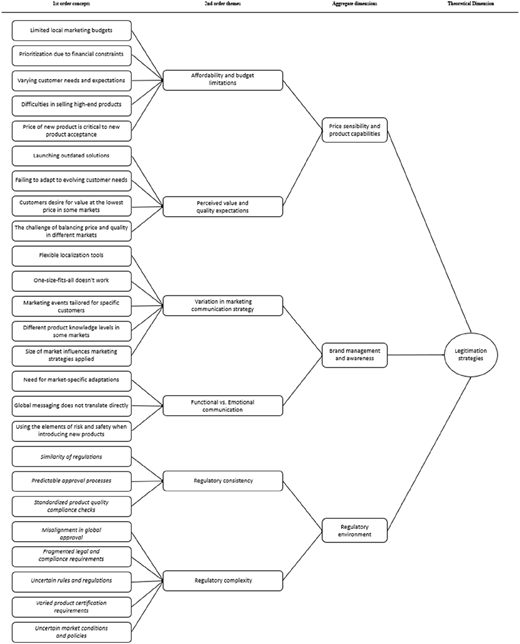
To answer our research questions: (1) What are the most important factors and key challenges in the product launch process for life sciences products across different international markets? (2) How do varying market contexts affect new product launch? and (3) What legitimation strategies do MNEs employ in different market contexts? We employed an analysis in line with Gioia et al. (2013). We began with inductive open coding of all interviews, internal documents and communication materials. In the first step of the analysis, two of the authors who had jointly conducted the interviews read the transcripts and supporting materials repeatedly and developed the initial first-order concepts by staying close to the informants' own language and descriptions. We identified first-order concepts through informants' quotes, we captured their experiences in their own terms, which allowed us to assign informative labels to first-order concepts (e.g. limited local marketing budgets, flexible localization tools, need for market-specific adaptations) (Gehman et al., 2018). Following the approach outlined by Gioia et al. (2013), we derived a manageable set of 25 first-order concepts. We then engaged in an iterative abductive process of constant comparison and iterative engagement with both the data and relevant theoretical perspectives from marketing, legitimation and institutional theory (Dubois and Gadde, 2002; Magnani and Gioia, 2023). At this stage, the emerging themes and category structure were presented to the third author and discussed iteratively among all three authors. These discussions helped refine the transition from first-order concepts to second-order themes and aggregate dimensions and strengthened the consistency of the final interpretation. For example, we grouped concerns about outdated solutions and the inability to meet customer expectations under “Perceived value and quality expectations,” while we captured differences in approval procedures and compliance requirements under “Regulatory consistency” and “Regulatory complexity.”
We then clustered these second-order themes into three aggregate dimensions (Price sensitivity and product capabilities, Brand management and awareness, and Regulatory environment). These dimensions reflect important factors in different market contexts and how organizations develop legitimation strategies in response to challenges shaped by local market conditions.
The structure reflects both bottom-up insights and top-down theoretical alignment. While we inductively coded first-order concepts, we used frameworks from institutional, legitimation and marketing theory to develop second-order themes and aggregate dimensions. Quotes were selected not as isolated remarks but as illustrative of recurring patterns across roles and geographies. The final data structure (see Figure 2) illustrates the full analysis: from first-order concepts, to second-order themes, to aggregate dimensions. Additional quotes corresponding to each second-order theme are available in Appendix 1.
Two of the authors conducted the interviews together, while emerging themes and categories were presented to the third author and discussed throughout the process. In the final workshop, all three authors jointly reviewed and refined the full data structure and agreed on the final set of concepts, themes and aggregate dimensions. We also presented the findings to a management team at the case company that deals with new product launches for corroboration. This session served as a validity check to confirm whether the identified patterns accurately reflected the firm's global launch process, the roles involved and the strategic and operational tensions we observed.
4. Findings
4.1 Key challenges in the product launch process
The company has a structured product launch process, separated into 12 steps, which we document in Figure 1. According to company documents and the business development manager (who is responsible for overseeing the teams), the main actors involved in the process are PLMs, the global marketing team, the academy (for projects needing technical training), a project manager in research and development (R&D) and local/regional marketing teams. These actors drive the process and make sure every detail goes according to plan. The emphasis on these actors was also consistently reflected across internal company documentation.
The first goal is drafting a summarizing “one-page description” of the product and the potential challenges faced, which serves as an essential communication tool. This document captures the product's benefits, potential revenue and any competitive gaps. As the process progresses, the product is incorporated into the launch schedule, with a focus on communication and coordination between different teams globally. Next, the global marketing team takes up the responsibility for defining launch strategies, which the regional teams then adapt to their specific markets. This process leads to the creation of global launch materials that take into account local and regional differences. An essential component of the launch is the training package for sales representatives that emphasizes both global and local approaches. Finally, the product is launched at scale, and then a follow-up process evaluates the market performance. During the first interviews with the PLMs and marketing team, we found that communication with internal stakeholders involved in the process is critical. The teams meet regularly to discuss the process and any changes in the schedule during the launch process. As the team is spread across different countries, coordination and communication are challenging.
During the interviews, we investigated the challenges faced at each phase of the product launch process. Table 3 provides an overview of the stages, from the establishment of an initial value proposition to the evaluation of the process after the launch; it also shows the challenges faced at each stage [1]. For example, while in the initial stage the company struggles with concisely highlighting the product's benefits, in the following stages it struggles with communication, especially given the geographic disbursement of the teams. Thus, the role of the global marketing team emerges as central, providing a foundational strategy that regional teams then modify according to local contexts. Also important here is localization, or the need to align global strategies with regional, cultural, regulatory and linguistic nuances. Equipping sales representatives with the right tools is thus crucial. This localization work is supported by regional- and country-level personnel with local market knowledge, who help translate global launch guidelines into practices that fit country-specific regulatory requirements, stakeholder expectations and market conditions.
To structure the rest of our finding chapter, we use our Gioia analysis that ended with three aggregated dimensions: price sensitivity and product capabilities, brand management and awareness and regulatory environment.
4.2 Price sensitivity and product capabilities
The aggregate dimension price sensitivity and product capabilities consists of the second-order themes affordability and budget limitations and perceived value and quality expectations. Affordability and budget limitations are major factors during the launch process, as one regional sales manager explained: “For example, if we go to China, China [is] very eager to get basic [and cheap] products that can do the job” (regional sales 4 – Asia). This quote illuminates the prioritization of cost over advanced characteristics. Consumers in emerging markets are focused on functional value, that is, products that fulfill their needs at the lowest possible cost. The regional sales manager went on to say:
The countries that I take care of—aside from Singapore—are mostly developing countries, I guess considered like third world in that sense, where price sensitivity is very high. (Regional sales 4 – Asia)
By contrast, developed markets such as those in Europe tend to prioritize quality and perceived value over mere affordability. The perceived value and quality expectations concept focuses not only on functionality but also on the quality-to-price ratio. The sentiment that products must “look sexier than they cost” (global MARCOM manager) encapsulates the necessity for perceived value beyond price. Quality expectations are also highlighted in the following quote: “It is always important that whatever we release [into] the market [it] is with the highest quality, the quality level that the customer expects” (global PLM 3).
Another interviewee further highlighted the difficulty of aligning product offerings with varied market expectations: “So [for an] expensive product … We see that, for example, Chinese people are not interested yet” (regional MARCOM 3 – China). This comment addresses the challenges high-end products face in markets sensitive to price, in which even a demonstrable need or interest may not translate into sales because of budget constraints.
In analyzing the data, a contrast between emerging and developed markets became evident: “You have Europe and North America that are on the top … and then there is a second part of the world in developing countries where the price is very critical” (regional sales 1 – China). This dichotomy is a challenge for universal marketing strategies and is particularly evident in China, where one regional sales representative noted:
All launches are global, not dedicated to specific countries. Sometimes the products are not suitable for the Chinese market. For example, we focus on big pharmaceutical industries, and our products are not competitive in lab segments because of strong local competition, lower prices, and limited customer requirements for high-quality products. (Regional sales 1 – China)
In dealing with these challenges, the company is finding that the cost is “irrelevant because it comes [down] to the value that [customers will] get out of [the product]” (global PLM 4). In developed markets, value may derive from additional services or the prestige of a brand, while in emerging markets, value is often based on the longevity and reliability of a product in relation to its cost. As we illustrate in Step 8 of the new product launch process (see Figure 1), the case company explicitly engages in “local launch activities and materials,” demonstrating its strategic intent to adapt product offerings and marketing strategies to local contexts. This strategic flexibility is reflected internally as well: “It is important that even though we have a structured approach, we have a case-by-case flexible thinking to adapt the process to the specific launch … because some things in the checklist may not be applicable, and it must be okay to say ‘this is not applicable in this case’” (global PLM 1).
Therefore, the importance of price sensitivity versus product capabilities is characterized by the market's stage of development. In developed markets, companies do not “have to worry so much about the price” (global PLM 5), while in emerging markets, the strategy focuses on cost. Prior studies have shown that while emerging markets can provide new and expanding markets, cheap sources of skilled labor and facilities with lower regulatory costs, they also present a commercial risk due to their underdevelopment (e.g. Ramani et al., 2017). Acceptance of new life sciences products is dependent on the quoted price and the customer's available budget. In emerging markets, this budget is limited, making it difficult to afford high-end products in the life sciences sector. As the global PLM 4 went on to state:
Algeria, because they have less budget than Saudi Arabia, for example. So, as I said … the Saudi Arabians are mature enough to understand that price is not—how to say—the first decision-making factor. For example, once again, if I take cars: there is always a small and cheap car that can take you from point A to point B, but the security is not the same, the validation is not the same.
Depending on price sensitivity, new products may not be accepted, even when they offer valuable features or high quality. For example, the life sciences sector is complex, and pricing strategies must be adapted to specific regions. Institutional pressures also drive the pricing strategy of products in this sector. Emerging markets view price as something that should be affordable, and they may not perceive high-end products as legitimate if they are out of reach of most customers and external stakeholders. The global PLM 4 illustrated this point:
China and the Middle East and Africa are considered for us as one region. So, okay, I have customers. As I said, you have Europe and North America that are on the top. They are accepting, and even then sometimes a little bit picky when it comes to the price …. In other parts of the world, in developing countries where the price is very critical … they can’t afford it.
In contrast with emerging markets, decision-makers are often more concerned with a product's capabilities than its price. Thus, product acceptance is based on several criteria, one of which is that the product not only fulfills the basic requirements it was purchased for but also includes additional capabilities or extra features (Gregson et al., 2005). Developed markets are considered market-ready most of the time, as they have more experience with such products and have established their usefulness. Thus, the narrative for a sales team, for example, is not only about cost but about the value proposition as well, which includes “reliability, things like a really good service team” (regional sales 2).
Comments on market knowledge and expectations also corroborate this finding. In places such as Saudi Arabia, customers “know what they want,” suggesting a sophistication similar to that in developed markets. Conversely, in Algeria, decisions are “first budget driven,” emphasizing affordability. Thus, product launch strategies must be tailored to reflect the complex interplay between price sensitivity and product capabilities, which in turn are reflections of a country's economic maturity and market development. That is, there are significant differences among emerging markets regarding price sensitivity, and different launch strategies are therefore required.
To address the issue of the price of products launched in these diverse markets, the MNE decided to price products differently according to their quality and capabilities. This decision had an overall impact on increasing the acceptance of the new products:
So what we have done is we have, let's say, differentiated the product into different levels …. When I say a very entry level, it is level one. This differentiation is not something low quality or lower. We split it into four different types … and then, of course, there is level two, which adds a bit more—let’s say, a bit more options—then level three, and then level four, which is custom-made. Then the customer comes with his special needs, and we produce something for him. But level one, it’s hard to say, is overperforming; it has overperformed to a point where we cannot provide the product—we are super late on deliveries. (Global PLM 2)
As this global PLM noted, the more price-conscious consumers in emerging markets were keen on adopting entry-level or basic products because of budgetary constraints. In developed markets, in which quality (vs price) is a driver for new product acceptance, the company realized an uptake for higher-quality and customizable products.
These findings are in line with the critical role of integrating pricing decisions with other elements of the marketing mix (Calantone and Di Benedetto, 2007). They address the complexity of strategies and pricing adjustments in response to regional needs and external market pressures (Altug and Sahin, 2019). However, the findings offer a view of how market strategies are perceived and implemented on the ground. These insights specifically detail how consumer expectations in emerging markets (e.g. China) differ from those in developed regions (e.g. North America), where there is a greater focus on quality and additional features. While previous studies have often generalized market strategies, we go a step further by contrasting the specific expectations and strategic responses in emerging versus developed markets. We observe differences not just in consumer behavior but also in how MNEs can adapt their product offerings and marketing strategies to meet different expectations. Moreover, we outline the complex relationship between price sensitivity and product capabilities across different markets, providing insights that extend beyond traditional discussions of pricing strategy. Finally, we show how in some regions, affordability can overshadow advanced features, while in others, the additional capabilities and prestige of a product drive product legitimacy.
4.3 Brand management and awareness
Two second-order themes related to brand management and awareness emerged from the data: variation in MARCOM strategy and functional versus emotional communication. The complex approach to market communication strategy, contrasted with an emphasis on emotional connection, reveals the different factors in different market environments.
The first-order concept variation in MARCOM strategy reflects the adaptive approaches the firm uses in its messaging to customers. An example is the different use of digital platforms: “After the [COVID-19] pandemic, we are focusing on the online process. So we focus on WeChat … shooting the videos and publish the promotional articles” (regional MARCOM 3 – China). This focus signifies a change from traditional launches to the “most popular social media in China” (regional MARCOM 3 – China), thus indicating an understanding of geographic-specific platforms for effective product introduction. Moreover, the global PLM noted the presence of local support or its absence: “Some brands will be well known or ready or more disqualified.” This illuminates the importance of localized marketing efforts and the anticipation of regional interest. The variation in MARCOM extends to language considerations as well: “If launching in Canada, we have to include French” (regional sales 3). Thus, the firm shows a commitment to resonate with diverse market audiences culturally and linguistically. This approach is confirmed by a global MARCOM manager:
All the content I create is in US English. Then we cascade it down to the regions so they can translate it, localize it if needed, tweak the message and use it locally.
This variation in MARCOM strategy, including the selection of channels (e.g. WeChat in China) and adaptation of language and content (e.g. French in Canada), demonstrates the strategic pursuit of pragmatic and cognitive legitimacy (Suchman, 1995; Deephouse and Suchman, 2008). Pragmatic legitimacy is evident as the MNE adjusts its messaging to align with the immediate interests and needs of local consumers and stakeholders, enhancing the perceived practical value of new products. Cognitive legitimacy, which emphasizes familiarity and cultural alignment, is addressed through language localization and tailored messages reflecting market sophistication (Saudi Arabia) or budget sensitivity (Algeria). Such adaptive strategies are particularly critical in emerging markets, in which establishing product legitimacy requires greater sensitivity to institutional nuances due to lower brand awareness and higher regulatory complexity.
The second concept, functional versus emotional communication, indicates the need for practicality and function in MARCOM. This is evident in highly technical markets like Japan, where communication is driven more by product customization and engineering consultation than by traditional marketing:
Our team is very unique right now. In terms of customers, it’s mostly pharmaceutical companies or university laboratories. Our business is always project-based, meaning we don’t have marketers or sales reps. We have engineers and project managers who discuss the required specifications and the customization needed for our life science equipment in Japan. (Regional MARCOM 4 – Japan)
This comment reflects the use of functional communication that bypasses typical sales tactics and instead centers on collaborative solution-building with expert customers. In addition, because “the knowledge is not the same” (global PLM), the marketing team needs to educate consumers on product use and benefits. In markets such as Saudi Arabia, in which customers are well-informed and demand sophistication, the sales approach can be direct, leveraging their knowledge and expectations. However, in places with less sophisticated markets, such as Algeria, the communication strategy focuses on affordability and essential functionality over advanced features.
By contrast, the emotional connection becomes a basis in markets in which brand awareness is high. The comment “So it's [an] amazing launch because many customers were interested” (position here) suggests that product launch is a powerful tool in building product legitimacy and consumer engagement. Analysis of the data reveals a contrast between emerging and developed markets, specifically with regard to overall awareness of the corporate brand; that is, high and low brand awareness are pivotal for product legitimation and launch strategies. In our empirical material, developed markets more often exhibited high brand awareness, whereas several emerging markets were characterized by lower brand awareness. At the same time, variation also existed within these broad groups. This situation affects the launch of new products given the type of communication each market requires during product launch.
Moreover, we observed the use of emotional campaigns in developed markets. Such use may be due to the brand being well-established there. Emotional campaigns help reinforce a connection with the brand, focusing on values. As a result, customers and stakeholders feel more connected with the brand.
If you’ve seen some of the campaigns, like the ECMO [extracorporeal membrane oxygenation] campaign, you know it has more of an emotional, storytelling theme, where we can build the brand and infuse it with positive emotions and feelings. I think that kind of material is easier for us to work with because instead of working toward a very specific product … we can work broader. (Regional MARCOM 4 – Nordics)
The data highlights the importance of aligning marketing strategies with the cultural, economic and educational backgrounds of target audiences in various regions. This is due to the industry's complexity, which needs visual and marketing materials that effectively communicate the characteristics and benefits of the products. Communication provides a clear understanding of the features of the product. Thus, the firm needs to find creative ways to showcase its products with different cross-country strategies.
Although studies have explored marketing strategies across emerging and developed markets, we offer a broader understanding of brand management and communication strategies that resonate across diverse cultural landscapes. For example, Lee et al. (2011) provide detailed insights into tactical marketing decisions, such as the effectiveness of customer education preannouncements and discount pricing across different stages of the product life cycle. By contrast, we focus on a broader strategic framework, emphasizing the importance of adapting MARCOM to fit the cultural and educational backgrounds of different regional markets.
In summary, market communication strategies must adapt to the emotional resonance of the target demographic and its education level. Educating consumers on product benefits is crucial in less developed markets, while in more advanced markets, leveraging brand value and emotional connections can be more effective.
4.4 Regulatory environment
Regulatory consistency and regulatory complexity are critical elements in the launch and marketing of new products in the life sciences industry. With regulatory consistency, a standardized set of rules across different regions facilitates launches and marketing campaigns: “We don't have any regulatory issues. So it's, pretty smooth for all regions” (global PLM 2). This comment highlights the help with content creation and dissemination when consistency is present. Uniformity is further evidenced by the translation of content to meet the linguistic needs of different regions without altering the regulatory essence.
We have two types of countries in our region. Part of them are members of the EU, okay. So in that case, it’s very straightforward and simple: you have a declaration of conformity with European standards, and you can just go and sell in life science …. You just need to present your European standard CE. Basically, with a CE mark you can sell in any European country, and you have to have a user manual in the local language. That’s the rule for all of Europe. (Global PLM 1)
By contrast, regulatory complexity suggests that local regulations significantly affect product launch strategies. Introducing and selling high-end products to markets or regions with few and unclear regulations may pose different challenges, especially in the production methods of a new product. The challenge of which rules to follow to ensure quality thresholds are met could mean that a company lacks a definitive code of standards and criteria on what may qualify or disqualify a product from being declared fit for market release (Zhi, 1995). This situation complicates new product legitimation efforts and may trigger questions about the worthiness and quality of a new product.
It’s been a disaster [Brexit and its impact on new product launches in other EU countries]. And I think most people thought it would be …. We’ve needed to improve customs processes, recognize that things will take longer, complete more paperwork, and recognize that transportation takes longer and costs more. But transportation costs more for everybody. So there have been some cost and resource impacts. (Regional sales 5 – United Kingdom and Ireland)
Another concern is the lack of regulatory bodies enforcing standards, which can lead to the proliferation of low-quality materials. Especially in the life sciences, the quality and safety of products are critical. Differences in regulatory standards can have serious consequences, such as patient harm or legal actions against firms.
And if you have nobody to regulate your process, why would you want to buy the best? You can just buy something off the street. So that’s essentially the reason why it is sometimes difficult to sell such niche and high-end products in this territory. (Global PLM 5)
In the data, we observed that rules and regulations were affected during market destabilization. Different factors that contribute to destabilizing a market include economic changes, systematic risks, financial regulation reforms, and the introduction of new policies and regulations (Alshaleel and Hoekstra, 2021). In such markets, new product launches and legitimation aspects may also be affected; they may be limited or carried out to suit prevailing market and context conditions. Destabilized markets may present different uncertainties to organizations launching new products, undermining the role of an effective product launch process. Under such circumstances, customer satisfaction might decrease, resulting in insufficient legitimation of a new product. The result is low diffusion among and adoption rate by the target customers. Marketing campaigns and content dissemination vary, with some regions using global campaigns and others, due to stringent local regulations or platform availability, adapting significantly.
So when we speak about product launches, I don’t think there are many companies in the world that are considering any launch activities in Russia specifically, because there are so many uncertainties that you basically don’t know—the sales of any product are a matter of months. (Regional sales 2 – Central and Eastern Europe)
Analysis of the data also revealed differences in regulatory landscapes between emerging and developed markets. Regulatory consistency versus complexity is crucial not only for the legitimation of new products but also for strategic decision-making during product launches. Developed markets typically have rigorous but harmonized regulatory frameworks (e.g. the EU's CE-marking system), which allow companies to streamline compliance across multiple countries. By contrast, emerging markets present varying regulatory standards, ranging from nearly absent to complex and fragmented. Such regulatory complexity complicates the product launch process and necessitates highly adaptable legitimation strategies to accommodate distinct local institutional demands.
An example of such a scenario is the Russo–Ukrainian War. The company has a presence in Russia, where it has launched different products. However, rapidly evolving sanctions and compliance requirements have created significant constraints for ongoing and planned launches. These limitations do not reflect respondents' interpretations of geopolitics; rather, they illustrate how institutional volatility directly affects the feasibility and timing of launch activities. Instability has restricted customer engagement opportunities, created uncertainty around payment flows, and required continuous legal and compliance verification, making standardized launch procedures difficult to execute.
But Russia specifically — it is quite difficult today, for obvious reasons. And strictly from the legal and compliance point of view, the number one condition is to comply with all the various sanctions that are in place …. Some products are not subject to sanctions, some products are subject to sanctions, but healthcare purposes can be excluded—on a case-by-case basis, like for us with special permission. (Regional sales 2 – Central and Eastern Europe)
Well, today we don’t plan any launch in Russia, of course …. There is not much to plan because you don’t know which sanctions will apply tomorrow. And you don’t know if you will be able to get paid for the product. These are the fundamentals, which are difficult to manage. (Regional sales 2 – Central and Eastern Europe)
In developed (stable) markets, respondents emphasized the effectiveness of pull strategies due to customers' existing awareness and market maturity. As one interviewee (global PLM 4) described, “The maturity of the market, when you have a mature market, basically, they understand that a product can fit and last more than another product …. Saudi Arabia, for example, those guys are close to Europeans when it comes to knowledge …. They know what they want, they know how they want it, so sometimes it's easy to talk to them; it's more or less easy to go straight to the point.” At the same time, in emerging markets, the company largely relies on push strategies, focusing heavily on affordability and direct customer. As another respondent (regional MARCOM 3 - China) stated, “For example, if we go to China, China is very eager to get a very basic product, basic and cheap, that can do the job.”
Stable markets “speed up” the product launch process as decision-makers have established the product's suitability. This means that legitimation activities mainly involve improving customer understanding of the product and its capabilities. When a market is not ready, the product launch process tends to be longer, given the time required to legitimize a new product.
In Asia, regional disparities in language and social media usage necessitate tailored approaches. The constraints on using platforms such as LinkedIn in China versus Hong Kong, for example, require distinct marketing strategies that comply with local regulations and cultural norms. This regulatory complexity demands a high degree of adaptability and local knowledge.
4.5 Legitimation strategies employed in different market contexts: a typology
Although price sensitivity, product capabilities and brand awareness are traditionally considered marketing elements, in the life sciences industry they become deeply intertwined with formal (e.g. regulatory frameworks) and informal (e.g. stakeholder perceptions, cultural norms) institutions. Different market environments, such as Europe, Latin America, the Middle East/Africa and the United States, play a pivotal role in shaping the dynamics of a new product launch. MNEs face the challenge of legitimizing their new products across diverse contexts. In Europe, which is characterized by diverse cultures but unified regulations, product launches often require adherence to standards, with an emphasis on sustainability. The established market structure demands innovative solutions and an emotional slant in branding narratives. The United States, a highly competitive and saturated market, puts a premium on innovation and differentiation. Robust regulatory frameworks ensure product safety, with high emphasis on consumer data protection.
By contrast, Latin America, with its mix of emerging economies and diverse sociopolitical settings, focuses strongly on affordability without compromising on quality. Brands need to be aware of local cultures and values, ensuring products resonate with the broad spectrum of consumers. Political and economic volatility in some countries also mandates flexible launch strategies.
The Middle East/Africa regions have a diverse consumer base, shaped by cultural, religious and socioeconomic factors, which necessitates tailored product and marketing strategies. While the Middle East leans heavily on luxury and exclusivity, Africa, with its vast unexploited potential, requires products that address local needs and challenges.
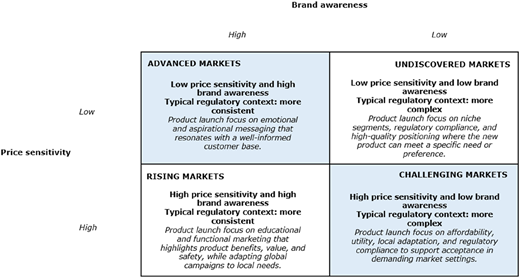
The findings show differences between emerging and developed markets, as well as variation within both groups. Drawing on the Gioia analysis, we identified four distinct market types that differ in their combinations of price sensitivity and brand awareness, while also varying in regulatory environment and product expectations. These market types require different legitimation strategies during product launch. Table 4 outlines these strategies and shows how MNEs can respond to different customer expectations and regulatory conditions across market contexts.
The advanced markets refer to developed markets (e.g. Belgium, France, Germany, Sweden, the United States) and are characterized by low price sensitivity, high brand awareness and relatively consistent regulatory environments, and a preference for advanced and emotional marketing strategies. In advanced markets, consumers typically prioritize innovative product capabilities, expecting state-of-the-art features and high performance. They are more inclined to pay a premium price for products with unique capabilities. In addition, brand awareness is crucial because products with high brand awareness often foster repeat purchases and loyalty. For new products to gain acceptance from target customers, legitimation strategies in these markets must lean on appeals that emphasize innovation and create strong emotional connections through targeted strategies. For new products to gain acceptance from formal institutions, legitimacy strategies must be based on the product's conformance to the set standards. If the new product has conformed to the standards in one state, it is also likely to be legitimized in other states that operate under similar rules and regulations. In this case, new product acceptance is based on “appropriateness” as recognized by other entities, thus matching Suchman's (1995) definition of legitimacy. For example, the attainment of the CE mark required on medical products in the EU can be obtained from any member state and then is deemed acceptable in other member states because it is a sign of conformance to the region's set rules and regulations on medical equipment.
The rising markets include emerging markets (e.g. Eastern European markets such as Bulgaria and the Czech Republic) that display high or increasing brand awareness together with relatively consistent regulatory environments. The combination of sensitivity to price and demand for quality products presents a delicate situation for organizations introducing new products. Here, firms must reinforce brand recognition while relying on functional marketing approaches adapted to local needs. This resonates with findings showing emerging markets' increasing emphasis on product safety and compliance (Sheth, 2011; Fregidou-Malama et al., 2023). To create interest and drive new product legitimation, the case company positions new products as capable of meeting rising demands by highlighting benefits, value and local adaptation in global campaigns.
So it’s not that we say, okay, we are the cheapest one and you can buy it. I mean, we have to convince them with our equipment. The first thing is that you get the safety—that we minimize any risks that can happen. I would say this elimination of the risk of a mistake in production is the primary aspect, at least for the big branded manufacturers. And then it’s not about the money, penalties, or costs. (Regional sales 2 – Central and Eastern Europe)
This quote highlights one of the company's strategies to drive new product legitimacy in a market in which both product capabilities and price sensitivity determine new product acceptance. While the MNE understands customers' concerns with price, it focuses on the benefits of customers acquiring its product. Although its product is highly priced compared with other products, in this case it is capable of eliminating any risks that might emerge during usage of the product.
The undiscovered markets represent newly developed markets with low price sensitivity, low brand awareness and more complex regulatory environments (e.g. Saudi Arabia). These markets offer the potential for brand development and necessitate sophisticated but different marketing approaches. They are typified by a focus on quality and compliance, underscoring the importance of legitimation strategies that are adaptable to diverse regulatory landscapes. To launch new products in this context, due to the regulatory complexity, a detailed understanding of local regulations is crucial. Moreover, MNEs' focus should be on niche segments for which the new product can meet a specific need or preference, coupled with an emphasis on high quality and compliance with local standards.
Finally, the challenging markets include emerging markets characterized by high price sensitivity, low brand awareness and regulatory complexity (e.g. Latin America, China, Africa). The goal here involves building brand awareness in complex regulatory environments, with a focus on practicality and cost-effectiveness in marketing strategies. These markets may also be shaped by informal institutions and norms that affect new product legitimacy. Our study suggests that these markets prioritize affordability. Low brand awareness signifies that both the company and the new product lack external legitimacy and therefore must build legitimacy and trust under market instability. To launch products in this context, MNEs need to invest in heightening brand recognition. The focus should be on understanding local consumer needs, ensuring regulatory compliance and creating localized marketing strategies that emphasize the new product's affordability, quality and utility. For example, the global PLM reflected on how the MNE came up with a product that not only met the needs of the advanced and undiscovered markets, which were keen on product capabilities, but also was able to meet the demands of some of the challenging markets in the Middle East and Africa, which were keen on price.
While our typology presents the current state of some of the markets served by the case company, the impact of time and legitimation strategies can determine the future conditions of the market; that is, markets can shift to different sections of the quadrant. For example, the sustained ability to counter price concerns with effective product capabilities in rising markets can eventually lead them to become less price-averse, thereby moving to the advanced markets quadrant. Effective brand legitimation in the undiscovered markets quadrant can eventually move these markets to the advanced markets quadrant if they are in a position to invest in new products after becoming more aware of the products. Improved brand legitimation and the ability to address the different challenges in the challenging markets quadrant may eventually convert these markets into rising markets. Russia represents an example of a challenging market. Respondents described the Russian market as deeply uncertain, shaped by regulatory ambiguity, shifting sanctions and geopolitical instability. These factors have made it nearly impossible to plan or execute new product launches reliably, with the MNE facing both legal and logistical unpredictability. As one respondent noted, even when products are not subject to sanctions, the lack of payment guarantees and constant changes in legal conditions severely disrupt launch efforts.
Figure 3 presents the typology of legitimation strategies across market contexts. The typology is organized around two primary dimensions that emerged clearly from the analysis: price sensitivity and brand awareness. Based on the combination of high and low levels of these two dimensions, four market types emerge: advanced markets, undiscovered markets, rising markets and challenging markets. Regulatory environment remains an important analytical dimension, but it is not plotted as a separate axis. Instead, it is reflected in the description of each market type and in Table 4. Thus, the figure summarizes how differences in price sensitivity and brand awareness, together with regulatory conditions, shape distinct legitimation strategies.
5. Discussion
5.1 Research contributions
While research has discussed relevant issues regarding new product launches, to our knowledge, few studies have addressed new product launches in different national contexts, using a combination of marketing, institutional and legitimation theories. Marketing theory primarily focuses on gaining customer legitimation through marketing-mix strategies (Talke and Hultink, 2010), whereas institutional and legitimation theories emphasize the importance of gaining legitimation from a broader community (Suchman, 1995; Delmar and Shane, 2004). This study shows that all three perspectives are essential for legitimation in the life sciences sector. It explores how different marketing contexts influence the new product launch process, thereby enriching existing knowledge by identifying influential factors as well as variations in both emerging and developed markets. By drawing on marketing, institutional and legitimation theories, we identify challenges to the new product launch process. In addition, we pinpoint the factors influencing the new product launch process in different types of markets and identify legitimation strategies that are suitable for these markets.
This study builds on prior international research on new product launch (Lee et al., 2011) that highlights differences between emerging and developed markets and the need for specific product launch strategies. We argue that the distinction between emerging and developed markets may be overly simplified (especially because some studies are based on just one example of a developed and emerging market; Lee et al., 2011). We propose a more nuanced perspective that takes into account factors such as brand awareness, regulatory environment, price sensitivity and product capabilities. We develop a typology of markets to show that new product launch strategies in different markets vary according to different combinations of brand awareness and price sensitivity, while also being shaped by regulatory conditions. The typology presented in Figure 3 integrates marketing theory, legitimation theory with institutional theory by showing how market-facing dimensions such as price sensitivity and brand awareness interact with institutional conditions, especially regulatory consistency or complexity, to shape context-specific legitimation strategies. Importantly, the typology does not treat marketing elements as proxies for institutional barriers; rather, it shows how market-facing and institutional dimensions combine in different market contexts.
Advanced markets correspond with high cognitive legitimacy (high brand awareness) and stable formal institutions (regulatory consistency), aligning closely with Suchman's (1995) conceptualization of cognitive and moral legitimacy. Conversely, the challenging markets quadrant highlights weak formal institutions (regulatory complexity) and low cognitive legitimacy (low brand awareness), requiring strategies emphasizing pragmatic legitimacy through affordability and local adaptation (high price sensitivity). Thus, the typology clarifies how legitimation strategies are contextually driven by distinct market situations.
Our study contributes to the ongoing debate on the nature of emerging markets. Despite extensive research, a universally accepted definition remains absent. The literature broadly reflects two dominant perspectives: the economic and the institutional schools (Nielsen et al., 2018). The economic perspective highlights rapid industrialization, market liberalization and economic strength and growth (Hoskisson et al., 2000), whereas the institutional perspective emphasizes high levels of uncertainty and the absence of stable and widely recognized institutional rules (Kuznetsov and Kuznetsova, 2014). Building on these perspectives, our study conceptualizes a new typology of markets by integrating both economic and institutional dimensions.
Moreover, we show that the industry is an important factor influencing international product launch. This finding supports prior studies on the importance of industry factors in affecting strategies for internationalization (Andersson, 2004) and reveals how the life sciences industry needs industry- and market-specific product launch activities to succeed. Our study also contributes to the legitimation literature by explicitly uncovering the legitimating strategies MNEs take in different market contexts. Finally, the study provides empirical evidence on the factors influencing the launch process of new products in the life sciences industry.
5.2 Managerial implications
The framework and typology presented herein highlight the key factors influencing the legitimation of new products across different markets. They illustrate that different markets need different product launch strategies and tactics. By understanding the factors that come into play during the planning and execution stages of the marketing and sales plan of new products, a firm can increase the chances of legitimizing its new products faster and more effectively.
The proposed typology offers practical applications for MNEs in the life sciences industry, particularly by guiding market-specific adaptations. In advanced markets, in which brand awareness and regulatory consistency are high, MNEs should prioritize emotional brand connections and emphasize value-driven marketing strategies to differentiate products in competitive environments. In rising markets, firms should navigate the balance between functional value and brand trust, gradually increasing credibility while remaining cost-effective. In undiscovered markets, compliance with local regulations is a decisive factor, and firms should invest in building credibility while ensuring that their products align with specific legal and cultural expectations. In challenging markets, in which brand awareness is low and the regulatory environment is complex, affordability and education are crucial.
Moreover, the study highlights the importance of improving coordination between corporate headquarters and regional and local marketing and sales teams to ensure an adaptive and efficient product launch process. Communication plays a vital role in aligning global strategies with local market conditions, requiring firms to invest in localized training programs for these teams.
The findings also suggest that flexible pricing models are essential for market acceptance, particularly in price-sensitive regions. The regulatory environment is another key managerial consideration. Firms should establish regulatory intelligence teams dedicated to tracking evolving policies and requirements in different markets, taking a proactive rather than reactive approach to compliance. Regulatory awareness and engagement with policymakers can help prevent costly delays in product launches and ensure smoother market entry.
Beyond its implications for managers, this study provides insights into the societal impact of new product launches in the life sciences industry. Given that many life sciences products directly affect public health, medical accessibility and healthcare innovation, the strategies MNEs employ have broader consequences beyond commercial success. One of the most significant societal implications is the potential to improve access to life-saving medical technologies. The findings reveal that price sensitivity is a major challenge to adoption in emerging and undeveloped markets. Regulatory environments also play a fundamental role in determining the speed at which new life sciences products reach the public. As the study demonstrates, the complexity and inconsistency of regulations across different markets often slow the adoption of new medical innovations. A more coordinated approach among regulatory agencies, MNEs and healthcare institutions could lead to faster product approvals and wider distribution.
5.3 Limitations and future research
Although this study brings insights to the international new product launch literature, it has some limitations. First, it considers only one company in one specific industry, so the findings may not generalize to other industries. We suggest, however, that similar patterns are likely to emerge in other similar heavily regulated industries. Future research could address this limitation by expanding interviews to other companies and industries or testing our typology to determine whether the factors are industry-specific. In particular, research could explore the unique aspects of product legitimation in specific emerging markets, in which the complexities of new product introduction may differ significantly from those in other emerging markets and more developed economies.
Second, the number of interviews may also be a limitation, though we reached saturation during coding. Future studies could use a larger sample size to confirm the findings. In addition, our focus was on the product launch process. We recommend that future research should incorporate the earlier phases of product development by interviewing R&D personnel to provide a fuller understanding of product legitimation, as their insights could enhance comprehension of pre-launch development decisions. Similarly, we did not interview legal and regulatory experts as the MNE had already secured regulatory approvals by the time of launch. Future studies could therefore benefit from explicitly pre-launch activities, including legal and regulatory perspectives.
Third, while our analysis integrated institutional, legitimation and marketing theories (particularly marketing-mix strategies), the deliberate selection of respondents in marketing and sales roles naturally led to an emphasis on market-related challenges, such as regulatory frameworks, price sensitivity and brand awareness. We recognize that this selection may have contributed to less explicit attention being given to other types of institutional barriers, such as deeper cultural or political complexities. Future research could therefore extend this study by examining these additional institutional barriers, including cultural and geopolitical dimensions, using a broader set of respondents and perspectives.
Finally, we conducted the interviews only from a respondent perspective, and thus personal biases could be a factor. Future studies might use other data collection methods to complement interviews and provide a better understanding of the launch process. While we used data from a company that has been in the life sciences sector for more than 100 years and has strong market presence in different regions, future research might consider using case studies of new firms launching products during different times of market stability.
6. Conclusion
Despite the limitations, by building on the marketing, institutional and legitimation theories, this cross-regional case study provides deeper insight into how international firms navigate new product launch challenges in different markets. The proposed typology shows that firms must adapt their legitimation strategies to different market contexts to gain acceptance. We propose that the theoretical insights that emerged when aligning legitimacy strategies with the respective market environments are transferable beyond the life sciences industry and can be applied by firms operating in industries with similar marketing contexts.
Appendix 1
Note
While many of the barriers presented in Table 3 relate to internal organizational, communicative and logistical issues, the findings also clearly identify external institutional barriers (e.g. regulatory heterogeneity, geopolitical instability). These external barriers align with institutional theory, complementing the internal process challenges presented previously.