The study focuses on the value co-creation processes in humanitarian professional services provision, analysing the key enabling factors of beneficiaries' participation, involved in long-term integration programmes (L-TIPs).
Through an in-depth case study, the research looks at the practices of value co-creation in humanitarian professional services, considering both the perspectives of the professional service provider and beneficiary.
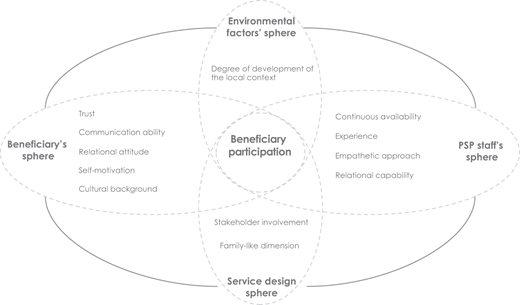
In professional services beneficiary's participation affects the success of the L-TIPs outcomes. Participation's enablers can be classified into four different spheres, each belonging to different elements of professional service: the beneficiary, the professionals, the service design and the external environment.
This paper contributes to the literature on humanitarian operations & supply chain management. By focussing on an understudied phase of the disaster life-cycle management, it contributes to the theory of value co-creation by exploring new issues and drivers of beneficiary's participation.
This research has interesting implications for policymakers and humanitarian practitioners. First, guidelines for professionals' behaviours and interventions should be designed as well as new practices and strategies should be adopted. Second, governments should avoid concentrating L-TIPs in few big humanitarian centres.
The study focuses on an understudied stage of humanitarian operations, namely the L-TIPs, and uses this setting to build on the theory of value co-creation in professional services by identifying its enabling factors, clustered into four spheres, namely beneficiary, professional, service design and environmental.
Introduction
Since the 2015/16 peak of migrants' arrivals in Europe, attention has shifted towards effectively integrating them into their new societies (UNHCR, 2019). The increases in new arrivals have exposed the underlying governance weaknesses to long-term integration responses (OECD, 2018). The European Agenda on Migration (European Commission, 2015) has further underlined the importance to run up an adequate reception system for refugees, asylum-seekers and unaccompanied minors who require international protection as part of a solid common European asylum policy (EASO, 2018), referring to the need for further guidance improving standards on nationals reception conditions. Nowadays a widespread network of institutions and associations, jointly work committed together to uphold the rights of people who flee from their countries, to guarantee them access to human rights, protection and social inclusion (Capua, 2017). A multi-level reception system has been developed to provide professional services to thousands of migrants enrolled in long-term integration programmes (L-TIPs) across the European Member States.
L-TIPs are community development measures framed by the Common European Asylum System (CEAS) and adopted by municipalities, with the involvement of local non-profit organizations (NPOs), aiming at ensuring social, professional and economic integration of concerned beneficiaries (European Commission, 2011). Access to L-TIPs is reserved for beneficiaries of international protection–a person who has been granted refugee status or subsidiary protection status–and all unaccompanied foreign minors (both, hereinafter, the beneficiaries). L-TIPs ensure a structured and organized process, through which beneficiaries can rebuild their ability to choose and plan and regain the perception of their own value (European Commission, 2016). Through L-TIPs, beneficiaries are entitled to get primary needs' support (e.g. housing, food and clothing) and to access different professional services (education, cultural mediation services, legal counselling, language courses, health assistance) (Mouzourakis et al., 2019). These professional services aim to frame an integration path for each beneficiary enrolled in L-TIPs.
Despite the comprehensive set of stakeholders and organizations involved, L-TIPs do not always achieve the desired outcomes as recently declared by the Organization for Economic Co-operation and Development (OECD, 2018). The integration in the hosting community is a long and complex process, and the beneficiary of the programme has to be fully committed to it. Without her/his complete involvement and participation, the set of delivered professional services will not bring to the desired outcome, i.e. the actual integration of the migrant in the hosting society. The problem is that due to the different cultural background, but mostly due to the trauma of being forced to abandon their own families and country, and due to the shocking experience of the inhuman migratory journey to Europe, beneficiaries are usually unconfident and mistrusting even to whoever is there for helping them (SPRAR, 2016). They are challenging “patients”, they experience psychic distress and their full commitment to the L-TIPs is not so obvious and easy as one could imagine.
For the reasons mentioned above, being able to understand and plan adequate strategies to increase beneficiaries' participation in service delivery is a must of L-TIPs. How professional services tackle beneficiaries' unstructured needs could make distinctive professional service provision by involving joint and continuous interactions between beneficiaries and professionals. Consequently, in our belief, understanding how professional services should involve the beneficiary, as end-user, is one of the main challenges (Wellens and Jegers, 2014) of facing today the Mediterranean humanitarian crisis.
The issue of end-user involvement and contribution during service design and provision has primarily been studied in the literature of the so-called value co-creation (VCC) theory. VCC theory is instrumental to comprehend the drivers and enablers of customer–provider co-creation of value and to understand how to increase the likelihood of customer's participation during the service design and provision. Then, to study the phenomenon of beneficiary participation in the L-TIPs programme, we decided to use this theory. However, the VCC theory has been thought and formulated for business contexts (Galvagno and Dalli, 2014) and, rarely, it was applied in educational contexts (e.g. Hasan and Rahman, 2016) and healthcare contexts (e.g. Damali et al., 2016). Surprisingly, professional services in the humanitarian setting have never been studied from the point of view of the VCC, although the beneficiary's participation in the process and her/his interaction with the service provider is crucially important. Moreover, given the specificities of the “end-user” in the L-TIPs programme that make her/his involvement in the process as important for the success of the integration as difficult to achieve (Robson et al., 2003), in this study we wish to elaborate on the VCC theory to take into account these aspects.
To address the above-mentioned limitation and need for theoretical elaborations, this paper examines how value is perceived and created during professional service interactions, from a service dual perspective: the professional service provider (PSP) and the end-user (the beneficiaries of L-TIPs), under the lens of the theory of VCC (Vargo and Lusch, 2006).
Starting from Bagdoniene and Valkauskiene (2018) and Grönroos and Voima’s (2013a) works, the authors explore in-depth the different approaches and practices used by PSPs and its end-users (the beneficiaries) to explain and clarify the concept and the process of VCC in the humanitarian context. Mainly, the study focuses on the mechanisms of VCC, which is on how NPOs stimulate beneficiaries' participation during professional service design and provision.
Summing up, the authors explore how beneficiaries' engagement can be fostered in the context of a professional humanitarian service provider so that the L-TIPs’ outcome improved. The research questions are:
How do humanitarian organizations co-create value in the design and provision of professional services to beneficiaries of L-TIPs?
How can the beneficiaries' participation in the value co-creation process be increased?
Being the empirical context under investigation, specific and multifaceted, the empirical part of the research was conducted using qualitative methodology in the form of case research.
The paper is structured as follows: theoretical concepts and literature background are discussed in the next section. Then, the methodology section presents the qualitative methodology adopted for the research. In the last two sections, findings and conclusions are presented.
Literature review and theoretical background
Coherently with the aim of this study, the authors frame our research into the literature of humanitarian operations & supply chain management (HO&SCM) and of VCC in professional services.
L-TIPs in humanitarian operations and supply chain management
The HO&SCM literature has asked mainly for further studies in service design and provision in humanitarian setting (Kovacs and Spens, 2008; Dubey et al., 2019) and, more specifically, more research is needed to advance new insight on professionals' service management (Fu et al., 2013; Chiappetta Jabbour et al., 2019; Heaslip and Kovács, 2018a; Oloruntoba and Banomyong, 2018a; Seifert et al., 2018a).
The HO&SCM literature has been devoted to different phases of the disaster management cycle: from the pre-disaster to the post-disaster (Suriani et al., 2016). Most of the previous studies of HO&SCM literature have focused on the logistics aspects of the post-disaster phase (Heaslip, 2013; Kovacs and Moshtari, 2019; Kumar and Kushwaha, 2018; Özdamar and Ertem, 2015). Even in the context of refugees humanitarian crises, existing literature focuses more on disaster relief and less on development aid to vulnerable people (Seifert et al., 2018). However, the humanitarian crisis specificity related to the refugees and migrant flows in Europe, asks for an in-depth investigation of the L-TIPs. The pre-disaster phase includes mitigation and preparedness stages. Both stages aim to identify and adopt preventive measures avoiding the impact of a disaster with a strategic vision, establishing an adequate regulatory framework to manage the emergency in case of adversity, thus impeding the reoccurrence of a disaster and/or to prevent it. The post-disaster phase includes the response and recovery stages. The former occurs immediately after the disaster and activities are mainly focused on saving lives and minimizing disaster effects; it is characterised by short duration, high urgency and large uncertainty, entailing operations management challenges such as efficient purchasing, logistics of in-kind donations, etc. The recovery stage deals with the immediate disruption, damage and other effects of the disaster; it tends to satisfy the victims' main need to restore basic conditions, planning and executing reconstruction of infrastructures (Asian Development Bank, 2004).
Setting on the specific context of the European migration emergency, Europe's humanitarian response stage to refugee and migrant flows includes L-TIPs that differ from the response and recovery programmes of other humanitarian contexts (OECD, 2018). While, commonly, the response stage and the recovery stage provide rescue operations and restore basic conditions and immediate needs, L-TIPs focus on beneficiaries effective integration into the hosting country by providing them professional services such as educational support (e.g. language courses, counselling, education, vocational orientation), assistance in entering labour market and legal support, social support (e.g. access to and use of services and institutions; social contacts and places of life and work), healthcare and specialized services (e.g. women at risk, children at risk). In other words, L-TIPs aim to enable beneficiaries to start a new life. Integration is figuratively portrayed as a meeting place where those who have sought protection bump into the community that welcomes them. The weaving of the L-TIP network supports actions favouring social, economic, and housing integration of beneficiaries. Therefore, L-TIPs seem to describe a dynamic integration path, difficult to label in predefined schemes, especially if standardized regardless of the people directly concerned, the beneficiaries (SPRAR, 2016).
By focussing on professional services provision within the L-TIPs under CEAS, this paper contributes to understanding how L-TIPs outcomes could be improved by fostering beneficiary participation in the process, thus co-creating value during professional services provision. For this reason, this study contributes to an understudied area of HO&SCM research literature.
Value co-creation in humanitarian professional services
The underlying meaning of VCC is to bring something into existence as a result of coordinated processes and actions, a manifestation of customer engagement resulting from motivational input (Vargo and Lusch, 2006; Van Doorn et al., 2010; Grönroos, 2011; Grönroos and Voima, 2013b; Galvagno and Dalli, 2014; Damali et al., 2016; Yu and Sangiorgi, 2018).
Grönroos and Voima (2013) reveal three different dimensions of VCC. In the first dimension, activities are performed by the provider, resulting in the production of resources and processes which customers may use in their value creation process and where the provider acts as a facilitator. In the second dimension of VCC, customers are independent value creators and the value emerges through the customers' experience. The third dimension figures out a joint collaborative approach where customers are responsible for value creation and act as co-producers, through a dynamic process of direct interactions with providers. Providers may get the opportunity to influence the customers' value creation process as value co-creators (Bagdoniene and Valkauskiene, 2018).
In professional service literature, VCC is considered a paradigm describing how the professional service provider and its customers are involved in service design and service execution phases (Vargo and Lusch, 2008). In the traditional goods-dominant (G-D) logic (Vargo and Lusch, 2004), customers have been viewed as passive users. The shift to the service-dominant (S-D) logic has completely overturned this concept. Now many authors state that customers have a crucial role as co-creators of value (McColl-Kennedy et al., 2012; Payne et al., 2008). Indeed, during interactions, actors work collaboratively to understand and define problems reaching specific service outcomes through assessing customers' needs, bringing mutual benefits (Elg et al., 2012) such service quality improvement (Zhang et al., 2015). This process is the engine to build-up motivational drivers, key elements to reach personal and social benefits (Oertzen et al., 2018).
VCC, and its role in professional services, has been analysed under various aspects; the degree of collaboration in the service triads, stakeholders contribution along the service process, but little has yet been studied in the field of professional services provision in humanitarian contexts (Gunasekaran et al., 2018).
Recent studies of VCC in professional service have identified critical activities that may enhance professional service value creation in co-design (Matinheikki et al., 2016) and co-execution phases, exploring different stakeholders strategies in shaping value creation (Vuorinen and Martinsuo, 2019) in service development. Despite the interest of the issue, many authors noted a lack in understanding how actors' interaction involved in professional humanitarian service design and provision can increase the level of satisfaction of end-users in non-business settings (Heaslip, 2015; Singh et al., 2018). Thus, understanding the mechanisms of interaction of the actors involved in providing professional services has become critical (Bagdoniene and Valkauskiene, 2018), especially in a humanitarian context (Starr and Van Wassenhove, 2014; Heaslip and Kovács, 2018a, 2019).
In VCC literature, other professional service management related topics were partially addressed. A recent study, Damali et al. (2016) analyses how the guiding role of professional service providers could affect healthcare effectiveness through patient involvement and how patients' participation and collaboration increase healthcare effectiveness.
There is no doubt that the wide range of beneficiary' diversity and application domains combined with the high degree of ongoing interactions, could play a critical role in the success of professional humanitarian service. The complexity of the setting, the specificities of the L-TIPs' customers (beneficiaries), and the multi-faceted nature of the professional services provided across L-TIPs (from legal to psychological services, from healthcare to job search services), still make the analysis of the VCC mechanism in professional humanitarian service provision more complex. Moreover, professional humanitarian service processes seem to be influenced by the beneficiary's willingness and capacity to be engaged in service provision; this, in turn, is affected by the emotional, cultural and relational experience of the refugee her/himself (Mustak et al., 2013; Yu and Sangiorgi, 2018). Increasing the beneficiary's participation in the provision of professional services is strongly needed to guarantee that the L-TIP will be customer-centred (Robson et al., 2003) even developing tools that could enable co-execution of process (Batalden et al., 2016), obtaining new ideas and learning from customers Gummesson (2007). By providing the beneficiary with a set of tailored services that aim at addressing specific needs, the likelihood that the professional humanitarian service outcome, in L-TIP, is reached will be higher (Trasorras et al., 2009).
In other terms, the need for designing and delivering effective services (i.e. reaching the beneficiaries' social integration) ask for understanding what are the levers for actively involving the beneficiary of an L-TIP, even when her/his willingness to participate is not so obvious, and the levers for involving other stakeholders in the process, even when these are not directly involved in the business or the professional service supply chain. And, most likely, these levers are different from those of a chronic disease patient who needs to participate and collaborate to her/his long-term care process, and more obviously, are different from those of a customer who is asked to participate in the new product/service development process of a company. For these reasons, by studying VCC dynamics in the humanitarian setting and by exploring the drivers of beneficiary participation in the service design and delivery processes of L-TIPs, we believe this paper can contribute to the value co-creation research literature.
In sum, in the specific humanitarian context like the L-TIPs, the outcome of the provided professional services coincides with the beneficiaries setting up their first step to reaching integration in the new hosting country. By exploring how value is co-created within L-TIPs, we believe, this research will elaborate on the theory of value co-creation.
Methodology
The aim of this research is to understand the VCC process adopted in professional humanitarian service provision and to identify its main enablers in an L-TIP setting. The research design is based on a theory elaboration approach (Lee et al., 1999; Fisher and Aguinis, 2017) and abductive reasoning. The authors examine how professional services are managed in L-TIPs under the lens of the literature of VCC, which therefore constitute the theoretical background of this research.
Being the empirical context under investigation, specific and multifaceted, the empirical part of the research was conducted using qualitative methodology in the form of case research (Voss et al., 2002) through semi-structured interviews, direct observations and unstructured chatting with beneficiaries and service providers during social events within the organization where one of the authors was invited to attend. Qualitative methodology helped authors to understand a less-investigated topic in-depth comprehensively. The case study strategy is also justified by the non-conventional nature of the environment (Müller-Wille et al., 2011) which is characterized by an excessive level of reluctance in the attitude of the actors “under observation” to show themselves to unknown people and, more in general, to the external environment, mainly due to scepticism, mistrust and no confidence. The case strategy helped authors to break down participants' current barriers, using a smooth, kind and respectful approach to the context (Voss et al., 2002). Also, this allowed to build a basic relationship and talk with flexibility and freedom with PSPs' professionals (lawyers, medical doctors and cultural-linguistic mediators), operators, volunteers as well beneficiaries about their experience and discuss their opinions about different aspects of the programme.
Case selection
The case study regards two different humanitarian NPO sites, here artificially named Centro Alpha, a PSP which aims to create opportunities between beneficiaries of L-TIPs and resident citizens in Italy. Centro Alpha is engaged in activities and services of accompanying, serving and defending the rights of those arriving in Italy fleeing wars and violence, often including torture. It was founded in 1981 and, compared to the first years of activity, the organization has expanded and diversified the services offered, thanks to the constant commitment of over 590 volunteers. Today, it operates through 7 sites located in different Italian regions and offers its services to 25,000 migrants/year.
For the purpose of this case research, the authors selected two different sites of Centro Alpha (PSP A and PSP B), both located in Sicily but in different cities. This sampling location was suggested by gathering the statistical data of the UN High Commissioner for Refugees (UNHCR) and the Italian Ministry of the Interior web sources. Moreover, the geographical centrality of the selected region within the Mediterranean human migration flow and the presence of a diffuse reception system makes Sicily the right place where to set this study.
The two sites of Centro Alpha that have been considered in this study help beneficiaries by delivering a complex portfolio of professional services, starting from welcoming, health screening, language lectures, legal guidance, job placement, cultural mediation, after-school childcare, psychological assistance and others. Table 1 reports some data about the staff and the service volume delivered in the year 2018 by the two sites.
Data collection
Data have been collected between November 2018 and February 2019. Before starting the interviews and the on-site observations, the authors organized a meeting with the directors in each PSP sites to broadly explain the topic of the research and why they wished to interview professionals, operators, volunteers and also beneficiaries, besides visiting and observing them during work. After approaching the directors of both PSPs, the authors needed to slightly re-design the research protocols, because the directors suggested that in some cases beneficiaries would not have been able to answer or could have perceived the interviews as an attempt to investigate their lives. Thus, the presence of a cultural mediator was needed during the interviews with beneficiaries, to explain them the meaning and the goal of the research and the questions; to show researchers how to express or how to use specific words or avoid equivocal or ambiguous terms, considering their cultural background; and, to introduce to the researchers the context from which each beneficiary fled, especially when interviewing children or women. Authors listed the characteristics, for each PSP site, of all the staff and beneficiaries involved in this research in Table 2. The interviewed beneficiaries for each PSP site were chosen basing on their availability to participate and on the spoken language (Italian, French or English).
To facilitate an adequate integration of the researchers within Centro Alpha and to build the basis of a fair and trustworthy relationship with all the staff and especially with the beneficiaries, the authors were invited by the directors of the Centro Alpha to participate in some social events organized within both sites of the NPO few days before the interviews. This approach was useful to ensure that the beneficiaries involved in the L-TIPs were able to perceive the researchers as “friends”, people to trust. After that, the authors went to visit the staff and the beneficiaries during regular working hours, observing deeply, understanding their interactions and writing personal notes during the visits. Two different research protocols were drafted, one for PSP's staff and one for beneficiaries (see Tables A1 and A2). During the interviews two aims were put forward: the intent was to become familiar with beneficiaries (more specifically with their culture in order to understand how they interact with each other, with local people, how do they propose or discuss ideas, etc.) and with the organization (its history, structure and internal operations), then to explore in-depth also the mechanisms for beneficiaries engagement.
The participants were chosen using purposive sampling (Teddlie and Yu, 2007) due to the characteristics of the participants (age, spoken language, status). In total, 22 semi-structured interviews with PSPs staff and beneficiaries of the L-TIPs were done. Authors recorded semi-structured interviews with 2 directors, 2 coordinators, 4 professionals (3 lawyers and 1 medical doctor), 3 operators, 2 cultural-linguistic mediators and 9 beneficiaries, lasting from 14 to 62 min. Upon completion of each interview, reflective memo-notes and pictures were collected to record thoughts, observations, and field issues such as respondents' openness. As Dabhilkar et al. (2016) suggest, studying and observing processes, as constituted by various practices, may help to develop a deeper understanding. We analyzed the collected data by using the content data analysis software ATLAS.ti. In the first stage, authors performed the coding activity through labelling row data and a line-by-line analysis, then organizing quotes into a pattern of concepts and categories with the respective proprieties (open coding). In the second stage, authors connected categories, sub-categories and dimensions (axial coding), finally selecting core categories and systematically relating them in other classes (selective coding) (Corbin and Strauss, 2008). To ensure validity and reliability, data were coded by two researchers and inter-rater agreement was achieved through discursive alignment of interpretations (Cruzes et al., 2015; Yeomans, 2017). Through the case analysis, authors found four critical dimensions as crucial to affect beneficiary participation in the value co-creation process in L-TIPs. A summary of the coding activity, including the four identified dimensions, the emerged codes, and some illustrative quotations is reported in Table A3.
Case analysis
Through case analysis, the authors found four critical dimensions that affect the beneficiary's participation in the VCC process. Each dimension represents a set of distinctive elements of the parties that gravitate around the provision of the professional humanitarian service. Although the concept of VCC was hardly mentioned during interviews, some of the interviewees (depending on their designation/role) reported that beneficiaries were consulted or involved during the design of their path and the development of professional services. Even the authors noted and captured some moments where VCC between beneficiaries and professionals took shape, despite almost all beneficiaries did not specifically mention the co-creation concept during their interviews. The analysis shows that the factors which affect beneficiary participation in the VCC process during professional service design and provision are manly related to beneficiaries' personal traits and characteristics and specific professionals' capabilities. Moreover, beneficiary participation is not only influenced by the characteristics of the involved actors; the way in which professional services are offered by Centro Alpha (e.g. whether other local stakeholders are involved in the service development process, or whether the service is offered in an atmosphere which recalls a family-like environment) and environmental factors (e.g. the economic development of the local context) seem also to affect the level of beneficiary participation.
A tailored project for social inclusion: value co-creation takes shape
Usually, to engage beneficiaries in the VCC process, the interaction with PSP operators starts getting them involved in an in-depth interview. The aim of the dialogue is to push the first connection, thus understanding beneficiaries' needs to help them. Then, the PSP operators define how beneficiaries could be involved in PSP activities, professional training or education, and which types of professional services the PSP can propose (orientation and counselling to job placement, law advice, orientation and counselling to housing and social integration services, language course, etc.). The interview is meant to set-up a tailored project whose desired outcome is the full integration of the beneficiary in the local social system; the L-TIP is considered effective when such an outcome is achieved. The PSP interacts with each beneficiary joined into the L-TIP. During daily interactions, the presence of a cultural mediator is needed. The cultural mediator is independent of dialogue and acts as a facilitator in the professional service design and provision. His company is needed to explain beneficiary the main goals of daily interactions, ensuring a good degree of communication and helping actors overcome cultural barriers. Then, the beneficiary starts a meeting with professionals (depending on the beneficiary's needs, as identified by the operators) and together set specific goals and actions primarily based on the beneficiary's needs assessment, as a result of constructive discussions. Through meetings, professionals and beneficiaries combine their inputs to jointly develop the scope and the contents of the L-TIP. The L-TIP define the main goals and actions planned to achieve the social integration goal of the beneficiary enrolled in. It may involve multiple services (social, healthcare, legacy) and numerous community resources (volunteering, social cooperation, associationism, families), linking them as much as possible to the social environment. Once the beneficiary's needs are mapped, and the tailored L-TIP is drafted-down, the PSP is in charge of managing, coordinating and monitoring the project. The PSP also sets the daily beneficiary's activities and gets beneficiaries involved in peer-to-peer interactions coherently with the aim of L-TIP, to deliver the full set of the tailored services.
Authors have collected clear empirical evidence of how VCC does not only occur in the project design phase, but also during the daily professional services' provision. For example, one of the cultural mediators (interviewee code: PSP_[A]-CM1) states “[…] Obviously the beneficiary is an active part of the project, the difference between the L-TIP compared to other projects is precisely that the beneficiary is at the core of the reception project, he is active and protagonist in every activity”. It can be said that the activity of the PSP is not just designing L-TIPs which are customized for each specific beneficiary but, instead, co-designing and co-realizing projects together with beneficiaries in order to maximize the effectiveness of the project, (i.e. the likelihood the beneficiary will integrate within the society). The interviewee PSP_[A]-D states“[…] In the personalized project we talk to them, we take into account what they say. For example, a guy who knows how to sew asked us if he could have people come in to do sewing courses and we obviously gave him permission […] of course there is a whole process so there is a listening to the person concerned, understanding what his needs and his prospects are, that is we do not impose an integration project, it is a shared path between our organization and the beneficiary”
In sum, only if the organization makes the beneficiary actively participate to the project design and, most of all, to the project realization through daily involvement and participation in the professional services provision, the likelihood of a successful beneficiary's integration process into the local context will be higher.
The beneficiary's sphere
The authors identified different factors attributable to the beneficiary's sphere that may influence their participation in the VCC process. The main factor is trust; it is recognized firstly by the director of the PSP B (PSP_[B]-D) who states “[…] they have recently landed, let's say they are muddled people who have no idea about their rights, their needs. Thus, in that status, they do not really know what they have to do, where they have to go: they need to trust in someone to interact or communicate with us”. The respondent PSP_[B]-C1 strengthens the concept “[…] If they do not trust in me, my work becomes complicated and I am not able to exactly translate what they need to into real actions. But once trust is established, they like communicating with us thus increasing their participation during the social activities, attending at events, sharing ideas with people…”. Even from beneficiaries' point of view trust is recognized as a primary factor to interact with PSP staff and it increases their self-motivation “[…] for me trust is important: it makes me feel supported and this increases my motivation” (respondent B_[B]-4). A trust-based relationship means good interactions enabling beneficiaries to set the first step on their involvement. Moreover, PSP's operators recognize that, indirectly, the trust could affect their self-motivation and communication ability: PSP_[A]-O1 says “[…] When a trust relationship is reached, beneficiaries usually start interacting with each other and with us, depending on their self-motivation and their cultural background. While they interact their communication ability increases, and they learn something new day by day. It definitively depends on the degree of trust in the person they interact with”. All the Centro Alpha's staff members agree that beneficiary cultural background surely affects the VCC process, given that different cultures have different values. Thus, beneficiary's participation in the VCC process arises after he/she recognizes a trust-based relationship with the PSP staff and her/his needs come up; “[…] once trust is established, they can communicate us their problems, their needs, their objectives. Then we can speak with them to design a good path for their integration. We try to ask them to share ideas, thoughts…” (PSP_[B]-P1).
In sum, it emerged that, when engaged in a trust-based relationship with the PSP's staff, beneficiaries tend to improve their self-motivation, increase their relational attitude and communication ability, understanding cultural differences; all these features makes beneficiaries more propense to actively participate to their L-TIP, thus increasing their commitment. Moreover, their cultural background strongly influences the intensity of the interactions with the PSP's operator “[…] the relationship with these people is not simple, some of them want to leave the L-TIP, they are exposed to the pressure of their families and their behaviour changes when in front of people with different cultural values” (PSP_[A]-O2).
The PSP operator's sphere
PSP's staff guides and encourages the beneficiary's commitment during their L-TIP as a guide. The guiding role of the PSP staff is perceived by beneficiaries during the L-TIP design, and it is crucial in stimulating beneficiary's participation, day after day. L-TIPs can last for many months, with broad staff availability as stated by the interviewee PSP_[A]-P1 “[…] they know they can count on us. We give our availability for everything, even beyond working hours. We offer maximum availability”. The value of broad and continuous availability of the PSP staff is important, and is particularly perceived in times of need by beneficiaries; “[…] if you are sick they will take you to the hospital because none of us has a car and they are very helpful, I was very surprised at the beginning from this full time commitment” beneficiary B_[A]-2 says. Beneficiaries even recognise operators can help them beyond working hours, also in emergency situations, appreciating every single effort, thus strengthening the relationship between the beneficiary and operator or professional. Other PSP operators' traits and capabilities emerged as facilitators of beneficiary participation in the VCC process: most of the PSP operator have experience in dealing with migrants and refugees thus understanding and them know how to interact with beneficiaries, depending on their status, their feelings, adopting an empathetic approach and relational capability useful to overcome distances. The PSP operator capabilities help both to decode the need of the beneficiary and to recode the answer in a way that can be used and understood by the beneficiary during the service design and service provision. These characteristics, together with their continuous availability, define what the authors named the PSP operator's sphere. Authors noted that all these characteristics increase beneficiary participation in the VCC processes. Moreover, thanks to their emphatic approach, PSP staff members are able to convince beneficiary that cultural contamination is a good way to understand each other, and that social integration is possible only if they accept and push an intercultural dialogue: “[…] We seek to be promoters of opportunities to exchange, we push beneficiaries to consider social contexts other than their own community, for spending their free time, even after work” (PSP_[A]-D). However, whatever method or practice used to increase beneficiary's participation in the VCC process has to respect cultural differences and the beneficiary identity “[…] Integration means maintaining own identity, exploring their reality, understanding their uses, respecting their cultural background, working to involve them peacefully and continuously” (PSP_[B]-P1).
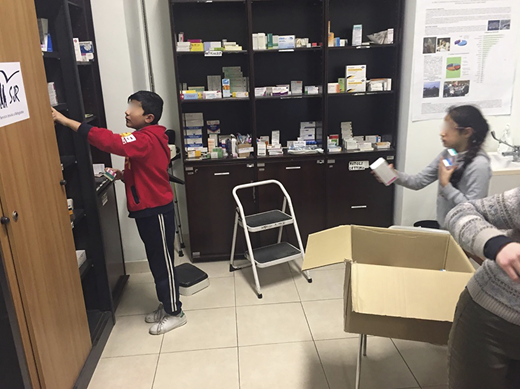
Sometimes the operators carry out daily activities in which beneficiaries offer their spontaneous collaboration. In this way, the operator's guiding role makes beneficiaries responsible and committed by letting them acquire new skills that they, likely, will put in place during daily activities. For instance, authors observed two refugee children (one of the two was a new one) helping the operator rearrange the medicine and drugs, according to a specific method learned by them (Plate 1). This practice helps to strengthen ties both with the operators and the new beneficiaries of the programme through a learning by doing approach, without the PSP staff guide. A PSP operator told that this was not something pre-designed and that her experience and professionalism helped her improvise this activity.
Service design sphere
In Centro Alpha there exist some pre-designed guidelines and practices around which professional services are designed, aimed at increasing the beneficiary engagement and participation. The interviewees highlighted how these practices have to be customized based on the beneficiary personality, this is stated by PSP_[A]-D “[…] When a boy arrives in our centre the operators know what to do, they know how to use a number of practices to connect with him, to start establishing a relationship based on trust; such as tricks, gestures, words, practical laboratory activities”, the cultural mediator PSP_[A]-CM1 adds “[…] There are standard procedures that we usually follow but then it is our experience that leads us to understand how to create a bond with people, which excuse we should use in order to start interacting with them”. In sum, these service pre-designed characteristics are not automatically applicable; it is the PSP professional's experience, her/his capabilities, and the way the beneficiary responds to the behavioural stimulation that increases their participation and the value of the service.
Surely one of the most important characteristics of the professional service design and provision in this context, that interviewees strongly confirmed as crucial of beneficiary engagement and participation in their integration project, is the “family-like” across interactions. It is essential that the beneficiary feels comfortable, safe and confident. The main aspect of a family-like dimension environment is the size of the centre, i.e. the number of beneficiaries hosted. Interacting in small groups facilitates the beneficiary's proactive participation in the VCC process. According to some of the operators, working with a single beneficiary or interacting with a small group of them in a family-like dimension somehow forces beneficiaries to communicate and interact more within the group but also increases their interaction with locals, outside their community, thus pushing them to explore the social context. This service design dimension allows PSP to provide better services “[…] working on small numbers, this is the winning thing, working creating a relationship with people…they are integrated when they know how the local system works, they know who they can ask for help, they know where to go if they need a postal service…they must enter in a critical condition to be able to struggle” (PSP_[B]-CM1); “[…] the advantage of working on small numbers allows us to achieve a better service” (PSP_[A]-O1).
Another quite important aspect related to the service design sphere is the involvement of key local stakeholders (e.g. cultural associations, local companies, recreational centres, etc.) into the service design and delivery process, as well as the way the service design pushes the beneficiary interacting with these stakeholders. This is confirmed by respondent PSP_[B]-D: “[…] The winning thing about L-TIP is that we push migrants to the local community, to the urban context and making it visible to everyone. You see them, and you meet them when you are around the city; this is the base for creating the environment for them, to talk with people, to enjoy the city life. They have to interact with locals, try to get involved in events, access the labour market. That is why we try to engage also different stakeholders, because we thing stakeholders, like local employers, Church communities, or sporting centres, could help beneficiaries to achieve their independence […] creating opportunities of exchange, opportunity to get to know each other could be a practical example of integration, anything that can bring local people and foreigners together, especially in communion, is certainly an opportunity for integration”.
Environmental factors' sphere
As expected, beneficiaries' participation in the VCC process and their commitment during the social activities depend on the beneficiary's traits or operator competences or from the way the organization designed and tailored the project. It clearly emerged that the degree of development of the local context is an environmental factor influencing beneficiary participation in professional service VCC process, which is influenced by the degree of economic development, or the labour market and elements that, from beneficiary perspective, could decrease the effectiveness of the services “[…] The problem is to put them [beneficiaries] in contact between their reality and the external context. Sometimes their motivation in creating an integration project depends on the economic context. They know that they will not commit themselves to their integration if there are no good chance to find a job here. They will prefer to leave the country to find new good opportunities” (PSP_[A]-P1).
Discussion
This study sought to comprehend how beneficiary participation in the VCC process of professional service interactions is achieved in the specific humanitarian context of L-TIPs. For the case study, authors selected a PSP working into the L-TIPs across CEAS. Authors clearly found evidences that beneficiary participation in professional service co-design and co-provision processes is not only influenced by the characteristics of different actors involved (beneficiaries and PSP's staff) but also by the features of the design scheme adopted by the PSP and the degree of development of the local context. The main empirical findings show how trust plays a critical role in affecting beneficiary participation. Thus, self-motivation, relational attitude, communication ability and the understanding of cultural differences are reached through a trusted based relationship. All the mentioned factors allow beneficiaries to interact with PSP professionals, indirectly, enabling their participation in the VCC process. Moreover, beneficiary participation is also strongly influenced by her/his cultural background; the interactions with the beneficiary are stimulated by the capabilities and experience of the PSP professionals, combined with a full-time availability; these characteristics are also at the base of the trust-based relationship with beneficiaries (Petri and Jacob, 2016; Wojcik, 2018). Also, working or interacting in small groups, like in a “family-like” environment, lead beneficiaries to interact more effectively with the PSP's professionals and to be engaged quickly in the VCC process. Finally, beneficiary participation in the VCC process is also affected by the degree of local development and the key stakeholders' involvement. Authors listed and grouped these factors in dimensional spheres defining an empirically informed conceptual model for VCC process within the humanitarian organization working in the L-TIPs (Figure 1).
In VCC processes, value is derived with and determined by the user (Vargo et al., 2008). The adoption of VCC processes is today considered as a need than a choice for humanitarian professional services organization and it could be beneficial for all engaged parties in many ways (Baltova and Baltov, 2017).
The way participation is defined depends on the context in which it occurs (Wellens and Jegers, 2014). This is also true in the humanitarian setting. Authors noted that the PSP's staff try every day to get beneficiaries involved and committed in a continuous dialogue and through different tasks, assessing and redefining needs, little by little and step after step, reformulating the service experience to reach effective service outcomes arising from their interaction.
VCC is an empowering process in which users in partnership with each-others, identify problems and needs, mobilize resources and assume responsibility to plan, manage, control and assess the individual and collective actions that they themselves decide upon. What authors observed in the humanitarian setting is that not each beneficiary has the right capabilities to understand his needs.
Professional services are performed by individuals and guided by professionals to achieve problem solving (Lawrence et al., 2016). Using a peer-to-peer approach, professional services involve the application of professionals' specialized knowledge and capabilities to address the design of specific processes for the benefit of their customers (Lewis and Brown, 2012a, b). What the authors found in this research is that during interactions, various forms of tacit and explicit knowledge are constantly redefined, linked and enriched between both parts. The ability of professionals is required to receive information and acquire knowledge from beneficiaries and consequently transform this into useful services for customers (Baltova and Baltov, 2017; Damali et al., 2016; Lawrence et al., 2016; Lewis and Brown, 2012; Schmenner, 2004). The authors observed that during interactions, the “guiding, nudging and persuading” role of the professional service provider (Lewis and Brown, 2012) was much more important than implementing standard operating procedures requiring customers to play a role in the service provision. Thus, the professional relationship with the beneficiary impressively affects her/his committed participation in the service design or provision (Trasorras et al., 2009).
Authors also noted that beneficiaries depend on PSP professionals to lead the interactive process. In accordance with the findings from prior research (Howden and Pressey, 2008; Nguyen et al., 2017), our findings suggest that professional knowledge and competence, as well as her/his client-centric attitude and effective communication skills, and the capabilities to adopt non-standardized process are a critical operant and organizational resource to facilitate effective professional–beneficiary interactions. Moreover, a facilitator's role in this specific humanitarian setting is needed to plan, manage or stimulate their interactions. Indeed, the PSP professional acts as a facilitator guiding beneficiaries to achieve their participation in the VCC process and keep beneficiaries committed even entrusting some responsibilities during social activities. Once trust is achieved, beneficiaries take part in VCC process, creating new opportunities for themselves. Past studies have revealed trust seems to be a key factor to enable VCC processes (Aarikka-Stenroos and Jaakkola, 2012; Damali et al., 2016; Kohtamäki and Partanen, 2016; Petri and Jacob, 2016; Bagdoniene and Valkauskiene, 2018), this also emerged in this research. Howden and Pressey (2008) found that trust is an interaction driver, an important source of value in professional service relationships. Nevertheless, trust is crucial to building a personal relationship with beneficiaries to ensure their participation into the VCC processes; it greatly affects the relationship with the provider and influences the overall success of a project (Petri and Jacob, 2016). These insights lead to the following proposition:
PSP professional's traits (such as empathy and relational capability) and their full-time availability enable a trust-based relationship with the beneficiary which is at the base of her/his participation and commitment during the VCC processes.
Interaction is a mutual action getting involved parties in each other's practices in professional services design and provision. Interaction influences processes and consequently their outcomes (Jaakkola and Alexander, 2014). That is basically needed by the high heterogeneity of the offered services and the high level of customization required. Moreover, professionalism is an important resource, which helps to overcome the limits that hinder the participation of the beneficiaries in the VCC process. The higher the level of the service provider's professionalism, the better value proposition may be offered to beneficiaries (Aarikka-Stenroos and Jaakkola, 2012; Bagdoniene and Valkauskiene, 2018). Many scholars (e.g. Prahalad and Ramaswamy, 2004; Grönroos and Voima, 2013) claim that the use of interaction is the crucial element to enable VCC, thus identifying co-created value as a function of the capability of operators to interact with beneficiaries (Dubey et al., 2019; Grönroos and Voima, 2013).
According to Prahalad and Ramaswamy (2004), authors noted that each person's uniqueness affects the VCC process. Most of the times, interactions with and among beneficiaries are pushed by the PSP professionals. It asks for a high level of adaptation of the professional (e.g. the way of communicating) with respect to the beneficiary's cultural and educational background and their motivation. Subsequently, to actively interact and participate within the VCC process, beneficiaries have to feel confident and safe. Consequently, PSP professionals, thanks to their capabilities and past experience in dealing with migrants, are able to run customized procedures but also to improvise activities basing on the beneficiary cultural background, avoiding standards.
The study findings also show how beneficiary participation is determined by the level of intimacy that the beneficiary feels about her/his relationship with the PSP professional. For example, working with a small group or with a single person puts beneficiaries in a more family-like environment, pushing them to communicate with the PSP operator and increasing their individual autonomy during the VCC process. In this way, beneficiary more easily can explain her/his needs, within a one-one interaction, abandoning fears and preconceptions. The above considerations lead to the following propositions:
The PSP's operator professionalism and flexibility in adopting non-standardized procedures or new unplanned methods and tools for beneficiary involvement, together with her/his relational attitude and communication ability, increase the level and intensity of interaction with the beneficiary ensuring her/his full participation in the process.
nteracting with beneficiaries in a family-like environment increases the likelihood they participate and their commitment during the service design and provision because this type of environment helps them to overcome preconceptions due to differences in cultural models.
On the other hand, it has already been mentioned about the importance and the positive effect that offering a constant and full-time availability has in terms of increasing beneficiary trust and confidence. It follows, then, the size of the PSP centre (in terms of number of beneficiaries hosted) has a crucial role in the beneficiary participation within the VCC process. As mentioned in the literature review, professional services provision in L-TIPs not only require customization and the beneficiaries' interaction, but also their active participation in the VCC process, remembering that each effort they provide could then affect their L-TIP outcomes (Wellens and Jegers, 2014). In a family-like atmosphere, the beneficiaries will be empowered, and PSP staff will be more able to offer continuous availability to beneficiaries, which in turn will increase their propensity to participate and contribute to the social integration project success. To obtain the family-like environment, the number of beneficiaries hosted by the professional service provider should be quite small. Thus, following proposition follows:
The likelihood of the success of the beneficiaries' social integration programme depends on the size of the reception facility.
Beneficiary participation is also determined by the social and economic aspects of the local context (Bagdoniene and Valkauskiene, 2018). In the case study, the authors found that beneficiary's commitment often depends on the perception they have of the local context. Moreover, they usually exhibit more commitment in the VCC process when PSP engage local stakeholders and the local community, thus the following proposition is proposed:
The likelihood the beneficiary will perform work and social experiences in a community is higher if the PSP builds up a network of collaborations with local stakeholders and involve them in the service design and provision during the L-TIP.
Conclusion
VCC is a paradigm concerned with the mutual collaboration between provider and customer to generate mutual value. In professional services domain, value is generated during the interaction between the service provider and its clients (Grönroos and Voima, 2013). The relationship between the involved actors will continue to shift and acquire new forms and manifestations (Baltova and Baltov, 2017). While the literature recognizes that in professional services, significant customer participation is required in order to co-create value, the mechanisms through which this is practically obtained need further investigation (Damali et al., 2016), especially in the humanitarian context (Heaslip, 2013; Heaslip and Kovács, 2018). The nature of value to be co-created needs to be understood comprehensively and explored holistically (Hasan and Rahman, 2016) especially in the humanitarian setting (Kovacs and Spens, 2008; Oloruntoba and Banomyong, 2018; Seifert et al., 2018). The case research presented in this paper is unique because it empirically examines the VCC process in the humanitarian context and focuses on beneficiaries' participation for a profound understanding of the phenomenon of professional service co-design and co-provision. Different aspects that may impact beneficiaries' engagement in VCC have been explored by conducting in-depth interviews with 13 PSP operator/professional and 9 beneficiaries from two different sites of a reputable humanitarian NPO, Centro Alpha, and supported by other sources of data from the literature review, previous studies and official reports. Four different spheres have been identified that influence beneficiary to be involved in VCC processes within L-TIPs.
Policymaker implications
The findings of this paper have multiple implications for policymakers. First, the case the authors have analysed in this paper refers to a “protected” context, where the beneficiaries are applicants or holders of international protection or refugee status. They are, then, part of a reception system designed to provide professional services to vulnerable people and aimed at socio-economic integration and the (re)gain of autonomy. The reception system includes skilled operators, intervention guidelines, the collaboration of (national and local) NPO but also governmental agencies and financial resources. The applicant of an L-TIP is then a privileged interlocutor of the hosting community thanks to this enveloping and pervading reception system: the society is less distant and more easily reachable. Things are completely different for migrants who cannot apply or cannot be nominated for accessing the L-TIP. Being out or being in the reception system creates tremendous discrimination among migrants and has a clear impact on the path to integration. The authors definitively conclude that one of the main obstacles to socio-economic integration of migrants consists precisely in neglecting the right to be part of an assisted reception system, such as the L-TIP.
Moreover, this research's findings clearly show the benefits deriving from family-like L-TIPs contexts; this means governments should avoid concentrating L-TIPs in few and big humanitarian centres. In fact, interacting in small groups could assure beneficiaries' proactive participation into the VCC process. The possibility of working with beneficiaries in family and small contexts helps PSPs' professionals to stimulate beneficiaries in search of interaction with the local community. This process could make beneficiaries better understand the environment in which they live and know the host community customs and habits. In addition, interventions can be suggested for overcoming the boundaries of interventions according to an integrated (and holistic) approach to reception. At the same time, the authors suggest strengthening the forms of sharing, political and operational, of the project between the local authority and the managing body.
Practitioner implications
The understanding of the whole process put in place by the PSP in the L-TIP suggests that beneficiaries should be engaged in setting their objective and their aspirations, specifically through consultations, needs' evaluation and participative activities. Especially participative activities should stress beneficiaries to leave their comfort zone. Therefore, attending at regular meetings and events with local communities, beneficiaries could increase the level of self-motivation, relational attitude and communication ability thus overcoming limits and start interacting with other people. The discussion suggests also stimulating PSP operators, professional and cultural mediators to daily interact with beneficiaries with empathetic and open approach; it could affect beneficiary participation positively, making a trust-based relationship. Also, strong cultural-mediator expertise and capabilities could avoid cultural hindrances.
Contribution to the literature
While exploring an important social aspect of the refugees' crisis, this research also contributes to the literature of HO&SCM (Seifert et al., 2018) and VCC in professional services (Harvey et al., 2016). On the one side, in fact, this paper investigates humanitarian operations within an understudied phase of disaster cycle management, i.e. the community development in the post-recovery phase (Galvagno and Dalli, 2014; Kovacs and Moshtari, 2019; Kumar and Kushwaha, 2018). On the other side, authors use the European humanitarian setting to explore the role of beneficiaries as a primary source of value creation, investigating their involvement and participation. By exploring this topic in the specific setting of L-TIP across CEAS, this research develops on the theory of VCC by identifying VCC's enabling factors, clustered into four spheres, namely beneficiary, professional, service design and environmental and by proposing five propositions linking VCC with one or more factors belonging to these spheres. These factors, e.g. building a family-like environment or using small reception facilities or even the full-time availability of operators, are new elements that need be considered in the VCC theory. We demonstrated that the specificity of the “end-user” could not be neglected when framing the enablers of value co-creation; this is because the reasons that inhibit the customer participation in the service design and provision process strongly depend on the type of business and type of customer. For a service provider in this sector may be very difficult to be trusted by the beneficiary due to her/his dramatic past besides her/his different cultural background. This asks for specific professional behaviours and activities but also receptions system design requirements to increase the beneficiary's commitment to the programme. On the other side, we showed that other aspects, like the ability of the PSP to build up a network of collaborations with local stakeholders and involve them in the service design increase the success of VCC. Working in an integrated way with the territory is necessary and of fundamental importance, as it allows overcoming the limits of individual professional skills within the project teams, pushing a multidisciplinary approach to the nature of the intervention and facilitates a better understanding of the complexity of the needs of the person and its interrelation with the social context.
Limitations and further development
This research has some limitations that may also constitute possible lines of research for the future. Authors recognize that this is a single case study with a limited diversity of involved participants, of the local context, of organizational aspects. The interviewees' number was small, especially on the beneficiaries' side, whose interviews were also shorter in time. A multiple case study would be more than recommended in order to induce findings by comparing different organizations and cross-analysing results. Other future research should focus on the way how to compare indicator assessing the quality and the effectiveness of the L-TIPs during and after professional service design and provision, in association with the follow-up of the beneficiary (e.g. employment, adaptation and satisfaction) and the continuity of information sharing after the service is delivered.