Drawing on the technology affordance and affinity theories, this study proposes a framework explaining the antecedents and consequences of customers’ smart experiences (CSEs) in the artificial intelligence (AI) chatbot context.
The quantitative approach employing an online survey was adopted to obtain data from chatbot users (N = 761) and analyzed using structural equation modeling.
Results from a survey study show that chatbot affordances, including interactivity (two-way communication, active control and synchronicity), selectivity (customization and localization), information (argument quality and source credibility), association (connectivity and sense of safety) and navigation positively affect CSEs (hedonic and cognitive), leading to customer chatbot stickiness through affinity.
Our study provides evidence that supports and extends the affordances and affinity lens by highlighting the roles of specific chatbot affordances that contribute to a positive-smart experience and subsequently enhances customer chatbot stickiness through affinity.
1. Introduction
Artificial intelligence (AI) chatbots have recently witnessed exponential growth in interactive marketing, particularly in online customer service (Chung et al., 2020; Wei et al., 2024; Xie et al., 2023). The development of new technologies, such as chatbots, has made interactive marketing one of the fastest-growing fields (Wang, 2022). Particularly, chatbots have significantly transformed the communication landscape, providing customers with superior shopping experiences and direct contact with brands (Wang, 2024). They are designed to mimic human conversations and enhance customers’ experiences by providing them round-the-clock services (Shahzad et al., 2024b; Zhu et al., 2022). Companies are heavily investing in developing AI programs to provide more personalized content and convenience, allowing customers to enjoy a seamless interactive experience (Ferreira et al., 2023; Wang, 2023). The global conversational AI market size is projected to increase from $13.2bn in 2024 to $49.9bn by 2029 (Research-and-Markets, 2024). However, chatbot-related studies often underline that chatbots generally struggle to handle complex and unusual customer queries, resulting in frustration and poor customer experiences (Gnewuch et al., 2023; Schuetzler et al., 2021).
Past research has highlighted that optimal customer experiences can be achieved when AI-based technologies (e.g. chatbots) provide customers with their requested information while offering support anytime and from anywhere (Japutra et al., 2021; Leung et al., 2022; Li et al., 2023). Service providers now largely use chatbots to deliver smart experiences to enhance sales performance and customer loyalty (Fan et al., 2023). While several studies have investigated what we call customers’ smart experiences (CSEs) in different contexts, such as AI technology (Gao et al., 2022), retailer mobile application (Japutra et al., 2021), smart services (Roy et al., 2019) and AR/VR services (Fan et al., 2020), limited studies have paid attention to investigating CSEs in chatbots setting (Fan et al., 2022, 2023; Upadhyay and Kamble, 2023). Fan et al. (2023) call for further research on “smart experiences” (representing cognitive and hedonic customer responses to chatbots) during online service encounters. A positive experience when using customer service chatbots can lead to an association with and perception of the importance of chatbots (chatbot affinity) as well as customer stickiness (continual use of chatbots) with them. Therefore, it is vital to examine factors that could influence CSEs, which subsequently lead to enhanced affinity and customer stickiness in this setting.
When it comes to studying factors that can influence CSEs in extant technology literature, some scholars discovered certain AI characteristics; for example, AI technology stimuli influence smart experiences (Gao et al., 2022) and chatbot anthropomorphism inspires smart experiences (Upadhyay and Kamble, 2023), while others unveiled that chatbot ambidexterity, such as service efficiency and flexibility (Fan et al., 2023) or chatbots sales/service ambidexterity (Fan et al., 2022) can augment smart experiences. Although past studies recognized that AI technologies (e.g. chatbots) can enhance CSEs (Fan et al., 2023; Gao et al., 2022; Upadhyay and Kamble, 2023) the literature has not acknowledged chatbot affordances, including interactivity (two-way communication; active control; synchronicity), selectivity (customization; localization), information (argument quality; source credibility), association (connectivity; sense of safety) and navigation as the potential antecedents of CSEs (hedonic; cognitive).
Furthermore, past research focused on the service quality or characteristic aspects of chatbots when it comes to customer satisfaction/loyalty or stickiness. For instance, Ashfaq et al. (2020) examined information/service quality to explain user satisfaction and usage intentions. Li and Zhang (2023) explored customers’ switching behaviors from human-mediated services to AI in frontline services (e.g. AI chatbots). Li et al. (2024) based their study on arousal and social response theories to examine the impact of AI stimuli on customer stickiness and the mediating effects of social presence. While these studies contribute to chatbot literature, research investigating the impact of CSEs on customer stickiness through perceived chatbot importance (chatbot affinity) remains lacking. This study develops a framework to better understand not only the antecedents (chatbot affordances) of CSEs but also its consequences (affinity and stickiness) in the AI chatbot context.
To achieve our study objectives, this research set to solve three research questions: RQ1. Do chatbot affordances enhance CSEs? RQ2. What is the impact of CSEs on perceived chatbot importance (chatbot affinity)? RQ3. What is the impact of affinity on customer stickiness to chatbots? Our study is based on the technology affordance lens (Gibson, 1979) and affinity theory (Perse, 1986; Rubin, 1981) to understand how chatbot affordances facilitate customer behaviors, such as customer stickiness with the chatbot. The research empirically tests the proposed model by conducting an online survey with 761 chatbot users. We extend the lens of affordances and affinity theory by highlighting the roles of chatbot affordance factors in enhancing CSEs with chatbots, leading to customer stickiness through chatbot affinity. As a result, we provide insights and recommendations to enhance CSEs when using chatbots—a crucial factor in retaining customers with the technology and the brand more generally.
2. Literature review and theoretical foundation
2.1 AI-based chatbots
Conversational agents are often considered excellent illustrations of AI technologies that can be text- or voice-based, determined by the mode of communication (Li et al., 2023). Chatbots are text-based conversational agents that simulate human interactions mainly through text, while voice-based conversational agents are called AI voice assistants that interact with users via voice (Jan et al., 2023; Li et al., 2023). Recently, the use of chatbots is considered essential in improving customer service (Jan et al., 2023; Li and Zhang, 2023). They also enhance customer experiences by providing personalized content and enjoyable interaction (Aslam, 2023; Zhu et al., 2022) and guarantee efficiency by providing 24/7 support, thereby improving customer experiences (Loureiro et al., 2021; Shahzad et al., 2024b). Chatbots can also assist users with information seeking, booking and reservations and ordering food (Ashfaq et al., 2020; Jan et al., 2023).
Recent research has explored the multifaceted applications of chatbots across diverse domains, shedding light on their transformative potential in enhancing customer experiences, satisfaction, loyalty or usage intention (see Table 1). For example, Li et al. (2023) stressed that chatbot affordances are critical in enhancing customer experiences and continuance intention. Chung et al. (2020) explored the effectiveness of chatbot-based services in improving customer satisfaction. Ashfaq et al. (2020) reported that information and service quality, along with ease of use, are crucial predictors of satisfaction and chatbot usage intentions. Xie et al. (2023) studied the psychological dimensions of chatbot engagement, revealing the potential for psychological dependence during intense relationships formed with social chatbots.
The above studies provide a comprehensive view of different chatbot applications, demonstrating their potential to enhance customer experiences and usage intention across diverse sectors. Although numerous studies on chatbots have been conducted recently, we are yet to understand how and whether chatbot affordances affect CSE and lead to stickiness through chatbot affinity. We extend the chatbot literature by proposing a model drawing on affordance and affinity theories to explain the antecedents and consequences of CSE in the present context.
2.2 Customer smart experiences
Smart experiences can be defined as the emotional and cognitive reactions displayed by consumers toward smart and innovative technologies, such as chatbots (Fan et al., 2023). Scholars have used different taxonomies to measure smart experiences in several domains (Fan et al., 2023; Gao et al., 2022). Roy et al. (2019) proposed an analytical framework explaining smart experiences and recommended six first-order/sub-dimensions, including cognitive, hedonic, social, personal, economic and pragmatic. Previous studies have mainly investigated smart experiences as unidimensional perspectives focusing only on hedonic (Ameen et al., 2021; Shahzad et al., 2024b) or cognitive dimensions (Fan et al., 2020; Zhu et al., 2022). However, scholars acknowledging the hedonic and cognitive key dimensions of smart experience (Fan et al., 2023; Molinillo et al., 2020) describe such experiences as mental processes where hedonic experiences encompass emotions/mood (Molinillo et al., 2020) and cognitive experiences capture perception and problem-solving (Ameen et al., 2021). Chatbots can generate both experiences by providing flexible and tailored services (Fan et al., 2022) and offering quick, accurate and complete information (Gao et al., 2022).
2.3 Affordance theory
Affordance theory—originating from ecological psychology—explains how individuals perform certain actions/behaviors when observing the opportunities that the environment provides (Gibson, 1979). In the information systems (IS) setting, affordance is defined as “the possibility of guiding the user to the target action through the interaction of a technological object with the user” (Zhou et al., 2023, p. 2). The theory, particularly in the technology setting, provides a robust framework for exploring the interaction between users and technology, offering a nuanced understanding of how technology attributes facilitate specific user actions and behavior (Fang, 2019; Liu, 2003; Ou et al., 2014; Shao et al., 2020). It has extensively been applied in several domains, predominantly in the IS/technology field. For example, Dong and Wang (2018) applied this theory to understand social tie formation in online social commerce. Specifically, interactivity in online social commerce between buyers and sellers fosters the formation of both strong and weak social ties (Dong and Wang, 2018). Similarly, Lee and Li (2023) highlighted how chatbot interactivity in the banking sector impact brand loyalty.
Furthermore, Fang (2019) emphasized how branded apps leverage selectivity affordance to enhance brand loyalty, while Shao et al. (2020) investigated information affordance in social networking sites (SNS), revealing how information quality, along with navigation affordances, influence user satisfaction, leading to SNS stickiness. Additionally, Lee and Li (2023) showed how association affordance enhances customer loyalty in the context of chatbots. In contrast, Zhu and Zhang (2007) research on web portals underscored the importance of navigation affordance (navigability), introducing metrics and guidelines for effective navigation design to enhance user experience, ensuring that users can efficiently find the information or features they need, which is crucial for user satisfaction and retention. Previous research highlighted that the features/characteristics of affordances vary depending on different research contexts (Lee and Li, 2023; Zhou et al., 2023). For example, several affordances can be associated with a single technology because of differences in users’ perceptions and usage intentions; consequently, identifying affordances from a multidimensional perspective is highly crucial (Fang, 2019; Lee and Li, 2023). Thus, we analyzed the extant technological affordances literature and proposed five affordance constructs that are specific to AI-based chatbots: interactivity, selectivity, information, association and navigation (Table 2).
2.4 Media affinity theory
Media affinity theory (Perse, 1986; Rubin, 1981) suggesting “the importance of the medium in the lives of individuals” (Aldás-Manzano et al., 2009, p. 741) has applied in technology/IS literature, highlighting the significant role of technology in diverse aspects of individuals’ activities, enhancing their attachment to and association with technology (Aldás-Manzano et al., 2009; Niu and Mvondo, 2024; Xu and Du, 2018). Particularly, Niu and Mvondo (2024) define affinity in the AI chatbot setting as the perceived importance of chatbots in users’ lives. It is underlined that when a technology/system promptly offers users accurate and personalized information, it improves their affinity with them (Xu and Du, 2018). Technology researchers have examined how affinity influences various factors, such as customers’ satisfaction and usage intentions (Aldás-Manzano et al., 2009; Niu and Mvondo, 2024).
2.5 Behavioral reasoning theory
Behavioral reasoning theory (BRT; Westaby, 2005) is more suitable for studying adoption behaviors toward innovations (Ashfaq et al., 2021) because it incorporates reasoning factors that can influence customers’ choices to either adopt or avoid using a particular technology (Shahzad et al., 2024a), such as augmented reality (Nadeem et al., 2024), chatbots (Pillai et al., 2023) or AI-powered conversational agents (Jan et al., 2023). Specifically, it enables scholars to explore positive (facilitators) and negative (inhibitors) factors that affect customer decision-making (Westaby, 2005). In technology settings, positive and motivational factors such as interactivity and personalization (Pillai et al., 2023), customization and augmentation quality (Nadeem et al., 2024) and informativeness and usefulness (Jan et al., 2023) are often considered important factors that inspire customers’ technology adoption intentions. Accordingly, BRT offers a deeper understanding of the influence of chatbot affordances (i.e. interactivity, selectivity and information) on customer stickiness to chatbots through CSEs and affinity.
2.6 Customer stickiness
Demers and Lev (2001) proposed the concept of “stickiness” to websites. They defined it as the ability of a site to retain a user once they have arrived there. It also represents how long a user uses a particular technology and the likeliness/willingness or frequent use intention of the technology (Lin, 2007; Thakur and AlSaleh, 2018). In our case, stickiness refers to the degree to which customers repeatedly use chatbots to perform certain activities. Scholars have studied customer stickiness in different domains and settings, such as social commerce (Zhou et al., 2024), SNS (Shao et al., 2020) and brand love (Mostafa and Temerak, 2024).
3. Research model and hypotheses
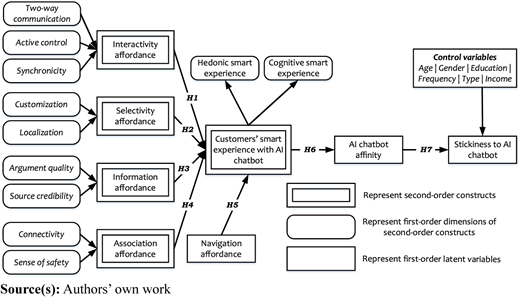
Building upon the affordance and affinity lens, we propose a model in the chatbot context (see Figure 1). In this study, we examine five chatbot affordances as antecedents of CSE. Next, we investigate the impact of CSE on chatbot affinity, which is expected to influence customers’ chatbot stickiness.
3.1 Interactivity affordance
Interactivity—underlining the significance of online interaction/communication (Shao et al., 2020)—is a multidimensional factor consisting of three dimensions: two-way communication, active control and synchronicity (Fang, 2019; Ou et al., 2014). Two-way communication refers to the bi-directional information flow between users and the technology (Leung et al., 2022). Chatbots can efficiently communicate with customers in real-time and provide accurate responses by appropriately understanding their queries, thus enhancing real-time information for meaningful conversations (Lee and Li, 2023; Li et al., 2023). Active control indicates customers’ perceptions of having control over objects, while synchronicity involves customers’ beliefs that the technology will respond quickly to their needs (Liu, 2003). Chatbots allow customers to ask questions by providing input and starting conversations in their desired direction (Ashfaq et al., 2020; Jan et al., 2023). Prior literature highlighted that customers often use chatbots for their interactivity (Lee and Li, 2023), and a chatbot with high levels of interactivity can develop strong relationships with customers, enhancing their satisfaction and positive experiences (Fang, 2019; Li et al., 2023). Therefore, chatbot interactivity can be crucial in creating an effective and smart experience. Interactive attributes enable chatbots to communicate with customers at any time and from anywhere (Lee and Li, 2023; Li and Zhang, 2023), allowing them to control their interactions by asking a set of questions and assisting them by providing relevant information to their queries in real-time, thus contributing to enhancing a smart experience. This leads us to propose the following hypothesis:
Interactivity affordance is positively related to smart experiences.
3.2 Selectivity affordance
Selectivity affordance includes two key dimensions: customization and localization (Fang, 2019; Shen et al., 2013). Customization indicates that customers believe the system provides information according to their preferences, whereas localization specifies belief that the system provides information based on their location (Fang, 2019). Chatbots can offer customized/personalized information to customers by asking about their preferences, analyzing input and behavior and remembering past interactions (Chung et al., 2020; Li and Zhang, 2023; Zhu et al., 2022). Selectivity affordances can better meet customers’ needs, improving relationships and customer experiences (Fang, 2019). Chatbots can suggest to customers nearby points (e.g. restaurants and services), locally relevant news and events and current weather updates (Ashfaq et al., 2020; Chung et al., 2020). Moreover, they are frequently being used by customers to get updates about local information, and a high selectivity chatbot can provide customers with optimal information and services tailored to their specific locations and preferences (Fang, 2019; Shen et al., 2013). Selectivity can also be an important factor in forming a positive experience with the chatbot, leading us to propose the following hypothesis:
Selectivity affordance is positively related to smart experiences.
3.3 Information affordance
Based on adoption theories, Sussman and Siegal (2003) categorized information affordance into two distinct dimensions: argument quality and source credibility, where the first category involves customers’ perceptions that the obtained information is accurate and complete, while the second indicates perceptions of trustworthiness and reliability of sources of information (Shao et al., 2020; Sussman and Siegal, 2003). People mostly use the internet and communication technology to get valuable information in real-time. Like other communication technologies, one of the key motives for customers to utilize chatbots is obtaining valuable real-time information (Li et al., 2023; Loureiro et al., 2021). Accordingly, when individuals perceive that the information offered by the chatbot is complete and reliable, they are more likely to perceive them as valuable (Ashfaq et al., 2020). Previous research pointed out that customer experience can be enhanced by providing high-quality and trustworthy information in chatbot settings (Kushwaha et al., 2021). Therefore, we propose:
Information affordance is positively related to smart experiences.
3.4 Association affordance
Wagner et al. (2014) defined association as relationships between individuals or between people and content/information. Association affordance has two dimensions: connectivity and sense of safety (Fang, 2019). Connectivity “denotes a physical association between users and technology that allows users to access services anytime and anywhere” (Fang, 2019, p. 380). One of the key attributes of chatbots is their always availability on websites and apps, and customers can use them anytime and from any location to get immediate information or support (Lee and Li, 2023; Li et al., 2023). Sense of safety “represents a psychological aspect of association wherein users feel safe, easiness, and calmness when using technology in an unfamiliar place” (Fang, 2019, p. 380). For example, a branded app has a great ability to calm customers by offering information about the nearest store location or brand information (Fang, 2019). Using specific technology also creates an association in the form of conversations on social media platforms (Li and Zhang, 2023). In the chatbot context, associations occur as relationships between users and information such that they utilize chatbots to connect with content/information and pertinent products/services in real-time (Lee and Li, 2023). The timely response to inquiries contributes to the formation of a positive customer experience, and when customers receive answers from the chatbot at any moment and from anywhere, their positive experience may be enhanced (Fang, 2019; Li et al., 2023). Therefore, we propose:
Association affordance is positively related to smart experiences.
3.5 Navigation affordance
Navigation in the context of a website refers to the process by which users achieve their objectives, such as finding relevant information to perform certain tasks (Zhu and Zhang, 2007). Similarly, navigation in chatbots can refer to the process by which customers using the chatbot’s functionalities attain their goals (e.g. getting pertinent information). Navigation has been considered one of the most effective ways to assist users in addressing their inquiries (Zhang and Von Dran, 2001). Thus, navigation affordance can play a crucial role in enhancing CSE with chatbots. For example, chatbots, through conversation, can enhance CSE by suggesting clear options and links/hyperlinks, thus enabling customers to find relevant information quickly to complete tasks. The more customers believe the chatbot can provide pertinent information to complete tasks by suggesting understandable paths/links, the more positive their experience will be. Therefore, we propose:
Navigation affordance is positively related to smart experiences.
3.6 Smart experiences and affinity
As defined previously, smart experiences are related to consumers’ emotional and cognitive reactions toward chatbots (Fan et al., 2023). Researchers agree that chatbots can generate smart experiences by providing comprehensive information and tailored services (Fan et al., 2022). Service providers offering chatbot-based services put considerable effort into developing perceived importance (affinity) of chatbots (Niu and Mvondo, 2024) by enhancing customers’ hedonic and cognitive experiences through high-quality service delivery (Fang, 2019). Consequently, CSEs with chatbots might develop chatbots’ affinity (perceived chatbot importance). For example, when interacting with a chatbot, customers with favorable hedonic and cognitive experiences will likely consider them more important to perform their activities. Thus, smart experiences can contribute to enhancing customers’ perceptions of the importance of chatbots. Moreover, there is evidence in previous studies that demonstrates customer experience influences affinity in different settings (e.g. Wolf et al., 2023). Aligning to prior research, we propose the following hypothesis in the present context:
Smart experiences are positively related to affinity.
3.7 Affinity and stickiness
As discussed earlier, chatbot affinity refers to customers’ perceived importance of chatbots in their lives (Niu and Mvondo, 2024). Several scholars have investigated how affinity affects users’ attitudes, satisfaction and intentions toward using specific technology (Aldás-Manzano et al., 2009; Niu and Mvondo, 2024; Xu and Du, 2018). Although affinity has been widely studied in several domains and has significantly influenced customer satisfaction and intention toward the technology (Aldás-Manzano et al., 2009; Niu and Mvondo, 2024), no research has been conducted to identify its role in chatbot stickiness. The present study proposes that chatbot affinity may influence customer stickiness to chatbots. For example, when interacting with the chatbot, if customers develop a positive affinity toward them based on their interaction and the content of the information they deliver (Niu and Mvondo, 2024), customers may be more likely to expand their chatbot usage (stickiness). Accordingly, chatbot affinity can significantly enhance customer chatbot stickiness, leading us to propose the following hypothesis:
Affinity is positively related to stickiness.
4. Research methodology
4.1 Measurement scales
The survey items were adapted from well-established academic sources and measured using a 7-point scale (Likert) ranging from “strongly disagree” (score = 1) to “strongly agree” (score = 7). The present study measured interactivity affordance (Fang, 2019; Shao et al., 2020), selectivity affordance (Fang, 2019; Shen et al., 2013), information affordance (Shao et al., 2020; Sussman and Siegal, 2003), association affordance (Fang, 2019) and smart experience (Fan et al., 2023) as second-order constructs, while navigation affordance (Shao et al., 2020), affinity (Niu and Mvondo, 2024) and stickiness (Lin, 2007; Shao et al., 2020) were evaluated as first-order reflective constructs. Stickiness was measured using a four-item scale, whereas all other constructs were measured based on a three-item scale.
4.2 Sample and data collection
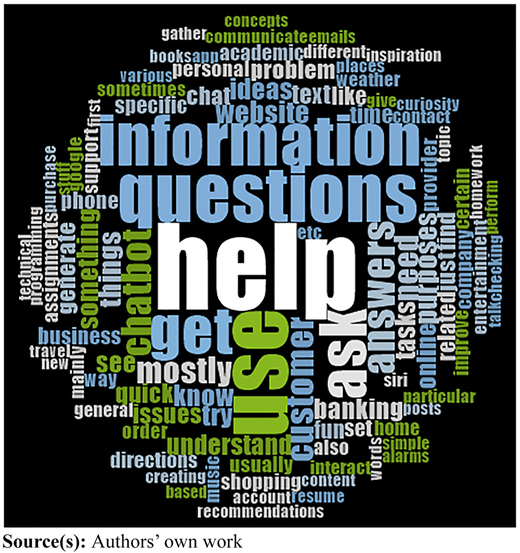
We collected data from chatbot users using the Prolific platform to test the hypothesized model. Following Guha et al. (2023), a screening study was initially conducted to identify participants who had previously interacted with chatbots by requesting 1,000 respondents (e.g. whether they used the chatbot before, how often, and their willingness to take part in a follow-up study). As a result of the screening study, 889 participants who specified they had interacted with chatbots were identified. Of them, 792 participated in the subsequent study. There were, however, 31 respondents who did not pass the attention check question, resulting in 761 responses (Table 3). We also asked respondents about their purpose for using chatbots (e.g. For what purpose do you mostly use the chatbot?), and Figure 2 shows that users mostly use chatbots to ask questions, get help, solve problems and receive quick information.
5. Analytical tools and results
This study employed SmartPLS4 and the PLS-SEM approach to analyze the collected data (Ringle et al., 2022; Sarstedt et al., 2017). The PLS-SEM is commonly preferred to test complex models (Sarstedt et al., 2017), which also accomplishes high levels of statistical power for testing the hypotheses (Guha et al., 2023). Notably, earlier technology studies, including research on chatbots, have employed this approach (e.g. Ashfaq et al., 2023; Li and Zhang, 2023).
5.1 Common method bias (CMB)
The CMB was confirmed using two commonly used methods for PLS-SEM studies. First, the “variance inflation factor” (VIF) was below 5 (Hair et al., 2019). Second, the “marker variable” method proposed by Lindell and Whitney (2001) was performed in our study following a recent chatbot study (Chandra et al., 2022). This study considered “attitude toward energy drink consumption” (3 items: e.g. “I like energy drinks”) as a marker variable (Swani, 2021) because this variable is not theoretically related and might display lower correlations with other variables suggested in our model (Lindell and Whitney, 2001). The analysis exhibited that the correlations between the marker and other study variables are notably low, where the highest correlation was 0.109 (between customization and marker variable), which is greatly below 0.300 (Chandra et al., 2022). Furthermore, when correlations are squared, we observed that the largest shared variance with the marker variable is less than 1.2% (0.109 squared), and all other correlations are far below the threshold of 0.900, signifying unsubstantial CMB in our study (Chandra et al., 2022).
5.2 Measurement model (MM)
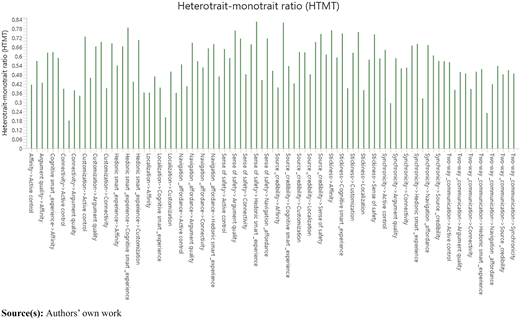
Hair et al. (2019) suggest that indicator loading should be >0.70 and our study findings fulfilled the suggested criteria (see Table 4). Composite reliability (CR) along with Cronbach’s alpha (CA) are often used in the MM to assess the reliability of the constructs, which should also be >0.70 (Hair et al., 2019). The results confirmed that CR and CA values of all constructs are above the implied level (Table 4). The convergent validity based on the average variance extracted (AVE) metric was addressed next, and AVE values in Table 4 are above the recommended 0.50 level (Hair et al., 2019). Further, the discriminant validity (DV) was examined using the HTMT approach, and our results met the criteria, for example, HTMT <0.85 (Figure 3) (Henseler et al., 2015).
5.3 Structural model (SM)
The SM was used to verify hypotheses. Regarding outcomes, results indicated that interactivity (H1: β = 0.307***; t = 8.741), selectivity (H2: β = 0.177***; t = 5.665), information (H3: β = 0.098*; t = 2.173), association (H4: β = 0.274***; t = 6.871) and navigation affordance (H5: β = 0.081*; t = 2.303) impacts CSE, supporting H1–H5. Further, the results showed that CSE positively influences affinity (β = 0.566***; t = 24.16), which in turn positively impacts stickiness (β = 0.690***; t = 37.82). Given these results, H6 and H7 are also supported. Finally, the analysis showed that control variables have insignificant impacts (Table 5). We further assessed our model under the coefficient of determinants/explanatory power (R2), predictive relevance (Q2) and effect size (f2). Our model explained 62.4% of the variance in CSE, 32% in affinity and 47.6% in stickiness, signifying a satisfactory outcome (Hair et al., 2019). In addition, as can be seen in Table 5, our model had good predictive relevance, leading to acceptable outcomes (Hair et al., 2019).
6. Discussion and implications
In this research, we set out to investigate the antecedents and consequences of CSEs in the chatbot context. To address our RQs, we developed a research model and conducted a quantitative study using a cross-sectional approach. Regarding the study’s outcomes, we found that chatbot affordances, including interactivity, selectivity, information, association and navigation significantly influence CSE. These findings indicate that when a chatbot facilitates two-way communication, offers customized information, delivers accurate/trustworthy information, allows customers to connect anytime/anywhere and provides concise and clear links, customers perceive they have positive experiences. The findings are consistent with extant technology studies stating that technology affordances, such as virtual reality, branded apps or chatbot affordances, can develop a strong relationship with customers and create unique customer experiences (Fang, 2019; Leung et al., 2022; Li et al., 2023).
Furthermore, our study highlighted the significant effect of CSEs on chatbot affinity. This outcome suggests that when customers perceive a positive experience with chatbots, they develop a strong attachment to and association with them, thereby enhancing chatbot affinity. This finding is supported by Xu and Du’s (2018) study, which observed that a system providing users with accurate and comprehensive information along with personalized and on-time services boosts users’ affinity with the system. Finally, we verified that affinity is positively associated with customer stickiness with chatbots; thus, affinity is a key determinant of stickiness that reflects customers’ perceptions of being committed to continued use of chatbots (Li et al., 2024; Lin, 2007). This finding implies that increased perceptions of the importance of chatbots (chatbot affinity) contribute to greater stickiness to chatbots, enriching our understanding of affinity in facilitating customer chatbot stickiness.
6.1 Theoretical implications
Our study provides evidence that supports and extends affordance and affinity theories by highlighting the roles of specific chatbot affordance factors that contribute to positive-smart experiences and subsequently enhance customer chatbot stickiness through affinity. First, while CSEs were studied in diverse domains, including mobile apps (Japutra et al., 2021), AR/VR services (Fan et al., 2020) and AI technology (Gao et al., 2022), limited studies examined the notion of CSEs in chatbot settings (Fan et al., 2022, 2023). To further explore this notion and subsequently respond to Fan et al.’s (2023) call to study smart experiences in the chatbot domain, we advance current research on chatbots by specifically studying the antecedents and consequences of CSEs.
Second, as an intelligence agent rather than merely a software, the chatbot not only provides the basic functions related to searching and retrieving information but it can significantly enhance customers’ experiences by engaging with them through personalized interactions and providing anytime/anyplace connectivity (Lee and Li, 2023; Shahzad et al., 2024b; Zhu et al., 2022). Likewise, we advance extant literature by showing that enhanced levels of chatbot affordances improve CSEs. While several studies investigated the impact of technology affordances on diverse factors, including customer inspiration (Zhou et al., 2023), brand competence/warmth (Lee and Li, 2023) and satisfaction (Shao et al., 2020), these studies have predominantly overlooked the impact of affordances on CSEs in technology research in general, and chatbot literature in particular. As such, the present study expands our understanding by studying the role of affordances (interactivity, selectivity, information, association, navigation) as antecedents of CSEs in the under-researched chatbot context.
Third, in contrast to earlier work focusing on examining the influence of CSEs on word-of-mouth (Gao et al., 2022; Roy et al., 2019) and customer patronage intention (Fan et al., 2022, 2023), our research takes this a step further by exploring the impact of CSEs on chatbot affinity, thereby proposing a novel relationship. According to Wang (2025), an article contributes to extant literature when it presents new information or expands current knowledge. As such, this study’s findings contribute to existing literature by showing how CSE enhances chatbot affinity. Lastly, this study proposes another new association that expands our understanding of the imperative role of affinity that drives customer chatbot stickiness. Several technology studies examined the factors that drive customer stickiness (e.g. Shao et al., 2020); however, no study investigated how affinity drives customer stickiness. We theorize affinity in the chatbot context and confirm that it is an important antecedent for enhancing customer chatbot stickiness.
6.2 Practical implications
Our study offers practical insights into the types of affordances that could increase CSEs toward chatbots, which would be beneficial for chatbot designers and developers. In particular, a chatbot’s ability to facilitate two-way communication, allowing users to connect anytime/anywhere connectivity, and providing customized and engaging interactions should be prioritized as core features. Interactivity, association and selectivity affordances are often considered important factors in technology settings generally, and chatbots particularly, to improve customer service and experience (Fang, 2019; Lee and Li, 2023; Li et al., 2023). Accordingly, managers should design chatbots by focusing on their affordance features, particularly emphasizing interactivity, selectivity and association of chatbot affordances to enhance CSEs and customer stickiness to chatbots. Accurate/reliable responses and ease of navigation provide feelings of comfort, and these are other core chatbot features that should be emphasized. Such chatbot affordance factors enhance CSEs, leading to customer chatbot stickiness through affinity, which would be useful insights for chatbot designers and developers.
Next, our study found that CSEs facilitate chatbot affinity, which in turn improves customer stickiness to chatbots. Managers should note that enhancing affordance features of chatbots not only boost CSEs but also increase customer stickiness to chatbots through affinity. Customers often become attached to chatbots when their services provide experiential value (Li et al., 2023). Besides, we also offer some industry-specific design recommendations. For instance, retail chatbots can focus on personalized recommendations with clear opt-in mechanisms to boost customer experience without overstepping privacy boundaries, while healthcare chatbots should prioritize strict privacy controls to align with sensitive patient information needs. Future research could explore how variables like social influence, information sensitivity and platform identification further shape the balance between privacy concerns and perceived benefits in chatbot adoption (Chen et al., 2024). By offering industry-specific recommendations, this study reinforces its contributions to understanding the complexities of AI-driven customer interactions while providing actionable insights for chatbot developers.
7. Limitations and future research directions
This study acknowledges certain limitations. First, the study does not categorize chatbot usage based on purposes such as transactional, informational or interactional. Future research could add contextual relevance to our findings by exploring the difference between transactional chatbots and informational chatbots and their impact on smart experiences and usage intentions. Second, future research may explore chatbot services in other industries, such as healthcare or finance, where user needs and privacy concerns vary, which could yield valuable insights. Third, this study did not include any potential moderating variable, thus we suggest considering potential moderating variables such as tech-savviness or the specific purpose of chatbot interactions (e.g. transactional versus informational) in future studies. Finally, the present research was primarily based on the affordance lens to explain customer chatbot stickiness, where we only included enabler factors in our model while ignoring the role of inhibitors such as privacy risks and technology anxiety that may discourage customers from sticking with chatbots. Future research can explore the balance between personalization and privacy concerns—a matter of growing importance in AI and digital interactions—using the privacy calculus model or BRT to contribute to chatbot adoption literature. For example, the Privacy Calculus Model emphasizes trade-offs users face between perceived benefits (e.g. personalized experiences) and risks (e.g. privacy concerns) in their interactions with chatbots (Chen et al., 2024). While chatbots provide several benefits (e.g. personalized interactions), these benefits often coexist with significant privacy concerns, such as data misuse or inadequate transparency in data handling (Wang, 2024). Consequently, scholars should prioritize developing a model to investigate trade-offs between perceived benefits and risks within a single framework in the chatbot setting.
We acknowledge the support of the College of Business and Law Melbourne and Vietnam Collaborative Project Support Scheme in funding this research.
Conflict of interest: All the co-authors have agreed to the inclusion of their names. All the authors declare that they have no conflict of interest.