In response to growing health and environmental concerns, consumer demand for organic foods has grown steadily. At the same time, social media influencers have a significant influence on consumer choices, especially in digitally connected communities. Against this backdrop, this study draws on source credibility theory and congruence theory to examine how influencer credibility (trustworthiness, expertise and authenticity) and congruence (influencer-product congruence and influencer-consumer congruence) affect consumer intention to purchase organic food. It also investigates the mediating role of emotional attachment in these relationships.
This study collected survey responses from 254 Vietnamese participants who were knowledgeable about organic food and social media influencers. The dataset was analyzed using partial least squares structural equation modeling to evaluate the hypothesized relationships.
The results indicate that influencers perceived as authentic, trustworthy and knowledgeable positively influence consumers’ purchase intentions toward organic food. Both influencer-consumer and influencer-product congruence also enhance purchase intention. Additionally, these relationships are partially mediated by emotional attachment.
This study contributes a novel framework that brings together source credibility theory and congruence theory to examine how social media influencers shape consumers’ purchase intentions in the organic food context. It further clarifies the mediating mechanism of emotional attachment, demonstrating how appraisal cues from influencer credibility and perceived congruence translate into affective bonds that ultimately drive behavioral intention.
1. Introduction
Sustainable consumption has become a central focus of global development efforts, particularly in the domain of food choices (Kalam et al., 2025; Rajic et al., 2022). Within this context, organic food has emerged as a compelling alternative, as it is produced without fertilizers, antibiotics, synthetic or genetically modified organisms (Rana and Paul, 2017). It is often associated with perceived health advantages, food safety, and lower environmental impact compared to conventional food (Fauzi et al., 2025). As environmental awareness increases, organic food consumption is no longer just a matter of personal well-being but also reflects ethical and sustainability-driven concerns (Sadiq et al., 2023). Market data further reinforce this trend: the global organic food market was valued at USD 279.19 billion in 2024 and is projected to reach USD 559.59 billion in 2029 at a compound annual growth rate of 15.3% (Research and Markets, 2025a). In emerging markets, rising health consciousness and environmental awareness are accelerating demand (Sadiq et al., 2023). For instance, Vietnam's organic food market is expected to grow from USD 1.04 billion in 2024 to USD 2.68 billion by 2033, with a projected CAGR of 11.16% (Research and Markets, 2025b). As a result, understanding the factors that drive consumer adoption and purchase of organic food has become increasingly important for both scholars and practitioners (Fauzi et al., 2025).
The growth of the organic food market has also prompted shifts in how these products are promoted to consumers (Hudders et al., 2021). In response, marketers are turning to more relatable and engaging communication channels to build trust and influence purchase decisions (Chetioui et al., 2022; Kim et al., 2025). In this vein, social media influencers (SMIs) have emerged as a key channel for promoting organic food (Kalam et al., 2025). In recent years, the widespread use of platforms such as Instagram, Tiktok, and Youtube, SMIs have become one of the most important tools in consumer-facing industries (Nguyen and Nguyen, 2025a), including food market (Hudders et al., 2021). As a digital form of word-of-mouth, SMI endorsements offer organic food brands an effective avenue to connect with and engage prospective customers (Kumar et al., 2025). Despite this potential, empirical research examining the actual persuasiveness of influencers in this context remains scarce (Kim et al., 2025). A literature review by Eyinade et al. (2021) underscored that food safety and health concerns remain dominant drivers of organic food consumption. Similarly, Fauzi et al. (2025) indicated in their systematic review study that most research on organic food purchasing behavior has centered on consumer-related, product-based, or contextual factors. However, the role of SMIs in shaping consumer responses has been largely overlooked (Kumar et al., 2025). In particular, how influencer credibility attributes influence consumers' intention to purchase organic food remains an underexplored but important area of inquiry (Kim et al., 2025).
Beyond credibility, perceived congruence, referring to the alignment between the influencer and key elements of the endorsement (e.g. the product, brand, or consumer), also plays a critical role in shaping consumer responses (Venciute et al., 2023). Prior research shows that greater influencer-product and influencer-consumer congruence enhance advertising effectiveness, increases purchase intention, and strengthens brand attitudes (Belanche et al., 2021; Kim and Kim, 2021). In sustainability-oriented domains such as organic food, this alignment is particularly salient, as consumers tend to seek coherence between the influencer's values and the ethical or health-oriented nature of the product being promoted (Kim et al., 2025). Influencers who appear personally committed to eco-conscious lifestyles or share relevant traits with their audience are more likely to be viewed as persuasive (Koay and Lim, 2024; Venciute et al., 2023). Despite its relevance, little is known about how influencer-product and influencer-consumer congruence shape purchase intentions toward organic food (Kumar et al., 2025). Moreover, there is a need to consider both influencer credibility and congruence parallel as both represent distinct yet complementary cues that shape consumer decision-making (Dhun and Dangi, 2023). In value-laden contexts like organic food, where both source credibility and perceived fit both matter (Chetioui et al., 2022), examining these constructs in tandem offers a more comprehensive understanding of how influencer marketing drives behavioral outcomes.
Another important gap lies in the insufficient attention paid to the psychological mechanisms that explain how perceived influencer credibility and congruence shape consumer decision-making (Fauzi et al., 2025). One promising yet understudied mechanism is emotional attachment, defined as the affective bond a consumer develops toward a product or brand (Bash and Bandyopadhyay, 2024; Nguyen and Chiu, 2023). Emotional attachment has been shown to predict key behavioral outcomes such as loyalty, advocacy, and purchase intention across various domain (Sánchez-Fernández and Jiménez-Castillo, 2021; Shah et al., 2023), but its role particularly in sustainability-focused sectors like organic food remains largely neglected. Examining the mediating role of emotional attachment in linking influencer credibility and congruence to purchase intention can offer deeper insight into the processes that drive eco-conscious consumer behavior.
To address these gaps, this study draws on source credibility theory and congruence theory to examine how influencer credibility (i.e. trustworthiness, expertise, and authenticity) and perceived congruence (i.e. influencer-product and influencer-consumer fit) shape consumer intentions to purchase and recommend organic food. In addition, the study investigates the mediating role of emotional attachment in linking these influencer characteristics to behavioral outcomes. In doing so, this study contributes to the literature and practice in several meaningful ways. First, it responds to the contextual gap by examining how SMIs shape consumer decision-making in the organic food sector, a setting where trust and value alignment are especially critical but understudied. Second, it builds a more comprehensive framework by examining influencer credibility and perceived congruence as distinct but complementary predictors of consumer purchase intention, clarifying how each contributes to consumer evaluation and adoption of organic food. Third, it validates emotional attachment as a mediating mechanism, offering new insight into the psychological pathways through which influencer cues translate into eco-conscious behavioral responses.
2. Theoretical background
2.1 Organic food consumption
Organic food is typically defined as food produced without synthetic pesticides, fertilizers, genetically modified organisms, or antibiotics (Rana and Paul, 2017). Research has shown that organic foods are not only healthier but also tastier than conventional food, contributing to consumer purchase of organic food (Fauzi et al., 2025). From a broader perspective, organic food consumption represents a tangible and accessible form of sustainability-oriented behavior (Kumar et al., 2025). As part of a sustainable food system, organic food production contributes to environmental protection, biodiversity conservation, and ethical farming practices (Chetioui et al., 2022). It also reflects the social and economic dimensions of sustainability, offering consumers a means to express their health, ethical, and environmental concerns through everyday purchases (Kim et al., 2025). For these reasons, organic food is a theoretically meaningful and empirically relevant context in which to examine consumer engagement with sustainable consumption (Fauzi et al., 2025).
Despite these favorable associations, many consumers remain hesitant to purchase organic products due to concerns about their authenticity (Kim et al., 2025). Unable to directly verify organic claims, they often rely on certification labels and marketing messages (Sadiq et al., 2023). However, growing skepticism toward such claims, often viewed as tactics to justify higher prices, has undermined consumer trust (Kim et al., 2025). In response, SMIs can serve as credible intermediaries. Trusted influencers help humanize product messaging and reinforce authenticity, thereby bridging the trust gap between producers and consumers (Chetioui et al., 2022). As market competition intensifies, influencer marketing has become a strategic tool for shaping perceptions and boosting engagement (Sadiq et al., 2023).
2.2 Social media influencers and source credibility theory
Social media influencers (SMIs) are individuals who shape audience attitudes or behaviors through content shared on digital platforms within a specific area of expertise or interest (Nguyen and Nguyen, 2026). Their effectiveness is often explained through source credibility theory, which posits that a message's persuasiveness depends on the perceived credibility of its source, typically comprising expertise, trustworthiness, and attractiveness (Hovland and Weiss, 1951). Expertise reflects an influencer's perceived competence or knowledge in a specific area (Foroughi et al., 2024). Influencers seen as experts are more persuasive, particularly in health-focused domains (Kim and Kim, 2021; Nguyen and Nguyen, 2025b). Trustworthiness reflects perceived honesty and integrity, which is essential in building consumer trust, especially in response to skepticism toward paid endorsements (Sokolova and Kefi, 2020). Attractiveness typically associated with physical appeal, has shown mixed relevance depending on product type (Foroughi et al., 2024). It has been shown significant influence in product categories like fashion and beauty, where aesthetics is inherently tied to product value (Filieri et al., 2023). However, in value-driven sectors like organic food, influencer attractiveness may be less relevant (Ki et al., 2020; Kumar et al., 2025), given that the product's benefits are not tied to aesthetics but to health and safety concerns (Fauzi et al., 2025).
Despite the widespread adoption of source credibility theory in the literature, some researchers have argued that its traditional dimensions may not fully capture the unique characteristics of online sources, prompting the proposal of additional credibility components such as homophily and similarity (Kim et al., 2025). In the organic food context, one factor that should be considered is influencers' authenticity (Ardley et al., 2022; Han and Balabanis, 2024; Kumar et al., 2025). Authenticity reflects the perceived sincerity of the influencer's endorsement, especially when followers are aware of commercial sponsorships (Han and Balabanis, 2024). As such, authenticity enables followers to perceive the influencer's content as sincere and personally motivated (Ki et al., 2020). Consumers of organic products are likely to scrutinize whether influencers genuinely embody eco-conscious or health-oriented lifestyles, and this perceived authenticity enhances message acceptance and behavioral intentions (Chang et al., 2019). Therefore, this study extends source credibility theory by incorporating authenticity as a meaningful and contextually appropriate dimension of influencer credibility in the organic food domain.
2.3 Congruence theory
Congruence theory explains how the perceived fit between two elements, such as a source and a product, influences cognitive and emotional responses (Belanche et al., 2021). In influencer marketing, the theory has been applied to examine how alignment between a social media influencer (SMI) and a product enhances message effectiveness, trust, and perceived credibility (Koay and Lim, 2024; Liang et al., 2022). When influencer attributes match those of the endorsed product, the message is perceived as more authentic, leading to stronger consumer engagement (Belanche et al., 2021).
Recent studies have extended congruence theory beyond the influencer-product relationship to also consider influencer-consumer congruence (Belanche et al., 2021; Koay and Lim, 2024), which refers to how similar followers perceive themselves to be to the influencer (Koay and Lim, 2024). This form of congruence fosters trust, emotional connection, and identity reinforcement (Casaló et al., 2020). Consumers are generally more inclined to engage with influencers whose values, aspirations, and lifestyles closely mirror their own, especially in contexts like the organic food market, where authenticity and value alignment are seen as essential (Sokolova and Kefi, 2020).
Both congruence dimensions contribute to endorsement credibility and behavioral intention. When influencers align with both the product and the audience, their messages are more persuasive and foster stronger brand loyalty (Kim and Kim, 2021). Thus, this study applies congruence theory to examine how influencer-product and influencer-consumer congruence shape consumer intentions toward organic food.
2.4 Emotional attachment
Emotional attachment refers to the affective bond individuals form with people, brands, or objects, significantly shaping their perceptions and behaviors (Nguyen and Chiu, 2023). In the context of influencer marketing, such attachment reflects a follower's sense of emotional closeness, trust, and personal connection to an influencer, which can enhance the persuasiveness of promotional content (Ki et al., 2020). Social media enables ongoing interactions, strengthening followers' emotional connections and sense of intimacy with influencers (Sánchez-Fernández and Jiménez-Castillo, 2021).
Empirical evidence has showed emotional attachment as an explanatory mechanism linking influencer attributes to consumer behavior. For example, Bash and Bandyopadhyay (2024) revealed that attributes associated with SMIs enhance followers' emotional attachment, in turn fostering their favorable behavioral intentions. Chen et al. (2021) demonstrated that followers' attachment to an influencer is derived from the influencer's expertise-knowledge, which boost followers' impulse buying behavior. In line with these evidence, emotional attachment may function as a bridge between how consumers cognitively appraise influencer characteristics and their behavioral responses. In the organic food context, where value alignment and trust are especially salient (Kim et al., 2025), such attachment can deepen engagement and foster stronger conviction in following influencer-endorsed choices (Sánchez-Fernández and Jiménez-Castillo, 2021; Sokolova and Kefi, 2020). This study therefore examines emotional attachment as a mediating mechanism between influencer characteristics, congruence, and consumer purchase intention.
2.5 Conceptual model
This study adopts the cognition-affect-conation (C-A-C) model (Hilgard, 1980) as the overarching framework for its conceptual model. Originally developed to explain relationships among consciousness components, the C-A-C model conceptualizes cognition as beliefs or perceptions, affect as emotional responses, and conation as the motivation to act based on those evaluations (Nguyen and Chiu, 2023). It outlines a sequential process in decision-making, where cognitive appraisals trigger affective responses, which then shape behavioral intentions. In green consumption and influencer marketing research, this model has helped explain how consumers' responses to marketing cues evolve into actions. For instance, based on the C-A-C pattern, Olfat et al. (2025) showed that followers' purchase experiences with influencers enhance affective commitment, which subsequently increases repurchase intention.
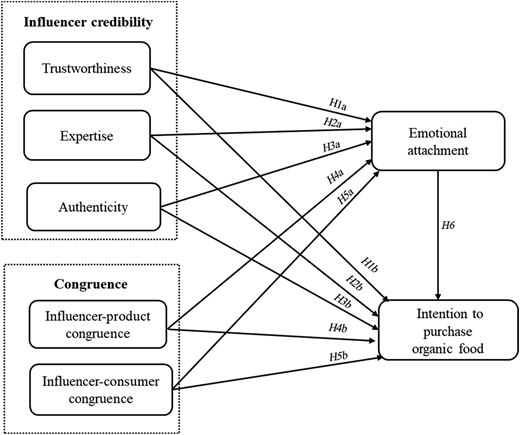
Building on this literature, the present study integrates source credibility and congruence theory within the C-A-C framework to explain how consumers' perceptions of influencers shape emotions and drive organic food consumption. Specifically, trustworthiness, expertise, and authenticity (from source credibility theory), along with influencer-product and influencer-consumer congruence (from congruence theory), are treated as cognitive cues that inform consumers' appraisals. These perceptions are expected to foster emotional attachment (affective response), which then drives purchase intention toward organic food (conative outcome). The proposed research model is shown in Figure 1.
3. Hypothesis development
3.1 The effects of influencer trustworthiness, expertise, and authenticity
In influencer marketing, trustworthiness reassures audiences of the influencer's sincerity and ethical stance, thereby reducing skepticism and facilitating message acceptance (Foroughi et al., 2024; Nguyen and Nguyen, 2025b). Prior studies have shown that when influencers are viewed as sincere and dependable, audiences are more likely to develop emotional bonds with them (Bash and Bandyopadhyay, 2024). This connection may be particularly relevant in the organic food context, where consumers often seek authentic and value-aligned sources of information (Han and Balabanis, 2024). Moreover, trustworthiness also plays a role in directly shaping behavioral intentions (Sánchez-Fernández and Jiménez-Castillo, 2021). In value-driven markets such as organic food, where product claims often rely on credence attributes that consumers cannot easily verify, trusted sources help reduce uncertainty and increase confidence in the endorsement (Chetioui et al., 2022; Kim et al., 2025). When consumers perceive the influencer as honest and principled, they are more likely to view the recommendation as credible and act upon it (Sadiq et al., 2023). Based on these arguments, the following hypotheses are proposed:
Influencer trustworthiness is positively related to emotional attachment.
Influencer trustworthiness is positively related to purchase intention.
According to source credibility theory, expertise enhances persuasiveness by assuring followers that recommendations are credible and well-informed (Dhun and Dangi, 2023). This is particularly relevant in the organic food context, where consumers seek accurate information about health benefits, production methods, and certifications (Schouten et al., 2021). Influencers perceived as experts are more likely to elicit trust and foster emotional bonds with followers (Shah et al., 2023). In parallel, expertise can directly affect purchase intention by reducing uncertainty and increasing perceived informativeness (Kim et al., 2025). Given the credence nature of organic food, where product quality cannot be easily verified, consumers often rely on expert cues to evaluate product claims and make confident, value-aligned purchase decisions (Han and Balabanis, 2024). Based on these elaborations, we propose that:
Influencer expertise is positively related to emotional attachment.
Influencer expertise is positively related to purchase intention.
Authenticity refers to the perception that an influencer is genuine, value-driven, and not solely motivated by commercial interests (Koay et al., 2023). It can enhance message persuasiveness by reinforcing followers' belief in the sincerity of endorsements. When followers perceive that influencers maintain consistency between their personal values and the products they promote, the message becomes more trustworthy and emotionally engaging (Koay and Lim, 2024). Authenticity fosters emotional bonds by creating a sense of shared values and relatability, encouraging followers to view influencers as sincere individuals rather than promotional figures (Schouten et al., 2021). This connection is especially important in value-driven contexts such as organic food, where consumers prioritize alignment with ethical and health-related values (Han and Balabanis, 2024; Schouten et al., 2021). Moreover, authenticity may strengthen consumer purchase intention by reducing skepticism toward promotional content (Chang et al., 2019). Consumers are more willing to act on recommendations when they believe the influencer's motives are not purely commercial but grounded in genuine interest or lifestyle alignment (Han and Balabanis, 2024). Accordingly, we propose that:
Influencer authenticity is positively related to emotional attachment.
Influencer authenticity is positively related to purchase intention.
3.2 The effects of influencer-product congruence and influencer-consumer congruence
Influencer-product congruence refers to the perceived alignment between an influencer's personal brand and the products they endorse (Belanche et al., 2021). According to congruence theory, a strong match between the influencer and the endorsed product enhances perceived authenticity and credibility, leading to more favorable consumer responses (Koay and Lim, 2024). This congruence reduces dissonance, reinforces message consistency, and fosters emotional attachment by encouraging consumers to view the endorsement as a genuine extension of the influencer's identity (Breves et al., 2019). In the organic food context, where consumers are attentive to ethical and lifestyle alignment, such congruence enhances emotional resonance and perceived sincerity (Belanche et al., 2021). Additionally, influencer-product congruence can also strengthen purchase intention by increasing the perceived relevance and fit of the recommendation. When consumers observe a clear alignment between an influencer's identity and the promoted product, they are more likely to view the endorsement as credible and the product as suitable for themselves (Venciute et al., 2023). This perceived congruence enhances persuasion, facilitating more confident purchase decisions (Sokolova and Kefi, 2020). Therefore, we propose that:
Influencer-product congruence is positively related to emotional attachment.
Influencer-product congruence is positively related to purchase intention.
According to congruence theory, individuals are more likely to respond positively to communicators they see as similar to themselves (Koay and Lim, 2024). This perceived similarity fosters emotional bonds through shared identity and trust (Liang et al., 2022; Shan et al., 2020). Followers often view influencers as aspirational figures whose values and choices reflect their own (Breves et al., 2019), enhancing feelings of authenticity and loyalty. Within the organic food sector, such alignment becomes even more influential, as consumers often emphasize ethical principles and health-conscious values (Han and Balabanis, 2024; Sokolova and Kefi, 2020). Congruence deepens emotional attachment by reinforcing value alignment and enhancing the influencer's credibility (Koay and Lim, 2024). Furthermore, when followers identify with an influencer, they are more likely to accept recommendations as personally meaningful (Casaló et al., 2020). This sense of shared identity enhances the persuasive impact of the message and encourages behavior consistent with the influencer's values (Belanche et al., 2021). Accordingly, we propose that:
Influencer-consumer congruence is positively related to emotional attachment.
Influencer-consumer congruence is positively related to purchase intention.
3.3 The effect of emotional attachment and purchase intention
Purchase intention refers to a consumer's deliberate intention to acquire a product, shaped by their underlying motivations and evaluations (Ki et al., 2020). Research suggests that when individuals feel emotionally attached to a brand or influencer, they are more inclined to perceive the product as consistent with their own values and lifestyle, which enhances their likelihood of making a purchase (Koay et al., 2023). In the organic food context, where purchase decisions are often guided by health consciousness, environmental concern, and value alignment, emotional bonds enhance the perceived authenticity and relevance of the recommendation (Rana and Paul, 2017). This bond builds trust and deepens engagement, thereby converting positive attitudes into behavioral intentions. Accordingly, we propose that:
Emotional attachment is positively related to purchase intention.
3.4 The mediating role of emotional attachment
Building on the C-A-C framework (Hilgard, 1980), this study proposes emotional attachment as the key affective mechanism linking consumers' evaluations of influencers to their purchase intention. As previously discussed, consumers assess cognitive cues, influencer credibility (i.e. trustworthiness, expertise, authenticity) and congruence (i.e. influencer-product and influencer-consumer fit) to form judgments about the influencer and the message. These judgments may evoke emotional attachment, an affective bond that reflects a consumer's emotional connection to the influencer or the endorsed content. This attachment can then serve as an emotional driver that increases the likelihood of purchase. Integrating this logic with the Hypotheses 1 through 6, we propose that:
Emotional attachment mediates the effect of (a) influencer trustworthiness, (b) influencer expertise, (c) influencer authenticity, (d) influencer-product congruence, and (e) influencer-consumer congruence on purchase intention.
4. Research methodology
4.1 Measures
The measures for all variables were adopted from existing literature with high reliability and validity. The detail of measurement scales is provided in Table A1, Appendix. Each measurement item was evaluated on a seven-point agreement scale (ranging from 1 – strongly disagree to 7 – strongly agree). In addition, we included demographic questions regarding respondents' demographics as a part of the questionnaire. These variables were also added to the research model as control variables.
4.2 Data collection and sampling
This study focused on participants who were aware of organic food and followed social media influencers promoting its consumption. Vietnamese consumers were selected as the sample for two key reasons. First, Vietnamese consumers are increasingly attentive to environmental concerns, contributing to rising demand for organic products (Ho et al., 2024). A 2023 survey reported that 80% of Vietnamese respondents purchased organic fruits and vegetables (B&Company, 2024). Second, in Vietnam, the organic agriculture sector has also experienced remarkable growth, mainly due to increasing consumer awareness and government encouragement of green lifestyles (Ho et al., 2024).
A survey questionnaire was used to collect data, followed by a backward translation technique with the help of three bilingual researchers. Additionally, a pretest with twenty organic food consumers was undertaken to ensure understandability, clarity, and readability. In general, respondents reported that the questionnaire was clear and understandable, with only three minor wording changes being made.
An online survey was employed to recruit participants. Given the absence of an available sampling frame, we adopted a convenience sampling approach. Data collection was supported by ten pre-trained research assistants. The survey was distributed via two primary social media platforms (i.e. Instagram and Facebook) given their prominence in influencer marketing and widespread use among Vietnamese consumers. Specifically, the survey link was posted in relevant Facebook groups (e.g. communities focused on organic lifestyles and health-conscious living), and shared through public Instagram stories of the survey team. We also encouraged snowball sharing by asking participants to repost or forward the survey to others who follow influencers promoting organic food. This approach strategy aligns with previous influencer marketing studies that used similar platform-driven recruitment methods (Kim et al., 2025; Koay and Lim, 2024).
We also applied purposive eligibility criteria to ensure that the respondents are relevant and well fit the target population. Specifically, eligible participants are required to know about organic food products, have an active Instagram or Facebook account (Koay and Lim, 2024). Additionally, they need to follow at least one SMI on Instagram or Facebook who promotes organic food consumption. To verify eligibility, respondents answered three screening questions: (1) “Which social media platform do you use most often?” (2) “Are you interested in organic food products? and (3) “Please provide the name of at least one influencer you follow who promotes organic food”. Data collection took place between April 2024 to September 2024. A total of 302 completed responses were returned. During the data screening process, 48 responses were discarded because respondents either selected the same degree of agreement for all questionnaire items or did not follow at least one industry influencer on social media. Therefore, the final sample included 254 valid responses. Table 1 shows the characteristics of respondents.
4.3 Statistical analysis
This study employed the PLS-SEM approach for data analysis. PLS-SEM is a suitable option for a study that aims to predict the causal relationships among constructs in the research model with less strict regulations on sample size and data normality (Sarstedt et al., 2022). Moreover, PLS-SEM is a favorable option for analyzing research models with complex relationships among latent constructs, such as direct, indirect, and moderating effects (Ringle et al., 2023; Sarstedt et al., 2022).
5. Data analysis results
5.1 Common method bias
Common method bias (CMB) is a primary concern in studies that collect data for independent and dependent variables from the same response (Kock, 2015). To detect CMB, we followed the statistical test recommended by Kock (2015). Accordingly, all latent constructs were regressed on a dummy variable and then the VIF values were utilized to evaluate the possibility of CMB. The results disclosed that all VIF values were lower than the suggested threshold of 3.3 (Kock, 2015), confirming that CMB is absent in this study.
5.2 Measurement model assessment
The measurement model testing results were provided in Table 2 and Table 3. Accordingly, the factor loadings of all measurement items were higher than 0.70, indicating the indicator reliability (Ringle et al., 2023). Additionally, Cronbach's alpha (α) and composite reliability (CR) values of all constructs were higher than the suggested threshold of 0.70 (Ringle et al., 2023), confirming the internal consistency reliability. The convergent validity of all constructs was substantiated as their AVE values surpassed the benchmark of 0.50 (Ringle et al., 2023). Regarding discriminant validity, Table 3 shows that all heterotrait–monotrait (HTMT) values were less than 0.85 (Henseler et al., 2015), confirming the discriminant validity.
5.3 Structural model and hypotheses testing
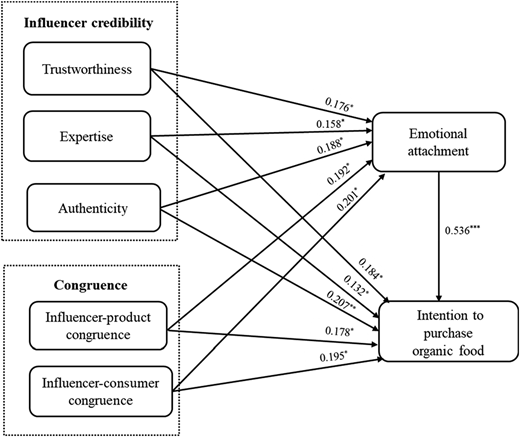
A bootstrapping (with 10,000 resamples and a 95% confidence interval) was applied to test the significance of coefficient paths and the proposed hypotheses. The analysis results are displayed in Figure 2 and Table 4. Accordingly, the effects of trustworthiness on emotional attachment (β = 0.176, p < 0.05) and purchase intention (β = 0.184, p < 0.05) were significant and positive, supporting H1a and H1b. The effects of expertise on emotional attachment (β = 0.158, p < 0.05) and purchase intention (β = 0.132, p < 0.05) were significant and positive, supporting H2a and H2b. We also found the significant and positive effects of authenticity on emotional attachment (β = 0.188, p < 0.05) and purchase intention (β = 0.207, p < 0.01), confirming H3a and H3b. Regarding the influencer's congruence, this study found the significant and positive effects of influencer-product congruence on emotional attachment (β = 0.192, p < 0.05) and purchase intention (β = 0.178 p < 0.05), supporting H4a and H4b. Additionally, the effect of influencer-consumer congruence on emotional attachment (β = 0.201, p < 0.05) and purchase intention (β = 0.195, p < 0.05) were significant and positive, confirming H5a and H5b. We also found that emotional attachment has a significant and positive impact on purchase intention (β = 0.536, p < 0.001), supporting H6. The effects of control variables on purchase intention were not significant.
A mediation analysis was performed to test the mediating role of emotional attachment. The bootstrap analysis results (Table 5) confirmed that emotional attachment partially mediates the effect of trustworthiness, expertise, authenticity, influencer-product congruence, and influencer-consumer congruence on purchase intention, respectively given that the zero value was not included in the 95% confidence interval. As a result, hypothesis H7 was supported.
6. Discussion and implications
6.1 Discussion of main findings
This study examined how SMI credibility and perceived congruence influence consumers' purchase intentions toward organic food, with emotional attachment serving as a mediating mechanism. Overall, the empirical results based on data from organic food consumers in Vietnam provided support for all proposed hypotheses.
First, among the three dimensions of influencer credibility, authenticity emerged as the most influential predictor of purchase intention (β = 0.207). This finding reinforces the growing consensus that in value-driven domains such as organic food, consumers are not only evaluating the message but also scrutinizing the messenger's sincerity (Ardley et al., 2022; Kumar et al., 2025). Influencers who appear to genuinely embody the values they promote, such as eco-consciousness or health awareness, are more likely to be perceived as aligned with the endorsed product, which likely mitigates consumer skepticism and foster purchase intention (Ardley et al., 2022; Han and Balabanis, 2024). The inclusion of authenticity as an extension of source credibility theory in this study provides a more contextually appropriate lens for understanding green purchase behavior, particularly in the context of organic food consumption. Trustworthiness was the second most influential factor (β = 0.184). This finding reinforces prior research that emphasizes the importance of perceived honesty in shaping persuasive outcomes (Sánchez-Fernández and Jiménez-Castillo, 2021; Sokolova and Kefi, 2020). This also suggests that when consumers believe an influencer is trustworthy, they are more inclined to accept product-related claims, especially in the organic food domain, where consumers often face information asymmetries and skepticism about product (Chetioui et al., 2022; Kim et al., 2025). Expertise of SMIs, although modest in influence, remains a meaningful predictor of purchase intention. When SMIs are seen as knowledgeable, consumers are more confident in their recommendations (Ki et al., 2020). This is particularly important in the case of organic food, a credence product whose quality cannot be easily verified through direct experience (Han and Balabanis, 2024). In such contexts, consumers often rely on expert cues to evaluate product claims and make purchase decisions (Shah et al., 2023).
Second, both types of perceived congruence (i.e. influencer-product congruence and influencer-consumer congruence) had significant positive effects on purchase intention. Consistent with previous research, the influential role of influencer-product congruence underscores the importance of alignment between the influencer's persona and the organic product being endorsed (Belanche et al., 2021; Kim and Kim, 2021). This suggests that when influencers are perceived as genuinely connected to the endorsed product category (i.e. organic food), their endorsements appear more credible and persuasive (Sokolova and Kefi, 2020). Also, influencer-consumer congruence contributed meaningfully. This supports the idea that consumers seek endorsement from influencers who feel relatable and share similar lifestyles or beliefs, as such perceived similarity fosters identification and emotional alignment, which in turn enhances persuasion and purchasing intention (Venciute et al., 2023).
Third, emotional attachment partially mediated the effects of influencer credibility (i.e. trustworthiness, expertise, authenticity) and congruence (i.e. influencer-product and influencer-consumer fit) on purchase intention. This aligns with the logic of the C-A-C model, indicating that affective responses play a crucial role in translating consumer perception and evaluations into their behavioral responses. Our findings suggest that, in the context of organic food, emotional bonds with influencers serve as a key mechanism that enhances message persuasiveness. When consumers perceive influencers as credible and value-aligned, they are more likely to form emotional connections that strengthen the intent to purchase (Bash and Bandyopadhyay, 2024). This finding supports prior research on the affective underpinnings of sustainable consumer behavior (Sánchez-Fernández and Jiménez-Castillo, 2021; Shah et al., 2023), and highlights that effective influencer marketing in ethical domains requires not just credibility and congruence, but emotional resonance.
6.2 Theoretical implications
This study contributes to the literature on organic food consumption and influencer marketing in three key ways. First, this study addresses a contextual gap by investigating how SMIs shape consumer decision-making in the organic food sector. Organic food consumption involves value-based evaluations related to health and sustainability - a domain where consumers often rely on trust and perceived sincerity rather than observable product attributes (Hudders et al., 2021; Kim et al., 2025). By focusing on this credence-based context, the study offers insight into how influencer attributes and message alignment are interpreted by consumers who prioritize authenticity and moral congruence. This contributes to ongoing calls for deeper exploration of influencer marketing in ethically oriented consumption settings (Kumar et al., 2025; Sadiq et al., 2023).
Second, based on source credibility theory and congruence theory, this study advances theoretical understanding by developing a more comprehensive framework that integrates multiple dimensions of influencer credibility (i.e. authenticity, trustworthiness, and expertise) and perceived congruence (i.e. influencer-product congruence and influencer-consumer congruence) as distinct yet complementary predictors of organic food purchase intention. By clarifying how these dimensions contribute to consumer purchase intention, the study demonstrates that source reliability and perceived alignment serve different but reinforcing roles in shaping consumer responses (Belanche et al., 2021). This approach offers a more nuanced explanation of decision-making in value-driven markets like organic food, where multiple credibility cues and fit perceptions jointly influence emotional and behavioral outcomes (Chetioui et al., 2022).
Third, this study highlights emotional attachment as a mediating mechanism linking influencer credibility and congruence to purchase intention in the organic food context. The finding underscores the affective underpinnings of consumer responses in ethically oriented markets. In the case of organic food, where consumption is often motivated by concerns for personal health and environmental sustainability (Fauzi et al., 2025), emotional bonds with trusted influencers can serve as powerful drivers of behavioral intention. As a result, our research contributes to ongoing theoretical efforts to incorporate affect-based mechanisms into sustainability and influencer marketing research (Shah et al., 2023).
6.3 Practical implications
This research offers several actionable insights for marketers and practitioners promoting organic food. First, the findings highlight the importance of selecting and collaborating with influencers who are perceived as authentic, trustworthy, and knowledgeable, particularly in the organic food market, where consumers are often skeptical of commercial motives and rely on external cues to assess product claims. Given the salience of authenticity, marketers should prioritize influencers who visibly incorporate organic food into their lifestyle and values. Encouraging influencers to share personal experiences, such as their shopping habits, meal preparation routines, or everyday sustainability practices, can help humanize brand messaging and foster stronger emotional connections. Besides, trustworthiness and expertise may not always be easily evaluated by consumers in digital environments saturated with sponsored content and misinformation. For marketers, this underscores the need not only to select influencers with credible backgrounds but also to design campaigns that promote transparency and provide verifiable information. For instance, marketers should ensure that sponsorships are clearly disclosed and that influencer content includes references to certified organic labels or evidence-based claims. Additionally, sharing behind-the-scenes content or personal testimonials can reinforce sincerity and strengthen consumer trust.
Second, the study underscores the importance of achieving congruence between influencers and both the products they endorse and the consumers they engage. However, achieving high levels of alignment across both dimensions can be challenging, especially for smaller organic brands that may lack access to well-matched influencers or operate with limited marketing resources. In such cases, marketers should adopt flexible strategies that prioritize congruence based on specific campaign goals. For instance, if the objective is to build product legitimacy, a stronger emphasis on influencer-product congruence may be more impactful. Conversely, when aiming to generate consumer trust and engagement, influencer-consumer congruence could be prioritized. Collaborating with micro-influencers who maintain close relationships with niche audiences may also offer a practical solution, allowing brands to gradually build alignment through repeated, authentic engagement rather than expecting perfect congruence from the outset.
Third, emotional attachment serves as a psychological bridge linking influencer credibility and congruence to consumer purchase behavior. To foster this attachment, marketers should tailor campaign strategies to specific audience segments. For example, younger, digitally engaged consumers may respond well to short-form video content on platforms like TikTok or Instagram, where influencers share personal stories or sustainability challenges. In contrast, health-conscious adults might prefer in-depth testimonials or meal-planning content on YouTube or Facebook. Regardless of format, content should reflect authentic values and encourage two-way interaction to strengthen emotional bonds and reinforce value alignment.
Lastly, in emerging markets like Vietnam, where organic food consumption is growing but still faces trust barriers (Research and Markets, 2025b), building trust and emotional connection is particularly crucial. This study highlights the importance of selecting influencers who are not only credible and value-aligned but also culturally relatable to local consumers. Given that authenticity and perceived similarity strongly drive purchase intention, marketers should prioritize micro- or mid-tier influencers who can reflect shared lifestyles and community values. Campaigns should also focus on emotional storytelling and everyday organic use, as these formats foster stronger attachment and trust in markets where consumers often lack direct product knowledge or regulatory confidence.
6.4 Limitation and future research
First, the study relied on a convenience sample of 254 Vietnamese consumers. Although adequate for PLS-SEM analysis, this sample size remains relatively small for customer or market research, where broader generalizability is expected. Future studies should aim to recruit larger and more representative samples to enhance external validity. Cross-cultural comparisons would also help assess whether the observed effects hold across different cultural and market contexts. Second, the cross-sectional and self-reported design limits causal inference and may introduce common method bias. Longitudinal or time-separated designs could provide a more robust understanding of the temporal dynamics of influencer effects. Finally, this study only examined two types of congruence (i.e. between influencer and product, and between influencer and consumer), while omitting consumer-product congruence. Future research may consider this additional dimension to capture a more holistic picture of congruity in sustainability-driven consumption.
Data availability statement
The data presented in this study are available on request from the corresponding author. The data are not publicly available due to assured participant confidentiality.
Disclosure statement
The authors report there are no competing interests to declare.
Submission declaration and verification
This manuscript has not been published previously and is currently not considered for publication elsewhere.
This manuscript is developed from the master thesis of the second author, which was submitted to National Kaohsiung University of Science and Technology (Taiwan) in January 2025.
Appendix
Measures of variables
| Constructs | Measurement items | Sources |
|---|---|---|
| Trustworthiness | TRT1 – I feel the influencer I am following is honest | Venciute et al. (2023) |
| TRT2 – I consider the influencer I am following trustworthy | ||
| TRT3 – I feel the influencer I am following is truthful | ||
| Expertise | EXP1 – I think the influencer I am following knows a lot about organic food | Filieri et al. (2023) |
| EXP2 – I consider the influencer who I follow an expert on organic food | ||
| EXP3 – I consider the influencer who I follow sufficiently experienced to make assertions about organic food | ||
| Authenticity | AUT1 – The influencer I am following tries to act in a manner that is consistent with his held values, even if others criticize or reject him for doing so | Singer et al. (2023) |
| AUT2 – The influencer who I follow cares about openness and honesty in close relationships with others | ||
| AUT3 – In general, the influencer who I follow places a good deal of importance on others understanding who he/she truly is | ||
| AUT4 – I can count on the influencer who I follow being who he is regardless of the situation | ||
| Influencer-product congruence | IPC1 – This influencer has a good match with the organic products that he or she always advertises | Belanche et al. (2021), Koay and Lim (2024) |
| IPC2 – The compatibility between this influencer and the organic products that he or she always advertises is high | ||
| IPC3 – This influencer and the organic products that he or she always advertises have a high fit | ||
| Influencer-consumer congruence | ICC1 – This influencer is congruent with my values | Belanche et al. (2021), Koay and Lim (2024) |
| ICC2 – This influencer matches my personality | ||
| ICC3 – I feel identified with this influencer | ||
| Emotional attachment | EMO1 – I feel emotionally connected to the influencer | Sánchez-Fernández and Jiménez-Castillo (2021) |
| EMO2 – I am very attached to the influencer | ||
| EMO3 – The influencer is special for me | ||
| EMO4 – I miss the influencer if they don't post or if I can't see their postings | ||
| Intention to purchase organic food | INP1 – I would consider purchasing the product promoted by this influencer | Belanche et al. (2021) |
| INP2 – It is likely that I am going to purchase the product promoted by this influencer | ||
| INP3 – Next time I need the type of product promoted by this influencer, I will probably buy this one |