


This interpretive, exploratory study utilized survey methodology to document middle level principals’ perceptions of effective teaching practices and the preparedness of newly hired middle level teachers. The findings suggest that principals’ descriptions of effective teaching differ from their descriptions of effective teachers. Additionally, principals’ perceptions of the level of preparation of newly hired teachers indicate a sense of dissatisfaction, acknowledging teachers are prepared in their content knowledge but lack preparation in several key areas, including classroom management, assessment, curriculum and instruction, and culturally and developmentally appropriate practice. As a result, the authors propose a Framework for Effective Middle Level Practices as a conceptual guide for middle level teacher preparation.
In an era of high stakes accountability, the expectation that all students will learn at or above proficient levels requires more skillful teaching by highly trained teachers (Darling-Hammond, 2010). The National Council for Accreditation of Teacher Education’s (NCATE) Blue Ribbon Panel Report (2010) on teacher education recognizes the new challenges facing teacher educators as they prepare a workforce for schools that are more ethnically, economically, and linguistically diverse than ever before. With these realities in mind, the NCATE report highlights the importance of the classroom teacher and suggests that “while family and poverty deeply affect student performance, research over the past decade indicates that no in-school intervention has a greater impact on student learning than an effective teacher” (NCATE, 2010, p. 1). While it is well documented within research that the classroom teacher is a critical component to student learning (D’Amico, 2001; Darling-Hammond, 2006; Mehaan, Cowley, Schumacher, Hauser, & Croom, 2003; NCATE, 2010; Zumwalt & Craig, 2005), the burden is no longer shouldered by the teacher alone. In fact, teacher educators and principals must play a more active role in preparing and supporting the development of effective teachers. Understanding how middle level principals describe effective teaching, as well as capturing a snapshot of the level of professional preparation of beginning teachers is critical to providing this support.
Principal leadership and its effect on student achievement have been emphasized over the past 2 decades (Anfara & Brown, 2003; Rice, 2010; Valentine, Maher, Quinne, & Irvin, 1999). For the middle level movement in particular, “no single individual is more important to initiating and sustaining improvement in middle grades school students’ performance than the school principal” (Jackson & Davis, 2000, p. 157). The literature on middle level leadership clearly suggests that it is critical for middle level principals to understand the unique nature of middle grades schools (i.e., those schools housing students ages 1114), and the structures and staff that should be in place to create a climate that is developmentally responsive (Arth, Lounsbury, McEwin, & Swaim, 1995; Brown, Anfara, & Gross, 2002; Doda, 2009; Petzko et al., 2002).
Organizations like the Association for Middle Level Education (AMLE), formerly known as the National Middle School Association (NMSA), advocate for school leaders to have a deep understanding of the specific needs of the students they serve by recognizing the central role of the building principal in establishing the school culture and direction, including influencing student achievement and teacher effectiveness (NMSA, 2010). With leadership so closely tied to school improvement and change in our middle schools, it is important to consider how these individuals perceive the preparation of teachers entering the workforce. Specifically, it is critical for teacher educators to understand how middle school principals describe effective teaching at the middle level and whether or not their expectations for quality teachers are met. With this focus, we conducted an exploratory study to document middle level principals’ perceptions of effective teaching practices as well as their perceptions of the preparedness of teachers hired within the last 5 years.
REVIEW OF LITERATURE
Because many middle level principals have the responsibility to make curricular, staffing, and organizational decisions, it is crucial they not only understand the developmental needs of their charges, but also the knowledge, skills, and dispositions of the teacher workforce they bring to the building (Anfara, Roney, Smarkola, DuCette, & Gross, 2006; Thompson, 2004). In many cases, principals are responsible for directing the hiring decisions within their schools; therefore, as teacher educators, it is important for us to consider what middle level principals value, seek, and acknowledge in graduates seeking employment in a middle school. Though there is very little research that considers this question, one study offered insight into principals’ perceptions of effective middle level teachers. Arth et al. (1995) compared teacher and principal perceptions of essential characteristics of an effective middle school teacher. The findings suggest the most important characteristic of an effective middle level teacher is an understanding of adolescent development and developmentally responsive practices. These findings are important, but the context of the study and participants are unique, as noted by the authors, and are not a representative sample of middle school principals. Arth et al. (1995) clearly explain that the sample was made up of hand-picked principals from very successful middle schools implementing the key tenets of the middle school concept. The authors were not attempting to make generalizations about middle level principals’ perceptions of effective teaching, rather provide a snapshot of effective practices in successful middle schools and document how teacher and principals viewed these practices.
Given the dearth of research on principal perceptions of effective middle level teachers, it is still possible to derive a list of expectations for effective practices from the literature. For example, Jackson and Davis (2000) list seven characteristics of effective middle level teachers that include knowledge, skills, and dispositions expected of new middle level teachers (p. 96). The AMLE has six standards for middle level teacher preparation that inform and influence middle level teacher preparation programs and policies across the nation (NMSA, 2010). The knowledge skills and dispositions of AMLE’s standards are very similar to those suggested by Jackson and Davis (2000) and many others (Carnegie Council on Adolescent Development, 1989; Carnegie Task Force on Teaching as a Profession, 1986; McEwin & Dickinson, 1995, 1997; McEwin, Smith, & Dickinson, 2003; NMSA, 2010). Clearly, the emphasis has been on teachers and their practices that ensure young adolescent success in school (Brown et al., 2002). Therefore, it is important to consider a middle school principal’s perspective of effective teaching to inform middle level teacher educators. The principal is the leader of the school, and it is up to him/her to initiate the steps that are critical for establishing and maintaining the staff and structures that will create a middle school consistent with the key tenets of the middle school concept. It matters who the principal chooses to place in the classrooms of our middle schools. Therefore, this study explored principals’ perceptions of their newly hired teachers.
CONCEPTUAL FRAMEWORK
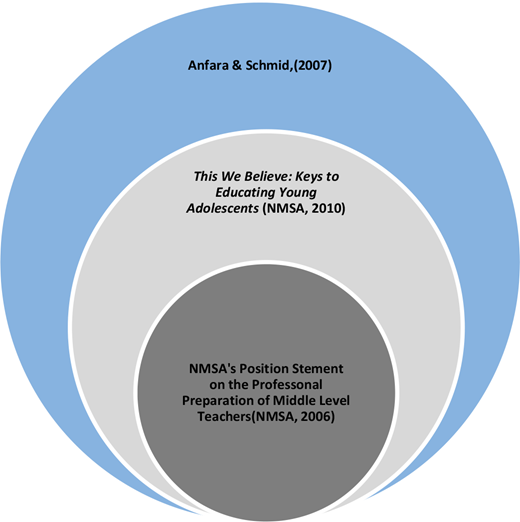
The conceptual framework for this study is grounded in the theoretical underpinnings of the middle school concept (Carnegie Council on Adolescent Development, 1989; Carnegie Task Force on Teaching as a Profession, 1986; Jackson & Davis, 2000; NMSA, 2010), our understanding of teaching and learning at the middle level (McEwin & Dickinson, 1995, 1997; NMSA, 2010), and relevant research on effective middle level teaching practices (Anfara & Schmid, 2007). This lens requires us, as middle level teacher educators, to consider the needs of young adolescents alongside the needs of middle level teachers to study effective practices in the middle grades. Drawing on three relevant pieces of work that have been widely disseminated and discussed, we developed a conceptual framework for effective middle level practices. Figure 1 represents the initial phase of the framework development.
At the core of the conceptual framework is NMSA’s position statement on the Professional Preparation of Middle Level Teachers (see Figure 1). This document outlines six essential elements in middle level teacher education that are critical to meeting the developmental needs of young adolescents (see Table 1). The standards are based on the key tenets of middle school education. With this focus, we drew from NMSA’s This We Believe (TWB): Keys to Educating Young Adolescents (2010) as we considered teacher preparation for middle level classrooms. As former middle level teachers and current middle level teacher educators, we believe the connection between the needs of young adolescents and the preparation of their teachers is the cornerstone of middle level teacher preparation. Given this, we chose to use the characteristics related to effective teaching behaviors found within NMSA’s TWB (see Table 1). Finally, drawing from the literature and research on effective teaching at the middle level, we utilized Anfara and Schmid’s (2007) synthesis of research as a tool to guide our understanding of the historical view of research on effective teaching at the middle level. Table 1 includes the elements we considered from each document. In the effort to distill understanding of effective teaching practices, some concepts were renamed to include current language around researchbased practices. For example, Anfara and Schmid (2007), listed individual learning needs; we termed this differentiation. In some cases, the language is identical to that within the document that is cited.
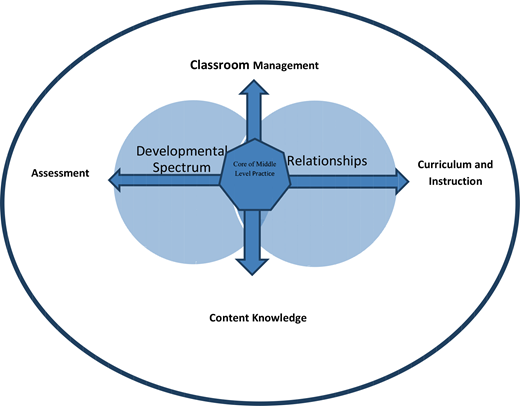
Drawing on Tyler’s (1949) notion of “sifting,” we compiled the constructs of our framework by carefully noting the similarities of all three documents. As we moved to the second phase of our framework development, we organized the main characteristics of effective middle level teaching into six categories, and worked from the perspective that these constructs are the foundation of effective teaching practices at the middle level. Our six constructs were: (1) Developmental Spectrum, (2) Relationships, (3) Classroom Management, (4) Curriculum and Instruction, (5) Assessment, and (6) Content Knowledge. In our descriptions below, we note aspects of the constructs that are consistent with our anchor documents, as well as important aspects of the construct that did not appear in the documents but are valued by each of us as a teacher educator.
Documents for Framework Development
| NMSA (2006) Position Statement on Professional Preparation of Middle level teachers | This We Believe: Keys to Educating Young Adolescents (NMSA, 2010) | Anfara and Schmid (2007) |
|---|---|---|
|
|
|
Developmental Spectrum. This construct includes social, emotional, intellectual, physical, sexual, and cultural/identity development. Teachers who understand the developmental spectrum will be aware of the developmental diversity of the young adolescent. This awareness will impact curriculum and instruction as teachers plan lessons that are engaging, hands-on, relevant to the students’ lives and differentiated. Awareness of developmental diversity will also impact classroom management as teachers create classroom climates that are grounded in appropriate relationships that allow choice, movement, collaboration, and are academically, intellectually and emotional safe. As we analyzed the anchor documents for our framework, there was a clear absence of reference to identity or cultural development. We believe effective middle level practices must include culturally responsive pedagogy that promotes tolerance, acceptance, and inclusivity.
Relationships. This construct holds that middle level teachers understand the importance of and the need for appropriate, supportive, and strong relationships in the middle level classroom and school. These relationships are built on trust, mutual respect, honor the developmental diversity of young adolescents and impact every aspect of teaching and learning at the middle level. We also believe the construct of Relationships includes all relationships with all stakeholders (e.g., all school staff, community members, and parents). We noticed the absence of emphasis on this construct within our anchor documents. While the documents referred to open communication and positive interactions, none focused on the importance of building and maintaining positive relationships with young adolescent students as a developmentally appropriate practice. We believe relationships are at the core of effective teaching practices at the middle level and go hand in hand with developmentally responsive pedagogy.
Classroom Management. This construct is grounded in the notion that in order for instruction at the middle level to be effective, it should occur within a climate, whether inside or outside the classroom, that is conducive to learning. It is the teacher’s responsibility to establish and maintain a classroom learning environment that is developmentally sound and relationship oriented. To the middle level teacher, classroom management involves designing and organizing a pleasant physical learning space, establishing rules and procedures, managing the instructional time to minimize disruptions and inefficient use of time, enforcing school and classroom discipline policies, and preventing misbehavior while enhancing individual and collaborative learning, active engagement, and motivation.
Content Knowledge. This construct holds that the middle level teacher should have a deep and flexible understanding of the central concepts of the discipline that he or she is teaching as well as an understanding of how these concepts connect to other concepts within the discipline and across other disciplines. By having a deep understanding of one’s content, teachers can encourage learners to apply their knowledge to real-life situations, integrate their learning across disciplines, solve problems, think critically and creatively, and consider various perspectives and points of view. In addition to subject-matter knowledge, middle level teachers must have a strong pedagogical knowledge base that allows them to design instruction, sequence lessons, use a variety of teaching strategies, provide relevant learning activities that are appropriate for the discipline and make the content accessible for all students.
Curriculum and Instruction. This construct includes understanding and utilizing the appropriate pedagogical skills while planning and delivering a challenging and meaningful curriculum that is age appropriate and designed to develop productive and responsible citizens who can think critically and solve problems. Instructional choices are student-centered, hands on, and engaging and relevant to the students’ lives. The middle level teacher understands and utilizes differentiated instruction, provides choice, and encourages student responsibility of learning.
Assessment. This construct holds that assessment includes understanding diagnostic, formative, and summative assessment and how to use each type to inform instructional choices and student progress. We also believe that appropriate assessment at the middle level includes the students’ opportunity to engage in selfassessment, goal setting, and reflection to promote growth. Further, we believe assessment also includes an understanding of how to provide immediate feedback to students, as well as understanding how to modify future instruction based on student assessment scores.
We acknowledge that the constructs are described separately, but stress the intertwined and overlapping nature of each.
At the core of the framework for effective middle level teaching is the importance of a deep understanding of the developmental spectrum of young adolescents and the importance of relationships between young adolescents and their teachers (see Figure 2). These two constructs impact each of the other constructs in very powerful ways. Effective teaching practices at the middle level will be grounded in the developmental needs of young adolescents and enacted through supportive relationships with teachers, principals and other stakeholders.
These constructs articulate our conceptual perspective of effective teaching practice in middle level education. It is through the lens of this framework that we approached the study of middle level teaching practices and middle level teacher preparedness from the principals’ perspective.
METHODS
Utilizing survey methodology (Fink, 2009; Kent, 2001; Sue & Ritter, 2007), this interpretive (Denzin & Lincoln, 2000), exploratory study used a cross-sectional survey design (Fink, 2009) to capture the perceptions of middle level principals in schools across central and northern Kentucky. The design was appropriate for this study as it offered the opportunity to create a current snapshot (Fink, 2009) of middle level principals’ perceptions of middle level practices and preparation. We were not attempting to test a hypothesis, but rather to better understand the point of view of our participants; therefore, the following questions guided our work:
How do middle level principals describe effective middle level teachers?
How do middle level principals describe effective teaching practices at the middle level?
How do middle level principals perceive the level of preparation of newly hired middle level teachers?
A sample of convenience (Fink, 2009; Kent, 2001; Sue & Ritter, 2007) was used for this survey. All of the principals invited to participate were principals with whom we have worked through our respective middle level teacher education programs. Most of them host teacher candidates and/or participate in experiences related to middle level teacher education. As participants in middle level teacher educators in Kentucky, one of 46 states that require specific preparation and certification of teachers for middle level schools (Grades 5-9), we believe the sample represents principals who are familiar with the certification requirements and preparation standards for middle level teachers, as well as principals who consistently interact and observe the instructional process that occurs to provide an informed snapshot of teacher preparation.
Data Collection
A recruitment e-mail was sent to school e-mail addresses of 71 middle level principals across central and northern Kentucky. Thirty-six principals completed the entire survey, making the response rate 51%. The objective (Fink, 2009) of the survey was to document middle level principals’ perceptions of effective teaching practices and the preparedness of newly hired middle level teachers. The survey was developed in an online survey tool allowing for anonymity of participants and providing greater access to principals during summer months (Sue & Ritter, 2007). Within the survey, the participants first provided demographic information with categorical responses (Sue & Ritter, 2007) about their schools, preparation, and experience. Second, participants completed open-ended questions about their perceptions of effective teaching practices at the middle level.
Finally, participants completed closed-ended, Likert-style questions that asked them to report their perceptions of the level of preparation of their newly hired teachers in six categories developed from and aligned with the constructs of our conceptual framework of effective teaching practices at the middle level (described previously). The categories included developmental spectrum, relationships, classroom management, content knowledge, curriculum and instruction, and assessment. This section of the survey included stem questions (Fink, 2009) within each category and asked the participant to consider teachers they have hired within the past 5 years. Since teacher preparation programs are continuously evaluating and revising their programs, we determined that limiting the principals’ responses to teachers hired in the past 5 years would more accurately represent the current state of middle level teacher preparation. Under each stem, characteristics of effective middle level teachers were listed (Anfara & Schmid, 2007; NMSA, 2006, 2010). Participants were given a four point scale on which to rate their newly hired teachers: extremely prepared, adequately prepared, somewhat prepared, and not prepared.
Data Analysis
The quantitative data were analyzed under each construct, and responses were grouped based on the principals’ perceptions of teachers’ level of preparedness. Responses of extremely prepared and adequately prepared were combined to indicate an acceptable level of preparedness, whereas responses of somewhat prepared and not prepared were combined to indicate an inadequate level of preparation. Responses that were scaled were analyzed using descriptive statistics.
Although the survey data were written, stored, and displayed electronically, the majority of the coding, categorizing, and interpreting was conducted manually by each of us. Because we had predetermined categories based on the constructs of our conceptual framework, a closed coding (Bogdan & Biklen, 1998; Merriam, 1998; Strauss, 1987), content analysis of the written responses allowed us to sort those data into six categories. This was accomplished by analyzing for keywords or phrases related to each construct. We printed out copies of the qualitative data and hand coded each participant’s response. We made the decision to underline parts of the response related to each construct and mark the underlined section of the response with a corresponding letter for each construct. For example, the construct Relationships was represented by an R and was noted throughout the qualitative data when responses referred to the definition of relationships from our framework. All of the qualitative data were read and coded independently by each of the researchers. After the first phase of coding, we shared our independent findings and discussed any differences noted in the coding. We came to a consensus on all of the constructs and codes that had been used. Finally, each of us read and coded the qualitative data a second time with consistency across all six constructs.
Because we utilized a closed coding (Bogdan & Biklin, 1998; Strauss, 1987) system of analysis, there were data that did not fit into our predetermined categories as they related to the constructs. These data were analyzed during a third round of analysis using open coding (Bogdan & Biklin, 1998; Merriam, 1998; Strauss, 1987) and were sorted into a separate categories we titled Dispositions and Professional Behaviors.
FINDINGS
Our results are organized by the three overarching research questions to provide a clear representation of our interpretation of the middle level principals’ definitions of effective teaching, an effective middle level teacher, and how they perceived the preparation of newly hired middle level teachers. Additionally, the results section will illuminate the connections between these definitions/perceptions and the NMSA position statement of The Preparation of Middle Level Teachers (NMSA, 2006) and TWB (NMSA, 2010) by reporting the frequency of which the participants referenced information representing the constructs of our conceptual framework. A discussion of the results will follow.
To contextualize the findings of this study, the demographics of the participants are described first. As mentioned earlier in the paper, the participants in this study are all middle level principals in the state of Kentucky where a middle level license is required by all teachers teaching in a middle school. The majority of the participants had been middle level principals for 6 or more years in rural and suburban middle schools. The grade configuration of the participants’ schools was mostly Grades 6-8 and the majority of the schools had a student population of more than 500. While 51.4% held a middle level teacher certification, only 47.4% indicated that they had specific preparation in their teacher education program to teach students at the middle level. Similarly, only 31.6% indicated that their principal preparation program had provided specific training for leading a middle level school.
Effective Teaching at the Middle Level
Middle level principals were asked to describe effective teaching practices. These descriptions closely aligned with our constructs of Curriculum and Instruction and Assessment from the conceptual framework for the study and were consistent across the entire sample. The majority of the responses included three major parts. First, the descriptions started with a need for a plan. Most common responses were: “clear lesson plan,” “organized plan,” and “clear learning targets defined.” Second, the definition included an explanation of what might occur in a lesson. Many common responses were: “varied instructional strategies,” “variety of activities,” “transitions,” “pacing,” and “differentiation.” Finally, the last part of the definition focused on assessment. Common responses included: “lots of formative assessment,” “a variety of formal and informal assessments,” “data-driven instruction,” and “assessment informing the next lesson.” The description of effective teaching at the middle level did not align with Content Knowledge, mentioned only four times across the data, and Classroom Management, mentioned only five times in the sample.
Demographics
| School Context | Participant | ||
|---|---|---|---|
| School enrollment | Teaching certification | ||
| • 0-500 | • Elementary | 10.5 | |
| • 501-1000 | 20.5 | • Middle grades | 50.0 |
| • 1000+ | 64.1 | • Secondary | 23.7 |
| 15.4 | • P-12 | 15.8 | |
| Community Context | Specific teacher Education for Middle Grades? | ||
| • Rural | 35.9 | ||
| • Suburban | 41.0 | •Yes | 46.2 |
| • Small urban | 12.8 | •No | 53.8 |
| • Large urban | 10.3 | ||
| Grade Configuration | Specific Principal Preparation for Middle Grades? | ||
| •6-8 | 79.5 | ||
| •5-8 | 5.1 | •Yes | 30.8 |
| •7-8 | •No | 69.2 | |
| • K-8 | 5.1 | ||
| • other | 5.1 | ||
| School Population-Racial Ethnic Other Than White/Caucasian | Years as Classroom Teacher | ||
| •1-5 | 15.4 | ||
| • less than 10% | 71.1 | • 6-10 | 64.1 |
| • 10-25% | 15.8 | • 11-15 | 12.8 |
| • 26-50% | 5.3 | • More than 15 | 7.7 |
| • Greater than 50% | 7.9 | ||
| School Population-Free/Reduced Lunch | Years as Building Principal | ||
| • less than 10% | •1-5 | 26.3 | |
| • 10-25% | 5.1 | • 6-10 | 47.4 |
| • 26-50% | 12.8 | • 11-15 | 13.2 |
| • Greater than 50% | 35.9 | • More than 15 | 13.2 |
| 46.2 |
When principals were prompted to consider a “walk through” of their building, they were asked to describe the most effective teaching they would observe. The responses to this question were consistent with their definitions of effective teaching and focused on Curriculum and Instruction and Assessment. Common responses included the following “observable” behaviors associated with effective teaching at the middle level: “structure,” “bell to bell teaching,” “clearly communicated goals,” “a variety of instructional strategies,” “learning goals defined,” “activities focused on learning targets,” “formative assessment,” and “student self-assessment.” Similarly to the definition of effective teaching, the responses to this question did not align with Content Knowledge, mentioned only one time across the sample. Interestingly, the responses did not align with Classroom Management or Relationships either. The principals’ descriptions mentioned observed behaviors related to these constructs only three times each.
An Effective Middle Level Teacher
Middle level principals were asked to describe an effective middle level teacher. These descriptions closely aligned with the constructs of Relationships, Curriculum and Instruction, and Developmental Spectrum from the conceptual framework for the study and were consistent across the entire sample. The responses included two distinct topics. The first part of the respondents’ answer had a focus on Relationships or a focus on Developmental Spectrum. The most common responses were: “knows how to build relationships,” “excellent relationships with students,” “works hard to build relationships with students, parents, and other teachers,” “loves these kids,” “likes this age,” “aware of developmental characteristics,” and “relates content to students’ lives.” The second part of the responses focused on Curriculum and Instruction with responses similar to the descriptions of effective teaching. However, references to Curriculum and Instruction were almost always mentioned after references to Relationships and Developmental Spectrum. The least referenced constructs in the description of an effective teacher were Classroom Management, Assessment, and Content Knowledge.
Principals’ Perceptions of Newly Hired Teachers
The survey included 33 statements of effective middle level teaching practices and skills that were divided into six categories consistent with our conceptual framework. When responding to the 33 statements, participants were asked to consider any first-year teachers they had hired in the past 5 years and record their own perceptions of the preparedness of the newly hired teachers using a Likert scale (extremely prepared, adequately prepared, somewhat prepared, not prepared).
Analysis indicated several areas of perceived strength and weakness of new teachers’ preparation. Eighty percent of participants indicated that new teachers were extremely or adequately prepared to “demonstrate expertise in their content area.” Additionally, 92% of principals reported that new teachers were extremely or adequately prepared to “exhibit enthusiasm about the subject matter.” These responses indicate that the respondents perceive knowledge of and enthusiasm about the subject matter as strengths of new teachers.
Principals also indicated several areas of perceived lack of preparedness. Analysis revealed the lowest percentage of “extremely prepared” and “adequately prepared” responses were to statements related to developmentally appropriate instruction, culturally responsive teaching, planning for individual differences, interdisciplinary instruction, assessment and feedback, and communicating with the community. The fact that many of these perceived weaknesses are cornerstones of the middle school concept and middle level teacher preparation was particularly troubling.
Developmental Spectrum. In exploring the principals’ perceptions on the level of preparation of beginning teachers on the components of the developmental spectrum, the majority of respondents indicated that beginning teachers were either somewhat prepared or not prepared on most questions.
Content Knowledge. The content knowledge construct had the greatest level of perceived preparation.
Classroom Management. Principal perceptions on the individual components in the classroom management construct appeared to be split between adequately prepared and not prepared.
Curriculum and Instruction. The majority of principals reported that beginning teachers were not prepared for many of the components highlighted on the curriculum and instruction construct.
Assessment. Much like the Curriculum and Instruction construct, most principals reported that beginning teachers were not prepared to address the majority of the components on the assessment construct.
Relationships. In exploring the questions under the relationship construct, there was clear distinction between new teachers’ ability to communicate with individuals inside the school as opposed to individuals outside of school.
Developmental Spectrum
| Statement | Extremely Prepared | Adequately Prepared | Somewhat Prepared | Not Prepared |
|---|---|---|---|---|
| Understanding of the physical, social, emotional, intellectual, cultural, sexual, and moral development of adolescents | 11.1 | 33.3 | 55.6 | 0 |
| Making instructional decisions based on a thorough understanding of the students’ developmental characteristics | 2.8 | 33.3 | 52.8 | 11.1 |
| Understanding culturally responsive practices in all areas of teaching and learning | 0 | 38.9 | 44.4 | 16.7 |
| Willing to serve as a role model and advocate for adolescents | 19.4 | 58.3 | 22.2 | 0 |
| Understanding the components and purpose of middle grades advisory | 0 | 41.7 | 41.7 | 16.7 |
Content Knowledge
| Statement | Extremely Prepared | Adequately Prepared | Somewhat Prepared | Not Prepared |
|---|---|---|---|---|
| Demonstrating expertise in their content area | 30.6 | 52.8 | 13.9 | 2.8 |
| Exhibiting enthusiasm about the subject matter | 36.1 | 58.3 | 5.6 | 0 |
| Presenting content at a developmentally appropriate level | 16.7 | 50 | 30.6 | 2.8 |
| Relating content to real-life situations | 19.4 | 27.8 | 50 | 2.8 |
| Presenting multiple perspectives through a variety of sources | 5.6 | 33.3 | 50 | 11.1 |
| Understanding the different components of the middle grades concept | 5.6 | 38.9 | 44.4 | 11.1 |
Classroom Management
| Statement | Extremely Prepared | Adequately Prepared | Somewhat Prepared | Not Prepared |
|---|---|---|---|---|
| Providing a pleasant environment for teaching and learning that reflects a commitment to the students | 8.3 | 47.2 | 44.4 | 0 |
| Creating and maintaining a learning environment that is emotionally, intellectually, and socially safe | 13.9 | 38.9 | 44.4 | 2.8 |
| Arranging learning events to avoid disruption of learning time | 8.3 | 27.8 | 50 | 13.9 |
| Maintaining flexible grouping to promote effective instruction | 8.3 | 36.1 | 30.6 | 25 |
| Enforcing clear and consistent discipline policies that are developmentally and culturally responsive | 11.1 | 33.3 | 47.2 | 8.3 |
| Using nonverbal behavior such as gestures, walking around, and eye contact | 8.3 | 44.4 | 38.9 | 8.3 |
Curriculum and Instruction
| Statement | Extremely Prepared | Adequately Prepared | Somewhat Prepared | Not Prepared |
|---|---|---|---|---|
| Setting high expectations for student learning | 11.1 | 52.8 | 30.6 | 5.6 |
| Using a variety of instructional strategies | 5.6 | 58.3 | 30.6 | 5.6 |
| Setting clear goals and intellectual challenges for student learning | 8.3 | 33.3 | 50 | 8.3 |
| Actively involving learners by encouraging students’ questions and opinions | 5.6 | 36.1 | 50 | 8.3 |
| Identifying and planning for individual differences | 0 | 22.2 | 55.6 | 22.2 |
| Responding to diverse talents and learning styles | 0 | 22.2 | 58.3 | 19.4 |
| Planning lessons and units that are interdisciplinary | 0 | 30.6 | 52.8 | 16.7 |
| Using technology to enhance instruction and student learning | 38.9 | 41.7 | 16.7 | 2.8 |
DISCUSSION
This research provided many insights to us as teacher educators as well as teacher education researchers. Four key points of discussion have been identified from our data.
Assessment
| Statement | Extremely Prepared | Adequately Prepared | Somewhat Prepared | Not Prepared |
|---|---|---|---|---|
| Using appropriate and effective assessment techniques to reflect on, monitor, and improve teaching practice | 0 | 33.3 | 50 | 16.7 |
| Providing prompt feedback to students concerning their performance | 2.8 | 41.7 | 41.7 | 13.9 |
| Praising students appropriately | 8.3 | 66.7 | 22.2 | 2.8 |
Relationships
| Statement | Extremely Prepared | Adequately Prepared | Somewhat Prepared | Not Prepared |
|---|---|---|---|---|
| Communicating and interacting effectively with other school personnel | 13.9 | 69.4 | 16.7 | 0 |
| Communicating and interacting effectively with parents | 2.8 | 36.1 | 47.2 | 13.9 |
| Communicating and interacting effectively with community members | 2.8 | 44.4 | 38.9 | 13.9 |
| Seeking community involvement in the instructional program | 0 | 22.2 | 50 | 27.8 |
| Understanding the purpose of middle grades teaming | 13.9 | 44.4 | 33.3 | 8.3 |
Effective Teaching and Effective Teacher
Our data revealed a clear difference in how principals described “effective teaching” and “effective teachers.” Based on the responses, effective teaching focused on curriculum and instruction while responses on an effective teacher highlighted relationships and development. For example, when describing effective teaching, some principals used terminology such as “data driven,” “formative assessment,” “rigor,” “achievement,” and “learning target.” On the other hand, when describing effective teachers, descriptors such as “whole-child,” “deeply care for students,” and “collaborative” were more common, emphasizing relationships and development. Though this dichotomy was not surprising, it does highlight the distinct differences between teaching and teacher and further highlights the critical nature of the role the teacher plays in the teaching process. In essence, good teaching starts with a good teacher. Good teaching starts with a caring, student-centered individual who can then develop a rigorous educational experience where children achieve success. While we acknowledge that this dichotomy was not evident in all of the participants’ responses; nonetheless, it was evident in many of the responses, thus raising questions for future examination.
Specifically, this raises the question, “What makes effective teaching at the middle level unique from teaching at any other level of the education continuum?” Drawing on the conceptual framework, we believe effective teaching in the middle grades is unique because of the connection between the developmental need for teachers to build strong relationships with their students and the ability of the teacher to enact developmentally responsive pedagogy. One might argue that building relationships with students and developmentally responsive pedagogy are important regardless of the level one teaches, and we would agree. However, we also believe that these aspects of effective teaching are particularly critical in young adolescence as students pull away from their parental figures and seek guidance from other adults.
Perceptions of Preparation
The principals’ perceptions of the preparation of the teachers they have hired in the past 5 years reveal a sense of dissatisfaction related to several constructs of our framework for effective middle level teaching practices. Within the quantitative data, principals reported the greatest level of perceived preparation in the Content Knowledge construct. Interestingly, within the qualitative data, Content Knowledge was mentioned the least when principals described effective teaching or an effective teacher. While it is important that teachers demonstrate expertise in their chosen teaching content, it is troubling that the most prepared construct is the least mentioned when it comes to effective teaching. Furthermore, it is troubling that the perception exists that new teachers are not adequately prepared to address the other five constructs—classroom management, curriculum and instruction, assessment, relationships, and developmental spectrum. The five constructs are the most closely aligned with the pedagogy of teaching and clearly reveal the need for middle level teacher preparation programs to begin reflecting and analyzing the curriculum being offered to ensure it is providing the educational experiences required to effectively teach middle level students. In addition, we acknowledge that this finding could be influenced by both a deficiency in the preparation of new teachers or a potential lack of understanding about effective middle level practice from the principals. Both of these issues are areas for future inquiry.
Missing or Embedded?
After analyzing the data, it became clear that two very important concepts related to education in general, and middle level education specifically, were absent from the responses. First, several participants indicated that effective middle grades teachers “know each child’s instructional level,” “are aware of the developmental characteristics of middle school students,” and “relate the content to the students.” Each of these characteristics clearly describes a teacher who understands the developmental spectrum of the students within his/ her classroom; however, on only one occasion did a respondent mention diversity or cultural responsiveness. This was troubling considering the increasing cultural, linguistic, and racial diversity in today’s middle schools. It is not clear if the respondents assumed that diversity and cultural responsiveness were embedded within the other six constructs, and, ideally, one could argue that they should be. This absence raised additional questions for us as researchers and teacher educators. For example, “Is cultural responsiveness an element of effective middle level teaching?” Additionally, one could wonder, “Have diversity and cultural responsiveness been so embedded within all aspects of teaching that they are no longer considered in isolation?” Future study should examine the perspectives of principals concerning diversity and cultural responsiveness in relation to effective middle grades teaching.
The second concept absent from the respondents’ descriptions of effective teaching and teachers was technology in the classroom or the use of technology. This concept was only mentioned on two occasions in the qualitative data. Considering the technological advances this generation of middle school students has witnessed and the level of technological competence that middle school students bring to the learning environment, it was largely absent from the principals’ descriptions of effective teaching and 5 years are adequately prepared to utilize technology to enhance instruction and student learning. This leads us to question whether or not technology has become so embedded in teaching and learning that the respondents to this survey no longer consider the use of technology in isolation. Regardless, for this generation of students, the use of technology is critical to the relevance of the curriculum; therefore, it is important that teachers and principals alike explicitly acknowledge the digital literacy of this generation of students and embrace it as a means of providing a curriculum that is relevant and instruction that is engaging.
Reflections on Our Framework
As researchers, we understand the importance of an effective and useful conceptual or theoretical framework to a research study. It helps guide decisions about research questions, data collection, analysis techniques, and the findings we choose to report. When we developed the conceptual framework for this study, our goal was to ground the research in the seminal literature in the field of middle level education. We relied heavily upon three documents—NMSA’s position statement on the Professional Preparation of Middle Level Teachers (2006), NMSA’s TWB (2010), and a synthesis of research on effective teaching at the middle level (Anfara & Schmid, 2007). We noted six foundational constructs (Curriculum and Instruction, Classroom Management, Assessment, Relationships, Developmental Spectrum, Content Knowledge) of effective teaching at the middle level. Through a content analysis of the qualitative survey responses, clear deficiencies in the framework surfaced. First, the participants made several references to characteristics that might be considered teacher dispositions and professional behaviors. For example, when asked to define or describe effective teaching in the middle grades, principals mentioned characteristics such as “reliable,” “consistent,” and “facilitating.” When asked to identify the characteristics of the most effective middle grades teacher in their building, principals included dispositional characteristics and professional behaviors such as “flexible,” “professional,” “organized,” “collaborator,” “caring and nurturing,” “positive energy,” and “good sense of humor.” Though these characteristics are closely related to the six foundational constructs, it seemed they did not align clearly with any of the foundational constructs.
Professional dispositions are important elements of one’s effectiveness in the classroom. For this reason, professional dispositions are critical components of teacher accreditation systems (e.g., NCATE Standard 1). Though dispositions and professional behaviors were not explicitly identified in the three works from which the framework for effective middle level teaching was developed, we believe the findings of this study support the addition of Dispositions and Professional Behaviors as a seventh construct of the Framework. Future inquiry should examine the seventh construct more deeply. For instance, future research might seek to answer questions such as “Are the dispositional qualities of a middle grades teacher unique, or are they the same as all other teachers?” and “What is the relationship between dispositional qualities and the other six constructs of the framework for effective middle level practices?” Dispositional qualities impact a teacher’s instruction and relationships, which can cause a teacher to be “effective” or “ineffective.” For this reason, the importance of dispositions and professional behaviors cannot be forgotten or ignored in future iterations of this study.
Second, as we designed the survey we made assumptions that the appropriate organizational structures (i.e., teaming, common planning time, advisory) were in place and functioning appropriately within the schools of our participants. This may or may not be true. We did not include questions related to those organizational structures and now realize that the construct of Organizational Structures must be added to the framework as a way to be very explicit about the appropriate practices at the middle level. Additionally, we realized that the omission of this construct left out some of the foundational elements of the middle school philosophy. We believe very strongly that the appropriate organizational structures must be in place for the teachers to be able to develop strong, supportive, and nurturing relationships with their students. Through these relationships and structures, the developmental needs are met as curriculum is enacted through appropriate instruction, classroom management, and assessment. Future studies would include questions related to principals’ perceptions of the organizational structures and which ones were currently in place. Furthermore, having principals describe appropriate organizational structures for the middle school would illuminate the ability of the principal to identify those structures most closely aligned with middle school philosophy.
CONCLUSIONS AND IMPLICATIONS
There are two salient conclusions we have drawn that have clear implications for us as researchers and for the field of middle level education. First, as researchers, we are forced to reconsider the design of our framework. While the anchor documents are essential to the original constructs of the framework, the findings from this study compel us to add two additional constructs, recreate the graphic so it clearly represents the embedded and intertwined nature of the constructs, and change the name of the framework so it articulates the unique nature of educating young adolescents.
As previously discussed, through our data analysis and reflection on our findings we made the decision to add two additional constructs to our framework: (1) Organizational Structures and (2) Teacher Dispositions and Professional Behaviors. Below, we describe these constructs and provide a rationale for why they should be included in the revised framework.
Organizational Structures. This construct identifies specific structural components critical in establishing the appropriate operational system to support effective middle level practices. Organizational structures such as interdisciplinary teams, common planning time, a flexible block schedule, intramurals, and advisory programs have traditionally been key structural elements that provide the means for middle grade schools to meet the various needs of its students in a developmentally responsive manner. These components are typically unique to middle grade school settings and provide the organizational foundation of the middle grades philosophy. It is important to note, however, that supportive organizational structures can take different forms in different settings. For example, schools may not have a formal advisory program, but individual teachers or teams may implement elements of a traditional advisory program within their classroom or team. Some schools may have interdisciplinary teams in place but may augment the work of the interdisciplinary team through content-specific professional learning communities. Regardless of the forms that various organizational structures might take, the purpose of these structures remains the same - to support teachers’ attempts to provide developmentally responsive school experiences and to encourage meaningful relationships between teachers and students.
Teacher Dispositions and Professional Behaviors. Dispositions are those personal characteristics that a teacher possesses that influence his or her interactions with students and others. A teacher’s dispositions and perceptions about students, about teaching, and about themselves will impact the culture of the classroom and the impact he or she will have on the students’ learning and development. Positive dispositions include the ability to view all students as able to succeed, to identify positively with others, to display a positive attitude, to accept constructive criticism, to respect diversity and individual differences, to understand the long-term goals of teaching, to demonstrate a commitment to develop the “whole” child, to build and maintain relationships with students and colleagues, and to create a climate that promotes fairness and equity (Wasicsko, 2002). Professional behaviors are those behaviors that are consistent with the expectations of the teaching profession including legal and ethical behavior, leadership, dependability and punctuality, professional appearance, reflection on professional practice, and commitment to professional development. Possessing the appropriate dispositions and professional behaviors is an essential element that enables the middle grades teacher to build relationships, respond to the developmental needs of students, and engage in other effective middle level practices.
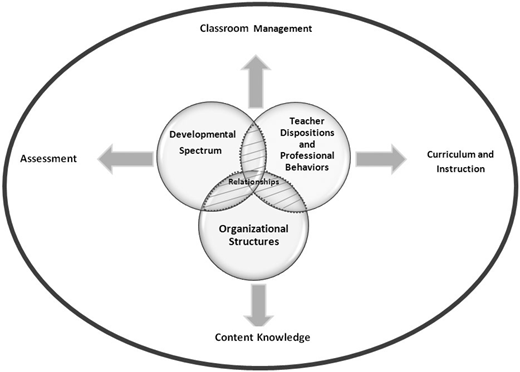
Figure 3 offers a revised graphic representation that includes these two constructs.
This framework holds that effective teaching practices at the middle level will be grounded in the developmental needs of young adolescents, and enacted by middle level professionals through meaningful relationships between teachers, principals, and other stake-holders supported by organizational structures that are developmentally responsive to students and professionally responsive to teachers. What makes this framework unique is the articulation of how the constructs interact and influence one another. Clearly, the outer constructs (assessment, classroom management, curriculum and instruction, content knowledge) are very consistent with effective teaching practices in general; however, effective middle level practices should include a focus on these elements, but only through a lens that considers young adolescent development, clearly defined dispositions and professional behaviors of teachers, organizational structures to support young adolescent development, and the fostering of supportive relationships. This framework suggests that the core is what helps shape and make the outer constructs effective at the middle grades level as compared to any other level of education.
Figure 3 illustrates our belief that the core of effective middle level practices is the deep understanding of the developmental spectrum of young adolescents, the implementation of supportive organizational structures, the possession of positive dispositions and professional behaviors by the teachers, and the development of relationships throughout the middle school (i.e., teacher to teacher, teacher to student, student to student). The arrows pointing out from the core represent how the four core constructs impact each of the other constructs in very powerful ways. Educators who focus on the core constructs of the framework have the potential to experience greater effectiveness with the outer constructs. Conversely, educators focused on the outer constructs of the framework without consideration of the core constructs could be less effective. For example, if a school chooses to focus on content-based professional learning communities to the exclusion of interdisciplinary teams, the emphasis becomes teacher focused and not student focused. While professional learning communities are beneficial to teacher development, they remove the teaming concept that is designed to focus on student development and success.
Finally, we made a word change in the title of our framework from “teaching” to “practices” to better reflect our belief that educating young adolescents consistent with the middle school concept is not just about the act of “teaching,” represented by the outer constructs of the framework. Effective teaching at the middle level is unique because of the specific practices associated with teaching young adolescents, represented by the constructs at the core of the framework. Practices such as developmentally and culturally responsive pedagogy, advisory, teaming, common planning time, appropriate relationships, and dispositions and professional behaviors are what set middle level teachers apart from teachers at other levels.
The second conclusion specifically impacts the preparation of middle level teachers. Forty-five states and the District of Columbia require specialized middle level teacher preparation (AMLE, 2013); however, preparation varies widely by state and teacher preparation institution. In some instances, teacher candidates complete a general elementary education program with an emphasis in the middle grades, while others are prepared through a contentspecific secondary education program (McEwin et al., 2003). Other teacher candidates receive training that is specialized and focused on the content and pedagogy unique to middle level students and classrooms. Advocates for middle level education have long-proposed that middle level teachers require specialized training (Jackson & Davis, 2000; McEwin et al., 2003); however, this has not been the reality for middle level teacher preparation. Though there are standards for the preparation of middle level teachers (NMSA, 2006), variability still exists across preparation programs. We believe that teacher preparation programs for middle level teachers should be designed around a common philosophy, and the framework for effective middle level practices provides that structure.
Based upon the findings of this study, preparation programs would be enhanced if they were designed to emphasize the core of the Framework for Effective Middle Level Practices for effective middle level practices — teachers with the appropriate dispositions and understanding of the developmental spectrum, supported by the necessary organizational structures, building relationships with students and colleagues. The core constructs of the framework should be infused throughout all aspects of the preparation program. Courses should be designed and implemented that are specifically focused on the development of adolescents and unique to the middle level education program. Ideally, to enhance the likelihood that new teachers will enact effective practice, the constructs of the framework should be modeled through the design of the teacher preparation program—professors with the appropriate dispositions and understanding of their students’ developmental spectrum, supported by the necessary organizational structures (e.g., middle grades program team), building relationships with students and colleagues.
When describing newly hired teachers, principals in this study reported an inadequate understanding of the physical, social, emotional, intellectual, cultural, sexual, and moral development of adolescents. Not surprising, principals also indicated that new teachers were lacking in their ability to make instructional decisions based on the developmental characteristics of their students. This finding would indicate the need for a renewed, specific emphasis on adolescent development and its connections to every aspect of teaching. First and foremost, teachers must understand the development of their students to build meaningful relationships, as indicated by the core of the Framework. It is through this lens that teachers can address the other constructs of middle level teaching—content knowledge, assessment, curriculum and instruction, and classroom management.
Closely connected to the need for a deeper understanding of the developmental spectrum is the need for teachers to enact curriculum and instruction that addresses the needs of all students, specifically students with special needs, students who are culturally and ethnically diverse, students who are gifted and talented, and those who are English language learners. In their assessment of new teachers, principals indicated that most new teachers are not prepared to identify and plan for individual differences and are not prepared to respond to diverse talents and learning styles. Both of these shortcomings may be directly related to the new teachers’ lack of understanding of the developmental spectrum described previously and highlights the need, once again, for middle level teacher preparation programs and courses to be designed around a common set of beliefs that emphasizes the core of the framework, specifically the developmental spectrum.
FUTURE INQUIRY
The findings of this study indicate the need for a renewed effort on the part of middle level education in general, and middle level teacher preparation specifically, to coalesce around a common philosophy, and we propose that the framework for effective middle level practices provides a structure around which programs can be designed, courses can be created, and teacher preparation programs can be assessed (i.e., accreditation). As a result, future lines of inquiry surface. Future studies related to the framework should include data from an expanded, nationwide sample of middle level principals in order to corroborate the findings of this study. In addition to the perceptions of principals, determining the perceptions of preparation from the teacher candidate and new teacher perspectives may help to support the findings of this study or reveal other strengths and shortcomings of current middle level teacher preparation programs.
Future studies should also include an indepth analysis of the current status of middle level teacher preparation programs through the lens of the Framework for Effective Middle Level Practices for effective middle level practices. The analysis should include a review of current program requirements, courses, and field and clinical experiences to determine the level to which programs infuse the constructs of the framework.
Finally, a natural extension of this study is to further examine the preparation of other certified middle level professionals (i.e., administrators, counselors) to determine if their preparation includes the constructs described in the Framework for Effective Middle Level Practices for effective middle level practices. Brown et al. (2002) proposed a conceptual model for administrator preparation that called attention to the role principals play in promoting quality middle schools that meet the complex needs of young adolescents. Their model, based on their own research, as well as other large scale studies focused on middle level leadership (Keefe, Clarke, Nickerson, & Valentine, 1983; Valentine, Clarke, Nickerson, & Keefe, 1981), highlights three dimensions of the developmentally responsive principal. The dimensions include: (1) responsiveness to the developmental needs of middle grades students, (2) responsiveness to the developmental needs of the faculty who support learning for middle grades students, and (3) responsiveness to the development of the middle school itself as a unique innovating entity (Brown et al., 2002). We find it encouraging that the three dimensions of their conceptual framework for administrator preparation are consistent with the core of our own Framework for Effective Middle Level Practices for effective middle level practices. Clearly both models focus on the young adolescent students’ development, the teachers’ dispositions and behaviors, and the organizational structures of the school. However, we find it disheartening that 10 years after this “Conceptual Framework for the Middle School Principalship” (Brown et al., 2002), little has changed from Petzko et al.’s (2002) findings that “most principals do not have academic preparation that specifically addresses middle level concepts” (p. 5). Almost 70% of our respondents reported they had no preparation specific to leading a middle grades school.
For middle level education to remain true to the philosophical and theoretical underpinnings of the middle school concept, middle schools must be fully staffed with exemplary middle school teachers capable of sustaining the core of the framework for effective middle level practices with fidelity. We recognize the era of standards and accountability in which we find ourselves. These standards and systems of accountability drive many of the decisions that are made in our schools and classrooms. However, if we expect our middle schools to meet the expectation of all students performing at proficient levels, focusing on effective middle level practices for teachers will help schools begin to realize that goal.

