This study examines job demands and job resources and the effects on mental health and wellbeing of medical radiation employees (radiographers and radiation therapists) in healthcare clinical settings.
A qualitative research approach was adopted involving semi-structured interviews with 20 managers and 30 radiographers and radiation therapists in Australia. This study is underpinned by the Job-Demands-Resources (JD-R) theory to identify work and mental health and wellbeing issues and Emotional Labour theory to examine the emotional experiences of participants relative to job expectations.
The study reported that the mental health and wellbeing of managers and employees are interconnected within a multi-level system, where a manifold of complex relationships are influenced by excessive job demands relative to job resources.
The study underscores the need for HR departments to develop multi-level wellbeing strategies to improve mental health support for managers and employees to enhance workforce retention and ultimately contribute to better patient care outcomes.
This research integrates multi-level perspectives on job demands, job resources and emotional labour in particular deep acting within an under-researched workforce (medical radiation professionals). It provides new insights into interconnected nature of mental health and wellbeing among managers and employees and patients.
Introduction
The allied healthcare sector was severely impacted by the disruption of COVID-19 (Ku et al., 2020) which left many workers with ongoing mental health issues (D'Souza et al., 2024). The scope of our study is on the mental health and wellbeing of radiographers and radiation therapists (also referred to as employees throughout) practicing in clinical settings in Australia. In this paper, we seek to understand the work context of clinical settings that provide medical imaging and radiation therapy services and the managers and employees working at these settings. We incorporate parameters on job demands, job resources, conservation of resources and the emotional labour that influence radiographers and radiation therapists in their daily practice. We examine job demands and job resources as a multi-level problem focusing on the complex relationships between senior management and line managers and clinicians (employees) and what this means for patients and human resource management (HRM). Whilst literature demonstrates a relationship between HRM and quality of patient care (Bartram et al., 2024), and recognition that allied healthcare workers (in this case medical radiation practitioners) experience mental health issues, there is a lack of systematic HRM to support healthcare workers (Kellner et al., 2019). There is a dearth of literature that identifies how HRM can improve the physical and mental health and wellbeing of allied healthcare clinicians (especially radiographers and radiation therapists and subsequently enhance the quality of patient care (Walker et al., 2024) and employee retention (Bartram et al., 2024; Cavanagh et al., 2025; Pariona-Cabrera et al., 2024). We define mental health as “Mental health is a dynamic state of internal equilibrium which enables individuals to use their abilities in harmony with universal values of society” (Galderisi et al., 2015, pp. 231–2). In this paper, we focus on job stress as the indicator of mental health challenges (Pariona-Cabrera, et al., 2024).
Organisations are multi-level systems (Klein and Kozlowski, 2000). Understanding the mechanisms through which the organisational hierarchy, with their positional power, interacts across multi-levels is critical to healthcare organisations understanding the links between HRM, managers and clinician quality of patient care and intention to leave (Bartram et al., 2024) and overall performance (Afshari et al., 2024). There is increasing interest of HRM scholars and practitioners calling for HR departments to examine and provide solutions to manage the mental health and wellbeing of workers incorporating the views and experiences across the organisational hierarchy and different stakeholders There is a dearth of literature on the mental health and wellbeing of allied healthcare workers especially radiation therapy clinicians.
In this study, underpinned by job-demands-resource theory (Bakker and Demerouti, 2007) and emotional labour theory (Hochschild, 1979), we take a multi-level approach (Klein and Kozlowski, 2000) to examine job demands and job resources and the effects on mental health and wellbeing of radiographers and radiation therapists. In doing so, we focus on the perspectives of line managers and clinicians. We carried out semi-structured interviews with 20 managers, and 30 radiographers and radiation therapists in Australia. We are guided by the following research question: How do HR departments and managers respond to mental health and wellbeing challenges of radiographers and radiation therapists?
Our study makes two contributions to the HRM literature. First, we seek to better understand the complex relationships between job demands and resources and mental health and wellbeing within an under-researched workforce (medical radiation professionals). We challenge organisations to better understand the intersectionality of mental health challenges and the emotional labour and deep acting used by managers and employees. Second, we contribute to understandings of the need for multi-level HRM approaches (custom designed to meet the requirements of each clinic) that integrate mental health and wellbeing responses to emotional labour and physical job demands to support positive job-related outcomes for radiographers and radiation therapists specific to each clinic. We inform managers and allied healthcare clinicians on systematic and practicable responses to workplace and mental health challenges. HR departments also need to understand the intersectionality of mental health and wellbeing challenges for the actors across the organisational levels aligned to the emotional labour and deep acting exercised by managers and employees.
Literature review
Radiographers and radiation therapists in context
Radiographers and radiation therapists are allied healthcare workers that provide diagnostic imaging and cancer treatment services (Ku et al., 2020). Diagnostic medical radiographers are responsible for producing high-quality medical images that assist medical specialists and practitioners to describe, diagnose, monitor and treat a patient's injury or illness (ASMIRT, 2024). Radiation therapists are responsible for the design, accurate calculation and delivery of a prescribed radiation dose over a course of treatment to the oncology patient (ASMIRT, 2024). Dealing with patients every day can become emotionally challenging, and many may not receive the emotional support to undertake and cope with the daily demands of the job, especially for those with life threatening or life shortening illnesses (Ku et al., 2020; Xerri et al., 2023). The Medical Radiation Practice Board of Australia (registration body for medical radiation professionals (MRPBA, 2024) indicate that as of December 2024, there are 20,861 registered medical radiation professionals practicing in Australia.
Recently, the COVID-19 pandemic has highlighted the fragility of Australian healthcare system. Medical radiation professionals are experiencing long working hours and increased workloads whilst operating with employee shortages as growing numbers of workers are leaving the sector (AIHW, 2024). Post pandemic, practitioners are re-considering working in the sector (Reeves et al., 2023) given reported high levels of job stress and burnout (Poon et al., 2022). In the context of medical radiation science, there is a paucity of literature relating to the impact of high workloads and the effects on the wellbeing of medical radiation practitioners and the impact on quality of patient care and intention to leave the profession. Moreover, there is also anecdotal evidence that formalised HRM policies and practices are scarce in radiation clinical settings, and managers may (due to heavy workloads and lack of training) fail to support medical radiation practitioners. A study by Ekpo et al. (2017) highlights that medical radiation practitioners often assume leadership roles without formal managerial training, leading to challenges in effectively supporting their teams (Mopeli et al., 2024) According to Ku et al. (2020), there is some evidence that HR departments and managers may ignore the concerns of employees in favour of meeting the financial priorities of the organisation (Shields et al., 2021). Organisations have a legal and ethical responsibility to ensure employees work in psychologically safe work environments (Victoria WorkSafe, 2021).
Emotional labour
There is a significant amount of emotional labour experienced within healthcare work, which may lead to emotional exhaustion, stress and burnout (Shields et al., 2021). According to Hochschild (1979), emotional labour accounts for how we manage our emotions at work by hiding emotions or modifying our emotions to reflect a set of circumstances. Given the high expectation of patients in allied healthcare, particularly for those patients receiving cancer treatments, it is incumbent upon the practitioner to provide a quality service. There is growing literature on the impact of emotional labour on the mental health of clinicians, especially doctors and nurses (Chen et al., 2022). Moreover, Chen et al. (2022) suggest that healthcare work involves high levels of physical and psychosocial stress, often due to the emotional nature of the work. This often negatively affects clinician job satisfaction, burnout, turnover intentions and overall poor health. In the absence of appropriate job resources, to support the mental health of clinicians, they may experience job burnout and reduced job performance, which can result in emotional exhaustion leading to negative emotions of anxiety and depression (Chen et al., 2022; Shields et al., 2021).
Emotional labour is integral to clinician job performance such as quality of patient care (Bartram et al., 2012; Meacham et al., 2023). Stress and burnout in radiation therapy is a significant problem for employers with employees having to take stress leave and sick leave to cope (Hanstein et al., 2025). The more surface acting a professional undertakes, the higher the level of built-up emotional stress, contributing to an inability to maintain emotional control. This can contribute to decreased job performance and negatively impact quality of patient care and increased medical errors (Keller and Heath, 2020). Continued job stress because of experiencing high emotional burdens daily will influence an individual's professional and personal choices such as leaving the profession (Turner et al., 2018).
Multi-level approach in healthcare
Importantly, in this paper, we argue that the job demands, and job resources and the mental health of healthcare workers are entrenched within a multi-level phenomenon. Healthcare organisations operate through collaboration across multiple hierarchical levels of management, including HR departments, senior managers and line managers, as well as across diverse clinician groups and specialised medical management structures (Bartram et al., 2007). Ashkanasy et al. (2017) theorise about the relationship between emotions and emotional regulation using a multi-level approach including within-person temporal variations, between persons, interpersonal interconnectedness processes; groups and teams, and the organisation. Despite these important theoretical insights linking emotions and HRM through a multi-level lens, there is no research that examines job demands and job resources as a multi-level phenomenon in a context as complex as healthcare or medical radiation work for that matter.
Theoretical framework
We outline two theoretical frameworks to examine the data from managers and employees found in clinical settings. First, job demands resources (JD-R) theoretical model (Bakker and Demerouti, 2007) and second, emotional labour theory. JD-R supports understandings of the role of various occupational factors in determining and shaping the wellbeing of employees. The main assumption of the (JD-R) model is that in any occupation or professional role, there will be elements of the job that can function as either a job demand or job resource: (1) job demands such as “physical, social or organizational job aspects that require sustained physical and/or psychological effort and are associated with certain physiological and/or psychological costs” (Xanthopoulou et al., 2007, p. 768); and (2) job resources such as “physical, social or organizational job aspects that may: be functional in achieving work-related goals; reduced job demands and the associated physiological and psychological costs; and stimulate personal growth and development” (Xanthopoulou et al., 2007, p. 768). The JD-R model suggests that in situations where job demands are high and job resources are low, job stress and burnout may increase. Job demands are the initiators of health impairment processes and job resources are the initiators of motivational processes (Bakker et al., 2014). This may be achieved through the buffering hypothesis which suggests that job resources can reduce the negative impact of job demands on employee attitudinal and behaviour reactions, including burnout (Bakker et al., 2005; Xanthopoulou et al., 2007).
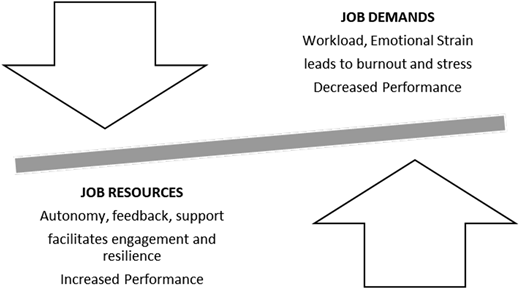
In this study, JD-R is used to understand the demands on medical radiation professionals and the resources that support their roles. The JD-R model seeks to predict an employee's wellbeing (burnout), work engagement and consequently organisational performance and outcomes irrespective of profession and the demands on them (Bakker and Demerouti, 2007; Bakker et al., 2014). The JD-R model focuses both on negative and positive aspects of employees' health (Bakker and Demerouti, 2007). Demerouti and Bakker (2011) contend that the first phase of physical and mental health impairment may involve excessive work overloads, emotional labour pressures and increased exhaustion. It is here we situate two important concepts in our study: (1) HRM and emotional labour. We treat HRM as a job resource and emotional labour as a job demand (Bartram et al., 2021). Job demands are reliant on adequate job resources and only when job resources are fully available can job demands be supported. When job demands are high and job resources are deficient, there is an imbalance that impacts on employees (i.e. represented by a line of imbalance). The following figure (see Figure 1) highlights job demands and the resources that should support employees in their daily work.
We employ emotional labour theory (Hochschild, 1979) to help us understand work settings and relationships that invoke an individual's responses to work circumstances that may impact negatively on workers. Hochschild was interested in the context of different jobs and how individuals might outwardly display emotions determined by circumstances. Emotional labour is represented by the effort to control an emotion in a challenging context and display a non-authentic emotion to meet the expectations of management and/or customers/clients. Elements of emotional labour include emotional dissonance, surface acting, deep acting, managing emotions to comply with organisational rules and feelings rules linked to specific circumstances. Emotional dissonance happens when an individual displays a reaction that is expected but not genuine (Baba and Siddiqi, 2021). The individual attempts to be compliant with the norms expected of a particular role. Surface acting results in an individual expressing themselves through facial expressions that may not be the expected natural reaction. The individual expresses an emotion but does not feel the emotion. Negative emotions may be temporarily suppressed but they are not sustainable and over time and may lead to burnout (Turner et al., 2018).
Deep acting occurs when an individual sets out to change their feelings to associate with the emotion and not fake it (Hochschild, 1979). The individual makes a genuine effort to feel what another individual may be experiencing. Managing emotions may have a negative impact on an individual's mental health when emotional expressions are not authentic which can be stressful (Turner et al., 2018). Hochschild (2022) argues workers, such as healthcare workers, who perform a large amount of emotional labour daily, often do not receive the emotional care they require to manage the daily demands of their job.
Methodological approach
Our study takes an inductive approach by seeking the perspectives of participants, collecting data and identifying themes in the data (Yin, 2014). We took this approach to be able to explain the phenomenon of how job demands and job resources impact on the work of medical radiation therapists. We adopted a qualitative approach to collect data (Creswell, 2009) from 50 participants comprising 20 managers and 30 radiographers and radiation therapists working in clinical settings in Australia. Prior to the commencement of the research, initial support was sought from radiation departments across Australia. The managers (also known as directors or chiefs) were the gatekeepers who enabled the researchers to gain access to the research sites and to the participants (Patton, 2002). Once gatekeeper access was initiated, participants were invited by email that included participant information sheets and consent forms to participate in the study. Each participant signed a participant consent form before the research commenced.
Participants of the study
Selection of appropriate participants was crucial for obtaining credible information to support the study (Creswell, 2009). Participants were assigned pseudonyms to encourage them to more openly and honestly share their work experiences (Creswell, 2009). Managers are represented by “M”. The terms “radiographers and radiation therapists” and “employees” are used interchangeably because participants tended to use the term “employees” more often to describe who they are in the workplace. Therefore, radiographers and radiation therapists are represented by a pseudonym, and “E” (i.e. employee) and will be referred to as employees throughout. The following table (see Table 1) provides the pseudonyms for the managers (M), radiographers and radiation therapists (E).
Semi-structured interviews
Semi structured interviews were carried out with 50 participants for between 50 and 60 min. Participants were made up of 20 managers and 30 radiographers and radiation therapists. Semi-structured interviews allowed research participants the opportunity to express their personal feelings and experiences and be heard (Turner, 2010). The type of questions asked in the interviews were designed to prompt accounts of real-life work experiences (Seidman, 2006). We did not collect or report on demographic data due to management requests not to seek information that could possibly identify any manager or employee and to protect the identity of all participants (Yin, 2014). The main research question was as follows: How do HR departments and managers respond to mental health and wellbeing challenges of radiographers and radiation therapists? Interview questions were developed from issues in the healthcare literature highlighting the emotional challenges for practitioners when they must deal with patients every day and often without the emotional support to undertake and cope with the daily demands of the job, especially dealing with patients who present with life-threatening illnesses (Ku et al., 2020; Xerri et al., 2023). We provide a sample of the supplementary questions that respond to issues in the literature and support the main question:
How do HR department and managers support radiographers and radiation therapists in their workplaces?
What types of challenges impact on the mental health and wellbeing of radiographers and radiation therapists?
What types of demands are placed radiographers and radiation therapists in the workplace?
What resources support or hinder radiographers and radiation therapists in the workplace?
Data collection, analysis and themes
Data were collected by recording each of the semi-structured interviews (Silverman, 2014) and transcripts produced. Themes were then identified in the data using NVivo (Richards, 1999), with a thematic content analysis approach that categorised themes (Weber, 1990). The themes are presented in two sections aligned to the theoretical framework of JD-R (Bakker and Demerouti, 2007) and job demands and job resources. The data analysis carried out allowed the researchers to identify patterns and insights (Patton, 2002) and capture the essence of a phenomenon (Denzin and Lincoln, 2013). According to Yin (2014), pattern matching aims to identify patterns of variables to commence coding. Two researchers independently read and familiarised themselves with the data and then each one reported on patterns and themes. The patterns and themes were compared and listed. After themes were identified and agreed, the researchers were able to analyse and interpret the data (Weber, 1990) provided by the participants. The final coding framework and analyses of interview data were read by two coders to ensure reliability (Weber, 1990). Checking transcripts for data saturation contributed to rigour in the data collection, data coding and data analysis.
According to Yin (2014), pattern matching aims to identify patterns of variables to commence coding. After themes were identified, they supported the analysis and interpretation of data (Weber, 1990) provided by the participants. The final coding framework and analyses of interview data were read by two coders to ensure reliability (Weber, 1990). Checking transcripts for data saturation contributed to rigour in the data collection, data coding and data analysis. Two of the research team then manually went through the data to alleviate any bias in the data analysis and coding (Yin, 2014).
Findings of the study
This section presents the qualitative findings collected from 20 managers and 30 radiographers and radiation therapists (employees) across Australian medical radiation clinical settings that provide medical imaging and radiation therapy services. Findings of the study are presented from the perspectives of managers and employees in accordance with JD-R (Bakker and Demerouti, 2007) and emotional labour theory (Hochschild, 1979).
Job demands on managers
Managers were open about the demands that impact their management as they go about their daily roles. During the interviews, it became apparent that managers are dealing with hierarchical and process factors that impact how they manage employees. Ivy (M) explained how “there's been a lot of change in the decision-making [from the hierarchy] … today you're told one thing and tomorrow it's completely different”. Managers are aware that their role often means they have to be “ …. quite autocratic, and whether the people love it or don't, you have to just sometimes make a decision” (Celine, M). Manager participants expressed a “distrust” in the hierarchy and express their concerns:
….instead of getting [working] from point A to B ….we now have to go through the whole alphabet to get there ….it’s too hard …. procedures are more complex … time wasting … more forms to complete … layers of approval to have machinery repaired.. (Trinity M).
…if there’s an easy way and a hard way to do something, they’ll [the hierarchy] choose the hard way … I’m serious … it’s that bad ….we used to organise training on new equipment … we now have to wait for a monthly meeting and approval ….by that time we’ve taught ourselves …. (Wyatt, M)
… if you want the team to work …. they’ve got to feel like they're a party to it and they own it. Having someone [from the hierarchy] dictate, this is how you're going to work tomorrow. It doesn't work that well, it gets their [employees] back up … they’ve taken away our autonomy … we’re told how many patients the team has to treat every day … this means excessive workload … longer wait times for patients … (Omar, M).
Managers (Gavin, Jett, Paige, Wyatt) concurred there were issues with employee numbers and being able to facilitate departmental operations when employee numbers are “low” and there is daily “sick leave” and “unplanned leave”. Sebastian (M) explained that the role is a constant “balance between running a department …. responsibility to your patients …. keeping your staff happy”. Ivy (M) talked about the focus and in her view it “has been too much technically and not enough patient care … or staff care”. The pressure of managing employees in radiation departments means some managers “ ….don't want to be the only point; I don't want to have all the answers for everything …” (Mason, M).
Managers expressed their frustrations with workplace factors impacting their workloads. They explained “you've got to wear a lot of hats” (Trinity, M) and with constant demands on work time “you don't have time to think” (Paige, M). Savannah (M) expressed her view, “we are overwhelmed with the amount of information and having to process it ….”. Blake (M) also articulated how management activities “ …. time … and you need to allow extra time … otherwise you would never get anything done”. Arianna (M) also explained that “to achieve workloads as a manager, it's like, you know, you do have to do things outside of work hours”.’
Impact of job demands on managers
Throughout the interviews, managers referred to a “shrinking workforce” that contributes to the pressures they feel at work. Such demands mean that managers often do not allow employees to “walk out the door and close the door on work … …we lost 25% of our staff ….. there's been constant threats on an annual basis to restructure us again … so, it does sort of skew the mindset” (Omar, M). Maya (M) expressed how she feels about support from the hierarchy, and the “support level at the moment, I feel is probably the lowest that it's been in my career ….it's stressful”. Preston (M) told the researchers he was recently asked if he would recommend his job to others, “I said no, I wouldn't recommend my job to anybody umm ….I've had a look around”.
Riley (M) acknowledged that “physically, it's hard to be at work all the time … I can't give to patients what I'd ordinarily give. It gets harder to use my brain in a different way too …” . Caleb (M) was conscious of how he needs to safeguard himself “ ….you have to emotionally disembark every so often to …. to really protect yourself … you have to use a bit of common sense … ” Preston (M) explained that there is an expectation around “how quickly things need to be done ….but, with ”a risk of mistakes and managers need support “about things like burnout … ”. “Savannah (M) shared how as a manager she struggles ” … with the work-life balance …..taking a lot of it to heart … so, we're emotionally and also physically burnt out …... Tristan (M) expressed how “dealing with very sensitive situations … you look at the needs of those who we're caring for …. but, not always ourselves”.'
Managers talked about their intention to leave the profession and how workplace factors impacted their decisions and described the main reasons they might leave their current employment. Tristan (M) explained how he was promised “exciting opportunities to do things [to improve practice], however whilst in this role, I haven't actually been able to expand”. Gavin (M) described how managers “report upwards” to the hierarchy who do not have the appropriate skills, “you can end up working for these really clueless people in the hierarchy”. Jett (M) explained “I think about it [leaving] all the time …. work, without being in the monotonous trenches ….there's got to be an easier life, yeah”. Managers highlighted their rationale for believing they may need to leave the profession:
…. .The reality is … I've got two options, either try to address them [workplace/ emotional issues] and fix them or I go somewhere else …. (Mason, M).
I think I’ve had enough of this field …..I see the patients' side of it, I've seen enough heartache in my life. I don’t want to be doing this for the next twenty years …. (Riley, M).
Yes ….yeah part of my career pathway was actually to step away from radiation therapy …..I’ve given everything …. I’ve turned myself inside out ….I didn’t get that promotion … I was done … quite happy to walk away …. (Mason, M).
Job demands on employees
Employees shared their experiences and views on increasing job demands they face during their daily work. Overall, employees expressed strong opinions related to demands impacting their workload and work-related challenges. The phrase “workload is an issue” was discussed as a clear and constant workplace problem for many employees (Felix, Lucas, Maria, Sofia, Xavier, Zoe – E). One demand that was highlighted was how employees are expected to “have knowledge ….to run machinery safely … when they don't have the training or experience” (Grace, E).
Kayla (E) told the researchers there are “increasing patient numbers and we don't have the extra staff that other centres might have …..we've got long shifts with less staff ….no time to think … no acknowledgement”. Jasmin (E) explained “the workload increases, and they [managers and the hierarchy] don't see that …. it's about the numbers … we end up doing more for less … with no rewards”. Employees accounts of current practice:
We’re only supposed to do 38 to 40 patient plans a week … we’ve been doing 50 or 60 ….we work weekends … no one tells us we’re doing a good job …..I’m burnt out … I haven’t looked after myself (Annabelle, E).
We have finite appointment times …. we work through our lunches … our tea breaks … we work past our finish times cause we basically get told it's your fault if someone dies because you don't make this happen ….. that's the sort of pressures that we get … (Ellie, E).
Work challenges shared by employees were around technological advancements within the sector. Employees talked about operating the equipment and “we need training” to be upskilled and knowledgeable enough to recognise the complexity of the cases and adapt to the equipment accordingly (Audrey, Avery, Chase, Cody – E). Ellie (E) explained “it's just such a massive volume of knowledge to be an expert in every area ….it's difficult to keep up with all the technological changes and use equipment”. Jordyn (E) discussed how difficult it was when there are constant “pressures of getting the work done, getting patients started and trying to juggle the organisational part” (Jordyn, SE).
Impact of job demands on employees
All employees told stories about the impact of demands on them due to contemporary healthcare practice management. Employees recognised the lack of support, burnout and wellbeing issues and how these factors affected patient care and management. Brooke (E) explained how daily demands result in poor physical and mental health “my back hurts ….. my head hurts …. it's hard work doing full-time radiation therapy for all these years ….it hurts emotionally”. Some employees reported situations where there have been unexpected deaths of colleagues and loved ones and the subsequent impact on the employees “there's no tangible support …. staff were really angry … they [managers and the hierarchy] don't care ….. they're [employees] not feeling valued” (Alexa, E). To stress how employees believe patient expectations have changed and how managers and the hierarchy fail to show concern for staff the following narratives highlight issues:
I've never seen junior staff burning out like they are right now … … half the problem is the expectation of the patient has shifted … all the powers have been put onto the patient … …. but … there’s also the litigious side of stuff …. (Brooke, E).
Staff are quicker to get irritated … I’ve seen staff act like a dementia patient … it’s not the patient’s fault staff are tired … managers should deal with this' (Reagan, E).
Not everyone is supported at each stage … leaving people [employees] feeling like they're inadequate (Lily, E).
You're constantly adapting on the job …. you don't want to make a mistake because you can really harm someone ….it's emotionally demanding and mentally demanding as well (Haley, E).
I'm struggling in my current role because of the lack of support that my manager has and the cascading effect that has on me as a member of the team (Alexa, E)
Employees talked about leaving the profession and only remaining in their current employment for the sole purpose of job security and they also shared how they often contemplate on leaving the profession. Mia (E) explained how “ … workplace dynamics I felt were unethical and dangerous …. created quite a lot of distress for me …. I've thought about leaving … .” “It's almost like you're a number and I feel that has detrimental impacts and that's why we've seen a lot of people leave the profession” (Maddison, E). The following narratives support the overall views of participants:
There were heaps of times I wanted to leave, but I just needed that security of a job ..… I just kept working in that toxic environment … (Maddison, E).
It’s very hard to get up in the morning and go to work having to deal with some of the colleagues …. a lot of people that work in one place for a very long time … can lead to a very toxic culture within a department (Hayley, E).
This is what happens when management doesn’t treat staff properly … a senior experienced staff member told me “I don't need this”, and he went and worked in his family's fruit and veggie business and another one, went and did contract harvesting (Kieran, E).
Manager's views on job resources
Managers were very open to sharing their views on employee numbers and other resources needed by them and their employees to work. Throughout the interviews, managers claimed resources are “outdated” and made it clear they needed “more resources” [technical equipment]. According to Ivy (M) “ … resources are never enough because there's always more you would like to do” (Ivy, M). Athena (M) stated that managers should be “provided with more resources to get things done”, however she added that “physical resources are very different to other resources”.
Managers concurred with the view of Sebastian (M) “ … there's always staff shortfalls …. it's a real balance, because of the demands of the department … it's been an effort trying to support the staff in that sense”. It was mentioned several times by managers (Jett, Wyatt) that each of the clinical settings needed “more staff members”. Managers claimed a better service could be delivered by employees with “a better balance of staff members to managers” (Levi, M). It was also evident that managers want to be confident they can rely on the staff they have because they “ … have confidence in …. in the people that are working with me ….. there needs to be honesty and openness …. I have to rely on them to give me good reconnaissance …..they have to rely on me uh in …..making decisions [related work and patients] … ” (Caleb, M).
Human resource management (HRM) as a resource for managers was discussed by the participants as challenging. Managers provided insights into their interactions with HR departments highlighting that processes are frustrating. “They [HR] don't know what it's like to see twenty people [patients] or more a day who all have emotional needs” (Riley, M). Omar (M) explained how dealings with HR are “quite often through a lengthy time-consuming process” and “HR, will take you to the edge, and then they'll find some reason to withdraw their support”. Preston (M) expressed his frustrations with HR “I've tried a lot of these things that HR says you need to do, but when that doesn't work, what's my process?”. “You really have to have a great deal of motivation to bring significant change, and I'm talking about big change within your own environment with no HR support” (Caleb, M).
When discussing resources most of the managers described what happens about education and training and how “ … an ideal world ….. would mean unlimited funds” (Ivy, M) and “more time and resources for training” (Celine, M). The following statements present managers' views on training resources in their work settings:
I'm supposed to be managing people …..how the hell am I gonna do that if I don’t have resources. I can't be assertive, and I don't feel comfortable delegating …... I sort of had to go and seek out resources for myself … (Maya, M).
There’s no active course in here [workplace] if you just wanted to learn skills on how to manage your own well-being or how to, you know, manage your day or recover when a patient dies when they're in your care (Riley, M).
Managers recognised the need to provide a work-life balance for employees but claimed resources to support this are not approved by the hierarchy “ …..there's a work-life balance thing which I'm really big on” (Sebastian, M) “wellbeing in staff, and emotional labour ….. really come to the forefront” (Tristan, M) “in terms of having well-being as a skill and supporting others as a skillset, that's not as actively supported” [by the hierarchy] (Riley, M). Ivy (M) talked about having situational awareness and “working differently”, to “manage people carefully who have battled with PTSD”. Celine (M) explains how the hierarchy is unaware that “there might be three or four members of your team that struggle with mental illness”. There's a lot more people in our profession that have elements of depression than people really think …. (Omar, M). “One thing that we sort of lack in this, in this career is closure …. with what we do” (Blake, M).
Employees views on job resources
Employee participants were open to sharing about the resources related to performing their roles. The following observations present their opinions on various resources available to support their work including staffing numbers, education and training, manager support and emotional wellbeing. Many of the employees talked about “not having enough resources (to do the job)” and “long wait times for patients” that impact on their “mental health”(Cody, Cole Faith, Maria, Rose – E). Cole (E) provided an overview of how most the of employees discussed resources:
There’s massive expectations … doctors … upper management … so you’re trying to get resources … trying to manage the workload to achieve the goals you’ve been set … and mostly unsupported.
It was evident in the talk of participants that workload management and staffing numbers are a major issue in most clinical facilities. Ellie (E) explained that “ … we're so understaffed ….” and Kieran (E) contemplated his answer for a little too long “Umm, they [management and the hierarchy] just need to provide adequate staffing. They need to fund the positions. They also need to support people to upskill ….”. An imbalance of staffing numbers was another issue raised:
I would like us to have a lot more staff so we're a company that has an imaging
arm and pathology arm … pathology has 13 members … we have 3.6 [in
imaging], so in terms of resourcing, we're not as well-resourced as pathology.
Employee participants expressed their concern about not having enough staff numbers to have “research roles in our department because we have none”. In terms of other facility resources, Hayley (E) made it clear to the researchers that they are time poor, and management needs to do a “lot more with some learning modules and resources …. there never feels like there's enough time to spend checking out resources”. Hayley (E) summed up her views with a story about the lack of technological resources to provide staff with flexibility:
I was in planning and I had a sick child …..I actually asked to get a Citrix license to be able to continue working from home and that was denied even though the doctors have access to Citrix …. not allowed for radiation therapy staff. You have to turn up to work.
Participants talked about how they are sometimes provided with training but not to the level they need. They made it clear they are not provided with adequate day-to-day training “I've had to learn on my own … ” (Olivia, E). There is a lack of management support “to attend [training] events … so engagement drops off … I'm not important enough. I'm not special enough. I'm not tapped as that leadership potential ….” (Ava, E). Kayla (E) told the researchers “ … there's not much day-to-day training with emphasis on you know staff emotional well-being ….”. When reflecting on his appointment Miguel (E) exclaimed “I was thrown into a Tsunami [no training] …. I wasn't thrown into a swimming pool … ”.
Mia (E) talked about a lack of “access to counselling ….. to help us cope emotionally with the work we're doing.” Employees described how some days are far more challenging than others' The following narratives summarise what employee participants talked about regarding a lack of resources to support mental health:
I don't think we acknowledge I'll say the mental health part of our jobs and the resources to support mental health. You're just kind of assumed to get on with it ….but there will always come a breaking point, and it shouldn't break the person. (Brooke, E).
Employees continue to describe the resources required to manage the effects of working with patients …..dealing with, too many patients stories over the years …. you have to build up the skills, self-awareness … build that up on your own …. I don’t know where I would be if I didn’t have those skills for resilience at this point (Alexa, E).
Discussion
Our study found that the mental health and wellbeing of managers and radiographers and radiation therapists (employees) is a multi-level phenomenon. Managers must deal with demands from the hierarchy and employees, and employees experience demand from managers and patients. In addition to work demands, there are emotional labour demands on employees where each level is impacted with a different intensity. When the hierarchy makes demands on a manager, the emotional labour the manager engages with can impact on the way they manage their employees (Chen et al., 2022). Using the theoretical lens of JD-R (Bakker and Demerouti, 2007) and emotional labour theory (Hochschild, 1979), we unpacked the views of managers and radiographers and radiation therapists (employees) and found that the demands on their roles impact on their mental health and wellbeing (Bakker et al., 2014). These challenges are compounded by an ageing population and governments having to deal with rising healthcare costs whilst expanding clinical services (Shao et al., 2023). There is also a recent trend of doctors increasing their diagnostic tests to minimise the risk of misdiagnosis and possible litigation from patients and/or their families (Bartram et al., 2023).
The demands on managers revealed multi-level challenges (hierarchies and employees) involving staffing shortages and other resource deficiencies in their clinical settings (Ku et al., 2020). There was evidence that hierarchical decision-making is often arbitrary, and changes from one day to the next which makes the processes by which decisions are made complicated, obtuse and stressful. Managers claimed that their respective hierarchies are overly bureaucratic. They could take “the easy way” or the “hard way” to solve challenges but they always “choose the hard way” and often with limited resources to support managers and their employees. Participant managers explained that hierarchical demands on managers meant they now have to increase the number of patients treated every day and follow complex procedures and experience delays in receiving approval for machinery repairs and training. Such demands and delays impact on the level of autonomy managers once had and as a consequence managers are often pushed to take a very autocratic approach to managing employees to carry out the instructions of those in the hierarchy. Managers recognise that autocratic and overly bureaucratic approaches are “not well received by employees” who are often struggling with high work demands. Bakker and Demerouti (2007) contend when managers are controlled by excessive demands their physical and psychological resources become strained which can lead to stress and burnout. The authors further argue that such job demands can be initiators of mental health challenges and impact on managers' roles and their overall health and wellbeing.
The participants of this study manage complex medical conditions, patients' cultural and linguistic differences, patients' behaviours (Ku et al., 2020) and engage in regular emotional labour, which impacts on their mental health and wellbeing (Bartram et al., 2024; Pariona-Cabrera et al., 2024). Employee emotional labour can be modified with each patient they deal with depending on the patient's condition and their emotional challenges which can vary with each patient. Employees not only have to deal with the complexity of patient care but also the challenges of navigating organisational politics and complex relationships and reactions of actors to resource constraints and organisational demands. This may be compounded by challenges in the personal lives of employees. Similarly, we examined employees' perspectives related to resources and found there was a deficiency of resources around employee shortages, training opportunities and equipment maintenance. Emotional labour theory has been widely applied in healthcare research (Bakker and Demerouti, 2007), but it does not cover the multiple relational dynamics that impact employees' mental health and wellbeing.
We found a very complex set of circumstances around the mental health of managers and employees and based on their perspectives, we identified and classified different levels of demand and the impact on the mental health of different stakeholders (Bartram et al., 2021). The demands on managers from the hierarchy are different to the demands on managers from their employees. Managers' mental health is impacted first, by hierarchical demands and second, employee demands around workloads, staffing, job stress and a deficiency in resources. Managers of this study reported they receive little to no support from the hierarchy and imposed time-consuming processes and inefficient practices makes their work more complicated.
There are different demands related to employees from their managers and demands from patients/clients. Demands on employees and consequent mental health and wellbeing issues are also felt from two intersecting directions. First, most patients present to radiation clinics with physiological conditions, and employees report that these as often associated with mental health issues, including anxiety and fear. Second, due to the daily routine of dealing with many patients revealing mental health issues, employees must engage with a heightened level of emotional labour (Hochschild, 2022). To demonstrate professional competence, employees can put demands on themselves and may develop their own mental health challenges, exacerbated by job stress and burnout (Shields et al., 2021). Employee issues are further exacerbated by a lack of managerial support, and a deficiency of job resources, emotional support and training.
Managers' report that whilst HR departments should be an important resource to support them, instead HR presents issues within clinical settings across three domains. First, HR departments are disconnected from understanding the work environment of radiographers and radiation therapists. HR departments are also detached from understanding the emotional needs of employees who every day are dealing with patients who have various emotional needs. There appears to be little to no training for employees to be able to deal with patients with emotional needs. Second, HR processes are lengthy and time consuming and often with negative results. Third, when there are major changes within the sector, HR departments are often not present to support with advice or training resources.
Both managers and employees raised concerns about staffing numbers. Managers agreed that a “shortage of staff”, “sick leave” and “unplanned leave” create issues for them. The demands on employees highlighted issues around “long shifts with less staff”. Our results suggest that managers and employees are under considerable pressure to perform their work under strained resource conditions which heightens emotional labour. Hochschild (2022) suggests when workers, such as healthcare employees, must apply emotional labour daily, it is often the case they do not receive the emotional care they need to manage daily demands of their job. We also found considerable evidence that consultation and communication between the stakeholders is problematic between hierarchies, HR departments, managers and employees. There appeared to be little opportunity for employees to voice their concerns and be heard by managers and HR departments.
We found that in the context of radiation clinics, there are different levels of demand on each of the stakeholders that are intensified by employee shortages and long shifts. The intensity of emotional labour compounds the differences for stakeholders across multi-levels and evidenced by disproportionate emotional dissonance (Bakker et al., 2014). Managers experience demands from the hierarchy that result in them displaying a strong position but, due to emotional dissonance (Turner et al., 2018), their authentic feelings conflict with how they present to employees. The data from our study indicate HR departments do not ensure effective communications or services that managers (or employees) need. Managers are aware of the pressures employees face every day, but they are conflicted by hierarchical demands, a lack of HR support and consequently suppress their authentic selves. Employees, such as radiation therapists, frequently regulate their emotional responses when receiving managerial directives, particularly in situations where those directives could reasonably be challenged, including expectations around extended shifts or prolonged patient waiting times. Employees experience divergent levels of emotional dissonance when they care for patients, and this can be different on another level depending on the patient's emotional reactions to the service and the severity of their condition.
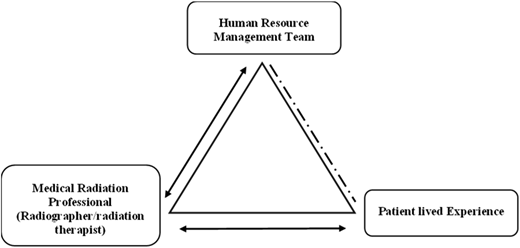
There are unique and professional challenges experienced by managers and employees and their interactions with HR departments. According to the perspectives of managers and employees they have limited connections with HR and they believe patients do not factor into HR decision-making or effective communications. To ensure healthcare experiences for patients are optimised, managers and HR practitioners need to consider the perspectives of employees and patients. By understanding the varying experiences, HR practitioners and managers could go some way to developing more effective HR practices and appropriate job and emotional support through employee assistance programs (EAPs) and flexible work practices. It is important that communications between the actors navigate difficult conversations about mental health and support of strong work relationships, which should ensure improved efficiencies and productivity. The following figure (see Figure 2) depicts a disconnect between HR departments and patients (i.e. broken line) that needs to be filled.
While the findings of our study may mirror well-documented challenges in healthcare generally, they raise questions about deeper structural and institutional drivers that impact on managers and employees. When there is an imbalance between the hierarchy, managers, HR departments and employees, and the coexistence of excessive job demands and insufficient resources (Bakker and Demerouti, 2007), negative health and wellbeing outcomes for stakeholders are exacerbated (Schaufeli, 2017). Crucially, this imbalance is reinforced by hierarchical decision-making and bureaucratic HR processes that constrain managers' agency and limit support for employees. Managers and HR departments might acknowledge the importance of employee wellbeing, but employees perceive them as detached and ineffective. Emotional labour theory sharpens this analysis when managers engage in surface acting in response to hierarchical pressures and employees' deep acting (Hochschild, 1979) with patients. These are interdependent processes that generate cascading negative effects on the health and wellbeing of managers and employees. Taken together, the JD-R model (Bakker and Demerouti, 2007) and emotional labour reveal how hierarchies can reproduce cycles of strain, leaving both managers and employees with a predisposition to stress and burnout that ultimately impacts on the quality of patient care.
Contributions to HRM theory
First, we contribute to HRM theory by extending our understandings of the process through which emotional labour (Hochschild, 1979) is integrated into the JD-R model (Bakker and Demerouti, 2007) and related HR responses. We argue that interactions between key stakeholders across the organisational hierarchy contribute to increasing job demands. Emotional labour (Hochschild, 2022) can be intensified by both managers and employees when they switch their deep acting interactions between the hierarchy, managers, employees and patients. The practice of deep acting by managers and employees intensifies job demands (Bakker et al., 2014) and over time when they are compacted by a lack of resources, organisational and HR departments contribute to stressed organisational actors. The emotional demands of negotiating working relationships with various stakeholders in healthcare organisations can be seen as emotional labour. There is a dearth of literature on examining such relationships in the context of job demands and more broadly the JD-R model. Moreover, there is even less HR literature on effective responses to hierarchical relationships contributing to emotional labour and effective theoretical and empirical responses.
The distinct levels of emotional labour, particularly deep acting of managers and employees provide new perspectives that underpin a multi-level phenomenon. For example, managers may align their reactions according to hierarchical demands (Bakker et al., 2014) by engaging in deep acting of compliance (Hochschild, 2022). Conversely, when managers deal with employees their deep acting is likely to be more directive to align with hierarchical expectations and in doing so appear to disregard employees' feelings and reactions. When managers switch deep acting approaches between conversations with the hierarchy and then have different conversations with employees, the outcomes for managers could result in them experiencing emotional exhaustion (Turner et al., 2018). On the other hand, employees must deal with emotional labour related to the demands of managers (Chen et al., 2022) and patients who have different physical and mental health needs. The deep acting employees display towards managers will mean they interpret and adjust according to managers' demands and the way they frame requirements and instructions. To meet managers' demands, employees engage in deep acting of conformance. When dealing with patients, employees must switch deep acting according to each patient's condition and reactions to the service or services being delivered. For example, a radiation therapist dealing with a cancer patient will use more emotional labour (individual resources) than a radiographer x-raying a patient with a broken arm. The cancer patient may bring with them their emotional demands which may transfer emotional burden onto the radiation therapist. Employees coping mechanisms could be diminished which may result in job stress and burnout over time. Managers and employees who switch deep acting approaches over time could cause detrimental emotional effects and, in some cases, result in them wanting to leave their jobs. We suggest there could be situations where two parties are deep acting, and both suspect the other is deep acting which means they must make a greater effort to heighten their level of deep acting (Turner et al., 2018). HR departments need to provide support systems and wellbeing supports that take into consideration complex work conditions and various patient needs. When HR focuses on various human needs, managers and employees may then be able to develop confidence in support systems.
Second, we integrate a multi-level perspective into the JD-R model, which was developed to understand the negative and positive aspects of an individual's health at the workplace (Bakker and Demerouti, 2007). We demonstrate how job demands are made more complex by relationships across the levels comprising the hierarchy, managers, employees and patients. Job demands at each level may be excessively high or unacceptably low and either outcome can result in strain on employees. When job demands are too high, employees often experience job stress and burnout and when job demands are too low, employees can become disengaged which results in reduced performance. Job resources are intended to mitigate the effects of job demands by reducing their negative impact on employees, particularly in relation to stress and burnout (Bakker et al., 2005; Xanthopoulou et al., 2007). However, whilst job resources should be available to support job demands and help employees overcome the negative impact of job demands there are often inconsistencies (Demerouti and Bakker, 2023). These inconsistencies are evident in the absence of adequate job support systems, including wellbeing-oriented HRM practices, as well as insufficient equipment, lack of recognition and emotional empathy, all of which contribute to increased job strain. Job resources should be configured to address the complex interactions of key actors across organisational levels.
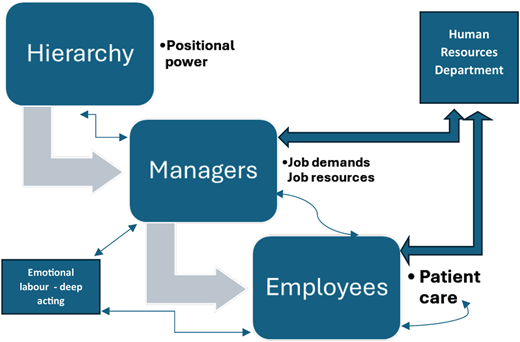
To develop and execute a multi-level approach, HR departments need to take into consideration job demands relative to job resources with a view to mitigating job strain. HR departments have an important role to play in supporting both managers' (who support employees daily) and employees' (through appropriate HRM practices) mental health and wellbeing. HR departments need to understand the intersectionality of mental health and wellbeing challenges for the actors across the organisational levels aligned to the emotional labour and deep acting exercised by actors such as managers and employees (Hochschild, 2022). HRM should design, develop, implement and evaluate support systems to mitigate job strain associated with emotional labour and deep acting that impact on the mental health of managers and employees. Support systems should consider the positional/expert power across the different levels of organisational power that impact on each stakeholder (Demerouti and Bakker, 2023). Managers and employees should be invited to contribute to decision-making and communications that impact on patients. HR departments must also understand job demands and job resources that impact quality of patient care and ensure support systems with adequate staffing, reasonable patient wait times and consideration of patients' perspectives. The following figure (see Figure 3) outlines the structure of the hierarchy, manager, HR departments and employees, interactions between HR departments and managers (responsible for job demands and job resources) and employees (block arrows), and the emotional labour (including deep acting) between parties (represented by narrow arrows) – see Figure 3.
Practical implications
Findings from our study have practical implications for key stakeholders in the allied healthcare sector. Clearly, managers in radiation clinical settings need HR departments to be present and take a more proactive approach to design, develop, implement and evaluate mental health and wellbeing interventions to support employees. HR departments could co-develop multi-level approaches to support managers and employees. We recommend HR practitioners better support the mental health and wellbeing of managers and employees by developing wellbeing strategies, including flexible work arrangements and encouraging inclusive cultures. HRM needs to ensure job resources are adequate to allow employees to work effectively and safely. This includes formalised management policies and practices, having adequate staffing, training and development opportunities, dedicated mental health supports and effective communications between HRM and managers and employees. HR staff should be trained to develop some understanding of the healthcare system and how to deal with the multilevel phenomena in medical radiation practice. HR staff also need to understand the effects of a lack of job resources and support on employees and the subsequent outcomes which can result in deleterious effects on employees and by default on patients. The following table (see Table 2) provides connections between the findings of this study, contributions to practice and more broadly implications for employees and patients.
Limitations and future research
Our study was limited to 50 participants employed in radiation clinical settings across Australia. We encourage future studies to examine of the role of HRM and the processes through which HRM can better support the mental health of employees in the context of medical radiation practice. We recommend future studies apply various quantitative and qualitative methodological approaches to examine the mental health of employees at all radiation clinical settings across the country. We also recommend that academics and HR practitioners work together to build wellbeing strategies that incorporate flexible work arrangements and inclusive work environments across various healthcare sectors. A much broader study might include practices in another country or countries. HR departments could conduct their own research to understand the various levels of job demands impact on managers and employees.
Conclusion
Our study has highlighted the importance of the mental health and wellbeing of employees, including managers and, radiographers and radiation therapists, in the context of clinical settings, delivering medical imaging and radiation therapy. We provided evidence on the complex multi-level needs of all participants of this study around job demands and resources and the impact of emotion labour that appear to have been overlooked by organisations and HRM. Our study found that HR departments do not have a strong presence in clinical settings, and their services are considered by participants to be inadequate. We call for action from organisations to direct HR departments to involve all stakeholders and develop multi-level approaches to support employees and retention strategies. Strategies should build the resilience of managers and employees around their mental health and wellbeing.