Skip to article sections
Purpose

The purpose of this study is to demonstrate the potential of a structured and competency-based instructional design approach for integrating digital and sustainable transitions into higher education curricula under the Industry 5.0 paradigm. By involving students, faculty and industry professionals, the research aims to produce training concepts that are both theoretically robust and practically grounded. This stakeholder-driven approach seeks to enhance the relevance and quality of educational offerings while addressing evolving technological, environmental and societal needs.

Design/methodology/approach

This study adopted a qualitative research design to develop training concepts aligned with Industry 5.0 in higher education. Using a structured research and development process based on the ADDIE instructional design model, the study integrated literature reviews, surveys, focus groups and workshops. The iterative process ensured stakeholder engagement and contextual alignment throughout all design phases.

Findings

The results revealed that implementing a systematic ADDIE-based model enables the effective development of Industry 5.0 training concepts. Aligning learning outcomes with context-specific competencies, practical content and evaluation strategies ensures that the designed programmes are both scalable and impactful.

Originality/value

This study offers a novel and comprehensive application of the ADDIE model tailored to Industry 5.0 in higher education. Its originality lies in addressing the lack of methodological clarity in previous studies by detailing a fully operationalised instructional process. The inclusion of academic and industry stakeholders throughout ensures that the resulting educational concepts are both context-sensitive and practically applicable, contributing significantly to the advancement of future-ready engineering education.

Modern industrial companies face a combination of external pressures stemming from the dual demands of digitalisation and green transitions. The European Commission’s (2021) updated industrial strategy aims to support this shift, emphasising the adoption of smart manufacturing to safeguard Europe’s competitiveness. The development of future-ready engineers equipped to redefine tasks and align skills, competencies, and qualifications with evolving industrial demands is central to this transformation (European Commission, 2021; Zsifkovits et al., 2021).

As education and workforce training have become key drivers of innovation and competitiveness, the vocational education and training sector must evolve to support digital and green transitions and respond to shifting labour market needs. Although this creates opportunities, it also presents challenges in ensuring that the workforce is prepared for the future (Straub et al., 2023). Success in these socioeconomic transitions depends on the development of competencies that transcend technological advances and encompass both organisational structures and human decision-making processes (Lima et al., 2023). Institutions such as the World Economic Forum (2024) highlight the need to prioritise reskilling and upskilling, particularly for engineers, as technology and environmental concerns reshape industries. Strengthening operational management competencies is critical for professionals in manufacturing value chains. These competencies bridge the gap between technical systems and business goals, enabling sustainable problem solving in digitalised environments (Pacher et al., 2024).

Engineering education under Industry 4.0 focused heavily on technology. However, the emergence of Industry 5.0 demands a new synergy between technology and human-centred values (Pacher et al., 2024). Therefore, educational institutions must integrate ethical, sustainable, and humanistic principles to prepare engineers for a resilient and people-focused industrial future (Díaz Lantada, 2020; Gürdür Broo et al., 2022; Leng et al., 2022).

Higher education institutions (HEIs) face the challenge of equipping students with the skills necessary to navigate the complexities of a rapidly evolving industrial landscape. A structured instructional design (ID) model is essential in this regard, as it provides a systematic approach for developing educational programmes that effectively integrate technological advancements, sustainability, and human-centred competencies (Dick, 2009). This ensures that learning outcomes are measurably and effectively achieved, thereby enhancing the quality of education and preparing students for real-life challenges.

In the rapidly evolving landscape of higher education, effective and efficient ID models are essential for creating high-quality learning and teaching materials (Halupa, 2023). HEIs are complex organisations with diverse stakeholders and varying definitions of quality. ID models provide a structured approach for designing, developing, and delivering effective, efficient, and engaging training materials. They ensure that the content has clear objectives, help quickly identify and fix flaws, save time and resources, and foster collaboration between experts. ID boosts engagement by tailoring materials to learners’ needs and preferences and includes ongoing evaluations to refine and improve instruction.

However, IDs must align with the three key components of the learning system: study content, delivery method, and assessment system (Biggs, 1996). According to Biggs (1996), a misalignment between these components can lead to several issues, such as students perceiving their education as unproductive, adopting a superficial approach to learning, and experiencing frustrated expectations. Thus, ID models provide a systematic and structured approach and ensure that each phase of the process is thoroughly planned and executed.

Despite extensive discussions on ID models in the literature, a significant gap persists in respect of the methodologies have not been sufficiently described to support their practical implementation (Abuhassna and Alnawajha, 2023). This gap is particularly evident in the alignment of ID processes with key Industry 5.0 drivers, including technology, sustainability, resilience, and human-centred competencies (Andres et al., 2022; Jaedun et al., 2024). Addressing this gap is crucial for developing effective educational programmes that prepare students for the challenges and opportunities of Industry 5.0.

Furthermore, achieving a constructive alignment in dynamic contexts remains a key challenge for HEIs. In this context, ID offers a systematic approach for aligning learning objectives, instructional methods, and assessments, allowing for continuous refinement and improved learning outcomes (Dick, 2009). ID supports consistent programme development (Abuhassna and Alnawajha, 2023), promotes effective strategy selection, and fosters collaborative and autonomous learning environments (Abdolahi et al., 2021; Chang et al., 2007; Jung et al., 2022).

In addition, ID models enhance motivation and engagement (Vagianou et al., 2021), support the integration of information and communication technologies, and improve student performance (Halupa, 2023; Lee et al., 2017). Various models shaped by learning theory, pedagogy, and context are available (Farres and MacDonald, 2005; Park, 2015). The analysis, design, development, implementation, and evaluation (ADDIE) model remains one of the most widely used (Hsu, 2013; Ngo, 2024; Vagianou et al., 2021).

A recent study compared ADDIE with traditional and emerging models and demonstrated its effectiveness in terms of student satisfaction and academic outcomes (Senadheera et al., 2024). However, its application frequently remains at a conceptual level, with limited translation into practical or procedural approach. Many educators encounter difficulties in operationalising the ADDIE model, largely due to a lack of clear guidance on selecting appropriate model variants, adapting them to specific educational contexts, and implementing concrete, actionable steps (Abuhassna and Alnawajha, 2023).

One of the primary challenges for HEIs is the need to adapt their curricula to incorporate the principles and technologies of Industry 5.0. This requires a shift from traditional teaching methods to innovative approaches that emphasise interdisciplinary learning, problem solving, and critical thinking (Andres et al., 2022; Jaedun et al., 2024). Moreover, HEIs must identify strategies to incorporate the development of Industry 5.0 skills into their programmes. This includes technical as well as soft skills, such as communication, teamwork, and emotional intelligence (Ciolacu et al., 2023).

Industry 5.0 offers opportunities for HEIs to foster innovation and inclusivity, thereby driving sustainability in alignment with the digital and green transitions (Stuchlikova and Marek, 2022; Supriya et al., 2024). In this context, the ADDIE model provides a robust framework to address these challenges (Büth et al., 2020). In the analysis phase, HEIs identify learning needs and align them with Industry 5.0 demands, including transversal competencies (Lambrechts et al., 2017; Zhao et al., 2021). In the design phase, HEIs plan strategies, content, and assessments while engaging stakeholders and integrating problem-based learning (Pacher et al., 2024). In the development phase, HEIs ensure the quality of content through collaboration designed for adaptability and scalability. In the implementation phase, HEIs prepare resources, train instructors, and ensure a supportive environment. Finally, in the evaluation phase, HEIs apply formative and summative assessments and use feedback to refine programmes and align them with societal and industrial needs.

Although some studies have applied the ADDIE model in specific industrial contexts such as intelligent control systems (Yao et al., 2022), comprehensive models tailored to Industry 5.0 are scarce. Analysis phases often lack concrete methodologies (Wilke and Magenheim, 2017), and most research continues to focus on Industry 4.0 or general advanced teaching rather than addressing the unique demands of Industry 5.0 (Boussakssou et al., 2020; Dlamini et al., 2023).

Existing literature on the implementation of the ADDIE model in Industry 5.0 education has a significant gap. Most papers describe ID efforts without providing a detailed methodology for each step of the ADDIE model. Moreover, few studies have examined the use of the ADDIE model in the context of Industry 5.0. Addressing this gap requires developing comprehensive and detailed strategies for each phase of the ADDIE model that are tailored to the unique challenges and opportunities of Industry 5.0 education.

Therefore, this study aimed to develop and implement a structured ID process tailored for higher education to address the emerging challenges of Industry 5.0. This process focused on aligning technology, sustainability, resilience, and human-centred competencies to prepare future engineers and industrial managers for the evolving demands of the industry.

This study posed the following research questions (RQs):

RQ1.

How can ID models be effectively operationalised to design training concepts for Industry 5.0?

RQ2.

How can Industry 5.0 training concepts be implemented to upskill students with competencies aligned with technology, sustainability, resilience, and a human-centred approach?

RQ3.

How can the insights of relevant stakeholders, such as students, professors, and industry experts, be effectively integrated into the design and development of these training concepts?

This study was conducted at the Engineering Faculty of Mondragon University to enrich educational experiences by integrating the ADDIE model. Mondragon University is known for its renowned innovative approach to education, strong university–business cooperation, and commitment to continuous improvement in teaching methodologies (Markuerkiaga et al., 2018).

The participants comprised students enrolled in master’s programmes in supply chain, manufacturing, and logistics management as well as lecturers and professors in telematics and cybersecurity, artificial intelligence (AI), information systems, innovation, organisational model and strategic human resources management, and logistics and productive operations management. The participation of these diverse departments ensured a comprehensive research approach that leveraged expertise from multiple fields to enhance process quality and relevance.

Moreover, professionals from regional companies contributed their expertise in logistics and supply chain management, product design, production development, industrial marketing, and entrepreneurship. Collaboration between academia and industry enriched this study by providing practical insights and fostering innovation.

Questionnaires and focus groups were the primary tools for collecting field data from stakeholders and conducting preliminary analyses.

The research timeline spanned 18 months, from January 2023 to June 2024, and adopted a progressive elaboration approach. This iterative process allowed the project and its phases to evolve dynamically, with new elements and insights incorporated across successive versions. This flexibility enabled the research to adapt to emerging information and refine its focus throughout its duration.

The phases and steps of development were adapted from the 5-phase ADDIE model (Branch, 2010; Dick, 2009; Richey and Klein, 2014). A mixed-methods approach combining quantitative and qualitative techniques was employed at various stages of the training concept development, with multiple instruments distributed across the five main phases (Figure 1).

Figure 1 presents a detailed overview of the elements addressed during each phase of the process. The analysis phase comprised identifying digital and sustainable competencies as well as the challenges of Industry 5.0. A literature review was conducted to identify the challenges of Industry 5.0 and the digital and sustainable competencies needed to address them. The literature review was conducted within the framework of the European ERASMUS + Engineering Excellence for the Mobility Value Chain (EE4M) project and focused on the competencies needed to implement smart and sustainable operations management. The review followed the Preferred Reporting Items for Systematic reviews and Meta-Analyses (PRISMA) approach (Page et al., 2021). The search strategy used terms such as “sustainab*,” “digi*,” “smart*,” “operation and management,” and “skill*” or “competenc*” in the Scopus and Web of Science databases. A total of 105 articles were initially identified, of which 38 articles were finally selected (Supplementary file: “Supplementary Tables”).

Based on this review, an online survey was conducted to assess the identified competencies and themes among three key groups at Mondragon University: university students (n = 73), university professors (n = 15), and industry experts (n = 17). The survey was distributed via email with prior notification. The questionnaire was structured into three sections: transversal, digital, and sustainability-related competencies. This approach ensured that the survey captured the specific needs and perspectives of the local academic and professional communities and reflected the unique context of Mondragon University.

Industry representatives rated the importance of skills for companies and the need for training on a 5-point Likert scale (1 = not important; 5 = very important). Professors and students evaluated how well the curricula addressed these skills according to a 5-point Likert scale (1 = not at all; 5 = very much). In addition, industry professionals assessed the urgency of the training needs on a five-point Likert scale (1 = no immediate need; 5 = urgent need). Cronbach’s alpha exceeded 0.7 across all measures, confirming the reliability of the survey.

After collecting the responses, a data analysis was conducted to prioritise the results. Quantitative data were analysed using descriptive statistics to allow for a clear and concise interpretation of numerical trends and insights into participants’ perspectives. Based on these results, a focus group was conducted with industry experts, comprising a representative from an original equipment manufacturer (namely, automotive) company, one expert in digital applications in industry, one supply chain consultant, one car chain supplier expert, one CEO of a multi-sector company, and one university professor. Finally, a workshop was conducted with students focusing on the future challenges of Industry 5.0. The focus group and workshop aimed to obtain their perspectives on the findings and gather additional inputs. Moreover, qualitative data were analysed using narrative analysis, which helped identify the underlying themes and patterns from the participants’ responses.

Next, the findings were synthesised, and Industry 5.0 competencies and challenges, as well as key content areas of digital and green transformation, were identified and contextualised. In addition, key elements, such as programme level, duration, educational framework, and instructor expertise, were contextualised.

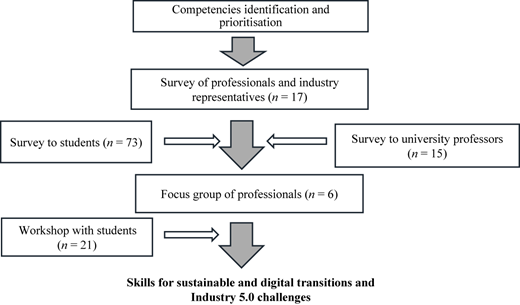
Figure 2 illustrates the process followed for the identification and prioritisation of competencies, along with the number of participants involved in each step.

This groundwork enabled progression to the next phase, which comprised aligning the ID and validating the process. The design phase focused on aligning the ID with the competencies identified in the previous phase. To achieve this, key focus areas for development were selected. Following the selection and adaptation of competencies to the contextual conditions, the training concept was designed based on Biggs’ (1996) constructive alignment framework. This approach ensured that teaching methods and assessment tasks were systematically aligned with the intended learning outcomes, thereby promoting effective and meaningful learning experiences and addressing the identified gaps and needs. This need was analysed by two academic experts in the field, who proposed a series of topics and competencies. Their input was compared through interviews with industrial companies in the region. Potential focus areas were identified and validated through interviews with industry representatives to ensure that they addressed the identified gaps and needs. After finalising them, the course structure and definitions were developed in collaboration with academic experts. This course definition involved outlining the preliminary learning outcomes, assessment tasks, and teaching and learning activities. These elements were then reviewed against the learning outcomes previously defined by the teaching staff to avoid redundancies and ensure coherence within courses and degree programmes. Final validation with academic staff led to the refinement of assessment tasks and teaching and learning activities, ensuring alignment with the learning outcomes for further development.

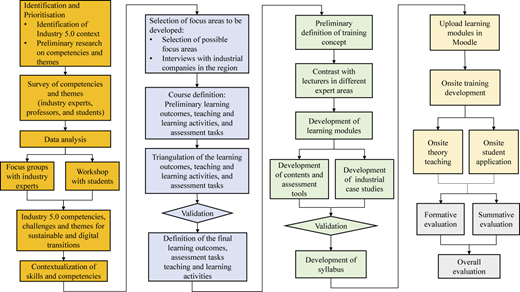
During the development phase, a preliminary version of the training concept was created. The materials were tested by teachers and refined based on their feedback (Figure 3). Once this process was completed, learning modules were developed, including content creation, assessment tools, and case studies based on local industries. In a dedicated session focused on defining the training concept, professors conducted a triangulation process to ensure that the teaching and learning activities and assessment tasks were fully aligned with the established learning outcomes.

For the validation, the proposed course design was contrasted at the following levels:

  1. Master’s degree coordinating committee: The goal of this contrast was to ensure that the proposal complied with the regulatory conditions. The duration, content, mode of teaching, relationships with other courses, and prerequisite conditions were considered adequate, considering the overall master’s curriculum.

  2. Academic committee of the university: This was conducted to ensure that the regulatory academic conditions were met and to submit the presentation to government institutions for approval.

  3. Ministry of Education: The final course design was validated and approved by the highest government education body.

After review and validation, a course syllabus was developed. During the development phase, two instructional designers collaborated with lecturers from various academic departments to create a 3-block training concept.

During the implementation phase, the modules were uploaded to an online platform, allowing students to continuously access the learning materials. In addition, an on-site training session was conducted, incorporating theoretical lectures alongside the application of case studies.

Finally, during the evaluation phase, the effectiveness of the curriculum was assessed using summative evaluations. The data analysis measured the effects on the students’ knowledge, skills, and attitudes and identified areas for improvement. Various methods were employed to assess improvements in students’ abilities and mastery of knowledge and skills. The primary tool used for evaluation was a questionnaire completed by lecturers and students that included both quantitative and qualitative components. Students rated various aspects, such as the content and applicability of the subject, organisation, teaching materials and resources, work of the teaching staff, and personal dedication of students outside the classroom. Quantitative data were collected through a five-point Likert scale to assess various aspects of the course, including its content and applicability, organisational structure, instructional materials and didactic media, the instructor’s performance, and the students’ attitudes and personal engagement. Additionally, open-ended questions were employed to gather qualitative insights, inviting participants to highlight positive aspects and provide suggestions for improvement, thereby enabling a more comprehensive understanding of their perspectives. Learner performance was assessed using a five-level categorisation scheme by comparing the percentage ratio between the achieved and expected scores (Figure 3). For the lower-performing categories, the training concept design was revised to enhance the learning outcomes.

The review highlighted that the integration of smart technologies, such as AI, the Internet of Things (IoT), and cyber-physical systems, significantly reshaped operations management. These technologies enable real-time data acquisition, enhance analytics, and promote automation, thereby fostering efficient, adaptive, and sustainable practices (Fujimoto et al., 2023; Lobova and Bogoviz, 2019; Woschank et al., 2021).

Digital competencies, such as data management (Brock and von Wangenheim, 2019; Umachandran et al., 2019), data processing (Lyytinen et al., 2023), statistics (Blomster and Koivumäki, 2022; Konanahalli et al., 2022), cybersecurity (Behie et al., 2023; Suhasini and Santhosh Kumar, 2019), and information and communication technology (ICT) infrastructure applications (Ajibade and Mutula, 2020), are essential for navigating this complex technological landscape. Furthermore, competencies in digital strategy and business development support the alignment of technological change with strategic organisational goals (Brock and von Wangenheim, 2019; Nadeem et al., 2018).

The importance of transversal competencies was underscored. These are skills that bridge digital and sustainable domains and enable individuals to operate in diverse contexts. Key examples are decision-making (Gupta et al., 2022; Török, 2020), target orientation (Tezcan and Kuleyin, 2019), innovation competencies (Estrada and Reyes Álvarez, 2023; Huq et al., 2016), critical thinking (Lyytinen et al., 2023; Zhu et al., 2020), resilience (Behie et al., 2023), and information management (Fan and Li, 1998).

Participants acknowledged that Industry 5.0 reshaped the expectations of workforce competencies by integrating human-centric innovation, sustainable value creation, and digital infrastructure. For instance, smart solutions, such as digital twins, green supply chains, and circular economy models, require a workforce that possesses technical and digital skills as well as the ability to make strategic, sustainability-focused decisions (Gandomkari et al., 2023).

The review indicates that developing integrated competency profiles is critical for preparing professionals for the challenges of a rapidly evolving operations management landscape (Pacher et al., 2024).

Surveys

Table 1 presents the survey results regarding the importance of skills, curriculum alignment, and the need for training.

The survey results revealed that industry representatives prioritised training in digital competencies over other areas. Previous studies have identified the alignment of curricula with the digital skills required in the industry as a significant area of concern (Ramakrishnan et al., 2023). This aligns with the findings of Brezeanu and Lazarou (2020) and Salminen et al. (2024), who argued that companies seeking a leading role in the AI era must prioritise skill development and collaborate with universities to align their curricula with evolving industry demands. Although training in transversal- and sustainability-related skills was considered important, it was perceived as less urgent than training in digital skills. However, the significance of transversal skills, which are highly valued by the industry, must be emphasised.

Both professors and students perceived a relatively low alignment between the curriculum and digital skills, with ratings below 4. Students rated curriculum alignment for digital skills lower than that for transversal and sustainability-related skills, whereas professors rated curriculum alignment for digital skills lower than that for sustainability skills. This suggests that academic institutions have not yet fully integrated the latest digital competencies required by the industry into their curricula.

Table 2 summarises the mean scores of the evaluations of competencies' importance, curriculum alignment, and training needs.

The survey results revealed several opportunities for improvement. Industry representatives highlighted the relevance of digital skills, particularly in applying ICT infrastructure, new digital technologies such as AI and IoT, and data management, as well as management, interpersonal, cognitive, and adaptability skills. Students stated that managerial, interpersonal, and cognitive skills were well covered in the curricula, whereas digital skills were insufficiently addressed, prompting calls for additional training. Perceptions among students were corroborated by industry representatives, who identified digital competencies as the most urgently needed area for training, highlighting a clear opportunity for development.

A notable difference was observed in the perceptions of students and professors regarding curriculum coverage. Although both groups agreed regarding curriculum coverage for managerial skills, students rated the curriculum coverage of interpersonal and cognitive skills higher than professors. Conversely, professors rated the curriculum coverage of digital and sustainability skills higher than students. In addition, industry representatives did not prioritise sustainability skills as an urgent training need. This may indicate a misalignment between industry demands and academic priorities.

Focus group

The focus group confirmed the necessity of aligning digital and green transformation with business strategy and financial success. The participants emphasised the importance of developing personal, technological, and environmental skills to overcome economic challenges and resistance to change. The focus group highlighted the significance of digital skills for organisational digital transformation and operational efficiency. Industry professionals stated that digital skills affected career progression and workforce adaptability, whereas professors stressed the need to incorporate digital skills into curricula to support student development. Consequently, upskilling and reskilling strategies should align with these evolving demands.

Furthermore, professionals noted that the greatest impact of these transitions resulted from shifts in operational processes, ultimately transforming the methods of value creation among businesses. The main challenges identified were high implementation costs, limited knowledge of new technologies and their applications, difficulty in finding skilled workers, and employee resistance to change.

Workshop

In the workshop, students emphasised that automation, AI, and IoT were essential for efficient and resilient operations; cleaner production and renewable energy served as pillars of future factories; and strong cybersecurity measures were crucial for companies transitioning to digital-first operations. Moreover, they identified digital proficiency, problem-solving, and adaptability as indispensable competencies.

According to the results obtained in the analysis phase and considering the strong emphasis on digital competencies during the workshop, prioritised skills were selected based on the questionnaire responses (Table 3). The selection criteria focused on skills identified as having the greatest need for training in the industry, with scores of 4 out of 5 or higher. The competency labelled “cybersecurity skills,” which received a rating slightly below average (3.94 out of 4.0), was included due to its integral role in the application of information and communication technologies and the perception of its importance. The conclusions of this process were similar to those of Bohashko and Bohashko (2024).

Contextual elements considered

After identifying the competencies requiring development, the contextual elements that influenced their integration into the learning process were considered, namely:

  1. The programme level (e.g. degree, master’s, secondary, or vocational training) determined the depth of competency development, aligning objectives with students’ prior knowledge and desired proficiency;

  2. Training concepts must complement the broader educational framework, with proper sequencing of prerequisites;

  3. Programme duration limited competency development (e.g. the programme allocated three European Credit Transfer and Accumulation System (ECTS) credits, affecting the proficiency achieved);

  4. Available equipment and instructor expertise must guide the clustering of knowledge areas requiring similar resources;

  5. Curricula must promote interdisciplinary connections to avoid compartmentalising competencies within individual courses;

  6. The educational process model included face-to-face (presential), virtual (online), and hybrid (blended) models.

The treatment of the competencies selected for the development of the training concept required adaptation to the students’ levels and expected objectives regarding the depth of these competencies. This training concept was aimed at master’s level students, and the degree of depth established as an objective is presented in Table 3 The terms used to articulate the levels of the selected competencies were derived from Bloom’s taxonomy (Anderson and Krathwohl, 2001).

The core skills addressed in the course were understanding and applying new digital technologies (e.g. AI, IoT, and cyber-physical systems), managing and processing data with statistical foundations, and applying ICT architecture and cybersecurity tools. Future engineers were trained to develop digital strategies and innovative business models to bridge the gap between traditional and Industry 4.0 practices. To avoid compartmentalisation, an integrative “Challenge” module consolidated competencies across subjects, fostering an interdisciplinary approach, as recommended by Drake and Reid (2020). Transversal skills, such as adaptability, strategic thinking, and human-centric decision-making, were also emphasised to ensure that students considered sustainable and resilient impacts. The training model was face-to-face, with competencies tailored to three 3 ECTS credit course durations, thereby balancing the program’s overall structure and resource requirements.

The analysis phase concluded that the involvement of relevant stakeholders in the process of designing the training concept for Industry 5.0 could be effectively integrated, adding value to this phase (RQ3).

A preliminary definition of learning outcomes was developed based on the identified competencies and Bloom’s taxonomy (Anderson and Krathwohl, 2001). Learning outcomes were defined as the process of designing an environment that fosters activities aimed at achieving specific educational goals (Biggs, 1996). Learning outcomes were required to demonstrate students’ capacity to achieve a certain competency after a certain period.

Table 4 presents the defined learning outcomes of the course.

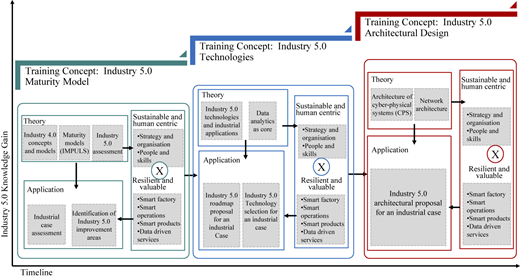
During the development phase, two instructional designers collaborated with lecturers from various academic departments to create a 3-block training concept worth three ECTS credits. This training concept incorporated six key dimensions from the IMPULS model (Grufman et al., 2020), emphasising human-centric and sustainable approaches, value orientation, and resilience for Industry 5.0. The training was structured into three sequential blocks, each building on the previous block, to progressively enhance the students’ competencies and skills through practical application in an industrial case (Figure 4).

The first block, Industry 5.0 maturity model, focused on the IMPULS model. The contents developed and taught included Industry 4.0 concepts and models, maturity models, and assessment, highlighting the factors of strategy, organisation, sustainability, and resilience towards an Industry 5.0 approach. This block also featured two application activities: an industrial case assessment and the identification of improvement areas. Both activities were related to a real industrial case that was developed throughout the training. The second block, Industry 5.0 technologies, concentrated on the training concept regarding technologies. The content covered technologies and industrial applications, considering the impacts on strategy, organisation, people skills, sustainability, and resilience, with data analytics as a core component. This block included two application activities: a roadmap proposal and technology selection for an industrial case. Both activities were applied to the developed industrial case. Finally, the third block, Industry 5.0 architectural design, focused on the architecture of cyber-physical systems and network architecture, culminating in an architectural proposal for the developed industrial case.

This structured approach ensured that the training was comprehensive, practical, and aligned with the latest advancements in Industry 4.0 and 5.0, thereby providing students with the necessary skills and knowledge to excel in their fields.

At this stage, we considered that the operationalisation of the training concept for Industry 5.0 was achieved (RQ1).

In the implementation phase, we focused on transforming a meticulously developed training plan into actions. This phase involved the deployment of comprehensive on-site training designed to be intensive and completed over six weeks. During this phase, we developed comprehensive on-site teaching using the Moodle Learning Management System (LMS), integrating pre-class, in-class, and post-class stages. During the pre- and in-class stages, lecturers used task-driven teaching to present and review relevant knowledge points. They published courseware on the Moodle platform for students to learn. Students could complete their learning using various methods, such as consulting learning materials, asking lecturers for advice, searching for information online, and conducting practical observations.

During the in-class teaching stage, a combination of case analysis and relevant regional industrial examples were analysed and contextualised. Lecturers selected industrial cases for discussion based on the industrial challenges and content that the students had learned independently. Through analogy with cases, Industry 4.0 and 5.0 knowledge points were organically connected to establish a complete knowledge system. Furthermore, students’ enthusiasm for learning and practical skills were enhanced through the application of an industrial case study. In the post-class learning stage, students received feedback on their practical applications.

This structured approach ensured that the training was comprehensive, practical, and aligned with the latest advancements in Industry 4.0 and 5.0. Throughout the 6-week intensive training (75 h of student workload), lecturers provided on-demand support to students, facilitating their learning process and ensuring that they could effectively apply the concepts that they were taught.

The assessment results demonstrated that 4 out of 5 students performed excellently on the questionnaire that evaluated their theoretical knowledge, whereas the other student’s performance was considered good. The performance of all the students in the application to the industrial case was excellent.

The questionnaire results reflected high satisfaction with most indicators: content and its applicability received an average score of 4.5 out of 5, whereas organisation, materials, and teaching resources achieved the highest score of 5. The aspect that received a relatively low score was personal dedication outside of teaching hours, with an average score of 3.5. These results reinforced the effectiveness of the pedagogical model, as they suggested that most learning occurred efficiently during classroom sessions, reducing the need for significant additional effort on the part of students outside class hours.

In addition, face-to-face interviews with lecturers and students shed light on the effectiveness of teaching implementation, reflecting various aspects of the teaching design. This continuous feedback loop allowed for ongoing improvement of the training model, ensuring that the educational experience was continuously enhanced. This evaluation method helped promptly identify problems and promoted continuous improvement and enhancement of the training model.

The results of the implementation and evaluation confirmed that Industry 5.0 training concepts had been successfully implemented to upskill students’ competencies (RQ2).

The operationalisation of the ADDIE model in the context of Industry 5.0 is a challenge that many HEIs should address to ensure stakeholder satisfaction and engagement and enhance the quality of the services they provide to society. Future engineers must integrate knowledge into sustainability, resilience, and a human-centred perspective while also developing competencies in digital tools and skills.

The process developed in this study ensured that each phase of the ID process (analysis, design, development, implementation, and evaluation) was meticulously planned and executed. Furthermore, the integration of stakeholder perspectives, including those of students, professors, and industry professionals, enhanced the relevance and applicability of training concepts. The results of the practical application of this process were highly positive. All participating stakeholders, including students, professors, and industry experts, rated the training experience favourably. Students demonstrated significant improvements in their competencies and skills, whereas professors highlighted the coherence and effectiveness of the process of teaching complex concepts. Industry experts reported the relevance and applicability of training concepts in real-world contexts.

This study highlights the importance of adopting an integrative and competency-centred approach to analysing educational gaps, defining learning outcomes, and aligning these with teaching and learning activities and evaluation strategies. Identifying educational gaps from a skills and challenges perspective ensures that training programs remain relevant and effective. Furthermore, this study emphasises the value of stakeholder participation in the ID process, highlighting the importance of diverse perspectives in creating comprehensive and practical training concepts.

This study demonstrated that the ADDIE ID model can be effectively operationalised to design training concepts for Industry 5.0 by meticulously planning and executing each phase. The implementation phase demonstrated that Industry 5.0 training concepts could be effectively delivered through a combination of online and on-site training sessions, integrating theoretical lectures with practical applications. Moreover, this study highlighted the importance of involving diverse stakeholders in the ID process. By incorporating the insights and perspectives of students, professors, and industry professionals, training concepts were made more relevant and applicable to real-life contexts.

The implications of our findings extend across several critical domains. First, this study highlights the need for HEIs to adopt structured pedagogical design models to effectively integrate Industry 5.0 principles into their curricula. This approach will ensure that students are equipped with competencies necessary to navigate the complexities of rapidly evolving industrial landscapes. Second, the results underline the importance of aligning educational programmes with the key drivers of Industry 5.0, such as technology, sustainability, resilience, and human-centred skills. This alignment is crucial for developing relevant and effective educational materials. Third, this study demonstrates the value of involving various stakeholders, including students, teachers, and industry professionals, in the training design process. Their ideas and perspectives are essential for creating practical and applicable training concepts for real-life contexts. Fourth, this study reveals that the iterative nature of the ADDIE model allows for the continual refinement and improvement of educational programmes. This ensures that training concepts are kept up-to-date with technological advances and evolving industry needs. Finally, the findings indicate that the structured approach of the ADDIE model facilitates the development of scalable and adaptable educational programmes. This is particularly important for HEIs that aim to prepare students for the dynamic and interdisciplinary nature of Industry 5.0.

This study has several limitations. First, the reliance on qualitative data stemming from the number of participants and the focus on a single case within one institution and country limited the generalisability of our findings. In addition, the dual role of the researchers in the design and implementation phases may have introduced a confirmation bias that could have influenced the observed results. To address these limitations, future research should include a diverse group of participants from various institutions and industries and use independent evaluators to assess the effectiveness of training concepts. Also, the continuous evolution of technology requires educational programmes to be continually updated, presenting an additional challenge in terms of how training concepts can be effectively updated and scaled. Future research could explore the application of the ADDIE model in a variety of contexts and educational institutions to broaden the understanding of its effectiveness and adaptability. Furthermore, investigating adapted versions of the model tailored to specific industry sectors and training levels would provide valuable insights into its practical utility and contextual relevance.

The supplementary material for this article can be found online.

Abdolahi
,
N.
,
Ahmadabadi
,
M.R.N.
,
Qavam
,
S.E.
,
Aliabadi
,
K.
and
Asgari
,
M.
(
2021
), “
Instructional design model based on control-value theory of achievement emotions and its effectiveness on academic achievement motivation and self-regulated learning
”,
Journal of Payavard Salamat
, Vol. 
15
No. 
1
, pp. 
84
-
97
.
Abuhassna
,
H.
and
Alnawajha
,
S.
(
2023
), “
Instructional design made easy! Instructional design models, categories, frameworks, educational context, and recommendations for future work
”,
European Journal of Investigation in Health, Psychology and Education, MDPI
, Vol. 
13
No. 
4
, pp. 
715
-
735
, doi: .
Ajibade
,
P.
and
Mutula
,
S.M.
(
2020
), “
Promoting SMEs effectiveness through innovative communication strategies and business-IT alignment
”,
Problems and Perspectives in Management
, Vol. 
18
No. 
3
, pp. 
233
-
244
, doi: .
Anderson
,
L.W.
and
Krathwohl
,
D.R.
(
2001
),
A Taxonomy for Learning, Teaching, and Assessing : A Revision of Bloom's Taxonomy of Educational Objectives
, (Complete ed) ,
Longman
.
Andres
,
B.
,
Sempere-Ripoll
,
F.
,
Esteso
,
A.
and
Alemany
,
M.D.M.E.
(
2022
), “
Mapping between industry 5.0 and education 5.0
”, Vol. 
1
, pp. 
2921
-
2926
, doi: .
Behie
,
S.W.
,
Pasman
,
H.J.
,
Khan
,
F.I.
,
Shell
,
K.
,
Alarfaj
,
A.
,
El-Kady
,
A.H.
and
Hernandez
,
M.
(
2023
), “
Leadership 4.0: the changing landscape of industry management in the smart digital era
”,
Process Safety and Environmental Protection
, Vol. 
172
, pp. 
317
-
328
, doi: .
Biggs
,
J.
(
1996
), “
Enhancing teaching through constructive alignment
”,
Higher Education
, Vol. 
32
No. 
3
, pp. 
347
-
364
, doi: .
Blomster
,
M.
and
Koivumäki
,
T.
(
2022
), “
Exploring the resources, competencies, and capabilities needed for successful machine learning projects in digital marketing
”,
Information Systems and e-Business Management
, Vol. 
20
No. 
1
, pp. 
123
-
169
, doi: .
Bohashko
,
I.
and
Bohashko
,
O.
(
2024
), “
Development of organisational competencies during transition and adaptation to industry 4.0
”,
Proceedings of the International Scientific and Practical Conference
, Vol. 
3
, pp. 
34
-
38
, doi: .
Boussakssou
,
M.
,
Hssina
,
B.
and
Erittali
,
M.
(
2020
), “
Towards an adaptive E-learning system based on Q-learning algorithm
”,
Procedia Computer Science
, Vol. 
170
, pp. 
1198
-
1203
, doi: .
Branch
,
R.M.
(
2010
),
Instructional Design: the ADDIE Approach, Instructional Design: the ADDIE Approach
,
Springer US
, doi: .
Brezeanu
,
T.
and
Lazarou
,
E.
(
2020
), “
Alignment between engineering curriculum and skills development for industry 4.0
”, Vol. 
2
, pp. 
328
-
334
, doi: .
Brock
,
J.K.-U.
and
von Wangenheim
,
F.
(
2019
), “
Demystifying AI: what digital transformation Leaders can teach You about realistic artificial intelligence
”,
California Management Review
, Vol. 
61
No. 
4
, pp. 
110
-
134
, doi: .
Büth
,
L.
,
Blume
,
S.
,
Posselt
,
G.
and
Herrmann
,
C.
(
2018
), “
Training concept for and with digitalization in learning factories: an energy efficiency training case
”,
Procedia Manufacturing
, Vol. 
23
, pp. 
171
-
176
, doi: .
Büth
,
L.
,
Juraschek
,
M.
,
Sangwan
,
K.S.
,
Herrmann
,
C.
and
Thiede
,
S.
(
2020
), “
Integrating virtual and physical production processes in learning factories
”,
Procedia Manufacturing
, Vol. 
45
, pp. 
121
-
127
, doi: .
Chang
,
S.-P.
,
Chang
,
K.-E.
,
Sung
,
Y.-T.
and
Chen
,
M.-T.
(
2007
), “
Using collaborative instructional design model to develop multimedia coursewares for training e-learning instructional designers
”,
15th International Conference on Computers in Education: Supporting Learning Flow through Integrative Technologies, ICCE 2007
.
Ciolacu
,
M.I.
,
Alves
,
G.R.
,
Terkowsky
,
C.
,
Zoubi
,
A.Y.
,
Boettcher
,
K.E.R.
,
Pozzo
,
M.I.
and
Kist
,
A.A.
(
2023
), “
Developing future skills in engineering education for industry 5.0: enabling technologies in the age of digital transformation and green transition
”, pp. 
1019
-
1031
, doi: .
Díaz Lantada
,
A.
(
2020
), “
Engineering education 5.0: continuously evolving engineering education
”,
International Journal of Engineering Education
, Vol. 
36
No. 
6
, pp. 
1814
-
1832
.
Dick
,
W.C.L.
and
C.J.
(
2009
), “The systematic design of instruction”, in
Pearson Higher Education Inc.
, (9th ed.) ,
Upper Saddle River, NJ
.
Dlamini
,
N.Z.
,
Mpofu
,
K.
,
Ramatsetse
,
B.
and
Makinde
,
O.
(
2023
), “
Immersive virtual work integrated learning: a scoping review
”,
Procedia CIRP
, Vol. 
118
, pp. 
1044
-
1049
, doi: .
Drake
,
S.M.
and
Reid
,
J.L.
(
2020
), “
21st century competencies in light of the history of integrated curriculum
”,
Frontiers in Education
, Vol. 
5
, 122, doi: .
Estrada
,
S.
and
Reyes Álvarez
,
J.
(
2023
), “
Conclusions: the challenge towards the future is digital and sustainable transformations from a systemic perspective in a changing COVID world
”,
Digital and Sustainable Transformations in a Post-COVID World
, pp. 
475
-
502
, doi: .
European Commission
(
2021
),
New Industrial Strategy: Building a Stronger Single Market for Europe's Recovery
,
Brussels
.
Fan
,
J.
and
Li
,
D.
(
1998
), “
An overview of data mining and knowledge discovery
”,
Journal of Computer Science and Technology
, Vol. 
13
No. 
4
, pp. 
348
-
368
, doi: .
Farres
,
L.G.
and
MacDonald
,
C.J.
(
2005
), “Activity theory and context: an understanding of the development of constructivist instructional design models”, in
Managing Learning in Virtual Settings: The Role of Context
,
IGI Global
, pp. 
164
-
181
, doi: .
Fujimoto
,
Y.
,
Kaneko
,
A.
,
Iino
,
Y.
,
Ishii
,
H.
and
Hayashi
,
Y.
(
2023
), “
Challenges in smartizing operational management of functionally-smart inverters for distributed energy resources: a review on machine learning aspects
”,
Energies
, Vol. 
16
No. 
3
, p.
1330
, doi: .
Gandomkari
,
H.
,
Mohammadi
,
N.
and
Rezghirostami
,
A.
(
2023
), “
Prioritizing factors affecting green human resources management, using fuzzy network analysis in the organization
”,
International Journal of Human Capital in Urban Management
, Vol. 
8
No. 
4
, pp. 
573
-
584
, doi: .
Grufman
,
N.
,
Lyons
,
S.
and
Sneiders
,
E.
(
2020
), “
Exploring readiness of SMEs for industry 4.0
”,
Complex Systems Informatics and Modeling Quarterly
, No. 
25
, pp. 
54
-
86
, doi: .
Gupta
,
A.
,
Singh
,
R.K.
and
Gupta
,
S.
(
2022
), “
Developing human resource for the digitization of logistics operations: readiness index framework
”,
International Journal of Manpower
, Vol. 
43
No. 
2
, pp. 
355
-
379
, doi: .
Gürdür Broo
,
D.
,
Kaynak
,
O.
and
Sait
,
S.M.
(
2022
), “
Rethinking engineering education at the age of industry 5.0
”,
Journal of Industrial Information Integration
, Vol. 
25
, p.
100311
, doi: .
Halupa
,
C.
(
2023
), “Traditional and emerging instructional design models”, in
The Impact and Importance of Instructional Design in the Educational Landscape
,
IGI Global
, pp. 
228
-
262
, doi: .
Hsu
,
C.-L.
(
2013
), “
Investigating feedbacks in instructional design model using weak tie approach
”,
Lecture Notes in Computer Science (Including Subseries Lecture Notes in Artificial Intelligence and Lecture Notes in Bioinformatics)
, Vol. 
8083
, pp. 
549
-
561
, doi: .
Huq
,
F.A.
,
Chowdhury
,
I.N.
and
Klassen
,
R.D.
(
2016
), “
Social management capabilities of multinational buying firms and their emerging market suppliers: an exploratory study of the clothing industry
”,
Journal of Operations Management
, Vol. 
46
No. 
1
, pp. 
19
-
37
, doi: .
Jaedun
,
A.
,
Nurtanto
,
M.
,
Mutohhari
,
F.
,
Saputro
,
I.N.
and
Kholifah
,
N.
(
2024
), “
Perceptions of vocational school students and teachers on the development of interpersonal skills towards Industry 5.0
”,
Cogent Education
, Vol. 
11
No. 
1
, 2375184, doi: .
Jung
,
E.
,
Lim
,
R.
and
Kim
,
D.
(
2022
), “
A schema-based instructional design model for self-paced learning environments
”,
Education Sciences, MDPI
, Vol. 
12
No. 
4
, p.
271
, doi: .
Konanahalli
,
A.
,
Marinelli
,
M.
and
Oyedele
,
L.
(
2022
), “
Drivers and challenges associated with the implementation of Big data within U.K. Facilities management sector: an exploratory factor analysis approach
”,
IEEE Transactions on Engineering Management
, Vol. 
69
No. 
4
, pp. 
916
-
929
, doi: .
Lambrechts
,
W.
,
Verhulst
,
E.
and
Rymenams
,
S.
(
2017
), “
Professional development of sustainability competences in higher education
”,
International Journal of Sustainability in Higher Education
, Vol. 
18
No. 
5
, pp. 
697
-
714
, doi: .
Lee
,
J.
,
Lim
,
C.
and
Kim
,
H.
(
2017
), “
Development of an instructional design model for flipped learning in higher education
”,
Educational Technology Research and Development
, Vol. 
65
No. 
2
, pp. 
427
-
453
, doi: .
Leng
,
J.
,
Sha
,
W.
,
Wang
,
B.
,
Zheng
,
P.
,
Zhuang
,
C.
,
Liu
,
Q.
,
Wuest
,
T.
,
Mourtzis
,
D.
and
Wang
,
L.
(
2022
), “
Industry 5.0: prospect and retrospect
”,
Journal of Manufacturing Systems
, Vol. 
65
, pp. 
279
-
295
, doi: .
Lima
,
B.F.
,
Neto
,
J.V.
,
Santos
,
R.S.
and
Caiado
,
R.G.G.
(
2023
), “
A socio-technical framework for lean project management implementation towards sustainable value in the digital transformation context
”,
Sustainability (Switzerland)
, Vol. 
15
No. 
3
, p.
1756
, doi: .
Lobova
,
S.V.
and
Bogoviz
,
A.V.
(
2019
), “
Embracing artificial intelligence and digital Personnel to create high-performance Jobs in the cyber economy
”, pp. 
169
-
174
, doi: .
Lyytinen
,
K.
,
Topi
,
H.
and
Tang
,
J.
(
2023
), “
MaCuDE IS task Force phase II Report: Views of industry Leaders on Big data analytics and AI
”,
Communications of the Association for Information Systems
, Vol. 
52
, pp. 
429
-
464
, doi: .
Markuerkiaga
,
L.
,
Igartua
,
J.I.
and
Errasti
,
N.
(
2018
), “
A performance-based taxonomy of entrepreneurial universities
”,
International Journal of Technology Management
, Vol. 
77
Nos
1/2/3
, p.
57
, doi: .
Nadeem
,
A.
,
Abedin
,
B.
,
Cerpa
,
N.
and
Chew
,
E.
(
2018
), “
Editorial: digital transformation and digital business strategy in electronic Commerce - the role of organizational capabilities
”,
Journal of Theoretical and Applied Electronic Commerce Research
, Vol. 
13
No. 
2
, pp. 
I
-
VIII
, doi: .
Ngo
,
V.T.
(
2024
), “
Applying the engineering design process to teach the physics course for engineering students using the flipped classroom combined with an instructional design model
”,
Journal of Research in Innovative Teaching and Learning
, doi: .
Pacher
,
C.
,
Woschank
,
M.
,
Zunk
,
B.M.
and
Gruber
,
E.
(
2024
), “
Engineering education 5.0: a systematic literature review on competence-based education in the industrial engineering and management discipline
”,
Production and Manufacturing Research
, Vol. 
12
No. 
1
, 2337224, doi: .
Page
,
M.J.
,
McKenzie
,
J.E.
,
Bossuyt
,
P.M.
,
Boutron
,
I.
,
Hoffmann
,
T.C.
,
Mulrow
,
C.D.
,
Shamseer
,
L.
,
Tetzlaff
,
J.M.
,
Akl
,
E.A.
,
Brennan
,
S.E.
,
Chou
,
R.
,
Glanville
,
J.
,
Grimshaw
,
J.M.
,
Hróbjartsson
,
A.
,
Lalu
,
M.M.
,
Li
,
T.
,
Loder
,
E.W.
,
Mayo-Wilson
,
E.
,
McDonald
,
S.
,
McGuinness
,
L.A.
,
Stewart
,
L.A.
,
Thomas
,
J.
,
Tricco
,
A.C.
,
Welch
,
V.A.
,
Whiting
,
P.
and
Moher
,
D.
(
2021
), “
The PRISMA 2020 statement: an updated guideline for reporting systematic reviews
”,
The BMJ
, Vol. 
372
, n71, doi: .
Park
,
K.
(
2015
), “
Instructional design models for blended learning in engineering education
”,
International Journal of Engineering Education
, Vol. 
31
No. 
2
, pp. 
476
-
485
.
Ramakrishnan
,
M.
,
Gregor
,
S.
,
Shrestha
,
A.
and
Soar
,
J.
(
2023
), “
Achieving industry-aligned education through digital-commons: a case study
”,
Journal of Computer Information Systems
, Vol. 
63
No. 
4
, pp. 
950
-
964
, doi: .
Richey
,
R.C.
and
Klein
,
J.D.
(
2014
),
Design and Development Research
,
Routledge
, doi: .
Salminen
,
K.
,
Hautamäki
,
P.
and
Jähi
,
M.
(
2024
), “
Aligning industry needs and education: unlocking the potential of AI via skills
”,
2024 Portland International Conference on Management of Engineering and Technology (PICMET)
, pp. 
1
-
10
, doi: .
Senadheera
,
V.V.
,
Ediriweera
,
D.S.
and
Rupasinghe
,
T.P.
(
2024
), “
Instructional design models for digital learning in higher education — a scoping review
”,
Journal of Learning for Development
, Vol. 
11
No. 
1
, pp. 
15
-
26
, doi: .
Straub
,
L.
,
Hartley
,
K.
,
Dyakonov
,
I.
,
Gupta
,
H.
,
van Vuuren
,
D.
and
Kirchherr
,
J.
(
2023
), “
Employee skills for circular business model implementation: a taxonomy
”,
Journal of Cleaner Production
, Vol. 
410
, 137027, doi: .
Stuchlikova
,
L.
and
Marek
,
J.
(
2022
), “
Academy Phoenix: will universities reborn in industry 5.0 era, or will they lie down in ashes?
”,
2022 20th International Conference on Emerging ELearning Technologies and Applications (ICETA)
, pp. 
613
-
619
, doi: .
Suhasini
,
B.
and
Santhosh Kumar
,
N.
(
2019
), “
Emerging trends and future perspective of human resource reskilling in higher education
”,
International Journal of Recent Technology and Engineering
, Vol. 
8
No. 
2S4
, pp. 
351
-
353
, doi: .
Supriya
,
Y.
,
Bhulakshmi
,
D.
,
Bhattacharya
,
S.
,
Gadekallu
,
T.R.
,
Vyas
,
P.
,
Kaluri
,
R.
,
Sumathy
,
S.
,
Koppu
,
S.
,
Brown
,
D.J.
and
Mahmud
,
M.
(
2024
), “
Industry 5.0 in smart education: concepts, applications, challenges, opportunities, and future Directions
”,
IEEE Access
, Vol. 
12
, pp. 
81938
-
81967
, doi: .
Tezcan
,
Ö.
and
Kuleyin
,
B.
(
2019
), “
Academicians Viewpoint on Port managers prior competencies in terms of environmental sustainability performance of container Port enterprises in Turkey
”,
Journal of ETA Maritime Science
, Vol. 
7
No. 
4
, pp. 
280
-
292
, doi: .
Török
,
L.
(
2020
), “
Industry 4.0 from a few aspects, in particular in respect of the decision making of the management
”,
International Review of Applied Sciences and Engineering
, Vol. 
11
No. 
2
, pp. 
140
-
146
, doi: .
Umachandran
,
K.
,
Corte
,
V.D.
,
Amuthalakshm
,
P.
,
Ferdinand-James
,
D.
,
Said
,
M.M.T.
,
Sawicka
,
B.
,
Jurcic
,
I.
,
Mohan
,
T.R.
,
Aravind
,
V.R.
and
Amuthalakshmi
,
P.
(
2019
), “
Designing learning-skills towards industry 4.0
”,
World Journal on Educational Technology: Current Issues
, Vol. 
11
No. 
2
, pp. 
150
-
161
, doi: .
Vagianou
,
M.
,
Paraskeva
,
F.
,
Karampa
,
V.
and
Bouta
,
H.
(
2021
), “Applying motivational techniques and gamified elements on instructional design models for effective instruction in secondary education”, in
Uden
,
L.
and
Liberona
,
D.
(Eds),
Communications in Computer and Information Science
,
Springer Science and Business Media Deutschland GmbH
, Vol. 
1428
, pp. 
111
-
123
, doi: .
Wilke
,
A.
and
Magenheim
,
J.
(
2017
), “
Requirements analysis for the design of workplace-integrated learning scenarios with mobile devices: mapping the territory for learning in industry 4.0
”,
2017 IEEE Global Engineering Education Conference (EDUCON)
, pp. 
476
-
485
, doi: .
World Economic Forum
(
2024
), “
Shaping the future of learning : the role of AI in education 4.0 : insight Report
”.
Woschank
,
M.
,
Kaiblinger
,
A.
and
Miklautsch
,
P.
(
2021
), “
Digitalization in industrial logistics: contemporary evidence and future Directions
”,
Proceedings of the International Conference on Industrial Engineering and Operations Management
, doi: .
Yao
,
A.W.L.
,
Guo
,
J.T.
and
Chiang
,
Y.T.
(
2022
), “
Developing a robot arm control training system by using blockly programming techniques for mechatronics engineers-in-training
”,
2022 25th International Conference on Mechatronics Technology (ICMT)
, pp. 
1
-
3
, doi: .
Zhao
,
Y.
,
Pinto Llorente
,
A.M.
and
Sánchez Gómez
,
M.C.
(
2021
), “
Digital competence in higher education research: a systematic literature review
”,
Computers and Education
, Vol. 
168
, 104212, doi: .
Zhu
,
Q.
,
Shah
,
P.
and
Sarkis
,
J.
(
2020
), “
A paler shade of green: implications of green product deletion on supply chains
”,
International Journal of Production Research
, Vol. 
58
No. 
15
, pp. 
4567
-
4588
, doi: .
Zsifkovits
,
H.
,
Woschank
,
M.
and
Pacher
,
C.
(
2021
), “A case study: industry 4.0 and human factors in SMEs”, in
Implementing Industry 4.0 in SMEs: Concepts, Examples and Applications
,
Springer International Publishing
, pp. 
233
-
261
, doi: .
Published by Emerald Publishing Limited. This article is published under the Creative Commons Attribution (CC BY 4.0) licence. Anyone may reproduce, distribute, translate and create derivative works of this article (for both commercial and non-commercial purposes), subject to full attribution to the original publication and authors. The full terms of this licence may be seen at Link to the terms of the CC BY 4.0 licence.

Supplementary data

Data & Figures

Figure 1
A flowchart of five labeled boxes from analysis to evaluation, connected by arrows and describing a methodological approach.The flowchart starts from the left with a text box labeled “ANALYSIS” with the text “Identification of sustainable and digital competencies and Industry 5.0 challenges.” A right-pointing arrow connects it to the second text box labeled “DESIGN” with the text “Alignment of the instructional design.” Another arrow points right to the third text box labeled “DEVELOPMENT” containing the text “Development of the training concepts.” An arrow connects to the fourth box labeled “IMPLEMENTATION” with the text “Implementation of the training concepts.” An arrow points to the fifth text box labeled “EVALUATION” with the text “Evaluation of the training concept.”

Phases of the methodological approach. Source: Authors’ own construct

Figure 1
A flowchart of five labeled boxes from analysis to evaluation, connected by arrows and describing a methodological approach.The flowchart starts from the left with a text box labeled “ANALYSIS” with the text “Identification of sustainable and digital competencies and Industry 5.0 challenges.” A right-pointing arrow connects it to the second text box labeled “DESIGN” with the text “Alignment of the instructional design.” Another arrow points right to the third text box labeled “DEVELOPMENT” containing the text “Development of the training concepts.” An arrow connects to the fourth box labeled “IMPLEMENTATION” with the text “Implementation of the training concepts.” An arrow points to the fifth text box labeled “EVALUATION” with the text “Evaluation of the training concept.”

Phases of the methodological approach. Source: Authors’ own construct

Close Figure 1
Figure 2
A flowchart of surveys and workshops leading to skills for digital and sustainable transitions and Industry 5.0.The flowchart starts from the top with a text box labeled “Competencies identification and prioritisation.” A downward arrow points to a text box labeled “Survey of professionals and industry representatives (n equals 17).” A downward arrow points to a text box labeled “Focus group of professionals (n equals 6).” A right-pointing arrow and a left-pointing arrow connect to this arrow from the text box labeled “Survey to students (n equals 73)” on the left and from “Survey to university professors (n equals 15)” on the right. Another downward arrow from “Focus group of professionals (n equals 6)” points to a final bolded text: “Skills for sustainable and digital transitions and Industry 5.0 challenges.” A right-pointing horizontal arrow from a text box on the left labeled “Workshop with students (n equals 21)” points to the arrow leading to “Skills for sustainable and digital transitions and Industry 5.0 challenges.”

Process to identify and prioritise key competencies for transitions. Source: Authors’ own construct

Figure 2
A flowchart of surveys and workshops leading to skills for digital and sustainable transitions and Industry 5.0.The flowchart starts from the top with a text box labeled “Competencies identification and prioritisation.” A downward arrow points to a text box labeled “Survey of professionals and industry representatives (n equals 17).” A downward arrow points to a text box labeled “Focus group of professionals (n equals 6).” A right-pointing arrow and a left-pointing arrow connect to this arrow from the text box labeled “Survey to students (n equals 73)” on the left and from “Survey to university professors (n equals 15)” on the right. Another downward arrow from “Focus group of professionals (n equals 6)” points to a final bolded text: “Skills for sustainable and digital transitions and Industry 5.0 challenges.” A right-pointing horizontal arrow from a text box on the left labeled “Workshop with students (n equals 21)” points to the arrow leading to “Skills for sustainable and digital transitions and Industry 5.0 challenges.”

Process to identify and prioritise key competencies for transitions. Source: Authors’ own construct

Close Figure 2
Figure 3
A multi-stage flowchart outlines the ADDIE-based process for identifying, developing, and evaluating Industry 5.0 training.The flowchart comprises four vertical columns showing stages from identifying Industry 5.0 competencies to overall training evaluation. The flowchart starts from the first column on the left with a text box on the top labeled “Identification and Prioritisation” with two bullet points as follows: “Identification of Industry 5.0 context” “Preliminary research on competencies and themes.” A downward pointing arrow points to a text box below labeled “Survey of competencies and themes (industry experts, professors, and students),” followed by another arrow pointing to “Data analysis.” A downward arrow bifurcates into two pointing to two side-by-side text boxes labeled “Focus groups with industry experts” on the left and “Workshop with students” on the right. A downward arrow from both boxes leads to a text box labeled “Industry 5.0 competencies, challenges and themes for sustainable and digital transitions,” followed by another text box labeled “Contextualization of skills and competencies.” An upward arrow from this points to a text box in the second column, labeled “Selection of focus areas to be developed:” with two bullet points as follows: “Selection of possible focus areas” “Interviews with industrial companies in the region.” A downward arrow points to the next text box labeled “Course definition: Preliminary learning outcomes, teaching and learning activities, and assessment tasks.” A downward arrow connects to a text box labeled “Triangulation of the learning outcomes, teaching and learning activities, and assessment tasks.” A downward arrow points to a diamond-shaped text box labeled “Validation,” followed by a text box labeled “Definition of the final learning outcomes, assessment tasks, teaching and learning activities.” An upward arrow from this points to a text box in the third column, labeled “Preliminary definition of training concept.” A downward arrow points to “Contrast with lecturers in different expert areas,” then to “Development of learning modules.” A downward arrow leads to two side-by-side boxes labeled “Development of contents and assessment tools” on the left and “Development of industrial case studies” on the right. A downward arrow from both leads to another diamond-shaped text box labeled “Validation,” followed by a text box labeled “Development of syllabus.” An upward arrow from this points to a text box in the fourth column, labeled “Upload learning modules in Moodle.” A downward arrow connects to “Onsite training development,” which leads to two side-by-side boxes labeled “Onsite theory teaching” on the left and “Onsite student application” on the right. Each of these boxes has a downward arrow leading to two text boxes labeled “Formative evaluation” on the left and “Summative evaluation” on the right respectively. Downward arrows from both lead to a final text box labeled “Overall evaluation.”

ADDIE model for Industry 5.0. Source: Authors’ work

Figure 3
A multi-stage flowchart outlines the ADDIE-based process for identifying, developing, and evaluating Industry 5.0 training.The flowchart comprises four vertical columns showing stages from identifying Industry 5.0 competencies to overall training evaluation. The flowchart starts from the first column on the left with a text box on the top labeled “Identification and Prioritisation” with two bullet points as follows: “Identification of Industry 5.0 context” “Preliminary research on competencies and themes.” A downward pointing arrow points to a text box below labeled “Survey of competencies and themes (industry experts, professors, and students),” followed by another arrow pointing to “Data analysis.” A downward arrow bifurcates into two pointing to two side-by-side text boxes labeled “Focus groups with industry experts” on the left and “Workshop with students” on the right. A downward arrow from both boxes leads to a text box labeled “Industry 5.0 competencies, challenges and themes for sustainable and digital transitions,” followed by another text box labeled “Contextualization of skills and competencies.” An upward arrow from this points to a text box in the second column, labeled “Selection of focus areas to be developed:” with two bullet points as follows: “Selection of possible focus areas” “Interviews with industrial companies in the region.” A downward arrow points to the next text box labeled “Course definition: Preliminary learning outcomes, teaching and learning activities, and assessment tasks.” A downward arrow connects to a text box labeled “Triangulation of the learning outcomes, teaching and learning activities, and assessment tasks.” A downward arrow points to a diamond-shaped text box labeled “Validation,” followed by a text box labeled “Definition of the final learning outcomes, assessment tasks, teaching and learning activities.” An upward arrow from this points to a text box in the third column, labeled “Preliminary definition of training concept.” A downward arrow points to “Contrast with lecturers in different expert areas,” then to “Development of learning modules.” A downward arrow leads to two side-by-side boxes labeled “Development of contents and assessment tools” on the left and “Development of industrial case studies” on the right. A downward arrow from both leads to another diamond-shaped text box labeled “Validation,” followed by a text box labeled “Development of syllabus.” An upward arrow from this points to a text box in the fourth column, labeled “Upload learning modules in Moodle.” A downward arrow connects to “Onsite training development,” which leads to two side-by-side boxes labeled “Onsite theory teaching” on the left and “Onsite student application” on the right. Each of these boxes has a downward arrow leading to two text boxes labeled “Formative evaluation” on the left and “Summative evaluation” on the right respectively. Downward arrows from both lead to a final text box labeled “Overall evaluation.”

ADDIE model for Industry 5.0. Source: Authors’ work

Close Figure 3
Figure 4
A diagram shows three Industry 5.0 training concepts over time with increasing knowledge gain: maturity, tech, and design.The diagram shows three blocks representing three sequential training concepts for Industry 5.0 plotted on a graph with the horizontal axis labeled “Timeline” and the vertical axis labeled “Industry 5.0 Knowledge Gain.” Each training block is stacked slightly higher than the previous one, indicating progressive knowledge gain along the vertical axis. The first block on the left is labeled “Training Concept: Industry 5.0 Maturity Model.” This block contains a large rectangle with two horizontal and one vertical segment. The top left horizontal segment is labeled “Theory” and contains three text boxes labeled “Industry 4.0 concepts and models,” “Maturity models (IMPULS),” and “Industry 5.0 assessment.” A downward arrow points to the bottom left horizontal segment labeled “Application,” which contains two text boxes labeled “Industrial case assessment” and “Identification of Industry 5.0 improvement areas.” A right-pointing arrow from “Theory” points to the vertical segment labeled “Sustainable and human centric” on top and “Resilient and valuable” on the bottom. “Sustainable and human centric” includes “Strategy and organisation” and “People and skills.” “Resilient and valuable” includes “Smart factory,” “Smart operations,” “Smart products,” and “Data driven services.” An “X” inside a circle appears between the sustainable and resilient sections. A left-pointing arrow from this segment points to “Application.” A right-pointing arrow from the vertical segment of the first block points to the second block labeled “Training Concept: Industry 5.0 Technologies.” This block contains a large rectangle with two horizontal and one vertical segment. The top left horizontal segment is labeled “Theory” and contains two text boxes labeled “Industry 5.0 technologies and industrial applications” and “Data analytics as core.” A downward arrow points to the bottom left horizontal segment labeled “Application” and contains two text boxes labeled “Industry 5.0 roadmap proposal for an industrial case” and “Industry 5.0 Technology selection for an industrial case.” A right-pointing arrow from “Theory” points to the vertical segment labeled “Sustainable and human centric” on top and “Resilient and valuable” on the bottom. “Sustainable and human centric” includes “Strategy and organisation” and “People and skills.” “Resilient and valuable” includes “Smart factory,” “Smart operations,” “Smart products,” and “Data driven services.” An “X” inside a circle appears between the sustainable and resilient sections. A left-pointing arrow from this segment points to “Application.” A right-pointing arrow from the vertical segment of the second block points to the third block labeled “Training Concept: Industry 5.0 Architectural Design.” This block contains a large rectangle with two horizontal and one vertical segment. The top left horizontal segment is labeled “Theory” and contains two text boxes labeled “Architecture of cyber-physical systems (C P S)” and “Network architecture.” A downward arrow points to the bottom left horizontal segment labeled “Application,” which contains a large text box labeled “Industry 5.0 architectural proposal for an industrial case.” A right-pointing arrow from “Theory” points to the vertical segment labeled “Sustainable and human centric” on top and “Resilient and valuable” on the bottom. “Sustainable and human centric” includes “Strategy and organisation” and “People and skills.” “Resilient and valuable” includes “Smart factory,” “Smart operations,” “Smart products,” and “Data driven services.” An “X” inside a circle appears between the sustainable and resilient sections. A left-pointing arrow from this segment points to “Application.”

Digital enterprises course structure. Source: Adapted from Büth et al. (2018) 

Figure 4
A diagram shows three Industry 5.0 training concepts over time with increasing knowledge gain: maturity, tech, and design.The diagram shows three blocks representing three sequential training concepts for Industry 5.0 plotted on a graph with the horizontal axis labeled “Timeline” and the vertical axis labeled “Industry 5.0 Knowledge Gain.” Each training block is stacked slightly higher than the previous one, indicating progressive knowledge gain along the vertical axis. The first block on the left is labeled “Training Concept: Industry 5.0 Maturity Model.” This block contains a large rectangle with two horizontal and one vertical segment. The top left horizontal segment is labeled “Theory” and contains three text boxes labeled “Industry 4.0 concepts and models,” “Maturity models (IMPULS),” and “Industry 5.0 assessment.” A downward arrow points to the bottom left horizontal segment labeled “Application,” which contains two text boxes labeled “Industrial case assessment” and “Identification of Industry 5.0 improvement areas.” A right-pointing arrow from “Theory” points to the vertical segment labeled “Sustainable and human centric” on top and “Resilient and valuable” on the bottom. “Sustainable and human centric” includes “Strategy and organisation” and “People and skills.” “Resilient and valuable” includes “Smart factory,” “Smart operations,” “Smart products,” and “Data driven services.” An “X” inside a circle appears between the sustainable and resilient sections. A left-pointing arrow from this segment points to “Application.” A right-pointing arrow from the vertical segment of the first block points to the second block labeled “Training Concept: Industry 5.0 Technologies.” This block contains a large rectangle with two horizontal and one vertical segment. The top left horizontal segment is labeled “Theory” and contains two text boxes labeled “Industry 5.0 technologies and industrial applications” and “Data analytics as core.” A downward arrow points to the bottom left horizontal segment labeled “Application” and contains two text boxes labeled “Industry 5.0 roadmap proposal for an industrial case” and “Industry 5.0 Technology selection for an industrial case.” A right-pointing arrow from “Theory” points to the vertical segment labeled “Sustainable and human centric” on top and “Resilient and valuable” on the bottom. “Sustainable and human centric” includes “Strategy and organisation” and “People and skills.” “Resilient and valuable” includes “Smart factory,” “Smart operations,” “Smart products,” and “Data driven services.” An “X” inside a circle appears between the sustainable and resilient sections. A left-pointing arrow from this segment points to “Application.” A right-pointing arrow from the vertical segment of the second block points to the third block labeled “Training Concept: Industry 5.0 Architectural Design.” This block contains a large rectangle with two horizontal and one vertical segment. The top left horizontal segment is labeled “Theory” and contains two text boxes labeled “Architecture of cyber-physical systems (C P S)” and “Network architecture.” A downward arrow points to the bottom left horizontal segment labeled “Application,” which contains a large text box labeled “Industry 5.0 architectural proposal for an industrial case.” A right-pointing arrow from “Theory” points to the vertical segment labeled “Sustainable and human centric” on top and “Resilient and valuable” on the bottom. “Sustainable and human centric” includes “Strategy and organisation” and “People and skills.” “Resilient and valuable” includes “Smart factory,” “Smart operations,” “Smart products,” and “Data driven services.” An “X” inside a circle appears between the sustainable and resilient sections. A left-pointing arrow from this segment points to “Application.”

Digital enterprises course structure. Source: Adapted from Büth et al. (2018) 

Close Figure 4
Table 1

Importance and need for training of industry experts and curriculum alignment for professors and students

Skill categoryIndustryProfessorsStudents
ImportanceNeed for trainingCurriculum alignmentCurriculum alignment
Transversal4.083.853.183.84
Digital4.074.203.283.53
Sustainability-related3.633.733.373.76
Source(s): Authors’ own work
Table 2

Most important competencies, need for training and curriculum alignment by category

IndustryProfessorsStudents
ImportanceNeed for trainingCurriculum alignmentCurriculum alignment
Managerial skillsStrategic skills3.943.593.273.99
Target orientation skills4.293.293.733.97
Leadership skills4.353.883.273.86
Decision-making skills3.763.413.734.05
Problem-solving skills3.763.593.874.18
Crisis management skills3.473.822.733.56
Risk management skills3.763.763.333.66
Financial management skills3.653.823.073.34
Interpersonal skillsCommunication skills3.884.244.004.30
Negotiation skills3.884.292.803.67
Foreign language skills3.943.473.333.60
Emotional intelligence skills3.943.762.333.53
Time management skills4.183.353.003.68
Ability to be open minded4.293.713.404.00
Stress management skills4.354.472.333.49
Cognitive and adaptability skillsInnovation competencies4.184.353.333.92
Critical thinking skills4.004.062.933.84
Analytical thinking skills4.183.652.933.85
Proactivity4.183.413.333.97
Ability to adapt to changes4.654.123.134.08
Ability to learn from incidents4.534.003.134.12
Resilience4.414.412.733.78
Information management skills4.244.003.403.90
Digital skillsApply ICT infrastructure4.294.183.533.75
Apply new digital technologies (AI or IoT)4.414.533.073.52
Digital strategy and business development3.884.353.003.58
Data management skills4.714.533.473.85
Data processing4.474.353.403.59
Statistic skills3.884.183.673.51
Digital marketing skills3.003.532.803.15
Cybersecurity skills3.943.943.273.26
Sustainability-related skillsEnvironment management skills3.713.883.603.66
Supply chain sustainability strategies and tech. Comp3.884.063.203.77
Awareness of trends and drivers of change3.473.763.203.73
Understand and apply principles of sustainability4.063.883.603.82
Establish and explain visions of sustainable development3.413.593.333.68
Implement sustainability projects3.473.293.203.85
Implement corporate culture for green HR management3.714.183.533.81
Develop employees’ environmental skills3.293.183.273.78

Note(s): Competencies highlighted in italics represent those that received the ten highest evaluations from various groups in each column

Source(s): Authors’ own work
Table 3

Description of the target competencies considering the contextualisation process

SkillsDefined competencies
Digital skillsNew digital technology applications, such as AI, IoT, cyber-physical systemsBe able to understand and apply new digital technologies
Data management skillsBe able to understand and apply data processing and management technologies and methods with robust statistical foundations
Data processing skills
Statistical analysis skills
ICT infrastructure applicationBe able to understand ICT architecture technologies and diagnose architecture cybersecurity
Cybersecurity skills
Digital strategy and business developmentBe able to describe and understand the differences between traditional business models and Industry 4.0 strategies
Transversal skillsTarget orientation skillsBe able to consider the strategic, human, sustainable, and resilient effects of decisions
Decision-making skills
Innovation competencies skills
Critical thinking skills
Resilience skills
Information management skills
Source(s): Authors’ own work
Table 4

Learning outcomes defined for each competency

Defined competenciesDefined learning outcomes
Be able to describe and understand the differences between traditional business models and Industry 4.0 strategiesIdentify and explain the concepts and evolution of Industry 4.0
Evaluate the impact of Industry 4.0 on supply chain models and maturity frameworks
Analyse and assess maturity levels of Industry 4.0 using IMPULS methodology
Be able to understand and apply new digital technologiesUnderstand the principles and applications of collaborative robotics
Define the principles and applications of additive manufacturing
Analyse the advantages, disadvantages, and practical applications of additive manufacturing
Explain and apply machine vision technologies in industrial contexts
Explore the role and use of augmented and virtual reality in industrial processes
Understand blockchain technology and its industrial applications
Be able to understand and apply data processing and management technologies and methods with robust statistical foundationsUnderstand and apply the principles of big data in industrial settings
Be able to understand ICT architecture technologies and diagnose architecture cybersecurityDescribe and analyse the architecture and applications of cyber-physical systems
Understand cybersecurity principles and apply them to enhance network security
Be able to consider the strategic, human, sustainable, and resilient effects of decisionsMake decisions based on strategic, human, sustainable, and resilient factors
Source(s): Authors’ own work

Supplements

Supplementary data

References

Abdolahi
,
N.
,
Ahmadabadi
,
M.R.N.
,
Qavam
,
S.E.
,
Aliabadi
,
K.
and
Asgari
,
M.
(
2021
), “
Instructional design model based on control-value theory of achievement emotions and its effectiveness on academic achievement motivation and self-regulated learning
”,
Journal of Payavard Salamat
, Vol. 
15
No. 
1
, pp. 
84
-
97
.
Abuhassna
,
H.
and
Alnawajha
,
S.
(
2023
), “
Instructional design made easy! Instructional design models, categories, frameworks, educational context, and recommendations for future work
”,
European Journal of Investigation in Health, Psychology and Education, MDPI
, Vol. 
13
No. 
4
, pp. 
715
-
735
, doi: .
Ajibade
,
P.
and
Mutula
,
S.M.
(
2020
), “
Promoting SMEs effectiveness through innovative communication strategies and business-IT alignment
”,
Problems and Perspectives in Management
, Vol. 
18
No. 
3
, pp. 
233
-
244
, doi: .
Anderson
,
L.W.
and
Krathwohl
,
D.R.
(
2001
),
A Taxonomy for Learning, Teaching, and Assessing : A Revision of Bloom's Taxonomy of Educational Objectives
, (Complete ed) ,
Longman
.
Andres
,
B.
,
Sempere-Ripoll
,
F.
,
Esteso
,
A.
and
Alemany
,
M.D.M.E.
(
2022
), “
Mapping between industry 5.0 and education 5.0
”, Vol. 
1
, pp. 
2921
-
2926
, doi: .
Behie
,
S.W.
,
Pasman
,
H.J.
,
Khan
,
F.I.
,
Shell
,
K.
,
Alarfaj
,
A.
,
El-Kady
,
A.H.
and
Hernandez
,
M.
(
2023
), “
Leadership 4.0: the changing landscape of industry management in the smart digital era
”,
Process Safety and Environmental Protection
, Vol. 
172
, pp. 
317
-
328
, doi: .
Biggs
,
J.
(
1996
), “
Enhancing teaching through constructive alignment
”,
Higher Education
, Vol. 
32
No. 
3
, pp. 
347
-
364
, doi: .
Blomster
,
M.
and
Koivumäki
,
T.
(
2022
), “
Exploring the resources, competencies, and capabilities needed for successful machine learning projects in digital marketing
”,
Information Systems and e-Business Management
, Vol. 
20
No. 
1
, pp. 
123
-
169
, doi: .
Bohashko
,
I.
and
Bohashko
,
O.
(
2024
), “
Development of organisational competencies during transition and adaptation to industry 4.0
”,
Proceedings of the International Scientific and Practical Conference
, Vol. 
3
, pp. 
34
-
38
, doi: .
Boussakssou
,
M.
,
Hssina
,
B.
and
Erittali
,
M.
(
2020
), “
Towards an adaptive E-learning system based on Q-learning algorithm
”,
Procedia Computer Science
, Vol. 
170
, pp. 
1198
-
1203
, doi: .
Branch
,
R.M.
(
2010
),
Instructional Design: the ADDIE Approach, Instructional Design: the ADDIE Approach
,
Springer US
, doi: .
Brezeanu
,
T.
and
Lazarou
,
E.
(
2020
), “
Alignment between engineering curriculum and skills development for industry 4.0
”, Vol. 
2
, pp. 
328
-
334
, doi: .
Brock
,
J.K.-U.
and
von Wangenheim
,
F.
(
2019
), “
Demystifying AI: what digital transformation Leaders can teach You about realistic artificial intelligence
”,
California Management Review
, Vol. 
61
No. 
4
, pp. 
110
-
134
, doi: .
Büth
,
L.
,
Blume
,
S.
,
Posselt
,
G.
and
Herrmann
,
C.
(
2018
), “
Training concept for and with digitalization in learning factories: an energy efficiency training case
”,
Procedia Manufacturing
, Vol. 
23
, pp. 
171
-
176
, doi: .
Büth
,
L.
,
Juraschek
,
M.
,
Sangwan
,
K.S.
,
Herrmann
,
C.
and
Thiede
,
S.
(
2020
), “
Integrating virtual and physical production processes in learning factories
”,
Procedia Manufacturing
, Vol. 
45
, pp. 
121
-
127
, doi: .
Chang
,
S.-P.
,
Chang
,
K.-E.
,
Sung
,
Y.-T.
and
Chen
,
M.-T.
(
2007
), “
Using collaborative instructional design model to develop multimedia coursewares for training e-learning instructional designers
”,
15th International Conference on Computers in Education: Supporting Learning Flow through Integrative Technologies, ICCE 2007
.
Ciolacu
,
M.I.
,
Alves
,
G.R.
,
Terkowsky
,
C.
,
Zoubi
,
A.Y.
,
Boettcher
,
K.E.R.
,
Pozzo
,
M.I.
and
Kist
,
A.A.
(
2023
), “
Developing future skills in engineering education for industry 5.0: enabling technologies in the age of digital transformation and green transition
”, pp. 
1019
-
1031
, doi: .
Díaz Lantada
,
A.
(
2020
), “
Engineering education 5.0: continuously evolving engineering education
”,
International Journal of Engineering Education
, Vol. 
36
No. 
6
, pp. 
1814
-
1832
.
Dick
,
W.C.L.
and
C.J.
(
2009
), “The systematic design of instruction”, in
Pearson Higher Education Inc.
, (9th ed.) ,
Upper Saddle River, NJ
.
Dlamini
,
N.Z.
,
Mpofu
,
K.
,
Ramatsetse
,
B.
and
Makinde
,
O.
(
2023
), “
Immersive virtual work integrated learning: a scoping review
”,
Procedia CIRP
, Vol. 
118
, pp. 
1044
-
1049
, doi: .
Drake
,
S.M.
and
Reid
,
J.L.
(
2020
), “
21st century competencies in light of the history of integrated curriculum
”,
Frontiers in Education
, Vol. 
5
, 122, doi: .
Estrada
,
S.
and
Reyes Álvarez
,
J.
(
2023
), “
Conclusions: the challenge towards the future is digital and sustainable transformations from a systemic perspective in a changing COVID world
”,
Digital and Sustainable Transformations in a Post-COVID World
, pp. 
475
-
502
, doi: .
European Commission
(
2021
),
New Industrial Strategy: Building a Stronger Single Market for Europe's Recovery
,
Brussels
.
Fan
,
J.
and
Li
,
D.
(
1998
), “
An overview of data mining and knowledge discovery
”,
Journal of Computer Science and Technology
, Vol. 
13
No. 
4
, pp. 
348
-
368
, doi: .
Farres
,
L.G.
and
MacDonald
,
C.J.
(
2005
), “Activity theory and context: an understanding of the development of constructivist instructional design models”, in
Managing Learning in Virtual Settings: The Role of Context
,
IGI Global
, pp. 
164
-
181
, doi: .
Fujimoto
,
Y.
,
Kaneko
,
A.
,
Iino
,
Y.
,
Ishii
,
H.
and
Hayashi
,
Y.
(
2023
), “
Challenges in smartizing operational management of functionally-smart inverters for distributed energy resources: a review on machine learning aspects
”,
Energies
, Vol. 
16
No. 
3
, p.
1330
, doi: .
Gandomkari
,
H.
,
Mohammadi
,
N.
and
Rezghirostami
,
A.
(
2023
), “
Prioritizing factors affecting green human resources management, using fuzzy network analysis in the organization
”,
International Journal of Human Capital in Urban Management
, Vol. 
8
No. 
4
, pp. 
573
-
584
, doi: .
Grufman
,
N.
,
Lyons
,
S.
and
Sneiders
,
E.
(
2020
), “
Exploring readiness of SMEs for industry 4.0
”,
Complex Systems Informatics and Modeling Quarterly
, No. 
25
, pp. 
54
-
86
, doi: .
Gupta
,
A.
,
Singh
,
R.K.
and
Gupta
,
S.
(
2022
), “
Developing human resource for the digitization of logistics operations: readiness index framework
”,
International Journal of Manpower
, Vol. 
43
No. 
2
, pp. 
355
-
379
, doi: .
Gürdür Broo
,
D.
,
Kaynak
,
O.
and
Sait
,
S.M.
(
2022
), “
Rethinking engineering education at the age of industry 5.0
”,
Journal of Industrial Information Integration
, Vol. 
25
, p.
100311
, doi: .
Halupa
,
C.
(
2023
), “Traditional and emerging instructional design models”, in
The Impact and Importance of Instructional Design in the Educational Landscape
,
IGI Global
, pp. 
228
-
262
, doi: .
Hsu
,
C.-L.
(
2013
), “
Investigating feedbacks in instructional design model using weak tie approach
”,
Lecture Notes in Computer Science (Including Subseries Lecture Notes in Artificial Intelligence and Lecture Notes in Bioinformatics)
, Vol. 
8083
, pp. 
549
-
561
, doi: .
Huq
,
F.A.
,
Chowdhury
,
I.N.
and
Klassen
,
R.D.
(
2016
), “
Social management capabilities of multinational buying firms and their emerging market suppliers: an exploratory study of the clothing industry
”,
Journal of Operations Management
, Vol. 
46
No. 
1
, pp. 
19
-
37
, doi: .
Jaedun
,
A.
,
Nurtanto
,
M.
,
Mutohhari
,
F.
,
Saputro
,
I.N.
and
Kholifah
,
N.
(
2024
), “
Perceptions of vocational school students and teachers on the development of interpersonal skills towards Industry 5.0
”,
Cogent Education
, Vol. 
11
No. 
1
, 2375184, doi: .
Jung
,
E.
,
Lim
,
R.
and
Kim
,
D.
(
2022
), “
A schema-based instructional design model for self-paced learning environments
”,
Education Sciences, MDPI
, Vol. 
12
No. 
4
, p.
271
, doi: .
Konanahalli
,
A.
,
Marinelli
,
M.
and
Oyedele
,
L.
(
2022
), “
Drivers and challenges associated with the implementation of Big data within U.K. Facilities management sector: an exploratory factor analysis approach
”,
IEEE Transactions on Engineering Management
, Vol. 
69
No. 
4
, pp. 
916
-
929
, doi: .
Lambrechts
,
W.
,
Verhulst
,
E.
and
Rymenams
,
S.
(
2017
), “
Professional development of sustainability competences in higher education
”,
International Journal of Sustainability in Higher Education
, Vol. 
18
No. 
5
, pp. 
697
-
714
, doi: .
Lee
,
J.
,
Lim
,
C.
and
Kim
,
H.
(
2017
), “
Development of an instructional design model for flipped learning in higher education
”,
Educational Technology Research and Development
, Vol. 
65
No. 
2
, pp. 
427
-
453
, doi: .
Leng
,
J.
,
Sha
,
W.
,
Wang
,
B.
,
Zheng
,
P.
,
Zhuang
,
C.
,
Liu
,
Q.
,
Wuest
,
T.
,
Mourtzis
,
D.
and
Wang
,
L.
(
2022
), “
Industry 5.0: prospect and retrospect
”,
Journal of Manufacturing Systems
, Vol. 
65
, pp. 
279
-
295
, doi: .
Lima
,
B.F.
,
Neto
,
J.V.
,
Santos
,
R.S.
and
Caiado
,
R.G.G.
(
2023
), “
A socio-technical framework for lean project management implementation towards sustainable value in the digital transformation context
”,
Sustainability (Switzerland)
, Vol. 
15
No. 
3
, p.
1756
, doi: .
Lobova
,
S.V.
and
Bogoviz
,
A.V.
(
2019
), “
Embracing artificial intelligence and digital Personnel to create high-performance Jobs in the cyber economy
”, pp. 
169
-
174
, doi: .
Lyytinen
,
K.
,
Topi
,
H.
and
Tang
,
J.
(
2023
), “
MaCuDE IS task Force phase II Report: Views of industry Leaders on Big data analytics and AI
”,
Communications of the Association for Information Systems
, Vol. 
52
, pp. 
429
-
464
, doi: .
Markuerkiaga
,
L.
,
Igartua
,
J.I.
and
Errasti
,
N.
(
2018
), “
A performance-based taxonomy of entrepreneurial universities
”,
International Journal of Technology Management
, Vol. 
77
Nos
1/2/3
, p.
57
, doi: .
Nadeem
,
A.
,
Abedin
,
B.
,
Cerpa
,
N.
and
Chew
,
E.
(
2018
), “
Editorial: digital transformation and digital business strategy in electronic Commerce - the role of organizational capabilities
”,
Journal of Theoretical and Applied Electronic Commerce Research
, Vol. 
13
No. 
2
, pp. 
I
-
VIII
, doi: .
Ngo
,
V.T.
(
2024
), “
Applying the engineering design process to teach the physics course for engineering students using the flipped classroom combined with an instructional design model
”,
Journal of Research in Innovative Teaching and Learning
, doi: .
Pacher
,
C.
,
Woschank
,
M.
,
Zunk
,
B.M.
and
Gruber
,
E.
(
2024
), “
Engineering education 5.0: a systematic literature review on competence-based education in the industrial engineering and management discipline
”,
Production and Manufacturing Research
, Vol. 
12
No. 
1
, 2337224, doi: .
Page
,
M.J.
,
McKenzie
,
J.E.
,
Bossuyt
,
P.M.
,
Boutron
,
I.
,
Hoffmann
,
T.C.
,
Mulrow
,
C.D.
,
Shamseer
,
L.
,
Tetzlaff
,
J.M.
,
Akl
,
E.A.
,
Brennan
,
S.E.
,
Chou
,
R.
,
Glanville
,
J.
,
Grimshaw
,
J.M.
,
Hróbjartsson
,
A.
,
Lalu
,
M.M.
,
Li
,
T.
,
Loder
,
E.W.
,
Mayo-Wilson
,
E.
,
McDonald
,
S.
,
McGuinness
,
L.A.
,
Stewart
,
L.A.
,
Thomas
,
J.
,
Tricco
,
A.C.
,
Welch
,
V.A.
,
Whiting
,
P.
and
Moher
,
D.
(
2021
), “
The PRISMA 2020 statement: an updated guideline for reporting systematic reviews
”,
The BMJ
, Vol. 
372
, n71, doi: .
Park
,
K.
(
2015
), “
Instructional design models for blended learning in engineering education
”,
International Journal of Engineering Education
, Vol. 
31
No. 
2
, pp. 
476
-
485
.
Ramakrishnan
,
M.
,
Gregor
,
S.
,
Shrestha
,
A.
and
Soar
,
J.
(
2023
), “
Achieving industry-aligned education through digital-commons: a case study
”,
Journal of Computer Information Systems
, Vol. 
63
No. 
4
, pp. 
950
-
964
, doi: .
Richey
,
R.C.
and
Klein
,
J.D.
(
2014
),
Design and Development Research
,
Routledge
, doi: .
Salminen
,
K.
,
Hautamäki
,
P.
and
Jähi
,
M.
(
2024
), “
Aligning industry needs and education: unlocking the potential of AI via skills
”,
2024 Portland International Conference on Management of Engineering and Technology (PICMET)
, pp. 
1
-
10
, doi: .
Senadheera
,
V.V.
,
Ediriweera
,
D.S.
and
Rupasinghe
,
T.P.
(
2024
), “
Instructional design models for digital learning in higher education — a scoping review
”,
Journal of Learning for Development
, Vol. 
11
No. 
1
, pp. 
15
-
26
, doi: .
Straub
,
L.
,
Hartley
,
K.
,
Dyakonov
,
I.
,
Gupta
,
H.
,
van Vuuren
,
D.
and
Kirchherr
,
J.
(
2023
), “
Employee skills for circular business model implementation: a taxonomy
”,
Journal of Cleaner Production
, Vol. 
410
, 137027, doi: .
Stuchlikova
,
L.
and
Marek
,
J.
(
2022
), “
Academy Phoenix: will universities reborn in industry 5.0 era, or will they lie down in ashes?
”,
2022 20th International Conference on Emerging ELearning Technologies and Applications (ICETA)
, pp. 
613
-
619
, doi: .
Suhasini
,
B.
and
Santhosh Kumar
,
N.
(
2019
), “
Emerging trends and future perspective of human resource reskilling in higher education
”,
International Journal of Recent Technology and Engineering
, Vol. 
8
No. 
2S4
, pp. 
351
-
353
, doi: .
Supriya
,
Y.
,
Bhulakshmi
,
D.
,
Bhattacharya
,
S.
,
Gadekallu
,
T.R.
,
Vyas
,
P.
,
Kaluri
,
R.
,
Sumathy
,
S.
,
Koppu
,
S.
,
Brown
,
D.J.
and
Mahmud
,
M.
(
2024
), “
Industry 5.0 in smart education: concepts, applications, challenges, opportunities, and future Directions
”,
IEEE Access
, Vol. 
12
, pp. 
81938
-
81967
, doi: .
Tezcan
,
Ö.
and
Kuleyin
,
B.
(
2019
), “
Academicians Viewpoint on Port managers prior competencies in terms of environmental sustainability performance of container Port enterprises in Turkey
”,
Journal of ETA Maritime Science
, Vol. 
7
No. 
4
, pp. 
280
-
292
, doi: .
Török
,
L.
(
2020
), “
Industry 4.0 from a few aspects, in particular in respect of the decision making of the management
”,
International Review of Applied Sciences and Engineering
, Vol. 
11
No. 
2
, pp. 
140
-
146
, doi: .
Umachandran
,
K.
,
Corte
,
V.D.
,
Amuthalakshm
,
P.
,
Ferdinand-James
,
D.
,
Said
,
M.M.T.
,
Sawicka
,
B.
,
Jurcic
,
I.
,
Mohan
,
T.R.
,
Aravind
,
V.R.
and
Amuthalakshmi
,
P.
(
2019
), “
Designing learning-skills towards industry 4.0
”,
World Journal on Educational Technology: Current Issues
, Vol. 
11
No. 
2
, pp. 
150
-
161
, doi: .
Vagianou
,
M.
,
Paraskeva
,
F.
,
Karampa
,
V.
and
Bouta
,
H.
(
2021
), “Applying motivational techniques and gamified elements on instructional design models for effective instruction in secondary education”, in
Uden
,
L.
and
Liberona
,
D.
(Eds),
Communications in Computer and Information Science
,
Springer Science and Business Media Deutschland GmbH
, Vol. 
1428
, pp. 
111
-
123
, doi: .
Wilke
,
A.
and
Magenheim
,
J.
(
2017
), “
Requirements analysis for the design of workplace-integrated learning scenarios with mobile devices: mapping the territory for learning in industry 4.0
”,
2017 IEEE Global Engineering Education Conference (EDUCON)
, pp. 
476
-
485
, doi: .
World Economic Forum
(
2024
), “
Shaping the future of learning : the role of AI in education 4.0 : insight Report
”.
Woschank
,
M.
,
Kaiblinger
,
A.
and
Miklautsch
,
P.
(
2021
), “
Digitalization in industrial logistics: contemporary evidence and future Directions
”,
Proceedings of the International Conference on Industrial Engineering and Operations Management
, doi: .
Yao
,
A.W.L.
,
Guo
,
J.T.
and
Chiang
,
Y.T.
(
2022
), “
Developing a robot arm control training system by using blockly programming techniques for mechatronics engineers-in-training
”,
2022 25th International Conference on Mechatronics Technology (ICMT)
, pp. 
1
-
3
, doi: .
Zhao
,
Y.
,
Pinto Llorente
,
A.M.
and
Sánchez Gómez
,
M.C.
(
2021
), “
Digital competence in higher education research: a systematic literature review
”,
Computers and Education
, Vol. 
168
, 104212, doi: .
Zhu
,
Q.
,
Shah
,
P.
and
Sarkis
,
J.
(
2020
), “
A paler shade of green: implications of green product deletion on supply chains
”,
International Journal of Production Research
, Vol. 
58
No. 
15
, pp. 
4567
-
4588
, doi: .
Zsifkovits
,
H.
,
Woschank
,
M.
and
Pacher
,
C.
(
2021
), “A case study: industry 4.0 and human factors in SMEs”, in
Implementing Industry 4.0 in SMEs: Concepts, Examples and Applications
,
Springer International Publishing
, pp. 
233
-
261
, doi: .

Languages

or Create an Account

Close subscription notice
Close access options