This study investigates strategies for leveraging immersive technologies to bridge the communication gap between interior design experts and clients. Current challenges in conveying complex design concepts can hinder unambiguous communication.
In-depth interviews were conducted with five experts specializing in immersive content for interior spaces and six interior designers actively using these technologies. Thematic analysis using open coding and SWOT-PEST analyses was employed to identify opportunities and challenges associated with immersive technology utilization.
Results highlight the potential of virtual simulations for enhancing client understanding and facilitating effective communication. Furthermore, the study identifies the need for: (1) Unambiguous communication that is achieved through the use of virtual simulations to aid comprehension of complex concepts. (2) the development of online/offline learning environments that integrate ICT and AI; (3) supportive government policies to foster industry growth in both public and private sectors; (4) advancements in device portability, affordability and user experience; (5) a mid-to long-term industry roadmap and the creation of a differentiated ecosystem within the interior design industry and (6) the establishment of a professional training system through collaboration between industry, academia and research institutions.
This research contributes to the field by analyzing the current landscape of immersive technologies in interior design, exploring future directions and outlining strategies that can facilitate industry growth and enhance communication between designers and clients.
1. Introduction
In recent years, the rapid acceleration of digital transformation has resulted in fundamental changes across various industries, society, and daily life. Driven by the advancement of innovative technologies such as AI (artificial intelligence), the IoT (Internet of Things), big data, and cloud computing, traditional offline-centric operational methods are being transformed into an integrated and sophisticated data-driven system (Januszewski & Żółtowski, 2023). This change is not only restructuring the economic framework but also redefining individual interactions, work methods, and service experiences.
Along with this technological transformation, the COVID-19 pandemic further accelerated the adoption of digital tools, bringing significant changes to the way people interact and work. Social distancing measures implemented to contain the pandemic limited face-to-face contact, leading to the widespread adoption of non-face-to-face communication methods and the establishment of an online-centered lifestyle. In line with this trend, the traditionally offline-based social structure rapidly shifted toward online and non-contact systems, serving as a catalyst for the expansion of digital transformation across all industries (Nguyen et al., 2020; Feldmann et al., 2020).
As industries adapted to this new paradigm, offline-oriented work sectors have begun building infrastructure for the online environment. As a result, there has been a rapid increase in the use of online commerce, virtual platforms for maintaining social connections, and digital communication tools. Among these, the immersive technologies industry, capable of enhancing economic activities and improving daily life, engaging all five senses, and doing so irrespective of location, is anticipated to elevate human quality of life in the future (Khan, Ali, Khan, & Al-Antari, 2024).
As the Metaverse was selected as one of the main keywords at the CES(Consumer Electronics Show), a global IT/home appliance fair held in Las Vegas from January 5 to 8, 2023, it is expected that immersive As the Metaverse was selected as one of the main keywords at the CES(Consumer Electronics Show), a global IT/home appliance fair held in Las Vegas from January 5 to 8, 2023, it is expected that immersive technologies based on the digital twin will become a major trend in the field of information and communication technology (Hatami et al., 2024). Furthermore, “Research and Markets,” a global market research firm, has predicted an average annual growth of 42.9% from 2021 to 2030, forecasting a value of USD 1.27 trillion in 2030 (Stra, 2021). According to the DSCC (Display Supply Chain Consultants) market research institute, the global market for immersive technologies devices is projected to grow by 59% annually from 2022, resulting in a market worth USD 9.29 billion in 2027, further bolstering the growth of the immersive technologies industry (Kim, 2022).
In this era of the Fourth Industrial Revolution, where the convergence of technologies such as AI and IoT is pivotal, the development of immersive technologies that offer innovative experiences by blending the real and virtual worlds has increased awareness of digital environments and brought significant changes in interactive methods.
As the application of immersive technologies expands across various industries, the interior design field is also beginning to explore their potential to address long-standing communication challenges.
In this context, immersive technologies highlight the role in facilitating seamless communication with non-experts in the field of interior design. Non-professional consumers often face challenges in comprehending design drawings, the selection of finishing materials, and the intended spatial design. Consequently, this difficulty results in frequent issues such as dissatisfied clients, deviations from the contract details in construction, and the failure to address defects (Prabhakaran, Mahamadu, & Mahdjoubi, 2022; Serova & Shilova, 2024).
According to the 2022 Korea Consumer Agency report, the total number of applications for interior design consumer damage relief from 2018 to 2021 is 1,752, and 568 cases were received in 2021, an increase of 37.9% from 412 in 2020. The most common type of damage was non-performance of defect repairs at 429 cases (24.5%), followed by defects in material quality, finishing, and construction at 249 cases (14.2%) (Choi & Na, 2022).
The fundamental cause of these problems can be attributed to the information asymmetry between experts and non-experts, making unambiguous communication challenging. Additionally, the absence of design manuals and strategic methodologies compounds these issues (Izani Abidin, Alkhalidi, & Razak, 2020; Akkers, Borgers, & Dane, 2025). Therefore, to achieve high-quality communication between interior designers and their clients, it's essential to enhance inefficient work methods and processes through the use of immersive technologies, which provide realism, rich expression, and engaging experiences (Zhuang, 2021; Wu, Liu, Chen, Li, & Wang, 2025). However, while immersive technologies offer promising solutions for enhancing communication and user engagement, several practical challenges hinder their widespread adoption. Issues such as device accessibility, affordability, comfort, and content availability must be addressed to fully realize the potential of immersive experiences in the field of interior design.
This study acknowledges both the opportunities and limitations of immersive technologies and aims to explore how these technologies can be effectively employed to overcome communication barriers and enhance processes in the field of interior design, particularly in the context of the rapid digital transformation of society. To this end, we explore how immersive technologies, such as VR (virtual reality), AR (augmented reality), and MR (mixed reality), can bridge the information gap between experts and non-experts in the field of interior design. Our goal is to enhance communication quality and improve the efficiency and accuracy of the design and construction processes. In addition, through SWOT-PEST analysis, we systematically analyze the strategic value and limitations of immersive technologies in the digitalization process of the interior design industry, and suggest utilization strategies and policy directions for sustainable industrial development and enhanced user experience.
This study aims to systematically explore the research questions by dividing them into three stages: (1) communication enhancement, (2) process innovation, and (3) industrial strategy and activation measures. The contents are outlined as follows.
Enhancing Communication - How can immersive technologies address information asymmetry and communication challenges between experts and non-experts in the field of interior design?
Process Innovation -How can immersive technologies enhance efficiency and accuracy in the design and construction processes of interior design?
Industrial Strategy and Activation Plan - How can we assess the strategic value and limitations of realistic technologies in accelerating the digital transformation of the interior design industry? Additionally, what type of industrial activation plan can be developed based on this analysis?
2. Research method and scope.
This study conducted a literature review of the Korean design research on the Future of VR Augmented Reality (Lee et al., 2018), to find out the theoretical considerations of realistic virtual content. In addition, in-depth interviews were conducted to consider immersive technologies utilization strategies, and strategic directions are sought through SWOT-PEST analyses. The specific research methods and scope are as follows.
First, a literature review was conducted to identify theoretical considerations surrounding realistic virtual content. In particular, Korean academic studies were reviewed using the RISS (Research Information Sharing Service) platform, focusing on the keywords “virtual reality,” “augmented reality,” and “immersive content.” The review period was set between 2018 and 2025, reflecting trends identified through Google Trends and the sharp increase in interest in non-face-to-face communication following the COVID-19 pandemic. From an initial pool of 128 KCI-registered (Korea Citation Index) papers, 30 studies related to the arts and design were further examined, with final selections made based on relevance to keywords, abstracts, and research topics.
Second, industrial data were collected by reviewing four key reports on immersive technology markets published between 2020 and 2023. Notably, a 2023 industry report by the Korea Institute of Industrial Marketing titled “2023 Metaverse–Virtual/Mixed Reality Market Trends and Promising Technology Development and Corporate Status” was included to explore future directions of the content industry.
Third, in-depth interviews were conducted with five immersive technology experts in the interior space sector and six professional interior designers with over five years of field experience. The interview data were analyzed through open coding, followed by a SWOT analysis to identify the industry's strengths, weaknesses, opportunities, and threats. Additionally, a PEST analysis was carried out to examine the broader political, economic, social, and technological context. These combined methods aim to provide strategic insights and practical implications for the future utilization of immersive technologies in interior design and beyond.
3. Literature review
This literature review examines academic research published in Korea, specifically addressing the domestic context of the development and application of immersive content. This approach aims to illustrate how immersive technologies have evolved within Korea's distinctive cultural, technological, and communication landscapes.
To establish a more comprehensive analytical foundation, this study draws on two primary sources of data: first, a review of prior research on immersive technologies conducted in Korea between 2020 and 2025; and second, in-depth interviews with experts in the field. Utilizing this combined data, the study aims to explore the direction, necessity, and strategic approaches for the application of immersive technologies not only in interior design but also across various industries. Furthermore, the existing literature can be broadly categorized into five application areas: exhibition space design, interior design, education, cultural heritage, and performance content, as summarized in Table 1 below.
In the field of exhibition design, Kim and Oh (2022) highlighted that customization based on real-time data enhances visitor immersion and participation. Kang (2021) emphasized that the integration of ICT (information and communication technology) with immersive content promotes interactive engagement and improves the communicative value of exhibitions. Similarly, Oh and Lee (2021) proposed the use of virtual exhibition environments to provide intuitive and engaging user experiences, underscoring the growing significance of digital exhibitions.
In the field of interior design, Lee and Lee (2023) analyzed the application of AR, VR, and MR technologies, emphasizing innovations in design through digital twin technology that enhance both functionality and aesthetics. Lee (2020) illustrated how VR can be employed to optimize interior spaces, demonstrating that immersive technology can significantly improve user satisfaction and participatory design outcomes.
Within education, Choi (2024) developed a VR-based Korean cultural experience program, revealing its effectiveness in promoting cultural understanding through experiential learning. Lee, Lim, Yang, and Shin (2023) found that immersive content enhances learning motivation and outcomes, especially for students with disabilities, supporting its value in inclusive education contexts.
In the realm of cultural heritage, Kim (2025) argued for digital heritage as a means to preserve and globalize Korean art, while Wi, Ahn, and Choi (2024) proposed immersive content strategies for marine heritage, such as the Shinan Ship, using convergent technologies to increase accessibility and engagement.
Lastly, in the realm of performance content, Jeong (2022) examined K-pop's non-face-to-face performance formats, suggesting that immersive content enhances fan interaction and facilitates more personalized performance experiences.
Immersive content is an emerging technology that provides engaging and interactive experiences, and its significance is rapidly increasing across various fields, including exhibitions, education, cultural heritage, and performances. Advanced technologies such as virtual reality (VR), augmented reality (AR), and mixed reality (MR) enable personalized and participatory experiences, greatly enhancing cultural understanding and audience engagement. The convergence of these technologies is shaping new content formats in each sector, indicating a crucial trajectory for future content development. As digitalization and innovation continue to improve user experiences, these advancements will establish a vital foundation for expanding the industrial relevance and cultural value of immersive content.
4. Theoretical consideration of immersive technologies
4.1 Immersive technologies concept
The Korea Ministry of Culture, Sports and Tourism defines immersive technologies as a word that combines ICT and information technology that maximizes the five senses of humans and provides users with a realistic sense of reality and experience through the characteristics of telepresence that feels immersive, lively, and real (Jung, 2017). In addition, the Ministry of Science and ICT defines it as a next-generation content that provides an experience similar to the real world in the virtual world using technologies such as VR, AR, and MR. As such, the current definition of immersive technologies in Korea shows some differences between the ministries of the government that use immersive content.
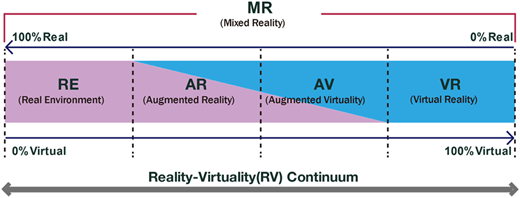
Milgram and Kishino (1994) proposed a continuum model for understanding the relationship between reality and virtuality. This model, illustrated in Figure 1, depicts four stages along a spectrum. Virtuality exists between the two extremes: the RE(real environment) and VR. All experiences within this spectrum are considered MR. The term “augmented” refers to the layering of different media. When virtual objects are overlaid onto the real environment, this is called AR. Conversely, environments with a greater emphasis on virtual elements compared to the real world are called AV.
4.2 Immersive technologies characteristics
Immersive technologies aims to make users feel immersed and vivid in a specific environment, and experience a sense of being as if they were actually there. This is the core goal pursued by virtual reality, and is one of the biggest characteristics of virtual reality, a characteristic called telepresence (Kang, 2017).
Telepresence, the objective of immersive technologies, refers to experience of feeling present, or a sense of reality, as if the user is actually in a specific space through a communication medium. can be described as a means of indirectly perceiving the environment (Jonathan, 1992). This concept was categorized into six elements by Matthew Lombard, a professor at Temple University in the United States, and Theresa Ditton, a mass communication expert. The details are presented in Table 2 below. The successful realization of immersive technologies hinges on the seamless integration of these telepresence components. In particular, the convergence of virtual reality-based communication interfaces with physical space design is essential to enhancing the user experience. Looking ahead, the development of immersive technologies is expected to focus increasingly on the synergy between interface tools and spatial design, highlighting the importance of interdisciplinary collaboration in achieving truly immersive environments.
4.3 Immersive technologies utilization areas
Immersive technologies initially emerged primarily in the entertainment and gaming sectors; however, they are now being utilized across various fields, as illustrated in Table 3 below. In various service sectors, including advertising, distribution, tourism, and healthcare, this technology is being utilized to create more innovative customer services and experiences.
In the fields of education and simulation, immersive technologies provide interactive learning environments that enhance learner comprehension while offering safe and effective platforms for high-risk job training. They are also increasingly utilized as tools for communication and collaboration, improving efficiency in remote meetings, virtual consultations, and related activities. In industries such as automotive, real estate, and construction, these technologies contribute to reducing product development costs, enabling spatial simulations, and facilitating more effective design reviews (Chun, Han, & Jang, 2017). Moreover, immersive technologies support advanced data analysis and personalized user experience design, thereby strengthening corporate competitiveness through innovative user engagement strategies and customized content delivery.
4.4 Immersive technologies components.
Since 2013, the Korea Ministry of Science, ICT and Future Planning (MSIP) has been fostering a virtuous cycle structure that integrates content, platform, network, and device systems—shifting from a hardware-oriented, operator-led model to a more comprehensive ecosystem aimed at expanding the immersive technologies market (Cha, 2017). As illustrated in Table 4 below, content developed by creators is uploaded to platforms and delivered to users, forming a seamless flow within the ecosystem. In the context of interior design, the interaction among these four components—content, platform, network, and device—is believed to enhance design decision-making by facilitating clear communication between designers and clients, ensuring design validity, and enabling accurate review and feedback.
5. Examples of immersive technologies use in the interior design field
5.1 Overseas utilization
Trimble applies MR technology to implementation design and construction site operations. Utilizing Microsoft's HoloLens 2 and the MR-enabled safety helmet Trimble XR10, the system allows users to visualize and interact with 3D data in real time through a touch-screen interface. This advanced integration of AR enhances precision and efficiency in on-site design processes.
Matterport, on the other hand, leverages both VR and AR technologies in its basic design applications. Equipped with a 3D camera featuring a 134-megapixel resolution and a 360-degree viewing angle, the system captures indoor and outdoor spaces, converts them into immersive content, and uploads the data to the cloud-based AR platform Matterport Pro2 (Brittany, 2017). As the platform is compatible with smartphones and tablets, it enables real-time simulation of spatial structures, interior design processes, finishing materials, and appliance placements, thereby offering a personalized construction experience to clients.
5.2 Domestic Korean utilization
T. raum produces virtual reality content and applies it to planning and basic design. The real-time rendering-based platform “qoobo” collects images such as interior, furniture, and lighting, converts them into 3D digital, and provides virtual space services through 3D modeling and visualization. This leads in the interior virtual space industry as it can solve the previous 2–3 days of consultation time, such as finishing materials and furniture placement, on the spot through 3D virtual space service and even purchases products from companies (Lee & Lee, 2023). Hanssem, a Korean furniture and interior design brand, offers the “Home Planner 2.0” platform, which leverages virtual reality for planning and basic design. To help customers understand and make purchase decisions, 80,000 apartment drawings nationwide and 1,000 drawings designed by reflecting actual apartment designs are converted into 3D data and provided as smart phones and tablets. Shinsegae Casa, a living and lifestyle company, offers approximately 90,000 real apartment drawings through its platform “VR 3D Interior”, enabling online design, direct transactions, and consultations (Lee, 2021). The use of 3D rendering to implement various design concepts provides an immersive experience and diversifies the interaction points with customers.
While foreign countries apply MR to various immersive contents such as design, construction progress, and matching with design drawings, it can be seen that Korea is limited to VR technology. In other words, it shows that the design process, such as real estate promotion, finish materials and furniture changes, and marketing, is highly efficient, but it is still insufficient to be applied directly to the construction site.
6. In-depth interview research method
6.1 Research questions
In this study, we aim to explore strategies for utilizing immersive technologies in the field of interior design. Major Korean companies such as LX Hausys, T. Raum, Urban Base, and Hanssem, which are actively engaged in interior-related businesses, continue to invest in immersive technologies due to their strong potential as tools for both business development and marketing. Despite this, uncertainties remain regarding how currently active content experts and interior designers perceive the industry's trends, challenges, and practical applications, as well as the strategies they are formulating for future revitalization and problem-solving. To address these questions, this study collects multifaceted data through in-depth interviews with domain experts. Through this approach, we aim to identify institutional limitations and necessary areas of improvement, and to suggest strategic research directions for the future. These findings are expected to provide a foundational framework for the advancement of immersive technologies in interior design, particularly at a time when their adoption is still in the early stages. As summarized in Table 5, the research questions are broadly divided into two categories: the conceptual understanding of immersive technologies and practical utilization strategies in interior design. We examine how experts perceive potential value in this field and what strategic directions they are currently pursuing.
To this end, expert interviews were transcribed and analyzed using open coding to extract key qualitative and strategic keywords. Furthermore, a combination of SWOT and PEST analysis was applied to evaluate both internal and external environments, enabling a structured understanding of the current state and future direction of immersive technology implementation in interior design.
6.2 Research methods
6.2.1 Select in-depth interviewees
Currently, there remains a noticeable lack of research data and academic literature specifically addressing the application of immersive technologies within the field of interior design. To address this gap, this study aims to generate insights from multiple perspectives by incorporating the professional knowledge, personal experiences, and opinions of practitioners actively engaged in the field. A total of eleven participants were selected, including five experts specializing in immersive technologies applied to interior spaces and six interior designers with practical field experience. As outlined in Table 6, the immersive technologies experts were chosen based on their substantial expertise and familiarity with interior spatial production environments, having collaborated with various companies for over seven years. Likewise, the interior designers were selected for their minimum of five years of professional experience, allowing for the collection of nuanced and practice-based insights regarding the integration of immersive technologies in daily design workflows. To ensure participant confidentiality, all individuals were anonymized and labeled alphabetically from A to K.
6.2.2 In-depth interview process
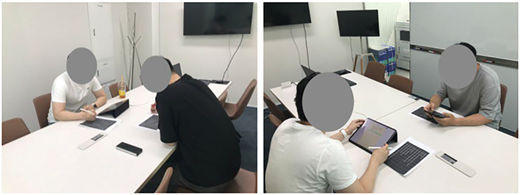
In order to obtain subjective information and insights on specific topics and research issues, we conducted in-depth interviews with the study participants as part of our qualitative research methodology (see Figure 2).
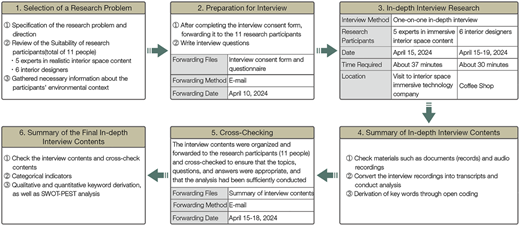
In order to proceed smoothly with the interview process, we divided it into six stages as shown in Figure 3 below. Prior to the interview, 11 research participants signed a consent form for participation and recording of the interview and were informed of the purpose of the study. The interviews were conducted individually over a five-day period, from April 15 to April 19, 2024. Each session lasted approximately 35 minutes and was recorded for transcription and subsequent analysis. Upon the conclusion of the study, all related materials—including field notes, audio recordings, and other interview data—will be permanently deleted to ensure participant confidentiality and data privacy.
6.3 SWOT and PEST analysis
6.3.1 SWOT analysis
SWOT analysis is a part of a broader situation analysis and is used universally to establish specific policies or management strategies. As shown in Table 7 below, systematically analyze the strengths, weaknesses, opportunities, and threats of the internal and external environmental factors of a company or organization (Choi & Shin, 2022).
6.3.2 PEST analysis
PEST, a macro environmental analysis, is classified into Political, Economic, Social, and Technological as shown in Table 8 below. This defines the macro environmental factors used to identify the environment among strategic management components (Sammut-Bonnici & Galea, 2014).
7. Table 8: PEST component concept analysis of expert in-depth interview research results
7.1 Immersive technologies concept opinion
Opinions on the immersive technologies industry: It is superior to other technologies in the use of information delivery, education, and interactive content, and has the advantage of realistic expression and experience, making it the most progressive information delivery method in the current trend. However, despite its positive perception, people feel that it becomes a burden in terms of inconvenience and cost when actually applying it to work. Therefore, if technologies such as various platforms and devices for consumers and more easily accessible methods are developed and become popular, industrial value will rise (see Table 9).
Impact of immersive technologies on society as a whole: It is superior to other technologies in the use of information delivery, education, and interactive content, and has the advantage of realistic expression and experience, making it the most progressive information delivery method in the current trend. However, despite its positive perception, people feel that it becomes a burden in terms of inconvenience and cost when actually applying it to work. Therefore, if technologies such as various platforms and devices for consumers and more easily accessible methods are developed and become popular, industrial value will rise (see Table 10).
Opinions on the four components of immersive technologies content: The development and use of software and devices are not yet visible in real life. In other words, if a virtual space is created using software, one must personally experience it using a device, but people avoid wearing the equipment due to uncomfortable fit, heaviness, and dizziness. Content development is currently being developed little by little in the fields of safety, education, real estate, and interior design. However, content is still limited and immersive technologies platforms are also limited, and system construction and deployment of professional personnel are insufficient. It is expected that it will take time for experts with a certain level of specialized knowledge to be selected for professional education by universities and educational institutions to enter society (see Table 11).
7.2 Measures to utilize immersive technologies in the interior design field
Necessity in the field of interior design: It is easy for the person in charge to understand before on-site construction, and by changing the finishing material pattern in real time, you can save efficiency, avoid trial and error, and save working time. In addition, most companies in the interior design field are operated on a small scale, so CS (Customer Satisfaction) and communication are not refined and manualized, which always leads to misunderstandings with customers and ultimately leads to complaints. Therefore, the lack of communication, lack of service mind, etc. will definitely be filled by introducing immersive technologies (see Table 12).
Changes in the field of interior design: By saving time, more work will be done and contracts will be concluded, and if the design has been modified several times in the past, the number of modifications can be adjusted in the future and work errors can be reduced. In addition, the contract process, which was conducted only through dialogue, is disappearing and consumers prefer sophisticated communication, which is expected to increase trust. However, it is still limited to implementing standardized designs, so it is believed that in the future, technology that can implement non-standard designs will need to be developed before the industry can become widespread (see Table 13).
Impact on interior design customers (non-experts): Immersive technologies serves as a medium between experts and customers. Before visiting an expert, customers can first learn about the design and product, and once data is available, more rational consultation can be conducted with the expert and recommendations can be made for areas that are lacking. And by first knowing the estimate through simulation and consulting with experts, disadvantages are minimized and a reasonable contract is concluded. However, by only showing products that have entered into a business agreement (MOU) with an interior design company, consumers have a narrower range of product choices (see Table 14).
Utilization plan in the field of interior design: Because large costs are required to produce Immersive technologies content, it is not easy to introduce it without support from government ministries and private companies. Since it is an expensive service and expensive content, if large corporations use it, the content industry will revitalize quickly. As much of the infrastructure has not yet been established, infrastructure construction is needed first, followed by professional training and support (see Table 15).
7.3 In-depth interview key word analysis
The results of deriving key words from the interviews of 11 research participants through open coding are shown in Table 16 below. A total of 284 key words were derived, including 133 key words from questions about the concept of immersive technologies and 151 key words from questions about ways to utilize them in the interior design field.
Table 17 below summarizes key words based on the various opinions of each research participant. This allows you to find out various opinions, awareness, business connection, and areas for improvement regarding current Immersive Technologies.
7.4 In-depth interview keyword code number classification
It was divided into immersive technologies concepts and utilization plans in the interior design field. The 284 keywords derived previously were classified into quantitative keywords and qualitative keywords, and a code number was assigned to each keyword to aid understanding. Therefore, as shown in Table 18 below, a total of 63 codes were listed, with 28 codes for the concept of immersive technologies and 35 codes for utilization in the interior design field, which is used as an important measure in SWOT-PEST analysis.
7.5 SWOT-PEST analysis
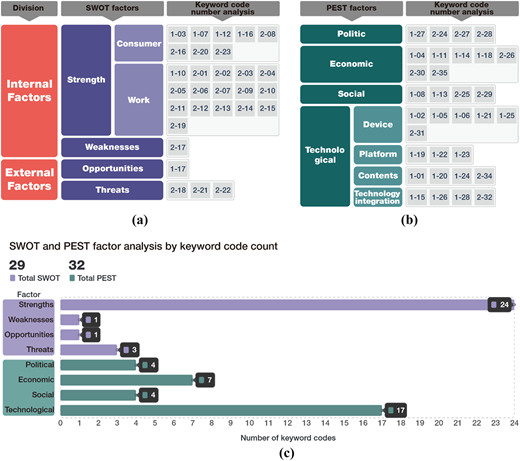
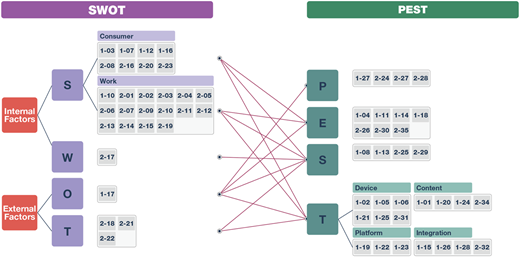
The SWOT analysis was classified into strengths, weaknesses, opportunities, and threats. Each keyword was analyzed, as shown in Figure 4-(a) below. After analyzing the in-depth interviews, it was discovered that immersive technologies offer significant advantages in interior design and work. In particular, it greatly contributes to increasing understanding of products by providing customers with new experiences and facilitating unambiguous communication.
To understand market growth and contraction, business direction, and positioning, a PEST analysis framework is utilized to provide insights into industry prospects. As seen in Figure 4-(b), there were various opinions on the economic factors, indicating a significant growth outlook for the immersive technologies market. In Figure 4-(c), strengths and technological factors are emphasized as key elements. The strengths include the ability of immersive technologies to enhance customer understanding and significantly improve design efficiency in tasks such as visualization and real-time simulation. technological factors play a crucial role in enhancing precision and accessibility, driven by the rapid advancement of immersive technologies. Notably, the quality of both devices and content is consistently improving, thanks to significant investments and ongoing research and development by global technological companies.
This trend demonstrates that immersive technologies serves as a major catalyst for innovation across various industries, thereby accelerating economic growth. The emphasis on these strengths and technological factors plays a crucial role in enhancing collaboration between customers and designers, bridging the digital divide across various fields, and increasing social value (see Figure 4).
7.6 Discussion
As a result of analyzing and considering the in-depth interview contents using the SWOT-PEST analysis method, we found a connection between the two analysis frameworks, as illustrated in Figure 5 below. It is believed that this will play an important role in establishing and implementing immersive technologies utilization, necessity, and strategies in the field of interior design. The analysis results are summarized as follows.
The application of immersive technologies presents multifaceted benefits across consumer and business contexts. For consumers, improved search capabilities, enhanced communication, and expedited decision-making processes contribute to increased trust, satisfaction, and perceived utility. From a business perspective, immersive technologies facilitate time and cost efficiencies, improve project predictability (e.g. budgeting and scheduling), reduce error rates, and enhance overall productivity. These strengths reflect the interplay of economic, social, and technological factors identified in the PEST framework. Nonetheless, the industry faces critical challenges, including the limited diversity of content and devices, a shortage of specialized training programs, and a lack of skilled professionals—issues that warrant urgent attention.
In the field of education and training, immersive technologies prove particularly effective for novice designers. Simulation-based visualization aids in conceptual understanding and practical execution, thereby accelerating skill acquisition. Furthermore, immersive systems support safety education by enabling the identification and management of high-risk scenarios through hazard recognition and risk factor analysis.
Despite their advantages, immersive technologies may also introduce consumer limitations. The predominance of supplier-driven content can constrain consumer choice, fostering a dynamic in which consumers are passive recipients rather than active participants. This market imbalance could yield adverse societal consequences, emphasizing the need for user-centered content development. Moreover, the boundary between designers and consumers is anticipated to blur. With the widespread availability of design-related content via social media and digital platforms, consumers are increasingly involved in design processes, potentially reshaping traditional professional roles.
While the advantages of immersive technologies currently outweigh their risks, the uncertain trajectory of the industry necessitates ongoing evaluation and strategic foresight. Proactive identification and mitigation of emerging threats will be essential to ensuring the sustainable integration of immersive technologies into everyday life.
8. Conclusion and future research directions
This study investigates the utilization and strategic approaches of immersive technologies within the field of interior design. Through a literature review, it examines the concept of immersive technologies and analyzes current industry trends and future prospects. In addition, by conducting in-depth interviews with experts actively involved in the immersive technologies market, this research applies open coding alongside SWOT and PEST analysis to identify strategies for activating immersive technologies in practical design contexts.
First, the findings highlight that immersive technologies can play a pivotal role in addressing the problem of information asymmetry between experts and non-experts. Virtual simulation-based experiences significantly enhance users' understanding of complex concepts and design elements, facilitating greater engagement and reciprocal feedback. To maximize this potential, it is essential to provide users with clear tutorials and guidance, which can serve as the foundation for collaborative communication and learning.
Second, the scope of immersive content technologies is steadily expanding across diverse industries such as construction, education, and medicine. For instance, the integration of virtual reality devices in educational settings is becoming more prevalent, while in industrial sectors, virtual pre-training is emerging as an effective blended learning method that combines both online and offline instruction. However, for these applications to be widely adopted and sustained, there must be strong institutional support and a robust technological infrastructure—particularly one that incorporates ICT, AI, IoT, and 5G technologies.
Third, to activate and expand the immersive content industry, both governmental and private sector support are vital in offsetting the high production costs associated with high-quality content creation. Institutional frameworks, including intellectual property protection, improved subsidy procedures, and regulatory reform, are necessary to provide a solid foundation for industrial growth. In particular, consistent policy support—irrespective of economic or political shifts—is crucial for the long-term success of this emerging sector. As many immersive content developers are startups, fostering a cooperative and self-sustaining ecosystem will be essential.
Fourth, parallel to technological development, user-centered enhancements must also be prioritized. Challenges related to HMDs (head-mounted displays)—such as weight, comfort, portability, and affordability—must be addressed. Simultaneously, improvements in graphic performance, low-latency spatial tracking, and multisensory feedback technologies (e.g. tactile and olfactory interaction) are necessary to enhance user immersion. Integrating sensory stimulation beyond visual and auditory channels could significantly elevate immersive experiences.
Fifth, for sustained growth, the industry must implement a clear mid- to long-term roadmap that reflects evolving technology trends, market needs, policy directions, and annual R&D targets. Initial phases should be led by large corporations and research institutions, followed by collaborations with SMEs in the commercialization phase to facilitate distribution and market expansion. This phased approach will help clarify stakeholder responsibilities and ensure the development of a viable innovation ecosystem.
Lastly, the cultivation of skilled professionals is critical to industry advancement. Given the current shortage of experts capable of creating real-time 3D content and managing commercialization processes, it is imperative to establish a comprehensive talent development system that connects educational institutions with industry demands.
South Korea is demonstrating leadership by actively integrating immersive technologies into its cultural and entertainment sectors, leveraging its robust infrastructure—including ultra-fast internet, 5G networks, high-resolution displays, and a thriving gaming industry. This technological foundation supports the creation of novel user experiences such as VR concerts and virtual fan meetings, which are expected to drive global innovation in immersive content delivery.
Looking ahead, future research should more specifically investigate the developmental trajectory and sector-specific application of immersive technologies in interior design. The evolution from visually centered systems to fully multisensory experiences—encompassing vision, hearing, and touch—will require focused studies on the convergence of sensor-based interaction and low-latency spatial tracking systems.
Furthermore, optimizing user experience necessitates the scientific analysis of both physiological and psychological responses, including immersion, fatigue, and motion sickness. It is also essential to develop inclusive design standards that consider diverse user demographics. In addition, the creation of AI-powered adaptive content systems that dynamically respond to user feedback in real time presents a promising pathway toward personalized interaction. To ensure broad applicability, future research should also focus on constructing industry-specific application frameworks in sectors such as construction, healthcare, defense, and cultural heritage. These should be complemented by technical and economic feasibility studies. Additionally, it is vital to assess and address the ethical implications of immersive technologies—including data privacy, digital accessibility, and psychological well-being—through the development of comprehensive policy guidelines.
Finally, fostering an open innovation ecosystem that includes collaboration among large corporations, startups, research institutes, and government entities will be crucial. The formulation of a strategic roadmap for mid-to long-term technology diffusion and industrial development should be considered a priority to support the sustainable growth of the immersive technologies sector.