
Skip to article sections
Purpose

This study explores primary preventive measures to enhance the occupational well-being of women in the construction industry, using Nepal as a representative case of developing countries. It addresses persistent gender disparities and systemic barriers in the sector.

Design/methodology/approach

A quantitative research design was adopted along with literature review and expert consultation to develop a context-specific survey instrument. Responses were collected from 153 professional women in construction industry. Data were analysed using exploratory factor analysis (EFA), t-tests and ANOVA.

Findings

Factor analysis revealed six distinct factors of preventive strategies: job flexibility, inclusivity and well-being, organisational support and equitable workplace culture, equality in policy and practice, maternity support and workplace safety, individual coping and personal growth, and support for domestic role. Perceptions of these strategies varied significantly by marital status, motherhood, educational qualification and work sector. Consultants reported stronger support systems than contractors, while diploma holders perceived higher support in job flexibility and maternity-related measures than degree holders. Work experience showed no significant influence.

Practical implications

The study provides a structured foundation for gender-responsive reforms in construction, emphasising the need for tailored strategies based on women's diverse demographic profiles to enhance inclusivity, well-being and retention in the sector.

Originality/value

This study fills a critical gap by identifying gender-specific preventive strategies for women in construction in a developing country context. Unlike prior research that focuses on hazards or adopts gender-neutral approaches, it offers an empirically grounded, proactive measure to address the root causes of challenges and promote long-term occupational well-being.

Globally, the workplace has been recognised as a key contributor to the health and well-being of working-age people. The construction industry, which is a significant contributor towards global economic development, remains one of the most male-dominated industry with gender-insensitive work environment. Although poor working conditions in construction affect all workers, women face disproportionately greater challenges due to their misalignment with masculine industry norms and exposure to gender-specific issues like discrimination, harassment and inadequate site facilities (Rotimi et al., 2023). These compounded stressors, alongside difficulties balancing family and career, particularly around motherhood often leads women to exit the industry at various stages, contributing to persistent gender attrition (Oyewobi et al., 2022). These challenges intensify in developing countries such as Nepal, where construction work remains highly manual, technological adoption is limited, and professional management systems are weak (Wilson et al., 2024; Pokhrel et al., 2021). These hazards also has an adverse impact on their physical, mental, psychological and reproductive health (Rotimi et al., 2023).

While there is a gradual increase in number of women entering the construction industry, the percentage of women in the sector is between 9–13% globally and 11.3% in Nepal's construction workforce, which has been more or less stagnant over the years (Moncaster and Dillon, 2018; Wilson et al., 2024). Studies also report a discrepancy in the proportion of women in undergrads studies and those working as professionals (Zhang et al., 2024). This trend is widely attributed to the “leaky pipeline syndrome”, wherein women exit the sector at various stages of their career due to persistent gender-based challenges, unsupportive work environments and lack of institutional safeguards (Gurjao, 2006). Recent evidence reinforces that women's long-term retention depends on support across multiple career stages. A systematic review by Yan et al. (2024) shows that without consistent relational and organisational support, barriers accumulate over time and drive women out of the construction sector even after initial entry. Although the current emphasis of the industry lies on attracting more girls and women to fix the leaky pipeline, simply filling the pipeline (i.e. attracting more women in the industry) does not solve the issue, just like, increasing more volume of water into the pipeline does not fix its leak (Cadwalader et al., 2014). It is important to treat the leak in the industry through appropriate primary preventive measure that eliminate or mitigate the hazards before they manifest into adverse outcomes, thereby ensuring long-term participation and safety for women.

Despite increasing attention to occupational health and well-being in the construction industry, most existing research continue to adopt gender-neutral perspective (Ghimire and Neupane, 2020; Campbell and Gunning, 2020). Even those studies with specific focus on women mostly deal with identifying specific hazards, with comparatively little emphasis on preventive strategies (Oyewobi et al., 2022). Where preventive approaches are discussed, they are often generalised and not tailored to the distinct needs of women and mostly concentrated in developed nations (Campbell and Gunning, 2020). In a review by Hasan et al. (2021), the authors identified a critical research gap, highlighting the limited studies on women professionals in the construction industry within developing countries, despite the significant presence of women in these regions underscoring the need for greater research attention. In low- and middle-income countries, the research is even more limited, with existing studies largely overlooking female professionals in construction sector. These studies primarily focus on problems and issues in itself rather than the preventive mechanisms (Soundarya Priya and Anandh, 2024; Purang et al., 2024). In the Nepalese context, most studies on construction industry in Nepal are mostly gender neutral and focused on only physical safety (Ghimire and Neupane, 2020) and other explicitly focused on issues of blue-collar workers (Wilson et al., 2024). To fill this critical gap, the present study explores primary preventive measures through a gender-specific lens, focusing on the experiences of professional women in Nepal's construction industry. The specific objectives of this study are: -

  1. To identify the key preventive strategies relevant to women professionals in the construction industry through literature review and contextually verify them through expert consultation.

  2. To categorise these preventive strategies into distinct factors using exploratory factor analysis (EFA).

  3. To examine the influence of demographic characteristics (like marital status, motherhood, educational qualification, work sector and experience) on preventive strategies.

The construction industry has historically been shaped by gendered norms influenced by masculine work cultures. This has led to the industry being less welcoming towards women workforce and this is visible in the persistent under-representation of women in construction (Norberg and Johansson, 2021). Although several efforts are being made to make the construction sector more inclusive and diversified, women working in construction continue to face challenges and barriers that act has hazards to their career progression. These hazards include workplace issues like gender stereotyping, unequal career advancement opportunities, gender-based discrimination, harassment, biological challenges like difficulty working during menstrual phase and pregnancy, lack of sanitary facilities and socio-cultural issues like lack of support from family and work–life conflicts (Rotimi et al., 2023). Gendered expectations often subject women to role conflict, balancing professional demands with caregiving responsibilities along with scepticism regarding their competence (Vaidya et al., 2023). These dynamics manifest in exclusion from male-dominated networks, limited access to leadership and heightened exposure to psychosocial stressors such as harassment and undervaluation. Despite several efforts for formal equality in recruitment policies, the lived experiences of women suggest persistent structural disadvantages, necessitating gender-responsive reforms to reshape construction workplaces into more inclusive and supportive environments (Suresh et al., 2023).

The challenges faced by women in construction are shaped not only by occupational risks but also by deep-rooted social and cultural structures that reinforce gender inequality, especially in the case of developing countries like Nepal where workplace norms is highly influenced by patriarchal society. Bajracharya et al. (2023) focused his study in construction sector of Nepal, India and Bangladesh, wherein found that construction workers continue to face significant risks to their health and safety due to weak policy enforcement, limited training and persistent socio-cultural barriers. Similarly, a study on Sri Lanka's construction industry revealed that women face significant barriers such as family commitments, lack of female role models and limited professional advancement, calling for legal, social and institutional interventions to promote gender equity (Gunasekara et al., 2024). Evidence from the Indian construction industry further reinforces these gendered vulnerabilities. Dhanasekar and Anandh (2025b) found that women professionals showed heightened psychological strain and withdrawal because of biased promotion, opaque decision-making and masculine organisational cultures. Further, Anandh et al. (2024) reported that women experienced significantly higher occupational stress than men, driven by role overload, limited support and gendered performance expectations in Indian construction sector. Studies on women in Nepalese construction Industry also reveal similar pattern with masculinity driving the work culture and women in minority juggling between patriarchal expectations from society and modern aspirations on individual career growth and advancements (Liebrand and Udas, 2017; Wilson et al., 2024). Despite formal laws promoting workplace equity, systemic issues such as poor enforcement, insufficient training and lack of regulatory oversight persist, making construction sites hazardous, especially for women in Nepalese construction sector (Upadhaya and Kwon, 2023; Liebrand, 2023).

A distinct and major barrier for women in construction across developing countries like Nepal is in the gendered division of domestic and household works. Regardless of their capabilities, competence and professional level, women continue to bear primary responsibility for household duties, childcare, eldercare and other caregiving responsibilities with little or no help from their male partners (Buchy et al., 2023). These expectations are deeply embedded in social and family structures and have shown limited change despite women's growing professional competence (Wilson et al., 2024). When these societal obligations intersect with inflexible schedules, long working hours and site-based demands typical of the construction sector, they generate significant work–life conflict and reduce women's overall quality of work life (Helen, 2012; Adhikari et al., 2023). Such conditions create sustained pressure that leads to attrition and underrepresentation, a pattern often described as the “leaky pipeline” phenomenon, where women exit the industry or shift to less demanding roles after a few years of experience (Saraswathiamma, 2010). These realities also influence future workforce participation, as the perceived incompatibility between family life and construction discourages young women from entering the profession (Hasan et al., 2024; Madikizela and Haupt, 2010). Consequently, addressing these entrenched social and organisational factors is critical for enhancing women's work–life balance, improving their quality of work life and building a sustainable, gender-inclusive construction workforce.

The intersection of an under-resourced construction sector with patriarchal norms has compounded gender-based vulnerabilities. In the male-dominated construction industry, this manifests as both visible and invisible barriers, including assumptions about women's unsuitability for technical roles, resistance to women in leadership and inadequate workplace facilities (Liebrand and Udas, 2017). While developed countries have moved towards promoting mental health, ergonomic design and work–life balance in construction, these priorities are often overlooked in the developing context (Khadgi and Tamang, 2024, Helen, 2012). The cumulative effect of these systemic, cultural and infrastructural barriers makes it particularly difficult for women in construction to thrive in the sector, highlighting the need for targeted, gender-responsive preventive strategies.

Primary prevention emphasises a proactive strategy to strengthen individuals' coping abilities and resilience rather than focusing on therapeutic or rehabilitative measures. Its primary goal is to identify and manage potential hazards before they adversely affect health and well-being (Privitera, 2010; Bloom and Gullotta, 2014). In the context of the workplace, this approach theoretically involves evaluating and altering job-related factors that are directly associated with workplace stressors (Reynolds, 1997). It seeks to prevent hazards from emerging, reduce their generation and contain the effects of existing ones (Silverman, 2014). This preventive model targets individuals who are currently healthy, aiming to lower their exposure to risks and enhance their capacity to resist or adapt to stressors, thereby averting the development or escalation of health problems (Kisling and Das, 2022). By operating at the earliest stage of prevention, primary prevention reaches populations before damage occurs, thus having a broad impact at the foundational level (Silverman, 2014).

Although primary prevention is often seen as more cost-effective than secondary or tertiary measures, its true value extends beyond monetary savings by enhancing quality of life (Olsen et al., 2010). Central to this approach is the promotion of wellness, which empowers individuals to reach and maintain optimal mental and physical health (Bloom and Gullotta, 2014). Recent studies have highlighted the advantages of implementing primary prevention strategies in organisational settings. Hu et al. (2023) and Carbone (2020) further emphasised the importance of expanding and scaling up these interventions in both social and workplace environments to curb the rising incidence of mental health disorders.

Proactive interventions such as gender friendly work-places, anti-harassment policies, supportive supervision, flexible work arrangements and provision of health resources can significantly reduce the exposure of women to the hazards before they escalate into adverse outcomes (Perera et al., 2022). Despite its relevance, the application of primary preventive strategies in construction remains limited, especially in developing countries like Nepal, where institutional capacities and awareness are weak (Buchy et al., 2023). Prioritising gender-tailored primary prevention in construction can play a transformative role in improving the safety, well-being and retention of women in the sector.

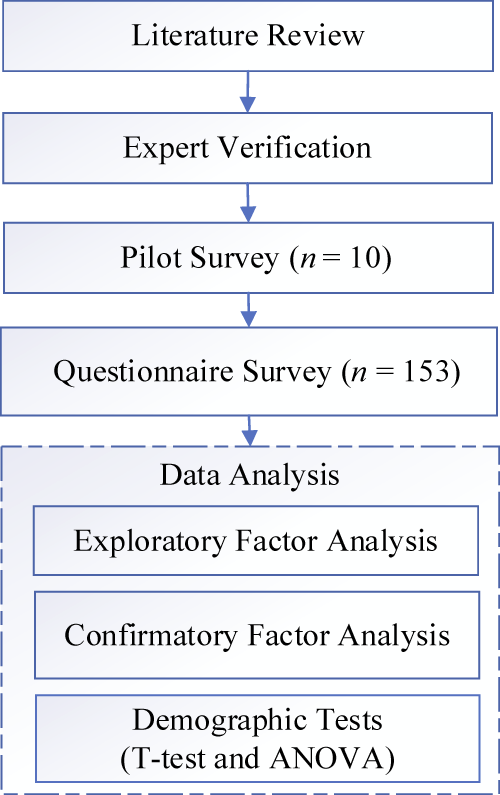
This research adopted a mixed method with qualitative approach for verification of the results from literature review followed by quantitative questionnaire survey for analysis of primary preventive strategies relevant to professional women in the construction industry. The methodology adopted has been represented in Figure 1.

The study began with an extensive review of academic literature, government documents and industry reports, which helped to compile a preliminary list of preventive measures addressing psychosocial, physical, ergonomic and gender-specific workplace risks. To ensure the relevance and comprehensiveness of these proposed preventive strategies in Nepal, an expert consultation was conducted with five professionals (four female, one male) representing diverse sectors of the construction industry. The panel composition prioritised female experts, as their knowledge and understanding emerged not only by professional experience but also by lived experiences within the industry. However, in sectors where qualified female professionals with sufficient experience were unavailable (particularly in contractor role), a male expert with adequate expertise was included to maintain sectoral representation. For number of experts, since the primary purpose of expert opinion was for verification and not generation of new ideas, it was considered adequate as their feedback was consistent and in agreement regarding the inclusion and contextual relevance of preventive strategies. Therefore, the panel was not further expanded. Previous studies have also adopted a similar number of experts for validation, noting that the relevance and diversity of expert input are more important than panel size (Kalkbrenner, 2021; Polit et al., 2007). These experts evaluated each suggested preventive measure for clarity, contextual appropriateness to the Nepalese construction sector and completeness. Furthermore, they were encouraged to recommend any additional strategies they believed were necessary for promoting women's occupational well-being. Their insights were used to refine and enrich the final set of measures included in the survey instrument. Table 1 presents the profile of these experts.

After expert feedback, a pilot survey was conducted with a small group of 10 participants to test the questionnaire's clarity, logical flow and ease of use. Comments from this stage helped to adjust unclear language, question order and improve the overall instrument. The final questionnaire was then distributed through Qualtrics online survey to around 1,500 professional women working in Nepalese construction industry via email, with 153 valid responses collected. The target population was white-collar women. National evidence shows that white collar women represent only 7–11% of the technical construction workforce, with most concentrated in client and consulting roles (Wilson et al., 2024; Nepal Engineering Council, 2024). Based on these sources, the estimated population of women in professional construction roles is roughly 5,000 to 6,000 nationally. The study used purposive and snowball sampling to reach this dispersed group. This sample size satisfies recommended thresholds for factor analysis, where a minimum of 100–150 participants (De Winter et al., 2009). The distribution of respondents across client, consultant and contractor organisations also reflects known national participation patterns, supporting sample representativeness. Sample size in similar range was also used by past studies on occupational health studies in construction (Oyewobi et al., 2022; Tijani et al., 2022).

The final sample included 153 professional women in the construction sector. As shown in Table 2, educational qualifications revealed that 43.8% had completed an undergraduate degree, 42.5% were graduates and 13.7% had vocational or diploma-level education. Regarding experience, 62.7% reported five to ten years of work history, followed by 26.1% with less than five years and 11.1% with more than ten years of experience. With respect to personal demographics, 74.5% were married and 40.5% were mothers, highlighting the dual responsibilities many women manage. In terms of employment sector, 59.4% worked in client organisations, 24.2% in consultancy roles and 16.3% in contracting, reflecting broader patterns of women's participation in more client-focused roles.

The mean score analysis of 39 primary preventive measures reveals critical insights into the workplace supports available to women in Nepal's construction industry. As shown in Table 3 scores ranged from 2.71 to 5.04 on a 7-point Likert scale. Equal Pay for Performance emerged as the highest-ranked measure with mean of 5.04, suggesting respondents generally perceived parity in pay for equal work, a positive observation from global concerns about gender-based pay gaps in construction (Fan et al., 2024). Other top-ranking measures included Domestic Responsibility Sharing, Open-Door Policy for Support and Smart Technologies to Manage Workloads. These reflect a degree of organisational and interpersonal support received by the respondents, essential for ensuring workload management and work–life balance. However, measures essential for career sustainability, such as Flexible Work Arrangements and Remote Work Options, were rated lowest. Although recent studies highlight the emergence of more flexible, hybrid and technology-supported job roles for women in global construction markets (Afful et al., 2025), the low mean scores for flexible work arrangements and remote-work options in this study indicate that the Nepalese construction sector has not yet transitioned towards these evolving practices. Another low ranked variable is Psychological Support and counselling and this aligns with broader national evidence showing that Nepal's mental-health services are severely underdeveloped especially at workplaces (World Health Organisation, 2020). This highlights persistent gaps in implementing flexible and well-being-focused policies despite their recognised benefits for well-being and work–life balance (Vaidya et al., 2023). Notably, Maternity and Childcare Leave and Post-Maternity Reintegration also ranked low, signalling insufficient structural support for working mothers. These findings align with previous studies that stress the under-provision of maternity-related benefits in male-dominated industries (Nowak et al., 2013; Zhang et al., 2024).

EFA was conducted to identify the factors within the preventive strategies. The procedures of factor analysis used in this paper adhered to a rigorous five-step procedure recommended by Williams et al. (2010). Tests of data suitability including the KMO measure (0.895) and Bartlett's test of sphericity (p < 0.001) revealed sampling adequacy for the dataset (refer Table 4). Principal component analysis with varimax rotation was selected due to its clear and interpretable structure. Criteria such as eigenvalues over 1, explained variance and scree plot were used to retain six factors explaining 60.86% of total variance. As a rule of thumb, only those variables were retained that have a minimum factor loading of ±0.4, following recommendation by (Hair et al., 2018). This approach ensured methodological soundness while allowing robust interpretation for preventive strategies. In case of variables with significant loading (>0.4) in multiple factors, the variables were assigned to the factor where they fit better from conceptual and theoretical perspective. As a result, the variable “Childcare/ Daycare facilities” had cross-loading in multiple factors and was assigned in factor 4 (Maternity Support and workplace safety) as it aligned better in this factor. Table 5 shows the categorisation of the variables into the factors with their respective loadings.

To confirm the six-factor structure, a confirmatory factor analysis was performed using PLS-SEM in Smart-PLS. Construct reliability and validate data obtained has been presented in Table 5 where Cronbach's alpha and composite reliability values above 0.70. Convergent validity was demonstrated through AVE values above 0.50, and discriminant validity was confirmed through HTMT ratios (as shown in Table 6) below 0.85 (Hair et al., 2016). These results support the adequacy of the factors developed through factor analysis.

Factor 1: Job-Flexibility, inclusivity and well-being

This factor includes institutional and psychosocial strategies aimed at supporting women's inclusion, retention and well-being. Key variables include psychological support and counselling (highest loading), women-centred programs and post-career break skill development. These reflect well-being-focused interventions such as psychological support and counselling, recreational facilities and well-being campaigns, proven effective in mitigating stress as suggested in past studies (Perera et al., 2022; Daulay et al., 2022). Flexibility-oriented measures like remote work and flexible hours enable better work–life balance, aiding women's reintegration post-break (Perera et al., 2022; Vaidya et al., 2023; Ling and Leow, 2008). Inclusivity-promoting measures such as access to role models, women-centred programs and skill development post career break enhance sustainable gender diversity in construction (Campbell and Gunning, 2020; Suresh et al., 2023).

Factor 2: organisational support and equitable workplace culture

This factor represents organisational reforms that promote a safe, fair and supportive environment for women. The highest loading variable was a zero-tolerance policy for harassment, followed by encouraging teamwork and fostering professional workplace culture. Organisational-level interventions are critical as they address systemic stressors (Bhui et al., 2016). Measures like open-door policies and anti-harassment frameworks are essential safeguards endorsed by past research as well (Shibani et al., 2021). Additional reforms like teamwork promotion, workload and work hour regulation, and safety compliance enhance equity and comfort (Ling and Leow, 2008). Transparent performance evaluations and fair recognition systems help counteract gender bias in male-dominated fields (Husam et al., 2024; Fan et al., 2024). Overall, this factor represents organisational-level preventive practices and emphasises on the role of organisations at fostering an equitable, respectful and psychologically safe environment for women professionals in construction.

Factor 3: equality in policy and practise

This factor highlights the institutionalisation of gender equity through formal policies that promote fairness in pay, opportunity and representation. The highest loading variable was equal pay for performance, followed by equal opportunity policy and leadership commitment to gender equality. Properly implemented equality frameworks improve women's treatment and retention in the workforce (Suresh et al., 2023). Research confirms that committed leadership and transparent practices reduce disparities in hiring, promotion and compensation (Fan et al., 2024; Greer and Carden, 2021). Pay transparency and women in leadership are also effective in addressing gender equality and wage gaps (Gunasekara et al., 2024). Finally, this factor's emphasis on organisational commitment through policy and practise also aligns with (Campbell and Gunning, 2020)'s recommendation on collective use of strategies, policies and management practises for improving health and well-being of the workers in construction industry.

Factor 4: maternity support and workplace safety

This factor addresses preventive measures focused on reproductive health, maternity support and safety for women in construction. Pregnant and breastfeeding women are especially vulnerable to workplace hazards, making targeted support crucial. The highest loading variable was maternity and childcare leave, followed by post-maternity reintegration and accessible on-site facilities. Although “childcare facilities” cross-loaded, it conceptually aligns with this factor. Maternity leave and post-maternity integration reduce career disruption (Nowak et al., 2013; Bryce et al., 2019), while ergonomic workplace and on-site facilities support health and caregiving needs (Suresh et al., 2023). Providing safety during extended work hours further enhances protection (Shibani et al., 2021). Overall, these measures reflect institutional commitment to reducing the “motherhood penalty” and fostering workplace continuity and gender equity.

Factor 5: individual coping and personal growth

This factor emphasizes empowering women with strategies to manage stress, enhance well-being and support personal growth in the high-pressure construction environment. Together, this factor suggests a shift from solely organisational-level interventions towards empowering women with tools to manage their own well-being, productivity and professional growth. Refusing unrealistic targets and integrating smart technologies address on prevention for overload and time pressure, which are known contributors to stress and burnout, also recommended by (Perera et al., 2022). Continuous learning opportunities and smart technologies help in personal growth by updating the work methodologies and addressing skill gaps (Rautio and Uusiautti, 2024). This factor also incorporates personal coping strategies like encouraging regular breaks and sleep and participation in wellness programs with initiatives such as self-help resources, exercise spaces, meditation and access to support networks aimed at promoting holistic physical and mental well-being (Campbell and Gunning, 2020). Thus, this factor integrates the individual preventive strategies for women in construction industry.

Factor 6: domestic responsibility sharing

This unique factor has a single variable, i.e. Domestic Responsibility Sharing, with a factor loading of 0.788. As a rule of thumb, many studies suggest a three variables per factor rule (Williams et al., 2010); however, this particular factor was retained as it reflects a unique aspect to the preventive measures, i.e. recognition that genuine gender equality at work cannot be achieved without addressing domestic inequities. Women in construction are often overloaded with number of roles including that of professional and a homemaker. These multiple roles make it hard for women to maintain work life-balance. In such scenario, a support system specifically in form of a partner or family proves to be a preventive mechanism for them to tackle the issues at work and home (Lekchiri and Kamm, 2020; Bryce et al., 2019). While this variable directly emphasises on a societal issue, but past researchers have argued that industry and organisation can contribute to initiating this societal changes through provisions like parental leave for both the parents instead of maternity leave only for the mothers, to emphasize the role of male members in domestic and care-giving responsibility (Workplace Gender Equality Agency, 2023).

Impact of marital status on preventive measures (t-test)

An independent samples t-test was conducted to explore whether marital status (single/ married) influenced women's perceptions across the six identified preventive measure factors (see Table 7). Results revealed a significant difference for factor 2 (organisational support and equitable workplace culture), with single women reporting significantly higher perceptions of access to supportive and equitable workplace strategies compared to married women (p = 0.005). This may reflect that single woman, who may have fewer caregiving responsibilities outside work, perceive themselves as better able to engage with or benefit from organisational supports. For the other five factors, no statistically significant differences were identified (p-values >0.05), indicating broadly similar perceptions of these preventive measures regardless of marital status.

These findings suggest that, while preventive strategies targeting fairness and cultural support within organisations may be viewed differently depending on relationship status, most other preventive measures are experienced similarly by both married and single women. This highlights the potential influence of partnership and domestic roles on how certain workplace supports are perceived and accessed, which deserves further exploration in future studies.

An independent samples t-test was conducted to explore the role of motherhood in shaping women's experiences of the six preventive measure factors identified through factor analysis (Table 8). The results indicated a significant difference for factor-2 (organisational support and equitable workplace culture), with women who did not have children perceiving greater support and fairness in their organisations than mothers (p < 0.001). Similarly, factor-3 (equality in policy and practice) showed a statistically significant difference (p = 0.045), again indicating higher agreement among non-mothers regarding the presence of fair and equitable policies. For the remaining no significant differences emerged between mothers and non-mothers, suggesting broadly comparable perceptions of these workplace preventive measures across both groups. Overall, these findings imply that while motherhood status may influence how women perceive organisational fairness and equitable policy implementation, it has little effect on their views of other preventive supports. This suggest that mothers may view current preventive measures as less relevant or effective, perhaps because such supports do not fully address their specific challenges.

Impact of work sector (client vs consultant vs contractor) on preventive measures

The ANOVA results examining the impact of work sector on the experience of preventive measures reveal statistically significant differences for two factors: Job-Flexibility, inclusivity and well-being (p < 0.001) and equality in policy and practice (p = 0.018) (Table 9). Post-hoc comparisons show that consultants perceived significantly higher levels of job flexibility and inclusivity than clients and contractors (Table 10). Similarly, for equality in policy and practice, contractor perceived significant lower levels of preventive measures compared to clients with a near-significant difference also observed between consultants and contractors. For the other four factors, no significant variation across work sectors was found, indicating uniformity in perceived experiences. These findings align with existing literature, which often highlights that consultants and office-based professionals tend to have more structured support systems and flexible work arrangements compared to contractors, who typically operate in more rigid and resource-constrained site-based environments (Lingard and Francis, 2004; Bryce et al., 2019).

Impact of work experience on preventive measures

The ANOVA results assessing the impact of work-experience (number of years worked in the construction sector) on the perception of preventive measures indicate no statistically significant differences across any of the six identified factors (Table 11). All p-values exceeded significance threshold of 0.05, with the closest being maternity support and workplace safety (p = 0.063), suggesting a marginal, but not conclusive, variation. This implies that the perception of preventive measures is generally consistent across different work- experience groups. This result contrasts with past studies, which argue that perception of organisational issues and challenges, supports and needs differ for women across different experience groups (Zhang et al., 2024; Dhanasekar and Anandh, 2025a; Yan et al., 2024).

Impact of educational qualification on perception of preventive measures

The ANOVA results indicated that educational qualification influenced perception of two preventive measure factors: factor-1(job-flexibility, inclusivity and well-being) (p < 0.001) and factor-4, maternity support and workplace safety (p = 0.002) (Table 12). For factor-1, post-hoc comparisons reveal that women with diploma-level education perceive notably higher levels of job flexibility, inclusivity and well-being compared to both undergraduates and graduates (p < 0.001 in both cases) (Table 13). This pattern may reflect the relatively higher appreciation or lower expectations held by diploma holders toward flexible arrangements, or possibly a difference in role assignment across qualification levels. For maternity support and workplace safety, graduates perceived lesser support or experience of preventive measure as compared to both diploma and undergraduates. Better experience of preventive measures by diploma and undergraduate respondents in these two factors could indicate that women with higher qualifications had higher expectations regarding workplace support, making them more critical of deficiencies in maternity-related provisions. It also suggests that preventive strategies may not be uniformly designed to meet the evolving needs of more professionally advanced women in the sector.

Thus, statistical tests showed that perceptions of these preventive strategies varied based on marital status, motherhood, educational qualification and employment sector, while years of experience had no significant effect. For instance, consultants perceived better job flexibility and equity, and mothers viewed policies as less supportive suggesting that preventive measures are unevenly experienced and must be tailored to women's intersecting identities and workplace realities.

The six factor that emerged from the factor analysis shows a holistic pattern for the primary prevention. Job flexibility and well-being supports act as a core issue for improving work–life balance for women. Past studies have also reported that these measures have led to decrease in role conflict and increase in work-force retention. However, the low mean scores of variables like flexible work arrangements and remote work options points out that these preventive strategies are very weekly implemented in Nepalese construction Industry. In terms of demographic comparisons, women in consultant roles rated this factor higher than those in contractor organisations, reflecting greater flexibility and inclusivity in consultant-based jobs. The second factor, i.e. organisational support and equitable work culture, highlights the preventive measures in form of organisational management driven intervention for equality. Demographic comparisons revealed that married women and mothers perceive weaker organisational support, consistent with prior research on the motherhood penalty and gendered evaluation bias. Aligning with these results, Helen (2012) also reported that women were reluctant to use the organisational support even when available due to perceived career penalty associated with them. These results highlight the structural persistence of the “ideal worker” norm, which undervalues women with domestic and caregiving roles.

Equality in policy and practice reflects formal policy level or institutional mechanisms. The relatively higher mean score analysis of this factor reflects a positive perception in general; however, low mean score for flexibility, maternity and leadership roles reflect that these equality and commitment in policy does not necessarily translate to practise, supporting past studies that emphasise that policy adoption often fails without procedural reforms (Hasan et al., 2021). Another factor, maternity and workplace safety emerged as one of the lowest rated factors, i.e. these preventive measures are not adequately available and ironically, it was rated low by both mothers and non-mothers with no significant difference in perception between the two groups. Past studies have reported in-sufficient maternity support and reintegration as one of the key reason for discontinued career paths for women, often represented by leaky pipeline syndrome (Cech and Blair-loy, 2019). Another factor, individual coping and personal growth emphasize self-directed coping mechanisms. While such strategies enhance resilience on a personal level, overreliance on individual coping for prevention of workplace hazards limits institutional responsibility in mitigating systemic stressors (Powell et al., 2018). Finally, support for domestic role, represented by the single but conceptually strong variable emphasises that workplace equality cannot be achieved without social and domestic equity. This variable also received one of the highest mean scores suggesting that most of the work-life issues perpetuated from the workplace issues and hazards rather than domestic roles. Further, both factor-5 (Individual coping and personal growth) and factor-6 (support for domestic role) were not significantly different across the demographic groups.

Overall, the six factors reflect an interlinked system of organisational, individual and socio-cultural dimensions. While preventive strategies are present in policies and principle, they remain weakly implemented in practice to show identifiable results for women. The findings of this study extend prior regional research (Adhikari et al., 2023; Liebrand and Udas, 2017; Buchy et al., 2023) by empirically establishing a structure of preventive mechanisms and demonstrating how demographic realities shape their uptake. Strengthening flexible work design, organisational accountability, and gender-responsive management practices is vital for transforming policy commitment into tangible well-being outcomes for women professionals in construction.

This study is limited to examining preventive strategies through EFA and demographic comparisons using t-tests and ANOVA. While these methods provide a solid empirical foundation for identifying and validating factor structures, they do not capture the deeper causal relationships that may exist among the factors. Future research can build on these findings using structural equation modelling to analyse how the preventive-strategy factors interact with broader outcomes such as well-being, job satisfaction, retention and organisational commitment and develop a SEM- based preventive framework.

The other limitation of this study lies in its geographical focus on Nepal. Although the study can be generalised in construction industry of similar socio-cultural environment, caution needs to be made before the generalisation. Additionally, the sample was only restricted to white-collar non-administrative women in the construction, excluding the blue-collar workers.

This study provides insights on the importance of gender-responsive primary preventive measures for improving the well-being of women professionals in the construction industry. Through an EFA, six thematic factors of preventive strategies were identified: factor-1: job flexibility, inclusivity and well-being, factor-2: organisational support and equitable workplace culture, factor-3: equality in policy and practice, factor-4: maternity support and workplace safety, factor-5: individual coping and personal growth and factor-6: support for domestic role. The mean ranking analysis revealed that while some preventive strategies like equal pay, open-door policies and sharing of domestic responsibilities are acknowledged by the respondents, others like flexible work options and psychological supports are still inadequate. Furthermore, the perception of these preventive measures also varies across demographic groups. Marital status significantly influenced perceptions of factor 2 (organisational support and equitable workplace culture), with single women reporting better experiences. Motherhood impacted both factor 2 and factor 3 (equality in policy and practice), suggesting that mothers perceive organisational support and policy-driven equality efforts to be less accessible. Work sector shaped perceptions of factor 1(job flexibility, inclusivity and well-being) and factor 3 (equality in policy and practice), with consultants perceiving better preventive supports compared to clients and contractors. Interestingly, work experience had no significant influence on perceptions across any factors, contrasting with some past studies that associate greater experience with heightened awareness of workplace challenges. Finally, educational qualification influenced perceptions of factor 1 (job flexibility, inclusivity and well-being) and factor 4 (maternity support and workplace safety), where diploma holders reported better support and experience.

The uneven distribution of preventive strategies highlights a lack of intersectional implementation, meaning that women's experiences of organisational support are not uniform but conditioned by their marital, maternal, educational and occupational contexts. Practically, these results highlight a need for tailored workplace interventions that address specific vulnerabilities faced by different groups of women in construction. Ultimately, this research advocates for a cultural shift in the construction sector that institutionalises inclusive, flexible and safe work environments to ensure long-term retention, safety and growth of women in construction.

This study offers practical contributions for the construction industry, particularly within the context of developing-country. It provides an empirically derived categorisation of preventive measures tailored to women professionals and validated for reliability, internal consistency and convergent validity. These factors can therefore serve as a structured basis for assessing and improving preventive strategies in similar socioeconomic settings.

A key practical implication is the need to prioritise preventive measures that received low ratings from respondents. Job flexibility, remote work options and flexible scheduling were among the least implemented yet most critical strategies for improving work–life balance, which is one of the key factors for retaining women in construction. Similarly, maternity and childcare support, including structured reintegration after maternity leave, were rated poorly across all demographic groups. These areas require immediate policy attention because inadequate maternity provisions and rigid work arrangements continue to be central drivers of women's withdrawal from the industry. By translating the factors structure into actionable recommendations, this study provides a foundation to strengthen workplace inclusivity, enhance women's well-being and support long-term retention in Nepal's construction sector.

The authors gratefully acknowledge the PhD scholarship and stipend provided by Western Sydney University, which supported and enabled the conduct of this research. We also thank Western Sydney University for its valuable in‑kind support throughout the study.
Adhikari
,
B.
,
Poudel
,
L.
,
Bhandari
,
N.
,
Adhikari
,
N.
,
Shrestha
,
B.
,
Poudel
,
B.
,
Bishwokarma
,
A.
,
Kuikel
,
B.S.
,
Timalsena
,
D.
,
Paneru
,
B.
,
Gurung
,
M.
,
Koju
,
P.
,
Karkee
,
R.
and
Ghimire
,
A
(
2023
), “
Prevalence and factors associated with depression, anxiety and stress symptoms among construction workers in Nepal
”,
PLoS One
, Vol. 
18
No. 
5
, E0284696, doi: .
Afful
,
A.E.
,
Wang
,
C.C.
,
Sunindijo
,
R.Y.
,
Frimpong
,
S.
,
Boadu
,
E.
and
Baah
,
B.
(
2025
), “
Evolving job roles of women in the construction industry
”,
Journal of Construction Engineering and Management
, Vol. 
151
No. 
3
, 03125001, doi: .
Anandh
,
K.S.
,
Sreepriya
,
S.S.
,
Jacob
,
R.
,
Yuvaraj
,
D.
,
Xavier
,
A.S.
,
Aravinth
,
K.S.
and
Malla
,
V.
(
2024
), “
Stress among construction professionals: an analysis of the evidence from the construction sector
”, in
Nehdi, M., Rahman, R.A., Davis, R.P., Antony, J., Kavitha, P.E. and Jawahar Saud, S. (Eds)
,
Proceedings of Secon’24, 2024//
,
Cham
,
Springer Nature
, pp. 
989
-
998
.
Bajracharya
,
N.
,
Magar
,
P.R.
,
Karki
,
S.
,
Giri
,
S.
and
Khanal
,
A.
(
2023
), “
Occupational health and safety issues in the construction industry in south Asia: a systematic review and recommendations for improvement
”,
Journal of Multidisciplinary Research Advancements
, Vol. 
1
, pp. 
27
-
31
, doi: .
Baker
,
M.
and
Clegg
,
S.
(
2023
), “
Policies and practices of gender-based equality and diversity in Australian project-based organizations
”,
Project Leadership and Society
, Vol. 
4
, 100087, doi: .
Bhui
,
K.
,
Dinos
,
S.
,
Galant-miecznikowska
,
M.
,
De Jongh
,
B.
and
Stansfeld
,
S.
(
2016
), “
Perceptions of work stress causes and effective interventions in employees working in public, private and non-governmental organisations: a qualitative study
”,
BJPsych Bulletin
, Vol. 
40
No. 
6
, pp. 
318
-
325
, doi: .
Bloom
,
M.
and
Gullotta
,
T.P.
(
2014
), “Definitions of primary prevention”, in
Gullotta
,
T.P.
and
Bloom
,
M.
(Eds),
Encyclopedia of Primary Prevention and Health Promotion
,
Springer Us
,
Boston, Ma
.
Bryce
,
T.
,
Far
,
H.
and
Gardner
,
A.
(
2019
), “
Barriers to career advancement for female engineers in Australia’s civil construction industry and recommended solutions
”,
Australian Journal of Civil Engineering
, Vol. 
17
, pp. 
1
-
10
, doi: .
Buchy
,
M.
,
Elias
,
M.
and
Khadka
,
M.
(
2023
), “
Invisible women: barriers for women professionals in the water, energy, food, and environment sectors in Nepal
”,
Frontiers in Sustainable Food Systems
, Vol. 
7
, 1146187, doi: .
Cadwalader
,
E.L.
,
Herbers
,
J.M.
and
Popejoy
,
A.B.
(
2014
),
Professional Societies and Gender Equity in Stem. Women in Stem Careers: International Perspectives on Increasing Workforce Participation, Advancement and Leadership
,
Edward Elgar Publishing
,
Cheltenham
.
Campbell
,
M.A.
and
Gunning
,
J.G.
(
2020
), “
Strategies to improve mental health and well-being within the Uk construction industry
”,
Proceedings of the Institution of Civil Engineers - Management, Procurement and Law
, Vol. 
173
No. 
2
, pp. 
64
-
74
, doi: .
Carbone
,
S.R.
(
2020
), “
Flattening the curve of mental ill-health: the importance of primary prevention in managing the mental health impacts of Covid-19
”,
Mental Health and Prevention
, Vol. 
19
, 200185, doi: .
Cech
,
E.A.
and
Blair-loy
,
M.
(
2019
), “
The changing career trajectories of new parents in stem
”,
Proceedings of the National Academy of Sciences of the United States of America
, Vol. 
116
No. 
10
, pp. 
4182
-
4187
, doi: .
Daulay
,
N.
,
Harahap
,
A.C.P.
and
Sinaga
,
M.H.P.
(
2022
), “
The role of guidance and counseling service in helping students with academic stress
”,
Progcouns: Journal of Professionals in Guidance and Counseling
, Vol. 
3
No. 
2
, pp. 
78
-
86
, doi: .
De Winter
,
J.C.
,
Dodou
,
D.
and
Wieringa
,
P.A.
(
2009
), “
Exploratory factor analysis with small sample sizes
”,
Multivariate Behavioral Research
, Vol. 
44
No. 
2
, pp. 
147
-
181
, doi: .
Dhanasekar
,
Y.
and
Anandh
,
K.S.
(
2025a
), “
Deciphering the role of age and gender in perceiving organizational politics in construction
”,
Built Environment Project and Asset Management
, Vol. 
15
No. 
2
, pp. 
354
-
370
, doi: .
Dhanasekar
,
Y.
and
Anandh
,
K.S.
(
2025b
), “
Gender’s moderating effect on perceived organizational politics and withdrawal dimensions among construction professionals
”,
Construction Economics and Building
, Vol. 
25
No.
2
, pp.
69
88
.
Dhar
,
R.
(
2012
), “
Childcare practices among construction workers in Chira Chas, Jharkhand
”,
Child Care in Practice
, Vol. 
18
No. 
1
, pp. 
23
-
50
, doi: .
Fan
,
S.L.
,
Chai
,
C.S.
,
Lim
,
B.C.Y.
,
Lu
,
S.M.
and
Gui
,
H.C.
(
2024
), “
Ameliorating the profound gender wage gap in the architecture, engineering and construction (Aec) industry among the Apec members: the could and should
”,
Asian Journal of Business Research
, Vol. 
14
No. 
1
, pp. 
54
-
75
, doi: .
Fordjour
,
G.A.
,
Chan
,
A.P.
and
Kwarteng
,
L.T.
(
2020
), “
Factors associated with effective implementation of psychological health interventions in the construction industry
”,
Journal of Civil Engineering Research and Technology
, Vol. 
2
, pp. 
1
-
17
, doi: .
Ghimire
,
R.
and
Neupane
,
G.P.
(
2020
), “
Prevalent health problems among Nepalese underground construction workers
”,
Journal of Environmental and Public Health
, Vol. 
2020
, pp. 
1
-
5
, doi: .
Greer
,
T.W.
and
Carden
,
L.L.
(
2021
), “
Exploring the gender wage gap among project managers: a multi-national analysis of human capital and national policies
”,
International Journal of Project Management
, Vol. 
39
No. 
1
, pp. 
21
-
31
, doi: .
Gunasekara
,
K.A.
,
Perera
,
B.A.K.S.
and
Kurukulasooriya
,
I.N.
(
2024
), “
Gender-specific occupational stress management in construction professionals: a comparative analysis of contractor quantity surveyors work at site
”,
Construction Innovation: Information, Process, Management
, Vol. 
25
No. 
5
, pp.
1455
-
1478
.
Gurjao
,
S.
(
2006
),
Inclusivity: the Changing Role of Women in the Construction Workforce
,
The Chartered Institute of Building (Ciob)
,
Ascot
.
Hair
,
J.
,
Hult
,
T.
,
Ringle
,
C.
and
Sarstedt
,
M.
(
2016
),
A Primer on Partial Least Squares Structural Equation Modeling (Pls-sem)
,
Sage Publications
,
London
.
Hair
,
J.F.
,
Babin
,
B.J.
,
Anderson
,
R.E.
and
Proquest Ebook
,
C.
(
2018
),
Multivariate Data Analysis
,
Cengage
,
Mason, Oh
.
Hasan
,
A.
,
Ghosh
,
A.
,
Mahmood
,
M.N.
and
Thaheem
,
M.J.
(
2021
), “
Scientometric review of the twenty-first century research on women in construction
”,
Journal of Management in Engineering
, Vol. 
37
No. 
3
, 04021004, doi: .
Hasan
,
A.
,
Tivendale
,
L.
,
Udawatta
,
N.
and
Mahmood
,
M.N.
(
2024
), “
Personal and organizational factors for plugging the leaky pipeline: learnings from the experiences of early career female construction management professionals
”,
Journal of Management in Engineering
, Vol. 
40
No. 
6
, 04024059, doi: .
Helen
,
L.
(
2012
), “
Managing motherhood in the Australian construction industry: work-family balance, parental leave and part-time work
”,
Construction Economics and Building
, Vol. 
3
, pp. 
15
-
24
.
Hu
,
Z.
,
Wang
,
X.
,
Hong
,
C.
,
Zheng
,
C.
,
Zhang
,
L.
,
Chen
,
Z.
,
Zhou
,
H.
,
Tian
,
Y.
,
Cao
,
X.
,
Cai
,
J.
,
Gu
,
R.
,
Tian
,
Y.
,
Shao
,
L.
and
Wang
,
Z.
(
2023
), “
Workplace-based primary prevention intervention reduces incidence of hypertension: a post hoc analysis of cluster randomized controlled study
”,
BMC Medicine
, Vol. 
21
No. 
1
, p.
214
, doi: .
Husam
,
S.
,
Laishram
,
B.
and
Johari
,
S.
(
2024
), “
Determining the extent of attributes contributing to gender inclusion of workers in the construction industry
”,
Journal of Construction Engineering and Management
, Vol. 
150
No. 
10
, 04024145, doi: .
Kalkbrenner
,
M.T.
(
2021
), “
A practical guide to instrument development and score validation in the social sciences: the measure approach
”,
Practical Assessment, Research and Evaluation
, Vol. 
26
, p.
1
.
Khadgi
,
A.S.
and
Tamang
,
S.
(
2024
), “
Perceptions and coping strategies: a study on work life balance among Male civil engineers in Nepal
”,
Nepalese Journal of Insurance and Social Security
, Vol. 
7
No. 
1
, pp. 
44
-
53
, doi: .
Kisling
,
L.A.
and
Das
,
J.M.
(
2022
),
Prevention Strategies. Statpearls [Internet]
,
StatPearls Publishing
,
Treasure Island, FL
.
Lekchiri
,
S.
and
Kamm
,
J.D.
(
2020
), “
Navigating barriers faced by women in leadership positions in the us construction industry: a retrospective on women’s continued struggle in a male-dominated industry
”,
European Journal of Training and Development
, Vol. 
44
Nos
6/7
, pp. 
575
-
594
, doi: .
Liebrand
,
J.
(
2023
), “
Why So few expert women in the water sector? Masculinity, race, sex, and policy narratives of technology, gender and development in Nepal
”,
Frontiers in Human Dynamics
, Vol. 
5
, pp. 
1
-
15
, doi: .
Liebrand
,
J.
and
Udas
,
P.B.
(
2017
), “
Becoming an engineer or a lady engineer: exploring professional performance and masculinity in Nepal’s Department of irrigation
”,
Engineering Studies
, Vol. 
9
No. 
2
, pp. 
120
-
139
, doi: .
Ling
,
F.Y.Y.
and
Leow
,
L.
(
2008
), “
Enabling knowledge flow: retaining graduate women in the Singapore construction industry
”,
Journal of Construction in Developing Countries
, Vol. 
13
, pp. 
65
-
82
.
Lingard
,
H.
and
Francis
,
V.
(
2004
), “
The work‐life experiences of office and site‐based employees in the Australian construction industry
”,
Construction Management and Economics
, Vol. 
22
No. 
9
, pp. 
991
-
1002
, doi: .
Lingard
,
H.
and
Lin
,
J.
(
2004
), “
Career, family and work environment determinants of organizational commitment among women in the Australian construction industry
”,
Construction Management and Economics
, Vol. 
22
No. 
4
, pp. 
409
-
420
, doi: .
Madikizela
,
K.
and
Haupt
,
T.
(
2010
), “
Influences on women's choices of careers in construction: a South African study
”,
Australasian Journal of Construction Economics and Building, the
, Vol. 
10
Nos
1/2
, pp. 
1
-
15
, doi: .
Moncaster
,
A.
and
Dillon
,
M.
(
2018
), “
How gender equality can help fix the construction industry
”,
The Conversation
.
Naagar
,
P.R.
(
2024
), “
Navigating the landscape: a comprehensive review of grievance handling mechanisms in organizations
”,
Focus
, Vol. 
26
, p.
78
.
Nepal Engineering Council
(
2024
), “
Registered engineers
”,
available at:
 Https://nec.gov.np/applicant
Norberg
,
C.
and
Johansson
,
M.
(
2021
), “
‘Women and ‘ideal’ women’: the representation of women in the construction industry
”,
Gender Issues
, Vol. 
38
, pp. 
1
-
24
, doi: .
Nowak
,
M.J.
,
Naude
,
M.
and
Thomas
,
G.
(
2013
), “
Returning to work after maternity leave: Childcare and workplace flexibility
”,
Journal of Industrial Relations
, Vol. 
55
No. 
1
, pp. 
118
-
135
, doi: .
Olsen
,
L.
,
Saunders
,
R.S.
and
Yong
,
P.L.
(
2010
),
The Healthcare Imperative: Lowering Costs and Improving Outcomes: Workshop Series Summary
,
National Academies Press
,
Washington, DC
,
available at:
 https://pubmed.ncbi.nlm.nih.gov/21595114/
Oyewobi
,
L.O.
,
Oke
,
A.E.
,
Adeneye
,
T.D.
,
Jimoh
,
R.A.
and
Windapo
,
A.O.
(
2022
), “
Impact of work–life policies on organizational commitment of construction professionals: role of work–life balance
”,
International Journal of Construction Management
, Vol. 
22
No. 
10
, pp. 
1795
-
1805
, doi: .
Perera
,
B.A.K.S.
,
Ridmika
,
K.I.
and
Wijewickrama
,
M.K.C.S.
(
2022
), “
Life management of the quantity surveyors working for contractors at sites: female vs Male
”,
Construction Innovation
, Vol. 
22
No. 
4
, pp. 
962
-
986
, doi: .
Pokhrel
,
P.
,
Misra
,
J.
,
Nepal
,
D.B.
and
Adhikari
,
P.
(
2021
), “
Estimation of construction duration for roads and bridges in Nepal
”,
Nepal Journal of Civil Engineering
, Vol. 
1
, pp. 
41
-
49
, doi: .
Polit
,
D.F.
,
Beck
,
C.T.
and
Owen
,
S.V.
(
2007
), “
Is the cvi an acceptable indicator of content validity? Appraisal and recommendations
”,
Research in Nursing and Health
, Vol. 
30
No. 
4
, pp. 
459
-
467
, doi: .
Powell
,
A.
,
Galea
,
N.
,
Salignac
,
F.
,
Loosemore
,
M.
and
Chappell
,
L.
(
2018
), “
Masculinity and workplace wellbeing in the Australian construction industry
”,
Gorse, C. and Neilson, C.J. (Eds)
,
Proceeding of the 34th Annual Arcom Conference, Arcom 2018
,
Association of Researchers in Construction Management
, pp. 
321
-
330
.
Privitera
,
M.R.
(
2010
),
Workplace Violence in Mental and General Healthcare Settings
,
Jones & Bartlett Publishers
,
Sudbury, MA
.
Purang
,
P.
,
Dutta
,
A.
and
Biwalkar
,
S.
(
2024
), “
Tussle of identities: indian women engineers on work–family conflict
”,
Gender in Management: An International Journal
, Vol. 
39
No. 
5
, pp. 
699
-
713
, doi: .
Rautio
,
K.
and
Uusiautti
,
S.
(
2024
), “
New insights into career-related continuous learning in construction companies: supervisor conceptions of career support
”,
Journal of Adult and Continuing Education
, Vol. 
30
No. 
2
, pp. 
370
-
394
, doi: .
Reynolds
,
S.
(
1997
), “
Psychological well-being at work: is prevention better than cure?
”,
Journal of Psychosomatic Research
, Vol. 
43
No. 
1
, pp. 
93
-
102
, doi: .
Rotimi
,
F.E.
,
Burfoot
,
M.
,
Naismith
,
N.
,
Mohaghegh
,
M.
and
Brauner
,
M.
(
2023
), “
A systematic review of the mental health of women in construction: future research directions
”,
Building Research and Information
, Vol. 
51
No. 
4
, pp. 
459
-
480
, doi: .
Saraswathiamma
,
M.T.
(
2010
),
Understanding the Leaky Engineering Pipeline: Motivation and Job Adaptability of Female Engineers
,
ProQuest/UMI Dissertation Publishing HQ
,
Ann Arbor, MI
.
Shibani
,
A.
,
Saidani
,
M.
,
Hassan
,
D.
,
Agha
,
A.
,
Alghodi
,
M.
,
Alawanati
,
N.
,
Gherbal
,
N.
and
Abduelmula
,
M.
(
2021
),
Challenges and Barriers to Women in the Uk Construction Industry
,
IEOM Society International
,
Michigan
.
Silverman
,
M.M.
(
2014
), “Theories of primary prevention and health promotion”, in
Gullotta
,
T.P.
and
Bloom
,
M.
(Eds),
Encyclopedia of Primary Prevention and Health Promotion
,
Springer Us
,
Boston, Ma
.
Soundarya Priya
,
M.G.
and
Anandh
,
K.S.
(
2024
), “
Unequal ground: gender disparities at work life in the construction industry
”,
Administrative Sciences
, Vol. 
14
No. 
9
, p.
194
, doi: .
Suresh
,
S.
,
Renukappa
,
S.
,
Stride
,
M.
,
Nicola Toor
,
R.
and
Khan
,
A.
(
2023
), “
Women in the UK construction industry: are we still in the 21st century?
”,
Engineering, Construction and Architectural Management
, Vol. 
32
No. 
1
, pp.
214
-
238
.
Tijani
,
B.
,
Jin
,
X.
and
Osei-kyei
,
R.
(
2022
), “
Effect of project organization elements on the mental health of project management practitioners in AEC projects
”,
Engineering, Construction and Architectural Management
, Vol. 
31
No. 
1
, pp.
73
-
114
.
Upadhaya
,
H.P.
and
Kwon
,
I.
(
2023
), “
Gender quota in the civil service and female participation: evidence from Nepal
”,
Pacific Economic Review
, Vol. 
28
No. 
2
, pp. 
191
-
205
, doi: .
Vaidya
,
R.
,
Nag
,
D.
,
Rani
,
R.
and
Prasad
,
K.
(
2023
), “
Association among remote working and work-life balance with mediating effect of social support: an empirical study concerning migrated employees in Hyderabad, during Covid-19 pandemic
”,
Journal of Law and Sustainable Development
, Vol. 
11
No. 
3
, p.
e425
, doi: .
Whitaker
,
G.
and
Ali
,
S.
(
2020
), “
Hardhats and glad rags - women in Uk construction: perceptions, challenges and barriers
”,
Journal of Global Business and Technology
, Vol. 
16
, pp. 
31
-
47
.
Williams
,
B.
,
Onsman
,
A.
and
Brown
,
T.
(
2010
), “
Exploratory factor analysis: a five-step guide for novices
”,
Australasian Journal of Paramedicine
, Vol. 
8
, pp. 
1
-
13
, doi: .
Wilson
,
K.
,
Ismail
,
F.
,
Kharel
,
S.
and
Dahal
,
S.
(
2024
), “
Women construction workers in Nepal: collectivities under precarious conditions
”,
Gender, Work and Organization
, Vol. 
31
No. 
2
, pp. 
419
-
434
, doi: .
Workplace Gender Equality Agency
(
2023
), “
Australia’s gender equality scorecard
”,
In: Agency, W.G.E. (Ed.)
,
available at:
 Https://www.wgea.gov.au/sites/default/files/documents/2022-23%20wgea%20gender%20equality%20scorecard.pdf
World Health Organisation
(
2020
), “
Mental Health Atlas 2020: country profile – Nepal
”,
available at:
 https://www.who.int/publications/m/item/mental-health-atlas-npl-2020-country-profile
Yan
,
D.
,
Wang Cynthia
,
C.
and
Sunindijo Riza
,
Y.
(
2024
), “
Framework for promoting women’s career development across career stages in the construction industry
”,
Journal of Construction Engineering and Management
, Vol. 
150
No. 
7
, 04024062, doi: .
Zhang
,
R.P.
,
Holdsworth
,
S.
,
Turner
,
M.
and
Andamon
,
M.M.
(
2024
), “
Career aspiration and workplace reality – lived experience of early career professional women in construction
”,
Women's Studies International Forum
, Vol. 
105
, 102926, doi: .
Published by Emerald Publishing Limited. This article is published under the Creative Commons Attribution (CC BY 4.0) license. Anyone may reproduce, distribute, translate and create derivative works of this article (for both commercial and non-commercial purposes), subject to full attribution to the original publication and authors. The full terms of this licence may be seen at Link to the terms of the CC BY 4.0 licence.

Data & Figures

Figure 1
A flowchart shows research methodology steps from literature review to expert verification, surveys, and data analysis.The flowchart begins at the top with a rectangular box labeled “Literature Review”. A straight downward arrow points to the next box labeled “Expert Verification”. From “Expert Verification”, a straight downward arrow points to a box labeled “Pilot Survey (n equals 10)”. From “Pilot Survey (n equals 10)”, a straight downward arrow points to a box labeled “Questionnaire Survey (n equals 153)”. From “Questionnaire Survey (n equals 153)”, a straight downward arrow points to a dashed rectangle labeled “Data Analysis”. Inside are three boxes arranged vertically. The first box is labeled “Exploratory Factor Analysis”. The second box is labeled “Confirmatory Factor Analysis”. The last box is labeled “Demographic Tests”. Inside this last box, two specific tests are listed: “(T-test and A N O V A)”.

Methodology flow chart. Source: Authors’ own work

Figure 1
A flowchart shows research methodology steps from literature review to expert verification, surveys, and data analysis.The flowchart begins at the top with a rectangular box labeled “Literature Review”. A straight downward arrow points to the next box labeled “Expert Verification”. From “Expert Verification”, a straight downward arrow points to a box labeled “Pilot Survey (n equals 10)”. From “Pilot Survey (n equals 10)”, a straight downward arrow points to a box labeled “Questionnaire Survey (n equals 153)”. From “Questionnaire Survey (n equals 153)”, a straight downward arrow points to a dashed rectangle labeled “Data Analysis”. Inside are three boxes arranged vertically. The first box is labeled “Exploratory Factor Analysis”. The second box is labeled “Confirmatory Factor Analysis”. The last box is labeled “Demographic Tests”. Inside this last box, two specific tests are listed: “(T-test and A N O V A)”.

Methodology flow chart. Source: Authors’ own work

Close modal
Table 1

Profile of experts for verification of preventive measures

ExpertRoleExperience (Years)GenderAffiliation
Expert 1Architecture8FemaleConsultant
Expert 2Project Manager20FemaleConsultant
Expert 3Project Manager22MaleContractor
Expert 4Civil Engineer7FemaleClient
Expert 5Project Co-ordinator9FemaleClient
Source(s): Authors’ own work
Table 2

Demographic profile of respondents

VariableFrequencyPercentage
Qualification
Diploma and Vocational education2113.7
Under-graduates6743.8
Graduates6542.5
Experience
Up to Five Years4026.1
5–10 Years9662.7
More than 10 years1711.1
Marital Status
Married11474.5
Single3925.5
Motherhood
Non-mother9159.5
Mothers6240.5
Work Sector
Client9159.4
Consultant3724.2
Contractor2516.3
Source(s): Authors’ own work
Table 3

Mean score ranking of primary preventive measures

Primary preventive measureSourceMeanStd. deviationRank
Equal pay for performanceSuresh et al. (2023) 5.041.5851
Domestic responsibility sharingPerera et al. (2022) 5.021.6162
Open-door policy for supportLingard and Lin (2004), Vaidya et al. (2023) 4.881.6833
Smart technologies to manage workloadsPerera et al. (2022), Campbell and Gunning (2020) 4.881.5064
Encouraging teamworkPerera et al. (2022) 4.821.5455
Equal opportunity policyLing and Leow (2008) 4.681.7686
Zero tolerance for harassmentShibani et al. (2021) 4.561.7517
Professional workplace culturePerera et al. (2022) 4.461.5988
Policy implementation on gender equalityBaker and Clegg (2023), Suresh et al. (2023) 4.421.5889
Refusal to unrealistic targetsPerera et al. (2022) 4.411.65210
Workplace ergonomics and hygieneCampbell and Gunning (2020) 4.41.63211
Access to continuous learning and professional developmentGunasekara et al. (2024) 4.351.52812
Regular breaks and sleepBryce et al. (2019), Ling and Leow (2008) 4.351.67513
Leadership commitment to gender equalityHusam et al. (2024) 4.181.67814
Cultural shift in construction industryWhitaker and Ali (2020) 4.051.57215
Fair rewards and recognitionPerera et al. (2022) 41.76616
Workload managementLing and Leow (2008) 3.961.75817
Workplace safety complianceCampbell and Gunning (2020) 3.951.67718
Work hour regulationBryce et al. (2019) 3.941.74119
Transparent appraisal systemGunasekara et al. (2024) 3.931.74420
Participation in wellness programsCampbell and Gunning (2020) 3.891.75721
Effective grievance redressalaNaagar (2024) 3.841.78522
Post-maternity reintegrationBryce et al. (2019) 3.821.72923
Maternity and childcare leaveOyewobi et al. (2022) 3.821.8924
Access to female role modelsWhitaker and Ali (2020), Husam et al. (2024) 3.791.8825
Safety during odd working hoursShibani et al. (2021) 3.781.88526
Accessible on-site facilitiesShibani et al. (2021) 3.761.84927
Health insurance benefitsPerera et al. (2022) 3.711.78428
Women in leadership rolesLing and Leow (2008), Whitaker and Ali (2020) 3.651.80429
Recreational facilities accessPerera et al. (2022) 3.51.72130
Encouraging women to join construction IndustryShibani et al. (2021) 3.451.7231
Well-being campaignsCampbell and Gunning (2020) 3.291.61832
Skill development post career breakLing and Leow (2008) 3.141.72633
Satisfaction with compensationPerera et al. (2022) 3.031.71834
Childcare/daycare facilitiesaDhar (2012) 2.991.78635
Flexible work arrangementsSuresh et al. (2023), Perera et al. (2022) 2.991.81536
Women-centred programmesShibani et al. (2021) 2.951.62937
Psychological support and counsellingaFordjour et al. (2020) 2.951.8938
Remote work optionsVaidya et al. (2023) 2.711.76139

Note(s): aAdded by Expert

Source(s): Authors’ own work
Table 4

KMO and Bartlett's test

TestValue
KaiserMeyerOlkin measure of sampling adequacy0.895
Bartlett's test of sphericityApprox. Chi-Square3541.628
 df741
 Sig<0.001
Source(s): Authors’ own work
Table 5

Factor analysis of preventive measures

FactorVariableComponentCronbach's alphaComposite reliabilityAVE
123456
Factor-1:
Job-Flexibility, inclusivity and well-being
Flexible Work Arrangements0.5690.289−0.1320.2490.145−0.1760.9030.9190.510
Remote Work Options0.6230.264−0.0560.0630.107−0.094
Skill Development Post Career Break0.7220.0190.0360.1790.0650.075
Access to Female Role Models0.6300.1480.1510.0630.0130.040
Women-Centred Programs0.7710.0140.1730.0860.050−0.057
Encouraging Women to join Construction0.6940.1730.248−0.0110.2550.008
Cultural Shift in Construction Industry0.4930.2070.255−0.0390.2520.325
Well-being Campaigns0.6730.3470.1830.0290.0130.200
Access to Recreational Facilities0.6470.3300.1320.1730.1030.241
Satisfaction with Compensation0.6060.151−0.0880.1730.207−0.221
Psychological-support and counselling0.769−0.005−0.1440.2710.178−0.018
Factor 2: organisational support and equitable workplace cultureZero Tolerance policy against Harassment−0.0280.7320.2440.1650.0730.0610.8100.8670.566
Open-Door Policy for Support0.0860.6640.3350.2890.1740.041
Professional Workplace Culture0.2080.7060.4170.1240.0280.046
Fair Rewards and Recognition0.4700.6020.2730.0810.0800.056
Workload Management0.5310.5800.2330.0850.071−0.021
Workplace Safety Compliance0.3190.655−0.0300.1960.2390.138
Encouraging Teamwork0.1300.7210.2320.1770.2020.172
Work Hour Regulation0.1510.6320.0430.0990.262−0.098
Effective Grievance Redressal0.4550.4970.1500.1680.0560.357
Transparent Appraisal System0.4500.5600.269−0.0240.0190.179
Factor 3: equality in policy and practiseEqual Opportunity Policy−0.0140.2590.7140.1190.101−0.0050.8360.8810.554
Policy Implementation on Gender Equality0.0480.1370.5970.3910.1980.249
Leadership Commitment to Gender Equality0.3110.2460.6580.1920.1390.027
Transparent and Equal Pay−0.0290.1830.776−0.0530.1050.056
Women in Leadership Roles0.3530.3010.5190.226−0.061−0.060
Factor 4: maternity support and workplace safetyMaternity and Childcare Leave0.2360.1760.1340.7820.059−0.0940.9190.9320.580
Post-Maternity Reintegration0.2420.1630.2420.7710.0900.014
Accessible On-Site Facilities0.2760.4280.0150.5390.1980.285
Workplace Ergonomics and Hygiene0.1720.3140.1820.5430.2650.364
Safety During Odd Working Hours0.1100.2260.0890.4430.3080.090
Childcare/Daycare Facilities0.638−0.008−0.0540.4750.1330.072
Factor 5: individual coping and personal growthRefusal of Unrealistic Targets0.1450.0600.1770.1890.703−0.0010.7600.8390.512
Smart Technologies to manage workloads−0.1610.2960.3010.1960.5180.087
Regular Breaks and Sleep0.1840.2940.0500.1300.676−0.235
Access to Continuous Learning and Professional Development0.2560.2400.2040.0780.6130.288
Participation in Wellness Programs0.4030.023−0.0950.0270.6170.111
Factor 6: domestic responsibility sharingDomestic Responsibility Sharing−0.0680.1170.0380.0880.0240.788
Source(s): Authors’ own work
Table 6

Heterotrait–monotrait ratio (HTMT) matrix

Factor_1Factor_2Factor_3Factor_4Factor_5Factor_6
Factor_1      
Factor_20.677     
Factor_30.4560.726    
Factor_40.6880.7050.597   
Factor_50.5660.6340.5290.674  
Factor_60.1070.2050.1840.1920.133 
Source(s): Authors’ own work
Table 7

Effect of marital status on preventive measures

FactorsMarital statusNMean (factor regression)Standard deviationLevene's test for equality of variancest-Test for equality of means
Fp-valueTp-value
Job-Flexibility, inclusivity and well-beingSingle39−0.1220.9023.1040.08−0.8850.378
Married1140.0421.032    
Organisational support and equitable workplace cultureSingle390.3830.9080.3580.552.8320.005
Married114−0.1311.000    
Equality in policy and practiceSingle390.0891.0120.0010.9770.6410.522
Married114−0.0300.999    
Maternity support and workplace safetySingle390.0230.9420.5950.4420.1630.871
Married114−0.0081.023    
Individual coping and personal growthSingle390.1550.8540.5390.4641.1190.265
Married114−0.0531.043    
Support for domestic roleSingle39−0.0791.2516.7170.01−0.490.626
Married1140.0270.903    
Source(s): Authors’ own work
Table 8

Effect of motherhood on preventive measures

FactorsMarital statusNMean (factor regression)Standard deviationLevene's test for equality of variancest-Test for equality of means
Fp-valueTp-value
Job-Flexibility, inclusivity and well-beingNot having Child91.000−0.0290.8898.2920.005−0.4170.678
Having Child62.0000.0431.151    
Organisational support and equitable workplace cultureNot having Child91.0000.2231.0390.3560.5523.461<0.001
Having Child62.000−0.3270.846    
Equality in policy and practiceNot having Child91.0000.1340.9610.1250.7242.0230.045
Having Child62.000−0.1961.031    
Maternity support and workplace safetyNot having Child91.0000.0110.9660.9980.3190.170.865
Having Child62.000−0.0171.056    
Individual coping and personal growthNot having Child91.0000.0140.9241.5270.2190.2150.83
Having Child62.000−0.0211.11    
Support for domestic roleNot having Child91.0000.0311.0170.0570.8110.4570.648
Having Child62.000−0.0450.981    
Source(s): Authors’ own work
Table 9

Impact of work sector on preventive measures (ANOVA)

Levene's testANOVA
(Sig.)Sum of squaresdfMean squareFSig.
Job-Flexibility, inclusivity and well-beingBetween Groups0.95515.93627.9688.784<0.001
Within Groups136.0641500.907  
Total152152   
Organisational support and equitable workplace cultureBetween Groups0.4132.06421.0321.0320.359
Within Groups149.9361501  
Total152152   
Equality in policy and practiceBetween Groups0.0077.89923.954.1110.018
Within Groups144.1011500.961  
Total152152   
Maternity support and workplace safetyBetween Groups0.870.5220.260.2570.773
Within Groups151.481501.01  
Total152152   
Individual Coping and Personal GrowthBetween Groups0.2720.24820.1240.1220.885
Within Groups151.7521501.012  
Total152152   
Support for domestic roleBetween Groups0.0780.64620.3230.320.727
Within Groups151.3541501.009  
Total152152   
Source(s): Authors’ own work
Table 10

Post-hoc test for impact of work-sector on preventive measures

FactorGroup comparisonMean differencep-value
Factor-1: Job-Flexibility, inclusivity and well-beingClient–Consultant−0.772<0.001
Client–Contractor−0.1140.857
Consultant–Contractor0.6580.023
Factor-3: Equality in policy and practiceClient–Consultant0.0230.992
Client–Contractor0.6210.016
Consultant–Contractor0.5970.052
Source(s): Authors’ own work
Table 11

Impact of experience on preventive measures (ANOVA)

Levene test (sig.)Sum of squaresdfMean squareFSig.
Job-Flexibility, inclusivity and well-beingBetween Groups0.2903.07821.5391.550.216
Within Groups148.9221500.993  
Total152152   
Organisational support and equitable workplace cultureBetween Groups0.2201.14720.5730.570.567
Within Groups150.8531501.006  
Total152152   
Equality in policy and practiceBetween Groups0.7090.23320.1170.1150.891
Within Groups151.7671501.012  
Total152152   
Maternity support and workplace safetyBetween Groups0.4675.4922.7452.810.063
Within Groups146.511500.977  
Total152152   
Individual coping and personal growthBetween Groups0.0201.21520.6080.6040.548
Within Groups150.7851501.005  
Total152152   
Support for domestic roleBetween Groups0.3940.39720.1980.1960.822
Within Groups151.6031501.011  
Total152152   
Source(s): Authors’ own work
Table 12

Impact of educational qualification on preventive measures (ANOVA)

Levene test (sig.)Sum of squaresdfMean squareFSig.
Job-flexibility, inclusivity and well-beingBetween Groups0.39229.692214.84618.208< 0.001
Within Groups122.3081500.815  
Total152.000152   
Organisational support and equitable workplace cultureBetween Groups0.0940.02920.0150.0140.986
Within Groups151.9711501.013  
Total152.000152   
Equality in policy and practiceBetween Groups0.2561.17820.5890.5860.558
Within Groups150.8221501.005  
Total152.000152   
Maternity support and workplace safetyBetween Groups0.09812.48726.2436.7130.002
Within Groups139.5131500.930  
Total152.000152   
Individual coping and personal growthBetween Groups0.4861.49020.7450.7420.478
Within Groups150.5101501.003  
Total152.000152   
Support for domestic roleBetween Groups0.0212.32621.1631.1650.315
Within Groups149.6741500.998  
Total152.000152   
Source(s): Authors’ own work
Table 13

Post-hoc analysis on impact of educational qualification on preventive measures

FactorGroup comparisonMean differencep-value
Job-flexibility, inclusivity and well-beingDiploma- Undergraduate1.189<0.001
Diploma-Graduate1.134<0.001
Undergraduate-Graduate0.1500.603
Maternity support and workplace safetyDiploma- Undergraduate0.3240.373
Diploma-Graduate0.7840.004
Undergraduate-Graduate0.4600.019
Source(s): Authors’ own work

Supplements

References

Adhikari
,
B.
,
Poudel
,
L.
,
Bhandari
,
N.
,
Adhikari
,
N.
,
Shrestha
,
B.
,
Poudel
,
B.
,
Bishwokarma
,
A.
,
Kuikel
,
B.S.
,
Timalsena
,
D.
,
Paneru
,
B.
,
Gurung
,
M.
,
Koju
,
P.
,
Karkee
,
R.
and
Ghimire
,
A
(
2023
), “
Prevalence and factors associated with depression, anxiety and stress symptoms among construction workers in Nepal
”,
PLoS One
, Vol. 
18
No. 
5
, E0284696, doi: .
Afful
,
A.E.
,
Wang
,
C.C.
,
Sunindijo
,
R.Y.
,
Frimpong
,
S.
,
Boadu
,
E.
and
Baah
,
B.
(
2025
), “
Evolving job roles of women in the construction industry
”,
Journal of Construction Engineering and Management
, Vol. 
151
No. 
3
, 03125001, doi: .
Anandh
,
K.S.
,
Sreepriya
,
S.S.
,
Jacob
,
R.
,
Yuvaraj
,
D.
,
Xavier
,
A.S.
,
Aravinth
,
K.S.
and
Malla
,
V.
(
2024
), “
Stress among construction professionals: an analysis of the evidence from the construction sector
”, in
Nehdi, M., Rahman, R.A., Davis, R.P., Antony, J., Kavitha, P.E. and Jawahar Saud, S. (Eds)
,
Proceedings of Secon’24, 2024//
,
Cham
,
Springer Nature
, pp. 
989
-
998
.
Bajracharya
,
N.
,
Magar
,
P.R.
,
Karki
,
S.
,
Giri
,
S.
and
Khanal
,
A.
(
2023
), “
Occupational health and safety issues in the construction industry in south Asia: a systematic review and recommendations for improvement
”,
Journal of Multidisciplinary Research Advancements
, Vol. 
1
, pp. 
27
-
31
, doi: .
Baker
,
M.
and
Clegg
,
S.
(
2023
), “
Policies and practices of gender-based equality and diversity in Australian project-based organizations
”,
Project Leadership and Society
, Vol. 
4
, 100087, doi: .
Bhui
,
K.
,
Dinos
,
S.
,
Galant-miecznikowska
,
M.
,
De Jongh
,
B.
and
Stansfeld
,
S.
(
2016
), “
Perceptions of work stress causes and effective interventions in employees working in public, private and non-governmental organisations: a qualitative study
”,
BJPsych Bulletin
, Vol. 
40
No. 
6
, pp. 
318
-
325
, doi: .
Bloom
,
M.
and
Gullotta
,
T.P.
(
2014
), “Definitions of primary prevention”, in
Gullotta
,
T.P.
and
Bloom
,
M.
(Eds),
Encyclopedia of Primary Prevention and Health Promotion
,
Springer Us
,
Boston, Ma
.
Bryce
,
T.
,
Far
,
H.
and
Gardner
,
A.
(
2019
), “
Barriers to career advancement for female engineers in Australia’s civil construction industry and recommended solutions
”,
Australian Journal of Civil Engineering
, Vol. 
17
, pp. 
1
-
10
, doi: .
Buchy
,
M.
,
Elias
,
M.
and
Khadka
,
M.
(
2023
), “
Invisible women: barriers for women professionals in the water, energy, food, and environment sectors in Nepal
”,
Frontiers in Sustainable Food Systems
, Vol. 
7
, 1146187, doi: .
Cadwalader
,
E.L.
,
Herbers
,
J.M.
and
Popejoy
,
A.B.
(
2014
),
Professional Societies and Gender Equity in Stem. Women in Stem Careers: International Perspectives on Increasing Workforce Participation, Advancement and Leadership
,
Edward Elgar Publishing
,
Cheltenham
.
Campbell
,
M.A.
and
Gunning
,
J.G.
(
2020
), “
Strategies to improve mental health and well-being within the Uk construction industry
”,
Proceedings of the Institution of Civil Engineers - Management, Procurement and Law
, Vol. 
173
No. 
2
, pp. 
64
-
74
, doi: .
Carbone
,
S.R.
(
2020
), “
Flattening the curve of mental ill-health: the importance of primary prevention in managing the mental health impacts of Covid-19
”,
Mental Health and Prevention
, Vol. 
19
, 200185, doi: .
Cech
,
E.A.
and
Blair-loy
,
M.
(
2019
), “
The changing career trajectories of new parents in stem
”,
Proceedings of the National Academy of Sciences of the United States of America
, Vol. 
116
No. 
10
, pp. 
4182
-
4187
, doi: .
Daulay
,
N.
,
Harahap
,
A.C.P.
and
Sinaga
,
M.H.P.
(
2022
), “
The role of guidance and counseling service in helping students with academic stress
”,
Progcouns: Journal of Professionals in Guidance and Counseling
, Vol. 
3
No. 
2
, pp. 
78
-
86
, doi: .
De Winter
,
J.C.
,
Dodou
,
D.
and
Wieringa
,
P.A.
(
2009
), “
Exploratory factor analysis with small sample sizes
”,
Multivariate Behavioral Research
, Vol. 
44
No. 
2
, pp. 
147
-
181
, doi: .
Dhanasekar
,
Y.
and
Anandh
,
K.S.
(
2025a
), “
Deciphering the role of age and gender in perceiving organizational politics in construction
”,
Built Environment Project and Asset Management
, Vol. 
15
No. 
2
, pp. 
354
-
370
, doi: .
Dhanasekar
,
Y.
and
Anandh
,
K.S.
(
2025b
), “
Gender’s moderating effect on perceived organizational politics and withdrawal dimensions among construction professionals
”,
Construction Economics and Building
, Vol. 
25
No.
2
, pp.
69
88
.
Dhar
,
R.
(
2012
), “
Childcare practices among construction workers in Chira Chas, Jharkhand
”,
Child Care in Practice
, Vol. 
18
No. 
1
, pp. 
23
-
50
, doi: .
Fan
,
S.L.
,
Chai
,
C.S.
,
Lim
,
B.C.Y.
,
Lu
,
S.M.
and
Gui
,
H.C.
(
2024
), “
Ameliorating the profound gender wage gap in the architecture, engineering and construction (Aec) industry among the Apec members: the could and should
”,
Asian Journal of Business Research
, Vol. 
14
No. 
1
, pp. 
54
-
75
, doi: .
Fordjour
,
G.A.
,
Chan
,
A.P.
and
Kwarteng
,
L.T.
(
2020
), “
Factors associated with effective implementation of psychological health interventions in the construction industry
”,
Journal of Civil Engineering Research and Technology
, Vol. 
2
, pp. 
1
-
17
, doi: .
Ghimire
,
R.
and
Neupane
,
G.P.
(
2020
), “
Prevalent health problems among Nepalese underground construction workers
”,
Journal of Environmental and Public Health
, Vol. 
2020
, pp. 
1
-
5
, doi: .
Greer
,
T.W.
and
Carden
,
L.L.
(
2021
), “
Exploring the gender wage gap among project managers: a multi-national analysis of human capital and national policies
”,
International Journal of Project Management
, Vol. 
39
No. 
1
, pp. 
21
-
31
, doi: .
Gunasekara
,
K.A.
,
Perera
,
B.A.K.S.
and
Kurukulasooriya
,
I.N.
(
2024
), “
Gender-specific occupational stress management in construction professionals: a comparative analysis of contractor quantity surveyors work at site
”,
Construction Innovation: Information, Process, Management
, Vol. 
25
No. 
5
, pp.
1455
-
1478
.
Gurjao
,
S.
(
2006
),
Inclusivity: the Changing Role of Women in the Construction Workforce
,
The Chartered Institute of Building (Ciob)
,
Ascot
.
Hair
,
J.
,
Hult
,
T.
,
Ringle
,
C.
and
Sarstedt
,
M.
(
2016
),
A Primer on Partial Least Squares Structural Equation Modeling (Pls-sem)
,
Sage Publications
,
London
.
Hair
,
J.F.
,
Babin
,
B.J.
,
Anderson
,
R.E.
and
Proquest Ebook
,
C.
(
2018
),
Multivariate Data Analysis
,
Cengage
,
Mason, Oh
.
Hasan
,
A.
,
Ghosh
,
A.
,
Mahmood
,
M.N.
and
Thaheem
,
M.J.
(
2021
), “
Scientometric review of the twenty-first century research on women in construction
”,
Journal of Management in Engineering
, Vol. 
37
No. 
3
, 04021004, doi: .
Hasan
,
A.
,
Tivendale
,
L.
,
Udawatta
,
N.
and
Mahmood
,
M.N.
(
2024
), “
Personal and organizational factors for plugging the leaky pipeline: learnings from the experiences of early career female construction management professionals
”,
Journal of Management in Engineering
, Vol. 
40
No. 
6
, 04024059, doi: .
Helen
,
L.
(
2012
), “
Managing motherhood in the Australian construction industry: work-family balance, parental leave and part-time work
”,
Construction Economics and Building
, Vol. 
3
, pp. 
15
-
24
.
Hu
,
Z.
,
Wang
,
X.
,
Hong
,
C.
,
Zheng
,
C.
,
Zhang
,
L.
,
Chen
,
Z.
,
Zhou
,
H.
,
Tian
,
Y.
,
Cao
,
X.
,
Cai
,
J.
,
Gu
,
R.
,
Tian
,
Y.
,
Shao
,
L.
and
Wang
,
Z.
(
2023
), “
Workplace-based primary prevention intervention reduces incidence of hypertension: a post hoc analysis of cluster randomized controlled study
”,
BMC Medicine
, Vol. 
21
No. 
1
, p.
214
, doi: .
Husam
,
S.
,
Laishram
,
B.
and
Johari
,
S.
(
2024
), “
Determining the extent of attributes contributing to gender inclusion of workers in the construction industry
”,
Journal of Construction Engineering and Management
, Vol. 
150
No. 
10
, 04024145, doi: .
Kalkbrenner
,
M.T.
(
2021
), “
A practical guide to instrument development and score validation in the social sciences: the measure approach
”,
Practical Assessment, Research and Evaluation
, Vol. 
26
, p.
1
.
Khadgi
,
A.S.
and
Tamang
,
S.
(
2024
), “
Perceptions and coping strategies: a study on work life balance among Male civil engineers in Nepal
”,
Nepalese Journal of Insurance and Social Security
, Vol. 
7
No. 
1
, pp. 
44
-
53
, doi: .
Kisling
,
L.A.
and
Das
,
J.M.
(
2022
),
Prevention Strategies. Statpearls [Internet]
,
StatPearls Publishing
,
Treasure Island, FL
.
Lekchiri
,
S.
and
Kamm
,
J.D.
(
2020
), “
Navigating barriers faced by women in leadership positions in the us construction industry: a retrospective on women’s continued struggle in a male-dominated industry
”,
European Journal of Training and Development
, Vol. 
44
Nos
6/7
, pp. 
575
-
594
, doi: .
Liebrand
,
J.
(
2023
), “
Why So few expert women in the water sector? Masculinity, race, sex, and policy narratives of technology, gender and development in Nepal
”,
Frontiers in Human Dynamics
, Vol. 
5
, pp. 
1
-
15
, doi: .
Liebrand
,
J.
and
Udas
,
P.B.
(
2017
), “
Becoming an engineer or a lady engineer: exploring professional performance and masculinity in Nepal’s Department of irrigation
”,
Engineering Studies
, Vol. 
9
No. 
2
, pp. 
120
-
139
, doi: .
Ling
,
F.Y.Y.
and
Leow
,
L.
(
2008
), “
Enabling knowledge flow: retaining graduate women in the Singapore construction industry
”,
Journal of Construction in Developing Countries
, Vol. 
13
, pp. 
65
-
82
.
Lingard
,
H.
and
Francis
,
V.
(
2004
), “
The work‐life experiences of office and site‐based employees in the Australian construction industry
”,
Construction Management and Economics
, Vol. 
22
No. 
9
, pp. 
991
-
1002
, doi: .
Lingard
,
H.
and
Lin
,
J.
(
2004
), “
Career, family and work environment determinants of organizational commitment among women in the Australian construction industry
”,
Construction Management and Economics
, Vol. 
22
No. 
4
, pp. 
409
-
420
, doi: .
Madikizela
,
K.
and
Haupt
,
T.
(
2010
), “
Influences on women's choices of careers in construction: a South African study
”,
Australasian Journal of Construction Economics and Building, the
, Vol. 
10
Nos
1/2
, pp. 
1
-
15
, doi: .
Moncaster
,
A.
and
Dillon
,
M.
(
2018
), “
How gender equality can help fix the construction industry
”,
The Conversation
.
Naagar
,
P.R.
(
2024
), “
Navigating the landscape: a comprehensive review of grievance handling mechanisms in organizations
”,
Focus
, Vol. 
26
, p.
78
.
Nepal Engineering Council
(
2024
), “
Registered engineers
”,
available at:
 Https://nec.gov.np/applicant
Norberg
,
C.
and
Johansson
,
M.
(
2021
), “
‘Women and ‘ideal’ women’: the representation of women in the construction industry
”,
Gender Issues
, Vol. 
38
, pp. 
1
-
24
, doi: .
Nowak
,
M.J.
,
Naude
,
M.
and
Thomas
,
G.
(
2013
), “
Returning to work after maternity leave: Childcare and workplace flexibility
”,
Journal of Industrial Relations
, Vol. 
55
No. 
1
, pp. 
118
-
135
, doi: .
Olsen
,
L.
,
Saunders
,
R.S.
and
Yong
,
P.L.
(
2010
),
The Healthcare Imperative: Lowering Costs and Improving Outcomes: Workshop Series Summary
,
National Academies Press
,
Washington, DC
,
available at:
 https://pubmed.ncbi.nlm.nih.gov/21595114/
Oyewobi
,
L.O.
,
Oke
,
A.E.
,
Adeneye
,
T.D.
,
Jimoh
,
R.A.
and
Windapo
,
A.O.
(
2022
), “
Impact of work–life policies on organizational commitment of construction professionals: role of work–life balance
”,
International Journal of Construction Management
, Vol. 
22
No. 
10
, pp. 
1795
-
1805
, doi: .
Perera
,
B.A.K.S.
,
Ridmika
,
K.I.
and
Wijewickrama
,
M.K.C.S.
(
2022
), “
Life management of the quantity surveyors working for contractors at sites: female vs Male
”,
Construction Innovation
, Vol. 
22
No. 
4
, pp. 
962
-
986
, doi: .
Pokhrel
,
P.
,
Misra
,
J.
,
Nepal
,
D.B.
and
Adhikari
,
P.
(
2021
), “
Estimation of construction duration for roads and bridges in Nepal
”,
Nepal Journal of Civil Engineering
, Vol. 
1
, pp. 
41
-
49
, doi: .
Polit
,
D.F.
,
Beck
,
C.T.
and
Owen
,
S.V.
(
2007
), “
Is the cvi an acceptable indicator of content validity? Appraisal and recommendations
”,
Research in Nursing and Health
, Vol. 
30
No. 
4
, pp. 
459
-
467
, doi: .
Powell
,
A.
,
Galea
,
N.
,
Salignac
,
F.
,
Loosemore
,
M.
and
Chappell
,
L.
(
2018
), “
Masculinity and workplace wellbeing in the Australian construction industry
”,
Gorse, C. and Neilson, C.J. (Eds)
,
Proceeding of the 34th Annual Arcom Conference, Arcom 2018
,
Association of Researchers in Construction Management
, pp. 
321
-
330
.
Privitera
,
M.R.
(
2010
),
Workplace Violence in Mental and General Healthcare Settings
,
Jones & Bartlett Publishers
,
Sudbury, MA
.
Purang
,
P.
,
Dutta
,
A.
and
Biwalkar
,
S.
(
2024
), “
Tussle of identities: indian women engineers on work–family conflict
”,
Gender in Management: An International Journal
, Vol. 
39
No. 
5
, pp. 
699
-
713
, doi: .
Rautio
,
K.
and
Uusiautti
,
S.
(
2024
), “
New insights into career-related continuous learning in construction companies: supervisor conceptions of career support
”,
Journal of Adult and Continuing Education
, Vol. 
30
No. 
2
, pp. 
370
-
394
, doi: .
Reynolds
,
S.
(
1997
), “
Psychological well-being at work: is prevention better than cure?
”,
Journal of Psychosomatic Research
, Vol. 
43
No. 
1
, pp. 
93
-
102
, doi: .
Rotimi
,
F.E.
,
Burfoot
,
M.
,
Naismith
,
N.
,
Mohaghegh
,
M.
and
Brauner
,
M.
(
2023
), “
A systematic review of the mental health of women in construction: future research directions
”,
Building Research and Information
, Vol. 
51
No. 
4
, pp. 
459
-
480
, doi: .
Saraswathiamma
,
M.T.
(
2010
),
Understanding the Leaky Engineering Pipeline: Motivation and Job Adaptability of Female Engineers
,
ProQuest/UMI Dissertation Publishing HQ
,
Ann Arbor, MI
.
Shibani
,
A.
,
Saidani
,
M.
,
Hassan
,
D.
,
Agha
,
A.
,
Alghodi
,
M.
,
Alawanati
,
N.
,
Gherbal
,
N.
and
Abduelmula
,
M.
(
2021
),
Challenges and Barriers to Women in the Uk Construction Industry
,
IEOM Society International
,
Michigan
.
Silverman
,
M.M.
(
2014
), “Theories of primary prevention and health promotion”, in
Gullotta
,
T.P.
and
Bloom
,
M.
(Eds),
Encyclopedia of Primary Prevention and Health Promotion
,
Springer Us
,
Boston, Ma
.
Soundarya Priya
,
M.G.
and
Anandh
,
K.S.
(
2024
), “
Unequal ground: gender disparities at work life in the construction industry
”,
Administrative Sciences
, Vol. 
14
No. 
9
, p.
194
, doi: .
Suresh
,
S.
,
Renukappa
,
S.
,
Stride
,
M.
,
Nicola Toor
,
R.
and
Khan
,
A.
(
2023
), “
Women in the UK construction industry: are we still in the 21st century?
”,
Engineering, Construction and Architectural Management
, Vol. 
32
No. 
1
, pp.
214
-
238
.
Tijani
,
B.
,
Jin
,
X.
and
Osei-kyei
,
R.
(
2022
), “
Effect of project organization elements on the mental health of project management practitioners in AEC projects
”,
Engineering, Construction and Architectural Management
, Vol. 
31
No. 
1
, pp.
73
-
114
.
Upadhaya
,
H.P.
and
Kwon
,
I.
(
2023
), “
Gender quota in the civil service and female participation: evidence from Nepal
”,
Pacific Economic Review
, Vol. 
28
No. 
2
, pp. 
191
-
205
, doi: .
Vaidya
,
R.
,
Nag
,
D.
,
Rani
,
R.
and
Prasad
,
K.
(
2023
), “
Association among remote working and work-life balance with mediating effect of social support: an empirical study concerning migrated employees in Hyderabad, during Covid-19 pandemic
”,
Journal of Law and Sustainable Development
, Vol. 
11
No. 
3
, p.
e425
, doi: .
Whitaker
,
G.
and
Ali
,
S.
(
2020
), “
Hardhats and glad rags - women in Uk construction: perceptions, challenges and barriers
”,
Journal of Global Business and Technology
, Vol. 
16
, pp. 
31
-
47
.
Williams
,
B.
,
Onsman
,
A.
and
Brown
,
T.
(
2010
), “
Exploratory factor analysis: a five-step guide for novices
”,
Australasian Journal of Paramedicine
, Vol. 
8
, pp. 
1
-
13
, doi: .
Wilson
,
K.
,
Ismail
,
F.
,
Kharel
,
S.
and
Dahal
,
S.
(
2024
), “
Women construction workers in Nepal: collectivities under precarious conditions
”,
Gender, Work and Organization
, Vol. 
31
No. 
2
, pp. 
419
-
434
, doi: .
Workplace Gender Equality Agency
(
2023
), “
Australia’s gender equality scorecard
”,
In: Agency, W.G.E. (Ed.)
,
available at:
 Https://www.wgea.gov.au/sites/default/files/documents/2022-23%20wgea%20gender%20equality%20scorecard.pdf
World Health Organisation
(
2020
), “
Mental Health Atlas 2020: country profile – Nepal
”,
available at:
 https://www.who.int/publications/m/item/mental-health-atlas-npl-2020-country-profile
Yan
,
D.
,
Wang Cynthia
,
C.
and
Sunindijo Riza
,
Y.
(
2024
), “
Framework for promoting women’s career development across career stages in the construction industry
”,
Journal of Construction Engineering and Management
, Vol. 
150
No. 
7
, 04024062, doi: .
Zhang
,
R.P.
,
Holdsworth
,
S.
,
Turner
,
M.
and
Andamon
,
M.M.
(
2024
), “
Career aspiration and workplace reality – lived experience of early career professional women in construction
”,
Women's Studies International Forum
, Vol. 
105
, 102926, doi: .

Languages

or Create an Account

Close Modal
Close Modal
