


This study examines the direct linkages between relational bonds (RB), customer engagement (CE), and customer psychological ownership (CPO), and explores the mediating role of CPO in the relationship between RB and CE in the hospitality industry.
A total of 629 valid responses were collected from three-star and above hotels in Jammu and Kashmir and Ladakh, Union Territories of India (UTs), using purposive sampling during the second half of 2024. Data were analysed using partial least squares structural equation modelling.
The findings revealed that RB have a significant positive impact on CE and CPO. CPO also has a significant effect on CE. Moreover, CPO partially mediates the relationship between RB and CE.
This research is limited to selected areas of the UTs in India (Ladakh and Jammu and Kashmir), and further research is needed to determine the relative impact of RB on CE and CPO.
The present study highlights the importance of RB and CPO in keeping customers engaged and reaping the benefits thereof. In addition, decision-makers will be able to devise comprehensive strategies to instil CPO and remain ahead of the competition.
This study includes the “customisation bond” in the existing framework to offer a more comprehensive understanding of the impact of RB on CE and CPO. Furthermore, it adds a novel contribution by exploring the mediating role of CPO in the relationship between RB and CE.
1. Introduction
The transformational shift in the hospitality industry, driven by digital disruptions, the experience economy, increased competition from the sharing economy (e.g. Airbnb, Vrbo, and Oyo Homes), and evolving customer expectations, has heightened the significance of long-term customer–firm relationships (Collins, 2023). The growing presence of online booking platforms, customer preference for digital convenience, emerging trends such as AI-enabled customer services, demand for eco-friendly practices, virtual reality tours, and interest in customised services have further increased the challenges faced by the hospitality sector (Fatema et al., 2024). To overcome these challenges, the hospitality industry needs robust relational bonds (RB) to instil customer psychological ownership (CPO) and customer engagement (CE) to differentiate itself in the highly saturated market (So et al., 2020). Lorenc-Danel (2024) states that RB mark the beginning of CE and CPO through the exchange of resources, offering discounts, building trust, delivering personalised services, and providing effective grievance redressal. These bonds encourage customers to invest their time, money, effort, and loyalty in the organisation, helping them feel valued, emotionally connected, and psychologically attached (Lee et al., 2024). RB and CPO are strategic tools for CE (Lee et al., 2024), which enables customers to shape their hotel experience, provide feedback, and actively participate in loyalty programmes (Li et al., 2024).
Previous research has examined the impact of RB on CE and CPO through financial, social, and structural bonds (Chang et al., 2021; Zang et al., 2025; Zhai and Chen, 2023; Chen and Keng, 2023; Lee et al., 2024), yet it has largely overlooked the customisation bond (CB), which allows customers to influence and shape the customer experience. Unlike traditional bonding strategies that primarily focus on economic benefits, CB empowers customers with greater autonomy and perceived control over service outcomes, making this bond especially relevant in the hospitality sector. However, the role of CB in shaping deeper CPO has received limited theoretical attention.
The underpinning theory of these relationships is social exchange theory (SET), which posits that customers maintain relationships with service providers if they feel benefited, appreciated, and satisfied. This further suggests that RB helps service providers develop social bonds, fulfil their desires, and keep customers engaged with the firm (Ganaie and Bhat, 2024; Lorenc-Danel, 2024). However, the extant literature (Cropanzano et al., 2017; Rather and Sharma, 2017) has largely applied SET from a standardised and transactional perspective, which does not fully capture the customer-firm interactions in the contemporary service environment. By including CB, the present study demonstrates how exchange relationships in hospitality move beyond the traditional approach and become internalised through CPO. Furthermore, although prior research (Guo et al., 2016; Kumar and Nayak, 2019) has examined the impact of CPO on CE in contexts such as social networks and online communities, this relationship remains largely unexplored within the hospitality sector (Li et al., 2021). Grounded in self-determination theory (SDT), this study argues that customisation-based encounters satisfy customer’s internal needs, thereby instilling inherent motivation to engage with the service provider. As customers develop attachment and a sense of belonging with the service provider, they are more likely to exhibit cognitive, affective, and active engagement (Zhao et al., 2024). In this way, the study refines SDT by positioning CPO as a central mechanism through which customers’ fulfilled needs are translated into sustained engagement.
In addition, drawing on psychological ownership theory (POT), this paper advances the existing literature by examining the mediating role of CPO between RB and CE, an area that has not received empirical attention to date. POT posits that CPO is instilled when customers experience control, intimate knowledge, and personal investment in a target (Pierce et al., 2001). Extending POT to the hospitality context, the present study shows how RB, particularly CB, instils CPO, which subsequently translates into a higher level of CE (Joo, 2020; Pino et al., 2022).
By integrating SET, POT, and SDT, this study offers a unified theoretical framework explaining how RB operates through CPO to drive CE in hospitality services. These unified theories contribute by extending the conceptualisation of RB and advancing CPO as a key mediator in the relationship between RB and CE in hospitality settings.
Therefore, in light of the above discussion, this study aims to achieve the following objectives:
To assess the impact of RB on CE.
To assess the impact of RB on CPO.
To assess the impact of CPO on CE, and,
To examine the mediating role of CPO in the relationship between RB and CE.
2. Literature review
2.1 Relational bonds
RB are customer-centric strategies that enable firms to understand customer needs, develop customer-oriented offerings and formulate different strategies to bind customers in long-lasting and mutually beneficial relationships (Ganaie and Bhat, 2024). The extant literature on relationship marketing (Berry, 1995; Chen and Keng, 2023) has commonly conceptualised these RB into financial, social, customisation and structural bonds. These represent distinct yet complementary mechanisms through which customer–firm relational ties are strengthened in service settings.
2.1.1 Financial bond
According to Zeithaml et al. (2000), financial bonding includes monetary and non-monetary benefits for customers, such as bundling and cross-selling (offering services as a package based on customer preferences or interests), volume and frequency rewards (use of discounts and loyalty programmes to increase repeat purchases) and stable pricing (maintaining consistent prices over a period of time). In the hospitality context, financial bonds are operationalised through discounts on night stays, redeemable vouchers, complementary services and loyalty programmes designed to enhance perceived value and incentivise continued CE (Zhai and Chen, 2023). While financial bonds are effective in stimulating transactional loyalty, they are not sufficient to sustain a deeper relational outcome.
2.1.2 Social bond
Social bonding refers to continuous interactions, interpersonal relationships and social connections among customers that foster trust and familiarity. In hospitality settings, social bonds are instilled through personalised emails and text messages, regular communication and continuous interactions across electronic media platforms (e.g. social media, blogs, advertisements), facilitating both firm-to-customer and customer-to-customer engagement. Social bonds contribute to relational dynamics but often rely heavily on interpersonal relationships and are vulnerable to employee turnover.
2.1.3 Customisation bond
A customisation bond (CB) comprises customer intimacy (active information sharing by customers during service encounters), mass customisation (standardising offerings for the benefit of a large customer segment) and continuous innovation (developing new ways to deliver customisable services to end customers), which helps customers shape the service offerings. In hospitality settings, customers expect personalised services aligned with their preferences and lifestyles.
2.1.4 Structural bond
Structural bonds by contrast, involve shared processes and equipment, joint investment and integrated information systems. The hospitality sector heavily invests in customer relationship management systems, rate management systems, revenue management platforms and strategic alliances to ensure quality services and relational stability.
Previous studies indicate that relational strategies do not uniformly function but instead shape customer responses across diverse gender segments and situational factors (Teng and Huang, 2016). Despite this nuance, the hospitality sector has traditionally relied on firm-driven perspectives, focusing primarily on financial, social, and structural bonds (Berry, 1995; Chen and Keng, 2023). This prevailing focus, however, often overlooks the participatory and experiential nature of hospitality services, where customers expect participation to shape the service offerings. Therefore, integrating CB alongside traditional RB (financial, social, and structural) provides a deeper understanding of how RB impact CPO and CE.
2.2 Customer engagement
In the modern era, the power of technology has enabled companies to thrive by forming customer communities that review and rate offerings across various attributes, seek improvements and make referrals for relevant offerings (Rasool et al., 2020). These platforms or communities assist organisations in making consistent product improvements and actively engaging customers, thereby resulting in positive outcomes such as word-of-mouth, share of wallet, increased sales, brand value, goodwill, trust and customer loyalty (Zhai and Chen, 2023).
Due to inconsistent definitions (Vivek et al., 2012; Sharma and Singh, 2023) and the interdisciplinary nature of CE, several researchers (Van Doorn et al., 2010; Jaakkola and Alexander, 2014) conceptualise CE as a unidimensional construct with an emphasis on the behavioural aspect. While this approach offers parsimony, it ignores the psychological mechanisms that motivate CE. In contrast, the multidimensional approach conceptualises CE as a combination of cognitive, affective and behavioural engagement, which offers a richer explanation of CE (Hollebeek, 2011; Vivek et al., 2012; Brodie et al., 2013; Rather and Sharma, 2017; Islam et al., 2019). Moreover, definitions proposed by Patterson et al. (2006) and Vivek et al. (2012) indicate that the cognitive, affective and active dimensions of CE reflect customers’ internal mental states as well as their participation, which is expressed through actions. In hospitality settings, customer experiences are relationship-driven and are formed through multiple interactions that require both cognitive and emotional attachment (Islam et al., 2019). Accordingly, operationalising CE as a multidimensional construct is more appropriate for capturing the full scope of CE in the hospitality sector.
From a theoretical perspective, SET explains that perceived benefits encourage reciprocal CE (Chang et al., 2021), whereas SDT explains that customer control and competence generate intrinsic motivation to sustain CE (Zhao et al., 2024). Together, these perspectives support a multidimensional view of CE that integrates psychological processes and behavioural outcomes, aligning with hospitality settings.
2.3 Customer psychological ownership
In recent years, psychological ownership (PO) has become a prominent topic in consumer behaviour research to explain customer attachment with the firm, brand, or service provider (Kumar and Nayak, 2019; Joo, 2020; Li et al., 2021). Pierce et al. (2001) define it as “a cognitive–affective state in which a target of ownership is felt to belong to an individual (that is, ‘it is mine!’)”. In hospitality services, customers may develop ownership feelings towards services, brands, or a specific room through repeated interactions, emotional investment, or personalised services (Van Dyne and Pierce, 2004).
Asatryan and Oh (2008), Fuchs et al. (2010) and Pierce et al. (2001, 2003) state that CPO is the term used to describe how customers feel about a certain company, brand or service, and is driven by three factors: (1) self-efficacy (the belief that one can control and influence one's possessions), (2) self-identity (the belief that one can better understand and express oneself through ownership) and (3) sense of belonging (the belief that one's possessions offer a sense of security and a “home”). Pierce et al. (2001) and Jussila et al. (2015) reported three causes for the development of CPO. They argue that (1) customers feel PO when they experience real or perceived control over the target, (2) customers are likely to develop PO when they incorporate the target into their sense of identity, and the target reflects their personality, values and lifestyles. Lastly, (3) customers are likely to develop PO when they invest their time, money, effort, or resources in the organisation. Chang et al. (2012), Kim and Beehr (2017), and Joo (2020) suggest that consumers with a sense of PO tend to become advocates of the service provider and actively contribute to the success of the company.
Although many studies (Pierce et al., 2003; Asatryan and Oh, 2008; Jussila et al., 2015; Yoon et al., 2025) have operationalised CPO as a multidimensional concept, a holistic conceptualisation is particularly appropriate in service settings where PO acts as an internal psychological state rather than a set of distinct attributes. In hospitality services, customers do not consciously distinguish between control, sense of identity and belonging. Rather, these dimensions converge into an overall sense of PO. Treating CPO as a unidimensional construct, therefore, enables a clear examination of its role in relating RB to behavioural outcomes, supported by widely validated measurement scales (Li et al., 2021; Roy Bhattacharjee et al., 2023).
The extant literature suggests that while RB impact CE, the psychological processes through which it unfolds remain insufficiently explained in hospitality research. By positioning CPO as a central mechanism linking RB and CE, this study extends the theoretical understanding of how RB translates into CE in hospitality settings.
2.4 Hypothesis development
2.4.1 Relational bonds and customer engagement
Relational bonds (RB) are strategic weapons that encourage customers to actively participate in firm-related activities and contribute to the firm’s growth (Berry, 1995; Chang et al., 2021; Zhai and Chen, 2023). RB was initially explored with engagement in digital spaces (e-commerce live streaming) (Hu and Chaudhry, 2020), showing that RB are primary drivers of engagement. The extant literature (Chang et al., 2021; Barari et al., 2021) reports that financial bonds have a significant positive influence on CE by motivating repeat purchases, referrals, feedback and discounts. Similarly, social bonds and structural bonds have been shown to positively influence CE through community-building initiatives, personalised interactions, efficient service delivery processes and quality services (Zhai and Chen, 2023; Chen and Keng, 2023).
However, many studies (Verhoef, 2003; Arli et al., 2018) suggest that excessive reliance on transactional RB may weaken emotional attachment and result in only short-term CE, particularly in a services context. These conflicting studies indicate that the effectiveness of RB may depend on the extent to which they move towards participatory and customer-driven interactions. In this regard, CB enable customers to shape their services, develop perceived value and actively participate (Bleier et al., 2017; Chang et al., 2021). In the hospitality sector, where engagement is tied to personalised experiences, RB are therefore expected to positively influence CE. Accordingly, the following hypothesis is proposed:
Relational bonds positively impact customer engagement.
2.4.2 Relational bonds and customer psychological ownership
RB act as a psychological link in customer-firm relationships, with the aim of building long-lasting ties for the greater good of the company (Berry, 1995). These RB enhance PO through continuous interactions, friendships and online communities (Lee et al., 2024). Lee et al. (2024) revealed that a financial bond (e.g. referral incentives, loyalty discounts, feedback incentives, loyalty points) is successful in instilling CPO, as these incentives foster a sense of belonging and thereby deepen customers’ emotional connection with the firm. Zhang et al. (2021) and Lee et al. (2024) further argue that a social bond has a positive effect on CPO, as customer attachment strengthens over time through online communities, virtual reputation and social enhancement. Moreover, Li and Atkinson (2020) report that a CB generates CPO when customers have control over the options to tailor their preferred products or services. Additionally, a structural bond also positively impacts CPO, as customers who are more satisfied become affiliated with and attached to the existing service provider. However, prior research (Yoon et al., 2025; Buran et al., 2025) suggests that not all firm-driven relational strategies automatically translate into PO and may limit customer choices. This shows that CPO is more likely to emerge when RB facilitate customer autonomy, control and personal investment (Li et al., 2024). In hospitality settings, RB that integrate financial, social, customisation and structural components are expected to collectively influence CPO. Accordingly, the following hypothesis is proposed:
Relational bonds positively impact customer psychological ownership.
2.4.3 Customer psychological ownership and customer engagement
The theory of self-determination finds that customers’ intrinsic motivation to remain actively engaged with the firm or brand comes from autonomy, relatedness and competence (Zhao et al., 2024). When customers psychologically own a brand, service or product, they participate in brand communities, interact on social media and voice their brand preferences, thereby strengthening the customer-firm relationship (Kumar and Nayak, 2019; Kumar, 2022). Previous studies (Guo et al., 2016; Kumar and Nayak, 2019; Li et al., 2021) found that CPO enables customers to assess the service provider favourably, thereby nourishing the ongoing relationship (Chen et al., 2021). However, Zang et al. (2025) argue that CPO may not always lead to positive CE if customers experience a loss of autonomy or control or inconsistency in service delivery, which highlights the role of contextual factors in service settings where CE is shaped by personalisation, customisation and experiential consistency (Manuhutu, 2025). When CPO, together with RB, reinforces customer sovereignty and autonomy, customers are more likely to translate CPO into sustained engagement behaviours (Natarajan and Ramanan, 2024; Buran et al., 2025). Accordingly, the following hypothesis is proposed:
Customer psychological ownership positively impacts customer engagement.
2.4.4 Mediating role of customer psychological ownership
PO theory suggests that RB indirectly influences CE by instilling CPO, which motivates customers to invest cognitively, emotionally and behaviourally in the organisation (Pino et al., 2022; Lee et al., 2024). While prior studies (Rehman et al., 2025; Al-Reesh et al., 2025) have examined the direct relationships between RB and CE and between CPO and CE, the psychological mechanism linking these relationships remains insufficiently explained. Many researchers (Chang et al., 2021; Barari et al., 2021) have reported CE as a direct outcome of RB, whereas others (Chi et al., 2021) stressed internal mental states as necessary transmission mechanisms. In hospitality settings, CE is unlikely to emerge from RB unless customers internalise these interactions as part of self-concept (Barrett et al., 2024). CPO, therefore, provides a theoretically-grounded explanation of how RB translates into CE by converting benefits into a sense of personal connection, attachment and responsibility (Lee et al., 2024; Buran et al., 2025). Considering the above discussion, CPO is expected to mediate the relationship between RB and CE. Accordingly, the following hypothesis is proposed:
Customer psychological ownership mediates the relationship between relational bonds and customer engagement.
3. Method
3.1 Research design
The study follows a descriptive, cross-sectional and quantitative approach to analyse the extent to which RB influence CE directly and indirectly through CPO in the hospitality industry. The target population for this study is customers who have stayed at least twice at three-star and above hotels in the last 12 months. This criterion ensured that the respondents had sufficient service experience to evaluate RB, CPO and CE behaviours. Given the experiential and relational nature of the constructs and the unavailability of the sampling frame, purposive sampling was used. This sampling approach was considered appropriate as the constructs under study require judgement based on repeated service encounters rather than general consumer perceptions. Probability sampling of the broader population could have resulted in responses from individuals lacking adequate exposure to hospitality services, thereby compromising construct validity. Purposive sampling has therefore been widely recommended in hospitality and consumer behaviour research when examining psychological phenomena that demand respondent familiarity and participation. However, it may limit the statistical generalisability of the findings, while allowing for a contextually-grounded examination of relational mechanisms in hospitality settings, as the study offers theory-driven analytical generalisability rather than population-wide estimates.
Godden’s formula (2004) was employed to calculate the sample size. The formula for calculating the sample size is Z2 × (p) × (1 – p)/c2. Z, p and c refer to the Z-score (1.96), the percentage of the population making a choice (0.5) and the confidence interval expressed in decimal form (0.04), respectively. The adequate sample size for the present study is (1.962 × 0.5 × (1–0.5)/0.042) = 600 respondents. To increase the response rate, a cash incentive of Rs 40 was offered as a token of appreciation for completing the questionnaire. This amount was kept deliberately low so that participants would not feel pressured to share data.
3.2 Data and variables
3.2.1 Data collection
The data collected for this study between June 2024 and December 2024 come from a primary source (survey questionnaire). The study was conducted in two Union Territories in India (Jammu and Kashmir and Ladakh). However, due to financial and time constraints, the study was limited to the Srinagar division of Jammu and Kashmir and the Leh division of Ladakh, taking into account tourist footfall and the maximum number of three-star and above hotels operating in these regions. Gulmarg, Phalgam, Sonmarg and Srinagar (Srinagar division), and Nubra and Leh city (Leh division) were selected. The list of three-star and above hotels was compiled using Google (Hotels tab), and hotels were selected using the lottery method. The sample size of 629 was calculated using Godden’s (2004) formula. After receiving consent from the hotel managers, alternate visits were made to different hotels and the questionnaires were distributed to customers after verifying the information required to qualify for the survey. To minimise common method bias, anonymity and confidentiality were assured to the respondents, and they were instructed that there were no right or wrong answers. Questionnaires were distributed to 768 respondents and only 629 (82%) were found to be valid. Data were collected using purposive sampling from respondents who had stayed at least twice at three-star and above hotels in the last 12 months. Of the total participants, the majority of responses were from the Srinagar division (58%), followed by the Leh division (42%).
3.2.2 Research instrument
To measure the constructs, this study adapted well-established scales administered on a five-point Likert scale ranging from one (strongly disagree) to five (strongly agree) (Appendix A). The measures were adapted from Ganaie and Bhat (2024) for RB (23 items), Hollebeek et al. (2014) for CE (10 items) and Li et al. (2021) for CPO (5 items) to achieve the study objectives. Demographic information (age, gender, education, frequency of visits and income) was also collected from survey participants to maintain a balanced and inclusive sample composition.
3.2.3 Pilot study
The adapted scale items were subjected to a two-stage pre-testing process. To ensure the cultural relevance, contextual suitability and clarity of the adapted scale items in the Indian context, the questionnaire was sent to an expert committee comprising two marketing professors, three hotel managers and three postdoctoral scholars. After incorporating the necessary suggestions, the questionnaire was pretested on 50 students through a debriefing technique to remove ambiguities and evaluation apprehensions.
3.2.4 Variables
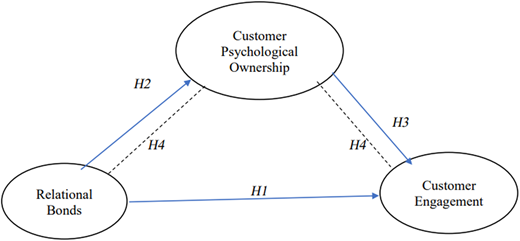
RB, comprising four components (financial, social, customisation and structural bonds), act as the independent variable (see Section 2.1), while CE acts as the dependent variable (see Section 2.2) and CPO acts as a mediator variable (see Section 2.3). All these variables were measured on a five-point Likert scale ranging from strongly disagree (1) to strongly agree (5). Figure 1 shows the conceptual model of the present study.
3.3 Analytical procedures
Partial least squares structural equation modelling (PLS-SEM) was used in this study following the guidelines of Hair et al. (2017). PLS-SEM is suitable when research objectives are predictive in nature, models involve higher-order constructs and mediating relationships, as in the present study. Additionally, the data show deviations from normality (see Table 2), which further supports the use of PLS-SEM over covariance-based structural equation modelling. The data collected were screened for missing values and outliers using Statistical Package for the Social Sciences (SPSS). Descriptive statistics were employed to summarise the profile of participants. Normality of data was checked using the Kolmogorov–Smirnov test. Furthermore, in line with SEM guidelines, the reflective measurement model’s internal consistency was established using composite reliability and Cronbach’s alpha, and convergent validity was assessed using factor loadings and average variance extracted (AVE). Discriminant validity was examined using the Fornell-Larcker criterion and the heterotrait-monotrait (HTMT) ratio. The structural model (reflective-formative) was validated by examining goodness-of-fit, including standardised root mean square residual (SRMR) and normed fit index (NFI), as well as the coefficient of determination (R2), effect size (f2) and Stone-Geisser’s Q2, following the guidelines recommended by Hair et al. (2017). SEM was then applied to test the framed hypotheses. Finally, Harman’s single-factor test was used to assess the robustness of the results.
4. Results
4.1 Demographic profile
Participants in the present study were predominantly male (55.96%), followed by females (44.04%). A majority of participants fell into the 36–50 age group (40.07%), followed by 26–35 (36.92%), 20–25 (15.07%), and over 51 (7.94%). Furthermore, most of the participants held a bachelor’s degree (46.03%), followed by postgraduate (42.72%), doctorate (4.96%), intermediate (3.81%) and high school or below qualifications (2.48%). With respect to income, a large proportion of participants had a monthly income in the range of Rs 60,000 to Rs 75,000 (39.24%), followed by income between Rs 45,001 and Rs 60,000 (33.94%), above Rs 75,000 (18.54%), between Rs 30,001 and Rs 45,000 (5.96%) and income below Rs 30,000 (2.32%). Moreover, most participants (35.76%) had stayed at a luxury hotel (three-star and above hotels) three times, followed by two visits (31.29%), four visits (27.32%) and more than four visits (5.63%). Table 1 reports the demographic profile of respondents.
Demographic profile
| Demographic variable | Category | Frequency | Percentage |
|---|---|---|---|
| Gender | Male | 352 | 55.96% |
| Female | 277 | 44.04% | |
| Age (in years) | 20–25 | 95 | 15.07% |
| 26–35 | 232 | 36.92% | |
| 36–50 | 252 | 40.07% | |
| Over 51 | 50 | 7.94% | |
| Qualification | High school and below | 16 | 2.48% |
| Intermediate | 24 | 3.81% | |
| Bachelor’s degree | 290 | 46.03% | |
| Postgraduate | 269 | 42.72% | |
| Doctoral | 31 | 4.96% | |
| Income (Rs) | Below 30,000 | 15 | 2.32% |
| 30,001 to 45,000 | 37 | 5.96% | |
| 45,001 to 60,000 | 213 | 33.94% | |
| 60,001 to 75,000 | 247 | 39.24% | |
| Above 75,000 | 117 | 18.54% | |
| Number of visits | Two | 197 | 31.29% |
| Three | 225 | 35.76% | |
| Four | 172 | 27.32% | |
| More than four | 35 | 5.63% |
4.2 Normality of the data
The Shapiro–Wilk test should return non-significant values (Field, 2024), and kurtosis and skewness values should fall within the range of ±2 to establish normality of the data (George, 2011). Table 2 presents the results of the normality tests.
Normality tests
| Constructs | Skewness | Kurtosis | Shapiro–wilk (p-value) | Normality decision |
|---|---|---|---|---|
| Relational bonds | −1.292 | 2.796 | 0.00* | Not perfectly normal |
| Customer engagement | −1.012 | 3.370 | 0.00* | Not perfectly normal |
| Customer psychological ownership | 3.30 | 11.440 | 0.00* | Not perfectly normal |
Note(s): (*) indicates statistical significance
The Shapiro–Wilk test revealed significant results (p-value = 0.00). Skewness and kurtosis values do not fall within the range of −2 to +2. Therefore, given the non-normal distribution of the data and the predictive nature of the objectives, PLS-SEM was considered as a more suitable analytical technique.
4.3 Measurement model (first order)
The Cronbach’s alpha and composite reliability of a financial bond (0.799, 0.882), social bond (0.840, 0.886), CB (0.924, 0.940), structural bond (0.844, 0.912), CPO (0.879, 0.912), cognitive engagement (0.748, 0.856), affective engagement (0.818, 0.879) and activation engagement (0.782, 0.873) are above the recommended threshold of 0.7, suggesting that the scale items are internally consistent. On examining convergent validity, the outer loadings for RB (ranging between 0.756 and 0.859), CPO (between 0.799 and 0.850) and CE (0.770 and 0.849) are above the threshold of 0.708. Moreover, the AVE for all lower-order constructs (LOC) is above the recommended threshold of 0.5. To establish discriminant validity, the Fornell and Larcker criterion showed that the square root of each construct’s AVE should be greater than its highest correlation with any other construct, and the HTMT correlation should be less than 0.90. Table 3 and Figure 2 present the factor loadings, reliability and AVE values, while Table 4 (a and b) shows the discriminant validity.
Factor loadings, reliability and AVE
| Higher-order constructs | Lower-order constructs | Item codes | Factor loadings | Alpha coefficient | Composite reliability | AVE |
|---|---|---|---|---|---|---|
| Relational bonds | Financial bond | FB1 | 0.858 | 0.799 | 0.882 | 0.713 |
| FB2 | 0.819 | |||||
| FB3 | 0.855 | |||||
| Social bond | SB1 | 0.796 | 0.840 | 0.886 | 0.608 | |
| SB2 | 0.756 | |||||
| SB3 | 0.806 | |||||
| SB4 | 0.762 | |||||
| SB5 | 0.776 | |||||
| Customisation bond | CB1 | 0.848 | 0.924 | 0.940 | 0.724 | |
| CB2 | 0.841 | |||||
| CB3 | 0.843 | |||||
| CB4 | 0.859 | |||||
| CB5 | 0.858 | |||||
| CB6 | 0.857 | |||||
| Structural bond | STB1 | 0.808 | 0.844 | 0.912 | 0.632 | |
| STB2 | 0.771 | |||||
| STB3 | 0.780 | |||||
| STB4 | 0.825 | |||||
| STB5 | 0.799 | |||||
| STB6 | 0.785 | |||||
| Customer psychological ownership | Psy1 | 0.850 | 0.879 | 0.912 | 0.674 | |
| Psy2 | 0.841 | |||||
| Psy3 | 0.805 | |||||
| Psy4 | 0.799 | |||||
| Psy5 | 0.808 | |||||
| Customer engagement | Cognitive engagement | CE1 | 0.846 | 0.748 | 0.856 | 0.664 |
| CE2 | 0.827 | |||||
| CE3 | 0.770 | |||||
| Affective engagement | AFF1 | 0.825 | 0.818 | 0.879 | 0.645 | |
| AFF2 | 0.773 | |||||
| AFF3 | 0.773 | |||||
| AFF4 | 0.840 | |||||
| Activation engagement | ACT1 | 0.849 | 0.782 | 0.873 | 0.696 | |
| ACT2 | 0.807 | |||||
| ACT3 | 0.846 | |||||
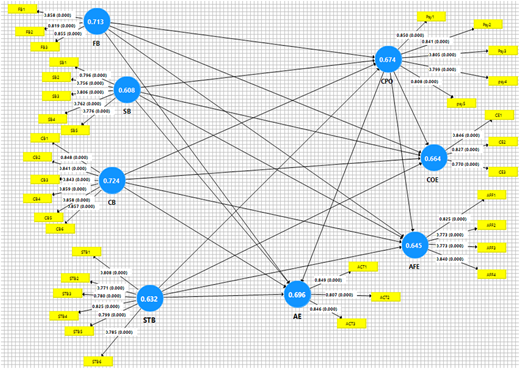
Factor loadings and AVE for the outer model. Note(s): CB: customisation bond; CPO: customer psychological ownership; SB: social bond; STB: structural bond; AE: activation engagement; AFE: affective engagement; COE: cognitive engagement. Source(s): SmartPLS output
Factor loadings and AVE for the outer model. Note(s): CB: customisation bond; CPO: customer psychological ownership; SB: social bond; STB: structural bond; AE: activation engagement; AFE: affective engagement; COE: cognitive engagement. Source(s): SmartPLS output
(a and b) Discriminant validity
| CB | CPO | FB | SB | STB | AE | AFE | COE | |
|---|---|---|---|---|---|---|---|---|
| (a) Fornell-Larcker criterion | ||||||||
| CB | 0.851 | |||||||
| CPO | 0.263 | 0.821 | ||||||
| FB | 0.254 | 0.192 | 0.844 | |||||
| SB | 0.243 | 0.182 | 0.213 | 0.78 | ||||
| STB | 0.299 | 0.302 | 0.224 | 0.255 | 0.80 | |||
| AE | 0.211 | 0.162 | 0.120 | 0.053 | 0.18 | 0.834 | ||
| AFE | 0.226 | 0.194 | 0.151 | 0.159 | 0.23 | 0.334 | 0.803 | |
| COE | 0.28 | 0.333 | 0.156 | 0.197 | 0.31 | 0.328 | 0.392 | 0.815 |
| (b) HTMT ratio | ||||||||
| CB | ||||||||
| CPO | 0.290 | |||||||
| FB | 0.297 | 0.227 | ||||||
| SB | 0.272 | 0.207 | 0.259 | |||||
| STB | 0.329 | 0.337 | 0.263 | 0.296 | ||||
| AE | 0.246 | 0.193 | 0.153 | 0.067 | 0.206 | |||
| AFE | 0.256 | 0.224 | 0.184 | 0.189 | 0.266 | 0.417 | ||
| COE | 0.334 | 0.408 | 0.199 | 0.238 | 0.38 | 0.426 | 0.505 | |
Note(s): CB: customisation bond; CPO: customer psychological ownership; SB: social bond; STB: structural bond; AE: activation engagement; AFE: affective engagement; COE: cognitive engagement
Table 4(a) clearly shows that in the Fornell and Larcker criterion, the square root of AVE for financial bond (0.844), social bond (0.780), CB (0.851), structural bond (0.80), CPO (0.821), cognitive engagement (0.815), affective engagement (0.803) and activation engagement (0.834) is greater than the correlations with other constructs. In addition, Table 4(b) indicates that the intercorrelation values of the HTMT ratio range between 0.153 and 0.505 (<0.90), which supports the establishment of discriminant validity.
4.4 Measurement model (second order)
Jarvis et al. (2003) recommend examining directionality (causal direction of constructs), interchangeability (whether the indicators are interchangeable or not), covariation (indicators’ independence or relatedness) and nomological net (expectancy of similar or different antecedents and consequents) to determine the nature of the measurement model (reflective or formative). The mental exercise based on these recommendations infers the model’s reflective-formative nature. Moreover, to validate the second-order model, the guidelines of Hair et al. (2017) were followed. Indicator multicollinearity (high correlation between formative indicators) was assessed using the variance inflation factor approach, and the statistical significance and relevance of outer weights were examined using the bootstrapping procedure. Hair et al. (2017) suggest that the model is considered multicollinearity-free when its values are <3. The outer weights should be significant, or the outer loadings should be greater than 0.5. Table 5 presents the assessment of multicollinearity and significance of the outer weights of the formative constructs.
Assessment of multicollinearity and significance of outer weights of formative constructs
| HOC | LOC | Outer weights | t-statistics> 1.96 | p-values | Outer loadings/factor loading | t-statistics >1.96 | VIF |
|---|---|---|---|---|---|---|---|
| Relational bonds | FB | 0.185 | 2.587 | 0.009* | 0.475 | 6.471 | 1.117 |
| SB | 0.192 | 2.629 | 0.009* | 0.493 | 6.733 | 1.126 | |
| CB | 0.472 | 6.425 | 0.000* | 0.738 | 13.951 | 1.172 | |
| STB | 0.579 | 8.704 | 0.000* | 0.810 | 17.889 | 1.163 | |
| Customer engagement | COE | 0.750 | 11.422 | 0.000* | 0.931 | 32.320 | 1.245 |
| AFE | 0.311 | 3.665 | 0.000* | 0.665 | 10.155 | 1.252 | |
| AE | 0.179 | 2.135 | 0.035* | 0.529 | 7.022 | 1.187 |
Note(s): (*) indicates significance at p < 0.05. CB: customisation bond; CPO: customer psychological ownership; SB: social bond; STB: structural bond; AE: activation engagement; AFE: affective engagement; COE: cognitive engagement
Table 5 clearly shows that multicollinearity does not create any adverse impact as it is well below the threshold of 3, ranging between 1.117 and 1.252. Outer weights are significant at p-values <0.05, in line with the recommendations of Hair et al. (2017). See also Figures 3 and 4.
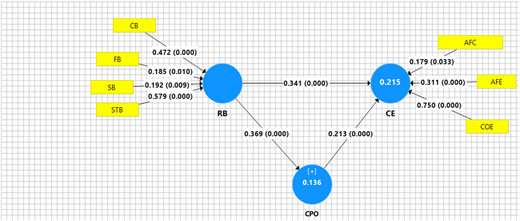
Outer weights and path coefficients with p-values. Note(s): CB: customisation bond; RB: relational bonds; SB: social bond; STB: structural bond; CPO: customer psychological ownership; AE: activation engagement; AFE: affective engagement; COE: cognitive engagement; CE: customer engagement. Source(s): SmartPLS output
Outer weights and path coefficients with p-values. Note(s): CB: customisation bond; RB: relational bonds; SB: social bond; STB: structural bond; CPO: customer psychological ownership; AE: activation engagement; AFE: affective engagement; COE: cognitive engagement; CE: customer engagement. Source(s): SmartPLS output
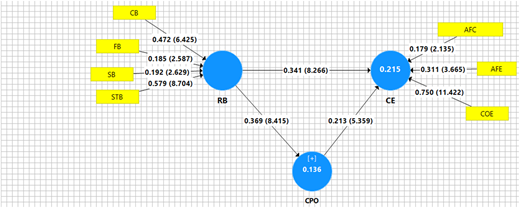
Outer weights and R-squared with t-statistics. Note(s): CB: customisation bond; RB: relational bonds; SB: social bond; STB: structural bond; CPO: customer psychological ownership; AE: activation engagement; AFE: affective engagement; COE: cognitive engagement; CE: customer engagement. Source(s): SmartPLS output
Outer weights and R-squared with t-statistics. Note(s): CB: customisation bond; RB: relational bonds; SB: social bond; STB: structural bond; CPO: customer psychological ownership; AE: activation engagement; AFE: affective engagement; COE: cognitive engagement; CE: customer engagement. Source(s): SmartPLS output
4.5 Structural model
The estimated SRMR and NFI of the model are 0.036 (less than the recommended level of 0.08) and 0.944 (greater than the recommended level of 0.9), respectively, indicating that the model has a good fit (see Table 6). The R-squared values for CE (0.215) and CPO (0.136) are above the minimum acceptable level of 0.10, indicating adequate explanatory power (Ozili, 2023). The R-squared for CE is 0.215, which shows that RB and CPO account for a 21.5% change in CE. Similarly, an R-squared for CPO is 0.136, which indicates that RB accounts for a 13.6% change in CPO. Furthermore, the effect size (f-squared) of RB (0.128) and CPO (0.050) on CE reveals that the omission of the exogenous variables has a weak impact on the R-squared values of the endogenous variable, as these values are less than 0.15. Likewise, the effect size of RB on CPO is 0.158, which suggests that the removal of RB (the exogenous variable) has a medium impact on the R-squared value (see Table 7). Moreover, based on the blindfolding procedure – with an omission distance of 7 – it was revealed that the Q2 values of CE (0.109) and CPO (0.091) are greater than zero (see Figure 5 and Table 8), which demonstrates that the model has adequate predictive relevance (Shmueli et al., 2019).
Fit indices
| Indices | Saturated model | Estimated model |
|---|---|---|
| SRMR | 0.036 | 0.036 |
| NFI | 0.944 | 0.944 |
f-squared
| Paths | Original sample | t-statistics | p-values |
|---|---|---|---|
| CPO → CE | 0.05 | 2.542 | 0.011 |
| RB → CPO | 0.158 | 3.573 | 0 |
| RB → CE | 0.128 | 3.782 | 0 |
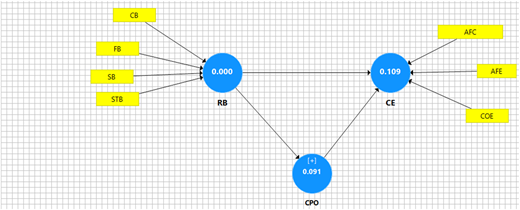
Q2-based cross-validated redundancy. Note(s): CB: customisation bond; RB: relational bonds; SB: social bond; STB: structural bond; CPO: customer psychological ownership; AE: activation engagement; AFE: affective engagement; COE: cognitive engagement; CE: customer engagement. Source(s): SmartPLS output
Q2-based cross-validated redundancy. Note(s): CB: customisation bond; RB: relational bonds; SB: social bond; STB: structural bond; CPO: customer psychological ownership; AE: activation engagement; AFE: affective engagement; COE: cognitive engagement; CE: customer engagement. Source(s): SmartPLS output
4.5.1 Testing of hypotheses
To assess the hypothesised relationships, a complete bootstrapping procedure with 5,000 subsamples and 500 iterations was employed using SmartPLS 3.2.9. This also generates a “bias-corrected confidence interval” to assess the significance of the hypotheses. A non-zero bias-corrected confidence interval indicates that the relationships are significant. Table 9 (a and b) shows the results of the hypothesised testing (see also Figure 6).
(a and b) Direct and mediating effects
| Hypotheses | Paths | Beta | SE | t-statistics | p-values | 95% bias-corrected confidence interval | Decision | |
|---|---|---|---|---|---|---|---|---|
| 2.50% | 97.50% | |||||||
| Table 9(a) Direct effect | ||||||||
| H1 | RB → CE | 0.341 | 0.041 | 8.266 | 0.000* | 0.255 | 0.416 | Supported |
| H2 | RB → CPO | 0.369 | 0.044 | 8.415 | 0.000* | 0.278 | 0.449 | Supported |
| H3 | CPO → CE | 0.213 | 0.039 | 5.359 | 0.000* | 0.138 | 0.291 | Supported |
| Hypothesis | Paths | Indirect effect | SE | t-statistics | p-values | 95% bias-corrected confidence interval | Decision | |
|---|---|---|---|---|---|---|---|---|
| 2.50% | 97.50% | |||||||
| Table 9(b) Mediating effect | ||||||||
| H4 | RB → CPO → CE | 0.079 | 0.018 | 4.370 | 0.000* | 0.048 | 0.118 | Partial mediation |
Note(s): RB: relational bonds; CPO: customer psychological ownership; CE: customer engagement
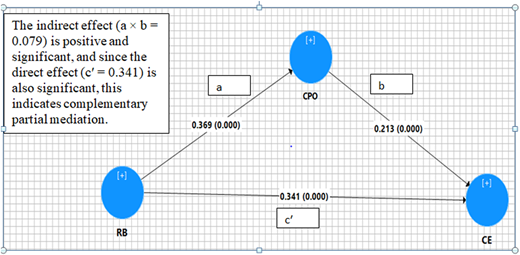
Mediating effect of customer psychological ownership. Note(s): RB: relational bonds; CPO: customer psychological ownership; CE: customer engagement. Source(s): SmartPLS output
Mediating effect of customer psychological ownership. Note(s): RB: relational bonds; CPO: customer psychological ownership; CE: customer engagement. Source(s): SmartPLS output
The results of the study (Hypothesis H1) show that RB have a significant positive impact on CE, with a beta coefficient of 0.341, t-statistics of 8.266 and a p-value <0.01, indicating that RB help keep customers engaged with the organisation. The results are consistent with studies by Zhai and Chen (2023) and Chen and Keng (2023). Furthermore, for Hypothesis H2, the bootstrapping procedure (with a beta coefficient of 0.369, t-statistics of 8.415 and a p-value <0.01) revealed that RB had a significant positive impact on CPO, suggesting that the effective implementation of RB fosters CPO. These findings are in line with Lee et al. (2024). With respect to Hypothesis H3, the results demonstrate that CPO has a significant positive impact on CE (with a beta coefficient of 0.213, t-statistics of 5.359 and a p-value <0.01), implying that CPO helps hotels keep customers engaged and derive benefits from such engagement. These findings are in agreement with Kumar and Nayak (2019) and Li et al. (2021). However, previous studies (Chang et al., 2021; Parahyta and Sobari, 2022; Chen and Keng, 2023) have examined only three bonds (financial, social and structural) in the relationship between RB, CE and CPO, whereas the present study extends this relationship by including a CB, which has remained unexplored and contributes to the existing literature.
4.5.2 The mediating role of customer psychological ownership
The mediating role of CPO in the relationship between RB and CE was examined using a bootstrap approach because of its advantages (no normality assumptions and high statistical power) over the Baron and Kenny and Sobel tests (Zhao et al., 2010). The analysis revealed a significant indirect effect of CPO in the relationship between RB and CE, with a path coefficient of 0.079 (0.213 × 0.369), a t-value of 4.370 and a p-value <0.01 (see Table 9(b) and Figure 6). Moreover, the indirect effect is statistically significant and positive, and the direct effect is also significant, indicating complementary partial mediation (Zhao et al., 2010). Therefore, H4 is accepted and contributes to the existing literature. This complementary partial mediation indicates that relational bonding strategies should be combined with CPO mechanisms to strengthen CE and maximise long-term customer value.
4.5.3 Common method bias
This study used SPSS to conduct Harman’s single-factor test, as it is sufficiently sensitive to detect CMB in the dataset (Fuller et al., 2016). If a single factor variance exceeds the 50% threshold, the data are said to be affected by CMB. Table 10 reports the results of Harman’s single-factor test.
Harman’s single-factor test
| Component | Initial eigenvalues | Extraction sums of squared loadings | ||||
|---|---|---|---|---|---|---|
| Total | % of variance | Cumulative % | Total | % of variance | Cumulative % | |
| 1 | 8.234 | 23.526 | 23.526 | 8.234 | 23.526 | 23.526 |
| 2 | 3.026 | 8.646 | 32.172 | |||
| 3 | 2.948 | 8.423 | 40.595 | |||
| 4 | 2.598 | 7.423 | 48.018 | |||
| 5 | 2.425 | 6.927 | 54.945 | |||
| 6 | 1.851 | 5.287 | 60.232 | |||
| 7 | 1.529 | 4.368 | 64.601 | |||
| 8 | 1.249 | 3.569 | 68.169 | |||
Note(s): Extraction method: principal component analysis
Table 10 clearly shows that the single factor accounts for 23.52% of the total variance, which is less than the 50% threshold. The results show that CMB is not a concern in the present study.
5. Discussion
5.1 Theoretical implications
This study contributes to relationship marketing theory in three important ways. First, including the CB as an additional dimension of RB refines SET. Existing studies (Zhang et al., 2021; Chen and Keng, 2023; Lee et al., 2024) have only considered three dimensions (financial, social and structural) of RB, which capture a relatively transactional form of interaction. In contrast, CB reflects the extent to which firms adapt their offerings to align with customer-specific needs, thereby generating a perception that the service provider values customer individuality and subsequently stimulates CE. This finding extends SET beyond transactional exchanges by highlighting the role of participatory and personalisation-based relational mechanisms in hospitality settings.
Second, this study advances SDT by empirically establishing CPO as a central psychological mechanism linking RB to CE. This suggests that instilling CPO provides intrinsic motivation for customers to exhibit engagement behaviours, as perceived ownership satisfies customers’ needs for autonomy, competence and relatedness. Rather than merely testing a relationship, the findings refine SDT by explaining how perceived ownership translates motivational states into sustained CE.
Third, the study enriches POT in two ways: first, by empirically testing the direct relationship between RB and CPO, and second, by establishing CPO as a mediator between RB and CE. The implication is that the perception of customer individuality deepens the sense of ownership and personal connection to the firm. Moreover, the study clarifies that RB not only impact CE directly but also influences it indirectly by generating CPO and fostering CE. This mechanism advances POT by extending it from a static sense of ownership to an experiential sense of ownership in the hospitality context.
5.2 Managerial implications
The present study has significant implications for decision-makers in the hospitality industry. The significant positive impact (direct and indirect) of RB on CE indicates that relational investment should be considered as a strategic resource rather than merely from a marketing perspective. In addition, the mediating role of CPO further suggests that the decisions regarding personalisation, customer involvement and service design must be aligned with the objectives of long-term relational equity. Therefore, decision-makers should carefully consider resource allocation, shifting focus to relational and customisation-based strategies that instil sustained CPO and the competitive advantage.
The important role of RB in predicting CE and CPO confirms that RB are a strategic approach to enhance CE and CPO. The impact of RB on CE and CPO can be further strengthened by extending non-cash discounts (e.g. free lunch), gifts to customers and by giving customers greater control over tailoring hotel packages. This also instils a sense of PO among customers. Hotel management should also invest heavily in service integration (collaboration with travel agents) and make every effort to integrate the services required by customers into a unified offering, thereby instilling a home-like feeling in customers’ minds. For example, hotels should include options such as travel services, pick-up and drop-off services and car rental services in their packages for customers’ convenience.
Furthermore, hotel management should incorporate sustainable practices and invite guest feedback to improve service quality, thereby fostering PO. In addition, they should develop digital platforms through which prospective customers can virtually tour the hotel before booking, thus fostering a sense of attachment and familiarity and paving a smooth path for hoteliers to engage with customers. Lastly, hoteliers should focus on deploying robots to welcome guests and assist them in various service-related tasks to enhance the service experience and improve CE and CPO.
The impact of CPO on CE can be strengthened by providing more control and flexibility to customers by integrating hotel rooms with the Internet of Things. For example, allowing customers to check in through mobile apps, smart-card door locking systems and assigning rechargeable smart cards to loyal customers. Additionally, although staff training to handle different types of customers is already part of everyday practice in hotels, more attention is needed to train staff to build a good rapport with regular customers. Hotel management should also encourage guests to participate in eco-friendly activities (such as planting trees in the vicinity and heritage preservation) and provide recognition through certificates and discounts for such sustainable actions.
Finally, the results revealed that CPO partially mediates the relationship between RB and CE (complementary partial mediation). This means that other potential mediators intervene in this relationship. Moreover, studies (Li et al., 2021; Yttermyr and Wennberg, 2022) suggest that CPO is still at a nascent stage; hence, hotel management should devise strategies to instil CPO.
5.3 Limitations and future research agenda
The study has a few limitations. First, only Srinagar (JK) and Leh (Ladakh) divisions were considered for data collection, which limits the generalisability of the findings to other areas. Second, demographic factors were only used to ensure a representative sample size and were not included in the analysis. Third, this study is cross-sectional in nature, meaning that the data relating to the constructs (RB, CE and CPO) were collected simultaneously at one point in time, which does not allow for strong causal inferences. Finally, RB were examined at a higher-order construct level, which, while theoretically acceptable, omits the effect of LOC on CE and CPO.
Several future research directions are proposed based on these limitations. First, cross-regional or cross-cultural samples should be used in order to enhance the external validity of the findings and improve the explanatory power of the model. Second, a longitudinal design would capture accurate variations in CE and CPO over time. Third, the examination of the relative contributions of RB (financial, social, customisation and structural) on CE and CPO would provide more fine-grained insights. Lastly, customer gratitude and service climate could be integrated into the existing model to examine parallel mediation, as RB may simultaneously foster CPO, a sense of emotional appreciation (gratitude) and service climate, thereby enhancing CE (Palmatier et al., 2009). By conceptualising and testing this parallel mediation, researchers can provide a more robust theoretical framework for understanding the complex interplay of cognitive and affective processes that transform relationship marketing efforts into meaningful, multifaceted CE in the hospitality sector.
6. Conclusion
This study explored the relationships between RB, CPO and CE, considering their growing importance in strengthening customer–firm relationships, fostering loyalty and increasing competitive advantage (Joo, 2020). The research findings for the first hypothesis revealed that RB positively influence CE in the hospitality industry and are consistent with SET. Therefore, incorporating RB from the right perspective gives service providers leverage to strengthen the ongoing relationship and reap the benefits thereof. Regarding the second hypothesis, RB are very effective in fostering CPO and are in line with POT. This will helps hoteliers understand the role of RB in promoting CPO. Furthermore, the bootstrapping procedure showed that CPO has a significant positive impact on CE, which is aligned with SDT. This suggests that CPO motivates customers to learn, feel and advocate for service providers. Moreover, the present study adds a novel contribution by highlighting the mediating role of CPO in the relationship between RB and CE, which enables managers to shape customers’ inner motivations by fulfilling their social and emotional needs, thereby enhancing CPO. This study contributes to the literature on relationship marketing in developing countries, as it demonstrates the significant positive impact of RB on CE through CPO in the Indian hospitality sector, an area that is not often explored.
The supplementary material for this article can be found online.

