This study investigates how enterprise social media use shapes employee attitudes and behaviors, with a particular focus on the role of fear of missing out (FoMO). It examines the relationships among enterprise social media intensity, FoMO, employee creativity and emotional exhaustion and explores how prevention and promotion focused regulatory orientations moderate these relationships. The study also compares these dynamics across employees in China and Malaysia to understand contextual differences.
A time-lagged, multi-wave survey design was conducted with full-time employees working in China and Malaysia. Measures of enterprise social media use, FoMO, regulatory focus, emotional exhaustion and creativity were collected across separate waves to reduce common method bias and capture temporal effects.
High-intensity use of enterprise social media was positively associated with employees' FoMO in both China and Malaysia. FoMO, in turn, significantly associated with greater emotional exhaustion and higher employee creativity. FoMO also demonstrated a significant mediating effect between enterprise social media intensity and employee outcomes. Cross-country comparison showed broadly consistent patterns across the two contexts.
The findings underscore the importance of managing FoMO in organizational digital communication environments. Organizations seeking to promote decent work, enhance employee well-being and support sustainable performance should design enterprise social media practices that reduce FoMO triggers and support healthy digital engagement.
This study contributes to the emerging literature by integrating enterprise social media use, FoMO and regulatory focus theory into a single model. It is among the first to examine these mechanisms across two cultural contexts using a multi-wave design, highlighting the psychological risks of digitally intensive work environments and their implications for creativity and well-being.
1. Introduction
Enterprise social media constitutes a digital platform that leverages existing social media technologies to facilitate effective communication, collaboration and knowledge sharing within organizations (Braojos et al., 2019). Recent research by Bhatti et al. (2024) showed that digital platforms enhance creativity and knowledge sharing among remote workers through explicit and tacit mechanisms. Enterprise social media also enables continuous knowledge exchange moderated by trust and social cognition factors (He et al., 2024), while digital transformation, underpinned by sound governance and user experience design, has increased collaboration and innovation in enterprise contexts (Aditya, 2024). Professional enterprise social media software, encompassing functionalities such as project management, information dissemination, process validation and team communication, empowers organizations to streamline management hierarchies, foster team cohesion, enhance operational efficiency, reduce costs and bolster competitiveness (Zhu et al., 2024). Prior research has predominantly highlighted the beneficial impacts of enterprise social media adoption by organizations and employees, including facilitation of employee performances (Strich et al., 2023) and stimulation of employee creativity (Sun et al., 2020).
Despite its benefits, enterprise social media poses potential drawbacks for employees. The causes of these hazards stem from the platform's affordances: employees remain connected with their organizations and peers regardless of time or location, which facilitates information accessibility but also blurs the boundaries between work and non-work domains (Sun et al., 2024). Such constant connectivity and ease of access may contribute to information overload (Bouattour and Bouaziz, 2023). These harms manifest as stress, distraction and cognitive strain. The subsequent effects on employee outcomes are well documented: a growing body of literature has highlighted the “dark side” of using enterprise social media (Yin et al., 2023), emphasizing its adverse effects on employee well-being (Bouattour and Bouaziz, 2023), employee creativity (Si et al., 2023) and knowledge behaviors, including reduced knowledge sharing and increased knowledge hiding (Shen and Kuang, 2022). When information inflow exceeds an employee's processing capacity, it evokes feelings of loss of control, which in turn influences attitudes and behaviors (Wang et al., 2023). Such intense interactions with enterprise social media may trigger fear of missing out (FoMO) stress. Cavanaugh et al. (2000) conceptualized job stress as a two-dimensional construct comprising challenge stressors that foster motivation and growth, and hindrance stressors that constrain performance and well-being. Adopting this framework, the present study proposes, consistent with this framework, that FoMO may function as either a challenge-type stressor which associated with engagement and creativity or a hindrance-type stressor which associated with exhaustion depending on individual appraisal processes. As challenge and hindrance appraisals were not directly measured in the current study, employee creativity and work exhaustion serve as outcome-based indicators reflecting these respective appraisal pathways.
The intensive use of enterprise social media can also simultaneously induce strain and work exhaustion (Shen and Kuang, 2022), characterized by chronic mental fatigue. The present study focused on FoMO within high-intensity enterprise social media contexts as a potential dual-faced stressor that generates both positive (creativity) and negative (exhaustion) outcomes. The present study adopted the transactional theory of stress (Lazarus and Folkman, 1984) because it accounts for individual variations in stress appraisal, making it suitable for understanding FoMO under different conditions of enterprise social media use. This theory posits that stress outcomes depend on whether individuals appraise a situation as a challenge or a hindrance. In this study, high-intensity enterprise social media use was proposed to be associated with FoMO-related stress, leading employees to respond with either strain reactions (e.g. work exhaustion) or adaptive responses (e.g. employee creativity) based on their appraisal.
To explain individual differences in these appraisals, the study integrated regulatory focus theory (Higgins, 1998) introducing promotion and prevention focus as moderators. According to this theory, employees with a promotion focus tend to view FoMO as an opportunity for growth and engagement, whereas those with a prevention focus perceive FoMO as a potential threat, resulting in anxiety and fatigue. This theoretical framing provides a clear psychological rationale for why the same FoMO experience can yield opposite outcomes across individuals, thereby justifying the inclusion of regulatory focus as a key boundary condition in the model. Despite growing attention to the adverse effects of enterprise social media, prior research has two notable limitations. First, studies have typically examined either positive outcomes (e.g. creativity) or negative outcomes (e.g. exhaustion) in isolation, leaving the simultaneous dual effects of FoMO underexplored. Second, cross-national comparative investigations of these dynamics remain scarce, limiting the generalizability of findings across cultural contexts. To address these gaps, the present study integrates FoMO as a dual-faced stressor within a single model, examining both its detrimental (exhaustion) and beneficial (creativity) consequences. Moreover, by collecting time-lagged data from China and Malaysia, this study provides a cross-cultural extension of the transactional theory of stress to digital work environments. This design allows for testing whether the hypothesized relationships hold consistently across two distinct cultural and economic contexts. Guided by the transactional theory of stress and regulatory focus theory, this study addresses the following research questions:
What is the relationship between high-intensity enterprise social media use and FoMO?
What is the relationship between FoMO and work exhaustion?
What is the relationship between FoMO and employee creativity?
Does FoMO mediate the relationships between high-intensity enterprise social media use and work exhaustion and employee creativity?
Do promotion focus and prevention focus moderate the relationship between enterprise social media use and FoMO?
This study is particularly relevant to United Nations Sustainable Development Goal 8 (Decent Work and Economic Growth), as it examines how digital work environments can be designed to support both employee well-being and sustainable productivity. This is through the exploration of how FoMO on enterprise social media affects employee exhaustion and creativity, thereby offering insights into how organizations can design digital work environments that support decent work, psychological health and long-term productivity.
2. Literature review and hypotheses development
2.1 The transactional theory of stress
According to Lazarus and Folkman's (1984) transactional theory of stress, stress represents a dynamic transaction between an individual and the environment. This interaction illustrates the cognitive appraisal process by which individuals assess environmental demands and their ability to cope (Lazarus and Folkman, 1984). The two components, stimulus (stress) and response (strain), interact through psychophysiological processes that determine the nature of stress and behavioral outcomes. Stress is demonstrated through two key methods: cognitive appraisal and reaction (Maras and Leger, 2024) whereby the former is conducted to determine whether stress is perceived as challenging or hindering. This is subsequently followed by the response behaviors to meet the needs of that stressful situation (Milas et al., 2021).
The transactional framework has become a dominant theoretical lens for examining work-related stress, particularly within information technology and digital communication environments (Huang and Gursoy, 2024). In the context of enterprise social media, increasing organizational dependence intensifies employee–technology interactions (Zhu et al., 2024), and this may lead to FoMO stress. Therefore, it is important to evaluate the employee's reaction in respect of the stress situation, whether FoMO is seen as hindrance stress which causes work exhaustion (Shi et al., 2024b) or is perceived as challenge stress that stimulates employee creativity. Guided by this theoretical foundation, the present study explored how employees cognitively appraised FoMO induced by high-intensity enterprise social media use and how such appraisals led to different behavioral responses.
Building on the challenge-hindrance stressor framework (Cavanaugh et al., 2000), stressors can be appraised differently depending on how individuals interpret situational demands. Challenge stressors are viewed as opportunities for growth and achievement, whereas hindrance stressors are perceived as obstacles that restrict performance. In enterprise social media contexts, FoMO may be appraised as either type of stressor, though the current study infers appraisal type from observed outcomes rather than directly measuring it. When employees view staying updated as an opportunity to gain valuable information and maintain professional visibility, FoMO may act as a challenge stressor that encourages engagement and idea generation. However, when the continuous flow of information is perceived as excessive pressure, FoMO may become a hindrance stressor associated with cognitive resource depletion and exhaustion. Thus, the outcomes of FoMO depend on employees' appraisal of enterprise social media demands. In addition, stress appraisal may vary across cultural settings and Hazzam et al. (2022) found that cultural and regional contexts influenced psychological and behavioral responses to stressors. Building on this, the current research incorporated cross-national data from Malaysia and China, addressing a gap in prior studies that have often overlooked comparative analyses of both positive and negative enterprise social media outcomes. The present study has thereby contributed a cross-cultural extension of the transactional theory of stress to digital work environments.
2.2 The regulatory focus theory
The regulatory focus theory (Higgins, 1998) describes two motivational orientations shaping how individuals pursue goals and interpret situational demands. These orientations are promotion focus which emphasizes advancement and accomplishment, and prevention focus that emphasizes security and responsibility (Tse et al., 2023). Extensively used in organizational behavior research, regulatory focus theory offers valuable insights into how individual motivation influences emotional, attitudinal and behavioral outcomes (Luqman et al., 2021).
The theory has attracted extensive research attention since its publication and its application in organizational and management studies has become increasingly widespread (Chen et al., 2023; Świątkowski and Dompnier, 2020; Vriend et al., 2023). Chen et al. (2023) argued that promotion-focused people are less likely to experience privacy fatigue. Świątkowski and Dompnier (2020) explored a fit effect between performance goals and situational regulatory focus. Chen et al. (2020) tested how promotional focus and preventive focus mitigated the effects of information transparency and network semi-transparency on shared or hidden knowledge. As individuals' regulatory focus influences the perception and appraisal of stressors, employees with promotion focus are inclined to view FoMO as opportunities for growth and aligned with the challenge appraisal under the transactional theory of stress. On the other hand, employees with prevention focus are more likely to perceive FoMO as threats, and this is consistent with the hindrance appraisal (Avnet and Higgins, 2006). Given the differences in these appraisals, it is important to study why the same FoMO experience can yield diverse outcomes across employees.
2.3 The high-intensity use of enterprise social media and FoMO
FoMO is defined as “the pervasive fear that others may have beneficial experiences” (Przybylski et al., 2013) and it is a complex emotional state characterized by a sense of being left out on potentially significant knowledge, new experiences or matters of concern. It is often accompanied by negative emotions such as anxiety, depression and loss (Elhai et al., 2020). Tandon et al. (2021) further stated that FoMO is directly related to fatigue and positively correlated with social media tracking and online social comparison. As such, people with a high level of FoMO may be at more risk of developing hypomania, which is positively correlated with incivility in the workplace and fatigue at work (Tandon et al., 2022).
This study reported that employees' FoMO on enterprise social media is a major source of stress for employees on the premise that such platforms have become a necessity for modern enterprises to communicate, provide feedback and directly allocate work tasks. Being the information receiver, employees experienced FoMO stress when overwhelmed by too much information, and this will likely lead to undesirable consequences. Organizations have increasingly integrated enterprise social media to enhance internal communication, teamwork and knowledge sharing. However, the ubiquitous connectivity afforded by these platforms can lead to excessive use and cause employees to be constantly connected and prone to overload (Gezgin and Kurtca, 2023). FoMO or the discomfort of being left out of potentially valuable experiences will emerge when individuals feel anxious about missing important information (Sharma et al., 2023) due to information overload and heavier workloads (Marsh et al., 2024) as supported by empirical evidence. With enterprise social media use surpasses optimal thresholds, employees will experience intensified stress and tension (Wang et al., 2023). Recent studies confirm workplace FoMO predicts burnout (Shi et al., 2024a; Marsh et al., 2024). Unlike Si et al. (2023), who examined technostress without FoMO or regulatory focus, the present study positions FoMO as the central mediator and tests moderated mediation. Therefore, the following hypothesis was proposed:
High-intensity enterprise social media use is positively associated with FoMO.
2.4 FoMO and work exhaustion (WE)
Drawing upon the transactional theory of stress, when employees perceive FoMO as a hindering stressor, it disrupts focus and depletes emotional energy, thereby impairing job performance. Tandon et al. (2022) demonstrated that FoMO induced by workplace social media use would lead to “phubbing” behavior and increased exhaustion. Similarly, Ren et al. (2024) described exhaustion from enterprise social media use as the depletion of emotional and psychological resources required to meet continuous communication demands. Oksa et al. (2022) further founded that enterprise social media-related roles blurred the lines between work and home domains, along with amplifying fatigue and burnout. Therefore, the following hypothesis was proposed:
FoMO is positively associated with work exhaustion.
2.5 FoMO and employee creativity (EC)
When appraised as a challenge stressor (Lazarus and Folkman, 1984), FoMO may motivate proactive information-seeking rather than withdrawal. According to Amabile's (1983) componential theory of creativity, domain-relevant knowledge is a key input to creative outcomes. FoMO-driven engagement with enterprise social media expands employees' access to diverse information and perspectives, enriching the knowledge base from which novel ideas emerge (Lee et al., 2021). Furthermore, Fredrickson's (2001) broaden-and-build theory suggests that challenge appraisals can elicit positive activating emotions (e.g. curiosity, excitement) that broaden cognitive flexibility and build enduring creative resources. Shi et al. (2024a) observed that workplace FoMO could enhance engagement and participation in digital interactions. Employees experiencing FoMO may increase their use of enterprise social media to stay updated, engage socially and expand their knowledge base, all of which are activities that facilitate creativity (Si et al., 2023). These behaviors foster team cohesion and stimulate idea generation, consistent with socio-cognitive views of creativity emphasizing interaction and information diversity (Lee et al., 2021; Balcerowska and Brailovskaia, 2024). Thus, when employees perceive FoMO as an opportunity for learning and social connection, it is hypothesized to be positively associated with employee creativity. According to the transactional theory of stress, these differing outcomes arise from employees' cognitive appraisal of enterprise social media demands. Employees who perceive FoMO-related interactions as opportunities for learning and professional engagement may respond proactively and creatively, whereas employees who perceive the same demands as excessive pressure may experience psychological strain and exhaustion. Therefore, the following hypothesis was proposed:
FoMO is positively associated with employee creativity.
2.6 The mediating role of FoMO
The present study examined FoMO as a mediator linking high-intensity enterprise social media use to employee outcomes. This is drawn from the transactional theory of stress where FoMO represents a stressor that channels the effects of enterprise social media use into strain (work exhaustion) or growth (employee creativity). As the proliferation of social media has amplified awareness of social opportunities, this intensified FoMO and, consequently, work-related stress (Tandon et al., 2022). Therefore, the following hypothesis was proposed:
FoMO mediates the association between high-intensity enterprise social media use and work exhaustion.
The social model of creativity posits that creativity involves a dynamic process of social interaction among participants (Wang et al., 2022). The implementation of enterprise social media facilitates environments in which employees engage in discussions, share insights and provide assistance to one another, thereby enhancing task performance (Sun et al., 2020). When FoMO is perceived as a challenging stressor, it can promote cognitive stimulation and social collaboration, which are conducive to creativity. Therefore, the following hypothesis was proposed:
FoMO mediates the association between high-intensity enterprise social media use and employee creativity.
2.7 The moderating role of promotion focus and prevention focus
Individual regulatory focus moderates the indirect effects of high-intensity enterprise social media use via FoMO. Employees with a prevention focus emphasize obligation and risk avoidance (Appelt and Higgins, 2010) will closely monitor enterprise social media content to avoid missing critical information, thereby heightening FoMO and leading to greater exhaustion (Kim et al., 2020). When using enterprise social media intensively, these individuals engage in vigilant monitoring to avoid missing critical work instructions or feedback. This vigilance is anxiety-driven and consumes emotional resources without providing compensatory gains. Consequently, the FoMO experienced by prevention-focused employees is more likely to be appraised as a hindrance stressor, exacerbating emotional exhaustion. Conversely, employees with a promotion focus will pursue advancement and opportunity (Lanaj et al., 2012) and may experience FoMO as stimulating when using enterprise social media for self-improvement and innovation (Bodhi, 2024). Critically, promotion-focused individuals do not exhibit the same pattern because they are less sensitive to loss-related threats and more sensitive to gain-related opportunities. When experiencing FoMO, they appraise it as a challenge stressor signaling valuable information to be acquired. This appraisal elicits curiosity and energetic engagement, leading to proactive information seeking and knowledge integration – processes that fuel creativity. The same FoMO experience does not produce exhaustion because promotion-focused individuals derive motivational energy from the pursuit of gains rather than depletion from loss prevention.
Therefore, the following hypotheses were proposed:
Prevention focus moderates the indirect positive effect of high-intensity enterprise social media use on work exhaustion through FoMO, such that the indirect effect is stronger when prevention focus is higher.
Promotion focus moderates the indirect positive effect of high-intensity enterprise social media use on employee creativity through FoMO, such that the indirect effect is stronger when promotion focus is higher.
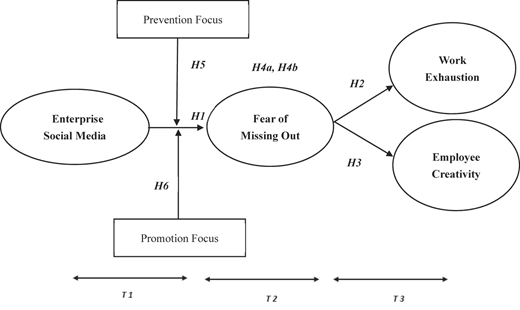
Figure 1 illustrates the present study's research model and the hypothesized relationships therein.
3. Methods
3.1 Sample and data collection
This study collected data from China and Malaysia to provide a broader understanding of the effects of high-intensity enterprise social media use on employees. Including both countries allowed us to validate findings from the China sample using the Malaysian sample, thereby strengthening cross-cultural generalizability. This two-country design was used to test whether the proposed model holds consistently across different settings. As results showed no significant differences between the two samples, the inclusion of both countries supports the cross-cultural robustness and generalizability of the findings.
China represents a technologically advanced market with rapid digital adoption, while Malaysia provides a distinct Southeast Asian perspective, enhancing the global relevance of the research. Prior studies indicate that social media proliferation in both countries has significantly influenced professional settings, fostering collaboration and knowledge sharing. For instance, enterprise social media platforms in Malaysia are recognized for improving teamwork and performance (Yasse and Husin, 2017). Following Hair et al. (2022), we conducted a multi-group analysis (MGA) to test structural differences between the two samples. Results revealed no significant differences, suggesting that the hypothesized relationships hold consistently across both cultural contexts. A pilot study was conducted with 55 employees (30 from China, 25 from Malaysia) and expert content validity review confirmed the clarity and relevance of the adapted items. To strengthen causal inferences and minimize common method bias, we employed a time-lagged data collection approach. Data were gathered in three waves over three months, with one-month intervals between phases. Each wave captured different variables:
Time 1: Demographics and enterprise social media usage patterns.
Time 2: Workplace FoMO and stress perceptions.
Time 3: Outcome variables, including work exhaustion and creativity.
Only participants completing all three phases were included in the final analysis. A purposive sampling method ensured representation across key demographic groups. The sampling frame consisted of employees who had used enterprise social media for work-related tasks for at least six months and were full-time employees. Purposive sampling was selected over probability sampling due to the absence of a complete sampling frame of all enterprise social media users across both countries, as well as the need to ensure adequate representation across multiple demographic categories Surveys were distributed via randomized email invitations and professional networks using WENJUANXING in China and Google Forms in Malaysia. A total of 900 employees were initially invited (600 in China, 300 in Malaysia). At Time 1, 850 responses were received (response rate: 94%). At Time 2, 830 matched responses were retained. At Time 3, 800 matched responses were collected. After removing incomplete and unmatched records, 786 valid three-wave responses remained for analysis (516 from China, 270 from Malaysia), representing a final retention rate of 87% of initial invitations. Participants were incentivized through lottery draws or small monetary rewards to maintain engagement. Respondents were matched across the three-survey waves using their email addresses. To reduce duplicate submissions, survey platform settings restricting multiple responses from the same device or account were applied where possible. Only respondents who completed all survey waves were retained for final analysis, while incomplete or unmatched responses were excluded during the screening process. We collected 786 valid responses (516 from China, 270 from Malaysia), meeting the minimum sample size determined through G*Power analysis (Faul et al., 2009). The sample included employees from diverse backgrounds: most were aged 26–35 (63%), female (66.9%), held a bachelor's degree (64.8%) and had 5–10 years of work tenure (43.3%). Additional details are provided in Table 1. By implementing time-lagged data collection and purposive sampling, this study enhanced external validity, mitigated common method bias and strengthened the robustness of its findings.
3.2 Measures
The scales employed in this investigation have undergone rigorous testing, adaptation and validation in prior studies. Nevertheless, slight modifications were made to these scales to ensure their suitability for the current study model. Appendix summarizes and presents the measurements of the key variables. In doing so, high-intensity enterprise social media use was constructed using three items adapted from Caplan and High (2006), whereas FoMO was evaluated based on five items adapted from Przybylski et al. (2013). To measure work exhaustion, six items were utilized from Tandon et al. (2022) while employee creativity was evaluated through six items adapted from Luqman et al. (2021). Finally, both promotion focus and prevention focus were assessed using nine items each as adapted from Luqman et al. (2021). The study applied a seven-point Likert scale (1 = strongly disagree, 7 = strongly agree) for the measurement construction of these key variables. The English questionnaire was translated into Chinese using the back-translation method. Two bilingual researchers independently translated the items; a third researcher back-translated them into English. Discrepancies were resolved by consensus. No formal inter-rater reliability was calculated; translation equivalence was ensured through expert review.
3.3 Common method bias test
Addressing common method bias is crucial in safeguarding the validity of research findings. This bias arises when questionnaire responses are gathered from a single respondent simultaneously and predominantly perceptual in nature. This study employed a multi-method diagnostic approach to rigorously assess potential common method bias. Initially, Harman's single-factor test was conducted. The results revealed that six constructs exhibited eigenvalues exceeding 1.0, accounting for 74.395% of the total variance. The first construct contributed only 32.277%, which is well below the 50% threshold (Podsakoff et al., 2003). To provide a more stringent diagnostic consistent with contemporary partial least squares-based structural equation modeling (PLS-SEM) practice, a full collinearity assessment approach was subsequently employed. Unlike the traditional factor analysis, this approach uses the variance inflation factors (VIFs) of all constructs in the inner model to detect hidden method bias. According to Kock and Lynn (2012), a model is considered free from common method bias if all inner VIFs are equal to or lower than 3.3. In our analysis, the inner VIFs for the main effects ranged from 1.045 to 2.430. Furthermore, a single-factor CFA comparison was performed to evaluate the data structure. All indicators from the proposed multi-factor model were constrained to load onto a single global factor. This single-factor model exhibited poor statistical properties, yielding an average variance extracted of only 0.219 (significantly below the 0.50 requirement) and a composite reliability of 0.599. Additionally, numerous item loadings dropped to unacceptable or negative levels under this constraint. Lastly, the robust discriminant validity established by the HTMT ratios (detailed in Section 4.1) further corroborates that common method variance did not artificially inflate the construct relationships. These collective diagnostics provide strong evidence that common method bias does not pose a significant threat to the validity of the findings in this study.
4. Results
In the present study, the PLS-SEM-based technique implemented using SmartPLS 4 software was employed to evaluate the hypothesized models. PLS-SEM is commonly used in information system-related research and has several advantages over CB-SEM: (1) PLS-SEM is better suited for statistical analysis with small and medium samples. Compared with covariance-based methods, PLS-SEM has high statistical power for small and medium sample sizes, whereas CB-SEM needs a comparatively large sample size to attain reliability of parameter estimates (Reinartz et al., 2009). (2) PLS-SEM is suitable for the analysis of samples with non-normal data. Maximum likelihood CB-SEM needs indicator variables to be normally distributed. (3) PLS-SEM is suitable for exploratory studies and theory development studies (Hair et al., 2022). A two-step approach was adopted where the measurement model was first assessed to analyze the reliability and validity of the data, and followed by the structural model for ascertaining the relationships between the underlying constructs.
4.1 Measurement model
Table 2 shows that all the criterion loadings exceeded 0.7, except for items PreF4, PreF5, PreF6, PreF7 and PreF8, which were then removed. Several prevention focus items were removed because their factor loadings did not satisfy recommended thresholds for construct reliability and convergent validity. Nevertheless, the retained items demonstrated acceptable reliability and validity statistics, indicating adequate representation of the construct. The four retained items (PreF1, PreF2, PreF3, PreF9) cover the two core dimensions of prevention focus: security-oriented motivation and loss avoidance, which together reflect the central regulatory concern of avoiding negative outcomes as defined by Higgins (1998). The removed items primarily described duty completion and failure avoidance, which overlap substantially with the retained security items rather than adding separate construct coverage. The retained scale therefore represents the core of prevention focus adequately and the non-significant result for H5 is more likely explained by substantive theoretical reasons such as the role of organizational communication norms and task-oriented coping strategies among prevention-focused employees. As for the VIFs criterion, all stood below 5 after excluding item WE5. Meanwhile, the factors within this measurement model demonstrated satisfactory reliability (CR > 0.7) and convergent validity (AVE >0.5). The evaluation of discriminant validity involved three key indicators. The construct was in adherence with the Fornell–Larcker Criterion, which necessitates that the square root of the AVE for each construct surpasses the correlation value of other constructs (see Table 3). Furthermore, the cross-loading results revealed that the outer loadings for each indicator exceeded correlations with other constructs, meeting the assessment criteria. The HTMT values within this model were aligned with the requirements above.
4.2 Structural model
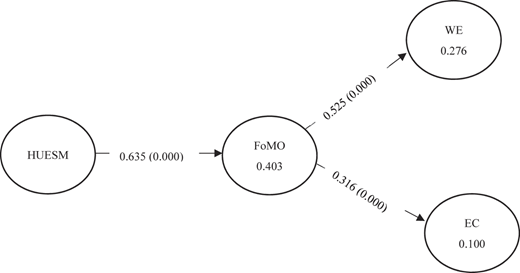
For the Chinese sample, as shown in Figure 2, high-intensity enterprise social media use (β = 0.635, p < 0.001) has a significantly positively associated with on FoMO, thereby supporting hypothesis H1. Likewise, FoMO (β = 0.525, p < 0.001) exhibited a significantly positive impact on work exhaustion and employee creativity based on FoMO (β = 0.316, p < 0.001), thereby affirming hypothesis H2 and hypothesis H3 respectively. The present study also computed effect sizes (f2) and the outcome revealed that high-intensity enterprise social media use (0.403) has a substantial impact on generating R2 for FoMO, while FoMO (0.276) contributed significantly to R2 for work exhaustion. Meanwhile, FoMO (0.100) exhibited a medium effect on producing R2 for employee creativity. Notably, the effect size of FoMO on employee creativity (f2 = 0.100 for China; 0.116 for Malaysia) was smaller than that on work exhaustion (f2 = 0.276 for China; 0.283 for Malaysia), suggesting that FoMO is a stronger direct predictor of exhaustion than of creativity.
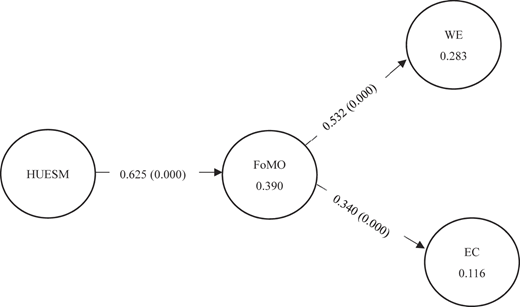
For the Malaysian sample (see Figure 3), high-intensity enterprise social media use (β = 0.625, p < 0.001) exerted a significantly positive influence on FoMO, thereby supporting hypothesis H1. Likewise, FoMO (β = 0.532, p < 0.001) indicated a significantly positive impact on work exhaustion and employee creativity based on FoMO (β = 0.340, p < 0.001), thereby supporting hypothesis H2 and hypothesis H3 respectively. The present study also computed effect sizes (f2) and the results implied that high-intensity enterprise social media use (0.390) has a substantial impact on generating R2 for FoMO, while FoMO (0.283) contributed significantly to R2 for work exhaustion. Meanwhile, FoMO (0.116) exhibited a medium effect on producing R2 for employee creativity. The Q2 value is predictive relevance (Q2) was assessed by performing a blindfold procedure on specified omitted distances. For the Chinese sample, Q2 values were 0.451 for FoMO, 0.326 for work exhaustion, and 0.218 for employee creativity. For the Malaysian sample, Q2 values were 0.438, 0.331 and 0.224 respectively. All Q2 values were greater than zero, indicating that the model possesses predictive relevance based on its endogenous structure (Hair et al., 2022).
To assess the stability and generalizability of the findings, robustness test was conducted using SmartPLS 4. The bootstrap procedure with 5,000 resamples was rerun with 10,000 resamples, the path coefficients, standard errors and p-values remained virtually unchanged, confirming the stability of the significance tests.
4.3 Mediation analysis
The findings unveiled a significant indirect effect between high-intensity enterprise social media use and work exhaustion, as well as between high-intensity enterprise social media use and employee creativity. This was mediated by FoMO (for the Chinese, sample H4a: β = 0.334, p < 0.001; H4b: β = 0.201, p < 0.001; and for the Malaysian sample, H4a: β = 0.333, p < 0.001; H4b: β = 0.213, p < 0.001) and tabulated in Table 4. Therefore, H4a and H4b are supported in both China and Malaysia, confirming that FoMO mediates the relationships between high-intensity enterprise social media use and both work exhaustion and employee creativity.
4.4 Moderated mediation analysis
To test the proposed moderated mediation effects, we followed the analytical framework suggested by Hayes (2015). First, for Hypothesis H5, the results indicated that the moderating effect of prevention focus on the indirect paths was non-significant in both the Chinese sample (β = 0.040, p > 0.05) and the Malaysian sample (β = 0.034, p > 0.05). Thus, H5 was not supported. Regarding Hypothesis H6, we first assessed the Index of Moderated Mediation. As shown in Table 4, the indices for the paths toward employee creativity (EC) was significant for China (β = 0.035, p < 0.01) and Malaysia (β = 0.039, p < 0.05). This confirms that the indirect effect of HUESM on outcomes via FoMO is significantly moderated by promotion focus.8
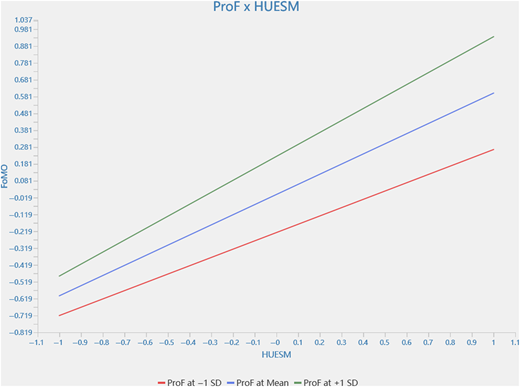
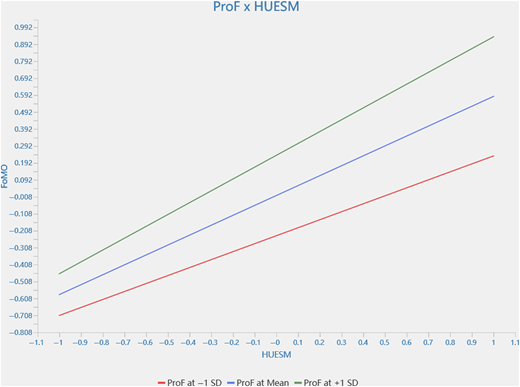
To further probe the significant moderating effect of promotion focus (ProF), we conducted a simple slope analysis on the first stage of the mediation (HUESM to FoMO). As shown in Figure 4 (China) and Figure 5 (Malaysia), the positive relationship between HUESM and FoMO is visibly intensified as the level of promotion focus increases. Quantitatively, for the Chinese sample, the conditional effect of HUESM on FoMO is significantly stronger at high levels of ProF (0.711) compared to low levels (0.493). Similarly, in the Malaysian sample, the effect size increases from 0.471 at low ProF to 0.699 at high ProF. As illustrated in Table 5, the indirect effect of HUESM on both employee creativity and work exhaustion is positive and significant across all examined levels of promotion focus (p < 0.001). Specifically, for the Chinese sample, as promotion focus increases from low (−1 SD) to high (+1 SD), the indirect effect on work exhaustion intensifies from 0.259 to 0.373. These findings provide granular evidence that promotion focus acts as a significant amplifier in the HUESM-FoMO linkage across both cultural contexts.
Finally, the conditional indirect effects were examined at three levels of the moderator (−1 SD, Mean, and +1 SD). As detailed in Table 6, the indirect effects of HUESM on both EC and WE via FoMO remained positive and statistically significant ($p < 0.001$) across all examined levels. Notably, these effects exhibited a monotonic increase as promotion focus (ProF) rose. For example, in the Chinese sample, the indirect effect on work exhaustion (WE) intensified from 0.259 at low levels of ProF to 0.373 at high levels; similarly, in the Malaysian sample, the effect increased from 0.250 to 0.372.
Although a full Johnson–Neyman floodlight analysis was considered, the results confirmed that the effect remains consistently significant throughout the observed range, with no “non-significant region” identified. Collectively, these findings provide robust evidence that individuals with higher promotion focus experience a stronger “magnification effect” regarding the impact of HUESM on psychological and behavioral outcomes via FoMO. Consequently, Hypothesis H6 was fully supported.
4.5 Measurement invariance and multi-group analysis (MGA)
To rigorously compare the Chinese and Malaysian samples, the measurement invariance of composite model (MICOM) procedure was performed (Henseler et al., 2016). This procedure involved three steps: Configural Invariance (Step 1): Confirmed by using identical model structures for both groups. Compositional Invariance (Step 2): The permutation test (5,000 resamples) showed that the original correlations for all constructs were significantly equal to 1.000 (p > 0.05), supporting metric equivalence. Scalar Invariance (Step 3): Assessments of composite mean differences and variance differences yielded non-significant results (p > 0.05), establishing full measurement invariance. Having established invariance, a Permutation-based MGA was conducted to compare path coefficients. The results (see Table 7) indicated no significant differences between the two cultural groups in any hypothesized relationships, suggesting the model's high stability and generalizability.
4.6 Discussion
4.6.1 Direct effects
The present study examined employees' workplace FoMO and their coping strategies within the context of high-intensity enterprise social media usage, as well as investigating influential factors that affect this dynamic relationship in China and Malaysia. The primary aim was to discern whether different perceptions of workplace FoMO (either as challenging or hindering) yielded distinct outcomes on employee performance within the enterprise social media context. Utilizing the transactional theory of stress, this paper delineated the fundamental pathways through which FoMO stress interacted with the enterprise social media environment and elucidated the mechanisms through which it influenced employee performance. The study also examined the role of regulatory focus as a personal characteristic in the interplay among high-intensity use of enterprise social media, workplace FoMO and employee coping strategies. Extending the transactional theory of stress, the present study demonstrates that FoMO is a dual-faced stressor: positively associated with both exhaustion and creativity. This supports the theory's core premise that stress outcomes depend on cognitive appraisal, not the stressor itself.
Consistent with expectations, high-intensity enterprise social media use exhibited a significant association with FoMO, demonstrating that employees must remain vigilant to avoid missing important information and potential losses. As enterprise social media served as a cornerstone tool in organizational settings, employees are entrenched in heightened information dissemination, communication and interaction (Bouattour and Bouaziz, 2023), leading to amplified FoMO levels. The research findings also underscored that FoMO induced work exhaustion and higher employee creativity. When employees experienced increasing FoMO stress on the enterprise social media platform, they may resort to negative coping mechanisms, such as reducing social media platform usage and leading to job burnout or exhaustion (Tandon et al., 2022). Prolonged exposure to FoMO stress may also be associated with lower employees' motivation, work efficiency and caused work exhaustion.
Next, positive coping outcomes emerged when individuals perceived FoMO stress as potentially yielding future rewards and opportunities for personal growth. Enterprise social media serves as a prevalent tool in organizations to foster collaboration, information sharing and knowledge dissemination among employees (Sun et al., 2020). Given that knowledge is pivotal for innovation (Asurakkody and Kim, 2020), the amalgamation of information resources stemming from team interactions fosters divergent thinking and stimulates novel perspectives (Pinkow, 2023), thereby bolstering employee creativity. These findings contribute to the ongoing ESM debate on “dark side versus bright side” effects by Si et al. (2023). FoMO is not inherently negative; its consequences are shaped by regulatory focus. This nuance advances organizational behavior research by showing that individual motivational orientations determine whether digital connectivity harms or enhances performance.
In China, the positive relationship between high-intensity enterprise social media use and FoMO was significant, with FoMO having a notable impact on work exhaustion and creativity. In comparison, similar results were observed in Malaysia, but the effect of FoMO on work exhaustion was slightly elevated compared to China. These findings suggested that while both countries experienced the psychological stress of FoMO, Malaysian employees might have been more susceptible to work exhaustion due to the high demand of enterprise social media engagements. FoMO explained more variance in work exhaustion than in employee creativity. This is theoretically plausible as exhaustion is a direct strain response to perceived stress, whereas creativity is a more distal outcome influenced by multiple factors beyond FoMO (e.g. individual ability, organizational climate).
4.6.2 Mediating role of FoMO
The mediation analysis results in both countries supported the hypothesized indirect effects of high-intensity enterprise social media use on these outcomes, indicating that FoMO was a common stressor across diverse cultural and economic contexts. However, the intensity of these effects was slightly more vigorous in China, underpinned the higher rate of enterprise social media integration in the workplace. In Malaysia, it was more balanced with work exhaustion being significantly affected by FoMO, possibly owing to differences in workplace habits or coping strategies. This reinforced prior researchers that highlighted the potential of enterprise social media causing work exhaustion (Shen and Kuang, 2022; Luqman et al., 2021), but fostering employee creativity (Wang et al., 2022). FoMO construed as obstacle stress would engender unfavorable outcomes, and this indirectly impacted the positive relationship between high-intensity enterprise social media usage and work exhaustion. On the flip side, FoMO construed as challenge stress would lead to favorable outcomes, and this indirectly influenced the positive relationship between high-intensity enterprise social media usage and employee creativity.
4.6.3 Moderated mediation effects
The findings also affirmed that promotion focus positively moderates the indirect relationship between high-intensity enterprise social media usage and employee creativity through FoMO in both China and Malaysia. This suggested that individuals with a promotion-oriented mindset are more likely to thrive creatively when experiencing FoMO. According to the Regulatory Fit Theory (Higgins, 1998), when employees' regulatory focus aligns with the work environment, they experience a sense of association and motivation. These promotion-focused individuals, when aligned with challenging environments (Kim et al., 2020), are more likely to experience FoMO. As a result, they are more inclined to focus on enterprise social media information sharing, knowledge dissemination and increased interactions, thereby fostering enhanced employee creativity.
Contrary to the initial hypothesis of the present study, the moderating effect of prevention focus on the mediating role of FoMO in high-intensity enterprise social media use and work exhaustion was found to be non-significant. The prevention focus did not significantly moderate these relationships in either country, indicating that fear-driven stress may not have affected work exhaustion in the same way across both cultures. One possible explanation is that prevention-focused employees, as hypothesized, may indeed monitor enterprise social media vigilantly, but this vigilance does not necessarily translate into heightened FoMO or exhaustion because organizations often have clear communication protocols that reduce ambiguity. Another possibility is that mandatory enterprise social media use policies (common in large organizations) override individual regulatory focus, making everyone equally susceptible to FoMO-induced exhaustion regardless of prevention focus. Prevention-focused employees typically exhibited conservative behaviors in the workplace (Koopmann et al., 2016), prioritizing the fulfillment of current job responsibilities, ensuring that work tasks are completed, and actively seeking to avoid job-related failures. Accordingly, they may be motivated to resist enterprise social media platforms offering open communication opportunities, thus experiencing lower levels of FoMO brought by these platforms. This finding may indicate that prevention-focused employees adopt more structured and task-oriented coping strategies that reduce their sensitivity to FoMO-related informational pressures. Rather than continuously monitoring enterprise social media interactions, such employees may selectively disengage from excessive communication demands, thereby weakening the indirect relationship between FoMO and exhaustion.
4.7 Theoretical implications
While prior studies have predominantly focused on either the positive or negative aspects of enterprise social media (Tandon et al., 2021), this study offered a comprehensive examination from both areas and thereby augmented the understanding of enterprise social media impact. It was also revealed that high-intensity enterprise social media use was associated with higher employee creativity and work exhaustion.
Second, this investigation integrated the transactional theory of stress into the domain of enterprise social media. With this, the present study proposed that employees perceiving FoMO as a challenging stress and obstructive stress would elicit varied stress-coping behaviors. While previous research has highlighted stress induced by enterprise social media (Khan et al., 2021), such inquiries have typically focused solely on the negative ramifications. In contrast, the model presented in the present study acknowledged the two sides of stress, covering both positive and negative effects.
Third, the present study introduced regulatory focus as a personal trait and examined the moderating impacts of prevention focus and promotion focus. The findings showed that high-intensity enterprise social media use triggered workplace FoMO among employees, and this would either positively influence employee creativity or negatively led to work exhaustion. FoMO was also found to mediate the relationships between high-intensity enterprise social media use and work exhaustion, as well as between employee creativity and work exhaustion. More specifically, promotion focus moderated the indirect impact of FoMO based on the association between high-intensity enterprise social media use and employee creativity. Therefore, the present research has provided an empirically validated framework for understanding enterprise social media and its implications for employee performance.
Last, the present research extended existing enterprise social media literature by accounting for the differences between China and Malaysia. By comparing these two diverse countries, the present study highlighted the differing impact on employee outcomes under distinct cultural context from high-intensity enterprise social media usage and workplace FoMO. While both countries experienced FoMO-induced stress, the intensity effects level on work exhaustion and creativity varied. In China, a stronger relationship exhibited between enterprise social media use and FoMO, while Malaysia showed a more pronounced impact of FoMO on work exhaustion While minor differences in effect sizes were observed, the overall consistency of findings across China and Malaysia supports the generalizability of the model across these two contexts rather than pointing to strong cultural boundary conditions.
4.8 Practical implications
4.8.1 Reducing FoMO-induced exhaustion
The widespread adoption of enterprise social media in organizations has transformed workplace communication and collaboration, making it an indispensable tool in modern office settings. Organizations must recognize that excessive enterprise social media engagement can contribute to digital fatigue, work–life imbalance and decreased mental well-being. For example, companies can introduce scheduled “offline collaboration hours” to allow employees engaging in face-to-face discussions, brainstorming sessions or team-building activities as part of the initiatives to reduce dependency on digital platforms.
Additionally, HR departments can develop training programs that promote healthy digital habits, such as setting time blocks for enterprise social media usage and incorporating meaningful breaks into employees' daily routines to prevent overexposure. Superiors also play a crucial role in ensuring that enterprise social media serves as a tool to enhance productivity rather than a source of workplace distraction. Establishing clear and enforceable enterprise social media policies, such as defining appropriate usage hours, restricting excessive notifications and discouraging after-hours work messages, will prevent work overload. This can be further supported by integrating AI-driven monitoring tools to track enterprise social media engagement levels, providing real-time feedback on usage trends and flagging potential cases of digital burnout.
In the event excessive enterprise social media usage is identified, both employees and management should take prompt corrective actions. This includes implementing “digital well-being hours” for employees to focus on deep work without interruptions from any enterprise social media or scheduling “tech-free zones” in office spaces to encourage in-person collaboration. Companies are also encouraged to introduce employee wellness programs incorporating mindfulness training, digital detox workshops or guided strategies for managing digital stress. Finally, performance metrics should not solely focus on online responsiveness but instead emphasizing on task completion, efficiency, innovation and ensuring employees do not feel pressured to be perpetually active on enterprise social media platforms.
The practical implications of the present study are particularly relevant when comparing the experiences of employees in China and Malaysia. While both countries showed significant engagement with high-intensity enterprise social media usage, the results painted different levels of work exhaustion and creativity. In China, where enterprise social media adoption is more integrated into daily workflows, the focus should be on managing digital overload through clear enterprise social media policies and targeted wellness programs. For Malaysia, where enterprise social media use is emerging but impactful, organizations would benefit from promoting balanced usage and introducing structured offline collaboration opportunities to mitigate the risk of burnout and foster creativity.
In alignment with the United Nations Sustainable Development Goal 8 (Decent Work and Economic Growth), this study contributes to the pursuit of inclusive and sustainable workplace environments. By uncovering how FoMO in enterprise social media can simultaneously cause exhaustion and fuel creativity, the findings from this study underline the importance of designing organizational communication practices that promote psychological well-being and sustainable performance. This balanced approach supports decent work by ensuring that technological engagement enhances employee productivity and mental health, aligning with the ultimate goal of fostering long-term economic growth through healthier and more innovative workforces.
4.8.2 Supporting FoMO-driven creativity
Given that promotion focus strengthened the indirect relationship between enterprise social media use intensity and employee creativity through FoMO, organizations should encourage purposeful and knowledge-oriented enterprise social media engagement rather than excessive monitoring behaviors. Managers can support creative collaboration by promoting innovation-focused knowledge sharing while simultaneously implementing digital well-being practices that minimize information overload and exhaustion risks. Unlike exhaustion-reduction strategies that aim to limit employees' exposure to FoMO triggers, creativity-supporting strategies should focus on directing employees' desire to stay informed into structured knowledge-sharing and idea-generation activities, particularly for promotion-focused employees who are more likely to turn FoMO into creative engagement.
4.9 Limitations and future directions
The present study acknowledges its limitations and underscores avenues for subsequent research. Initially, the study focused solely on FoMO as a stressor associated with intensive use of enterprise social media. However, existing literature has indicated that employees have encountered various stressors related to enterprise social media, including technostress (Shen and Kuang, 2022) and overload (Bouattour and Bouaziz, 2023). Thus, forthcoming studies should explore the impact of high-intensity enterprise social media usage on employee performance across diverse stress dimensions. Secondly, data for the present study were exclusively drawn from Malaysian and Chinese employees. As such, future investigations should broaden their scope by incorporating data from diverse geographical and cultural contexts to validate the proposed model. Besides, the three-item scale employed includes subjective terms such as excessive and unusually large and a social comparison item (more than most other people), which may introduce cultural and perceptual biases. Future research should complement self-reports with objective usage logs. Moreover, the measure of high-intensity enterprise social media use did not distinguish between within-work-hour and after-work-hour usage. Job roles, communication requirements and organizational expectations may confound usage patterns. Future research should capture time-specific usage to better isolate the effects of after-hours connectivity. This study adapted the general social media FoMO scale (Przybylski et al., 2013) for the enterprise social media context. While prior workplace studies have used this adaptation (Tandon et al., 2022), there is no dedicated workplace-specific FoMO scale currently exists. Future research should develop and validate such a scale for enterprise social media contexts. Although this study conceptualized FoMO as a dual-faced stressor, challenge and hindrance appraisals were not directly measured. Instead, employee creativity and work exhaustion were treated as outcome-based indicators reflecting different appraisal pathways. Future research should directly examine challenge and hindrance appraisals to provide stronger empirical validation of the proposed cognitive appraisal mechanism. Lastly, the present research employed quantitative methodologies, relying on self-reported questionnaires for data collection. Therefore, subsequent inquiries could benefit from employing mixed-method approaches to enrich the depth and breadth of the findings.