Grounded in dynamic capabilities theory and institutional theory, this study investigates how AI capabilities enhance organisational resilience and sustainable competitiveness in the logistics sector. Moreover, it explores the role of government institutional support and government regulatory intervention in shaping these relationships.
Data collected from a sample of 296 logistics managers in China were analysed using the PLS-SEM technique to empirically test the proposed hypotheses.
AI capabilities play a pivotal role in fostering both resilience and competitiveness, with resilience serving as a crucial mechanism in this process. Additionally, supportive policies strengthen these effects, while excessive intervention can weaken the positive relationship between AI and resilience.
This study highlights the importance of government support in fostering AI-driven competitiveness, suggesting that further research is needed on these influences within the AI landscape.
The findings guide logistics managers in leveraging AI capabilities to strengthen resilience and achieve competitiveness. They also show that government support amplifies these benefits, whereas overly restrictive regulations can weaken them.
The findings significantly enrich the academic discourse by underscoring the critical relevance of dynamic capabilities theory and institutional theory within the distinct institutional and technological environments prevalent in the logistics firms. This research highlights the crucial role that AI capabilities and proactive governmental frameworks play in promoting resilience and ensuring sustainable competitiveness. It offers valuable insights for managers and policymakers aiming to navigate the complexities of this evolving industry.
1. Introduction
The logistics industry is currently facing heightened pressures to maintain competitiveness and sustainability amid rapid technological advancements, shifting customer expectations, and a complex array of regulatory and geopolitical challenges (Ivanov and Dolgui, 2020; Song et al., 2022). In this dynamic environment, with 92% of firms planning to increase their investments in artificial intelligence (AI) over the next three years (Mayer et al., 2025), AI has emerged as a transformative capability (Belhadi et al., 2024) that enhances firms' operational efficiency (Ribeiro et al., 2021), improving decision-making accuracy (Chien et al., 2020; Javaid, 2024) and increasing supply chain agility (Sahoo et al., 2024). However, despite these advantages, firms often struggle to convert AI's technological potential into a sustained competitive advantage, particularly when confronted with unforeseen disruptions and institutional constraints.
While prior studies have recognised the positive impact of AI on firm performance (Belhadi et al., 2024), most have concentrated on direct operational advantages, offering limited insights into the internal mechanisms through which AI capabilities generate lasting strategic value (Neiroukh et al., 2024). Specifically, there is a scarcity of research explaining how AI facilitates the development of adaptive capabilities (Lin et al., 2024; Samadhiya et al., 2023) that enable firms to maintain their competitiveness over time. Furthermore, existing evidence has largely neglected the contextual factors influencing these relationships (Holmes et al., 2013; Wang et al., 2023), particularly the effects of policy environments and regulatory pressures that are crucial in the logistics sector, where government oversight and institutional support are prevalent (Wang et al., 2023).
To address these gaps, this study aims to empirically investigate the enhancements in sustainable competitiveness attributed to AI capabilities, with a particular emphasis on the mediating role of organisational resilience. By providing an empirically grounded exploration of these dynamics, the research seeks to elucidate the interrelationships involved. Furthermore, the current study examines how the moderating influences of government institutional support and government regulatory intervention shape these relationships, acknowledging that institutional contexts can either facilitate or hinder digital transformation. More specifically, the focus of this investigation is on China's logistics industry, which serves as an exemplary empirical context due to its rapid digitalisation and unique policy environment (Fan et al., 2025).
Drawing on Dynamic Capabilities Theory and Institutional Theory, this study develops an integrative framework that explains how internal digital capabilities interact with external institutional conditions to generate sustained competitiveness. Thus, in this research, Dynamic Capabilities Theory elucidates how firms can sense, seize, and reconfigure resources to adapt to environmental change (Teece et al., 1997), positioning AI capabilities as dynamic enablers of transformation. Complementarily, Institutional Theory clarifies how both formal elements (i.e. laws and policies) and informal elements (i.e. norms and values) influence the effectiveness of internal capabilities (North, 1990). By integrating these perspectives, the study offers a comprehensive understanding of AI-enabled resilience and competitiveness, particularly in policy-sensitive, technology-intensive sectors, such as logistics. Accordingly, this study pursues three research objectives (RO):
To examine the effect of AI capabilities on organisational resilience and sustainable competitiveness,
To investigate the mediating effect of organisational resilience in the relationship between AI capabilities and sustainable competitiveness, and
To explore the moderating effect of government institutional support and government regulatory intervention on the relationships between (i) AI capabilities and sustainable competitiveness, (ii) AI capabilities and organisational resilience, and (iii) organisational resilience and sustainable competitiveness.
Consequently, the current research offers significant contributions to both theoretical and practical domains. Theoretically, it advances Dynamic Capabilities Theory by framing organisational resilience as a dynamic capability that transforms investments in AI into long-term competitiveness. Furthermore, it enriches Institutional Theory by elucidating how institutional conditions can either bolster or undermine the efficacy of AI-driven transformations. Practically, the research equips logistics managers and policymakers with evidence-based recommendations for aligning AI strategies with supportive policy frameworks while addressing the potential negative consequences of excessive regulation. Consequently, these contributions create a bridge between theoretical development and managerial practice, offering a comprehensive framework for synchronising technological innovation with institutional readiness.
2. Theoretical background
2.1 Dynamic capabilities theory
Dynamic Capabilities Theory explains how firms build and renew their capabilities to remain competitive in fast-changing environments (Teece, 2007). Originating from Teece et al. (1997), Dynamic Capabilities Theory extends the Resource-Based View by focusing not only on the possession of valuable resources but on a firm's ability to “sense” opportunities and threats, “seize” them through timely investments and actions, and “transform” its resource base to maintain strategic alignment as markets and technologies evolve (Eisenhardt and Martin, 2000; Helfat et al., 2009). These three mechanisms — sensing, seizing, and transforming — are crucial in industries subject to volatility and rapid innovation. Accordingly, in logistics settings that experience fluctuating demand, regulatory shifts, and technological disruption, dynamic capabilities determine a firm's capacity to adapt operational processes, reconfigure resources, and innovate business models to maintain competitiveness (Dovbischuk, 2022; Song et al., 2022).
Dynamic Capabilities Theory also provides a valuable lens for understanding the strategic value of AI. AI capabilities—such as predictive analytics, machine learning, and algorithmic optimisation—enhance sensing by enabling real-time environmental scanning, strengthening seizing through data-driven decision-making, and supporting transformation by allowing more flexible resource orchestration and process redesign (Richey et al., 2023).
However, existing research indicates that implementing AI in logistics is not universally successful. Firms frequently encounter integration challenges, which may arise from fragmented data systems, inadequate digital skills, organisational resistance, or misalignment between AI tools and current workflows (Hwang et al., 2025). Such challenges underscore the notion that the mere adoption of AI does not guarantee performance enhancements; instead, firms must also cultivate resilience to absorb disruptions, recover rapidly, and recalibrate their operational processes.
Concurrently, AI increasingly functions within a broader Industry 4.0 ecosystem, incorporating technologies such as the Internet of Things (IoT), blockchain, cyber-physical systems, and robotics. These complementary technologies enhance visibility, traceability, and automation within logistics operations. At the same time, AI serves as the central analytical capability, enabling the transformation of data generated by these technologies into actionable insights (Jackson et al., 2024). Accordingly, while AI interacts synergistically with other digital technologies, a focused examination of AI capabilities is theoretically warranted, given that AI lays the analytical groundwork for digitally enabled transformation.
Achieving sustainable competitiveness necessitates more than short-term technological agility. While prior studies, such as Bag (2025) have acknowledged the role of AI in promoting operational flexibility, there remains limited empirical research investigating how AI capabilities contribute to organisational resilience—the capacity to endure, absorb, and adapt to disruptions—as a dynamic capability essential for securing a sustained competitive advantage. This study, therefore, utilises Dynamic Capabilities Theory to elucidate this relationship by positioning organisational resilience as a mediating capability that enables logistics firms to translate their AI investments into enduring competitive outcomes. Overall, Dynamic Capabilities Theory provides a comprehensive framework for understanding these complex interrelationships within the evolving landscape of logistics and technology.
Overall, Dynamic Capabilities Theory serves as a foundational framework for this research. It explains how AI capabilities allow firms to “sense” environmental changes, “seize” digital opportunities, and “transform” operational resources, particularly under turbulent conditions. This perspective is central to the proposed model, which identifies organisational resilience as the mechanism through which AI capabilities foster sustainable competitiveness in dynamic logistics markets.
2.2 Institutional theory
Institutional Theory explains how formal and informal “rules of the game” influence organisational behaviour and strategic decision-making. Institutions are humanly constructed constraints that structure social and economic interactions and shape the parameters within which firms operate (North, 1990).
This theory, introduced by Scott (1995), identifies three foundational pillars of institutions: regulative, normative, and cognitive. “Regulative” institutions encompass formal mechanisms such as laws, policies, and government regulations; “normative” institutions embody shared values and social norms; and “cognitive” institutions represent the taken-for-granted beliefs and cultural assumptions that shape perception and behaviour. Together, these institutional pillars exert pressures that encourage firms to conform to established practices to achieve legitimacy (Yang, 2025).
Thus, in the realm of digital transformation, Institutional Theory offers valuable insights into the influence of policy and regulatory frameworks on technology adoption and organisational change. In fact, supportive regulatory mechanisms, such as government subsidies, tax incentives, and infrastructure investments, mitigate the risks associated with adopting emerging technologies and enhance their legitimacy (Janssen et al., 2020). Conversely, excessive or unpredictable regulations can impose compliance burdens and generate uncertainty, thereby discouraging innovation and hindering the digital transformation process (Zhao et al., 2023). These dynamics exemplify how institutional forces can either facilitate or hinder a firm's technological and strategic development.
For logistics firms adopting AI, the influence of institutional conditions is paramount. Government institutional support, manifested in financial incentives, policy stability, and infrastructure development, can significantly enhance the positive outcomes associated with AI capabilities. This support can mitigate adoption barriers and reinforce the legitimacy of these technologies within firms, ultimately fostering greater resilience and competitiveness (Holmes et al., 2013; Wang et al., 2023). On the other hand, government regulatory interventions, characterised by stringent regulations or frequently changing rules, may adversely affect these advantages. Such interventions can introduce uncertainty and restrict the flexibility necessary for agile digital adaptation (Sheng et al., 2011).
This study utilises Institutional Theory to elucidate both the enabling and constraining dimensions of institutional influence. By analysing the dual roles of government institutional support and government regulatory intervention, the research illustrates how external institutional forces interact with internal dynamic capabilities, such as AI adoption and resilience-building efforts. For that reason, this perspective complements Dynamic Capabilities Theory by asserting that a firm's ability to reconfigure its resources and sustain competitiveness relies not solely on its internal capacities but also on the legitimacy and limitations imposed by the institutional context.
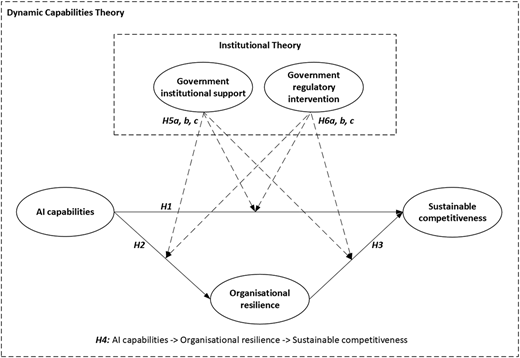
Consequently, this study integrates Dynamic Capabilities Theory and Institutional Theory to provide a holistic framework for understanding AI-enabled transformation in logistics (see Figure 1) that facilitates a better understanding of AI-enabled transformation within the logistics sector. Dynamic Capabilities Theory elucidates the internal mechanisms involved in capability development: AI capabilities are framed as dynamic capabilities that enable logistics firms to identify market and environmental changes, exploit digital opportunities, and optimise resource allocation. Within this framework, organisational resilience is positioned as a mediating dynamic capability that translates AI-driven sensing and transformation into sustainable competitiveness. This theoretical approach, as illustrated in Figure 1, directly informs the hypotheses (i.e. H1-H4) by demonstrating how internal technological capabilities enhance resilience, which in turn contributes to long-term competitiveness.
Institutional Theory further complements this analysis by highlighting external mechanisms that shape the extent to which internal capabilities yield strategic outcomes. Within the study's framework, government institutional support and government regulatory intervention are identified as key external forces that moderate the relationships between AI resilience and competitiveness. These factors can either amplify or constrain the beneficial effects of dynamic capabilities on organisational performance, thereby providing a basis for the hypotheses (i.e. H5-H6).
By synthesising these two theoretical perspectives, this study elucidates the interplay between internal digital capabilities and external policy environments, jointly shaping a logistics firm's capacity to maintain competitiveness through continual adaptation and resource reconfiguration. Therefore, this theoretical integration not only clarifies the support each theory provides to the research model but also illustrates how internal and external forces converge to facilitate AI-enabled transformation in dynamic, uncertain logistics markets.
3. Hypotheses development
3.1 AI capabilities and sustainable competitiveness
Sustainable competitiveness refers to a firm's ability to maintain and enhance its market position over time through continuous adaptation, innovation, and strategic alignment of resources with changing environmental conditions (Cavusgil and Deligonul, 2025). Rather than suggesting a permanent advantage, this concept emphasises dynamic adaptability—the capacity to perceive changes, reconfigure resources, and generate value amidst turbulence and constraints (Klassen and Hajmohammad, 2017). Ultimately, this perspective acknowledges that sustained competitiveness emerges from ongoing processes of renewal that involve innovation, learning, and responsiveness to evolving market and regulatory pressures (Gomez-Trujillo et al., 2024).
In the realm of digital transformation, logistics firms must consistently enhance their operational strategies and resource allocations through real-time monitoring, prompt responses, and adaptable adjustments (Shatat and Shatat, 2025). Such practices are essential for maintaining competitiveness and facilitating sustainable development, as evidenced not only by immediate financial results and market share but also by long-term environmental adaptability, customer satisfaction, and innovation capacity (Pei et al., 2020; Qazi and Al-Mhdawi, 2024; Vo-Thai and Tran, 2024). Henceforth, sustainable competitiveness encompasses the ability of these firms to maintain market relevance and strategic advantage by continually renewing their capabilities and aligning their operations with environmental and societal expectations.
AI capabilities encompass a firm's technological expertise, data processing abilities, and proficiency in algorithm optimisation within the AI domain (Gama and Magistretti, 2025; Mikalef et al., 2023). These competencies empower firms to implement advanced methodologies, such as machine learning, deep learning, and natural language processing, to analyse data, conduct predictive modelling, and facilitate informed decision-making (Jackson et al., 2024). From the perspective of Dynamic Capabilities Theory, AI technologies enable firms to identify emerging opportunities in a constantly evolving environment, thereby promoting more agile resource allocation and supporting long-term organisational value creation (Teece, 2018). Therefore, firms that possess superior technological capabilities are more likely to secure a robust competitive position amid shifting policy and market conditions by establishing stable developmental trajectories (Ye et al., 2024). From the dynamic capabilities viewpoint, AI technologies furnish firms with the tools to recognise emerging opportunities, promptly seize them, and adapt resources to align with changing market and policy dynamics (Sjödin et al., 2023).
In the logistics sector, firms equipped with strong AI capabilities can discern market trends in real time, thereby enhancing decision-making accuracy and responsiveness (Jackson et al., 2024). Such competencies foster ongoing enhancements in product and service optimisation, cost management, and process coordination (Gama and Magistretti, 2025). Particularly in the aftermath of crises, such as the COVID-19 recovery, the integration of AI and other Industry 4.0 technologies has significantly influenced firms' long-term sustainability trajectories (Newaz et al., 2025). Additionally, recent studies by Attah et al. (2024) highlight the benefits of AI-driven real-time optimisation in enhancing supply chain resilience and improving decision quality, particularly in volatile emerging markets. By enabling logistics firms to align operational efficiency with strategic sustainability objectives, AI capabilities serve as dynamic capabilities that underpin and reinforce sustained competitiveness. Accordingly, this study proposes the following hypotheses:
AI capabilities have a positive influence on sustainable competitiveness.
3.2 AI capabilities and organisational resilience
According to the Dynamic Capabilities Theory, a firm's ability to maintain a competitive advantage in turbulent environments hinges not on static resource ownership but on its capacity to sense external changes, seize emerging opportunities, and transform its resource base to ensure strategic alignment (Eisenhardt and Martin, 2000; Teece, 2007). Indeed, AI capabilities significantly enhance each of these mechanisms. By utilising big data analytics and predictive algorithms, logistics firms can effectively detect market fluctuations and anticipate supply chain risks through real-time monitoring and scenario forecasting (Belhadi et al., 2024; Wamba, 2022). These capabilities empower managers to identify early warning signals, such as abrupt shifts in customer demand or geopolitical disturbances, thereby enabling proactive responses.
Moreover, AI enhances the seizing dimension by facilitating swift operational optimisation and data-informed decision-making. Intelligent scheduling and autonomous decision-support systems enable firms to rapidly reallocate resources and implement contingency plans in response to disruptions (Ganesh and Kalpana, 2022; Sadeghi et al., 2024). Furthermore, AI fosters transformation by enabling adaptive resource orchestration and process redesign, which allows logistics firms to reconfigure their assets and business models to manage unforeseen challenges (Attah et al., 2024; Yu et al., 2024). Emerging tools, such as Generative AI, further enhance these advantages by supporting scenario planning, adaptive learning, and automated decision-making pathways, particularly in complex supply chains, including those in the aviation and maritime sectors (Yoon et al., 2025).
Through these mechanisms, AI capabilities serve as a strategic enabler of organisational resilience—the ability to absorb shocks, recover promptly, and adapt to evolving conditions (Prayag et al., 2024). Rather than solely enhancing short-term efficiency, AI equips logistics firms with a sustained capacity to endure disruptions and ensure service continuity. This aligns with the perspective of Dynamic Capabilities Theory that views dynamic capabilities as instrumental in transforming technological investments into long-term adaptive capacity. Consequently, the preceding discussion establishes a basis for formulating the following hypothesis:
AI capabilities have a positive influence on organisational resilience.
3.3 Organisational resilience and sustainable competitiveness
Organisational resilience refers to a firm's ability to anticipate, absorb, and adapt to disruptions by implementing preventive measures and defensive strategies. These strategies encompass risk anticipation, contingency planning, and the establishment of resource reserves, collectively mitigating the impact of external shocks on operations, sustaining market relevance, and ensuring business continuity (Burlea-Şchiopoiu et al., 2023; Vargo and Seville, 2011). By integrating redundancy, flexibility, and risk diversification into their operations, firms enhance their ability to maintain supply chain stability during disruptions and to rejuvenate their competitive position over time, thereby promoting long-term sustainability (Yu et al., 2024; Zhao et al., 2023).
Furthermore, supply chain resilience has been demonstrated to mediate the relationship between innovation and sustainable supply chain performance, particularly when complemented by data-driven decision-making capabilities (Piprani et al., 2023). Organisational resilience also encompasses a firm's ability to respond swiftly and engage in continuous learning, which facilitates timely adjustments to meet evolving market demands (Prayag et al., 2024; Sabatino, 2016).
Experiences from the COVID-19 pandemic illustrate that resilient firms can rapidly reconfigure their business models and utilise digital tools to adapt to changing demand, thereby sustaining growth (Li et al., 2022; Reuschl et al., 2022). This capacity for innovation and dynamic adaptation enables logistics firms to maintain competitiveness through ongoing renewal, rather than relying on a static, long-term advantage. Such adaptability serves as a foundation for market innovation, thereby supporting both environmental sustainability and corporate social responsibility through business model innovation and resource reconfiguration (Do et al., 2022). Moreover, the emphasis these firms place on innovation and dynamic adjustments further reinforces their market competitiveness, advancing environmental sustainability and corporate social responsibility through strategic initiatives such as green practices (Le et al., 2024; Yuan and Cao, 2022).
Aligned with Dynamic Capabilities Theory, this study conceptualises resilience as a dynamic capability that transforms technological and organisational resources into sustained market adaptability. In this context, sustainable competitiveness encompasses the logistic firm's enduring capacity to reconfigure its assets, realign its strategic orientations, and maintain viability in the face of environmental turbulence, rather than securing an immutable competitive advantage. Drawing on the preceding arguments, the following hypothesis is proposed:
Organisational resilience has a positive influence on sustainable competitiveness.
3.4 The mediating role of organisational resilience
In today's highly uncertain and hypercompetitive environments, competitive advantages are inherently transient; firms cannot solely depend on technological capabilities to secure a durable, long-term edge. Instead, firms must develop the ability to maintain stability under pressure, recover promptly, and continuously adapt to evolving circumstances. Within the logistics sector, where time sensitivity and supply chain coordination are paramount, the extent to which AI can translate into meaningful competitive advantages often hinges on a firm's organisational resilience in assimilating and leveraging digital technologies (Ganesh and Kalpana, 2022).
Organisational resilience enhances a firm's capacity to respond to unforeseen disruptions and to reallocate resources flexibly. This capability enables improvements driven by AI to extend beyond isolated process efficiencies, thereby supporting broader systemic adaptation and renewal (Do et al., 2022). While AI capabilities provide the technological foundation for rapid data processing and agile decision-making, such capabilities generate enduring value only when integrated with robust organisational resilience. This integration allows firms to embed technology into continuously adapting strategies, rather than pursuing a static, long-term advantage (Prayag et al., 2024).
In line with Dynamic Capabilities Theory, this study posits that organisational resilience functions as a dynamic capability, empowering logistics firms to translate technological and managerial resources into sustained adaptability and long-term competitiveness in turbulent markets. Building on the above, the following hypothesis is proposed:
Organisational resilience mediates the relationship between AI capabilities and sustainable competitiveness.
3.5 The moderating role of government institutional support
Government institutional support refers to the assistance and incentives that governments provide to businesses through laws, regulations, financial subsidies, tax incentives, and infrastructure development (Lu et al., 2014; Shu et al., 2019). The primary aim of such support is to cultivate a business-friendly environment by shaping normative, regulatory, and cognitive frameworks that diminish market uncertainty and transaction costs while fostering innovation and sustainable growth (Shu et al., 2019).
According to Institutional Theory, government support plays a significant role in shaping the strategic decision-making processes and resource allocation of logistics firms by providing policy incentives, facilitating market access, and signalling legitimacy for technological investments (North, 1990). Specifically, governmental institutions enhance the feasibility of AI applications by offering regulatory clarity, financial incentives, and normative endorsement, which collectively legitimise and mitigate the risks associated with firms' digital transformation initiatives (Valdez and Richardson, 2013).
As an external enabling condition, institutional support establishes a favourable context within which firms can transform technological potential into measurable strategic outcomes. Policy incentives, infrastructure development, and government-backed financing lower entry barriers, alleviate investment risks, and expedite the operationalisation of AI technologies (Ameen et al., 2024). In the logistics sector, where compliance costs and capital requirements are substantial, such support provides essential guidance, stability, and confidence for firms to pursue large-scale AI deployments (Yang et al., 2024).
Through these mechanisms, government institutional support reinforces the conversion of AI-enabled efficiencies into enduring strategic advantages by (1) enhancing resource availability, (2) legitimising innovation, and (3) facilitating inter-firm collaboration through industry platforms (Wang et al., 2025). Conversely, when institutional support is inadequate, firms face heightened financial risks and regulatory uncertainties, hindering their ability to leverage AI for sustained competitive advantage (Carayannis et al., 2025).
Thus, consistent with both Institutional Theory and Dynamic Capabilities Theory, it is anticipated that government institutional support will amplify the benefits derived from AI capabilities by strengthening logistic firms' abilities to sense opportunities, seize them through digital transformation, and reconfigure resources to maintain adaptability in dynamic market environments. Given these considerations, the following hypothesis is proposed:
Government institutional support moderates the positive relationship between AI capabilities and sustainable competitiveness, such that the relationship is stronger when government institutional support is high.
When regulatory support is articulated through research and development subsidies, tax incentives, and market-entry policies, it effectively mitigates the costs, risks, and uncertainties associated with AI development. Such policies empower firms to translate AI capabilities—including big data analytics, machine learning, and intelligent decision-making—into dynamic organisational competencies such as sensing, seizing, and transforming (Lauterbach, 2019; Song and Wen, 2023). Normative support, manifested through the establishment of industry standards, trade associations, and professional networks, further aids this process by fostering shared practices and facilitating knowledge exchange. This enhancement improves firms' abilities to coordinate their responses and institutionalise adaptive routines (Gao et al., 2022).
Furthermore, cognitive support cultivates social recognition, cultural acceptance, and public trust, which serve to legitimise AI-driven innovation and diminish internal resistance to technological change (Armanios and Eesley, 2021). Together, these dimensions of institutional support from governments provide both material resources, such as funding and infrastructure, and symbolic legitimacy, including social approval and industry recognition, which are essential for firms to leverage AI capabilities effectively in pursuit of resilience. With robust institutional backing, logistics firms are better equipped to develop effective preventive risk-management systems, enhance decision-making accuracy, and ensure continuity amid disruptions. Conversely, a lack of institutional support heightens uncertainty and restricts access to collaborative networks, thereby curtailing firms' ability to convert AI-enabled learning and predictive capabilities into adaptive resilience (Engin et al., 2025).
Grounded in Institutional Theory and Dynamic Capabilities Theory, this study posits that government institutional support amplifies the positive effect of AI capabilities on organisational resilience by fostering an environment conducive to learning, resource recombination, and technological legitimacy. Consequently, based on this reasoning, the following hypothesis is proposed:
Government institutional support moderates the positive relationship between AI capabilities and organisational resilience, such that the relationship is stronger when government institutional support is high.
Government institutions play an integral role in enhancing firms' adaptive capacity through the implementation of industrial policies, fiscal and tax incentives, and legal protections. These mechanisms enable logistics firms to proactively address known risks by investing in forecasting systems, contingency planning, and defensive strategies, while also promoting innovation and agile responses to unforeseen disruptions (Dadush, 2023; Yang and Yang, 2024). Such institutional frameworks help to mitigate uncertainty, reduce compliance barriers, and create a stable environment that supports firms in maintaining market relevance and pursuing sustainable growth. This is achieved not by establishing a permanent advantage, but by fostering a cycle of continuous renewal and adaptation to evolving market conditions.
Additionally, by setting industry standards and ensuring fair market practices, governmental bodies assist logistics firms in reducing uncertainty and transaction costs, thereby stabilising operational performance (Chang et al., 2020). Normative and cognitive supports, such as social recognition, professional endorsement, and cultural acceptance, further legitimise resilience-building practices, thereby encouraging firms to integrate resilience into their organisational culture and strategic decision-making processes.
From the perspective of Institutional Theory, robust government support enhances the performance advantages of organisational resilience by ensuring that resilient firms operate within an environment that rewards innovation, risk management, and adaptability. Conversely, when institutional support is lacking, even resilient firms may struggle to maintain competitiveness amid heightened uncertainty, limited access to supportive infrastructure, and resource constraints. In accordance with Dynamic Capabilities Theory, government institutional support thus serves as a contextual amplifier, enabling firms to translate adaptive capacity into sustained competitiveness by facilitating learning, reconfiguration, and continuous renewal in turbulent environments. Hence, the following hypothesis is proposed:
Government institutional support moderates the positive relationship between organisational resilience and sustainable competitiveness, such that the relationship is stronger when government institutional support is high.
3.6 The moderating role of government regulatory intervention
Government regulatory intervention refers to the degree to which governmental agencies influence corporate operations through administrative actions, policy directives, and compliance mandates that shape both strategic and operational behaviour (Luo, 2005; Wang et al., 2016). In emerging economies such as China, where institutional frameworks are still consolidating, regulatory engagement often plays a developmental role, guiding industrial upgrading and technological transformation (Child et al., 2003; Sheng et al., 2011). Appropriately calibrated regulation can promote fair competition, enhance transparency, and create a stable environment conducive to innovation by mitigating institutional uncertainty and coordinating market behaviour (Sheng et al., 2011).
Governments can actively support the deployment of AI by establishing technical standards, providing policy guidance, and ensuring the ethical and secure application of AI technologies (Fenwick et al., 2018). In sectors such as logistics, where digital infrastructure, data sharing, and safety standards are critical, clear and consistent regulation improves interoperability, assures compliance, and legitimises investments in AI (Tomić and Štimac, 2025). Rather than inhibiting innovation, structured regulatory oversight can bolster firms' confidence in long-term technological adoption by signalling policy continuity and alleviating market uncertainty.
From an Institutional Theory perspective, government regulation establishes formal rules that shape logistics firms' strategic decisions and resource configurations. When such regulations are coherent and predictable, they foster institutional stability, enabling firms to identify opportunities, capitalise on technological advantages, and effectively reconfigure resources—elements that are central to Dynamic Capabilities Theory. Consequently, government regulatory intervention can serve as a facilitator, strengthening the transformation of AI capabilities into sustainable competitive advantages by legitimising innovation, guiding compliance, and ensuring equitable market conditions.
Accordingly, this study posits that when government regulatory intervention is well-structured and strategically aligned with technological objectives, the positive correlation between AI capabilities and sustainable competitiveness is likely to be reinforced. From this perspective, the following hypothesis is proposed:
Government regulatory intervention moderates the positive relationship between AI capabilities and sustainable competitiveness, such that the relationship is stronger when government regulatory intervention is high.
AI empowers logistics enterprises to identify market fluctuations, optimise resource allocation, and adapt strategies in real time, thereby enhancing adaptability and operational efficiency (Attah et al., 2024; Belhadi et al., 2024). In emerging markets such as China, government regulatory intervention can serve a constructive function in directing the responsible implementation of AI technologies. Regulations on data protection, cybersecurity, and safety standards not only establish uniform practices but also foster trust and legitimacy in the adoption of AI-driven systems (AlAshry and Al-Saqaf, 2024). Rather than impeding innovation, such intervention can mitigate institutional uncertainty, clarify compliance expectations, and ensure the ethical and secure application of digital technologies, collectively improving firms' strategic readiness.
From the perspective of Institutional Theory, regulatory frameworks provide the structure and legitimacy necessary for firms to align with national digital transformation goals while mitigating risks associated with technological experimentation. Viewed through the lens of Dynamic Capabilities Theory, regulatory stability enhances a firm's ability to sense, seize, and transform in dynamic markets by delineating clear operational boundaries and predictable standards. This stability allows logistics firms to concentrate on developing adaptive routines and risk management practices that underpin organisational resilience.
In the logistics sector, where coordination among multiple stakeholders and adherence to safety and data regulations are paramount, effective regulatory oversight can promote strategic discipline and resource alignment. By creating a stable environment and legitimising digital transformation, regulatory engagement bolsters firms' capacity to harness AI capabilities in fostering organisational resilience. Consequently, this study proposes that when government regulatory intervention is consistent, transparent, and strategically aligned, it reinforces the positive impact of AI capabilities on organisational resilience. Hence, the following hypothesis is posited:
Government regulatory intervention moderates the positive relationship between AI capabilities and organisational resilience, such that the relationship is stronger when government regulatory intervention is high.
Government regulatory intervention can play a constructive role in reinforcing the strategic value of organisational resilience within the logistics sector. In emerging markets such as China, well-structured regulatory systems provide stability, predictability, and legitimacy, thereby encouraging firms to translate adaptive capacity into long-term competitive advantage (Luo, 2005; Sheng et al., 2011). By establishing clear operational standards, environmental regulations, and safety protocols, governments create an institutional order that mitigates uncertainty, facilitates coordination, and bolsters firms' confidence in pursuing innovation-driven growth.
From the perspective of Institutional Theory, regulation delineates the “rules of the game” within which firms devise, implement, and sustain their competitive strategies. Transparent and consistently enforced regulations enable firms to align their internal resilience with broader policy objectives, such as sustainability and technological advancement, thereby legitimising adaptive practices and enhancing stakeholder trust. Consequently, regulation serves not merely as a constraint but as a stabilising force that complements resilience by ensuring ethical governance, risk management, and accountability.
When examined through the lens of Dynamic Capabilities Theory, a predictable regulatory environment enhances logistics firms' capabilities to leverage resilience as a dynamic asset for strategic renewal. It empowers firms to guide adaptive learning and resource reconfiguration towards sustainable competitiveness rather than mere short-term survival. For logistics firms operating within complex, multi-stakeholder ecosystems, stable regulatory oversight ensures consistent standards across the supply chain, thereby facilitating the transformation of resilience into quantifiable performance and competitive sustainability.
This study posits that when government regulatory intervention is carefully calibrated and strategically aligned, it reinforces the positive impact of organisational resilience on sustainable competitiveness by providing legitimacy, institutional stability, and policy continuity. From this reasoning, the following hypothesis is proposed:
Government regulatory intervention moderates the positive relationship between organisational resilience and sustainable competitiveness, such that the relationship is stronger when government regulatory intervention is high.
4. Methodology
4.1 Sample and procedure
This study utilised a cross-sectional, self-administered online survey to collect data from a diverse range of logistics firms operating in China's rapidly advancing logistics sector. Recognised as one of the most extensive and intricate logistics sectors globally (Rahman et al., 2019), China's logistics sector is currently undergoing a significant transformation driven by rapid digitalisation, evolving regulatory frameworks, and escalating sustainability demands (Song et al., 2022). This dynamic landscape offers an ideal context for examining the interactions among AI capabilities, organisational resilience, sustainable competitiveness, government institutional support, and regulatory intervention, all of which influence firms' competitiveness. By focusing on logistics firms that proactively integrate AI technologies, the study aims to provide insights into how these interrelationships enable them to adapt, innovate, and maintain performance amid ongoing environmental and regulatory changes.
4.2 Measures of the study
The research conducted a thorough examination and validation of 34 multi-item scales that were adapted from established studies, as presented in Table 1. Several items underwent minor modifications to align with the study's specific context while maintaining construct validity. Participants were requested to indicate their level of agreement with various statements assessing AI capabilities, organisational resilience, sustainable competitiveness, government institutional support, and government regulatory intervention. A five-point Likert scale was employed to record responses, with values ranging from 1 (strongly disagree) to 5 (strongly agree).
AI capabilities (AIC) was assessed using a four-item scale adapted from Sahoo et al. (2024), with a sample item: “AIC1: Our firm has invested in cognitive computing technologies and infrastructure, which has enabled us to improve our strategic domains across all functional areas”. For organisational resilience (ORR), a seven-item scale was adapted from Zahari et al. (2022), with a sample item: “ORR3: Our firm focuses on our ability to respond to uncertain situations.” The scale for measuring sustainable competitiveness (SUC) comprised six items adapted from Zhang et al. (2023), with a representative item, such as “SUC5: Our firm’s corporate image is superior to that of our competitors.” Seven items on the government institutional support (GIS) scale were modified from Shu et al. (2019), with a sample item such as “GIS2: The central government have supported our firm in seeking financial resources.” Lastly, the government regulatory intervention (GRI) scale, adapted from Wang et al. (2023), contained four items, including the sample item “GRI4: Relevant local authorities, such as the Bureau of Tax and the Bureau of Industry and Commerce Administration, significantly impact our business operations.”
Before data collection, a meticulous design process was undertaken to ensure the quality of the survey. The instrument underwent a pre-testing phase involving a panel of 17 experts, comprising 12 senior and mid-level logistics managers from small, medium, and large enterprises, as well as five academic experts specialising in supply chain management and logistics. These experts were selected via purposive sampling for their professional expertise, and the panel size is consistent with established methodological recommendations. As suggested by Hertzog (2008), a participant's range of 10–12 is typically adequate for pre-testing purposes. The initial phase aimed to refine the wording, clarify the items, and improve the sequencing, thereby enhancing both content and face validity.
To ensure translation accuracy and minimise potential bias, a multilingual assistant conducted a back-translation of the questionnaire, initially from English into Chinese and subsequently back into English. Any minor discrepancies that emerged were addressed through discussions with the research team (Brislin, 1970).
Following these refinements, a pilot test was performed with 50 participants to assess the clarity and comprehensibility of the questionnaire, in accordance with methodological guidelines (Johanson and Brooks, 2010). Feedback from the pilot test led to minor revisions, ensuring the instrument was robust and well-prepared for the primary data collection phase.
4.3 Data collection
The research team collaborated with Wenjuanxin (https://www.wjx.cn/), a prominent online survey platform in China comparable to Qualtrics, to develop the final Chinese questionnaire and conduct a purposive sampling study from October to November 2024. This platform facilitated the distribution of the questionnaire to senior and middle managers within logistics firms, thereby ensuring engagement with essential industry stakeholders. Respondents who did not meet the eligibility requirements were excluded from the subsequent analysis.
In adherence to ethical standards, participants were assured of anonymity and confidentiality. The questionnaire began by outlining the study's key concepts, emphasising sustainable competitiveness. Respondents confirmed their understanding of these concepts by indicating that their firms had implemented associated practices throughout their operations. Out of the 420 questionnaires disseminated, 296 were completed and returned, resulting in a response rate of 70.48%, indicative of strong participant engagement.
An a priori power analysis was performed using G*Power (Faul et al., 2009). With an alpha level (α) set at 0.05, a statistical power of 80%, and a medium effect size of 0.15, the analysis determined that a minimum of 118 samples was necessary. The final sample size of 296 substantially exceeds this recommended threshold, thereby affirming the robustness and adequacy of the dataset for the intended analyses.
The demographic profile of the study participants is presented in Table 2. Among the 296 valid responses, 57.4% were from male respondents and 42.6% from female respondents. The predominant age category was individuals aged 36 to 45, representing 47.0% of the participants—a significant majority —and comprising 79.7% of those occupying middle-manager positions. Regarding firm size, 33.8% of respondents were employed by firms with 100–500 employees. Furthermore, 79.1% of participants were associated with private enterprises that had been in operation for 16–25 years. In terms of the degree of internationalisation, measured by the percentage of customers from foreign countries (i.e. foreign sales), only 2.7% of respondents indicated a high level of internationalisation (76%–100% of foreign sales), while the largest segment, constituting 41.2%, characterised themselves as experiencing small internationalisation (1%–25% of foreign sales).
4.4 Common method bias (CMB) evaluation
This study employed a singular survey instrument to investigate the relationships between exogenous and endogenous constructs, necessitating careful consideration of the potential for common method bias (CMB) (Podsakoff et al., 2024). To mitigate this risk, the research implemented both procedural and statistical remedies.
In terms of procedural remedies, a meticulously crafted cover letter clearly articulated the study's purpose. This letter emphasised the confidentiality and anonymity of participant responses, thereby fostering trust and encouraging forthright participation (MacKenzie and Podsakoff, 2012). It assured participants that their identities would remain protected throughout the study, a crucial factor in obtaining honest feedback. Additionally, significant attention was devoted to designing straightforward, comprehensible survey questions, deliberately avoiding language that could lead to confusion or misinterpretation. Each question included concise instructions to guide participants systematically, ensuring clarity and minimising potential ambiguity.
Regarding statistical remedies, a comprehensive collinearity assessment was performed by introducing a dummy dependent variable composed of random numbers, in accordance with Kock's (2015) recommendations. The variance inflation factor (VIF) values ranged from 1.044 to 1.238 (see Table 3), which remain well below the conservative threshold of 3.3. These findings indicate that multicollinearity is not a concern and that CMB is unlikely to distort the results, thereby enhancing the validity and reliability of the study's findings.
5. Results
5.1 Data analysis
This study employed Partial Least Squares Structural Equation Modelling (PLS-SEM) with SmartPLS v.4 to effectively evaluate the proposed hypotheses. Three primary considerations support the choice of PLS-SEM (Hair et al., 2024). First, the study focuses on theory development rather than merely confirming an existing framework. The model integrates both Dynamic Capabilities Theory and Institutional Theory to enhance theoretical understanding, rendering PLS-SEM particularly suitable for exploratory and predictive research of this nature. Second, the research framework encompasses multiple latent constructs and intricate relationships, including the mediating role of organisational resilience and the moderating effects of government institutional support and regulatory intervention. PLS-SEM is adept at managing such complexity without assuming multivariate normality, making it an appropriate method for this analysis. Third, the study seeks to provide both explanatory and predictive insights. With its emphasis on causal–predictive analysis, PLS-SEM enables the simultaneous assessment of explanatory power and out-of-sample prediction, aligning seamlessly with the research objectives.
In accordance with the best practice guidelines established by relevant authorities, the analysis was conducted in two distinct stages. Initially, the measurement model was evaluated to ascertain the reliability and validity of the constructs. Subsequently, the structural model was analysed to test the direct, indirect, and moderating effects as outlined in the hypotheses.
5.2 Assessment of measurement model
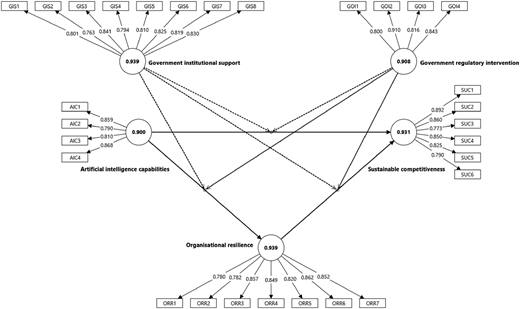
Table 3 and Figure 2 present the findings from the measurement model assessment using the complete survey dataset (N = 296). The study employed Partial Least Squares Structural Equation Modelling (PLS-SEM) with a confirmatory approach to evaluate the measurement model, rather than relying on exploratory factor analysis. The model's quality was assessed using three critical criteria: reliability, convergent validity, and discriminant validity. This approach ensures that the constructs are measured accurately and consistently (Hair and Alamer, 2022).
In PLS-SEM, both the sample size and the associated reliability and validity statistics provide evidence of the model's adequacy. Reliability reflects the extent to which a measurement instrument produces consistent results across items and over repeated use. High reliability indicates that the scores obtained accurately represent the underlying construct, minimising random error (Hair et al., 2019). In this study, Cronbach's alpha ranged from 0.852 to 0.925 and composite reliability from 0.900 to 0.939, comfortably exceeding the recommended threshold of 0.70. These results confirm strong internal consistency, demonstrating that the items for each construct are conceptually aligned and measure the intended latent variable.
Convergent validity indicates the degree to which multiple items representing the same construct share a high proportion of variance (Fornell and Larcker, 1981). Both the factor loadings, which ranged from 0.763 to 0.910, and the average variance extracted (AVE), which ranged from 0.657 to 0.712, exceeded the accepted thresholds of 0.70 and 0.50, respectively. This confirms that the indicators align effectively with their underlying constructs. These findings strengthen confidence that the measurement items reliably capture the theoretical concepts.
Lastly, discriminant validity assesses whether each construct is empirically distinct from the others (Henseler et al., 2015). Both the Fornell-Larcker criterion and the heterotrait–monotrait ratio (HTMT) were applied (see Table 4). The square root of each construct's AVE was greater than its highest correlation with any other construct, and HTMT values were all below the conservative 0.85 threshold (Kline, 2023). Bootstrapped HTMT confidence intervals, bias-corrected and accelerated (BCa) with 10,000 samples, confirmed that the upper bound of the 95% one-sided interval for every HTMT value remained below 0.85. These results provide strong evidence that the constructs are empirically distinct and that discriminant validity is well established.
Overall, the measurement model demonstrates robust reliability and validity. This strong measurement foundation provides confidence for the subsequent evaluation of the structural model and the testing of the study's hypotheses.
5.3 Assessment of structural model
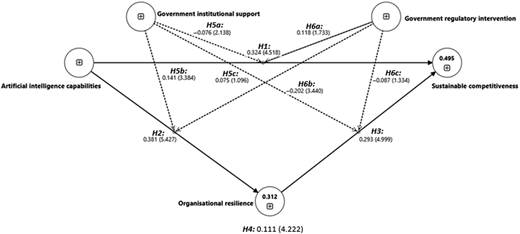
According to Hair and Alamer (2022), the maximum variance inflation factor (VIF) of 1.771, which is well below the conservative threshold of 3.3, confirms that multicollinearity was not a concern during the structural model assessment. This indicates that the predictor constructs were sufficiently independent to ensure stable estimates of the path coefficients. The precision of the hypothesised relationships was then tested using a bootstrapping procedure with 10,000 resamples, a robust non-parametric technique that provides reliable significance testing in PLS-SEM models. The results demonstrate that all direct relationships (see Table 5 and Figure 3) were statistically significant, thereby supporting H1, H2, and H3. Specifically, AI capabilities exerted a substantial positive effect on sustainable competitiveness (H1: β = 0.324, p < 0.001) and a significant positive influence on organisational resilience. Moreover, AI capabilities also showed a significant positive influence on organisational resilience (H2: β = 0.381, p < 0.001). Furthermore, organisational resilience itself was positively associated with sustainable competitiveness (H3: β = 0.293, p < 0.001). These results confirm the proposed theoretical pathway in which AI capabilities enhance sustainable competitiveness both directly and indirectly through organisational resilience.
The model's explanatory power was further evaluated using the coefficient of determination (R2) values (Chin et al., 2020). The R2 for organisational resilience and sustainable competitiveness were 0.312 and 0.495, respectively, indicating that the structural model explains 31.2% and 49.5% of the variance in these constructs. According to established PLS-SEM guidelines, these values represent moderate to substantial explanatory power, providing strong support for the study's conceptual framework and its grounding in Dynamic Capabilities Theory and Institutional Theory.
The significance and strength of each supported relationship were further assessed through effect size (f2) analysis, following Cohen's (1988) guidelines. As shown in Table 5, the path from AI capabilities to sustainable competitiveness (H1: f2 = 0.117) and the path from organisational resilience to sustainable competitiveness (H3: f2 = 0.112) both display small but meaningful effect sizes, indicating that these relationships make a modest yet substantive contribution to explaining variance in sustainable competitiveness beyond other predictors. By contrast, the relationship between AI capabilities and organisational resilience (H2: f2 = 0.151) demonstrates a medium effect size, indicating that AI capabilities are a comparatively stronger driver of organisational resilience. These findings reinforce the study's conceptual argument that AI-enabled sensing, seizing, and transformation are particularly influential in building resilience, which then serves as a pathway to sustainable competitiveness.
The model's predictive relevance was then examined using Stone–Geisser's Q2 statistic through a blindfolding procedure. The Q2 values for the endogenous constructs, i.e. organisational resilience (Q2 = 0.273) and sustainable competitiveness (Q2 = 0.387), are both well above zero, confirming that the model has strong out-of-sample predictive power (Hair et al., 2019). These results demonstrate that the structural model not only explains variance in the sample but also reliably predicts new observations, which is consistent with the study's aim of developing a causal–predictive framework grounded in Dynamic Capabilities Theory and Institutional Theory.
5.4 Assessments of indirect and interaction effects
The indirect effect (H4: AI capabilities - > organisational resilience - > sustainable competitiveness) was assessed using the guidelines provided by Hair and Alamer (2022). Because the 95% confidence interval (LB: 0.069, UB: 0.178) excludes zero (see Table 5), H4 is supported, confirming that organisational resilience positively mediates the link between AI capabilities and sustainable competitiveness.
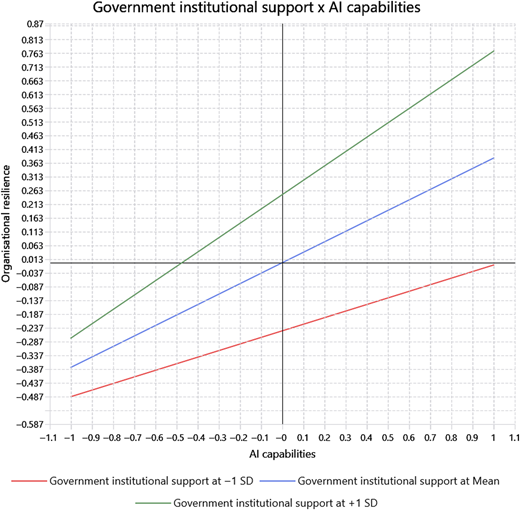
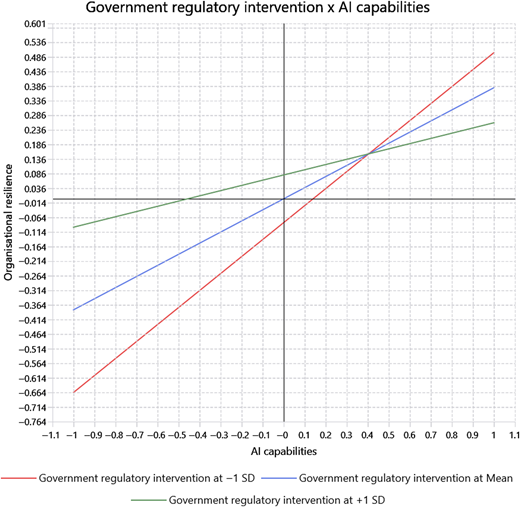
The two-stage method (Becker et al., 2023) was then used to test the moderating effects of government institutional support (H5a–H5c) and government regulatory intervention (H6a–H6c). Of the six interaction effects of government institutional support and government regulatory intervention that were hypothesised (Table 5), three were found to be significant: H5a (β = −0.076, p < 0.01), H5b (β = 0.141, p < 0.001) and H6b (β = −0.202, p < 0.001). However, H5c (β = 0.075, p = 0.273), H6a (β = 0.118, p = 0.083), and H6c (β = −0.087, p = 0.182) were not supported.
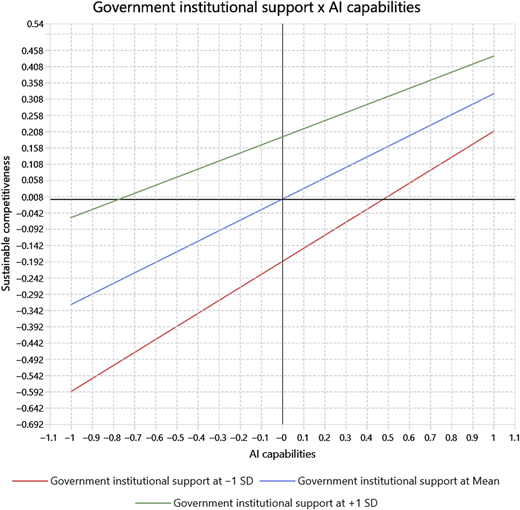
The interaction plots presented in Figures 4-6 effectively illustrate the results of the moderating analysis, thereby enhancing the understanding of the examined relationships.
In Figure 4, the data indicate that government institutional support dampens the positive relationship between AI capabilities and sustainable competitiveness. This suggests that robust government institutional support may mitigate the extent to which AI capabilities can independently enhance sustainable competitiveness.
Conversely, Table 5 reveals that government institutional support strengthens the positive relationship between AI capabilities and organisational resilience. This finding suggests that well-established institutional frameworks enable firms to leverage AI resources and bolster their resilience more effectively.
In Table 6, the results demonstrate that government regulatory intervention dampens the positive relationship between AI capabilities and organisational resilience. This implies that stringent regulatory measures may limit the flexibility firms need to fully exploit AI's potential to enhance resilience.
5.5 Predictive assessment
The PLSpredict procedure (Chin et al., 2020; Shmueli et al., 2019) was used to evaluate the predictive performance of the structural model. A model is deemed to have predictive relevance when the Q2predict values for the endogenous constructs exceed zero, as outlined by Shmueli et al. (2019). According to the data presented in Table 6, the Q2predict values for the constructs of organisational resilience and sustainable competitiveness range from 0.141 to 0.358. This indicates that all values surpass the recommended threshold, confirming their predictive relevance. To further evaluate the model's predictive capability, the root mean square error (RMSE) values for each indicator within the PLS-SEM model (PLS-SEM_RMSE) were juxtaposed with those from a linear regression benchmark model (LM_RMSE). The findings indicate that all indicators in the PLS-SEM model yield lower RMSE values than those in the linear model, suggesting that the PLS-SEM model exhibits superior predictive accuracy. Therefore, the proposed model effectively demonstrates high predictive power in forecasting new observations.
To enhance the validation of PLSpredict's findings, this study utilised the cross-validated predictive ability test (CVPAT), which provides a comprehensive inferential assessment of the model's predictive performance by evaluating average loss differences across all indicators and constructs. The results, as illustrated in Table 6, demonstrate that the PLS-SEM model surpasses the naïve indicator average (IA) prediction benchmark, indicated by significantly negative IA average loss differences (p < 0.001). This result underscores the model's strong predictive validity. While the model exhibits lower average loss for sustainable competitiveness than the Linear Model (LM) benchmark, this difference is not statistically significant (p = 0.196). Consequently, the sustainable competitiveness construct does not meet the more rigorous LM benchmark criteria, although it retains an acceptable level of predictive power relative to the IA baseline. On the other hand, the organisational resilience construct manifests robust predictive validity against both the IA and LM benchmarks. In summary, the findings suggest that the model demonstrates strong predictive capability across most constructs, particularly when evaluated against the naïve benchmark, thereby confirming its appropriateness for predicting new observations within the target population.
6. Discussion and implications
6.1 Discussion of findings
This study, rooted in Dynamic Capabilities Theory and Institutional Theory, presents evidence that AI capabilities significantly enhance both sustainable competitiveness and organisational resilience, thereby supporting H1 and H2. This finding aligns with existing literature, which indicates that AI technologies facilitate process optimisation, service innovation, and cost efficiency, all of which are critical drivers of a firm's ability to maintain competitiveness in turbulent markets (Gama and Magistretti, 2025; Jackson et al., 2024). Furthermore, in accordance with H2, the results confirm that digital tools strengthen risk anticipation and resource flexibility. These findings demonstrate that digital tools enhance risk anticipation and resource flexibility, which are essential elements of organisational resilience in hypercompetitive environments (Kindermann et al., 2021; Prayag et al., 2024). Supporting H3, the data suggest that organisational resilience plays a crucial role in sustaining a firm's competitive capacity, corroborating studies that identify resilience as a dynamic capability that transforms operational stability into long-term market relevance (Burlea-Ş;chiopoiu et al., 2023).
The mediation analysis (H4) reveals that organisational resilience partially mediates the relationship between AI capabilities and sustainable competitiveness. This finding suggests that AI capabilities not only enhance competitiveness through direct channels but also indirectly by fostering adaptive capacity. This underscores the notion that technological investments attain strategic importance when firms successfully translate these investments into resilience and innovation (Kindermann et al., 2021).
In terms of the institutional context, the results for H5a-H5c reveal a nuanced moderating effect of government institutional support. Specifically, such support amplifies the positive influence of AI capabilities on organisational resilience, thereby corroborating H5b. However, it slightly diminishes their direct effect on sustainable competitiveness, as evidenced by a negative coefficient for H5a. Conversely, H5c is not supported, suggesting that institutional support does not significantly moderate the relationship between organisational resilience and sustainable competitiveness.
A plausible explanation for this outcome lies in China's logistics sector, where government backing for digitalisation is widespread, frequent, and policy-driven (Jiao, 2025). Under these conditions, variations in institutional support may not be sufficient to generate differential effects at later stages of capability utilisation. Many logistics firms operate within mature policy frameworks and have already internalised compliance norms, which likely diminishes the sensitivity of the resilience–competitiveness pathways to supplementary support. This situation may lead to diminishing marginal returns, in which the influence of institutional support becomes less pronounced as firms reach a baseline level of digital maturity and internal capability development.
The unexpected negative moderation for H5a also warrants attention. This effect may reflect an overreliance on policy-driven incentives. In China, substantial government-led digitalisation initiatives can unintentionally create dependency, discouraging firms from independently investing in innovation or developing endogenous strategic renewal processes. Excessive support may thus attenuate the direct competitive benefits of AI capabilities if firms rely more on external guidance than on internal capability building. This is consistent with Institutional Theory, which posits that institutional environments can both enable and constrain organisational behaviour depending on the maturity of capabilities and the intensity of intervention (Peng et al., 2023).
Findings for H6a-H6c indicate that government regulatory intervention negatively affects the relationship between AI capabilities and organisational resilience, thus supporting H6b. This suggests that excessive or unpredictable regulation can hinder the positive effects of AI on resilience. This observation aligns with Sheng et al. (2011), who argue that regulatory uncertainty increases strategic risk and impedes technological diffusion. However, neither H6a nor H6c is supported, indicating that governmental regulation does not significantly moderate the effects of AI capabilities or organisational resilience on sustainable competitiveness. This pattern may be attributed to the highly standardised, sector-wide nature of regulatory interventions in China's logistics industry. Regulations are typically uniform and centrally driven, leading to collective rather than differential adaptation among firms. Consequently, the moderating effects of regulation may be mitigated through routine compliance systems, leading to minimal observable variation in competitiveness outcomes.
The non-significant moderating effects observed (i.e. H5c, H6a, H6c) may be attributed to several contextual factors. First, institutional mechanisms within China's logistics industry may exert indirect influences or be internalised through organisational routines, such as compliance integration or operational standardisation, which diminish their observable interaction effects. Second, the industry's heightened sensitivity to policy changes and rapid digitalisation trends suggests that numerous firms have already adapted to institutional expectations, rendering incremental adjustments in support or regulation less impactful. Lastly, the logistics sector encompasses firms with varying degrees of technological maturity and resource endowments; for smaller or less digitalised companies, the influence of institutional factors may be absorbed at fundamental operational levels, rather than being evident in strategic outcomes such as resilience or competitiveness.
In summary, these findings illustrate that institutional mechanisms exert differentiated influences across the model. Government support appears most effective during the initial stages of capability formation, while regulatory intervention exhibits more complex, context-dependent effects. Collectively, these insights reinforce the complementary perspectives of Dynamic Capabilities Theory and Institutional Theory, highlighting the importance of a balanced institutional environment that fosters innovation and capability development without encouraging dependency or imposing excessive rigidity.
6.2 Theoretical implications
This research offers significant theoretical contributions by elucidating the interplay among AI capabilities, organisational resilience, and institutional contexts in shaping sustainable competitiveness within the logistics sector. Building upon existing knowledge, this study integrates Dynamic Capabilities Theory and Institutional Theory. While both theories have been extensively utilised to examine organisational adaptation and innovation, few studies have synergised them to articulate how institutional environments condition the value creation potential of AI-driven capabilities. Addressing this gap, the present study establishes a cross-level framework that captures the combined effects of firm-level digital capabilities and environmental-level institutional mechanisms on the strategic value of AI.
The empirical evidence suggests that AI capabilities serve as a digitally embedded form of dynamic capability, enabling firms to perceive market shifts, capitalise on emerging opportunities, and continually reconfigure resources in response to environmental turbulence. The pronounced direct effects of AI capabilities on both sustainable competitiveness and organisational resilience, alongside the positive impact of resilience on sustainable competitiveness, substantiate the assertion that AI transcends being merely a technological resource. Instead, AI represents an evolving organisational capability demonstrated through data-driven decision-making, predictive analytics, and autonomous learning, which underpin continuous strategic renewal and enduring competitive advantage.
Moreover, confirming the mediating effect of organisational resilience elucidates the mechanism by which AI capabilities augment sustainable competitiveness. Prior research has predominantly focused on AI's direct impact on performance, with the indirect processes insufficiently theorised. This study advances Dynamic Capabilities Theory by reconceptualising organisational resilience as a proactive, digitally enabled micro-foundation of dynamic capability that allows firms to absorb shocks, adapt to uncertainty, and sustain operational functionality. Embedding resilience within the transformation dimension of Dynamic Capabilities Theory provides a more process-oriented and technology-driven understanding of how AI-enabled sensing and seizing activities contribute to sustained competitiveness.
The findings also refine Institutional Theory by presenting empirical evidence of the dual influence of institutional forces. Government institutional support significantly enhances the positive effects of AI capabilities on organisational resilience and sustainable competitiveness, demonstrating that favourable regulatory frameworks, targeted incentives, and infrastructure investments can amplify the strategic returns of AI adoption. Conversely, government regulatory intervention dampens the connection between AI and resilience, suggesting that excessive compliance burdens and policy uncertainty can limit the benefits of digital transformation. By differentiating between enabling and constraining institutional mechanisms, this study extends Institutional Theory by illustrating how heterogeneous institutional arrangements shape the effectiveness of technological capabilities and the trajectory of digital innovation (Mishra et al., 2025; Wang et al., 2023).
Lastly, integrating Dynamic Capabilities Theory and Institutional Theory provides a cross-level theoretical synthesis that enhances both perspectives. Previous research has primarily examined internal dynamic capabilities or external institutions in isolation (Arroyabe et al., 2024; Hossain et al., 2022), resulting in a fragmented understanding of AI-driven competitiveness. By empirically validating the moderating roles of government institutional support and regulatory intervention, this study demonstrates that sustainable competitiveness is achieved when AI-enabled transformation aligns with supportive institutional conditions. This integration extends Dynamic Capabilities Theory by emphasising the context-sensitive deployment of capabilities. It refines Institutional Theory by illustrating how firm-level dynamic capabilities mediate the influence of institutional structures on performance.
In conclusion, this study demonstrates that the theoretical contribution extends beyond merely identifying empirical relationships; it advances both Dynamic Capabilities Theory and Institutional Theory through integration and contextualisation. The findings highlight that realising AI's strategic potential depends on the synergy between internal dynamic capabilities and external institutional balance. Thus, sustainable competitiveness in logistics emerges as an interactive, cross-level process in which AI capabilities and organisational resilience are dynamically configured within favourable yet not overly restrictive policy environments.
6.3 Practical implications
In the contemporary logistics sector, characterised by unpredictability and intense competition, this study elucidates how firms can translate technological and policy insights into actionable strategies. These insights offer valuable guidance for both managers and policymakers.
First, it is imperative for managers to strategically invest in AI technologies, encompassing predictive analytics, machine learning, and process automation. Such investments facilitate real-time decision-making, proactive risk management, and agile responses to market fluctuations. For instance, the JD Asia No. 1 Warehouse incorporates advanced technology, including AI-enabled inventory management and real-time tracking systems, which facilitate seamless coordination among logistics teams, thus ensuring swift and precise order fulfilment (Wisozk, 2025). To maximise these advantages, AI initiatives should be integrated into a comprehensive resilience strategy, augmented by cross-functional implementation teams and performance metrics that are linked to agility and responsiveness. Logistics firms might also explore combining AI with Internet of Things (IoT) sensors or blockchain-based traceability platforms, as exemplified by Maersk's TradeLens platform, to enhance supply chain transparency and real-time tracking capabilities (Idrissi et al., 2024). This multifaceted digital transformation strategy can foster the development of more adaptive and competitive logistics networks.
Second, the findings underscore the importance of leveraging government institutional support to bolster firms' digital transformation capacity. In China, this is illustrated by computing power voucher programmes in cities such as Shanghai, Shenzhen, and Beijing, which alleviate the cost burden for small and medium-sized logistics firms seeking access to AI infrastructure (Explainer | How Are Chinese Cities Boosting Access to the Computing Power Needed for AI?, 2024). Managers should proactively align their digital strategies with institutional mechanisms by submitting proposals for voucher programs and engaging with local authorities to ensure eligibility and compliance. Policymakers, in turn, should persist in devising targeted instruments, including vouchers, tax incentives, local pilot projects, and institutional support centres, to foster capability development rather than dependency.
Third, the findings highlight the need to manage regulatory complexity. While supportive policies are advantageous, overly prescriptive or unpredictable regulations may diminish the potential benefits of AI for organisational resilience. Managers should maintain open lines of communication with regulators and adapt internal processes to evolving policy requirements (Desai, 2016). Policymakers should adopt balanced, adaptive frameworks, such as regulatory sandboxes, that enable firms to test AI-driven innovations under controlled conditions before large-scale implementation (Do and Gray, 2025). Establishing consultation mechanisms, such as public–private dialogues and industry feedback platforms, can ensure that regulations remain aligned with sector realities and promote innovation.
Finally, it is essential to acknowledge that not all institutional mechanisms exert uniform influence across organisational outcomes. The observation of weaker or non-significant moderating effects suggests that, once firms have established robust internal capabilities, external interventions may yield diminishing returns. In practice, this implies that managers should focus on developing self-sustaining adaptive capacities. At the same time, policymakers should focus their support on the initial phases of capability formation rather than on ongoing intervention.
Together, these implications highlight that sustainable competitiveness arises from a balanced approach: firms must cultivate AI-driven resilience internally while operating within supportive, yet not overly restrictive, institutional environments.
6.4 Limitations and future research directions
Despite the significant theoretical and empirical contributions of this study, several limitations present opportunities for future research. First, the findings are derived from Chinese logistics firms and may not be directly generalisable to contexts with different institutional frameworks or levels of digital infrastructure. China's institutional environment, characterised by robust government support for digital transformation, may differ substantially from those of other national contexts. Future research should expand this framework to encompass diverse industries and countries, thereby evaluating its robustness and external validity. Comparative studies across countries would be particularly beneficial in assessing how variations in institutional environments influence the effectiveness of AI capabilities in fostering organisational resilience and sustainable competitiveness, thereby exploring the boundary conditions of Institutional Theory.
Second, the dynamic and evolving nature of AI capabilities, along with the support provided by institutions, may not be fully captured through a cross-sectional research design. Cross-sectional data limit the ability to observe temporal patterns, dynamic adjustments, or the evolution of capability development. Longitudinal studies that monitor firms over an extended period would enable researchers to observe the growth and transformations in the relationships among AI capabilities, organisational resilience, and institutional influences. Such research designs would also facilitate the identification of potential reverse causality and clarify the temporal sequencing of these relationships, which is crucial to the process perspective outlined in Dynamic Capabilities Theory.
Third, while this study examined government institutional support and government regulatory intervention as key moderating factors, it did not consider other institutional dimensions such as cultural norms, industry associations, or informal networks. Institutional Theory emphasises the significance of both formal and informal institutions in shaping organisational behaviour and performance. Future research should integrate these additional institutional elements, particularly cultural values and industry norms, to provide a more nuanced understanding of how institutional environments influence the strategic deployment of AI. For instance, cross-cultural investigations examining how societal attitudes toward technology adoption impact the AI capabilities–resilience–competitiveness nexus would yield valuable insights for multinational logistics firms.
Fourth, the study focused exclusively on AI capabilities and did not explore the potential complementary roles of other emerging digital technologies, such as blockchain, big data analytics, or IoT. Future research could investigate how these technologies might interact synergistically to enhance organisational resilience and sustainable competitiveness. For example, integrating AI with blockchain may improve supply chain data transparency and security, while combining AI with IoT could enhance real-time decision-making and operational efficiency. By examining multi-technology ecosystems, future studies can extend the application of Dynamic Capabilities Theory and provide a more holistic understanding of digital transformation pathways.
Lastly, the ethical implications of AI adoption were outside the scope of this analysis. Issues such as data privacy, algorithmic bias, and potential job displacement will become increasingly pertinent as AI is integrated into logistics operations. Future studies should investigate these ethical challenges and propose effective governance mechanisms to maintain stakeholder trust and ensure the long-term sustainability of AI-enabled transformation.
7. Conclusion
This study aimed to examine how AI capabilities enhance organisational resilience and sustainable competitiveness within the logistics sector. Additionally, it sought to explore the role of government institutional support and government regulatory intervention in shaping these relationships by integrating Dynamic Capabilities Theory with Institutional Theory. The research endeavoured to elucidate both the internal mechanisms and external conditions that facilitate AI-enabled transformation in generating long-term competitive advantages.
Empirical findings indicate that AI capabilities significantly enhance organisational resilience by improving situational awareness, optimising resource allocation, and enabling proactive responses to environmental disruptions. These results support the Dynamic Capabilities Theory, which posits that dynamic capabilities are crucial for firms to navigate rapidly evolving environments and sustain competitive advantage effectively. Furthermore, the study identifies organisational resilience as a critical mediating mechanism, demonstrating that AI capabilities indirectly fortify sustainable competitiveness by equipping firms to adapt to turbulence and shocks.
The research also underscores the dual influence of institutional forces. Government institutional support amplifies the positive impacts of AI capabilities, whereas restrictive regulatory interventions tend to diminish these effects. This nuanced evidence enhances Institutional Theory by clarifying how formal institutional mechanisms can simultaneously facilitate and inhibit the strategic value of AI-enabled dynamic capabilities.
By integrating Dynamic Capabilities Theory and Institutional Theory into a cohesive conceptual framework, the study offers a comprehensive explanation of how internal digital capabilities interact with external institutional environments to foster sustainable competitiveness. This integrated perspective transcends analysing internal or external factors in isolation and offers a strategic blueprint for aligning firm-level digital transformation with favourable institutional contexts.