This study introduces an integrated decision-support framework to aid early-stage planning for building adaptation. It aims to support structured decision-making and priority-setting within organizations by combining scenario development, stakeholder evaluation and AI-enhanced communication.
The framework integrates cross-impact balance (CIB) analysis, analytic hierarchy process (AHP), Fuzzy-TOPSIS and generative AI techniques for scenario communication and visualization. It was applied within a Paris-based social housing association through participatory workshops with internal stakeholders, including architects, sustainability officers and project managers.
The integrated framework produced 21 internally consistent scenarios, prioritized them through stakeholder-weighted objectives and identified high-performing adaptation pathways. Results revealed that strong CIB-based scenario filtering substantially conditioned downstream MCDA behaviour, producing relatively robust but convergent ranking outcomes across structurally distinct scenarios. AI-generated narratives and visuals further supported communication of complex trade-offs and exploratory planning within the organizational context.
Application was limited to a single case and stakeholder group. Future research should test the method in broader multi-actor settings, incorporate participant validation and explore automation of CIB construction and weighting to improve scalability and reduce resource demands.
The approach helps decision-makers co-develop and compare building adaptation pathways aligned with organizational goals. Its modular design supports integration into asset management and planning systems.
This is the first study to combine CIB-based scenario planning with MCDA for building adaptation, enhanced with AI-supported scenario communication. Beyond methodological integration, the study contributes new insights into how upstream scenario-space conditioning influences downstream ranking behaviour, evaluative convergence and discriminatory capacity within exploratory decision-support systems.
Introduction
The adaptation of existing buildings is central to the European Union's climate and sustainability agenda (Gillett et al., 2025). The built environment accounts for nearly 40% of energy use and 35% of greenhouse gas emissions across the EU (Maduta et al., 2023). Given that 85% of today's building stock is expected to remain in use by 2050, achieving carbon neutrality will depend significantly on the reuse and refurbishment of existing structures (European Environment Agency, 2022). Building adaptation refers to modifying existing structures to meet evolving needs, either by changing their function (across-use, e.g. adaptive reuse) or enhancing performance while maintaining the same use (within-use, e.g. renovation) (Shahi et al., 2020). Beyond emissions reductions, building adaptation supports broader sustainability goals such as: preserving social value (Shen and Langston, 2010), reducing resource consumption (Conejos et al., 2013), and mitigating environmental impacts associated with new construction (Baker et al., 2021).
Despite its potential, building adaptation faces persistent technical, regulatory, and procedural barriers (Yung and Chan, 2012). Many buildings suffer from outdated systems and poor energy performance, while being subject to complex requirements concerning safety, heritage protection, and energy codes (Conejos et al., 2016). These constraints complicate planning and reduce flexibility in project execution (Wilkinson et al., 2014). Furthermore, building adaptation projects typically involve a diverse set of stakeholders including owners, architects, engineers, users, and public authorities, each operating under different goals and evaluation criteria (Wilkinson et al., 2014). Without a shared framework for integrating these perspectives, early-stage planning is often misaligned, leading to extended deliberations and project delays (Aigwi et al., 2021; Hamida et al., 2024).
Current decision-support tools frequently fall short in addressing the uncertainty and complexity that characterize these projects (Nielsen et al., 2016). Many tools either operate at a highly abstract level, focusing on broad functional strategies without considering contextual constraints, or they concentrate narrowly on technical design aspects (van Laar et al., 2024), which can lead to prematurely locking in decisions without room for strategic exploration (Gade et al., 2018). This disconnect between scenario exploration and evaluation leads to fragmented planning, where alternatives are developed without coherent objectives or alignment across stakeholders (Cairns et al., 2016). Consequently, systematic trade-off analysis is impeded, and long-term sustainability goals are often overlooked or deprioritized during decision-making (Kishita et al., 2016).
Compounding this issue, most existing frameworks are based on single decision-maker models, which do not reflect the collaborative and multi-actor nature of real-world adaptation processes (Pinzon Amorocho and Hartmann, 2022). This is particularly problematic in public-sector and social housing contexts, where inclusivity, public value, and transparency are essential to project legitimacy (Crawford and Helm, 2009). Participatory planning tools remain limited (Aigwi et al., 2023), and structured methods that incorporate diverse stakeholder values, especially qualitative and normative inputs into scenario development and evaluation are still rare (van Laar et al., 2025a). Collaborative planning theory emphasizes that inclusive, value-oriented processes are essential for achieving legitimacy and public value in complex projects (Innes and Booher, 2016). Co-creating scenarios through co-design with diverse stakeholders furthermore helps address multifaceted challenges in the built environment (Yam et al., 2025).
A critical gap in current building adaptation planning is the lack of participatory, value-driven scenario approaches that support early-stage, future-oriented decision-making (van Laar et al., 2025a). While scenario planning is widely recognized as a means of supporting long-term strategic thinking (van Notten et al., 2003), many applications rely on narrative or intuitive approaches that lack formal mechanisms to ensure internal consistency or to systematically explore interactions between social, environmental, and technical factors (Weimer-Jehle, 2006).
Within the broader field of scenario planning, Cross-Impact Balance (CIB) analysis has emerged as a particularly robust method for developing coherent and plausible scenarios in complex socio-technical systems (Weimer-Jehle, 2006, 2023). By explicitly modeling the influence relationships between drivers of change, CIB moves beyond descriptive storytelling and enables the systematic construction of internally consistent scenario configurations (Weimer-Jehle, 2023). This combination of qualitative expert judgment with formal logical structure makes CIB especially suitable for participatory planning contexts in the built environment, where uncertainty, path dependency, and stakeholder interaction play a central role (van Laar et al., 2025a).
In parallel, an extensive body of literature applies Multi-Criteria Decision-Analysis (MCDA) methods to evaluate building adaptation and adaptive reuse options (Nadkarni and Puthuvayi, 2020). Techniques such as the Analytic Hierarchy Process (AHP) (Ragheb, 2021; Vizzarri et al., 2021; Andreolli et al., 2022), Technique for Order Preference by Similarity to Ideal Solution (TOPSIS) (Pinzon Amorocho and Hartmann, 2022; Gravagnuolo et al., 2024), and hybrid combinations (e.g. AHP–TOPSIS, VIKOR, PROMETHEE) are widely used to structure stakeholder preferences and support comparison of alternatives in sustainability and urban planning contexts (Bottero et al., 2018; Liu and Wen, 2024; Park et al., 2025; Wang et al., 2024). However, these approaches generally assume predefined alternatives and focus primarily on ranking rather than systematically generating scenarios or exploring uncertainty. Building adaptation planning can therefore also be understood as a form of decision-making under deep uncertainty (DMDU), where future conditions and stakeholder priorities cannot be predicted with confidence (Marchau et al., 2019). In such contexts, exploratory and robustness-oriented approaches are preferred over optimization-based planning because they allow decision-makers to examine multiple plausible futures and evaluate trade-offs under uncertainty. Fuzzy extensions of MCDA methods (Milošević et al., 2020; Plebankiewicz and Grącki, 2025), address uncertainty in stakeholder judgments, particularly in early-stage decision-making, but still operate within this evaluative paradigm and do not explicitly account for interdependencies between decision variables. In contrast, scenario-based planning frameworks in housing retrofit and urban regeneration contexts support the exploration of alternative futures (Abou Jaoude et al., 2022; Eames et al., 2013), yet often lack formal mechanisms to evaluate trade-offs across multiple criteria in a transparent and reproducible manner. Despite parallel advances in these fields, many applications fail to both collaboratively explore a range of desirable futures and rigorously evaluate trade-offs between competing objectives under conditions of uncertainty (Durrant et al., 2023). As a result, scenario development and multi-criteria evaluation are often treated as separate processes. This reveals a gap in current research: the limited integration of participatory scenario construction with structured, uncertainty-aware evaluation methods.
Beyond this integration gap, limited attention has been paid to how scenario generation and evaluation methods structurally interact once combined within a single exploratory decision-support framework. Existing studies generally treat scenario construction and scenario evaluation as sequential and independent stages. However, strong upstream filtering mechanisms may significantly condition the diversity and evaluative behaviour of downstream alternatives. As a result, questions remain regarding how internally coherent scenario spaces influence ranking robustness, evaluative convergence, and discriminatory capacity within integrated scenario–MCDA systems.
To bridge this gap, recent research highlights the potential of generative AI tools to enhance participatory scenario development (van Laar et al., 2025a). Generative Artificial Intelligence (GenAI) refers to deep-learning models that can produce new content, such as text, images, or 3D models, based on user prompts (Banh and Strobel, 2023). In planning and design contexts, tools like GPT-4, Stable Diffusion, and DALL·E support rapid prototyping by translating abstract ideas into visual or narrative outputs. Platforms such as UrbAI (Preussner et al., 2025), UrbanistAI (Valença et al., 2025), and PlacemakingAI (Cardoso and Rodrigues, 2025), demonstrate how GenAI can engage non-experts in planning processes by enabling real-time, interactive visualizations. These outputs serve as illustrative aids rather than technical designs, enhancing accessibility and stimulating creative dialog. However, the opacity of such models and the risk of biased or de-contextualized outputs underscore the need for transparency and clear communication in participatory use. When applied critically, GenAI can support shared understanding and accessibility during early-phase planning by translating stakeholder input into tangible narrative and visual representations (Parati and Zolotova, 2024; van Laar et al., 2025a).
In this context, effective decision-making in building adaptation projects calls for integrated frameworks that are future-oriented, capable of navigating uncertainty, and supportive of normative, stakeholder-driven planning. Such frameworks must enable the co-creation of context-specific scenarios, integrate both qualitative and quantitative inputs, and support the structured evaluation of alternatives. When combined with AI-enhanced visualizations and narratives, these digital approaches can improve the clarity, inclusivity, and strategic relevance of early-stage planning (Tumpa and Naeni, 2025).
This study builds upon earlier research by extending an existing holistic scenario development and decision-support framework (van Laar et al., 2025b), and applying it to a real-world building adaptation case. Through this application, the framework is operationalized in practice, demonstrating its capacity to integrate participatory scenario development, multi-criteria evaluation, and AI-enhanced communication tools within a complex organizational planning process. Specifically, the framework combines CIB analysis, with structured multi-criteria decision-making techniques, namely AHP and Fuzzy-TOPSIS.
To the best of our knowledge, this is the first study to combine CIB-based scenario planning, multi-criteria decision-making, and AI-supported scenario visualization within a practical building adaptation case study. While the practical application of the integrated framework and the incorporation of AI-supported narrative and visual scenario generation are novel compared to earlier conceptual work (van Laar et al., 2025b), the primary aim of this study is to investigate how integrated CIB–MCDA frameworks behave when applied in exploratory building adaptation planning contexts. In particular, the study examines how upstream scenario construction and filtering processes influence downstream multi-criteria evaluation, ranking behaviour, and evaluative differentiation within integrated decision-support systems. In doing so, the paper contributes to the emerging discussion on the structural interaction between participatory scenario planning and uncertainty-aware evaluation methods.
The integrated framework is applied to a within-use adaptation project involving a mid-20th century residential apartment building in Paris. The following sections present the methodology, case study implementation, and key findings, followed by discussion of the broader methodological implications for exploratory planning and adaptive reuse decision-support under uncertainty.
Methodology
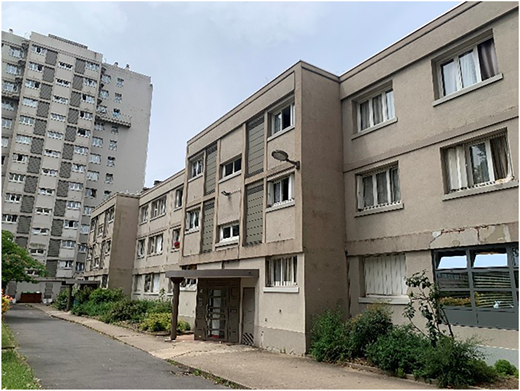
This study applies and extends an integrated scenario-based decision-support methodology (van Laar et al., 2025b), to a complex, real-world within-use building adaptation case in Paris. While the methodological architecture of the framework was conceptually introduced in van Laar et al. (2025b), the present study focuses on its empirical operationalization and on examining how the interaction between scenario generation, filtering, and evaluation methods influences decision-support outcomes in practice. The case study centres on the building adaptation and densification of a 1950s social housing complex located in the 15th arrondissement. The project site comprises 281 housing units in three 12-story towers and one low-rise building, situated in a constrained urban context adjacent to train tracks and surrounded by historic and ecological zoning restrictions. The project aims to implement climate-oriented building upgrades, enhance liveability and biodiversity, and introduce new affordable and student housing. The building is one of the main demonstration cases from the European project: Reincarnate [1].
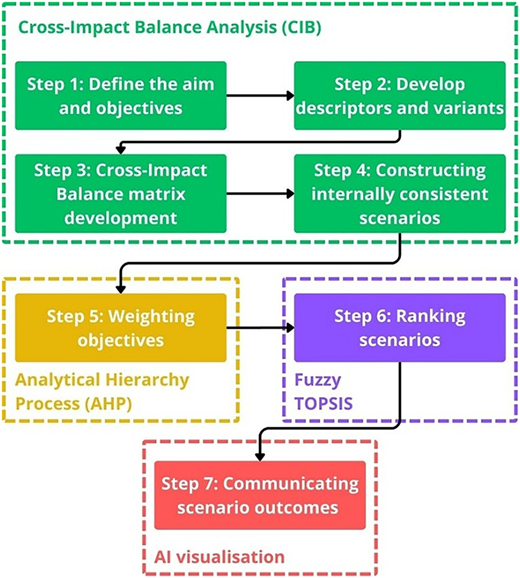
The methodological approach integrates participatory scenario development, multi-criteria decision-making, and AI-supported communication, structured across seven interlinked steps: (1) defining the aim and objectives, (2) developing descriptors and variants, (3) conducting CIB analysis, (4) constructing scenarios, (5) weighting objectives using AHP (6) ranking scenarios through Fuzzy-TOPSIS, (7) generating AI-supported narratives and visualizations (Figure 1).
Step 1: defining the aim and objectives
A two-day stakeholder workshop was organized with representatives from a Paris social housing association (project manager, architect, BIM coordinator, and head of sustainability, residential advisor). To ensure compliance with ethical research standards, all participants involved in the participatory part were fully informed of the study's aims, data usage, and voluntary nature of their participation. Prior to the workshops, participants signed a written informed consent form outlining the scope of their involvement and their rights regarding data confidentiality and withdrawal. Ethical approval for this study was obtained from the Human Research Ethics Committee (HREC) of [Anonymized for Review] University (Reference No. 124835). No personal or sensitive data were collected. The first step involved co-creation with stakeholders to define the system structure and prepare the foundation for scenario development. These sessions applied the Nominal Group Technique (NGT) to collect structured input through guided brainstorming and collaborative prioritization. NGT is a qualitative facilitation method used to encourage equal participation, reduce dominance bias, and promote idea generation in a structured manner (Boddy, 2012). Participants first generate ideas individually, followed by a round-robin sharing process and group discussion to cluster and prioritize responses. This makes it particularly effective in multi-stakeholder settings where diverse perspectives must be captured and reconciled (Clark and Stein, 2004).
In the first exercise, participants were prompted with: “What would a perfect version of this project look like?” They individually wrote down ideas, which were then shared and clustered thematically. This helped to surface the aspirations and perceived success conditions for the project. The second prompt asked: “What are the most important values that need to be safeguarded in the project to achieve this “perfect version”?” From this discussion, core values emerged.
To move from abstract values to normative goals, the workshop continued with two follow-up prompts: “What objectives do you want to achieve with the project?” and “How can we assess whether these objectives are achieved?” These guided participants in identifying measurable objectives and linked performance criteria. This structure follows a value-objective-criteria logic, which supports the formulation of value-based scenarios, an essential aspect of normative scenario planning. Aligning scenario development around stakeholder values ensures that resulting pathways remain meaningful, legitimate, and actionable. The measurable criteria were not intended as direct numerical inputs for the multi-criteria evaluation. Instead, they were used to strengthen the interpretive clarity of the objectives and support stakeholder understanding. By translating abstract goals into tangible indicators, the criteria helped establish a shared understanding of performance levels. This was particularly important for guiding the development of descriptor variants (Step 2) and ensuring consistent judgments during the cross-impact assessment (Step 3).
Based on the full list of objectives gathered during these sessions, the workshop participants consolidated the input into a shortlist of 11 high-priority objectives for inclusion in the scenario development process. This decision was informed by methodological guidance that recommends using between 9 and 15 descriptors to balance adequacy and comprehensiveness in CIB scenario modeling (Weimer-Jehle, 2023). These objectives were selected for their centrality to the strategic goals of the project and their relevance to long-term sustainability.
Step 2: develop descriptors and variants
For each of the shortlisted objectives, descriptors were formulated to operationalize them within the CIB framework. A descriptor is a core system element used to structure and define the key dimensions of a scenario in CIB analysis (Weimer-Jehle, 2023). Each descriptor is expressed through a limited set of discrete variants that represent alternative possible future end-states (Weimer-Jehle, 2023). Both the descriptors and their variants originated directly from the workshop participants through collaborative brainstorming and refinement activities. The research team acted primarily as facilitators, organizing the input and aligning it with CIB guidelines. Since CIB analyses operate at a high level of abstraction, it is common practice to combine related objectives, criteria, and value dimensions into single comprehensive descriptors (Weimer-Jehle, 2023).
Each descriptor was defined as a “state descriptor” a qualitative representation of a condition or characteristic of the system, with an ordinal measurement scale (Weimer-Jehle, 2023). This approach was chosen for methodological consistency and to ensure compatibility with the Fuzzy-TOPSIS ranking procedure used in later stages. The descriptors included 1 to 4 mutually exclusive and collectively exhaustive variants. Their design met the core CIB requirements of completeness, mutual exclusivity, and non-overlap (Weimer-Jehle, 2023). The criteria defined in Step 1 informed the interpretation of these variants by providing reference points for what constitutes “low,” “medium,” or “high” performance for each descriptor. Although the variants were expressed using ordinal scales to ensure compatibility with the CIB and Fuzzy-TOPSIS methods, the criteria supported their conceptual grounding and improved consistency in stakeholder interpretation.
Step 3: cross-impact balance (CIB) matrix development
In the third step, a CIB analysis was conducted to identify internally consistent combinations of descriptor variants that represent coherent and plausible future scenarios. As a qualitative scenario method, CIB systematically evaluates the interdependencies between system elements to ensure internal logic in the resulting configurations (Weimer-Jehle, 2006, 2023). Without this step, simply combining descriptor variants risks generating inconsistent or contradictory scenarios (Weimer-Jehle, 2023).
To assess these interrelationships, a second stakeholder workshop was held with the same participants. Working in subgroups of two to three, participants evaluated the direct influence of each variant on all others across the descriptors. This distributed approach improved the practicality of completing the matrix for a larger system and follows standard CIB practices for efficient data collection (Weimer-Jehle, 2023). A seven-point scale ranging from − 3 (strongly hindering) to + 3 (strongly promoting) was used (Weimer-Jehle, 2006), to record the influence of one variant on another, independent of other interactions, resulting in a structured cross-impact matrix.
Step 4: scenario generation
In the fourth step, internally consistent scenarios were generated based on the cross-impact matrix using the CIB methodology (Weimer-Jehle, 2023). The analysis was performed using ScenarioWizard [2] software, which systematically computes the consistency of all possible variant combinations. Each scenario is evaluated through its overall impact sum, reflecting how well the selected variants support one another. While CIB tolerates some degree of inconsistency due to the qualitative nature of input data, high inconsistency scores signal internal contradictions, whereas low scores indicate plausible and coherent scenario configurations (Weimer-Jehle, 2023). This step provided a structured and justifiable set of internally consistent, stakeholder-informed scenarios to be used in the subsequent decision analysis. Beyond identifying internally coherent scenario configurations, the CIB filtering stage also plays an important structuring role within the integrated framework by conditioning the range and diversity of alternatives that subsequently enter the MCDA evaluation stage.
Step 5: AHP weighting
To integrate stakeholder preferences into the scenario evaluation process, the Analytic Hierarchy Process (AHP) was used to derive relative weights for the project's objectives. AHP is a widely used multi-criteria decision-making method that supports structured pairwise comparisons, enabling stakeholders to articulate priorities even when faced with complex or unfamiliar choices (Saaty, 1987). The method is particularly well suited for early-stage planning involving diverse actors, as it encourages reflection and dialog while maintaining analytical rigor (Saaty and Vargas, 2012). An Excel-based survey was distributed to all workshop participants following the scenario development phase. Participants compared the key objectives in pairs using Saaty's 1–9 scale to indicate relative importance (Saaty, 1987). Consistency was checked in line with standard AHP practice to ensure coherent responses. The final objective weights were calculated by averaging responses, reflecting a shared prioritization across stakeholders. Individual pairwise comparison matrices were aggregated using the geometric mean method, consistent with standard group-AHP procedures.
In the context of this study, prioritization refers to making stakeholder preferences explicit through the structured weighting process, enabling transparent comparison of how different objectives influence scenario evaluation. AHP was selected over alternative weighting approaches because its pairwise comparison format is intuitive for participants and can be easily implemented in a survey-based setting, allowing stakeholders to complete the evaluation individually and at their own pace (Ishizaka and Labib, 2011). Compared to approaches that rely on direct rating or point allocation (Belton and Stewart, 2002), or explicit assessment of value trade-offs between extreme outcomes (Danielson and Ekenberg, 2019), pairwise comparisons reduce cognitive burden and support more consistent responses in an organizational context (Frish et al., 2025).
Step 6: Fuzzy-TOPSIS ranking
To prioritize the internally consistent scenarios identified through the CIB analysis, the Fuzzy-TOPSIS method was employed. Within the integrated framework, the Fuzzy-TOPSIS stage does not operate independently from the preceding CIB process. Rather, it evaluates a scenario space that has already been conditioned through participatory descriptor development and consistency-based filtering. This multi-criteria decision-making method ranks alternatives by calculating their relative closeness to an ideal solution (which performs best on all objectives) and a negative-ideal solution (which performs worst) (Chen, 2000). In contrast to conventional deterministic TOPSIS, which relies on precise numerical inputs (Shih et al., 2007), the fuzzy extension used in this study allows stakeholder evaluations to be expressed using linguistic variables (Chen, 2000). This is particularly relevant in the present context, where scenario performance is assessed based on expert judgment and qualitative criteria under conditions of uncertainty. Given the early planning stage of the project and the qualitative nature of the scenarios, we used a fuzzy extension of the method to account for uncertainty and “vagueness” in the input data. Each scenario is composed of a unique combination of descriptor variants. These variants, developed in Step 2, were defined using ordinal scales, for example, ranging from “low” to “high” performance levels. To enable numerical processing in the TOPSIS model, these ordinal levels were systematically translated into fuzzy numbers. Triangular fuzzy numbers (TFNs) were chosen for this study due to their intuitive structure, ability to capture imprecision in linguistic terms, and efficiency in computation (Chen, 2000).
A fuzzy decision matrix was constructed by encoding each scenario's variant selections into fuzzy values. These were then weighted using the objective importance values derived from the AHP in the previous step. By comparing each scenario's weighted fuzzy performance to both the fuzzy ideal and fuzzy negative-ideal solutions, a closeness coefficient was calculated that determined the scenario's final ranking. Scenarios that scored closer to the ideal solution; meaning they performed well across the most important objectives, were prioritized. This step ensured that scenario evaluation was both analytically rigorous and sensitive to the values and judgments of stakeholders. Together, the integration of CIB for scenario generation, AHP for value weighting, and Fuzzy-TOPSIS for ranking provides a traceable, multi-method pathway from stakeholder priorities to robust scenario prioritization. For a detailed explanation of the mathematical integration of CIB, AHP, and Fuzzy-TOPSIS, see van Laar et al. (2025b).
Step 7: AI-supported scenario visualization
In the final step, GenAI tools were used to translate top ranking scenarios identified through the Fuzzy-TOPSIS analysis into narrative and visual formats. This step aimed to make the results more tangible, accessible, and engaging for both internal and external stakeholders (van Laar et al., 2025a). For narrative and image generation we selected ChatGPT-4o (a multimodal GPT-4 variant) due to its advanced in-context learning and integrated language–vision capabilities (Shahriar et al., 2024). Unlike separate text or image generators, GPT-4o can follow a coherent prompt flow to produce both descriptive narratives and corresponding visuals. Its training on large internet datasets enables it to interpret our scenario descriptors and generate rich, context-aware content without additional fine-tuning (Raymond et al., 2025). In practice, providing structured scenario parameters and a reference photograph allowed GPT-4o to output detailed, style-consistent descriptions and photorealistic renderings of the adapted building. For each selected scenario, ChatGPT-4o was employed to generate a narrative description, drawing directly from the variant configuration produced in the CIB analysis. A consistent prompt was used to ensure clarity and comparability across outputs: “You are an urban storyteller. Based on the following configuration of descriptor variants, generate a 300–400 word narrative describing a building adaptation scenario of a mid-20th century residential building in Paris. Capture the spatial, social, ecological, and architectural implications of the scenario according to the variants used in the scenario. Make sure to integrate all descriptor variants in a coherent story. Give this scenario a distinctive and relevant title.”
The variant configuration was provided as structured input, allowing the AI to generate a detailed, consistent storyline for each scenario. To visualize these narratives, ChatGPT-4o was used. The same reference image of the building was provided for each scenario to ensure that the geometry, scale, and proportions of the structure remained intact. The AI-generated image responded to the following standardized prompt: “You are an architectural visualizer. Based on the following scenario narrative and the attached reference image of the existing building, generate a photorealistic visualization of the building after its adaptation. Maintain the original geometry and scale, and integrate the described scenario features—such as materials, greenery, façade changes, and public space interventions into the image. Use a similar angle and lighting conditions as in the reference photo.”
We acknowledge that ChatGPT-4o is a general-purpose model not tailored to architectural or urban planning contexts. Its broad training base means it may lack specific technical detail, occasionally producing generic or structurally imprecise outputs. Like many generative models, it operates as a “black box,” which can raise concerns in participatory planning, such as the potential for misrepresenting technical constraints or embedding unintended biases (Farquhar et al., 2024). In addition, the use of generative AI in planning contexts raises broader ethical considerations. Photorealistic visualizations may create a misleading sense of feasibility or certainty, particularly in early-stage scenarios where outcomes remain speculative (Othengrafen et al., 2025). There is also a risk that underlying biases in training data may influence how scenarios are represented, potentially reinforcing implicit assumptions about design or use (Jiang et al., 2025). To address these concerns, the AI outputs were explicitly framed as illustrative and exploratory, and their speculative nature was communicated to stakeholders throughout the process. Therefore, in this study, the AI was used solely as a rapid visualization and communication aid, not for technical specification or design validation. While specialized models, such as diffusion models trained on local building data or smaller language models fine-tuned on planning texts, might yield more context-sensitive results (Lu et al., 2025), developing and curating such models was beyond the scope of this study.
To ensure consistency, we used standardized prompts and a single reference image for all scenarios, reviewing multiple outputs to identify and, if needed, regenerate any implausible or biased elements. Outputs were considered problematic when they included unrealistic architectural configurations (e.g. elements that did not align with the original building structure or scale), inconsistencies with the defined scenario descriptors (e.g. missing greenery or missing floor extensions), or visual artefacts such as distorted geometries or unintended text overlays. In such cases, outputs were iteratively regenerated using adjusted prompts until alignment with the scenario definition was achieved, typically requiring a limited number of iterations per scenario. This combination of controlled prompting and manual oversight ensured the AI's flexibility supported our goal of generating clear, engaging scenario communication. The scenarios can serve as communication tools within Paris social housing association and be shared with architects, tenant representatives, and city officials to foster dialog around preferred futures. The integration of GenAI in this step offers speed, coherence, and adaptability (Epstein, Hertzmann and the Investigators of Human Creativity, 2023), making complex future scenarios more intelligible and actionable for diverse audiences, particularly in early-stage planning processes where visual imagination and stakeholder alignment are critical (van Laar et al., 2025a).
Results
Case study context
The scenario-based decision-making approach was applied to a real-world within-use adaptation case in Paris. The site consists of a 1950s social housing complex in the 15th arrondissement. The complex includes three high-rise towers and a low-rise building, totaling 281 residential units (Figure 2). While the physical condition of the buildings is still relatively stable, the site faces multiple pressures: energy inefficiency, poor quality of public space, lack of biodiversity, and increased demand for diverse housing typologies including student and affordable units.
The primary stakeholders involved in the process were all from the housing association and included: a project manager, architect, the head of sustainability, a BIM coordinator, and a tenant liaison officer (Table 1). These individuals served as key decision-makers, offering technical, social, and strategic perspectives throughout the workshops and subsequent analysis phases.
Step 1: defining the aim and objectives
The first stakeholder workshop was held on-site at the social housing association's headquarters in Paris on 21–01-2025. The two-day session involved structured brainstorming using NGT (Boddy, 2012), leading to a shared value framework and objective set for the building adaptation project. The first session focused on envisioning a “perfect project,” from which aspirational themes such as energy performance, social cohesion, indoor comfort, sustainability, and densification were drawn up.
These abstract values were subsequently translated into actionable project objectives and measurable criteria through a facilitated process. From the raw input of the individual responses across the two workshop parts, the research team clustered overlapping ideas and facilitated a prioritization dialog. The result was a shortlist of 11 strategic objectives (Table 2) These were selected based on relevance, clarity, and alignment with the long-term mission of the housing association.
Step 2: developing descriptors and variants
The second part of the workshop consisted of formulating descriptors and variants. Each of the 11 prioritized objectives was translated into a descriptor for use in the CIB analysis; such as “Energy Performance,” “Social Cohesion,” or “Environmental Impact”. These were co-developed with the stakeholders and refined by the research team to ensure methodological coherence (Appendix A). Each descriptor consists of a respective objective, criteria and a description.
For each descriptor, a set of ordinal variants was developed to represent different degrees of goal attainment within a desirable scenario space. Prior to variant formulation, participants were instructed to ensure that all options met a minimum performance baseline, so that even the “lowest” variant remained acceptable and desirable. This approach allowed the scenario space to reflect relative degrees of ambition rather than success versus failure, supporting strategic reflection on trade-offs and priorities. In line with CIB methodology, all variants were defined to be mutually exclusive, collectively exhaustive, and non-overlapping (Weimer-Jehle, 2023).
While most descriptors featured two to four ordinal variants, some, such as “Marketing and City Policies”, were defined as fixed descriptors, containing only one invariant outcome: “in accordance with marketing and city policy.” Although not subject to variation, this descriptor was still integrated into the scenario structure due to its prerequisite nature and potential influence on the internal consistency of the system. Appendix A lists all descriptors and their associated variants.
Step 3: cross-impact balance (CIB) matrix development
The second stakeholder workshop took place with the same stakeholder group on 22-01-2025 at the social housing association's headquarters and took approximately 4 h. Each participant was assigned a subset of variant-to-variant relationships to assess, ensuring broad coverage while maintaining cognitive feasibility. Ratings were based on expert judgment, organizational experience, and expected future dynamics in the context of the building adaptation project.
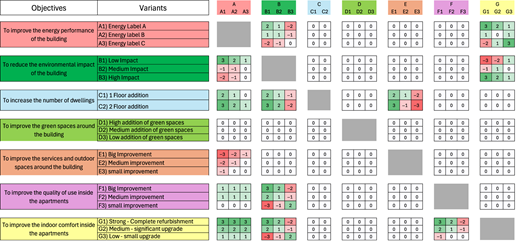
To ensure shared understanding, the session began with a plenary explanation of the CIB concept and scoring methodology. Participants then worked in small breakout groups to evaluate their assigned pairs, noting their rationale alongside the numeric values. This structure allowed space for both independent judgment and peer calibration. The workshop concluded with a plenary validation round in which all groups presented their assessments, clarified assumptions, and where needed, adjusted scores based on input from others. The resulting evaluations were consolidated into a complete cross-impact matrix, capturing the perceived interactions among all variant states A reduced visualization of the cross-impact matrix is shown in Figure 3, while the full matrix is provided in Appendix B. This matrix forms the foundation for identifying consistent scenario configurations in the next step.
Step 4: scenario generation
The consistency analysis was conducted using ScenarioWizard software, which algorithmically assessed all possible combinations of descriptor variants to determine their internal coherence (Weimer-Jehle, 2023). In Cross-Impact Balance (CIB) analysis, scenario consistency is assessed by comparing the support (impact balance) of each selected variant with that of its alternatives. If an alternative receives stronger support, this constitutes a violation, which is aggregated into an inconsistency score (IC), with lower values indicating higher coherence (Weimer-Jehle, 2023).
An inconsistency threshold (ICS) of 1 was applied, retaining scenarios with no or only minor violations. The choice of this threshold is grounded in CIB theory, which shows that the significance of inconsistency depends on the number of descriptors. For systems of moderate size, such as the present model with 11 descriptors, scenarios with IC = 1 are considered only marginally inconsistent, whereas higher values indicate significant contradictions (Weimer-Jehle, 2023). Retaining IC1 scenarios therefore ensures that plausible configurations are not excluded due to minor inconsistencies arising from uncertainty in expert judgment.
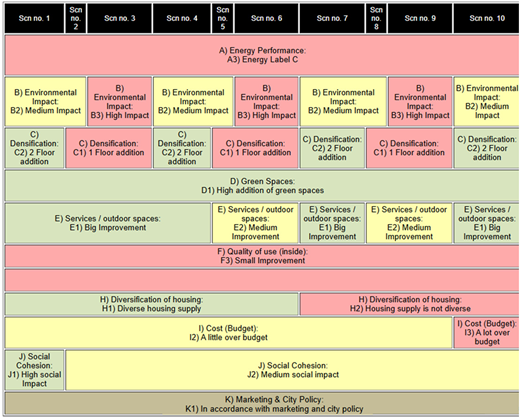
Given the model structure (11 descriptors: 1 with 1 variant, 1 with 2 variants, and 9 with 3 variants), 39,366 combinations are possible. Of these, only 21 met the defined threshold, meaning that approximately 99.95% of the scenario space was filtered out, leaving a set of internally coherent and plausible scenarios. A reduced scenario tableau is presented in Figure 4, and the full set of scenarios is provided in Appendix C. These draft scenarios form the analytical foundation for the subsequent multi-criteria evaluation and stakeholder-based ranking procedures.
Step 5: AHP weighting
To reflect stakeholder preferences in the scenario evaluation, the relative importance of the 11 project objectives was assessed using AHP. After the scenario development workshop, the five stakeholders; namely the project manager, lead architect, BIM coordinator, head of sustainability, and residential advisor, completed an Excel-based AHP survey. Each participant conducted pairwise comparisons of the objectives using Saaty's 9-point scale, indicating their relative importance within the building adaptation strategy.
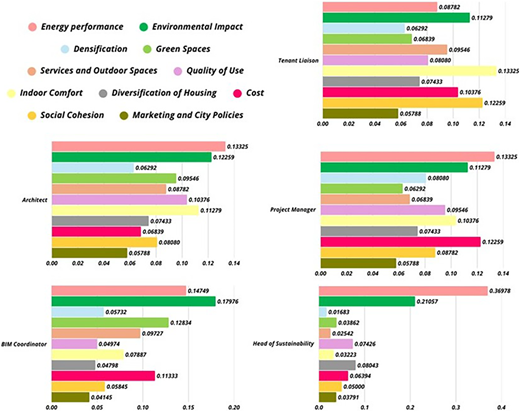
All submitted pairwise matrices demonstrated acceptable consistency (CR < 0.10), ensuring reliable results (Saaty, 1987). Individual pairwise comparison matrices were aggregated using the geometric mean method. The resulting aggregated weights and corresponding standard deviations are presented in Table 3. Energy Performance and Environmental Impact emerged as the highest priorities, followed by Cost and Social Cohesion, highlighting a collective focus on decarbonization, affordability, and community well-being. Although some variation existed between stakeholders, the overall weighting structure showed relatively strong convergence around sustainability-oriented priorities. Energy Performance exhibited the highest standard deviation (SD = 0.112), indicating greater variation in stakeholder priorities for this objective. This variation was largely driven by the comparatively high weighting assigned by the Head of Sustainability and suggests differences in the emphasis placed on energy performance and decarbonization objectives across stakeholder roles. These weights were then applied in Step 6 to evaluate and rank the scenarios using the Fuzzy-TOPSIS method, ensuring alignment with the values of the core stakeholder group. Figure 5 gives a breakdown of the objective weights per stakeholder.
Step 6: Fuzzy-TOPSIS ranking
To prioritize the internally consistent scenarios generated in Step 4, the Fuzzy-TOPSIS method was applied. Each scenario consists of 11 descriptor variants, each representing a qualitative level of goal attainment. To quantify these inputs, a linguistic scale was defined by the authors and uniformly applied to all descriptors. The assignment of TFNs to linguistic variants followed scales widely used in fuzzy multi-criteria decision-making, particularly in sustainability and construction domains (Zhou et al., 2024; Zyoud et al., 2025). These scales offer consistency, ease of interpretation, and comparability across studies. Each qualitative variant was translated into a Triangular Fuzzy Number (TFN), which captures the uncertainty around each value as a triplet where , and denote the lower, middle, and upper bounds of the variant's performance. For descriptors with three variants, such as: “Social Cohesion”, the linguistic values “Low,” “Medium,” and “High” were translated into fuzzy numbers as follows: Low was represented by the triplet (0.0, 0.25, 0.5), Medium by (0.25, 0.5, 0.75), and High by (0.5, 0.75, 1.0). For descriptors with only two variants, such as: “Diversification of Housing Supply”, the values assigned were Medium as (0.25, 0.5, 0.75) and High as (0.5, 0.75, 1.0).
For fixed descriptors with a single variant (Marketing and City Policies), which function as prerequisites rather than optimization targets, a neutral TFN of (0.25.0.5.0.75) was assigned across all scenarios. This maintains their influence in the weighted evaluation via stakeholder-derived AHP weights without introducing artificial variation. To ensure that the selected values accurately reflected stakeholder perceptions, they were reviewed and validated during the participatory workshops. Participants evaluated whether the TFN representations matched their understanding of terms such as “low,” “medium,” and “high,” following practices used in similar studies where fuzzy linguistic scales were adapted through expert engagement (Mohandes et al., 2025). In this context, the previously defined criteria served as interpretive anchors, ensuring that the assignment of linguistic values (e.g. low, medium, high) remained grounded in a shared understanding among stakeholders.
The fuzzified scenario–objective matrix was subsequently normalized and weighted using the objective importance values derived through AHP in Step 5. Scenario performance was then evaluated relative to a Fuzzy Positive Ideal Solution (FPIS) and a Fuzzy Negative Ideal Solution (FNIS), and a Closeness Coefficient (CC) was calculated for each scenario to express its relative proximity to the stakeholder-weighted ideal. In this context, reflects how far a scenario deviates from the most desirable combination of outcomes across all objectives, while indicates how far it is removed from the least desirable combination, together informing the scenario's overall relative performance. Scenarios were ranked in descending order of this coefficient, with higher values indicating stronger overall alignment with stakeholder priorities. The full mathematical implementation of the Fuzzy-TOPSIS procedure including normalization, weighting, distance calculations, and the derivation of FPIS, FNIS, and CC is provided in Appendix D.
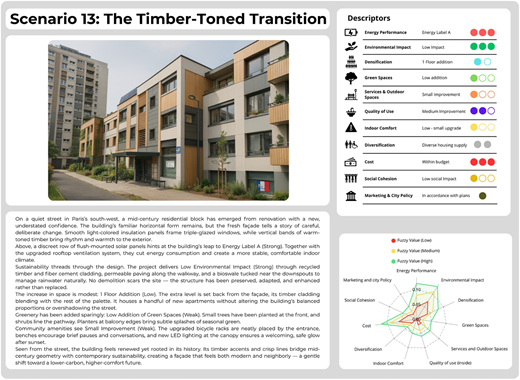
Scenarios were ranked in descending order of CC, with higher values indicating greater alignment with ideal project performance under stakeholder-weighted objectives. Table 4 provides the final ranking of the scenarios. Of the 21 consistent scenarios, Scenario 13 ranked highest (CC = 0.6271), followed closely by Scenarios 11 (CC = 0.612) and 12 (CC = 0.6013). These top performers align best with the stakeholder-weighted ideal, combining strong energy performance (Label A/B), low to medium environmental impact, and modest densification, resulting in high closeness coefficients (e.g. Scenario 13: CC = 0.627; Scenario 14: CC = 0.574). Notably, trade-offs on softer criteria like indoor comfort or outdoor space did not significantly hurt their scores. At the other end, Scenario 20 performed the worst (CC = 0.243), reflecting a poor match with stakeholder priorities, characterized by weaker energy performance (Label C), higher environmental impact, and limited improvements in areas such as green spaces and services, alongside less favorable cost conditions.
Several scenarios obtained identical or closely clustered CC values despite differing in their descriptor configurations. For example, Scenarios 1 and 4, Scenarios 3 and 5, Scenarios 6 and 8, and Scenarios 16 and 19 produced identical CC values. These ties do not indicate duplication within the CIB analysis, but rather reflect convergence in the normalized fuzzy performance profiles after weighting and aggregation. In particular, the combination of strong upstream scenario filtering through the CIB process and the use of broad ordinal fuzzy evaluation categories reduced evaluative differentiation between certain alternatives. As a result, structurally distinct scenarios frequently converged into highly similar evaluative outcomes, producing a relatively compressed ranking range between CC = 0.243 and CC = 0.627. This suggests that the integrated framework exhibits relatively limited discriminatory capacity once the scenario space has been strongly conditioned toward internally coherent alternatives.
Sensitivity analysis
To examine how the integrated framework responds to changes in stakeholder prioritization, a sensitivity analysis was conducted on the two highest-weighted objectives: Energy Performance (A) and Environmental Impact (B). These weights were independently varied by ±20%, while the remaining objective weights were proportionally adjusted to maintain normalization. Rankings obtained under the perturbed conditions were subsequently compared with the baseline evaluation.
The analysis showed that the highest-ranked scenarios remained relatively stable across all perturbation conditions (Table 5). Ranking changes occurred primarily among scenarios with closely clustered CC values, particularly in the middle ranking range. Scenario 13 consistently remained among the highest-performing alternatives under all tested conditions, while Scenarios 11, 12, and 14 also maintained stable positions. Minor ranking shifts mainly occurred between scenarios with nearly equivalent performance profiles, such as Scenarios 1 and 4 or Scenarios 10 and 17.
These findings suggest that ranking robustness within the framework emerged not only from relatively stable stakeholder priorities, but also from structural convergence introduced through the upstream CIB filtering process. Because the CIB analysis reduced the scenario space from 39,366 possible combinations to only 21 internally coherent scenarios, the remaining alternatives already occupied a relatively narrow evaluative space prior to MCDA assessment. As a result, structurally distinct scenarios frequently converged into highly similar normalized performance profiles after fuzzy weighting and aggregation, contributing to tied or closely clustered CC values.
Step 7: AI-supported scenario visualization
To support stakeholder engagement, two high ranking scenarios identified by the Fuzzy-TOPSIS ranking were further developed into detailed narratives and visual representations. Due to the time and resource intensity of this process, only two high ranking scenarios were selected to ensure depth and clarity.
To substantiate this selection, the variant configurations of the four highest-ranked scenarios (Scenarios 11, 12, 13, and 14) were compared. This comparison showed that these scenarios differ in only 3 out of 11 descriptor variants, corresponding to approximately 73% similarity. As a result, visualizing all four would have produced largely similar narrative and visual outputs with limited additional insight.
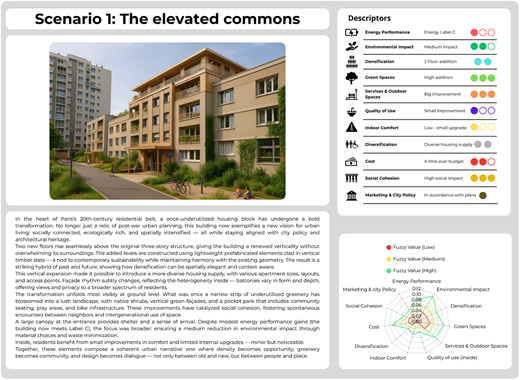
To ensure meaningful contrast, Scenario 13 was selected as the highest-performing scenario, while Scenario 1 was chosen as a comparator due to its substantially different configuration, differing in 8 out of 11 descriptor variants from Scenario 13. Despite this divergence, Scenario 1 still ranks relatively high in the Fuzzy-TOPSIS results (5th), indicating that it reflects stakeholder preferences while representing an alternative strategic direction.
Scenario descriptions were generated using ChatGPT-4o with a standardized prompt to ensure consistency in tone and structure. Each narrative incorporated all 11 descriptor variants and was limited to 300–400 words. Visualizations were also produced using ChatGPT-4o, translating qualitative descriptors into spatial features, for example, PV panels for strong energy performance or shared courtyards for medium levels of social cohesion. The results were compiled into one-page scenario scorecards, combining narrative and imagery to create accessible, engaging overviews (Figures 6 and 7).
Discussion
This study presents the first real-world application of an integrated decision-support framework combining CIB analysis, AHP, Fuzzy-TOPSIS, and generative AI-supported scenario communication within a building adaptation context. While earlier work introduced the conceptual structure of the framework (van Laar et al., 2025b), the present study operationalizes and evaluates the framework in practice through a participatory social housing case in Paris. Beyond demonstrating practical applicability, the study contributes methodological insight into how integrated CIB–MCDA frameworks behave within exploratory planning contexts, particularly regarding how upstream scenario-space conditioning influences downstream evaluation, ranking behaviour, discriminatory capacity, and ranking robustness.
The results show that strong CIB-based scenario filtering substantially conditioned the downstream MCDA evaluation. From 39,366 theoretically possible combinations, only 21 internally coherent scenarios satisfied the selected inconsistency threshold. While this strengthened internal consistency and plausibility, it also constrained evaluative diversity prior to ranking. Several structurally distinct scenarios consequently converged into highly similar normalized performance profiles after fuzzy weighting and aggregation, producing tied or closely clustered CC values. The compressed ranking range reveals a trade-off between internal scenario coherence, ranking robustness, and evaluative discrimination within integrated exploratory decision-support systems.
The sensitivity analysis further supports this interpretation. The highest-ranked scenarios remained relatively stable under ± 20% perturbations of the two highest-weighted objectives, namely Energy Performance and Environmental Impact. Ranking shifts occurred mainly among scenarios with closely clustered CC values in the middle ranking range. This suggests that robustness within the framework emerged not only from relatively stable stakeholder weighting preferences, but also from the structural convergence introduced through the upstream CIB filtering process. Because only internally coherent scenarios entered the MCDA stage, many alternatives already occupied a relatively narrow evaluative space before weighting and aggregation occurred. This finding also relates to the way measurable criteria were used in the framework. The criteria developed in Step 1 strengthened the interpretive grounding of objectives and supported the formulation of descriptors and variants, but they were not directly incorporated as numerical inputs in the Fuzzy-TOPSIS model. Instead, the evaluation relied on ordinal variant levels translated into triangular fuzzy numbers. While appropriate for exploratory early-stage decision-making where scenario-specific quantitative data were unavailable, this introduced an additional layer of abstraction that may have further reduced evaluative granularity and allowed different configurations to converge into similar performance profiles. Future research should therefore investigate how measurable criteria can be linked to variant-specific data ranges derived from simulations, life-cycle assessment tools, cost models, or empirical benchmarks to improve evaluative differentiation while retaining the flexibility of fuzzy exploratory approaches.
Stakeholder preferences were elicited using AHP, a widely adopted method in decision-making for its transparency, accessibility, and capacity to support structured deliberation (Saaty and Vargas, 2012). Descriptor and variant development, along with CIB cross-impact judgments, were co-produced through participatory workshops, aligning scenario logic with stakeholder knowledge and contextual realities. While this approach fosters engagement and interdisciplinary dialog (Weimer-Jehle, 2023), it is also time- and resource-intensive, requiring skilled facilitation, familiarity with CIB and MCDA methods, stakeholder coordination, and access to organizational and building-related data. Replicating the framework in practice may therefore require significant organizational commitment, particularly in terms of workshop time, expert involvement, and analytical capacity. As such, the framework is most suitable for strategic planning contexts, such as large renovation portfolios, climate adaptation roadmaps, or asset management processes, where the added analytical depth justifies the required investment. The cognitive load of AHP's numerous comparisons and the manual elicitation of cross-impacts further increase the risk of participant fatigue (Ishizaka and Labib, 2009; Weimer-Jehle, 2023). Future applications could therefore improve feasibility and scalability by adopting alternative weighting methods such as the Best–Worst Method (BWM) (Rezaei, 2015), phasing the CIB process through expert-led pre-structuring followed by stakeholder validation, or partially automate matrix development using historical data or AI-supported suggestions. These adaptations could reduce implementation effort while preserving the framework's ability to generate internally coherent scenarios and transparently evaluate trade-offs across multiple objectives. Simpler approaches, such as brainstorming followed by voting, can quickly identify preferred options but typically focus on a single solution and do not systematically explore alternative scenarios or make trade-offs explicit. In contrast, the structured framework supports the exploration of multiple coherent futures while making trade-offs between competing objectives transparent and traceable.
Despite its strengths, the framework remains largely linear and lacks mechanisms for iterative refinement. Future applications could incorporate adaptive feedback loops by revisiting objectives, weights, or descriptors as stakeholder priorities and project conditions evolve. A promising direction is a multi-level cross-impact approach that could support this transition by using high-level CIB analyses to define overarching pathways, which then guide more detailed operational descriptors and local design interventions. For example, if a top-ranked scenario prioritizes affordability and high energy performance, as in Scenario 13 in this study, a second-level CIB analysis could explore more detailed options for insulation systems, energy technologies, or cost-reduction strategies. Such staged refinement would maintain coherence across planning levels while enabling bottom-up feedback from implementation challenges or stakeholder input. This layered approach has been suggested in prior CIB literature (Schweizer and Kurniawan, 2016).
The framework supported structured organizational decision-making and priority-setting within the participating housing association. However, the study was primarily designed to explore how the framework functions within an internal organizational context during early-stage building adaptation planning, rather than to validate stakeholder consensus or participatory legitimacy. The scenario rankings and AI-generated visualizations were therefore not formally presented back to participants for post hoc validation. As a result, claims regarding stakeholder alignment or the communicative effectiveness of the AI-generated outputs should be interpreted cautiously. Future research should therefore place greater emphasis on participatory validation by evaluating how stakeholders interpret, critique, and engage with the ranked scenarios and AI-supported visualizations, and whether these outputs meaningfully support dialog, reflection, and decision-making processes.
While this focused approach enhances clarity and coherence in organizational decision-making (Tumpa and Naeni, 2025), the limited number of participants and their shared institutional perspective restrict the generalizability of the results and limit participatory diversity. From a co-production perspective, the findings also illustrate how participatory outcomes are shaped by the composition, institutional context, and power relations of the participating actors, rather than emerging as neutral or universally representative outcomes. Because all participants belonged to the same organization, shared institutional norms, professional roles, and internal hierarchies may have influenced which objectives, trade-offs, and interpretations were prioritized during the workshops. The framework itself is not inherently limited to internal stakeholders and could be applied in broader participatory settings involving residents, municipal authorities, or external experts. Prior studies show that including a wider range of actors can shift sustainability priorities and strengthen social legitimacy (Dessouky et al., 2023; Galal Ahmed et al., 2025). Expanding participation in future applications would not only improve legitimacy but also help surface value tensions and increase the framework's capacity to support socially robust decisions (Giuliani et al., 2020).
The results clearly illustrate the influence of stakeholder composition. The highest-ranked scenarios (11, 12, and 13) consistently prioritized energy performance, environmental impact, and affordability over more ambitious green space interventions. While all scenarios still met minimum ecological thresholds, broader stakeholder groups, such as residents or urban planners, might have weighted these objectives differently or reframed the trade-offs entirely. Similarly, the co-production of descriptors and variant interpretations shaped not only the scenarios themselves but also how objectives such as “social cohesion” or “diversification of housing supply” were defined, reflecting the operational priorities of the participating organization. This highlights how stakeholder composition influences both process and outcomes, underscoring the importance of inclusive and deliberate participant selection in future applications.
While generative AI improved the accessibility and communicative quality of the scenarios, its role was deliberately limited to visualization and narrative support rather than technical design. The AI-generated outputs served as illustrative aids to help stakeholders imagine alternative futures, but models such as ChatGPT-4o can produce plausible yet inaccurate or context-insensitive content (Farquhar et al., 2024). These risks were mitigated through standardized prompts, fixed reference images, and manual review, while the speculative nature of the outputs was clearly communicated during workshops. Although advanced techniques such as Low-Rank Adaptation (LoRA) (Mao et al., 2024) and Gaussian Splatting (Luo et al., 2024) could improve realism and contextual specificity, the priority in this study was fast, consistent, and interpretable communication during early-stage planning.
Finally, the framework's modular structure offers strong potential for integration into broader planning and asset management systems. Automating parts of the CIB construction process, fuzzy scoring procedures, and MCDA calculations could substantially improve scalability and reduce implementation effort. In particular, embedding the framework within long-term renovation planning, climate adaptation roadmaps, or housing portfolio management systems could support more structured and future-oriented organizational decision-making under uncertainty. Overall, the study demonstrates that integrating participatory scenario planning, multi-criteria evaluation, and AI-supported communication can provide a coherent and transparent approach for exploring building adaptation strategies while also revealing important methodological dynamics concerning scenario-space conditioning, evaluative convergence, and ranking robustness within integrated exploratory decision-support systems.
Conclusion
This study introduced and applied a participatory framework that integrates scenario planning, multi-criteria decision-making, and generative AI to support early-stage building adaptation. By combining CIB analysis, AHP, and Fuzzy-TOPSIS, the framework provides a structured pathway from stakeholder values to consistent and ranked future scenarios. Its application to a Paris social housing complex demonstrated how energy performance, environmental impact, and affordability can be assessed alongside softer objectives such as social cohesion and comfort, enabling stakeholders to explore trade-offs transparently. The inclusion of AI-generated narratives and visualizations further enhanced the accessibility and communicative power of scenarios, supporting shared understanding in complex decision processes.
Beyond demonstrating practical applicability, the study contributes methodological insight into how integrated CIB–MCDA frameworks behave in practice. The findings show that strong upstream scenario filtering through CIB substantially conditions downstream MCDA behaviour by reducing evaluative diversity prior to ranking. While this strengthened internal scenario coherence and ranking robustness, it also contributed to compressed CC ranges and convergence between structurally distinct scenarios. The study therefore highlights an important trade-off within integrated exploratory decision-support systems between internal scenario coherence, evaluative discrimination, and ranking robustness.
The framework also offers practical value for sustainable policy and organizational planning. Its modular structure allows integration into climate adaptation roadmaps, renovation portfolio strategies, and asset management systems, enabling housing providers and municipalities to assess adaptation pathways more systematically under uncertainty. At the same time, the framework remains resource-intensive, requiring stakeholder coordination, methodological expertise, and substantial workshop effort. Future research should therefore focus on improving scalability through automation, simplified elicitation procedures, and AI-supported assistance tools.
While the framework proved valuable for structured organizational decision-making, the study was limited to a single internal stakeholder group and did not include post hoc participatory validation of the ranked scenarios or AI-generated outputs. As such, broader claims regarding participatory legitimacy, societal democratization, or stakeholder alignment should be interpreted cautiously. Future applications should test the framework in broader multi-actor settings involving residents, local authorities, and external experts, while also examining how stakeholders interpret and engage with the resulting scenario rankings and visualizations.
Overall, the study contributes a replicable and flexible exploratory decision-support framework while advancing understanding of the structural dynamics that emerge when participatory scenario planning and MCDA methods are combined within building adaptation contexts under uncertainty.
Ethical statement
Ethical approval for this study was obtained from the Human Research Ethics Committee (HREC) of Delft University of Technology (Reference No. 124835). All participants provided written informed consent before taking part in the workshops.
AI usage
AI-based tools were used during the preparation of this manuscript. Specifically, ChatGPT-4o was employed to assist with the generation of scenario narratives and visualizations in Step 7 of the methodology. Additionally, it was used to support language refinement and rewriting in several sections of the paper, including portions of the introduction, discussion, and conclusion, to improve clarity and academic expression. All AI-generated content was critically reviewed and edited by the authors to ensure accuracy and alignment with the study's objectives.
Notes
The supplementary material for this article can be found online.