This study aims to explore the relationship between Generation Z (or Gen Z) consumers’ decision-making styles and electronic word-of-mouth (eWOM) use in the tourism sector. Drawing on the consumer style inventory (CSI) model and the theory of reasoned action (TRA), the research examines how specific decision-making styles influence Gen Z’s propensity to use eWOM recommendations for accommodation choices.
The study uses structural equation modelling to analyse data collected from 296 Gen Z users of Booking.com. The CSI model is adapted to the analysed context and attributes – impulsive, recreational, sustainable, fashion-conscious and perfectionist attitudes – are examined to determine their impact on eWOM use intention and actual eWOM use.
Three of the hypothesised relationships in the model were validated. Specifically, the results suggest that the attitudes of sustainable and perfectionist consumers influence the intention to use eWOM. Furthermore, use intention is positively associated with the actual use of eWOM.
For marketers and tourism businesses, understanding the decision-making styles of Gen Z can inform the development of targeted marketing strategies that emphasise quality and sustainability. Highlighting these aspects in online reviews and eWOM platforms can enhance engagement with Gen Z consumers.
This research advances the understanding of eWOM behaviour by integrating CSI and TRA theories in the context of Gen Z’s tourism decision-making. It provides empirical evidence on the significant role of perfectionist and sustainable attitudes in shaping eWOM intentions, contributing to the literature on consumer behaviour and digital marketing in tourism.
1. Introduction
Defined as the transmission of consumer opinions and experiences through digital sites, electronic word-of-mouth (eWOM) is an essential source of authentic and timely guidance for consumers (Mariani and Borghi, 2023) and plays a pivotal role in influencing consumer behaviour in the tourism sector (Mariani and Borghi, 2023). As a generation of digital natives (Stillman and Stillman, 2017), and the first generation born into a digital world (Seyfi et al., 2023a), Generation Z (Gen Z) consumers (those born between the late 1990s and late 2000s) have the greatest propensity to use the Web to make purchases and reservations, share experiences via social networks and use instant messaging and chat applications, which has led to their greater likelihood of leaving online reviews than other generations (Monaco, 2018). Consequently, Gen Z consumers rely heavily on digital sites and online recommendations (PWC, 2023). Moreover, the distinct consumption characteristics of the Gen Z market and the burgeoning number of these consumers caused an undeniable shift in consumer behaviour towards more sustainable practices (Seyfi et al., 2023b). Valentine and Powers (2013), for example, observed that Gen Z’s greater connectivity with sustainable and ethical consumerism influences their tourism choices to express their identity.
The literature on consumer behaviour is rich with studies about consumer decision-making. Hanzaee (2011) suggests that consumer typology, psychographics/lifestyle and consumer characteristics are the most common approaches in characterising consumer decision-making styles. Sproles and Kendall’s (1986) consumer style inventory (CSI) model conceptualises consumer decision-making styles and is pivotal in understanding the Gen Z–eWOM nexus. The model assumes that consumers use different strategies when making purchase decisions. According to Sproles and Kendall (1986), consumers exhibit various decision-making styles when making purchases, including impulsive shoppers, perfectionists and quality-focused shoppers, novelty-fashion consumers, recreational shoppers, hedonistic shoppers, brand-conscious consumers, price-conscious shoppers, individuals overwhelmed by choice and habitual, brand-loyal shoppers. Each of these styles will be defined further in the literature review section.
The CSI model is believed to be a powerful instrument for characterising a consumer’s propensity to make specific shopping decisions and predicting consumer choice or purchasing behaviour. Thus, the authors believe that the CSI may also be effective in predicting use intention and eventual use of eWOM among Gen Z.
However, despite the recognition of social media as a critical technology capable of making a disruptive impact on individuals, organisations and society (Inversini, 2024), the intersection of individual decision-making styles with the use of eWOM remains a relatively unexplored area of research, particularly among Gen Z consumers (Sarkar et al., 2023). Drawing from the theory of reasoned action (TRA), which posits that individuals' intentions are shaped by their attitudes and subjective norms (Ajzen and Fishbein, 1980), the objective of this study is to explore the relationship between Gen Z’s consumer decision-making styles via the CSI model and their intention to engage with eWOM recommendations in the tourism context. Through the application of structural equation modelling (SEM), this research seeks to fill this gap by investigating how specific decision-making styles influence Gen Z consumers’ propensity to engage with eWOM in the tourism sector.
This study contributes to the literature by advancing our understanding of both the CSI and TRA theories in the context of eWOM behaviour. The study’s findings provide empirical evidence of the significant influence of decision-making styles, such as sustainability and perfectionism, on Gen Z consumers' intention to engage with eWOM recommendations. Moreover, this research underscores the critical role of behavioural intentions in shaping eWOM engagement behaviours. Thus, the findings of this study have implications for businesses and marketers seeking to tailor their marketing strategies to effectively target and engage with Gen Z consumers in the digital age.
2. Literature review and hypothesis development
2.1 The role of eWOM in decision-making
eWOM is highly influential in the travel decision-making process, with up to 90% of consumers considering eWOM prior to the final purchase decision (Rita et al., 2022). eWOM in tourism manifests itself through a variety of online platforms that provide online reviews. Booking.com is amongst the most popular platforms, with a database of approximately 180 million verified reviews (Mellinas and Martin-Fuentes, 2021). TripAdvisor is another highly popular platform, with an average of 463 million visits per month (Rita et al., 2022). Scholars have used various terms to describe such eWOM platforms. Tourism review sites is the term we use in this study.
eWOM in tourism is influential at different stages of the decision-making process, particularly during search, evaluation and purchase. eWOM assists travellers in searching for information and supports their motivation to travel. Accommodation reviews are of particular importance at this stage. The content of reviews, both positive and negative, affects potential visitors’ evaluation of holiday purchases as consumers search for discrepancies between official information and other consumers’ experiences. Some consumers also use online reviews post-purchase to gain further information about the destination and to keep up-to-date on the experiences of most recent travellers (Chen et al., 2015).
Over the years, eWOM-related studies, including those focused on social media sites, have offered novel perspectives, used a variety of theories (Pourfakhimi et al., 2020) and provided conceptual and practical applications. For example, Pourjahanshahi et al. (2023), who analysed website quality, users’ attitudes, co-creation experiences and eWOM, suggested eWOM’s versatility as a data source for exploring different aspects of image and reputation, service quality and co-creation experiences. Furthermore, the mediating role of eWOM between the marketing mix and choice decisions has been recently recognised (Al-Dmour et al., 2024). Similarly, eWOM has been confirmed as a decision-making guide for restaurant goers (Esparza-Huamanchumo et al., 2024).
With sustainability’s growing importance in recent years (Buhalis et al., 2023), research emerged on understanding sustainability messages on tourism review sites, including who shares such information (D’Acunto et al., 2024), the content of reviews and their impact on customer satisfaction (Gerdt et al., 2019). Seyfi et al. (2023b) investigated the role of digital media engagement in sustainability-driven tourism consumption, i.e. consumption that strives for minimal negative and maximum positive impacts on nature and society. Tourism review sites themselves have begun to promote sustainable travel. For example, Booking.com has implemented the Travel Sustainable badge. However, upon The Netherlands Authority for Consumers and Markets decision that the program was not sufficiently clear, Booking.com is now working on implementing a new system that will make use of third-party certifications to promote sustainable travel (Authority for Consumers and Markets, 2024). Thus, further research on the use of eWOM, traveller decision-making and the role of sustainability is warranted.
2.2 Theory foundation and hypothesis development
The CSI model (Sproles and Kendall, 1986) guides this study to understand how consumers’ attitudes about searching for information on eWOM sites influence the intention and actual use of eWOM and, eventually, can shape specific recommendation patterns (e.g. sustainable recommendations). As mentioned in the introduction, Sproles and Kendall (1986) first model posits that there are eight distinct shopping typologies:
Impulsive shoppers – These individuals make spur-of-the-moment purchases without much consideration for finding the best deals.
Perfectionists and quality-focused shoppers – They are characterised by meticulous and systematic shopping habits, with a strong focus on obtaining high-quality items.
Novelty-fashion consumers – Individuals who seek out the latest fashions to stay on trend.
Recreational shoppers – These individuals derive pleasure from the act of shopping and often engage in it for leisure.
Hedonistic shoppers – These are consumers whose purchasing decisions are driven by emotions, aesthetics and the desire for self-reward.
Brand-conscious consumers – These shoppers favour high-end, widely advertised brands.
Price-conscious shoppers – These are individuals who are focused on obtaining the best value for their money.
Overwhelmed shoppers – These are people who experience information overload and feel overwhelmed by the multitude of choices available.
Habitual, brand-loyal shoppers – This group consistently purchases from their preferred brands and stores.
It is important to note that other researchers have made adaptations and extensions since the CSI model’s original publication. Recent studies based on those eight typologies of shoppers have confirmed the existence of quality-oriented, price-oriented and novelty-oriented shoppers (Eriksson and Stenius, 2024) when analysing online grocery shoppers. Additionally, a positive relationship has been identified between consumer attitudes and attractiveness or similarity in a food service context (EunPyo and Jiseon, 2023), consumer attitudes and fashion product involvement (Abdel Wahab et al., 2023) and consumer attitudes and high-end branded second-hand clothing (Lichy et al., 2023). However, no applications have been made to better understand consumer attitudes’ effects on eWOM use intention.
Building upon previous adaptations and extensions of CSI to various contexts (Nayeem and Marie-IpSooching, 2022; Ma and Hahn, 2023; Musika, 2018; Tarnanidis et al., 2015) and considering recommendations for more parsimonious and consistent versions of CSI (Lichy et al., 2023; Lysonski et al., 1996; Rajh and Rajh, 2023), this study conducted an adaptation of CSI attributes tailored to the context of Gen Z and eWOM in tourism.
Gen Z consumers exhibit distinct consumption patterns (Pavlić and Vukić, 2019), including a heightened awareness of ethical concerns and a demonstrated preference for sustainable choices (Djafarova and Foots, 2022). While some of the literature suggests that Gen Z seeks brands, it is regarded as having sustainability concerns (Schroth, 2019) and values accessibility and quality (Chen and Chai, 2010). In addition, they may travel for various reasons, such as education, volunteering, work, learning, culture, sports and leisure (Demeter and Bratucu, 2014).
To capture the impact of eWOM on Gen Z’s decisions about tourism accommodations across various trip types, this study focuses on CSI attributes strongly linked to all travel types demanded by these consumers. The attributes widely recognised in the literature (Bardey et al., 2022; Chase et al., 2017; Cho et al., 2022; Kamenidou et al., 2021) include impulsiveness, recreational, fashion and perfectionist attitudes. Musika’s (2018) research identified a strong correlation among green consumption variables and consolidated environmental consciousness into a single factor within a robust nine-attribute model. Thus, this study introduces an emerging and trending attribute for the consumption and tourism literature (Trudel, 2019), sustainable attitude.
2.3 Theory of reasoned action
Ajzen and Fishbein’s (1980) TRA, which assumes that individuals are inherently rational and engage in systematic processes to gather information, is applied to explore the relationship between eWOM use intention and actual use. The theory asserts that intentions are influenced independently by attitudes and subjective norms. As a result, three potential causal outcomes exist: intentions may be shaped solely by:
attitudes;
subjective norms; or
both attitudes and subjective norms.
The TRA does not specify the conditions under which each of these three scenarios is likely to occur; instead, it defers the determination of the particular sequence to empirical investigation (Bagozzi, 1992).
TRA was first applied in tourism in 1991 (Ulker-Demirel and Ciftci, 2020), and since then has continued to grow, suggesting that it is a relatively new research area that has become increasingly popular among researchers in the field (Ulker-Demirel and Ciftci, 2020). For instance, TRA has been used to predict sports tourists’ and heritage tourists’ intentions (Shen and Wu, 2022). The TRA has also been successfully applied to predict WOM communication as an essential outcome in the behavioural intentions of local products (Baydeniz et al., 2023).
Furthermore, the theory’s application in persuasion and social commerce research has long been known (Yzer, 2012; Roh et al., 2024). In this study, drawing from Ajzen and Fishbein’s TRA (1980), different attitudes (i.e. impulsiveness, recreational, fashion-sustainable and perfectionist attitudes) are studied as antecedents of two choices: eWOM use intention and eWOM use.
Supported by the different potential causal outcomes from TRA, previous applications of TRA choose to study only attitudes as a precedent of intentions, reducing their focus to the first explained outcome. For instance, Bang et al. (2000) analysed the relationship between attitudes and intentions to pay a premium for renewable energy and confirmed a positive relationship between beliefs about salient consequences and attitudes towards paying more for renewable energy.
Given the established trend in which attitudes consistently demonstrate stronger predictive power for intention than social norms (Armitage and Conner, 2001; Hamilton et al., 2024; Harb et al., 2024) and recognising the imperative to elucidate and evaluate the role of implicit attitudes in behaviour (Al-Husseini, 2023; Michaelidou and Hassan, 2014), it becomes evident that the focus should be directed towards examining the influence of individuals’ attitudes on the utilisation of eWOM.
2.4 Conceptual model and hypothesis development
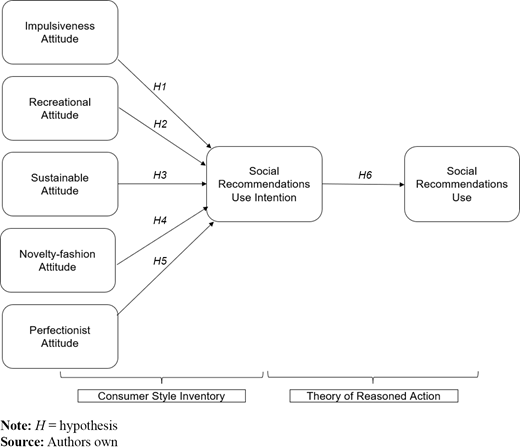
Drawing on a review of the literature concerning consumer decision-making styles, the TRA, eWOM and tourism review sites, a conceptual model was devised. This model, depicted in Figure 1, illustrates that Gen Z’s use of eWOM when searching for accommodations on review sites is influenced by their intention to use eWOM, which in turn is shaped by their specific decision-making styles. To summarise the proposed relationships, the following hypotheses were developed:
The impulsive attitude, the first antecedent included in the model, examines the orientation of consumers who are impulsive and careless when they use reviews for accommodation decision-making. In the context of consumption, individuals displaying impulsiveness tend to make unplanned purchases without concern for the number of items or money spent (EunPyo and Jiseon, 2023; Lysonski and Durvasula, 2013) and do not seem concerned with cost or value (Kang et al., 2014). Impulse consumption occurs when a sudden, intense and persistent urge to buy a specific item arises, leading to quick decision-making upon encountering the product (Eriksson and Stenius, 2024; Lucas and Koff, 2014). Therefore, in line with previous research (EunPyo and Jiseon, 2023; Lucas and Koff, 2014; Rezaei, 2015), a positive effect of tourists’ impulsive attitudes on eWOM use intention is expected because the stimuli of consulting with online comments about accommodations could stimulate tourists to make unplanned choices of the lodging to stay. The hypothesis is formulated as follows:
An impulsive/careless attitude positively affects social recommendations use intention.
A recreational attitude attributed to hedonistic-conscious tourists refers to consumers who consider viewing eWOM to be a pleasurable activity or a form of entertainment. For recreational consumers, shopping is a delightful experience, and they often indulge in it simply for the fun it brings (Abdel Wahab et al., 2023; Kamaruddin and Mokhlis, 2003). Described as a “decision style of consumers who take pleasure in shopping and who shop just for the fun of it”, recreational consumers tend to focus on the sensory aspects of their consumption experience, including the ambience of the stores and the variety of products available (Bloch et al., 1989; Lichy et al., 2023). According to Kim and Eastin, 2012 study, consumers with hedonic tendencies tend to explore different shopping websites and actively seek information. Therefore, in line with previous research (Abdel Wahab et al., 2023; Kamaruddin and Mokhlis, 2003; Rezaei, 2015), a positive effect of tourists’ recreational attitudes on eWOM use intentions is expected because the sole action of sharing or consulting with online comments about accommodations could be pleasant for them. The following hypothesis is proposed:
A recreational attitude positively affects social recommendations use intention.
The third approach considered in the model was sustainable attitude, which includes both pro-environmental and sociocultural concerns. Following Dunlap and Jones (2002), Prakash et al. (2018) define environmental consciousness as the “degree to which people are aware of problems regarding the environment and support efforts to solve them or indicate the willingness to contribute personally to their solution” (p. 92). Several studies on tourists’ pro-environmental behaviour are based on Ajzen’s (1991) TRA, one of the most effective tools for intervening in and predicting behavioural intentions (Taylor et al., 2006). Pro-environmental behaviour is related to sustainable consciousness according to an extended CSI model by Prakash et al. (2018) and ecological and ethical consciousness according to Lichy et al. (2023). Furthermore, Trudel (2019) argues that sustainable consumer behaviour attempts to satisfy present needs while benefiting or limiting environmental impact.
A sustainable attitude may shape or influence consumers’ decision-making processes (Lichy et al., 2023; Prakash et al., 2018; Trudel, 2019). Thus, a positive effect of a sustainable attitude on eWOM use intentions is expected because tourists with a sustainable attitude could be interested in sharing or consulting with online comments regarding the sustainability practices of one accommodation like comments on waste reduction initiatives or community support. As a result, the following hypothesis is developed:
A sustainable attitude positively affects social recommendations use intention.
The fourth approach included in the model is novelty attitudes and fashion consciousness. These consumers derive immense satisfaction from being fashion-forward and place great importance on seeking variety (Eriksson and Stenius, 2024; Lysonski and Durvasula, 2013). The decision style of novelty attitude and fashion consciousness refers to consumers who appreciate new and innovative products and find excitement in exploring novel offerings. The trait of variety seeking is an important facet of these consumers (Kamaruddin and Mokhlis, 2003; Lichy et al., 2023). Previous researchers noted that a novelty or fashion-consciousness attitude was positively related to opinion seeking through the use of eWOM on social network sites (Kang et al., 2014). Therefore, in line with previous research (Lysonski and Durvasula, 2013; Lichy et al., 2023; Rezaei, 2015), it is rational to expect a positive effect of tourist fashion-novelty attitudes on eWOM use intentions because tourists with fashion-novelty attitudes could be interested in sharing or consulting with novel online comments regarding accommodation activities such as new openings, refurbished or renovated accommodation facilities. The following hypothesis is proposed:
A fashion attitude positively affects social recommendations use intention.
The last approach included in the model is a perfectionist attitude. Consumers exhibiting a perfectionist attitude or a strong emphasis on high-quality standards strive to find the utmost excellence in products, seeking items that have received top-quality ratings from other consumers (Rezaei, 2015). They highly consider product quality (EunPyo and Jiseon, 2023; Nawaz et al., 2019) and are methodical in pursuing the best possible quality products. Quality assessment typically occurs before and during the purchase process, as well as during consumption (Papanagiotou et al., 2013). Perceptions of quality may arise from the characteristics of the products themselves (Abdel Wahab et al., 2023; Das, 2014), which are usually discussed in reviews. Therefore, in line with previous research (Rezaei, 2015), a positive effect of a tourist perfectionist attitude on eWOM use intention is expected because a tourist with a perfectionist attitude could be interested in sharing or consulting with online comments regarding how well the accommodation deploys services compared to competitors. The following hypothesis is proposed:
A perfectionist attitude positively affects social recommendations use intention.
Finally, following the TRA assumptions, we postulate a positive relationship between eWOM use intention and eWOM use. Previous studies have suggested that if people strongly intend to perform a behaviour, the probability of actualising the behaviour will be high (Salifu et al., 2024; Ulker-Demirel and Ciftci, 2020) and that if one can perform the behaviour without situational obstacles that impede behavioural performance, then that behaviour will increase (Yzer, 2012). Therefore, following previous studies (Salifu et al., 2024; Ulker-Demirel and Ciftci, 2020; Yzer, 2012), it is rational to expect a positive effect of tourist eWOM use intention on eWOM use, and the following hypothesis is proposed:
The level of intention to use eWOM for accommodation decision-making positively influences the extent to which Gen Z users engage in the actual use of eWOM.
Figure 1 shows the research model. The research model is designed to investigate the influence of recreational attitudes, sustainable attitudes, novelty-fashion attitudes and perfectionist attitudes on eWOM use intention and the influence of eWOM use intention on eWOM use.
3. Research methodology
Due to Gen Z’s specific consumption attitudes and unique consumer behaviour patterns (Djafarova and Foots, 2022; Kim et al., 2022), we focused on that population segment to evaluate the research model. Thus, the sample was based on Gen Z members who had used a tourism review site at least once in the last year to book accommodations for trip purposes.
3.1 Sample and data collection
The data collection process followed the stages outlined by Teeroovengadum and Nunkoo (2018). The sample size was calculated based on a significance criterion in accordance with the guidelines set forth by Singh and Masuku (2014). The total population of Gen Z in Spain in 2022 was approximately 8 million (Instituto Nacional de Estadística, 2022), and the final sample obtained was 296 respondents. Thus, the margin of error was 5.7% for a 95% confidence interval (Saunders et al., 2009). Data was gathered from February 2021 to December 2022 at several locations near the University of Malaga, Spain, which had a population of 578,000 inhabitants in 2020 (Instituto Nacional de Estadística, 2022). As in previous studies on tourism and technology (Zaragoza-Sáez et al., 2022), Spain was deemed suitable for sample collection. Recent findings suggest that Spain’s younger generation demonstrates high proficiency in assessing online information reliability (49.4%) and acknowledges the impact of digital technologies on decision-making (37.9%) (Aranda et al., 2023). The Gen Z sample is also interesting because these are future tourists, and they are now beginning to determine the trends in both tourism and eWOM use.
Following a simple random sampling technique, the survey was carried out in various locations for a better representation of the sample, including two primary university campuses, ten outdoor facilities, two university sports centres and the city centre. These locations were categorised into zones, and the voluntary interviewers were assigned specific areas for the survey. The survey procedure involved inviting potential respondents in these areas to answer the questionnaire with the assistance of an interviewer. To reduce potential bias (Allred and Ross-Davis, 2011), interviewers employed the drop-off and pick-up method and limited their communication with respondents to only when necessary. Only those who travelled within the past year and used review sites (i.e. Booking.com) during their travel decision process were interviewed. A total of 315 Gen Z members answered the self-administered questionnaire. After eliminating invalid questionnaires, the final and valid sample size was 296.
Prior to answering the questionnaire, participants were offered to envision a picture in which they were exploring eWOM about an unfamiliar accommodation in a destination they had never visited before. This prompt was designed to standardise the picture of eWOM in participants’ minds and mitigate potential biases associated with peripheral cues (accommodation star category, destination brand, sustainable program recognition, COVID-19 safety procedures and quality recognition). Then, the participants were asked to think about the eWOM they checked when using a tourism review site trying to make a decision on an accommodation to book and to answer the questionnaire about their interest in using eWOM and their actual use.
3.2 Measurement instrument
The questionnaire was designed to align with the study’s objectives, drawing on insights from the literature. To ensure its validity, the questionnaire was evaluated by five marketing experts to assess its content. Additionally, a preliminary test involving a small group of 25 students was conducted to validate the instrument further and check its clarity and functionality. As a result of the validation process, we modified three questions and three concepts in the final measurement instrument regarding the questions about previous experience with eWOM from review sites and personal characteristics.
The final version of the questionnaire comprises a total of seven constructs: eWOM use (U), eWOM use intention (UI), impulsive attitude (IMA), recreational attitude (REA), sustainability attitude (SUA), novelty-fashion attitude (FAA) and perfectionist attitude (PEA). All the constructs were measured with three items, and seven-point Likert scales ranging from (1) totally disagree to (7) totally agree were used to collect the answers (see Appendix 1). The five constructs measuring attitudes were adapted from Rezaei (2015). The two TRA-related constructs measuring eWOM use intention and use were adapted from Chen et al. (2017) and Carranza et al. (2020), respectively.
The questionnaire also included seven sociodemographic variables to obtain information from the participants, especially pertaining to their age, education level, gender and job status. According to the variable asked, we designed different formats; for example, to measure the level of studies, a nominal variable was used. Partial least squares (PLS)-SEM were then applied to the collected data using SmartPLS 4.0.9.1 software as the analytical tool (Ringle et al., 2015).
PLS-SEM is a robust methodology used to ascertain the signs and significance of proposed relationships among constructs within the structural model. Moreover, it evaluates the validity and reliability of the measurement model, making it an esteemed approach (Barroso et al., 2010). Its substantial statistical power proves particularly valuable for exploratory research endeavours, especially when investigating emerging or less-developed theories (Hair et al., 2019).
PLS-SEM has demonstrated its efficacy in analysing intricate structural models that involve numerous indicators and relationships (Hair et al., 2019). Additionally, it possesses advantages in handling data that diverge from a normal distribution – an advantageous characteristic in various research scenarios (Hair et al., 2019). Our assessment of multivariate normality was conducted using Mardia’s multivariate skewness test statistic with a value of β = 534.2963; p <0.001), along with Mardia’s multivariate kurtosis test statistic yielding β = 2470.2458; p <0.001 –both clearly indicating evidence of nonnormality within our data set at a multivariate level.
The proposed model was analysed using a two-step approach, as outlined by Chin (1998). Initially, the outer model was validated by assessing the reliability, convergent validity and discriminant validity of the different constructs, namely, impulsiveness, recreational, sustainable, novelty-fashion and perfectionist attitudes, eWOM use intention and eWOM use. Subsequently, the internal (structural) model and its robustness were scrutinised to assess the hypothesised relationships among the constructs (Hair et al., 2014) and to evaluate the overall predictive capability of the proposed model (Hair et al., 2019). Finally, the demographic data were analysed using SPSS 28.0.1.1 software.
4. Results
4.1 Gen Z member demographics
Table 1 presents the demographics of the survey respondents.
4.2 Measurement model estimation
To assess the adequacy of the model fit, various metrics were used, including the standardised root mean squared residual (SRMR), Cronbach’s alpha, composite reliability and a convergent validity test (Hair et al., 2014). According to Hu and Bentler’s (1999) recommendations, a good model fit should be attained when the SRMR is lower than 0.08. The fit indices of this measurement model show good model fit: SRMR = 0.069.
Regarding the robustness of the measurement model, because all the constructs were measured with three items and theoretical reasoning was used to determine the reflective character of the model (Hair et al., 2017), confirmatory tetrad analysis-PLS), which enables the empirical specification of measurement models (Gudergan et al., 2008), was not used.
4.2.1 Common method bias.
This bias is frequently found in quantitative studies relying on self-reported data (Spector, 2006) or sourced from a single origin (Avolio et al., 1991). Common method bias (CMB) can significantly jeopardise a study’s validity (MacKenzie and Podsakoff, 2012) and distort the structural relationships under investigation (Kline, 2015). To mitigate the potential impact of CMB, two primary approaches are commonly used: procedural design adjustments and statistical control methods (Reio, 2010). In this study, procedural design was addressed by providing anonymous responses, keeping the questionnaire brief and concise, positioning demographic questions towards the end of the questionnaire and conducting a pilot test before the final data collection.
Furthermore, we conducted two rigorous assessments to confirm the absence of CMB. Initially, Harman’s single-factor test, carried out using principal component analysis, revealed that less than 50% of the total variance was accounted for by a single factor, confirming the absence of CMB (Fuller et al., 2016). Additionally, the full collinearity test, as recommended by Kock (2015), was performed. The variance inflation factor (VIF) values for all latent constructs ranged from 1.562 to 4.617, remaining well below the threshold of 5. This indicates the absence of potential collinearity issues (Hair et al., 2011). Therefore, CMB did not influence the outcomes of the present study.
4.2.2 Reliability and validity assessment.
Construct reliability was evaluated using both Cronbach’s alpha and composite reliability. Furthermore, the construct’s validity, both convergent and discriminant, was assessed through average variance extracted (AVE). In this case, all the indicators have a value greater than 0.707 and must be accepted as part of a construct (Hair et al., 2019). Table 2 shows the values of each item of the measurement model.
To ensure the internal consistency of the model constructs, we assessed the reliability of the constructs using composite reliability (CR), where values exceeding 0.7 are essential. Table 2 displays CR values all above 0.7. In the next step, we evaluated the convergent and discriminant validity of the measurement model. Convergent validity requires that more than 50% of a construct's variance is explained by its indicators, with an AVE value above 0.5, as stated by Hair et al. (2019). As indicated in Table 2, all the AVE values surpassed 0.5, confirming the convergent validity of the study's constructs.
To assess discriminant validity, we followed Hair et al. (2019) recommendations, using three methods:
the cross-loads criterion;
the Fornell–Larcker criterion; and
the Heterotrait–Monotrait ratio (HTMT) criterion.
In the first method, each indicator's load was scrutinised; if it demonstrated a higher loading on its respective construct compared to other latent variables in the model, the criterion was considered validated (Hair et al., 2019). The criterion was validated in all cases for the measurement model.
According to the Fornell–Larcker criterion, the square root of the AVE for each latent construct must exceed the variance shared by the construct with other constructs in the model, as outlined by Hair et al. (2019). As illustrated in Table 3, all correlations between the constructs within the measurement model were lower than the square root of the AVE, confirming the presence of discriminant validity.
The final criterion studied was the HTMT. According to this criterion, all correlations between constructs must be under 1.00. As indicated in Table 3, this criterion was satisfied for all constructs in the measurement model, confirming discriminant validity (Richter et al., 2016).
4.3 Structural model assessment and hypothesis testing
The validation of the structural model began by examining R2 values and the Stone–Geisser test (Q2), as detailed in Table 4. R2 represents the proportion of variance in the construct that the model accounts for; values greater than 0.1 are deemed significant (Falk and Miller, 1992). The Q2 statistic, another indicator of predictive power, is considered relevant if it is above 0, indicating the model’s predictive validity (Hair et al., 2011). To evaluate multicollinearity among the independent variables, the VIF was used. All VIF values were below 5.000, which confirms that multicollinearity is not an issue in this study (Ringle et al., 2015).
The validation of the structural model advanced through the application of confidence intervals, reinforcing the findings discussed earlier. When the estimated path coefficients (β) are associated with confidence intervals that do not encompass zero, it offers grounds for rejecting the null hypothesis that β equals zero (Henseler et al., 2009). The results demonstrated empirical support for only three hypotheses, as detailed in Table 5.
The validation of the structural model concluded with a comprehensive analysis of its robustness, focusing on nonlinear effects, endogeneity and unobserved heterogeneity (see Appendix 2).
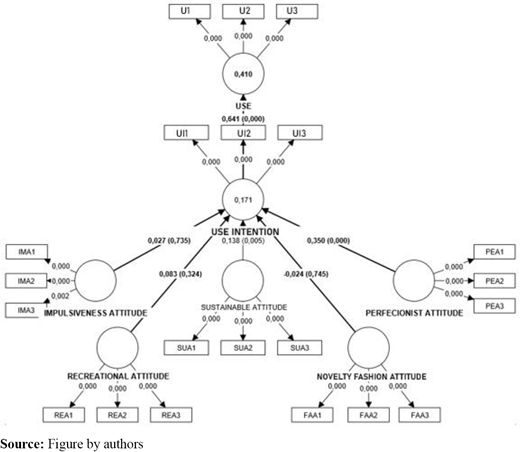
As Figure 2 shows, the p values and β coefficients in the structural model confirm that the path from eWOM use intention to eWOM use (H6) was positive and significant (β = 0.641; t = 14.094; p < 0.001). Additionally, the findings validated that SUA (H3) (β = 0.138; t = 2.792; p = 0.005) and PEA (H5) (β = 0.353; t = 5.279; p < 0.001), serve as predictors of UI. These analysis results affirm the validity of the proposed structural model.
5. Conclusions, limitations and future research
eWOM is an important topic within tourism studies because it is ubiquitously used by consumers globally (Pourjahanshahi et al., 2023; Pourfakhimi et al., 2020). This study has applied CSI to investigate how psychographic consumer characteristics affect the intention to use eWOM from travel review websites. To the best of our knowledge, this is one of the first studies to apply the CSI to better understand the characteristics of Gen Z consumers who are more likely to use online reviews for their decision-making. In addition to traditional attitudes, such as impulsiveness attitudes, recreational attitudes, fashion attitudes and perfectionist attitudes (Sproles and Kendall, 1986), sustainability attitudes are added because they have become a major consumer trait in recent years (Musika, 2018; Trudel, 2019).
In light of the comprehensive analysis conducted, the findings of this study affirm the validity of the proposed structural model. The results underscore the significance of perfectionist attitude, which has a greater effect, and the sustainability attitude, which has a smaller effect, as predictors of eWOM use intentions among Gen Z consumers, confirming the positive effect of attitudes (i.e. sustainable and perfectionist) on tourism eWOM use intentions. It also confirms that eWOM use intentions explain consumers’ use of tourism eWOM. However, impulsive, recreational and novelty-fashion attitudes were not supported.
Regarding the relationships between validated attitudes and eWOM intention, existing research on the effects of perfectionist attitudes on decision-making (Papanagiotou et al., 2013) and sustainable attitudes on decision-making (Prakash et al., 2018; Trudel, 2019) are in line with our results. These findings suggest that psychographic attributes (i.e. perfectionist and sustainable attitudes) play an important role in eWOM use. Additionally, sustainability attitudes should be included in studies involving tourism consumer psychographics (Sproles and Kendall, 1986), as this may influence consumer decision-making (Musika, 2018; Trudel, 2019).
In contrast to the findings of previous studies (Lucas and Koff, 2014; Kamaruddin and Mokhlis, 2003; Kang et al., 2014), we could not confirm a positive effect of the unvalidated effect on eWOM use intention (i.e. impulsiveness attitude, recreational attitude and novelty-fashion attitude). It is plausible that these attitudes lack clear conceptual connections to the decision-making processes of Gen Z associated with social recommendations via tourism review sites, which could account for their non-significance.
Finally, regarding the studied relationship between eWOM use intention and eWOM, consistent with the theories of reasoned action and in line with previous research (Ulker-Demirel and Ciftci, 2020; Yzer, 2012), our results demonstrate that intention influences use behaviour. In conclusion, this study contributes to our understanding of the intricate relationship between attitudes and intentions in the realm of eWOM. This study provides valuable insights for practitioners and researchers in the field of online consumer behaviour. The findings suggest that marketers and tourism experts should carefully craft messages that address both quality and sustainability dimensions. Users interested in these aspects of the product are more likely to engage with eWOM. These results specifically add to our understanding of how online review sites can be effectively leveraged to promote sustainable consumer behaviour.
5.1 Theoretical implications
This study adopts the TRA (Ajzen, 1991) and analyses whether CSI attitudes (Sproles and Kendall, 1986) serve as antecedents of eWOM use when seeking accommodation. This study fills a research gap by analysing in greater depth the role that psychographic drivers play as a precedent of eWOM use intention and eWOM use with respect to accommodation decisions. Hence, our model enables a better understanding of eWOM use for accommodation decision-making in tourism.
The present study integrates two theoretical approaches (i.e. TRA and CSI). The proposal presented extends the TRA model (Ajzen, 1991) by investigating the distinct roles of psychographic drivers from CSI (Sproles and Kendall, 1986). In doing so, it also extends the CSI (Sproles and Kendall, 1986) with sustainability attitudes as applicable to Gen Z.
The initial application of the CSI to elucidate eWOM use intention extends our understanding of how individually identifiable consumption styles can play a pivotal role in adoption and decision-making related to eWOM (Pourjahanshahi et al., 2023). This pioneering application underscores the relevance of considering consumer profiles as an influential factor in interactions with review sites.
5.2 Practical implications
The results of the PWC (2023) Global Consumer Insights Pulse Survey suggest that consumer reviews constitute an important source of information for consumers of all ages and that social media are an important influence, especially for Gen Z. Moreover, Archer et al. (2022) and Rogers et al. (2021) suggest that consumers are interested in accessing more information on sustainability. This study’s findings thus reflect on an important practical issue of communicating sustainability to tourists. Because sustainability-conscious and quality-oriented consumers are likely to use tourism eWOM from review sites, accommodations (and potentially other businesses) need to maximise the use of reviewer websites to communicate information related to both quality and sustainability. Accommodation providers who craft messages for their consumers with a focus on sustainability and quality are likely to improve consumer engagement and be more effective in marketing their accommodations via online review sites.
Furthermore, according to Booking.com (2023), the demand for sustainable travel products is continuously growing, yet a significant number of travellers believe that there are not enough sustainable travel products available, and they are not aware of how to encounter them. There is also distrust in accommodation sustainability practices amidst a drive for regenerative travel, i.e. travel that positively impacts destinations. The challenge of responsibly promoting sustainability via review sites is exemplified by The Netherlands Authority for Consumers and Markets (2024) decision that Booking.com’s Travel Sustainable programme was not sufficiently clear and could be misleading. Tourist review sites and tourism-related companies need to consider how to demonstrate their sustainability commitment and whether their focus differs from that of many other sustainable businesses. They need to communicate initiatives through which they give back to the communities in which they operate. Moreover, product and service providers should stimulate guests to comment on their sustainability initiatives on review sites. While quality is a focus of any review site and is central to comments that consumers leave online, sustainability is much less a topic despite recent trends towards sustainability labelling. For example, Gerdt et al. (2019) reported that only 5.1% of online hotel reviews mentioned sustainability. A greater prominence of discussing sustainability on online review sites may enhance awareness and contribute to trust in a business’ sustainability claims.
The relationships between sustainable and perfectionist attitudes and eWOM use intention that we have identified enhance our understanding of tourism eWOM use by Gen Z. The evidence from this study, therefore, suggests that online information, including social media, is important for them in areas such as social and environmental responsibility and service excellence. Addressing these dimensions is especially important for companies targeting younger travellers and, ultimately, for industry associations and policymakers to enhance these aspects in business practices.
5.3 Limitations and future research
This study's sample consisted of Gen Z consumers from Spain and focused solely on information searches and internal factors of the decision-making process. The study deliberately targeted one step of the decision-making process, one internal factor and a homogenous demographic to concentrate on understanding how psychographic characteristics influence this specific step of decision-making in this demographic group. Consequently, future research could address these limitations by broadening the sample to encompass a more diverse range of participants. This expansion may include individuals from different age cohorts, cultural backgrounds and geographical regions to gain insights into various demographic and geographic segments, such as Asian, American or African markets. Additionally, future studies may consider incorporating additional factors, such as marketing variables and other consumer socialisation (CSI) elements such as brand and price consciousness, confusion caused by overchoice and brand-loyal purchasing behaviours, into the analysis of sustainable consumption. Furthermore, researchers could focus on identifying interventions that are effective in stimulating consumers to include sustainability in their reviews. Exploring how online review sites and providers can encourage more sustainable behaviour through the utilisation of such eWOM could be a fruitful avenue for investigation. Another interesting analysis could be based on the theory of planned behaviour, which incorporates elements such as perceived behavioural control or subjective norms to investigate their effects across various phases of the decision-making process, including the purchase intention of sustainable tourism products. Moreover, future studies should identify the underlying reasons for the lack of significance between impulsiveness attitude, recreational attitude, novelty-fashion attitude and eWOM use intention. Additionally, they could enhance the understanding of the interrelations between perfectionist and sustainable attitudes towards tourism review sites through a comparative analysis of different models.
Ayuda Plan Propio Universidad de Málaga. Número: B3-2022_08.
References
Further reading
Appendix 1
Appendix 2. Analysis of robustness of the model.
To explore potential nonlinearities, interaction terms representing the quadratic effects between (1) FAA, IMA, PEA, REA and SUA on SRUI and (2) SRUI on SRU were incorporated. As detailed in Table A2, the results from 5,000 sample bootstrapping, considering no sign changes, indicated that neither of the nonlinear effects was significant.
The evaluation of endogeneity was carried out using the Gaussian copula approach, following the methodology outlined by Park and Gupta (2012). As none of the Gaussian copula values for each construct were found to be statistically significant (p > 0.05), it can be confidently stated that endogeneity did not influence this study. This supports the structural model's robustness in this aspect (Sarstedt et al., 2020).
Regarding the assessment of unobserved heterogeneity, the finite mixture-PLS procedure was initially applied to divide the sample into four groups, following the guidelines and maximum segment determination methods described by Sarstedt et al. (2020). However, the results of the fit indices for one- to four-segment solutions proved inconclusive. According to Sarstedt et al. (2011), when modified Akaike’s information criterion with factor 3 (AIC3) and consistent Akaike’s information criterion (CAIC) align on the same number of segments, it indicates an appropriate model fit concerning the identified segments. In this study, because AIC3, CAIC and Bayesian information criterion all indicated different numbers of segments, the findings suggest that unobserved heterogeneity did not significantly impact this research.