Despite the widespread adoption of electronic banking, maintaining long-term customer loyalty remains a challenge. This study investigates whether key customer experience factors – specifically service quality (SQ), service efficiency (SE) and customer satisfaction (CS) – not only influence customer loyalty but also act as necessary conditions for achieving high levels of customer loyalty (CL) in the context of electronic banking.
The study adopts a dual-method approach combining partial least squares structural equation modeling (PLS-SEM) and necessary condition analysis (NCA). This integration enables the identification of both causal (sufficient) relationships and necessary conditions. Data were collected through a survey of 974 Polish electronic banking users.
The results show that CS is the strongest direct predictor of CL. SQ has both direct and indirect effects, while SE influences loyalty only indirectly through CS. NCA reveals that all three constructs – SQ, SE and CS – are necessary conditions for achieving high loyalty, with satisfaction emerging as the most critical bottleneck. The relative necessity of each factor depends on the desired level of loyalty.
The study contributes to loyalty research in digital financial services by integrating sufficiency and necessity logics. It addresses previous calls for more comprehensive theoretical models of digital loyalty and offers new empirical evidence from a large Central European sample. Managerially, it provides clear strategic directions: while SE is typically well-developed, SQ and CS offer the greatest leverage for achieving and sustaining loyalty, as they represent minimum necessary requirements.
1. Introduction
Electronic banking has 9,10become the dominant channel through which customers interact with financial institutions, encompassing internet banking, automated teller machines (ATMs), and other digital self-service platforms (Garzaro et al., 2021; Hussain et al., 2023). In this study, electronic banking is treated as a broad umbrella concept, with mobile banking understood as one of its key subchannels rather than a standalone service. Across Europe, including Poland, adoption of electronic banking is widespread, with more than 85% of bank customers using digital banking services (Statista, 2025). Despite this high penetration, customer usage often remains limited to basic transactions such as balance inquiries or fund transfers, while more complex financial activities continue to be conducted through traditional channels (Das and Ravi, 2021; Tamaruddin et al., 2020). As switching costs in digital banking environments are relatively low (Özkan et al., 2020), banks face increasing difficulty in retaining customers and fostering long-term loyalty, making customer loyalty a central strategic concern in electronic banking.
Prior research in electronic and digital banking has consistently identified service quality (SQ), service efficiency (SE), and customer satisfaction (CS) as important drivers of customer loyalty (CL) (Ishfaq et al., 2022). However, the existing literature is fragmented and provides mixed evidence regarding the mechanisms through which these service-related factors translate into loyal customer behavior. Much of the digital banking literature has focused on adoption intentions and initial usage, often drawing on technology acceptance perspectives (Shaikh et al., 2022), while comparatively less attention has been paid to post-adoption outcomes such as continued usage and customer loyalty (Tamaruddin et al., 2020). Even within this stream of research, most studies rely on sufficiency-based logic, examining whether improvements in service quality, efficiency, or satisfaction increase loyalty on average. This approach offers limited insight into whether these factors are indispensable prerequisites for achieving high levels of loyalty or whether some conditions must be present before loyalty can emerge at all. As a result, it remains unclear which service-related factors are merely supportive and which constitute non-negotiable foundations of customer loyalty in electronic banking. This distinction reflects the logic of necessity, where the absence of certain conditions prevents the outcome from occurring, regardless of the presence of other favorable factors.
To provide a coherent theoretical foundation for examining post-adoption loyalty, this study draws on Expectation-Confirmation Theory (ECT) (Bhattacherjee and Lin, 2015). ECT posits that after adopting a system, users evaluate its performance by comparing perceived outcomes with prior expectations. The degree of confirmation or disconfirmation shapes customer satisfaction, which in turn drives continuance intentions and longer-term loyalty. In the context of electronic banking, service quality and service efficiency represent key dimensions of perceived performance during post-adoption use (Kumar et al., 2024). Service quality reflects customers' evaluations of reliability, security, and overall service excellence, while service efficiency captures perceptions of effort minimization, speed, and process fluency in digital service interactions (Aladwani, 2024). Customer satisfaction thus functions as the central evaluative mechanism through which these service perceptions are translated into loyalty outcomes. In particular, the study examines the sequential mechanism through which service quality influences customer loyalty via service efficiency and customer satisfaction. Anchoring the model in ECT allows the study to move beyond descriptive associations and to explain why and how service-related factors shape loyalty in electronic banking environments.
Building on this theoretical perspective, the present study adopts a dual-method analytical approach that integrates Partial Least Squares Structural Equation Modeling (PLS-SEM) with Necessary Condition Analysis (NCA). PLS-SEM is used to examine direct and indirect relationships among service quality, service efficiency, customer satisfaction, and customer loyalty, including sequential mediation paths (e.g. SQ → SE → CS → CL) (Chang et al., 2017; Kumar et al., 2024). NCA complements this sufficiency-based analysis by identifying the minimum levels of service quality, service efficiency, and satisfaction that are required to achieve different degrees of customer loyalty. This combined approach enables a more nuanced understanding of loyalty formation by distinguishing between factors that enhance loyalty and those that are indispensable for its emergence.
Empirically, the study focuses on Poland, a Central European country characterized by high adoption of electronic banking and a relatively mature digital banking infrastructure (Statista, 2025). Although Poland represents a relevant and rapidly developing digital banking market within the European Union, it remains underrepresented in research on electronic banking loyalty, which has predominantly focused on Western European and Asian contexts (Özkan et al., 2020; Shaikh et al., 2022). By examining customer loyalty in this setting, the study provides context-specific insights while contributing to broader discussions on digital banking in Europe.
By integrating a post-adoption perspective with a dual analytical approach, the study offers a more fine-grained understanding of how key service-related factors jointly shape customer loyalty in electronic banking. Specifically, by distinguishing between direct, indirect, moderation and necessary effects, the analysis clarifies the relative roles of service quality, service efficiency, and customer satisfaction in post-adoption loyalty formation and highlights their strategic relevance for managing digital customer relationships.
Overall, this study makes three key contributions. First, it contributes theoretically by applying Expectation-Confirmation Theory to clarify the roles of service quality, service efficiency, and customer satisfaction in driving post-adoption loyalty in electronic banking. Second, it offers a methodological contribution by combining Partial Least Squares Structural Equation Modeling with Necessary Condition Analysis, thereby integrating sufficiency- and necessity-based perspectives on customer loyalty. Third, it provides empirical evidence from an underexplored European context, offering insights relevant for both scholars and banking practitioners operating in increasingly competitive digital environments.
2. Literature review and hypothesis development
Electronic banking represents a significant transformation in financial services, enabling customers to interact with banks and conduct transactions remotely through internet-based platforms, automated teller machines (ATMs), and other digital self-service channels (Garzaro et al., 2021; Hussain et al., 2023; Zhou et al., 2021). This shift from traditional branch-based banking provides convenience, accessibility, and cost efficiency, allowing users to perform a wide range of banking activities anytime and anywhere (Mostafa, 2020; Das and Ravi, 2021). Consequently, electronic banking has become a dominant channel for customer engagement in many European countries, including Poland, where adoption rates exceed 85% (Statista, 2025).
The rapid expansion of electronic banking, driven by growing competition among financial institutions and rising customer expectations regarding availability, speed, reliability, and security of services, has fundamentally changed the banking sector (Felix, 2015; Holloway, 2025). Customers increasingly demand not only functional efficiency but also seamless, trustworthy service experiences. Meeting these expectations is critical for fostering customer satisfaction and, in the long term, customer loyalty, which is central to retention and competitive advantage in digital banking environments (Lotko, 2022).
Despite high adoption rates, many customers restrict their use of electronic banking to routine transactions such as balance inquiries and fund transfers, while more complex activities continue to be handled through traditional channels (Tamaruddin et al., 2020; Das and Ravi, 2021). This highlights the strategic importance of understanding post-adoption behaviors, particularly customer loyalty, and the factors that drive sustained engagement with digital banking services.
Extant research identifies service quality (SQ), service efficiency (SE), and customer satisfaction (CS) as key determinants of loyalty in electronic banking (Amin, 2016; Ishfaq et al., 2022). However, most studies focus on adoption intentions or initial usage, providing limited insight into post-adoption mechanisms that shape long-term loyalty (Tamaruddin et al., 2020; Ishfaq et al., 2022).
To address these gaps, this review adopts a post-adoption perspective, examining how service quality and efficiency influence customer satisfaction, which in turn drives sustained loyalty. The discussion is anchored in Expectation-Confirmation Theory (ECT). The expectation-confirmation model was initially proposed by Oliver (1980) to explain post-adoption consumer behavior, suggesting that satisfaction is the main determinant of continuance intentions. Building on Oliver's (1980) seminal work, Bhattacherjee (2001) proposed the Expectation-Confirmation Theory (ECT) to explain continuance usage behaviors in the context of technology and information systems, in which continuance behaviors are primarily driven by satisfaction. From this perspective, repeated behaviors such as reuse and repurchase are determined by prior experience, suggesting that when expectations are confirmed, the experience generates satisfaction, which ultimately explains future behaviors (Oliver, 1980; Bhattacherjee, 2001). Previous research has demonstrated the adequacy of ECT in explaining mobile banking continuance use (e.g. Poromatikul et al., 2020); therefore this theoretical foundation allows for a coherent analysis of the pathways through which electronic banking services contribute to long-term customer commitment.
This study is additionally guided by the Stimuli-Organism-Response (S-O-R) model proposed by Mehrabian and Russell (1974) to explain consumer behavior. The S-O-R model posits that external stimuli (S), such as service attributes and characteristics, trigger cognitive and emotional reactions (O), which in turn explain consumers' behavioral responses (R). According to the S-O-R paradigm, emotional reactions mediate the effect of stimuli on behavioral responses. This model has been widely used in consumer behavior studies, including to explain e-banking customer behavior (e.g. Alamoudi et al., 2025; Roberts-Lombard and Petzer, 2021). As explained in the following sections, this study considers service quality and service efficiency as stimuli (S), with satisfaction and loyalty as cognitive/emotional (O) and behavioral (R) responses, respectively. This perspective assumes that satisfaction is a “seed” (Oliver, 1999) necessary to build customer loyalty.
The study also aligns with the quality-satisfaction-loyalty (QSL) model, which, as explained by Olsen (2002), derives from expectancy-related theories and posits that satisfaction mediates the effect of quality on loyalty. Hence, QSL assumes that quality represents a cognitive evaluation of performance, whereas satisfaction reflects the affective response to that performance, making quality a direct antecedent of satisfaction (Olsen, 2002). The QSL logic has been demonstrated in prior studies, including in banking (e.g. Supriyanto et al., 2021) and e-banking (e.g. Redda, 2023) contexts.
2.1 Customer loyalty in electronic banking
Customer loyalty in electronic banking is best understood as a long-term attitudinal and behavioral commitment, distinct from mere continuance intention (Oliver, 1999; Poromatikul et al., 2020). While continuance intention captures users' willingness to continue using a service after initial adoption (Bhattacherjee, 2001), it reflects only the conative aspect of post-adoption behavior. In contrast, loyalty encompasses cognitive, affective, and conative dimensions, including preference, advocacy, and repeated use over time (Oliver, 1999; Buhler et al., 2024; Kumar et al., 2024).
Electronic banking studies confirm that customer loyalty is a critical outcome for banks, influencing retention, revenue, and competitive advantage (Özkan et al., 2020). By integrating ECT, satisfaction is recognized as the central mechanism through which service performance is translated into loyalty outcomes. Thus, understanding the antecedents of loyalty requires examining both service-related perceptions and post-adoption satisfaction. Accordingly, this study treats customer loyalty as a post-adoption outcome shaped by service-related evaluations rather than mere usage continuation.
2.2 Service quality in electronic banking
Service quality (SQ) is a well-established determinant of customer satisfaction and loyalty in both traditional and digital banking contexts (Parasuraman et al., 1985; Grönroos, 1984). In electronic banking, service quality captures customers' evaluations of reliability, security, responsiveness, system stability, and overall excellence in service delivery across digital self-service channels (Amin, 2016; Ishfaq et al., 2022). Consistent with expectation-based perspectives, customers assess service quality by comparing perceived service performance with prior expectations, making SQ a central antecedent of post-adoption satisfaction and subsequent loyalty outcomes.
Service quality in e-banking is inherently multidimensional, encompassing both technical quality – such as transaction accuracy, security, and privacy – and functional quality, including ease of navigation, responsiveness, support, and overall user experience (Arcand et al., 2017; Buhler et al., 2024). High levels of service quality enhance trust and perceived value, strengthen positive user experiences, and reduce uncertainty associated with digital service interactions.
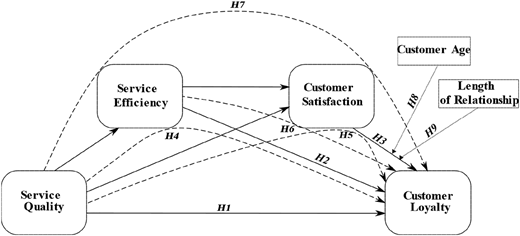
Empirical evidence consistently demonstrates that superior service quality positively influences customer satisfaction and customer loyalty in electronic banking environments (Zhou et al., 2021; Pokhrel and Anup, 2024; Das and Ravi, 2021). Conversely, deficiencies in service quality increase frustration, undermine confidence in digital channels, and raise customers' propensity to switch providers (Kamboj et al., 2022). Taken together, these findings suggest that higher perceived service quality fosters stronger and more enduring customer-bank relationships in electronic banking. Accordingly, the first hypothesis is proposed:
Service Quality (SQ) positively affects Customer Loyalty (CL).
2.3 Service efficiency in electronic banking
Service efficiency (SE) refers to the effectiveness and speed of service delivery, the accuracy and consistency of transaction execution, and the ease with which customers complete tasks (Tseng, 2015; Aladwani, 2024; Khan and Alhumoudi, 2022). SE is related to but distinct from SQ. While service quality captures customers' holistic evaluations of overall service excellence based on expectation-confirmation processes (Parasuraman et al., 1985; Grönroos, 1984), service efficiency emphasizes the instrumental, task-specific performance that directly influences customers' interaction with digital banking systems. Accordingly, in electronic banking, SE encompasses system responsiveness, fast transaction processing, ease of use, and reliability (Shankar et al., 2022; Gazi et al., 2024; Kumar et al., 2024), reflecting customers' evaluations of efficient, frictionless task completion in digital banking interactions.
Notably, efficiency has been shown to positively affect customer satisfaction and loyalty even when other service-related factors exhibit weaker or negative associations, underscoring its critical role in post-adoption evaluations of electronic banking services and customer retention (Aladwani, 2024; Khan and Alhumoudi, 2022). Additionally, service inefficiencies, such as delays or errors, reduce satisfaction and increase the likelihood of customer attrition, whereas high efficiency strengthens customer loyalty (Khan and Alhumoudi, 2022; Gautam and Sah, 2023).
Furthermore, while service efficiency is often treated as a component of service quality in traditional models, prior research suggests that performance-related aspects of digital services may also be considered at a more operational level. In particular, Amin (2016) shows that elements such as ease of use, system functionality, and convenience play an important role in shaping customer satisfaction. Although these attributes are typically embedded within broader quality perceptions, they reflect interaction-level experiences related to how smoothly users perform banking activities.
Extending this perspective, Khan and Alhumoudi (2022) distinguish between overall service quality and operational aspects related to system efficiency and usability, suggesting that efficiency-related attributes play a distinct role in shaping customer evaluations of electronic banking services. These findings indicate that service efficiency may represent a separate, interaction-level mechanism through which broader service quality perceptions are translated into customer satisfaction and subsequent loyalty. Accordingly, service efficiency is treated in this study as a distinct construct reflecting the operational performance of electronic banking systems, enabling a more precise examination of how service quality translates into customer satisfaction and loyalty. Therefore, the second hypothesis is:
Service Efficiency (SE) has a positive effect on Customer Loyalty (CL).
2.4 Customer satisfaction and loyalty in electronic banking
Customer satisfaction (CS) represents the central evaluative mechanism through which customers translate their perceptions of service performance into post-adoption behavioral outcomes (Oliver, 1980; Parasuraman et al., 1985). In the context of electronic banking, satisfaction reflects the extent to which digital banking services meet or exceed customers' expectations for reliability, efficiency, and overall service experience. From this perspective, customer satisfaction reflects users' evaluation of their overall experience with the service, including both its quality and the efficiency with which banking activities can be performed.
Overall, the literature shows that customer satisfaction is a main antecedent of customer loyalty in banking services. Meta-analyses of banking studies performed by Buhler et al. (2024) and Kumar et al. (2022) consistently demonstrate that higher levels of customer satisfaction are associated with stronger loyalty related behavioral outcomes, confirming the stability and significance of the satisfaction-loyalty relationship across large bodies of empirical research. Buhler et al. (2024) further show that this relationship is consistently strong and positive across both online and offline banking contexts and explicitly highlight customer satisfaction as a primary and dominant explanatory variable in the formation of customer loyalty.
Accordingly, empirical studies in e-banking consistently demonstrate that satisfied e-banking users are more likely to maintain long-term relationships with their banks, continue using digital services, and recommend them to others (Berraies et al., 2017; Garzaro et al., 2021). Given the low switching costs and high transparency characteristic of digital banking environments (Özkan et al., 2020), satisfaction becomes particularly critical in stabilizing customer-bank relationships and fostering enduring loyalty, as dissatisfied users can easily compare alternatives and switch providers with limited effort. Aligned with these contributions, this study posits that higher levels of customer satisfaction lead to stronger customer loyalty in electronic banking. Thus, the third hypothesis is:
Customer Satisfaction (CS) positively affects Customer Loyalty (CL).
2.5 Mediating role of service efficiency and customer satisfaction
Prior research in electronic banking has widely recognized customer satisfaction as a key mechanism linking service-related factors to customer loyalty. However, much of this research focuses on identifying mediation effects rather than explaining how these relationships unfold or distinguishing between different types of mediating mechanisms. As a result, the underlying processes through which service-related perceptions translate into loyalty remain insufficiently understood. This limitation reduces the explanatory power of existing models and highlights the need for a more process-oriented perspective. To address this limitation, this study adopts a process-oriented perspective grounded in Expectation-Confirmation Theory and consistent with the S-O-R framework.
Service quality represents a higher-order evaluation of the overall service, encompassing reliability, security, and system credibility. These perceptions are translated into interaction-level experiences that shape how efficiently customers perform banking activities. In this context, service efficiency captures the operational performance of digital banking systems, reflecting the ease, speed, and accuracy of user interactions. As such, service efficiency functions as a mechanism through which abstract service quality perceptions are transformed into concrete user experiences.
As discussed in Section 2.3, usability and system functionality represent important dimensions of service quality shaping user evaluations (Amin, 2016), while operational aspects such as efficiency and usability may constitute a distinct evaluative layer (Khan and Alhumoudi, 2022). Empirical evidence further indicates that efficiency-related dimensions of e-service quality significantly influence customer satisfaction in digital banking contexts (e.g. Ahmed et al., 2021).
Customer satisfaction integrates these interaction-level experiences into an overall evaluation of the service and translates them into loyalty-related outcomes. Satisfied users are more likely to develop trust and long-term commitment, which in turn foster customer loyalty (e.g. Kaura et al., 2015). Thus, satisfaction serves as a key mediating mechanism through which interaction-level experiences are transformed into customer loyalty.
The above arguments suggest a sequential process in which service quality influences service efficiency, service efficiency shapes customer satisfaction, and customer satisfaction drives customer loyalty. Although prior studies acknowledge the importance of efficiency and satisfaction, they typically embed efficiency within broader service quality constructs, overlooking its role as an independent mediating mechanism. By explicitly modeling service efficiency as a distinct construct, this study provides a more fine-grained understanding of how service perceptions translate into loyalty outcomes. As a result, existing models provide limited insight into how service-related perceptions are sequentially transformed into loyalty outcomes.
Based on this integrated perspective, the following hypotheses are proposed:
Service Efficiency (SE) mediates the relationship between Service Quality (SQ) and Customer Loyalty (CL).
Customer Satisfaction (CS) mediates the relationship between Service Quality (SQ) and Customer Loyalty (CL).
Customer Satisfaction (CS) mediates the relationship between Service Efficiency (SE) and Customer Loyalty (CL).
Service Efficiency (SE) and Customer Satisfaction (CS) sequentially mediate the relationship between Service Quality (SQ) and Customer Loyalty (CL).
2.6 Moderating effect of age and length of the customer-bank relationship
While Expectation-Confirmation Theory explains the general post-adoption mechanism through which customer satisfaction translates into loyalty, prior research suggests that the strength of this relationship may vary across customer segments and relational contexts. In particular, demographic characteristics and relationship-related factors may act as boundary conditions that shape how evaluative judgments are converted into long-term behavioral commitment.
Age is frequently identified as a key factor influencing consumer decision-making processes and relationship development with service providers (Nawaz et al., 2020; Fekete Farkas et al., 2021). While generational differences are discussed in prior studies (e.g. Jakóbik et al., 2025), this study focuses on age as a continuous variable to provide a more precise assessment of its moderating role. Prior research suggests that older consumers are generally less efficient in information processing than younger individuals (Guido et al., 2021). Age-related changes affect several stages of cognitive processing, including attention, interpretation, and memory, which may limit the ability to evaluate large amounts of marketplace information. As a result, older consumers tend to rely more strongly on prior experiences when making purchase decisions. Consequently, satisfaction derived from previous interactions may become a more important determinant of behavioral responses among older consumers, increasing the likelihood that satisfied customers remain loyal to a given service provider.
Younger consumers tend to be more open to new experiences and more willing to switch service providers (Ratajczyk, 2017), which may weaken the translation of satisfaction into enduring loyalty. In contrast, older customers, characterized by greater market experience and more established consumption habits, are more likely to maintain long-term relationships with familiar brands (Chikazhe et al., 2021). Consequently, satisfaction tends to be a stronger predictor of loyalty among older customers (Manyanga et al., 2022), who are also observed to be less inclined to change banks (Moliner-Tena et al., 2018). Therefore, age may condition the strength of the satisfaction-loyalty relationship in electronic banking.
Age positively moderates the relationship between Customer Satisfaction (CS) and Customer Loyalty (CL).
Beyond demographic factors, experience-related variables may further shape post-adoption outcomes. In particular, the length of the customer-bank relationship reflects the cumulative nature of prior interactions and exchanges between the two parties (Kim et al., 2016; Ojeme, 2017). Longer relationships are typically associated with higher levels of trust, emotional attachment, and relational strength, which may reinforce loyalty even when individual service encounters fall short of expectations (Wang and Wu, 2012). In such contexts, customer satisfaction is more likely to translate into stable loyalty outcomes. Conversely, in newly established or short-term relationships, affective bonds are weaker, and loyalty may depend more strongly on recent service experiences, potentially attenuating the impact of satisfaction. Thus, relationship length represents an important contextual factor that may moderate the satisfaction-loyalty link in electronic banking.
The length of the customer-bank relationship positively moderates the relationship between Customer Satisfaction (CS) and Customer Loyalty (CL).
Figure 1 summarizes the research hypotheses defined for this study, comprising the direct and mediating effects specified among the variables.
2.7 Necessity hypotheses for customer loyalty in electronic banking
While much of the existing literature on customer loyalty in electronic banking focuses on identifying factors that enhance loyalty, the findings remain inconsistent. As Kaura et al. (2015) point out, certain variables – particularly customer satisfaction – may represent “necessary prerequisites for loyalty”, rather than merely influential antecedents. This distinction calls for a complementary analytical perspective: necessity logic.
Traditionally, studies on loyalty rely on sufficiency-based approaches such as regression analysis or structural equation modeling (SEM), which examine whether an antecedent can produce an outcome. However, such methods overlook the possibility that some constructs may be essential for the outcome to occur at all. Necessity logic, as proposed by Dul (2016, 2021), provides a framework for identifying conditions whose absence prevents the emergence of a particular outcome, regardless of the presence or strength of other variables. In this view, certain constructs act as bottlenecks: if they fall below a minimum threshold, customer loyalty cannot materialize, even if other service elements are favorable.
In the context of e-banking – where customers are highly empowered, switching costs are minimal (Özkan et al., 2020), and expectations for convenience and reliability are elevated – the importance of meeting certain critical baseline conditions is particularly pronounced. Users are less tolerant of service failures, inefficiencies, or unsatisfactory experiences, making it imperative to understand not only what promotes loyalty, but also what is required for it to exist.
Building on both theoretical reasoning and empirical evidence, this study proposes that service quality, service efficiency, and customer satisfaction may function as necessary conditions for customer loyalty in electronic banking. While prior research has recognized their importance, the necessity of these variables has rarely been tested in a formal, methodological sense. The following hypotheses aim to fill this gap.
Customer service in electronic banking is primarily delivered through technology-mediated channels, increasing users' sensitivity to system reliability and security failures. As a result, a minimum level of service quality is required for customers to continue using e-banking platforms and to develop loyalty toward them. Moreover, as noted by Koay et al. (2022) and Siddiqi (2011), poor service quality critically undermines customer retention. Although high service quality alone may not guarantee customer loyalty and retention, its absence is likely to prevent loyalty from emerging or being sustained. Therefore, service quality can be conceptualized not only as a sufficient but also as a necessary condition for customer loyalty. This leads to the following necessity hypothesis:
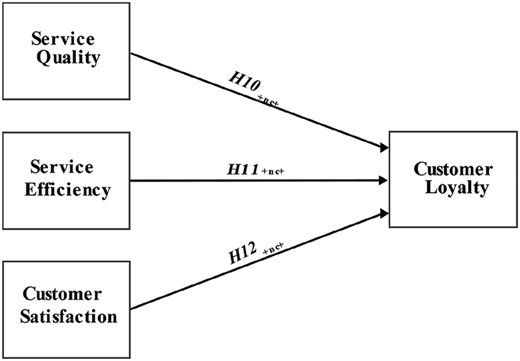
(Necessity): Service Quality (SQ) is a necessary condition for Customer Loyalty (CL) in electronic banking.
In electronic banking, customers expect fast, reliable, and seamless service interactions. Inefficiencies – such as delays, system crashes, or complex navigation – directly lead to frustration, disengagement, and ultimately churn. Zeithaml et al. (1996) emphasize that customers are highly sensitive to operational inefficiencies. Moreover, Aladwani (2024) notes that service efficiency plays a critical role in maintaining customer satisfaction. Although efficiency directly enhances customer satisfaction, its influence extends beyond this effect: without a minimum level of service efficiency, customers are unlikely to remain loyal, regardless of their satisfaction with other aspects of the service. Therefore, even the most attractive offerings or promotions cannot compensate for poor efficiency. Thus, a minimum level of seamless and frictionless service execution is a prerequisite for any form of customer loyalty to emerge.
(Necessity): Service Efficiency (SE) is a necessary condition for Customer Loyalty (CL) in electronic banking.
Although customer satisfaction is typically examined as a mediating or outcome variable, necessity theory offers a different lens. From this perspective, satisfaction is not merely a contributor to loyalty – it is a fundamental requirement. It is implausible to expect customer loyalty to emerge in the absence of any degree of satisfaction. Even passive or habitual loyalty presupposes a minimally positive experience. Koay et al. (2022), in their necessity condition analyses, found that customer satisfaction must reach at least a basic level for loyalty to manifest. Without it, other efforts to drive loyalty may be rendered ineffective. Accordingly, satisfaction can be viewed as a necessary condition for loyalty, as loyalty – operationalized through renewal intentions – emerges only after a certain threshold of satisfaction and trust has been exceeded (Moon et al., 2025). These findings confirm the necessary role of satisfaction in fostering loyalty.
(Necessity): Customer Satisfaction (CS) is a necessary condition for Customer Loyalty (CL) in electronic banking.
Figure 2 presents the necessary condition analysis hypotheses proposed for this study, reflecting the hypothesized minimum levels of key factors required for the emergence of customer loyalty.
3. Methodology
3.1 Data collection and sampling procedure
The study was conducted among adult Polish citizens. The choice of this population is justified by the dynamic development of the e-banking market in Poland, which is characterized by a high level of competitiveness and service innovation. Poland is recognized as one of the regional leaders in the digitalization of financial services in Central and Eastern Europe – for example, the BLIK payment system has significantly contributed to the widespread adoption of cashless transactions. Adult users in Poland represent a well-defined and competent target group that actively uses e-banking services, making them highly relevant respondents for the study.
Between March and May 2025, a structured questionnaire was developed based on existing operationalizations and validated measurement scales related to e-banking. The tool was subjected to a pilot study and reviewed by a methodology expert and two academic specialists in financial services and digital banking to ensure content validity and clarity.
The final version of the questionnaire was administered with the support of a professional research agency using the CAWI (Computer-Assisted Web Interviewing) technique. The study was conducted among consumers registered in the agency's proprietary online panel. These individuals voluntarily participate in both commercial and academic research projects. The agency ensured full compliance with all ethical and methodological standards applicable to this type of research, including sample quality, data protection, and survey integrity.
Participation in the study was open to all invited panel members, with no screening questions applied at the entry stage. The only structural requirement was to reflect the age distribution of the adult Polish population, which was achieved through stratified sampling.
As a result, 1,000 questionnaires were collected, of which 974 were retained for analysis – these were completed by respondents who confirmed that they actively use electronic banking services. The remaining 26 responses were excluded, as the individuals indicated they do not use such services (as verified through an introductory usage frequency question).
In Table 1, the basic information about the respondents was summarized.
3.2 Conceptualization and measurement approach of variables
The final version of the questionnaire included 27 items related to four core constructs reflecting customers' experiences with e-banking services. These constructs were: Service Quality (hereafter: SQ), Service Efficiency (SE), Customer Satisfaction (CS), and Customer Loyalty (CL).
To operationalize these constructs, we used existing and validated measurement scales, in some cases combining items from multiple sources. The selection of indicators was guided by content validity and prior application in electronic banking research. All items were measured using a five-point Likert scale, where 1 indicated “strongly disagree” and 5 indicated “strongly agree”.
The service quality scale was developed based on items from the studies by Jamal and Naser (2002), Shankar and Jebarajakirthy (2019), and Ndubisi (2006). Additionally, one item addressing the perceived security of electronic payments was adopted from Kassim and Asiah Abdullah (2010).
The indicators used to assess service efficiency were mainly drawn from the work of Hammoud et al. (2018), Tharanikaran et al. (2017), and Parasuraman et al. (2005), particularly in relation to system usability and interface clarity. Additional items were incorporated from Shankar and Jebarajakirthy (2019).
Customer satisfaction was measured using items adapted primarily from Manyanga et al. (2022), Leninkumar (2017), and Gremler and Gwinner (2000). To more fully capture expectation–performance alignment, selected items were also drawn from Sharma (2024).
The construct of customer loyalty was operationalized using items previously validated by Manyanga et al. (2022), Gremler and Gwinner (2000), and Parasuraman et al. (2005). These items capture established attitudinal and behavioral aspects of customer loyalty, including preference, advocacy, and repeated usage.
During the measurement model evaluation, some indicators were removed due to insufficient psychometric properties, including low outer loadings and concerns regarding discriminant validity (HTMT). Only indicators meeting established reliability and validity criteria were retained for further analysis.
Details regarding the full set of items and their literature sources are provided in Appendix 1.
In addition, the model included a set of control variables. To account for potential demographic and behavioral influences on customer loyalty, three control variables were incorporated: gender, education level, and frequency of e-banking usage. These variables have been commonly used in earlier studies on digital financial services (e.g. Supriyanto et al., 2021; Redda, 2023) and are known to influence perceptions of service quality, customer satisfaction, and customer loyalty. Frequency of e-banking usage was included as an indicator of customer engagement with the bank, while age and the length of the customer-bank relationship were modeled separately as moderators and therefore were not included as control variables. All control variables were specified as exogenous predictors of customer loyalty in the structural model.
3.3 Methods
To identify sufficient and necessary factors influencing e-banking customer satisfaction and loyalty, we employed the cIPMA approach – a combination of Partial Least Squares Structural Equation Modeling (PLS-SEM), the Importance-Performance Map Analysis (IPMA), extending the results of PLS-SEM, and Necessary Condition Analysis (NCA). The procedure was carried out following the guidelines proposed by Hauff et al. (2024) and Sarstedt et al. (2024). The choice of the combined approach is motivated by the possibility of achieving findings of higher practical relevance (Richter et al., 2020). The combination of the methods allows for the analysis of the phenomenon from a broader perspective, taking into account both sufficient (PLS-SEM) and necessary (NCA) factors, which provides a more comprehensive view of consumer behavior (Hasselwander, 2025) and ultimately enables for the formulation of more accurate conclusions (Sukhov et al., 2022).
3.3.1 PLS-SEM
PLS-SEM is one of the Structural Equation Modeling (SEM) approaches used to estimate complex causal models. It is a widely applied technique in various fields, such as organizational management (Sosik et al., 2009), strategic management (Hair et al., 2012), information systems management (Ringle et al., 2012), family business (Sarstedt et al., 2014), marketing (Xia et al., 2024), and tourism (do Valle and Assaker, 2015).
PLS-SEM is a regression-based method that maximizes the explained variance of the endogenous variable and is particularly useful in predicting and explaining target constructs (Hair et al., 2011). It is a flexible approach with lower requirements (e.g. compared to CB-SEM) on sample size and data distribution (Hair et al., 2021, 2022). PLS-SEM allows for the analysis of variables described by both formative and reflective indicators (Hair et al., 2012).
3.3.2 NCA
NCA is a method used to identify conditions that are necessary to achieve a specific outcome (Dul, 2016). If the necessary condition is not met, the outcome cannot be expected (Dul, 2016, 2020, 2021). The key parameter in NCA is the effect size d, which indicates the strength of the necessary condition. This effect size is calculated as the ratio of the ceiling zone to the total area of possible observations, where the ceiling line represents the maximum possible values of the outcome for the necessary condition (Dul et al., 2023). Effect size values range from 0 < d < 1, and according to the author's guidelines, 0 < d < 0.1 indicates a small effect, 0.1 ≤ d < 0.3 a medium effect, 0.3 ≤ d < 0.5 a large effect, and d ≥ 0.5 a very large effect (Dul, 2016).
3.3.3 cIPMA
Standard PLS-SEM analysis enables the identification of the strength of influence of the variable on other constructs. A commonly used complement to this method is the Importance-Performance Map Analysis (IPMA), which extends the results of PLS-SEM (Ringle and Sarstedt, 2016; Sarstedt et al., 2024). IPMA introduces a new dimension: in addition to the construct importance (representing the total effect of one construct on another), it also considers performance, which presents the average values of latent variable scores (Ringle and Sarstedt, 2016). The output of IPMA is a visual map that illustrates both dimensions – importance and performance (Sarstedt et al., 2024). It allows the use of this method in various research contexts, including customer loyalty analysis, as presented in the study by Damberg et al. (2022).
The Combined Importance-Performance Map Analysis (cIPMA) applied in our study extends the classical IPMA approach in PLS-SEM by incorporating elements of NCA (Hauff et al., 2024). Integrating the analysis of sufficient conditions, including both importance and performance, and necessary conditions for achieving a specific level of an endogenous variable, enables a more detailed interpretation of the results, what can support more accurate decision-making by researchers, more effective prioritization, and enhanced managerial effectiveness (Hauff et al., 2024; Sarstedt et al., 2024).
4. Results
In this section, we present the results of the empirical analysis. First, the measurement model was evaluated to assess the reliability and validity of the constructs. Next, the proposed hypotheses were tested using the PLS-SEM approach. For the calculations in PLS-SEM model, the bootstrap technique with 5,000 iterations was employed. All hypotheses were tested using one-tailed tests at a 5% significance level. Subsequently, the necessity of selected antecedents for customer loyalty was examined using NCA. Finally, an IPMA was conducted in SmartPLS to provide additional managerial insights.
Control variables were initially included in the structural model to account for potential demographic and behavioral influences. However, none of them showed statistically significant effects on customer loyalty, nor did they meaningfully alter the structural relationships between the main constructs. Therefore, they were excluded from the final model to preserve parsimony and clarity (Bernerth and Aguinis, 2016).
4.1 Common method bias
Common method bias (CMB) refers to systematic measurement error arising when observed relationships reflect the measurement method rather than the constructs themselves (Podsakoff et al., 2003, 2012). CMB can distort estimates of reliability, validity, and inter-construct relationships, posing a threat to the validity of cross-sectional survey research (Podsakoff et al., 2024). To mitigate this risk, we followed procedural recommendations by Podsakoff et al. (2012, 2024), including explaining the study's objectives, ensuring anonymity, and emphasizing its scientific purpose to reduce socially desirable responding. Furthermore, to minimize the risk of CMB, we applied the marker variable technique, which, according to Chin et al. (2012), allows for estimating potential common method bias (CMB) in PLS path modeling by analyzing the effect of a theoretically unrelated variable on the structural model. As the marker variable, we used a question regarding attitudes toward renewable energy, which meets the criteria proposed by Lindell and Whitney (2001). The inclusion of the marker variable did not result in meaningful changes in the magnitude or statistical significance of the structural path coefficients. Therefore, common method bias is unlikely to have influenced the results of this study.
4.2 Measurement model evaluation in PLS-SEM
To achieve acceptable model fit, we eliminated 9 of the original indicator variables due to low outer loadings and discriminant validity concerns (HTMT). The final model consists of four constructs with 18 indicators: Service Quality (SQ) – 4 indicators, Service Efficiency (SE) – 5 indicators, Customer Satisfaction (CS) – 4 indicators, and Customer Loyalty (CL) – 5 indicators. The removed indicators are reported in Appendix 1 for full transparency.
Table 2 presents the outer loadings and variance inflation factors (VIFs), which is a measure used to determine the presence of collinearity between variables. The outer loadings for each construct exceed the 0.70 threshold, ensuring high indicator reliability (Chin, 2010). In our model, multicollinearity is not observed, as all VIFs are below the criterion value of 5 (Hair et al., 2011).
Measures such as Cronbach's Alpha (α), the Reliability Coefficient (Rho_A), Composite Reliability (CR), and Average Variance Extracted (AVE) were used to assess the validity and reliability of each construct in the measurement model. Constructs can be considered reliable if Cronbach's Alpha and Composite Reliability coefficient values exceed 0.70 (Fornell and Larcker, 1981). Based on the values presented in Table 2 and Appendix 2, it can be concluded that these requirements were met, indicating good internal consistency for each construct.
The assessment of convergent validity was conducted using the Average Variance Extracted. The acceptable level for this criterion is 0.50 (Chin, 1998). All AVE values, presented in Table 3, exceed 0.60, which confirms that all constructs met the required criterion (Fornell and Larcker, 1981).
As part of the analysis of the measurement model, an assessment of discriminant validity was conducted. For this purpose, we employed the heterotrait-monotrait ratio (HTMT), with values required to be below 0.90 (Henseler et al., 2015). While several HTMT values among SQ, SE, and CS slightly exceeded the conservative threshold of 0.90, the HTMT inference criterion based on bootstrapped 95% confidence intervals (BCa) confirmed discriminant validity, as none of the intervals included the value of 1.00. This pattern reflects the close conceptual proximity of these constructs rather than a lack of empirical distinctiveness (Hair et al., 2022).
The final stage of verifying the measurement model involved assessing its fit to the data using the Standardized Root Mean Square Residual (SRMR). The SRMR value below 0.08 is considered acceptable and indicates a very good fit (Hu and Bentler, 1998). In our model, the SRMR was 0.067, indicating that the measurement model demonstrated an acceptable fit to the analyzed data.
4.3 Hypothesis testing – effects analysis
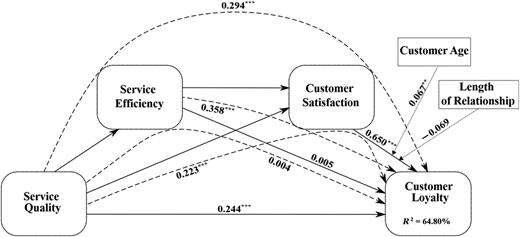
Figure 3 and Table 4 present the path coefficients of the structural model, focusing exclusively on the relationships in which CL is the endogenous variable. The PLS analysis report also includes values of the coefficient of determination (R2), effect sizes (f2), and information on the confirmation or rejection of the tested hypotheses.
The analysis indicates that SQ has a significant direct impact on CL (β = 0.244, p < 0.001), which confirms Hypothesis H1. In contrast, SE does not show a significant effect on CL (β = 0.004, p = 0.457), leading to the rejection of Hypothesis H2. CS proved to be the strongest predictor of loyalty (β = 0.650, p < 0.001), supporting Hypothesis H3.
The analysis of indirect effects revealed that CS plays a differentiated mediating role. In the relationship SQ → CS → CL, satisfaction serves as a partial mediator, since both the direct effect (H1) and the indirect effect (H5: β = 0.223, p < 0.001) are significant. Conversely, in the relationship SE → CS → CL, satisfaction functions as a full mediator, as the direct effect (H2) is not significant, while the indirect effect (H6: β = 0.358, p < 0.001) is strong and statistically significant.
Additionally, a significant three-step indirect effect (SQ → SE → CS → CL) was confirmed, supporting Hypothesis H7 (β = 0.294, p < 0.001). On the other hand, the indirect effect via service efficiency alone (SQ → SE → CL) was not statistically significant (H4: β = 0.004, p = 0.457), resulting in the rejection of this hypothesis.
The coefficient of determination for CL was 64.80%, indicating a very good level of model fit. The effect size values indicate a moderate impact of CS (f2 = 0.205) and a small yet meaningful effect of SQ (f2 = 0.048).
4.4 Hypothesis testing – moderation analysis
Table 5 presents the results of the moderation analysis for two moderators – age and the length of the customer-bank relationship. The results indicate a significant moderating interaction effect of age (β = 0.067, p = 0.001), thereby supporting Hypothesis H8. The positive moderating effect of age suggests that the relationship between satisfaction and customer loyalty becomes stronger with increasing customer age. In contrast, the moderating effect of the length of the customer-bank relationship on the link between satisfaction and customer loyalty in electronic banking was not supported (β = −0.069, p = 0.066), as the interaction effect was not statistically significant, thus failing to confirm Hypothesis H9. This indicates that the length of the customer-bank relationship does not meaningfully influence the strength of the path between CS and CL.
4.5 Hypothesis testing – necessity analysis
The NCA was conducted using unstandardized construct scores derived from the previously estimated PLS-SEM model. While these values are often labeled as “latent variable scores” by PLS-SEM software, they should be interpreted as composite or predicted construct scores rather than true latent variables in the reflective sense.
The results presented in Table 6 confirm that all three antecedents – SQ, SE, and CS – fulfill the criteria for necessary conditions for CL. Specifically, each predictor demonstrates a non-trivial effect size (d > 0.1), very high accuracy (above 99%), and statistically significant permutation-based p-values (p < 0.001). These findings provide empirical support for Hypotheses H10, H11, and H12, which proposed that SQ, SE, and CS, respectively, are necessary conditions for achieving higher levels of customer loyalty.
Further insights are provided in Table 7 through bottleneck analysis, which identifies the minimum level of each condition required to reach different values of the outcome variable. At the moderate loyalty level (CL = 3.0), both SQ and SE are already necessary, requiring minimum values of 2.22 and 1.93, respectively. At this point, CS is not yet a binding constraint, indicating that customer satisfaction is not essential to reach the mid-range level of loyalty. However, to achieve full loyalty (CL = 5.0), satisfaction becomes the most demanding condition: the bottleneck threshold for CS exceeds 4.2, compared to 3.5 for SQ and 3.9 for SE. These results suggest that while all three factors are necessary, their relative criticality varies with the target level of customer loyalty – with customer satisfaction emerging as the most essential constraint at the highest level of the outcome.
4.6 Importance-Performance Map analysis
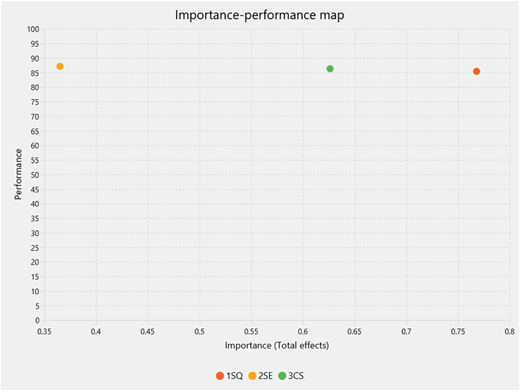
To complement the structural model results, an Importance-Performance Map Analysis was conducted for the endogenous construct CL. This analysis provides a two-dimensional view by combining the importance of each antecedent (measured by the total effect size from the structural model) with its performance. The results are presented in Figure 4.
The results indicate that SQ is the most influential factor for CL, with the highest total effect (importance above 0.75) and a strong performance level (around 85). CS follows closely, showing high importance (approximately 0.63) and a comparable performance value (around 86). In contrast, SE demonstrates relatively low importance (below 0.40) but the highest performance level, reaching nearly 88.
These findings suggest that while firms perform well in terms of service efficiency, this factor contributes less to enhancing customer loyalty. SQ, despite already being at a solid level, remains the most impactful factor and thus represents the most promising area for further managerial attention. CS also presents a meaningful opportunity for strategic improvement, as even moderate gains in this dimension could yield significant benefits in loyalty outcomes.
4.7 Robustness check
After conducting the analyses using both the PLS-SEM and NCA methods, a series of robustness checks was performed to verify the reliability and stability of the obtained results under different methodological and data-related conditions.
In line with the recommendations of Sarstedt et al. (2020), additional diagnostic procedures were conducted in the SmartPLS environment to test the robustness of the PLS-SEM model. These procedures aimed to assess the stability, specification accuracy, and validity of inferences drawn from the estimated model.
First, potential nonlinearity in the relationships between constructs was tested by including quadratic terms. None of the nonlinear effects proved statistically significant, supporting the appropriateness of the assumed linear model structure.
Second, the Gaussian Copula approach was used to assess potential endogeneity of the dependent constructs. A significant effect was observed in only one path – SE → CL. However, given the strong theoretical rationale and the directional logic of service processes, this result was interpreted as an isolated case and does not undermine the validity of the overall model.
Third, a FIMIX-PLS analysis was conducted to detect potential unobserved heterogeneity in the data. The results suggested the presence of two latent segments with notably different sample sizes, between which some differences in path coefficients were observed. This is not surprising given the relatively large sample. These results may indicate hidden heterogeneity in the data and justify further multigroup moderation analysis within the proposed model.
In the NCA, the robustness of the results was assessed in several ways, following the guidelines by Dul (2021). First, we compared the findings using two ceiling line techniques – CR-FDH and CE-FDH – and found the conclusions to be consistent: service quality, service efficiency, and customer satisfaction are necessary conditions for achieving higher levels of customer loyalty. Second, we applied an outlier removal test by excluding the case with the lowest scores on SQ, SE, CS, and CL. The exclusion did not meaningfully affect the effect size, suggesting that retaining the observation in the dataset is justified.
In both approaches to robustness assessment, the necessity hypotheses remained supported, confirming the consistency and credibility of the obtained NCA results.
4.8 Summary and integration of results
Table 8 presents a comparison of the results obtained from both methods, enabling a richer interpretation and the formulation of final conclusions. According to the NCA results, all three exogenous constructs – SQ, SE, and CS – are “must-have” conditions for CL to manifest.
Specifically, to reach the highest level of e-banking customer loyalty (CL = 5.0), each of these conditions must exceed certain thresholds – for example, 3.5 for SQ and SE, and even 4.0 for CS.
In contrast, the PLS-SEM analysis shows that only SQ and CS are statistically significant predictors of CL – making them both necessary and impactful. SE, however, emerges as a “nice-to-have” element: its presence is required to some degree (per NCA), but increasing it does not statistically improve loyalty (per PLS-SEM).
5. Discussion and contributions
This study aimed to deepen our understanding of the drivers of customer loyalty in the context of electronic banking, with a particular focus on the roles of service quality (SQ), service efficiency (SE), and customer satisfaction (CS). By applying both Partial Least Squares Structural Equation Modeling and Necessary Condition Analysis, this research provides a comprehensive assessment of how these constructs interact to shape customer loyalty. The findings contribute to the growing body of knowledge on post-adoption behavior in digital banking and offer nuanced insights into the mechanisms through which service-related factors influence loyalty.
Consistent with prior research (e.g. Kumar et al., 2024; Trabelsi-Zoghlami et al., 2020), the results confirm that customer satisfaction is the strongest direct predictor of customer loyalty. This underscores the enduring relevance of satisfaction as a core driver of long-term engagement in e-banking. Additionally, the positive direct effect of service quality on loyalty supports previous findings (e.g. Zhou et al., 2021; Pokhrel and Anup, 2024), suggesting that customers' evaluations of the overall quality of digital services (including responsiveness, personalization, and reliability) remain influential even after initial adoption.
Importantly, the findings clarify the role of service efficiency as an operational mechanism rather than a direct driver of loyalty. While efficiency does not directly influence loyalty, it plays a critical role in shaping customer satisfaction, through which its impact on loyalty is realized. This finding aligns with emerging arguments (e.g. Sharma, 2024; Poromatikul et al., 2020) that efficiency enhances the user experience by reducing time and cognitive effort, thereby contributing to satisfaction rather than directly fostering loyalty.
The mediation analysis revealed two key pathways. First, customer satisfaction partially mediates the relationship between service quality and loyalty, indicating that while service quality enhances satisfaction, it also exerts a distinct influence on loyalty beyond satisfaction alone. Second, the effect of service efficiency on loyalty is fully mediated by satisfaction confirming that efficiency contributes to loyalty only through its impact on how satisfied customers feel with their digital banking experience. A significant three-stage indirect path (SQ → SE → CS → CL) also emerged, highlighting a cascading process where service quality enhances efficiency, which then boosts satisfaction and ultimately drives loyalty.
In turn, the moderation analysis confirmed a significant effect of age on the relationship between customer satisfaction and loyalty, indicating that this relationship is stronger among older users of electronic banking. In contrast, the interaction of relationship length on the satisfaction-loyalty link is slightly negative but not statistically significant. This result indicates that the duration of the customer-bank relationship does not play a decisive role in shaping customer loyalty.
By incorporating Necessary Condition Analysis, the study offers further insight into the boundaries and constraints of customer loyalty. The NCA results show that all three constructs (SQ, SE, and CS) are necessary conditions for achieving high levels of loyalty, though their criticality varies depending on the loyalty level. Specifically, CS is a binding constraint at the highest levels of CL (e.g. CL ≥ 5.0), with a minimum threshold of approximately 4.0. In contrast, SQ and SE must exceed thresholds around 3.5 to enable moderately high loyalty. These results complement the PLS-SEM findings and suggest that loyalty can be seen both as a function of linear influences and as contingent on the presence of foundational elements.
5.1 Theoretical contribution
Our study makes a significant contribution to the literature on consumer behavior and digital services by integrating two methodological approaches: the analysis of sufficient conditions (PLS-SEM) and necessary conditions (NCA). This dual approach enables the identification of both the factors that increase customer loyalty and those whose minimal presence is indispensable for loyalty to occur. Such a perspective enhances traditional loyalty models (e.g. Dick and Basu, 1994; Oliver, 1999) by demonstrating that certain dimensions of customer experience are essential prerequisites for loyalty, not just contributors to its growth. While prior studies (e.g. Zhou et al., 2021; Pokhrel and Anup, 2024) primarily examined average effects of service quality and satisfaction on loyalty, our findings extend the literature by identifying necessary conditions and by demonstrating how these effects vary across customer segments and age groups.
Our theoretical contribution also lies in extending the logic of causality in marketing research. We show that focusing solely on average regression effects, as typical in conventional models, may lead to an incomplete understanding of loyalty mechanisms. For instance, service efficiency does not significantly affect the increase in loyalty (according to PLS-SEM), yet it turns out to be a necessary condition for its emergence (according to NCA). By combining both approaches – PLS-SEM with NCA, our study moves beyond traditional average-effect analyses, allowing for the identification not only of the factors sufficient to drive loyalty but also those that are necessary for its occurrence – an aspect largely overlooked in prior e-banking research. In this way, we contribute to the ongoing discussion around the distinction between “must-have” and “nice-to-have” attributes in digital services.
Furthermore, our analysis of age as a moderating variable and the segmentation of customers based on usage patterns reveals that the influence of satisfaction on loyalty is not uniform across all clients, highlighting the importance of considering customer heterogeneity in both theory and practice.
Finally, our dual-method approach contributes to advancing loyalty research in the context of online financial services. We demonstrate that integrating PLS-SEM and NCA allows for a more nuanced understanding of the interplay between service quality, satisfaction, and loyalty, and incorporates both symmetric and asymmetric causal logics.
5.2 Managerial implications
The results of our study offer several important implications for managers of electronic banking institutions and providers of digital financial services. First, the findings clearly demonstrate that effective customer loyalty building is not merely about maximizing all elements of the customer experience. It is crucial to ensure that each of the fundamental components – namely, service quality, service efficiency, and customer satisfaction – reaches at least a minimum acceptable level. Neglecting any of these areas can completely undermine efforts to build loyalty, even if the remaining components perform exceptionally well. Therefore, a strategy that selectively enhances some aspects while ignoring others may lead to ineffective loyalty outcomes.
Second, the study provides managers with a clearer understanding of the difference between “must-have” factors and “nice-to-have” ones. Service quality and customer satisfaction belong to both categories – they are required for loyalty to emerge, and they also reinforce it. In contrast, service efficiency can be interpreted as a necessary but non-driving condition: it does not directly determine customer loyalty but acts as a basic prerequisite that complements the overall service experience. While its absence may hinder the development of customer loyalty, further improvements in efficiency do not contribute to increased loyalty. This means that investments in improving efficiency should primarily be viewed as preventive actions that reduce the risk of losing customers, rather than as means of gaining competitive advantage in loyalty building.
Third, these findings are particularly relevant in the context of the highly competitive and saturated market for e-banking services in Poland. Customers now have easy access to a wide range of similar offers, which makes loyalty a rare and valuable asset. In this environment, the institutions that will gain a competitive edge are those that not only meet customers' minimum expectations but also know which aspects of their offer should be developed further and which should simply be maintained at a satisfactory level. Moreover, managers should use customer satisfaction data as a diagnostic tool. Regularly conducted satisfaction surveys can help identify key gaps in service quality and support the design of targeted interventions, such as employee training programs, process reengineering initiatives, or enhancements to digital service functionalities, with the aim of systematically improving service quality and strengthening positive customer experiences.
Fourth, the results showed that age moderates the relationship between satisfaction and loyalty. This suggests that service offerings and communication strategies should be tailored to different age groups; for instance, older customers may benefit from more personalized advice, support and security, whereas younger customers may respond more positively to technologically advanced, convenience-oriented solutions.
Finally, our approach provides a practical tool for strategic prioritization in customer experience management. Instead of treating all dimensions of digital service delivery as equally important, managers can adopt a “necessary condition management” mindset, allowing them to allocate resources more effectively by recognizing the asymmetric impact of different factors on customer loyalty. Moreover, given the differing attitudes toward electronic banking across different age groups, financial institutions should focus on enhancing personalized digital services for younger and older customers. The results of our analysis highlight the importance of adopting differentiated loyalty strategies tailored to the expectations of each generation.
5.3 Limitations and future research directions
This study has several limitations that should be considered when interpreting the findings, each of which also offers avenues for further research.
Although customer loyalty is inherently a long-term attitudinal and behavioral construct, the present study adopts a cross-sectional survey design. This approach is appropriate given the study's objective, which is not to examine the dynamics or evolution of loyalty over time, but to assess its overall level in relation to key explanatory constructs. Importantly, respondents were asked to evaluate their loyalty based on their experiences over the preceding two years, rather than at a single point in time. This retrospective framing allows the measurement to capture a more stable and aggregated representation of loyalty, which is consistent with prior research employing cross-sectional designs to study long-term attitudinal outcomes. Nevertheless, future research could extend the present findings by adopting longitudinal designs to examine changes in loyalty over time. Furthermore, the use of cross-sectional data limits our ability to fully establish causal relationships. Although we applied endogeneity diagnostics (e.g. the Gaussian Copula test) and the results were largely consistent with the assumed model structure, one pathway (SE → CL) showed signs of potential endogeneity. To address this, as mentioned earlier, we recommend that future research should consider applying longitudinal or experimental designs, which would allow for tracking temporal effects and better capturing causal mechanisms.
Second, our empirical context is limited to electronic banking customers in Poland. While this market is technologically advanced and competitive, cultural, regulatory, or technological differences may limit the generalizability of the results to other countries. Consequently, we encourage future studies to replicate this research in different national and service environments, such as e-commerce or telemedicine, to test the external validity of the dual-logic approach.
Third, in our study, we examined two moderating variables – customer age and the length of the customer-bank relationship. However, we suggest that future research explore additional moderators, including other demographic factors and variables related to customer experience, such as the frequency of using electronic banking services. Incorporating such moderators, along with segmentation techniques (e.g. multi-group analysis or latent class approaches), could provide a more nuanced understanding of how customer loyalty develops across different subgroups.
Fourth, while we integrated PLS-SEM and NCA to reflect both sufficient and necessary conditions, we did not apply segmentation-aware robustness techniques. The identification of two distinct customer segments in the FIMIX-PLS analysis suggests the presence of unobserved heterogeneity. Therefore, future studies should explore hybrid modeling strategies that combine dual-logic approaches with segmentation tools, such as FIMIX-PLS or MGA, to investigate how sufficient and necessary conditions may differ across segments.
Finally, while our dual-method approach provides theoretical and practical insights, it was applied to a relatively simple mediation model. We recommend that future research extends this methodological framework to more complex models that include multiple mediators or moderators. This would help assess the broader utility of combining PLS-SEM and NCA for analyzing customer behavior in digital services.
6. Conclusions
Modern financial institutions operating in the digital space face the challenge not only of acquiring new users, but above all of maintaining their loyalty. In response to this challenge, the present study was conducted to gain a better understanding of the factors influencing customer loyalty in the context of electronic banking services.
The analysis adopted a dual-track approach, which allowed for the consideration of both the factors that enhance loyalty and the elements that are essential for its emergence. The first track – based on structural equation modeling – enabled the identification of relationships between service quality, service efficiency, customer satisfaction, and customer loyalty, as well as the examination of the moderating effects on the link between customer satisfaction and loyalty. The second track – focused on necessary condition analysis – made it possible to determine which of these factors must reach a certain minimum level for loyalty to occur at all.
The results indicate that not all elements of the customer experience exert their influence in the same way. Some act as “supporting factors” – their improvement increases loyalty, but their absence does not completely rule it out. Others, however, function as “boundary conditions” – without them, loyalty simply cannot emerge. This distinction is particularly useful when designing customer experience management strategies, especially in highly standardized and saturated markets such as e-banking.
The proposed approach can serve as a methodological contribution to future research on customer behavior in digital environments. It suggests that researchers and practitioners should not only identify factors that drive outcomes but also ask what the minimal necessary conditions for those outcomes are. This perspective helps to better understand the boundaries of managerial and design effectiveness within the sphere of digital financial services.
We hope that the model proposed in this study, along with the results and the theoretical and practical recommendations, will serve as a foundation for future research and support decision-makers in developing more accurate customer experience strategies in the digital service environment.