This study aims to examine how active seniors (aged 50–70) perceive and engage with serving robots in restaurants, focusing on how perceived coolness influences their co-creation experience (CCE), subjective well-being and revisit intentions. By centering on this growing yet underexplored segment, the study addresses a gap in technology-integrated hospitality research.
Drawing on service-dominant logic, an online survey was administered among active seniors. A total of 300 valid responses were analyzed using partial least squares structural equation modeling (PLS-SEM) to test relationships among perceived coolness, co-creation experience, subjective well-being and revisit intention.
The results indicate that the multidimensional nature of perceived coolness significantly influences all three types of co-creation experience: hedonic, cognitive and personal. These experiences, in turn, positively impacted active seniors’ subjective well-being and revisit intentions.
Serving robot restaurants should optimize the design, functionality and customer engagement features of serving robots to enhance their perceived coolness toward those service types. Human-like robots with expressive features may help active seniors view them as novel service employees. To ensure interactions are not only functional but also enjoyable and meaningful, restaurants can provide guided tutorials on navigating digital interfaces. By fostering meaningful interactions and encouraging active participation, restaurants can strengthen long-term loyalty among this influential segment.
This study fills a gap by examining active seniors’ perception of and engagement with serving robots through an integrated framework linking perceived coolness, co-creation experiences, well-being and revisit intention. By empirically focusing on senior consumers who have often been characterized as technologically vulnerable in prior research, this study extends the literature on senior consumers in technology-driven services.
1. Introduction
Technological advancements have dramatically transformed how people experience services (Kim et al., 2024). The hospitality industry has greatly benefited from robotic services, which enhance operational efficiency, reduce costs and address labor shortages (Cha, 2020). The restaurant industry in South Korea has seen remarkable adoption driven by economic motivations, social demands and technology utility (Cha, 2020; Statista, 2025). Robotic solutions, including food delivery robots, automated order-taking systems and robotic chefs, have introduced new service paradigms that combine novelty with practicality, increasing customer engagement. These service robots are equipped with food trays, screens and speakers, enabling autonomous navigation, customer interaction and obstacle avoidance (Hopkin, 2022).
As the global population ages, understanding older adults’ interactions with technology has become increasingly important. While traditional definitions of seniors focus on individuals aged 60 or 65 and above, this study also considers quinquagenarians, those in their 50 s, who remain socially, professionally and physically active (Fan et al., 2025; Li et al., 2025). Research indicates that younger seniors (aged 50–65) are generally more confident and interested in adopting technology than those aged 65 and older (Han and Chong, 2024; Jahn et al., 2012). For instance, 96% of adults aged 50–64 use the internet, compared to 75% of those 65 and older (Faverio, 2022), and 62% of seniors plan to keep using digital food ordering (Craig, 2021). These findings challenge stereotypes that older adults resist technology (Olson et al., 2011), as many actively engage with digital tools (Pew Internet and American Life Project, 2004, 2009). However, most prior studies continue to focus on seniors aged 65 and above, overlooking the 50–65 age group (Kohijoki and Marjanen, 2013; Rajaobelina et al., 2021).
In response, this study defines active seniors as individuals aged 50–70, reflecting evolving perceptions of aging and sustained engagement in modern society. Traditionally, “senior” referred to individuals aged 65 and older, but advances in health, technology and workplace flexibility have extended active lifestyles into the 50s and 60s. Many in this age group remain professionally, socially and physically engaged, transitioning into semi-retirement or pursuing new career and leisure activities that promote their well-being (Fan et al., 2025). This concept aligns with active aging, where individuals actively engage in behaviors that support their physical, cognitive and emotional health (Kim and Jang, 2015).
Understanding how this demographic perceives and interacts with robotic service technologies is essential, as their experiences can inform the development of more inclusive and appealing service models. A key factor influencing these interactions is the perceived “coolness” of robotic service. Perceived coolness is widely recognized as an external stimulus that influences customer perceptions (Tsaur et al., 2023). It reflects customers’ strong interest in a service and their perception of it as high-quality and capable of creatively satisfying their needs and desires (Cha, 2020). While previous research on coolness in restaurant contexts has primarily focused on the general population (Cha, 2020; Hussain et al., 2021), Chen et al. (2023) revealed that Baby Boomers perceive cool hotel brands differently from younger generations, highlighting the importance of generational segmentation. Similarly, Zheng et al. (2025), in a digital product context, suggested that seniors in their 60s are more likely to have sufficient interaction experience with smartphones to form meaningful evaluations. Collectively, these findings underscore the importance of considering generational variations in perceptions of coolness, particularly within the context of emerging technologies such as service robots.
However, several research gaps remain. Although interest in robotic services in hospitality is increasing, limited research has examined how the multidimensional perception of robot coolness influences customers' co-creation experience (CCE) in restaurant settings. While restaurants are highly experience-driven environments (Hussain et al., 2021) where robotic service perceptions shape interaction quality, prior studies have primarily linked coolness to perceived value or adopted a single-dimensional approach (e.g., Chang, 2024; Wu et al., 2024). This study addresses this gap by investigating how multidimensional coolness influences CCE in robot-served restaurants. Additionally, while prior studies on technology adoption have primarily examined seniors aged 65 and above (e.g., Zheng et al., 2025), limited research has explored how active seniors engage with advanced technologies such as robotics in restaurant settings. Active seniors, defined here as individuals aged 50–70, represent an increasingly important, tech-aware consumer group that remains professionally and socially active and frequently engages with digital and service technologies to support their lifestyle (Fan et al., 2025). Unlike older seniors, this group is more open to novel experiences and values self-expression (Craig, 2021; Faverio, 2022; Han and Chong, 2024; Olson et al., 2011), aligning with constructs such as perceived coolness, which reflects novelty, attractiveness and uniqueness, and CCE that emphasize active participation and meaningful interaction in service settings. Given the emerging nature of robotic services in hospitality, understanding how active seniors evaluate and interact with robotic systems and how these experiences shape co-creation and dining satisfaction offers timely insights into age-inclusive service innovation.
Given these research gaps, this study has two objectives: to explore how active seniors perceive dining at robot-served restaurants, focusing on perceived coolness, CCE, well-being and revisit intentions; and to differentiate age subgroups to gain deeper insights into active seniors’ responses.
2. Literature review
2.1 Perceived coolness
Coolness is a subjective and dynamic concept that represents a positive trait applicable to people, products and trends (Li et al., 2022a; Sundar et al., 2014; Tiwari et al., 2021). In everyday life, individuals instinctively recognize coolness and often use terms such as cool, hot, off the chain, or sweet interchangeably to describe something cool (Sundar et al., 2014). While inherently abstract, perceived coolness reflects consumers’ belief that a specific product or brand possesses desirable attributes, shaping their perceptions and interactions with it (Sundar et al., 2014). As a characteristic that can be associated with both individuals and products, coolness functions as an external stimulus that influences customer experiences and engagement (Tsaur et al., 2023). Despite its subjectivity, coolness reflects shared consensus among individuals and serves as key factor for evaluating innovations, including ideas, technologies and products (Leland, 2004; Sundar et al., 2014).
Consumers perceive coolness as a socially constructed, user-based positive perception of digital products, evolving into a psychological standard for evaluating such products (Sundar et al., 2014; Wu et al., 2024). The term “cool” is frequently used to express admiration for digital products (Sundar et al., 2014), drawing increasing attention from researchers in the field of human–computer interaction (Raptis et al., 2017). Coolness is characterized by originality, novelty, popularity and the ability to evoke a “wow” experience, making it a key factor in shaping consumer attitudes (Chang, 2024). In the technology services, perceived coolness plays a crucial role in technology acceptance by signaling a product’s novelty (Sundar et al., 2014). As a result, perceived coolness significantly influences consumer satisfaction (Liu and Mattila, 2019) and intention to use (Cha, 2020).
In robotic services, perceived coolness has been identified as a key factor in the acceptance of service robots (Cha, 2020). It plays a vital role in differentiating digital products, allowing companies to gain a competitive edge (Li et al., 2022a). Moreover, the impact of perceived coolness varies across different age groups, as socially shared meanings and behavioral standards evolve over time (Zhang et al., 2024). While younger consumers may associate coolness with cutting-edge technology and futuristic experiences, active seniors may perceive coolness differently (Chen et al., 2023). Research shows that this demographic values products and services that align with their active lifestyles, making perceived coolness an influential factor of engagement with robotic services (Fan et al., 2025).
2.2 Dimension of coolness
Previous research has applied the concept of perceived coolness across various contexts to explain consumer behavior. In the context of digital devices and interfaces, Sundar et al. (2014) conceptualized coolness and identified three components of coolness: attractiveness, subcultural appeal and originality. Building on this framework, later studies expanded and refined perceived coolness to fit various technological and consumer settings. For example, Tiwari et al. (2021) incorporated dimensions such as desirability, innovativeness of technology, attractiveness, rebelliousness, usability and reliability to measure product coolness and its influence on brand love. Additionally, four dimensions of perceived coolness – attractiveness, originality, subcultural appeal and originality – have been widely adopted across different settings. Li et al. (2022a) and Kim and Park (2019) examined how perceived coolness influences individuals’ intentions to use digital products and wearable devices, respectively. These studies highlight the multifaceted nature of perceived coolness, demonstrating its significance in consumer decision-making and technology acceptance.
In the hospitality industry, the relationship among perceived coolness, customer engagement and customers’ memorable experiences has been explored in Taiwan’s hotel and restaurant contexts (Tsaur et al., 2023). In the domain of serving robot restaurants, prior research has examined perceived coolness in relation to customer innovativeness, customers’ attitudes and intention to use the technology (Cha, 2020). While previous studies often adopted a single-dimensional perspective of coolness to explain restaurants’ originality and novelty (Chang, 2024; Zhang et al., 2021), Cha (2020) proposed a multi-dimensional framework that offers a more nuanced understanding of customers’ experiences with serving robots. Building on this, this study adopted Cha’s (2020) conceptual framework, which has been validated in hospitality settings (Tsaur et al., 2023; Zhang et al., 2024). Unlike Cha’s (2020) study, which relied on scenario-based methods, this study examined active seniors’ firsthand experiences in serving robot restaurants, thereby extending existing knowledge on perceived coolness to an understudied consumer group.
Utility refers to how a product’s design or functionality benefits customers, with robotic services enhancing efficiency in the service industry (Ivanov et al., 2017). In technology adoption, utility plays an important role in shaping perceptions of coolness, as products that are both functional and easy to use tend to be viewed as inherently cool (Levy, 2006; Van Esch et al., 2019). When people encounter feature-rich technology products, they perceive them as highly usable and inherently cool (Read et al., 2012). For seniors, utility is particularly crucial when adopting new technologies. According to Golant (2017), seniors evaluate smart technologies based on their perceived usefulness and ease of use. If a technology enhances efficiency without adding complexity, seniors tend to adopt it. Serving robots not only help employees work more efficiently but also improve customer experience by offering convenience and functionality (Cha, 2020; Huang et al., 2021).
Attractiveness, a socially desirable trait (Li et al., 2019), involves a product’s aesthetic and socially accepted style (Sundar et al., 2014). Aesthetic judgments are subjective (Levy, 2006), but using socially attractive products often makes consumers feel distinct from others, a sensation linked to coolness (Pountain and Robins, 2000). This implies that perceptions of coolness are socially shared, requiring a rapid evaluation of both the aesthetic and functional qualities, not only from one’s own perspective but also in relation to others (Sundar et al., 2014). In the case of technology products, attractiveness extends beyond functional aspects to include being hip, stylish and visually appealing, thereby enhancing users’ affective responses (Sundar et al., 2014).
Subcultural appeal is closely associated with social differentiation and scarcity, whereby digital devices that appeal to niche users and maintain an edgy image, rather than mass adoption, are perceived as cool by consumers (Sundar et al., 2014). Consumers often choose products or services perceived as unique and culturally resonant as a means to express and convey their own identity (Tiwari et al., 2021). Baby Boomers, a subset of the active senior segment, emphasize self-expression as an important part of their identity (Fan et al., 2025). In addition, resilient seniors are more open to unique and novel experiences and proactive in adopting technology solutions that enhance their autonomy (Golant, 2017; Han and Chong, 2021). In the serving robot contexts, which are still in the early stages of adoption, their complex integration and focus on human-centered interactions set them apart from general automated machines (Cha, 2020).
Originality pertains to the distinctiveness and novelty of technological innovations, which attract consumer attention and generate surprise (Cha, 2020). Consumers view innovative and cutting-edge technology products as distinct and cool, reinforcing a sense of differentiation from others (Read et al., 2012). Active seniors, who often seek new learning experiences, value originality in technology for its fresh and unique offerings (Han and Chong, 2021; Li et al., 2022a). Serving robots, as an innovative service, enhance dining experiences by providing novelty and distinctiveness, reinforcing their perceived coolness among active seniors (Cha, 2020; Ivanov et al., 2017).
2.3 Co-creation experience
Co-creation experience (CCE) refers to the mental state of a customer that arises from active participation in the value co-creation process (Chen, 2018; Vargo and Lusch, 2017; Zhang et al., 2015). The theoretical foundation for CCE lies in service-dominant (S-D) logic, a general framework for value co-creation (Chen et al., 2025). S-D logic emphasizes the interactive and collaborative nature of value creation (Vargo and Lusch, 2017, 2004), where both consumers and service providers play an active role in shaping and delivering the service experience. This perspective emphasizes that value is co-created through dynamic interactions (Vargo and Lusch, 2017). In this process, consumers voluntarily engage in the service interaction, applying their own knowledge and skills to derive value-in-use, which ultimately provides them with benefits (Chen et al., 2025). Especially, restaurants represent a unique, experience-driven service environment where human–robot interactions are more direct and dynamic (Hussain et al., 2021). Moreover, serving robot restaurants naturally facilitates service co-creation, as customers often participate in parts of the service process (Han and Chong, 2024). Therefore, this setting is well-suited to explore how perceived coolness of service robots influences customers’ CCE in real-life contexts. For example, customers interact with service robots by following their voice prompts to receive their food and pressing a button to return the robot to its station, positioning them as active participants in service delivery and reflecting core principles of S-D logic (Jain et al., 2023).
CCE has been conceptualized as a second-order construct. For example, Nambisan and Baron (2009) proposed that CCE encompasses four dimensions: hedonic, cognitive, social and personal benefits, specifically within the context of virtual CCE. Later, Verleye (2015) developed a multidimensional framework of CCE, including hedonic, cognitive, social and economic experiences, in the context of customers designing their ideal bedroom interior. Building on this, Hussain et al. (2021) explored these four dimensions of customers’ CCE in the context of Chinese hotpot restaurants, where customers simultaneously cook and consume their food. This study adopted three of Verleye’s CCE dimensions – hedonic, cognitive and personal experiences – while excluding the economic experience. As economic compensation, measured by items such as “I got compensation according to the effort made” and “I got a fair return,” is not expected in serving robot restaurant contexts from the customers’ perspective, this dimension was deemed irrelevant and excluded. Each of the dimensions is discussed below.
Hedonic experience represents a mentally stimulating and pleasurable experience resulting from immersion in co-creation tasks (Meng and Cui, 2020; Verleye, 2015). Consumers often engage in these activities purely for enjoyment, fun and entertainment, without seeking external rewards (Chen, 2018). Through CCE, consumers escape from their daily routines, finding amusement and delight (Hussain et al., 2021). Previous research suggests that perceived coolness fosters excitement and enjoyment, particularly in technology-based services (Cha, 2020; Tiwari et al., 2021). In this context, service robots create not only an entertaining and enjoyable atmosphere but also interactive and enjoyable service encounters that intensify consumers’ hedonic responses (Chan and Tung, 2019; Huang et al., 2021; Kuo et al., 2017). This is particularly relevant for active seniors, who seek pleasurable and try new things to find enjoyment as they age (Fan et al., 2025). Their inclination toward exploring new technologies aligns with the attributes of perceived coolness, making interactions with serving robots more engaging and emotionally stimulating. Therefore, based on these theoretical foundations, we proposed the following:
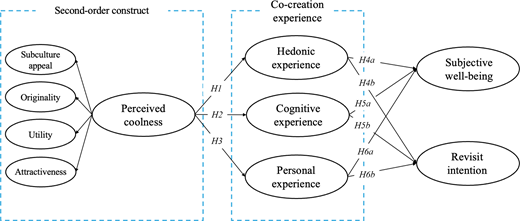
Perceived coolness of serving robots positively influences active seniors’ hedonic experience.
The cognitive experience component refers to the new knowledge and skills gained during co-creation activities (Verleye, 2015; Zhang et al., 2015). Engaging in these interactions allows participants to learn about products, services and technologies (Nambisan and Baron, 2009). Additionally, cognitive experience also encourages exploring new uses for products and learning from others involved in co-creation (Hussain et al., 2021). García-Rosell et al. (2021) emphasize that co-creation involves multiple stakeholders leveraging their skills and knowledge in joint service development efforts. The perceived coolness of serving robots can enhance the cognitive experience by stimulating curiosity and encouraging deeper engagement with the technology. The novelty and originality of serving robots encourage customers to try or learn the service capabilities (Cha, 2020). In addition, serving robot experience may foster a sense of upskilling, as consumers perceive improvements in job functions and added value in using (Tuomi et al., 2021). For senior consumers, encountering new technologies provides cognitive stimulation by reinforcing their ability to apply existing knowledge in new ways and satisfying their desires for learning (Fan et al., 2025; Martinson and Berridge, 2015). Building on previous findings, we assume that this combination of coolness of serving robots may foster cognitive experience for customers in robotic restaurants. Given these, we suggest the following hypothesis:
Perceived coolness of serving robots positively influences active seniors’ cognitive experience.
Personal experiences involve the benefits consumers receive from their involvement, such as self-efficacy and recognition, which further motivate participation in co-creation (Füller, 2010). The extent to which customers perceive that their expected co-creation benefits are met determines the overall effectiveness of their experience (Verleye, 2015). Serving robots enhance the value of service experiences through differentiation and improvement, introducing novelty (Tuomi et al., 2021). Perceived coolness enhances personal experiences by fostering identity expression (Chen and Chou, 2019). Active seniors value useful and efficient products that simplify daily life, while also seeking new experiences that enhance self-expression and strengthen social ties (Zheng et al., 2025). In serving robot restaurants, interactions between senior customers and service robots allow them to actively co-create value by sharing their experiences, reinforcing their social identity and strengthening their personal experiences (Fan et al., 2025). Given these dynamics, it is important to understand how active seniors perceive these services and whether the experience enhances their self-image and social recognition (Kwak et al., 2021). Therefore, based on previous findings, we proposed:
Perceived coolness of serving robots positively influences active seniors’ personal experience.
2.4 Subjective well-being
Subjective well-being is generally understood as the positive emotions individuals experience throughout their lives, combined with a sense of purpose and meaning derived from active engagement in various activities (Seligman and Csikszentmihalyi, 2000). Existing research highlight the significance of customer experience in influencing subjective well-being. For instance, positive customer experiences in spa hotels significantly enhance customer well-being (Huang et al., 2019). Similarly, the integration of digital technology in fast-food restaurants, offering both hedonic and utilitarian values, plays a crucial role in enhancing customer well-being across multiple aspects (Helal, 2023). Additionally, bar robots contribute to providing customers with a pleasant experience by satisfying their needs, giving them comfort and strengthening their health, contributing to their well-being (Bendel and Peier, 2023). These findings indicate that various service experiences play an important role in enhancing subjective well-being.
Consumers’ subjective well-being is positively influenced when they actively engage in service experiences (Kim et al., 2012a). Particularly for active seniors, CCE in technological service interfaces enhances their well-being (Sharma et al., 2017). Additionally, according to Zhang et al.’s (2022) results, when active seniors actively engage in digital service interactions, their well-being improves by enhancing their digital skills and appreciation of digital affordance. Considering the previous studies, we put forth the following hypotheses:
Hedonic experience positively influences active seniors’ subjective well-being.
Cognitive experience positively influences active seniors’ subjective well-being.
Personal experience positively influences active seniors’ subjective well-being.
2.5 Revisit intention
Revisit intention refers to the likelihood a customer returning to an activity or revisiting a facility (Baker and Crompton, 2000). Customers evaluate the past experience as positive when they perceive various experiential factors, such as enjoyment, pleasure or a sense of meaning (Kim et al., 2012b; Meng and Cui, 2020). This positive evaluation subsequently influences their intention to revisit (Han and Ryu, 2012). From a S-D logic perspective, value co-creation is rooted in customers’ active involvement in the service process, positioning them as co-producers of service value (Vargo and Lusch, 2004). Prior research demonstrates that CCE with destination brands exerts a direct positive effect on revisit intention (Satar et al., 2024). Active senior customers tend to stick to their spending habits, which aligns with research findings that previous positive experiences motivate them to revisit intentions (Fan et al., 2025). Based on these insights, we suggest the following:
Hedonic experience positively influences active seniors’ revisit intention.
Cognitive experience positively influences active seniors’ revisit intention.
Personal experience positively influences active seniors’ revisit intention.
Figure 1 presented the research model.
3. Methodology
3.1 Instrument development and data collection
All measurements were adapted from previous studies and modified to fit this study’s context (see Appendix 1 under supplementary materials). Perceived coolness was measured as a second-order construct containing four dimensions (Ashfaq et al., 2021; Cha, 2020; Sundar et al., 2014): subcultural appeal (4 items), utility (5 items), originality (5 items) and attractiveness (4 items). To better reflect real user experiences, one item was added to utility and originality. Hedonic experience and personal experience (3 items each) and cognitive experience (6 items) were adapted from Verleye (2015). Subjective well-being (3 items; Li et al., 2022b) and revisit intention (4 items; Venkatesh et al., 2012) were also measured.
Ethical approval for this study was obtained from a southern university’s Institutional Review Board in the USA. Participation in the online survey was voluntary, and all respondents were informed of the study’s purpose, anonymity and data confidentiality before starting the survey. Data were collected in South Korea, one of the fastest-ageing countries in Asia. As a portion of Generation X and the baby boomer generation enters their post-50s life stage, they are referred to as the active senior generation in Korea (Joo, 2024). Addressing the challenges of an aging population has become increasingly critical, positioning South Korea as a key setting for this study (Han and Chong, 2024). The survey was translated using standard translation and back-translation to ensure accuracy (Li et al., 2024). Two bilingual hospitality experts reviewed the materials for accuracy and cultural fit.
The survey was distributed in August 2024 through Embrain, a leading market research company in South Korea. In this study, a purposive sampling strategy was used. We intentionally targeted restaurants currently utilizing service robots, as these establishments aligned directly with the study’s objectives. The target population comprised customers who had recently dined in these restaurants (within the past six months) and had firsthand interactions with the service robots. Therefore, respondents first answered a screening question – whether they had dined at a robot service restaurant in the past six months. Only qualified participants continued, while others were screened out. Qualified respondents were asked to recall their experiences with robot service, defined as restaurants where robots directly serve customers (e.g. delivering food). Specifically, responses from participants who did not meet the screening criteria or failed the attention check questions were excluded from the final data set. Ultimately, 300 usable responses were collected.
3.2 Data analysis
The proposed measurement model and hypotheses were tested using partial least squares path modeling (PLS-PM), a suitable approach for studies focused on understanding predictive relationships between constructs, especially when the research involves complex models with higher-order latent variables (Hair et al., 2021). The analysis was conducted using SmartPLS 4.0, following a two-stage process: assessment of the measurement model and assessment of the structural model.
4. Results
4.1 Respondents’ profile
Among 300 respondents, 47.7% were male and 52.3% were female. The majority of respondents reported dining out at least once a week, reflecting their active engagement in restaurant experiences. A total of 83.0% were married. In terms of employment status, 52.3% were currently employed, 10% were self-employed, 26.7% were retired and 11% reported other employment statuses. Additionally, 20% worked in the service industry and 15.3% held professional jobs.
4.2 Preliminary data analysis
Before conducting our model assessments, we undertook a series of preliminary analyses to ensure the robustness of our findings. First, we evaluated the variance inflation factor (VIF) to check for multicollinearity among the constructs. All VIF values were below 3.5, indicating that multicollinearity was not an issue in our data (Hair et al., 2017). We also examined the normality of the data by assessing kurtosis and skewness values for each construct. In line with Kline (2012), acceptable thresholds for skewness are typically between −2 and +2, and for kurtosis, between −7 and +7. All constructs in our data set fell within these acceptable ranges, suggesting that the data exhibited a normal distribution.
4.3 First-order measurement model assessment
For the first-order model, we focused on evaluating the individual dimensions of the constructs, ensuring that each set of indicators accurately reflected their corresponding latent variable (Hair et al., 2021). Items with low factor loadings were sequentially removed, with the model re-analyzed after each removal to enhance reliability and validity. Specifically, one item (i.e. UT2) measuring utility and three items (i.e. COG1, COG2 and COG6) measuring cognitive experience were removed. Items’ standardized factor loadings were greater than 0.7, and the average variance extracted (AVE) in both samples was greater than 0.5, indicating convergent validity (Hair et al., 2021; see Table 1). Composite reliability (CR), Cronbach’s alpha (CA) and AVE also exceeded recommended thresholds, indicating strong internal consistency (Hair et al., 2021).
Discriminant validity was assessed using two methods. First, following Hair et al. (2017), discriminant validity is confirmed when an indicator’s outer loadings on its own construct are higher than its loadings on other constructs. In this study, no items cross-loaded higher on any construct other than their own, further supporting discriminant validity. Second, using the Heterotrait–Monotrait (HTMT) ratio of correlations (Dijkstra and Henseler, 2015), all HTMT values were significantly below the recommended threshold of 0.90 (Hair et al., 2017; see Appendix 2 under supplementary materials). Thus, discriminant validity was established, and all measurement items were deemed appropriate for further analysis.
4.4 Second-order measurement model assessment
In the second-order measurement model, the first-order constructs (i.e. subcultural appeal, utility, originality and attractiveness) were treated as indicators for a higher-level construct (i.e. perceived coolness). Following a similar analysis procedure, the second-order measurement model was assessed. The four dimensions of perceived coolness were strong and significant indicators of perceived coolness. Each dimension demonstrated a high factor loading, confirming its importance in defining the overall construct. Reliability and convergent validity for the second-order measurement model were also established (see Appendix 3 under Supplementary Materials). Again, all HTMT values were below the threshold of 0.90, which indicates that the constructs were sufficiently distinct from one another (Hair et al., 2021). Therefore, discriminant validity was satisfied for the second-order measurement model.
4.5 Hypotheses testing
To evaluate the significance of the relationships between constructs, we performed bootstrapping with 5,000 subsamples via PLS–PM (Hair et al., 2021). As shown in Table 2, the association between perceived coolness and hedonic experience (β = 0.73; p < 0.001), cognitive experience (β = 0.68; p < 0.001) and personal experience (β = 0.61; p < 0.001) was positive and significant, respectively, supporting H1, H2 and H3. Hedonic experience positively affected subjective well-being (β = 0.20; p < 0.001) and revisit intention (β = 0.49; p < 0.001), providing support for H4a and H4b. H5a and H5b were also supported as cognitive experience positively led to subjective well-being (β = 0.40; p < 0.001) and revisit intention (β = 0.27; p < 0.001). Finally, personal experience was found to positively influence subjective well-being (β = 0.41; p < 0.001) and revisit intention (β = 0.18; p < 0.001), supporting H6a and H6b. The model’s explanatory power was evaluated using R2 values. R2 values for endogenous variables were R2hedonic = 0.53, R2cognitive = 0.46, R2personal = 0.37, R2well-being = 0.80, R2revisit = 0.68, indicating adequate explanatory power.
5. Discussion
With rapid technological advancements and their integration into the service industry, numerous studies have examined consumer perceptions of service robots across various settings (Cha, 2020; Kuo et al., 2017). However, limited research has explored the multidimensional aspects of customer CCE and perceived coolness based on actual usage in serving robot restaurants. Additionally, although active seniors are increasingly recognized as a significant future market (Fan et al., 2025), research focusing on this demographic remains scarce. Drawing on the S-D logic framework, this study proposes a model linking perceived coolness, multidimensional CCE and subsequent behavior outcomes among active seniors. The findings indicate that when active seniors perceive serving robot restaurants as cool, they experience more positive CCE, which subsequently enhance their subjective well-being and revisit intention.
The findings reveal that perceived coolness positively influences CCE, demonstrating that when active seniors view service robots as cool, they are more likely to engage with them, thereby enhancing their CCE. This experience includes enjoyment of interaction, acquisition of new knowledge or skills and increased self-efficacy and recognition. Specifically, perceived coolness exerts the strongest impact on hedonic experiences, indicating that emotional and sensory enjoyment is particularly heightened when interactions with serving robots are perceived as cool. The result is consistent with Zhang et al. (2021), who demonstrated that customer evaluations of innovativeness in internet celebrity restaurants are influenced by perceptions of coolness and novelty.
While perceived coolness exerts a weaker influence on cognitive and personal experience than on hedonic experiences, it still has a significant role in shaping active seniors’ perceptions. Active seniors demonstrate a willingness to explore new technologies, such as mobile applications and kiosks, and these interactions expose them to emerging cultural trends while facilitating social connections, which in turn foster positive attitudes toward technology-based services (Han and Chong, 2024). Accordingly, when serving robot restaurants are perceived as cool, active seniors are more likely to derive positive personal experiences from these interactions. Moreover, active seniors are often described as economic users who prioritize functional and utilitarian service benefits (Berraies et al., 2017). Consistent with this perspective, the findings indicate that perceived coolness of novel settings enhances cognitive experiences by enabling active seniors to learn new skills and test their own capabilities.
The findings indicate that multidimensional CCE positively impacts active seniors’ subjective well-being, with cognitive and personal experiences showing stronger influence than hedonic experiences. When active seniors acquire new knowledge or skills and perceive interactions with serving robots as opportunities to demonstrate competence, they are more likely to view these experiences as enhancing their well-being. This finding aligns with prior research showing that self-awareness and access to information gained through restaurant technologies positively impact perceived quality of life (Buhalis and Moldavska, 2021; Li et al., 2022b). Moreover, active seniors highly value self-expression and the fulfillment of individual needs as key contributors to well-being (Fan et al., 2025). Interacting with service robots reinforces their sense of competence and social relevance, thereby further enhancing overall well-being.
Finally, this study identified the positive relationship between the CCE and revisit intention to serving robot restaurants. Among the dimensions of CCE, hedonic experiences had the greatest impact on revisit intention, indicating that when active seniors find their interactions with serving robots enjoyable and fun, it strongly influences their future behavioral intentions. This result is consistent with prior research, which suggests that when customers have enjoyable and positive CCE with a destination or brand, they are more likely to revisit or repurchase to seek similar experiences (Satar et al., 2024). This tendency is particularly relevant to the active senior generation, as they not only seek hedonic experience but also tend to maintain consistent spending habits over time (Fan et al., 2025; Stončikaitė, 2022).
5.1 Theoretical implications
This study makes a distinct theoretical contribution by focusing on active seniors, an understudied population with firsthand experience in serving robot restaurants. While prior studies on service robots often characterize senior consumers as technology vulnerable because of limited digital skills and psychological barriers (Johns and Davey, 2019; Quan-Haase et al., 2018), the active aging perspective emphasizes older adults’ capacity to learn, adapt and co-create within technology-based services, thereby enhancing subjective well-being (Zhang et al., 2022). Building on this perspective, the present study reframes older adults not as passive or disadvantaged users but as capable participants in technology-driven service experiences, advancing theoretical understanding of age-inclusive service innovation. Moreover, the findings highlight the distinctiveness of customer co-creation subdimensions among elderly consumers, demonstrating how active seniors engage emotionally and cognitively in value co-creation processes in ways that differ from younger or general consumer groups.
Second, this study proposes and validates an integrated perceived coolness–CCE–well-being framework, offering a theoretically grounded mechanism linking perceptions of technology-based service attributes to consumer psychological benefits. While Zhang et al. (2024) explored brand coolness and co-creation willingness in the Airbnb context and identified only an indirect effect through inspiration activation, the present study demonstrates a direct positive effect of perceived coolness on CCE in restaurant settings. By empirically validating this direct relationship, the study advances theoretical understanding of how technology-related affective perceptions serve as motivational drivers of value co-creation beyond novelty or functionality. This finding extends the coolness construct from a product- or brand-centered view to a service-interaction perspective, demonstrating that coolness acts as an experiential catalyst shaping consumers’ cognitive, personal and hedonic engagement with robotic service encounters. Furthermore, by applying this framework to active seniors, the study uncovers age-specific psychological pathways through which technology perceptions translate into meaningful service experiences, broadening the theoretical scope of both coolness and CCE frameworks within hospitality research.
Finally, this study enriches the customer CCE concept by demonstrating that its subdimensions – cognitive, personal and hedonic – operate differently among active seniors compared with the general population. Although previous CCE studies have primarily focused on younger consumers (e.g., Hussain et al., 2021), limited attention has been given to how older adults engage emotionally and cognitively in value co-creation processes when interacting with service robots. The present findings indicate that seniors’ cognitive and emotional responses are influenced by their accumulated service experiences and adaptive expectations toward technology. By unpacking these age-specific mechanisms, this study extends the CCE framework beyond age-neutral assumptions and contributes to a more nuanced understanding of how diverse consumer groups co-create value through emerging service technologies in hospitality contexts.
5.2 Practical implications
Our findings provide significant strategic insights for the hospitality industry, especially in the evolving landscape of serving robot restaurants in South Korea. As active seniors show strong curiosity about new technologies and value self-expression, restaurants should focus on increasing the perceived coolness of service robots by optimizing their design, functionality and customer engagement features. For example, restaurants that use human-like serving robots with enhanced facial expressions, voice modulation and interactive gestures can make active seniors feel more like new types of service employees rather than automated machines. These features foster engagement, creating a more dynamic and immersive CCE for them. Additionally, interactive behaviors, such as personalized greetings, light humor or tailored menu suggestions, can further elevate both the perceived coolness to drive consumer engagement and enhance service CCE for active seniors.
To deepen CCE, restaurants should actively encourage active seniors’ participation by ensuring that serving robot interactions are not only functional but also enjoyable and meaningful. Providing guided tutorials on how to navigate digital interfaces or voice-based interaction options can offer a more accessible and effective way to engage seniors (Sthapit et al., 2024). Retaining loyal customers, particularly seniors, is more cost-effective than acquiring new ones (Arslan, 2020), making it vital for businesses to focus on experiences that inspire long-term loyalty. Integrating feedback mechanisms allows seniors to share their ideas and preferences, helping to continuously improve their dining experience and enhancing their overall well-being while driving increased revisit intention.
5.3 Limitations and future research directions
Although this study offers valuable implications, it also has limitations that illuminate future research areas. First, while this study focused on serving robot restaurants, it did not account for differences across restaurant types, such as fast-food, casual or full-service restaurants. Future studies should investigate which type of restaurant setting enhances the perceived coolness of serving robots and leads to higher satisfaction with interaction experiences. Additionally, this study relied on an online survey, which offered useful cross-sectional insights but limited the examination to a single point in time. To capture the long-term impact of CCE on subjective well-being and revisit intentions, future research could use a longitudinal design. Such an approach could also capture actual revisit behavior over time, offering a more comprehensive understanding of customer loyalty in serving robot restaurants. Finally, this study centered on active seniors’ experiences with serving robots, offering an initial understanding of this demographic’s engagement with service technology. Future research could investigate how factors such as self-identity, social identity (Jang and Kim, 2024) and perceived age (Ward, 2010) moderate these experiences. Identifying these influences would provide valuable insights into how different personal characteristics shape active seniors’ perceptions and behaviors in robot–service environments.
Appendix 1
Appendix 2
Appendix 3
Supplementary material
The supplementary material for this article can be found online.