Zoos are important urban tourism attractions. The challenge for zoos is finding a balance between attracting visitors and enhancing education and conservation management. This research contributes to a greater understanding of the conservation intentions of zoo visitors and how zoos can emphasise conservation management principles sustainably. This study aims to identify the variables that encourage conservation intentions among visitors to a South African zoo.
A destination-based survey was conducted in 2019 at the Johannesburg Zoo, and 445 questionnaires were administered through convenience sampling.
Exploratory factor analyses identified visitors’ conservation awareness because of zoos (pre-conscious, conscious and unconscious), behavioural intentions (advocating and supporting), motives (engagement, edutainment and escapism) and satisfaction (interaction and facility quality, and service and interpretation quality). The behavioural intentions were the dependent variables. Advocating conservation intentions (ACI) is an active role where zoo visitors feel a strong responsibility towards conservation and encourage others to the conservation cause. Supporting conservation intentions (SCI) relates more to loyalty towards visiting the zoo and subsequently supporting conservation. Stepwise linear regression analyses revealed that enhancing ACI relies on SCI, edutainment, conscious awareness, service and interpretation quality and total spending. However, enhancing SCI relies on ACI, interaction and facility quality and the motive, escapism, while engagement revealed a negative relationship.
The results show that zoos can encourage SCI to ACI by using interactive and entertaining interpretations to teach visitors about the zoo’s mandate and the importance of conservation while balancing their need to escape.
Introduction
Zoos, the shortened and popular acronym for zoological gardens or parks, are essential urban-based visitor attractions (Mason, 2007; Frost & Frost, 2022). Zoos are public parks that display animals, primarily for recreation/leisure and education (Mason, 2007; Carr & Cohen, 2011; Turan & True, 2019). City governments approved funding for constructing and maintaining zoos (often built in public parks, open spaces and lots that had already been vacant) due to tourism revenue created in cities for budgetary income (Turan & True, 2019). City governments also recognised that zoos would contribute to educating people of all ages about wildlife, biodiversity and natural habitats in other parts of the world. Zoos are, therefore, primarily located in cities (Lukáš & Dana, 2018) and now play as much of a role in preserving rare and endangered species of animals, hence, preserving biodiversity and natural ecosystems throughout the world (World Association of Zoos and Aquariums [WAZA], 2022). As artificially created and constructed nature-based attractions, zoos face the challenge of balancing conservation, education and entertainment (Frost, 2011).
Subsequently, creating zoo experiences that enhance these captive wildlife establishments’ conservation missions and mandates is increasingly challenging. Some authors have indicated a mismatch between the conservation mission of the zoo and the visitors’ motivations to visit these controlled environments (Ballantyne & Packer, 2016; Lee, 2015). Packer and Ballantyne (2004, p. 68) refer to zoos as free-choice learning environments that present opportunities where visitors can “can learn for fun” since the experience combines education and entertainment in a synergistic environment. The combination of learning and entertainment has been coined “edutainment” (Bir, Widmar, & Clifford, 2020). Zoo visitors typically value entertainment (or recreation and leisure) more than the welfare of animals and education (Lee, 2015), which illustrates conflicting needs (Frost, 2011). It is against this background that zoos need to find a way to address both their mandate and the needs of their visitors (Botha, Kruger, & Viljoen, 2021).
Higgins-Desbiolles, Bigby, and Doering (2021) propose that the COVID-19 pandemic is an opportunity to transform primarily consumptive-based tourism into a more sustainable social form of tourism that involves reversing the effects of over-tourism and promoting localised, sustainable community-driven tourism. Like most African countries, pre-COVID-19, South Africa relied significantly on international tourism arrivals. Trends (pre-pandemic) indicated that travellers (particularly international arrivals) are travelling more conscientiously (WEF [World Economic Forum], 2020; Dunne, 2018), and research evidence shows that future travel behaviour of travellers is expected to be more environmentally conscious and pro-sustainable tourism-oriented (Kruger & Viljoen, 2021; Matiza & Kruger, 2021). As domestic tourism is expected to recover first (Toyama, 2021), nature-based attractions such as zoos can significantly enhance visitors’ pro-environmental intentions and conservation awareness (Skibins & Powell, 2013).
As a subset of domestic tourism, local tourism (excursions) might be an attractive starting point for domestic tourism recovery, especially considering the distance between national parks and urbanised city centres. This is exacerbated by lockdowns and the possibility of enforced travel restrictions interprovincially. In South Africa, 63% of the population is urbanised (Parliamentary Monitoring Group [PMG], 2022), with Gauteng Province being the most urbanised (99.6%), including the three metropolitan areas of Johannesburg, East Rand (Ekurhuleni) and Pretoria (Tshwane) (Baffi, Turok, & Vacchiani-Marcuzzo, 2018). Most national parks are in rural areas/provinces and attract domestic and international visitors annually, except Table Mountain National Park in Cape Town. However, the associated problems in South Africa relating to inequality and wealth distribution (International Monetary Fund, 2020) make visiting national parks (which are very remote) difficult for most urbanites – Johannesburg is located 405 km from Kruger National Park (the country’s flagship park). This leaves marginalised urbanites with minimal opportunity to view and appreciate wildlife due to the distances travelled to national parks and the associated costs. In real terms, zoos provide wildlife viewing and teaching opportunities to those incapable of visiting national parks. Zoos located in urban areas are physical environments that facilitate outdoor recreation and promote health (Unite for sight, 2021). Zoos are not comparable to national parks or protected areas; however, zoos have a role in conservation management. Hence, zoos need to encourage visitor conservation behaviour and are therefore in an excellent position to capitalise on the conservation experience – thereby exposing visitors to acceptable conservation behaviour. In other words, zoos must effectively engage visitors and raise awareness and action for conservation (Skibins & Powell, 2013) through environmental education (Clifford-Clarke, Whitehouse-Tedd, & Ellis, 2021) beyond the mere entertainment and leisure value prioritised by visitors (Tribe & Booth, 2003; Carr & Cohen, 2011).
This study identifies the factors that drive conservation intentions among visitors to one South African zoo, the Johannesburg Zoo, by answering the question: Which determinants impact promoting pro-conservation intentions (PCI) among visitors? Theoretically, this research adds to the literature on the conservation of wildlife in captivity establishments such as zoos and how visitors’ PCI can be encouraged and possibly sustained by providing insights regarding the integration of visitors’ demographics, socio-economic variables, satisfaction with zoo attributes, motives and level of conservation awareness as possible determinants of PCI. In practice, these aspects can assist zoo managers in identifying gaps in their current offerings and find ways to correct them. Thus, encouraging visitor intentions for conservation, not only to meet visitor needs but also to fulfil their mission, ensure the zoo’s long-term survival and solidify the zoo as an urban outdoor recreation facility.
Literature review and hypotheses development
The following sections specifically address the related literature to support the hypotheses development. The discussion starts with an overview of zoos as urban tourism attractions, followed by the theoretical underpinnings, the zoo and visitor attributes and the hypothesised model.
Zoos as urban tourism attractions in South Africa
Urbanisation in South Africa is at 63% and is forecast to rise to 71% by 2030 (Parliamentary Monitoring Group [PMG], 2022). This rapid influx will require careful planning and management of urban spaces (United Nations Development Program [UNDP], 2017). Alongside the development of cities, it is now increasingly essential to include environmental protection. Green space increases the attractiveness of a city by directly impacting the quality of life and health of residents and as an attractiveness indicator for visitors (Filimon, Tătar, Anișoara Filimon, & Herman, 2021). Subsequently, the convergence between residents and tourists is expected in recreational, leisure and tourism activities (Mimbs, Boley, Bowker, Woosnam, & Green, 2020). Within this context, urban green spaces include areas occupied by parks, zoos, botanical gardens, urban forests and urban gardens, to name a few (Filimon et al., 2021). Additionally, green urban spaces or the “lungs of the city” provide many benefits beyond their aesthetic value (Jones, 2018). Chiefly reducing the effects of pollution (regenerating oxygen), which is vital for air quality in congested cities, and combating the effects of global warming by cooling hot cities (World Economic Forum [WEF], 2021; Parker, 2022).
Since urban green spaces are a valuable tool to combat climate change in cities and are considered attractive, it is unsurprising that commercial activities occur in these spaces. Urban destinations are now the central locations of tourism, providing various urban attractions and opportunities for leisure and entertainment (Mkhize, 2020). Urban tourism studies have not entirely taken hold in South Africa, apart from Cape Town and Durban, two coastal tourism cities (Booyens & Visser, 2010). Mkhize (2020) highlights other inland cities like Johannesburg and Pretoria as viable urban tourism destinations. This sentiment is shared by Rogerson and Rogerson (2022), who investigated capital city tourism in Pretoria, the administrative capital of South Africa. The National Zoological Gardens (NZG) in Pretoria is cited as a critical leisure pursuit and attraction for the city (Rogerson & Rogerson, 2022). Similarly, the Johannesburg Zoo, located roughly 55 km away, is an example of a green urban space with commercial opportunities. Johannesburg – the “city of gold” – is the Capital of the Gauteng Province, houses the Johannesburg Stock Exchange, has the busiest airport in Africa (pre-COVID-19), and is a city with endless opportunities for shopping, entertainment, tours and dining (Haarhoff & De Klerk, 2019). As mentioned, the Gauteng Province is the most urbanised in South Africa (99.6%), necessitating the investigation into green urban spaces like zoos.
Johannesburg City Parks and Zoo (JCPZ) is the municipal entity of the City of Johannesburg responsible for developing and managing over 3,000 parks and public open spaces in the city (Johannesburg City Parks and Zoo [JCPZ], 2019a). Additionally, it greatly acknowledges the importance of urban green spaces throughout the city and has taken on further initiatives to incorporate urban greening with socio-economic growth and sustainability (Johannesburg City Parks and Zoo [JCPZ], 2014). Since JPCZ is a branch of local government, the resources are limited, including the budget and capacity to deal with many challenges. Local tourism is a competency area of local government within municipalities’ local economic development (LED) function (Parliamentary Monitoring Group [PMG], 2013). This indicates that local government manages and delivers vital services like sanitation, refuse removal and general maintenance in cities and actively promotes tourism. In the context of city and urban tourism, green spaces like zoos provide recreational/leisure opportunities to residents and are an aesthetically attractive tourism offering for visitors.
According to the National Council of SPCA (NCSPCA) (2022), South Africa has around 44 zoos and sanctuaries. Of these, only four zoos are located near major city centres (Johannesburg Zoo, NZG in Pretoria, East London Zoological Gardens and Mitchell Park Zoo in Durban). The governance structures of the zoos differ; for example, NZG is managed by the South African National Biodiversity Institute (SANBI), authorised by the Department of Forestry, Fisheries and the Environment – indicating national government support. In contrast, Johannesburg Zoo is managed and funded by the local government, Johannesburg City Parks and Zoo. Therefore, investigating Johannesburg Zoo provides insight into how the city and urban tourism are managed and prioritised.
The Johannesburg Zoo was founded in 1904 and is in the northern suburb of Johannesburg, covering approximately 55 hectares of land (Johannesburg Zoo, 2016). The Zoo houses over 320 species of animals, totalling about 2,000 animals, making it one of the most popular local and tourist attractions (Johannesburg City Parks and Zoo [JCPZ], 2022). However, the zoo has been affected by lower visitor numbers than in the past (JCPZ, 2019a). Before COVID-19, 269,422 visitors were recorded between July and December 2019 (Johannesburg City Parks and Zoo [JCPZ], 2019b) compared to 286,113 visitors in 2018 (Johannesburg City Parks and Zoo [JCPZ], 2018). In 2017, 241,195 visitors were recorded (Johannesburg City Parks and Zoo [JCPZ], 2017). The zoo attracts significantly fewer visitors (around 500,000 annually, JCPZ, 2019a) compared to the NZG located in the same province, which attracts over 600,000 visitors annually (South African National Biodiversity Institute [SANBI], 2022). Although the JCPZ’s strategies cover all Johannesburg parks, cemeteries and the zoo, two strategies are to increase customer satisfaction and environmental awareness (JCPZ, 2019a). However, the extent to which these strategies are successful is yet to be established.
Limited research has also focused on the visitors to the zoo, with the majority of research focusing on the NZG (Botha et al., 2021; Mkhize, 2020; Hermann & Du Plessis, 2014; Jordaan & Du Plessis, 2014; Saayman & Slabbert, 2004; Mearns & Liebenberg, 2018; Hermann, Du Plessis, & Coetzee, 2013). Pillay (2006) researched the educational and entertainment opportunities within the Johannesburg Zoo. As the study was qualitative, there is little evidence of which motive (educational or entertainment) is more important. Instead, the opportunities provided for educational and entertainment recommendations are viewed as a collective. These results seem to echo that entertainment (or recreation) is more important for visitors to the zoo. Malepa (2014) determined how litter affects the environment’s image and the zoo’s animals. Visitors indicated that the zoo had a severe litter problem and that the signboards needed more specific litter control messages and should be placed more strategically to be easily noticed. The study emphasised the importance of educating the public and providing knowledge to teach a spirit of caring about and valuing the environment and animals.
The importance of the Johannesburg Zoo as an urban tourist attraction and the lack of empirical research conducted at the zoo makes it the ideal case study for the research. Subsequently, due to the governance structure, local government can benefit from understanding how visitors’ PCI can be enhanced to meet the strategies of increased visitor satisfaction and environmental awareness.
Theoretical underpinnings
Ajzen and Fishbein (1980) described behavioural intentions as the possibility of someone performing a specific behaviour in the future, ranging from a high to and low level of intention. A high-level intention means that a person has consciously formulated a plan about performing a behaviour and vice versa (Warshaw & Davis, 1985). According to Ajzen (1991), the theory of planned behaviour (TPB) posits that human behaviour in consumptive decision-making is predicated on a triad of dimensions: attitude, subjective norms, perceived behavioural control and willingness to perform that action (intentions). In a nature-based context, Clayton and Myers (2015) found that people with a strong connection to nature are more likely to respond positively to environmental interactions and act more environmentally friendly. Furthermore, moral norms and a sense of obligation to nature have reinforced pro-environmental behaviour (PEB), both independently and in the TPB context (Yazdanpanah, Hayati, Hochrainer-Stigler, & Zamani, 2014; Clark, Mulgrew, Kannis-Dymand, Schaffer, & Hoberg, 2019).
Steg and Vlek (2009) have examined the contribution and potential of environmental psychology to understanding and promoting PEB. A general framework was proposed that includes:
identifying the behaviour to be changed;
examining the key factors underlying this behaviour;
designing and applying behaviour change interventions to reduce environmental impacts; and
assessing the impacts of interventions.
Two intervention strategies were evaluated: informational strategies (information, persuasion, social support and role models, public participation) and structural strategies (availability of products and services, legal regulation and financial strategies). The informational strategies were also compiled from McKenzie-Mohr (1999) community-based social marketing as an instrument for changing behaviour towards sustainable resource consumption. Hornik, Cherian, Madansky, and Narayana (1995) supported information and structural strategies by investigating incentives and facilitators as enablers of recycling behaviour. The authors argue that structural strategies are less prominent in the literature due to the complexity of implementation but are more effective.
In the present research context, the TPB is the most relevant seminal theory as it is not a theory of behaviour change but aims to explain and predict intentions and behaviour (Ajzen, 2015). Therefore, the TPB is a valuable framework for designing effective behaviour change interventions. Ajzen (2015) expresses that the interventions can be aimed at addressing particular accessible behaviour and normative or controlled beliefs. From an exploratory approach, the interventions should motivate visitors not inclined to perform the particular behaviour of interest or enable visitors with prior positive intentions to act on those intentions. Therefore, in this research, the determinants of PCI can be used to suggest interventions supported by Steg and Vlek (2009) to encourage a change in intentions and possible behaviour among zoo visitors.
The supply-side: zoo attributes
According to Reiser (2017), zoos aim to educate and entertain visitors while conserving species and conducting behavioural animal research. Luebke, Watters, Packer, Miller, and Powell (2016) find that self-directed learning opportunities, such as zoos and aquariums, can inspire visitors to respond to societal issues such as environmental degradation, cultural discrimination and conservation awareness. Therefore, it is becoming increasingly important to identify the factors that enable learning and motivate visitors to change certain behaviours or adopt new ones. On environmental issues, accredited zoos and aquariums are cultural institutions with a mission (mandate) to support and promote the conservation of biodiversity [Association of Zoos & Aquariums, 2022; WAZA (World Association of Zoos and Aquariums), 2005]. As mentioned, zoos must balance entertainment with their conservation missions, goals and mandates. However, Mann-Lang, Ballantyne, and Packer (2016) suggest that it is not merely education versus entertainment and that an increase in educational content does not decrease the entertainment value but increases knowledge. According to Hacker and Miller (2016), for zoos to satisfy their mission for conservation behaviour over the long-term (sustainability), it is crucial to identify visitor perceptions, attitudes and beliefs for a higher success rate. Musa, Mohammad, Thirumoorthi, Moghavvemi, and Kasim (2015) examined the experiential dimensions of zoo visitors and revealed five dimensions: thinking, sensing, feeling, acting and relating. The thinking dimension refers to the intellectual capacity of visitors concerning attitudes, recommendations to improve the zoo and its products and services. The sensing dimension implied the creation of sensory experiences through sight, sound, touch, taste and smell. The feeling dimension produced an affective bonding experience that led to perceptions of empathy towards animals. The acting dimension relates to photographing, revisiting, interacting with animals and sharing experiences, implying a more active level of engagement. Finally, the relating dimension was the least likely to occur and included animal conservation, social interaction and souvenirs (Musa et al., 2015). Although animal conservation was least likely to occur, the other dimension provides a background to shaping and creating an experience to prioritise conservation – which relates to the zoo mandates and its attributes, i.e. the supply-side offerings.
It is, therefore, equally important to assess visitors’ perceptions about the quality of the facilities and services since the quality of services offered and visitor satisfaction are critical to financial success, loyalty and repeat visits (Ballantyne & Packer, 2016). For example, Tomas, Scott, and Crompton (2002) found wildlife and generic features to significant relate to future behavioural intentions among visitors to the Fort Worth Zoo, while Wu et al. (2017) found educational quality (focusing on overall education at the zoo) to be the most important dimension of visitors’ experiential quality (i.e. pleasantness, superiority to other zoos and overall experience) in the Beijing Zoo. Agyeman and Asebah (2022) found that most visitors to a zoo in Ghana were family and friends oriented, and they viewed safety and comfort with the footpaths as a key determinant of their satisfaction along with guidance, knowledge, comfort and conservation. The link between visitor satisfaction and revisit intentions is further well-documented in a zoo context (Tomas et al., 2002; Yee & Shazali, 2016; Javed, Tučková, & Jibril, 2022). However, the relationship between visitor satisfaction with the zoo experience, facilities and services and PCI is less recognised. According to Frost (2011), there is a lack of knowledge regarding the influence of conservation on visitor experience and satisfaction and the effect of zoo conservation on loyalty (revisitation). The increased role of conservation in the “modern zoo” relies on public support. As such, visitor satisfaction is pivotal due to the status of the zoo as a managed attraction.
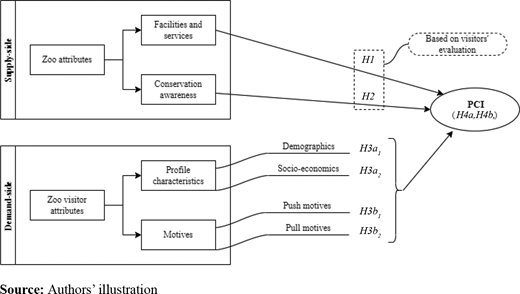
Therefore, the following hypothesis is proposed:
Visitor satisfaction with the zoo facilities and services positively relates to PCI.
Flagship species, usually charismatic megafauna, are often used by zoos to engage the public, attract attention and drive action for conservation issues (Caro, 2010; Caro & O'Doherty, 1999; Smith & Sutton, 2008; Spooner, Farnworth, Ward, & Whitehouse-Tedd, 2021). Skibins, Dunstan, and Pahlow (2017), however, found that a species’ conservation status and relatability directly influenced visitors’ emotional connection and indirectly behavioural intentions implying wider arrays of species’ capability of producing flagship outcomes (i.e. awareness and action). In a recent investigation, Miller et al. (2020) compared in-person vs video-recorded zoo animal experiences. The in-person experiences resulted in higher knowledge retention, a more positive emotional experience, reported more significant empathic concern towards wildlife and a greater interest in participating in conservation. This implies that the actual, albeit artificial and in captive conditions, experience has a more significant influence on conservation – and in essence, also relates to zoo interpretation services. Lugosi and Lee (2021) compared virtual reality (VR) with video in zoos. The findings indicated that the VR experience was enjoyable but led to little retention of information, and as a novelty, it was considered entertaining. Although the authors endorse VR as an educational and animal welfare tool, the viability and feasibility of its implementation in developing countries like South Africa are unrealistic, especially considering budgetary limitations at the local government level.
In a review of conservation-education evaluation in zoos and aquariums, Mellish, Pearson, McLeod, Tuckey, and Ryan (2019a) found that less than half of the literature on visitor behavioural intention and action as a key intervention strategy (interpretation) included conservation-related behaviour. Therefore, this indicates a pressing need to include and prioritise conservation behaviour. Ajayi and Tichaawa (2020) revealed that visitors to Nigerian zoos’ foremost image about a zoo is that of close wildlife experience, recreation and entertainment; however, conservation was least acknowledged. Another study conducted in Ghana by Agyeman and Asebah (2022) highlighted the need to educate visitors on zoos’ social, conservation and education roles, reinforcing the notion that zoo mandates struggle to balance the entertainment value visitors perceive.
We suggest that zoos emphasise and create awareness about conservation among the public and visitors through their mandate and public image. Therefore, we propose the following hypothesis:
Conservation awareness created by zoos positively relates to visitors’ PCI.
The demand-side: zoo visitor attributes
Referring to zoo visitor attributes or characteristics, previous research seems to agree that zoo visitors are predominantly female, aged 30 or older, with lower levels of spending and are accompanied during their visit by a group of children (Ballantyne & Packer, 2016; Botha et al., 2021; Lee, 2015; Linke & Winter, 2011; Ryan & Saward, 2004; Schultz & Joordens, 2014). Zoo visitors have also been documented as domestic visitors, typically from the same city or close cities where the zoo is located (Botha et al., 2021; Ajayi & Tichaawa, 2020). The authors listed agree that the motivation for going to the zoo is primarily for entertainment, recreation or social reasons (these terms are used interchangeably). In other words, more push or intrinsic motives are based on the push-pull framework of travel motivation (Dann, 1977, 1981; Crompton, 1979). Pull factors are related to the destination/product characteristics. In contrast, the push factors relate to the desire for social interaction and recognition, which relates to Maslow’s (1954) love and belongingness need and self-esteem needs. Crompton (1979) expanded the push-pull theory and identified seven factors, two pull factors related to novelty and education, while push factors satisfied the need to escape, socialise/kinship, relax, status/prestige and regression/engagement opportunity. Within the zoo context, it can be expected that both push and pull factors are observed. However, Witt and Wright (1992) noted that push factors are only a potential source of motivated behaviour. Therefore, investigating pull factors related to the destination/product characteristics is particularly useful in content-based approaches.
Knežević, Žučko, and Ljuština (2016) found animal observation, zoo visits and children as the main motives for visiting Zagreb Zoo. Therefore, a combination of push and pull motives. While not cited as the primary reason for their visit, there seems to be evidence that visitors value education and conservation (Botha et al., 2021; Hermann & Du Plessis, 2014; Jordaan & Du Plessis, 2014; Linke & Winter, 2011). The relationship between zoo visitors’ attributes and PCI has received limited attention. However, investigating the personal values of zoo visitors, Ballantyne, Hughes, Lee, Packer, and Sneddon (2018) found that frequent zoo visitors (loyalty) place higher importance on universalism that advocates for the preservation of the natural environment and increased animal welfare and protection compared to infrequent zoo visitors. This implies that frequent and repeat zoo visitors show increased pro-conservation (PC) attitudes. In research focusing on captive wildlife experiences, Viljoen and Kruger (2020) found that the visitor motive “socialisation and participation” positively correlates with conservation management in these establishments. Accordingly, we suggest that specific visitor attributes (profile characteristics including demographics, socio-economics and motives) may influence PCI more than others, and therefore, we suggest the following hypotheses:
Zoo visitors’ demographic characteristics (e.g. gender, age, marital status) positively relate to PCI.
Zoo visitors’ socio-economic characteristics (e.g. income level, education, employment and group composition) and spending behaviour positively relate to PCI.
Zoo visitors’ push motives positively relate to PCI.
Zoo visitors’ pull motives positively relate to PCI.
Enhancing pro-conservation intentions
The nexus between pro-conservation (PC) attitudes and behaviour is encompassed in the “sense of connection to animals”, which revealed that a stronger connection to animals is more likely to result in PEB participation (Grajal et al., 2017). According to Mellish et al. (2019a), zoo-based conservation education programmes have the potential to inspire visitors to change their behaviour after a zoo visit, in this case, by encouraging the use of bubbles instead of balloons. Short-term education of people about soap bubbles as a wildlife-friendly alternative to balloons was a recognised intervention in the six-month follow-up survey. After their visit, many visitors reported that they discussed with their friends and family the topics of balloons becoming marine litter and posing hazards to marine wildlife, avoiding balloons, using balloons responsibly and using alternatives to balloons. Kelly and Skibins (2020) note that zoo exhibits increase PC behavioural intentions. However, overall intentions were very low, and visitors remained reluctant to engage. Financial behaviours ranked the lowest, indicating that visitors might support conservation efforts but are unlikely to provide that support as a monetary donation. Moreover, consumer behaviours (changes in dietary and purchasing habits) were ranked the highest and most likely to occur (Kelly & Skibins, 2020). A recently compiled work by Hughes and Packer (2021) notes that in many captive wildlife experiences (zoos, aquariums and wildlife sanctuaries), visitors are overwhelmed by what seems insurmountable global environmental issues. This implies that global issues linked to local area concerns increase engagement and change environmental behaviour.
Examining PEB, Clifford-Clarke et al. (2021) indicate that zoo visitors will adopt minimal change in their routine and budgets (cost) by using reusable shopping bags, telling friends about conservation or buying sustainable products after a zoo visit, while volunteering is the least likely to occur. Kleespies, Feucht, Becker, and Dierkes (2022) investigated guided zoo tour visitors’ attitudes towards species conservation. They support the notion that zoo visitors show strong positive environmental attitudes compared to the general public – implying that frequency of visitation or loyalty can shape attitudes towards species conservation. Yet, attitude and behaviour are inconsistent, especially considering the cognitive dissonance theory (CDT). The CDT postulates that an underlying psychological tension is created when an individual’s behaviour is inconsistent with the thoughts, attitudes and beliefs (De Vos & Singleton, 2020). Although many studies have indicated pro-environmental (PE) or PC attitudes, beliefs and perceptions of zoo visitors, the challenge remains in changing the attitudes to PE or PC behaviour. Therefore, this research investigated zoo visitors’ PCI as the first step in understanding PEB. Because intentions can range from high to low (Ajzen & Fishbein, 1980), we anticipate that zoo visitors will have varying intentions but may impact each other positively or negatively. Therefore:
PCI has an expected positive interdependent relationship.
PCI has an expected negative interdependent relationship.
Figure 1 shows the hypothesised model of the study constructs.
Materials and methods
A structured questionnaire was used in this quantitative research.
Sampling method and survey
A novel survey instrument was developed for the study and administered under ethical clearance [NWU-00146–17-A4] from a South African university. The survey solicited information in the following sections: Section A measured socio-demographic information, including gender, age, nationality, province of residence, native language, marital status, group size, group composition, ranking of the zoo’s main functions and spending behaviour including total spending during respondents’ zoo visit. Section B measured respondents’ level of conservation awareness because of zoos. Seventeen statements were measured on a five-point Likert scale of agreement. The statements were based on zoos’ mandates and were verified by Roe, McConney, and Mansfield (2014) and Ballantyne and Packer (2016). Section C measured 13 statements related to the extent to which respondents’ visits to the zoo may influence their PCI. The statements were based on Viljoen and Kruger (2020), Kruger and Viljoen (2021), Mellish et al. (2019a), Mellish, Ryan, Pearson, and Tuckey (2019b) and Kelly and Skibins (2020). Section D captured motivational factors and measured 23 statements ranging from socialisation, escape, education and engagement. These statements were based on and adapted from Ballantyne and Packer (2016), Colléony, Clayton, Couvet, Jalme, and Prévot (2017), Hallman and Benhow (2007), Roe et al. (2014), Wijeratne, Van Dijk, Kirk-Brown, and Frost (2014) and Botha et al. (2021). Finally, Section E measured respondents’ level of satisfaction with the zoo experience, and 18 statements were measured based on Ballantyne and Packer (2016), Hermann and Du Plessis (2014), Fernandez, Tamborski, Pickens, and Timberlake (2009) and Fuhrmani and Ladewig (2008).
An on-site survey was done at the Johannesburg Zoo on two separate occasions: the weekend of 4 and 5 May and 12 May 2019. These dates were selected based on the zoo management’s recommendations as they had a particular need to identify the profile and needs of their weekend market. The sample population was any visitor who visited the zoo during the weekends. Therefore, the research findings are only representative of the weekend visitor, and surveys need to be conducted during the week to better represent the visitors attracted to the zoo. A convenience sampling method was used, with trained fieldworkers distributing self-completed questionnaires at various locations around the zoo. This non-probability sampling technique was used because each item in the population has a known non-zero chance of being selected using a random sampling technique. Zoo visitors were approached and asked to complete the questionnaire during the survey period. As this was a self-completed questionnaire, respondents had to complete it themselves but could ask the fieldworkers for assistance if they required clarity regarding any questions or instructions. Only respondents older than 18 years were included to adhere to the ethical considerations. According to the Johannesburg Zoo Annual Report (2018/2019) (JCPZ, 2019a), the zoo attracted 515,623 visitors. A total of 445 questionnaires were administered, valid for the practical significance of the findings based on sampling heuristics (Krejcie & Morgan, 1970).
The results are based on a sample of 65% female respondents and 35% males. The average age of respondents to the zoo during the surveys was 36 years. Most were English-speaking (33%), followed by Afrikaans (16%) and isiZulu-speaking (10%). The respondents were married (47%) or single (46%) from Gauteng (89%) and travelled in groups of seven people. Those who travelled with children travelled with an average of three children and spent R824 during their visit (€47). Respondents were introduced to zoos at the age of 12 years by their parents (55%) or by schools/universities (15%). Word-of-mouth (53%) and the zoo website (15%) were the primary sources of information, and respondents have visited the zoo an average of six times before. Regarding the ranking of the zoos’ functions, education was ranked as the number one function, followed by conservation, wildlife refuge, research, leisure activities and entertainment. The general profile is consistent with previous research (Ballantyne & Packer, 2016; Botha et al., 2021; Lee, 2015; Linke & Winter, 2011; Ryan & Saward, 2004; Schultz & Joordens, 2014; Ajayi & Tichaawa, 2020).
Results
The statistical analysis was conducted in three stages. Firstly, the factorability of the data was determined by the Kaiser−Meyer−Olkin (KMO > 0.70) and Bartlett’s test of sphericity (p < 0.05) statistics. Exploratory factor analyses (EFA > 0.5) and principal component’s analysis [Eigen value (EV) > 1] using a Varimax rotation with Kaiser normalisation were performed in IBM Statistical Program for Social Sciences (SPSS) Version 27 (IBM Corp, 2022). A series of linear regression analyses revealed the significant relationships between PCI, visitors’ demographics, socio-economic characteristics, awareness, motives and satisfaction factors.
The exploratory factor analyses results
Tables 1–4 show that the KMO (>0.5) and Bartlett’s test of sphericity (p < 0.05) confirmed the factorability of the data. The respective EFA and PCA tests (EV > 1, factor loading ≥ 0.04, Cronbach’s alpha – α > 0.6, inter-item correlation between 0.15 and 0.55) identified the valid and reliable factors (Clark & Watson, 2016).
The EFA on visitors’ conservation awareness because of zoos extracted three factors (Table 1). We labelled these factors based on Freud’s (1923) (available in Freud, 1989) classification of human consciousness, which he divided into three levels of awareness, conscious (everything one is aware of and can easily recall), pre-conscious (not consciously aware but can retrieve the information) and unconscious (repressed data related to unpleasantness and conflict). Based on the results, respondents are more aware of conservation due to their conscious awareness (x̄ = 3.68). This level of awareness is related to zoos’ active involvement in advocating, prioritising and encouraging conservation and can be considered a zoo strength. This was closely followed by pre-conscious awareness (x̄ = 3.63) related to the general role of zoos in terms of captive wildlife experiences and can relate to potential zoo opportunities. However, unconscious awareness (x̄ = 3.18) related to negative associations with zoos as captive wildlife establishments might encourage and create animosity towards zoos and shed a negative light on their conservation efforts and can be considered zoo weaknesses.
Three motives for visiting the zoo were extracted (Table 2). Edutainment (x̄ = 3.89) [a combination of learning and education (Bir et al., 2020)] was the primary motive, followed by escapism (x̄ = 3.75). Escapism is a combination of relaxation and social interaction. Engagement (x̄ = 3.25) was regarded as a less important motive. According to Su, Nguyen, Nguyen, and Tran (2020), engagement can be defined in four ways: attachment, commitment, devotion and emotional connection. Therefore, engagement comprises activities the zoo offers visitors can choose to participate in based on their individual preferences and level of interest. Edutainment is a pull motive, while escapism is a push motive. Engagement can be regarded as both a push and a pull motive; however, in the context of this research, we classify it as a pull motive since zoo activities create meaningful interest that prompts visitation.
Zoo visitors’ PCI were the dependent variables. Two intentions were revealed (Table 3). Supporting conservation intentions (SCI) (x̄ = 4.03) was the intention most likely to occur, followed by advocating conservation intentions (ACI) (x̄ = 3.65). SCI relates more to loyalty towards visiting the zoo and supporting conservation through revisiting intentions. At the same time, ACI is an active role where zoo visitors, much like activists, feel a strong responsibility towards conservation and encourage others to the conservation cause.
Finally, two visitor satisfaction factors were extracted (Table 4). Respondents were slightly more satisfied with the interaction and facility quality (x̄ = 3.79) than the service and interpretation quality (x̄ = 3.61) at the zoo. The factor labels were based on Wu et al.’s (2017) dimensions of zoo visitors’ experiential quality. The interaction and facility quality are related to the physical facilities of the zoo and interaction with zoo staff and can therefore be interpreted as place attachment. In contrast, service and interpretation quality are related to the zoo’s educational opportunities and activities (service experiences).
Linear regression analyses results
To be included in the regression analyses, the dichotomous demographic and socio-economic variables were as coded 1 and 0. Spearman’s rho was used to examine the relationship between the variables, the factors (Tables 1, 2 and 4) and the dependent variables (Table 3). Table 5 summarises only the variables with a statistically significant relationship with the PCI factors. These variables were included in the regression analyses.
In both cases, the standard least-squares regression analysis was performed, with the stepwise regression models having the best results. For Model 1, the R2 value was 0.648 and the adjusted R2 value was 0.642 [F(5,308) = 113.192, p = 0.001] while for Model 2, the R2 value was 0.586 and the adjusted R2 value was 0.577 [F(4,268) = 100.038, p = 0.001]. Durbin–Watson test statistics (d) were, respectively, 1.845 and 1.933, within the acceptable range of 1.5 to 2.5 (Field, 2016). The independent variables statistically significantly predicted the dependent variable in both models, as shown in Table 6.
Concerning H1, both models revealed a positive relationship between visitor satisfaction and PCI, thereby supporting the hypothesis. Service and interpretation quality had a positive relationship with ACI indicating increased satisfaction with zoo service experience will result in higher ACI. Interaction and facility quality positively correlate with SCI emphasising the importance of visitor satisfaction with the physical zoo environment and staff interaction.
H2 is supported in Model 1. Conscious awareness has a positive relationship with ACI, indicating zoos’ vital role in promoting animal welfare and conservation efforts to the public.
H3 determined the relationship between zoo visitor attributes and PCI. Total spending was the only socio-economic variable [supporting H3(a2)] that revealed a positive relationship with ACI suggesting that visitors who spend more during their visit to the zoo are inclined to have greater ACI. Regarding the motives, edutainment as a pull motive [supporting H3(b2)] has a positive relationship with ACI implying that marketing should highlight the educational experiences in a fun and attractive manner. For Model 2, escapism as a push motive has a positive relationship with SCI [supporting H3(b1)]. However, engagement as a pull motive negatively affects SCI rejecting H3(b2).
Finally, regarding H4, SCI and ACI positively enhance each other, indicating a mutual relationship between the two behavioural intentions, supporting H4(a).
Discussion
Theoretical findings
This research identified the determinants that can stimulate PCI among zoo visitors in South Africa. The findings support most research hypotheses but reveal a negative relationship between engagement and PCI. Two PCIs were identified, ACI and SCI. Advocating is related to norm shaping intentions since it refers to active involvement, which can predict PC behaviour change while supporting relates more to revisiting intentions, which is more a predictor of future travel behaviour. Therefore, the findings build on the TPB by Ajzen (1991, 2015) and show the relevance of the theory to predicting intentions as a starting point in understanding behaviour change. We argue that knowing the determinants that can enhance PCI among visitors can provide insights to develop intervention strategies (Steg & Vlek, 2009) in the zoo context, which may lead to behaviour change over the long term.
The results indicated positive relationships between visitor satisfaction and PCI supporting H1, thereby adding to the lack of knowledge regarding the relationship between visitor satisfaction, conservation and visitors’ intentions (Frost, 2011). Service and interpretation quality will enhance ACI indicating the importance of knowledge and educational experiences (Wu et al., 2017; Agyeman & Asebah, 2022) through interpretation to enhance active involvement. The latter confirms that interpretation is a tool that can be used for assisting visitor learning (i.e. education) and visitor satisfaction (i.e. satisfying experience), as well as behavioural and attitude change (i.e. PC) (Ballantyne, Packer, & Sutherland, 2011; Roberts, Mearns, & Edwards, 2014). For SCI, interaction and facility quality had a positive relationship which can be interpreted as the generic features of the zoo (Tomas et al., 2002) and place attachment. Place attachment is visitors’ affinity with the socio-temporal spaces, in this case, the zoo. Previous research indicates that satisfying experiences lead to visitor loyalty (Tomas et al., 2002; Yee & Shazali, 2016; Javed et al., 2022), as it is assessed as a predictor of behavioural constructs such as place attachment (Ajayi & Tichaawa, 2020).
The findings support H2, which refers to the direct and significant relationship between conservation awareness created by zoos and visitors’ PCI. Conscious awareness related to zoos’ active involvement in advocating, prioritising and encouraging conservation through their actions, educational initiatives, mandates and public image positively influenced ACI. This result aligns with Luebke et al. (2016) argument that zoos can inspire visitors to respond to societal issues such as conservation awareness. It further reiterates Mellish et al. (2019a) and Agyeman and Asebah’s (2022) observations of the need to prioritise conservation behaviour among visitors by balancing the zoo’s mandates and educating visitors on their social, conservation and education roles.
By confirming H3(a2), the findings expand previous research findings, which have, to date, only shown the relationship between frequent zoo visits and PC attitudes (Ballantyne et al., 2018; Kleespies et al., 2022). Concerning demographics (H3a1), no significant relationship with PCI was observed, possibly due to the homogeneity among zoo visitors. H3(a1) is therefore inconclusive. One socio-economic variable influenced ACI. Higher total spending during the zoo visit is positively associated with higher levels of ACI, indicating a link between spending (a socio-economic variable) and advocacy for conservation. By supporting H3(a2), the results imply that in a zoo context, specific socio-economic characteristics of zoo visitors may enhance PCI emphasising the importance of investigating these relationships to develop intervention strategies.
Edutainment (pull motive) had a positive relationship with ACI (H3b2), while escapism (push motive) had a positive relationship with SCI (H3b1). H3(b1&b2) supports the significant relationship between push and pull motives and PCI, which the literature has not yet established. However, H3(b2) was rejected in Model 2 due to the negative relationship between the pull motive, engagement and SCI. Moreover, the high ratings for edutainment and escapism are consistent with most previous findings that zoo visitors are motivated by entertainment and value education (Hermann & Du Plessis, 2014; Jordaan & Du Plessis, 2014; Linke & Winter, 2011; Ryan & Saward, 2004). However, inconclusive and contrary evidence is revealed to indicate the importance of either push or pull motives based on the Push and Pull Theory. While Viljoen and Kruger (2020) found the motive of socialisation and participation significant, their research focused on enhancing conservation management in captive wildlife settings (rehabilitation centres and sanctuaries) and not on PCI among visitors. Nevertheless, our research results reveal a relationship between push and pull motives and conservation intentions. Engagement, however, had a negative relationship with SCI. This result could be explained by the fact that engagement requires effort; therefore, visitors who support (SCI) find the effort unattractive. Subsequently, the SCI are more motivated (presumably primarily) by escapism, i.e. more leisure/recreational pursuits.
Finally, the results support H4(a1), confirming that the two PCI factors are positively related. Therefore, ACI and SCI among zoo visitors do not function in isolation. Instead, these intentions are positively interdependent. One can argue that ACI is the ideal conservation behaviour intention in terms of active involvement. However, the relationship between frequent zoo visits and PC attitudes is well-established (Ballantyne et al., 2018; Kleespies et al., 2022). Therefore, SCI is critical regarding the long-term sustainability of these and other nature-based and captive wildlife establishments.
Practical implications
The following implications stem from the results and are aimed at zoo management and local government (urban city tourism planners).
Zoo management implications
The results showed that visitors with higher total spending during their zoo visit would have greater ACI. This implies that visitors must be encouraged to spend more during their visits. Spending opportunities related to conservation efforts linked to the mandate of the zoo must be encouraged. Examples of this can include spending at the curio shop on environmentally friendly and locally produced souvenirs, with a percentage of each sale directed to a particular conservation programme or animal adoption initiative. Incentivised loyalty initiatives, such as annual membership fees, could encourage frequent visitation and elicit higher spending.
Regarding the motivational factors, engagement (mid-to-long-term) comprises participation in zoo programmes and activities. Motivation can be created and enhanced as an internal incentive (Hornik et al., 1995) or community-based social marketing (McKenzie-Mohr, 1999). Therefore, engagement is vital to encourage ACI, while for SCI, engagement is less prioritised due to support being more passive. Although the correlation is negative, SCI visitors prioritise escapism. Edutainment, which is learning new things in a fun way, and escapism, which relates to socialisation and relaxation, are prioritised. A contradiction emerges: SCI visitors are more likely to pursue escapism while indirectly supporting the zoo’s conservation mission. Zoos could encourage/enhance SCI to ACI by using a variety of external incentives (rewards or social influence) in conjunction with interactive and entertaining interpretation (service and interpretation quality) aimed at early exposure and increasing zoo spending during visits. The interactive interpretation, alongside cognitive interpretation (information boards), can take the form of games and puzzles designed for fun learning or sensory experiences such as touch tables, audio-, visual- and olfaction (smell)-related activities to teach visitors about species and the importance of conservation. This increase in edutainment relates to information intervention strategies by McKenzie-Mohr (1999) and Hornik et al. (1995) aimed at increasing knowledge to heighten awareness regarding environmental problems or the pros and cons of behavioural alternatives in the form of prompts. Additionally, persuasion (strengthening altruistic and ecological values) can strengthen commitment and progress from passive support to active support and engagement. Equally important is interaction and facility quality, as it refers to the physical environment in which service and interpretation quality occur. General maintenance, accessibility, safety, animal welfare and especially staff training are essential elements in place-making and the overall visitor experience. An attractive zoo visitor experience (essential to SCI) can lead to revisitation and greater exposure to service and interpretation quality resulting in possibly ACI-inclined behaviour.
As expected, ACI is influenced by a conservation awareness factor, namely, conscious awareness. The zoos’ conservation strengths include prioritising wildlife health and welfare, awareness of certain species’ conservation status, mandated conservation research, education, learning and public awareness of wildlife conservation. The aforementioned directly aligns with the strategies of the Johannesburg Zoo regarding increased visitor satisfaction and environmental awareness (JCPZ, 2019). Here it is proposed that the pre-conscious and conscious awareness of zoos’ be enhanced and the unconscious awareness is minimised. By focusing on pre-conscious and conscious awareness, zoos can implicitly reach their mandate and solidify their role as conservation, research and learning centres. For example, flagship species need to be linked to the zoo’s conservation mission. The public and visitors need to be consciously aware of the zoo’s real success in impacting conservation status, reintroduction of species and associated research contributions – as a mark of excellence and positive brand image recognition.
Implications for urban city tourism
Although the identified solutions will require more significant support from the private sector, there are opportunities to form partnerships. Solely relying on local government budgets and small entrance fees is insufficient to cover the costs associated with conservation and research activities while still striving to meet the mandates and solidify the zoo’s role. Additionally, the zoo is an outdoor space that should be rebranded as an “urban nature experience” where visitors can return to nature for lifestyle and well-being and participate in leisure, recreation and learning. Hornik et al. (1995) noted that structural strategies are highly complicated to implement but are more effective in encouraging PEB. Due to the governance structure of local government/municipal zoos such as the Johannesburg Zoo, these establishments have greater control in regulating products (e.g. in curio shops), legal requirements and financial strategies. On a local government level, due to their appeal, urban green spaces like zoos can capitalise on reduced bureaucracy and more efficient processes in managing these spaces for leisure and recreation purposes for residents and tourists. This is further encouraged since local government is responsible for LED strategies, which include tourism.
Conclusion
The research aimed to identify which aspects can influence PCI among zoo visitors in South Africa, which has received limited research attention to date. The research indicates that visitors can exhibit two forms of intentions, one related to advocacy and another related to support in the form of loyalty. To enhance these conservation intentions, the critical function of the zoos in terms of education and conservation needs to be prioritised while simultaneously fulfilling visitors’ needs to be entertained in an educated manner. The research showed that by identifying the combination of visitor attributes and the zoo conservation attributes that need to be managed; zoos can identify which attributes have the most significant expected relationship with PCI. Once this information is known, it increases the likelihood that zoos can market and attract more compliant and committed visitors to achieve their conservation mission and mandates. Hence, prioritising particular visitors can enable conservation mandates to be reached by reimaging, reinvesting and repositioning the zoo’s role in visitors’ minds regarding prioritising PE and PCI during zoo visits. This research further shows the important role zoos play as urban green spaces for leisure and recreation opportunities as part of a city tourism strategy.
Limitations and directions for future research
The authors acknowledge the following limitations and propose some future research interests. Firstly, the limitations of the research are based on a single case study, i.e. the Johannesburg Zoo among weekend visitors, and propose that a similar investigation be conducted among weekday visitors as well as at the NZG in Pretoria, and other captive wildlife establishments like Cape Town Aquarium, uShaka Marine World in Durban, bird sanctuaries and rehabilitation centres across the country. Secondly, the research was only conducted from a demand-side (visitor) perspective; therefore, a supply-side or management perspective (including all the cases mentioned above) would be valuable in identifying the viability and feasibility of the proposed interventions. Finally, it would be crucial to build on the current results where positive attitudes lead to positive behaviour and, ultimately, positive actions. Therefore, the nexus between PE and PC attitude-behaviour-action analysis is proposed for future research in fauna and flora captive environments.
This work is based on the research supported by the National Research Foundation (NRF). This research received no specific grant from any funding agency in the public, commercial or not-for-profit sectors. The authors are grateful to all the respondents willing to form part of the research. Any opinion, finding and conclusion or recommendation expressed in this material is that of the authors and the NRF does not accept any liability in this regard.Declaration of interest: The authors report that there are no competing interests to declare.