Hybrid project management methodologies (PMMs) refer to approaches that intentionally combine structured, plan-driven methods (waterfall or project cycle management) with agile, iterative practices that support rapid adaptation and feedback. Unlike traditional PMMs, which prioritize upfront planning and fixed processes, or purely agile approaches, which emphasize flexibility and ongoing change, hybrid PMMs integrate both logics to tailor governance, control and delivery mechanisms to dynamic project environments. This study aims to explore the effectiveness of PMMs in managing humanitarian projects in the Philippines. It evaluates their applicability and impact across diverse project phases and examines priorities in development projects to establish a replicable framework.
An exploratory research design was used, using a two-phase data collection process. Phase 1 identified common practices and project phases in humanitarian efforts, while Phase 2 focused on the deployment and effectiveness of PMMs. The data was analyzed using a concurrent triangulation method.
The hybrid approach emerged as the most preferred PMM. Its iterative nature, adaptability and capacity to integrate agile and traditional methodologies enabled project teams to navigate the dynamic demands of humanitarian efforts. Key findings indicate that the hybrid methodology enhances resource efficiency, ensures community involvement and emphasizes sustainability.
The study’s scope is geographically limited to the Philippines and primarily reflects the perspectives of core project management teams. Future research could involve a broader range of stakeholders, including beneficiaries, and extend to other regions for comparative analysis.
The hybrid PMM provides a robust framework for managing humanitarian projects, addressing challenges such as high uncertainty, limited resources and dynamic stakeholder needs. Its versatility and adaptability make it an essential tool for organizations aiming to optimize project outcomes and ensure sustainability.
This study highlights the hybrid approach as a transformative methodology in humanitarian project management, bridging gaps between traditional and agile practices. It emphasizes the methodology’s alignment with critical project needs, offering a strategic roadmap for impactful and sustainable humanitarian initiatives.
1. Introduction
Humanitarian responders operate in challenging environments. Nonetheless, their challenges are not unique. There may be a particular sense of urgency, and the risk factors are often high, as human lives may depend on a successful implementation. Theoretically, the challenges are very similar to those faced by project managers in other sectors (Bollettino et al., 2024). Hence, communication with all stakeholders involved and organizing the team so that the project will be implemented efficiently is paramount. To achieve that objective, the humanitarian responders are essentially required to ensure that the project is designed to meet the targeted groups’ needs.
Before examining which project management methodologies (PMMs) are most effective, it is important to clarify what these methodologies entail. Traditional project management approaches (e.g. waterfall or project cycle management [PCM]) emphasize structured planning, predefined processes and linear progression through project phases (Leong et al., 2023). Agile approaches, by contrast, prioritize flexibility, iterative development, continuous feedback and adaptation to emerging conditions (Arefazar et al., 2022). Hybrid PMMs integrate these two logics, retaining the structure and control of traditional methods while incorporating agile mechanisms for rapid iteration and responsiveness (Székely et al., 2025). This combined approach is particularly relevant in environments where both predictability and adaptability are required, such as humanitarian operations.
To avoid cost overruns, the humanitarian responders are also required to manage expenditures and resources appropriately. Undoubtedly, the ranking of priorities, resource availability and allocation are distinct when managing the logistics of humanitarian projects (Rojas Trejos et al., 2023). For instance, saving lives is the number one priority, and every organization strives to improve the speed and effectiveness of its first response. However, while time and speed are of the essence, most projects fail due to the availability of specific resources, including rescue operation specialists and medical supplies.
Therefore, the humanitarian response requires continuous planning. Dynamic conditions mean that traditional linear PMMs may be insufficient alone, as the situation on the ground must be reassessed daily. In this context, an unprepared project team that promises to deliver quick results will likely disappoint the stakeholders if the continuous planning is not well managed. It is worth giving attention to the required project management skills as well as their associated methodologies (Kelly et al., 2022). Such an approach should be comprehensive and well-structured. It must cover the whole project timeline, including initiation, planning, execution, monitoring and closure. It should also provide standardized management information and discipline to ensure consistency and predictable outcomes.
Evidently, during large project implementation, it is not unusual to observe a control signal turning from green to red, warning that execution may be going off track. Consequently, a proper PMM provides guidance and a roadmap for using processes, tools and techniques to empower rescue professionals and achieve project objectives (Alkhater, 2021). Introducing hybrid PMMs early in this discussion clarifies why a combined approach may be conceptually suitable for humanitarian work, offering structured planning while allowing for iterative adjustment as field conditions evolve. Accordingly, this study aims to assess the most effective project management methods and the ranking of priorities across the various implementation phases of not-for-profit projects.
The rest of the paper is organized as follows: Section 2 covers a literature review on the humanitarian environment and PMMs. In Section 3, the methodology used for this study was emphasized, followed by findings and discussion in Section 4 and a concluding remark in Section 5.
2. Literature review
The humanitarian organization’s environment is constantly changing, particularly during the period of crisis project implementation. In this context, PMM offers systematic guides on how to navigate under these shifting conditions. PMMs play a crucial role in humanitarian response by offering guidance on what to anticipate, when to take action and how to address potential challenges (Gemino et al., 2021). Although various PMMs emphasize different principles, such as agility in adapting to change or the critical path method for managing time effectively, the existing literature reveals recurring themes. PMMs serve as essential tools for effective project planning and coordination within humanitarian efforts. The volatility and unpredictability of humanitarian environments align closely with principles from complexity theory and adaptive management. Complexity theory argues that in unstable, high-uncertainty systems, linear planning models (such as traditional waterfall approaches) struggle to cope with rapid changes (Luca, 2022).
Adaptive management, widely applied in conservation and humanitarian fields, emphasizes iterative learning, flexible decision-making and rapid adjustments to evolving conditions. This theoretical grounding helps explain why hybrid approaches combining structure with flexibility may be particularly suited to humanitarian contexts. For example, Müller et al. (2019) emphasize how project planning enables humanitarian organizations to set clear objectives, establish timelines and budgets and identify potential risks and barriers. However, challenges often arise from selecting appropriate tools for task management and tracking, as well as the tendency to favor certain PMMs without fully considering the specific requirements of the project (Merkas, 2023).
Various analyses highlight the importance of incorporating local perspectives and fostering community engagement within project management practices. Apanovich (2019), Koch and Schermuly (2021) and Pellowska (2023), for example, highlight the critical role of community involvement in humanitarian responses. They argue that such engagement promotes culturally sensitive and sustainable aid efforts that align with local needs. However, this emphasis adds to the complexity of managing humanitarian projects, as it relies heavily on effective information exchange with stakeholders, a factor that not only influences a project’s success but also increases resource demands. These conditions reinforce insights from contingency theory, which posits that no single project management approach is universally effective; instead, the optimal methodology depends on the situational context.
Humanitarian projects characterized by diverse stakeholder needs, fluctuating environments and resource scarcity require methods that can be tailored to the context. Hybrid PMM aligns with contingency theory by allowing managers to combine structured planning with agile responsiveness, depending on phase-specific demands. Furthermore, existing literature stresses the essential role of project monitoring and evaluation. According to Gupta et al. (2019), continuous evaluation enables organizations to assess the impact of their initiatives, identify opportunities for improvement and uphold accountability to stakeholders, all of which are key to the success of humanitarian projects.
Effective project management is widely regarded as a cornerstone of humanitarian crisis response, enabling organizations to deliver aid and support recovery and resilience efforts (Le et al., 2019). By adopting best practices such as thorough planning, effective coordination, active community engagement and ongoing evaluation, humanitarian organizations can maximize the impact of their aid initiatives while ensuring the efficient use of resources (Emerton et al., 2020). Sustainable project management, in particular, plays a critical role in addressing humanitarian crises. It emphasizes long-term impact, efficient resource utilization, collaborative stakeholder engagement, proactive risk management and transparency (Besiou et al., 2021). This approach seeks to develop persistent solutions to critical challenges and build resilience within affected communities (Armenia et al., 2019).
Malhouni and Mabrouki (2024) emphasize that humanitarian crises are often defined by limited resources and the need for urgent responses. As a result, effective resource management, stakeholder collaboration and risk mitigation strategies are essential. The success of projects aimed at rehabilitating and supporting victims largely depends on the skilled involvement and management of stakeholders (Magassouba et al., 2019). Victims, as the primary beneficiaries of initiatives designed to improve their living conditions, health and education, must be actively involved in both the planning and execution phases of these projects (Karl and Scholz Karl, 2022). This participatory approach not only helps address their specific needs and preferences but also fosters trust, rapport and a sense of ownership, leading to more sustainable outcomes (Besiou et al., 2021). To meet these requirements for successful development projects, using an appropriate PMM is critical. Among the most commonly used methods are the waterfall (traditional) and agile approaches, valued for their broad applicability across various projects. These methods accommodate diverse factors, including budget constraints, team dynamics, project complexity, flexibility, timelines, risk levels and the need for collaboration (Luca, 2022).
Zasa et al. (2020) highlight the challenges traditional development organizations face when attempting to adopt agile processes. Their study emphasizes the importance of transitioning to agile project management, which prioritizes adaptability and continuous feedback. Agile methodologies such as Scrum, eXtreme Programming and Kanban have gained popularity in recent years, driven by dissatisfaction with the rigidity of traditional project management approaches (Tetteh, 2024; Zasa et al., 2020). At a high level, the choice of a project management approach represents a broad framework for planning a project, while methodologies provide detailed, actionable guidance for execution (Tetteh, 2024). Additionally, the leadership style of project managers plays a pivotal role in project success, often influencing the selection of a project management approach.
Traditional project management approaches focus on defining a fixed scope, timeline and budget early in the project life cycle, with an emphasis on minimizing changes as the project progresses. This method relies on thorough upfront requirements gathering, analysis and design to deliver high-quality outcomes (Zasa et al., 2020). In contrast, agile project management, rooted in the principles of the agile manifesto, advocates for flexibility in response to evolving environments and service scopes. Agile methodologies prioritize informal and functional requirements, using short, iterative cycles for planning and execution (Levy et al., 2021). These incremental development cycles, combined with autonomous project teams, enable swift adaptations, making agile especially effective for projects requiring rapid development and the management of ongoing changes (Kelly et al., 2022).
Despite its advantages, the agile approach has faced criticism for its tendency to deprioritize project documentation, leading to potential confusion in maintaining a clear project overview due to frequent reprioritization (Habib and Romli, 2021). While agile methodologies offer flexibility, they are often less effective in ensuring precise time planning and budgeting, especially for larger projects. Additionally, organizational barriers can hinder the effective implementation of agile practices, limiting their benefits in large-scale project environments (Elseknidy et al., 2024). The limitations of both purely traditional and purely agile approaches also reflect the tension between order and adaptability described in complexity and systems theory. Humanitarian crises introduce rapidly changing constraints such as shifting beneficiary needs, evolving hazards and coordination demands that require both structured processes (for accountability and resource allocation) and agile mechanisms (for rapid iteration and feedback) (Emerton et al., 2020). Hybrid PMM emerges as a theoretically grounded response to this dual requirement.
Considering the advantages and disadvantages of both traditional and agile approaches, the hybrid project management approach was thus developed. From a theoretical standpoint, hybrid PMM reflects a contingency-based logic: project structures should adapt to environmental demands. In humanitarian settings where crises evolve rapidly and stakeholder needs shift unexpectedly, the combination of predictive planning and iterative adaptation aligns with both adaptive management principles and complexity-informed project design. This positions hybrid PMM not merely as a compromise between two models but as an intentional strategy for steering turbulent operational environments. This PMM attempts to combine the strengths of the two methods, aiming for flexibility without disrupting project planning (Copola Azenha et al., 2021). Various hybrid methodologies, such as the water-scrum-fall or agile-stage-gate models, have also been proposed. However, understanding these methodologies’ differences, advantages and disadvantages remains challenging due to their diversity (McKee and Prasad, 2023). Table 1 presents a high-level comparison of waterfall and agile methodologies.
Studies on the hybrid PMM have investigated its effectiveness relative to achieving an organization’s (or project’s) objectives. General indicators that a project would benefit from the use of the hybrid format include diverse stakeholder needs, different approaches required during each project phase, high uncertainty, unclear objectives and a high level of complexity (Nieto-Rodriguez, 2023). A study conducted by Gemino et al. (2021) analysed 477 projects across varying business industries and identified that the hybrid and agile methodologies were more effective than those that employed the Waterfall method. Whereas both the use of hybrid and agile yielded the same levels of effectiveness and efficiency. Their study confirmed that the hybrid methodology is currently the leading PMM. This trend of combining agile and waterfall methods stems from the advantage of gaining agility, which generally addresses the evolving demands of operating projects in the modern era. However, Copola Azenha et al. (2021) in their study reveal that this approach is also used to deal with specific process demands that depend on a project’s type and nature, customer contractual requirements, project specificities and organizational cultures.
Furthermore, the hybrid PMM offers numerous advantages that contribute to project success. For instance, it enhances efficiency by providing a wider array of techniques and methods, allowing for selecting appropriate tools tailored to the project’s specific needs. This versatility enables quicker goal attainment with reduced costs (Reiff and Schlegel, 2022). This PMM also facilitates clearer project goal concretization, offering step-by-step planning for time, costs and milestones, particularly when project objectives are initially unclear. Moreover, it is able to emphasize customer requirements and benefits, as well as provide constant feedback, ensuring the highest customer value. Similarly, the agile component in hybrid project management enables swift reactions to change without completely rescheduling the project timetable. This greatly enhances the project’s adaptability to emerging circumstances (Layton et al., 2020). Likewise, the hybrid approach has human resources implications. Employees are empowered to take full responsibility for achieving the project objectives by eliminating traditional leadership roles. This autonomy boosts employee motivation and fosters personal development in social and professional competencies (Gemino et al., 2021).
While extensive literature highlights the advantages and disadvantages of the hybrid approach, these are largely cantered on technology-related projects (i.e. energy generation, software development, etc.). This reveals a paucity of research on the applicability of the PMM to other types of projects (e.g. development projects) that, likewise, require timely interventions. Additionally, a very limited research stream investigates the distinctions and challenges experienced during the actual implementation of a PMM across the various phases of a project. Addressing these gaps could provide insights to support the choice of one methodology over another and reveal the conditions that must be present to successfully implement a hybrid approach. Collectively, the theoretical lenses of complexity theory, adaptive management and contingency theory provide a strong rationale for why hybrid PMM may be particularly well aligned with humanitarian work. These settings require simultaneous structure and responsiveness, making hybrid methodologies theoretically and practically promising.
3. Research method
The study aims to investigate the project methods used in managing development projects and gather empirical data on their frequency of use, applicability and effectiveness. This is exploratory research by design, and the authors used an inductive approach to examine how development projects applied the various PMMs. The data-gathering instrument needed to validate the common practices during conceptualization, field implementation and evaluation was split into two phases to ascertain the most effective method. In Phase 1, this study aimed to establish commonalities among humanitarian projects (i.e. types/nature of project, PMMs, project phases and relevant position titles); and in Phase 2, it aimed at understanding how project methodologies are deployed, as well as feedback on how to improve them.
Based on both sets of characteristics, the respondents were then classified and directed to answer two research questions:
What are the most effective PMM and priorities across different phases of not-for-profit projects impacting communities?
How do these methods influence the achievement of project outcomes and meeting initial targets?
Given the exploratory design of this study, the quantitative procedures, including regression analysis, were used primarily to identify indicative patterns rather than to produce statistically significant findings. Regression analysis was applied not to test formal hypotheses but to explore potential relationships within the data set (Arkes, 2023). Given the modest sample size, the results of these analyses are used as suggestive evidence to support qualitative observations rather than as statistically conclusive findings.
To ensure transparency in respondent selection, purposive sampling was used with explicit inclusion criteria (Asgary and Lawrence, 2020). Only participants with direct responsibility for project design, implementation or oversight were invited, since their roles allowed communication with donors and project heads. These included Executive Directors, Project Planners, Program/Project managers, Consultants and Project Implementers. While this approach provided depth, it also introduces the possibility of selection bias and a narrower perspective, as community members and donor representatives were not directly surveyed. This limitation is acknowledged and suggests opportunities for future research to include these critical stakeholders for a more holistic view.
A total of 45 responses were collected for the Phase 2 survey, of which 24 matched the required profile, as summarized in Table 2. This is an effective sample size as it satisfies the average number of 17 responses required for qualitative research (Hennink and Kaiser, 2022). Online surveys were deployed in both phases to allow efficient communication with identified respondents using purposive sampling. Although 24 responses met the inclusion criteria, this represents a relatively small data set for statistical analysis. As a result, any quantitative patterns identified, especially those emerging from regression analysis, should be interpreted as exploratory signals rather than definitive statistical evidence. Nevertheless, the relatively small sample size, combined with variation in the number of cases across humanitarian sectors (ranging from nine in community engagement to only one in resource mobilization), may skew the findings. The results should therefore be interpreted with caution, as certain sectors are more strongly represented than others.
The survey consisted of several questions related to a wide range of involvement in not-for-profit projects impacting communities. It covered various project phases typically observed in development projects: assessment, planning, implementation, monitoring and evaluation, as well as transition and exit. Respondents were asked about their involvement, roles, methods used in each phase, priorities, satisfaction with project management methods, and whether the project outcomes met the initial targets. For clarity, project “success” in this study was defined as the degree to which reported outcomes aligned with the project’s stated objectives and initial targets, as perceived by project management staff. While this provides valuable managerial insight, it does not capture beneficiary or donor perspectives on success, an important limitation that warrants further research.
In addition, the questions delved into specifics about the project’s nature, the activities prioritized during each phase, the methods used and the satisfaction levels achieved at the end of the intervention. Informed consent was obtained from participants before their engagement in the survey. Data protection regulations and ethical guidelines were strictly adhered to throughout the research process to safeguard the confidentiality of each participant’s information. A concurrent triangulation design was used to analyze both qualitative and quantitative data and compare how the data sets supported each other (Steckhan et al., 2024). In this study, qualitative insights played a central interpretive role, with quantitative outputs serving as supportive, complementary inputs rather than determinants of the findings. This approach mitigates the limitations of conducting statistical analysis on a small sample size.
The results facilitated identifying and analyzing the most suitable PMM for each phase, regardless of the nature or type of humanitarian project. At the same time, the exclusive reliance on project management staff as respondents is recognized as a methodological limitation, since crisis-affected communities and donor institutions provide equally vital perspectives on the rationale and impact of PMMs. Future studies should broaden the scope of stakeholder inclusion to strengthen the validity and generalizability of findings. Consequently, the generalizability of the quantitative findings is inherently limited, and the results should be viewed as preliminary and indicative of trends that warrant further investigation through larger and more diverse samples.
4. Findings and discussion
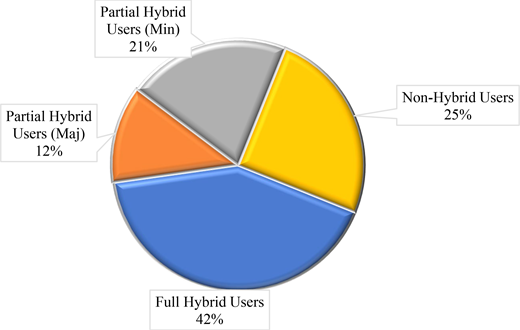
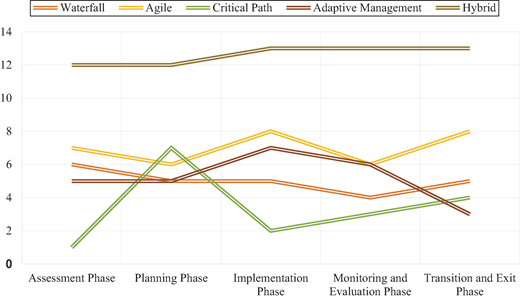
The results in Figure 1 show that the hybrid approach is the most favored PMM, resulting in a substantial majority of the teams (75%) using it fully or partially in their respective projects. An observation of the PMM used in each phase of development projects further supports this finding (see Figure 2).
However, it is important to note that while the frequency of adoption highlights the popularity of the hybrid methodology, it does not by itself empirically validate that hybrid approaches deliver better project outcomes. Adoption may also be influenced by external requirements, such as donor accountability frameworks that traditionally favor waterfall models or by prior training of project staff. Therefore, the results should be interpreted primarily as evidence of preference and applicability, not as conclusive proof of superior effectiveness. Importantly, the high frequency of hybrid adoption should not be interpreted as direct evidence of greater project effectiveness. Adoption reflects what practitioners choose or prefer to use, whereas effectiveness concerns whether a methodology actually leads to improved outcomes. These two concepts are analytically distinct. Therefore, while adoption patterns reveal how widely a PMM is being used, they do not in themselves demonstrate that hybrid approaches produce measurably better project results.
For clarity, the concept of a hybrid PMM in this study refers to a combination of agile and waterfall approaches, in which agile elements (e.g. sprints, iterative feedback loops) are integrated into the more structured framework of PCM. This framing is critical for understanding the results that follow. This distinction is essential because even if hybrid practices appear widely integrated into project phases, their presence does not automatically equate to higher effectiveness. In the analyses that follow, effectiveness is assessed separately based on whether reported outcomes aligned with project goals rather than inferred from the mere occurrence of hybrid practices.
4.1 Phase 1: Project types, design and goals
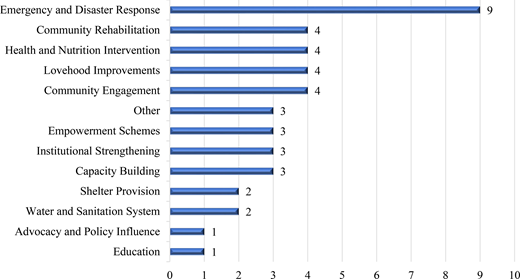
To establish the general applicability of a methodology to humanitarian projects, the authors ascertained the various types of projects being implemented in the Philippines. Figure 3 shows the initial survey results, which identified 13 types of humanitarian projects (“Other” representing Energy Access). This typology reflects the challenges experienced in the country, with emergency and disaster response being the most common. In addition, it corresponds with the sectors of humanitarian action described by the Humanitarian Innovation Fund (Elrha, 2024).
It can be observed that the top three most mentioned project types from Figure 3 and the Phase 2 responses are the same: emergency and disaster response, community engagement and health and nutrition. This was a hint that the instrument successfully identified the appropriate sampling framework. At the same time, the distribution of cases is uneven. For example, community engagement is represented by nine cases, while resource mobilization appears only once. This variation introduces limitations in how far the results can be generalized across all humanitarian sectors.
Understanding the purpose of each project was also essential to confirm the type of project being deployed and establish the replicability of a project in other developing countries. This will leverage and expand the impact of the study, as project managers and donors will be better guided to identify which projects are more likely to succeed by implementing one of the given methodologies listed in Phase 2 of the study’s data collection. Table 3 shows that the specific goals of the respondents’ humanitarian projects were consistent with the types indicated in Figure 3. While these goals validate the consistency of the sample, they also largely reflect the standard humanitarian priorities already embedded in PCM. Hence, they serve more as confirmation of existing practice than as a source of radically new insights.
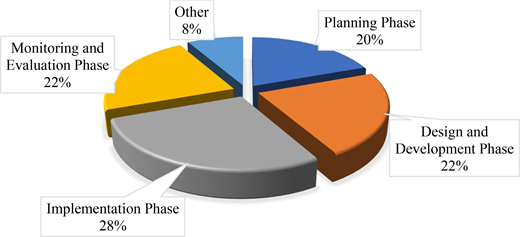
Likewise, the Phase 1 instrument provided insights into the various phases implemented by the project teams. These revealed the type of methodology used by the respondents in their respective projects. Five common phases were identified, namely, (1) Development (or Assessment), (2) Planning, (3) Implementation, (4) Monitoring and (5) Exit (i.e. the “Other” response). Figure 2 ‘s numbers indicate the frequency with which a respondent focuses on a specific phase. These common project segments were observed to address the many challenges related to the broad range of needs expressed by various types of beneficiaries. The chosen methodology also had to take into account unforeseen circumstances, possible scarcity of use and efficient use of the required resources. These responses were used to form sections of the Phase 2 survey, with priorities identified for each.
4.2 Phase 2: Project phases and priorities
During Phase 2 of the data collection, the authors focused on assessing which PMM was used in successful humanitarian projects. Based on the responses given during Phase 1, the instrument includes questions related to the activities being undertaken during each phase or stage of a project. The priorities indicated by the respondents reflect how each stage was approached and for what purpose. For this study, “success” was defined as the degree to which the reported outcomes aligned with the project’s stated objectives and initial targets, as perceived by project management staff. While this provides valuable managerial insights, it does not capture beneficiary or donor perspectives, which are equally critical in determining humanitarian project success. For this study, “success” was defined as the degree to which the reported outcomes aligned with the project’s stated objectives and initial targets, as perceived by project management staff.
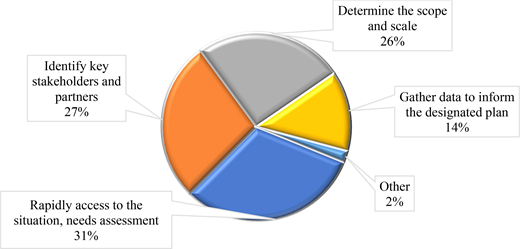
These characteristics were compared to the descriptions of all known project methodologies to establish a replicable framework for managing a humanitarian project. The consistency between the highest number of responses on project types from Phase 1 (Figure 1) and Phase 2 (Figure 3), even though differing in frequency, indicated that disaster response, community engagement and nutrition are the top priorities of the Philippine Government. This allows us to assess which project management framework is most applicable (effective and efficient) to this particular type of humanitarian project. The assessment phase is the first stage described by project managers and implementers when supervising a humanitarian project. This phase generally includes establishing a project’s scope, the choice of methodology, the number of potential partners and assessing the stakeholders’ needs. These serve as inputs to a project’s operational planning phase to maintain or maximize synergies.
Results in Figure 4 indicate that priority activities facilitate a systematic approach with defined steps on how to meet goals. At the same time, project teams were able to identify potential issues/risks and clarify any unclear points in the project. This allowed them to establish protocols in case these risks arose. Likewise, the assessment phase increased the project’s impact. Through a systematic assessment of the target beneficiaries and their specific needs, targeted communities became more accepting of the assistance and policies set in place.
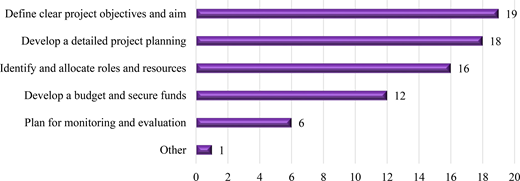
Project managers define the planning phase as the one during which they establish the list of activities and objectives to be accomplished, as well as the resources required to achieve the objectives. This apparently allows them to structure the project better, more accurately monitor ongoing performance and adjust implementation within a shorter timeframe. Likewise, the phase greatly impacts a team’s ability to efficiently address potential risks with the limited resources that it has. This phase (see Figure 5) was described as comprising the following activities: (a) defining a project’s objectives; (b) assessing the required resources (manpower, machines, methods and money); (c) establishing what activities needed to be measured; and d) how to proceed with the implementation and measurements.
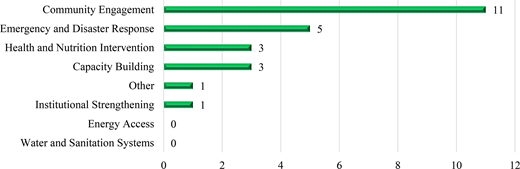
As shown in Figure 5, community engagement projects were reported most frequently, accounting for nearly half of all Phase 2 cases. Emergency and disaster response followed, while health and nutrition and capacity-building projects were less common. Institutional strengthening and “other” categories were marginal, and no respondents reported projects in energy access or water and sanitation. This distribution illustrates two key points:
the dominance of community-focused interventions within the Philippine humanitarian landscape; and
the underrepresentation of infrastructure-based projects.
The revised caption and clearer grouping of categories reduce visual clutter and help readers immediately identify where hybrid project management is most often applied. Importantly, the imbalance across project types also signals a limitation of the data set, as conclusions are driven by sectors with stronger representation.
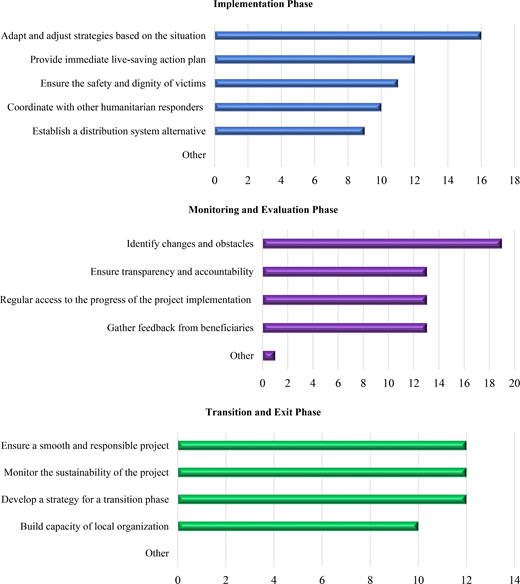
The implementation phase was generally described as the stage where all activities indicated in a project’s plan were carried out. At this stage, reliance on the established protocols and proper utilization of resources were critical. Responses indicate that, for humanitarian projects, adapting and adjusting strategies to suit any deviations from the plan was the top priority. It should be noted that this is only possible if the previous phases are properly performed. Figure 6 shows the complete list of priorities for the implementation phase, as well as the frequency of answers for each.
The next phase is focused on the project’s output to assess if the objectives have been met. This is the monitoring and evaluation phase. For this phase, respondents emphasized the importance of accurately translating the objectives into data that could be measured and the significance of adhering to protocols listing actions to be taken depending on the various levels of achievement. Chief among the mentioned priorities was identifying challenges and obstacles that could prevent a project from achieving its objectives. In the humanitarian context, the sequencing of the three phases (assessment, planning and monitoring/evaluation) appears to be iterative by nature. This would be logical, as capturing all possible scenarios in time-sensitive undertakings such as humanitarian projects is impossible. Other priorities include regular assessment, gathering feedback from beneficiaries and ensuring transparency in the use of resources, as summarized in Figure 7.
In contrast with other project methodologies, the Phase 2 survey revealed a fifth (final) phase for humanitarian projects: the transition and exit phase. This was described as a set of postimplementation activities focused on sustaining a project’s operations and impacting a target community. This matches one of the Organisation for Economic Co-operation and Development Assistance Committee’s evaluation criteria. Impact and sustainability fall at the end of the evaluation tool after a project has been deemed effective, efficient, relevant and coherent (OECD, 2024). Priorities in these phases were more evenly distributed, with activities on transitioning to local authorities, monitoring project outcomes and minimizing negative impacts to the beneficiaries, which had the same frequencies as demonstrated in Figure 8. While the survey-based results illustrate the alignment of hybrid practices with each phase, many of the identified priorities (e.g. risk protocols, assessment steps and exit sustainability measures) overlap with long-established PCM processes. Thus, the main contribution here is showing how hybrid approaches integrate these steps in iterative ways, rather than claiming they fundamentally replace PCM.
4.3 Hybrid approach
In assessing the viability of the hybrid approach, this study examines the intricacies of priorities across project phases, the variety of priorities, project types and the job titles of respondents. The aim is to determine whether job positions play a role in choosing hybrid and nonhybrid methodologies. Table 4 shows the distribution of job titles between respondents who fully embraced the hybrid approach throughout their projects and those who chose alternative methodologies. The analysis reveals no discernible correlation between job titles and the preference for hybrid or nonhybrid methodologies. It would have been valuable to frame this analysis by introducing typical PCM and agile roles earlier (e.g. project manager vs scrum master/product owner). Doing so would provide a stronger context for interpreting whether humanitarian job roles structurally align with hybrid methodology adoption.
The nature of the priorities listed under each project phase indicates that each stage requires different approaches and requirements to satisfy the needs of various stakeholders. Likewise, the number of priorities appeared to influence the methodology deployed. This prompted the authors to perform a multiple linear regression analysis to confirm the degree of relationship between the two variables across all phases of a development project. Although the regression results (Table 6) suggest a significant relationship (R2 = 0.706), this analysis should be interpreted with caution, given the small sample size. Applying regression to a data set of this size risks overstating significance. A descriptive or cross-tabulation approach may have been more appropriate for drawing reliable conclusions. The regression is therefore best viewed as exploratory. Table 5 summarizes the quantitative data used in the analysis. The independent variables (x) were the number of priorities listed by both full hybrid users and nonhybrid users for each project phase. The titles for each stage were replaced with their corresponding ordinal data (e.g. assessment phase was indicated as Phase 1). The dependent variable (y) was the use of the hybrid approach. To be able to perform the regression analysis, this nominal data was converted into 1 – for the nonhybrid approach and 2 – for the full hybrid approach.
Table 6 outlines the results of the regression analysis. The F-test suggests a statistically significant relationship between the number of priorities and the use of the hybrid approach. The calculated F-value surpasses the critical value, leading to the rejection of the null hypothesis. The regression analysis supports a significant relationship between the number of priorities and the adoption of the hybrid approach, with an R-squared value of 0.706. Approximately 70.6% of the variability in the use of the hybrid approach can be explained by the regression model based on the number of project priorities. However, this statistical relationship describes only how priorities correlate with the likelihood of adopting a hybrid approach and does not measure the effectiveness of that approach in improving project outcomes. Effectiveness is assessed separately and is not assumed from adoption frequency or regression-derived associations. This aligns with findings from (Nieto-Rodriguez, 2023), reinforcing the effectiveness of the hybrid method in managing complex projects with shifting or multiple demands. Further investigations are warranted to delve deeper into these promising preliminary findings.
Closer examination of the coefficients shows that Phase 1 (assessment) and Phase 5 (transition/exit) have positive though statistically nonsignificant associations with hybrid adoption, suggesting that hybrid practices may be more relevant where scoping and sustainability are critical. Other phases (planning, implementation and monitoring) show weaker or inconsistent relationships. These patterns are theoretically consistent with hybrid’s emphasis on iterative assessment and long-term adaptability, but due to small sample size, they should be viewed as exploratory rather than definitive. It must also be noted that applying regression with only 24 valid cases risks overfitting and inflating significance. A descriptive, cross-tabulation analysis would have been more appropriate for a data set of this size. The regression results are therefore presented only as indicative trends rather than robust causal evidence.
Moreover, while the 75% prevalence of hybrid use highlights its popularity, this cannot be overstated as proof of universal superiority. Hybrid adoption appears to succeed particularly in dynamic contexts such as disaster response and community engagement, where rapid iteration and feedback loops are crucial. Conversely, projects constrained by rigid donor frameworks, limited staff training in agile methods or institutional resistance may limit or prevent hybrid application. This comparative insight suggests that hybrid PMM is context-dependent: valuable under uncertainty, but not a one-size-fits-all model.
4.4 Discussion
The five phases described to suit humanitarian projects best are indicative of a method that supports accurate data collection and analysis, community involvement and efficiency while maintaining a degree of flexibility to adjust to changes on the ground as they occur. The foregoing does not match the exact definition of traditional PMM. Its characteristics depict multiple project management styles or techniques. These have led the authors to define this methodology as a hybrid approach. Overall, the results suggest that hybrid methodologies are widely applied across humanitarian projects in the Philippines and are perceived as useful for adapting to diverse project contexts. However, this does not empirically demonstrate that hybrid approaches outperform others in terms of outcomes. This distinction between adoption and effectiveness is critical. While hybrid PMM is the most commonly used method, this only indicates practitioner preference and contextual fit, not that it objectively results in higher performance. The findings show that hybrid methods are perceived as adaptable and useful, but the study does not claim causal evidence that they generate superior effectiveness across humanitarian contexts. Their value appears to lie in flexibility and adaptability, not necessarily guaranteed superiority.
Moreover, hybrid adoption may succeed or fail depending on external and institutional conditions such as staff training, donor frameworks or organizational culture. Recognizing these contingencies would help avoid overstating the case for hybrid PMM as a “transformative foundation” and instead position it as a promising but context-dependent approach. Future research should incorporate comparative case studies and triangulate perspectives from project managers, beneficiaries and donors. This would allow a richer understanding of when, why and how hybrid methodologies succeed, and under what conditions they may face limitations. Future research should therefore investigate effectiveness through comparative outcome evaluations rather than relying on adoption frequency as an indirect indicator of performance. Establishing this distinction will enable more rigorous assessments of when and why hybrid PMMs actually improve humanitarian results.
5. Conclusions and future research directions
5.1 Conclusions
This research provides evidence that the hybrid approach may offer practical value in humanitarian project management. Rather than positioning hybrid PMM as a universal solution, the study identifies conditions under which its adaptability and versatility are perceived as useful by practitioners. Established among 75% of project teams, its broad adoption reflects perceived applicability in contexts marked by uncertainty, though this does not in itself confirm superior effectiveness. By integrating elements of traditional and agile methods, hybrid PMM enables flexible planning and iterative adjustment, supporting project teams as they navigate diverse humanitarian challenges. Findings also highlight the relevance of certain hybrid features such as iterative assessment and structured transition/exit processes within high-impact project types, suggesting where hybrid PMM may add distinctive value. However, the observed benefits are based on practitioner perceptions and should be interpreted as indicative rather than definitive. This aligns with findings from Nieto-Rodriguez (2023), reinforcing the effectiveness of the hybrid method in managing complex projects with shifting or multiple demands. Further research is needed to evaluate the effectiveness outcomes more rigorously.
While hybrid PMMs are well-established in IT and business, their systematic application in humanitarian project management has not been adequately examined. This study extends the concept into a sector defined by uncertainty, multi-stakeholder governance and resource constraints. The originality of this work lies in contextualizing hybrid practices within humanitarian environments, generating phase-specific insights that highlight where hybrid methods add distinctive value (assessment and transition/exit) and identifying institutional and donor-related conditions that shape hybrid adoption. Overall, the study contributes exploratory insights that can inform both academic discourse and humanitarian practice, while recognizing the need for further empirical testing.
5.2 Implication
These findings suggest that hybrid approaches may offer practical advantages in humanitarian settings, particularly under conditions of high uncertainty and rapidly evolving stakeholder needs. However, the evidence should be interpreted as indicative rather than universally prescriptive. The results identify contexts in which hybrid methodologies appear useful based on practitioner reports and observed patterns of use, rather than demonstrating inherent superiority over alternative approaches. Accordingly, recommendations focus on where hybrid elements may be beneficial rather than advocating their wholesale adoption.
This study confirms that the hybrid approach’s innate flexibility and adaptability emerge as pivotal assets in addressing the dynamic challenges of humanitarian projects. Its capacity to combine structured planning with iterative adjustment may be useful in phases requiring both predictability and responsiveness. Hybrid PMMs appear most relevant in situations where donor compliance, coordination and reporting requirements must coexist with rapidly shifting field realities. Nonetheless, the extent to which these advantages translate into improved project outcomes likely depends on contextual factors such as organizational capacity, donor requirements, staff experience with agile practices and the complexity of the humanitarian crisis. These enabling conditions function as boundary factors, meaning hybrid PMMs may not yield comparable benefits where such capacities are absent. The findings, therefore, highlight potential benefits rather than guaranteeing performance improvements.
Hybrid PMM was commonly used in high-impact project types such as emergency and disaster response, community engagement and health and nutrition. However, adoption should not be conflated with proven effectiveness; hence, the study captures practitioner perspectives rather than comparative outcome data. The research design does not establish causal mechanisms linking hybrid PMM use to performance outcomes, nor does it provide beneficiary-level or longitudinal impact assessment. Hybrid PMM appears well-suited to dynamic environments, but further empirical evaluation is needed before formal claims of superiority can be made.
Stakeholders may find value in the iterative characteristics of hybrid PMM, which align with the nonlinear and unpredictable nature of humanitarian projects. These adaptive cycles can be advantageous, yet they also introduce trade-offs. Increased flexibility may elevate coordination demands, transaction costs and cognitive load on teams. Iterative replanning can complicate audit trails and formal accountability structures when not carefully governed. Recognizing such trade-offs is essential for realistic implementation. There are also identifiable conditions under which hybrid PMMs may underperform or fail. Hybrid approaches may be constrained in highly compliance-driven environments where donor regulations limit iteration, in organizations lacking sufficient project management maturity or agile literacy, or in extreme rapid-onset emergencies where immediate execution takes precedence over participatory feedback cycles. In fragmented multi-agency settings, hybridization may create ambiguity in decision rights and process ownership rather than adaptive coherence.
The hybrid methodology’s transition and exit phases offer a structured approach for sustaining operations, though the effectiveness of these mechanisms may vary depending on local governance capacity, partner engagement and availability of long-term resources. These features reflect potential, not guaranteed outcomes. Similarly, hybrid PMM’s emphasis on data-driven decision-making can enhance project responsiveness, but the study did not measure decision-making quality or long-term results; implications should therefore be treated as provisional. Accordingly, any claims regarding broader societal impact remain conditional and cannot be substantiated beyond the perceptual and exploratory evidence presented here.
From a research perspective, this study emphasizes the importance of advancing theory-building around hybrid project management in humanitarian contexts, encouraging further exploration of long-term effectiveness, scalability and integration with emerging technologies. Future studies should incorporate comparative designs, beneficiary perspectives and longitudinal outcome metrics to clarify when and why hybrid PMMs produce measurable improvements. For practice, the evidence suggests that organizations working in unpredictable humanitarian contexts may benefit from strengthening their capacity to apply hybrid elements such as iterative feedback loops, flexible work planning and adaptable coordination mechanisms, where appropriate. Rather than mandating hybrid PMM as a universal standard, agencies may consider integrating hybrid components selectively, guided by project scale, risk profile, compliance intensity and team readiness. Potential societal benefits may arise when hybrid practices support more adaptive and participatory project delivery, but such impacts depend on consistent stakeholder engagement and sustained local capacity. Overall, the study identifies conditions in which hybrid approaches may be particularly relevant, while encouraging organizations to assess how hybrid elements align with their operational context, resources and stakeholder expectations.
5.3 Limitations and future research
This study concentrated on identifying and understanding PMMs in Philippine development projects, primarily seeking insights from key individuals directly involved in project management and funding decisions. This focused approach ensured efficient data collection, but the limitation lies in the exclusive reliance on the perspectives of core managing teams and benefactors. The omission of other stakeholders, such as beneficiaries and additional project team members, might restrict a comprehensive understanding of a program’s impact, effectiveness, efficiency and sustainability. Thus, future studies could benefit from a more inclusive approach involving diverse perspectives, potentially yielding a broader and more nuanced data set. Incorporating insights from beneficiaries and other team members could offer a more detailed picture of the project dynamics. Additionally, expanding the participant pool to include various stakeholders may facilitate a quantitative analysis, enhancing the generalizability of the findings.
Next, this study’s geographic focus was solely on the Philippines, allowing for insights into prevalent PMMs in that context. However, a broader investigation across countries with similar cultural, administrative, geographical and economic factors could validate and strengthen the findings. Similarly, while this study delved into community engagement projects in the Philippines, a more extensive examination of various project types in diverse countries could enhance the applicability of the research outcomes. While this study lays a foundation by highlighting a dominant PMM and exploring its rationale, future research endeavors should consider expanding the geographical scope, diversifying respondents and using varied research methodologies for a more comprehensive understanding.