Grounded in the conservation of resources (COR) theory, this study aims to investigate the direct, moderating and mediating relationships between emotional intelligence, digital organizational culture and employee sustainable performance among women leaders in the Malaysian manufacturing industry.
A quantitative, cross-sectional research design was used. Survey data were collected from 168 women leaders holding managerial positions within the Malaysian manufacturing sector, who provided proxy assessments of their team’s sustainable performance. The conceptual model was empirically evaluated using partial least squares structural equation modeling (PLS-SEM) through SmartPLS 4.
The empirical results establish that emotional intelligence exerts a significant positive direct effect on employee sustainable performance. Crucially, digital organizational culture significantly moderates the relationship between emotional intelligence and sustainable performance. However, emotional intelligence does not significantly influence the formation of a digital organizational culture, rendering the hypothesized mediating pathway statistically insignificant. Furthermore, digital organizational culture was found to have a significant negative direct relationship with sustainable performance, contradicting initial assumptions.
The findings offer actionable insights for human resource practitioners and policymakers. To sustain employee performance amidst rapid digital transformation, organizations must actively nurture emotional intelligence skills among emerging women leaders while concurrently engineering a supportive digital workplace culture, treating both as critical organizational resources that mitigate burnout.
This study advances organizational behavior literature by uniquely positioning digital organizational culture as a moderating boundary condition, a “resource caravan”, rather than a mediator. It offers a novel theoretical perspective on how the psychological resources of female leaders interact with digital environments to drive sustainable subordinate outcomes in a traditionally male-dominated sector.
Introduction
Leadership plays an important role in driving organizational transformation and revolution (Duan et al., 2023). In the contemporary business landscape, there has been a notable increase in the number of women leaders performing commendably across various organizational settings (Jermsittiparsert, 2020; Infante and Darmawan, 2022). Women’s leadership is increasingly recognized as imperative for catalyzing organizational change and innovation (Akkaya and Bagieńska, 2022). Consequently, contemporary policies have actively promoted women to leadership positions, ensuring equal opportunities for education and career advancement in the workplace (Maheshwari and Nayak, 2022). This paradigmatic shift has contributed to a significant upsurge in the number of women occupying top leadership positions globally (Adler and Osland, 2016; Gaio and Gonçalves, 2022; Chen et al., 2023). More than ever before, women are ascending to positions of authority across a multitude of nations, making significant strides in sectors encompassing government, industry, higher education and nonprofit organizations (Keohane, 2020). Despite continuing systemic challenges, an increasing number of women are moving into leadership positions and deeply involving themselves in the organizational field. Many women leaders perform admirably by demonstrating that their work-related relationships can be distinctive, significantly influencing the quality of their leadership experiences (Davidson, 2018).
Within the local context, women in Malaysia are recognized as essential contributors to the country’s economic and social progress (Stivens, 2023); organizations with a higher percentage of women in top management positions consistently demonstrate better performance, particularly regarding leadership styles and financial management. Prior studies have linked gender diversity to higher return on assets, demonstrating that having women in top positions exerts a positive effect on organizational performance (Hamzah, 2017; Alshirah et al., 2022). Aligning with the Malaysian Government’s policy, which aims to achieve at least 30% female representation at the corporate sector’s decision-making level, this research reinforces that increasing the number of women in top positions is highly beneficial for organizations (Lim et al., 2019; Rakia et al., 2023). However, despite years of insightful study and development, women remain underrepresented, particularly in positions of leadership and management (Catalyst, 2020; Grant Thornton Malaysia, 2022). Gender stereotyping persists as a significant barrier to women’s career progression and success in top leadership roles. Past literature has proven that phenomena such as the glass ceiling and glass cliffs create substantial difficulties for women reaching and succeeding in top leadership positions, inherently requiring them to “rise through difficulties” (Duchek et al., 2022). In addition, women leaders are frequently faced with the challenge of balancing professional obligations alongside family duties, creating an imbalance that precipitates work-family conflict. This phenomenon is particularly pervasive for women due to long working hours, work overload and high work-related stress (Zheng et al., 2021). These challenges are particularly pronounced within the Malaysian manufacturing industry, a traditionally male-dominated sector undergoing rapid digital transformation, making the emotional intelligence of its emerging female leaders a critical yet under-researched phenomenon.
To navigate these pervasive challenges, the significance of emotional intelligence among leaders, especially women leaders is underscored by its capacity to manage complex interpersonal relationships, foster effective communication and cultivate a positive organizational climate. Despite the acknowledged importance of emotional intelligence, empirical gaps remain regarding how the unique psychological resources of women leaders’ function within rapidly digitalizing environments. Specifically, prior studies have largely replicated general emotional intelligence-performance models without isolating the gender-specific mechanisms such as navigating systemic algorithmic biases and heightened technostress that make emotional intelligence particularly critical for female leaders. Furthermore, the role of digital organizational culture has frequently been assumed as a structural mediator, leaving a gap in testing it as a boundary condition (moderator) that dictates the efficacy of these resources. In the contemporary digital age, organizations are increasingly embracing transformative technologies that not only redefine the nature of work but also fundamentally shape the cultural fabric within which leaders operate. Hence, investigating the moderating role of digital organizational culture provides a comprehensive lens to understand how the digital environment influences the relationship between women leaders’ emotional intelligence and employee sustainable performance. In addition, the mediating mechanisms through which digital organizational culture may impact this relationship will be scrutinized, shedding light on the intricate pathways through which digitalization shapes leadership dynamics and workforce outcomes.
To address these gaps, this study is driven by the following central research questions:
How does the emotional intelligence of women leaders’ impact employee sustainable performance?
Does digital organizational culture mediate or moderate this relationship within a highly technical industry?
Therefore this paper aims to contribute to the burgeoning literature on leadership, emotional intelligence and organizational dynamics by offering empirical insights into the multifaceted connections between women leaders, employee sustainable performance and the ever-evolving landscape of digital organizational culture. Through a rigorous exploration of these interdependencies, this study seeks to provide valuable guidance for organizational leaders, policymakers and scholars keen on fostering sustainable performance and cultivating leadership excellence in the contemporary workplace.
Theoretical background
To systematically elucidate the underlying psychological and environmental mechanisms connecting leadership traits to subordinate outcomes, this study grounds its conceptual framework in the conservation of resources (COR) theory (Hobfoll, 1989, 2001). As a dominant motivational theory in organizational psychology, COR posits that individuals inherently strive to obtain, retain, protect and foster resources, which encompass objects, conditions, personal characteristics and energies The central tenet of the theory asserts that psychological stress, burnout and subsequent performance degradation occur when these resources are threatened, depleted or when individuals fail to gain adequate resources following a significant investment of effort (Chen et al., 2015). In the context of the rapidly digitalizing and high-pressure environment of the Malaysian manufacturing industry, COR theory provides a robust theoretical lens to evaluate how the psychological assets of women leaders translate into sustained performance and well-being among their subordinates.
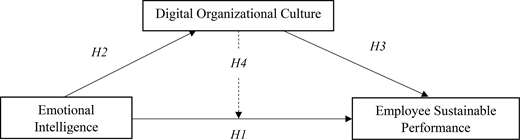
Within the parameters of this study, the emotional intelligence of women leaders acts as a profound personal resource. Leaders possessing high emotional intelligence are highly adept at managing their own emotional reserves and mitigating resource depletion, particularly when navigating systemic workplace challenges such as gender stereotyping and work-family conflict. Furthermore, emotionally intelligent leaders are uniquely capable of transferring these resources to their subordinates through empathetic communication, emotional support and effective conflict resolution, thereby enriching the collective psychological resource pool. Extending this logic, COR theory introduces the concept of “resource caravans” and “resource caravan passageways,” suggesting that resources do not exist in isolation but travel in interconnected aggregates shaped by the organizational environment (Karin et al., 2025; Akhtar et al., 2026). In this research model (see Figure 1), a supportive digital organizational culture represents this critical conditional resource or passageway. As organizations undergo digital transformation, employees are highly susceptible to resource depletion, often manifesting as digital fatigue. However, when emotionally intelligent leaders cultivate a positive digital culture characterized by seamless technological integration, continuous learning and adaptability, they create a protective environmental resource caravan. This supportive culture provides employees with the necessary tools, psychological safety and structural clarity to navigate digital demands without exhausting their cognitive and emotional reserves.
Finally, COR theory asserts that when individuals operate within a resource-rich environment, they are empowered to protect their existing resources and accumulate new ones, leading to sustained positive organizational behaviors (Pichler et al., 2025; Hamid, 2026). Employee sustainable performance which encompasses both sustained high-level productivity and psychological well-being is the ultimate behavioral outcome of effective resource conservation. Driven by the initial personal resource of the leader’s emotional intelligence and facilitated by the conditional resource of a positive digital organizational culture, employees are effectively safeguarded against resource depletion (Vijai, 2025). Consequently, they can sustainably invest their cognitive, emotional and physical energies into achieving long-term organizational goals, solidifying the theoretical pathways linking leadership traits, digital culture and sustainable performance outcomes.
Literature review
Emotional intelligence
Emotional intelligence is fundamentally conceptualized as the capacity to recognize, express, comprehend, manage and apply emotions (Kotsou et al., 2019). The conceptual groundwork for investigating this construct originates from the foundational contributions of psychologists such as Salovey and Mayer (1990) and Goleman (1995). Prior research characterizes emotional intelligence as a critical social capability wherein individuals meticulously monitor both their own and others’ emotions, generate emotionally cognitive information and use this data to strategically guide their thoughts and actions (Wei et al., 2023). In addition, emotional intelligence is delineated as the ability to discern internal and external emotional states, thereby initiating effective emotional regulation and fostering deep interpersonal connections (Lee et al., 2022). Within leadership dynamics, women are frequently noted for displaying heightened empathy, interpersonal sensitivity and robust collaboration skills, which significantly contribute to their leadership effectiveness by fostering trust, inspiring organizational commitment and adeptly navigating workplace conflicts (Chin et al., 2025). This emotional regulation is particularly vital for women who face unique digital-era challenges, such as systemic algorithmic bias in management systems and disproportionately high levels of technostress when balancing work-family boundaries in hybrid environments.
Employee sustainable performance
Employee sustainable performance has emerged as a focal point in contemporary organizational literature, reflecting a paradigm shift from traditional, short-term productivity metrics to a more comprehensive, longitudinal understanding of employee well-being, commitment and engagement (Chillakuri and Vanka, 2021). This construct comprises two primary determinants: employee performance and employee well-being. These determinants are mutually reinforcing, synergistically maximizing employee performance over the long run. Past studies by Ji et al. (2021) and Chin et al. (2023a, 2023b) posit that it is imperative to simultaneously consider both performance and well-being to effectively promote and sustain employees’ overarching capabilities. Consequently, employee sustainable performance is defined as a regulatory process in which an individual enduringly and efficiently achieves specific work goals while concurrently maintaining a highly satisfactory level of well-being (Davidescu et al., 2020).
Digital organizational culture
Digital organizational culture represents the strategic integration of digital technologies, practices and progressive attitudes within an organizational context. This culture is characterized by the perpetual necessity to adapt to a dynamic technological landscape and generate continuous value changes to meet or anticipate the future demands of this environment (Leal-Rodríguez et al., 2023). As businesses navigate the complexities of the digital era, understanding and cultivating a robust digital culture has become imperative for sustained organizational success (Chin et al., 2023a, 2023b). Subsequently, digital organizational culture encompasses the shared values, core beliefs and normative behaviors related to digital technologies within an enterprise. It necessitates the seamless integration of digital tools, processes and agile mindsets across all hierarchical levels. Therefore, leaders must resist the temptation to perceive digitalization merely as an isolated technological implementation, but rather as an enabler of a comprehensive, data-driven organizational ethos.
Hypothesis development
Emotional intelligence and employee sustainable performance
As organizations transition into the digital era, the role of leadership in shaping and adapting to digital culture becomes increasingly crucial (Dąbrowska et al., 2022). The ability to navigate the intricacies of the digital landscape is vital for organizational success, positioning leadership and particularly emotional intelligence as a key factor in fostering a positive digital culture (Ismail et al., 2023). In the digital era, leaders with high emotional intelligence may foster a culture that embraces change, collaboration and continuous innovation, all of which are critical components of a thriving digital workplace (Jena and Goyal, 2022). Past research highlights that emotionally intelligent leaders are uniquely equipped to manage the complexities of the digital age, seamlessly adapting to rapid technological advancements while resolutely maintaining a human-centric approach (Oosthuizen, 2023). Based on this discussion, the following hypothesis has been formulated:
Emotional intelligence is positively related to employee sustainable performance.
Emotional intelligence and digital organizational culture
As organizations transition into the digital era, the role of leadership in shaping and adapting to digital culture becomes increasingly crucial (Dąbrowska et al., 2022). The ability to navigate the intricacies of the digital landscape is vital for organizational success, positioning leadership and particularly emotional intelligence as a key factor in fostering a positive digital culture (Ismail et al., 2023). In the digital era, leaders with high emotional intelligence may foster a culture that embraces change, collaboration and continuous innovation, all of which are critical components of a thriving digital workplace (Jena and Goyal, 2022). Past research highlights that emotionally intelligent leaders are uniquely equipped to manage the complexities of the digital age, seamlessly adapting to rapid technological advancements while resolutely maintaining a human-centric approach (Oosthuizen, 2023). Based on this discussion, the following hypothesis has been formulated:
Emotional intelligence is positively related to digital organizational culture.
Digital organizational culture and employee sustainable performance
In today’s rapidly evolving business landscape, the pivotal role of women leaders in shaping digital organizational culture has garnered significant scholarly attention. Past studies indicate that a positive digital culture characterized by open communication, innovation and high adaptability has a direct, measurable impact on employee job satisfaction and long-term commitment (El Rashied, 2022; Wulur and Mandagi, 2023). Because women leaders play a crucial role in shaping digital organizational culture, it is plausible to postulate that their influence on this culture is positively correlated with high, sustainable employee performance over time. Women leaders who actively promote a positive digital culture may indirectly enhance employee performance by creating an environment that champions continuous learning, cross-functional collaboration and operational flexibility (Ismail et al., 2023). The following hypothesis has been formulated:
Digital organizational culture is positively related to employee sustainable performance.
The mediating effect of digital organizational culture
Digital organizational cultures, defined by profound technological integration, innovation and collaboration, serve as a transformative backdrop that shapes how emotional intelligence influences employee sustainable performance (Schiuma et al., 2022). In this context, aligning organizational values with emotional intelligence fosters a collective understanding that transcends individual psychological attributes, establishing emotional intelligence as a shared organizational value that directly contributes to sustainable performance. The strategic emphasis on digital organizational cultures highly complements emotional intelligence, creating a psychologically safe environment where emotional expression is encouraged, thereby positively impacting employee well-being and sustained performance (Udod et al., 2020; Drigas et al., 2023). Therefore, the following hypothesis has been formulated:
Digital organizational culture mediates the relationship between emotional intelligence and employee sustainable performance.
The moderating impact of digital organizational culture
As businesses execute digital transformations, the critical role of digital organizational culture comes into sharp focus. According to Edmonds (2023), the compatibility or misalignment between an individual leader’s emotional intelligence and the prevailing organizational culture significantly impacts how effectively emotional intelligence translates into sustained performance. In organizations characterized by a positive, supportive culture, leaders with high emotional intelligence are substantially more likely to thrive. Subsequently, leaders in these organizations value and promote emotional intelligence, creating a synergistic environment where employees feel fully empowered to leverage their own emotional skills for superior decision-making, problem-solving and interpersonal relationship management (Cui, 2021). As businesses continue to navigate the complexities of the modern workplace, acknowledging the moderating role of digital organizational culture becomes essential for theoretically optimizing the potential of emotional intelligence in promoting sustainable employee success. In short, the following hypothesis has been developed:
Digital organizational culture moderates the relationship between emotional intelligence and employee sustainable performance.
Methodology
Research design and sampling
This research was conducted across private organizations within the Malaysian manufacturing industry. A quantitative approach was used, collecting data from women leaders currently holding managerial positions. The survey used questionnaire items adapted from established previous studies (Wong and Law, 2002; Halimi et al., 2021; Martínez-Caro et al., 2020; Ji et al., 2021), specifically integrating the robust dimensions of digital organizational culture advocated by Leal-Rodríguez et al. (2023) to comprehensively capture the digital work environment. Because surveying direct subordinates was unfeasible due to strict company confidentiality protocols, leaders were asked to report on their team’s sustainable performance. We acknowledge this proxy measurement approach as a methodological characteristic of the study. A purposive, key-informant sampling technique was applied to select women representing diverse backgrounds, career paths and leadership styles. The rationale for specifically targeting managerial-level women is that this demographic frequently navigates the dual pressures of work-family conflict and digital uncertainty. Consequently, investigating how their emotional intelligence sustains employee job performance within the manufacturing sector represents a highly appropriate and strategic research avenue.
Data collection and procedures
Data were gathered using a cross-sectional, self-administered survey design. All core constructs within the conceptual model (i.e. emotional intelligence, digital organizational culture and employee sustainable performance) were assessed using a seven-point Likert scale, ranging from 1 (strongly disagree) to 7 (strongly agree), to capture a granular level of variance in respondents’ perceptions. To ensure transparency and allow for the assessment of conceptual distinctiveness, the exact wording of the retained measurement items for emotional intelligence and employee sustainable performance is provided in Appendix. Prior to the full-scale survey deployment, a pretest was conducted with a small, representative subset of the target population. This crucial step was undertaken to verify the face and content validity, authenticity, clarity and contextual accuracy of the adapted survey items within the specific setting of the Malaysian manufacturing environment. Feedback obtained during this pretest ensured that all terminology was unambiguous and accurately interpreted by the target demographic. Furthermore, participants were explicitly assured of their complete anonymity and the strict confidentiality of their responses prior to commencement. This ethical assurance was explicitly designed to minimize evaluation apprehension and significantly reduce social desirability bias, thereby encouraging objective and honest reporting.
Sample size and data analysis
A priori power analysis was conducted using G*Power software (Faul et al., 2009) to determine the optimal sample size. The calculation established a minimum required sample size of 129 (n = 129), based on a statistical power of 0.95, a significance level of 0.05 and a medium effect size of 0.15. A total of 200 questionnaires were distributed to ensure an adequate return rate. Ultimately, 188 sets were returned, yielding a robust response rate of 94%, which comfortably exceeds the recommended 70.0% threshold (Nulty, 2008) and mitigates nonresponse error concerns. Initial data screening was performed using the statistical package for social sciences (SPSS) version 28.0. During this phase, 20 questionnaires were excluded due to incomplete information or pervasive straight-lining responses. The remaining 168 valid responses were then evaluated using partial least squares structural equation modeling (PLS-SEM) via SmartPLS 4 (Ringle et al., 2023) to assess the reliability, convergent validity and discriminant validity of the data (Henseler et al., 2016).
Results
The conceptual model was empirically validated using SmartPLS 4 to explore the relationships between emotional intelligence, digital organizational culture and employee sustainable performance. The evaluation of the PLS-SEM model was conducted in two sequential stages, as outlined by Hulland (1999) which evaluating the measurement model to ensure the reliability and validity of the latent constructs, followed by assessing the structural model to estimate the hypothesized path relationships.
Common method bias
While proactive procedural remedies were implemented during the survey design phase, a rigorous statistical evaluation was also conducted to ascertain the potential presence of common method bias. First, Harman’s single-factor test was conducted, revealing that a single unrotated factor accounted for significantly less than the 50% threshold of the total variance, indicating that common method variance is not a pervasive issue. To statistically address this threat, the study used the full collinearity assessment approach recommended by Kock (2015). According to this methodological standard, a structural model is considered free of severe common method bias if all variance inflation factor (VIF) values resulting from a full collinearity test are equal to or lower than the conservative threshold of 3.3. As revealed in Table 1, all construct VIF values were well below this 3.3 threshold (the highest recorded inner VIF was 1.158. Consequently, it is confidently concluded that the data is free from pathological collinearity and that common method bias does not pose a significant threat to the validity or interpretation of the structural model findings.
Evaluation of the measurement model
Initially, the reliability of the variables was assessed using Cronbach’s alpha (CA) and composite reliability (CR) measures. Subsequently, convergent validity was examined, evaluating the consistency of indicator values as perceived by respondents and validated through average variance extracted (AVE) results (Hair et al., 2011). Confirmatory factor analysis (CFA) was used to assess the reliability, convergent validity and discriminant validity of the measures. Loadings below the 0.50 threshold were eliminated to ensure internal consistency (Bagozzi et al, 1991). The valid remaining loadings are detailed in Table 2. For reliability and validity consideration, both CR and AVE values should surpass the designated thresholds of 0.70 (Memon and Rahman, 2014) and 0.50 (Fornell and Larcker, 1981), respectively. The statistical analysis indicates that the CR and AVE values in this study meet these criteria. In addition, CA values were computed and these values were considered satisfactory. The value was deemed acceptable according to the standards established by Nunnally and Bernstein (1994).
Discriminant validity was assessed and confirmed using a dual-method approach. First, following Fornell and Larcker (1981), we calculated the square root of the AVE for each measure and compared it against the absolute interconstruct correlations (Table 3, Italic values). Second, we evaluated the heterotrait-monotrait (HTMT) ratio (Table 4). All HTMT values remained under the established 0.90 limit. Together, these results demonstrate adequate discriminant validity and alleviate concerns regarding multicollinearity or overlapping constructs (Henseler et al., 2016).
Evaluation of structural model
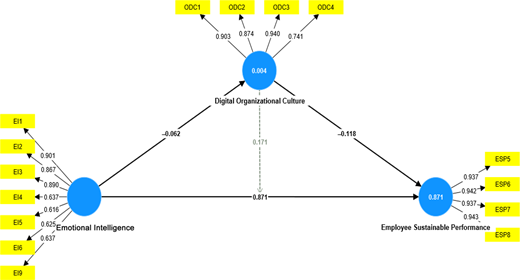
Following the validation of the measurement model, the structural model was assessed to test the hypothesized relationships. The structural model (Figure 2) reflects all factor loadings alongside the direct, indirect and moderating pathways. Furthermore, the R2 values for digital organizational culture and employee sustainable performance were 0.004 and 0.871, respectively. The near-zero R2 for digital organizational culture indicates that emotional intelligence explains virtually none of its variance, suggesting this construct is driven by structural rather than individual-level psychological traits. The latter value (0.871) indicates a robust predictive accuracy, signifying that the regression model effectively captures and explains a substantial portion of the variance in the primary target variable (Cohen, 1998). It is worth noting that several of the original items for both emotional intelligence and employee sustainable performance were dropped during the measurement evaluation phase due to low outer loadings and severe cross-loadings, a necessary step to preserve both convergent and discriminant validity.
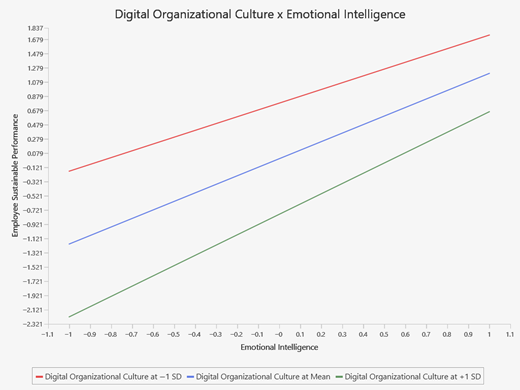
Table 5 exhibits the parameter estimates of the direct effect of the proposed model. Firstly, the path results revealed a significant positive relationship between emotional intelligence and employee sustainable performance culture (β = 0.871; p < 0.000; LLCI = 0.833; UUCI = 0.920), hence, H1 was found to be supported. Conversely, the relationship between emotional intelligence and digital organizational culture was statistically insignificant (β = −0.062; p < 0.229; LLCI = −0.137; UUCI = 0.231), leading to the rejection of H2. Testing H3 revealed that digital organizational culture is significantly related to employee sustainable performance (β = −0.118; p < 0.000; LLCI = −0.168; UUCI = −0.054). Because the hypothesis stated a positive relationship, H3 is strictly unsupported. Regarding the moderation hypothesis, the analysis confirmed that digital organizational culture significantly moderates the relationship between emotional intelligence and employee sustainable performance (β = 0.171; p < 0.006; LLCI = 0.087; UUCI = 0.287), thus supporting H4. The interaction effect is visually demonstrated in the simple slope analysis (see Figure 3).
Mediation analysis
To test the mediating effect (H3a), a bootstrapping procedure was used to measure the specific indirect effects within the conceptual model (Hair et al., 2011). As presented in Table 6, the indirect effect of digital organizational culture mediating the relationship between emotional intelligence and employee sustainable performance was found to be statistically insignificant (β = 0.007; p < 0.231; LLCI = −0.021; UUCI = 0.018). Consequently, H3a is not supported.
Discussion
This study aimed to investigate the direct, mediating and moderating mechanisms connecting women leaders’ emotional intelligence, digital organizational culture and employee sustainable performance within the Malaysian manufacturing industry. The empirical findings strongly support H1, demonstrating that emotional intelligence is a significant predictor of employee sustainable performance. This robust linkage may be amplified by the tight-knit, high-pressure nature of the Malaysian manufacturing sector, where a leader’s emotional resilience becomes the primary buffer for team well-being. In addition, this high beta may partially reflect a halo effect resulting from leaders self-reporting as a proxy for their team’s performance. This aligns with past studies asserting that individuals with high emotional intelligence exhibit a heightened capacity for navigating complex interpersonal relationships, thereby fostering a collaborative environment that enhances teamwork and communication, the crucial elements for sustained job performance (Vernia and Senen, 2022). This positive relationship is particularly noteworthy because leaders with strong emotional intelligence align their professional roles with personal values, contributing to higher levels of overall satisfaction and sustained job engagement among their subordinates (Alotaibi et al., 2020). By recognizing and addressing the emotional needs of their teams, emotionally intelligent women leaders effectively create supportive work environments that directly elevate employee well-being.
In contrast to expectations, H2 was not supported. This study found that emotional intelligence did not significantly influence digital organizational culture. From a COR perspective, this confirms that an individual’s personal psychological resource (EI) is distinct from and cannot singularly generate a macro-level environmental resource condition (digital organizational culture). While unexpected, this finding resonates with recent arguments that the core, human-centric tenets of emotional intelligence may face challenges when attempting to seamlessly align with the rapid, technology-driven landscape of digital organizational cultures (Jena and Goyal, 2022; Bhardwaj et al., 2023). It is highly probable that a leader’s focus on emotional intelligence may diverge from the more tangible, structural factors that primarily drive digital organizational success, such as technological infrastructure, advanced data analytics and rigid innovation strategies.
Furthermore, the results did not support H3 as originally hypothesized, instead revealing a significant negative relationship between digital organizational culture and employee sustainable performance. This surprising negative effect may indicate a suppression effect or suggest that the relentless demands of a highly digitalized culture could induce digital fatigue or technostress. When an organization’s digital culture outpaces its employees’ capacity to adapt, it inadvertently detracts from sustainable well-being and performance if not properly managed by human-centric leadership. This finding diverges from existing literature which previously posited that robust digital cultures inherently provide a conducive environment for employees to thrive (El Rashied, 2022; Wulur and Mandagi, 2023). While prior studies emphasize that technological advancements foster growth and resilience (Ismail et al., 2023), our results indicate a boundary to this logic within the high-pressure manufacturing sector. Instead of minimizing operational burnout, an aggressive digital culture without sufficient emotional scaffolding may actually deplete employees’ cognitive resources, thereby hindering their creativity and sustainable performance.
A central contribution of this study is the confirmation of H4, which posited that digital organizational culture moderates the relationship between emotional intelligence and employee sustainable performance. This corroborates recent findings by Edmonds (2023). In a rapidly evolving digital landscape where virtual interactions are predominant, the intersection of human emotional intelligence and a supportive digital culture emerges as a crucial determinant of sustained performance. Women leaders with high emotional intelligence are distinctly equipped to adapt to organizational change and embrace the rapid pace of technological evolution (Chuang and Eversole, 2022). Therefore, when embedded within a strong digital culture, the positive impact of their emotional intelligence on sustainable performance is significantly reinforced and amplified.
Conversely, the hypothesized mediating role of digital organizational culture (H3a) was found to be statistically insignificant, diverging from prior studies that suggested cultural mediation (Udod et al., 2020; Drigas et al., 2023). This unsupported hypothesis suggests that the fast-paced, highly pragmatic nature of digital work environments may not serve as a direct conduit for the empathetic and reflective aspects of emotional intelligence (Leeuw and Joseph, 2023). Instead of acting as a stepping stone (mediator), the digital culture serves strictly as an environmental boundary condition (moderator) that dictates the efficacy of the leader’s emotional intelligence.
Theoretical contributions
The theoretical implications of this study significantly advance the existing literature on leadership, emotional intelligence and digital organizational culture. First, by theoretically grounding the conceptual model in the COR theory, this study expands the application of resource conservation into the digital leadership domain. It establishes emotional intelligence not merely as an interpersonal trait, but as a critical personal resource that leaders use to directly fuel and sustain employee performance.
Second, the findings challenge conventional assumptions regarding the direct antecedent role of emotional intelligence on digital organizational culture. By revealing an insignificant direct and mediating relationship, this study highlights a crucial theoretical distinction: digital organizational culture is likely driven by macro-level strategic, structural or technological imperatives rather than the localized emotional intelligence of individual leaders. This delineation helps refine current theoretical models by separating human-centric psychological traits from structurally driven digital environments.
Third, and most notably, the study introduces and confirms digital organizational culture as a moderating boundary condition in the relationship between emotional intelligence and sustainable job performance. This provides a novel conceptual perspective for future research: a technologically adaptive and supportive environment serves as a “resource caravan” that significantly amplifies the efficacy of a leader’s emotional intelligence. Finally, by situating this research within the Malaysian manufacturing industry, this study responds to urgent calls for diverse contextual investigations. It enriches the predominantly Western-centric theoretical discourse by demonstrating exactly how psychological leadership traits and digital culture operate within a rapidly digitalizing, traditionally male-dominated sector in an emerging economy.
Practical implications
From a practical standpoint, this study offers highly actionable, multi-level insights for organizational leaders, policymakers and human resource (HR) practitioners seeking to enhance the sustainable performance of women leaders in the digital age.
At the individual leadership level, the confirmed positive relationship between emotional intelligence and sustainable job performance validates the strategic value of actively nurturing emotional intelligence skills among emerging women leaders. Organizations should move beyond traditional technical training and integrate emotional intelligence assessments into their recruitment, performance evaluations and succession planning. Furthermore, investing in targeted leadership development programs will empower women leaders to better leverage their inherent emotional competencies to support their subordinates.
At the organizational level, the unexpected negative relationship between digital organizational culture and employee sustainable performance highlights a critical cautionary note for organizations. It underscores the strategic imperative of fostering a workplace culture that balances technological advancements with adequate human-centric support. For the manufacturing sector, which is rapidly adopting Industry 4.0 technologies, HR and IT departments must collaborate to ensure that digital tools are implemented alongside adequate psychological support. Leaders must ensure that digital transformation does not lead to digital fatigue but rather serves as a tool to streamline workflows and enhance well-being.
Finally, the significant moderating effect implies that leadership training cannot occur in a vacuum. To maximize the impact of emotionally intelligent women leaders, top management must concurrently cultivate a supportive digital culture. These findings emphasize the critical need for organizations to recognize the varied manifestations of digital organizational culture and purposefully tailor long-term strategic interventions. By actively promoting a digital environment that values empathy, clear communication and flexibility, organizations can systematically reduce work-family conflict and ensure their workforce remains resilient, engaged and sustainably highly performing.
Limitations and direction for future research
Despite its robust methodological design and theoretical contributions, this study has several notable limitations that present opportunities for future inquiry. First, the research focused specifically on women leaders within the Malaysian manufacturing industry, thereby limiting the generalizability of the findings to other geographical contexts or service-oriented industries. Second, the reliance on self-reported data introduces the potential for common method bias, despite the rigorous procedural and statistical efforts employed to mitigate this risk. Specifically, the high correlation observed between emotional intelligence and employee sustainable performance, alongside the reliance on leaders providing proxy ratings for their subordinates’ sustainable performance, introduces potential measurement and perceptual biases. In addition, the cross-sectional nature of the study inhibits definitive causal inferences and the inherent subjectivity of emotional intelligence self-assessments may introduce perceptual biases. Finally, the unexpected lack of a mediation effect could be attributed to the complex, fast-paced difficulties of the digital work environment and the multifaceted nature of emotional intelligence, suggesting an urgent need for further empirical exploration.
To address these limitations, future research should explore the impact of diverse cultural variations on the relationships identified in this study, specifically considering different organizational contexts. Future studies are highly encouraged to tease out specific emotional intelligence skills such as empathy, clear communication and flexibility and examine how they independently produce resilience and engagement in employees facing digital fatigue. Longitudinal research designs could provide deeper insights into the evolving, causal nature of these relationships over time. Sector-specific analyses, coupled with the evaluation of targeted organizational interventions, would further deepen the understanding of context-specific dynamics at play. Moreover, qualitative or mixed-methods approaches may offer a more nuanced exploration of the lived experiences of women leaders navigating the digital workplace. Finally, comparative studies evaluating male leaders and the examination of team-level dynamics represent highly valuable avenues for future academic inquiry.
Conclusion
In conclusion, this study delved into the critical relationship between emotional intelligence, digital organizational culture and sustainable job performance among women leaders in the Malaysian manufacturing industry. While the direct positive impact of emotional intelligence on employee sustainable performance was strongly supported, the hypothesized direct relationship between emotional intelligence and digital organizational culture did not find empirical backing. However, the study revealed a significant negative association between digital organizational culture and sustainable job performance, highlighting the potential risks of digital fatigue when technological adoption outpaces human-centric support. Most notably, the moderated relationship between emotional intelligence and sustainable job performance by digital organizational culture highlights the highly nuanced dynamics of leadership within a rapidly evolving digital landscape. The hypothesized mediation effect of digital organizational culture was found to be statistically insignificant, revealing potential complexities and variations in how these factors interact. This study fundamentally advances the understanding of leadership in the digital era. Ultimately, this research offers both profound theoretical insights and highly practical implications for organizational leaders navigating the multifaceted challenges of digital transformation.
References
Further reading
Appendix. Measurement items
Emotional intelligence
Self-emotion appraisal (SEA)
I have a good sense of why I have certain feelings most of the time.
I have good understanding of my own emotions.
I really understand what I feel.
I always know whether or not I am happy.
Others’ emotion appraisal (OEA)
I always know my friends’ emotions from their behavior.
I am a good observer of others’ emotions.
I am sensitive to the feelings and emotions of others.
I have good understanding of the emotions of people around me.
Use of emotion (UOE)
I always set goals for myself and then try my best to achieve them.
I always tell myself I am a competent person.
I am a self-motivated person.
I would always encourage myself to try my best.
Regulation of emotion (ROE)
I am able to control my temper and handle difficulties rationally.
I am quite capable of controlling my own emotions.
I can always calm down quickly when I am very angry.
I have good control of my own emotions.
Employee sustainable performance
(Note: items adapted to reflect leaders’ proxy assessment of their team)
My team members will be able to continuously achieve the objectives of their jobs.
My team members will be able to permanently meet the criteria for their job performance.
My team members will be able to continuously demonstrate expertise in all job-related tasks.
My team members will be able to persistently perform well in the overall job by carrying out tasks as expected.
My team members will be able to continuously fulfill all the requirements of their jobs.
My team members will be able to permanently be competent in all areas of their jobs.
My team members will be able to persistently manage more responsibility than typically assigned.
My team members will be able to organize and plan well to achieve objectives of their work in a sustainable way.
My team members will be able to organize and plan well to meet deadlines of their work in a sustainable way.
My team members will be able to permanently be suitable for their jobs.
Digital organizational culture
The teams collaborate functionally in the initiatives for the innovation and digital transformation.
There is a clear orientation to digital technology changes inside the organizational culture.
The culture of digital innovation and changes takes part as a natural process within the organization.
The organization shares with the employee the digital strategy, taking into consideration their suggestions.