This study, based on the stimulus–organism–response theory and the Elaboration Likelihood Model, examines how retro packaging design influences food waste reduction intentions, testing parallel mediation (groundedness and perceived efforts) and moderated mediation (perceived subjective social status).
This study conducted two online experiments via the Credamo platform. Between January and February 2026, a total of 456 participants (196 for experiment 1 and 260 for experiment 2) residing across various provinces in China were recruited.
Experiment 1 (N = 196) confirmed that retro packaging significantly influences consumers' intentions to reduce food waste, with groundedness and perceived efforts acting as parallel mediators. Experiment 2 (N = 260) replicated these results and revealed that perceived subjective social status moderated both mediating pathways.
This study provides actionable guidance for food enterprises, anti-food waste practices and social governance, offering low-cost waste reduction solutions and differentiated strategies for food firms via retro packaging design.
This study expands green consumption literature by introducing emotional anchoring and class-heterogeneity perspectives to consumption-stage food waste reduction mechanisms.
1. Introduction
Globally, approximately 61% of food waste occurs at the household and individual consumer levels, driven largely by over–purchasing and poor utilization (Diana et al., 2024). Consequently, mitigating food waste through consumer behavior interventions has become a critical focus. As the primary interface for consumer‒food interactions, packaging offers significant intervention potential through both functional protection and emotional transmission. However, existing research predominantly examines the functional impact of packaging on waste (Mahmoudi et al., 2025), leaving a theoretical gap regarding how the emotional and cultural designs of packaging might influence consumers' intention to reduce food waste. Since evoking positive emotions fosters food-saving inclinations (Mumtaz et al., 2022), leveraging historical design cues—commonly termed retro design—presents a viable emotional intervention (Orth and Gal, 2014). Existing research has confirmed the effectiveness of retro packaging design on green perception and green behavior (Hou et al., 2025; Wallner et al., 2020). However, few studies have focused on the connection between retro packaging design and the intentions to reduce food waste, and it remains unclear how this design affects consumers' attitudes toward food during the consumption stage. Prior research indicates that consumers' interpretation of retro design operates through symbolic association and semantic interpretation pathways. Therefore, drawing on stimulus–organism–response (SOR) theory and the elaboration likelihood model (ELM), we propose the underlying mechanism through which retro packaging design influences consumers' intentions to reduce food waste. Specifically, via the symbolic association route, retro packaging serves as a psychological anchor that evokes a sense of groundedness; concurrently, via the semantic interpretation route, it conveys the producer's embedded efforts. Ultimately, the psychological states elicited via both pathways are expected to strengthen consumers’ food-saving intentions. Perceived subjective social status is proposed as a moderator, as social class shapes responses to emotional and effort cues (Mattan et al., 2017; Rivera, 2010).
This study makes three theoretical contributions. First, it extends sustainable packaging research beyond physical attributes by confirming that emotional activation via retro design also reduces food waste intention. Second, by integrating SOR theory with the ELM, this study maps the mechanism through which retro packaging—functioning as an emotional peripheral cue—curbs food waste intentions via a dual-pathway of groundedness and perceived efforts. Finally, it introduces a class-heterogeneity perspective by demonstrating that subjective social status moderates this effect, with low perceived subjective social status consumers exhibiting greater sensitivity to retro packaging design cues, thus enriching social class psychology in green consumption.
2. Theoretical background and hypothesis development
2.1 Relationships between retro packaging design and intentions to reduce food waste
Retro packaging design refers to a strategic paradigm inspired by historical forms and traditional elements, utilizing specific structural, graphic, and typographic cues to evoke nostalgia or a “retro fashion” identity (Celhay et al., 2020). A substantial body of literature indicates that packaging can shape consumers’ evaluations of food through a spillover effect (Elder and Krishna, 2022). Positive emotions elicited by packaging may therefore strengthen food-saving intentions. Consequently, the positive emotions elicited by packaging design are highly effective at fostering food-saving inclinations and translating these conservation motivations into actual behaviors (Fazal-e-Hasan et al., 2024).
With the rise of the retro trend, contemporary researchers have reported that the nostalgia triggered by retro design does not rely on consumers' personal experiences; it is a nostalgia for an unexperienced time. Thus, it separates from personal and collective nostalgia, which typically awakens past memories, forming a unique psychological phenomenon called “vintage anemoia”, which encompasses consumers’ positive and nostalgic responses to retro cues (Kulczynski and Hook, 2024). Vintage anemoia, as an emotional response capable of activating positive psychological states, not only provides consumers with a sense of security and comfort but also significantly enhances their overall subjective evaluation and value perception of the product (Kulczynski and Hook, 2024). Therefore, this study considers vintage anemoia as the underlying emotional mechanism activated by vintage packaging design: when food packaging features retro design, vintage cues may evoke vintage anemoia, thereby endowing the food with an emotional connection and higher subjective value beyond its material attributes (Mu et al., 2025). Conversely, standard, non-retro packaging lacks these historical cues and fails to cultivate such emotional bonds, leaving the subjective importance of food unchanged. Therefore, we propose the following:
Retro packaging design (vs non-retro design) leads to greater intentions to reduce food waste.
2.2 The mediating role of groundedness
Drawing upon stimulus–organism–response (SOR) theory, food packaging design serves as an environmental stimulus that shapes a consumer's internal organismic state, which subsequently drives behavioral responses (Rashidin et al., 2026). Concurrently, the elaboration likelihood model (ELM) suggests that when individuals have limited processing motivation or capability, they rely on the peripheral route, making judgments based on emotional associations and intuitive heuristics rather than systematic analysis (Hou et al., 2025). As an emotional and cultural stimulus, retro packaging design primarily engages consumers' organismic processing through this peripheral route via two distinct pathways: symbolic association and semantic interpretation (Hou et al., 2025).
The symbolic association pathway focuses on the deeper meanings about society and the self that are conveyed by products (Hou et al., 2025). Through this route, a retro design can forge a strong psychological connection between consumers and the “past”. In a fast-paced modern lifestyle, individuals frequently experience a sense of disconnection from their surroundings, resulting in a lack of “groundedness” (Atanasova et al., 2024). This pervasive sense of life uncertainty imposes a severe psychological burden on consumers, disrupting their behavioral self-regulation and ultimately compounding negative outcomes such as food waste (Stancu and Lahteenmaki, 2022; Rashidin and Javed, 2026). Under such uncertain conditions, consumers require a psychological anchor to stabilize their daily behavior (Nyrhinen et al., 2024). “Groundedness” represents this crucial psychological state, anchoring consumers in a down-to-earth feeling and empowering them with a sense of stability (Eichinger et al., 2022). Existing research has established that retro packaging design can significantly enhance individuals' groundedness (Eichinger et al., 2022). Consequently, retro food packaging design, processed through the peripheral route via symbolic association, further evokes consumers' vivid associations with history, tradition, and the “past”. It rapidly provides a psychological anchor, enabling consumers to quickly establish a stable psychological state of being grounded and connected to the present amid uncertain environments. This enhanced organismic state deepens the emotional connection to the food being consumed, transforming the food into a carrier of emotional depth. This makes discarding such food psychologically more costly, thereby exerting a greater effect on consumers' intentions to reduce food waste. Accordingly, we propose the following:
Groundedness mediates the relationship between retro packaging design and intentions to reduce food waste.
2.3 The mediating role of perceived efforts
“Semantic interpretation” refers to the communication of meaningful information regarding product attributes. In social cognitive research, perceived effort refers to consumers’ subjective judgment of the energy or cost invested by others to achieve a goal, which is independent of the task's difficulty or the outcome's quality (Székely and Michael, 2024). As a key product attribute, packaging appearance often leads consumers to infer the level of producer investment in the product, thereby perceiving the producer’s efforts (Rebollar et al., 2017). This appearance-based effort heuristic is realized through the semantic interpretation of the peripheral route and results in positive evaluations of the product. In addition, existing studies have confirmed that perceived efforts increase consumers' intentions to reduce food waste (Abbate et al., 2026). Thus, this process constitutes the second mediating pathway through which retro packaging influences consumers' intentions to reduce food waste; when retro food packaging design acts as the stimulus, it is transformed into consumers' perceived efforts, an organismic state via semantic interpretation in the peripheral route, and ultimately exerts a positive effect on the intention to reduce food waste. Parallel to the emotional anchoring pathway of groundedness, it, by capturing consumers' perceptions of producer efforts, collectively explains the impact of retro packaging design on the intention to reduce food waste. Accordingly, we propose the following:
Perceived efforts mediate the relationship between retro packaging design and intentions to reduce food waste.
2.4 The moderating role of perceived subjective social status
Perceived subjective social status (PSSS) refers to an individual’s perceived rank within the social hierarchy, a perception that fundamentally shapes their value judgments and decision-making (Kraus et al., 2012). Since PSSS moderates how external stimuli influence emotional responses (Gruenewald et al., 2006), the impact of retro packaging on fostering “groundedness” likely varies across social strata. Individuals with lower levels of PSSS are more susceptible to future-burden anxieties in fast-paced environments, leading to an intense sense of present rootlessness (Rashidin et al., 2026). For these consumers, retro packaging provides a psychological anchor of groundedness that effectively alleviates this psychological burden. Conversely, those with higher perceived subjective social status tend to exhibit systemic confidence in the future. Compared with their lower-status counterparts, high-status individuals are more likely to interpret retro packaging merely as a design symbol or an esthetic motif; consequently, the feeling of groundedness it evokes remains relatively limited, resulting in lower subsequent intentions to reduce food waste. Without the historical cues of retro design, non-retro packaging fails to trigger these psychological mechanisms, resulting in no significant difference in groundedness or intentions to reduce food waste between high- and low-PSSS consumers.
Low-PSSS consumers exhibit heightened sensitivity to the effort cues embedded in retro packaging. Personal efforts are often viewed as the primary vehicle for social mobility and respect (Henrich and Gil-White, 2001), fostering a strong “effort-reward” belief and deeper empathy for others' struggles (Chen et al., 2019). Consequently, they perceive retro packaging designs as symbols of struggle and self-improvement (Roex et al., 2019; Du et al., 2022), triggering strong psychological resonance with the producer's dedication. In contrast, high-PSSS individuals possess a blunted perception of effort cues, prioritizing resource control and external status symbols (Kraft et al., 2022). Since their status is rarely dependent on manual labor (Muscatell et al., 2016), they do not use effort as a core metric for product value (Piras et al., 2021). Instead, they value social symbolism and exclusivity (Siepmann et al., 2022), often interpreting retro design as a symbol rather than evidence of hard work, resulting in no significant variation in intentions to reduce food waste. Accordingly, we propose the following:
Perceived subjective social status moderates the impact of retro packaging design on groundedness and perceived efforts and thereby exerts a moderated mediating effect on how retro packaging design influences consumers' intentions to reduce food waste.
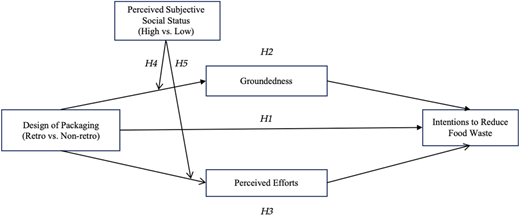
The research framework is shown in Figure 1
3. Experimental overview
We conducted two between-subjects online experiments via Credamo to test our hypotheses, and the experimental manipulation method and measured variables are shown in Table 1 and Table 2. In the field of consumer behavior, experimental research can better identify causal relationships by simulating scenarios and controlling confounding variables to examine actual or near-actual consumer decision-making processes (Chang, 2023). Milk and cheese were chosen as stimuli because they have high consumption-stage waste rates (Zeng et al., 2021). Participants were recruited from across China, and SPSS 27.0 was used for data analysis. To mitigate potential common method bias inherent in online self-report surveys, we incorporated temporal separation into the measurement design. Specifically, a 20-second interval was enforced following the presentation of the experimental stimuli, and a 10-second delay was implemented between responses to different variable measurement blocks. All the experiments in this study were conducted in accordance with the Declaration of Helsinki.
4. Experiment 1: main effect and mediating role
4.1 Methodology
Experiment 1 comprises a preliminary experiment and a formal experiment. This preliminary experiment aimed to verify the effectiveness of retro packaging manipulation and rule out potential confounding variables. The formal experiment subsequently tested the main effect of retro packaging on consumers' intentions to reduce food waste, alongside the mediating roles of groundedness and perceived efforts (Hypotheses 1, 2, and 3).
4.1.1 Participants
We employed a single-factor (packaging design: retro vs non-retro) between-subjects design. A total of 272 participants were recruited via Credamo (72 for the preliminary experiment and 200 for the formal experiment). After 4 participants who failed the attention check were excluded, the formal experiment retained 196 valid responses, with all participants receiving minor monetary compensation. The sample, drawn from various provinces across China, included 53.6% females and 46.4% males. The cohort was predominantly young (82.1% aged 21–40) and highly educated (77.0% holding a bachelor’s degree and 13.8% a postgraduate degree). This demographic accurately represents the primary consumer base for fast-paced lifestyle foods and is highly suitable for reflecting the impact of packaging design on food waste intentions (Wang et al., 2022).
4.1.2 Materials and procedures
Drawing on Celhay et al.’s (2020) approach, we varied the decoration, texture, and typography of milk packaging to distinguish between retro and non-retro designs (see Table 1 for specific stimuli). In the preliminary experiment, 72 participants were randomly assigned to either condition and instructed to view the stimulus for at least 20 seconds. They then completed manipulation check items and assessed potential confounding variables (packaging involvement, attractiveness, authenticity, craftsmanship, familiarity, eco-friendliness, premiumness, naturalness, expected price, perceived product quality and perceived healthiness). An independent samples t-test confirmed that participants in the retro condition perceived a significantly higher level of retro design (MRetro = 5.89, SD = 0.93) than those in the non-retro condition did (MNon-retro = 3.99, SD = 1.50; t(70) = 6.47, p < 0.001). Furthermore, no significant differences emerged across any confounding variables, confirming successful manipulation.
In the formal experiment, participants provided informed consent and were randomly assigned to either the retro (N = 98) or the non-retro (N = 98) packaging group. Participants were instructed to imagine purchasing a brand of milk in a supermarket and to evaluate it on the basis of their initial instinct. Groundedness, perceived efforts, and intentions to reduce food waste were measured using established scales. Specifically, groundedness was assessed using three items from Eichinger et al. (2022), perceived efforts via three items from Wu et al. (2017), and waste reduction intentions using three items from Visschers et al. (2016). Afterward, the participants completed a three-item manipulation check for retro design adapted from Schibik et al. (2022) and finally reported their demographic information.
4.2 Results
4.2.1 Reliability and validity analysis
Confirmatory factor analysis (CFA) showed item factor loadings ranged from 0.836 to 0.933. Construct reliability was robust (Cronbach’s α: 0.808–0.904), and convergent validity was excellent (AVE: 0.719–0.831). Discriminant validity was confirmed via the Fornell–Larcker criterion, as the square root of each AVE exceeded its interconstruct correlations (Table 3).
4.2.2 Manipulation check
An independent samples t-test was conducted using SPSS 27.0 to verify the success of the manipulation. The results confirmed that participants in the retro group perceived a significantly stronger retro esthetic (MRetro = 6.01, SD = 0.56) than those in the non-retro group did (MNon-retro = 4.87, SD = 1.19; t(194) = 8.61, p < 0.001).
4.2.3 Main effect
An independent samples t-test revealed that participants in the retro group exhibited significantly greater intentions to reduce food waste (MRetro = 6.59, SD = 0.37) than those in the non-retro group did (MNon-retro = 6.13, SD = 0.91; t(194) = 4.62, p < 0.001). The retro condition yielded not only higher mean scores but also a tighter data distribution. These findings provide robust support for Hypothesis 1, aligning with prior research and underscoring the potential of retro design to foster food conservation.
4.2.4 Mediating effect
We utilized the PROCESS macro v4.1 (Model 4; Hayes, 2017) with 5,000 bootstrap samples to test the mediating roles of groundedness and perceived efforts. Retro packaging design (0 = retro, 1 = non-retro) was entered as the independent variable, intention to reduce food waste as the dependent variable, and groundedness and perceived efforts as parallel mediators. As shown in Table 4, the results indicated significant indirect effects for both groundedness (effect = 0.173, SE = 0.09, 95% CI: [0.0286, 0.3578]) and perceived efforts (effect = 0.098, SE = 0.05, 95% CI: [0.0258, 0.2005]). Because neither 95% confidence interval included zero, Hypotheses 2 and 3 are supported. Notably, despite this constrained room for increase, the use of a retro packaging design still resulted in a statistically significant increase in conservation intentions. Furthermore, the dual mediation pathways jointly accounted for 59.0% of the total effect (groundedness: 37.7%; perceived efforts: 21.3%). This substantial effect size demonstrates that retro packaging design, functioning as an emotional cue, has strong empirical explanatory power in shaping the intention to reduce food waste.
5. Experiment 2: moderating role of perceived subjective social status
5.1 Methodology
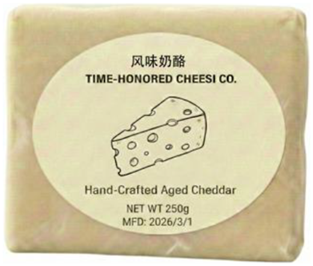
Experiment 2 included two preliminary experiments and a formal experiment. The first preliminary experiment aimed to verify the effectiveness of the retro packaging manipulation using a new stimulus (cheese instead of milk) (see Table 1 for specific stimuli). The second preliminary experiment tested the manipulation of perceived subjective social status (PSSS). The formal experiment sought to replicate the findings of Experiment 1 and test the moderating role of the PSSS (Hypotheses 4 and 5)
5.1.1 Participants
A total of 428 participants were recruited via Credamo (70 for the first preliminary study, 98 for the second preliminary study, and 260 for the formal experiment). After 20 participants who failed the attention check were excluded, 260 valid responses were retained in the formal experiment. The demographics of the sample closely mirrored those of Experiment 1, predominantly comprising young adults (85.0% aged 21–40) with a high level of education (71.2% holding a bachelor's or postgraduate degree). Females accounted for 57.3% of the final sample, and males accounted for 42.7%.
5.1.2 Materials and procedures
In the first preliminary study (N = 70; see Table 1 for stimuli), an independent samples t-test confirmed that the retro group perceived a significantly stronger retro esthetic (MRetro = 6.60, SD = 0.39) than the non-retro group did (MNon-retro = 3.67, SD = 0.48; t(68) = 28.23, p < 0.001). Confounding variables were not significantly different. In the second preliminary study (N = 100; see Table 5 for specific stimuli), participants in the high-PSSS condition reported significantly higher perceived status (MHigh-PSSS = 7.78; SD = 1.52) than those in the low-PSSS condition did (MLow-PSSS = 3.41; SD = 1.90; t(96) = 12.52; p < 0.001). All confounding variables (price sensitivity, sense of resource scarcity, attitude of abhorrence towards food waste, food insecurity and frugal trait) were successfully controlled.
For the formal experiment, participants provided informed consent and were randomly assigned to a 2 (packaging design: retro vs non-retro) × 2 (PSSS: high vs low) between-subjects design (N = 65 per cell). Participants first viewed the MacArthur 10-rung ladder and completed the PSSS measurement items. They were then exposed to the cheese packaging stimuli (virtual brand: “TIME HONORED”) and evaluated them on the basis of their initial instinct. Finally, participants reported their groundedness, perceived efforts, and waste reduction intentions using the established scales from Experiment 1, followed by a manipulation check and demographic questions.
5.2 Results
5.2.1 Reliability and validity analysis
CFA confirmed robust reliability and validity: factor loadings ranged from 0.860 to 0.956, Cronbach’s α from 0.865 to 0.933, and AVE from 0.787 to 0.882, with established discriminant validity (Table 3).
5.2.2 Manipulation check
Independent samples t-test results indicated that participants in the retro group (MRetro = 6.28, SDRetro = 0.69) perceived a significantly higher level of retro design than those in the non-retro group did (MNon-retro = 4.56, SDNon-retro = 1.23; t (258) = 13.63, p < 0.001). Participants in the high perceived subjective social status group (MHigh-PSSS = 6.87, SDHigh-PSSS = 1.54) perceived their social status significantly higher than those in the low group did (MLow-PSSS = 3.51, SDLow-PSSS = 1.34; t(258) = 18.68, p < 0.001), indicating that the manipulation was successful.
5.2.3 Mediating effect
Using the PROCESS macro v4.1 (Model 4; Hayes, 2017) with 5,000 bootstrap samples, we tested the parallel mediation effects. Groundedness (effect = 0.361, SE = 0.07, 95% CI: [0.2284, 0.5037]) and perceived efforts (effect = 0.229, SE = 0.06, 95% CI: [0.1360, 0.3535]) both significantly mediated the relationship between retro design and waste reduction intention, reconfirming Hypotheses 2 and 3. Consistent with the results of Experiment 1, the baseline for consumers' intentions remained high; however, the dual mediation pathways demonstrated even stronger explanatory power, accounting for 76.4% of the total effect (0.772). These findings confirm that the emotional cues activated by retro packaging robustly drive food-saving intentions, independent of product category.
5.2.4 Moderating effect
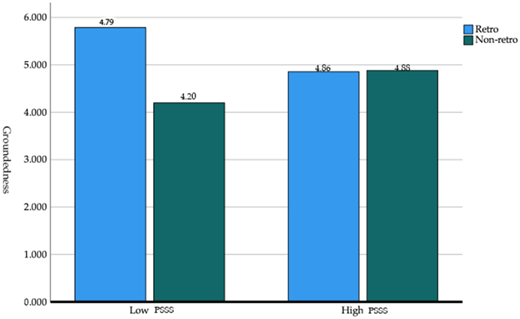
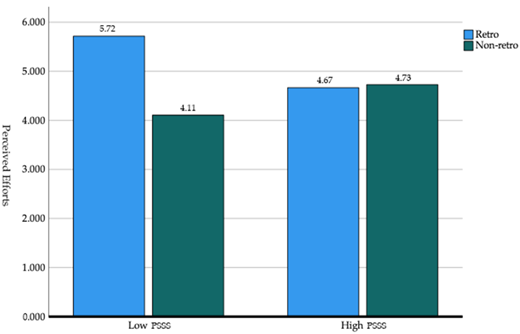
Two-way ANOVA was used to analyze the interactive effects of retro packaging design and perceived subjective social status (PSSS) on groundedness and perceived efforts (see Table 6). For groundedness, the main effect of the retro design was significant (F (1, 256) = 43.13, p < 0.001, η2 = 0.144), the main effect of the PSSS was not significant (F (1, 256) = 1.11, p = 0.292 > 0.01, η2 = 0.004), and the interaction effect was significant (F (1, 256) = 42.40, p < 0.001, η2 = 0.152). For perceived efforts, the main effect of retro design was significant (F (1, 256) = 48.63, p < 0.001, η2 = 0.160), the main effect of PSSS was not significant (F (1, 256) = 1.11, p = 0.054 > 0.05, η2 = 0.014), and the interaction effect was significant (F (1, 256) = 56.67, p < 0.001, η2 = 0.181). These findings demonstrate that consumer PSSS moderates the impact of retro design on groundedness and perceived efforts. As shown, when PSSS was low, retro design more strongly triggered groundedness (MRetro = 5.79, SDRetro = 0.61 vs MNon-retro = 4.20, SDNon-retro = 1.26, p < 0.001) and perceived efforts (MRetro = 5.72, SDRetro = 0.65 vs MNon-retro = 4.11, SDNon-retro = 1.08, p < 0.001). Conversely, when PSSS was high, there were no significant differences in groundedness (MRetro = 4.86, SDRetro = 0.78 vs MNon-retro = 4.88, SDNon-retro = 1.05, p > 0.05) or perceived efforts (MRetro = 4.67, SDRetro = 0.80 vs MNon-retro = 4.73, SDNon-retro = 0.99, p > 0.05).
To test the moderated mediation, we utilized PROCESS Model 7 with 5,000 bootstrap samples. For low-PSSS consumers, both groundedness (effect = 0.734, SE = 0.10, 95% CI: [0.5215, 0.9601]) and perceived efforts (effect = 0.476, SE = 0.09, 95% CI: [0.3078, 0.6756]) acted as significant mediators. For high-PSSS consumers, these indirect effects were nonsignificant, as both confidence intervals included zero, supporting Hypotheses 4 and 5. Notably, under the low-PSSS condition, retro packaging increased waste reduction intentions by 1.28 scale units and compressed the standard deviation to 0.30. This variance reduction suggests that the effect of retro design on waste-reduction intentions among low-PSSS consumers is relatively consistent and stable, despite high overall baseline intentions.
6. Discussion and implications
6.1 Theoretical contributions
This study makes three theoretical contributions. First, this study empirically demonstrates the effectiveness of retro packaging design in driving consumers' intentions to reduce food waste. While prior research has focused predominantly on the physical protective functions of packaging, this study confirms that emotional activation via retro design can effectively curb waste intention at the consumption stage. These findings enrich the psychological pathways of packaging research and offer a novel theoretical perspective for sustainable consumption. Second, by integrating stimulus–organism–response (SOR) theory with the elaboration likelihood model (ELM), this study conceptualizes retro packaging as an emotional peripheral cue (Stimulus, S). Processing this cue via the low-elaboration peripheral route shapes consumers' internal organismic states (Organism, O) through two parallel pathways. Through symbolic association, retro design awakens a sense of groundedness, providing a psychological anchor that alleviates uncertainty. Simultaneously, through semantic interpretation, the retro esthetic communicates the producer’s dedication, thereby enhancing perceived efforts. Together, these pathways drive the intention to reduce food waste (Response, R), elucidating the dual mechanism by which emotional packaging translates into stronger pro-conservation intentions. Third, by examining the moderating role of perceived subjective social status (PSSS), this research introduces a class heterogeneity perspective. These findings demonstrate that lower-status consumers are significantly more sensitive to the emotional anchoring and effort cues embedded in retro design, thereby expanding the application of social class psychology within green marketing.
6.2 Management implications
The current study provides exploratory insights for food enterprises seeking to mitigate food waste; however, these implications must be interpreted with caution. Because our findings are derived from online scenario experiments using fictitious brands and intentional measures, they do not directly equate to actual market behavior, brand trust, or real-world waste reduction. First, retro packaging design may serve as a potential, cost-effective communication tool. By integrating traditional elements or classic typography, firms could increase consumers' subjective valuation of food, which our initial evidence suggests might indirectly curb post-consumption waste intention. Second, when early-stage packaging tests are being conducted, enterprises might explore the pairing of retro design with strategic messaging to amplify feelings of groundedness and perceived efforts. Finally, with respect to socioeconomic heterogeneity, food enterprises should view differentiated marketing strategies as a theoretical avenue for future exploration rather than as an immediate directive. While our results indicate that retro design resonates more strongly with lower-PSSS consumers in a controlled setting, businesses should avoid broad market rollouts without further validation. We strongly recommend that firms conduct rigorous field experiments in real-world retail environments to test actual purchase behavior, willingness to pay (WTP), brand trust, and actual food waste before implementing these targeted strategies.
6.3 Limitations and future research
Despite its contributions, this study has several limitations that present avenues for future research. First, the experimental stimuli were limited to milk and cheese; future studies should replicate these findings across broader categories, such as fresh produce or snacks. Second, relying on scenario-based experiments to measure behavioral intentions presents inherent ecological limitations. Future research should conduct field experiments to track actual household waste data or employ longitudinal designs to capture long-term behavioral changes. Third, the generalizability of our findings is constrained by the sample profile, which predominantly consisted of young, highly educated, and online-recruited Chinese participants. Given that actual food waste behaviors are deeply complex and significantly vary on the basis of household size, age, income level, food storage habits, and cultural norms, our broad assertions cannot be automatically generalized across the broader population. Future research must incorporate more diverse, representative samples to establish the external validity of these effects across different cultural and demographic contexts. Fourth, exploring additional moderators (e.g. environmental awareness) and alternative emotional design styles (e.g. minimalism) would help clarify the unique boundary conditions of the efficacy of retro design. Finally, owing to the issue of upstream and downstream overlap in the conceptual framework of this study, future studies could adopt more strictly isolated, cognitive-focused scales or implicit behavioral metrics to disentangle groundedness and perceived efforts from generalized affective states, thereby further refining the dual-mediation mechanism proposed in this study.
7. Conclusion
Drawing on SOR and ELM theories, this study shows that retro packaging design positively influences consumers' food waste reduction intentions. Two online experiments reveal that retro design serves as an emotional peripheral cue that enhances groundedness and perceived efforts, this effect is significantly moderated by PSSS and is particularly pronounced among lower-status consumers. These findings advance the understanding of consumption-stage food waste interventions and offer strategic insights for sustainable marketing.