Digital transformation is a key driver for promoting circular economy practices in organizations. This study examines emerging challenges faced by food industry companies, including manufacturers, machinery producers, and packaging suppliers, across the product lifecycle, with a focus on sustainability and quality management.
A mixed-method approach was adopted. First, a systematic literature review to identify relevant Industry 4.0 enablers was performed. Second, semi-structured interviews were conducted under a common protocol with a cross-section of senior practitioners from diverse firms along the food supply chain. The Gioia method and structured assessments were used to analyse interviews and develop a framework linking Industry 4.0 technologies to sustainability and quality challenges in the food sector.
The study identifies sustainability and quality management challenges across different product lifecycle stages. The proposed framework connects these challenges with Industry 4.0 enablers, demonstrating how digital transformation enhances circular economy practices, operational efficiency, resilience and competitive advantage.
This research develops an integrative framework that combines sustainability, quality challenges and digital transformation in the food industry. It offers practical guidance for decision-makers on adopting Industry 4.0 enablers to drive sustainability and quality improvements while advancing circular economy objectives.
1. Introduction
The food industry is currently facing a series of critical challenges in both quality and sustainability fields. These challenges necessitate a comprehensive re-evaluation of conventional supply chain practices. In the contemporary business environment, concerns pertaining to the assurance of uniform quality, the management of supply variability and the mitigation of environmental impact have rendered it imperative for companies to achieve a balance between quality, sustainability and competitiveness in their operations (Kumar et al., 2023). Additionally, consumers are increasingly aware of the environmental and social implications of food production, raising expectations for more sustainable and transparent supply chains (Qazi et al., 2024). These factors emphasise the necessity for innovative solutions that address quality and sustainability challenges in a simultaneous manner.
One promising avenue to address these challenges is digital transformation through Industry 4.0 enablers. The central research question guiding this study is as follows:
How can digitalisation through Industry 4.0 enablers meet the challenges of quality and sustainability in the food supply chain?
This question is both timely and relevant, as digital technologies have been recognized for their potential to enhance supply chain performance and sustainability (Naseem and Yang, 2021). In recent literature, there is a growing interest in aligning digital transformation initiatives with sustainability goals – the synergy between advanced Industry 4.0 technologies and sustainable practices can strengthen operational efficiency while improving environmental and social outcomes (Karmaker et al., 2023). In summary, digitalisation and sustainability are increasingly regarded as complementary strategies in contemporary supply chain management, rendering the research question highly pertinent to prevailing industry trends.
Despite the potential benefits of digitalisation, the adoption of Industry 4.0 solutions in the food sector remains challenging. For example, in the Italian food industry, which is predominantly composed of small- and medium-sized enterprises (SMEs), is under considerable pressure to adapt these enabling technologies and transform to meet these challenges (Verna et al., 2025). However, the implementation of digital innovations is frequently impeded by resource limitations, technological deficiencies, and sector-specific requirements (Khin et al., 2022). Moreover, the distinctive attributes of food supply chains, including the perishability of products, stringent regulatory requirements and dispersed supplier networks, serve to establish further impediments to the adoption of Industry 4.0 practices (Found et al., 2024). Recent studies emphasize that there is no single “one-size-fits-all” Industry 4.0 solution capable of addressing the diverse operational problems across different industries (Lezoche et al., 2020). In the food domain, this diversity of challenges means that general frameworks often fail to account for nuanced, real-world issues faced by companies (Romanello et al., 2022). A significant number of extant works adopt a top-down approach (Annosi et al., 2021), proposing broad digital strategies or frameworks, without adequately addressing the day-to-day challenges and requirements of food producers and distributors. The existence of this gap underscores the necessity of a bottom-up approach that commences with the actual challenges encountered in the field and subsequently identifies suitable digital responses.
In response to these gaps, the current study adopts a bottom-up approach to link real-world challenges with appropriate Industry 4.0 enablers. A conceptual framework has been developed to capture critical issues directly from food industry stakeholders and map them to potential digital solutions offered by Industry 4.0. The framework is anchored in empirical insights from practitioners, thereby establishing a connection between theoretical digital solutions and their practical implementation. In doing so, it provides a tailored matrix of challenges and enabler factors, uncovering unexplored synergies and opportunities for improving quality and sustainability in food supply chains.
To address the objectives of the study, a structured research design was adopted. This comprised four phases, combining insights from the literature with empirical data gathered through fieldwork in the food sector. This mixed-method approach facilitates the identification of real-world challenges and their alignment with Industry 4.0 enablers, thereby ensuring both theoretical grounding and practical relevance.
The structure of the paper is as follows. Section 2 identifies existing challenges and possible solutions in the food industry through a literature review, providing the theoretical and empirical basis for this research. Section 3 outlines the methodology, including interviews guide, interviews analysis and framework development. Section 4 presents the results, highlighting the identified challenges, the proposed matrix framework, and its practical implications. Finally, Section 5 describes the main paper contributions, limitations and future research opportunities.
2. Literature review
To understand the sustainability and quality management challenges faced by the food industry, as well as the current state of digitalization in this sector, a targeted literature review was conducted. This review served as a foundation for comparing findings from the interviews conducted with industry professionals, allowing the insights from the literature to be aligned with their practical experiences and perspectives. It is organized into two parts: first, brief overview of the key challenges in the food industry relating to quality and sustainability (Section 2.1); and second, an examination of Industry 4.0 enabling technologies that have the potential to address these challenges (Section 2.2). This integrated review ensures that the subsequent analysis is grounded in existing knowledge while directly linking industry challenges to possible digital solutions.
2.1 Quality and sustainability challenges in food industry
In a context characterised by intensifying regulatory demands, evolving consumer expectations and mounting environmental constraints, the food industry is under increasing pressure to deliver products that meet high standards for safety and quality while adhering to sustainable practices (Ghobakhloo et al., 2021). Producers face complex, interrelated challenges in this context. Chief among these are issues in quality control and sustainability management. These requirements are complicated by the inherent variability of agri-food production, which disrupts operational flow and impacts efficiency across supply chains.
A core challenge lies in quality control across the agri-food supply chain, which often spans large geographic areas and includes multiple intermediaries, each adding complexity to quality management (Puttero et al., 2024). Quality control disruptions not only risk compromising product safety but can also slow down production processes, creating inefficiencies across the supply chain. Moreover, discrepancies in quality practices across different supply chain stages can lead to inefficiencies and miscommunications, which degrade product quality and create “hotspots” where issues tend to recur (Sunmola et al., 2024). In recent years, consumer demand for greater transparency regarding food origin and production practices has increased (Astill et al., 2019). Consumers now expect robust traceability systems that assure adherence to ethical and sustainable standards. Such expectations put additional pressure on food companies to monitor and disclose quality and sustainability metrics throughout their value chain (Sunmola et al., 2024).
Another major area of concern for food producers is the management of natural resources, particular water and energy usage (Andrei et al., 2025). The food manufacturing industry’s dependency on these resources makes their efficient management essential to reducing environmental impact and sustaining long-term productivity (Islam et al., 2021). These challenges are exacerbated by population growth and climate change, which have intensified demand for limited resources (Martindale et al., 2023). The variable nature of production environments in the sector compounds this challenge; seasonal changes and crop-specific needs lead to significant fluctuations in resource consumption (Akkerman et al., 2009). Variability in production processes often results in inefficiencies, with resource use increasing unpredictably. The absence of real-time data monitoring across operations further limits the ability to optimize resource usage, adding to inefficiencies in energy and water management (Jagtap et al., 2019).
Food loss and waste (FLW) presents yet another significant challenge, heightening existing inefficiencies and complexities within the supply chain. Approximately 30% of food produced globally is lost or wasted, resulting in not only economic losses but also substantial environmental costs (FAO, 2014). Reducing FLW requires a holistic approach that encompasses the entire food supply chain, from production to logistics and consumer behaviour. For instance, enhancements in storage and logistics can assist in the prevention of spoilage; however, these measures may prove inadequate when considered in isolation. Meaningful reductions in FLW are contingent upon multifaceted strategies: industry-driven initiatives (such as waste reduction programs and supply chain coordination), changes in consumer behaviour (e.g. purchasing and consumption habits) and supportive public policies (Kumar et al., 2023). Achieving meaningful FLW reductions is thus closely linked to broader sustainability goals, with policy and technological advancements playing key roles in supporting both environmental and operational objectives (Do et al., 2021).
These challenges are underpinned by a significant technological divide within the food industry, particularly affecting SMEs (Verna et al., 2025). Digital technologies, including the Internet of Things (IoT), big data analytics (BDA) and blockchain, have considerable potential to transform food production by enhancing efficiency and reducing waste. However, their adoption remains limited, with SMEs facing financial and technical obstacles that impede integration into production processes (Dora et al., 2016). This gap constrains the sector’s ability to address quality, and sustainability concerns and hinders the pace of innovation. The multifaceted challenges currently confronting food companies underscore the need for solutions that jointly address quality and sustainability objectives within a unified framework. Industry 4.0 enabling technologies offer promising tools for enhanced traceability, optimised resource management and improved waste reduction. Nevertheless, the transitioning from conventional methods to digital innovation requires a comprehensive understanding of how these technologies can be effectively operationalised in practice (Huang et al., 2024). The literature review proposed in Section 2.2 aims to provide an overview of the potential for digital transformation to enhance efficiency, resilience and sustainability in food industry.
2.2 Industry 4.0 digital enablers in food industry: applications and impact
The Industry 4.0 paradigm marks a new era of technological innovation in manufacturing and related sectors (Culot et al., 2020). It encompasses a broad array of technologies, including the IoT, BDA, Cloud Computing (CC), Autonomous Robots, Augmented Reality and Virtual Reality (AR and VR), and Cybersecurity (Núñez-Merino et al., 2020; Zhou et al., 2015). Although there is no universally accepted definition of Industry 4.0, additional technologies such as blockchain, digital twin and energy management systems are often included in its scope, depending on sectoral needs (AlKhader et al., 2023). While these technologies originated in general manufacturing, their applicability to the food manufacturing industry has increased as the sector encounters mounting pressures to enhance efficiency, sustainability and traceability (Kareem et al., 2025). Recurring technologies (such as IoT, BDA, blockchain or CC) are consistently identified as transformative enablers across numerous studies, owing to their potential to improve operational efficiency, support sustainability and ensure robust traceability in supply (Hasnan et al., 2018; Annosi et al., 2021; Vasanthraj et al., 2023). In parallel, some studies highlight emerging applications like Digital Twin (Djekić et al., 2023) and advanced energy-optimization systems (Senturk et al., 2023; Abbate et al., 2023), reflecting a growing consensus on the relevance of Industry 4.0 technologies while also acknowledging variability in their classifications across different contexts. Below, we provide a brief description of each major Industry 4.0 enabler identified in this study, highlighting its potential application to the food industry’s quality and sustainability challenges.
2.2.1 Internet of Things (IoT)
IoT enables real-time monitoring and data collection, which is crucial for managing complex food supply chains. It enables end-to-end traceability by tracking items across the production and distribution flow (Verdouw et al., 2016; Li et al., 2017)and helps maintain optimal conditions for perishable goods in cold chain logistics (Tsang et al., 2017). Additionally, IoT improves resource efficiency by monitoring parameters like energy and water usage, thereby supporting sustainable production practices (Manavalan et al., 2019; Jagtap et al., 2019; Koot et al., 2021).
2.2.2 Cloud Computing (CC)
Cloud platforms serve as a backbone for data integration, linking together IoT devices and cyber-physical systems in real time (Alloghani et al., 2019; Hasnan et al., 2018). In the food industry, CC facilitates seamless information sharing and real-time access to operational data. This connectivity improves the responsiveness of supply chains to disruptions or variability in production processes, ultimately enhancing coordination and efficiency across the value chain.
2.2.3 Big Data Analytics (BDA)
BDA techniques are employed to analyse the vast datasets generated in modern food production (e.g. from IoT sensors and quality control systems). By extracting meaningful patterns and insights, BDA supports better decision-making in areas such as process optimization, quality monitoring and predictive maintenance (Miranda et al., 2019; Shine et al., 2020; Miranda et al., 2019; Shine et al., 2020). In the context of sustainability, BDA aids in resource optimisation and reduces waste, for instance, by analysing energy consumption trends or predicting spoilage and adjusting logistics accordingly (Lezoche et al., 2020; Kamble et al., 2020). When integrated with IoT, BDA enhances supply chain management by detecting trends, enabling proactive maintenance and improving production flow visibility (Ben-Daya et al., 2017; Coronado et al., 2021).
2.2.4 Artificial Intelligence (AI)
AI techniques (including machine learning and computer vision) allow for advanced automation and intelligent control in food processing. AI-driven systems can monitor product quality in real time and automate complex tasks, reducing reliance on highly specialized human operators (Lin et al., 2023). Applications of AI in food manufacturing have been shown to improve productivity and yield, minimize production waste and strengthen food safety management (Koot et al., 2021; Kakani et al., 2020; Djekić et al., 2023). For instance, AI-enabled computer vision can rapidly detect defects or contaminants on production lines. This, in turn, enables the real-time modification of machine parameters, thereby optimising quality control measures and mitigating disruptions (Kumar et al., 2023; Liu et al., 2021). AI tools can also forecast demand or yield more accurately, thereby assisting in the optimisation of production levels in accordance with market demands, while concomitantly mitigating the adverse effects of overproduction and waste.
2.2.5 Blockchain
Blockchain technology is widely acknowledged for its ability to enhance traceability and transparency in the supply chain. By design, blockchain ledgers ensure data immutability across the supply chain, which builds trust among stakeholders regarding the accuracy of shared information (Verna et al., 2025). Blockchain technology has the capacity to record each transaction or handoff (from farm to processor to retailer) in a secure, tamper-proof manner, thereby ensuring provenance and compliance with established standards. Furthermore, it has been shown to reduce transaction times and costs by streamlining record-keeping (Kamble et al., 2020; Corallo et al., 2020; Ghadge et al., 2021). The combination of blockchain with IoT has been noted to further sustainability in agri-food production by enhancing traceability and security (Li et al., 2023; Rana et al., 2021).
2.2.6 Digital Twin (DT)
Digital twin technology creates virtual replicas of physical systems or process, allowing companies to simulate and analyse operations in a risk-free digital environment. In the food manufacturing industry, digital twins can be used to simulate production lines or supply chain processes to help optimize resource use and reduce waste. For example, a digital twin of a food processing line can be used to test adjustments in real time (e.g. changes in temperature, production speed or recipe formulation) and predict their outcomes without interrupting actual production (Wei et al., 2022; Chabanet et al., 2023; Tancredi et al., 2024). This technology allows for proactive adjustments and scenario planning that can improve efficiency, product quality and food safety, as well as contingency planning for disruptions.
2.2.7 Autonomous robots
Autonomous robots offer significant potential for automating repetitive and hazardous tasks in food production, improving precision and hygiene (by reducing direct human contact with food) while also reducing labour costs and mitigating workforce shortages. In high-volume operations, robots are increasingly used for sorting, grading, processing and packing of food products. They can also perform quality inspections (e.g. using machine vision to detect defects) at speeds impossible for human inspectors, thereby reducing waste by catching non-conforming products early (Romanello et al., 2022). By taking over arduous manual tasks, autonomous robots free up human workers for higher-level oversight roles and help reduce workplace injuries and contamination risks.
2.2.8 Augmented Reality and Virtual Reality (AR and VR)
AR and VR technologies are being applied in industry for training, maintenance, and design purposes. In the food industry, AR can overlay digital information (such as sensor readings or instructions) onto a worker’s view of equipment or a production line in real time, which is useful for guiding less experienced operators or assisting in complex tasks. Both AR and VR allow workers to engage with simulated environments for skills development without disrupting the production process. This can enhance operational efficiency and curtail downtime also in food manufacturing environments (Chai et al., 2022).
2.2.9 Simulation
In the context of Industry 4.0, simulation enables organisations to model and experiment with their operations digitally. Companies can predict the outcomes of changes or new implementations before applying them in the real world. This approach is especially valuable in the food industry, where pilot testing on real products can be costly or wasteful. Simulation supports strategic planning and decision-making by allowing managers to conduct “what-if” analyses. Simulation contributes to process optimization and risk reduction across the production cycle (Singh et al., 2021).
2.2.10 Additive Manufacturing (AM)
Although still emerging in food production sector, AM, or 3D printing represents a promising solution for the creation of bespoke tools and components, thereby enabling companies to adapt their production processes to align with specific requirements, or even novel food products. This flexibility is particularly beneficial for the prototyping and testing of new product ideas without the need for large-scale factory retooling. While adoption of AM in mainstream food production is currently limited by factors such as material constraints and throughput speed, its potential for rapid innovation and on-the-fly customization is noteworthy (Zhang et al., 2022).
2.2.11 Horizontal and vertical integration
These forms of integration refer to improving connectivity both across companies (horizontal) and within a single company (vertical). Horizontal integration involves linking processes and information flow across the supply chain (from suppliers to manufacturers to distributors and retailers). Strong horizontal integration in the food sector can facilitate better transfer of information and technology between partners, leading to improved coordination, reduced lead times and enhanced responsiveness to customer preferences. Vertical integration, on the other hand, refers to integrating information systems at different hierarchical levels within one organization – from the factory floor sensors and controllers up to the enterprise resource planning level. Effective vertical integration ensures that data from operational levels (production, quality control, maintenance) is seamlessly available at managerial and strategic decision levels, and vice versa, enabling continuous operational improvement (Pérez-Lara et al., 2020; Narkhede et al., 2024). In practice, combining horizontal and vertical integration with digital tools (IoT, BDA, AI) allows firms to create an interconnected value chain that can anticipate disruptions, quickly adjust to demand or supply changes, and maintain quality standards throughout the production process.
While these technologies present significant opportunities, the food sector’s adoption of Industry 4.0 remains constrained by barriers such as high implementation costs, skills shortages, regulatory complexities, and resistance to change (Ali et al., 2022). These challenges are particularly pronounced for SMEs (Ghobakhloo et al., 2021), which dominate the food industry but often lack the financial and technical resources to implement advanced digital solutions (Isensee et al., 2020). Furthermore, while a considerable body of research has been dedicated to examining the theoretical potential of these enablers, there is a lack of studies that have developed practical frameworks to guide their adoption in real-world settings. In other words, the literature offers extensive lists of potential technologies, but few studies provide actionable guidance on how to integrate these technologies to solve specific, on-the-ground problems faced by food producers. This gap underscores the need for empirical research that not only identifies relevant digital solutions but also maps them to the concrete challenges within the sector, providing a strategy for their adoption.
The absence of established guidelines for implementing Industry 4.0 in the food industry highlights the necessity for empirical investigation. Building on the literature insights outlined above, this study develops a conceptual framework (presented in Section 4.2) that matches key stakeholder challenges (derived from interviews) with the digital solutions capable of addressing them.
3. Methodology
To comprehend the challenges confronted by stakeholders within the food industry and to evaluate the role of Industry 4.0 enablers in addressing these challenges, an empirical, bottom-up approach is required. This study adopts a mixed-method approach combining both qualitative and structured quantitative data. This integration enables not only a deep understanding of real-world challenges but also the development of a practical, evaluative framework to guide digital transformation decisions. To this end, a four-phase methodology has been adopted, following the logical flow outlined in the introduction:
Literature review to identify key enabling technologies and concepts related to Industry 4.0;
Semi-structured interviews with industry stakeholders to collect qualitative insights and structured evaluations;
Analysis of interview data using the Gioia methodology;
Development of a matrix-based framework combining challenges and enabling technologies.
This method enables a systematic coding and theme aggregation process, providing a clear framework for understanding the primary issues and potential solutions.
3.1 Literature review to identify technological solutions
As outlined in Section 2.2, the literature review proved instrumental in identifying the enabling factors of Industry 4.0 and their potential applications to address the typical challenges of the food sector.
3.2 Semi-structured interviews with industry stakeholders
To collect empirical data, 25 semi-structured interviews were conducted with professionals across the food sector and related industries (e.g. packaging, food machinery manufacturing). The interviewees, ranging from CEOs and production managers to quality and supply chain professionals, were purposively selected to ensure a variety of organizational perspectives (see Table 1). Each interview lasted approximately one hour and followed a standardised guide, designed to ensure comparability while allowing for open exploration. The interview guide consisted of five core sections, each including both open-ended questions and structured prompts:
Company profile and market positioning: type of product, size, location, market served, industrial sector, business model.
Quality management practices: meaning of quality in relation to firm culture, challenges in maintaining product/process standards methods used, traceability systems and use of innovative technologies for managing quality.
Sustainability practices: environmental, social and economic concerns; lifecycle strategies (e.g. food waste management practices); sustainable sourcing and logistics.
Regulatory and certification landscape: standards and voluntary certifications adopted, e.g. ISO 9001, ISO 14001 (“ISO 14001:2015,”), BRC (British Retail Consortium), IFS (International Featured Standards), etc.
Digital and technological adoption: technologies considered impactful, perceived barriers to implementation, synergies with sustainability and quality goals.
All interviews were recorded and transcribed to facilitate detailed analysis.
3.3 Interview analysis using Gioia method
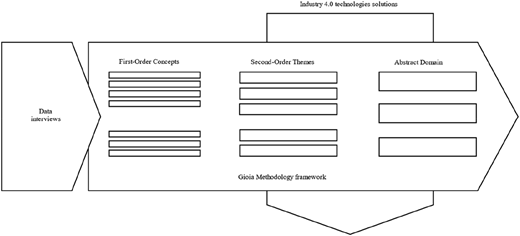
A qualitative thematic analysis was used to examine the collected data, addressing the research objectives while allowing for unexpected insights to emerge (Klein et al., 1999). The Gioia method (Magnani et al., 2023) was chosen for its structured approach to qualitative data analysis, enabling the identification of both granular insights and overarching themes. The analysis was conducted in three systematic phases (illustrated in Figure 1):
First-Order Concepts: interview data were reviewed to identify direct expressions and ideas from participants.
Second-Order Themes (S): similar concepts were grouped into 18 s order themes, representing primary challenges.
Abstract Domains (A): themes were further consolidated into six abstract domains capturing overarching issues.
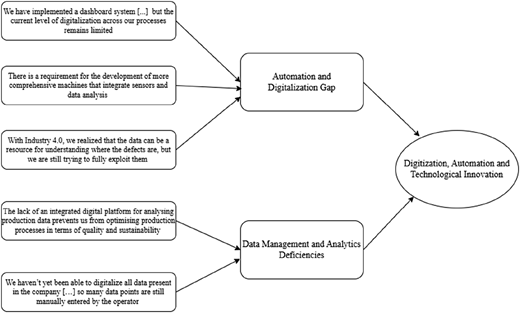
An illustrative example of the coding process is provided in Figure 2 to illustrate the transition from first-order concepts to second-order themes and abstract domains.
3.4 Framework development to relate challenges and technologies and similarity analysis
Building on the findings from the interviews and literature review, a matrix-based framework was developed to systematically align the identified challenges (second-order themes), rows of the matrix, with Industry 4.0 enablers, listed in columns in the framework. Each cell in the matrix indicates the relationship between a specific challenge and an enabling factor, with this relationship being categorized using a scale of weak, moderate, or strong impact. This matrix serves both academic and practical purposes by providing a structured guide for practitioners to identify high-impact enablers tailored to their organizational needs. The matrix not only consolidates the insights gained from stakeholders but also relates them to the broader technological context discussed in the literature.
In addition to the qualitative analysis, a quantitative similarity analysis was conducted to examine the frequency with which different second-order themes co-occurred across companies. The coding of each theme as either present or absent (a binary variable) for each company resulted in a binary matrix. To analyse the co-occurrence between themes, we applied the Jaccard Index (Zenebe et al., 2009), a widely used metric for comparing binary data sets. This index calculates the similarity between two sets (A and B) by dividing the number of companies in which both themes appear by the number of companies in which at least one of the two themes appears (see Equation 1)
Its value ranges from 0 (no co-occurrence) to 1 (perfect co-occurrence). This analysis enabled the identification of clusters of interrelated challenges, offering a quantitative perspective to complement the thematic structure derived through the Gioia method.
4. Results
This section presents the findings from semi-structured interviews conducted with key stakeholders in the food industry, offering insights into the challenges of quality management and sustainability. Based on the methodologies described in Section 3, the analysis integrates theoretical perspectives from the literature with empirical evidence from the interviews, providing a comprehensive view of the sector’s dynamics and complexities. The results are systematically organized to provide insights from the interviewed sample outlining current challenges (Section 4.1.1), a structured coding of interview transcripts using the Gioia method (Section 4.1.2) and the development of the conceptual framework (Section 4.2), which maps the identified challenges to potential strategic and technological solutions.
4.1 Interview results
Before presenting the framework, it is essential to first examine the empirical insights gathered from the interviews, which shed light on the key challenges affecting sustainability and quality management in the food industry. The interviews reveal the multidimensional nature of quality and sustainability challenges in the food industry. Respondents provided qualitative insights which highlighted the various challenges that obstruct the adoption of sustainability and quality management practices.0120008
4.1.1 Data from the stakeholders’ industry
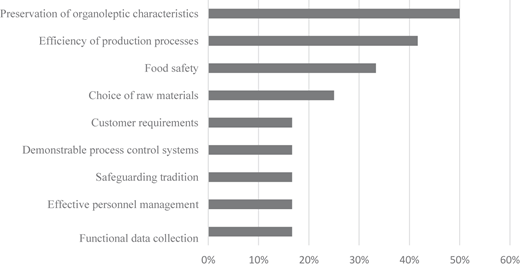
Quality management practices are strongly aligned with standards such as ISO 9001 and ISO 22000 (“ISO 9001:2015,”; “ISO – ISO 22000 — Food Safety Management” 2022), emphasizing food safety, organoleptic preservation and operational efficiency (Yang et al., 2023). Figure 3 summarizes the respondents’ interpretations of “quality”, which reflect a dual focus on compliance and sensory excellence.
In the context of quality management practices, automated in-line controls emerged as the predominant tool for quality monitoring, with 63% of respondents attesting to its utilisation. This figure was particularly pronounced among large enterprises, with 100% of them reporting its implementation. Conversely, SMEs exhibited lower adoption rates, with only 43% citing its use, attributing this discrepancy to constraints in resources. Supplemental quality management practices encompass supplier certifications (35%), laboratory analysis of raw materials and semi-finished products (44%) and statistical defect analysis (52%). However, predictive models for defect monitoring were employed by a mere 20% of respondents, indicating a conspicuous discordance between the perceived efficacy of these tools and their actual utilisation.
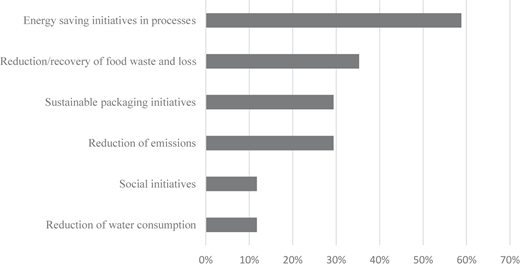
The research further explored sustainability by looking at the initiatives and strategies companies are adopting to meet environmental, social and economic objectives, in line with the triple bottom line model (Khan et al., 2021). Sustainability initiatives prioritize environmental objectives, particularly energy efficiency, in response to regulatory pressures and the energy crisis. Internal packaging recycling programs are implemented by 81% of respondents, while water conservation is underemphasized. Sophisticated technological solutions for sustainability are used by 56% of respondents, while 53% rely on digital traceability methods, indicating room for improvement in adopting advanced tools. Figure 4 illustrates the most implemented sustainability measures, including waste valorisation, CO2 emissions reduction and innovative packaging.
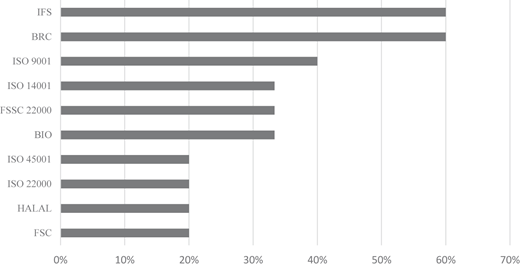
Certifications are of critical importance in supporting the implementation of quality and sustainability practices (Kharub et al., 2018). Figure 5 presents a ranking of the most prevalent certifications, with IFS and BRC being the most widely adopted (60%), followed by ISO 9001 (40%) and ISO 14001, FSSC 22000 (ISO 22000, 2022) and BIO (33%).
4.1.2 Interview encoding, challenge identification and correlation
The application of the Gioia methodology resulted in the identification of 18 Second-order themes (S) grouped into six Abstract domains (A):
Digitalisation, Automation and Technological Innovation,
Sustainable Practices and Waste Management Strategies,
Supply Chain Management and Logistical Challenges,
Organisational and Communication Challenges,
Sustainable Packaging Difficulties,
Regulatory and Institutional Challenges.
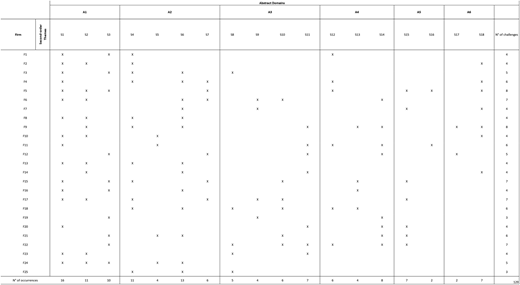
Each domain reveals a set of interconnected challenges, with digitalization and sustainability consistently highlighted by interviewees as critical concerns, as shown in Table 2.
The Digitalisation, Automation, and Technological Innovation (A1) emerged as a critical concern, highlighting gaps in automation, data management, and traceability. The Second-order theme S1, identified by 16 companies, reveals widespread difficulties in implementing digital tools across production and management functions. One interviewee noted, “Digitising such a fragmented and multimodal process is very complicated” (F1), emphasizing that a lack of cohesive infrastructure makes full digital adoption difficult (Rubino et al., 2023). Another critical Second-order theme, S2, highlighted by 11 companies, focuses on the sector’s limited capacity for gathering and analysing data efficiently. With many firms still relying heavily on manual data entry, companies struggle to leverage data insights for real-time process improvement. As one corporate respondent explained “Around 60% of our data points are still manually entered. We need systems that can automatically collect this data” (F2). The third theme, S3, where inadequate digital solutions compromise transparency, significantly elevates quality control and safety risks across complex global networks (Viet et al., 2020; Annosi et al., 2021; FAO, 2021).
The second domain, Sustainable Practices and Waste Management Strategies (A2), addresses sustainability challenges, particularly around resource management, waste reduction and the financial implications of sustainable practices. The most recurring Second-order theme is S4, reported by 13 companies. Stakeholders underscored the necessity for the implementation of sophisticated systems to effectively measure and repurpose surplus production, as inefficiencies in these processes have a detrimental impact on both environmental objectives and operational costs. A quality manager noted “recovery of production waste, focusing on minimizing all residues, […] by implementing new technologies to maximize efficiency and resource utilization in the production process” (F16). Another critical challenge, S5, was flagged by 11 companies, particularly concerning energy and water use. Firms in resource-intensive regions, such as the Po Valley, expressed concerns over water sourcing and conservation, with one respondent stating, “Water sourcing and conservation are among the main challenges currently facing the Po Valley” (F2). The high resource input dependency has an impact on both operational costs and long-term productivity, thereby emphasising the necessity for the implementation of robust monitoring systems with the objective of optimising usage. Additionally, S6 identified by six companies, emerged as a key barrier. Four SMEs expressed challenges related to Sustainability Reporting (S7), which involves documenting corporate efforts toward sustainability (Sustainability, Green Management and Performance of SMEs 2023). This domain’s findings align closely with existing literature. Liu et al. (2020) underscore the challenges related to water consumption in food production, while Ferreira et al. (2019) emphasize the need for optimized energy use in energy-intensive sectors. Other studies (Do et al., 2021) highlight the importance of systematically collecting and analysing data on food losses to develop programs for surplus valorisation and waste reduction, underscoring a critical need for measurement and innovation in sustainable practices.
The food industry depends on efficient and resilient supply chains, yet the third domain, Supply Chain Management and Logistical Challenges (A3), reveals significant logistical issues in this sector (Paciarotti et al., 2021). One prominent theme, Logistics Challenges and Cold Chain (S8) was identified by seven companies. Maintaining cold chain integrity for perishable products remains a persistent issue, with one manager stating, “The supply chain is continually affected by crises, wars, and climate problems, putting supplies at risk … We are heading towards a scenario where something needs to be reviewed, and a reorganization of the supply chain is necessary” (F9). Breaks in the cold chain compromise food safety and quality, leading to spoilage and eroding consumer trust. Another key theme, S9, noted by six companies, reflects a growing interest in reducing logistical complexity and minimizing exposure to external disruptions. By shortening supply routes, firms aim to enhance resilience and reduce environmental impact. Additionally, Instability of Raw Materials (S10), identified by five companies, highlights the difficulty of managing perishable goods without quality compromises. These challenges necessitate adaptive logistics planning to ensure consistent production scheduling and resource allocation (Fauza et al., 2016). The last Second-order theme in this domain S11, observed in four firms, captures the misalignment of sustainability goals among supply chain actors, highlighting challenges in achieving cohesive environmental strategies.
The fourth abstract domain, Organisational and Communication Challenges (A4), addresses internal challenges in managing quality and communicating sustainability initiatives. The theme of Greenwashing (S12), noted by eight companies, reflects concerns about the phenomenon of greenwashing, which undermines the credibility of genuine sustainability efforts (Nygaard et al., 2023). As one SME CEO points out, “The problem is that today we are all sustainable […] you need to be good at communicating this, and the issue is that they don’t recognize it, and they don’t pay for it” (F12). Additionally, theme S13 reported by six companies emphasizes the difficulty in maintaining product attributes such as taste, texture and freshness throughout production. Ensuring consistent quality is a key production challenge, especially for highly perishable items where any deviation in handling or storage affects end quality (El-Aidie et al., 2023). Lastly, Training and Human Resource Management (S14), underscores the sector’s need for skilled workers who can support quality control and sustainability initiatives.
In the domain of Sustainable Packaging Difficulties (A5), two themes emerged. Functional Limits of Sustainable Packaging (S15), mentioned by seven companies, reflects difficulties in achieving the same preservation characteristics as traditional materials like plastic. Second-order theme S16 reported by two companies, highlights the difficulty in adapting production facilities to accommodate new packaging types (Mellor, 2024). These findings emphasize the limitations of current sustainable packaging solutions in meeting operational demands while maintaining product quality (Meherishi et al., 2019).
Finally, the sixth domain, Regulatory and Institutional Challenges (A6), addresses the complexities of navigating a rapidly changing regulatory environment, especially with respect to sustainability regulations. The theme S17, noted by six companies, underscores the sector’s struggle to keep pace with evolving regulations. Additionally, Lack of Institutional Support in Sustainability and Quality Practices (S18), reported by two companies, highlights the gap in support mechanisms that could facilitate compliance and foster best practices.
Overall, these themes are often interconnected, with challenges in one area frequently impacting others, like quality control and sustainability practices. This interconnectedness highlights the value of exploring correlations between second-order themes, as understanding these relationships could provide deeper insights into the compounded challenges faced by the food sector and lead to more integrated solutions.
4.1.2.1 Correlation analysis
While various indices, such as the Phi coefficient and Spearman correlation, were considered, the Jaccard index was chosen for its effectiveness in measuring co-occurrence across companies (Zenebe et al., 2009). To explore the interconnections between the challenges identified, a correlation analysis was conducted using the Jaccard index (Zenebe et al., 2009).
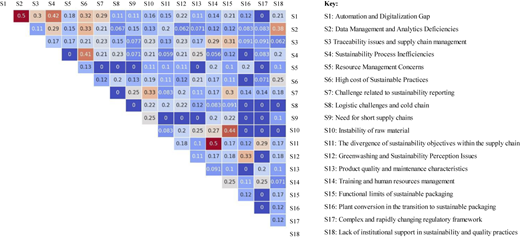
To provide a comprehensive overview of the challenges identified, Appendix presents a summary of the presence of each second-order theme across the interviewed companies. Figure 6 presents a heatmap visualizing the Jaccard index values for each pair of second-order theme (S), highlighting the most and least common correlations between the challenges.
This analysis reveals significant interconnections between some key challenges. For instance, the themes S1 and S2 show a high degree of co-occurrence (0.5), indicating that companies struggling with automation and digitalization often face parallel issues in managing and analysing and managing data. This interdependence highlights the need for cohesive technological strategies to simultaneously improve automation and data utilization. Another notable correlation is between S4 and S5 (0.41), suggesting that inefficiencies in sustainability practices often coincide with challenges in managing resources like water and energy. This pairing underscores the importance of an integrated approach to sustainability, as addressing these challenges in isolation may be less effective than a combined strategy. Themes within A1 domain (S1, S2 and S3) show notable correlations with those in A2 domain (S4, S5, S6 and S7) suggest that investments in technology could enhance sustainable practices. Conversely, themes related to Sustainable Packaging (S15 e S16) and Regulatory and Institutional Challenges (S17 and S18) show lower correlations with themes in other domains, indicating that these challenges are more standalone and may require targeted interventions rather than broader, integrated solutions.
These findings highlight the interdependencies between important challenges in the food industry, underscoring the value of cross-functional approaches. By leveraging these correlations, firms can prioritise initiatives that address multiple challenges simultaneously, thereby optimising resource allocation and enhancing overall efficiency.
4.2 Framework presentation
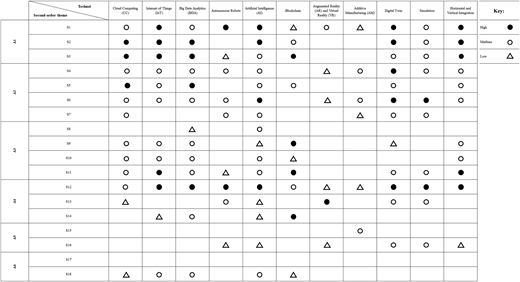
The framework presented in this section maps Industry 4.0 enabling factors, as outlined in Section 2.2, to the specific challenges (second-order themes, see Section 4.1.2) identified through the interviews. Organized as a matrix (see Figure 7), it evaluates the impact level of each enabling factor on the second-order themes, categorized as high, medium, or low. Then enablers were classified in their category based on breadth of applicability (number of second-order themes addressed) and the level of each impact. Enabling factors were classified in:
High-impact enablers addressing a multitude of challenges or providing crucial solutions to core issues;
Medium-impact enablers demonstrating targeted benefits;
Low-impact enablers having limited applicability to the sector’s challenges.
This structure offers a strategic overview of which enabling factors are most effective in addressing particular issues, guiding stakeholders in their decision-making for targeted digital transformation.
4.2.1 High-impact enablers
Several enabling factors show strong potential to address key challenges, positioning them as primary tools for overcoming barriers within the food industry.
IoT has a high impact across all the challenges in the A1 domain. By connecting factory systems, machinery and devices, IoT enables real-time monitoring and optimization, which are essential for managing complex, multimodal processes. For instance, IoT sensors facilitate the observation of storage conditions, reducing spoilage and ensuring compliance with quality standards. AI also demonstrates a high impact on Automation and Digitalization Gap (S1) and Data Management and Analytics Deficiencies (S2) by optimizing data processing, enabling predictive maintenance, and supporting resource allocation. Moreover, AI has a moderate to high impact on A2 domain, AI also helps identify inefficiencies and optimize resource use, contributing to both operational efficiency and environmental goals. Digital Twin technology has a high impact on S1 and S2, supporting continuous monitoring, optimization and simulation of physical processes within a digital environment. In the Sustainable Practices and Waste Management Strategies domain, Digital Twin enables scenario testing and resource optimization in sustainability efforts, particularly in managing water and energy use.
BDA has a high impact across the A1 domain by supporting large-scale interviews analysis, improving decision-making and optimizing supply chain management. In the A2 domain, BDA plays a significant role in Sustainability Reporting (S7) by streamlining data collection and reporting, helping firms track and report on sustainability metrics. It also shows a high impact in S12 by enabling trend identification and real-time quality monitoring. Blockchain technology exhibits the highest impact in the A3 domain, particularly for enhancing transparency and sustainability claims. By ensuring secure and immutable data records, blockchain addresses challenges like Greenwashing and Sustainability Perception Issues (S14), bolstering consumer trust in sustainability initiatives. Horizontal and Vertical Integration is critical across the A1 domain, although it is more of a strategic approach than a standalone technology. This integration facilitates seamless data flow across departments and supply chain levels, improving visibility, collaboration, and resource allocation. For example, integration has a medium to high impact on A3 by enhancing coordination and reducing response times during disruptions.
4.2.2 Medium-impact enablers
The technologies in this category provide moderate benefits across a variety of challenges; however, they may be constrained in their ability to fully address specific issues.
CC offers medium to high impact on challenges within A1, particularly for S2. By supporting remote data storage and processing, CC increases data accessibility and enables more efficient analytics. However, its reliance on reliable connectivity may limit its effectiveness in some supply chain scenarios. Autonomous Robots have a high impact on S1 by performing repetitive tasks with precision, reducing labour costs, and increasing productivity. These robots also show a high impact on S12, as they help maintain consistency. However, they have only a medium impact on A2, where they can assist with waste reduction but have limited application in sustainability challenges. Simulation technology is particularly useful for S6 and S12 challenges. Simulation tools enable what-if scenario testing, allowing companies to optimize processes and reduce resource waste. However, simulations rely heavily on accurate data inputs, which can be a limitation if data collection systems are inadequate.
4.2.3 Low-impact enablers
Certain technologies have limited relevance to the identified challenges but offer specific benefits in niche applications.
AR and VR mainly impact S13, where immersive experiences facilitate knowledge transfer for complex tasks. With generally low impact across the framework, Additive Manufacturing also has a minimal impact on sector-wide challenges. Its primary use is for prototyping and custom part production, which is beneficial for specific applications. Challenges within the A5 and A6 domains generally receive medium to low impact from most technologies. While Digital Twin and Simulation provide some support for packaging transitions, addressing regulatory complexities may require policy innovations rather than purely technological interventions.
4.2.4 Synergies between factors
The framework highlights potential synergies between enabling factors that, when combined, can address challenges more effectively. For example, IoT collects real-time data, while BDA processes this data to generate actionable insights. Together, they enhance traceability and resource optimization. When paired with CC, this combination enhances data accessibility and supports real-time decision-making, creating a robust system for transparency and quality monitoring. Likewise, AI and CC also demonstrate high synergy, particularly in areas related to S1 and S6. AI relies on large datasets and processing power, which CC provides, enabling predictive analytics and resource optimization. These combinations are of particular value to SMEs, which frequently encounter limitations in terms of available resources. For larger companies, the integration of advanced technologies such as the digital twin, AI and blockchain can facilitate comprehensive digital transformation and the integration of sustainability.
Based on these findings, companies in the food industry are encouraged to prioritize enablers according to their specific challenges and operational capacities.
5. Conclusion
This study provides a structured framework that links specific operational challenges in the food industry to relevant Industry 4.0 enabling technologies. By integrating insights from literature and stakeholder interviews, the research highlights how digitalisation can be strategically leveraged to address critical issues related to quality, sustainability, and competitiveness. The framework supports practitioners in making informed, targeted decisions regarding technology adoption, rather than pursuing generic digital transformation agendas.
The key findings demonstrate that technologies such as IoT and AI offer high-impact applications in several areas, including real-time monitoring, predictive analytics, and waste reduction. Other technologies, such as AR and VR, have more specialised applications, such as the training of workforces, where immersive environments facilitate the transfer of knowledge without disrupting production processes. Moreover, the framework emphasises the potential for the integration of technology, such as the IoT and BDA, to provide a robust foundation for optimising operations and enhancing quality control through the utilisation of real-time insights and data-driven decision-making.
Although this study may represent a valuable contribution to the field, it is not without limitations. The findings, derived from a sample within the Italian market, may not be wholly applicable to other countries with different regulatory frameworks and industry structures. Furthermore, this research offers an overview of the present technological landscape, which will continue to evolve as new technologies and capabilities emerge. Moreover, the study adopts a qualitative approach, offering an exploratory perspective rather than a quantitative assessment of the technologies’ performance. Future research could address these limitations by conducting comparative studies across different countries and employing quantitative methods to evaluate the impact of specific enabling factors on key performance metrics, such as sustainability, productivity and operational resilience.
In summary, this research makes a contribution to academic literature and industry practice by providing a framework that links Industry 4.0 enablers to specific challenges faced by the food sector. It supports decision-makers in aligning digital innovations with sector-specific goals and challenges, ultimately fostering more sustainable and quality-oriented operations in an increasingly complex market landscape.
The authors would like to thank Mr. Alessio Soru for his valuable contributions to this work.