
Skip to article sections
Purpose

This paper examines how job resources influence older workers’ willingness to continue working (WCW) in their current roles, with the mediating role of job satisfaction (JS) and moderating role of job category (support, professional and manager).

Design/methodology/approach

Data were collected from 432 employees aged 50 and older in a Dutch local government through an online questionnaire. Linear regressions with bootstrapping tested mediation, and the Hayes method assessed moderation.

Findings

JS mediated the relationship between job resources and WCW, fully for job autonomy and social support and partially for learning opportunities. Job category moderated the relationship between JS and WCW, showing a strong association among older professionals, and employees in support roles and none in managerial positions.

Research limitations/implications

The cross-sectional design limits causal inferences.

Practical implications

The results reaffirm the important role of job resources in influencing JS and WCW. It suggests that managers and Human Resources (HR) professionals consider differences in job categories when redesigning roles for older employees to motivate them to continue working.

Originality/value

This paper reveals that older employees with access to job resources are willing to continue working their current job, with JS mediating this relationship. The findings uniquely show that the relationship between JS and WCW is moderated by job category.

European Union countries are addressing challenges posed by an aging population that affects health care, social insurance and pension systems. In response, many have raised the retirement age and implemented policies to encourage older workers to remain employed longer (Eurofound, 2025). In the Netherlands, the average retirement age increased to 66 in 2024, labor participation among those aged 55 and older rose to 27% (Statistics Netherlands, 2025) and the preferred retirement age has increased slightly (Pak et al., 2021). The Dutch government promotes continued employment (OECD, 2014) through measures such as reducing work pressure, providing flexible hours and offering higher wages (de Lange and Thijssen, 2007), as well as enhancing working conditions and increasing job satisfaction (JS) (UWV, 2023). HR practices are more focused on retaining older workers in their current roles rather than on career advancement (Veth et al., 2015). However, little evidence links these measures to a desire to work longer (van Vuuren and Montizaan, 2015), underscoring the need for effective job design to keep older workers satisfied and motivated (Truxillo et al., 2012) and willing to continue working (Zaniboni et al., 2014). Several researchers have emphasized the significance of job design, which involves creating and modifying the content, structure and organizational context of jobs (Morgeson and Campion, 2003). This approach aims to make jobs more suitable for older workers, allowing them to continue working rather than retiring (Dychtwald et al., 2004). Working conditions appear to influence the retirement decisions of older workers (Debrand and Sirven, 2009) and those who are satisfied with these conditions are more likely to extend their working lives (van Kalmthout, 2012).

Job design research investigates how job characteristics influence work outcomes, including JS and sustainable employability. The job demand-control model (Demerouti et al., 2001) proposes that job resources, including autonomy, skills and social interaction, can motivate employees and influence work outcomes (van den Broeck et al., 2013). Increasing these job resources can lead to higher JS (Martinussen et al., 2007). Because job resources have a motivating effect, they are negatively associated with the intention to retire early (Schreurs et al., 2011). Specifically, job autonomy (JA), learning opportunities (LO) and social support (SS) from colleagues are identified as key motivators that can enhance work engagement (Schaufeli, 2015). Older workers value the opportunity to have autonomy in performing their jobs, share their knowledge and maintain strong workplace relationships (Marvell and Cox, 2017). A limitation in research on job design for older workers is that job resources, which could enhance work outcomes such as JS and willingness to continue working (WCW), are often generalized across different occupations. This assumption suggests that individuals will value the same work characteristics regardless of their specific roles. Studies tend to overlook individual differences, particularly in work content (Marvell and Cox, 2017). A one-size-fits-all approach appears insufficient to address the challenges associated with aging in the workplace. As a result, tailored job design that meets the needs of various job categories is essential for supporting older employees in extending their working lives (Ilmarinen, 2009).

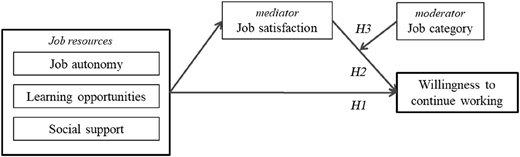
Our research focused on a cluster within a large Dutch municipality, aiming to enhance public spaces, health and sports, safety and youth support. The public sector experiences budget cuts (Weske et al., 2014) while assuming more responsibility for neighborhood maintenance without additional staff, resulting in shortages and increased workloads. To maintain service levels, municipalities are considering staffing strategies and retirement planning to retain older employees (Rutten et al., 2025). Therefore, this study investigates how job categories (support, professional and managerial) affect the associations among job resources, JS and older workers’ WCW in their current jobs. The proposed research model is presented in Figure 1. Our study contributes to the existing literature in three ways. First, we examine whether older workers with access to job resources are more likely to continue working (Schreurs et al., 2011; van den Berg, 2011). Second, we explore the mediating role of JS in this relationship, and third, whether the association between JS and WCW among older workers varies by job category.

The psychological term ‘WCW’ (van den Berg, 2011) can also be defined as “want to continue working until 65 or beyond” (Geuskens et al., 2012; Nilsson et al., 2011), “how long they wish to work” (Ybema et al., 2009) and “intention to retire” (Beehr, 1986). Retirement intentions are psychological predictions of employees’ retirement plans. These intentions are often formed well before a final decision to retire; they precede actual behavior (Beehr and Bennett, 2015). Factors influencing retirement intentions can be categorized into personal and work-related aspects (Wang et al., 2009). Research has shown that personal factors, including health (Kooij et al., 2008), age (Ybema et al., 2009), gender (Forma et al., 2005) and education (Jettinghoff and Smulders, 2008), are associated with the retirement intentions of older employees. Key work-related factors that encourage WCW include financial incentives to remain employed (Nilsson et al., 2011), supportive attitudes from managers (Oude Hengel et al., 2012) and a healthy social climate (Geuskens et al., 2012). Job resources, such as JA and skill development opportunities, are essential for older workers, helping them remain in the workforce as the retirement age increases (El Khawli et al., 2025).

Understanding the underlying motivations for working is essential for promoting longer working lives, as it reduces the intention to retire (Beehr, 1986). Motivation to work is not only associated with the actual age at which employees retire (Kooij et al., 2008), but it also influences their decision to work longer (van den Berg, 2011) and sustains engagement in work (Kanfer et al., 2013). The motivation to work is rooted in three key needs: autonomy, competence and relatedness (Ryan and Deci, 2017), which are linked to job resources identified in the Job Demands-Resources model (Bakker and Demerouti, 2007). JA, LO and SS from colleagues are considered valuable job resources that enable employees to achieve their work goals, such as working longer (Parker, 2014).

Workplace autonomy refers to the degree of freedom employees have in their jobs, including their independence in organizing tasks, scheduling work and choosing methods for completing them (Hackman and Oldham, 1976). When employees are granted sufficient autonomy to manage their work, they are better equipped to cope with stressful situations (Karasek, 1979). In contrast, employees who lack autonomy may feel controlled (van Poppel and Kamphuis, 2004). Older employees tend to feel more valued when they have responsibility for their tasks, including how they perform them, the order in which they complete them and the timing of their work (de Lange and Thijssen, 2007).

Providing employees with autonomy enhances their intrinsic motivation, leading to improved performance (Muecke and Iseke, 2019). This job resource increases employees’ commitment to their work (Malinowska et al., 2018) and decreases their intention to leave the organization (Kimmsw and Stoner, 2008). Additionally, a higher level of perceived autonomy is positively associated with older workers’ WCW (Jettinghoff and Smulders, 2008). Age-oriented personnel policies often aim to offer older employees more freedom, as this group seeks greater autonomy in their jobs (de Lange and Thijssen, 2007). Therefore, JA is a significant predictor of older workers’ WCW (Frins et al., 2011). Based on the above arguments and evidence from prior research, this study proposes the following hypothesis:

H1a.

Job autonomy is positively associated with older workers’ willingness to continue working.

One of the most important factors affecting employment opportunities for older workers is access to training and development. A lack of LO can lead to outdated skills, negatively affecting job performance and reducing their employability (OECD, 2024). Older employees appreciate access to on-the-job training and education to learn new skills, apply existing ones to new situations and share their knowledge and experience with colleagues (Marvell and Cox, 2017). Providing these LO also keeps their skills valuable for job performance (Hunter, 1986), harnesses their talents and maximizes their potential (Schaufeli, 2015). Lifelong learning research indicates that continuous development enhances work ability, employability and vitality (van Vuuren et al., 2011).

Learning is linked to older employees’ willingness to work until retirement (Frins et al., 2011; Zoomer et al., 2019). Recognizing the knowledge, experience and judgment of older workers increases their WCW (Marvell and Cox, 2017; Visser-Lapré, 2008; Zoomer et al., 2019). Additionally, when older workers have access to adequate development opportunities, they are more likely to delay retirement (de Wind et al., 2014; Picchio and van Ours, 2013) and are encouraged to continue working (Brouwer et al., 2013; van Dam et al., 2009).

Conversely, a lack of development opportunities can make older workers feel disconnected from the rest of the workforce (Visser-Lapré, 2008), potentially leading them to retire earlier (Henkens and Tazelaar, 1997). Having few opportunities for challenge and development in one’s work is associated with the intention to retire early (Nordlinder et al., 2024). However, a recent study indicates that older workers with fewer opportunities for skill development did not necessarily retire earlier (El Khawli et al., 2025). Generally, a supportive work environment that provides LO for older workers is associated with a reduced intention to retire early. To continue working, older employees must stay flexible by engaging in continuous learning and knowledge acquisition (Newman, 2011). Therefore, organizations that promote education for older workers contribute to sustainable employment (de Grip et al., 2020; Montizaan and van Vuuren, 2015). Based on the above arguments and findings from prior research, this study proposes the following hypothesis:

H1b.

Learning opportunities are positively associated with older workers’ willingness to continue working.

Social support at work is a key job design resource that fulfills the need for belonging and enhances motivation, such as WCW (Demerouti and Bakker, 2011). It enables employees to receive assistance and advice from colleagues (Karasek, 1979; Karasek et al., 1998), to count on their colleagues and feel supported by them (van Poppel and Kamphuis, 2004) and to form friendships (Sims et al., 1976). According to socio-emotional selectivity theory (SST), older employees value social support for emotional intimacy and social embeddedness within the organization (Carstensen et al., 1999). They prefer a limited number of meaningful relationships rather than an extensive social network (Carstensen, 2006) and often feel fulfilled by collaborating in mixed-age teams (Marvell and Cox, 2017).

Social support influences older workers’ attitudes toward retirement (Dendinger et al., 2005) and is therefore linked to their turnover intentions (Humphrey et al., 2007). This job resource is a major reason for not choosing early retirement, serving as a motivating factor to continue working (Proper et al., 2009; Zoomer et al., 2019). Older workers may delay their intention to retire because they anticipate losing their social networks (Wang, 2007). The presence of friends in the workplace (van Breukelen et al., 2004) and the quality of relationships with colleagues (Rothmann et al., 2013) can predict employee retention. A recent systematic review indicates that strong social support is an important determinant for late retirement intentions (Nordlinder et al., 2024). Conversely, a poor social climate can reduce their WCW until age 65 (Geuskens et al., 2012; Reeuwijk et al., 2013). Healthy social relationships are fundamental for retaining older workers, suggesting that social support contributes to WCW. Based on the above arguments and evidence from prior research, this study proposes the following hypothesis:

H1c.

Social support is positively associated with older workers’ willingness to continue working.

JS refers to employees’ attitudes towards their jobs, sense of accomplishment at work and overall enjoyment of their roles (Spector and Jex, 1991). Job resources are strongly and positively related to JS, an important indicator of well-being among older workers (Rothmann, 2008; Truxillo et al., 2012). Autonomy is positively associated with JS, as older employees can work autonomously due to their extensive work experience and crystallized intelligence (Humphrey et al., 2007; Kanfer and Ackerman, 2004). JS among older workers is negatively affected by poor perceptions of autonomy in their work (Rice et al., 2022). LO are also a key component in promoting JS (Kanter, 1993); recent research has confirmed that training increases JS among older workers (Visser et al., 2021). Support from colleagues is another valuable job resource that significantly enhances JS (Cummins, 1989; Truxillo et al., 2012; Winstead et al., 1995). When coworkers offer social support, employees feel accepted, valued and cared for, contributing to their overall JS (Ducharme and Martin, 2000).

Job resources, such as autonomy, learning opportunities and social support, predict JS and WCW (Frins et al., 2011). Moreover, JS is an important motivating factor that influences employees’ WCW (de Vos et al., 2020). When employees are satisfied with their jobs, they are more likely to remain with their employer. Research indicates that JS is negatively associated with the intention to leave (McCarthy et al., 2007) and turnover intentions (Allisey et al., 2014; McKnight et al., 2009). Higher levels of JS tend to reduce employee turnover (De Simone et al., 2018), while low JS can prompt employees to leave their positions sooner (van den Berg et al., 2010). Employees who are dissatisfied with their jobs are more likely to leave than satisfied employees (Cotton and Tuttle, 1986; Schmitt and McCune, 1981). Since JS influences the intention to remain working, it likely mediates the relationship between job resources and WCW. Based on this reasoning and evidence from previous research, this study proposes the following hypothesis:

H2.

Job satisfaction mediates the positive association between job resources and older workers’ willingness to continue working.

Older workers are not a homogeneous group, and significant individual differences exist in employees’ work content (Marvell and Cox, 2017). These variations suggest that allowing room for customization in their work is important (van Dam et al., 2016). Since job resources and work outcomes are individual factors, they are likely to vary among older workers across job categories. Recognizing these differences can help guide the design of jobs for older workers, ultimately supporting a longer working life (Ilmarinen, 2009).

The Equal Employment Opportunity Commission developed a job classification system in 2006 to organize and categorize jobs by the type of work performed. This system enables effective comparisons of positions across organizations. The main categories include administrative support, professional roles and managerial positions. A similar system used by Statistics Netherlands is based on the International Standard Classification of Occupations (ISCO), which is a global framework established by the International Labour Organization (ILO). The main ISCO categories include clerical support workers, professionals and managers (ILO, 2012), which closely align with the EEOC’s broad occupational groups. Employees in the support category perform tasks that support the company’s daily operations, focusing on administration, facilities and logistics. The professional (knowledge worker) category encompasses individuals with specialized knowledge and skills who are dedicated to applying their expertise. Employees in the managerial category are responsible for leading or supervising teams and managing resources to achieve organizational goals.

Organizations depend on older employees in the professional category, especially those with crystallized intelligence, for effective problem-solving and the delivery of tailored services, and therefore aim to retain these valuable workers (Alvesson, 2000). However, there has been limited research on whether the willingness of older employees to remain in the workforce varies by job category. The SST (Carstensen et al., 1999) posits that older adults perceive time as running out to achieve their goals. However, older workers in the professional category who operate within a decentralized network organizational structure (Reed, 1996) tend to be less affected by this limited time perspective, which can contribute to a greater sense of sustainable employability (Zacher and Frese, 2009). Highly educated workers, such as professionals, are generally more inclined to work until retirement age (Jettinghoff and Smulders, 2008) because they have more options, such as consultancy assignments, that allow them to continue in their professional roles (Wang and Shultz, 2010). Conversely, when older employees feel dissatisfied with the limited use of their skills and knowledge, it can reduce their motivation to continue working (Reeuwijk et al., 2013).

JS is a strong predictor of employees’ WCW, and several studies have found differences in JS and turnover predictors across staff groups (Onyett et al., 1997; Scanlan and Still, 2019; Yanchus et al., 2015). JS refers to an employee’s overall emotional response to their current work roles, and different occupational categories vary in the job characteristics that influence JS (Kalleberg, 1977), which in turn shapes the extent to which overall JS influences employees’ WCW. For professionals, JS is largely driven by intrinsic job characteristics such as autonomy, learning opportunities and competence (Ryan and Deci, 2017). Professionals often see their role as a key part of their identity, not just a job or a source of income, and JS plays a positive role in shaping and reinforcing this professional identity (Ashforth and Mael, 1989). Additionally, JS enhances their commitment to both their field and their organization (May et al., 2002). Research indicates a strong correlation between JS and employee retention, with JS acting as a significant negative predictor of turnover intentions (Kuutila et al., 2025). Professionals who are satisfied with their jobs will have a greater intention to continue working (House et al., 2022). JS among support staff is primarily influenced by extrinsic factors, including supervision, pay and job security (Kalleberg, 1977), as well as workplace environment and working conditions (Al-Alawi et al., 2016). Work flexibility was identified as a means of increasing JS among support staff (Parlalis, 2011). As a result, their decisions to remain in their positions may be based not only on their satisfaction with their work but also on contextual and employment conditions, which may diminish the role of JS in their WCW. Managers experience JS that results from a combination of intrinsic and extrinsic factors, but it is significantly shaped by high levels of responsibility, challenges they face and performance pressure (Agarwal and Gupta, 2018). Moreover, their reasons for staying in their roles may depend on opportunities for career advancement (Proper et al., 2009; Wang and Shultz, 2010). Poor work–life balance and low remuneration are critical factors in low JS among managers (Verulava, 2024). Consequently, while JS remains relevant, it may be less central in determining managers’ WCW. Accordingly, we expect the relationship between JS and WCW to differ across roles, with professionals showing a stronger association than support staff or managers. Based on this reasoning and evidence from previous research, this study proposes the following hypothesis:

H3.

Job category moderates the association between job satisfaction and willingness to continue working such that this positive association is stronger for older workers in the professional category than for those in the support (H3a) and managerial (H3b) categories.

This study collected data in May 2018 from full-time employees aged 50–67 employed in a large municipality in the Netherlands. This ensured that all participants adhered to the same formal policy on the employability of older workers and had access to consistent HR management procedures. By focusing on employees from a single municipality, the study reduced variation in organizational policies and practices. This enabled a consistent examination of the associations among job resources, JS and WCW within a shared organizational context. The online survey included a cover letter from management that outlined the research objectives. It explained that the survey was anonymous and that participants could withdraw at any time. Additionally, it specified that the data would be stored securely, answers would be kept confidential and that participants provided informed consent by completing the questionnaire. Of the 903 older employees in the target group, 432 completed the questionnaire, resulting in a response rate of 48%. Several demographic characteristics were identified in the sample. Of all participants, 64.4% were women and 35.6% were men. Ages ranged from 50 to 67 years (mean = 58, SD = 4.2): 28.2% in the age group 50–55, 36.6% in the age group 56–60, 34% in the age group 61–65 and 1.2% in the age group older than 65.23.1% worked in the support category, 65.3% in the professional category and 11.6% worked in the managerial category. The education level of the respondents was high school or lower (17.6%); 17.8% had completed higher vocational education; and the remaining 64.6% had completed university education. Most respondents lived with a partner (72.9%), and 77.3% of these partners had either a part-time or full-time paid job. Regarding respondents’ financial situation, 12.2% indicated that they fall within the lower municipal income scales (2–6), 66.3% within the average scales (7–11) and 21.5% within the higher income scales (12–16). Overall, 15.1% of the sample reported their health status as “excellent,” 24.3% as “very good,” 46.5% as “good,” 13.2% as “moderate” and 0.9% as “poor.”

Self-report instruments were used to measure study and control variables. Responses were rated on a five-point scale (1 = disagree, 5 = agree).

WCW is a work outcome and was measured using three items from previous studies (van Dam et al., 2009; van den Berg, 2011). A sample item includes “I am willing to keep working as long as possible in my current job, even after the retirement age.” The reliability of this measure was α = 0.80.

JS is a work outcome measured using four items from the JS Scale (Brayfield and Rothe, 1951). A sample item is “I find real enjoyment in my work.” The reliability of this measure was α = 0.77.

JA is a job resource measured using three items from the Work Design Questionnaire (Morgeson and Humphrey, 2006). A sample item is “My job allows me to make my own decisions about how to schedule my work.” The reliability of this measure was α = 0.77.

LO are a job resource and were measured using three items derived from the Job Content/Wellbeing at Work Questionnaire (Kraan et al., 2000). A sample item is “My job requires that I keep learning new things or keep my knowledge up to date.” The reliability of this measure was α = 0.70.

SS is a job resource measured using three items from the Social Support Survey (Sarason et al., 1983). A sample item is “In my job, I can count on colleagues to really care about me.” The reliability of this measure was α = 0.75.

Job category is a moderator variable and was measured as an ordinal variable using a single item, “Based on the descriptions below, in which category does your current job fit best?” with responses coded as 1 = support, 2 = professional or 3 = managerial.

The control variables were demographic variables relevant to older employees, including age, gender, education, financial situation and health, which were kept constant throughout the study. Age was measured as a continuous variable using one item: “In what year were you born?” Gender was measured as a categorical variable using a single item, “What is your gender?”, with responses coded as 1 = male, 2 = female. Education was measured as an ordinal variable using a single item, “Which level of education did you complete?”, answered on a five-point scale ranging from 1 = less than high school to 5 = postgraduate degree. Financial situation was measured as an ordinal variable using one item: “What is your financial situation by approximation?” and answered on a three-point scale ranging from 1 = lower income, 2 = average income, to 3 = higher income. Health was measured as an ordinal variable using one item: “How would you describe your health to being able to do your job?” and answered on a five-point scale ranging from 1 = poor to 5 = excellent.

Before conducting hypothesis testing, a confirmatory factor analysis (CFA) was conducted to assess the factor structure of the models used in each analysis. Hierarchical regression analyses were then conducted, including control variables, to examine the hypotheses (H1 and H2) regarding the direct relationships between job resources (independent variables) and older workers’ WCW (outcome variable) and JS (mediator).

This research used the PROCESS macro (version 3.1) in SPSS (version 24.0) to examine mediation and moderated mediation models, as described by Hayes (2018). To test the second hypothesis, we used Model 4 from Hayes (2013). We applied the bootstrapping method described by Preacher and Hayes (2008) to assess whether JS (M) mediates the relationships between independent variables (X), JA, LO and SS, and the dependent variable (Y), WCW. Covariates such as age, gender, education, health and financial status were included. We generated 5,000 resamples to estimate the indirect effect of the mediator, using a 95% bias-corrected confidence interval for significance, as recommended by Preacher and Hayes (2008). Results are significant if confidence intervals do not include zero.

To test the third hypothesis regarding the moderation effect of job category on the relationship between JS and WCW, we used Model 14 (Hayes, 2013). Dummy coding was applied to represent the job category variable in the regression analyses. We chose the professional category as the reference group for comparison because it had the largest number of participants, and our hypothesis was based on this category. We created two variables: D1, which compares the professional with the support category, and D2, which compares the professional with the management category. These dummy variables and their interactions with the mediator were included to examine whether the indirect effect of job resources on WCW, mediated by JS, varied by job category.

The means, standard deviations and correlations of all variables used in this study are presented in Table 1. The correlation analysis revealed that the independent variables of JA, LO and SS were positively associated with JS and WCW. Moreover, JS was significantly correlated with WCW (r = 0.37, p ≤ 0.01). There was also a significant relationship among all combinations of the three job resources, with the strongest association between JA and LO (r = 0.59, p ≤ 0.01). Of the control variables, health was significantly and positively associated with JS (r = 0.26, p ≤ 0.01) and WCW (r = 0.21, p ≤ 0.01).

The results from the CFA revealed that the selected five-factor model, which included the variables of WCW, JS, JA, LO and social support as distinct factors, provided a better fit for the data compared to alternative one-factor and three-factor models (see Table 2). This five-factor model demonstrated a good fit to the data (χ2(15) = 27.12, p = 0.03; TLI = 0.99; CFI = 0.99; RMSEA = 0.04).

Hypothesis 1 predicted associations between job resources and WCW. As shown in Table 3, JA (B = 0.24, p < 0.05), LO (β = 0.27, p < 0.05) and SS (β = 0.30, p < 0.05) were positively associated with WCW, confirming Hypotheses 1a, b and c. Furthermore, JA (β = 0.48, p < 0.05), LO (β = 0.35, p < 0.05) and SS (β = 0.35, p < 0.05) were also significantly associated with JS. Additionally, we found a significant positive association between JS and WCW (β = 0.33, p < 0.05). The results remained consistent after controlling for covariates, indicating that participants’ characteristics had minimal impact on the findings.

Hypothesis 2 predicted that JS mediates the relationship between job resources and WCW. Table 3 presents the mediation analysis results, which are considered significant if the confidence intervals do not include zero. When JS was included in the regressions, the associations between JA (β = 0.04, ns) and SS (β = 0.07, ns) and WCW were no longer significant, indicating full mediation through JS. The association between LO and WCW declined (β = 0.10, p < 0.05), but remained significant, indicating partial mediation. Bootstrapping results supported an indirect association between JA (β = 0.16, LLCI = 0.11, ULCI = 0.23), LO (β = 0.11, LLCI = 0.07, ULCI = 0.16) and SS (β = 0.11, LLCI = 0.07, ULCI = 0.16) and WCW via JS, in support of Hypothesis 2.

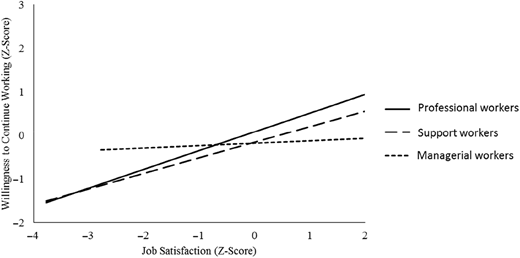
The results of the moderated mediation analysis indicated that job category influences the strength of the indirect associations between job resources and WCW, mediated by JS. Significant moderated mediation indices were found for JA (β = −0.16, LLCI = −0.30, ULCI = −0.04), LO (β = −0.12, LLCI = −0.22, ULCI = −0.03) and SS (β = −0.10, LLCI = −0.22, ULCI = −0.01). Table 4 shows that the conditional indirect associations for JA, LO, and SS were significant for both support and professional job categories. Furthermore, no significant indirect associations were found for the managerial category: JA (β = 0.03, ns), LO (β = 0.03, ns), and SS (β = 0.04, ns). Hypothesis 3 predicted a stronger association between JS and WCW for the professional job category. The interaction graph in Figure 2 shows that job category is a significant moderator of the association between JS and WCW. However, the difference between the professional and support categories was not statistically significant (b = −0.071, p = 0.492). These results do not support Hypothesis 3a. The difference between professionals and managers was statistically significant (b = −0.373, p = 0.009), indicating a stronger association for professionals than for managers. This finding supports Hypothesis 3b, and therefore Hypothesis 3 received partial support.

We investigated the relationships among job resources, JS and WCW among a sample of Dutch municipal employees aged 50 and older in the support, professional and managerial job categories. Our hypotheses state that job resources are associated with JS, and that JS, in turn, is associated with WCW. Additionally, we proposed that the association between JS and WCW is stronger among older workers in professional categories than among those in support or managerial categories. Our findings show that JS mediates the relationship between job resources and WCW, and job category significantly moderates the influence of JS on this willingness.

This study contributes to the existing literature on aging at work and job design, which suggests that a well-designed job can stimulate the intention to continue working. The results complement the few studies that have investigated the relationship between job resources, JS and older employees’ WCW (Geuskens et al., 2012; Oude Hengel et al., 2012; van den Berg, 2011). Our findings show that autonomy, learning opportunities and social support are positively associated with older workers’ WCW in their current jobs. These results were consistent with previous studies that suggest a positive association between job resources and WCW (de Wind et al., 2014; El Khawli et al., 2025; Frins et al., 2011; Marvell and Cox, 2017; Nordlinder et al., 2024; Parker, 2014; Visser-Lapré, 2008; Zoomer et al., 2019).

Our research builds on existing literature on job resources and older workers’ WCW, demonstrating that JS mediates this relationship. In line with the Job Demand-Resources Model (Bakker and Demerouti, 2007), which posits that job resources are positively correlated with work outcomes, our findings confirm that older workers who had access to job resources such as autonomy, learning opportunities and social support reported higher levels of JS, which in turn positively affected their WCW in their current jobs. Specifically, our results show that JS fully mediates the influence of both autonomy and social support on older workers’ WCW. Conversely, the influence of LO is only partially mediated by JS, consistent with previous research indicating that LO significantly contribute to WCW, irrespective of JS (Picchio and van Ours, 2013).

To our knowledge, this study is the first to explore how job category can act as a moderator in the relationship between job resources, JS and the willingness of older workers to continue working in their current positions. Our results show that the influence of JS on WCW varies depending on the type of job an older employee holds. This finding contributes to limited research emphasizing the importance of recognizing differences among older workers rather than viewing them as a homogeneous group (Gut et al., 2024; Marvell and Cox, 2017). Our research shows that older employees highly value autonomy in their tasks, which aligns with research indicating that their JS declines when they perceive this autonomy as insufficient (Rice et al., 2022). Our results indicate that LO positively affect JS among older workers, thereby increasing their WCW. This aligns with studies indicating that having few opportunities for challenge and development in one’s work is associated with the intention to retire early (Nordlinder et al., 2024). Those with higher levels of education, such as professionals, are more likely to take advantage of LO than those with lower levels of education, such as support staff (Fouarge et al., 2013; Newman, 2011). This finding supports research indicating that learning and development opportunities motivate professionals to remain with their organizations (Reddy and Govender, 2014) and enhance their JS (Visser et al., 2021). We found that the relationship between social support and WCW, which is influenced by JS, remains consistent across support and professional categories. This aligns with research suggesting that maintaining healthy social relationships with colleagues is essential for retaining older workers (Gut et al., 2024), as older workers often prefer opportunities to collaborate in teams and develop supportive relationships with coworkers (Fouché et al., 2017).

Among the three job categories examined, we found that older workers in professional roles are the most significantly affected by JS when deciding whether to stay in their jobs. Those in professional and support positions generally report higher levels of JS and are more inclined to continue working when they have access to job resources than their counterparts in management roles. An unexpected finding revealed that JS among older managerial employees did not influence their motivation to continue working. This aligns with studies showing no relationship between JS and retirement attitudes in high-income workers, such as managers, who typically engage in complex, non-routine tasks that require flexible and adaptive behavior (Morgeson and Humphrey, 2006) and often have greater financial resources, higher skill levels and high-status roles (Davies et al., 2017). Our results suggest that while autonomy, learning opportunities and social support contribute to JS, they do not necessarily increase older managers’ willingness to remain in their jobs. Studies show that work-related factors beyond job resources may play a more significant role in managers’ decision to continue working, such as the desire for challenging work that provides opportunities for development and achievement (Proper et al., 2009; Wang and Shultz, 2010), mentoring opportunities as they may be motivated to help the younger generation develop successfully (Newman, 2011), and manageable workloads, as high stress levels from an overwhelming workload may lead them to consider early retirement (Boumans et al., 2008). Additionally, factors such as the meaning of work, social status, access to leisure activities and social networks influence managers’ retirement decisions (Davies et al., 2017).

By investing in job resources for all older workers and tailoring retention strategies by job category, companies can create a workplace where older workers are more willing to continue working. Employers can design jobs for older workers that offer as much autonomy as possible, provide appropriate LO and maximize social contact and interaction, thereby contributing to their JS. To increase JA, companies should give older workers sufficient control over tasks, methods, schedules and decision-making processes. LO directly affect older workers’ WCW, making it essential for companies to provide and tailor this job resource. An effective training method is dual-way knowledge sharing or reverse mentoring programs, which can enhance older workers’ motivation to continue working (Pfrombeck et al., 2024). This involves younger employees sharing expertise with older colleagues, such as through intergenerational lunches, rather than just transferring knowledge from older to younger workers. On-the-job training to refresh the skills of older workers can also improve retention (Picchio and Van Ours, 2013). To enhance workplace social support, companies should encourage collaboration, recognize contributions and foster an inclusive work environment that supports older workers.

Furthermore, JS significantly affects older workers’ WCW, with variation by job category. Companies should tailor their retention strategies to these insights. Employees, colleagues, line managers and HR professionals can incorporate this information into discussions about encouraging a willingness to work longer. For older professionals, focusing on intellectual stimulation and growth can be beneficial. Companies can achieve this by offering special projects, research opportunities and continuing education programs. Providing ergonomic workplace adjustments, flexible work arrangements or reskilling options for older support workers can help keep their work engaging and rewarding. Regarding older managers, companies should recognize that JS alone may not be enough to drive their intention to stay. Factors beyond JS likely influence their decision to continue working. Therefore, companies may consider offering financial incentives, engaging them in succession planning, providing executive coaching or improving their work engagement.

This study has several limitations. First, the findings should be interpreted in light of the characteristics of the study sample. Participants were drawn from a single municipality in the Netherlands, and they all experienced the same organizational policies and human resource practices regarding sustainable employability. This uniformity reduced organizational variation and strengthened the internal consistency of the analyses. However, this specific public sector context may limit the generalizability of the findings to other sectors, countries or organizational contexts. Additionally, the sample was divided into three job categories (support, professional and managerial) to examine moderation effects. Although the relatively small managerial group reflects the composition of the organization’s workforce, it may have reduced the statistical power to detect moderation effects involving this subgroup. Furthermore, the study deliberately focused on employees aged 50 and older, which means the findings cannot be generalized to younger employees. Therefore, future research should investigate whether the associations among job resources, JS and WCW differ across sectors, organizational contexts and age groups, using adequately sized samples within each job category.

Second, the use of self-report measures may have introduced common method bias, as participants provided information on all study variables at a single point in time. Future research could incorporate multi-source data designs to reduce this concern. In addition, nonresponse bias cannot be fully ruled out, although the 48% response rate is relatively high for organizational survey research. Given the municipality’s focus on sustainable employability at the time of data collection, older employees with a particular interest in this topic may have been more likely to participate, potentially resulting in topic-related self-selection. The use of survey reminders may have reduced this risk by encouraging participation among initially less motivated or available employees. Nevertheless, the findings should be interpreted with some caution, as non-respondents may still differ systematically from respondents. Future research could further assess sample representativeness by conducting follow-up analyses of non-respondents or replicating the study in contexts with less organizational emphasis on sustainable employability.

Third, our cross-sectional design revealed associations among job resources, JS and WCW but limits conclusions regarding the temporal order and causal relationships among these variables. Longitudinal research could investigate whether job resources contribute to changes in JS, which in turn may influence older workers’ WCW over an extended period.

Fourth, future research could examine additional work characteristics and outcomes not included in this study, such as organizational support (Cheung and Wu, 2013), particularly among older managers. Given that work engagement encompasses vigor, dedication and absorption, which contribute to a positive work experience (Schaufeli et al., 2006), future research could examine whether it provides an alternative motivational pathway explaining older managers’ WCW (Agarwal and Gupta, 2018; Zoomer et al., 2019).

Finally, future research could explore additional factors that may influence older workers’ WCW. Aging may bring additional responsibilities and life changes, particularly when work interferes with family life or family responsibilities interfere with work (Cho et al., 2021). Although this study focused on job-related factors, future research could also examine personal circumstances, such as leisure activities and informal caregiving responsibilities (e.g. caring for elderly parents or grandchildren), which may influence older workers’ availability and motivation to continue working (Carr et al., 2018). In addition, intergenerational collaboration represents an important area for future research as workplaces become increasingly diverse (Iqbal, 2024). Engaging younger and older employees can enhance learning conditions (Maslo, 2019) and foster greater social cohesion (Nurhas et al., 2023). Future research should focus on intergenerational collaboration, particularly among professionals, to improve knowledge sharing, social relationships, organizational performance and support extended working lives.

This study contributes to the literature by demonstrating that job resources (autonomy, learning opportunities and social support) positively influence older workers’ WCW, with this effect mediated by increased JS. Additionally, the job category plays a significant role in this relationship, with professionals showing a stronger association than managers between JS and their WCW in their current positions. We hope these insights will inform the design of suitable jobs for older employees, tailored to their specific job categories and motivating them to remain in the workforce.
Agarwal
,
U.A.
and
Gupta
,
V.
(
2018
), “
Relationships between job characteristics, work engagement, conscientiousness and managers' turnover intentions: a moderated-mediation analysis
”,
Personnel Review
, Vol. 
47
No. 
2
, pp. 
353
-
377
, doi: .
Al-Alawi
,
A.I.
,
Al-Azri
,
A.S.
and
Mohammad
,
H.N.
(
2016
), “
Investigating the factors affecting job satisfaction and turnover: case of sultan Qaboos University
”,
Journal of Human Resources Management Research
, pp. 
1
-
15
, doi: .
Allisey
,
A.F.
,
Noblet
,
A.J.
,
Lamontagne
,
A.D.
and
Houdmont
,
J.
(
2014
), “
Testing a model of officer intentions to quit: the mediating effects of job stress and job satisfaction
”,
Criminal Justice and Behavior
, Vol. 
41
No. 
6
, pp. 
751
-
771
, doi: .
Alvesson
,
M.
(
2000
), “
Social identity and the problem of loyalty in knowledge intensive companies
”,
Journal of Management Studies
, Vol. 
37
No. 
8
, pp. 
1101
-
1123
.
Ashforth
,
B.E.
and
Mael
,
F.
(
1989
), “
Social identity theory and the organization
”,
Academy of Management Review
, Vol. 
14
No. 
1
, pp. 
20
-
39
, doi: .
Bakker
,
A.B.
and
Demerouti
,
E.
(
2007
), “
The jobs demands-resources model: state of the art
”,
Journal of Managerial Psychology
, Vol. 
22
No. 
3
, pp. 
309
-
328
, doi: .
Beehr
,
T.A.
(
1986
), “
The process of retirement: a review and recommendations for future investigation
”,
Personnel Psychology
, Vol. 
39
No. 
1
, pp.
31
-
55
, doi: .
Beehr
,
T.A.
and
Bennett
,
M.M.
(
2015
), “
Working after retirement: features of bridge employment and research directions
”,
Work, Aging and Retirement
, Vol. 
1
No. 
1
, pp. 
112
-
128
, doi: .
Boumans
,
N.P.G.
,
de Jong
,
A.H.J.
and
Vanderlinden
,
L.
(
2008
), “
Determinants of early retirement intentions among Belgian nurses
”,
Journal of Advanced Nursing
, Vol. 
63
, pp.
64
-
74
, doi: .
Brayfield
,
A.H.
and
Rothe
,
H.F.
(
1951
), “
An index of job satisfaction
”,
Journal of Applied Psychology
, Vol. 
35
No. 
5
, pp. 
307
-
311
, doi: .
Brouwer
,
S.
,
de Lange
,
A.
,
Wessels
,
M.
,
de Vries
,
H.
,
van der Heijden
,
B.I.J.M.
and
van der Klink
,
J.
(
2013
), “Integrale benadering van duurzame inzetbaarheid van oudere werknemers”, in
de Lange
,
A.H.
and
van der Heijden
,
B.I.J.M.R.
(Eds),
Een leven lang inzetbaar? Duurzame inzetbaarheid op het werk: Interventies, best practices en integrale benaderingen, Alphen aan den Rijn: Vakmedianet
, pp. 
257
-
285
.
Carr
,
E.
,
Murray
,
E.
,
Zaninotto
,
P.
,
Cadar
,
D.
,
Head
,
J.
,
Stansfeld
,
S.
and
Stafford
,
M.
(
2018
), “
The association between informal caregiving and exit from employment among older workers: prospective findings from the UK household longitudinal study
”,
Journals of Gerontology Series B: Psychological Sciences and Social Sciences
, Vol. 
73
, pp. 
1253
-
1262
.
Carstensen
,
L.L.
(
2006
), “
The influence of a sense of time on human development
”,
Science
, Vol. 
312
No. 
5782
, pp. 
1913
-
1915
, doi: .
Carstensen
,
L.L.
,
Isaacowitz
,
D.M.
and
Charles
,
S.T.
(
1999
), “
Taking time seriously: a theory of socioemotional selectivity
”,
American Psychologist
, Vol. 
54
No. 
3
, pp. 
165
-
181
, doi: .
Cheung
,
F.
and
Wu
,
A.M.S.
(
2013
), “
Older workers' successful aging and intention to stay
”,
Journal of Managerial Psychology
, Vol. 
28
No. 
6
, pp. 
645
-
660
, doi: .
Cho
,
E.
,
Chen
,
T.Y.
and
Janke
,
M.C.
(
2021
), “
A 2-year longitudinal relationship between work-family conflict and health among older workers: can gardening help?
”,
Journal of Applied Gerontology
, Vol. 
40
No. 
10
, pp. 
1330
-
1341
, doi: .
Cotton
,
J.L.
and
Tuttle
,
J.M.
(
1986
), “
Employee turnover: a meta-analysis and review with implications for research
”,
Academy of Management Review
, Vol. 
11
No. 
1
, pp. 
55
-
70
, doi: .
Cummins
,
R.
(
1989
), “
Locus of control and social support: clarifiers of the relationship between job stress and job satisfaction
”,
Journal of Applied Social Psychology
, Vol. 
19
No. 
9
, pp. 
772
-
778
, doi: .
Davies
,
E.M.M.
,
van der Heijden
,
B.I.J.M.F.M.
and
Flynn
,
M.
(
2017
), “
Job satisfaction, retirement attitude and intended retirement age: a conditional process analysis across workers' level of household income
”,
Frontiers in Psychology
, Vol. 
8
, p.
891
, doi: .
de Grip
,
A.
,
Fouarge
,
D.
,
Montizaan
,
R.
and
Schreurs
,
B.
(
2020
), “
Train to retain: training opportunities, positive reciprocity, and expected retirement age
”,
Journal of Vocational Behavior
, Vol. 
117
, pp. 
1
-
15
, doi: .
de Lange
,
W.
and
Thijssen
,
J.
(
2007
),
De waardevolle senior: Personeelsbeleid voor oudere werknemers [The valuable senior: Human resource management for older employees]
,
Weka
,
Amsterdam
.
De Simone
,
S.
,
Planta
,
A.
and
Cicotto
,
G.
(
2018
), “
The role of job satisfaction, work engagement, self-efficacy and agentic capacities on nurses' turnover intention and patient satisfaction
”,
Applied Nursing Research
, Vol. 
39
, pp. 
30
-
40
, doi: .
de Vos
,
A.
,
van der Heijden
,
B.I.J.M.
and
Akkermans
,
J.
(
2020
), “
Sustainable careers: towards a conceptual model
”,
Journal of Vocational Behavior
, Vol. 
117
, pp. 
1
-
13
, doi: .
de Wind
,
A.
,
Geuskens
,
G.A.
,
Ybema
,
J.F.
,
Blatter
,
B.M.
,
Burdorf
,
A.
,
Bongers
,
P.M.
and
van der Beek
,
A.J.
(
2014
), “
Health, job characteristics, skills, and social and financial factors in relation to early retirement - results from a longitudinal study in the Netherlands
”,
Scandinavian Journal of Work, Environment & Health
, Vol. 
40
No. 
2
, pp. 
186
-
194
, doi: .
Debrand
,
T.
and
Sirven
,
N.
(
2009
), “
What are the motivations of pathways to retirement in Europe: individual, familial, professional situation or social protection systems?
”,
No DT28, Working Papers, IRDES institut for research and information in health economics, Paris
.
Demerouti
,
E.
and
Bakker
,
A.B.
(
2011
), “
The job demands–resources model: challenges for future research
”,
Journal of Industrial Psychology
, Vol. 
37
No. 
2
, pp. 
1
-
9
, doi: .
Demerouti
,
E.
,
Bakker
,
A.B.
,
Nachreiner
,
F.
and
Schaufeli
,
W.
(
2001
), “
The job demands–resources model of burnout
”,
Journal of Applied Psychology
, Vol. 
86
No. 
3
, pp. 
499
-
512
, doi: .
Dendinger
,
V.M.
,
Adams
,
G.A.
and
Jacobson
,
J.D.
(
2005
), “
Reasons for working and their relationship to retirement attitudes, job satisfaction and occupational self-efficacy of bridge employees
”,
International Journal of Aging and Human Development
, Vol. 
61
No. 
1
, pp. 
21
-
35
, doi: .
Ducharme
,
L.J.
and
Martin
,
J.K.
(
2000
), “
Unrewarding work, coworker support, and job satisfaction: a test of the buffering hypothesis
”,
Work and Occupations
, Vol. 
27
No. 
2
, pp. 
223
-
243
, doi: .
Dychtwald
,
K.
,
Erickson
,
T.
and
Morison
,
B.
(
2004
), “
It's time to retire retirement
”,
Harvard Business Review
, Vol. 
82
, pp. 
48
-
57
.
El Khawli
,
E.E.
,
Visser
,
M.
and
Firat
,
M.
(
2025
), “
Trajectories of job resources and the timing of retirement
”,
Work, Aging and Retirement
, Vol. 
11
No. 
2
, pp. 
149
-
161
, doi: .
Equal Employment Opportunity Commission (EEOC)
(
2006
),
EEO-1 Job Classification Guide
,
U.S. Equal Employment Opportunity Commission: Office of Research, Information and Planning Program Research and Surveys Division
,
Washington, DC
.
Eurofound
(
2025
),
Keeping Older Workers in the Labour Force
,
Publications Office of the European Union
,
Luxembourg
,
available at:
 Link to the website
Forma
,
P.
,
Tuominen
,
E.
and
Vaananen-Tomppo
,
I.
(
2005
), “
Who wants to continue at work? Finnish pension reform and the future plans of older workers
”,
European Journal of Social Security
, Vol. 
7
No. 
3
, pp. 
227
-
250
, doi: .
Fouarge
,
D.
,
Schils
,
T.
and
de Grip
,
A.
(
2013
), “
Why do low-educated workers invest less in further training?
”,
Applied Economics
, Vol. 
45
No. 
18
, pp.
2587
-
2601
, doi: .
Fouché
,
E.
,
Rothmann
,
S.
and
van der Vyver
,
C.
(
2017
), “
Antecedents and outcomes of meaningful work among school teachers
”,
SA Journal of Industrial Psychology
, Vol. 
43
No. 
0
, pp. 
1
-
10
, doi: .
Frins
,
W.
,
van Ruysseveldt
,
J.
and
Syroit
,
J.
(
2011
), “
Doorwerken tot aan het pensioen? Samenhang tussen werkkenmerken en het ingeschatte doorwerkvermogen, [Continuing working until the pension age?: relations between work characteristics and the estimated work ability]
”,
Gedrag en Organisatie
, Vol. 
24
No. 
4
, pp. 
392
-
409
.
Geuskens
,
G.A.
,
Oude Hengel
,
K.M.
,
Koppes
,
L.L.
and
Ybema
,
J.F.
(
2012
), “
Predictors of the willingness and the ability to continue working until the age of 65 years
”,
Journal of Occupational and Environmental Medicine
, Vol. 
54
No. 
5
, pp. 
572
-
578
, doi: .
Gut
,
V.
,
Feer
,
S.
and
Baumann
,
I.
(
2024
), “
A resource-oriented perspective on the aging workforce–exploring job resource profiles and their associations with various health indicators
”,
BMC Public Health
, Vol. 
24
No. 
1
, p.
2559
, doi: .
Hackman
,
J.R.
and
Oldham
,
G.R.
(
1976
), “
Motivation through the design of work: test of a theory
”,
Organizational Behavior & Human Performance
, Vol. 
16
No. 
2
, pp. 
250
-
279
, doi: .
Hayes
,
A.F.
(
2013
),
Introduction to Mediation, Moderation, and Conditional Process Analysis: a Regression-based Approach
,
Guilford Press
,
New York, NY and London
.
Hayes
,
A.F.
(
2018
), “
Partial, conditional, and moderated mediation: quantification, inference, and interpretation
”,
Communication Monographs
, Vol. 
85
No. 
1
, pp. 
4
-
40
, doi: .
Henkens
,
K.
and
Tazelaar
,
F.
(
1997
), “
Explaining retirement decisions of civil servants in the Netherlands: intentions, behavior; and the discrepancy between the two
”,
Research on Aging
, Vol. 
19
No. 
2
, pp. 
139
-
173
, doi: .
House
,
S.
,
Crandell
,
J.
,
Miller
,
M.
and
Stucky
,
C.
(
2022
), “
The impact of professional role and demographic characteristics on job satisfaction and retention among healthcare professionals in a military hospital
”,
Nursing Forum
, Vol. 
57
No. 
6
, pp. 
1034
-
1043
, doi: .
Humphrey
,
S.E.
,
Nahrgang
,
J.D.
and
Morgeson
,
F.P.
(
2007
), “
Integrating motivational, social, and contextual work design features: a meta-analytic summary and theoretical extension of the work design literature
”,
Journal of Applied Psychology
, Vol. 
92
No. 
5
, pp. 
1332
-
1356
, doi: .
Hunter
,
J.E.
(
1986
), “
Cognitive ability, cognitive aptitudes, job knowledge, and job performance
”,
Journal of Vocational Behavior
, Vol. 
29
No. 
3
, pp. 
340
-
362
, doi: .
Ilmarinen
,
J.
(
2009
), “
Work ability - a comprehensive concept for occupational health research and prevention
”,
Scandinavian Journal of Work, Environment & Health
, Vol. 
35
, pp. 
1
-
5
, doi: .
International Labour Organization
(
2012
),
International Classification of Occupations: ISCO-08: Structure, Group Definitions and Correspondence Tables
,
International Labour Office
,
Geneva
,
available at:
 Link to the website
Iqbal
,
A.
(
2024
), “
Understanding intergenerational collaboration: exploring challenges and collaboration strategies in the multigenerational workforce
”,
Journal of Economics, Business and Organization Research
, Vol. 
6
No. 
1
, pp. 
15
-
43
.
Jettinghoff
,
K.
and
Smulders
,
P.G.W.
(
2008
), “
Wie kan en wil doorwerken tot 65-jarige leeftijd? [Who is able and willing to work until retirement age?]
”,
Tijdschrift voor Arbeidsvraagstukken
, Vol. 
24
No. 
1
, pp. 
88
-
100
.
Kalleberg
,
A.L.
(
1977
), “
Work values and job rewards: a theory of job satisfaction
”,
American Sociological Review
, Vol. 
42
No. 
1
, pp. 
124
-
143
, doi: .
Kanfer
,
R.
and
Ackerman
,
P.L.
(
2004
), “
Aging, adult development, and work motivation
”,
Academy of Management Review
, Vol. 
29
No. 
3
, pp. 
440
-
458
, doi: .
Kanfer
,
R.
,
Beier
,
M.E.
and
Ackerman
,
P.L.
(
2013
), “
Goals and motivation related to work in later adulthood: an organizing framework
”,
European Journal of Work & Organizational Psychology
, Vol. 
22
No. 
3
, pp. 
253
-
264
, doi: .
Kanter
,
R.M.
(
1993
),
Men and Women of the Corporation
, (2nd ed.) ,
Basic Books
,
New York
.
Karasek
,
R.A.
(
1979
), “
Job demands, job decision latitude, and mental strain: implications for job redesign
”,
Administrative Science Quarterly
, Vol. 
24
No. 
2
, pp. 
285
-
308
, doi: .
Karasek
,
R.
,
Brisson
,
C.
,
Kawakami
,
N.
,
Houtman
,
I.
,
Bongers
,
P.
and
Amick
,
B.
(
1998
), “
The job content questionnaire (JCQ): an instrument for internationally comparative assessments of psychosocial job characteristics
”,
Journal of Occupational Health Psychology
, Vol. 
3
No. 
4
, pp. 
322
-
355
, doi: .
Kimmsw
,
H.
and
Stoner
,
M.
(
2008
), “
Burnout and turnover intention among social workers: effects of role stress, job autonomy and social support
”,
Administration in Social Work
, Vol. 
32
No. 
3
, pp. 
5
-
25
, doi: .
Kooij
,
D.
,
de Lange
,
A.
,
Jansen
,
P.
and
Dikkers
,
J.
(
2008
), “
Older workers' motivation to continue to work: five meanings of age
”,
Journal of Managerial Psychology
, Vol. 
23
No. 
4
, pp. 
364
-
394
, doi: .
Kraan
,
K.O.
,
Dhondt
,
S.
,
Houtman
,
I.L.D.
,
Nelemans
,
R.
and
de Vroome
,
E.M.M.
(
2000
),
Handleiding NOVA-WEBA: Hernieuwde Versie
,
TNO Arbeid
,
Hoofddorp
.
Kuutila
,
M.
,
Paul
,
R.
,
Huilian
,
Q.
and
de Souza Santos
,
R.
(
2025
), “
Staying or leaving? How job satisfaction, embeddedness and antecedents predict turnover intentions of software professionals
”, doi: .
Malinowska
,
D.
,
Tokarz
,
A.
and
Wardzichowska
,
A.
(
2018
), “
Job autonomy in relation to work engagement and workaholism: mediation of autonomous and controlled work motivation
”,
International Journal of Occupational Medicine and Environmental Health
, Vol. 
31
, pp. 
445
-
458
, doi: .
Martinussen
,
M.
,
Richardsen
,
A.M.
and
Burke
,
R.J.
(
2007
), “
Job demands, job resources and burnout among police officers
”,
Journal of Criminal Justice
, Vol. 
35
No. 
3
, pp. 
239
-
249
, doi: .
Marvell
,
R.
and
Cox
,
A.
(
2017
),
What do Older Workers Value About Work and Why?
,
Institute for Employment Studies, Centre for Ageing Better
,
Brighton
.
Maslo
,
I.
(
2019
), “
What we can learn from intergenerational collaboration in research
”,
Journal of Educational Sciences
, Vol. 
39
No. 
1
, pp. 
33
-
47
, doi: .
May
,
T.Y.
,
Korczynski
,
M.
and
Frenkel
,
S.J.
(
2002
), “
Organizational and occupational commitment: knowledge workers in large corporations
”,
Journal of Management Studies
, Vol. 
39
No. 
69
, pp. 
775
-
801
, doi: .
McCarthy
,
G.
,
Tyrrell
,
M.P.
and
Lehane
,
E.
(
2007
), “
Intention to ‘leave' or ‘stay' in nursing
”,
Journal of Nursing Management
, Vol. 
15
No. 
3
, pp. 
248
-
255
, doi: .
McKnight
,
D.H.
,
Phillips
,
B.
and
Hardgrave
,
B.C.
(
2009
), “
Which reduces IT turnover intention the most: workplace characteristics or job characteristics?
”,
Information & Management
, Vol. 
46
No. 
3
, pp. 
167
-
174
, doi: .
Montizaan
,
R.
and
van Vuuren
,
T.
(
2015
),
Werkgevers Vitaliseren Te Weinig, Opinion Paper 65, Netspar Industry Series, Network for Studies on Pensions, Aging and Retirement
,
Tilburg University
,
Tilburg
.
Morgeson
,
F.P.
and
Campion
,
M.A.
(
2003
), “Work design”, in
Borman
,
W.C.
,
Ilgen
,
D.R.
and
Klimoski
,
R.J.
(Eds),
Handbook of Psychology: Industrial and Organizational Psychology
,
John Wiley & Sons
,
Hoboken, NJ
, pp. 
423
-
452
.
Morgeson
,
F.P.
and
Humphrey
,
S.E.
(
2006
), “
The work design questionnaire (WDQ): developing and validating a comprehensive measure for assessing job design and the nature of work
”,
Journal of Applied Psychology
, Vol. 
91
No. 
6
, pp. 
1321
-
1239
, doi: .
Muecke
,
S.
and
Iseke
,
A.
(
2019
), “
How does job autonomy influence job performance? A meta-analytic test of theoretical mechanisms
”,
Academy of Management Proceedings
,
Briarcliff Manor, NY
.
Newman
,
K.L.
(
2011
), “
Sustainable careers: lifecycle engagement in work
”,
Organizational Dynamics
, Vol. 
40
No. 
2
, pp. 
136
-
143
.
Nilsson
,
K.
,
Rignell
,
H.A.
and
Rylander
,
L.
(
2011
), “
Factors influencing the decision to extend working life or to retire
”,
Scandinavian Journal of Work, Environment and Health
, Vol. 
37
, pp. 
473
-
480
.
Nordlinder
,
C.
,
Bergström
,
G.
,
Tham
,
P.
and
Öberg
,
P.
(
2024
), “
Individual, family, job, and organizational factors associated with retirement intentions among older long-term care workers: a systematic review
”,
Geriatric Nursing
, Vol. 
56
, pp. 
83
-
93
, doi: .
Nurhas
,
I.
,
Geisler
,
S.
,
Ojala
,
A.
and
Pawlowski
,
J.M.
(
2023
), “
Barriers and wellbeing-oriented enablers of intergenerational innovation in the digital age
”,
Universal Access in the Information Society
, Vol. 
22
No. 
2
, pp. 
591
-
607
, doi: .
OECD
(
2014
),
Ageing and Employment Policies: Netherlands 2014: Working Better with Age
,
Ageing and Employment Policies, OECD Publishing
,
Paris, France
.
OECD
(
2024
),
Promoting Better Career Choices for Longer Working Lives: Stepping up Not Stepping Out
,
Ageing and Employment Policies, OECD Publishing
,
Paris
.
Onyett
,
S.
,
Pillinger
,
T.
and
Muijen
,
M.
(
1997
), “
Job satisfaction and burnout among members of community mental health teams
”,
Journal of Mental Health
, Vol. 
6
No. 
1
, pp. 
55
-
66
.
Oude Hengel
,
K.M.
,
Blatter
,
B.M.
,
Geuskens
,
G.A.
,
Koppes
,
L.L.
and
Bongers
,
P.M.
(
2012
), “
Factors associated with the ability and willingness to continue working until the age of 65 in construction workers
”,
International Archives of Occupational and Environmental Health
, Vol. 
85
No. 
7
, pp. 
783
-
790
, doi: .
Pak
,
K.
,
Kooij
,
D.T.A.M.
,
de Lange
,
A.H.
,
van den Heuvel
,
S.
and
van Veldhoven
,
M.J.P.M.
(
2021
), “
The influence of human resource practices on perceived work ability and the preferred retirement age: a latent growth modelling approach
”,
Human Resource Management Journal
, Vol. 
31
No. 
1
, pp. 
311
-
325
, doi: .
Parlalis
,
S.K.
(
2011
), “
Organizational changes and job satisfaction among support staff
”,
Journal of Social Service Research
, Vol. 
37
No. 
2
, pp. 
197
-
216
, doi: .
Parker
,
S.K.
(
2014
), “
Beyond motivation: job and work design for development, health, ambidexterity, and more
”,
Annual Review of Psychology
, Vol. 
65
No. 
1
, pp. 
661
-
691
, doi: .
Pfrombeck
,
J.
,
Burmeister
,
A.
and
Grote
,
G.
(
2024
), “
Older workers' knowledge seeking from younger coworkers: disentangling countervailing pathways to successful aging at work
”,
Journal of Organizational Behavior
, Vol. 
45
No. 
1
, pp. 
1
-
20
, doi: .
Picchio
,
M.
and
van Ours
,
J.C.
(
2013
), “
Retaining through training even for older workers
”,
Economics of Education Review
, Vol. 
32
No. 
1
, pp. 
29
-
48
, doi: .
Preacher
,
K.J.
and
Hayes
,
A.F.
(
2008
), “
Asymptotic and resampling strategies for assessing and comparing indirect effects in multiple mediator models
”,
Behavior Research Methods
, Vol. 
40
No. 
3
, pp. 
879
-
891
, doi: .
Proper
,
K.I.
,
Deeg
,
D.J.
and
van der Beek
,
A.J.
(
2009
), “
Challenges at work and financial rewards to stimulate longer workforce participation
”,
Human Resources for Health
, Vol. 
7
No. 
1
, p.
70
, doi: .
Reddy
,
K.
and
Govender
,
K.K.
(
2014
), “
Retaining knowledge workers: a case study of a leading South African bank
”,
Mediterranean Journal of Social Sciences
, Vol. 
5
No. 
23
, pp. 
2768
-
2776
, doi: .
Reed
,
M.I.
(
1996
), “
Expert power and control in late modernity: an empirical review and theoretical synthesis
”,
Organization Studies
, Vol. 
17
No. 
4
, pp. 
573
-
597
, doi: .
Reeuwijk
,
K.G.
,
de Wind
,
A.
,
Westerman
,
M.J.
,
Ybema
,
J.F.
,
van der Beek
,
A.J.
and
Geuskens
,
G.A.
(
2013
), “
‘All those things together made me retire’: qualitative study on early retirement among Dutch employees
”,
BMC Public Health
, Vol. 
13
No. 
1
, p.
516
, doi: .
Rice
,
B.
,
Martin
,
N.
,
Fieger
,
P.
and
Hussain
,
T.
(
2022
), “
Older healthcare workers' satisfaction: managing the interaction of age, job security expectations and autonomy
”,
Employee Relations: The International Journal
, Vol. 
44
No. 
2
, pp. 
319
-
334
, doi: .
Rothmann
,
S.
(
2008
), “
Job satisfaction, occupational stress, burnout and work engagement as components of work-related wellbeing
”,
SA Journal of Industrial Psychology
, Vol. 
34
No. 
3
, pp. 
11
-
16
, doi: .
Rothmann
,
S.
,
Diedericks
,
E.
and
Swart
,
J.P.
(
2013
), “
Manager relations, psychological need satisfaction and intention to leave in the agricultural sector
”,
SA Journal of Industrial Psychology
, Vol. 
39
No. 
2
, pp. 
1
-
11
, doi: .
Rutten
,
A.
,
Knoef
,
M.
and
van Vuuren
,
D.
(
2025
), “
Employment effects of incentivized gradual retirement plans
”,
Work, Aging and Retirement
, Vol. 
11
No. 
1
, pp. 
47
-
63
, doi: .
Ryan
,
R.M.
and
Deci
,
E.L.
(
2017
),
Self-Determination Theory: Basic Psychological Needs in Motivation, Development, and Wellness
,
Guilford Press
,
New York, NY
.
Sarason
,
I.G.
,
Levine
,
H.M.
,
Basham
,
R.B.
and
Sarason
,
B.R.
(
1983
), “
Assessing social support: the social support questionnaire
”,
Journal of Personality and Social Psychology
, Vol. 
44
No. 
1
, pp. 
127
-
139
, doi: .
Scanlan
,
J.N.
and
Still
,
M.
(
2019
), “
Relationships between burnout, turnover intention, job satisfaction, job demands and job resources for mental health personnel in Australian mental health service
”,
BMC Health Services Research
, Vol. 
19
No. 
1
, p.
62
, doi: .
Schaufeli
,
W.B.
(
2015
), “
Van burnout naar bevlogenheid: werk en welbevinden in Nederland
”,
Management & Organisatie
, Vol. 
69
, pp. 
15
-
31
.
Schaufeli
,
W.B.
,
Bakker
,
A.B.
and
Salanova
,
M.
(
2006
), “
The measurement of work engagement with a short questionnaire: a cross-national study
”,
Educational and Psychological Measurement
, Vol. 
66
No. 
4
, pp. 
701
-
716
, doi: .
Schmitt
,
N.
and
McCune
,
J.T.
(
1981
), “
The relationship between job attitudes and the decision to retire
”,
Academy of Management Journal
, Vol. 
24
No. 
4
, pp. 
795
-
802
, doi: .
Schreurs
,
B.
,
van Emmerik
,
H.
,
de Cuyper
,
N.
,
Notelaers
,
G.
and
de Witte
,
H.
(
2011
), “
Job demands-resources and early retirement intention: differences between blue-and white-collar workers
”,
Economic and Industrial Democracy
, Vol. 
32
No. 
1
, pp. 
47
-
68
, doi: .
Sims
,
H.P.
,
Szilagyi
,
A.D.
and
Keller
,
R.T.
(
1976
), “
The measurement of job characteristics
”,
Academy of Management Journal
, Vol. 
19
No. 
2
, pp. 
195
-
212
, doi: .
Spector
,
P.E.
and
Jex
,
S.M.
(
1991
), “
Relations of job characteristics from multiple data sources with employee affect, absence, turnover intentions, and health
”,
Journal of Applied Psychology
, Vol. 
76
No. 
1
, pp. 
46
-
53
, doi: .
Statistics Netherlands
(
2025
),
Retirement Ages
,
Statistics Netherlands
,
available at:
 Link to the website
Truxillo
,
D.M.
,
Cadiz
,
D.M.
,
Rineer
,
J.R.
,
Zaniboni
,
S.
and
Fraccaroli
,
F.
(
2012
), “
A lifespan perspective on job design: fitting the job and the worker to promote job satisfaction, engagement, and performance
”,
Organizational Psychology Review
, Vol. 
2
No. 
4
, pp. 
240
-
260
, doi: .
UWV
(
2023
), “
Meer doen met minder mensen: Demografische veranderingen op de arbeidsmarkt [Demographic changes in the labor market]
”,
Report UWV
.
van Breukelen
,
W.
,
van der Vlist
,
R.
and
Steensma
,
H.
(
2004
), “
Voluntary employee turn-over: combining variables from the ‘traditional’ turnover literature with the theory of planned behavior
”,
Journal of Organizational Behavior
, Vol. 
25
No. 
7
, pp. 
893
-
914
, doi: .
van Dam
,
K.
,
van der Vorst
,
J.D.M.
and
van der Heijden
,
B.I.J.M.
(
2009
), “
Employees' intentions to retire early: a case of planned behavior and anticipated work conditions
”,
Journal of Career Development
, Vol. 
35
No. 
3
, pp. 
265
-
289
, doi: .
van Dam
,
K.
,
van Vuuren
,
T.
and
van der Heijden
,
B.I.J.M.
(
2016
), “
De duurzame inzetbaarheid van oudere werknemers: een overzicht
”,
Gedrag en Organisatie
, Vol. 
29
No. 
1
, pp. 
3
-
27
.
van den Berg
,
P.T.
(
2011
), “
Characteristics of the work environment related to older employees' willingness to continue working: intrinsic motivation as a mediator
”,
Psychological Reports
, Vol. 
109
No. 
1
, pp. 
174
-
186
, doi: .
van den Berg
,
T.I.J.
,
Elders
,
L.A.M.
and
Burdorf
,
A.
(
2010
), “
Influence of health and work on early retirement
”,
Journal of Occupational and Environmental Medicine
, Vol. 
52
No. 
6
, pp. 
576
-
583
, doi: .
van den Broeck
,
A.
,
van Ruysseveldt
,
J.
,
Vanbelle
,
E.
and
de Witte
,
H.
(
2013
), “The job demands-resources model: overview and suggestions for future research”, in
Bakker
,
A.B.
(Ed.),
Advances in Positive Organizational Psychology
,
Emerald Group Publishing
,
Bingley
, Vol. 
1
, pp. 
83
-
105
, doi: .
van Kalmthout
,
R.
(
2012
),
Duurzame inzetbaarheid [Sustainable employability], SZW Issuemonitor Q2 2012
,
Veldkamp
,
Amsterdam
.
van Poppel
,
P.
and
Kamphuis
,
P.
(
2004
),
Gezondheid en de werkomstandigheden van docenten op school [Health and working conditions of teachers in schools]
,
IVA
,
Tilburg, the Netherlands
.
van Vuuren
,
T.
and
Montizaan
,
R.
(
2015
), “HRM-beleid in een tijd van verandering en vergrijzing: Ervaringen van werkgevers in de publieke sector en hun ambtenaren met de maatregelen om de duurzame inzetbaarheid van ambtenaren te stimuleren”, in
Staat van de ambtelijke dienst 2015: De overheid in tijden van verandering
,
CAOP Den Haag
, pp. 
119
-
132
.
van Vuuren
,
T.
,
Caniëls
,
M.C.J.
and
Semeijn
,
J.H.
(
2011
), “
Duurzame inzetbaarheid en een leven lang leren
”,
Gedrag en Organisatie
, Vol. 
24
No. 
4
, pp. 
357
-
374
.
Verulava
,
T.
(
2024
), “
Job satisfaction and associated factors among physicians
”,
Hospital Topics
, Vol. 
102
No. 
1
, pp. 
26
-
34
, doi: .
Veth
,
K.N.
,
Emans
,
B.J.M.
,
van der Heijden
,
B.I.J.M.
,
Korzilius
,
H.P.M.
and
de Lange
,
A.H.
(
2015
), “
Development (f)or maintenance? An empirical study on the use of and need for HR practices to retain older workers in health care organizations
”,
Human Resource Development Quarterly
, Vol. 
26
No. 
1
, pp. 
53
-
80
, doi: .
Visser
,
M.
,
Lössbroek
,
J.
and
van der Lippe
,
T.
(
2021
), “
The use of HR policies and job satisfaction of older workers
”,
Work, Aging and Retirement
, Vol. 
7
No. 
4
, pp. 
303
-
321
, doi: .
Visser-Lapré
,
M.M.
(
2008
),
Van vergrijzing naar verzilvering [From ageing to cashing]
,
Ministry of Social Affairs and Employment
,
The Hague
.
Wang
,
M.
(
2007
), “
Profiling retirees in the retirement transition and adjustment process: examining the longitudinal change patterns of retirees' psychological well-being
”,
Journal of Applied Psychology
, Vol. 
92
No. 
2
, pp. 
455
-
474
, doi: .
Wang
,
M.
and
Shultz
,
K.S.
(
2010
), “
Employee retirement: a review and recommendations for future investigation
”,
Journal of Management
, Vol. 
36
No. 
1
, pp. 
172
-
206
, doi: .
Wang
,
M.
,
Adams
,
G.A.
,
Beehr
,
T.A.
and
Shultz
,
K.S.
(
2009
), “Career issues at the end of one's career: bridge employment and retirement”, in
Baugh
,
S.G.
and
Sullivan
,
S.E.
(Eds),
Maintaining Focus, Energy, and Options Through the Life Span
,
Information Age
,
Charlotte, NC
, pp. 
135
-
162
.
Weske
,
U.
,
Leisink
,
P.
and
Knies
,
E.
(
2014
), “
Local government austerity policies in the Netherlands: the effectiveness of social dialogue in preserving public service employment
”,
European Review of Labour and Research
, Vol. 
20
No. 
3
, pp. 
403
-
416
, doi: .
Winstead
,
B.A.
,
Derlega
,
V.J.
,
Montgomery
,
J.J.
and
Pilkington
,
C.
(
1995
), “
The quality of friend relationships at work and job satisfaction
”,
Journal of Social and Personal Relationships
, Vol. 
12
No. 
2
, pp. 
199
-
215
, doi: .
Yanchus
,
N.J.
,
Periard
,
D.
,
Moore
,
S.C.
,
Carle
,
A.C.
and
Osatuke
,
K.
(
2015
), “
Predictors of job satisfaction and turnover intention in VHA mental health employees: a comparison between psychiatrists, psychologists, social workers, and mental health nurses
”,
Human Service Organ Manage Leadership Governance
, Vol. 
39
No. 
3
, pp. 
219
-
244
, doi: .
Ybema
,
J.F.
,
Geuskens
,
G.
and
Oude Hengel
,
K.
(
2009
),
Oudere werknemers en langer doorwerken, Secundaire analyses van de NEA, het NEA-cohortonderzoek en de WEA
,
TNO
,
Hoofddorp, The Netherlands
.
Zacher
,
H.
and
Frese
,
M.
(
2009
), “
Remaining time and opportunities at work: relationships between age, work characteristics, and occupational future time perspective
”,
Psychology and Aging
, Vol. 
24
No. 
2
, pp. 
497
-
493
, doi: .
Zaniboni
,
S.
,
Truxillo
,
D.M.
,
Fraccaroli
,
F.
,
McCune
,
E.A.
and
Bertolino
,
M.
(
2014
), “
Who benefits from more tasks? Older versus younger workers
”,
Journal of Managerial Psychology
, Vol. 
29
No. 
5
, pp. 
508
-
523
, doi: .
Zoomer
,
T.
,
Zinsmeister
,
J.
and
van Vuuren
,
T.
(
2019
), “
Bevlogen naar het pensioen: een onderzoek naar het doorwerkvermogen van lager geschoolde werknemers
”,
Tijdschrift voor Arbeidsvraagstukken
, Vol. 
35
No. 
4
, pp. 
421
-
439
.
Published by Emerald Publishing Limited. This article is published under the Creative Commons Attribution (CC BY 4.0) licence. Anyone may reproduce, distribute, translate and create derivative works of this article (for both commercial and non-commercial purposes), subject to full attribution to the original publication and authors. The full terms of this licence may be seen at Link to the terms of the CC BY 4.0 licence.

Data & Figures

Figure 1
A diagram of a proposed moderated mediation model showing relationships between job resources and willingness to continue working, with job satisfaction as mediator and job category as moderator.A diagram of a proposed moderated mediation model that shows the relationships between job resources, job satisfaction, and willingness to continue working. Job resources, such as job autonomy, learning opportunities, and social support, influence job satisfaction, which in turn affects the willingness to continue working. Job satisfaction acts as a mediator in this model. Additionally, job category acts as a moderator, influencing the relationship between job satisfaction and willingness to continue working. The diagram uses arrows to indicate the directional flow of these relationships.

Proposed moderated mediation model

Figure 1
A diagram of a proposed moderated mediation model showing relationships between job resources and willingness to continue working, with job satisfaction as mediator and job category as moderator.A diagram of a proposed moderated mediation model that shows the relationships between job resources, job satisfaction, and willingness to continue working. Job resources, such as job autonomy, learning opportunities, and social support, influence job satisfaction, which in turn affects the willingness to continue working. Job satisfaction acts as a mediator in this model. Additionally, job category acts as a moderator, influencing the relationship between job satisfaction and willingness to continue working. The diagram uses arrows to indicate the directional flow of these relationships.

Proposed moderated mediation model

Close Figure 1
Figure 2
A line graph showing the relationship between job satisfaction and willingness to continue working, moderated by job category.A line graph illustrates the relationship between job satisfaction and willingness to continue working, with the effect moderated by job category. The x-axis represents job satisfaction in Z-scores, ranging from −4 to 2. The y-axis represents willingness to continue working in Z-scores, ranging from −2 to 3. Three lines represent different job categories: solid line for professional workers, dashed line for support workers, and dash-dotted line for managerial workers. As job satisfaction increases, the willingness to continue working also increases for all job categories. Professional workers show the steepest increase, followed by support workers, and then managerial workers. All values are approximated.

Moderating effect of job category on the relation between job satisfaction and willingness to continue working

Figure 2
A line graph showing the relationship between job satisfaction and willingness to continue working, moderated by job category.A line graph illustrates the relationship between job satisfaction and willingness to continue working, with the effect moderated by job category. The x-axis represents job satisfaction in Z-scores, ranging from −4 to 2. The y-axis represents willingness to continue working in Z-scores, ranging from −2 to 3. Three lines represent different job categories: solid line for professional workers, dashed line for support workers, and dash-dotted line for managerial workers. As job satisfaction increases, the willingness to continue working also increases for all job categories. Professional workers show the steepest increase, followed by support workers, and then managerial workers. All values are approximated.

Moderating effect of job category on the relation between job satisfaction and willingness to continue working

Close Figure 2
Table 1

Means, standard deviations and correlations of study variables

VariableMSD1234567891011
1. Willingness to continue working (Y)2.081.00           
2. Job satisfaction (M)3.550.720.37**          
3. Job autonomy (X)3.900.960.21**0.45**         
4. Learning (X)3.910.840.23**0.36**0.59**        
5. Social support (X)3.780.750.21**0.38**0.26**0.37**       
6. Age (C)58.284.190.12*−0.05−0.05−0.05−0.02      
7. Gender (a) (C)1.640.48−0.040.02−0.070.05−0.020.11*     
8. Health (C)3.390.930.21**0.26**0.27**0.23**0.19**−0.08−0.04    
9. Education (C)3.510.830.060.060.27**0.31**0.01−0.06−0.10*0.16**   
10. Financial status (C)9.592.390.080.080.44**0.34**−0.020.000.15**0.22**0.63**  
11. Support staff (D1)0.230.42−0.12*−0.090.31**0.40**0.020.060.17**0.17**0.58**0.60** 
12. Managers (D2)0.110.31−0.060.030.16**0.07−0.03−0.04−0.18**0.080.10*0.29**−0.19**

Note(s): (a) 1 = male, 2 = female; *p < 0.05; **p < 0.01; n = 432; professional category is the reference group in dummy coding, and support and managerial categories are the dummy variables D1 and D2

Table 2

Results of confirmatory factor analyses

Modelsdfχ2χ2 diffdf diffPr (>χ2)CFITLIRMSEASRMR
One-factor model (WCW, JS, JA, LO, SS in one factor)901734.35   0.860.840.200.16
Three-factor model (JA, LO, SS in one factor, WCW, JS in separate factors)87487.611246.743<0.0010.960.960.100.09
Five-factor model (WCW, JS, JA, LO, SS in separate factors)80151.10336.517<0.0010.990.990.040.05

Note(s): n = 432; WCW = willingness to continue working; JS = job satisfaction; JA = job autonomy; LO = learning opportunities; SS = social support

Table 3

Results of regression and mediation analyses predicting WCW

Direct effect on WCW (Y)Direct effect on JS (Y)Effect on WCW (Y) through JS (M)
Intercept1.823.792.47
Control variables
Age0.15*−0.020.15*
Gender−0.030.04−0.03
Health0.12*0.17*0.12*
Education0.030.010.03
Financial situation−0.01−0.18*−0.01
Independent variables
Job autonomy0.24*0.48*0.04
Learning opportunities0.27*0.35*0.10*
Social support0.30*0.35*0.07
Mediator
Job satisfaction––0.33*
F7.65823.1711.06
R20.110.290.17

Note(s): *p < 0.05; n = 432; WCW = willingness to continue working; JS = job satisfaction

Table 4

Mediated moderation of job category

Job resources (X)Job autonomyLearning opportunitiesSocial support
ΒSEβSEβSE
Mediated moderation of Job category (W) on Job satisfaction (M) → Willingness to continue working (Y)
Support category0.15*0.050.12*0.030.14*0.04
Professional category0.19*0.040.14*0.030.14*0.03
Managerial category0.030.060.030.040.040.05

Note(s): *p < 0.05; n = 432

Supplements

References

Agarwal
,
U.A.
and
Gupta
,
V.
(
2018
), “
Relationships between job characteristics, work engagement, conscientiousness and managers' turnover intentions: a moderated-mediation analysis
”,
Personnel Review
, Vol. 
47
No. 
2
, pp. 
353
-
377
, doi: .
Al-Alawi
,
A.I.
,
Al-Azri
,
A.S.
and
Mohammad
,
H.N.
(
2016
), “
Investigating the factors affecting job satisfaction and turnover: case of sultan Qaboos University
”,
Journal of Human Resources Management Research
, pp. 
1
-
15
, doi: .
Allisey
,
A.F.
,
Noblet
,
A.J.
,
Lamontagne
,
A.D.
and
Houdmont
,
J.
(
2014
), “
Testing a model of officer intentions to quit: the mediating effects of job stress and job satisfaction
”,
Criminal Justice and Behavior
, Vol. 
41
No. 
6
, pp. 
751
-
771
, doi: .
Alvesson
,
M.
(
2000
), “
Social identity and the problem of loyalty in knowledge intensive companies
”,
Journal of Management Studies
, Vol. 
37
No. 
8
, pp. 
1101
-
1123
.
Ashforth
,
B.E.
and
Mael
,
F.
(
1989
), “
Social identity theory and the organization
”,
Academy of Management Review
, Vol. 
14
No. 
1
, pp. 
20
-
39
, doi: .
Bakker
,
A.B.
and
Demerouti
,
E.
(
2007
), “
The jobs demands-resources model: state of the art
”,
Journal of Managerial Psychology
, Vol. 
22
No. 
3
, pp. 
309
-
328
, doi: .
Beehr
,
T.A.
(
1986
), “
The process of retirement: a review and recommendations for future investigation
”,
Personnel Psychology
, Vol. 
39
No. 
1
, pp.
31
-
55
, doi: .
Beehr
,
T.A.
and
Bennett
,
M.M.
(
2015
), “
Working after retirement: features of bridge employment and research directions
”,
Work, Aging and Retirement
, Vol. 
1
No. 
1
, pp. 
112
-
128
, doi: .
Boumans
,
N.P.G.
,
de Jong
,
A.H.J.
and
Vanderlinden
,
L.
(
2008
), “
Determinants of early retirement intentions among Belgian nurses
”,
Journal of Advanced Nursing
, Vol. 
63
, pp.
64
-
74
, doi: .
Brayfield
,
A.H.
and
Rothe
,
H.F.
(
1951
), “
An index of job satisfaction
”,
Journal of Applied Psychology
, Vol. 
35
No. 
5
, pp. 
307
-
311
, doi: .
Brouwer
,
S.
,
de Lange
,
A.
,
Wessels
,
M.
,
de Vries
,
H.
,
van der Heijden
,
B.I.J.M.
and
van der Klink
,
J.
(
2013
), “Integrale benadering van duurzame inzetbaarheid van oudere werknemers”, in
de Lange
,
A.H.
and
van der Heijden
,
B.I.J.M.R.
(Eds),
Een leven lang inzetbaar? Duurzame inzetbaarheid op het werk: Interventies, best practices en integrale benaderingen, Alphen aan den Rijn: Vakmedianet
, pp. 
257
-
285
.
Carr
,
E.
,
Murray
,
E.
,
Zaninotto
,
P.
,
Cadar
,
D.
,
Head
,
J.
,
Stansfeld
,
S.
and
Stafford
,
M.
(
2018
), “
The association between informal caregiving and exit from employment among older workers: prospective findings from the UK household longitudinal study
”,
Journals of Gerontology Series B: Psychological Sciences and Social Sciences
, Vol. 
73
, pp. 
1253
-
1262
.
Carstensen
,
L.L.
(
2006
), “
The influence of a sense of time on human development
”,
Science
, Vol. 
312
No. 
5782
, pp. 
1913
-
1915
, doi: .
Carstensen
,
L.L.
,
Isaacowitz
,
D.M.
and
Charles
,
S.T.
(
1999
), “
Taking time seriously: a theory of socioemotional selectivity
”,
American Psychologist
, Vol. 
54
No. 
3
, pp. 
165
-
181
, doi: .
Cheung
,
F.
and
Wu
,
A.M.S.
(
2013
), “
Older workers' successful aging and intention to stay
”,
Journal of Managerial Psychology
, Vol. 
28
No. 
6
, pp. 
645
-
660
, doi: .
Cho
,
E.
,
Chen
,
T.Y.
and
Janke
,
M.C.
(
2021
), “
A 2-year longitudinal relationship between work-family conflict and health among older workers: can gardening help?
”,
Journal of Applied Gerontology
, Vol. 
40
No. 
10
, pp. 
1330
-
1341
, doi: .
Cotton
,
J.L.
and
Tuttle
,
J.M.
(
1986
), “
Employee turnover: a meta-analysis and review with implications for research
”,
Academy of Management Review
, Vol. 
11
No. 
1
, pp. 
55
-
70
, doi: .
Cummins
,
R.
(
1989
), “
Locus of control and social support: clarifiers of the relationship between job stress and job satisfaction
”,
Journal of Applied Social Psychology
, Vol. 
19
No. 
9
, pp. 
772
-
778
, doi: .
Davies
,
E.M.M.
,
van der Heijden
,
B.I.J.M.F.M.
and
Flynn
,
M.
(
2017
), “
Job satisfaction, retirement attitude and intended retirement age: a conditional process analysis across workers' level of household income
”,
Frontiers in Psychology
, Vol. 
8
, p.
891
, doi: .
de Grip
,
A.
,
Fouarge
,
D.
,
Montizaan
,
R.
and
Schreurs
,
B.
(
2020
), “
Train to retain: training opportunities, positive reciprocity, and expected retirement age
”,
Journal of Vocational Behavior
, Vol. 
117
, pp. 
1
-
15
, doi: .
de Lange
,
W.
and
Thijssen
,
J.
(
2007
),
De waardevolle senior: Personeelsbeleid voor oudere werknemers [The valuable senior: Human resource management for older employees]
,
Weka
,
Amsterdam
.
De Simone
,
S.
,
Planta
,
A.
and
Cicotto
,
G.
(
2018
), “
The role of job satisfaction, work engagement, self-efficacy and agentic capacities on nurses' turnover intention and patient satisfaction
”,
Applied Nursing Research
, Vol. 
39
, pp. 
30
-
40
, doi: .
de Vos
,
A.
,
van der Heijden
,
B.I.J.M.
and
Akkermans
,
J.
(
2020
), “
Sustainable careers: towards a conceptual model
”,
Journal of Vocational Behavior
, Vol. 
117
, pp. 
1
-
13
, doi: .
de Wind
,
A.
,
Geuskens
,
G.A.
,
Ybema
,
J.F.
,
Blatter
,
B.M.
,
Burdorf
,
A.
,
Bongers
,
P.M.
and
van der Beek
,
A.J.
(
2014
), “
Health, job characteristics, skills, and social and financial factors in relation to early retirement - results from a longitudinal study in the Netherlands
”,
Scandinavian Journal of Work, Environment & Health
, Vol. 
40
No. 
2
, pp. 
186
-
194
, doi: .
Debrand
,
T.
and
Sirven
,
N.
(
2009
), “
What are the motivations of pathways to retirement in Europe: individual, familial, professional situation or social protection systems?
”,
No DT28, Working Papers, IRDES institut for research and information in health economics, Paris
.
Demerouti
,
E.
and
Bakker
,
A.B.
(
2011
), “
The job demands–resources model: challenges for future research
”,
Journal of Industrial Psychology
, Vol. 
37
No. 
2
, pp. 
1
-
9
, doi: .
Demerouti
,
E.
,
Bakker
,
A.B.
,
Nachreiner
,
F.
and
Schaufeli
,
W.
(
2001
), “
The job demands–resources model of burnout
”,
Journal of Applied Psychology
, Vol. 
86
No. 
3
, pp. 
499
-
512
, doi: .
Dendinger
,
V.M.
,
Adams
,
G.A.
and
Jacobson
,
J.D.
(
2005
), “
Reasons for working and their relationship to retirement attitudes, job satisfaction and occupational self-efficacy of bridge employees
”,
International Journal of Aging and Human Development
, Vol. 
61
No. 
1
, pp. 
21
-
35
, doi: .
Ducharme
,
L.J.
and
Martin
,
J.K.
(
2000
), “
Unrewarding work, coworker support, and job satisfaction: a test of the buffering hypothesis
”,
Work and Occupations
, Vol. 
27
No. 
2
, pp. 
223
-
243
, doi: .
Dychtwald
,
K.
,
Erickson
,
T.
and
Morison
,
B.
(
2004
), “
It's time to retire retirement
”,
Harvard Business Review
, Vol. 
82
, pp. 
48
-
57
.
El Khawli
,
E.E.
,
Visser
,
M.
and
Firat
,
M.
(
2025
), “
Trajectories of job resources and the timing of retirement
”,
Work, Aging and Retirement
, Vol. 
11
No. 
2
, pp. 
149
-
161
, doi: .
Equal Employment Opportunity Commission (EEOC)
(
2006
),
EEO-1 Job Classification Guide
,
U.S. Equal Employment Opportunity Commission: Office of Research, Information and Planning Program Research and Surveys Division
,
Washington, DC
.
Eurofound
(
2025
),
Keeping Older Workers in the Labour Force
,
Publications Office of the European Union
,
Luxembourg
,
available at:
 Link to the website
Forma
,
P.
,
Tuominen
,
E.
and
Vaananen-Tomppo
,
I.
(
2005
), “
Who wants to continue at work? Finnish pension reform and the future plans of older workers
”,
European Journal of Social Security
, Vol. 
7
No. 
3
, pp. 
227
-
250
, doi: .
Fouarge
,
D.
,
Schils
,
T.
and
de Grip
,
A.
(
2013
), “
Why do low-educated workers invest less in further training?
”,
Applied Economics
, Vol. 
45
No. 
18
, pp.
2587
-
2601
, doi: .
Fouché
,
E.
,
Rothmann
,
S.
and
van der Vyver
,
C.
(
2017
), “
Antecedents and outcomes of meaningful work among school teachers
”,
SA Journal of Industrial Psychology
, Vol. 
43
No. 
0
, pp. 
1
-
10
, doi: .
Frins
,
W.
,
van Ruysseveldt
,
J.
and
Syroit
,
J.
(
2011
), “
Doorwerken tot aan het pensioen? Samenhang tussen werkkenmerken en het ingeschatte doorwerkvermogen, [Continuing working until the pension age?: relations between work characteristics and the estimated work ability]
”,
Gedrag en Organisatie
, Vol. 
24
No. 
4
, pp. 
392
-
409
.
Geuskens
,
G.A.
,
Oude Hengel
,
K.M.
,
Koppes
,
L.L.
and
Ybema
,
J.F.
(
2012
), “
Predictors of the willingness and the ability to continue working until the age of 65 years
”,
Journal of Occupational and Environmental Medicine
, Vol. 
54
No. 
5
, pp. 
572
-
578
, doi: .
Gut
,
V.
,
Feer
,
S.
and
Baumann
,
I.
(
2024
), “
A resource-oriented perspective on the aging workforce–exploring job resource profiles and their associations with various health indicators
”,
BMC Public Health
, Vol. 
24
No. 
1
, p.
2559
, doi: .
Hackman
,
J.R.
and
Oldham
,
G.R.
(
1976
), “
Motivation through the design of work: test of a theory
”,
Organizational Behavior & Human Performance
, Vol. 
16
No. 
2
, pp. 
250
-
279
, doi: .
Hayes
,
A.F.
(
2013
),
Introduction to Mediation, Moderation, and Conditional Process Analysis: a Regression-based Approach
,
Guilford Press
,
New York, NY and London
.
Hayes
,
A.F.
(
2018
), “
Partial, conditional, and moderated mediation: quantification, inference, and interpretation
”,
Communication Monographs
, Vol. 
85
No. 
1
, pp. 
4
-
40
, doi: .
Henkens
,
K.
and
Tazelaar
,
F.
(
1997
), “
Explaining retirement decisions of civil servants in the Netherlands: intentions, behavior; and the discrepancy between the two
”,
Research on Aging
, Vol. 
19
No. 
2
, pp. 
139
-
173
, doi: .
House
,
S.
,
Crandell
,
J.
,
Miller
,
M.
and
Stucky
,
C.
(
2022
), “
The impact of professional role and demographic characteristics on job satisfaction and retention among healthcare professionals in a military hospital
”,
Nursing Forum
, Vol. 
57
No. 
6
, pp. 
1034
-
1043
, doi: .
Humphrey
,
S.E.
,
Nahrgang
,
J.D.
and
Morgeson
,
F.P.
(
2007
), “
Integrating motivational, social, and contextual work design features: a meta-analytic summary and theoretical extension of the work design literature
”,
Journal of Applied Psychology
, Vol. 
92
No. 
5
, pp. 
1332
-
1356
, doi: .
Hunter
,
J.E.
(
1986
), “
Cognitive ability, cognitive aptitudes, job knowledge, and job performance
”,
Journal of Vocational Behavior
, Vol. 
29
No. 
3
, pp. 
340
-
362
, doi: .
Ilmarinen
,
J.
(
2009
), “
Work ability - a comprehensive concept for occupational health research and prevention
”,
Scandinavian Journal of Work, Environment & Health
, Vol. 
35
, pp. 
1
-
5
, doi: .
International Labour Organization
(
2012
),
International Classification of Occupations: ISCO-08: Structure, Group Definitions and Correspondence Tables
,
International Labour Office
,
Geneva
,
available at:
 Link to the website
Iqbal
,
A.
(
2024
), “
Understanding intergenerational collaboration: exploring challenges and collaboration strategies in the multigenerational workforce
”,
Journal of Economics, Business and Organization Research
, Vol. 
6
No. 
1
, pp. 
15
-
43
.
Jettinghoff
,
K.
and
Smulders
,
P.G.W.
(
2008
), “
Wie kan en wil doorwerken tot 65-jarige leeftijd? [Who is able and willing to work until retirement age?]
”,
Tijdschrift voor Arbeidsvraagstukken
, Vol. 
24
No. 
1
, pp. 
88
-
100
.
Kalleberg
,
A.L.
(
1977
), “
Work values and job rewards: a theory of job satisfaction
”,
American Sociological Review
, Vol. 
42
No. 
1
, pp. 
124
-
143
, doi: .
Kanfer
,
R.
and
Ackerman
,
P.L.
(
2004
), “
Aging, adult development, and work motivation
”,
Academy of Management Review
, Vol. 
29
No. 
3
, pp. 
440
-
458
, doi: .
Kanfer
,
R.
,
Beier
,
M.E.
and
Ackerman
,
P.L.
(
2013
), “
Goals and motivation related to work in later adulthood: an organizing framework
”,
European Journal of Work & Organizational Psychology
, Vol. 
22
No. 
3
, pp. 
253
-
264
, doi: .
Kanter
,
R.M.
(
1993
),
Men and Women of the Corporation
, (2nd ed.) ,
Basic Books
,
New York
.
Karasek
,
R.A.
(
1979
), “
Job demands, job decision latitude, and mental strain: implications for job redesign
”,
Administrative Science Quarterly
, Vol. 
24
No. 
2
, pp. 
285
-
308
, doi: .
Karasek
,
R.
,
Brisson
,
C.
,
Kawakami
,
N.
,
Houtman
,
I.
,
Bongers
,
P.
and
Amick
,
B.
(
1998
), “
The job content questionnaire (JCQ): an instrument for internationally comparative assessments of psychosocial job characteristics
”,
Journal of Occupational Health Psychology
, Vol. 
3
No. 
4
, pp. 
322
-
355
, doi: .
Kimmsw
,
H.
and
Stoner
,
M.
(
2008
), “
Burnout and turnover intention among social workers: effects of role stress, job autonomy and social support
”,
Administration in Social Work
, Vol. 
32
No. 
3
, pp. 
5
-
25
, doi: .
Kooij
,
D.
,
de Lange
,
A.
,
Jansen
,
P.
and
Dikkers
,
J.
(
2008
), “
Older workers' motivation to continue to work: five meanings of age
”,
Journal of Managerial Psychology
, Vol. 
23
No. 
4
, pp. 
364
-
394
, doi: .
Kraan
,
K.O.
,
Dhondt
,
S.
,
Houtman
,
I.L.D.
,
Nelemans
,
R.
and
de Vroome
,
E.M.M.
(
2000
),
Handleiding NOVA-WEBA: Hernieuwde Versie
,
TNO Arbeid
,
Hoofddorp
.
Kuutila
,
M.
,
Paul
,
R.
,
Huilian
,
Q.
and
de Souza Santos
,
R.
(
2025
), “
Staying or leaving? How job satisfaction, embeddedness and antecedents predict turnover intentions of software professionals
”, doi: .
Malinowska
,
D.
,
Tokarz
,
A.
and
Wardzichowska
,
A.
(
2018
), “
Job autonomy in relation to work engagement and workaholism: mediation of autonomous and controlled work motivation
”,
International Journal of Occupational Medicine and Environmental Health
, Vol. 
31
, pp. 
445
-
458
, doi: .
Martinussen
,
M.
,
Richardsen
,
A.M.
and
Burke
,
R.J.
(
2007
), “
Job demands, job resources and burnout among police officers
”,
Journal of Criminal Justice
, Vol. 
35
No. 
3
, pp. 
239
-
249
, doi: .
Marvell
,
R.
and
Cox
,
A.
(
2017
),
What do Older Workers Value About Work and Why?
,
Institute for Employment Studies, Centre for Ageing Better
,
Brighton
.
Maslo
,
I.
(
2019
), “
What we can learn from intergenerational collaboration in research
”,
Journal of Educational Sciences
, Vol. 
39
No. 
1
, pp. 
33
-
47
, doi: .
May
,
T.Y.
,
Korczynski
,
M.
and
Frenkel
,
S.J.
(
2002
), “
Organizational and occupational commitment: knowledge workers in large corporations
”,
Journal of Management Studies
, Vol. 
39
No. 
69
, pp. 
775
-
801
, doi: .
McCarthy
,
G.
,
Tyrrell
,
M.P.
and
Lehane
,
E.
(
2007
), “
Intention to ‘leave' or ‘stay' in nursing
”,
Journal of Nursing Management
, Vol. 
15
No. 
3
, pp. 
248
-
255
, doi: .
McKnight
,
D.H.
,
Phillips
,
B.
and
Hardgrave
,
B.C.
(
2009
), “
Which reduces IT turnover intention the most: workplace characteristics or job characteristics?
”,
Information & Management
, Vol. 
46
No. 
3
, pp. 
167
-
174
, doi: .
Montizaan
,
R.
and
van Vuuren
,
T.
(
2015
),
Werkgevers Vitaliseren Te Weinig, Opinion Paper 65, Netspar Industry Series, Network for Studies on Pensions, Aging and Retirement
,
Tilburg University
,
Tilburg
.
Morgeson
,
F.P.
and
Campion
,
M.A.
(
2003
), “Work design”, in
Borman
,
W.C.
,
Ilgen
,
D.R.
and
Klimoski
,
R.J.
(Eds),
Handbook of Psychology: Industrial and Organizational Psychology
,
John Wiley & Sons
,
Hoboken, NJ
, pp. 
423
-
452
.
Morgeson
,
F.P.
and
Humphrey
,
S.E.
(
2006
), “
The work design questionnaire (WDQ): developing and validating a comprehensive measure for assessing job design and the nature of work
”,
Journal of Applied Psychology
, Vol. 
91
No. 
6
, pp. 
1321
-
1239
, doi: .
Muecke
,
S.
and
Iseke
,
A.
(
2019
), “
How does job autonomy influence job performance? A meta-analytic test of theoretical mechanisms
”,
Academy of Management Proceedings
,
Briarcliff Manor, NY
.
Newman
,
K.L.
(
2011
), “
Sustainable careers: lifecycle engagement in work
”,
Organizational Dynamics
, Vol. 
40
No. 
2
, pp. 
136
-
143
.
Nilsson
,
K.
,
Rignell
,
H.A.
and
Rylander
,
L.
(
2011
), “
Factors influencing the decision to extend working life or to retire
”,
Scandinavian Journal of Work, Environment and Health
, Vol. 
37
, pp. 
473
-
480
.
Nordlinder
,
C.
,
Bergström
,
G.
,
Tham
,
P.
and
Öberg
,
P.
(
2024
), “
Individual, family, job, and organizational factors associated with retirement intentions among older long-term care workers: a systematic review
”,
Geriatric Nursing
, Vol. 
56
, pp. 
83
-
93
, doi: .
Nurhas
,
I.
,
Geisler
,
S.
,
Ojala
,
A.
and
Pawlowski
,
J.M.
(
2023
), “
Barriers and wellbeing-oriented enablers of intergenerational innovation in the digital age
”,
Universal Access in the Information Society
, Vol. 
22
No. 
2
, pp. 
591
-
607
, doi: .
OECD
(
2014
),
Ageing and Employment Policies: Netherlands 2014: Working Better with Age
,
Ageing and Employment Policies, OECD Publishing
,
Paris, France
.
OECD
(
2024
),
Promoting Better Career Choices for Longer Working Lives: Stepping up Not Stepping Out
,
Ageing and Employment Policies, OECD Publishing
,
Paris
.
Onyett
,
S.
,
Pillinger
,
T.
and
Muijen
,
M.
(
1997
), “
Job satisfaction and burnout among members of community mental health teams
”,
Journal of Mental Health
, Vol. 
6
No. 
1
, pp. 
55
-
66
.
Oude Hengel
,
K.M.
,
Blatter
,
B.M.
,
Geuskens
,
G.A.
,
Koppes
,
L.L.
and
Bongers
,
P.M.
(
2012
), “
Factors associated with the ability and willingness to continue working until the age of 65 in construction workers
”,
International Archives of Occupational and Environmental Health
, Vol. 
85
No. 
7
, pp. 
783
-
790
, doi: .
Pak
,
K.
,
Kooij
,
D.T.A.M.
,
de Lange
,
A.H.
,
van den Heuvel
,
S.
and
van Veldhoven
,
M.J.P.M.
(
2021
), “
The influence of human resource practices on perceived work ability and the preferred retirement age: a latent growth modelling approach
”,
Human Resource Management Journal
, Vol. 
31
No. 
1
, pp. 
311
-
325
, doi: .
Parlalis
,
S.K.
(
2011
), “
Organizational changes and job satisfaction among support staff
”,
Journal of Social Service Research
, Vol. 
37
No. 
2
, pp. 
197
-
216
, doi: .
Parker
,
S.K.
(
2014
), “
Beyond motivation: job and work design for development, health, ambidexterity, and more
”,
Annual Review of Psychology
, Vol. 
65
No. 
1
, pp. 
661
-
691
, doi: .
Pfrombeck
,
J.
,
Burmeister
,
A.
and
Grote
,
G.
(
2024
), “
Older workers' knowledge seeking from younger coworkers: disentangling countervailing pathways to successful aging at work
”,
Journal of Organizational Behavior
, Vol. 
45
No. 
1
, pp. 
1
-
20
, doi: .
Picchio
,
M.
and
van Ours
,
J.C.
(
2013
), “
Retaining through training even for older workers
”,
Economics of Education Review
, Vol. 
32
No. 
1
, pp. 
29
-
48
, doi: .
Preacher
,
K.J.
and
Hayes
,
A.F.
(
2008
), “
Asymptotic and resampling strategies for assessing and comparing indirect effects in multiple mediator models
”,
Behavior Research Methods
, Vol. 
40
No. 
3
, pp. 
879
-
891
, doi: .
Proper
,
K.I.
,
Deeg
,
D.J.
and
van der Beek
,
A.J.
(
2009
), “
Challenges at work and financial rewards to stimulate longer workforce participation
”,
Human Resources for Health
, Vol. 
7
No. 
1
, p.
70
, doi: .
Reddy
,
K.
and
Govender
,
K.K.
(
2014
), “
Retaining knowledge workers: a case study of a leading South African bank
”,
Mediterranean Journal of Social Sciences
, Vol. 
5
No. 
23
, pp. 
2768
-
2776
, doi: .
Reed
,
M.I.
(
1996
), “
Expert power and control in late modernity: an empirical review and theoretical synthesis
”,
Organization Studies
, Vol. 
17
No. 
4
, pp. 
573
-
597
, doi: .
Reeuwijk
,
K.G.
,
de Wind
,
A.
,
Westerman
,
M.J.
,
Ybema
,
J.F.
,
van der Beek
,
A.J.
and
Geuskens
,
G.A.
(
2013
), “
‘All those things together made me retire’: qualitative study on early retirement among Dutch employees
”,
BMC Public Health
, Vol. 
13
No. 
1
, p.
516
, doi: .
Rice
,
B.
,
Martin
,
N.
,
Fieger
,
P.
and
Hussain
,
T.
(
2022
), “
Older healthcare workers' satisfaction: managing the interaction of age, job security expectations and autonomy
”,
Employee Relations: The International Journal
, Vol. 
44
No. 
2
, pp. 
319
-
334
, doi: .
Rothmann
,
S.
(
2008
), “
Job satisfaction, occupational stress, burnout and work engagement as components of work-related wellbeing
”,
SA Journal of Industrial Psychology
, Vol. 
34
No. 
3
, pp. 
11
-
16
, doi: .
Rothmann
,
S.
,
Diedericks
,
E.
and
Swart
,
J.P.
(
2013
), “
Manager relations, psychological need satisfaction and intention to leave in the agricultural sector
”,
SA Journal of Industrial Psychology
, Vol. 
39
No. 
2
, pp. 
1
-
11
, doi: .
Rutten
,
A.
,
Knoef
,
M.
and
van Vuuren
,
D.
(
2025
), “
Employment effects of incentivized gradual retirement plans
”,
Work, Aging and Retirement
, Vol. 
11
No. 
1
, pp. 
47
-
63
, doi: .
Ryan
,
R.M.
and
Deci
,
E.L.
(
2017
),
Self-Determination Theory: Basic Psychological Needs in Motivation, Development, and Wellness
,
Guilford Press
,
New York, NY
.
Sarason
,
I.G.
,
Levine
,
H.M.
,
Basham
,
R.B.
and
Sarason
,
B.R.
(
1983
), “
Assessing social support: the social support questionnaire
”,
Journal of Personality and Social Psychology
, Vol. 
44
No. 
1
, pp. 
127
-
139
, doi: .
Scanlan
,
J.N.
and
Still
,
M.
(
2019
), “
Relationships between burnout, turnover intention, job satisfaction, job demands and job resources for mental health personnel in Australian mental health service
”,
BMC Health Services Research
, Vol. 
19
No. 
1
, p.
62
, doi: .
Schaufeli
,
W.B.
(
2015
), “
Van burnout naar bevlogenheid: werk en welbevinden in Nederland
”,
Management & Organisatie
, Vol. 
69
, pp. 
15
-
31
.
Schaufeli
,
W.B.
,
Bakker
,
A.B.
and
Salanova
,
M.
(
2006
), “
The measurement of work engagement with a short questionnaire: a cross-national study
”,
Educational and Psychological Measurement
, Vol. 
66
No. 
4
, pp. 
701
-
716
, doi: .
Schmitt
,
N.
and
McCune
,
J.T.
(
1981
), “
The relationship between job attitudes and the decision to retire
”,
Academy of Management Journal
, Vol. 
24
No. 
4
, pp. 
795
-
802
, doi: .
Schreurs
,
B.
,
van Emmerik
,
H.
,
de Cuyper
,
N.
,
Notelaers
,
G.
and
de Witte
,
H.
(
2011
), “
Job demands-resources and early retirement intention: differences between blue-and white-collar workers
”,
Economic and Industrial Democracy
, Vol. 
32
No. 
1
, pp. 
47
-
68
, doi: .
Sims
,
H.P.
,
Szilagyi
,
A.D.
and
Keller
,
R.T.
(
1976
), “
The measurement of job characteristics
”,
Academy of Management Journal
, Vol. 
19
No. 
2
, pp. 
195
-
212
, doi: .
Spector
,
P.E.
and
Jex
,
S.M.
(
1991
), “
Relations of job characteristics from multiple data sources with employee affect, absence, turnover intentions, and health
”,
Journal of Applied Psychology
, Vol. 
76
No. 
1
, pp. 
46
-
53
, doi: .
Statistics Netherlands
(
2025
),
Retirement Ages
,
Statistics Netherlands
,
available at:
 Link to the website
Truxillo
,
D.M.
,
Cadiz
,
D.M.
,
Rineer
,
J.R.
,
Zaniboni
,
S.
and
Fraccaroli
,
F.
(
2012
), “
A lifespan perspective on job design: fitting the job and the worker to promote job satisfaction, engagement, and performance
”,
Organizational Psychology Review
, Vol. 
2
No. 
4
, pp. 
240
-
260
, doi: .
UWV
(
2023
), “
Meer doen met minder mensen: Demografische veranderingen op de arbeidsmarkt [Demographic changes in the labor market]
”,
Report UWV
.
van Breukelen
,
W.
,
van der Vlist
,
R.
and
Steensma
,
H.
(
2004
), “
Voluntary employee turn-over: combining variables from the ‘traditional’ turnover literature with the theory of planned behavior
”,
Journal of Organizational Behavior
, Vol. 
25
No. 
7
, pp. 
893
-
914
, doi: .
van Dam
,
K.
,
van der Vorst
,
J.D.M.
and
van der Heijden
,
B.I.J.M.
(
2009
), “
Employees' intentions to retire early: a case of planned behavior and anticipated work conditions
”,
Journal of Career Development
, Vol. 
35
No. 
3
, pp. 
265
-
289
, doi: .
van Dam
,
K.
,
van Vuuren
,
T.
and
van der Heijden
,
B.I.J.M.
(
2016
), “
De duurzame inzetbaarheid van oudere werknemers: een overzicht
”,
Gedrag en Organisatie
, Vol. 
29
No. 
1
, pp. 
3
-
27
.
van den Berg
,
P.T.
(
2011
), “
Characteristics of the work environment related to older employees' willingness to continue working: intrinsic motivation as a mediator
”,
Psychological Reports
, Vol. 
109
No. 
1
, pp. 
174
-
186
, doi: .
van den Berg
,
T.I.J.
,
Elders
,
L.A.M.
and
Burdorf
,
A.
(
2010
), “
Influence of health and work on early retirement
”,
Journal of Occupational and Environmental Medicine
, Vol. 
52
No. 
6
, pp. 
576
-
583
, doi: .
van den Broeck
,
A.
,
van Ruysseveldt
,
J.
,
Vanbelle
,
E.
and
de Witte
,
H.
(
2013
), “The job demands-resources model: overview and suggestions for future research”, in
Bakker
,
A.B.
(Ed.),
Advances in Positive Organizational Psychology
,
Emerald Group Publishing
,
Bingley
, Vol. 
1
, pp. 
83
-
105
, doi: .
van Kalmthout
,
R.
(
2012
),
Duurzame inzetbaarheid [Sustainable employability], SZW Issuemonitor Q2 2012
,
Veldkamp
,
Amsterdam
.
van Poppel
,
P.
and
Kamphuis
,
P.
(
2004
),
Gezondheid en de werkomstandigheden van docenten op school [Health and working conditions of teachers in schools]
,
IVA
,
Tilburg, the Netherlands
.
van Vuuren
,
T.
and
Montizaan
,
R.
(
2015
), “HRM-beleid in een tijd van verandering en vergrijzing: Ervaringen van werkgevers in de publieke sector en hun ambtenaren met de maatregelen om de duurzame inzetbaarheid van ambtenaren te stimuleren”, in
Staat van de ambtelijke dienst 2015: De overheid in tijden van verandering
,
CAOP Den Haag
, pp. 
119
-
132
.
van Vuuren
,
T.
,
Caniëls
,
M.C.J.
and
Semeijn
,
J.H.
(
2011
), “
Duurzame inzetbaarheid en een leven lang leren
”,
Gedrag en Organisatie
, Vol. 
24
No. 
4
, pp. 
357
-
374
.
Verulava
,
T.
(
2024
), “
Job satisfaction and associated factors among physicians
”,
Hospital Topics
, Vol. 
102
No. 
1
, pp. 
26
-
34
, doi: .
Veth
,
K.N.
,
Emans
,
B.J.M.
,
van der Heijden
,
B.I.J.M.
,
Korzilius
,
H.P.M.
and
de Lange
,
A.H.
(
2015
), “
Development (f)or maintenance? An empirical study on the use of and need for HR practices to retain older workers in health care organizations
”,
Human Resource Development Quarterly
, Vol. 
26
No. 
1
, pp. 
53
-
80
, doi: .
Visser
,
M.
,
Lössbroek
,
J.
and
van der Lippe
,
T.
(
2021
), “
The use of HR policies and job satisfaction of older workers
”,
Work, Aging and Retirement
, Vol. 
7
No. 
4
, pp. 
303
-
321
, doi: .
Visser-Lapré
,
M.M.
(
2008
),
Van vergrijzing naar verzilvering [From ageing to cashing]
,
Ministry of Social Affairs and Employment
,
The Hague
.
Wang
,
M.
(
2007
), “
Profiling retirees in the retirement transition and adjustment process: examining the longitudinal change patterns of retirees' psychological well-being
”,
Journal of Applied Psychology
, Vol. 
92
No. 
2
, pp. 
455
-
474
, doi: .
Wang
,
M.
and
Shultz
,
K.S.
(
2010
), “
Employee retirement: a review and recommendations for future investigation
”,
Journal of Management
, Vol. 
36
No. 
1
, pp. 
172
-
206
, doi: .
Wang
,
M.
,
Adams
,
G.A.
,
Beehr
,
T.A.
and
Shultz
,
K.S.
(
2009
), “Career issues at the end of one's career: bridge employment and retirement”, in
Baugh
,
S.G.
and
Sullivan
,
S.E.
(Eds),
Maintaining Focus, Energy, and Options Through the Life Span
,
Information Age
,
Charlotte, NC
, pp. 
135
-
162
.
Weske
,
U.
,
Leisink
,
P.
and
Knies
,
E.
(
2014
), “
Local government austerity policies in the Netherlands: the effectiveness of social dialogue in preserving public service employment
”,
European Review of Labour and Research
, Vol. 
20
No. 
3
, pp. 
403
-
416
, doi: .
Winstead
,
B.A.
,
Derlega
,
V.J.
,
Montgomery
,
J.J.
and
Pilkington
,
C.
(
1995
), “
The quality of friend relationships at work and job satisfaction
”,
Journal of Social and Personal Relationships
, Vol. 
12
No. 
2
, pp. 
199
-
215
, doi: .
Yanchus
,
N.J.
,
Periard
,
D.
,
Moore
,
S.C.
,
Carle
,
A.C.
and
Osatuke
,
K.
(
2015
), “
Predictors of job satisfaction and turnover intention in VHA mental health employees: a comparison between psychiatrists, psychologists, social workers, and mental health nurses
”,
Human Service Organ Manage Leadership Governance
, Vol. 
39
No. 
3
, pp. 
219
-
244
, doi: .
Ybema
,
J.F.
,
Geuskens
,
G.
and
Oude Hengel
,
K.
(
2009
),
Oudere werknemers en langer doorwerken, Secundaire analyses van de NEA, het NEA-cohortonderzoek en de WEA
,
TNO
,
Hoofddorp, The Netherlands
.
Zacher
,
H.
and
Frese
,
M.
(
2009
), “
Remaining time and opportunities at work: relationships between age, work characteristics, and occupational future time perspective
”,
Psychology and Aging
, Vol. 
24
No. 
2
, pp. 
497
-
493
, doi: .
Zaniboni
,
S.
,
Truxillo
,
D.M.
,
Fraccaroli
,
F.
,
McCune
,
E.A.
and
Bertolino
,
M.
(
2014
), “
Who benefits from more tasks? Older versus younger workers
”,
Journal of Managerial Psychology
, Vol. 
29
No. 
5
, pp. 
508
-
523
, doi: .
Zoomer
,
T.
,
Zinsmeister
,
J.
and
van Vuuren
,
T.
(
2019
), “
Bevlogen naar het pensioen: een onderzoek naar het doorwerkvermogen van lager geschoolde werknemers
”,
Tijdschrift voor Arbeidsvraagstukken
, Vol. 
35
No. 
4
, pp. 
421
-
439
.

Languages

or Create an Account

Close subscription notice
Close access options
