

This study aims to examine the impact of virtual influencers’ anthropomorphism on consumer engagement and well-being, along with its underlying mechanisms and boundary conditions.
Conducted through two studies, the first study analyses data from 109 virtual influencers on Instagram, comprising 21,745 posts. It evaluates the direct effects of virtual influencers’ anthropomorphism (high vs low) on consumer engagement and well-being while also investigating the moderating roles of virtual influencers’ characteristics, such as size (micro vs macro) and agency (independent vs brand-owned). The second study, a randomised experiment involving 643 participants, validates the findings of the first study and explores the mediating role of upward social comparison.
The results of the first study reveal that high (vs low) virtual influencers’ anthropomorphism significantly increases consumer engagement while reducing consumer well-being, with virtual influencers’ characteristics moderating these relationships. The second study further confirms these direct and indirect effects, demonstrating that upward social comparison mediates the impact of virtual influencers’ anthropomorphism on consumer engagement and well-being.
This study highlights the complex effects of virtual influencers’ anthropomorphism, offering important insights for marketing managers and encouraging policymakers to safeguard consumer well-being, particularly among younger audiences, in virtual influencer marketing.
To the best of the authors’ knowledge, this study is among the first to examine both the bright and dark sides of virtual influencers, illustrating how they can enhance consumer engagement while simultaneously diminishing well-being.
Introduction
Virtual influencers (VIs) have recently attracted significant attention from both academia and industry as an innovative strategy for promoting products and services across various platforms such as Instagram, Facebook and TikTok (Deng and Jiang, 2023). Unlike human influencers (HIs), VIs are not real individuals, but digital creations developed by groups of creators who either mimic human appearance and behaviour or resemble cartoon-like characters (Barari et al., 2021). Because of their strong ability to engage followers, many brands are using VIs for influencer marketing, either by collaborating with them or creating their own VIs (Barari, 2023). As a result, prominent brands like BMW are partnering with VIs such as Lil Miquela to enhance customer engagement and influence purchasing behaviour.
While VIs have become increasingly integral to social media marketing strategies, existing research has predominantly focused on comparing their effectiveness with that of HIs. These studies often highlight that HIs tend to outperform VIs in driving consumer responses (Zhou et al., 2024). For instance, Li et al. (2023) found that VIs are less effective than HIs in enhancing brand attitudes and stimulating purchase intentions due to their lower perceived credibility. Although such comparative evaluations provide valuable insights – particularly for brands deciding between collaborating with VIs or HIs based on financial and reputational considerations – many brands are increasingly partnering with or even developing their own VIs (Yu et al., 2024). Despite this trend, research on the comparative effectiveness of different types of VIs in influencing consumer responses remains scarce (Meng et al., 2025). Therefore, this study addresses the following research questions (RQs):
What are the effects of virtual influencers’ anthropomorphism on consumer engagement and well-being?
How does upward social comparison mediate the relationship between virtual influencers’ anthropomorphism and consumer engagement and well-being?
How do virtual influencers’ size and agency moderate the effects of virtual influencers’ anthropomorphism on consumer engagement and well-being?
Regarding RQ1, studies on the positive and negative impacts of VIs have gained significant attention in recent years, providing a comprehensive perspective on their influence on consumer attitudes and behaviours (Lou et al., 2023). On the positive side, prior research highlights the favourable effects of VIs on consumers’ attitudinal and behavioural responses toward promoted products (Akhtar et al., 2024). However, increasing attention has also been directed towards the potential negative consequences of VIs and VI marketing (Barari, 2023). This study examines how the anthropomorphism of VIs – the extent to which they are perceived as human – can simultaneously elicit positive consumer responses, such as engagement, while potentially diminishing consumer well-being. This dual perspective builds on prior findings that VIs may have a more pronounced negative effect on consumer well-being compared to HIs (Barari, 2023), and that higher levels of VI anthropomorphism can enhance consumer purchase intentions (Dabiran et al., 2024; De Brito Silva et al., 2022). By investigating the dual impact of VI anthropomorphism, this study provides valuable insights into how varying levels of anthropomorphism influence both positive and negative consumer responses.
For RQ2, this study leverages upward social comparison theory to explain how VIs’ anthropomorphism can simultaneously enhance consumer engagement and reduce well-being (Allan and Gilbert, 1995). According to this theory, consumers who compare themselves to VIs as superior role models (Wang et al., 2017) are motivated to engage with VI content and activities (Dinh and Lee, 2022). However, such comparisons may also diminish well-being due to consumers’ perceived inability to emulate the idealised attributes of the VI. While previous research has applied theories such as source credibility, parasocial interaction (Dabiran et al., 2024) and the uncanny valley theory (Lou et al., 2023) to explain the effects of VIs’ anthropomorphism on consumer responses, this study highlights upward social comparison theory as a framework that captures both the positive and negative consequences of these comparisons. By examining this mechanism, the study provides new insights into how VIs’ anthropomorphism enhances engagement while simultaneously reducing well-being.
As for RQ3, this study explores the role of contextual factors – specifically VI size and agency – in moderating the effects of anthropomorphism on consumer responses. While prior research has largely focused on follower-based moderators, such as regulatory focus (Barari, 2023), or product-based moderators (El Hedhli et al., 2023), this study shifts the focus to VI characteristics. By examining size (micro vs macro) and agency (independent vs firm-owned), we identify boundary conditions that influence how VIs’ anthropomorphism affects consumer behaviour. These findings contribute to a deeper understanding of the contextual dynamics that amplify or mitigate the effects of VIs, offering novel insights into the interplay between VI characteristics and consumer responses.
To address these RQs, this study uses a rigorous methodological approach. Field data from Instagram posts featuring VIs endorsing products, along with consumer engagement metrics, were used to examine RQ1 and RQ3. This approach enhances the external validity of the study by ensuring that the findings reflect real-world consumer interactions with VIs (Barari, 2023). To strengthen internal validity, confirm the field study results and test the mediation mechanism, we conducted experimental studies. This dual-method approach reinforces the robustness of our findings and demonstrates how computational content analysis (Barari and Eisend, 2024) can complement traditional experimental methods. By integrating these methodologies, this study advances the application of computational tools in testing marketing concepts and models.
Literature review and research hypothesis
Anthropomorphism of virtual influencers
VIs are digitally created artificial humans or characters that have garnered significant attention in recent years (Thomas and Fowler, 2021). Similar to HIs, VIs create and share diverse content to build and strengthen connections with their audience, generating excitement and engagement (Zhang et al., 2025). As a result, VIs have gained substantial popularity and are increasingly leveraged to endorse products and experiences among their followers (Mouritzen et al., 2023a, 2023b). While VIs are frequently utilised in the fashion and beauty industries, they have also been used to promote various other products, such as gaming and technology (Mouritzen et al., 2023a, 2023b). A notable example is Lil Miquela, a popular VI who has collaborated with major brands like BMW to promote their electric vehicles.
A key aspect of VIs is the level of anthropomorphism they exhibit (Dabiran et al., 2022). Anthropomorphism refers to the attribution of human characteristics, mental states or behaviours to non-human entities, such as animals, objects and virtual avatars (Ahn et al., 2022). VI anthropomorphism specifically pertains to the extent to which digital characters resemble humans in their appearance and/or behaviour (Mouritzen et al., 2023a, 2023b). In this context, VIs can be broadly categorised into two groups: those with high levels of anthropomorphism, closely resembling humans, and those with lower levels of anthropomorphism, such as more cartoon-like characters (Dabiran et al., 2024).
Table 1 provides a summary of previous research on VIs and their impact on customer responses. As depicted in Table 1, prior research has examined how different aspects of VIs, particularly their anthropomorphism, enhance their effectiveness (Dabiran et al., 2024; Ma and Li, 2024). For instance, Ahn et al. (2022) found that VIs’ anthropomorphism enhances their social presence, which in turn increases their perceived physical and social attractiveness, ultimately driving consumer evaluation outcomes. Additionally, research by El Hedhli et al. (2023) indicates that VIs’ anthropomorphism – through perceived warmth, competence and willingness to follow – enhances consumers’ purchase intentions. Furthermore, prior studies suggest that VI characteristics, such as attractiveness (Kim and Park, 2023), and post characteristics (Chan et al., 2023), can influence consumer responses.
Summary of previous research in VI
| Study | Independent variable | Outcome variables | Mediators/moderators | Theory | Key findings |
|---|---|---|---|---|---|
| El Hedhli et al. (2023) | VI’s anthropomorphism, | Purchase intentions | Perceived warmth and competence, willingness to follow | VI’s anthropomorphism shapes consumer perceptions, emphasising warmth over competence. This preference for warmth drives consumer willingness to follow these influencers, impacting purchase intentions | |
| Kim and Park (2023) | VI attractiveness | Purchase intention | Mimetic desire and brand attachment | Source attractiveness model and attachment theory | The attractiveness of VI did not directly impact purchase intention; instead, it was mediated by mimetic desire and brand attachment |
| Ham et al. (2023) | Social cues and product engagements | Brand attitude and selection, perceived anthropomorphism | Perceived authenticity, credibility | Meaning transfer model | Realism and engagement enhance perceptions, but excessive reality weakens effects. “Mixed” reality social media can influence implicit product selection through credibility |
| Chan et al. (2023) | VI post colour | Liking post and recommendation | Perceived warmth and emotional trust | Warmer colours in VI post lead to positive consumer responses, with brightness moderating the relationship. Perceived warmth and emotional trust mediate the causal effect of warm colours on consumer reactions | |
| Ahn et al. (2022) | VI’ anthropomorphism | Post and brand attitude | Social presence, social and physical attractiveness | Computers-are-social-actor theory | VI’ anthropomorphism enhances her social presence, which in turn boosts her perceived physical and social attractiveness, respectively, to drive consumer evaluation outcomes |
| This study | Level of VI anthropomorphism (low vs high) | Customer engagement and well-being | Upward social comparison, VI size and agency | Social comparison theory | VIs anthropomorphism firstly decreases, then increases engagement, while it decreases customer well-being, which is mediated through upward social comparison |
Source(s): Created by authors
While previous research has acknowledged the positive effects of VIs’ anthropomorphism (Dabiran et al., 2024), it has not explored how varying levels of anthropomorphism influence consumer responses, particularly engagement. Moreover, prior studies have primarily focused on the positive outcomes of VI anthropomorphism (Mouritzen et al., 2023a, 2023b), overlooking its potential impact on consumer well-being (Barari, 2023). This study adopts social comparison theory as its underlying framework to empirically examine how VI anthropomorphism – both directly and through upward social comparison – can enhance consumer engagement while simultaneously diminishing individual well-being. Additionally, it highlights the moderating roles of VI characteristics, such as size and agency, as depicted in Table 1.
Social comparison theory and upward social comparison
Social comparison theory suggests that individuals have an inherent tendency to evaluate themselves by comparing their qualities, abilities and opinions with those of others (Festinger, 1954). This process helps individuals gain insights into their self-concept and performance within a social context, allowing them to assess their strengths, weaknesses and social standing (Tandon et al., 2021). Social comparisons can take two forms: downward and upward. Downward comparisons, in which individuals compare themselves to those perceived as inferior, can enhance self-esteem and provide a temporary sense of superiority (Barari, 2023). Conversely, upward comparisons involve evaluating oneself against those considered superior, such as accomplished individuals or role models, which can inspire self-improvement but may also evoke feelings of inadequacy or diminished self-esteem (Wang et al., 2017). VIs often serve as aspirational figures in specific domains, such as beauty or fashion, encouraging followers to compare themselves and perceive these influencers as being in a superior position (Dinh and Lee, 2022). This comparison can lead to either favourable or unfavourable outcomes (Barari, 2023).
Conceptual framework and hypothesis development
The research conceptual framework is built on social comparison theory and upward social comparison. Social media influencers often trigger social comparison, as they portray idealised versions of beauty, lifestyle and success (Barari, 2023). Through such comparisons, individuals seek information about their strengths, weaknesses and relative standing in their social environment compared to VIs (Tandon et al., 2021). More specifically, we posit that VIs with varying degrees of anthropomorphism, when subjected to upward social comparison, can evoke both favourable and unfavourable reactions from consumers (Ma and Li, 2024). Previous research suggests that VIs serve as role models in specific domains, such as beauty products, prompting followers to engage in upward social comparison and interact with VI posts and activities (Dinh and Lee, 2022). However, this comparison may also lead to diminished well-being due to consumers’ perceived inability to emulate the VI (Barari, 2023).
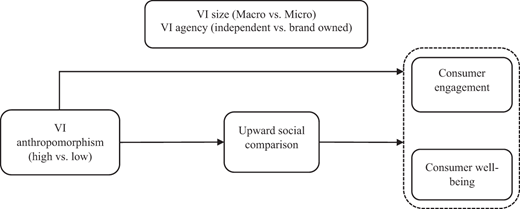
We argue that the extent of positive and negative responses hinges on VI anthropomorphism. Higher levels of VI anthropomorphism encourage greater consumer engagement (Dabiran et al., 2024) while simultaneously posing a greater risk to well-being, as highly anthropomorphic VIs can have a more pronounced adverse impact on consumers (Yang et al., 2023). Figure 1 illustrates the conceptual framework of this study, based on social comparison theory and upward social comparison. The next section explains the relationships in the model and develops the related hypotheses.
Virtual influencer anthropomorphism and customer engagement
Customer engagement refers to positive attitudes and behaviours toward VIs, such as liking posts or commenting (Barari et al., 2021). This engagement reflects the depth and quality of interactions between VIs and their followers (Liu and Wang, 2025). Prior research suggests that anthropomorphism encourages positive consumer responses (Dabiran et al., 2022), but its effect on engagement remains underexplored.
This study suggests that higher VI anthropomorphism increases consumer engagement by reducing imagery difficulty, which is the mental effort needed to imagine and understand interactions with a stimulus (Zhou et al., 2024). Anthropomorphic VIs, who look and act more like humans, make it easier for consumers to imagine and relate to their experiences, such as socialising or enjoying everyday activities (Liu and Wang, 2025). This relatability builds a sense of connection and familiarity, improving engagement (Dabiran et al., 2024). For example, a VI like Magazineluiza effectively promotes human-focused products, such as sunscreen, by creating relatable scenarios. By contrast, low-anthropomorphism VIs, which are harder to picture in human contexts, reduce engagement by increasing imagery difficulty (Myers et al., 2022):
High (vs low) level of virtual influencer anthropomorphism lead to higher level of consumer engagement
Virtual influencer anthropomorphism and well-being
Well-being encompasses a consumer’s overall satisfaction, happiness and positive life experiences, extending beyond mere contentment with products and services (Barari, 2023). Existing research suggests that VIs can evoke negative emotions, such as anxiety, thereby reducing customer well-being (Barari, 2023).
We argue that higher levels of VI anthropomorphism – where VIs more closely resemble humans – can strengthen these negative effects (Dabiran et al., 2024). Anthropomorphic VIs are more relatable due to their human-like characteristics, making them easier to compare with consumers’ real lives (Ma and Li, 2024). This relatability increases the likelihood of these VIs being seen as role models, creating pressure to imitate their idealised appearances and lifestyles (Wan et al., 2024). For instance, a highly anthropomorphic VI like Lil Miquela presents an effortlessly glamorous and luxurious lifestyle that may intensify feelings of inadequacy among consumers, leading to reduced happiness and well-being (Barari, 2023).
By contrast, VIs with lower levels of anthropomorphism, which appear less human and more cartoon-like, are less relatable and less likely to be viewed as role models (Myers et al., 2022). Consumers are less inclined to seriously compare themselves to these less anthropomorphic VIs, as their exaggerated or superficial features do not align with real human life (Di Cioccio et al., 2024). Consequently, the beauty standards and lifestyles portrayed by such VIs are less likely to be taken seriously by consumers and have a smaller effect on their well-being (Barari, 2023):
High (vs low) level of virtual influencer anthropomorphism lead to lower level of consumer well-being.
Mediating role of upward social comparison
Upward social comparison occurs when individuals evaluate themselves against others who are perceived to have more desirable qualities, abilities or possessions (Tandon et al., 2021). While this can motivate self-improvement, it can also lead to negative outcomes, such as feelings of inadequacy and inferiority (Barari, 2023). VIs, as computer-generated icons, are designed with customisable appearances and locations to enhance their appeal, particularly in relation to the products they promote (Sands et al., 2022).
This ability to project idealised qualities encourages upward social comparison, keeping consumers engaged and interested in following VIs’ activities (Barari, 2023). However, this comparison often sets unattainable standards, leading to discouragement and negative emotions when followers struggle to meet these ideals, ultimately harming their well-being (Wang et al., 2017):
Upward social comparison mediates the relationships between virtual influencer and (a) engagement and (b) well-being.
Moderating role of virtual influencer size
VIs, like HIs, can be categorised based on their follower count: macro VIs with over one million followers and micro VIs with fewer than 100,000 (Cascio Rizzo et al., 2024). We argue that macro VIs with higher anthropomorphism can enhance customer engagement by creating stronger connections with their audience, showcasing various aspects of their daily lives to mimic HIs (Li et al., 2023). However, this same degree of anthropomorphism can lead to upward social comparisons, as VIs may set unattainable standards, eliciting negative emotions and diminishing followers’ well-being (Barari, 2023). For instance, Lil Miquela, a macro VI endorsing the BMW 100% electric car, engages consumers but may also induce envy due to these unattainable standards (Barari, 2023).
By contrast, micro VIs with lower anthropomorphism possess greater flexibility to leverage their credibility and novelty without being constrained by human-like boundaries (E. Dabiran et al., 2024). Their non-human characteristics allow them to create unique and creative brand narratives, making them engaging and distinctive (Calvin Wan et al., 2024). Unlike macro VIs, which rely on anthropomorphism to establish connections, micro VIs can showcase products in more imaginative, aspirational and stylised ways, appealing to niche audiences while avoiding overt commercialisation (Wan et al., 2024). This flexibility enhances consumer engagement, as audiences perceive their endorsements as less transactional and more novel (Wan et al., 2024). However, despite this engagement, the aspirational nature of their content may still prompt subtle social comparisons, as consumers evaluate their own realities against the curated digital personas of these VIs (Barari, 2023):
Macro VI with high anthropomorphism and micro with low anthropomorphism enhance (a) consumer engagement while diminish consumer (b) well-being.
Moderating role of virtual influencer agency
VI agency refers to whether the VI operates independently or is owned by a specific brand (Sands et al., 2022). Independent VIs function autonomously, unaffiliated with a particular brand, which allows them greater freedom in content creation and the cultivation of a personal brand image (Thomas and Fowler, 2021). Conversely, brand-owned VIs are tied to a specific brand and primarily promote its products or services (Sands et al., 2022).
Independent VIs with high anthropomorphism are often perceived as more authentic and relatable due to their autonomous nature (Dabiran et al., 2024). Their anthropomorphic traits, such as mimicking human-like behaviours and expressions, further enhance their ability to connect with followers on a personal level (Ma and Li, 2024). This authenticity strengthens engagement by encouraging interactions and fostering trust (Sands et al., 2022). However, this heightened relatability may also make followers more prone to upward social comparisons (Wan et al., 2024). When independent VIs project aspirational lifestyles or achievements, followers may perceive these as unattainable, leading to feelings of inadequacy and negatively impacting their well-being (Dabiran et al., 2024).
On the other hand, brand-owned VIs with low anthropomorphism drive consumer engagement by providing a clear, brand-centric experience (Dabiran et al., 2024). Their less human-like appearance and behaviour position them as product endorsers rather than social figures, reinforcing the brand’s identity while reducing the expectation of personal relatability (Wan et al., 2024). This straightforward brand association makes their messaging consistent and transparent, appealing to consumers who value clarity in commercial communication (Feng et al., 2024). However, despite their lower anthropomorphism, brand-owned VIs still contribute to social comparisons, particularly in materialistic contexts (Mrad et al., 2022a, 2022b). By consistently associating themselves with premium products or exclusive lifestyles, they may subtly reinforce aspirational consumption ideals, which can negatively impact consumers’ well-being by fostering unrealistic expectations about what they should own or experience (Barari, 2023):
Independent VI with high anthropomorphism and brand owned with low anthropomorphism enhance (a) consumer engagement while diminish consumer (b) well-being.
Study 1
Data collection
In this study, we aimed to investigate the impact of VI anthropomorphism (high vs low) on consumer engagement and well-being while examining the moderating roles of VI size (macro vs micro) and agency type (independent vs brand-owned). To achieve this, we used a text mining approach to analyse data collected from public Instagram accounts of VIs. We began by identifying a list of VIs active on Instagram, along with their characteristics, using the VirtualHumans.org database. This resource provided detailed information on VIs, including their agency type – categorised as either independent or brand-owned – and their level of anthropomorphism, classified as high or low. Subsequently, we extracted data from VIs’ profiles, including their number of followers, product endorsement posts and follower interactions (likes and comments). These metrics were used to measure consumer engagement (i.e. likes) and well-being (i.e. comments) (Barari, 2023).
The data extraction process was conducted in September 2023. As VIs post both personal content and product or service endorsements, we ensured that only posts explicitly identified as endorsements were included in the analysis. Posts were filtered based on the presence of terms such as “sponsorship”, “ad”, “advertising”, “#sponsored”, “#ad”, “#promotion”, “#paidpartnership”, “#partnership” or “#promo” to confirm their promotional nature. Personal posts and posts without sponsorship disclosures were excluded. Also, we removed the VIs post in which like and/or comment were closed as it was not possible to measure followers’ reactions to the post. The final data set comprised 21,745 product endorsement posts from 109 VIs, along with 187,120 follower comments.
Variables measurement
The Linguistic Inquiry and Word Count (LIWC) dictionary has been used to measure consumer well-being, following prior research (Jaidka et al., 2020; Tov et al., 2013). Specifically, five emotions – positive emotion, negative emotion, anger, anxiety and sadness – were measured in each VI’s comments. LIWC provides numeric values for each of these emotions, allowing for quantifiable analysis. To assess consumer well-being, we calculated the difference between positive and negative emotions, where higher values indicate greater well-being. The reliability of these measures has been well-established in previous studies, with internal consistency values of 0.93 for positive emotion, 0.95 for negative emotion, 0.80 for anger, 0.82 for anxiety and 0.80 for sadness (Boyd et al., 2022).
To measure consumer engagement, we used number of consumer likes in each post as an indicator of consumer engagement with each post (Cascio Rizzo et al., 2024). The level of anthropomorphism for VIs was classified as high or low based on their page descriptions and posts. As anthropomorphism is a focal variable in this study, two coders were used to manually code 109 VIs into high or low anthropomorphism categories, using predefined definitions and examples for guidance. The coding process achieved an agreement rate of 98%, after which the results were cross-verified with data from VirtualHumans.org to ensure accurate classification.
The classification of VI size was determined by their number of Instagram followers. VIs with fewer than 100,000 followers were categorised as micro, while those with more than 100,000 followers were classified as macro. To determine the agency type of VIs, we used data from their profiles and supplemented this with information from third-party sources, such as VirtualHumans.org, to classify them as either independent or brand-owned. Descriptive information about the research variables is presented in Table 2, and a sample of VI classifications is provided in Appendix 1.
Descriptive statistics
| Emotion | Mean | High (vs low) anthropomorphism | Macro (vs micro) | Independent (vs brand-owned) |
|---|---|---|---|---|
| Positive emotion | 2.81 | 2.90 (2.76) | 2.83 (2.80) | 2.77 (2.99) |
| Negative emotion | 1.43 | 1.47 (1.40) | 1.49 (1.39) | 1.46 (1.37) |
| Anxiety | 0.43 | 0.47 (0.39) | 0.48 (0.40) | 0.46 (0.37) |
| Anger | 0.32 | 0.35 (0.29) | 0.36 (0.30) | 0.35 (0.28) |
| Sadness | 0.41 | 0.47 (0.40) | 0.46 (0.40) | 0.47 (0.39) |
| Likes | 7,189 | 8,814 (5,398) | 11,746 (1,467) | 9,595 (5,979) |
Source(s): Created by authors
Analysis and discussion
To test our conceptual model, we run two separate hierarchical linear models (HLM) for customer engagement and well-being. HLM has been selected as there is nested structure in the data in which consumer comments and likes are nested in the VIs. Thus, this model helps us to capture the nested structure of the data.
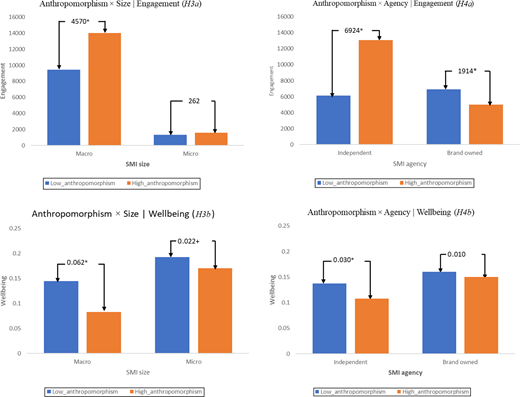
As seen in Table 3, high anthropomorphism (vs low) positively impacts customer engagement and negatively affects consumer well-being, supporting H1a and H1b. Furthermore, interaction effects indicate significance between anthropomorphism (high vs low) and size (macro vs micro), as well as anthropomorphism (high vs low) and agency (independent vs brand-owned) which provide enough support for H3 and H4. Interaction effect charts in Figure 2 elaborate on these relationships. For macro VIs, an increase in anthropomorphism significantly enhances consumer engagement, while this is not significant for micro. Notably, for both macro and micro VIs, an increase in anthropomorphism decreases consumer well-being, and it is partially significant for micro VI. Concerning VI’s anthropomorphism and agency, an increase in independent VIs anthropomorphism enhances their engagement, but this is reversed for dependent VIs in which an increase in their anthropomorphism decreases their consumer engagement. Simultaneously, for independent VIs, an increase in anthropomorphism significantly decreases consumer well-being. However, there is no significant interaction effect between anthropomorphism and brand-owned VI for consumer well-being.
Result of data analysis
| Engagement | Wellbeing | |||
|---|---|---|---|---|
| Hypothesis | β | SE | β | SE |
| Intercept | 0.231 | 0.713 | 0.765** | 0.204 |
| Main effect | ||||
| H1 | ||||
| High anthropomorphism(vs low) | 0.670* | 0.325 | −0.661** | 0.217 |
| Macro SMI (vs micro) | 3.069** | 0.689 | −0.421** | 0.163 |
| Independent SMI (vs brand-owned) | 1.215* | 0.544 | −0.618** | 0.205 |
| Interaction effect | ||||
| H3 | ||||
| Anthropomorphism × Size | 0.454* | 0.230 | 0.639* | 0.321 |
| H4 | ||||
| Anthropomorphism × Agency | 0.240* | 0.120 | 0.609* | 0.218 |
| Control variables | ||||
| Emoji | −0.0891** | 0.029 | 0.025** | 0.007 |
| Caption word count | −0.010** | 0.001 | 0.011** | 0.001 |
| Post count | −0.011 | 0.021 | −0.009 | 0.011 |
| Post mention | 0.019 | 0.040 | 0.008 | 0.010 |
| Post tagged | 0.170** | 0.045 | 0.112** | 0.011 |
Note(s): **p < 0.01, *p < 0.05, +p < 0.1
Interaction effect charts
Note(s): **p>0.01, *p > 0.05, +p > 0.1
Source: Created by authors
Interaction effect charts
Note(s): **p>0.01, *p > 0.05, +p > 0.1
Source: Created by authors
Study 2
The goals of Study 2 were twofold:
confirming the effect of VIs anthropomorphism (high vs low) on consumer engagement and well-being as well moderating role of VI’s size and agency; and
defining upward social comparison as meditating mechanism in the relationship between VI’s and consumer responses.
Participants and design
To test the research hypothesis, we conduct a 2 (anthropomorphism: high vs low) × 2 (VI size: macro vs micro) × 2 (VI agency: independent vs brand owned) between-subjects experiment to test our hypotheses. We used Prolific to collect data from US respondents via an online survey. Young participants between 18 and 25 years were recruited, as social media consumption is intense among younger generations (Jin et al., 2019). A total sample of 684 respondents completed the survey, with 41 (7%) removed for failing three manipulation checks. A total of 643 respondents, who used social media at least once a week, were recruited. The average age of the respondents was 22.6 years, 53.2 female and 47.8 male and 61% of respondents indicated that they use social media at least once daily, while 79% stated they use social media several times per day.
Procedure and measures
To manipulate anthropomorphism (high vs low), VI size (macro vs micro) and VI agency (independent vs brand-owned), eight different types of stimuli were designed ( Appendix 2), including written description with visual stimuli to manipulate different combinations of VI’s anthropomorphism, size and agency. Furthermore, the order of the posts was randomised to prevent any potential order effects from influencing the results. To ensure that the endorser was perceived accurately as macro vs micro and independent vs brand-owned, three manipulation checks were used towards the end of the survey. Thus, respondents were asked to recall if the influencer described to them was a high vs low VI, macro vs micro and lastly, it was independent or owned by a brand. The results indicated that 93% of all respondents passed the manipulation check, and their responses were used for further analysis. To validate the manipulation of VIs’ anthropomorphism levels, we used the scale developed by Ahn et al. (2022). Participants rated the VIs on dimensions such as cartoon-like/human-like, unnatural/natural and artificial/lifelike. The results indicated significant differences between the two levels of anthropomorphism: high anthropomorphism (M = 6.01, SD = 1.21) and low anthropomorphism (M = 2.89, SD = 1.23), F(1, 641) = 92.47, p ≤ 0.01. These findings confirm the effectiveness of our manipulation of VIs’ anthropomorphism levels.
Following exposure to the manipulation stimuli, dependent and mediator variables were assessed. Upward social comparison was measured using the scale developed by Allan and Gilbert (1995) by asking questions about “After seeing this post from VI, how do you feel, compared to him/her?” using 11 items, including “Superior–inferior”, “Competent–incompetent”, “Likeable–unlikeable”, “Accepted–left out”, “Same–different”, “More talented–untalented”, “Stronger–weaker”, “More confident–unconfident”, “More desirable–undesirable”, “More attractive–unattractive” and “Insider–outsider”. Also, Diener et al. (1985) consumer well-being scale was used to measure individual evaluation of life satisfaction. This scale includes five questions, including “In most ways my life is close to my ideal”, “The conditions of my life are excellent”, “I am satisfied with my life”, “So far, I have gotten the important things I want in my life, “If I could live my life over, I would change almost nothing”. Lastly, engagement has been measured by scales has be developed by Valsesia et al. (2020) by using one question: “How likely would you be to like or comment on the post”? As it is depicted in Table 4, the high reliability of these measures was indicated by Cronbach’s alpha coefficients, which were 0.909 for well-being, 0.923 for upward social comparison and 0.891 for engagement.
Descriptive statistics
| Correlations | |||||
|---|---|---|---|---|---|
| Variables | CR | AVE | Well-being | Upward social comparison | Engagement |
| Well-being | 0.909 | 0.821 | 0.902 | –0.452 | 0.383 |
| Upward social comparison | 0.923 | 0.834 | −0.534 | 0.894 | 0.404 |
| Engagement | 0.891 | 0.819 | −0.565 | 0.435 | 0.854 |
Note(s): Diagonal values in italics signify the square root of the average variance extracted (AVE). Values above the diagonal indicate the HTMT ratio, whereas those below the diagonal depict inter-construct correlations
Results
To test H1a and H1b, we used multivariate analysis of variance (MANOVA) to study the effect of VI anthropomorphism (high vs low) on customer engagement and well-being. The results for engagement indicate a significant main effect (F = 15.92, p ≤ 0.01) in which consumers engaged more with high anthropomorphism VI (M = 3.68; SD = 1.36) compared to low anthropomorphism VIs (M = 3.; SD = 1.47). This finding supports H1a. For well-being, the results reveal the main effect of VI anthropomorphism on well-being (F = 11.16, p ≤ 0.01), in which the consumer well-being for high anthropomorphism VI (M = 2.80; SD = 1.57) was significantly higher than VI with high level of anthropomorphism (M = 3.49; SD = 1.34), providing support for H1b. Means and standard error for each condition are presented in Table 5.
Study 2 summary statistics
| VI anthropomorphism | VI characteristics | N | Upward social comparison, mean (SD) | Engagement, mean (SD) | Well-being, mean (SD) |
|---|---|---|---|---|---|
| High | Macro | 81 | 4.81 (1.36) | 4.53 (1.39) | 1.92 (1.48) |
| Micro | 78 | 4.52 (1.29) | 3.51 (1.42) | 3.86 (1.69) | |
| Low | Macro | 83 | 4.16 (1.41) | 3.49 (1.20) | 3.45 (1.50) |
| Micro | 79 | 4.06 (1.21) | 3.11 (1.39) | 4.06 (1.55) | |
| Overall | 321 | 4.39 (1.57) | 3.66 (1.49) | 3.31 (1.39) | |
| High | Independent | 84 | 4.78 (1.25) | 4.56 (1.39) | 2.69 (1.96) |
| Brand owned | 82 | 4.06 (1.11) | 2.09 (1.78) | 2.76 (1.69) | |
| Low | Independent | 80 | 4.18 (1.09) | 3.51 (1.42) | 3.21 (2.11) |
| Brand-owned | 79 | 3.99 (1.26) | 2.99 (1.91) | 3.24 (1.92) | |
| Overall | 322 | 4.25 (1.34) | 3.28 (1.82) | 2.97 (1.69) |
Note(s): All items measured on seven-point Likert scales (1 = strongly disagree and 7 = strongly agree)
The mediation effects of upward social comparison on the relationship between VI and dependent variables (engagement and well-being) (H2) were examined using bootstrapping analysis. Results for consumer engagement indicate a significant main effect for VI anthropomorphism on consumer engagement (b = 1.08, SE = 0.65; 95% CI [0.03, 0.79]), and we find a significant indirect effect through upward social comparison (b = 1.86, SE = 0.69; 95% CI [0.99, 2.54]), which provide support for H2a. Also, the result for consumer well-being shows a non-significant main effect for VI anthropomorphism on consumer well-being (b = –0.80, SE = 0.58; 95% CI [–0.09, 0.99]), while we find a significant indirect effect through upward social comparison (b = −1.90, SE = 0.77; 95% CI [−2.59, –0.84]), which provide support for H2b.
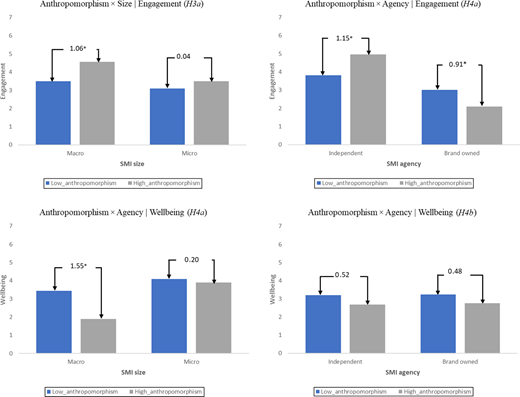
The moderation analysis has been conducted to study the moderating effect of both VI size (macro vs micro) and agency (independent vs brand-owned) on the relationship between the VI anthropomorphism (high vs low) with both engagement. For the moderating effect of VI size, the analysis revealed a significant interaction effect between the VI anthropomorphism with VI size on engagement (F = 3.48, p < 0.05) and well-being (F = 4.57, p < 0.05). To provide a better understanding of the interaction effects and comparing the result with the first study, Figure 3 provides a detailed view of the interaction effect charts. As it can be seen from this figure, the interaction effect between VI anthropomorphism and size is significant for just macro VI and both engagement and well-being, which indicates that high level of VI anthropomorphism (vs low) for macro VIs significantly lead to higher level of engagement and lower level of well-being.
Interaction effect charts
Note(s): **p < 0.01, *p < 0.05, +p < 0.1
Source: Created by authors
Interaction effect charts
Note(s): **p < 0.01, *p < 0.05, +p < 0.1
Source: Created by authors
In addition, the analysis revealed a significant interaction effect between the VI anthropomorphism with VI agency on engagement (F = 3.48, p < 0.05) but not for well-being (F = 1.57, p > 0.05). In addition, the interaction effect chart in Figure 3 indicates that independent VIs with high anthropomorphism lead to higher engagement, while this is reverse for brand-owned, in which higher level of anthropomorphism leads to lower level of engagement.
Discussion
General discussion
This research examines the direct impact of VIs’ anthropomorphism on consumer engagement and well-being, with upward social comparison mediating and SMI size and agency moderating these relationships. As shown in Table 6, findings from Studies 1 and 2 reveal that higher anthropomorphism increases consumer engagement but negatively affects well-being. Upward social comparison mediates this effect, as anthropomorphic VIs appear more relatable and aspirational, encouraging greater engagement. However, this relatability also amplifies social comparison, where followers measure themselves against idealised portrayals, triggering negative emotions and reducing well-being. For instance, highly anthropomorphic VIs like Lil Miquela foster engagement but set unattainable standards that diminish followers’ satisfaction with their own lives. These effects are further moderated by SMI size and agency. Macro VIs with high anthropomorphism drive stronger engagement but intensify negative well-being impacts due to heightened social comparisons. Conversely, micro and brand-owned VIs with lower anthropomorphism reduce these adverse effects while achieving lower engagement.
Summary of Study 1 and 2 findings
| Hypothesis | First study | Second study | Outcome |
|---|---|---|---|
| H1a: VI (high vs low) anthropomorphism and consumer engagement | VI with high level of anthropomorphism (vs low) leads to high level of engagement with their Instagram post (i.e. post likes) | VI with high level of anthropomorphism (vs low) leads to high number of followers engagement | Supported in both studies |
| H1b: VI (high vs low) anthropomorphism and consumer well-being | VI with high level of anthropomorphism (vs low) leads to lower level their follower well-being in their comment (positive and negative emptions, anxiety, anger and sadness) | VI with high level of anthropomorphism (vs low) leads to lower level in their consumer well-being | Supported in both studies |
| H2: Mediating role of upward social comparison | – | Upwards social comparison mediates the relationship between VI anthropomorphism with consumer engagement and well-being | Supported in Study 2 |
| H3: Moderating role of VI size (macro vs micro) | Increase in the macro VI anthropomorphism enhances consumer engagement but decreases consumer well-being, but for micro, and increase in their anthropomorphism just significantly decreases their well-being | Just for macro VI, increase in their anthropomorphism enhances consumer engagement but decreases consumer well-being but no interaction effect for micro VI | Patial support for both studies |
| H4: Moderating role of VI agency (independent vs brand-owned) | Increase in the independent VI anthropomorphism enhances consumer engagement but decreases consumer well-being, but for brand-owned VI, an increase in their anthropomorphism just significantly decreases their engagement | For independent VI, increase in their anthropomorphism enhances consumer engagement, and for brand-owned VI, an increase in their anthropomorphism decreases their engagement and no significant interaction effect for well-being | Patial support for both studies |
Source(s): Created by authors
The interaction effect shows that SMI size and agency moderate the relationship between VI anthropomorphism and consumer responses. The chart indicates that high anthropomorphism in macro VIs leads to higher engagement but diminishes well-being. This aligns with the idea that macro VIs, through aspirational portrayals, drive interactions but evoke social comparisons that harm well-being. No significant findings for anthropomorphism and micro VIs were observed across the two studies. This may be due to micro VIs being less aspirational, reducing both their impact on engagement and upward social comparisons. For VI agency, independent VIs with high anthropomorphism and brand-owned VIs with low anthropomorphism lead to higher engagement. Independent VIs benefit from perceived authenticity, while brand-owned VIs leverage clear brand associations. However, the interaction between VI anthropomorphism and agency on well-being was not significant, indicating that agency does not substantially influence how anthropomorphism impacts well-being. This suggests that the well-being effects of anthropomorphism are primarily driven by social comparison processes, irrespective of whether the VI is independent or brand-owned.
Theoretical contributions
The study of influencer marketing has been an important area of research in recent years, with growing attention about its both positive and negative impact on consumer responses. However, previous research predominantly aimed to compare VI effectiveness with HI from positive (Bu et al., 2022; Mrad et al., 2022b; Srivastava, 2021) and negative perspective (Barari, 2023). However, recently, researchers aimed to study and compare how different characteristics of VI can influence customer responses (Barari, 2023). Based on the research gap identified in the current research, this study examines the effects of VI anthropomorphism on consumer engagement and well-being and how upward social comparison mediates and VI size and agency moderate the relationship between VI and consumer responses.
First of all, our research indicates that VI anthropomorphism can be a double-edged sword that can enhance consumer engagement and at the same time diminish their well-being. In this regard, this research extends previous research in which VI anthropomorphism affects consumer behaviour such as willing to follow (El Hedhli et al., 2023) and add and brand attitude (Ahn et al., 2022), to indicate it can also enhance customer engagement with VI. On the other hand, our study makes an important contribution to the influencer marketing literature by highlighting the potential negative impact of VIs on customer well-being. Specifically, our findings suggest higher level VI anthropomorphism can potentially have destructive effects on individual well-being. This finding is consistent with previous research that has found individual interactivity with social media to be a double-edged sword, with negative outcomes such as fatigue, anxiety and anger outcomes (Tandon et al., 2021). Also, this study indicates that the negative side of VI anthropomorphism is not limited to misinformation (Harff et al., 2022), envy (Chae, 2018) or consumer dissatisfaction with their appearance (Deng and Jiang, 2023) and can potentially cause serious outcomes such as diminishing followers’ well-being.
Moreover, our study provides new insights into the role of upward social comparison in the relationship between VI and well-being. Previous research has shown that social comparison is a key factor in determining customer positive response such as purchasing luxury brand (Pillai and Nair, 2021) and negative response such as body dissatisfaction (Scully et al., 2023). Our findings suggest that social comparison is not just related to comparing with other humans, and it applicable in the virtual influence context as well. In this regard, our research indicates that upward social comparison can play a role in the relationship between VI and consumer response, including both engagement and well-being, indicating that customers who perceive a high degree of social comparison in VI experience greater negative and positive outcomes. In addition, the study of social comparison in influencer marketing is not new; previous research has mainly focused on its positive role of this variables in determining customer attitudinal and behavioural responses (Dinh and Lee, 2022; Xi et al., 2022). Current research indicates that while social comparison can compel followers to enhance their engagement towards VI, it can also cause upward social comparison and damaging to their well-being.
In addition, this study highlights how VI characteristics such as VI size (macro vs micro) and agency (independent vs brand-owned) moderate the relationship between VI anthropomorphism and consumer engagement and well-being. While VI size did not get enough attention in previous studies, our findings indicate that macro VIs with high level of anthropomorphism are better to engage their audience, while this is not true for micro VIs. These findings are aligned with previous research findings in which VIs aim to enhance their effectiveness with being more human-like and being with human, but our findings indicate that this is only effective for macro VIs (Mouritzen et al., 2023a, 2023b). However, this is not without cost for VIs in which our findings indicate that higher levels of anthropomorphism for macro VIs diminish their followers’ well-being. These findings indicate that the critical role of anthropomorphism, especially in macro VIs in which higher level of anthropomorphism is seen, has both a positive and negative consequence for their followers.
While VI agency has not been studied in previous research, our results indicate that higher levels of anthropomorphism for independent VI lead to higher level of engagement, while for brand-owned, it has a reverse effect, leading to lower level of engagement. It indicates that for brand-owned, VIs might be perceived as representing a brand image rather than authentic individuals, leading to a less favourable comparison and, consequently, diminish engagement. For the well-being, our result indicates that a higher level of higher level of human likeness leads to a lower level of consumer well-being, while this is not true for brand-owned VIs. These findings indicate that the anthropomorphism can be a concern for independent rather than dependent ones.
Managerial implications
This research offers actionable insights with direct managerial relevance, emphasising strategic practices that balance engagement optimisation with consumer well-being. A key takeaway pertains to strategic anthropomorphism management, urging marketers to carefully calibrate the level of anthropomorphism in VIs. For example, Lil Miquela, a macro VI with high anthropomorphic characteristics, has demonstrated strong audience engagement. However, marketers must also consider the potential well-being implications associated with such anthropomorphism. To achieve balance, brands should aim to enhance engagement while safeguarding consumer mental health. Campaigns like Dove’s “Real Beauty” offer a practical benchmark by integrating messaging that fosters positive self-image and mental well-being, highlighting how brands can align strategies with societal values to build trust and loyalty.
The study also advocates for customised marketing approaches based on specific VI characteristics, such as size and agency. The findings suggest that higher anthropomorphism can enhance engagement for macro VIs, such as Imma or Magazineluiza, as mimicking human appearance and behaviours deepens audience connections. However, this heightened anthropomorphism can inadvertently trigger negative well-being effects, particularly through social comparison. To mitigate these impacts, VIs could adopt transparency strategies, such as emphasising their virtual nature in content. For instance, Lil Miquela actively communicates their virtual identity to reduce social comparison effects and foster a healthier interaction with audiences.
From an agency perspective, the results reveal nuanced implications. Independent VI teams should focus on enhancing anthropomorphic traits to maximise engagement, while brand-owned VIs might benefit from adopting a less anthropomorphic, more cartoon-like appearance to maintain audience trust and mitigate declines in engagement. Examples such as Barbi and Mickey Mouse illustrate how cartoon-like personas can effectively differentiate brand-owned VIs, creating a safer consumer perception. However, independent VIs may pose a greater risk to consumer well-being, necessitating strategies that consistently highlight their virtual identity to avoid triggering harmful social comparisons.
Beyond business implications, the findings point to important policy considerations. Regulatory bodies like the UK’s Advertising Standards Authority have set a precedent by mandating clear labelling of influencer content as advertising and requiring substantiated claims. Policymakers should extend these efforts by developing guidelines that address the ethical and psychological implications of VI use, ensuring responsible and consumer-centric practices. For instance, regulations could mandate disclaimers in VI posts that clarify their virtual nature and encourage transparency regarding content creation.
Limitations and future research
Despite the theoretical and practical implications of our findings, several limitations should be noted. Firstly, this research primarily focused on a single social media platform, Instagram, but Instagram is only one of the main platforms for SMIs. To have a more comprehensive understanding, future research should also investigate SMIs on different platforms such as YouTube and TikTok. Furthermore, cultural factors may influence the relationship between VI and well-being, and future research could explore the cultural differences in the impact of VI on well-being across different countries and cultures. Also, this study only examined the impact of VI on customer engagement and well-being, but it would be valuable for future research to investigate the impact of VI on other stakeholders such as employees, shareholders and society as a whole.
Future research could also consider the role of product and service types (e.g. utilitarian vs hedonic; high-involvement vs low-involvement) in shaping the effectiveness of VIs’ anthropomorphic characteristics on consumer engagement. For instance, while low-anthropomorphised (e.g. cartoon-like) VIs may successfully attract attention for hedonic or low-involvement products, their perceived “cuteness” and lack of realism may undermine credibility when promoting more serious, utilitarian or high-involvement offerings. Consequently, future studies might explore whether matching the degree of VI anthropomorphism to the product’s nature could optimise both engagement and perceptions of brand authenticity and functionality.
References
Appendix 1
Sample of virtual influencer data (study 1)
| Name | Anthropomorphism | Size | Agency |
|---|---|---|---|
| @lilmiquela | High | Macro | Independent |
| @magazineluiza | High | Macro | Brand owned |
| @plusticboy | High | Micro | Independent |
| @iongottlich | High | Micro | Brand owned |
| @noonoouri | Low | Macro | Independent |
| @janky | Low | Macro | Brand owned |
| @ilona | Low | Micro | Independent |
| @emily_wirtual | Low | Micro | Brand owned |
Source(s): Created by authors
Appendix 2
Study two stimulus
| Anthropomorphism | Size | Agency | Scenario description |
|---|---|---|---|
| High | Macro | Independent | Sophie is a virtual influencer on social media, brought to life by a team of independent designers. With a three-year presence in the influencer space, Sophie has of 560,543 followers on Instagram. The designer team has intentionally crafted a human-like persona for her, allowing her to engage in activities such as eating, playing, hanging out with friends, and mimicking various human behaviors, akin to traditional human influencers. Notably, Sophie actively promotes a diverse range of products and collaborates with brands, utilizing her Instagram account to endorse products |
| High | Macro | Brand owned | Sophie is a virtual influencer on social media, created by a team of designers and affiliated with NextView brand. With a three-year presence in the influencer space, Sophie has of 560,543 followers on Instagram. The NexView designer team has intentionally crafted a human-like persona for her, allowing her to engage in activities such as eating, playing, hanging out with friends, and mimicking various human behaviors, akin to traditional human influencers. Notably, Sophie actively promotes NexView diverse range of products, utilizing her Instagram account to endorse these products |
| High | Micro | Independent | Sophie is a virtual influencer on social media, brought to life by a team of independent designers. With a three-year presence in the influencer space, Sophie has 56,543 followers on Instagram. The designer team has intentionally crafted a human-like persona for her, allowing her to engage in activities such as eating, playing, hanging out with friends, and mimicking various human behaviors, akin to traditional human influencers. Notably, Sophie actively promotes a diverse range of products and collaborates with brands, utilizing her Instagram account to endorse products |
| High | Micro | Brand owned | Sophie is a virtual influencer on social media, created by a team of designers and affiliated with NextView brand. With a three-year presence in the influencer space, Sophie has of 56,543 followers on Instagram. The NexView designer team has intentionally crafted a human-like persona for her, allowing her to engage in activities such as eating, playing, hanging out with friends, and mimicking various human behaviors, akin to traditional human influencers. Notably, Sophie actively promotes NexView diverse range of products, utilizing her Instagram account to endorse products |
| Low | Macro | Independent | Sophie is a virtual influencer on social media, brought to life by a team of independent designers. With a three-year presence in the influencer space, Sophie has of 560,543 followers on Instagram. The designer team has intentionally crafted a nonhuman-like persona for Sophie, focusing on unique content creation within the digital realm such as virtual adventures, unlike traditional human influencers. Notably, Sophie actively promotes a diverse range of products and collaborates with brands, utilizing her Instagram account to endorse products |
| Low | Macro | Brand owned | Sophie is a virtual influencer on social media, created by a team of designers and affiliated with NextView brand. With a three-year presence in the influencer space, Sophie has of 560,543 followers on Instagram. The NexView designer team has intentionally crafted a nonhuman-like persona for Sophie, focusing on unique content creation within the digital realm such as virtual adventures, unlike traditional human influencers. Notably, Sophie actively promotes NexView diverse range of products, utilizing her Instagram account to endorse products |
| Low | Micro | Independent | Sophie is a virtual influencer on social media, brought to life by a team of independent designers. With a three-year presence in the influencer space, Sophie has 56,543 followers on Instagram. The designer team has intentionally crafted a nonhuman-like persona for Sophie, focusing on unique content creation within the digital realm such as virtual adventures, unlike traditional human influencers. Notably, Sophie actively promotes a diverse range of products and collaborates with brands, utilizing her Instagram account to endorse products |
| Low | Micro | Brand owned | Sophie is a virtual influencer on social media, created by a team of designers and affiliated with NextView brand. With a three-year presence in the influencer space, Sophie has of 56,543 followers on Instagram. The NexView designer team has intentionally crafted a nonhuman-like persona for Sophie, focusing on unique content creation within the digital realm such as virtual adventures, unlike traditional human influencers. Notably, Sophie actively promotes NexView diverse range of products, utilizing her Instagram account to endorse products |
Source(s): Created by authors

